Intent: Define comprehensive academic and history archiving systems for schools
Every school accumulates decades or even centuries of educational heritage—yearbooks documenting graduating classes, photographs capturing memorable moments, athletic records chronicling championships, academic achievements reflecting student excellence, and administrative documents detailing institutional evolution. Yet many schools watch this irreplaceable history deteriorate in storage rooms, disappear through neglect, or remain inaccessible except to those willing to search through dusty boxes and crumbling files.
Academic and history archiving represents the systematic process of identifying, preserving, organizing, and providing access to these materials that document institutional heritage. Effective archiving protects physical materials from deterioration, creates digital surrogates ensuring long-term accessibility, organizes collections enabling efficient retrieval, and implements display systems that bring archived content into daily campus life.
This comprehensive guide explores evidence-based approaches to academic and history archiving specifically designed for K-12 schools, colleges, and universities seeking to preserve educational legacy while creating engagement opportunities that strengthen community connections and institutional pride.
School archives serve purposes far beyond passive historical preservation. They document institutional identity, provide resources supporting research and learning, create alumni engagement opportunities, demonstrate educational excellence to prospective families, and preserve irreplaceable knowledge that informs strategic planning and decision-making. Schools implementing comprehensive archiving systems discover that preserved history becomes a strategic asset supporting multiple organizational priorities.
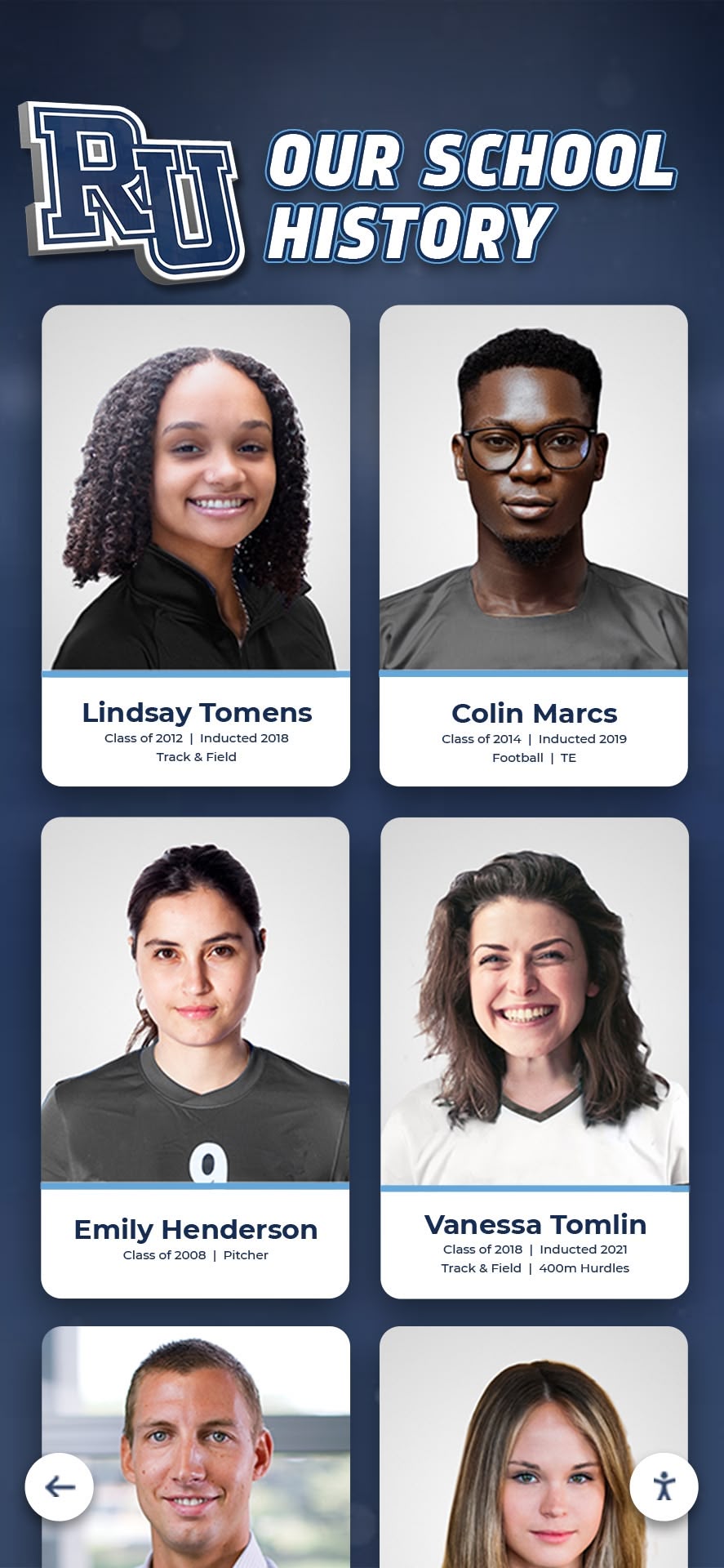
Modern archiving solutions organize decades of school history into searchable digital collections accessible to entire communities
The Critical Need for School History Archiving
Before exploring archiving methodologies, understanding why this work demands urgent priority helps justify necessary resource commitments and stakeholder engagement.
Physical Materials Are Deteriorating Rapidly
School historical materials face constant threats from environmental factors, handling damage, and natural aging processes. According to the National Archives preservation guidelines, most printed photographs begin significant deterioration after approximately 75 years, while newspapers and many paper documents degrade even faster—often showing serious damage within 50 years.
Schools founded in the mid-20th century now face critical preservation decisions as original materials from their founding decades reach end-of-life thresholds. Yearbooks from the 1940s-1970s show brittle pages, fading photographs, and deteriorating bindings. Athletic records stored in non-archival conditions accumulate water damage, mold, and pest damage. Historical photographs face color fading, emulsion breakdown, and adhesive failures.
Every year without proper archiving increases the risk that irreplaceable materials will be lost permanently. Once deterioration reaches certain stages, even professional conservation cannot fully restore materials or prevent continued degradation.
Institutional Knowledge Exists Only in Human Memory
Beyond physical documents, critical institutional knowledge resides exclusively in the memories of longtime faculty members, coaches, administrators, staff, and community members. These individuals remember the stories behind formal records—why traditions began, how programs evolved, what challenges were overcome, which people made lasting impacts, and what lessons previous generations learned.
As these knowledge holders retire or pass away, their unique perspectives disappear unless systematically captured through oral history programs, documented in archival collections, and preserved for future reference. Schools that delay oral history initiatives lose irreplaceable insights every year.
Digital-Born Records Face Different Preservation Challenges
Contemporary schools generate vast quantities of digital-born materials including digital photographs never printed, electronic documents and communications, social media content documenting events, websites capturing institutional information, and video recordings of performances and competitions.
According to the National Archives digital preservation guidance, digital materials face unique preservation challenges including file format obsolescence as software evolves, media degradation affecting storage devices, dependency on specific hardware or software for access, lack of clear retention policies leading to deletion, and absence of systematic organization making retrieval impossible.
Schools assuming digital materials are automatically preserved often discover years later that content stored on outdated media formats, obsolete storage devices, or discontinued platforms has become inaccessible or disappeared entirely.
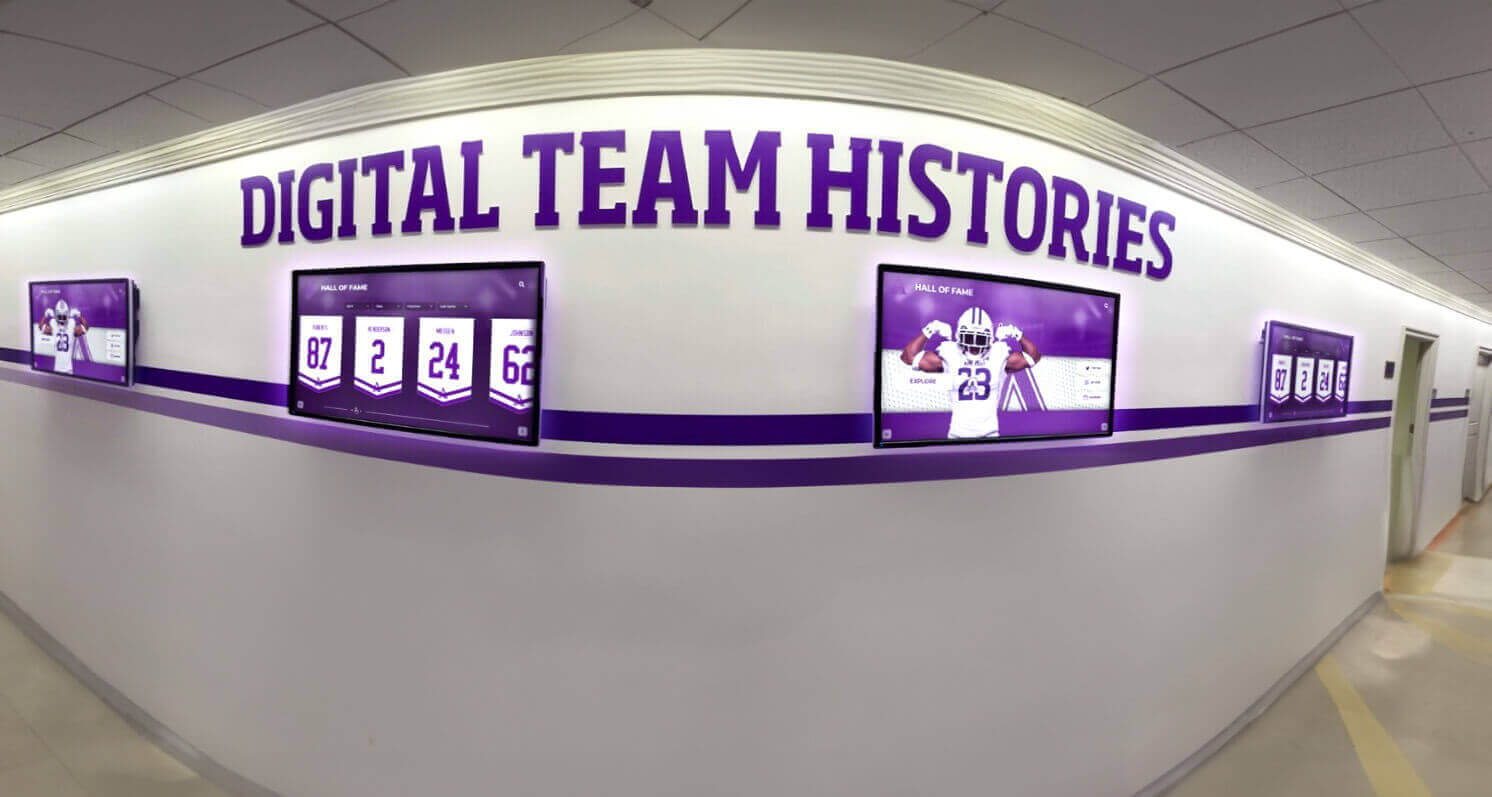
Strategic placement of digital displays transforms archived materials into engaging daily experiences rather than hidden storage collections
Archiving Supports Multiple Strategic Priorities
Comprehensive school archives deliver value across diverse institutional functions including alumni engagement by providing content that maintains lifelong connections, development initiatives by demonstrating long-term institutional impact, student recruitment by showcasing tradition and educational excellence, community relations by honoring local heritage, accreditation processes by documenting sustained quality, and strategic planning by preserving institutional memory informing future decisions.
The Society of American Archivists Guidelines for College and University Archives emphasizes that archives should serve both educational and research purposes while supporting institutional priorities, not simply exist as passive repositories for old materials.
Establishing Your School Archiving Program: Planning Phase
Successful archiving programs begin with systematic planning that assesses current situations, defines clear objectives, and establishes sustainable approaches.
Conducting Comprehensive Archival Assessments
Before implementing archiving initiatives, thorough assessment reveals what materials exist, their condition, preservation priorities, and available resources.
Materials Inventory
Systematic inventory identifies all historical materials currently held by your institution across locations:
- Complete yearbook collections from all available years with notes about missing volumes
- Photograph collections including official portraits, event photography, facility documentation, and candid images
- Athletic records documenting team rosters, season results, championship materials, and individual achievements
- Academic records showing honor rolls, award recipients, test scores, and curriculum evolution
- Student publications including newspapers, literary magazines, handbooks, and event programs
- Administrative documents such as board minutes, policy manuals, significant correspondence, and strategic plans
- Audio and video materials containing event recordings, oral histories, and promotional content
- Digital-born materials stored on computers, servers, social media platforms, or cloud services
- Artifacts and memorabilia including trophies, uniforms, banners, and three-dimensional objects
This comprehensive inventory provides foundation for prioritizing preservation efforts and estimating required resources.
Condition Assessment
For physical materials, evaluate preservation status:
- Items showing active deterioration requiring immediate intervention
- Materials in stable but fragile condition needing careful handling and proper storage
- Collections adequately preserved but lacking organization or accessibility
- Duplicate materials offering opportunities for deaccessioning or resource sharing
Understanding condition helps prioritize digitization efforts, identify materials requiring professional conservation, and estimate costs for proper archival storage.
Organizational Readiness Evaluation
Assess your institution’s capacity for archiving initiatives:
- Available staff time and expertise for archival work
- Physical spaces appropriate for archival storage and processing
- Existing technology infrastructure supporting digital archives
- Budget availability for archiving equipment, services, or platforms
- Stakeholder support from administration, faculty, alumni, and community
Realistic readiness assessment prevents over-ambitious plans that cannot be sustained, while identifying areas requiring development before launching major initiatives.
Defining Archiving Objectives and Success Metrics
Clear objectives guide program development and enable effectiveness evaluation.
Primary Archiving Goals
Common objectives for school archives include:
- Preservation: Protecting historical materials from loss, deterioration, or damage
- Access: Making archived materials available to appropriate users
- Research: Supporting historical research about institutional development
- Engagement: Providing content that strengthens community connections
- Recognition: Honoring past achievements and distinguished individuals
- Accountability: Documenting institutional decisions and evolution
Most schools pursue multiple objectives simultaneously, though specific priorities vary based on institutional contexts and stakeholder needs.
Measurable Success Indicators
Establish metrics demonstrating archival program effectiveness:
- Quantitative measures: Items processed and preserved, years of institutional history comprehensively archived, digital files created and organized, oral history interviews completed, archive access statistics showing usage patterns
- Qualitative indicators: Stakeholder testimonials about archive value, research projects enabled by archived materials, community engagement demonstrated through archive interaction, recognition from professional archival organizations
- Strategic impact measures: Alumni engagement improvements attributed to historical content, development outcomes connected to heritage storytelling, recruitment benefits from demonstrated tradition and excellence
These metrics justify ongoing resource investment while revealing areas needing improvement.
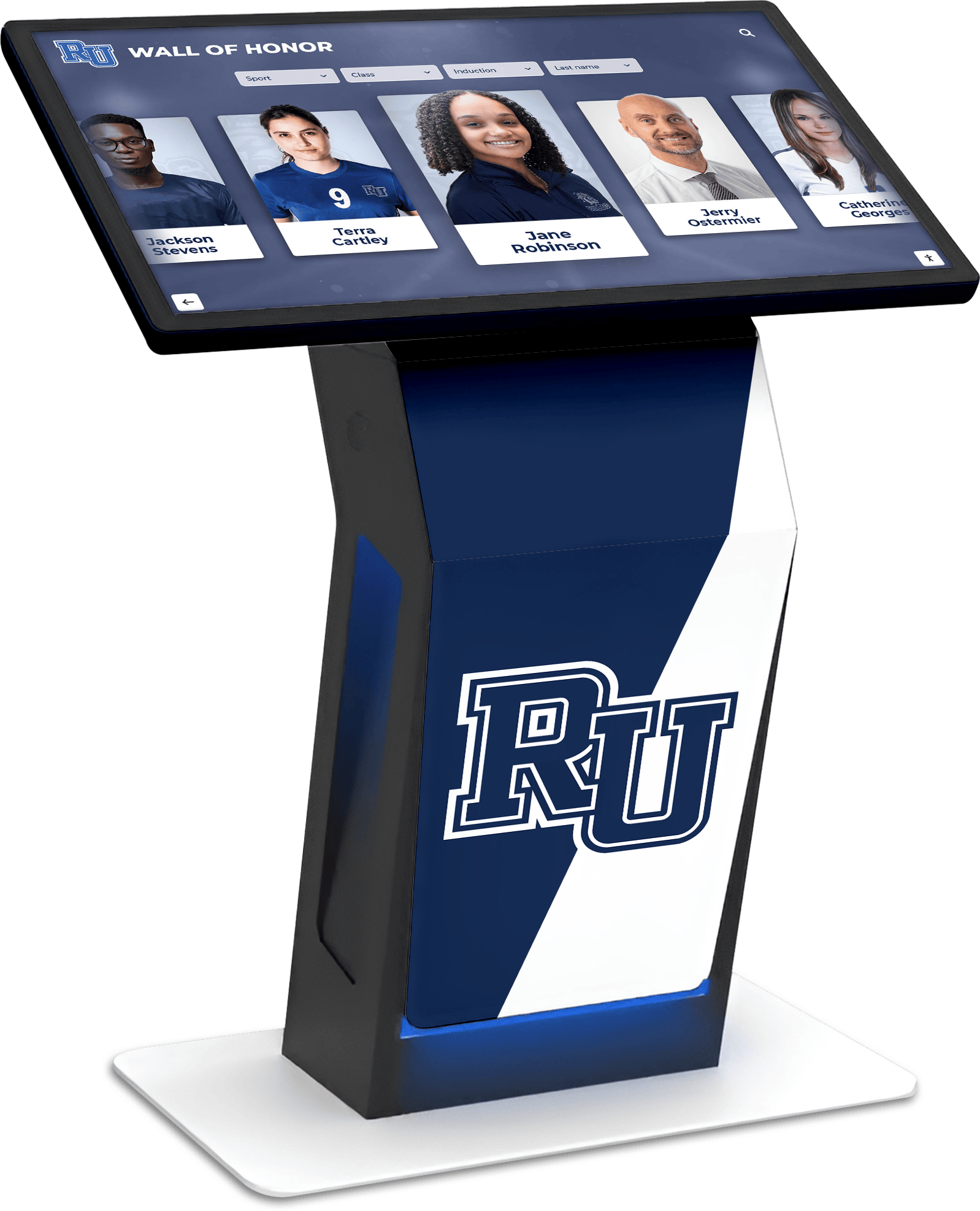
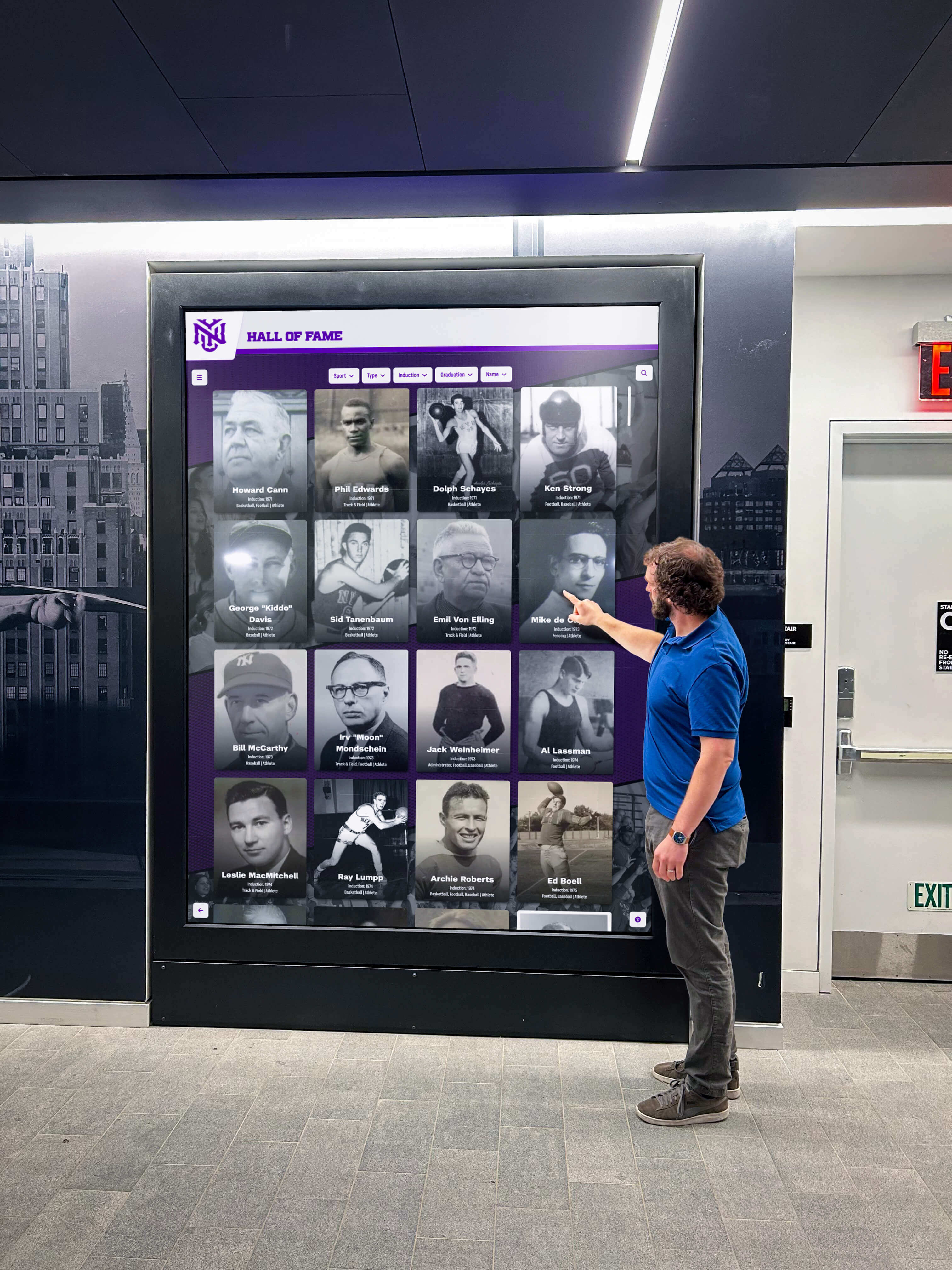
Interactive kiosks transform archived materials into touchscreen experiences positioned in high-traffic areas where community members naturally encounter them
Establishing Archival Policies and Collection Scope
Formal policies ensure consistent approaches across years and personnel changes.
Collection Scope Definition
Clear policies specify what materials fall within archival scope:
- Institutional Records: Official documents created or received in conducting institutional business, including board minutes, administrative records, academic policy documents, and official communications
- Historical Documentation: Materials documenting institutional history such as yearbooks, photographs, student publications, and event programs
- Personal Papers: Faculty, staff, or alumni collections relevant to institutional history, typically acquired through donation
- Digital Materials: Born-digital content including websites, social media, digital photographs, and electronic communications
- Exclusions: Materials outside archival scope such as duplicate copies, temporary administrative files, or materials with no enduring value
Defined scope prevents archives from accumulating unnecessary materials while ensuring appropriate documentation receives preservation priority.
Acquisition and Deaccessioning Policies
Formal procedures govern how materials enter and leave collections:
- Donation procedures specifying how gifts are offered, evaluated, and accepted
- Deed of gift agreements documenting transfer of ownership and usage rights
- Appraisal criteria for evaluating potential acquisitions
- Deaccessioning procedures enabling removal of materials outside scope or lacking enduring value
- Disposition methods for materials removed from collections
These policies protect both institutions and donors while ensuring collections remain focused on materials supporting defined objectives.
Access and Use Policies
Clear guidelines specify who can access archives and under what conditions:
- General access provisions determining whether archives are publicly accessible or restricted
- Restricted materials policies protecting privacy, donor requirements, or sensitive information
- Reproduction and publication guidelines governing how archived materials may be used
- Research room procedures for in-person access to physical materials
- Digital access policies for online collections and resources
Balancing accessibility with appropriate restrictions ensures archives serve educational purposes while protecting sensitive information and respecting donor intentions.
Digitization: Creating Digital Surrogates of Physical Materials
Digital preservation represents the most critical component of modern school archiving, protecting information content while dramatically increasing accessibility.
Planning Digitization Projects
Systematic planning ensures digitization efforts achieve preservation and access goals efficiently.
Prioritization Criteria
Strategic prioritization focuses limited resources on highest-value materials:
- Preservation urgency: Materials showing active deterioration or significant risk
- Usage demand: Frequently requested materials benefiting from improved access
- Research value: Unique materials unavailable elsewhere
- Community interest: Content generating strong alumni or community engagement
- Completeness opportunities: Filling gaps in existing digital collections
According to the Northeast Document Conservation Center digitization guidelines, the rule for archives and special materials is “Don’t even think about digitizing until the collection is fully arranged and described.” Organized collections digitize more efficiently while ensuring quality metadata creation.
Technical Specifications
Appropriate technical standards balance preservation quality with practical considerations:
For photographs and documents, the Federal Agency Digitization Guidelines Initiative (FADGI) recommends:
- Minimum 600 DPI resolution for most materials
- 6,000 pixels along the long axis for master preservation files
- RGB uncompressed TIFF format for archival masters
- JPEG derivatives for access and display
For yearbooks and bound volumes:
- Non-destructive scanning using v-cradles or book scanners
- Sufficient resolution capturing text legibility and photo details
- Full-page captures including margins and edge details
For audio materials:
- Uncompressed Broadcast Wave Format (WAV)
- 24-bit depth, 96 kHz sampling rate for preservation masters
These specifications ensure digital files remain useful as technology evolves while supporting diverse uses from research to display applications.
Equipment and Service Options
Schools choose among several digitization approaches based on available resources:
Professionals services provide:
- Specialized equipment and expertise ensuring quality results
- Efficient processing of large volumes
- Non-destructive handling of fragile materials
- Comprehensive metadata creation
- Archival-quality specifications
In-house scanning offers:
- Direct control over scheduling and priorities
- Lower per-item costs for large ongoing projects
- Immediate access to digitized materials
- Integration with existing workflows
Hybrid approaches combining professional services for specialized materials with in-house scanning for routine items often optimize quality, efficiency, and costs.
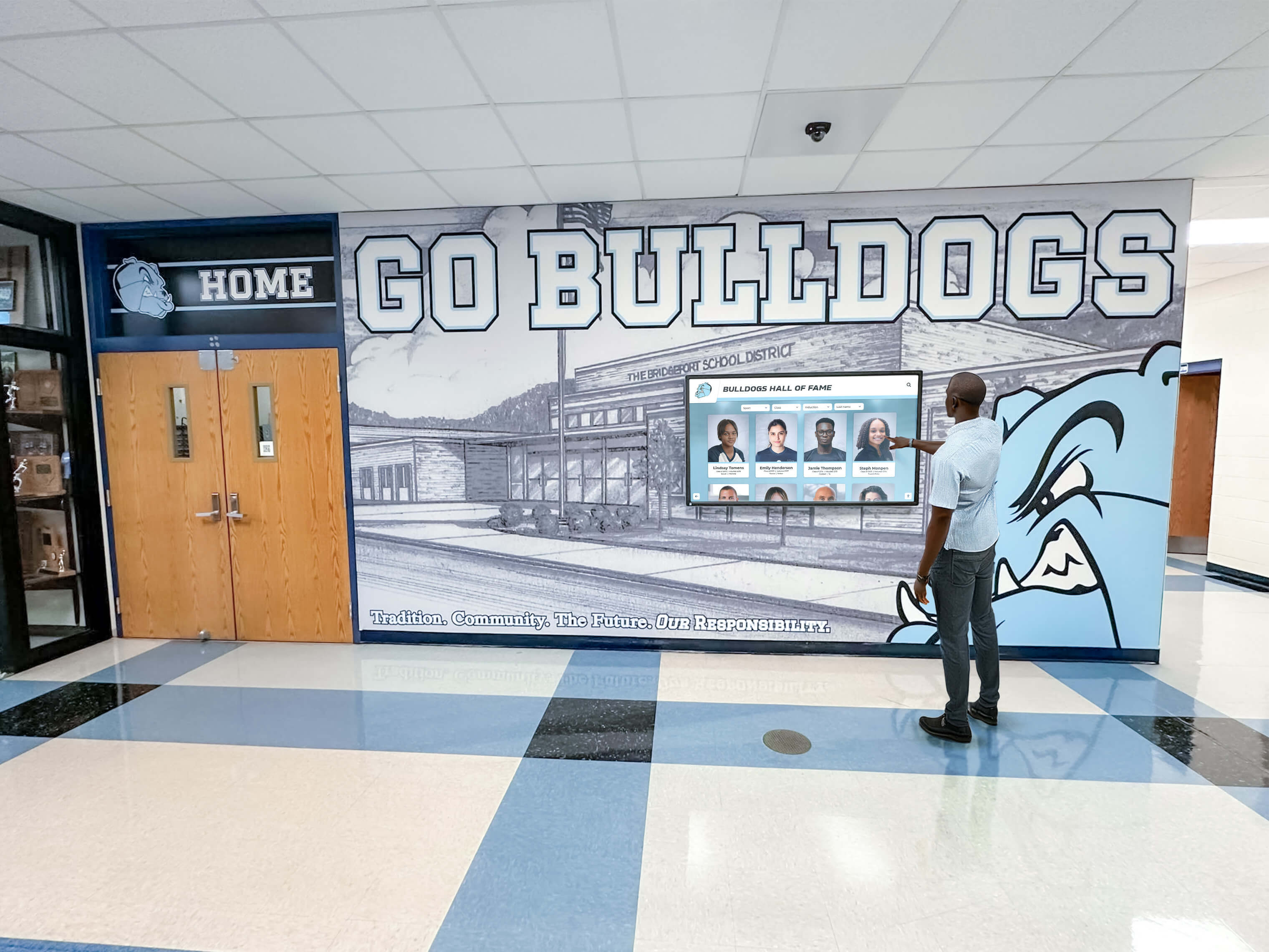
Digitization projects gain community support when archived materials become accessible through engaging interactive displays
Implementing OCR and Creating Searchable Text
Optical Character Recognition (OCR) transforms scanned images into searchable text, dramatically increasing archive utility.
OCR Processing Benefits
According to Advantage Archives digitization guidance, every item digitized should be run through OCR to convert text into searchable databases, allowing users to find people in multiple yearbooks with single searches rather than manually reviewing every page.
OCR enables:
- Full-text search across entire collections
- Name indexes automatically generated from processed documents
- Content discovery based on keywords, phrases, or topics
- Accessibility improvements for visually impaired users employing screen readers
- Data extraction for creating structured databases from document collections
OCR Quality Considerations
OCR accuracy depends on multiple factors:
- Original print quality and clarity
- Scan resolution and image quality
- Document condition and deterioration
- Font types and sizes
- Page layout complexity
Materials printed on quality paper with clear fonts typically achieve 95-99% OCR accuracy. Deteriorated documents, unusual fonts, or poor-quality printing may require manual correction to reach acceptable accuracy levels.
Many schools implement two-tier approaches using automated OCR for most materials while manually correcting text for high-priority items requiring perfect accuracy such as name indexes, frequently accessed documents, or materials supporting research applications.
Metadata Creation and Organization
Well-organized digital collections require comprehensive metadata enabling discovery, retrieval, and long-term management.
Essential Metadata Elements
Archival standards recommend capturing:
- Descriptive metadata: Title, creator, date, description, subject keywords, people depicted
- Technical metadata: File format, resolution, color space, file size, scanning equipment
- Administrative metadata: Copyright status, usage restrictions, source collection, accession number
- Preservation metadata: File creation date, migration history, checksum values ensuring file integrity
Rich metadata transforms simple digital files into discoverable archival assets supporting diverse research needs while enabling long-term file management.
Organizational Structures
Effective digital archives implement hierarchical organization reflecting collection structures:
- Collection level: Major groupings (yearbooks, photographs, athletic records)
- Series level: Subdivisions within collections (yearbooks by decade, photographs by type)
- Item level: Individual items or documents with specific metadata
- Component level: Parts of complex items (individual yearbook pages, sections of lengthy documents)
This multi-level organization enables browsing collection overviews while supporting detailed item-level searches, accommodating different user needs and research approaches.
Solutions like how to digitize old yearbooks provide detailed guidance for organizing specific collection types common in school archives.
Physical Archive Storage and Preservation
While digitization provides access and backup, proper storage protects original materials from continued deterioration.
Archival Storage Requirements
Professional archival storage extends material lifespans significantly beyond typical storage conditions.
Environmental Controls
Appropriate environmental conditions slow deterioration:
- Temperature: 65-70°F (18-21°C) for mixed collections
- Relative humidity: 30-50% maintained consistently
- Air quality: Filtered to remove particulates and pollutants
- Light exposure: Minimized UV radiation and visible light
- Pest control: Regular monitoring and integrated pest management
According to National Archives standards, stable conditions matter more than specific targets—fluctuations cause more damage than moderately suboptimal but consistent environments.
Storage Materials and Housing
Archival-quality storage materials prevent chemical damage:
- Acid-free folders and boxes preventing acidic deterioration
- Lignin-free papers avoiding yellowing and brittleness
- Polyester or polypropylene sleeves for photographs
- Textile storage free from harmful dyes or finishes
- Metal shelving avoiding wood-based materials releasing harmful chemicals
Proper housing protects materials from physical damage, dust accumulation, and environmental exposure while supporting organizational systems enabling efficient retrieval.
Space Planning Considerations
Dedicated archival storage requires:
- Adequate square footage for current collections plus growth
- Appropriate shelving supporting archival boxes and oversized materials
- Climate control equipment maintaining environmental specifications
- Security systems protecting valuable materials
- Fire suppression systems appropriate for paper collections
- Accessibility enabling efficient retrieval while controlling general access
Schools lacking dedicated archival spaces often partner with local historical societies or regional archival facilities offering professional storage for community educational collections.
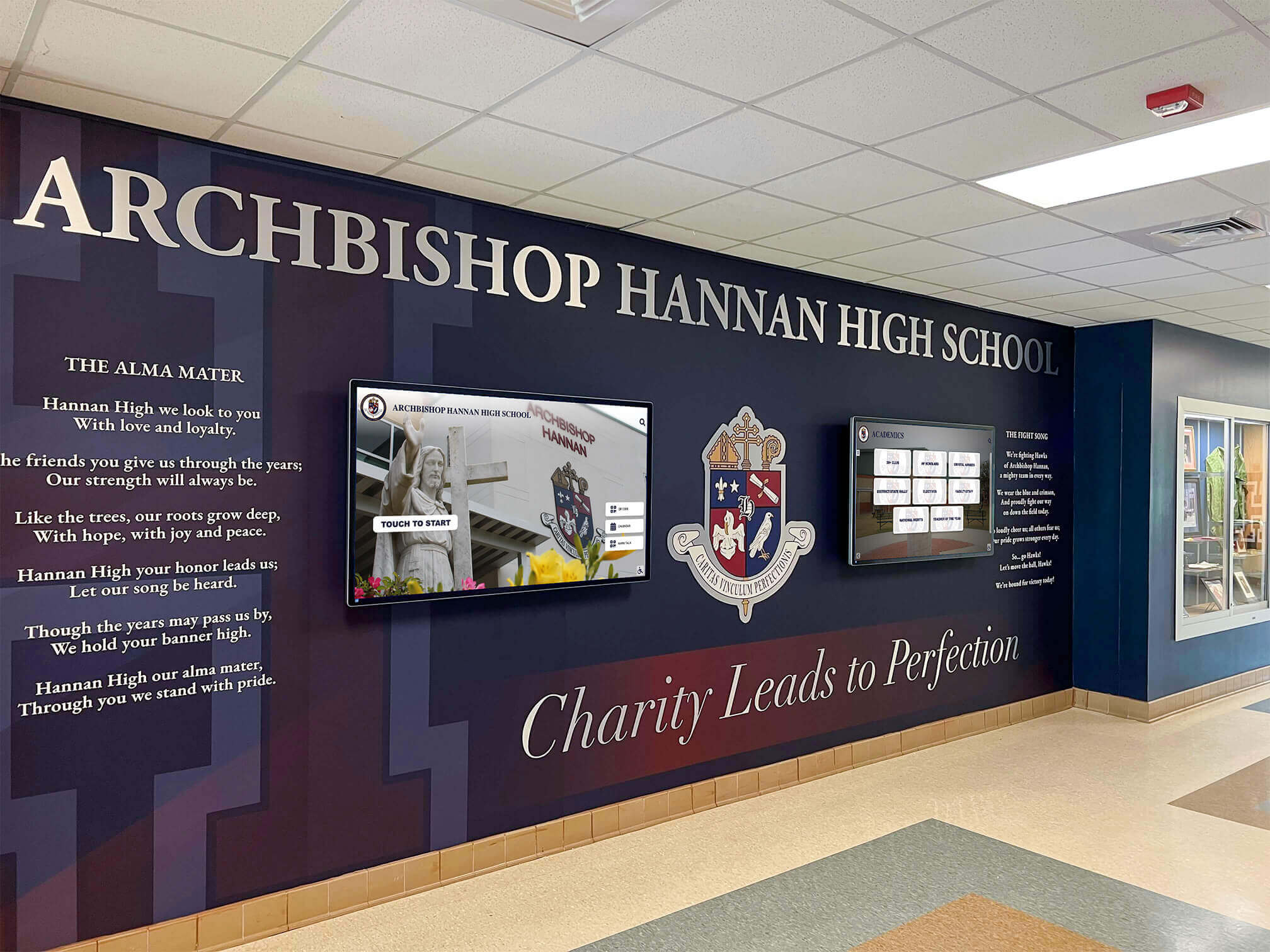
Combining traditional physical heritage elements with digital archives creates compelling entry experiences celebrating institutional history
Handling and Conservation Practices
Proper handling prevents damage during archival processing and access.
Safe Handling Protocols
Standard archival handling procedures include:
- Clean hands free from lotions that transfer oils
- Use of nitrile gloves for photographs and fragile materials
- Proper support when moving bound volumes or large items
- Flat surfaces for examining documents avoiding edge stress
- Photography restrictions preventing flash damage
- Food and drink prohibitions protecting against spills
Training all personnel and researchers in proper handling procedures prevents accidental damage to irreplaceable materials.
When to Seek Professional Conservation
Some materials require professional conservation before digitization or storage:
- Active mold requiring remediation
- Severe tears or structural damage
- Adhesive failures in photograph albums
- Extreme brittleness preventing safe handling
- Water or fire damage
- Pest damage requiring treatment
Professional conservators assess conditions, recommend treatments, and perform stabilization procedures beyond the scope of typical archival staff expertise.
Creating Interactive Digital Archive Displays
Digitized materials achieve maximum impact when displayed through engaging platforms making history visible and accessible in daily campus life.
The Power of Interactive Historical Presentations
Static trophy cases and printed displays present history passively with limited engagement. Modern interactive systems from providers like Rocket Alumni Solutions transform archival content into dynamic experiences through touchscreen interfaces enabling intuitive exploration, powerful search functions locating specific names or years instantly, multimedia integration combining photographs, text, and video, unlimited capacity documenting comprehensive history without space constraints, and remote content management enabling updates from any internet-connected device.
According to user engagement research, visitors spend an average of 7-8 minutes actively exploring interactive historical displays compared to less than one minute viewing traditional static installations. This extended engagement creates deeper emotional connections with institutional heritage while demonstrating the value of archival investments.
Strategic Placement and Installation Planning
Interactive displays achieve greatest community impact through strategic campus positioning:
High-Traffic Location Selection
- Main entrance lobbies where all visitors naturally encounter displays
- Library and media center spaces supporting research and learning
- Athletic facility entrances connecting current competition to historical achievement
- Cafeteria and common areas where students gather daily
- Administrative office areas where families interact with staff during enrollment and meetings
These high-visibility placements ensure archived materials become part of daily campus experience rather than hidden resources accessed only by those specifically seeking historical information.
Technical Requirements and Specifications
Successful interactive display installations require:
- Commercial-grade touchscreen monitors designed for continuous operation and high-traffic use
- Secure mounting systems preventing theft or damage
- Network connectivity for content updates and usage tracking
- Appropriate height and angle following ADA accessibility standards
- Adequate lighting avoiding screen glare while providing sufficient ambient illumination
- Power supply with surge protection and backup capabilities
Professional installation ensures displays function reliably while protecting substantial technology investments.
Content Organization and Navigation
Effective interactive archives implement intuitive organization enabling diverse exploration approaches:
Chronological Navigation Year-by-year or decade-by-decade timelines showing institutional evolution over time, helping visitors understand how schools developed while locating specific time periods of personal interest.
Category-Based Browsing Separation by content type enables focused exploration:
- Athletic championships and team histories
- Academic achievements and honor rolls
- Arts performances and accomplishments
- Faculty and staff recognition
- Facility development and campus evolution
- Student life and traditions
Powerful Search Capabilities Full-text search across comprehensive archives enables instant location of:
- Individual names appearing anywhere in collections
- Specific events or accomplishments
- Years or date ranges
- Teams, organizations, or groups
- Award types or achievement categories
Featured Content Rotations Automated content rotation highlights different archival materials regularly, showcasing collection breadth while surprising repeat visitors with new discoveries each time they interact with displays.
Many schools discover that combining digital recognition displays with historical archives creates comprehensive platforms celebrating both heritage and ongoing achievement through unified systems.
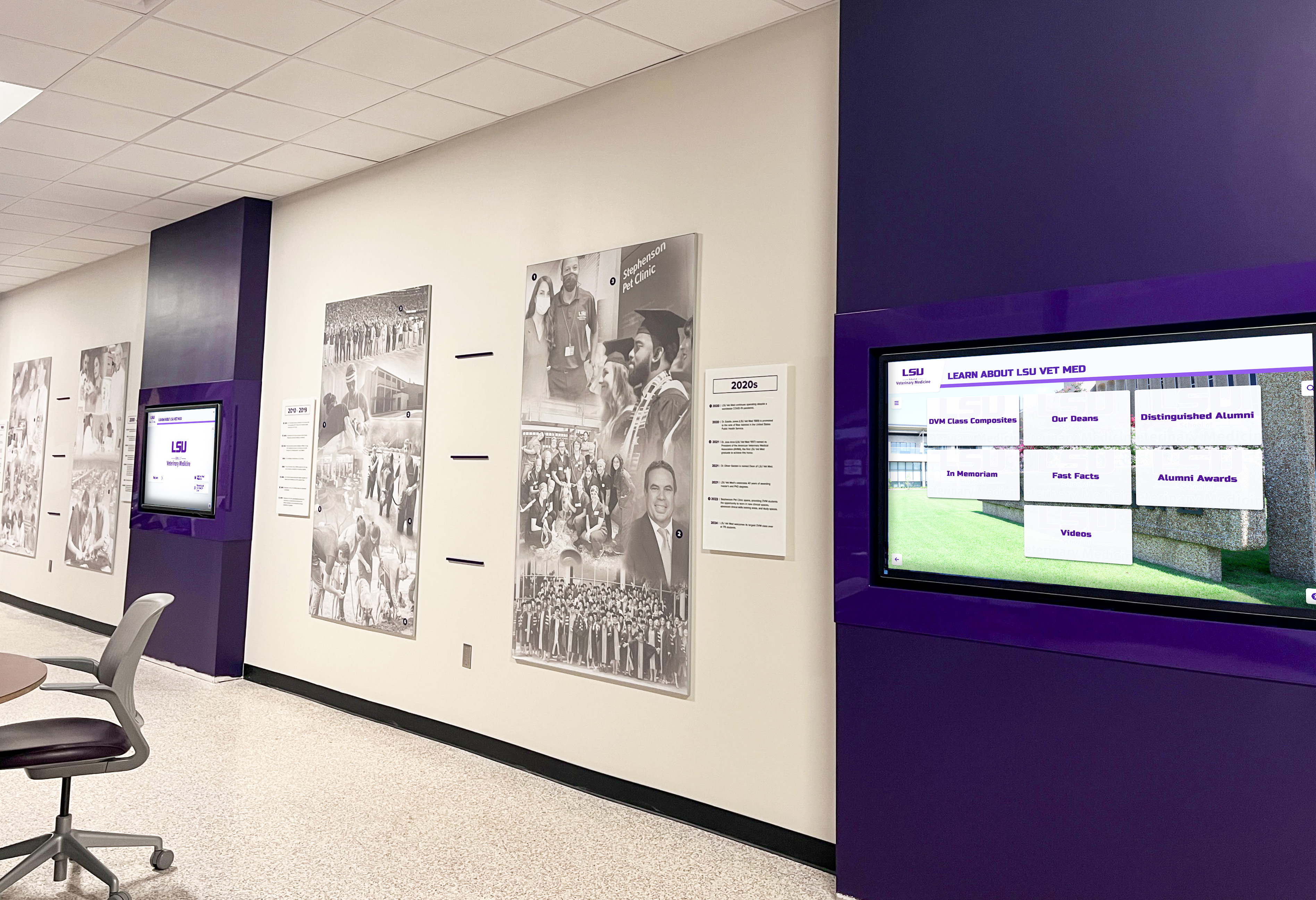
Multi-screen installations enable comprehensive storytelling across different themes, time periods, and content categories
Implementing Cloud-Based Archival Management Systems
Modern archival platforms operate through cloud-based systems providing powerful capabilities specifically designed for educational institutions.
Advantages of Cloud-Based Archives
Contemporary cloud platforms eliminate traditional technical barriers:
Accessibility and Convenience
- Access from any internet-connected device eliminating server dependency
- No local software installation or IT infrastructure requirements
- Automatic updates ensuring latest features and security patches
- Concurrent multi-user access enabling collaboration
- Mobile optimization supporting tablets and smartphones
Scalability and Capacity
- Unlimited storage expanding with collection growth
- No hardware upgrades required as archives expand
- Bandwidth scaling handling usage spikes during reunions or anniversary celebrations
- Geographic redundancy protecting against local disasters
Administrative Efficiency
- Intuitive interfaces requiring minimal training
- Bulk upload tools processing large material volumes efficiently
- Automated metadata generation reducing manual data entry
- Permission management controlling access levels for different users
- Usage analytics revealing how community members engage with archives
Solutions like best school history software provide purpose-built platforms specifically designed for educational archiving needs rather than generic document management systems.
Security and Backup Considerations
While cloud storage offers advantages, proper implementation requires attention to security and preservation:
Data Protection Measures
- Encrypted transmission and storage protecting sensitive materials
- Regular automated backups creating multiple recovery points
- Geographic redundancy storing copies in multiple physical locations
- Access controls limiting who can view, download, or modify materials
- Audit trails tracking all system activities and changes
Long-Term Preservation Strategies According to digital preservation experts, materials stored on physical media like USBs, CDs, or DVDs degrade within 5-50 years, making them unsuitable for long-term archival storage. Proper cloud-based preservation requires:
- Format migration planning ensuring files remain accessible as standards evolve
- Checksum monitoring verifying file integrity over time
- Metadata preservation maintaining descriptive information
- Platform portability enabling migration between service providers if necessary
- Succession planning ensuring institutional access continues despite personnel changes
Integration with Display Systems and Websites
The most effective archival platforms integrate seamlessly across physical displays, institutional websites, and online access:
Unified Content Management Single content entry automatically populates:
- Physical interactive displays on campus
- Web-accessible online archives
- Social media sharing capabilities
- Email newsletters and communications
- Alumni platforms and portals
This integration eliminates duplicate work while ensuring consistency across all access points.
Embedded Archive Features Modern platforms provide widgets and embeds for institutional websites:
- Searchable archive portals on school websites
- Featured content showcases highlighting specific collections
- Social media integration enabling easy sharing
- API access supporting custom integrations with other systems
Learn more about comprehensive approaches through displaying school history that combine digital archives with engaging presentation systems.
Specialized Collection Types: Unique Considerations
Different archival material types require specific approaches addressing their unique characteristics and preservation challenges.
Yearbook Digitization and Access
Yearbooks represent cornerstone school historical resources deserving comprehensive preservation:
Digitization Approaches According to the National Federation of State High School Associations (NFHS) digitization guidance, specialized book scanners or split tables prevent binding damage while capturing complete pages including edge details and marginal content.
Complete yearbook digitization includes:
- All pages including covers, endpapers, and preliminary sections
- High resolution ensuring small text and photo details remain legible
- Color accuracy preserving original appearance
- Consistent positioning and cropping across pages
- OCR processing making all text searchable
Online Yearbook Access Platforms Digital yearbooks achieve maximum value through searchable online platforms enabling:
- Page-by-page browsing replicating physical book experience
- Name searches locating individuals across multiple years instantly
- Class reunion planning tools helping alumni reconnect
- Social sharing enabling graduates to show friends and family their yearbook appearances
- Download and print capabilities for personal use
Many schools partner with specialized yearbook digitization services providing complete processing from scanning through online hosting. Resources like digitizing yearbooks offer detailed implementation guidance.
Photograph Collections Management
Photographic materials form substantial portions of most school archives requiring specialized handling:
Organization and Description Effective photograph archives implement systematic organization:
- Chronological arrangement by year or decade
- Event-based grouping for special occasions
- Subject categorization separating athletics, academics, facilities, student life
- Person-based indexing identifying individuals depicted
- Photographer attribution recognizing creators
Comprehensive metadata transforms photograph collections from simple image files into rich research resources supporting diverse uses from reunion planning to historical research.
Display and Access Balance Photograph archives balance broad accessibility with copyright and privacy considerations:
- Public access to official school photographs like team photos, event documentation, and facility images
- Restricted access to potentially sensitive images requiring privacy protections
- Watermarking or resolution limitations preventing unauthorized commercial use
- Attribution requirements respecting photographer rights
Clear policies specified during digitization planning prevent problems later when materials become accessible online.
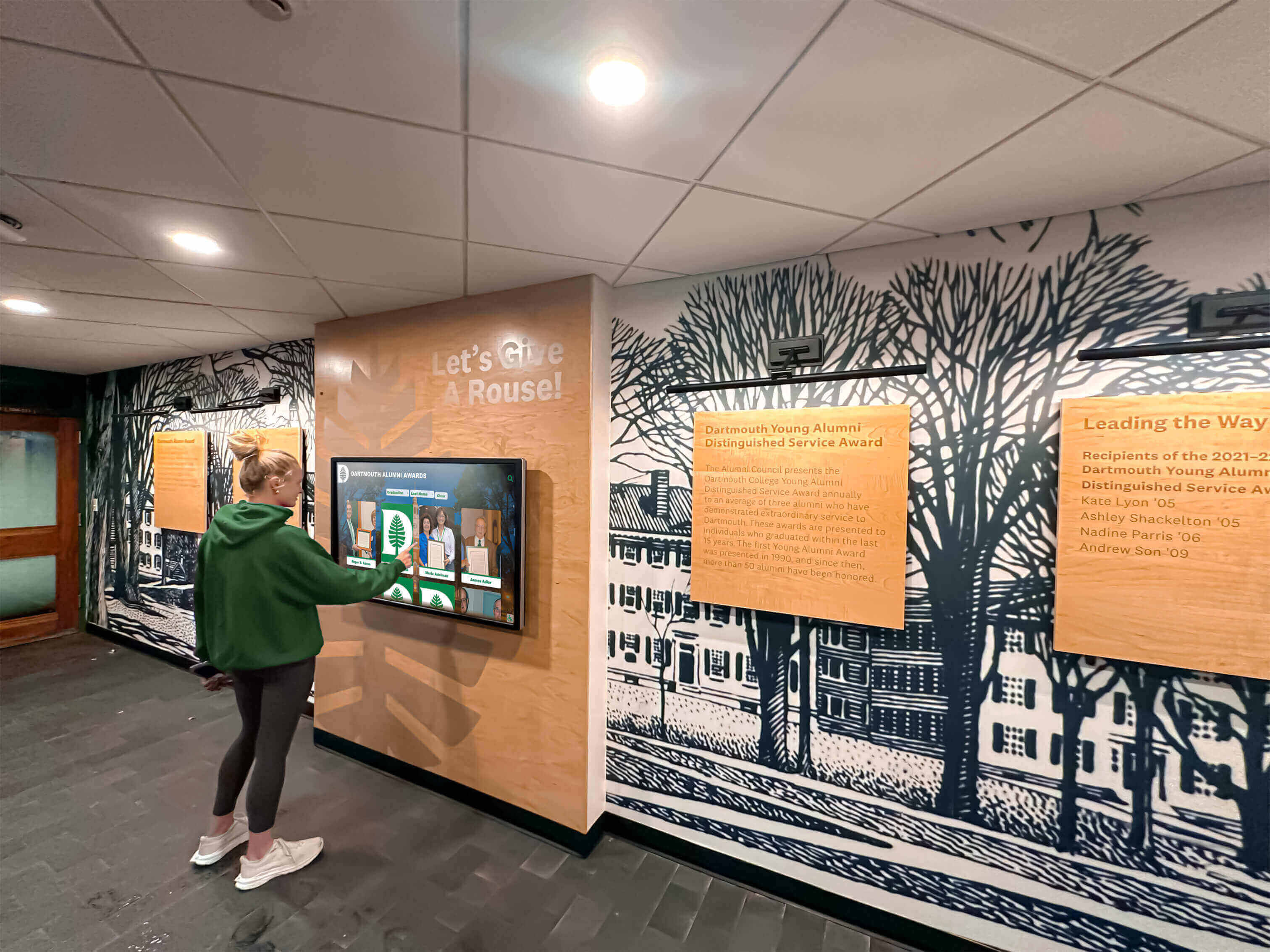
Well-designed archive interfaces make exploring institutional history intuitive and engaging for students comfortable with touchscreen technology
Athletic Records and Championship Documentation
Sports history generates strong community interest deserving systematic preservation:
Comprehensive Athletic Documentation Complete athletic archives include:
- Season-by-season team rosters with player names and positions
- Game-by-game results and statistics
- Championship documentation including brackets, final standings, and awards
- Individual record achievements and career statistics
- Coach biographies and tenure information
- Facility development and improvements
- Traditions and rivalries histories
This comprehensive approach creates rich resources supporting current team motivation, alumni engagement, and community pride in athletic excellence.
Integration with Recognition Systems Athletic archives gain visibility through integration with digital recognition displays celebrating current achievements while documenting historical excellence through unified platforms managing both contemporary and historical content.
Interactive displays enable current athletes to explore teams and players who came before them, creating motivational connections between past excellence and present aspirations while honoring the achievements that built athletic traditions.
Academic Achievement Archives
Intellectual accomplishments deserve documentation equal to athletic success:
Academic Achievement Documentation Comprehensive academic archives preserve:
- Honor roll lists by semester and year
- Scholarship recipients and awards
- Academic competition results and individual achievements
- Advanced Placement and International Baccalaureate scores
- National Merit Scholars and similar recognitions
- Perfect attendance and citizenship awards
- Department-specific subject excellence awards
This systematic academic documentation supports academic recognition programs while creating permanent records honoring intellectual achievement.
Balancing Accessibility with Privacy Academic records require careful privacy considerations:
- Public celebration of students and families who consent to recognition
- Aggregate statistics showing institutional academic excellence without identifying specific students
- Restricted access to detailed academic records requiring authorization
- Age-based access rules protecting minor students while celebrating adult achievements
Clear policies established during archive development prevent problems while enabling appropriate celebration of academic excellence.
Oral History Programs: Capturing Lived Experience
Written documents and photographs record events, but oral histories capture why they mattered, who made them happen, and what they meant to participants.
Planning Systematic Oral History Initiatives
Effective oral history programs begin with strategic planning identifying priorities and establishing sustainable approaches:
Priority Subject Identification Focus limited resources on individuals possessing irreplaceable knowledge:
- Longtime faculty and staff who witnessed institutional evolution
- Retired administrators who made strategic decisions shaping current programs
- Former coaches who built athletic traditions
- Distinguished alumni with unique perspectives on educational impact
- Founding families or community members connected to institutional origins
- Support staff often overlooked in formal histories but possessing valuable insights
The urgency of oral history cannot be overstated. Every year, valuable institutional knowledge disappears when individuals pass away without sharing memories and perspectives.
Interview Protocol Development Professional oral history standards recommend structured approaches:
- Pre-interview research ensuring informed questioning
- Prepared question lists covering key topics while allowing natural conversation
- High-quality audio or video recording preserving complete interviews
- Signed release forms documenting permission for archival use
- Comfortable, quiet interview locations minimizing distractions
Well-designed protocols balance systematic coverage with flexibility enabling subjects to share unexpected insights and stories.
Processing and Preserving Oral Histories
Raw interview recordings require processing before entering archival collections:
Transcription and Indexing Complete transcription creates searchable text enabling researchers to quickly locate specific topics, quotes, or themes without listening to entire recordings. Detailed indexing notes key subjects, stories, and people mentioned, providing finding aids guiding future research.
Transcription options include:
- Professional transcription services ensuring accuracy
- Automated transcription software requiring manual correction
- Student or volunteer transcription providing cost-effective approaches
Most schools pursue accuracy over speed, recognizing that imperfect transcripts reduce oral history value.
Metadata and Description Comprehensive metadata records:
- Interview subject biographical information
- Interviewer identification and date
- Topics and themes covered
- Time period discussed
- Persons mentioned
- Locations described
- Technical specifications
Rich metadata enables discovery through archive search systems while providing context for understanding interview content.
Storage and Access Oral histories require multi-format preservation:
- Original audio/video files in archival formats
- Access copies in common formats for easier playback
- Complete transcripts in searchable text
- Index documents summarizing content
- Release forms documenting usage permissions
Cloud-based storage protects oral histories from loss while enabling worldwide access for alumni, researchers, and community members interested in institutional history.
Integrating Oral Histories with Archives
Oral histories achieve maximum impact through integration with other archival materials:
- Audio clips incorporated into interactive displays bringing personal voices to historical narratives
- Transcripts linked from digital yearbooks providing context for specific years or events
- Video excerpts featured on institutional websites and social media
- Complete interviews made available through online research portals
- Documentary projects combining oral histories with photographs and documents
This multi-format integration ensures oral history investments deliver value across multiple community engagement channels.
Community Crowdsourcing and Collaborative Archiving
Schools possess only portions of their complete historical record. Alumni, families, and community members hold countless photographs, documents, and memories dramatically enriching institutional archives when systematically collected.
Designing Effective Crowdsourcing Campaigns
Successful historical crowdsourcing requires strategic planning:
Clear Campaign Focus Specific requests generate better responses than vague calls for “anything historical”:
- Photographs from specific decades with identified gaps
- Documents about particular programs, buildings, or events
- Memories of significant individuals who should be documented
- Materials documenting underrepresented aspects of institutional history
Targeted campaigns help contributors understand exactly what materials are needed while focusing effort on highest-priority collection gaps.
Multiple Submission Methods Accommodate different preferences and technical comfort levels:
- Online upload forms for digital files or scanned materials
- Email addresses for sending files directly
- Physical drop-off locations for lending materials for scanning
- Mail-in options for distant contributors
- Scheduled scanning events where contributors bring materials for on-site digitization
Removing barriers increases participation rates significantly.
Return Guarantees and Recognition Contributors need assurance their materials will be handled carefully:
- Clear promises to return physical materials after scanning
- Estimated timelines for return
- Tracking systems ensuring nothing is lost
- Recognition for contributors through archive credits
- Certificates or acknowledgments for significant contributions
Building trust encourages lending of personally valuable materials that might otherwise remain in private hands unavailable for institutional archives.
Promotion Through Multiple Channels
Broad outreach reaches diverse community members:
- Alumni newsletters and email communications
- Social media campaigns on Facebook, Instagram, and LinkedIn
- Local media coverage in newspapers and radio
- Reunion events providing natural gathering opportunities
- Website features highlighting campaigns and showing progress
- Personal outreach to specific individuals likely possessing needed materials
Multi-channel promotion generates awareness while repeated messaging reinforces importance.
Collaborative Identification and Documentation
Crowdsourcing creates opportunities for collaborative knowledge building:
Photograph Identification Projects Schools posting unidentified historical photographs to social media or email lists often discover alumni can identify individuals, events, and locations, gradually filling gaps in archival knowledge. Some schools host “identification parties” during reunion events where alumni collectively review photographs, share stories, and document who appears in images.
Verification and Accuracy Multiple sources confirming or correcting information reduce archival errors. When several alumni independently provide consistent identification or details, confidence in accuracy increases substantially. Contradictory information flags items requiring additional research before finalizing descriptions.
Story Collection Beyond physical materials, crowdsourcing captures memories and stories adding context to formal records. Online submission forms collecting memories about specific events, buildings, teachers, or traditions create rich narrative content supplementing visual and documentary materials.
Blending traditional architectural heritage with contemporary digital archives honors history while embracing modern storytelling capabilities
Establishing Ongoing Documentation Protocols
Effective archiving isn’t one-time projects but ongoing commitments preventing future gaps:
Annual Documentation Standards
Schools with strong historical records established systematic processes capturing current events before they become historical gaps:
Comprehensive Photography Programs Assign responsibility for documenting all major events, teams, performances, and activities through quality photographs capturing:
- Complete rosters for all teams, clubs, and organizations
- Performance and competition events
- Award ceremonies and recognition events
- Facility changes and campus development
- Daily student life and traditions
Digital-first photography eliminates later scanning needs while ensuring immediate availability for contemporary uses and long-term archival preservation.
Official Record Preservation Systematic retention ensures important documents enter archives:
- Board meeting minutes and significant policy documents
- Strategic plans and accreditation materials
- Significant correspondence documenting decisions
- Budget documents showing resource allocation
- Enrollment and demographic data tracking institutional evolution
Digital document management systems with archival export capabilities streamline this process.
Student Publication Collection Complete sets of newspapers, yearbooks, literary magazines, handbooks, and event programs document student life perspectives often absent from official administrative records. Designating responsibility for collecting and archiving all student publications prevents gaps.
Creating School Historian Roles
Formal or informal “school historian” positions coordinate archival efforts:
Responsibilities School historians typically:
- Coordinate annual documentation activities
- Manage relationships with alumni contributors
- Oversee digitization projects and vendor relationships
- Maintain archival organization systems
- Serve as institutional memory resources when historical questions arise
- Plan anniversary celebrations and historical exhibits
- Promote archives to build community awareness and usage
These roles might be filled by librarians, dedicated staff, interested faculty volunteers, or specifically hired archivists depending on institutional resources.
Technology-Enabled Efficiency
Modern platforms dramatically reduce administrative burden for ongoing documentation. Solutions like Rocket Alumni Solutions provide cloud-based content management enabling remote updates from any device, bulk upload tools for processing groups of materials efficiently, templated entry forms standardizing data collection, automated publishing schedules eliminating manual update tasks, and role-based permissions allowing appropriate staff access without requiring technical expertise.
These systems make ongoing archival documentation sustainable even with limited dedicated staff time.
Professional Development and Training
Effective archiving requires knowledge and skills often absent from typical educational backgrounds:
Staff Training Needs
Personnel involved in archival work benefit from training in:
- Basic archival principles and best practices
- Digitization techniques and quality standards
- Metadata creation and descriptive standards
- Digital asset management and file organization
- Copyright and privacy considerations
- Archival reference and research assistance
- Oral history interviewing techniques
- Collection development and appraisal
Many professional organizations offer workshops, webinars, and online courses specifically designed for educational archivists and those new to archival work.
Professional Archival Organizations
Connecting with professional communities provides valuable resources and support:
- Society of American Archivists (SAA) offers comprehensive resources, training, and professional standards
- Regional archival associations provide local networking and workshops
- Educational archive listservs enable questions and peer learning
- State library associations often include archival interest groups
Even schools without dedicated archivists benefit from connecting staff to these professional networks.
Consultant and Partnership Options
Schools lacking internal expertise often engage external support:
- Archival consultants providing project planning and implementation guidance
- Professional digitization services offering turnkey scanning and processing
- University archival science programs providing student practicum projects
- Regional library systems offering shared equipment and expertise
Strategic partnerships enable effective archiving without requiring schools to develop all capabilities internally.
Ready to Build Your School Archive System?
Discover how Rocket Alumni Solutions provides comprehensive archiving platforms combining professional digitization, cloud-based management, and interactive displays that make institutional history accessible and engaging. Our expert team guides you from initial planning through successful implementation.
Schedule Your Archiving ConsultationMeasuring Archival Program Success
Regular assessment demonstrates value while revealing improvement opportunities:
Quantitative Success Metrics
Measurable indicators show concrete progress:
- Total items processed and archived
- Years of institutional history comprehensively documented
- Digital files created with full metadata
- Oral history interviews completed and transcribed
- Web archive visits and session duration
- Physical display interactions and engagement time
- Materials contributed through crowdsourcing campaigns
- Social media reach and engagement with archival content
Tracking metrics over time demonstrates sustained progress justifying ongoing resource investment.
Qualitative Impact Indicators
Beyond numbers, successful archives demonstrate meaningful community impact:
- Alumni testimonials about reconnecting with formative experiences through archives
- Student projects and learning activities enabled by archival resources
- Research inquiries from historians, journalists, or genealogists
- Media coverage featuring archival discoveries or collections
- Donor connections between giving decisions and historical content
- Reunion attendance increases attributed to historical engagement
These qualitative impacts reveal deeper value beyond simple archival outputs.
Return on Investment Analysis
Comprehensive ROI evaluation compares archival costs against benefits:
- Alumni engagement improvements and associated giving increases
- Recruitment advantages from demonstrated tradition and excellence
- Space and efficiency savings from digital access replacing physical storage browsing
- Risk mitigation value from protecting irreplaceable materials
- Research and scholarship enabled by accessible archives
Many schools discover that comprehensive archiving delivers returns exceeding costs within 3-5 years when measuring holistically across benefit categories.
Common Challenges and Practical Solutions
Schools implementing archiving programs encounter predictable obstacles. Understanding common challenges and proven solutions ensures successful outcomes:
Challenge: Limited Existing Materials
Many schools discover comprehensive historical records simply don’t exist for certain periods.
Solutions:
- Accept incomplete documentation for some eras rather than delaying entire projects
- Implement aggressive crowdsourcing seeking personal collections from alumni and community
- Partner with local historical societies and libraries that may hold school-related materials
- Build archival infrastructure acknowledging gaps while adding content as materials emerge
- Focus heavily on comprehensive current documentation preventing future gaps
Challenge: Overwhelming Project Scope
Comprehensive archiving spanning decades feels impossibly large.
Solutions:
- Begin with clearly defined pilot projects demonstrating success
- Focus initial efforts on highest-priority materials at greatest risk
- Implement ongoing annual processes preventing future backlogs
- Engage volunteers, students, or external partners expanding capacity
- Celebrate incremental progress maintaining momentum over years
Challenge: Technical Complexity
Staff may feel overwhelmed by digitization equipment, software, and technical standards.
Solutions:
- Partner with professional services providing turnkey solutions
- Select purpose-built educational platforms designed for non-technical users
- Invest in comprehensive training and ongoing support
- Start simple before advancing to complex features
- Engage technology-comfortable students supporting staff
Challenge: Budget Constraints
Archiving competes with numerous priorities for limited funds.
Solutions:
- Seek designated gifts from alumni passionate about preservation
- Apply for grants from educational foundations and historical organizations
- Implement phased approaches spreading costs across multiple budget years
- Demonstrate ROI connecting archiving to fundraising, recruitment, and other outcomes
- Partner with external organizations sharing resources and reducing individual costs
Your School Archive Action Plan
Schools ready to implement comprehensive archiving should follow systematic approaches:
Phase 1: Assessment and Planning (Months 1-3)
- Conduct comprehensive materials inventory across all locations
- Evaluate condition and preservation priorities
- Define clear objectives and success metrics
- Assess organizational readiness and resource availability
- Develop formal archival policies and collection scope
- Secure administrative approval and resource commitments
Phase 2: Initial Implementation (Months 3-12)
- Begin highest-priority digitization projects
- Implement archival storage improvements for physical materials
- Select and configure cloud-based archival management platform
- Conduct initial oral history interviews with aging community members
- Launch crowdsourcing campaign collecting community-held materials
- Install first interactive display in high-visibility location
Phase 3: Expansion and Sustainability (Year 2+)
- Expand digitization to additional collection types and time periods
- Implement ongoing annual documentation protocols
- Add additional interactive displays across campus
- Develop web-accessible online archive portals
- Build volunteer and student engagement programs
- Establish permanent school historian role and archival budget
- Integrate archives with alumni engagement, development, and recruitment initiatives
Well-implemented archives become gathering points where community members explore shared heritage and discover connections across generations
The Lasting Impact of Comprehensive School Archives
Schools investing in systematic archival programs create benefits extending far beyond historical preservation:
Building Institutional Identity
Comprehensive archives strengthen institutional identity by connecting current experiences to larger narratives spanning generations. Students who understand their school’s journey develop deeper appreciation for traditions, stronger pride in institutional excellence, and greater sense of responsibility for maintaining positive legacies.
Strengthening Community Connections
Archives provide content that maintains lifelong connections for alumni who explore institutional history through accessible digital platforms. Historical documentation enables graduates to revisit formative experiences, share memories with family and friends, and reconnect with classmates across decades. This emotional connection translates to increased reunion attendance, stronger volunteer participation, and greater philanthropic support.
Preserving Irreplaceable Knowledge
Every school’s history is unique and irreplaceable. Physical materials deteriorate, individuals pass away, and institutional memory fades unless actively preserved. Comprehensive archiving ensures future generations can understand, appreciate, and learn from the accomplishments, challenges, and evolution that shaped their institutions.
Supporting Strategic Goals
Historical documentation supports recruitment showcasing tradition and excellence, development demonstrating long-term impact, accreditation documenting sustained quality, and planning providing institutional memory informing decisions. Schools investing in archives discover preserved history becomes strategic assets supporting diverse organizational objectives.
Conclusion: Your School’s History Demands Protection
Every school possesses unique history worth preserving—achievements worth celebrating, individuals worth honoring, traditions worth explaining, and lessons worth remembering. Academic and history archiving for schools combines systematic approaches including comprehensive digitization protecting materials from deterioration, cloud-based management systems enabling efficient organization, interactive display platforms making archives accessible and engaging, oral history programs capturing irreplaceable memories, crowdsourcing initiatives expanding available materials, ongoing documentation preventing future gaps, and professional partnerships providing specialized expertise.
Schools prioritizing archival development create lasting benefits for current students, alumni, prospective families, and future generations. They transform scattered memories and deteriorating materials into coherent narratives accessible to anyone interested in understanding institutional heritage. They demonstrate respect for those who built educational excellence while inspiring continued achievement.
The urgency of archival work cannot be overstated. Every year without comprehensive preservation increases risk of permanent loss as materials deteriorate, knowledge holders pass away, and institutional memory fades. The time to begin preserving your school’s history is now—before additional irreplaceable pieces disappear forever.
Modern technology platforms from providers like Rocket Alumni Solutions make comprehensive archiving achievable for schools of all sizes through intuitive content management combined with sophisticated display capabilities specifically designed for educational institutions. Whether starting with extensive historical collections or building gradually, whether installing impressive physical displays or beginning with web-accessible platforms, whether documenting specific eras or capturing comprehensive institutional histories—proven methods and powerful tools enable effective preservation supporting your unique circumstances and goals.
Your school’s unique story deserves protection, celebration, and accessibility for generations to come. Begin building comprehensive archival systems today, ensuring the accomplishments of past generations continue inspiring future excellence while strengthening community bonds that make your institution special.
Sources:
- Guidelines for College and University Archives - Society of American Archivists
- NARA Technical Guidelines for Digitization
- National Archives Digital Preservation
- NEDCC Preservation and Selection for Digitization
- Archiving and Digitizing Your High School’s History - NFHS
- Creating an Online Digital Archive for Your School - Advantage Archives
- The Role of Digital Archives in Education - Anderson Archival































