ADA-compliant digital recognition displays have become essential infrastructure for modern educational institutions committed to inclusive excellence. As schools replace aging trophy cases and static plaques with interactive touchscreen systems, ensuring these installations meet Americans with Disabilities Act (ADA) requirements isn’t just about legal compliance—it’s about guaranteeing every student, visitor, and community member can access and engage with the achievements your institution celebrates.
Yet procurement teams often discover accessibility requirements late in the evaluation process, after months invested in vendor comparisons and budget approvals. Technical specifications that seemed straightforward—screen placement, interface design, content presentation—suddenly require ADA expertise few districts maintain in-house. Vendors claim compliance without documentation. Installation contractors unfamiliar with accessibility standards propose mounting heights that exclude wheelchair users. Content management systems lack the WCAG 2.1 AA features required for web-based components.
This comprehensive procurement checklist equips athletic directors, facilities managers, IT administrators, and purchasing coordinators with the specific technical requirements, validation questions, and documentation standards needed to confidently specify, evaluate, and deploy ADA-compliant digital recognition displays that serve your entire community.
Accessibility compliance for digital recognition displays involves multiple regulatory frameworks working together. The ADA establishes broad civil rights protections prohibiting disability discrimination in public spaces. The Architectural Barriers Act (ABA) Accessibility Standards provide detailed requirements for physical installation elements. Web Content Accessibility Guidelines (WCAG) 2.1 Level AA establishes technical standards for digital interfaces and content. Section 508 of the Rehabilitation Act mandates accessibility for electronic and information technology in federally funded institutions.
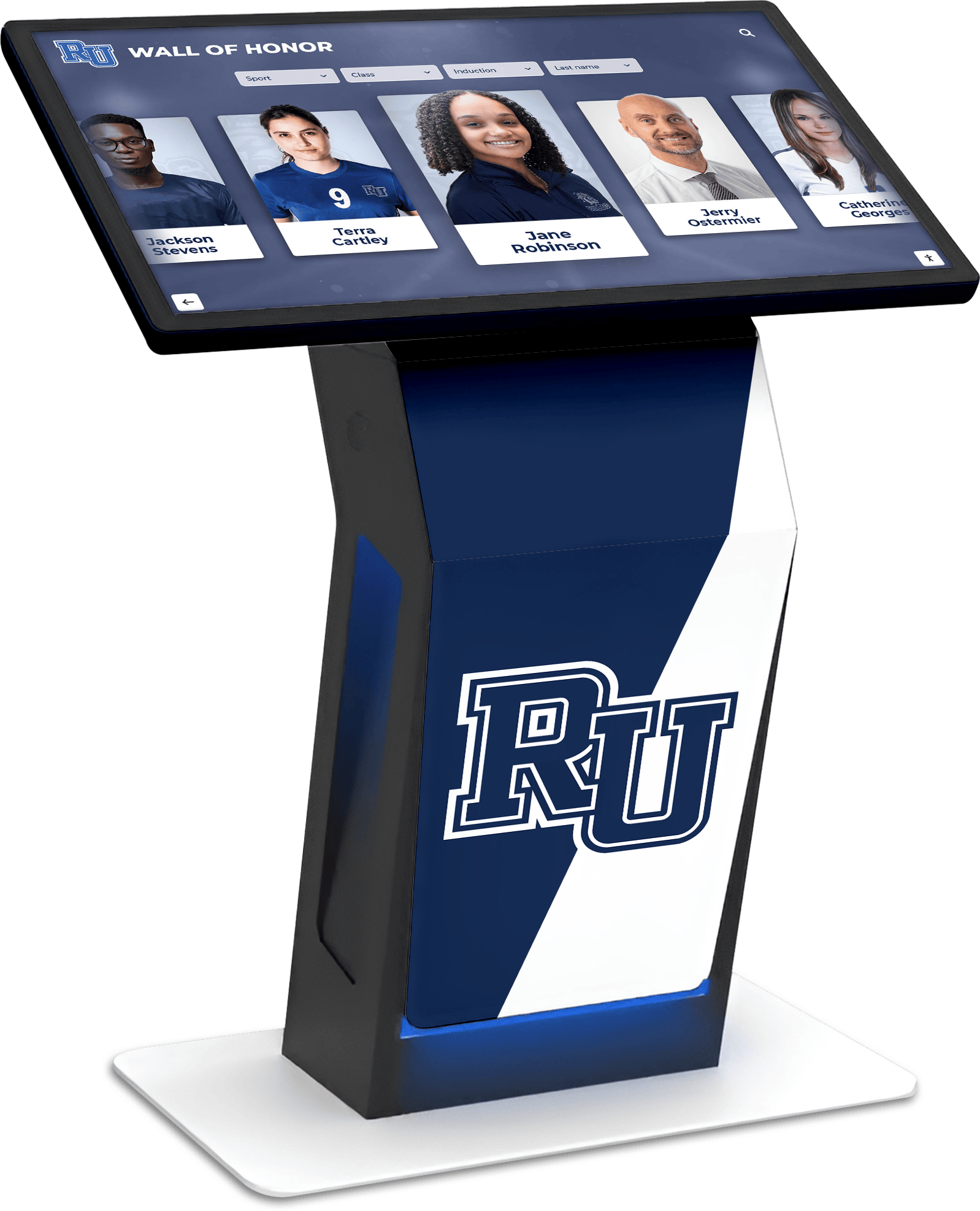
Understanding this regulatory landscape prevents the costly mistake of procuring displays that meet physical ADA mounting requirements while failing WCAG digital accessibility standards—or vice versa. Comprehensive compliance requires coordinated attention to both the physical installation and the digital interface.
Understanding ADA Physical Requirements for Digital Displays
Before evaluating software capabilities or content features, procurement teams must verify that proposed installations meet fundamental physical accessibility standards governing how students and visitors interact with digital displays.
Reach Range and Mounting Height Standards
The ADA establishes specific reach ranges ensuring wheelchair users and individuals of varying heights can access interactive elements. For forward approach installations where users face the display directly, operable components must be positioned between 15 inches and 48 inches above the finished floor. This includes all touchscreen targets, buttons, and controls requiring physical interaction.
Side approach installations where users approach from the side face more restrictive requirements, with the maximum reach height reduced to 46 inches when the depth of reach extends beyond 10 inches. For digital recognition displays, this typically means touchscreen interactive elements must remain within the lower portion of the display, with purely visual content acceptable in upper areas beyond reach range.
Critical Procurement Questions:
Document these specifications in your RFP and vendor evaluation criteria:
- What is the mounting height from finished floor to the lowest interactive element?
- What is the mounting height to the highest interactive element requiring touch interaction?
- Does the proposed installation assume forward approach, side approach, or both?
- Are all interactive controls (power buttons, volume controls, navigation elements) within compliant reach ranges?
- Can the system be configured to place all interactive content within the lower 48 inches while displaying non-interactive content higher?
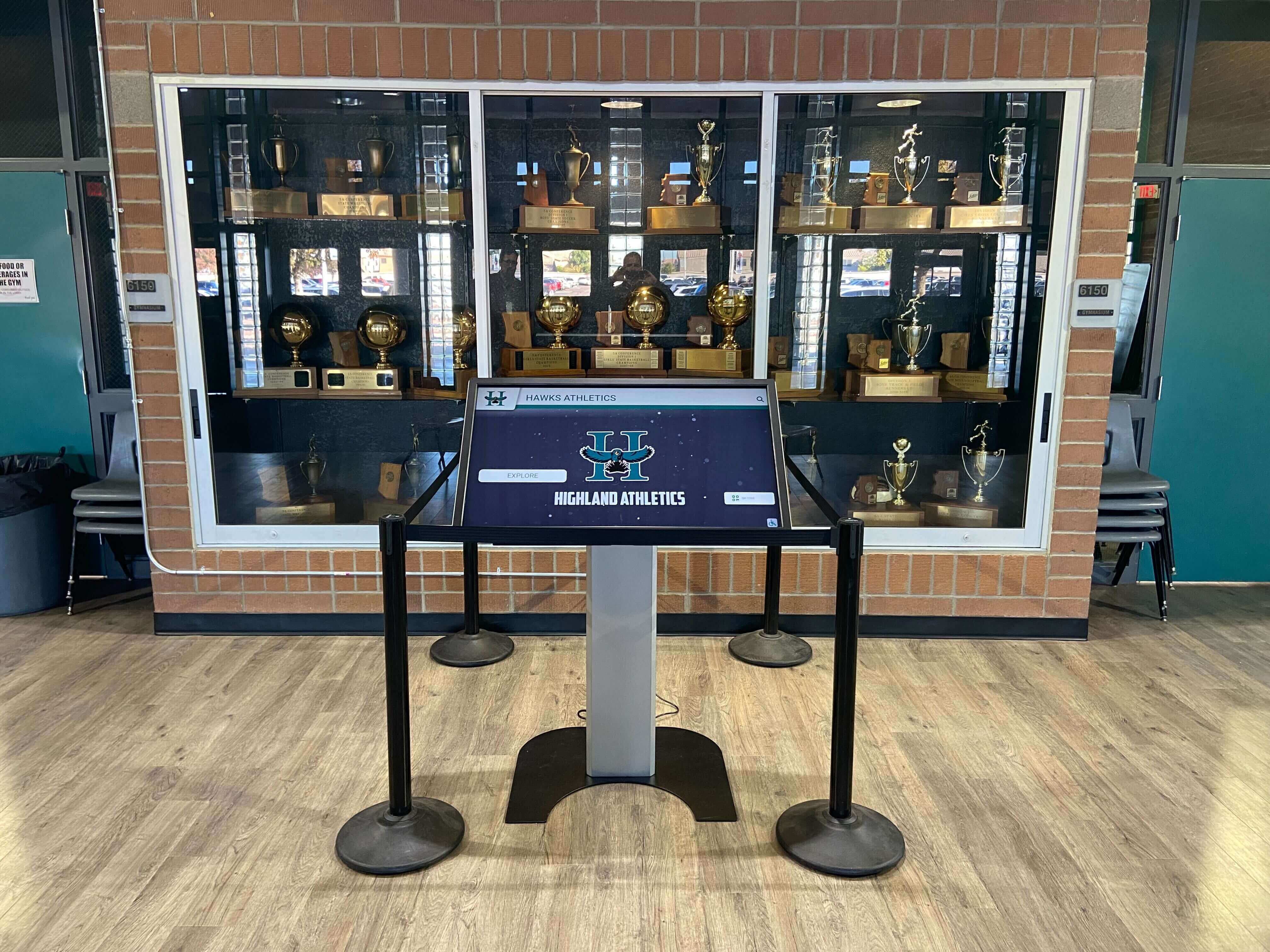
Many vendors propose installations with large format displays (55-inch, 65-inch, or larger screens) mounted at heights placing significant portions of touchscreen interface beyond compliant reach ranges. While visually impressive, these configurations fail ADA requirements if interactive elements appear in upper screen areas. Compliant solutions either limit interactive zones to lower screen portions or implement alternative access methods like voice control or companion web interfaces.
Clear Floor Space and Approach Requirements
ADA standards mandate 30 by 48-inch minimum clear floor space positioned for either forward or parallel approach to accessible elements. This clear space must be level, with maximum slope of 1:48 in any direction, and cannot be obstructed by objects, protruding elements, or temporary barriers.
For schools planning digital recognition displays in high-traffic hallways, cafeterias, or lobbies, this clear floor space requirement significantly impacts furniture placement, wayfinding signage, and traffic flow patterns. Procurement specifications should explicitly require vendors to provide installation drawings showing required clear floor space relative to surrounding architectural elements.
Protruding object regulations also apply when displays extend more than 4 inches from mounting surfaces. Objects protruding into circulation paths between 27 inches and 80 inches above the floor must not extend more than 4 inches. Larger displays often require recessed mounting or protective barriers ensuring compliance with these protrusion limits while maintaining required clear floor space.
Operable Parts and Controls
All controls and operating mechanisms must comply with Section 309 of the ADA Standards, requiring operation with one hand without tight grasping, pinching, or twisting of the wrist. Force required to activate controls must not exceed 5 pounds.
For touchscreen displays, this translates to specific interface requirements:
- Touch targets must activate with light touch pressure (capacitive touchscreens typically comply; older resistive screens may require excessive force)
- Multi-touch gestures like pinch-to-zoom create accessibility barriers for users with limited dexterity
- Swipe gestures should include alternative button-based navigation
- All functions accessible via touch must also be accessible through alternative input methods
Procurement specifications should require vendors to demonstrate operation of all display functions using only single-finger touch with minimal pressure, without gestures requiring simultaneous multi-point contact or sustained pressure.
WCAG 2.1 Level AA Digital Interface Requirements
While physical installation addresses spatial accessibility, digital interface accessibility ensures the content and functionality of your recognition display serves users with vision, hearing, cognitive, and motor impairments.
Perceivable Content Standards
WCAG’s first principle requires that information and user interface components be presentable to users in ways they can perceive. For digital recognition displays, this encompasses multiple technical requirements:
Text Alternatives (WCAG 1.1.1 - Level A)
All non-text content must have text alternatives serving equivalent purpose. For recognition displays, this means every profile photograph requires descriptive alt text, icons and graphical elements need text labels, decorative images must be marked as decorative, and complex graphics (charts, diagrams, infographics) need detailed text descriptions.
Many digital signage platforms lack proper alt text fields in their content management systems, making WCAG 1.1.1 compliance structurally impossible. Procurement specifications must require vendors to demonstrate where and how content administrators add alt text for each image during content upload.
Color Contrast Requirements (WCAG 1.4.3 - Level AA)
Text and images of text must maintain minimum 4.5:1 contrast ratio against backgrounds for normal text, and 3:1 ratio for large text (18 point or 14 point bold and larger). For digital recognition displays viewed from distance or in varying lighting conditions, maintaining these ratios becomes especially critical.
Request vendor demonstrations showing profile templates and layout options, then verify contrast ratios using digital tools like the WebAIM Contrast Checker. Common compliance failures include light gray text on white backgrounds, white text on light blue school colors, and overlaid text on photographic backgrounds without sufficient contrast enhancement.
Procurement specifications should require all template designs to include documented contrast ratio verification, with commitment that custom design work will maintain minimum ratios throughout all color scheme variations.
Resize Text Requirements (WCAG 1.4.4 - Level AA)
Text must be resizable up to 200% without loss of content or functionality. For recognition displays accessed via companion web interfaces or QR code links, this means responsive layouts must reflow content as text size increases, avoiding horizontal scrolling and preventing text overlap or truncation.
Test vendor demonstrations by increasing browser text size to 200% and verifying all profile information remains readable and accessible. Systems that use fixed-size layouts or image-based text typically fail this requirement.
Operable Interface Standards
WCAG’s second principle requires that user interface components and navigation be operable by all users regardless of input method.
Keyboard Accessible (WCAG 2.1.1 - Level A)
All functionality available through touch interface must also be available through keyboard navigation. For touchscreen recognition displays, this primarily affects kiosk modes and web-based access points, requiring tab navigation through all interactive elements, enter/space activation of buttons and controls, arrow key navigation for scrolling content, and escape key closure of modal dialogs.
Many touchscreen-first platforms build beautiful touch interfaces while neglecting keyboard navigation entirely. During vendor demonstrations, connect a USB keyboard and attempt to navigate profile content, search functions, and filtering options without using touch or mouse input. Failures in keyboard navigation create barriers for users with motor impairments who cannot operate touchscreens.
Timing Adjustable (WCAG 2.2.1 - Level A)
If your recognition display includes automatic content rotation, slideshow modes, or session timeouts, users must be able to turn off, adjust, or extend time limits. This particularly affects interactive kiosks that return to attract mode after inactivity.
Procurement specifications should require configurable timeout periods with options to disable automatic resets, allowing users who read slowly or use assistive technology adequate time to engage with content. The 20-second auto-advance common in digital signage creates significant barriers for many users.
Focus Visible (WCAG 2.4.7 - Level AA)
Keyboard focus indicators must be clearly visible when navigating interface elements. As users tab through buttons, links, and controls, visual indicators must show the currently focused element with sufficient contrast and size to be easily perceived.
Test vendor demonstrations using keyboard navigation and verify that focused elements receive visible highlighting borders, background changes, or other clear visual indicators. Systems using subtle or low-contrast focus indicators fail this requirement, making keyboard navigation impossible for users with low vision.
Understandable Content and Interface Standards
WCAG’s third principle requires that information and operation of user interface be understandable, preventing confusion that creates accessibility barriers.
Error Identification and Suggestion (WCAG 3.3.1, 3.3.3 - Level A/AA)
If your recognition display includes search functionality, filtering options, or interactive forms (like alumni profile claim processes), the system must identify input errors in text, suggest corrections when possible, and provide error prevention mechanisms for important actions.
For search interfaces, this means displaying “No results found” messages with suggested alternative search terms when searches fail. For profile submission forms, it requires clear identification of which fields contain errors and specific descriptions of how to correct them, rather than generic “Invalid input” messages.
Robust Technical Implementation Standards
WCAG’s fourth principle requires that content be robust enough to be interpreted reliably by assistive technologies, now and in the future.
Name, Role, Value (WCAG 4.1.2 - Level A)
All user interface components must programmatically expose name, role, state, and value information to assistive technologies. For web-based recognition displays, this requires proper HTML semantic structure using heading tags (h1-h6) for headings rather than styled paragraphs, button elements for buttons rather than clickable divs, proper form labels associated with input fields, ARIA landmarks identifying page regions, and ARIA labels for icons and controls without visible text.
Many content management systems generate semantically incorrect HTML, creating interfaces that appear functional to sighted users while remaining incomprehensible to screen reader users. Procurement specifications should require vendors to provide sample HTML output demonstrating proper semantic structure and ARIA implementation.

Comprehensive Procurement Checklist
Use this detailed checklist during RFP development, vendor evaluation, and pre-installation validation to ensure comprehensive ADA compliance.
Physical Installation Requirements
Mounting and Placement
- Lowest interactive element between 15-48 inches above finished floor (forward approach)
- Highest interactive element within reach range based on approach type
- Clear floor space of 30x48 inches minimum with maximum 1:48 slope
- Protruding elements comply with 4-inch maximum protrusion (27-80 inch height range)
- Installation drawings show clear floor space relative to surrounding architecture
- Approach path to display maintains 36-inch minimum accessible route width
Controls and Operation
- All controls operable with one hand without tight grasping/pinching
- Activation force does not exceed 5 pounds
- Capacitive touchscreen or equivalent requiring minimal pressure
- Alternative input methods available for all touch functions
- Power and volume controls within reach range and operable with one hand
Environmental Considerations
- Display positioning avoids glare that reduces contrast for users with low vision
- Audio output includes headphone jack for private listening
- Adequate lighting for users with low vision without creating screen glare
- Acoustic environment allows audio content to be heard clearly
Digital Interface Requirements
Perceivable Content
- Alt text fields available in CMS for all images
- Text contrast ratios meet minimum 4.5:1 (normal text) or 3:1 (large text)
- Color is not used as the only visual means of conveying information
- Text resizable to 200% without loss of content or functionality
- Audio content includes captions or transcripts
- Video content includes captions and audio description
Operable Interface
- All functionality available via keyboard navigation
- Tab order follows logical sequence through content
- Focus indicators clearly visible for all interactive elements
- Keyboard shortcuts do not conflict with assistive technology
- Timing adjustable or disable-able for auto-rotating content
- No content flashes more than 3 times per second
Understandable Interface
- Language programmatically identified for screen readers
- Navigation mechanisms consistent across all pages/screens
- Labels and instructions provided for all input fields
- Error identification clear and specific with correction suggestions
- Help documentation available explaining accessibility features
Robust Implementation
- Valid HTML with proper semantic structure
- ARIA labels and landmarks implemented correctly
- Compatible with current assistive technologies (demonstrate with NVDA, JAWS, VoiceOver)
- Responsive design maintains functionality at various viewport sizes
- Progressive enhancement ensures basic functionality without JavaScript
Vendor Documentation Requirements
Compliance Documentation
- Vendor provides completed VPAT (Voluntary Product Accessibility Template)
- VPAT version 2.4 or newer following Section 508 and WCAG 2.1 standards
- Third-party accessibility audit report available
- Specific WCAG 2.1 Level AA conformance claim with evidence
- Documentation of known accessibility issues with remediation timeline
Implementation Support
- Installation specifications include ADA mounting requirements
- Content creation guidelines include accessibility best practices
- Training materials cover accessible content authoring
- Ongoing technical support includes accessibility expertise
- Product roadmap includes accessibility enhancement commitments
Testing and Validation
- Vendor demonstrates keyboard-only navigation through all features
- Vendor demonstrates screen reader compatibility with profile content
- Contrast ratio verification documentation provided for all templates
- Sample content demonstrates proper alt text implementation
- Interactive prototype available for pre-procurement accessibility testing
Advanced Accessibility Features to Evaluate
Beyond minimum compliance requirements, leading recognition display systems include enhanced accessibility features that significantly improve user experience for individuals with disabilities.
Multi-Modal Content Access
Comprehensive accessibility provides multiple ways to access the same content, accommodating diverse user needs and preferences. Advanced systems offer synchronized web-based access allowing remote exploration from personal devices with familiar assistive technology, QR code linking enabling smartphone access with device-native accessibility features, voice-controlled navigation for users who cannot operate touchscreens, and companion printed materials for users who prefer or require non-digital formats.
The combination of digital and traditional recognition approaches ensures broad accessibility while maximizing engagement opportunities across different user preferences and capabilities.
Customizable Interface Adjustments
Rather than enforcing single-size-fits-all presentation, sophisticated systems allow users to customize interface presentation for their individual needs through high contrast mode toggling, adjustable text size controls directly within the display interface, audio description activation for visual content, reading speed adjustments for automated narration, and simplified interface options reducing cognitive load.
These customization capabilities particularly benefit educational institutions serving students with learning disabilities, aging alumni populations with age-related vision or hearing changes, and visitors with temporary impairments like injuries affecting mobility or vision.
Inclusive Search and Filtering

Search functionality designed for accessibility includes multiple search methods (name search, year search, category browsing) accommodating different cognitive approaches, autocomplete suggestions reducing typing burden and preventing spelling errors, error tolerance accepting alternate spellings and partial matches, results preview showing context before full profile access, and persistent search state maintaining selections during extended browsing sessions.
Thoughtful athletic recognition programs ensure all students can discover their achievements through interfaces supporting diverse search strategies and interaction patterns.
Multilingual and Translation Support
For schools serving diverse communities, built-in translation capabilities enhance accessibility for English language learners and multilingual families through interface language selection, automatic content translation using AI-powered services, bidirectional text support for languages like Arabic and Hebrew, culturally appropriate iconography avoiding US-centric assumptions, and pronunciation guidance for name display reducing anxiety about mispronunciation.
These features prove especially valuable for comprehensive recognition programs celebrating diverse student populations across cultural and linguistic backgrounds.
Implementation Planning for ADA Compliance
Successful deployment of ADA-compliant digital recognition displays requires systematic planning addressing accessibility at every stage from site assessment through ongoing content management.
Pre-Installation Site Assessment
Before procurement finalization, conduct detailed site assessment evaluating accessibility considerations that inform both product selection and installation planning.
Physical Space Evaluation
Document existing conditions affecting ADA compliance: floor slope measurements in proposed installation areas, overhead clearance for users who are tall or use mobility devices, lighting conditions throughout the day and evening, ambient noise levels affecting audio content audibility, electrical outlet locations relative to accessible mounting positions, and distance from accessible parking and building entrances to proposed display location.
This assessment often reveals site constraints requiring product specification adjustments. For example, a proposed location with excessive floor slope may require alternative mounting positions, while high ambient noise environments may necessitate systems with superior audio output or visual-only content modes.
Traffic Flow Analysis
Observe and document circulation patterns during peak and off-peak periods, identifying accessible routes from building entrances to proposed display location, conflicts between required clear floor space and normal traffic patterns, potential queuing areas when multiple users access display simultaneously, emergency egress routes that cannot be obstructed, and sight lines from seated and standing positions at typical viewing distances.
Many schools discover that ideal locations from visibility and prestige perspectives create accessibility barriers due to narrow corridors, high-traffic conflicts, or poor accessible route connections. Early identification allows productive discussions about location alternatives or traffic pattern modifications.
Accessible Content Creation Workflows
ADA-compliant displays require accessible content, but many schools lack systematic processes ensuring content creators consistently implement accessibility best practices.
Content Standards Documentation
Develop written standards guiding all content creation: image specifications including minimum resolution, acceptable file formats, and required alt text length and style; text formatting guidelines specifying approved fonts, minimum sizes, and required contrast ratios; video requirements including caption file formats and audio description standards; profile template completion instructions explaining purpose and proper use of each field; and accessibility review checklists validating compliance before content publication.
These standards prevent accessibility issues from entering your content library while educating staff about the importance of inclusive content design. Effective digital content strategies integrate accessibility requirements from initial planning through execution.
Staff Training Programs
Schedule regular training ensuring all content contributors understand accessibility requirements through initial onboarding covering ADA/WCAG fundamentals and their relevance to recognition displays, hands-on practice using content management tools to create accessible profiles, template-based workflows reducing decisions and preventing common errors, quality assurance processes for peer review before publication, and annual refreshers reinforcing standards and introducing new features.
Training investment prevents the common scenario where schools purchase fully compliant display systems but populate them with inaccessible content, undermining the entire accessibility objective.
Ongoing Accessibility Maintenance
ADA compliance requires sustained attention rather than one-time implementation effort.
Regular Accessibility Audits
Schedule quarterly or semi-annual accessibility reviews examining representative sample of recent content for alt text completeness and quality, contrast ratio compliance across all active templates, keyboard navigation through new features or interface updates, compatibility with current versions of major assistive technologies, and user feedback from individuals with disabilities about accessibility barriers.
These audits identify compliance drift before minor issues compound into systematic barriers, while demonstrating institutional commitment to accessibility maintenance.
Continuous Improvement Process
Establish feedback mechanisms allowing users to report accessibility barriers anonymously and easily, and develop remediation workflows prioritizing barrier removal based on severity and frequency. Track accessibility metrics measuring improvement over time, benchmark against WCAG conformance standards and industry best practices, and participate in accessibility professional development and training opportunities.
Schools implementing comprehensive digital recognition systems recognize accessibility as an ongoing commitment requiring dedicated resources and systematic attention.
Addressing Common Procurement Challenges
Even with comprehensive checklists and clear requirements, procurement teams encounter predictable challenges when specifying ADA-compliant recognition displays.
Navigating Vendor Claims Without Documentation
Vendors frequently claim ADA compliance without providing specific documentation substantiating those claims. When vendors assert general compliance, request VPAT documentation specifying WCAG 2.1 Level AA conformance, third-party accessibility audit reports from recognized testing firms, specific WCAG success criteria conformance details with evidence, and contact information for reference installations where accessibility features can be demonstrated.
If vendors cannot provide VPAT documentation or third-party audit results, assume non-compliance until they can substantiate claims through demonstration and testing. Generic “ADA compliant” marketing language without supporting evidence represents significant procurement risk.
Balancing Budget Constraints with Compliance Requirements
Accessibility compliance adds costs through specialized hardware features, accessible content management capabilities, third-party testing and certification, accessible content creation, and ongoing maintenance and training. However, non-compliance creates greater costs through legal liability and potential ADA complaints, remediation expenses after procurement when compliance gaps emerge, duplicate implementations when initial purchases prove unusable, and reputational damage from inaccessible institutional infrastructure.
Position accessibility requirements as non-negotiable minimum standards rather than optional enhancements, just as fire safety codes and building structural requirements represent mandatory rather than aspirational standards. Thoughtful budget planning for recognition programs incorporates accessibility from initial cost estimation through procurement.
Coordinating Cross-Departmental Stakeholders
Comprehensive accessibility compliance requires coordinated involvement from facilities teams understanding physical ADA requirements, IT departments managing digital accessibility standards and assistive technology, content creators developing accessible recognition profiles, legal counsel reviewing compliance documentation and institutional risk, and disability services offices representing users with accessibility needs.
Establish cross-functional procurement teams rather than delegating accessibility verification to single departments. Early stakeholder engagement prevents late-stage conflicts when departments discover unanticipated requirements or compatibility issues.
Managing Legacy System Transitions
Schools with existing non-compliant recognition displays face transition planning challenges. Document accessibility gaps in current systems creating formal record of barriers requiring remediation, prioritize replacement based on visibility, usage, and barrier severity, plan phased implementation allowing budget distribution across fiscal years, develop bridge solutions providing accessible alternatives during transition periods, and communicate transition timelines and accessibility improvements to community.
For institutions managing transitions from traditional to digital recognition, accessibility requirements should drive upgrade priorities rather than being addressed as afterthoughts.
Accessibility Beyond Compliance: Universal Design Principles
While ADA compliance establishes legal minimums, universal design principles elevate accessibility from obligation to excellence, creating recognition displays that work better for everyone.
Designing for the Full Range of Human Diversity
Universal design acknowledges the breadth of human variation in sensory abilities, physical capabilities, cognitive approaches, language backgrounds, age-related changes, temporary impairments, and situational limitations. Recognition displays designed for this full spectrum serve edge cases and typical users simultaneously through flexible interfaces accommodating multiple interaction styles, redundant cueing using visual, auditory, and tactile information channels, simple and intuitive operation requiring minimal instruction, perceptible information effective regardless of ambient conditions or user sensory abilities, and tolerance for error preventing irreversible actions and supporting exploration.
These principles benefit students searching for their achievements during noisy pep rallies, elderly alumni with age-related vision or hearing changes, prospective families touring campuses with young children, and countless other users beyond those identified through disability frameworks.
Creating Inclusive User Experience
Accessibility and user experience optimization work synergistically rather than in tension. Well-designed accessible interfaces typically provide better experience for all users through clear visual hierarchy benefiting users with and without cognitive disabilities, generous tap targets reducing errors for users with and without motor impairments, readable typography serving users with and without vision limitations, logical navigation supporting users with and without screen readers, and consistent interaction patterns reducing cognitive load for all users.
Recognition programs celebrating diverse achievement categories demonstrate institutional commitment to inclusion that extends naturally to accessible display implementation.
Participatory Design and User Testing
The most effective accessible systems involve users with disabilities throughout design, procurement, and implementation processes through participatory design sessions including students and community members with diverse disabilities, user testing with assistive technology users before procurement decisions, accessibility advisory committees providing ongoing guidance, feedback mechanisms enabling continuous improvement based on actual use, and co-creation opportunities allowing users to shape features and functionality.
This human-centered approach produces better outcomes than checklist compliance alone, while building authentic relationships with disability communities and demonstrating institutional values through meaningful participation.
Vendor Evaluation Framework
Structure vendor evaluation around specific accessibility demonstrations and documentation requirements ensuring objective comparison.
Required Demonstration Scenarios
Request vendors demonstrate these specific accessibility scenarios during product presentations:
Physical Accessibility Demonstration
- Navigate to and interact with display from wheelchair-seated position
- Operate all controls using only one hand with minimal force
- Access all interactive elements within proper reach ranges
- Utilize display with adequate clear floor space
Keyboard Navigation Demonstration
- Navigate complete profile from search through full content using only keyboard
- Access all filtering and sorting functions without mouse or touch
- Activate all buttons and controls using enter/space keys
- Exit modal dialogs and return to previous state using escape key
Screen Reader Compatibility Demonstration
- Navigate profile directory using NVDA, JAWS, or VoiceOver
- Search for specific individual using screen reader
- Access complete profile information with all content announced
- Understand page structure through heading navigation
Visual Accessibility Demonstration
- Display all content with Windows high contrast mode enabled
- Zoom text to 200% without loss of functionality
- Navigate using visible focus indicators only
- Identify all information not relying solely on color
Content Creation Demonstration
- Add new profile with proper alt text for images
- Verify contrast ratios for custom color schemes
- Create accessible video content with captions
- Preview content with accessibility checking tools
Vendors unable to demonstrate these scenarios likely lack substantive accessibility implementation beyond surface-level compliance gestures.
Scoring Accessibility Requirements
Develop weighted scoring criteria emphasizing accessibility compliance:
- Physical ADA Compliance (20%): Mounting specifications, reach ranges, clear floor space, controls operation
- WCAG 2.1 Level AA Conformance (25%): Documented conformance across all success criteria with third-party validation
- Assistive Technology Compatibility (15%): Screen reader support, keyboard navigation, high contrast mode
- Accessible Content Management (15%): Alt text workflows, contrast checking, semantic HTML output
- Documentation and Support (10%): VPAT completeness, training materials, accessibility expertise
- Universal Design Features (10%): Customization options, multi-modal access, inclusive user experience
- Ongoing Accessibility Commitment (5%): Product roadmap, bug fix process, compliance with emerging standards
This weighting prevents common procurement pitfalls where price or feature richness overshadow accessibility requirements that should represent non-negotiable minimums.
Implementation Timeline and Milestones
Structure ADA-compliant display implementation around clear phases with defined accessibility validation points.
Phase 1: Planning and Procurement (Months 1-3)
Month 1: Requirements Definition
- Assemble cross-functional procurement team including accessibility expertise
- Conduct site assessment evaluating physical accessibility conditions
- Define accessibility requirements based on ADA, WCAG 2.1 AA, and universal design principles
- Develop RFP including detailed accessibility specifications and demonstration requirements
Month 2: Vendor Evaluation
- Issue RFP to qualified vendors
- Review vendor proposals with particular attention to accessibility documentation
- Schedule vendor demonstrations emphasizing accessibility scenarios
- Conduct reference checks specifically asking about accessibility experience
Month 3: Selection and Contracting
- Score vendor proposals using weighted accessibility criteria
- Negotiate contract including accessibility conformance guarantees
- Establish acceptance testing procedures validating accessibility compliance
- Finalize implementation timeline and milestones
Phase 2: Installation and Configuration (Months 4-5)
Month 4: Physical Installation
- Verify mounting heights comply with reach range requirements before final installation
- Confirm clear floor space markings and protruding object compliance
- Test controls operation from seated and standing positions
- Validate lighting, glare, and acoustic conditions
Month 5: System Configuration
- Configure interface for optimal accessibility (contrast, text size, navigation)
- Import initial content following accessible content creation standards
- Conduct accessibility testing using assistive technologies
- Remediate identified accessibility barriers before acceptance
Phase 3: Content Development and Training (Months 6-7)
Month 6: Accessible Content Creation
- Develop comprehensive profile content with proper alt text and descriptions
- Verify contrast ratios across all implemented templates
- Create video content with captions and audio descriptions
- Build searchable archive with accessible metadata
Month 7: Staff Training and Launch
- Train content administrators on accessible content creation workflows
- Educate broader staff about accessibility features and benefits
- Conduct user testing with students and community members with disabilities
- Launch recognition display with celebration emphasizing accessibility commitment
Phase 4: Evaluation and Continuous Improvement (Month 8+)
Ongoing Maintenance
- Monitor user feedback particularly from individuals with disabilities
- Conduct quarterly accessibility audits of content and functionality
- Stay current with WCAG updates and assistive technology evolution
- Participate in professional development around digital accessibility
This phased approach ensures accessibility receives systematic attention throughout implementation rather than becoming an afterthought addressed only when compliance gaps emerge.
Case Study: Procurement Success Factors
While avoiding invented customer testimonials, examining common success patterns from schools that have effectively procured ADA-compliant recognition displays reveals actionable insights.
Success Factor: Early Accessibility Integration
Schools achieving strong accessibility outcomes integrate compliance requirements from the earliest planning stages rather than adding them later in procurement processes. This early integration manifests through accessibility representation on planning committees from initial discussions, site assessment including accessibility considerations before location decisions, budget allocation explicitly including accessibility features and testing, and stakeholder engagement involving disability services and students with disabilities.
Early integration prevents the costly scenario where schools discover accessibility requirements after selecting preferred vendors or products, necessitating expensive modifications or complete procurement restarts.
Success Factor: Specific Documentation Requirements
Successful procurement includes detailed documentation requirements preventing vague compliance claims from substituting for verified accessibility implementation. Effective RFPs mandate completed VPAT 2.4 documentation following ACR format, third-party accessibility audit reports from recognized testing organizations, specific success criteria conformance evidence for all WCAG 2.1 Level AA requirements, installation specifications addressing all physical ADA requirements, and accessible content creation workflow documentation.
This documentation specificity eliminates vendors without substantive accessibility expertise while providing evaluation teams with objective comparison criteria.
Success Factor: Demonstration-Based Evaluation
Rather than relying solely on written proposals, effective procurement emphasizes live demonstrations of accessibility features using evaluation scenarios covering keyboard navigation, screen reader compatibility, physical access, and content creation workflows. Demonstrations reveal implementation quality and usability that documentation alone cannot capture, while exposing vendor expertise (or lack thereof) in accessibility concepts and assistive technology.
Success Factor: Cross-Departmental Collaboration
Procurement teams including facilities, IT, content creation, disability services, and legal perspectives make better-informed decisions than single-department efforts. This collaboration ensures physical and digital accessibility requirements receive balanced attention, site constraints inform product specifications, content creation capabilities match institutional resources, and compliance verification addresses institutional risk.
Schools implementing comprehensive recognition strategies recognize accessibility as a shared responsibility requiring coordinated expertise.
Legal and Risk Management Considerations
Beyond creating inclusive experiences, ADA compliance carries legal implications procurement teams must understand.
ADA Complaint and Litigation Risk
Non-compliant recognition displays create legal exposure through ADA Title II complaints (public institutions), ADA Title III complaints (private institutions receiving federal funding), Office for Civil Rights investigations under Section 504, and private litigation seeking injunctive relief and damages. While predicting litigation is impossible, certain factors increase risk including high-visibility installations in main lobbies or athletics facilities, interactive features prominently promoted in school marketing, web-based components extending accessibility obligations, and previous institutional ADA complaints creating enhanced scrutiny.
Comprehensive accessibility compliance eliminates these risks while demonstrating good-faith commitment to disability inclusion.
Documentation for Compliance Defense
Maintain thorough documentation supporting compliance including vendor VPAT and third-party audit reports, installation specifications and as-built drawings showing ADA compliance, accessibility testing reports from assistive technology users, staff training records demonstrating accessibility capability, content creation standards and quality assurance processes, accessibility audit results and remediation timelines, and user feedback with responses showing barrier responsiveness.
This documentation demonstrates systematic attention to accessibility requirements, providing strong defense should compliance questions arise.
Insurance and Indemnification Considerations
Review vendor contracts for accessibility-specific provisions including compliance warranties guaranteeing ADA and WCAG conformance, indemnification clauses addressing accessibility-related claims, remediation obligations if accessibility barriers emerge post-installation, and ongoing support for accessibility maintenance and updates.
Coordinate with institutional risk management and insurance teams to ensure procurement decisions align with coverage requirements and risk tolerance.
Emerging Accessibility Technologies and Future Considerations
While focusing on current compliance requirements, forward-looking procurement should consider emerging accessibility technologies that may enhance long-term value.
AI-Powered Accessibility Enhancements
Artificial intelligence enables accessibility features previously impractical including automatic alt text generation for images using computer vision, real-time captioning for video content without manual transcription, content simplification for users with cognitive disabilities, and personalized interface adaptation based on user preferences and needs.
While these AI features should supplement rather than replace fundamental accessibility implementation, they represent valuable enhancements worth discussing with vendors about product roadmaps.
Voice and Gesture Interfaces
Alternative interaction modalities expand accessibility for users who cannot effectively use touchscreens through voice control allowing hands-free navigation and search, gesture recognition enabling touchless interaction, and facial tracking supporting switch access for users with severe motor impairments.
These advanced features remain emerging rather than mainstream, but procurement specifications should verify whether platforms support future integration as technologies mature.
Wearable and Personal Device Integration
Recognition displays increasingly connect with personal devices expanding accessibility through smartphone apps providing familiar interfaces with native accessibility features, wearable integration supporting discreet interaction for users who prefer privacy, and personal assistive technology compatibility allowing users to engage through their own specialized devices.
This distributed approach complements rather than replaces physical display accessibility, while creating additional access pathways particularly valuable for users who find public interaction challenging.
Accessibility as Institutional Values in Action
Beyond regulatory compliance and risk management, ADA-accessible recognition displays embody institutional commitments to inclusion, equity, and belonging.
Messaging Through Infrastructure
Physical infrastructure communicates institutional values more powerfully than mission statements. Recognition displays honoring student achievement while excluding students with disabilities from accessing that content send contradictory messages undermining inclusion efforts. Conversely, thoughtfully accessible displays demonstrate that inclusion means ensuring everyone can fully participate in community celebrations.
For schools implementing recognition programs celebrating diverse populations, accessibility represents natural extension of inclusive values to implementation decisions.
Student Learning Opportunities
ADA-compliant displays create authentic learning opportunities around disability, accessibility, and inclusive design through student involvement in accessibility testing and feedback, service learning projects focused on accessibility auditing, awareness campaigns explaining accessibility features and their importance, and career exposure to accessibility professions and disability advocacy.
These educational extensions transform recognition displays from passive infrastructure into active learning resources supporting broader inclusion education.
Community Relationships
Meaningful accessibility implementation builds stronger relationships with disability communities through participatory design including community members in planning, responsive remediation demonstrating commitment to barrier removal, ongoing dialogue maintaining connection and accountability, and visible celebration of accessibility as achievement rather than obligation.
These relationships prove especially valuable for schools serving communities where volunteer recognition and inclusive engagement represent core institutional priorities.
Ready to Implement ADA-Compliant Digital Recognition?
Rocket Alumni Solutions specializes in fully accessible digital recognition displays designed from the ground up to meet ADA physical requirements and WCAG 2.1 Level AA digital standards. Our team brings deep expertise in accessibility compliance, universal design, and inclusive content creation—ensuring your recognition program celebrates every member of your community.
Schedule Your Accessibility ConsultationConclusion: Accessibility as Foundation for Inclusive Recognition
ADA-compliant digital recognition displays represent more than regulatory checkboxes or risk mitigation exercises—they embody fundamental commitments that all students, alumni, and community members deserve access to the celebrations honoring achievement and contribution. While comprehensive accessibility requires detailed technical attention spanning physical installation, digital interface design, content creation, and ongoing maintenance, this investment creates recognition systems that genuinely serve entire communities rather than privileged subsets.
The procurement checklist, evaluation frameworks, and implementation guidance provided in this article equip schools with specific tools for confidently navigating accessibility requirements from initial planning through ongoing operation. By integrating accessibility from earliest conversations rather than treating it as afterthought, procurement teams avoid costly remediation while building recognition programs that model the inclusive values central to educational missions.
For institutions ready to implement recognition displays that honor every member of your community, partner with vendors demonstrating substantive accessibility expertise through detailed documentation, thorough demonstrations, and genuine commitment to universal design principles. The difference between vendors claiming compliance and those delivering it becomes apparent through the specific questions, testing scenarios, and documentation requirements outlined throughout this guide.
Your recognition program celebrates achievement—ensure everyone can participate in that celebration through infrastructure accessible to the full diversity of human experience.































