Every high school athlete dreams of earning All-State recognition—that pinnacle honor representing selection among the very best competitors across an entire state. For schools, these achievements represent more than individual glory; they validate years of coaching excellence, program development, and institutional commitment to athletic achievement. Yet many schools struggle to properly honor All-State athletes in ways that inspire current students, engage alumni, and build lasting pride throughout their communities.
Traditional trophy cases overflow with awards while countless All-State honors remain buried in storage or forgotten entirely. Wall-mounted plaques exhaust their capacity after just a decade, forcing difficult decisions about which achievements deserve permanent display. Static recognition methods fail to tell the complete stories behind these exceptional accomplishments, reducing remarkable athletic careers to basic names and years that fail to inspire or educate.
Modern recognition solutions transform how schools celebrate All-State excellence by providing unlimited capacity for honoring every achievement, rich multimedia storytelling bringing athletic accomplishments to life, interactive features engaging students and visitors, and sustainable systems requiring minimal administrative burden. This comprehensive guide explores effective strategies for creating All-State walls of honor that celebrate athletic excellence while inspiring future generations to pursue their own championship performances.
Understanding All-State Recognition and Its Significance
All-State honors represent the highest level of recognition available to high school athletes, distinguishing exceptional performers who demonstrate elite skill, leadership, and competitive excellence throughout their seasons. Understanding what makes these achievements special helps schools create recognition programs that appropriately honor their significance.
The All-State Selection Process
All-State teams vary by sport and state, but most follow similar selection frameworks involving coaches voting on top performers within their conferences or regions, athletic directors nominating outstanding athletes from their programs, media representatives contributing evaluations based on statistical performance, and selection committees reviewing nominations against established criteria including individual statistics, team success, competitive level, leadership qualities, and sportsmanship.
According to the National Federation of State High School Associations, All-State recognition serves dual purposes of celebrating individual excellence and promoting the values of high school athletics including dedication, teamwork, and pursuit of excellence. These selections carry weight far beyond high school careers, influencing college recruitment opportunities, scholarship possibilities, and lifelong pride in athletic achievement.
First Team vs. Second Team All-State
Most states recognize multiple levels of All-State achievement. First Team All-State represents the absolute elite—typically 11-20 athletes per sport depending on positions and competitive divisions. These athletes demonstrated exceptional performance throughout entire seasons, often leading their teams to championship contention while posting statistics that placed them among state leaders in their positions.
Second Team All-State recognizes the next tier of excellence, honoring athletes who performed at elite levels but faced competition from slightly more dominant performers for First Team spots. Some states also recognize Third Team All-State or Honorable Mention All-State, expanding recognition to include broader excellence while maintaining clear achievement hierarchies.
Schools creating All-State walls of honor must decide whether to recognize all achievement levels or focus exclusively on First Team selections. Comprehensive programs that honor all All-State achievements create more inclusive recognition while demonstrating the depth of program excellence across multiple athletes and achievement levels.
Sports Commonly Featuring All-State Recognition
While nearly every high school sport offers some form of All-State recognition, certain sports receive particularly prominent attention and structured selection processes. Fall sports including football with offensive and defensive teams, soccer honoring both boys and girls programs, volleyball recognizing setters, hitters, and defensive specialists, and cross country celebrating individual race performances alongside team results all feature comprehensive All-State programs.
Winter sports All-State recognition includes basketball teams for boys and girls, wrestling selections by weight class, swimming and diving honoring event-specific excellence, and ice hockey in competitive regions. Spring sports conclude seasons with baseball and softball All-State teams, track and field recognizing event champions and versatile performers, lacrosse in growing programs, and tennis honoring singles and doubles champions.
Why All-State Recognition Deserves Prominent Display
Properly recognizing All-State athletes serves multiple critical purposes that extend far beyond simply acknowledging past accomplishments. Effective recognition programs deliver measurable benefits across student motivation, program culture, community pride, and institutional advancement.
Motivating Current and Future Athletes
When younger athletes see All-State honorees prominently recognized throughout their school, excellence transforms from abstract concept to achievable reality. A freshman basketball player viewing the school’s All-State guards from previous seasons understands exactly what level of performance coaches expect and what dedication requires. The recognition provides concrete goals rather than vague aspirations.
Research on student athlete motivation consistently shows that visible achievement displays increase goal-setting behavior, training commitment, and competitive intensity among current participants. Athletes who can visualize their potential future recognition work harder to achieve the standards that earned previous teammates those honors.
Validating Program Excellence
All-State recognition reflects positively on entire athletic programs, not just individual athletes. When schools consistently produce All-State performers across multiple sports and seasons, they demonstrate coaching quality, training effectiveness, competitive scheduling, and institutional commitment to athletic excellence that attracts talented athletes and validates program reputation.
College recruiters notice schools that regularly produce All-State athletes, knowing these programs develop talent effectively and prepare athletes for collegiate competition. This reputation advantage benefits not just All-State performers but entire teams as scouts attend games and evaluate multiple prospects from successful programs.
Building School Pride and Community Connection
Communities take tremendous pride in local athletes earning state-level recognition. All-State selections generate positive media coverage, social media engagement, and community conversation that strengthens connections between schools and the neighborhoods they serve. When schools prominently display All-State achievements, they create visible evidence of excellence that reinforces community identity and institutional pride.
Recognition displays also provide conversation starters during school visits, open houses, and community events. Prospective families exploring schools notice All-State recognition, understanding that athletic programs deliver high-quality experiences and competitive opportunities for serious athletes.
Strengthening Alumni Engagement
Alumni athletes who see their All-State achievements honored decades after graduation maintain stronger emotional connections to their schools. This ongoing recognition translates into higher alumni engagement rates, increased volunteer participation, enhanced mentorship availability, and improved philanthropic support from graduates who appreciate institutions that continue valuing their contributions.
Digital recognition solutions like Rocket Alumni Solutions enable alumni to explore their athletic achievements remotely, maintaining connections regardless of geographic distance. When alumni can share their recognition with family members who never visited campus, pride multiplies and institutional bonds strengthen across generations.
Traditional Approaches to All-State Recognition
Schools have honored All-State athletes for generations using various traditional methods, each offering distinct advantages while facing inherent limitations that constrain comprehensive recognition.
Championship Banners and Wall Recognition
Many schools display All-State recognition through banners hung in gymnasiums or fieldhouses, creating immediate visual impact that celebrates achievement while building competitive atmosphere. These fabric displays typically list All-State athletes by year and sport, creating scrolling historical records that span decades of program excellence.
Advantages include high visibility in athletic venues where current athletes train and compete daily, relatively low per-banner cost compared to other recognition methods, traditional aesthetic appealing to alumni and community members, and immediate recognition of achievement requiring no interactive engagement.
However, space limitations eventually constrain banner capacity as gymnasiums fill with decades of achievement. Limited information capacity restricts recognition to basic athlete names and years, preventing storytelling about specific accomplishments or career highlights. Fabric deteriorates over time, requiring periodic replacement to maintain professional appearance.
Trophy Cases and Display Cabinets
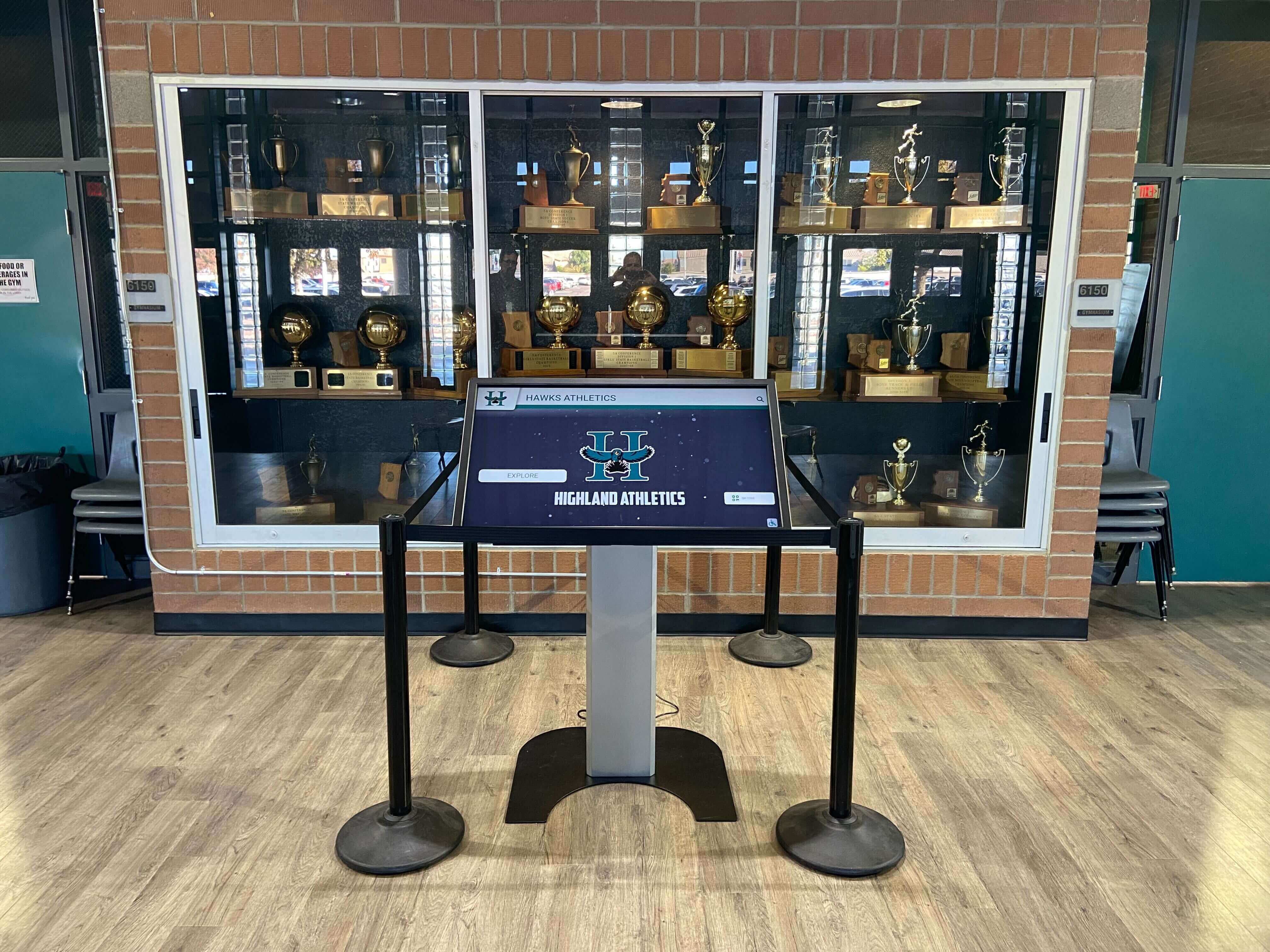
Glass-enclosed trophy cases provide three-dimensional recognition showcasing actual awards, medals, team photos, and memorabilia from All-State seasons. These displays create impressive focal points in main hallways, athletic lobbies, or administrative areas where visitors naturally pause.
Trophy cases excel at displaying physical artifacts that create tangible connections to achievement moments. The three-dimensional presentation offers visual interest that flat plaques cannot match, and traditional craftsmanship conveys respect appropriate for significant achievements.
Yet capacity constraints force difficult decisions about which achievements receive case placement versus storage as awards accumulate. Maintenance requirements include regular glass cleaning, lock and lighting repairs, and strategic rotation of displayed items. Static displays receive only passive attention, and once cases fill, schools face expensive expansion decisions or heartbreaking choices about removing older recognition to accommodate new achievements.
Engraved Plaque Walls
Permanent engraved plaques mounted on dedicated walls provide formal recognition that demonstrates lasting institutional commitment to honoring All-State achievement. These installations typically feature individual nameplates organized by sport, year, or achievement level on larger backing boards designed to accommodate expansion over time.
Professional engraving conveys permanence and importance validating achievement significance. High-visibility hallway placement ensures regular exposure to students, staff, and visitors. Modular systems allow gradual expansion as new athletes earn recognition, enabling incremental growth rather than complete replacement.
However, even the most generous initial sizing typically accommodates only 10-20 years before exhausting wall space. Recurring costs for new plaque production and installation accumulate substantially over decades, potentially reaching thousands of dollars annually for successful programs. Limited information capacity means plaques provide minimal context beyond names, years, and achievement titles. Installation delays mean recognition typically appears weeks or months after selection, diminishing motivational impact.
Modern Digital Solutions for All-State Recognition
Digital technology has transformed what’s possible for honoring All-State athletes, overcoming traditional limitations while introducing powerful capabilities that enhance recognition effectiveness and sustainability.
Interactive Touchscreen Displays
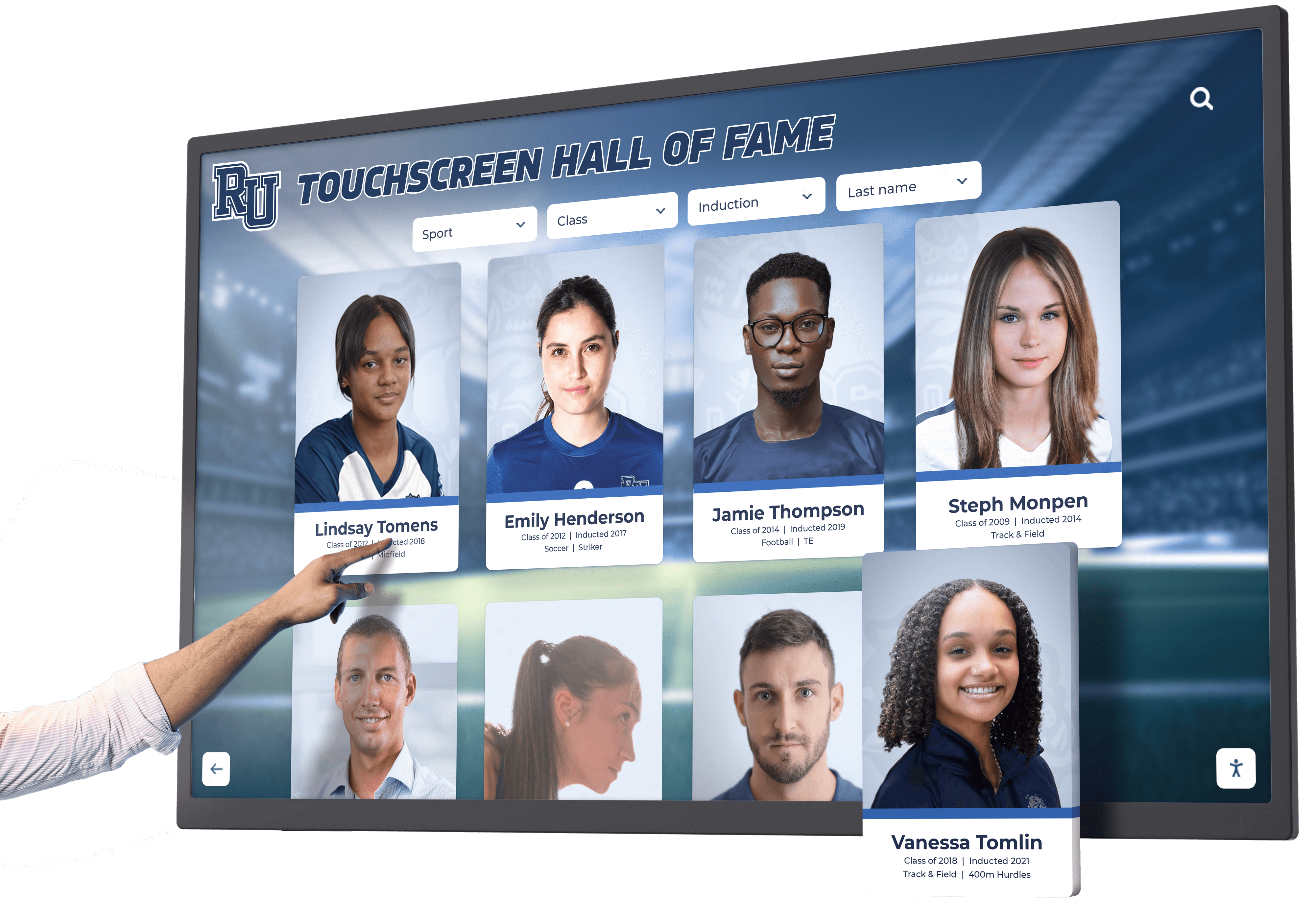
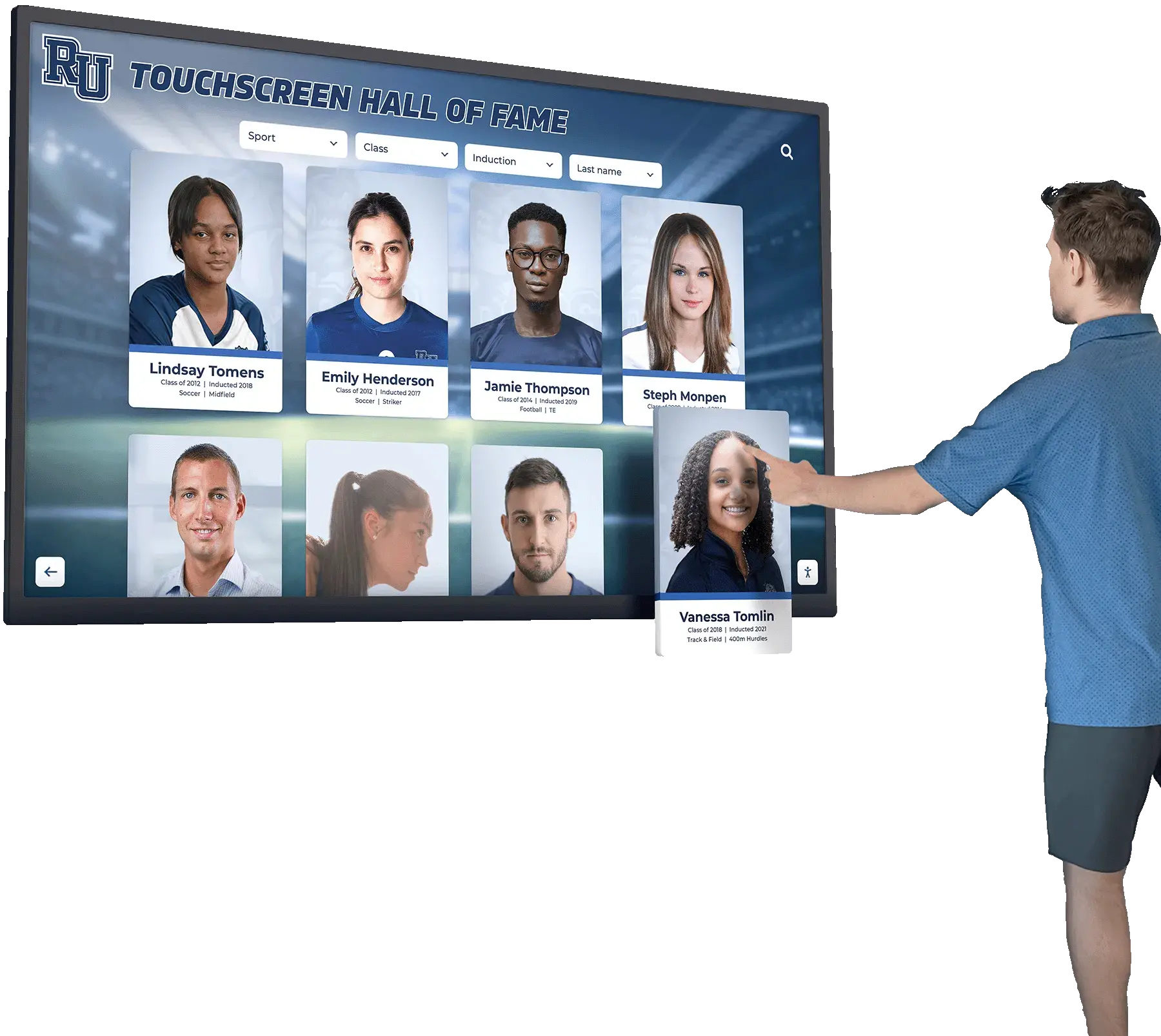
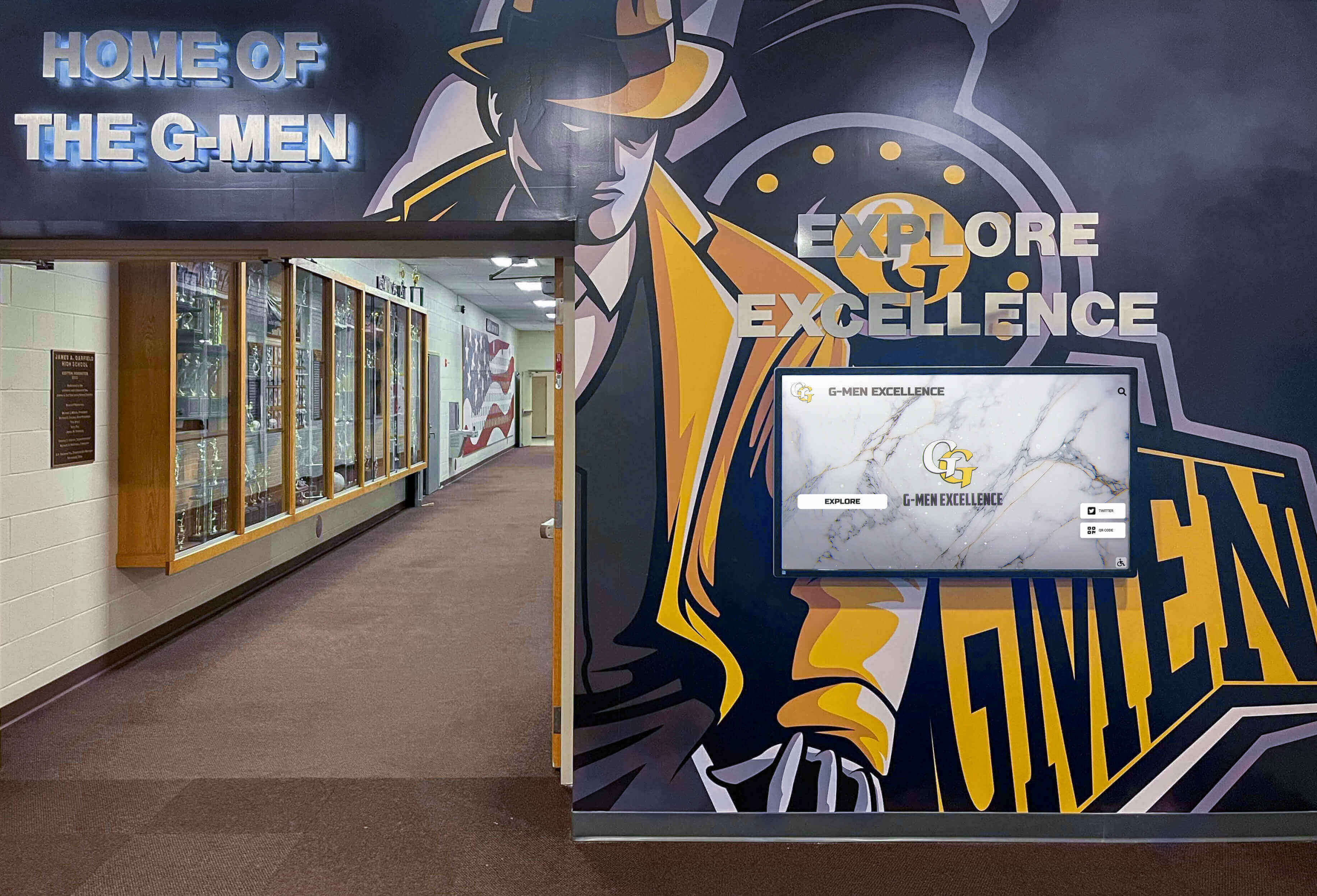
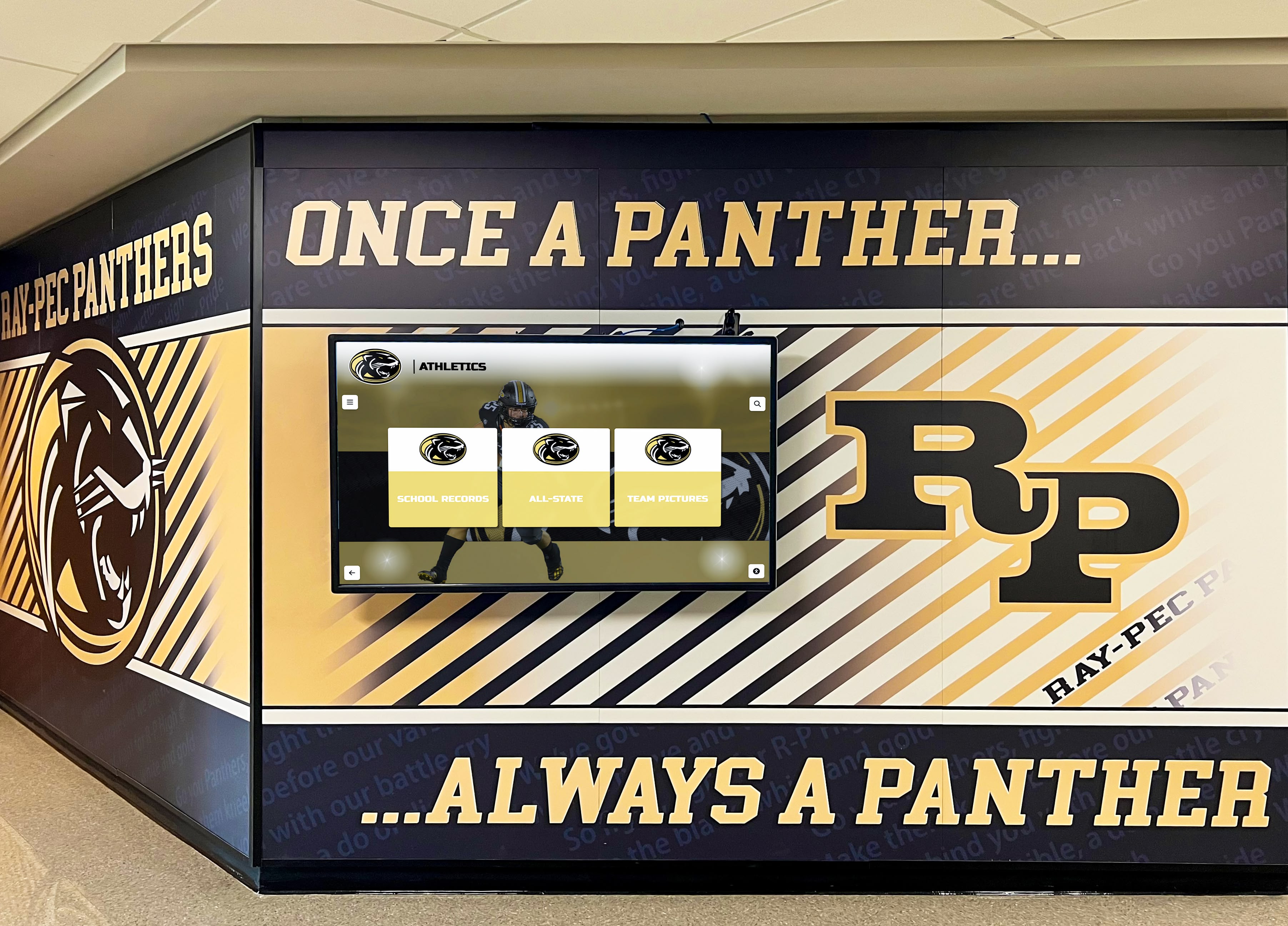
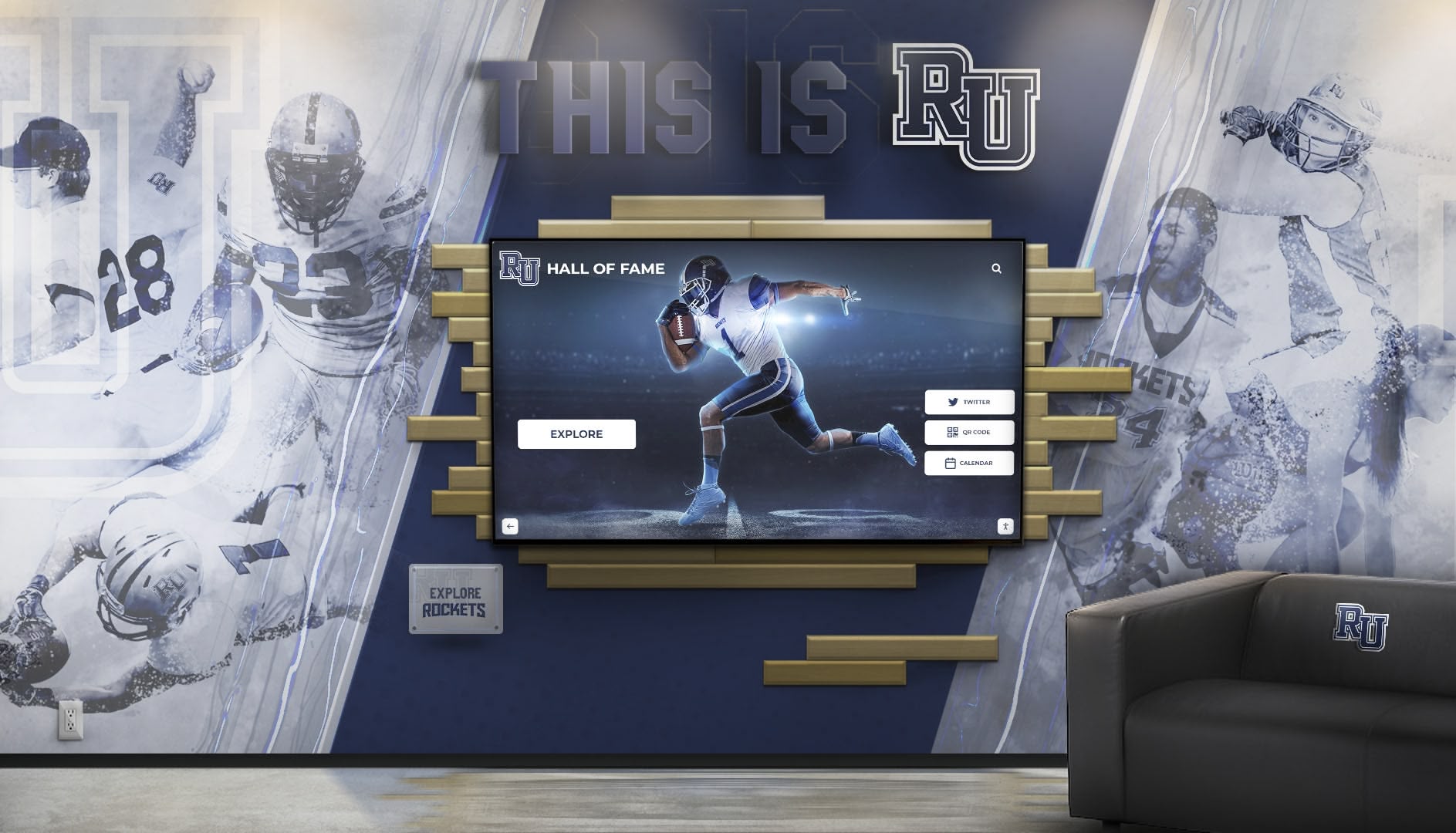
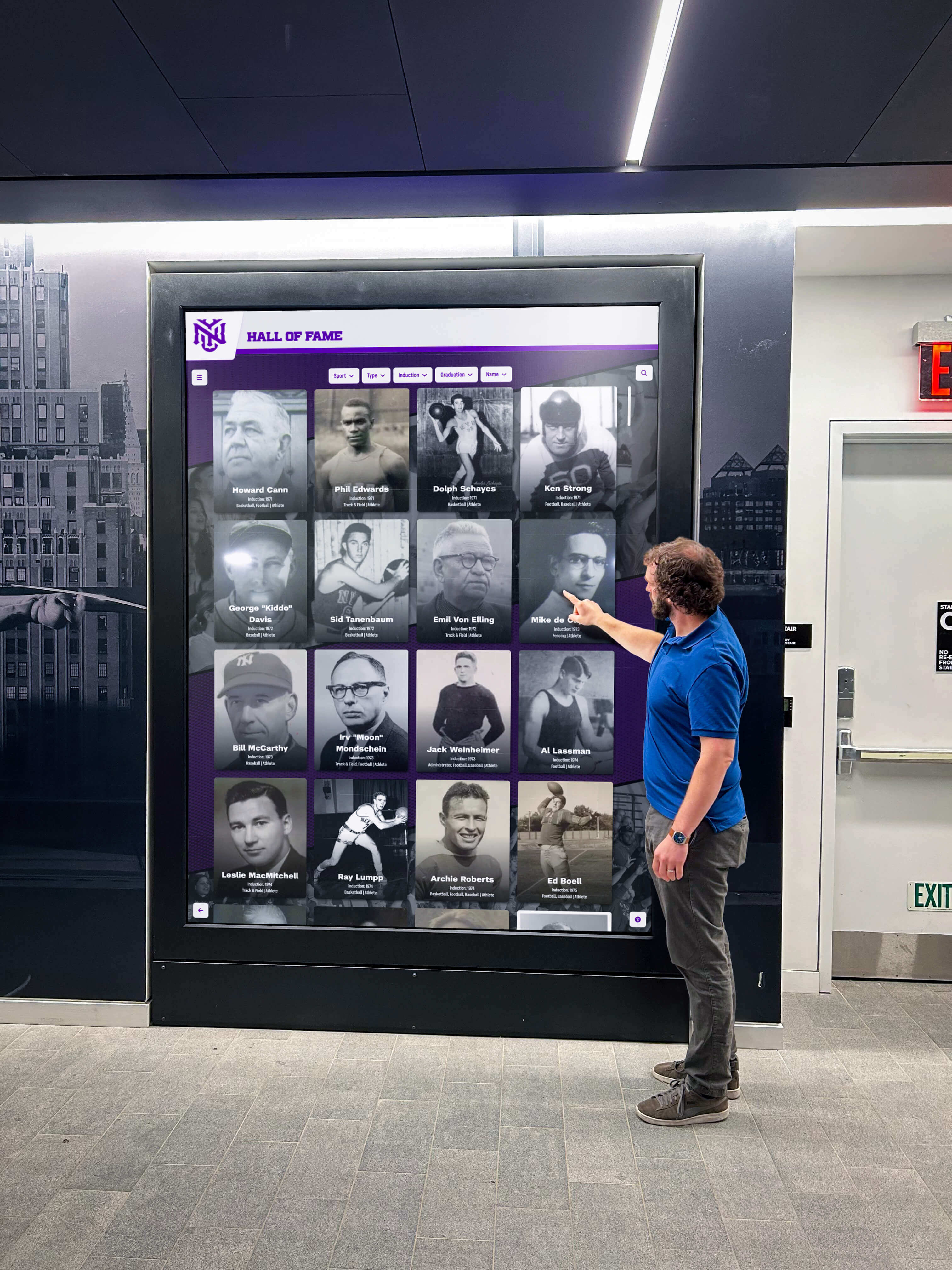
Interactive touchscreen systems represent the most comprehensive digital recognition approach, featuring commercial-grade displays that showcase unlimited All-State achievements through searchable databases, high-resolution photos, videos, and detailed athlete profiles.
Single displays can feature detailed profiles for thousands of athletes—content requiring dozens of traditional trophy cases and hundreds of linear feet of plaque space to display physically. This unlimited capacity eliminates difficult decisions about which achievements deserve recognition and which must be excluded due to space constraints.
Instant content updates enable authorized staff to add new All-State athletes within minutes using cloud-based content management systems requiring no technical expertise. New recognition appears immediately without production delays, installation appointments, or vendor coordination, enabling timely recognition that maximizes motivational impact while achievement remains fresh.
Rich multimedia storytelling capabilities include high-resolution photography showcasing achievement moments, game highlight videos bringing accomplishments to life, acceptance speeches and athlete testimonials providing personal context, complete season statistics showing performance excellence, coach reflections explaining achievement significance, and historical program information connecting achievements to institutional traditions.
Searchable discovery features enable students, families, and visitors to find specific athletes by name, filter by sport or year to explore program history, compare achievements across different eras, and discover related athletes from the same teams or seasons. These interactive features create engagement that passive displays simply cannot match.
Cloud-Based Content Management
Behind visible displays, cloud-based platforms enable non-technical staff to maintain All-State recognition efficiently. Intuitive upload interfaces with drag-and-drop functionality eliminate technical complexity. Guided forms systematically capture athlete information ensuring consistency across profiles. Preview capabilities show exactly how content displays before publication, preventing errors and ensuring professional presentation.
Organizational tools including categories and tags enable logical content structure. Search and filter capabilities help staff locate specific achievements quickly when updates or corrections become necessary. Multi-user access with role-based permissions controls who can view, edit, or publish content, ensuring appropriate oversight while distributing content management workload.
Solutions like digital hall of fame displays provide purpose-built recognition platforms designed specifically for schools rather than generic digital signage, ensuring features align precisely with educational needs and athletic department workflows.
Mobile and Web Access
Modern recognition extends beyond physical displays to provide mobile and web access enabling students, families, and alumni to explore All-State achievements anytime from anywhere through smartphones, tablets, and computers.
This continuous accessibility dramatically expands engagement opportunities beyond limited windows when people physically visit school buildings. Alumni can explore their complete All-State achievement histories years or decades after graduation, maintaining connections to institutions that shaped them. Students easily share achievements with extended family members who may never visit campus due to distance, multiplying pride and validation.
Prospective students and families researching schools can review program All-State histories remotely during initial exploration, gaining early exposure to institutional athletic excellence that potentially influences enrollment decisions.
Creating Your All-State Wall of Honor: Step-by-Step Implementation
Successful All-State recognition programs require strategic planning, stakeholder engagement, and systematic implementation ensuring long-term sustainability and institutional support.
Step 1: Define Recognition Scope and Criteria
Begin by clearly establishing which All-State achievements your program will recognize. Will you honor only First Team selections, or include Second Team and Honorable Mention? Will you recognize All-State academic teams alongside athletic selections? Will historical recognition extend back through all program years, or focus on recent decades?
Consider also whether to create sport-specific displays or comprehensive multi-sport recognition walls. Football programs with extensive All-State histories might warrant dedicated displays, while smaller sports could share recognition within unified athletic halls of fame celebrating diverse excellence.
Document these decisions in written policies ensuring consistency as administrators change and new staff assume recognition responsibilities. Clear criteria prevent confusion and ensure equitable treatment across different sports and achievement levels.
Step 2: Conduct Historical Research
Comprehensive recognition requires documenting All-State athletes across your school’s history. This research often proves more challenging than anticipated, as records scatter across old yearbooks, newspaper archives, coaching files, and institutional memory that fades as staff retire.
Systematic research approaches include reviewing yearbooks chronologically for All-State announcements, searching local newspaper archives for postseason recognition stories, interviewing long-time coaches and athletic staff about historical selections, contacting state athletic associations for official records, and engaging alumni through social media seeking information about past teammates’ achievements.
Consider enlisting student workers, parent volunteers, or service organizations in research efforts. Documenting decades of All-State achievement represents substantial work, but comprehensive historical recognition demonstrates that your program values excellence across all eras equally.
Step 3: Select Display Approach and Location
Evaluate traditional versus digital recognition options based on budget, space availability, technical capabilities, and long-term vision. Consider whether to implement pure digital, pure traditional, or hybrid approaches combining both methods.
For display locations, prioritize high-traffic areas where students, staff, and visitors naturally congregate. Main athletic facility entrances, gymnasium lobbies, central hallways connecting to athletic areas, and commons spaces with heavy foot traffic all provide excellent visibility ensuring regular exposure.
Strategic placement matters tremendously—beautiful recognition displays hidden in seldom-visited spaces deliver minimal motivational value. Position All-State recognition where it becomes part of daily school experience rather than destination requiring intentional visits.
Step 4: Develop Compelling Content
For each All-State athlete, gather comprehensive information including full name with proper spelling, graduation year and class designation, sport and specific position or event, All-State achievement level (First Team, Second Team, etc.), season statistics and notable accomplishments, team achievements during their All-State seasons, college athletic continuation if applicable, and current professional or life accomplishments when available.
Enhance profiles with high-quality photos showing athletes in competition or receiving recognition, action shots capturing athletic excellence moments, team photos from All-State seasons, and current photos for living alumni when possible. For digital systems, consider incorporating video highlights of game performances, acceptance speeches or athlete testimonials, coach reflections about their achievements, and historical context about program traditions they advanced.
The difference between basic recognition and compelling storytelling lies in details. Rather than simply listing “John Smith, First Team All-State Football, 2018,” compelling profiles explain “Quarterback John Smith earned First Team All-State honors after leading the Tigers to an 11-2 record and conference championship, throwing for 3,247 yards and 34 touchdowns while completing 67% of his passes. His performance in the state semifinal game—342 yards and 4 touchdowns against the #1 ranked defense—showcased the poise and arm strength that later earned him a Division I scholarship.”
Step 5: Implement Display and Train Staff
For traditional displays, professional installation ensures proper mounting, aesthetic finishing, and long-term stability. Quality craftsmanship reflects well on both honored athletes and the institution itself.
For digital systems, implementation includes hardware installation with appropriate mounting and network connectivity, software configuration with institutional branding and navigation structure, initial content upload with quality assurance testing, and comprehensive staff training on content management and system operation.
Designate specific personnel responsible for maintaining recognition systems, ensuring updates occur promptly when new athletes earn All-State honors. Train multiple staff members on update procedures, creating redundancy that prevents recognition delays during vacations or transitions.
Step 6: Launch with Celebration
Create memorable unveiling events celebrating inaugural All-State wall of honor installations. Invite honored alumni to attend ceremonies recognizing their achievements, particularly recent graduates still connected to school communities. Generate media coverage through press releases to local news outlets, social media announcements with featured athlete highlights, and inclusion in athletic department newsletters and communications.
Ongoing promotion ensures sustained visibility including featuring All-State athletes in regular social media content, integrating recognition into athletic banquet programs and ceremonies, highlighting All-State achievements during school tours for prospective families, and celebrating new selections immediately when announced each season.

Best Practices for Sustainable All-State Recognition
Long-term program success requires systematic approaches ensuring recognition remains current, accurate, and impactful across administrative changes and shifting institutional priorities.
Establish Clear Update Processes
Document exactly who bears responsibility for adding new All-State athletes, what information they must collect, when updates should occur relative to announcement dates, and what approval processes govern new additions. Written procedures prevent recognition delays and ensure consistency regardless of personnel changes.
Create templates or forms standardizing information collection for new All-State athletes. When coaches submit athlete names and basic details following selection announcements, streamlined processes ensure rapid recognition without burdening busy athletic staff with complex requirements.
Maintain Historical Accuracy
As research uncovers additional historical All-State athletes, systematically verify information before adding recognition. Cross-reference multiple sources when possible, confirming achievement details through yearbooks, newspaper archives, or official athletic association records.
Establish correction procedures for inevitable errors discovered after initial recognition. Digital systems enable quick corrections maintaining program credibility, while traditional displays require more careful initial verification since error correction proves expensive and time-consuming.
Integrate with Broader Recognition Programs
All-State recognition achieves maximum impact when integrated with comprehensive athletic recognition celebrating team championships, individual records, athletic hall of fame inductees, and other achievements. Unified recognition systems demonstrate that programs value excellence across all dimensions rather than focusing narrowly on single achievement types.
For schools implementing digital solutions, comprehensive platforms like those from school achievement recognition programs enable managing diverse recognition types within single systems, creating cohesive recognition experiences rather than disconnected displays scattered throughout facilities.
Leverage Recognition for Alumni Engagement
All-State recognition creates natural touchpoints for maintaining alumni relationships. Contact All-State athletes when adding their recognition, providing opportunities to update information, share career accomplishments, or reconnect with alma maters. Many alumni appreciate learning that schools continue honoring their achievements decades later, often responding with renewed engagement or support.
For programs focused on best ways to connect with alumni, athletic recognition serves as foundation for building sustained relationships that benefit current students through mentorship, career networking, and philanthropic support.
Measure Recognition Impact
Track meaningful metrics demonstrating All-State wall of honor value including student engagement observations during practices and competitions, alumni response rates when contacted about recognition, visitor interaction data for digital systems with analytics, media coverage generated by recognition announcements, and prospective family feedback about recognition displays during school tours.
Use these metrics to report program value to leadership, identify content performing particularly well, adjust strategies based on actual behavior patterns, and demonstrate return on investment justifying continued enhancement and support.
Overcoming Common All-State Recognition Challenges
Schools implementing All-State walls of honor encounter predictable obstacles. Proactive strategies address these challenges effectively, ensuring successful outcomes and sustainable programs.
Challenge: Limited Historical Records
Many schools discover that comprehensive All-State records don’t exist, particularly for athletes from decades past. Scattered documentation makes research difficult and time-consuming.
Solutions: Start with athletes for whom information readily exists, expanding backward through time as research progresses. Leverage social media and alumni networks seeking information from graduates who may remember teammates’ achievements. Accept that some historical gaps may remain permanently despite best research efforts, focusing on documenting as comprehensively as possible moving forward.
Challenge: Space Constraints for Traditional Displays
Schools using traditional plaques or banners eventually exhaust physical space, forcing difficult decisions about which achievements remain visible versus relegated to storage.
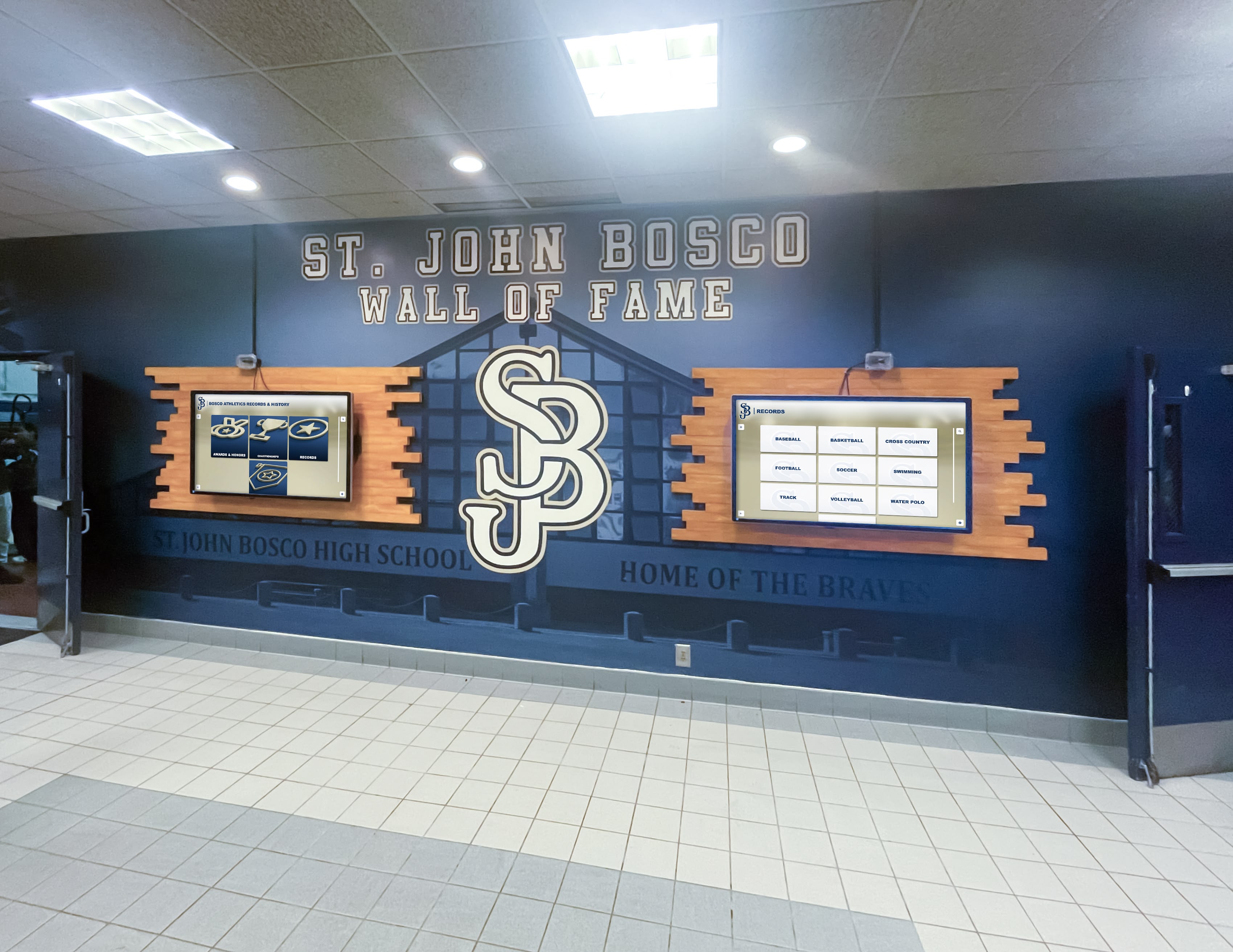
Solutions: Plan for eventual capacity constraints by reserving adjacent wall space for future expansion during initial installation. Consider transitioning to digital recognition systems providing unlimited capacity without physical expansion requirements. Implement hybrid approaches where traditional displays honor recent achievement while digital systems provide comprehensive historical recognition.
Challenge: Maintaining Recognition Currency
Updates delayed by cumbersome processes or overburdened staff diminish recognition impact. Athletes selected in November but not recognized until April lose motivational benefit of timely acknowledgment.
Solutions: Simplify update procedures through streamlined forms, designated responsibilities, and readily accessible systems enabling rapid additions. For digital platforms, cloud-based management allows updates within minutes rather than weeks. Establish target timeframes—such as recognition within two weeks of All-State announcement—creating accountability for prompt acknowledgment.
Challenge: Budget Limitations
Recognition programs compete with numerous institutional priorities for finite resources. Building compelling cases for investment requires demonstrating value across multiple stakeholder concerns.
Solutions: Frame recognition as investment in student motivation, program culture, and alumni engagement rather than expense on displays. Explore alternative funding through booster club support, alumni donations specifically for recognition projects, or corporate sponsorships connecting businesses with youth athletics. Consider phased implementation beginning with core capabilities and expanding gradually as budget permits and value demonstrates.
The Future of All-State Recognition: Emerging Trends
Recognition technology and approaches continue evolving, creating new possibilities for celebrating All-State achievement while strengthening program impact.
Augmented Reality Integration
Emerging augmented reality capabilities enable visitors to scan traditional plaques or displays with smartphones, accessing rich digital content including athlete videos, statistics, and career information without requiring dedicated digital hardware. This technology bridges traditional and digital approaches, adding engagement capabilities to existing physical displays.
Social Media Integration
Modern recognition platforms increasingly integrate with social media, automatically generating shareable content when new All-State athletes are added. This integration amplifies recognition beyond physical displays, allowing achievements to reach extended networks through families, friends, and community members sharing content across personal social media accounts.
Video Highlight Compilation
As video becomes increasingly accessible and affordable, recognition systems incorporate game footage, acceptance speeches, championship moments, and career highlight reels. These multimedia elements create emotional connections that static photos and text cannot achieve, bringing All-State achievements to life for audiences who never watched athletes compete.
Personalized Recognition Experiences
Advanced systems enable visitors to create personalized experiences based on individual interests. A basketball player might indicate sport preference and see All-State basketball athletes featured prominently. Alumni might enter graduation years and see All-State honorees from their eras highlighted. Personalization makes comprehensive recognition databases more navigable and relevant.
Conclusion: Building Traditions Through All-State Recognition
All-State recognition represents more than acknowledging past excellence—it creates living traditions inspiring future champions while strengthening connections across generations of athletes, students, and community members. When schools invest in comprehensive recognition programs celebrating All-State achievement, they validate the dedication required for elite performance, motivate current athletes pursuing their own excellence, demonstrate coaching and program quality, build pride throughout school communities, and preserve institutional athletic legacies.
Whether implementing traditional plaques honoring timeless achievement, cutting-edge digital displays offering unlimited storytelling capacity, or hybrid approaches bridging both worlds, successful recognition shares common characteristics including comprehensive scope honoring all achievement levels, timely updates maintaining currency and relevance, compelling content telling complete achievement stories, strategic visibility ensuring regular community exposure, and sustainable systems requiring minimal ongoing administrative burden.
Modern solutions like Rocket Alumni Solutions provide purpose-built platforms specifically designed for educational athletic recognition, combining intuitive management with engaging presentation capabilities and unlimited capacity ensuring every All-State athlete receives lasting recognition regardless of when they competed or which sport they mastered.
Every All-State athlete has worked countless hours developing skills, competing with intensity, and representing their schools with pride. They deserve recognition matching the significance of their accomplishments—comprehensive, compelling, and enduring tributes that inspire future athletes while honoring excellence that elevates entire athletic programs. Create your All-State wall of honor not as obligation, but as celebration of athletic excellence that defines championship tradition and builds institutional pride spanning generations.































