When alumni return to campus, the spaces they encounter immediately communicate how their alma mater values ongoing relationships. An alumni gathering area represents far more than a simple lounge or meeting room—it functions as the physical embodiment of institutional commitment to maintaining lifelong connections with graduates, creating environments where returning alumni feel genuinely welcomed home rather than tolerated as occasional visitors.
The most successful educational institutions recognize that alumni engagement doesn’t happen by accident. It requires intentional design of physical spaces that facilitate meaningful interaction, comfortable gathering, and genuine celebration of the shared experiences that bind communities together across generations. Yet many schools struggle with alumni areas that feel like afterthoughts—generic conference rooms with uncomfortable furniture, dusty trophy cases relegated to forgotten hallways, or nonexistent dedicated spaces that force alumni events into multipurpose rooms that communicate no particular welcome.
Research consistently demonstrates that physical environment profoundly influences social behavior and emotional connection. Alumni who encounter thoughtfully designed gathering spaces during campus visits report stronger institutional attachment, increased likelihood of continued engagement, and higher propensity to support their alma maters financially compared to those visiting campuses without dedicated welcoming environments.
This comprehensive guide explores evidence-based strategies for designing, implementing, and activating alumni gathering areas that deliver measurable engagement results. Whether you’re planning a dedicated alumni center from scratch, renovating existing underutilized space, or optimizing current facilities, you’ll discover practical frameworks for creating environments where graduates naturally want to spend time, reconnect with classmates, and strengthen bonds with institutions that shaped their educational journeys.
Throughout this guide, we’ll examine the strategic importance of alumni spaces, explore specific design elements that foster connection and comfort, investigate recognition technology that celebrates achievement while inspiring current students, and provide implementation guidance addressing real-world constraints around budget, space availability, and operational sustainability.
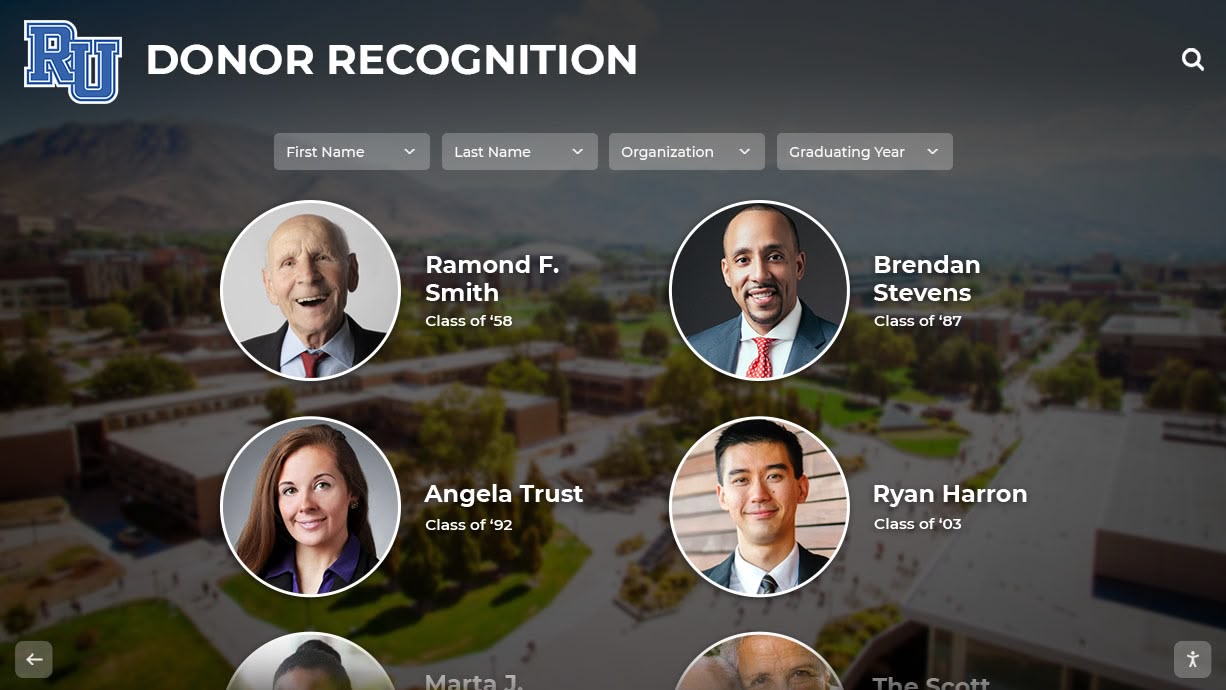
Thoughtfully designed alumni gathering areas create welcoming environments that honor achievement and strengthen institutional connections
Understanding the Strategic Value of Alumni Gathering Areas
Before diving into specific design recommendations, understanding why dedicated alumni spaces matter strategically helps institutions prioritize investment and make decisions that align with broader advancement objectives.
Alumni Gathering Areas as Relationship Infrastructure
Physical spaces dedicated to alumni serve as tangible demonstrations of institutional values and priorities. When schools designate prominent, well-maintained areas specifically for graduate use, they send powerful messages about how seriously they take alumni relationships.
Symbolic Importance:
- Dedicated space communicates that alumni relationships merit ongoing investment beyond graduation day
- Prominent location visibility signals that alumni remain integral community members rather than external constituencies
- Quality design and maintenance demonstrate that institutions value graduates enough to create excellent environments
- Accessibility and welcoming atmosphere indicate genuine desire for continued connection rather than performative gestures
This symbolic dimension operates largely at subconscious levels. Alumni may not consciously analyze the quality of gathering spaces, but they certainly feel the difference between welcoming environments purpose-built for their comfort and generic rooms that communicate institutional indifference through poor design and minimal investment.
Supporting Advancement and Development Goals
Development professionals understand that fundraising success depends heavily on relationship quality, cultivation experiences, and donor stewardship. Alumni gathering areas provide ideal infrastructure supporting these critical advancement functions.
Advancement Benefits:
- Major Gift Cultivation: Private spaces enable confidential conversations with prospective major donors without requiring off-campus venues
- Stewardship Touchpoints: Donor recognition integrated into gathering areas provides ongoing stewardship that reinforces philanthropic decisions
- Event Infrastructure: Dedicated alumni spaces reduce facility costs while providing appropriate venues for cultivation events, reunions, and volunteer meetings
- Tour Destinations: Impressive alumni areas serve as compelling stops during donor tours, demonstrating institutional vitality and successful graduate outcomes
- Natural Integration: Alumni welcome area ideas naturally incorporate donor recognition alongside broader celebration of graduate achievement
According to research on donor behavior, recognition significantly influences giving patterns. Alumni who feel celebrated and welcomed through quality physical spaces demonstrate higher giving participation rates, increased average gift amounts, and stronger retention compared to those whose campus visits offer no particular sense of belonging or appreciation.
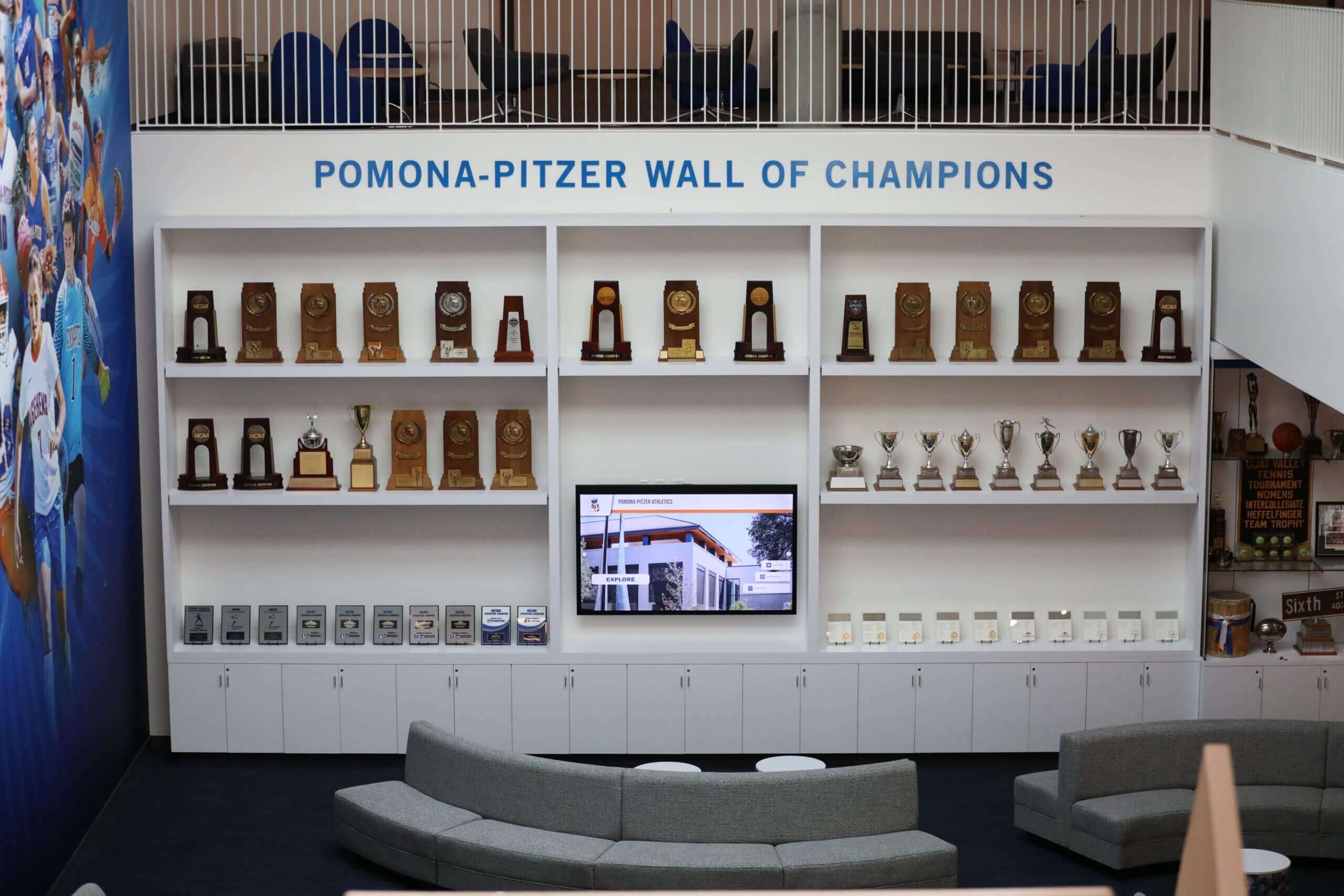
Comfortable gathering spaces with integrated recognition displays create destinations where alumni naturally want to spend time
Inspiring Current Students Through Visible Success
Alumni gathering areas deliver immediate educational value by providing current students with tangible examples of what graduates achieve after leaving campus. When students regularly encounter spaces celebrating distinguished alumni across diverse fields, their own sense of possibility expands while institutional pride deepens.
Student Impact:
- Career Exploration: Students discover potential professional pathways by learning about alumni working in fields they’re considering
- Mentorship Connections: Visible alumni achievement creates natural conversation starters that facilitate mentoring relationships
- Motivation and Aspiration: Seeing graduates from similar backgrounds succeeding combats imposter syndrome while inspiring achievement
- Institutional Pride: Students develop stronger connection to schools whose alumni accomplishments they witness regularly
- Networking Preparation: Early exposure to accomplished alumni prepares students for professional networking after graduation
Effective alumni engagement with interactive recognition displays helps current students understand that their education opens doors to remarkable opportunities, providing motivation that extends well beyond abstract statistics about graduate outcomes.
Building Multi-Generational Community
Perhaps the most profound benefit of well-designed alumni gathering areas involves their capacity to strengthen community across generations. These spaces create physical environments where alumni from different eras discover shared institutional bonds despite graduating decades apart.
Community Building Functions:
- Different generation alumni discover unexpected connections through conversations in welcoming environments
- Multi-generational events create knowledge transfer opportunities between experienced and recent graduates
- Shared spaces reinforce that all alumni belong to permanent communities transcending graduation year
- Regular alumni presence exposes current students to their probable futures as engaged graduates
- Physical proximity during events facilitates spontaneous reconnection between long-separated classmates
Institutions with vibrant alumni communities consistently report that physical gathering spaces catalyze relationship building that might otherwise never occur. When graduates lack comfortable places to linger during campus visits, they often arrive for scheduled events then immediately depart. Quality gathering areas encourage extended stays that create opportunities for meaningful conversation and deeper reconnection.
Core Design Principles for Effective Alumni Gathering Areas
Successful alumni spaces share common design characteristics regardless of budget constraints or available square footage. These fundamental principles guide decisions that create welcoming environments fostering engagement and connection.
Location and Accessibility Considerations
Strategic placement dramatically impacts utilization rates and symbolic messaging about alumni importance within institutional priorities.
High-Visibility Positioning:
- Main building entrances ensuring every campus visitor encounters alumni spaces
- Adjacent to development offices supporting advancement cultivation and stewardship
- Near athletic facilities leveraging game day traffic and reunion weekend events
- Along primary campus circulation paths where students naturally travel daily
- Accessible from main parking areas serving external visitors and returning graduates
Physical accessibility determines whether alumni spaces achieve their potential or remain underutilized despite excellent design. Remote locations or facilities requiring extensive navigation through unfamiliar campus buildings discourage casual visits while suggesting that alumni occupy peripheral rather than central institutional roles.
Universal Accessibility:
- ADA-compliant design enabling full participation by alumni with mobility challenges
- Clear wayfinding from parking areas through building entry to designated spaces
- Appropriate door widths, ramp access, and navigation systems accommodating wheelchairs
- Accessible height mounting for recognition displays, light switches, and interactive elements
- Hearing loop systems or other accommodations for alumni with sensory needs
Inclusive design benefits all visitors while demonstrating that institutions genuinely welcome every alumnus regardless of physical capabilities. Accessibility represents far more than legal compliance—it communicates authentic commitment to comprehensive community inclusion.
Creating Welcoming Atmosphere Through Design Elements
The difference between institutional efficiency and genuine hospitality shows immediately in design details that collectively create welcoming versus merely functional environments.
Residential Quality vs. Institutional Aesthetic:
- Comfortable furniture with residential quality rather than conference room utility
- Warm lighting (2700K-3000K) creating inviting ambiance instead of harsh institutional fluorescence
- Acoustic treatment enabling comfortable conversation without echo-prone reverberance
- Varied seating configurations accommodating different group sizes and privacy preferences
- Natural elements like plants, wood tones, and textures softening hard institutional surfaces
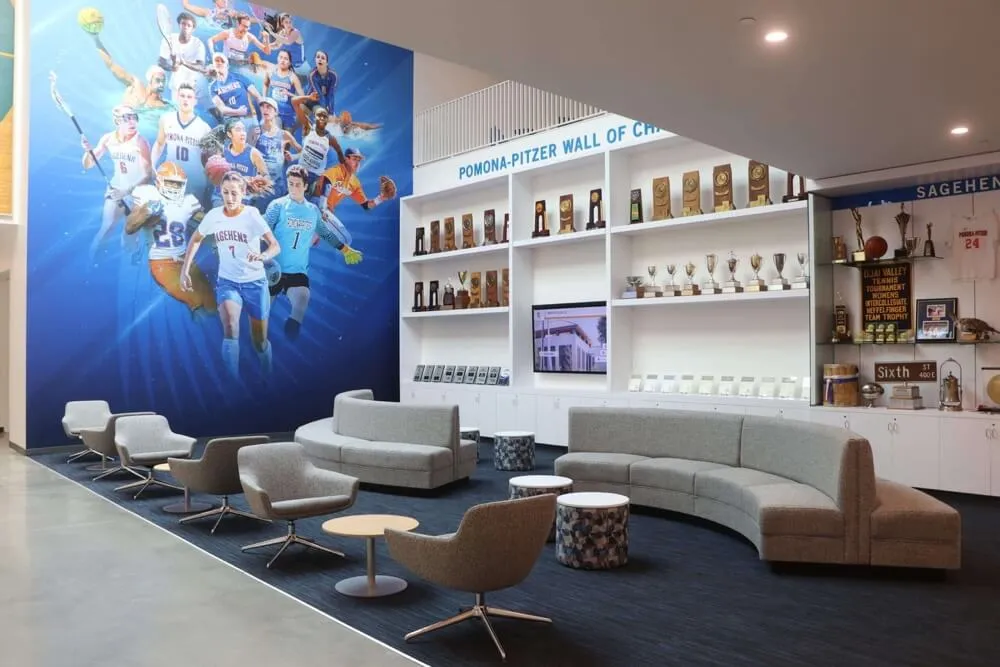
Varied seating arrangements and residential quality finishes create welcoming environments where alumni feel comfortable lingering
These design choices cost no more than institutional alternatives while dramatically improving how spaces feel to visitors. The goal involves creating environments where alumni naturally relax rather than perch uncomfortably awaiting the earliest acceptable departure moment.
Color and Branding Integration:
- School colors incorporated thoughtfully as accents rather than overwhelming primary tones
- Institutional branding present but sophisticated rather than theme-park excessive
- Historical photographs and memorabilia creating nostalgic connections to shared experiences
- Artwork celebrating institutional heritage without appearing dated or museum-like
- Subtle pattern repetition in textiles, carpeting, or architectural details reinforcing identity
Effective branding feels authentic and dignified rather than forced or juvenile. Alumni want to feel proud of their institutional association without experiencing environments that seem designed for children or that lack aesthetic sophistication.
Balancing Multiple Use Cases and Functions
Alumni gathering areas typically need to accommodate diverse activities ranging from quiet individual work to large reception events. Flexible design enables spaces to adapt across these varying requirements without feeling compromised for any particular use.
Functional Versatility:
- Movable furniture enabling configuration changes for different event types and sizes
- Built-in AV systems supporting presentations without requiring temporary equipment rental
- Separate zones within larger spaces allowing simultaneous activities without interference
- Adequate power distribution supporting device charging and event equipment needs
- Storage for folding chairs, tables, and event materials maintaining uncluttered appearance between programs
The most successful spaces avoid either extreme—neither rigidly formal conference rooms nor purely social lounges—instead creating adaptable environments serving multiple purposes equally well. This versatility maximizes utilization while justifying investment through serving broader needs than single-purpose designs could address.
Technology Integration Without Dominance:
- WiFi access with guest credentials prominently displayed for visitor convenience
- Device charging through outlets, USB ports, or wireless charging stations at seating areas
- Digital displays showing campus information, event calendars, and alumni news
- Interactive recognition systems enabling exploration of alumni achievements
- Zoom-capable video conferencing supporting hybrid meetings with remote participants
Technology should enhance rather than dominate spaces. The goal involves seamless integration where capabilities exist when needed but don’t create cold, screen-dominated environments when technology remains idle.
Essential Amenities That Demonstrate Genuine Hospitality
Thoughtful amenities distinguish genuinely welcoming spaces from basic meeting rooms, demonstrating that institutions anticipate and care about alumni comfort during campus visits.
Hospitality Elements That Matter
Small details collectively create impressions of authentic welcome versus performative courtesy that feels hollow upon examination.
Beverage Service:
- Coffee station with quality equipment producing better results than cheap institutional brewers
- Tea selection accommodating diverse preferences beyond basic black tea bags
- Water dispenser or bottled water readily accessible without requiring requests
- Refrigerator stocked with refreshments during events or available for alumni personal items
- Clear signage indicating refreshments are complimentary rather than creating uncertainty about payment
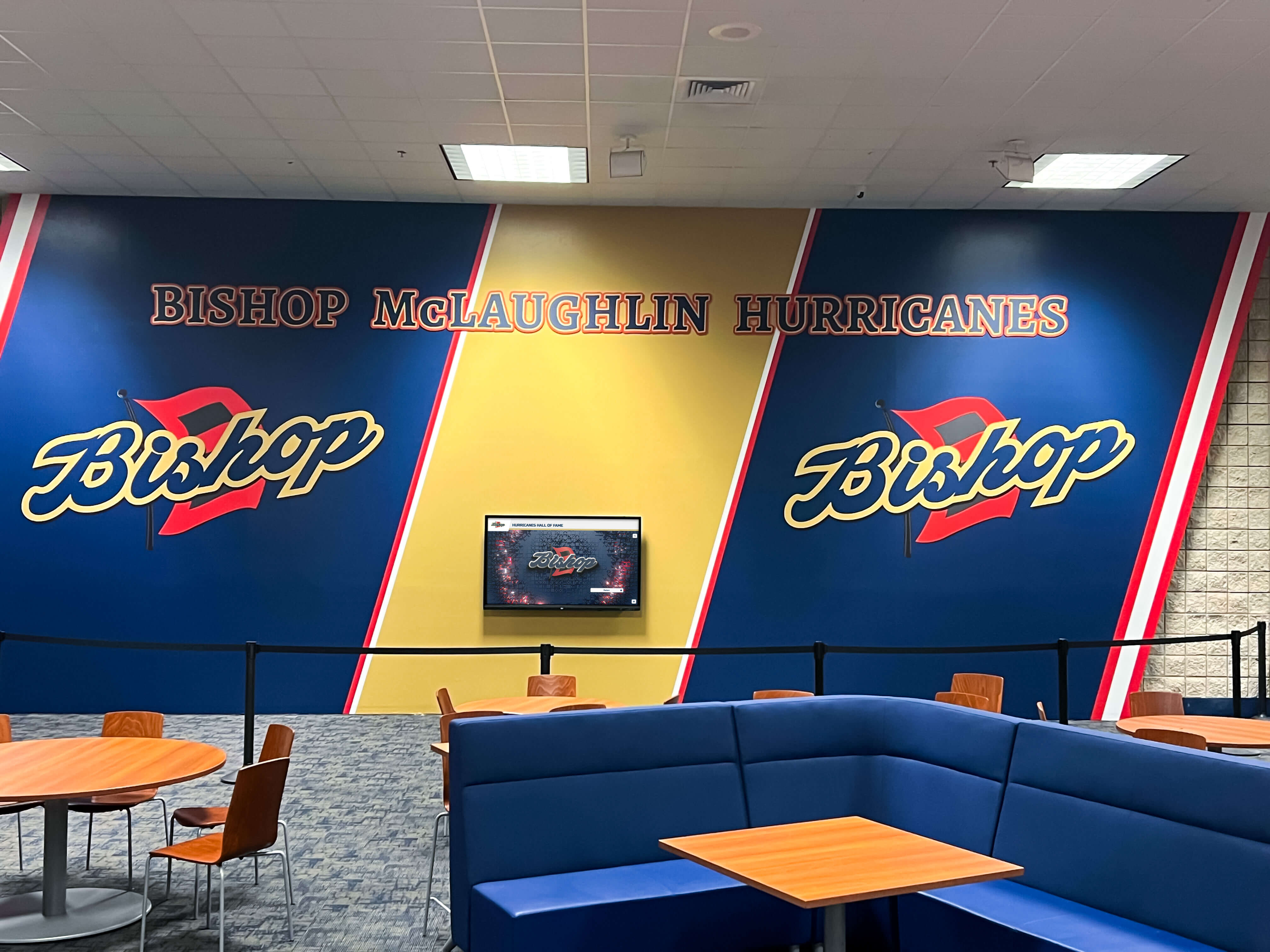
Hospitality amenities like beverage stations and comfortable seating demonstrate genuine care for alumni comfort
Quality beverage service costs relatively little while significantly impacting visitor experience. Alumni appreciate thoughtful provision without needing to request basics, and shared refreshments naturally facilitate conversation among graduates who might otherwise remain isolated.
Comfort and Convenience Features:
- Coat hooks or closet space preventing clutter while accommodating seasonal outerwear
- Restrooms either dedicated or clearly marked nearby eliminating awkward searching
- Natural light through windows connecting to campus views while reducing institutional closed-in feelings
- Climate control maintaining comfortable temperatures regardless of outside weather or crowd density
- Reading materials like alumni magazines, institutional publications, or newspapers encouraging lingering
These seemingly minor elements determine whether spaces feel genuinely hospitable versus merely available for use. Alumni quickly perceive the difference between thoughtful preparation and spaces that communicate institutional indifference through absent basics.
Technology for Connection and Convenience
Modern alumni expect digital connectivity comparable to what they experience in homes, offices, and public spaces they frequent regularly. Meeting these baseline expectations requires intentional technology integration.
Digital Infrastructure:
- Robust WiFi supporting simultaneous devices without connectivity degradation during events
- Charging stations at seating areas enabling extended visits without battery anxiety
- Large displays showing campus maps, directory information, and way-finding assistance
- QR codes linking to event registration, giving portals, or digital alumni directories
- Mobile-responsive web integration ensuring alumni smartphones work seamlessly with campus systems
Comprehensive homecoming festivities and reunion events particularly benefit from technology infrastructure that keeps alumni connected, informed, and able to share experiences through social media without technical friction.
Recognition and Storytelling in Alumni Gathering Areas
Beyond comfortable seating and pleasant ambiance, the most impactful alumni spaces incorporate recognition elements that celebrate achievement while telling institutional stories connecting past, present, and future.
Interactive Digital Recognition Systems
Traditional static plaques and photo walls face inherent limitations—finite space, expensive updates, minimal information capacity, and inability to accommodate comprehensive recognition across all deserving alumni. Digital recognition systems overcome these constraints while creating engaging interactive experiences.
Transformative Capabilities:
- Unlimited Recognition Capacity: Single touchscreen accommodates thousands of comprehensive alumni profiles without physical space constraints
- Rich Multimedia Content: Integration of professional photographs, video interviews, career narratives, and achievement documentation tells complete stories
- Intuitive Exploration: Visitors search by name, browse by graduation decade, filter by professional field, or explore achievement categories through touch interfaces
- Immediate Updates: Cloud-based content management enables instant profile additions or enhancements without physical construction or vendor dependencies
- Web Accessibility: Companion platforms extend recognition globally to alumni anywhere, not just those visiting campus physically
- Engagement Analytics: Usage tracking reveals popular content, navigation patterns, and optimization opportunities impossible with static displays
Solutions like Rocket Alumni Solutions provide purpose-built platforms specifically designed for educational institutions, combining commercial-grade touchscreen hardware with intuitive content management software that advancement staff operate independently without requiring technical expertise.
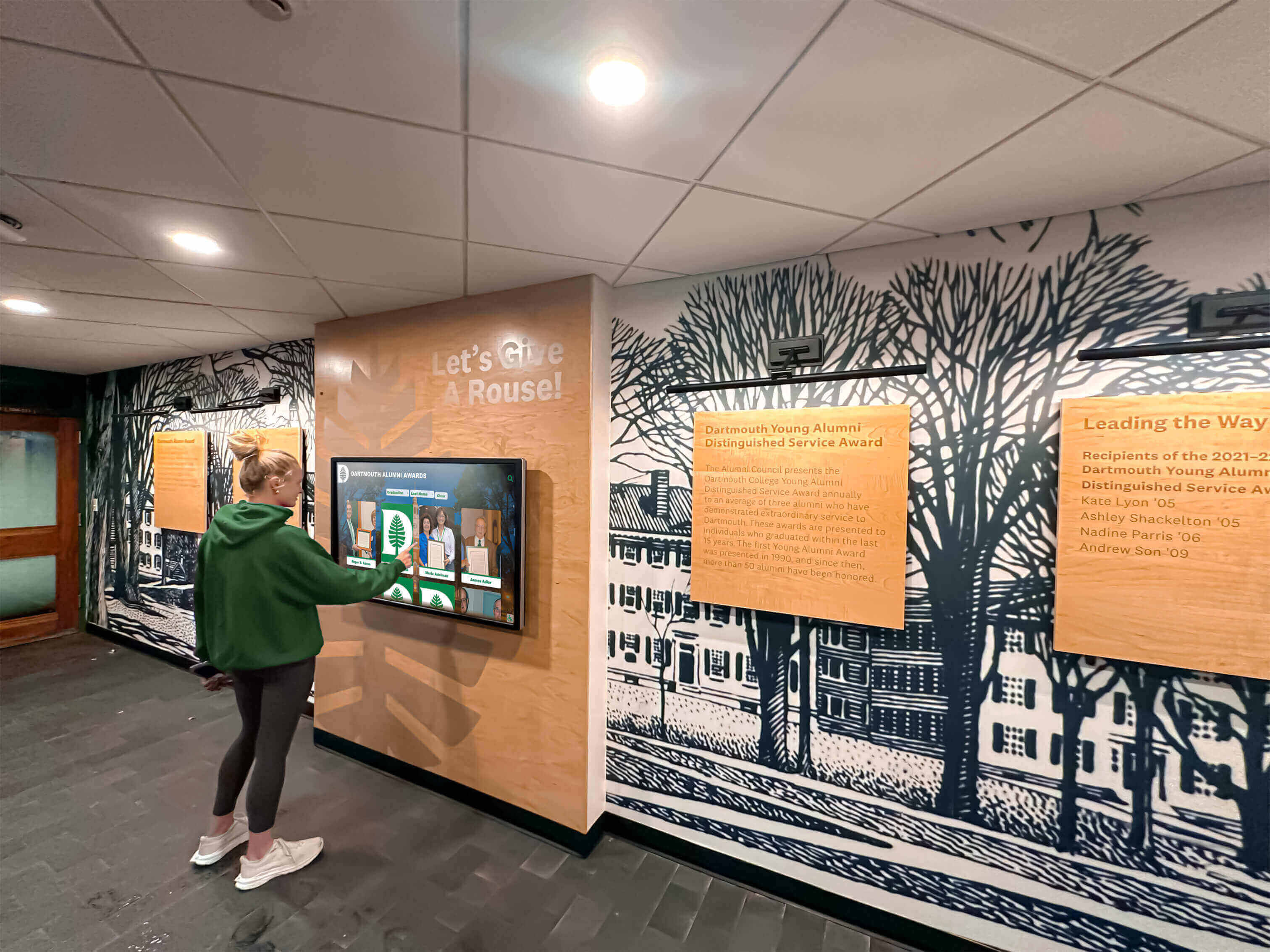
Interactive touchscreen displays invite exploration while accommodating unlimited alumni recognition capacity
Implementation Considerations:
- Commercial-grade displays rated for continuous operation far exceed consumer products in reliability and longevity
- Capacitive touch technology provides responsive, precise interaction users expect from smartphones
- 4K resolution ensures crisp text and high-quality images at close viewing distances
- Wall-mounted, freestanding kiosk, or custom architectural integration options accommodate various spatial configurations
- Professional installation and comprehensive training ensure sustainable long-term operation
Initial investment typically ranges from $10,000-$35,000 depending on display size and feature complexity, with annual software subscriptions of $2,000-$5,000 providing ongoing platform access, unlimited content capacity, automatic updates, and responsive technical support.
Donor Recognition Integration
Alumni gathering areas provide natural contexts for acknowledging philanthropic support, creating stewardship touchpoints while inspiring additional generosity from alumni who witness appropriate recognition of those who contribute financially.
Thoughtful Recognition Approaches:
- Digital donor walls showing cumulative giving societies and major benefactors through elegant interfaces
- Named spaces or architectural elements honoring transformational gifts that funded facility creation
- Campaign progress displays illustrating advancement toward strategic goals through compelling visual representations
- Impact storytelling connecting donations to tangible outcomes like scholarships funded, facilities built, or programs established
- Inclusive recognition honoring modest annual donors alongside major gift benefactors, preventing alienation of majority alumni
Effective donor recognition balances appreciation with avoiding excessive commercialization that makes spaces feel transactional rather than genuinely welcoming. The goal involves honoring generosity while maintaining environments where all alumni feel valued regardless of giving capacity.
Historical Storytelling and Heritage Preservation
Alumni spaces provide ideal venues for celebrating institutional history, distinctive traditions, and the evolving stories that connect current realities to founding values and pivotal moments across organizational evolution.
Heritage Display Strategies:
- Chronological timelines visualizing institutional development from founding through contemporary achievements
- Historical photographs showing campus transformation, beloved traditions, and significant moments across decades
- Artifact displays featuring physical objects with historical significance like original documents, vintage equipment, or meaningful memorabilia
- Digital archives providing searchable access to comprehensive institutional history including yearbooks, newspapers, and documents
- Multi-generational family recognition celebrating legacy attendance connecting grandparents, parents, and current students
When designed thoughtfully, historical elements create emotional connections to institutional legacy while demonstrating that contemporary community members participate in narratives extending far beyond individual graduation years. This perspective strengthens alumni identification with permanent communities transcending their specific cohorts.

Historical displays connect current alumni to institutional heritage while preserving important stories for future generations
Planning and Implementing Alumni Gathering Spaces
Creating excellent alumni areas requires systematic planning that addresses budget realities, stakeholder needs, and long-term sustainability rather than pursuing aesthetic ideals disconnected from practical constraints.
Budget Development and Funding Strategies
Alumni space costs vary dramatically based on whether you’re renovating existing facilities or constructing new buildings, selecting premium finishes versus value materials, and incorporating sophisticated technology or basic amenities.
Investment Ranges:
Under $50,000:
- Furniture upgrades and comfortable seating installations in existing spaces
- Basic digital recognition display with entry-level content management
- Fresh paint, improved lighting, and modest finish improvements
- Beverage service equipment and hospitality amenity additions
- Signage, wayfinding, and branding elements establishing identity
$50,000-$150,000:
- Comprehensive renovation of 500-1,000 square feet including architectural modifications
- Professional-grade interactive recognition system with rich multimedia capabilities
- Quality furniture, finishes, and environmental design creating excellent ambiance
- Built-in AV systems, multiple display options, and robust technology infrastructure
- Professional design services and project management ensuring cohesive execution
$150,000-$500,000:
- Extensive renovation of larger spaces or multiple connected rooms totaling 2,000+ square feet
- Multiple premium touchscreen installations across various locations
- High-end finishes, custom millwork, and sophisticated architectural integration
- Commissioned artwork, specialized lighting design, and premium acoustic treatment
- Flexible event spaces with movable partitions, comprehensive AV, and professional production capabilities
Alternative Funding Sources:
- Capital campaign priorities positioning alumni spaces as fundable major gift opportunities
- Naming rights offering building or room naming for transformational philanthropic commitments
- Reunion class gifts encouraging milestone reunion years to fund specific elements
- Alumni association reserves utilizing accumulated membership funds for community benefit
- Corporate partnerships engaging employer sponsors supporting alumni career services
- Foundation grants pursuing education-focused foundations supporting student success initiatives
Development professionals frequently find that alumni gathering areas attract donor support particularly readily because projects provide visible, lasting impact that prospective benefactors easily envision and subsequently experience during campus visits. Thoughtful donor recognition ideas help frame gathering spaces as appropriate stewardship opportunities that honor generosity while creating welcoming environments.

Intuitive touch interfaces make exploring alumni recognition engaging and accessible for visitors of all ages
Phased Implementation Approaches
When comprehensive development exceeds immediate resources, strategic phasing delivers incremental value while demonstrating commitment that often attracts additional support enabling accelerated completion.
Phase 1: Essential Foundation (Year 1):
- Establish core gathering space with comfortable seating and basic hospitality amenities
- Implement digital recognition system as primary alumni celebration and engagement tool
- Create clear signage and wayfinding establishing identity and facilitating discovery
- Provide WiFi access, device charging, and baseline technology enabling connectivity
- Begin promotional campaigns building awareness and encouraging utilization
Phase 2: Enhanced Experience (Year 2-3):
- Expand seating capacity and diversify furniture options accommodating varied uses
- Add dedicated meeting spaces or flexible event zones supporting programming
- Implement enhanced lighting design, acoustic treatment, and finish quality improvements
- Integrate additional recognition displays or traditional elements complementing digital systems
- Develop content library enriching digital recognition with comprehensive alumni profiles
Phase 3: Comprehensive Excellence (Year 3+):
- Commission custom artwork and decorative enhancements elevating aesthetic quality
- Create outdoor connectivity through patios or courtyards extending usable space
- Implement advanced technology including AR capabilities, virtual tour integration, or AI personalization
- Develop specialized zones like quiet study areas, demonstration kitchens, or private meeting suites
- Achieve comprehensive recognition coverage across all relevant alumni populations
Phased approaches enable institutions to begin creating alumni value immediately rather than waiting years for complete funding, while building institutional knowledge and demonstrating success that justifies continued investment.
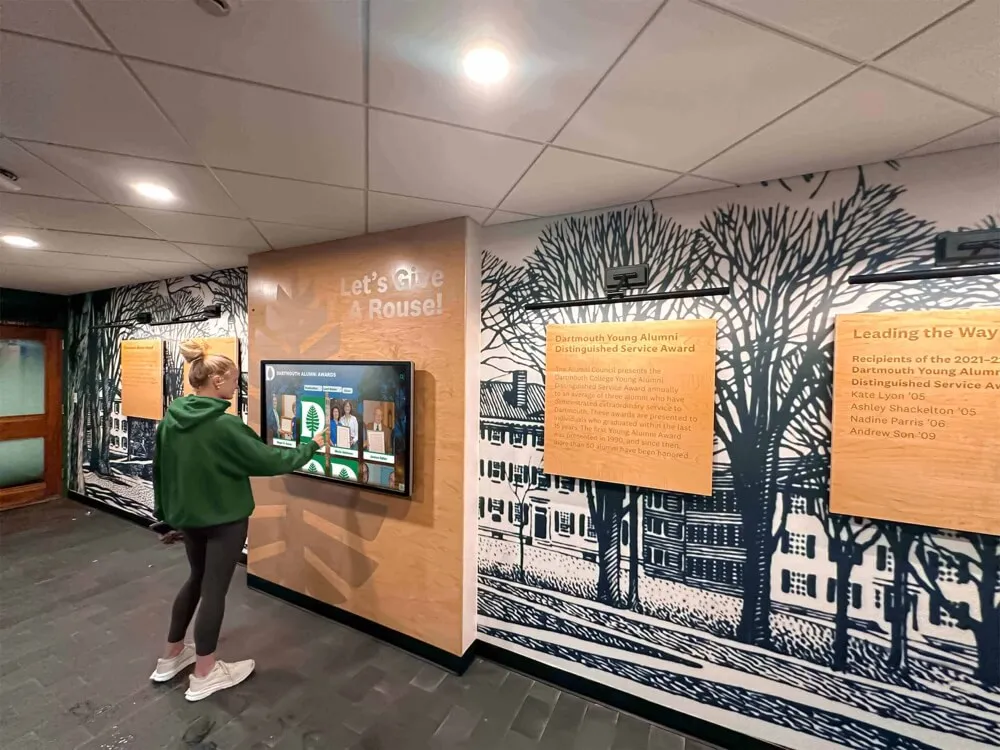
Phased development allows institutions to create functional spaces immediately while planning systematic enhancement over time
Stakeholder Engagement and Planning Processes
Successful alumni spaces result from collaborative planning processes that incorporate diverse perspectives rather than top-down decisions by administrators disconnected from actual user needs.
Essential Stakeholder Groups:
- Alumni Representatives: Recent graduates, mid-career professionals, and senior alumni providing varied generational perspectives
- Advancement Staff: Development officers, alumni relations professionals, and annual giving teams understanding cultivation needs
- Facilities Personnel: Campus planners, architects, and maintenance staff addressing operational realities
- Student Leaders: Current students representing those who will interact with returning alumni in these spaces
- Faculty and Staff: Long-tenured personnel providing institutional memory and understanding of campus culture
Planning Process Elements:
- Needs assessment surveys gathering quantitative data about desired amenities, preferred locations, and space priorities
- Focus groups exploring qualitative insights about what makes alumni feel welcomed and valued
- Benchmarking visits examining excellent peer institution examples identifying best practices and innovative ideas
- Architectural programming sessions translating stakeholder input into specific spatial requirements and design criteria
- Iterative design review ensuring proposals align with user needs rather than purely aesthetic considerations
Collaborative planning requires additional time and coordination compared to administrative decree, but dramatically increases the likelihood that completed spaces genuinely serve community needs and achieve intended engagement outcomes.
Activating Alumni Gathering Spaces Through Programming
Even beautifully designed spaces achieve limited impact without intentional activation through programming that drives utilization, creates community, and justifies ongoing institutional investment.
Regular Programming Creates Momentum
Consistent scheduled activities establish patterns where alumni develop habits around using gathering spaces rather than only visiting during major reunion events occurring annually or less frequently.
Recurring Program Concepts:
- Monthly Networking Receptions: Industry-specific or geographic region gatherings facilitating professional connection and mentorship
- Distinguished Alumni Speaker Series: Programs featuring accomplished graduates sharing career insights and advice for current students
- Career Counseling Office Hours: Scheduled times when career services staff meet with alumni seeking professional development support
- Book Club or Discussion Groups: Intellectual programming appealing to alumni seeking continued learning and stimulating conversation
- Regional Alumni Chapter Meetings: Coordination with geographic chapters using campus spaces during leadership visits or planning sessions
- Volunteer Committee Meetings: Reunion planning, annual fund phonathons, or mentorship program coordination utilizing dedicated spaces
Programming frequency matters significantly—monthly activities create consistent momentum while quarterly events struggle to establish behavioral patterns. Even modest programs occurring regularly outperform elaborate special events happening infrequently in terms of sustained engagement impact. Successful fraternity composites display programs often integrate gathering space activities that strengthen Greek alumni connections.
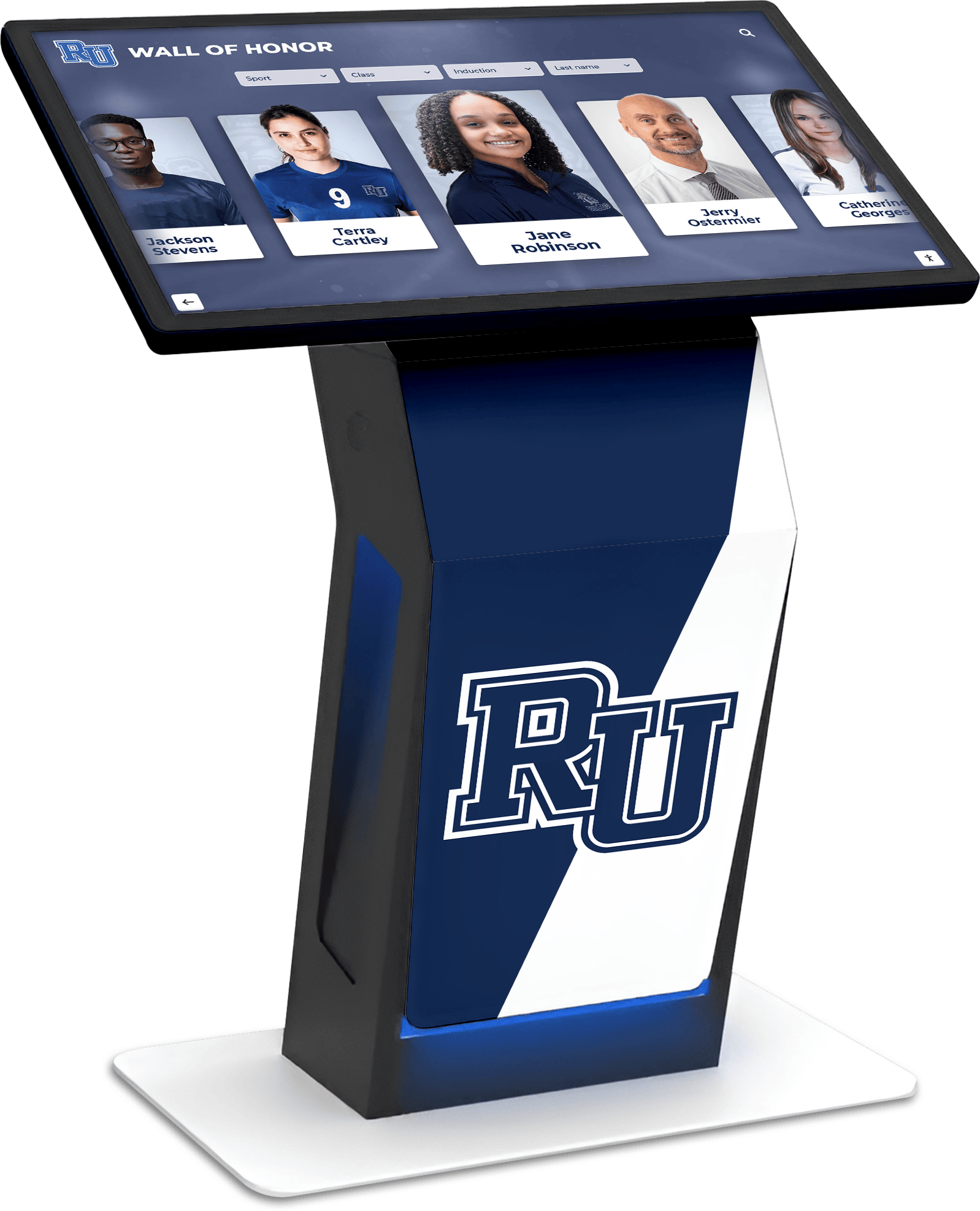
Freestanding recognition kiosks provide flexible placement options for gathering areas without requiring wall mounting
Leveraging Major Events for Space Visibility
While regular programming builds baseline utilization, major institutional events provide opportunities to showcase gathering spaces to large alumni audiences who might not otherwise discover these resources.
Strategic Event Integration:
- Reunion Weekend Headquarters: Designated class gathering points during reunion celebrations creating concentrated utilization and visibility
- Homecoming Activities: Reception spaces, hospitality suites, or registration locations during annual alumni golf events and celebrations
- Giving Day Celebrations: Recognition ceremonies, donor appreciation receptions, or campaign milestone events honoring philanthropic support
- Commencement Hospitality: Pre or post-ceremony gathering spaces for graduating families meeting with alumni parents or legacy families
- Athletic Event Hospitality: Pre-game receptions or post-game celebrations leveraging consistent athletic event attendance
Major events expose hundreds or thousands of alumni to gathering spaces in single days, creating awareness that drives subsequent casual visits during ordinary campus trips unrelated to organized programming. Effective womens soccer all-star recognition programs often feature gathering space celebrations that strengthen team and alumni bonds.
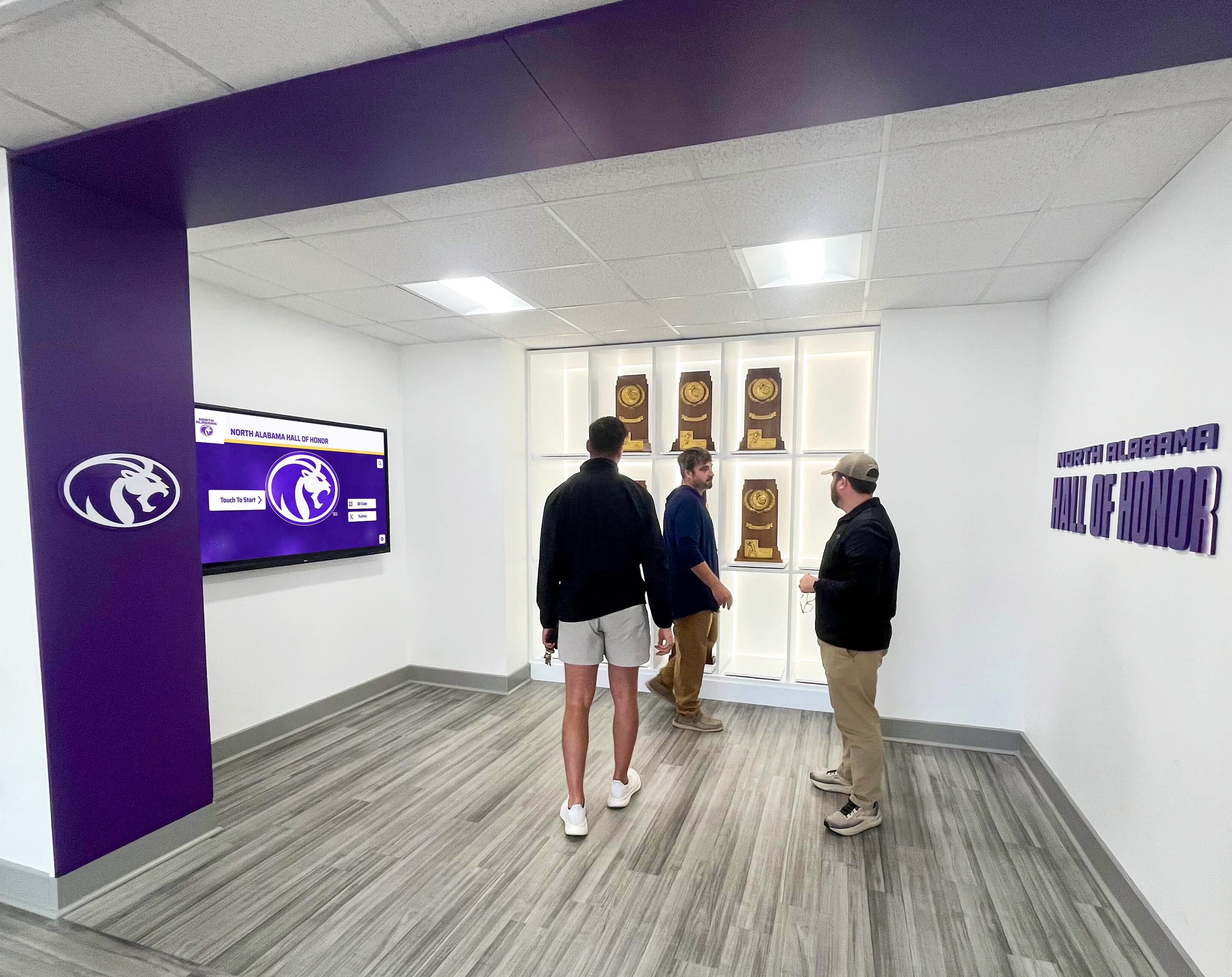
Major events showcase gathering spaces to large alumni audiences while creating memorable experiences in dedicated facilities
Digital Extension and Hybrid Engagement
Physical gathering spaces serve on-campus visitors excellently but provide limited value for geographically distant alumni who rarely travel to campus. Digital extensions expand access while creating hybrid engagement opportunities connecting physical and virtual participation.
Virtual Engagement Integration:
- Web-accessible versions of digital recognition displays enabling remote exploration of alumni achievements
- Live-streamed programs from physical spaces allowing remote alumni participation in speaker series or panel discussions
- Virtual tours of renovated facilities showcasing improvements to alumni unable to visit in person
- Social media campaigns featuring gathering space content, tagging recognized alumni, and encouraging digital interaction
- Zoom-enabled meeting capabilities supporting hybrid gatherings with some participants physically present and others joining remotely
Particularly for institutions with nationally or internationally distributed alumni populations, digital extension ensures that gathering space investments benefit entire communities rather than only the subset living near campus who can visit regularly. Comprehensive academic recognition programs often utilize both physical gathering spaces and digital platforms to engage diverse alumni populations.
Measuring Success and Demonstrating Value
Assessment proves particularly important for alumni gathering spaces given significant investment requirements and frequent skepticism about whether physical facilities genuinely drive engagement or represent aesthetic indulgences.
Key Performance Indicators
Utilization Metrics:
- Daily visitor counts and foot traffic patterns during ordinary weeks and event periods
- Average visit duration indicating whether spaces serve as brief pass-throughs or destinations where alumni linger
- Repeat visitor rates suggesting whether initial visits create positive experiences motivating returns
- Event hosting frequency showing whether programming utilizes spaces or they sit empty between rare uses
- Peak usage times revealing when spaces experience highest demand for capacity planning
Engagement Indicators:
- Interactive display usage statistics including touch sessions, duration, profiles viewed, and search patterns
- Web platform traffic from alumni accessing digital recognition systems remotely through online interfaces
- Social media engagement with content shared from or about gathering spaces
- Survey data measuring alumni satisfaction with facilities and perceived institutional commitment
- Qualitative feedback through comment cards, focus groups, or suggestion mechanisms
Advancement Outcomes:
- Giving participation rate changes comparing alumni who’ve visited gathering spaces versus those who haven’t
- Major gift pipeline development tracking whether cultivation activities utilizing spaces progress successfully
- Donor retention rates for alumni who attended stewardship events in dedicated facilities
- Event attendance comparing turnout for programs in alumni spaces versus generic campus locations
- Volunteer recruitment effectiveness when gatherings occur in purpose-built versus borrowed venues
These metrics demonstrate whether spaces deliver intended engagement value or require programmatic adjustments, facility modifications, or increased promotional efforts to achieve potential.
Continuous Improvement Processes
Initial implementation rarely produces perfect results. Systematic assessment and responsive refinement ensure gathering spaces evolve toward excellence rather than remaining static despite obvious shortcomings.
Regular Review Cycles:
- Quarterly operational assessments examining furniture condition, technology functionality, and maintenance quality
- Semi-annual programming evaluation analyzing which activities drive utilization versus those attracting insufficient participation
- Annual comprehensive review including user satisfaction surveys, utilization analysis, and strategic alignment assessment
- Multi-year major evaluations coinciding with renovation consideration, technology refresh cycles, or strategic planning updates
Responsive Adjustments:
- Furniture replacement or repositioning based on observed use patterns and wear concentration
- Technology updates addressing obsolescence, capability gaps, or user experience friction points
- Programming modifications emphasizing successful formats while discontinuing underperforming initiatives
- Promotional strategy refinement targeting awareness gaps or underserved alumni segments
- Policy changes addressing operational issues like hours, reservation systems, or guest access
Institutions achieving exceptional results treat gathering spaces as living programs requiring ongoing attention rather than static facilities completed and forgotten after ribbon-cutting ceremonies. Regular assessment and responsive improvement ensure sustained value delivery.
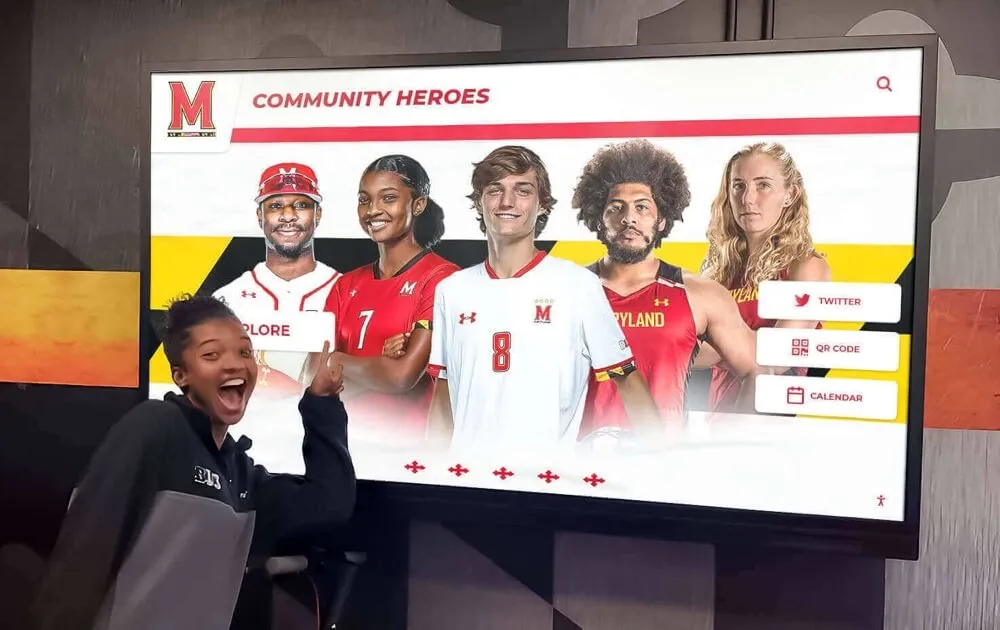
Regular assessment and refinement ensure gathering spaces continue meeting community needs as circumstances evolve
Conclusion: Creating Alumni Spaces That Strengthen Lifelong Connections
Alumni gathering areas represent strategic investments in relationship infrastructure that pays dividends across multiple institutional priorities—advancement revenue through improved giving, enrollment outcomes through authentic success evidence, student development through mentorship facilitation, and community strength through multi-generational connection.
The most successful implementations share common characteristics: prominent locations communicating alumni importance rather than relegating graduates to forgotten corners; welcoming residential aesthetics creating genuine hospitality instead of institutional coldness; comprehensive recognition celebrating diverse achievement through unlimited-capacity digital systems; thoughtful amenities demonstrating authentic care for visitor comfort; flexible design supporting varied uses from quiet individual work to large reception events; intentional programming driving regular utilization rather than hoping passive availability suffices; and sustained commitment viewing spaces as permanent relationship infrastructure requiring ongoing attention and investment.
For institutions ready to create or enhance alumni gathering areas, comprehensive solutions like Rocket Alumni Solutions provide proven platforms combining sophisticated interactive recognition technology with intuitive management and dedicated support. From strategic planning through sustained engagement growth, the right partner makes the difference between spaces that fade into background and transformative gathering areas that genuinely strengthen alumni bonds.
Ready to Create Your Alumni Gathering Area?
Discover how Rocket Alumni Solutions can help you design welcoming alumni spaces that celebrate achievement, foster connection, and strengthen institutional loyalty through interactive digital recognition purpose-built for educational institutions.
Schedule Your Free ConsultationYour alumni community deserves gathering spaces that honor their achievements, facilitate meaningful connection, and demonstrate genuine institutional commitment to lifelong relationships. With strategic planning, thoughtful design, appropriate technology selection, comprehensive programming, and sustained investment, you can create alumni gathering areas that don’t just exist on campus but actively strengthen the bonds that sustain institutional advancement, student success, and community vitality across generations. Start exploring the approaches that best align with your institutional needs, available resources, and strategic priorities—then take the first steps toward recognition and gathering spaces that truly celebrate your school’s extraordinary alumni community while building stronger engagement for decades to come.































