Every pitch thrown in baseball represents a strategic decision—a calculated choice between velocity and movement, deception and control, power and finesse. Understanding the complete arsenal of baseball pitch types transforms pitchers from throwers into tacticians who manipulate hitter timing, exploit weaknesses, and control game outcomes through intelligent pitch selection.
For pitchers developing their repertoire, coaches building staff strategy, players learning to recognize pitches, or baseball programs tracking pitcher performance metrics, mastering pitch types creates competitive advantages at every level. The difference between an average pitcher and an elite one often lies not in throwing harder, but in understanding which pitch to throw when and executing it with precision.
This comprehensive guide breaks down every major baseball pitch type—from blazing four-seam fastballs through devastating breaking balls to deceptive off-speed offerings. You’ll learn how each pitch moves, when strategic situations call for specific pitches, and how modern baseball programs document pitcher development through sophisticated recognition systems.
Baseball’s intellectual beauty emerges from the constant chess match between pitcher and hitter. Each pitch type serves specific strategic purposes, exploiting different aspects of hitting mechanics and human perception. Pitchers who command multiple pitch types with varied speeds and movement patterns become nearly unhittable, while those relying on single pitches face predictable limitations regardless of velocity.
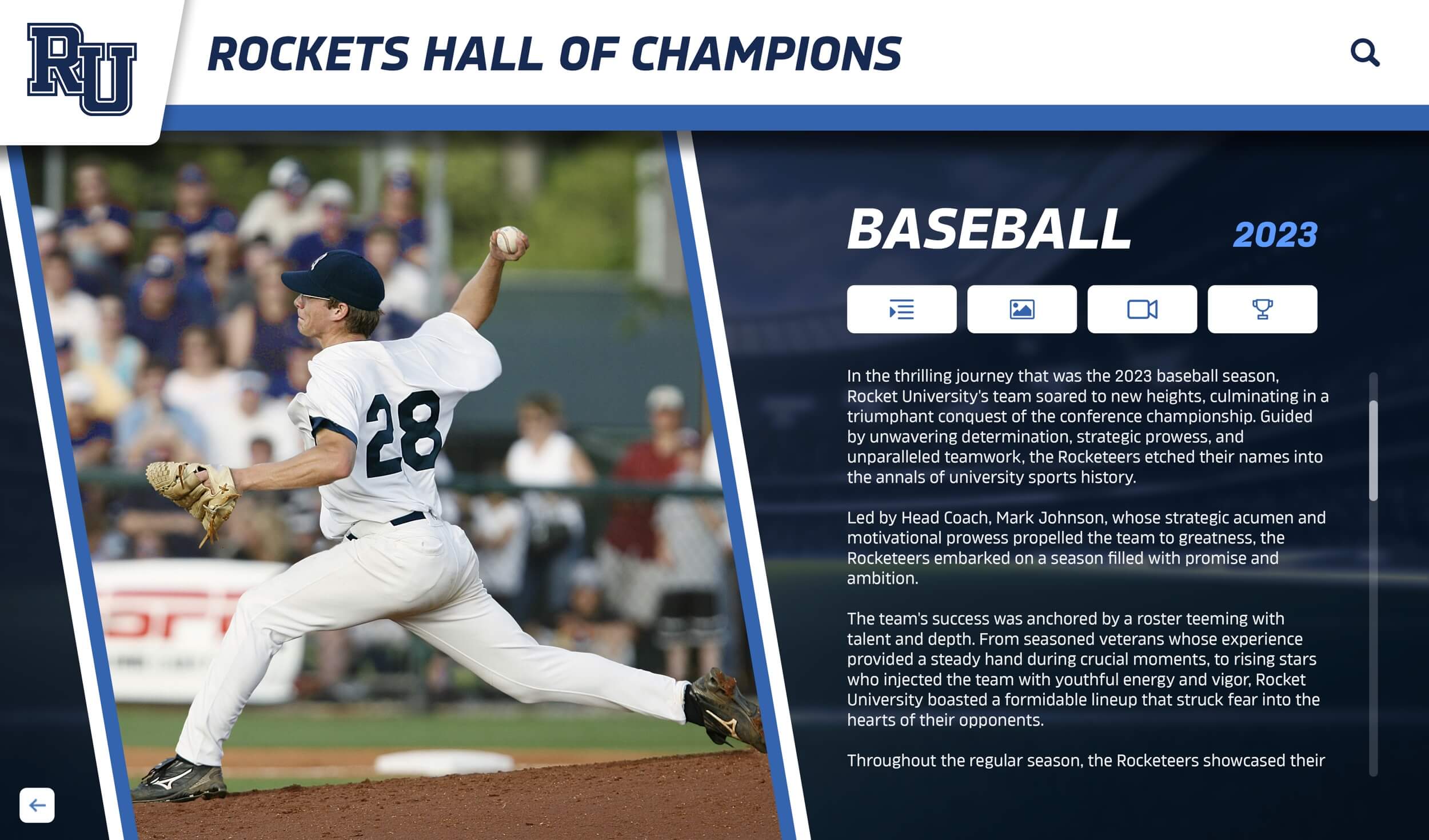
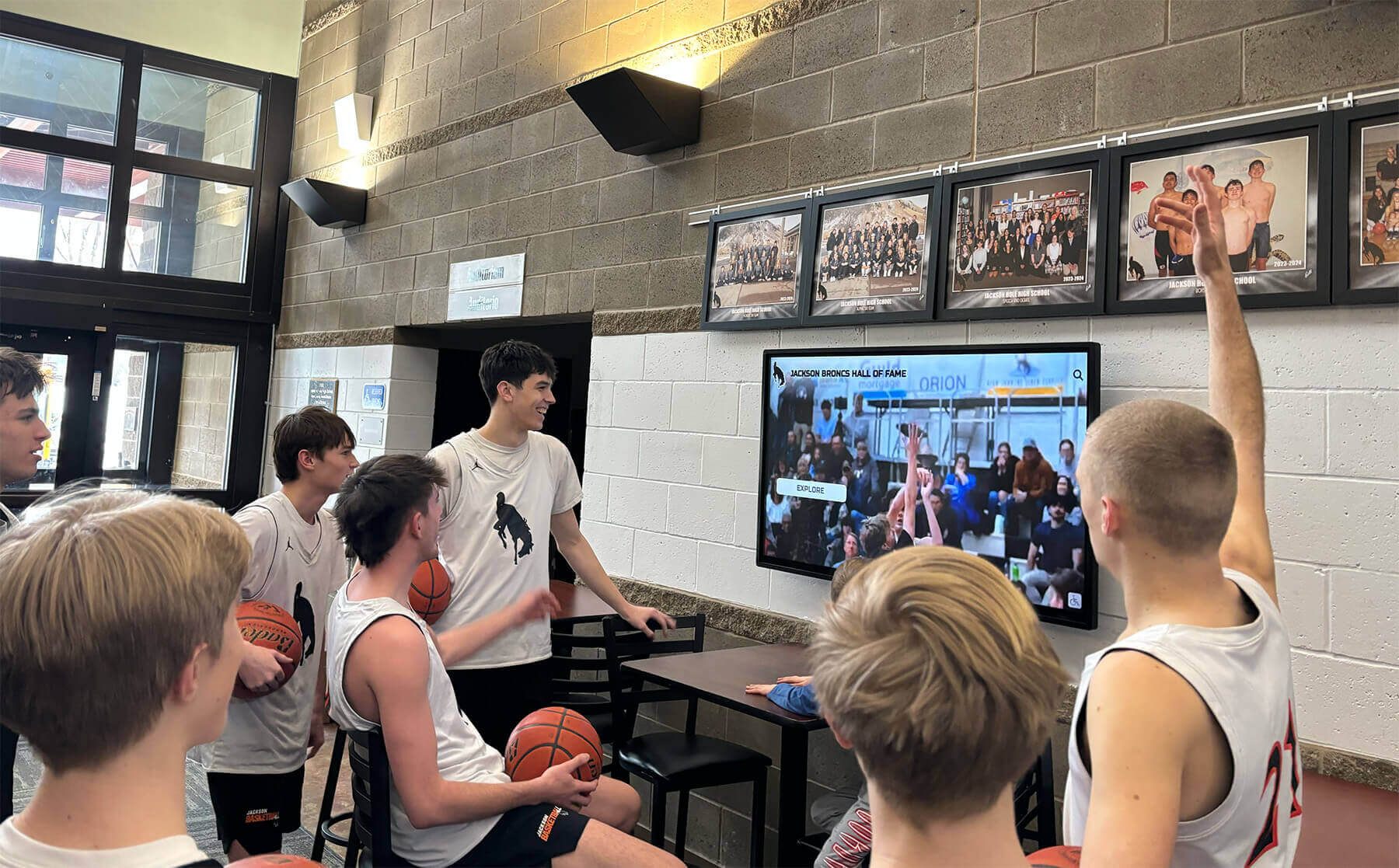
Elite pitchers develop diverse repertoires documented through digital recognition displays celebrating their achievements
Understanding Baseball Pitch Classification
Baseball pitches fall into three primary categories based on velocity, movement characteristics, and intended deception mechanisms.
The Three Main Pitch Categories
Fastballs: High-velocity pitches (85-105 mph at elite levels) that overpower hitters through speed and location. Fastballs include four-seam, two-seam, cut, and split-finger variations, each with distinct movement patterns.
Breaking Balls: Pitches featuring sharp, late movement created through spin and grip modifications. Breaking balls including curveballs, sliders, and slurves break downward, sideways, or on diagonal planes, disrupting hitter timing and bat path.
Off-Speed Pitches: Slower pitches (typically 10-20 mph below fastball velocity) designed to disrupt hitter timing through speed differential. Changeups, circle changeups, and palmball variations look identical to fastballs out of the hand before arriving significantly slower at the plate.
How Pitch Movement Works
Pitch movement results from the Magnus effect—a physics principle where spinning objects moving through air experience force perpendicular to their motion direction. The seam orientation, spin axis, spin rate, and velocity determine specific movement characteristics:
- Backspin (like four-seam fastballs) creates rising action or reduced gravity drop
- Topspin (like curveballs) creates downward break
- Side spin (like sliders) creates horizontal movement
- Combination spin axes create movement on diagonal planes
Elite pitchers manipulate spin characteristics through precise grips and release points, creating movement that appears minimal until the ball reaches the hitting zone—too late for batters to adjust their swing path.
Velocity Ranges by Level
Understanding typical velocity ranges helps pitchers set realistic development goals and coaches evaluate prospect potential:
Youth Baseball (Ages 9-12): Fastballs typically range 45-65 mph, with advanced players reaching low 70s by age 12.
High School Baseball: Freshmen pitchers average 70-78 mph, while varsity pitchers range 78-88 mph, with top prospects reaching low 90s.
College Baseball: Division I pitchers average 88-93 mph, with elite starters touching 94-98 mph and closers occasionally exceeding 100 mph.
Professional Baseball: MLB pitchers average 92-95 mph on fastballs, with elite starters throwing 95-100 mph and premier closers reaching 100-105 mph.
Velocity alone doesn’t determine success—pitch movement, location, deception, and sequencing often matter more than raw speed. Many successful pitchers throw below-average velocity but succeed through superior command and pitch mix diversity.

Fastball Variations: The Foundation of Pitching
Every pitcher’s arsenal begins with fastballs—the highest-velocity offerings that establish timing and set up all other pitches. Understanding fastball variations allows pitchers to attack different parts of the strike zone with optimal movement characteristics.
Four-Seam Fastball
The four-seam fastball represents baseball’s purest power pitch—maximum velocity with minimal movement and consistent backspin creating “rising” action that appears to defy gravity.
Grip and Mechanics: Pitchers grip across the horseshoe seam where the seams are closest together, with index and middle fingers positioned on top of the baseball perpendicular to the seams. The thumb sits underneath directly between the two fingers. This grip creates pure backspin with minimal lateral movement.
Movement Characteristics: Four-seamers feature straight trajectory with minimal horizontal movement. The backspin creates perceived “rise” (actually reduced gravitational drop) that causes hitters to swing under high fastballs. Elite four-seamers feature 2,200-2,600 RPM spin rates, with higher spin creating more perceived rise.
Strategic Usage: Four-seam fastballs work best high in the strike zone where backspin creates the most swing-and-miss potential. Pitchers use four-seamers to establish strike zone control early in counts, challenge hitters in fastball counts (1-0, 2-0, 2-1, 3-1), blow hitters away when ahead in the count with high location, and set up off-speed pitches through velocity differential.
Development Priority: Youth and developing pitchers should master four-seam fastball command before adding other pitches. Consistent four-seam control provides the foundation for all subsequent pitch development.
Two-Seam Fastball (Sinker)
The two-seam fastball sacrifices 2-4 mph velocity compared to four-seamers in exchange for arm-side movement that produces ground balls and weak contact.
Grip and Mechanics: Fingers run parallel to the narrow seam orientation, creating a grip along rather than across the seams. This grip reduces backspin while adding side spin, creating arm-side run and downward movement.
Movement Characteristics: Two-seamers move 6-12 inches toward the pitcher’s arm side (right for right-handed pitchers, left for lefties) while dropping more than four-seamers. This combination creates natural sinking action—hence the alternative name “sinker.”
Strategic Usage: Two-seam fastballs excel at inducing ground ball contact, particularly effective with runners on base when double plays become valuable. Pitchers use two-seamers to attack the lower half of the strike zone, jam hitters on the hands with inside location creating weak contact, induce ground balls from pull-heavy hitters, and create different looks from the same arm slot as four-seamers.
Best Situations: Two-seamers work best down in the zone, particularly on the inner third against same-side hitters (righties vs. right-handed batters, lefties vs. left-handed batters). The arm-side run jams hitters, while the sink generates grounders rather than hard-hit flies.
Many successful programs track pitcher effectiveness across different pitch types through digital athletic recognition systems that document career statistics and milestone achievements.
Cutter (Cut Fastball)
The cutter blends fastball velocity with late horizontal movement, creating a hybrid pitch that generates weak contact and breaks bats.
Grip and Mechanics: Similar to four-seam grip but shifted slightly off-center toward the glove side, with pressure applied more through the middle finger. This creates slight side spin producing late cutting action.
Movement Characteristics: Cutters move 3-6 inches toward the glove side (left for righties, right for lefties) with late, sharp movement occurring in the final 10-15 feet before reaching the plate. Velocity typically sits 2-4 mph below four-seam fastballs but significantly faster than breaking balls.
Strategic Usage: Cutters neutralize opposite-hand hitters by moving away from their barrel, jam same-side hitters inside breaking bats, create awkward swing angles producing weak contact, and work effectively in any count as a strike pitch or chase pitch just off the plate.
Development Considerations: Cutters require advanced command and often aren’t recommended for youth pitchers still developing foundational mechanics. High school and college pitchers typically add cutters after mastering four-seam and two-seam fastball command.
Notable Cutter Masters: Mariano Rivera built a Hall of Fame career almost exclusively on his cutter, while current stars like Kenley Jansen and Emmanuel Clase feature cutters as their primary weapons.
Split-Finger Fastball
The split-finger fastball (splitter) resembles a fastball out of the hand before dropping sharply as it approaches the plate—one of baseball’s most devastating pitches when commanded effectively.
Grip and Mechanics: The ball sits between the index and middle fingers spread wide outside the seams, creating a split-finger grip. This grip reduces spin significantly compared to standard fastballs, causing the pitch to “fall off the table” with late downward movement.
Movement Characteristics: Splitters feature violent downward action in the final feet before the plate, dropping 6-10 inches more than fastballs while maintaining fastball-like velocity 5-8 mph below four-seamers. The reduced spin (1,200-1,600 RPM compared to 2,200+ for fastballs) creates the dramatic drop.
Strategic Usage: Splitters devastate as strikeout pitches when thrown down in the zone appearing like fastballs before diving below the zone. Pitchers use splitters to finish hitters in two-strike counts, induce ground balls with the downward plane, neutralize both left- and right-handed hitters effectively, and create separation from fastballs without requiring different arm speeds.
Development Cautions: Young pitchers should avoid splitters due to increased elbow stress from the wide finger spread. High school and college pitchers require mature arm strength and exceptional fastball command before attempting splitter development.
Breaking Ball Arsenal: Disrupting Timing and Bat Path
Breaking balls create dramatic movement through spin manipulation, disrupting hitter timing and forcing uncomfortable swing planes. Mastering at least one quality breaking ball separates pitchers who can get hitters out once from those who succeed multiple times through a lineup.
Curveball
The curveball represents baseball’s classic breaking pitch—dramatic 12-6 or 11-5 downward break that buckles knees and generates swings at pitches ending well below the zone.
Grip and Mechanics: The middle finger sits along the inside seam with the index finger beside it, while the thumb provides support underneath. At release, pitchers pull down on the inside seam creating forward spin (topspin from the hitter’s perspective). The wrist action resembles turning a doorknob or pulling down a window shade.
Movement Characteristics: Curveballs feature 12-6 (straight downward), 11-5 (slight glove-side movement), or 10-4 (more lateral) break depending on release point and spin axis. Elite curveballs generate 2,500-3,000 RPM, with higher spin creating sharper, later break. Velocity typically ranges 12-18 mph slower than the pitcher’s fastball.
Strategic Usage: Curveballs excel as strikeout pitches when bounced in front of the plate generating chases, called strikes when frozen in the zone against surprised hitters, get-me-over strikes early in counts establishing that pitchers can throw the pitch for strikes, and setting up fastballs by disrupting hitter timing with significant velocity differential.
Development Timeline: Young pitchers (ages 12-14) can safely learn curveballs with proper mechanics emphasizing natural pronation rather than twisting the wrist. Teaching emphasis should focus on spin quality over throwing the pitch harder.
Situational Excellence: Curveballs work best when ahead in counts (0-1, 1-2, 0-2) where hitters must expand zones, protecting against walks. Starting curveballs at eye level before breaking through the zone creates maximum swing-and-miss potential.
Slider
Sliders combine velocity approaching fastballs with late horizontal and downward movement—arguably baseball’s most effective pitch for generating swings and misses against professional hitters.
Grip and Mechanics: Similar to fastball grip but positioned slightly off-center with pressure applied through the outside edge of the index finger. At release, pitchers cut across the outside of the ball creating side-spin with some forward spin component.
Movement Characteristics: Sliders move 4-8 inches horizontally toward the glove side with 2-6 inches of downward break, creating diagonal movement. Elite sliders feature 2,400-2,800 RPM with late, sharp break occurring in the final 10 feet. Velocity typically sits 6-12 mph below fastballs, creating less velocity differential than curveballs.
Strategic Usage: Sliders devastate as back-foot pitches against opposite-hand hitters (righties vs. lefties or vice versa), buried inside against same-side hitters jamming hands, dotted on the outer corner for called strikes, and thrown just off the plate glove-side generating chases.
Development Considerations: Sliders stress the elbow more than fastballs or curveballs due to the cutting action required. High school pitchers should develop fastball command and curveballs before adding sliders, typically around ages 15-17 with proper mechanical instruction.
Professional Preference: Sliders represent the most common breaking ball at professional levels due to their velocity, late movement, and effectiveness against both left- and right-handed hitters.
Modern baseball programs document pitcher development including pitch type mastery through comprehensive athletic recognition platforms that showcase career progression and milestone achievements.
Slurve
The slurve blends slider velocity with curveball depth—a hybrid breaking ball featuring characteristics of both pitches.
Grip and Mechanics: Grip falls between curveball and slider positions, with release combining pulling-down curveball action and cutting-across slider motion. The resulting spin axis sits between pure topspin (curveball) and side-spin (slider).
Movement Characteristics: Slurves break harder and later than curveballs but with more depth than sliders. Movement typically features 6-10 inches of sweep with 8-12 inches of vertical drop. Velocity sits between curveball and slider speeds.
Strategic Usage: Slurves work as strikeout pitches with more horizontal movement than curveballs, breaking balls with more velocity than traditional curves, and hybrid pitches for pitchers who struggle commanding both distinct sliders and curveballs.
Development Notes: Slurves often develop naturally for pitchers whose curveballs or sliders evolve toward hybrid characteristics. Some pitchers intentionally develop slurves as their primary breaking ball rather than mastering both curves and sliders separately.
Sweeper
The sweeper represents modern baseball’s newest breaking ball classification—extreme horizontal movement with minimal vertical break creating sweep across the zone.
Grip and Mechanics: Similar to slider grip but with adjusted finger pressure creating more pure side-spin with minimal topspin component. Release emphasizes cutting across the ball’s side rather than down its back.
Movement Characteristics: Sweepers feature 12-18 inches of horizontal movement with only 2-4 inches of vertical break, creating nearly horizontal movement. This extreme sweep differentiates sweepers from traditional sliders that feature more vertical drop.
Strategic Usage: Sweepers excel at creating whiffs on pitches starting over the plate before sweeping entirely outside the zone, backdoor strikes against opposite-hand hitters when started off the plate before sweeping back over the corner, and inducing weak contact when hitters make contact on the pitch’s edge.
Modern Adoption: Analytics-driven pitching development has popularized sweepers across professional baseball, with many pitchers previously classified as throwing sliders now recognized as sweeper specialists based on movement profiles.
Off-Speed Mastery: The Art of Deception
Off-speed pitches win through deception rather than movement—appearing identical to fastballs until arriving 10-20 mph slower, disrupting hitter timing and generating weak contact or complete misses.
Changeup
The changeup represents pitching’s ultimate deception pitch—thrown with fastball arm speed and mechanics but arriving significantly slower, causing hitters to commit early and miss or make weak contact.
Grip and Mechanics: The circle changeup grip (forming an “OK” sign with thumb and index finger around the ball’s side) represents the most common approach, though three-finger changeups and palm changeups also prove effective. The critical element involves maintaining identical arm speed and release point to fastballs while the grip naturally reduces velocity.
Movement Characteristics: Elite changeups feature arm-side fade and downward action similar to two-seam fastballs but with 8-15 mph less velocity. The combination of fastball-like appearance with slower velocity creates the deception that makes changeups effective.
Strategic Usage: Changeups excel against aggressive hitters jumping on fastballs, opposite-hand hitters who struggle with arm-side movement, finishing two-strike counts after establishing fastballs, and keeping hitters off-balance throughout at-bats.
Development Priority: Every pitcher needs at least one quality off-speed pitch, making changeups essential. Youth pitchers can safely learn changeups at any age since the pitch requires no additional arm stress beyond fastballs.
Sequencing Strategy: Effective changeup usage requires establishing fastball threat first. Pitchers who throw too many consecutive changeups allow hitters to adjust timing, eliminating the pitch’s deceptive value.
Split-Change
The split-change blends changeup arm-side movement with splitter’s late downward action, creating a hybrid off-speed pitch with dramatic movement.
Grip and Mechanics: Similar to splitter grip with fingers spread wide, but thrown with changeup mechanics emphasizing pronation at release. This creates more arm-side movement than traditional splitters while maintaining downward action.
Movement Characteristics: Split-changes feature 6-10 inches of arm-side run with 8-14 inches of downward break—more overall movement than standard changeups or splitters individually. Velocity typically sits 12-16 mph below fastballs.
Strategic Usage: Split-changes work as strikeout pitches with late, complex movement, pitches inducing ground balls with the downward plane, and weapons against opposite-hand hitters combining multiple movement directions.
Development Timeline: Like splitters, split-changes require mature arm strength and shouldn’t be attempted by youth pitchers. College and professional pitchers most commonly employ split-change grips.
Palmball
The palmball represents one of baseball’s rarest pitches—held deep in the palm rather than with the fingers, creating extreme velocity reduction with minimal spin.
Grip and Mechanics: The ball sits deep in the palm with fingers spread around it providing minimal grip points. At release, the ball slips out with reduced spin and velocity, creating movement through inconsistent rotation rather than designed spin.
Movement Characteristics: Palmball movement varies considerably based on how the ball comes out of the hand, often creating unpredictable movement including knuckleball-like flutter. Velocity typically sits 15-20 mph below fastballs.
Strategic Usage: Palmball’s unpredictability works as a show-me pitch creating different timing, though most pitchers prefer changeups offering more consistent movement and control.
Professional Rarity: Few professional pitchers employ palmball grips, preferring changeup variants providing more reliable movement and command.
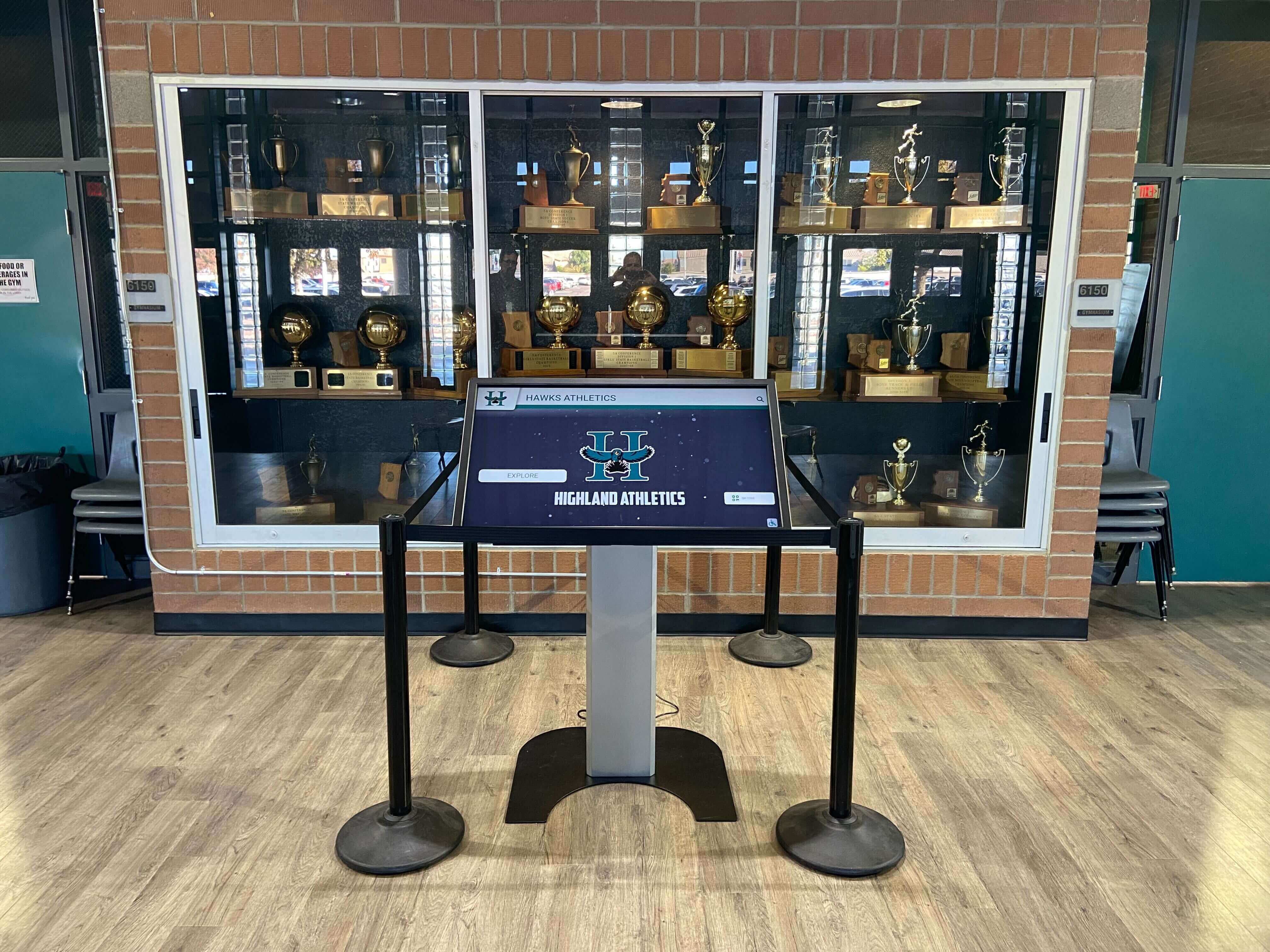
Schools documenting baseball program history often showcase pitcher achievements through digital recognition displays celebrating milestone performances and career statistics.
Specialty and Uncommon Pitches
Beyond standard fastball, breaking ball, and changeup categories, several specialty pitches serve specific purposes or represent unique approaches to disrupting hitters.
Knuckleball
The knuckleball represents baseball’s most unique pitch—thrown with minimal spin creating unpredictable, erratic movement that confuses hitters and catchers alike.
Grip and Mechanics: Fingernails or knuckles dig into the ball’s surface, with minimal wrist action at release producing almost no rotation. Elite knuckleballs rotate less than half a revolution from release to plate.
Movement Characteristics: Knuckleballs float toward the plate at 60-75 mph with unpredictable movement in any direction—up, down, left, right, or combinations thereof. The minimal spin allows air currents to push the ball in various directions mid-flight.
Strategic Usage: Knuckleball specialists typically throw the pitch 80-95 percent of the time, abandoning traditional pitch sequencing entirely. The pitch’s uniqueness creates value through unfamiliarity rather than deception or movement predictability.
Professional Rarity: Knuckleball pitchers represent extreme rarities in modern baseball, with typically only 1-2 active MLB knuckleballers at any time. The pitch’s difficulty to catch, unreliable movement, and extreme specialization limit adoption.
Development Reality: Few coaches can teach knuckleballs effectively, and the pitch’s unreliability makes it impractical except for pitchers fully committing to knuckleball specialization.
Screwball
The screwball features reverse movement compared to standard pitches—arm-side movement for changeups becomes glove-side movement for screwballs through reverse spin mechanics.
Grip and Mechanics: At release, pitchers pronate (turn the hand outward) opposite to natural throwing motion, creating reverse spin that moves the ball opposite standard expectations. For right-handed pitchers, this creates movement toward left-handed hitters rather than away.
Movement Characteristics: Screwballs fade toward the pitcher’s glove side (left for righties, right for lefties) with downward action, creating movement opposite to two-seam fastballs or changeups.
Historical Significance vs. Modern Usage: Prominent in mid-20th century baseball, screwballs have largely disappeared from modern pitching due to concerns about arm stress from the unnatural pronation required.
Development Recommendation: Modern pitching instruction generally discourages screwball development due to injury risk, with cutters and sliders providing safer alternatives for achieving glove-side movement.
Eephus Pitch
The eephus represents baseball’s ultimate trick pitch—lobbed toward the plate in a high arc at 50-65 mph, catching aggressive hitters completely off-guard.
Mechanics and Usage: Pitchers lob the ball in a high arc rather than driving it on a downward plane. The dramatic velocity differential (30-40 mph slower than fastballs) and unusual trajectory create extreme timing disruption.
Strategic Situations: Eephus pitches work exclusively as surprise weapons thrown perhaps once per game or even once per season. Overuse eliminates surprise value, making the pitch ineffective.
Notable Examples: Vicente Padilla, Dave LaRoche, and occasionally Zack Greinke have employed eephus pitches in professional baseball, generating viral highlight moments when hitters either miss completely or look foolish making contact.
Development Notes: Eephus pitches require no special development—any pitcher can throw one. The question is whether the strategic benefit of occasional surprise outweighs appearing unconventional.
Strategic Pitch Selection: When to Throw What
Understanding how each pitch moves matters less than knowing when to throw it. Strategic pitch sequencing separates effective pitchers from those who simply possess good stuff.
Count-Specific Strategy
Different counts require different pitch selection approaches based on leverage and hitter mentality.
Even Counts (0-0, 1-1, 2-2): Fastballs establish zone control and force hitters to react. Approximately 65-70 percent of even-count pitches at professional levels are fastballs. Pitchers who fall behind in counts face diminished effectiveness and higher pitch counts.
Pitcher’s Counts (0-1, 0-2, 1-2): Breaking balls and off-speed pitches maximize swing-and-miss potential when hitters must protect with two strikes. Elite pitchers throw fastballs only 40-45 percent of the time when ahead in counts, using breaking balls to finish hitters.
Hitter’s Counts (1-0, 2-0, 2-1, 3-0, 3-1): Fastballs in the strike zone prevent walks and force hitters to earn their way on base. Throwing balls in hitter’s counts compounds mistakes, leading to walks or forced fastballs in even worse counts.
Two-Strike Approaches: Expand the zone with pitches finishing just outside strike zone boundaries, generating chases. Fastballs elevated above the zone, breaking balls bouncing in front of the plate, and sliders/changeups just off the outside corner create high whiff rates.
Three-Ball Counts: Attack the strike zone with fastballs unless possessing exceptional breaking ball command. Walking hitters on borderline pitches when ahead in counts represents one of baseball’s most damaging mistakes.
Hitter-Specific Adjustments
Effective pitch selection requires understanding individual hitter tendencies, strengths, and weaknesses.
Pull-Heavy Hitters: Attack the outer third of the plate with fastballs and breaking balls, creating difficult swing angles. Avoid pitches middle-in where pull hitters drive the ball with authority.
Opposite-Field Hitters: Pitch inside with fastballs and cutters, jamming hands and preventing comfortable extension. Outside pitches allow opposite-field hitters to use the entire field effectively.
Power Hitters: Avoid predictable fastballs in locations where power hitters do damage—typically belt-high middle-in. Mix speeds and locations, focusing on keeping the ball down and away or up and in.
Contact Hitters: Avoid giving contact hitters hittable fastballs to put in play. Focus on creating swings and misses with breaking balls and off-speed pitches rather than relying on weak contact.
Aggressive Early-Count Hitters: Use off-speed pitches early in counts against hitters who jump on first-pitch fastballs. Changeups and curveballs thrown for strikes early in counts disrupt aggressive timing approaches.
Advanced baseball programs track detailed statistics on pitcher effectiveness across different situations, with digital athletic platforms documenting career achievements and milestone performances.
Situational Baseball
Game situations influence optimal pitch selection beyond simple count-based approaches.
Runners in Scoring Position: Emphasize pitches inducing ground balls (two-seamers, sinkers, curveballs) rather than fly balls that score runners from third on sacrifice flies. Preventing big innings matters more than strikeouts when runners threaten.
Double Play Situations: Ground ball pitches become critical with runners on first or first-and-second with less than two outs. Two-seam fastballs, sinkers, and curveballs down in the zone create optimal double play opportunities.
First-Batter Situations: Starting innings with strikes prevents leadoff walks that complicate the inning. Fastballs and quality breaking balls thrown for strikes establish control efficiently.
Late-Game Protection: Protecting leads in late innings often requires pitchers’ best pitches regardless of count tendencies. Use premium stuff—whether fastballs, breaking balls, or changeups—that generates the highest success rates.
Pitch Sequencing: The Mental Chess Match
Individual pitches win specific battles, but sequencing wins wars. Effective sequencing creates patterns that set up subsequent pitches while keeping hitters guessing.
Building Effective Sequences
Establishing the Fastball: Every sequence begins with establishing that pitchers can and will throw strikes with fastballs. Hitters who don’t respect fastball strikes sit on off-speed pitches, eliminating deception value.
Speed Differentials: Maximum effectiveness comes from sequencing pitches with significant velocity gaps. Following 95 mph fastballs with 78 mph curveballs creates 17 mph differentials that disrupt timing dramatically. Conversely, sequencing similar-velocity pitches (94 mph fastball, 88 mph cutter, 86 mph slider) creates less timing disruption.
Location Variation: Sequence pitches to different zones forcing hitters to cover the entire strike zone. After establishing inside fastballs, breaking balls down-and-away create maximum distance and timing challenges.
Pattern Breaking: Avoid predictable patterns that allow hitters to anticipate pitch type. Varying sequences prevents hitters from sitting on specific pitches in specific counts.
Classic Pitch Sequences
Fastball-Fastball-Breaking Ball: Establish timing with two fastballs before disrupting it with a breaking ball. This sequence works particularly well when the first two fastballs progressively climb in the zone, setting up a breaking ball that drops below expectations.
Changeup-Fastball: After showing the changeup, following with a fastball in a similar location creates late reaction from hitters still geared for changeup speed. The reverse sequence (fastball-changeup) represents the more common approach, but occasionally reversing creates fresh deception.
Breaking Ball-Breaking Ball-Fastball: Showing two consecutive breaking balls creates fastball expectations, setting up a well-located heater. This works particularly when ahead in counts where hitters expect continued breaking balls.
Backdoor Sequences: Start breaking balls outside the zone before bringing them back over the outside corner for strikes. This works especially well against opposite-hand hitters who initially believe pitches will stay out of the zone.
Advanced Sequencing Concepts
Tunneling: Throwing different pitches on identical flight paths initially before late separation occurs creates deception through perceived similarity. Fastballs and changeups released on the same plane but arriving at different speeds exemplify effective tunneling.
Mirroring: Showing the same pitch location repeatedly before dramatically changing location exploits hitter expectation. After three consecutive away fastballs, an inside fastball often catches hitters leaning incorrectly.
Cross-Seaming: Alternating between four-seam and two-seam fastballs in similar locations creates different movement from nearly identical releases, preventing hitters from predicting movement based on release points.
Mixing Planes: Varying vertical location (high fastballs followed by low breaking balls) forces hitters to cover different swing planes rather than grooming single-plane swings.
Successful baseball programs document pitcher development and achievement through comprehensive recognition systems celebrating milestone performances and career statistics.
Recognizing Pitches: A Hitter’s Guide
Understanding pitches from the hitter’s perspective helps pitchers appreciate what creates deception while helping position players recognize pitch types to improve hitting performance.
Visual Cues and Recognition
Spin Direction: Different pitches create distinct spin appearances—fastball backspin appears as a dot, curveball topspin shows red seams rotating forward, slider spin creates a tilted rotation axis.
Release Point Consistency: Pitchers releasing all pitches from identical arm slots create maximum deception. Those dropping arm slots for curveballs or pushing changeups from different release points telegraph pitch type.
Grip Recognition: Some hitters pick up grip differences before release, identifying changeups by visible circle grips or curveball finger positions. Quality pitchers hide grips until the final release moment.
Early Trajectory: The initial 10-15 feet of flight provides information before significant movement occurs. Experienced hitters identify pitch types based on early spin and trajectory cues.
Count-Based Pitch Prediction
Statistical Tendencies: Professional hitters study opponent scouting reports revealing pitch usage patterns in different counts. Knowing a pitcher throws sliders 68 percent of the time in 0-2 counts allows hitters to anticipate rather than purely react.
Sequencing Patterns: Identifying individual pitcher patterns (like always following inside fastballs with away breaking balls) creates predictive advantages for prepared hitters.
Comfort Pitches: When under pressure, most pitchers revert to their most comfortable pitch. Recognizing these go-to pitches in critical situations provides competitive edges.
Practice Recognition Drills
Video Study: Watching film of opponent pitchers from release point to plate builds pattern recognition without live-action pressure.
Batting Practice Intentional Sequences: Having coaches call specific pitch sequences during batting practice develops recognition skills rather than only working on swing mechanics.
Recognition Before Swing Decision: Teaching hitters to identify pitch type before committing to swing decisions improves plate discipline and swing selection.
Simulated Game Recognition: Incorporating recognition drills into simulated game situations transfers recognition skills from practice into competitive settings.
Pitch Development: Building Your Arsenal
Pitchers develop effective arsenals through systematic progressions emphasizing proper mechanics, command development, and strategic timing for adding new pitches.
Youth Development Priorities (Ages 8-12)
Fastball Command First: Young pitchers should master four-seam fastball mechanics and control before attempting additional pitches. Throwing strikes consistently with proper mechanics provides the foundation for all subsequent development.
Changeup Introduction: Around ages 10-12, introducing changeups provides off-speed options without injury risk. Changeups require no additional arm stress compared to fastballs, making them safe for youth development.
Curveball Timing: With proper mechanics emphasizing natural pronation rather than wrist twisting, curveballs can be introduced around ages 12-13. Teaching emphasis should focus on spin quality and finishing the pitch naturally rather than maximum break.
Volume Management: Youth pitchers face greater injury risk from excessive pitch counts than from specific pitch types. Strict pitch count limits (50-75 pitches per outing, 75-100 per week depending on age) matter more than pitch type restrictions for most youth arms.
High School Development (Ages 13-18)
Two-Seam Fastball Addition: Once four-seam command proves consistent, adding two-seam fastballs provides movement variety while maintaining fastball velocity.
Breaking Ball Selection: Developing one quality breaking ball (curveball OR slider, not necessarily both) creates reliable out pitches. Attempting to master multiple breaking balls simultaneously often results in mediocre command of both rather than excellence with one.
Changeup Refinement: Continuing changeup development ensures pitchers possess effective off-speed weapons against opposite-hand hitters.
Advanced Pitch Consideration: Only after mastering fastballs, one breaking ball, and changeups should high school pitchers consider adding cutters, splitters, or additional breaking ball variants.
Mechanical Consistency: All pitches should be thrown from identical release points with similar arm speeds to maximize deception. Developing this consistency matters more than expanding pitch repertoires prematurely.
College and Professional Development
Arsenal Specialization: Advanced pitchers focus on refining 3-4 pitches thrown with elite command rather than possessing mediocre versions of 5-6 pitches.
Analytics Integration: Using pitch tracking data (spin rate, movement profiles, velocity) helps identify which pitches generate optimal results and which need improvement or elimination.
Situational Development: Advanced pitchers develop specific pitches for specific situations—adding cutters to neutralize opposite-hand hitters, developing sweepers for swing-and-miss potential, or refining splitters as ground ball weapons.
Continuous Refinement: Professional pitchers constantly adjust grips, release points, and mechanics to optimize pitch effectiveness based on measurable performance data.
Schools showcase pitcher achievements and program history through innovative digital recognition platforms documenting career milestones and creating lasting program pride.
Tracking Pitcher Performance and Development
Modern baseball programs document pitcher development through sophisticated statistics and recognition systems that celebrate achievements while informing coaching decisions.
Essential Pitching Statistics
Traditional Metrics:
- Earned Run Average (ERA): Average earned runs allowed per nine innings pitched
- Wins and Losses: Although imperfect measures of pitcher performance, these remain standard statistics
- Strikeouts and Walks: Measuring dominance (strikeouts) and control (walks/walk rate)
- Innings Pitched: Volume statistics indicating durability and workload
Advanced Analytics:
- WHIP (Walks + Hits per Inning Pitched): Measuring how many base runners pitchers allow
- Strikeout-to-Walk Ratio: Indicating overall command and dominance
- Ground Ball Rate: Showing tendency to induce ground balls versus fly balls
- Pitch-by-Pitch Data: Tracking velocity, spin rate, movement, and effectiveness for each pitch type
Pitch-Specific Performance Tracking
Analyzing effectiveness by pitch type reveals which pitches generate optimal results and which require improvement:
Whiff Rate: Percentage of swings that miss, indicating swing-and-miss effectiveness Called Strike Rate: Measuring how often pitches thrown in the zone generate called strikes Hard Contact Rate: Showing quality of contact allowed when hitters connect Usage Rate by Count: Revealing how often pitchers throw specific pitches in different situations
This data guides development priorities—if a pitcher’s curveball generates 45 percent whiff rates while their slider produces only 25 percent, focusing curveball development makes strategic sense.
Digital Recognition of Pitcher Achievement
Baseball programs increasingly celebrate pitcher accomplishments through modern recognition platforms that showcase career statistics, milestone achievements, and program history.
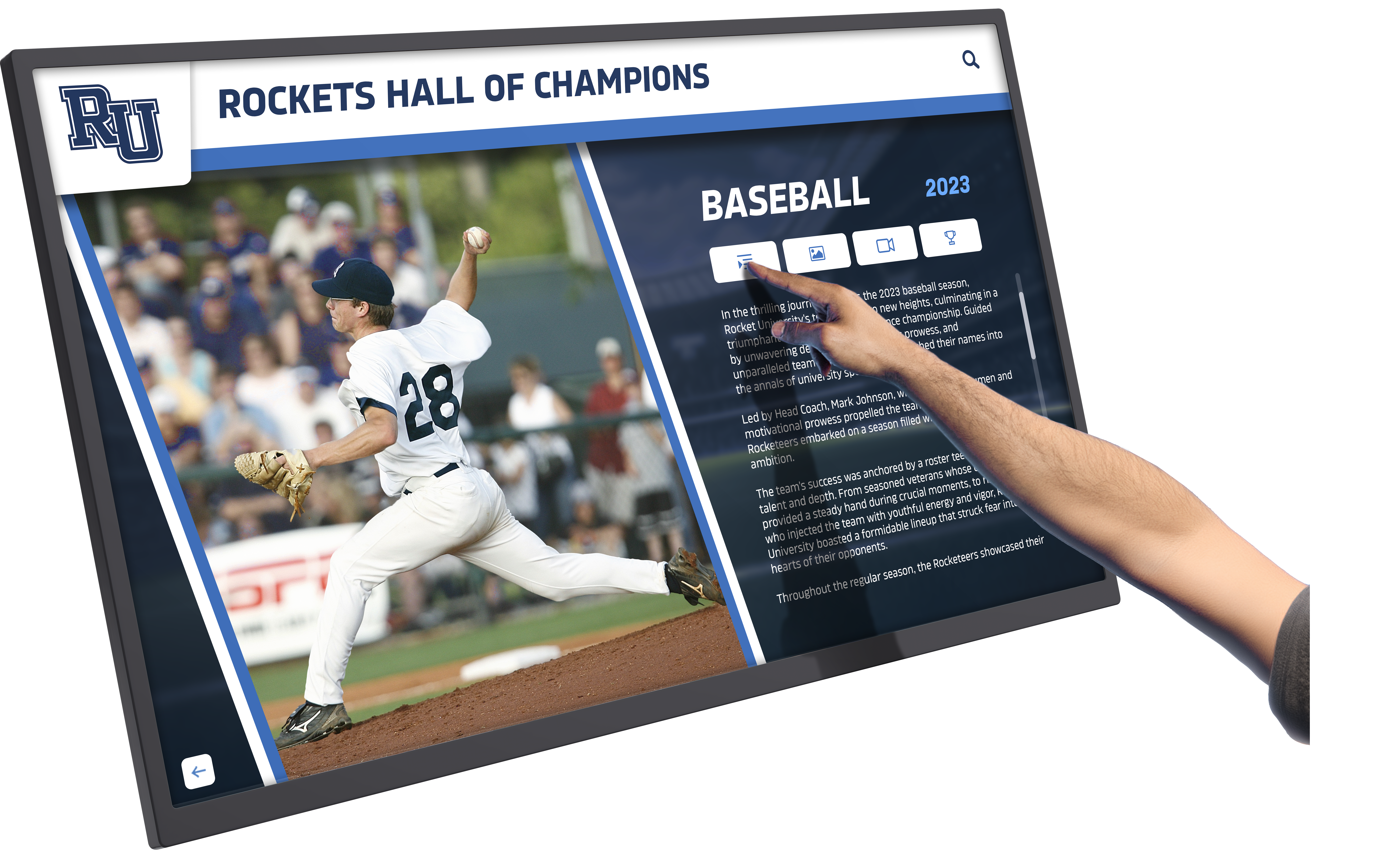
Interactive displays document strikeout milestones, perfect games and no-hitters, career win totals and ERA achievements, all-conference and all-state honors, and progression through different pitch development stages.
These systems provide engaging platforms where current players explore program history, alumni reconnect with their achievements, families celebrate their student-athletes’ accomplishments, and prospective students understand program tradition.
Solutions like Rocket Alumni Solutions offer baseball-specific templates showcasing pitcher statistics, achievement documentation, multimedia integration with game photos and videos, and searchable databases enabling instant access to specific players or seasons.
Programs implementing digital recognition platforms report enhanced program pride, stronger alumni engagement, and improved recruitment as families recognize institutions that properly celebrate athletic achievement.
Common Pitch Development Mistakes to Avoid
Understanding common pitfalls helps pitchers, coaches, and programs avoid counterproductive development approaches.
Too Many Pitches Too Soon
The Mistake: Young pitchers attempting to master 5-6 different pitch types before commanding any pitch consistently.
The Consequence: Mediocre command of many pitches rather than excellence with fewer pitches. Hitters easily handle pitchers who can’t locate any pitch reliably regardless of arsenal size.
The Solution: Master 2-3 pitches (typically four-seam fastball, one breaking ball, one changeup) with excellent command before attempting additional pitch types.
Neglecting Fastball Development
The Mistake: Falling in love with breaking balls and off-speed pitches while allowing fastball command and velocity to stagnate.
The Consequence: All other pitches become less effective when hitters don’t respect fastball threat. Changeups create deception through velocity differential from fastballs—weak fastballs reduce changeup effectiveness.
The Solution: Continuously develop fastball velocity and command throughout pitching careers. Even pitchers known for elite breaking balls succeed because fastballs remain legitimate weapons.
Mechanical Inconsistency
The Mistake: Using different arm slots, release points, or arm speeds for different pitches.
The Consequence: Hitters identify pitch types before release, eliminating deception value. Changeups thrown with visibly slower arm speed telegraph themselves regardless of grip.
The Solution: Develop identical mechanics across all pitches, with only grip variations differentiating pitch types. Video analysis helps identify unintentional mechanical differences.
Ignoring Command Development
The Mistake: Focusing exclusively on adding movement, velocity, or new pitch types while neglecting location control.
The Consequence: Pitches with excellent movement but poor command generate walks and mid-count fastballs rather than strikeouts and quick outs.
The Solution: Prioritize command development equally with velocity and movement. Elite pitchers throw their best pitches to specific locations in specific counts—not merely toward home plate generally.
Inappropriate Age-Based Development
The Mistake: Youth pitchers throwing sliders, cutters, and splitters requiring mature arm strength and advanced mechanics.
The Consequence: Increased injury risk, poor command due to premature pitch attempts, and reinforcement of problematic mechanics.
The Solution: Follow age-appropriate development progressions—fastballs and changeups for youth pitchers, adding one quality breaking ball in early high school, and introducing advanced pitches only after mastering foundational offerings.
Pitch Grips and Mechanics Visual Reference
While detailed visual demonstrations exceed this guide’s scope, understanding where to find quality instructional resources helps pitchers access proper mechanical instruction.
Recommended Learning Resources
Professional Instruction: Working with qualified pitching coaches provides personalized feedback impossible through self-teaching. Coaches identify mechanical flaws and provide individualized development plans.
Video Analysis Platforms: Services like Driveline Baseball, Tread Athletics, and others offer detailed pitch-by-pitch video breakdowns showing professional pitchers’ grips and mechanics.
Biomechanical Analysis: High-speed camera analysis reveals mechanical details invisible to naked eye observation, helping optimize mechanics while reducing injury risk.
Peer Learning: Studying how successful pitchers at similar competitive levels throw different pitches provides realistic modeling rather than attempting to replicate elite professional mechanics without appropriate physical development.
Self-Assessment Tools
Video Recording: Simple smartphone video from behind home plate and from first/third base angles reveals mechanical inconsistencies and grip variations.
Pitch Tracking Technology: Devices like Rapsodo and TrackMan provide objective data on velocity, spin rate, and movement—turning subjective “feel” into measurable metrics.
Catcher Feedback: Working with catchers who provide honest feedback about pitch movement, location, and deception improves pitch development more effectively than pitcher self-assessment alone.
Statistical Analysis: Tracking results by pitch type over time reveals which pitches generate success and which require mechanical adjustment or elimination.
Modern baseball programs leverage technology for both pitch development and achievement recognition, with digital platforms serving multiple program development purposes simultaneously.
Conclusion: Mastering the Complete Pitching Arsenal
Understanding baseball pitch types transforms pitchers from throwers into strategists who manipulate hitter timing, exploit weaknesses, and control game outcomes through intelligent pitch selection and execution. The path from developing fundamental four-seam fastball command through building complete arsenals featuring multiple fastball variants, devastating breaking balls, and deceptive off-speed offerings requires years of dedicated development—but creates competitive advantages at every level of baseball.
Elite pitchers distinguish themselves not merely through overpowering stuff, but through comprehensive pitch repertoires commanded with precision in appropriate situations. A 92 mph fastball becomes exponentially more effective when complemented by an 82 mph changeup and a 78 mph curveball. Breaking balls that buckle knees work because fastballs establish timing expectations. Changeups generate swings-and-misses because fastballs create velocity benchmarks hitters use to time swings.
The mental chess match between pitcher and hitter—sequencing pitches strategically, varying locations unpredictably, and executing pitches with precision under pressure—separates baseball from sports relying purely on physical attributes. Smaller pitchers who command complete arsenals regularly outperform harder-throwing competitors who lack pitch diversity or strategic sophistication.
For pitchers at any development stage, the priorities remain consistent: master fastball command before expanding repertoires, develop one quality breaking ball and one changeup before attempting advanced pitch types, maintain mechanical consistency across all pitches to maximize deception, study hitter tendencies and count-specific strategies, and continuously refine existing pitches rather than constantly adding new offerings.
Coaches building pitcher development programs should emphasize age-appropriate progressions that prioritize long-term development over short-term results, mechanical consistency preventing injury while optimizing performance, data-driven analysis identifying which pitches work and which need improvement, and comprehensive recognition celebrating pitcher achievements alongside offensive production.
Modern baseball programs increasingly document pitcher development, milestone achievements, and program history through interactive digital platforms that showcase career statistics beyond what traditional displays accommodate. These systems celebrate strikeout kings, no-hitter achievements, velocity milestones, all-state honors, and complete career progressions—creating engagement that strengthens program pride while inspiring current pitchers pursuing their own recognition.
Celebrate Your Baseball Program's Excellence
Discover how interactive digital displays can showcase your pitchers' achievements, document program history, and create engaging recognition that inspires current and future players while honoring those who built your baseball tradition.
Whether you’re a youth pitcher learning your first curveball, a high school athlete developing recruiting-worthy arsenals, a college pitcher refining elite stuff, or a coach building program-wide development systems, understanding baseball pitch types provides the foundation for pitching success. Master the mechanics, study the strategy, practice the execution, and let your achievements speak through the results you generate—strikeouts that end innings, ground balls that become double plays, and championships that define programs.
Your baseball program’s pitching excellence deserves recognition equal to its significance—celebration that’s comprehensive, engaging, permanent, and inspiring to those who will carry your tradition forward.































