Basketball court resurfacing represents one of the most significant facility decisions athletic directors and facilities managers face. A properly maintained court surface ensures player safety, optimizes performance, and creates professional environments that elevate program prestige. Yet the resurfacing process involves complex considerations around material selection, cost projections, scheduling logistics, and coordination with broader facility improvement initiatives.
Many schools delay necessary resurfacing projects due to budget concerns or uncertainty about material options, inadvertently creating safety hazards while missing opportunities to transform dated gymnasiums into modern athletic showcases. The difference between a basic resurfacing project and a comprehensive facility transformation lies in strategic planning that addresses not just the playing surface but the entire gymnasium environment—including the recognition displays, record boards, and digital systems that celebrate program achievements.
This comprehensive guide breaks down everything schools need to know about basketball court resurfacing, from identifying when your court needs attention through material comparisons, detailed cost analysis, optimal timing strategies, and the ancillary facility upgrades that maximize your resurfacing investment.
Whether you’re managing a high school gymnasium with a decades-old surface showing visible wear or planning proactive maintenance for a newer facility, understanding the complete resurfacing process helps you make informed decisions that balance immediate safety needs with long-term program goals and budget realities.
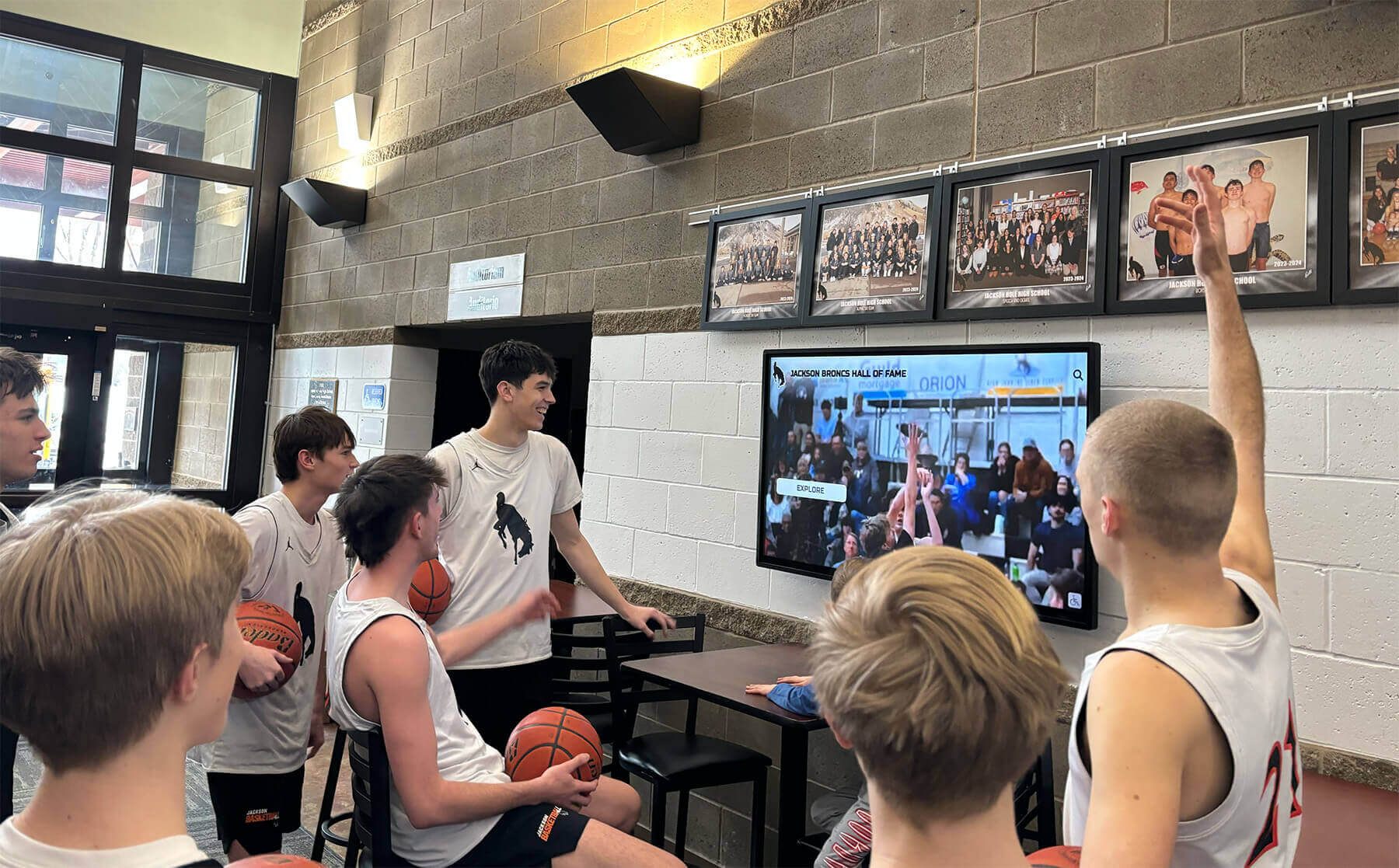
Modern basketball facilities combine quality playing surfaces with digital recognition systems that showcase program achievements
Why Basketball Court Resurfacing Matters
Basketball court surfaces endure tremendous stress from constant athletic activity, equipment usage, and general wear. Understanding why resurfacing matters helps justify budget allocations while preventing serious safety and performance issues.
Player Safety Concerns
Court surface degradation creates multiple safety hazards that increase injury risk for student-athletes:
Surface irregularities: Worn or damaged courts develop uneven spots, cracks, and depressions that catch shoes during quick direction changes. These irregularities cause ankle rolls, knee strains, and falls that sideline athletes and expose schools to liability concerns.
Traction problems: Deteriorated finishes lose grip properties essential for basketball movements. Players experience excessive slipping during defensive slides or insufficient traction during explosive drives, compromising both safety and performance. Dust accumulation on degraded surfaces further reduces friction, creating dangerous playing conditions.
Splinter hazards: Hardwood courts with compromised finishes expose rough wood that can splinter, causing cuts and puncture wounds. Separated seams or lifted boards create trip hazards during fast-paced play.
Impact absorption decline: Court surfaces lose shock-absorbing properties over time. Reduced cushioning increases stress on joints during jumping and landing, contributing to overuse injuries and long-term orthopedic concerns.
Performance Impact
Beyond safety, surface quality directly affects game performance and training effectiveness:
Ball response consistency: Worn surfaces produce unpredictable ball bounces that frustrate players and diminish skill development. Dead spots where the ball doesn’t bounce properly force athletes to adjust their game rather than focus on technique and strategy.
Speed of play: Deteriorated surfaces slow game pace by creating friction that impedes quick movements and fast breaks. Modern basketball emphasizes speed and athleticism—outdated court surfaces undermine these elements.
Player confidence: Athletes perform best when they trust their playing surface. Concerns about slipping, uneven bounces, or surface hazards create mental distractions that reduce performance quality and enjoyment.
Facility Perception
Your basketball court surface communicates powerful messages about program priorities and institutional investment:
Recruiting advantage: Prospective student-athletes and their families evaluate facilities when making school decisions. Professional-grade court surfaces signal program commitment and competitive seriousness that attract talented players.
Community pride: Community members attending games, tournaments, and events form impressions about school quality based partly on facility condition. Pristine courts generate pride, while worn surfaces suggest neglect or budgetary struggles.
Tournament hosting: Schools with superior facilities receive preference for hosting conference tournaments, playoff games, and regional competitions that generate revenue and recognition. Dated court surfaces limit these opportunities.
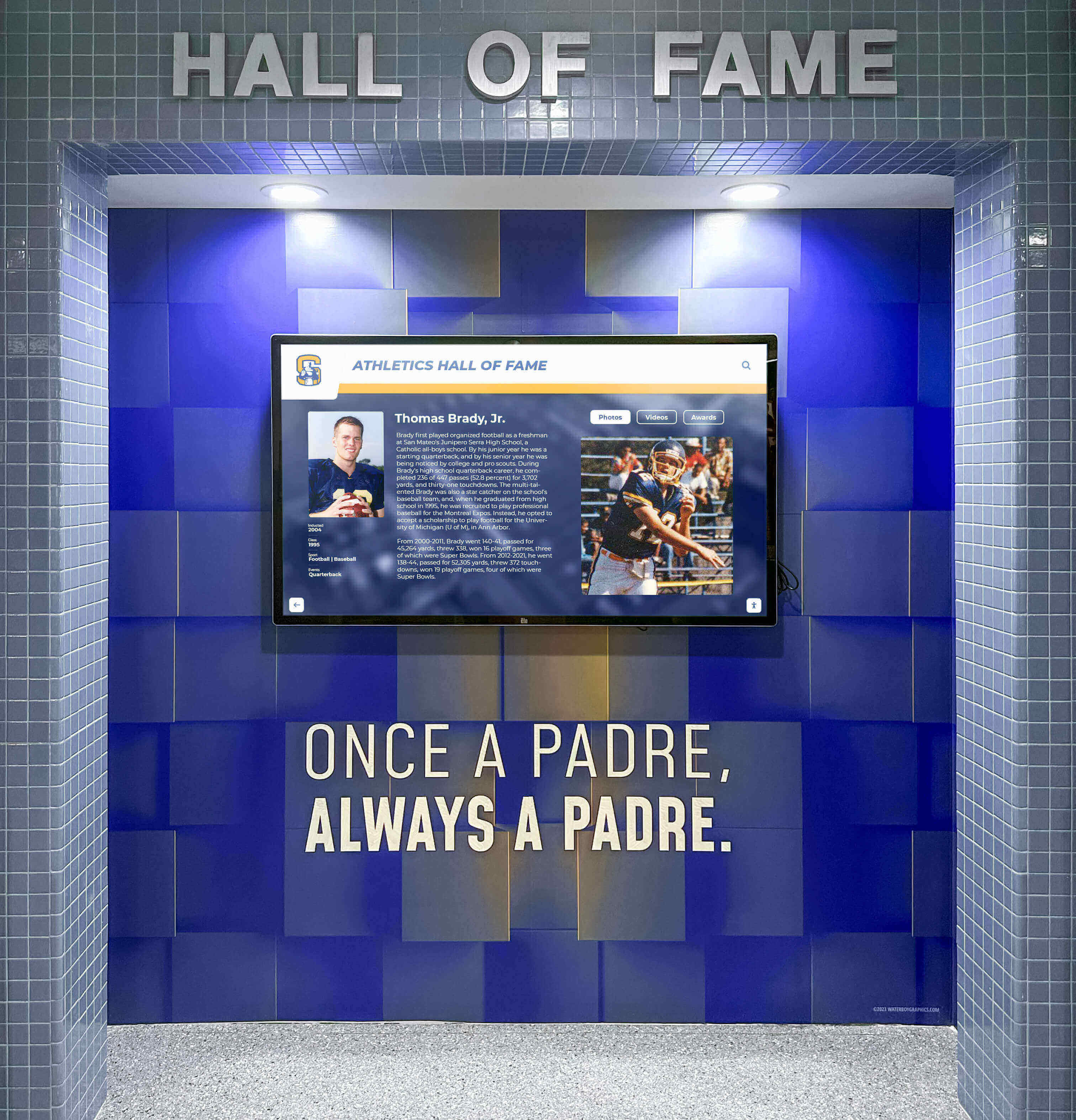
Basketball court resurfacing projects create ideal opportunities to add modern recognition displays celebrating athletic excellence
Recognizing When Your Court Needs Resurfacing
Identifying the right time for resurfacing prevents minor issues from escalating into serious safety hazards while optimizing budget allocation. Watch for these indicators:
Visual Condition Indicators
Observable surface conditions that signal resurfacing needs:
Paint deterioration: Faded lane markings, worn center court logos, or disappearing boundary lines indicate finish degradation. When repainting no longer provides adequate visibility or durability, complete resurfacing becomes necessary.
Surface cracking: Cracks in synthetic surfaces or separation between hardwood planks compromise structural integrity and safety. Small cracks expand over time, accelerating deterioration and increasing repair costs.
Color inconsistency: Uneven fading creates patchwork appearances that look unprofessional. Significant color variation between high-traffic areas and less-used sections indicates finish breakdown.
Bubbling or peeling: Coating failures that cause bubbling, peeling, or flaking reveal moisture problems or adhesion issues requiring professional assessment and likely full resurfacing.
Performance-Based Indicators
Playing experience factors that suggest resurfacing needs:
Decreased traction: Players reporting slipping during normal movements, even with proper footwear and clean floors, indicates finish degradation affecting grip properties.
Ball bounce irregularities: Inconsistent ball response across different court areas frustrates players and coaches. Dead spots, unpredictable bounces, or varying ball height all signal surface problems.
Increased dust: Excessive dust generation during play indicates surface breakdown. Degraded finishes release particles that create slippery conditions and respiratory concerns.
Noise changes: Hardwood courts producing new squeaking, cracking, or hollow sounds during activity may have developed structural problems beneath the visible surface.
Age and Usage Considerations
Timeline factors that indicate resurfacing evaluation:
Manufacturer recommendations: Most court surface manufacturers specify expected lifespans based on usage intensity. High school gymnasiums with heavy usage typically need resurfacing every 8-12 years for synthetic surfaces or refinishing every 10-15 years for hardwood, though actual timelines vary.
Usage intensity: Facilities hosting multiple sports, community programs, and frequent events experience accelerated wear compared to single-sport venues. Schools using gymnasiums for assemblies, graduations, and non-athletic events should plan for shorter surface lifespans.
Maintenance history: Courts receiving consistent professional cleaning, proper moisture management, and preventive care last longer than neglected surfaces. Poor historical maintenance accelerates current deterioration.
Climate factors: Humidity fluctuations, temperature extremes, and moisture exposure affect different surface materials differently. Schools in high-humidity regions face different maintenance challenges than those in arid climates.
Basketball Court Resurfacing Material Options
Surface material selection fundamentally shapes project costs, maintenance requirements, performance characteristics, and longevity. Understanding each option’s advantages and limitations helps you make appropriate choices for your facility and budget.
Hardwood Court Refinishing
Traditional hardwood remains the gold standard for competitive basketball, offering superior performance characteristics and aesthetic appeal.
Material characteristics: Maple hardwood provides ideal hardness-to-resilience ratios for basketball. The tight grain structure ensures durability while the wood’s natural properties deliver excellent ball response and appropriate shock absorption. Hardwood accepts multiple refinishing cycles—properly maintained courts can last 50+ years with periodic refinishing every 10-15 years.
Refinishing process: Hardwood refinishing involves sanding away the existing finish and damaged wood surface (typically removing 1/16 to 1/8 inch), repairing damaged boards or seams, applying multiple coats of specialized athletic finish (usually polyurethane-based), and restriping with appropriate game lines and graphics. The process typically requires 7-14 days depending on complexity.
Performance advantages: Hardwood delivers the ball bounce consistency, traction, and feel that serious basketball programs prefer. The surface allows proper pivot movements, provides excellent shock absorption, and maintains performance characteristics across wide temperature ranges. Most competitive venues, from high schools through professional arenas, choose hardwood for these performance benefits.
Cost considerations: Hardwood refinishing typically costs $3-$8 per square foot depending on condition and finish specifications. A standard high school basketball court (approximately 4,700 square feet) requires $14,000-$38,000 for complete refinishing. Extensive damage requiring board replacement increases costs significantly.
Maintenance requirements: Hardwood demands careful maintenance including daily dust mopping, periodic professional cleaning, humidity control (35-50% relative humidity optimal), and immediate attention to moisture intrusion. Schools must restrict usage to non-marking athletic shoes and prohibit wheeled equipment without protective measures.
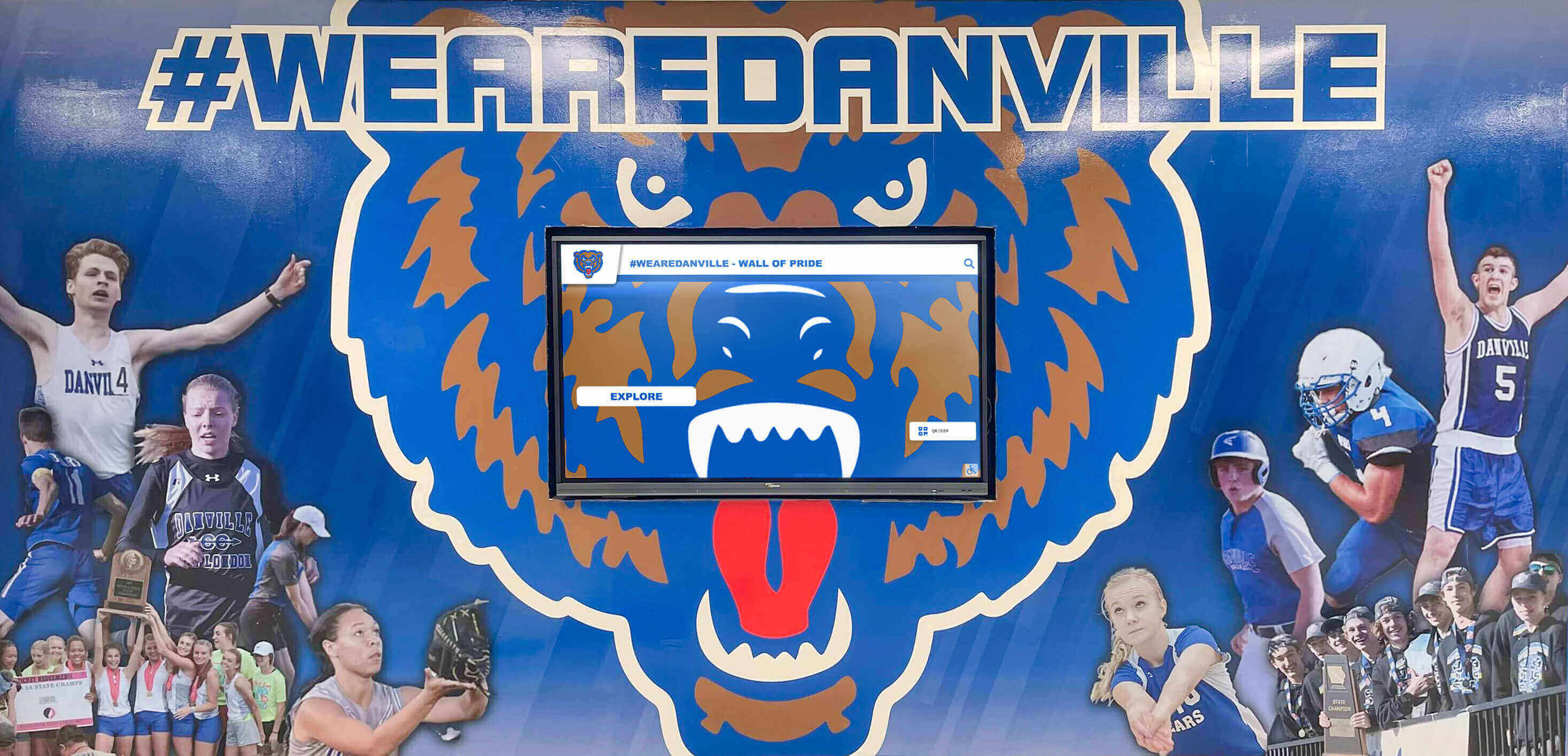
Schools enhance basketball facilities with integrated displays that celebrate team achievements and program milestones
Synthetic Acrylic Surfaces
Acrylic sports surfaces offer versatile, lower-maintenance alternatives popular for multi-purpose facilities and outdoor courts.
Material characteristics: Multi-layer acrylic systems combine resilient base layers, cushioning layers, and textured top coats. These systems build from the base concrete up, creating consistent playing surfaces with predictable performance characteristics. Quality acrylic systems provide 10-15 years of service before requiring full replacement.
Application process: Acrylic installation begins with concrete preparation (cleaning, crack repair, leveling), application of primer coat, installation of cushion layers (number of layers affects shock absorption and cost), application of color coating layers, and precise line striping. Professional installation typically requires 5-10 days with proper curing time.
Performance characteristics: Modern acrylic systems deliver ball bounce and traction approaching hardwood performance at lower costs. The cushioned layers reduce joint stress, making these surfaces popular for youth and recreational programs. Consistent texture across the entire surface eliminates dead spots common in lower-quality installations.
Cost analysis: Acrylic resurfacing typically costs $4-$10 per square foot depending on system quality and cushioning layers. A standard basketball court requires $19,000-$47,000 for complete acrylic resurfacing. Premium systems with enhanced cushioning or specialized finishes reach the higher end of this range.
Maintenance advantages: Acrylic surfaces require less ongoing maintenance than hardwood—regular sweeping and periodic power washing suffice for most facilities. These surfaces tolerate wider humidity ranges and recover better from minor moisture exposure. Schools can use gymnasiums for broader activity ranges without surface damage concerns.
Polyurethane Sports Flooring
Poured polyurethane systems provide seamless surfaces with excellent performance characteristics and distinctive aesthetics.
Material properties: Polyurethane systems consist of elastic layers poured directly onto prepared concrete substrates, creating monolithic surfaces without seams or joints. The material’s elasticity provides superior shock absorption while maintaining ball response quality. Expected service life ranges from 12-20 years depending on quality and usage.
Installation process: Polyurethane installation requires meticulous substrate preparation, application of primer and bonding layers, pouring and leveling of base elastic layers, application of wear layer with color and texture specifications, and precise line painting. The seamless application demands skilled contractors and typically requires 7-14 days including curing.
Performance benefits: Polyurethane surfaces excel in shock absorption, reducing impact forces on athletes’ joints and muscles. The seamless construction eliminates trip hazards from seams or gaps. Consistent traction across the entire surface supports confident athletic movement. Many indoor track facilities and European basketball venues prefer polyurethane for these characteristics.
Cost expectations: Polyurethane installation typically costs $8-$15 per square foot, placing it among the premium options. A full basketball court requires $38,000-$71,000 for complete polyurethane installation. The higher initial cost often proves worthwhile through extended service life and superior performance.
Usage versatility: Polyurethane surfaces accommodate multiple sports and activities exceptionally well, making them ideal for schools needing multi-purpose facilities. The resilient surface supports volleyball, indoor soccer, wrestling, and general physical education without the usage restrictions hardwood requires.
Modular Sport Court Tiles
Interlocking synthetic tiles offer unique advantages for specific applications, particularly outdoor courts or multi-purpose spaces.
System design: Rigid or semi-rigid plastic tiles with engineered interlocking edges create court surfaces without adhesives or permanent installation. Individual tiles typically measure 12x12 inches to 18x18 inches. The elevated grid design allows air and water circulation beneath the surface. Quality tile systems last 15-25 years.
Installation approach: Tile installation proceeds relatively quickly: prepare level base surface (concrete, asphalt, or compacted aggregate), lay perimeter tiles with expansion gaps, interlock interior tiles in appropriate patterns, and install edging strips. Skilled contractors can install a full court in 3-5 days. Some schools with maintenance staff complete installations in-house.
Performance characteristics: Modern sport tiles deliver good ball bounce and traction, though not quite matching poured surfaces or hardwood. The suspended grid design provides natural shock absorption beneficial for joint health. Surface consistency depends on proper base preparation—uneven bases create uneven playing surfaces.
Cost considerations: Modular tiles typically cost $5-$12 per square foot depending on quality, features, and warranty. A basketball court requires $24,000-$56,000 for complete tile installation. The ability to replace individual damaged tiles rather than entire surfaces provides long-term cost advantages.
Application advantages: Tiles excel for outdoor courts where traditional hardwood isn’t viable and painted concrete proves too harsh. Schools can also use tiles for temporary courts in multi-purpose spaces, installing and removing surfaces as needed. The quick installation and minimal cure time allows faster project completion than poured surfaces.
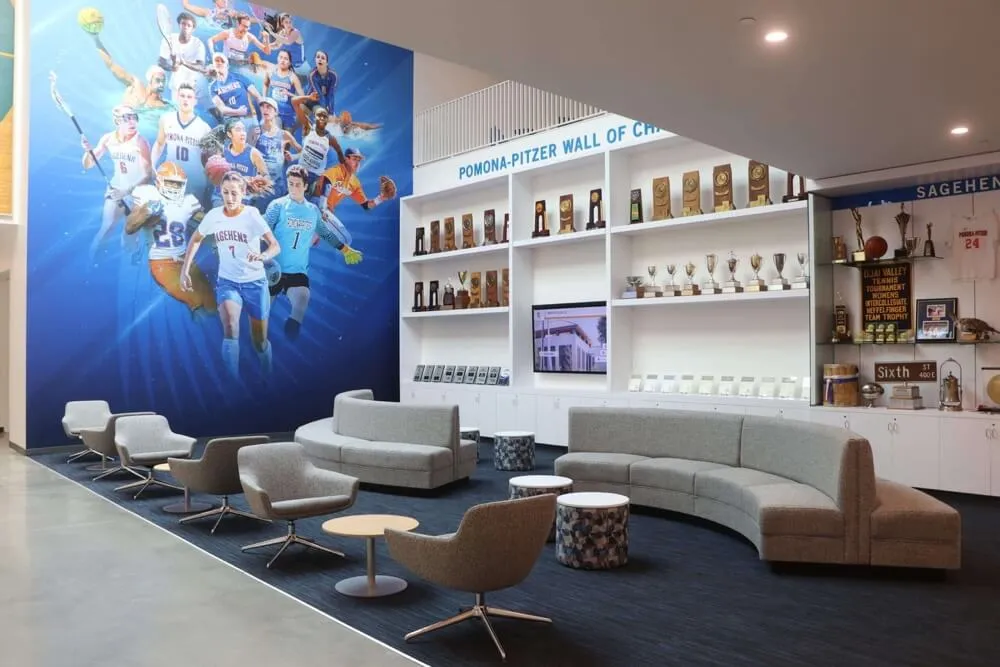
Comprehensive facility upgrades combine court resurfacing with enhanced recognition areas celebrating championship achievements
Basketball Court Resurfacing Cost Breakdown
Understanding complete project costs prevents budget surprises and enables accurate financial planning. Total resurfacing costs extend beyond surface materials to include preparation, labor, and associated improvements.
Surface Material Costs
Material expenses represent the most visible cost component but require context for accurate budgeting:
Standard high school court dimensions: Most high school courts measure approximately 84 feet by 50 feet (4,200 square feet for the court proper), though many schools paint additional boundary lines for practice courts or alternative sports, bringing total resurfacing area to 4,700-5,500 square feet.
Material cost per square foot ranges:
- Hardwood refinishing: $3-$8 per square foot
- Acrylic systems: $4-$10 per square foot
- Polyurethane systems: $8-$15 per square foot
- Modular tiles: $5-$12 per square foot
Total material costs for standard courts:
- Hardwood refinishing: $14,000-$38,000
- Acrylic systems: $19,000-$47,000
- Polyurethane systems: $38,000-$71,000
- Modular tiles: $24,000-$56,000
These ranges reflect quality variations, regional pricing differences, and specific performance features. Premium materials with enhanced characteristics reach upper price points.
Preparation and Labor Costs
Surface preparation and professional installation represent significant project components:
Substrate preparation: Concrete evaluation and repair, crack filling and leveling, moisture barrier installation (if needed), and surface grinding or shot blasting for proper adhesion typically add $2,000-$8,000 depending on existing condition. Severely damaged concrete substrates requiring extensive repair dramatically increase preparation costs.
Professional labor: Skilled installation teams charge $2-$5 per square foot for labor depending on surface type, project complexity, and regional labor rates. Complex projects with custom graphics, multiple court configurations, or specialized performance requirements increase labor costs.
Project management: Contractors include supervision, coordination, insurance, and administrative costs in their bids. These overhead factors typically represent 10-20% of material and labor costs.
Equipment and logistics: Specialized installation equipment, material transportation, workspace setup, and site protection add costs that contractors incorporate into comprehensive bids.
Line Striping and Graphics
Court markings and visual elements contribute to both functionality and appearance:
Standard game lines: Basketball court striping includes boundary lines, free throw lines, three-point arcs, center circle, lane markings, and coaching boxes. Basic line striping with standard colors typically costs $3,000-$6,000 for complete court marking.
Multi-sport configurations: Schools often add volleyball court lines, pickle ball courts, badminton boundaries, or other sport markings. Each additional sport configuration adds $1,000-$3,000 depending on complexity.
Custom graphics: Center court logos, mascot images, school names, and decorative elements create visual impact. Simple center court logos cost $2,000-$5,000, while elaborate multi-color designs with detailed artwork reach $8,000-$15,000. Digital printing technology now enables more complex graphics at reasonable costs.
Sponsor recognition: Some schools offset resurfacing costs through court sponsorships, adding sponsor logos within appropriate NFHS guidelines. Professional sponsor graphic installation costs $500-$2,000 per sponsor placement.
Additional Facility Improvements
Court resurfacing projects create ideal opportunities for complementary facility upgrades:
Wall pad replacement: Basketball court walls require protective padding preventing player injuries during out-of-bounds plays. Quality wall pad systems cost $50-$100 per linear foot installed. A typical gymnasium might need 150-200 feet of wall padding, totaling $7,500-$20,000.
Basket system upgrades: Resurfacing projects allow basketball goal replacement or repair without surface damage concerns. Modern adjustable systems with breakaway rims cost $3,000-$8,000 per main basket (two per court), while practice baskets run $1,500-$3,000 each.
Lighting improvements: Many schools upgrade gymnasium lighting during resurfacing projects. LED conversion improves visibility while reducing energy costs. Complete gymnasium LED lighting typically costs $15,000-$40,000 depending on ceiling height and coverage area.
Seating refinishing: Bleacher refinishing, repair, or replacement logically coincides with court resurfacing when gymnasiums are already out of service. Budget varies enormously based on seating capacity and condition.
Digital recognition displays: Court resurfacing projects present perfect timing for installing school record boards and digital displays celebrating team achievements, player milestones, and program history. Modern touchscreen systems transform gymnasiums into comprehensive recognition environments that honor athletic excellence while facilities are already under construction.
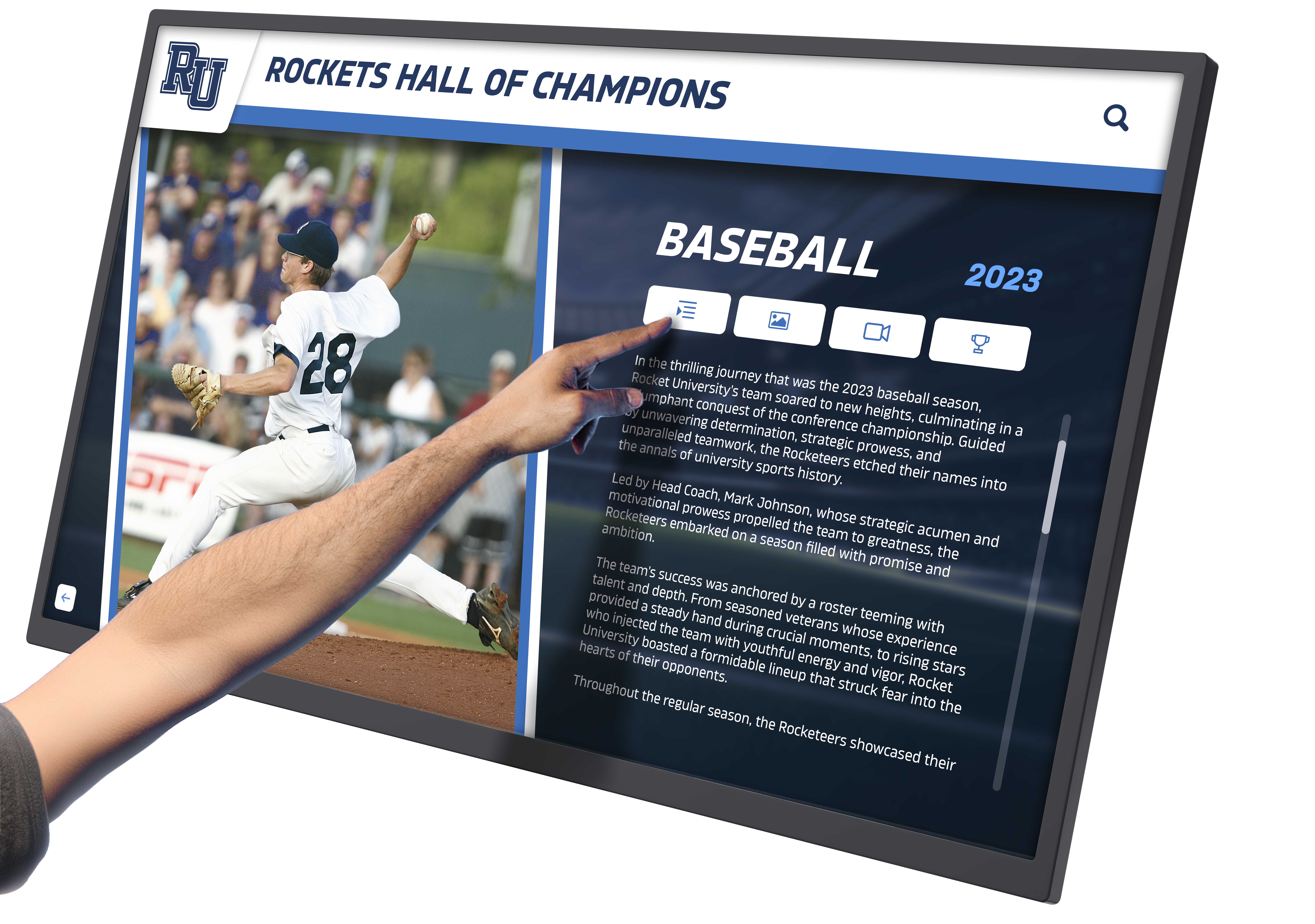
Digital recognition systems installed during facility renovations create lasting tributes to athletic achievement
Optimal Timing for Basketball Court Resurfacing
Strategic scheduling minimizes disruption while maximizing resurfacing benefits. Timing considerations affect project success, budget efficiency, and facility availability.
Seasonal Timing Considerations
Academic calendar factors that shape project scheduling:
Summer resurfacing advantages: Most schools schedule court resurfacing during summer break when gymnasium usage drops and basketball teams aren’t practicing. Summer projects avoid disrupting winter sports seasons, provide ample time for multi-week installations and proper curing, allow flexibility for unexpected complications without affecting scheduled events, and enable coordination with other facility projects when maintenance staff availability peaks.
Summer scheduling does face challenges including contractor demand peaks driving higher costs, compressed timelines when summer programs use gymnasiums, and HVAC considerations for proper temperature and humidity control during curing.
Off-season windows: Schools with flexible facility usage might schedule resurfacing during basketball’s off-season (late spring or early summer) before summer programs begin. This timing provides several advantages: lower contractor demand may yield better pricing, facilities staff focus on single projects rather than juggling multiple summer initiatives, and adequate completion time before fall practice begins.
Year-round planning approach: Some projects must proceed during academic years due to facility availability or budget cycles. Winter break offers limited windows for smaller projects. Extended installations might occur during school weeks with gymnasium closure and practice relocation to alternative facilities.
Project Duration Planning
Understanding realistic timelines prevents scheduling conflicts:
Hardwood refinishing timelines: Complete refinishing typically requires 10-14 days including initial sanding and damage repair (2-3 days), finish application in multiple coats with drying time between coats (5-7 days), final curing period before usage (3-5 days), and line striping and graphics (1-2 days). Rushed timelines compromise finish quality.
Synthetic surface installation: Acrylic or polyurethane installations generally need 7-14 days including substrate preparation and repair (2-4 days), primer and base layer application (2-3 days), finish layers and curing (3-5 days), and line striping (1-2 days). Weather conditions for outdoor projects extend timelines.
Modular tile installation: Sport court tiles install faster—often 3-7 days total including base preparation (1-2 days), tile installation (1-3 days), and edging and final adjustments (1-2 days). The quick installation makes tiles attractive for tight scheduling windows.
Buffer time requirements: Always add buffer periods to contractor estimates. Unexpected substrate issues, weather delays, material shipping problems, or curing complications frequently extend projects. Schedule projects to complete 2-3 weeks before absolutely needing facility access.
Coordination With Other Projects
Maximize efficiency by bundling facility improvements:
Comprehensive facility upgrades: Court resurfacing naturally pairs with related improvements. Consider scheduling wall painting, ceiling repairs, HVAC servicing, electrical upgrades, or plumbing work during the same closure period. Consolidated projects often yield contractor discounts and minimize total facility downtime.
Recognition system installation: Gymnasium renovations create perfect opportunities for installing digital displays that showcase athletic achievements. Installing touchscreen recognition walls, championship banner systems, or record boards during court resurfacing eliminates future facility disruptions while creating cohesive renovation projects.
Accessibility improvements: Use resurfacing projects to address ADA compliance issues in gymnasiums, adding proper accessible seating, improving entrance accessibility, or upgrading facilities for athletes with disabilities.
Many schools discover that comprehensive facility planning yields better results than piecemeal improvements. Explore how facility design strategies create cohesive environments that honor institutional history while supporting current program needs.
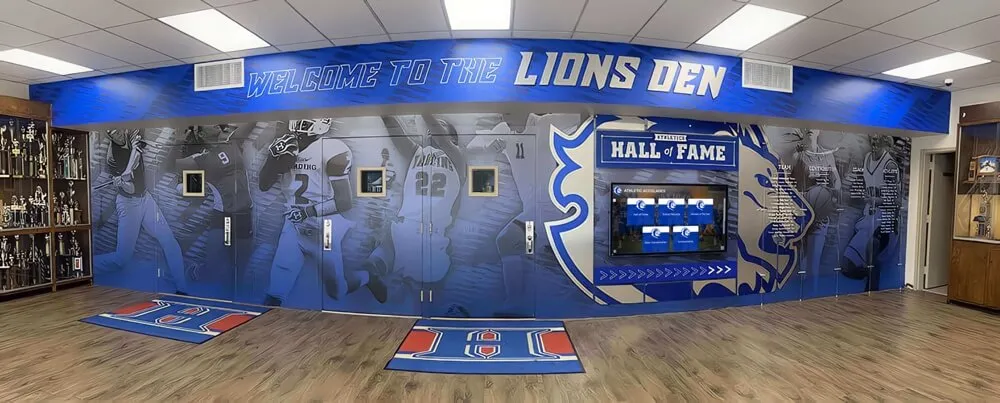
Comprehensive facility renovations integrate court improvements with recognition systems celebrating athletic tradition
The Basketball Court Resurfacing Process
Understanding the step-by-step process helps you monitor contractors, anticipate complications, and manage timelines effectively.
Initial Assessment and Planning
Professional evaluation establishes project foundations:
Facility inspection: Qualified contractors assess current surface condition, substrate integrity, moisture levels, structural concerns, and environmental factors affecting material selection. Proper assessment identifies hidden problems that impact costs and timelines.
Performance testing: Some evaluations include technical measurements of ball bounce, surface flatness, friction coefficients, and shock absorption to document current conditions and establish performance goals.
Scope definition: Clear project scopes specify surface material, performance characteristics, game line configurations, custom graphics, color selections, and completion timelines. Written specifications prevent misunderstandings and scope disputes.
Bid solicitation: Schools typically solicit multiple contractor bids based on detailed specifications. Compare bids carefully—low bids sometimes omit necessary preparation work or use inferior materials.
Surface Preparation
Proper preparation determines installation success:
Existing surface removal: Hardwood refinishing involves sanding away old finishes and damaged surface wood. Synthetic surface removal strips existing coatings to bare concrete. Thorough removal prevents adhesion failures and ensures optimal new surface performance.
Substrate repair: Address concrete cracks, spalling, settlement, or moisture issues before surface installation. Proper repair prevents future surface damage. Significant substrate problems may require additional budget allocation.
Moisture testing: Concrete moisture content affects synthetic surface adhesion. Professional installers test moisture levels and address problems through barriers or extended drying periods. Moisture-related failures represent common installation problems.
Surface profiling: Proper surface texture enables mechanical bonding between substrate and new surface materials. Grinding, shot blasting, or acid etching creates appropriate profiles for specific installation systems.
Material Installation
Application processes vary by material type:
Hardwood refinishing sequence: Sanding progressively removes damaged surface wood using coarse, medium, and fine grits to achieve smooth results. Repair or replace damaged boards. Clean thoroughly to remove all sanding dust. Apply stain if desired (many schools prefer natural maple). Apply multiple coats of athletic finish with proper drying time between coats. Final finish coats typically number 2-4 depending on product specifications.
Synthetic surface application: Apply primer coat ensuring proper adhesion. Install cushion layers according to system specifications. Apply color coating in even layers. Apply wear surface providing traction and durability. Each layer requires proper drying or curing before subsequent applications.
Quality control: Professional contractors monitor installation conditions including temperature, humidity, substrate moisture, and application thickness to ensure optimal results. Deviations from specifications compromise performance and longevity.
Line Striping and Graphics
Precise marking completes court functionality:
Layout precision: Contractors measure and mark court lines according to official specifications. Basketball court dimensions follow strict NFHS or NCAA guidelines. Accurate layout ensures regulation compliance and professional appearance.
Application methods: Paint or tape application depends on surface type. Hardwood courts typically use specialized court paint. Synthetic surfaces may use paint or pre-formed tape systems. Graphics application ranges from stencil painting to digital printing technologies.
Multi-color graphics: Complex center court designs require careful masking and sequential color application. Modern digital printing technologies enable photographic-quality graphics on synthetic surfaces.
Curing and protection: Freshly painted lines need proper curing before usage. Contractors typically apply protective coatings over graphics ensuring durability under foot traffic.
Final Inspection and Acceptance
Verify quality before final payment:
Visual inspection: Examine surface for color consistency, smoothness, proper sheen, line precision, and graphic quality. Document any imperfections requiring correction.
Performance verification: Test ball bounce consistency, traction characteristics, and overall playing feel. Compare results to project specifications.
Documentation: Obtain warranty information, maintenance guidelines, recommended cleaning products, and contractor contact information for future questions.
Final walkthrough: Conduct formal acceptance walkthrough with contractor, documenting completion and resolving any punch list items before releasing final payment.
Maintaining Your Resurfaced Basketball Court
Proper maintenance maximizes surface lifespan, preserves performance characteristics, and protects your resurfacing investment.
Daily and Weekly Maintenance
Consistent routine care prevents accelerated wear:
Daily dust mopping: Remove surface dust and debris using microfiber dust mops or specialized court cleaning systems. Daily cleaning prevents abrasive particle accumulation that degrades finishes. Never use water-based mopping for hardwood courts without proper products.
Spot cleaning: Address spills, scuff marks, or localized dirt immediately using manufacturer-approved cleaning solutions. Delayed cleaning allows substances to penetrate finishes or cause permanent staining.
Equipment inspection: Regularly check that portable equipment uses proper floor protection. Basketball hoops, volleyball standards, and other apparatus need appropriate padding or wheel covers preventing surface damage.
Usage monitoring: Restrict court access to appropriate athletic shoes. Street shoes, black-soled footwear, or hard-soled shoes cause excessive wear and marking. Enforce footwear policies consistently.
Periodic Deep Cleaning
Scheduled thorough cleaning maintains appearance and performance:
Professional cleaning systems: Use auto-scrubber machines or professional cleaning services quarterly or semi-annually. Proper cleaning removes built-up soil that routine mopping misses.
Approved cleaning products: Use only manufacturer-approved cleaning chemicals. Generic cleaners may contain ingredients that damage specialized athletic finishes or void warranties.
Traction restoration: Some surfaces benefit from periodic traction restoration treatments that refresh grip properties as finishes wear. Consult with your installation contractor or surface manufacturer about appropriate products.
Long-Term Care Strategies
Proactive maintenance extends surface life:
Climate control: Maintain appropriate temperature (60-80°F optimal) and humidity (35-50% relative humidity) in gymnasiums with hardwood courts. Excessive humidity causes wood expansion while dry conditions cause shrinkage and cracking.
Protective measures: Use floor covering systems when hosting non-athletic events like graduations, concerts, or assemblies. Proper protection prevents damage from stage setups, folding chairs, or general foot traffic.
Regular inspections: Conduct professional inspections annually, documenting surface condition and identifying emerging problems. Early intervention prevents minor issues from requiring major repairs.
Refinishing schedules: Plan periodic refinishing before surfaces reach critical deterioration. Hardwood courts typically need screening and recoating every 3-5 years and complete refinishing every 10-15 years. Synthetic surfaces last 10-15 years before requiring replacement.
Facilities that prioritize ongoing maintenance alongside periodic upgrades create comprehensive environments celebrating athletic achievement. Many schools use facility renovation timing to implement digital recognition systems that keep content fresh and engaging for current students, alumni, and visitors.
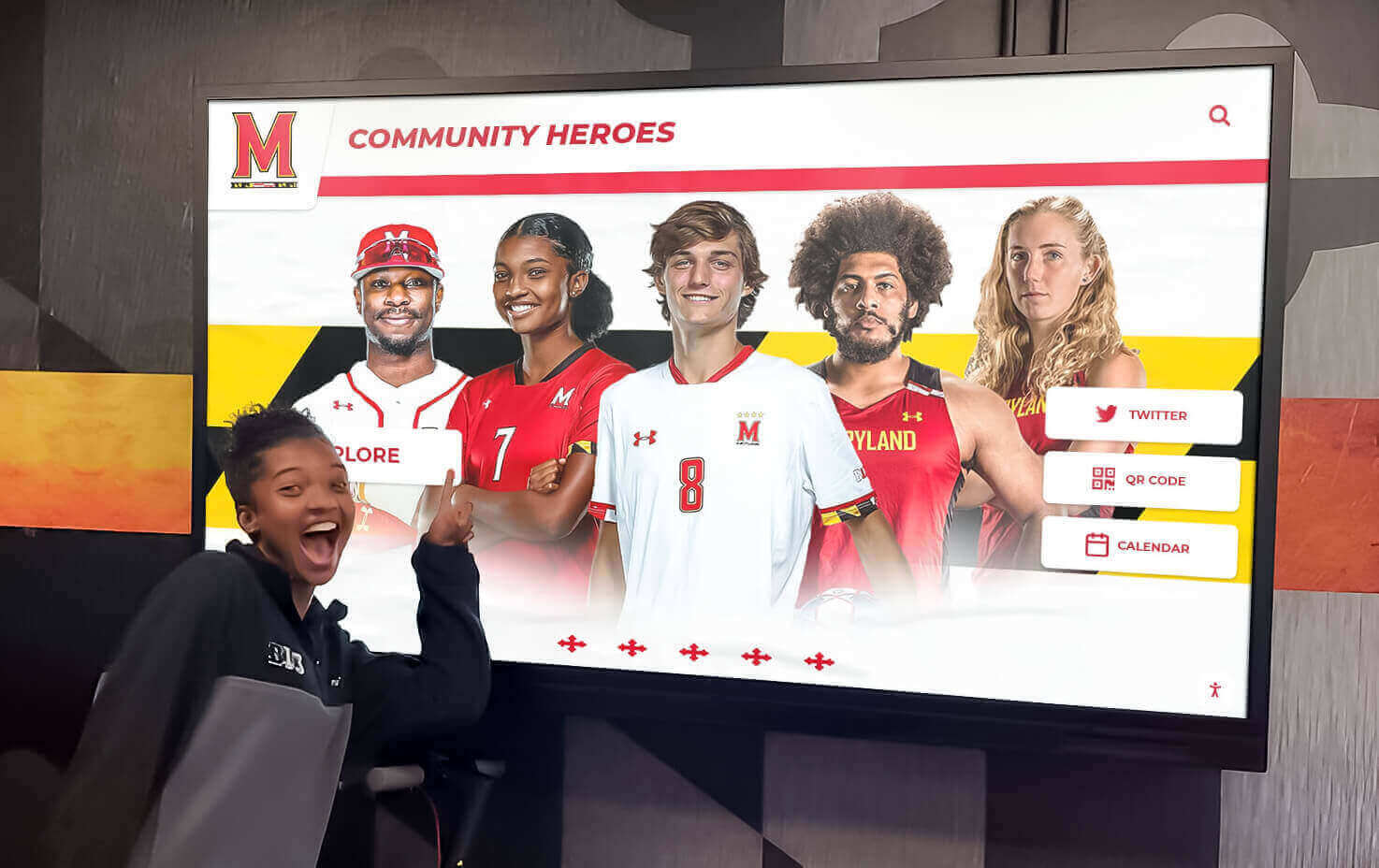
Modern recognition systems engage students with athletic achievements while celebrating program excellence
Maximizing Your Resurfacing Investment
Basketball court resurfacing creates unique opportunities for comprehensive facility transformation that extends beyond the playing surface.
Creating Comprehensive Athletic Environments
Strategic facility planning yields cohesive results:
Recognition integration: Court resurfacing projects naturally pair with recognition system upgrades. Install championship banner displays, all-time record boards, hall of fame recognition walls, or interactive touchscreen systems showcasing player achievements and team history. Coordinated installation during resurfacing eliminates future facility disruptions.
Branding consistency: Coordinate court colors, graphics, and logos with broader gymnasium branding. Consistent color schemes, typography, and visual identity across courts, walls, signage, and recognition displays create professional environments that elevate program prestige.
Spectator experience: Consider improvements enhancing fan experience during games and events. Updated seating, improved acoustics, enhanced lighting, clear sightlines, and modern concession areas create welcoming environments that build community support.
Schools planning high school awards ceremonies often discover that gymnasium upgrades create ideal venues for recognition events celebrating athletic, academic, and community achievements.
Funding Strategies
Creative approaches help finance comprehensive projects:
Capital improvement budgets: Work within district facility planning cycles to secure capital improvement funding. Multi-year planning allows accumulation of necessary budget allocations for major projects.
Booster support: Athletic boosters often fund or supplement court resurfacing projects. Present compelling cases about how quality facilities benefit student-athletes, attract talent, and create community pride.
Naming rights and sponsorships: Some schools offset costs through court naming rights for major donors or corporate sponsors. Professional sponsorship programs follow appropriate guidelines while generating revenue supporting facility excellence.
Grant opportunities: Research grants from sporting goods manufacturers, athletic associations, or community foundations supporting youth sports facilities. Some organizations specifically fund surface safety improvements or accessibility upgrades.
Phased implementation: Budget constraints sometimes require phased approaches—resurfacing first, then adding recognition systems or other improvements in subsequent years. Multi-phase planning maintains progress within budget limitations.
Return on Investment Considerations
Quality facility investments generate multiple returns:
Player development: Superior practice facilities accelerate skill development and improve team performance. The competitive advantage from quality training environments contributes to championship success.
Recruitment enhancement: Families evaluating schools consider facilities alongside academic programs and coaching quality. Professional-grade gymnasiums signal program commitment that attracts talented student-athletes.
Community engagement: Quality facilities host tournaments, community events, and recreational programs that generate revenue while strengthening community connections to schools.
Safety and liability: Proper court maintenance reduces injury risk and associated liability exposure. The cost of preventing one serious injury through appropriate surface maintenance far exceeds resurfacing expenses.
Institutional pride: Beautiful, well-maintained facilities create pride among students, staff, alumni, and community members. This intangible benefit influences school culture, alumni engagement, and community support in ways extending far beyond athletics.
Next Steps: Planning Your Basketball Court Resurfacing Project
Successful resurfacing projects begin with strategic planning that aligns facility improvements with program goals, budget realities, and long-term vision. Use these action steps to initiate your project:
Conduct facility assessment: Walk through your gymnasium with coaching staff and facilities personnel, documenting surface condition, safety concerns, and needed improvements. Photograph current conditions for reference and contractor discussions.
Define project objectives: Clarify what you want to accomplish beyond basic resurfacing. Consider performance requirements, aesthetic goals, budget parameters, timing constraints, and opportunities for broader facility enhancement.
Research material options: Evaluate surface material choices based on performance needs, budget, maintenance capabilities, and usage patterns. Request sample specifications and manufacturer information for serious consideration.
Solicit professional input: Engage qualified contractors for facility assessments and preliminary proposals. Professional expertise helps refine budgets, timelines, and project scopes. Request references from schools with similar projects.
Develop comprehensive budgets: Account for all project components including materials, labor, preparation, graphics, and ancillary improvements. Include contingency funds for unexpected complications.
Plan timing strategically: Identify optimal scheduling windows that minimize disruptions while allowing adequate completion time. Coordinate with other facility projects for maximum efficiency.
Explore comprehensive improvements: Consider how recognition systems, lighting upgrades, seating improvements, or other enhancements might complement resurfacing investments. Bundled projects often prove more cost-effective than sequential implementations.
Basketball court resurfacing represents more than floor maintenance—it’s an investment in player safety, program excellence, and institutional pride that shapes athletic environments for years to come. Schools that approach resurfacing strategically, selecting appropriate materials, timing projects optimally, and incorporating complementary facility enhancements create basketball programs where athletes develop, communities gather, and excellence receives lasting recognition.
Modern resurfacing projects increasingly incorporate recognition technology that transforms gymnasiums from purely functional spaces into comprehensive athletic showcases. Interactive displays celebrating player achievements, championship banners commemorating team success, and digital record boards honoring program milestones create environments where current athletes connect with program history while visitors experience the full scope of basketball excellence your school has achieved.
Ready to transform your basketball facility into a comprehensive athletic environment? Rocket Alumni Solutions specializes in digital recognition systems that complement facility renovations, creating engaging displays that celebrate athletic achievement through interactive touchscreen technology. Our solutions integrate seamlessly with gymnasium upgrades, honoring your basketball program’s history while inspiring future generations of student-athletes.































