The Basketball Hall of Fame represents the pinnacle of basketball achievement recognition—honoring legends who transformed the game through extraordinary skill, leadership, and dedication. From the iconic Naismith Memorial Basketball Hall of Fame in Springfield, Massachusetts to high school and college recognition programs nationwide, halls of fame celebrate basketball excellence while inspiring future generations of players, coaches, and fans.
Whether you’re exploring the rich history of basketball’s greatest players or considering how to implement a basketball hall of fame program at your school or organization, this comprehensive guide covers everything from the legendary inductees at Springfield to modern digital recognition solutions that bring basketball achievements to life through interactive displays and multimedia storytelling.
Basketball holds a unique place in American sports culture, invented in 1891 by Dr. James Naismith in Springfield, Massachusetts. The sport’s growth from a simple winter activity to a global phenomenon has been shaped by incredible athletes, visionary coaches, and passionate communities. Recognizing these contributions through halls of fame preserves basketball history while motivating current players to pursue their own path to excellence.
The Naismith Memorial Basketball Hall of Fame: Basketball’s Ultimate Honor
Located at 1000 Hall of Fame Avenue in Springfield, Massachusetts—the birthplace of basketball—the Naismith Memorial Basketball Hall of Fame stands as the sport’s most prestigious recognition institution.
History and Significance
The Basketball Hall of Fame was incorporated in 1959, when its first class of inductees was announced despite lacking a physical building. The inaugural 1959 class included basketball’s founding father, Dr. James Naismith, along with pioneering players like George Mikan, who became the first NBA player enshrined. After operating without a permanent home for nine years, the Hall opened its first facility on February 17, 1968.
According to official records, the Hall of Fame now houses more than 450 inductees and features over 40,000 square feet of basketball history. Nearly 200,000 visitors annually explore interactive exhibits showcasing the sport’s evolution from its humble beginnings to today’s global phenomenon.
The 2025 Class of Inductees
The Class of 2025, announced recently, demonstrates the Hall of Fame’s commitment to honoring excellence across all levels of basketball. This distinguished group includes:
NBA Legends:
- Carmelo Anthony: 10-time NBA All-Star and three-time Olympic gold medalist known for his prolific scoring ability
- Dwight Howard: Eight-time NBA All-Star and three-time Defensive Player of the Year who dominated as one of basketball’s premier centers
WNBA Pioneers:
- Sue Bird: Four-time WNBA champion and five-time Olympic gold medalist who revolutionized the point guard position
- Maya Moore: Four-time WNBA champion and two-time Olympic gold medalist recognized for both athletic excellence and social justice advocacy
- Sylvia Fowles: Four-time Defensive Player of the Year and two-time WNBA champion who anchored championship teams
Coaching and Leadership Excellence:
- Billy Donovan: Current Chicago Bulls head coach with two NCAA championships and extensive NBA coaching success
- Micky Arison: Miami Heat managing general partner whose leadership helped build a championship dynasty
Other Recognition:
- Danny Crawford: Longtime NBA referee who officiated thousands of games with integrity and professionalism
- 2008 United States Men’s Olympic Basketball Team: The “Redeem Team” that restored American basketball supremacy with gold medal victory
The enshrinement ceremony takes place annually in September in Springfield, creating a weekend celebration attracting basketball legends, media, and fans from around the world.
Inside the Basketball Hall of Fame Experience
The Springfield facility offers visitors an immersive journey through basketball history across multiple floors of interactive exhibits. Guests explore chronological galleries documenting basketball’s invention through Dr. Naismith’s original 13 rules, examine artifacts from basketball’s greatest moments including championship trophies and game-worn jerseys, interact with skill challenges testing shooting, dribbling, and basketball IQ, watch highlight reels showcasing legendary performances and unforgettable games, and discover inductee galleries honoring every member of the Hall of Fame with comprehensive profiles.
The facility operates from 10:00 AM - 4:00 PM, providing ample time for basketball enthusiasts to fully experience the exhibits. The Basketball Hall of Fame has become a pilgrimage destination for serious fans, a learning experience for young players studying the game’s history, and a celebration of basketball’s cultural impact extending far beyond competition.
State and Regional Basketball Halls of Fame
Beyond the national institution in Springfield, numerous state and regional basketball halls of fame celebrate the sport’s impact within specific communities and geographic areas.
Kentucky High School Basketball Hall of Fame
Established in 2012, the Kentucky High School Basketball Hall of Fame recognizes and promotes the tradition and rich heritage of Kentucky high school basketball. Kentucky’s passionate basketball culture has produced legendary programs, championship dynasties, and players who went on to excel at college and professional levels.
The Kentucky Hall recognizes outstanding players, influential coaches, and individuals who’ve impacted high school basketball across the Bluegrass State. This state-level recognition provides important acknowledgment for athletes whose achievements may not reach national Hall of Fame consideration but who made lasting impacts on their communities and inspired countless young players.
Ohio Basketball Hall of Fame
Founded in 2005, the Ohio Basketball Hall of Fame honors remarkable achievements of both male and female athletes across high school, college, and professional basketball. Ohio has produced numerous NBA stars, WNBA pioneers, successful college programs, and legendary high school dynasties deserving permanent recognition.
The Ohio Hall demonstrates how basketball halls of fame can comprehensively celebrate the sport at multiple competitive levels within a single institution, creating connections between high school excellence and professional achievement.
Regional Recognition Programs
Many metropolitan areas and regions have established their own basketball halls of fame celebrating local basketball traditions. The Washington Metropolitan Basketball Hall of Fame, for example, inducted ten new members in 2025, recognizing excellence in high school and college basketball from the D.C. metropolitan area.
These regional programs serve essential functions by ensuring talented players from smaller markets receive appropriate recognition, preserving local basketball history and traditions, creating role models within specific communities, and building regional pride around basketball achievements.
High School and College Basketball Halls of Fame
Educational institutions increasingly recognize the value of celebrating their own basketball excellence through dedicated halls of fame and recognition programs.
Why Schools Need Basketball Halls of Fame
Basketball programs at the high school and college levels benefit tremendously from formal recognition programs that honor players, coaches, teams, and moments that defined program excellence.
Motivating Current Players:
When current athletes see previous players from their own school honored for excellence, achievement becomes tangible and attainable. Basketball hall of fame displays in school gymnasiums or athletic facilities create constant reminders that dedication and excellence earn lasting recognition. Players pursuing basketball records understand that their achievements will be permanently celebrated, not forgotten after graduation.
Preserving Program History:
Schools with long basketball traditions risk losing institutional memory as coaches retire, administrators change, and decades pass. Digital recognition systems preserve complete program histories including championship seasons, record-breaking performances, coaching milestones, and program evolution across generations.
Building School Pride:
Visible celebration of basketball achievement strengthens school spirit and creates institutional identity. Prospective students and their families touring campus see evidence of basketball excellence, while alumni maintain emotional connections to programs that honored their contributions.
Strengthening Alumni Engagement:
Basketball players who receive formal recognition maintain stronger connections to their alma mater. They’re more likely to attend reunion events, support current programs through mentorship or donations, and promote their schools within professional and social networks.
Implementing School Basketball Recognition Programs
Schools considering basketball hall of fame programs should follow strategic implementation approaches ensuring meaningful, sustainable recognition.
Establishing Selection Criteria:
Effective basketball halls of fame establish clear, objective criteria for induction including minimum achievement standards like All-Conference or All-State honors, team success metrics such as conference championships or state tournament appearances, individual records or milestone achievements, character and sportsmanship standards, and time since graduation requirements ensuring perspective on career impact.
Published criteria ensure transparency and fairness while helping current players understand pathways to potential future recognition.
Creating Nomination and Selection Processes:
Fair selection requires structured processes including nomination periods when coaches, alumni, or committees identify candidates, review committees evaluating nominees against established criteria, verification procedures confirming achievement documentation, selection voting by committees with diverse basketball program representation, and public announcement ceremonies celebrating new inductees appropriately.
Document procedures in writing to ensure consistency across years and leadership transitions.
Recognition Categories Beyond Players:
Comprehensive basketball halls of fame extend beyond just players to honor coaches who built successful programs and developed talent, teams that achieved historic success like state championships or undefeated seasons, contributors including administrators, trainers, supporters who enabled program success, and pioneering figures who established traditions or overcame barriers.
Multi-category recognition demonstrates that basketball excellence takes many forms beyond individual playing achievement.
Modern Digital Recognition Solutions for Basketball Excellence
Traditional basketball halls of fame relied on physical plaques, framed photos, and trophy cases that face inherent limitations including finite space constraining how many individuals can be honored, high ongoing costs for producing new plaques and updating displays, minimal information beyond basic names and dates, difficult and expensive corrections when errors occur, and static presentations offering no interactivity or multimedia content.
Digital recognition technology has revolutionized how organizations celebrate basketball achievement while addressing every limitation of traditional approaches.
Interactive Digital Basketball Displays
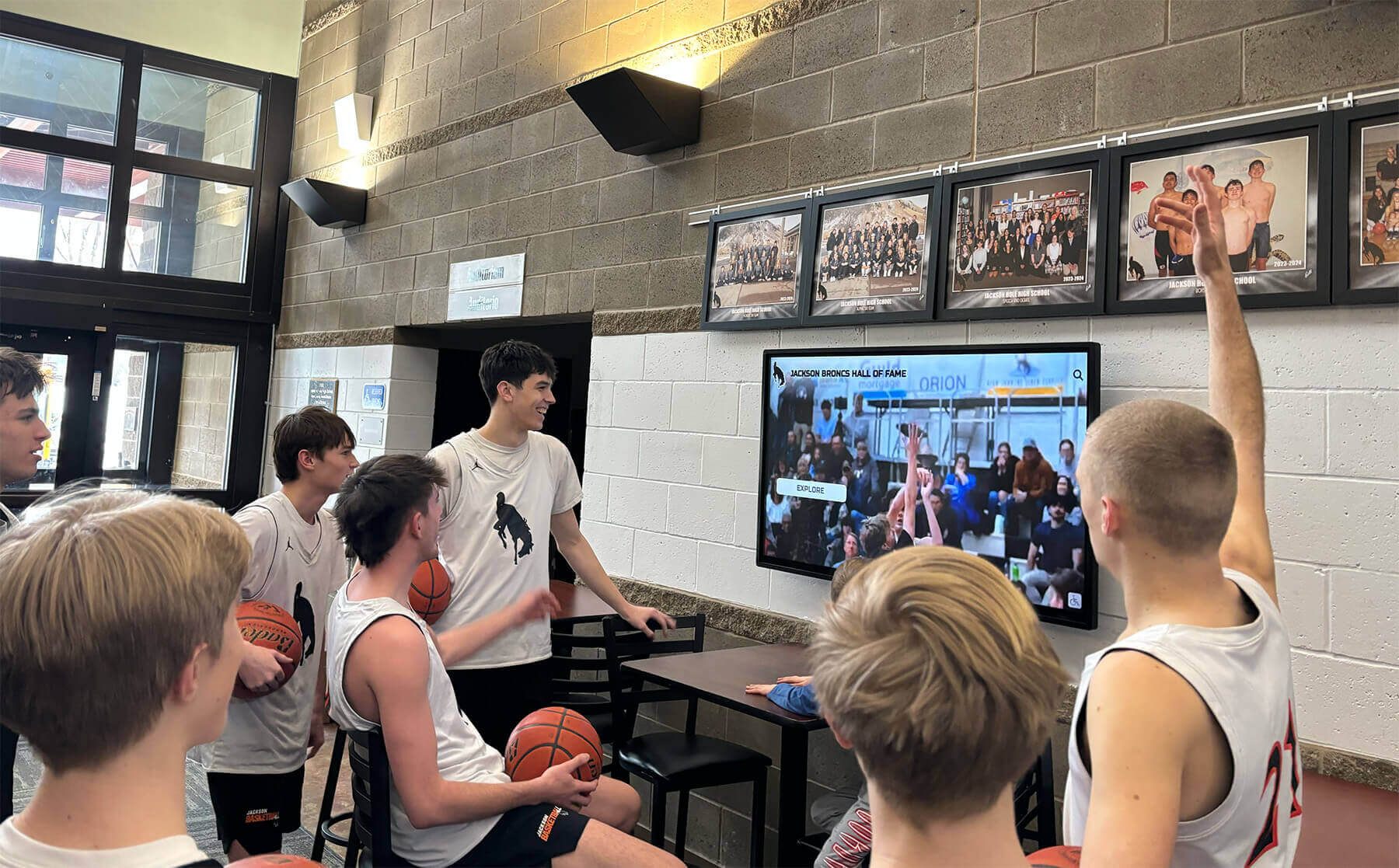
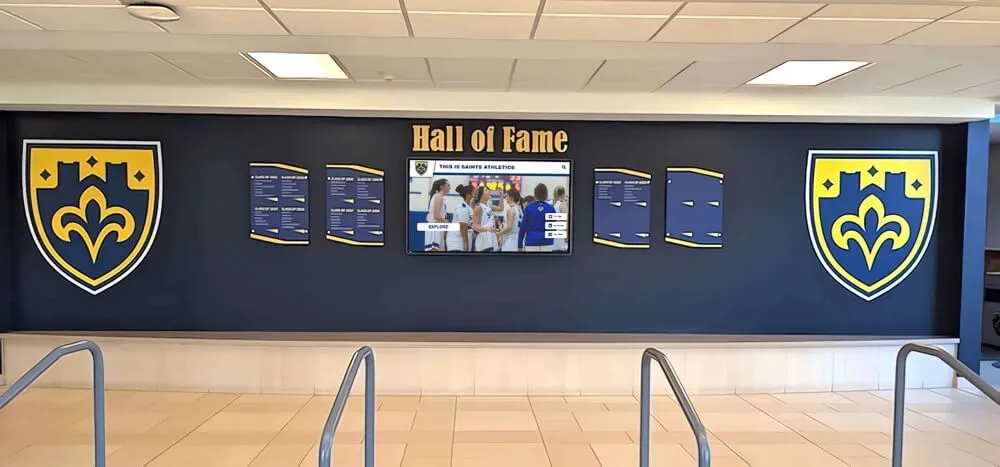
Digital recognition displays transform basketball halls of fame from static displays into engaging experiences that honor athletes comprehensively while captivating visitors through interactive exploration.
Unlimited Recognition Capacity:
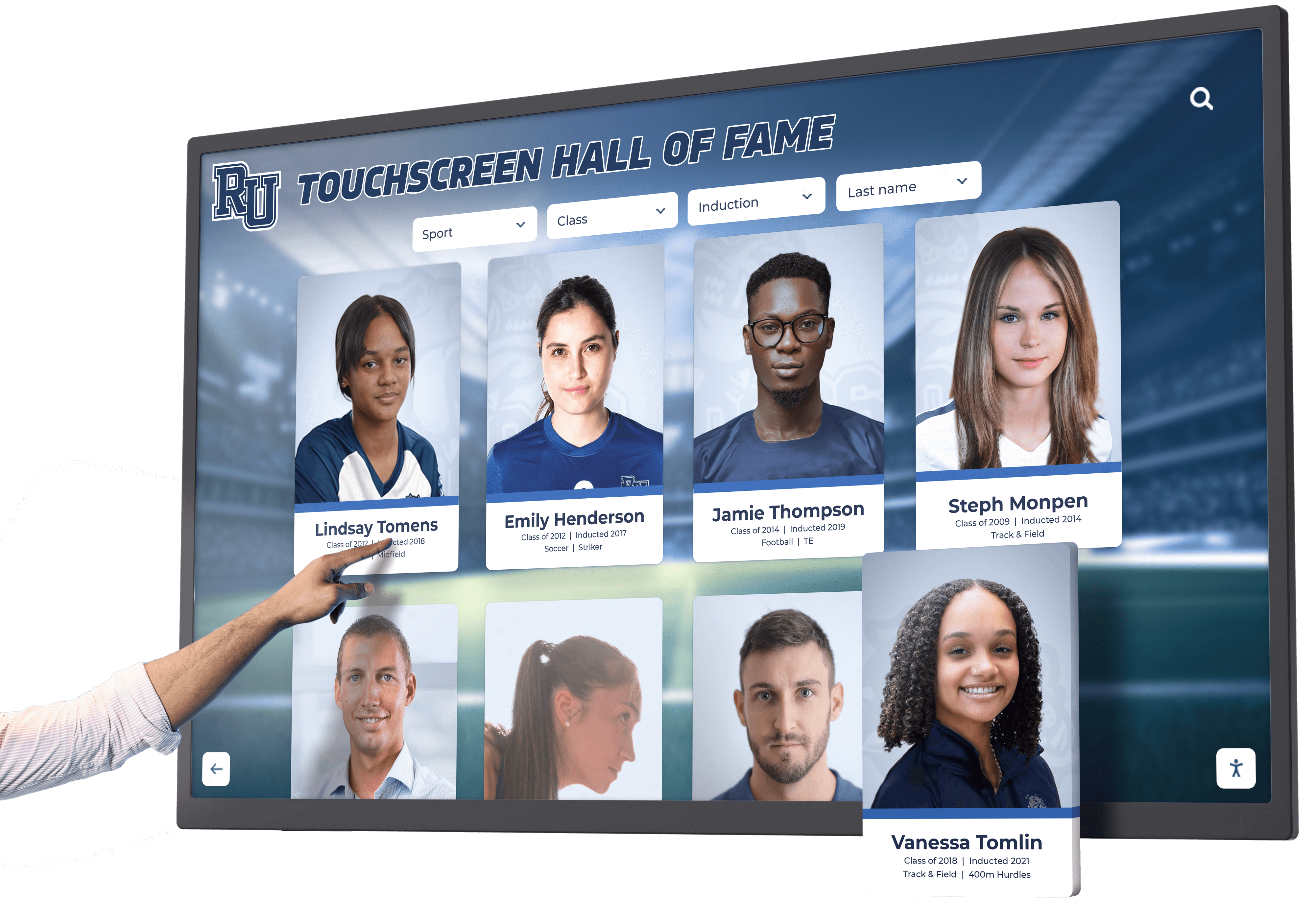
A single touchscreen display can showcase hundreds or thousands of basketball players, coaches, and teams with detailed profiles for each inductee. Schools never face difficult decisions about removing older recognition to accommodate new honorees, and every deserving individual receives comprehensive acknowledgment regardless of when they played.
Rich Multimedia Storytelling:
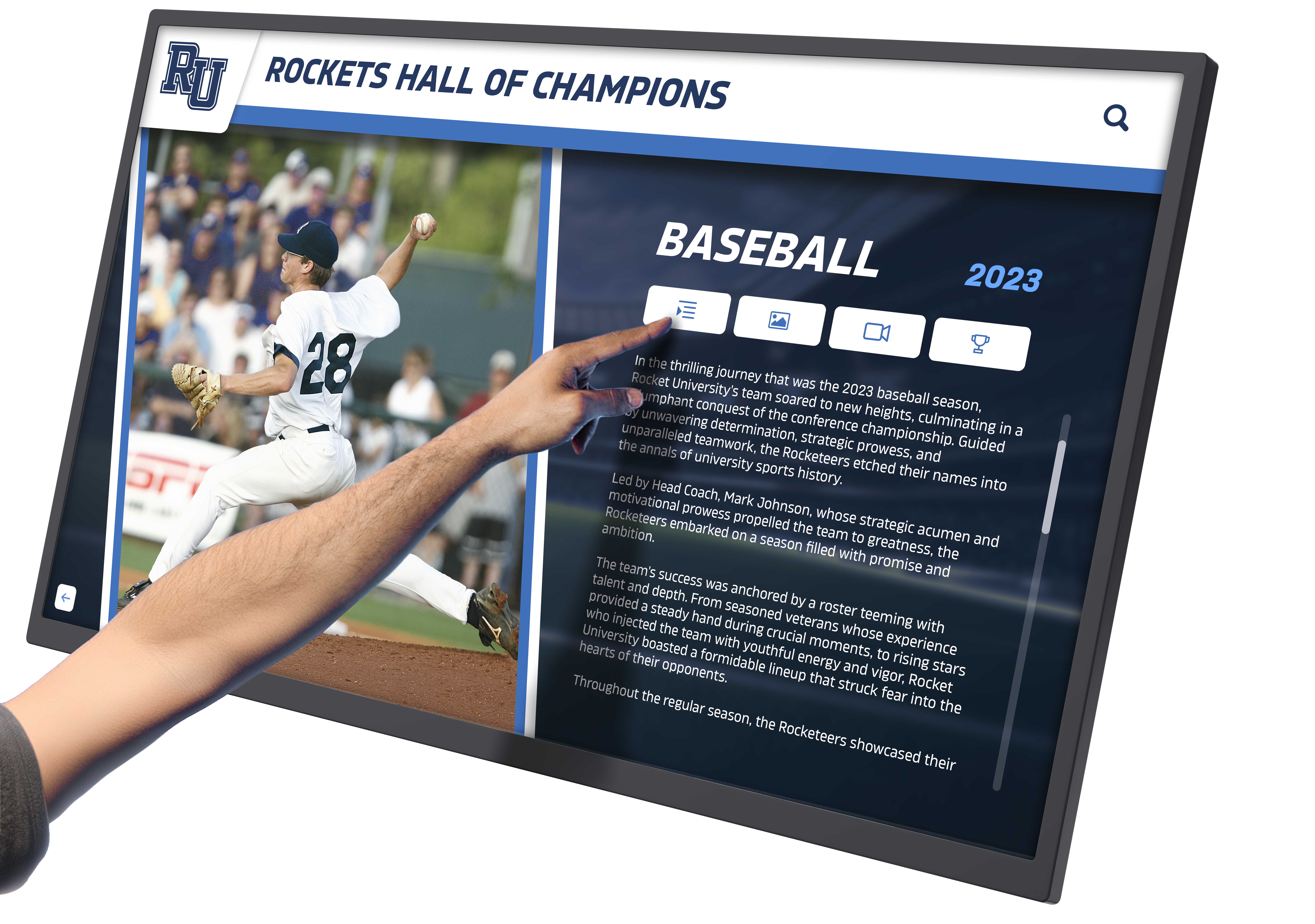
Unlike plaques listing just names and years, digital profiles incorporate high-resolution action photos showing athletes competing, career statistics and achievement documentation, video highlights of memorable performances and games, coach testimonials explaining what made players exceptional, personal reflections from athletes about their basketball journey, and historical context placing achievements within program timelines.
This multimedia approach brings basketball careers to life in ways that resonant with modern audiences expecting engaging digital content.
Intuitive Interactive Exploration:
Visitors interact with digital displays through intuitive touchscreen interfaces that enable powerful search by player name finding specific individuals instantly, filtering by graduation year or era exploring specific time periods, browsing by achievement type like state champions or record holders, statistical comparisons between different players and seasons, and random discovery features encouraging serendipitous exploration of basketball history.
Interactive navigation transforms passive viewing into active engagement, with visitors spending significantly more time exploring digital displays compared to traditional static boards.
Easy Real-Time Updates:
Cloud-based content management systems enable athletic directors or coaches to update recognition displays instantly from any internet-connected device. When teams win championships or players break records, recognition can be updated within minutes rather than waiting weeks or months for physical plaques. This responsiveness ensures recognition remains current and celebrates achievements while they’re still fresh.
Web and Mobile Accessibility:
Modern recognition platforms extend beyond physical displays through responsive web interfaces accessible worldwide. Alumni living anywhere can explore their school’s basketball hall of fame, families share their student-athlete’s profiles across social networks, prospective students research basketball program tradition during recruitment, and community members engage with basketball excellence without visiting campus.
Sport-Specific Features for Basketball Recognition
Purpose-built platforms designed for athletic recognition include basketball-specific templates and features optimized for celebrating the sport.
Basketball Statistical Integration:
Digital systems accommodate comprehensive basketball statistics including career and season scoring totals, shooting percentages from field goal, three-point, and free throw range, rebounding totals and per-game averages, assists, steals, blocks, and other performance metrics, advanced analytics like player efficiency ratings, and historical comparisons placing individual achievement in program context.
Stat-focused displays appeal to basketball enthusiasts who appreciate quantitative documentation of excellence.
Team Season Documentation:
Beyond individual players, systems comprehensively document team achievements through season records and final standings, tournament brackets and championship runs, complete rosters with player contributions, coaching staff and support personnel, memorable game results and dramatic victories, and season highlight compilations preserving championship moments.
Team recognition ensures basketball halls of fame celebrate collective achievement alongside individual excellence.
Visual Timeline Formats:
Basketball history lends itself to chronological presentation through decade-by-decade program evolution, championship timeline displays, coaching era comparisons, facility and uniform evolution documentation, and connections between different generations of players and traditions.
Timeline formats help visitors understand how basketball programs developed over time while identifying patterns of sustained excellence.
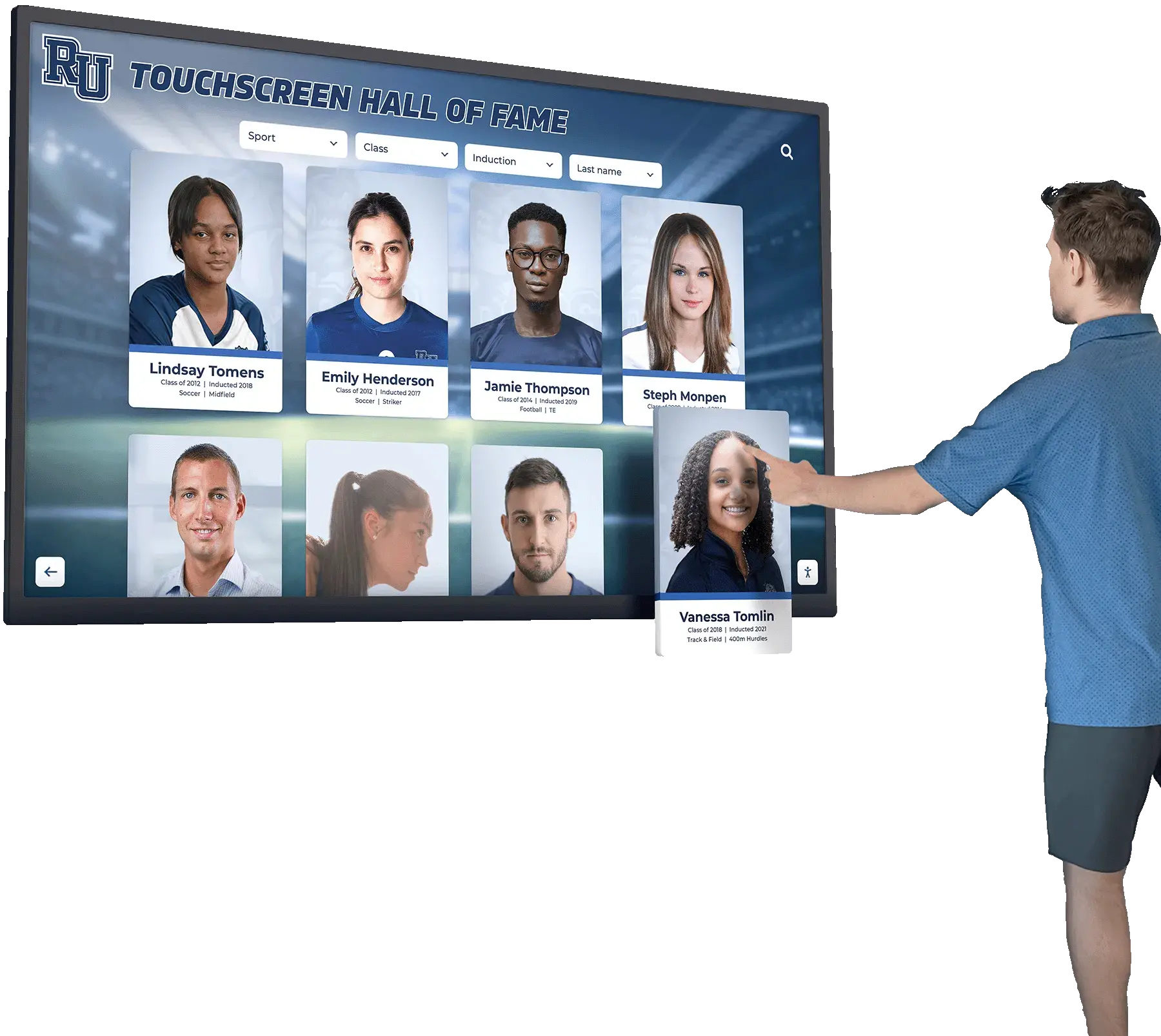
The Rocket Alumni Solutions Advantage for Basketball Recognition
Schools and organizations implementing basketball halls of fame need reliable technology partners providing comprehensive solutions specifically designed for athletic recognition.
Rocket Alumni Solutions offers purpose-built platforms combining powerful features with intuitive operation that makes basketball recognition straightforward for non-technical staff.
Key Platform Capabilities
Turnkey Implementation:
Rocket Alumni Solutions provides complete packages including commercial-grade touchscreen hardware designed for continuous operation, cloud-based content management software requiring no local servers, professional installation and setup service, comprehensive staff training, and ongoing technical support.
Schools receive fully functional systems without managing complex technology implementation themselves.
Basketball-Optimized Templates:
Rather than generic digital signage requiring custom design work, Rocket provides sport-specific templates for player profiles showcasing statistics and achievements, team season pages documenting championships and rosters, coaching career summaries honoring program leadership, record board formats highlighting school records, and historical timelines presenting decades of basketball tradition.
Templates ensure professional presentation while saving significant content development time.
Intuitive Content Management:
Non-technical athletic directors and coaches can easily manage basketball recognition through simple web-based interfaces requiring no coding or technical skills, drag-and-drop photo uploads and organization, pre-formatted entry fields for statistics and information, bulk import capabilities for historical data, scheduled publishing for automatic content updates, and mobile access enabling updates from smartphones at games or events.
Systems designed for educational users reduce IT department burden while empowering athletic staff to maintain current recognition.
Engagement Analytics:
Built-in analytics reveal how visitors interact with basketball displays through daily interaction counts and trends, most-viewed players and content, search query patterns, peak usage times, and visitor navigation paths.
Data helps optimize content and demonstrates program value through concrete usage metrics.
Success Across 1,000+ Installations
Rocket Alumni Solutions has implemented basketball recognition systems across high schools, colleges, universities, and sports organizations nationwide. This extensive experience provides proven templates and best practices, reliable technology tested across diverse environments, responsive support familiar with educational contexts, and continuous platform improvements based on user feedback.
Schools benefit from partner expertise rather than pioneering implementation challenges independently.
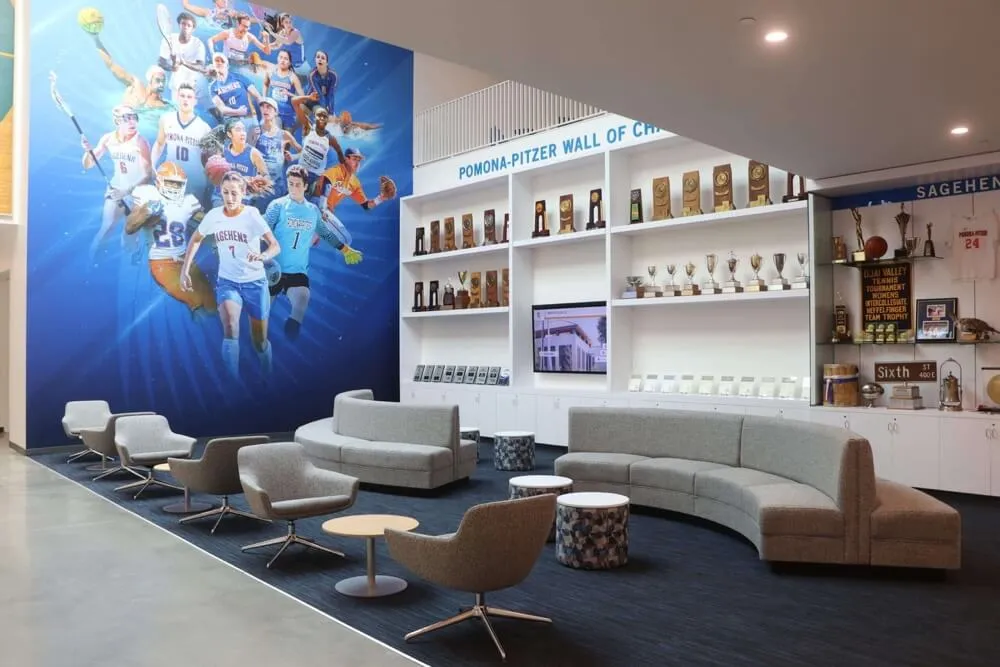
Creating Compelling Basketball Hall of Fame Content
Technology provides the platform, but compelling content drives engagement and creates meaningful recognition that honors basketball excellence appropriately.
Comprehensive Player Profiles
Effective basketball hall of fame profiles move beyond resume-style fact lists to craft engaging narratives including biographical information about athletic background and journey, statistical achievements documenting playing career comprehensively, memorable moments describing signature performances, coach perspectives explaining what made players special, post-basketball updates about college, professional, or career success, and personal reflections from athletes about lessons learned through basketball.
Profiles typically require 500-800 words plus statistics, photos, and video content creating rich recognition worthy of induction.
Collecting Profile Content
Direct Athlete Outreach:
Contact inducted players requesting biographical information, career statistics documentation, personal photos from playing days, video footage if available, and reflections on basketball experience and impact.
Most athletes willingly contribute content ensuring accurate representation of their achievements.
Research and Documentation:
For players unable to personally contribute, conduct thorough research through yearbooks and media guides containing statistics and photos, newspaper archives documenting games and achievements, coaching records and scorebooks, famous alumni recognition programs that may include basketball players, and interviews with coaches or teammates providing perspectives.
Visual Documentation
High-quality imagery proves essential for engaging digital displays including action photography showing athletes competing, team photos documenting rosters and groups, awards ceremony images capturing recognition moments, candid shots reflecting personality and character, and historical photos providing archival documentation.
Establish photography standards ensuring consistent quality across inductees and years.
Video Content
Video elements significantly enhance basketball recognition through game highlight compilations edited to 2-5 minute lengths, interview footage with players reflecting on careers, coach testimonials explaining player impact, championship season documentation, and skills demonstrations showing signature moves or playing style.
Video brings basketball achievement to life in ways that photographs and text alone cannot match.
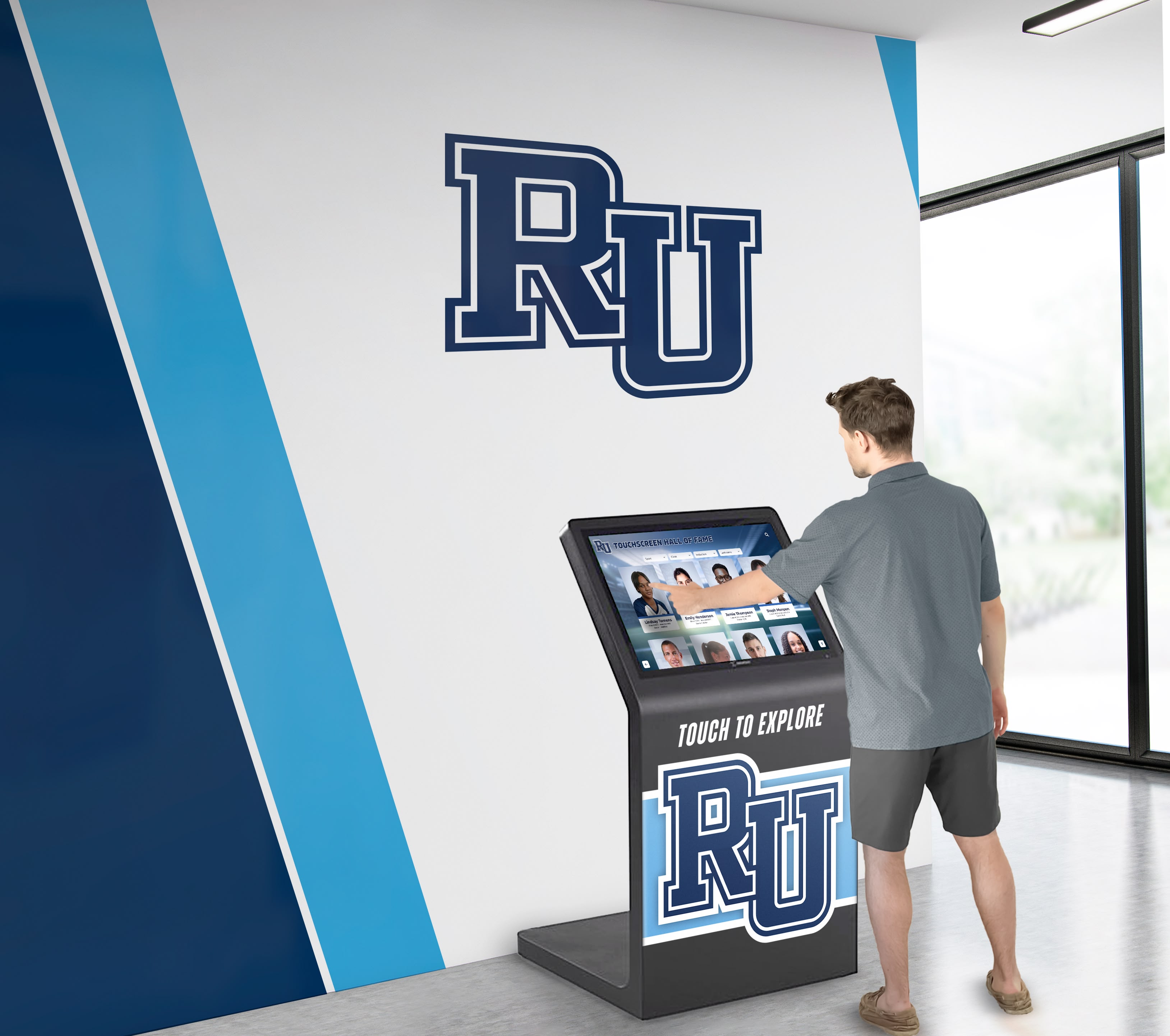
Basketball Hall of Fame Ceremonies and Events
Formal induction ceremonies create memorable experiences that honor new members while building traditions strengthening basketball community connections.
Planning Meaningful Induction Events
Strategic Scheduling:
Coordinate ceremonies with high-visibility occasions including homecoming weekends attracting alumni, major basketball games with large attendance, basketball banquets celebrating current season, or dedicated hall of fame weekends making recognition the central focus.
Strategic timing maximizes attendance and institutional attention.
Ceremony Elements:
Create programs that appropriately honor basketball excellence through welcome remarks from school leadership or athletic directors, presentation of each inductee’s biography and achievements, acceptance speeches from new members, unveiling of recognition on digital displays or physical installations, video tribute presentations, and receptions enabling networking and celebration.
Formal programs demonstrate that basketball recognition represents significant institutional honor rather than minor acknowledgment.
Media and Promotion:
Generate coverage extending recognition visibility through press releases to sports media, social media promotion with photos and video highlights, livestreaming for geographically dispersed alumni, professional photography and videography, and post-event communications celebrating inductees across multiple channels.
Media amplification ensures recognition reaches broader audiences beyond ceremony attendees.
Building Annual Traditions
Consistent recognition traditions create anticipation and cultural significance including regular announcement timing, familiar ceremony formats and locations, involvement of previous inductees in presentations, documentation through photography creating historical records, and celebration elements unique to basketball program identity.
Annual traditions transform individual inductions into ongoing institutional celebrations of basketball excellence.
Best Practices for Sustainable Basketball Recognition Programs
Long-term success requires thoughtful approaches ensuring programs remain vibrant and relevant across years and leadership transitions.
Maintaining Equitable Recognition
Basketball halls of fame should celebrate diverse excellence including boys’ and girls’ basketball program representation, different eras spanning program history, various achievement types beyond just scoring, role players and team contributors alongside stars, and character and leadership alongside athletic statistics.
Monitor recognition distribution patterns ensuring comprehensive celebration rather than narrow focus on specific teams, genders, or achievement types.
Clear Selection Standards
Published criteria prevent perceptions of favoritism while helping athletes understand recognition pathways including minimum achievement thresholds, statistical benchmarks or honors, character and conduct standards, time since graduation requirements, and nomination and review procedures.
Transparent standards maintain program credibility while motivating current players to pursue excellence knowing recognition follows genuine achievement.
Documentation and Archives
Preserve complete basketball recognition history through comprehensive digital archives of all inductees, historical statistics and records documentation, championship team information and rosters, coaching tenure summaries, and program milestone preservation.
Complete archives ensure basketball history remains accessible to current and future generations rather than fading from institutional memory.
Integration with Broader Recognition
Connect basketball halls of fame to comprehensive school achievement recognition programs ensuring basketball receives appropriate emphasis without overshadowing other achievement types including academic excellence in the classroom, other athletic programs and sports, fine arts and performing arts achievement, community service and character development, and leadership and civic engagement.
Balanced recognition demonstrates that schools value diverse forms of student excellence.
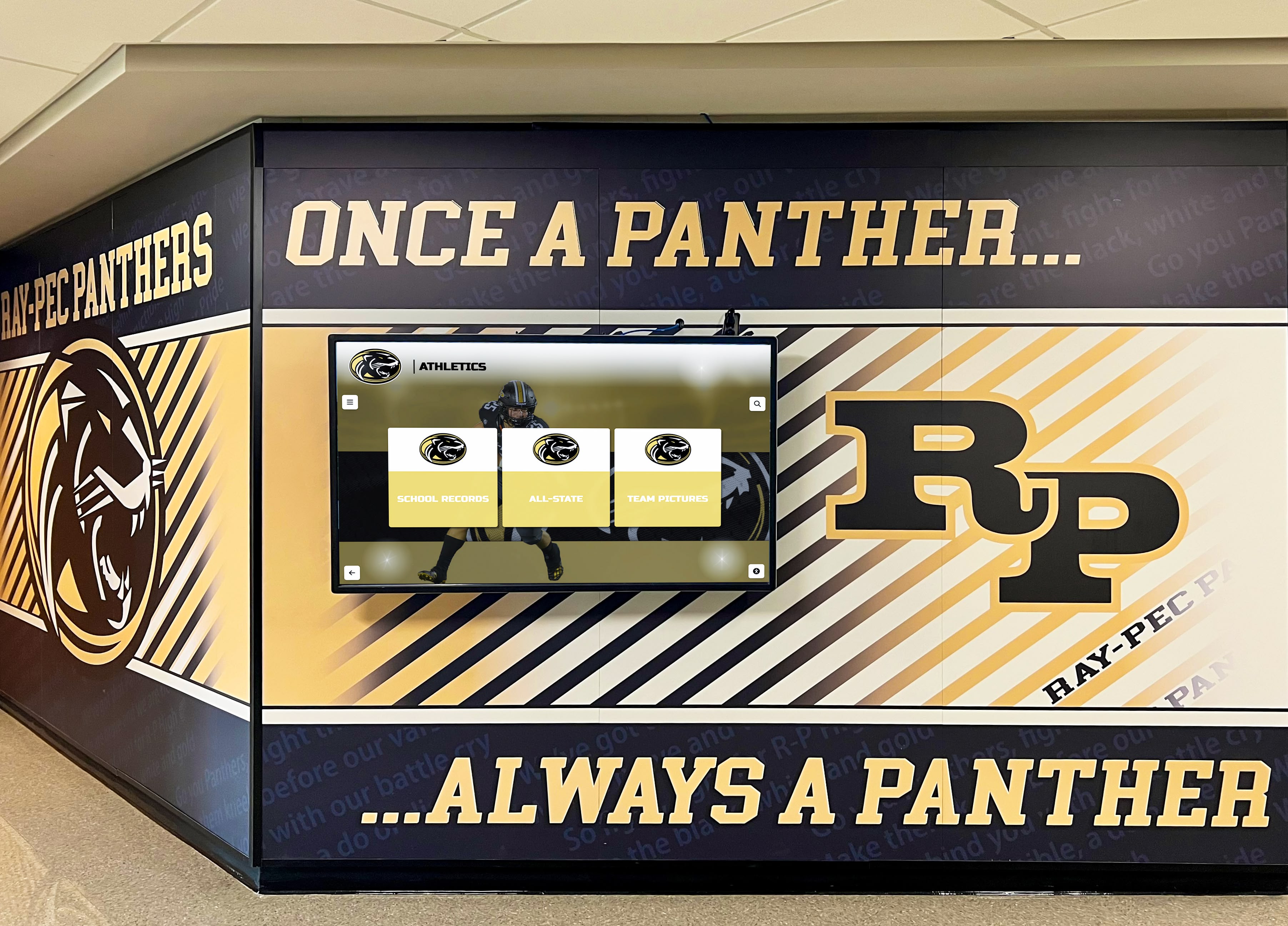
Measuring Basketball Recognition Program Success
Effective programs track both quantitative metrics and qualitative impacts demonstrating value while identifying improvement opportunities.
Engagement Metrics
For digital displays, track concrete indicators including daily interaction counts and trends over time, average session duration showing depth of engagement, most-viewed inductees and content, search query patterns, and peak usage times revealing visitor behavior.
These metrics demonstrate actual usage justifying program investment.
Community Impact Assessment
Beyond numbers, evaluate broader influence through student-athlete feedback about motivation and inspiration, alumni satisfaction with recognition of their contributions, coach observations about program culture effects, prospective family responses during recruitment, and community members’ perceptions of basketball program excellence.
Qualitative feedback reveals whether recognition achieves intended cultural and motivational impacts.
Return on Investment
Document program value across multiple dimensions including staff time savings compared to traditional approaches, eliminated costs for ongoing plaque production, enhanced recruitment support through visible tradition, strengthened alumni engagement and giving patterns, and improved school reputation through basketball excellence celebration.
Comprehensive ROI analysis demonstrates that digital recognition represents sound investment beyond initial costs.
Conclusion: Honoring Basketball Excellence for Generations
From the Naismith Memorial Basketball Hall of Fame in Springfield celebrating the sport’s greatest legends to high school programs honoring local basketball heroes, halls of fame serve essential functions preserving basketball history, inspiring current and future players, building institutional pride, strengthening community connections, and demonstrating that basketball excellence receives lasting recognition.
Modern digital recognition technology has transformed what’s possible in celebrating basketball achievement. Interactive displays provide unlimited capacity for comprehensive recognition, rich multimedia content bringing basketball careers to life, instant updates celebrating achievements in real-time, web accessibility extending recognition worldwide, and engaging experiences that captivate visitors.
Whether honoring NBA legends, college basketball stars, or high school championship teams, the principles of effective recognition remain constant: clear selection standards ensuring fairness, comprehensive documentation preserving complete stories, engaging presentation formats maximizing impact, and sustained commitment maintaining programs across years.
Schools and organizations implementing basketball halls of fame benefit from partnerships with experienced providers like Rocket Alumni Solutions offering proven technology, basketball-specific features, intuitive management, responsive support, and continuous innovation through regular platform improvements.
Celebrate Your Basketball Excellence
Discover how Rocket Alumni Solutions can help you create a basketball hall of fame that honors your program's tradition while inspiring future champions.
Schedule Your Free DemoBasketball achievement deserves recognition that matches its significance—celebration that’s comprehensive, engaging, permanent, and accessible. The question isn’t whether basketball halls of fame matter, but whether your program will lead this recognition revolution or continue managing the limitations of traditional approaches.
Ready to honor your basketball legacy? Explore how modern recognition platforms can transform how you celebrate the athletes, coaches, and teams that built your basketball tradition and inspire those who will carry it forward.































