Basketball high school records represent more than statistics—they document athletic excellence, inspire future athletes, and preserve program legacy across generations. From single-game scoring explosions to career point totals accumulated over four years, these records tell stories of dedication, skill development, and competitive achievement. Yet many high schools struggle to track, maintain, and showcase basketball records effectively, relying on outdated methods that make information difficult to access and impossible to update without significant time and expense.
Basketball high school records management has evolved dramatically with modern digital solutions that eliminate traditional limitations while creating engaging recognition experiences. This comprehensive guide explores everything athletic directors, coaches, and administrators need to know about tracking basketball records, managing historical data, implementing recognition systems, and celebrating court excellence in ways that motivate current athletes while honoring program history.
Basketball holds unique significance in American high school athletics, with records serving as tangible benchmarks against which athletes measure themselves across decades. Whether it’s the school’s all-time leading scorer, the single-season three-point record, or team achievements like longest winning streaks, these milestones create aspirational goals that drive competitive excellence and program pride.
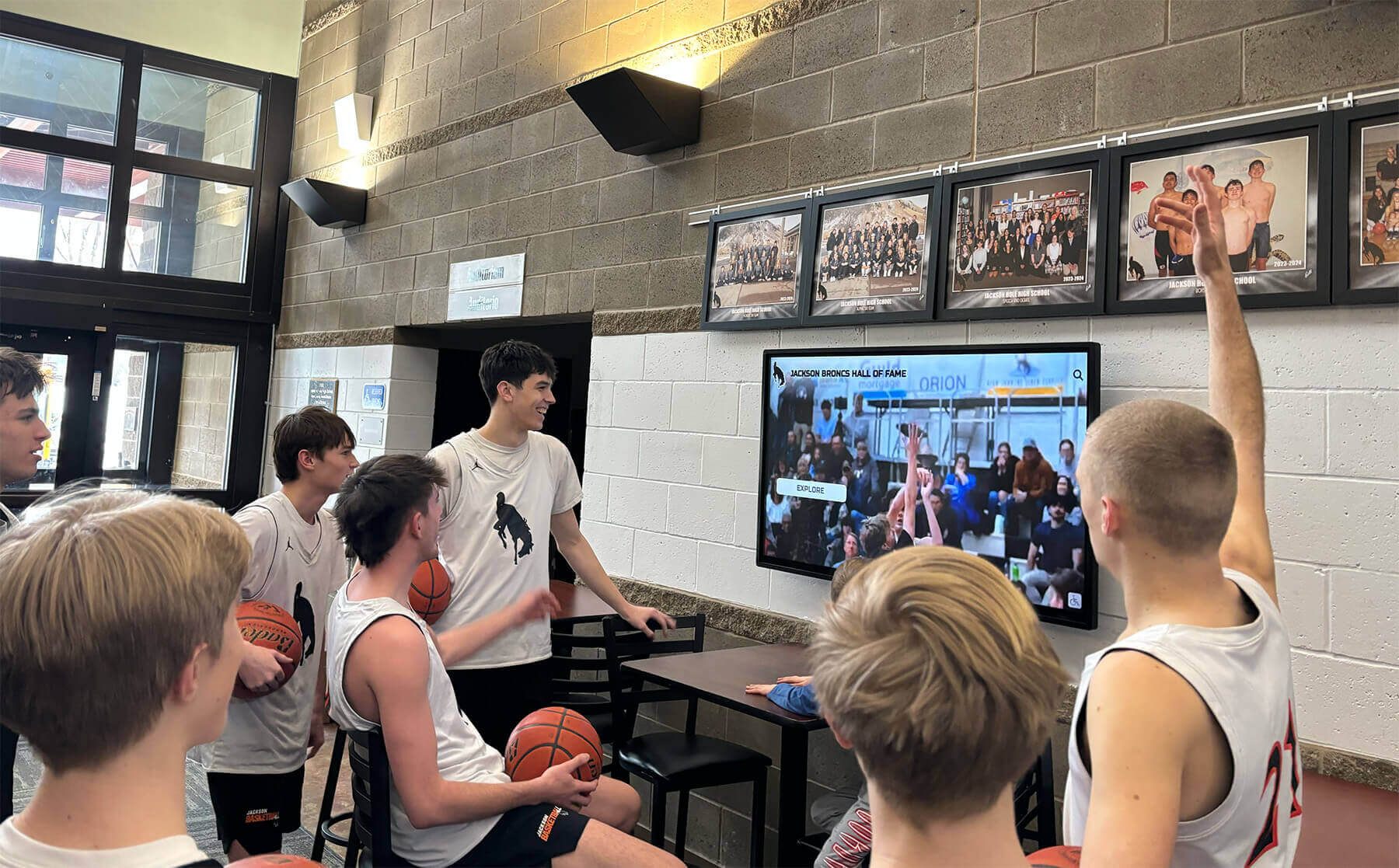
Modern recognition systems make basketball records accessible and engaging for current athletes
Understanding Basketball High School Records Categories
Basketball generates diverse record categories spanning individual performance, team achievement, and statistical milestones. Comprehensive record management systems accommodate this breadth while organizing information logically.
Individual Scoring Records
Scoring achievements form the foundation of basketball recognition, celebrating offensive excellence across multiple timeframes:
Career Scoring Records
The most prestigious individual records track cumulative achievement across high school careers:
- All-time career points leader demonstrating sustained excellence over multiple seasons
- Gender-specific career scoring records for boys’ and girls’ programs
- Position-specific career records highlighting guards versus post players
- Four-year versus three-year distinctions acknowledging different participation timelines
- Points-per-game averages contextualizing scoring efficiency alongside volume
Career scoring records require longevity, consistency, and sustained performance at high levels throughout high school careers. Athletes approaching these milestones create excitement building anticipation as they close in on program history.
Single-Season Scoring Records
Season records recognize extraordinary performance within single campaigns:
- Most points in a season reflecting dominant individual seasons
- Highest points-per-game average demonstrating scoring efficiency
- Most games scoring 20+ or 30+ points showing consistent excellence
- Season records by class level (freshman, sophomore, junior, senior)
- Modified records accounting for varied season lengths across different eras
Single-Game Scoring Achievements
Individual game performances create memorable moments worth permanent documentation:
- School record for points in a single game
- Most field goals or three-pointers made in one game
- Perfect shooting performances with high-volume attempts
- Free throw records including consecutive makes
- Playoff or championship game scoring records
These explosive performances often become program legends, discussed and referenced for decades as benchmarks of individual excellence.
Team Performance Records
Collective achievements demonstrate program excellence and championship culture:
Win-Loss Records
Team success measured through victory totals:
- Most wins in a single season
- Best win percentage for a season
- Longest winning streaks across single seasons or multiple years
- Undefeated season documentation
- Tournament and playoff winning streaks
Team Scoring Records
Offensive achievements reflecting team capability:
- Most points scored in a single game
- Highest scoring average for a season
- Most combined points in a game (both teams)
- Consecutive games scoring above certain thresholds
- Margin of victory records
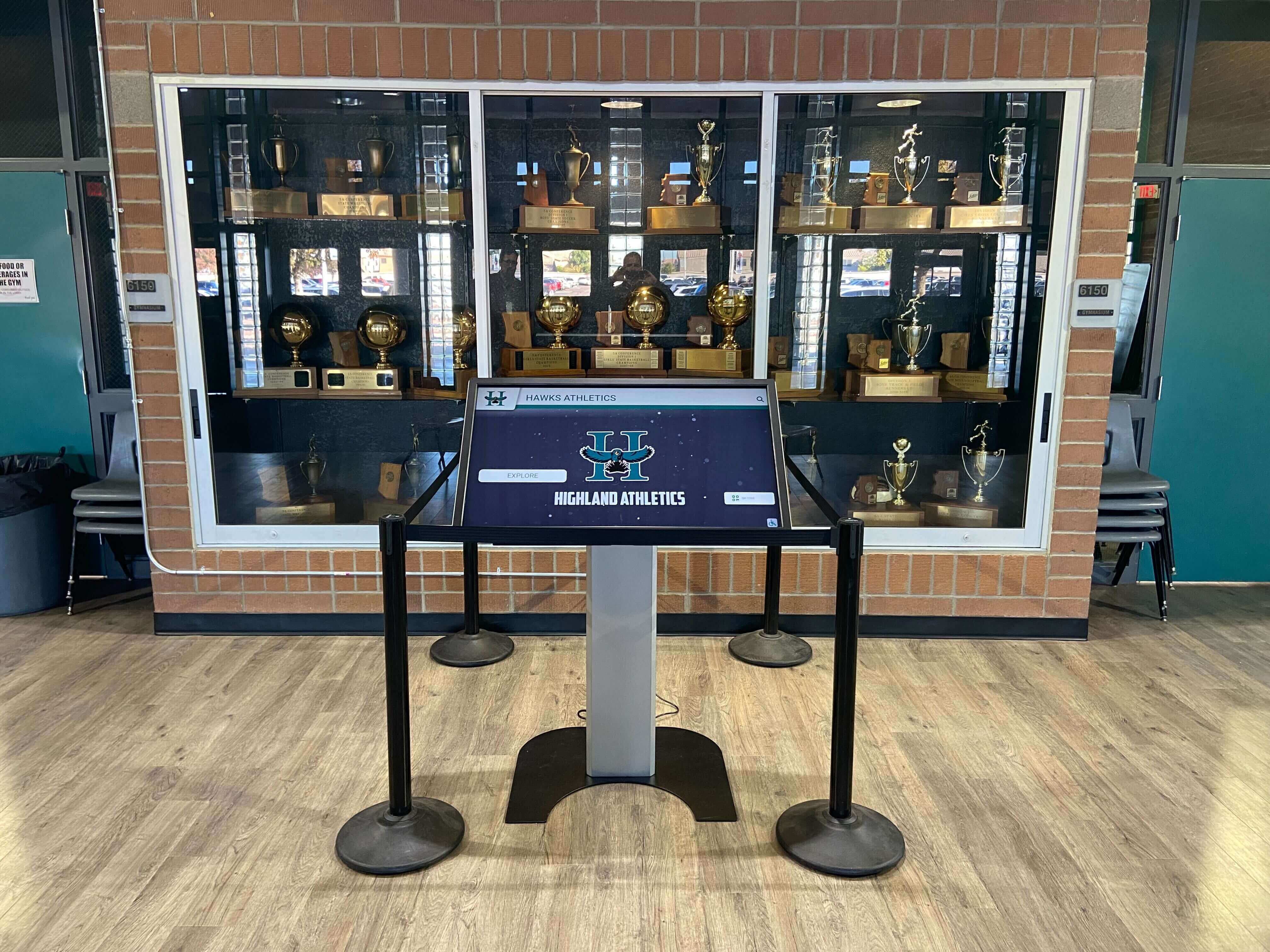
Interactive displays enable easy exploration of comprehensive basketball records
Defensive Achievements
Team defensive excellence deserving equal recognition:
- Fewest points allowed in a game
- Consecutive games holding opponents below scoring threshold
- Season defensive averages
- Shutout quarters or halves
- Tournament defensive performances
Championship and Tournament Records
Post-season success represents program pinnacle achievements:
Championship Titles
Conference, sectional, regional, and state championships documented with complete context including year, opponent details, final records, key contributors, and coaching staff. Championship records should preserve the narrative of how titles were achieved, not merely list outcomes.
Tournament Performance Records
Individual and team achievements during championship play:
- Tournament scoring records
- Championship game performances
- Tournament winning streaks
- Consecutive tournament appearances
- Deep tournament run documentation
Solutions like digital record boards provide comprehensive platforms for tracking both regular season and tournament achievements with appropriate context and multimedia documentation.
Traditional Record Management Challenges
Understanding limitations of conventional approaches helps schools appreciate why modern solutions have become essential for effective basketball record management.
Paper-Based Record Keeping
Many programs still maintain basketball records through physical documentation:
Record Books and Binders
Traditional ledgers recording statistics and achievements:
- Handwritten logs vulnerable to damage, loss, or deterioration
- Difficult to search for specific information without manual review
- No backup copies if originals are damaged or misplaced
- Limited space for contextual information beyond bare statistics
- Updates require physical rewriting or printing new pages
Physical Display Boards
Static record boards mounted in gymnasiums or hallways:
- Limited capacity forcing difficult decisions about which records to display
- Expensive updates requiring professional installation
- Impossible to correct errors without costly replacement
- No ability to provide context, photos, or detailed information
- Space constraints preventing comprehensive historical documentation
Newspaper Clippings and Programs
Archived media preserving historical information:
- Fragile materials deteriorating over time
- Incomplete collections with missing games or seasons
- Difficult organization making specific information hard to locate
- No digital copies preserving information when originals fade
- Storage challenges as collections accumulate over decades

Traditional recognition methods face space and maintenance limitations
Spreadsheet and Basic Digital Systems
Schools transitioning from paper often implement basic spreadsheet solutions:
Excel or Google Sheets Management
Digital files offering improvement over paper but with significant limitations:
- Version control issues when multiple people edit files
- No visual presentation layer for public viewing
- Limited searchability requiring manual scanning
- Vulnerable to accidental deletion or file corruption
- Separate files fragmenting information across seasons or categories
Generic Database Systems
Basic databases providing structure but lacking sports-specific features:
- Require technical expertise to create and maintain
- No built-in recognition or display capabilities
- Generic structure not optimized for basketball statistics
- Updates and queries require database knowledge
- No analytics or engagement tracking
These intermediate solutions improve upon paper record keeping but fall short of comprehensive systems designed specifically for athletic record management and public recognition.
Update and Maintenance Burden
Traditional systems create ongoing administrative challenges:
Time-Intensive Updates
Recording and displaying new records consumes significant staff time:
- Manual data entry after each game
- Calculation of season and career totals
- Verification of record claims requiring research
- Production of updated physical displays
- Installation scheduling and coordination
According to research on athletic record management, traditional systems typically require 40-60 hours annually for maintenance, significantly more than modern digital alternatives.
Error Correction Difficulties
Mistakes discovered after publication prove costly to fix:
- Physical displays requiring complete replacement
- Inconsistent information across multiple sources
- Historical corrections requiring extensive research
- No audit trail tracking changes or corrections
- Reputation damage from persistent inaccuracies
Historical Information Loss
Without systematic preservation, program history gradually disappears:
- Retired coaches taking institutional knowledge with them
- Incomplete records from older eras
- Conflicting information without clear verification
- Lost context about records’ significance
- Missing connections to broader program narrative
Modern Digital Record Management Solutions
Digital platforms specifically designed for athletic record management address traditional limitations while introducing capabilities impossible with conventional approaches.
Comprehensive Record Tracking Systems
Modern platforms provide structured frameworks for capturing complete basketball records:
Automated Record Detection
Intelligent systems that identify when records fall:
- Real-time comparison of game statistics against existing records
- Automatic flagging of record-breaking performances
- Notifications alerting coaches and administrators
- Record progression tracking showing athletes approaching milestones
- Historical comparison placing current performances in context
Multi-Category Organization
Systematic structure accommodating diverse record types:
- Individual versus team record separation
- Offensive and defensive categories
- Career, season, and game record distinctions
- Gender-specific record tracking
- Historical era documentation preserving context
Statistical Integration
Connection with game statistics enabling comprehensive documentation:
- Automatic calculation of career and season totals
- Game-by-game performance tracking
- Statistical averages and efficiency metrics
- Comparison tools showing multiple athletes’ achievements
- Trend analysis identifying performance patterns
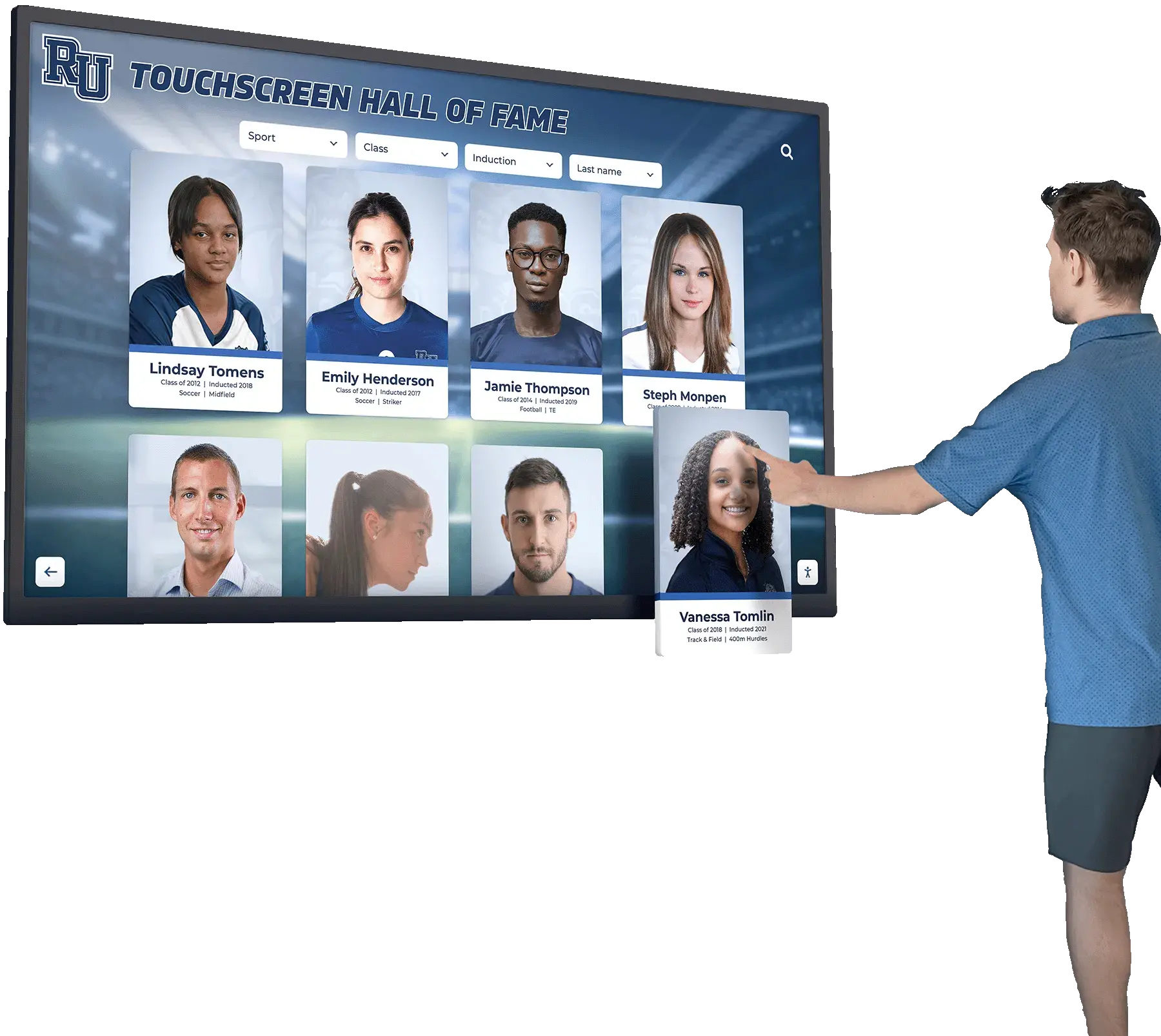
Digital systems enable intuitive exploration of detailed athletic records and statistics
Cloud-Based Content Management
Modern platforms utilize cloud infrastructure providing flexibility and accessibility:
Remote Access and Updates
Content management from any location:
- Update records from smartphones or tablets
- No special software installation required
- Multiple authorized users with role-based permissions
- Simultaneous editing without file conflicts
- Automatic synchronization across all displays
Instant Publication
Changes appear immediately without production delays:
- New records visible within minutes of achievement
- Corrections implemented instantly
- Seasonal updates published on-demand
- No printing, manufacturing, or installation waits
- Real-time reflection of current program status
Automated Backup and Security
Protection ensuring information never disappears:
- Continuous automated backups to multiple locations
- Version history enabling restoration of previous content
- Secure access controls protecting information
- Disaster recovery preventing permanent loss
- Migration capabilities ensuring long-term accessibility
Schools using solutions like Rocket Alumni Solutions report dramatic reductions in administrative time while achieving significantly more comprehensive and current record documentation.
Interactive Display Technology
Physical displays transform from static boards to engaging discovery experiences:
Touchscreen Navigation
Intuitive interfaces enabling personalized exploration:
- Search by athlete name finding specific individuals instantly
- Filter by season, category, or achievement type
- Sort by various criteria organizing information meaningfully
- Compare multiple athletes or seasons side-by-side
- Drill down from records to complete athlete profiles
Multimedia Integration
Rich content bringing records to life:
- High-resolution photos of record holders and performances
- Video highlights of record-breaking games
- Audio clips from coach or player interviews
- Historical photos showing program evolution
- Statistical visualizations presenting data engagingly
Research on how to showcase student achievement demonstrates that multimedia content increases engagement time by 400-600% compared to static text displays.
Unlimited Capacity
No space constraints limiting recognition:
- Document every record across program history
- Include freshman through varsity achievements
- Accommodate boys’ and girls’ program records equally
- Preserve records even after they’re broken
- Add context, stories, and detailed information freely
Analytics and Insights
Data about display engagement:
- Track which records receive most views
- Understand peak usage times
- Identify popular search queries
- Measure average engagement duration
- Demonstrate program value through concrete metrics
These insights help athletic directors optimize content and justify continued investment in recognition programs.
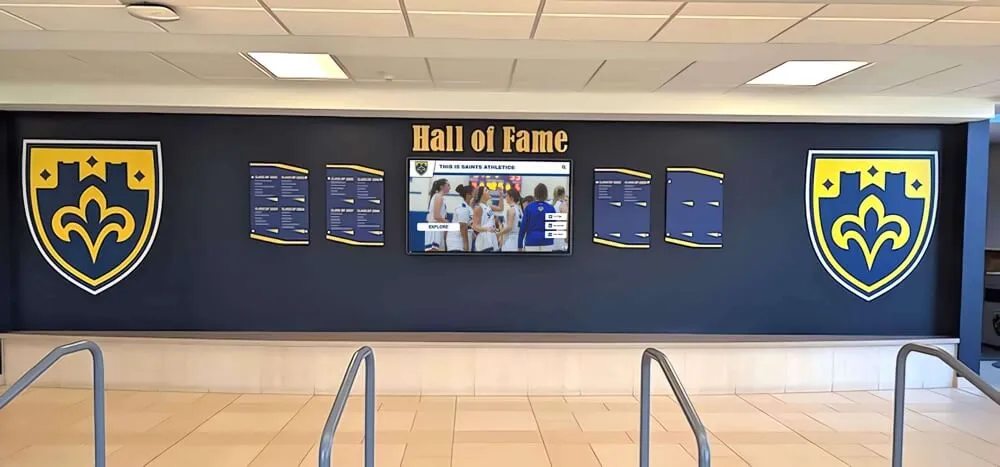
Modern displays combine traditional aesthetics with digital capabilities
Mobile and Web Accessibility
Recognition extending beyond physical campus:
Online Access
Web-based platforms reaching global audiences:
- Alumni worldwide exploring records from anywhere
- Prospective athletes researching programs during recruitment
- Parents sharing their children’s achievements with extended family
- Media accessing accurate information for coverage
- Community members staying connected to program success
Social Sharing
Built-in distribution amplifying recognition:
- One-click sharing to Facebook, Twitter, Instagram
- Branded graphics maintaining school identity
- Hashtag campaigns aggregating community content
- Record-breaking celebrations reaching thousands instantly
- Alumni engagement regardless of geographic location
Mobile Optimization
Responsive design ensuring perfect display across devices:
- Smartphone access for on-the-go viewing
- Tablet interfaces providing portable exploration
- App-based experiences when appropriate
- QR codes linking physical displays to online content
- Push notifications alerting about new records
Implementing Basketball Record Systems
Successful implementation requires systematic planning addressing content development, technology selection, and sustainable operations.
Historical Research and Documentation
Building comprehensive record archives begins with gathering existing information:
Source Identification
Locating materials documenting program history:
- Existing record boards and displays
- Archived programs and media guides
- Yearbook documentation
- Newspaper archives and clippings
- Coaching records and scorebooks
- Alumni recollections and personal records
- State association historical databases
Data Verification
Ensuring accuracy through multiple source confirmation:
- Cross-referencing different documentation sources
- Resolving conflicts through additional research
- Documenting verification sources for credibility
- Acknowledging uncertainty where confirmation impossible
- Establishing standards for evidence requirements
Gap Identification
Understanding missing information requiring additional research:
- Incomplete seasons or eras lacking documentation
- Individual statistics missing from team records
- Context about significant performances
- Photo and visual documentation needs
- Biographical information about record holders
This research phase commonly requires 50-100 hours for programs with extensive history, though engaging alumni volunteers significantly accelerates the process.
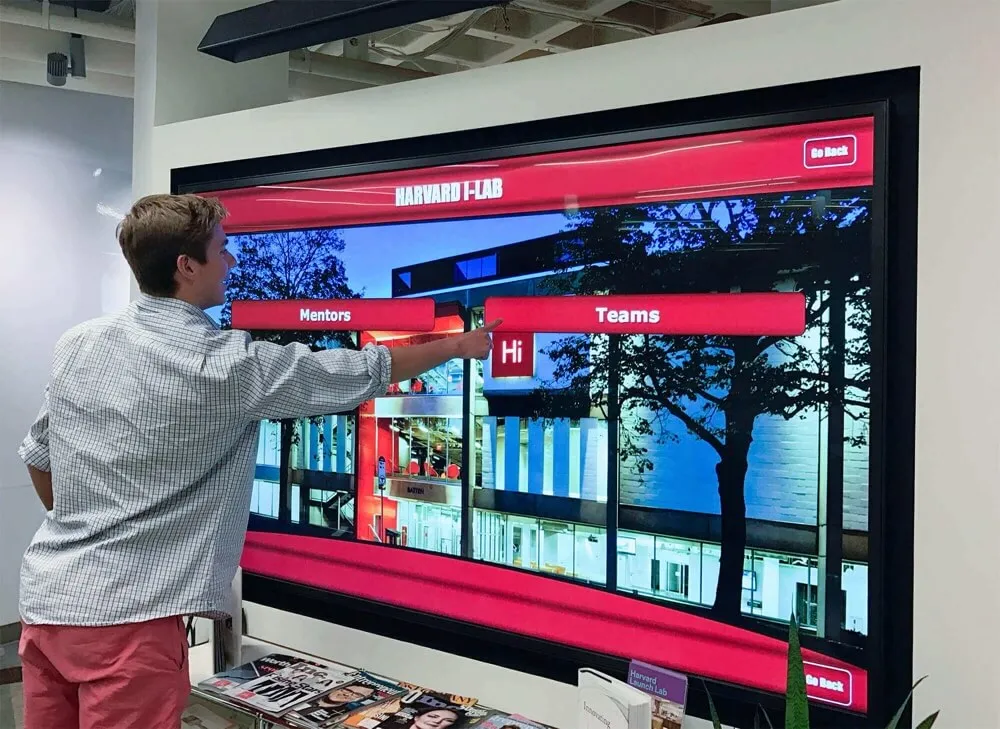
Strategic planning ensures recognition systems meet program needs
Technology Platform Selection
Choosing appropriate systems matching program needs and capabilities:
Essential Feature Requirements
Core capabilities supporting comprehensive record management:
- Basketball-specific record categories and templates
- Intuitive content management requiring minimal training
- Multimedia support including photos and videos
- Searchable database with flexible filtering
- Web accessibility extending beyond physical displays
- Analytics tracking engagement and usage
- Mobile-responsive design for all devices
Implementation Considerations
Practical factors affecting selection:
- Budget availability for initial and ongoing costs
- Staff technical comfort and capacity
- Content development resources and timeline
- Physical space for display installations
- Network infrastructure and connectivity
- Vendor support and training availability
- Long-term platform viability and roadmap
Vendor Evaluation
Assessing providers offering athletic record solutions:
- References from schools with similar needs
- Portfolio demonstrating successful implementations
- Training and support quality and responsiveness
- Pricing transparency and total cost clarity
- Customization capabilities and limitations
- Integration with existing school systems
- Long-term partnership versus transactional relationship
Solutions designed specifically for schools, like those from Rocket Alumni Solutions, typically provide more appropriate features and better support than generic digital signage platforms adapted for athletic use.
Content Development Strategy
Systematic approach to building comprehensive record collections:
Phased Implementation
Manageable project scope avoiding overwhelming efforts:
Phase 1 (Months 1-2): Current Season
- Configure platform and install hardware
- Train administrators on content management
- Document current season comprehensively
- Establish workflows for ongoing updates
Phase 2 (Months 3-6): Recent History
- Add previous 5-10 years where records readily available
- Digitize yearbooks and programs
- Contact recent alumni for photos and information
- Establish current record baseline across categories
Phase 3 (Months 6-12): Historical Archives
- Research older eras systematically
- Conduct alumni outreach for missing information
- Digitize historical photographs and materials
- Document program evolution and context
Phase 4 (Ongoing): Enhancement and Expansion
- Add newly available historical information
- Incorporate video content as it becomes available
- Develop athlete profiles and stories
- Refine based on engagement analytics
This phased approach delivers immediate value while building comprehensive archives over time without overwhelming staff.
Training and Operational Sustainability
Ensuring long-term success through preparation and process:
Administrator Training
Comprehensive instruction on system operation:
- Content creation and editing procedures
- Media upload and optimization
- Record verification and publication
- User management and permissions
- Analytics review and interpretation
- Troubleshooting common issues
- Vendor support access and escalation
Documentation and Resources
Reference materials supporting ongoing operations:
- Written procedures for common tasks
- Video tutorials demonstrating key workflows
- Quick reference guides for occasional tasks
- Contact information for technical support
- Templates for consistent content formatting
- Style guide maintaining quality standards
Ongoing Maintenance Plan
Sustainable operations preventing neglect:
- Weekly updates during basketball season
- Monthly content reviews ensuring accuracy
- Seasonal comprehensive audits
- Annual training refreshers for staff
- Technology maintenance and updates
- Content backup verification
- Continuous improvement based on feedback

Proper training ensures staff can effectively manage recognition systems
Recognizing Diverse Basketball Achievements
Comprehensive programs celebrate excellence across multiple dimensions beyond scoring records:
Statistical Excellence Beyond Points
Basketball generates numerous statistical categories deserving recognition:
Rebounding Achievements
Defensive and offensive board work:
- Career rebounding records total and per-game
- Single-game rebounding performances
- Season rebounding achievements
- Offensive versus defensive rebound distinctions
- Double-double achievements (points and rebounds)
Assist and Playmaking Records
Facilitating team offense:
- Career and season assist totals
- Single-game assist records
- Assist-to-turnover ratio achievements
- Triple-double performances
- Consecutive games with multiple assists
Defensive Recognition
Protecting the basket and forcing turnovers:
- Steals records career, season, and game
- Blocked shots achievements
- Defensive rebounds
- Charges taken and hustle statistics
- Defensive player awards and honors
Programs implementing comprehensive recognition report improved morale across diverse player types, not just scorers. Platforms like sports achievement highlights enable showcasing varied excellence.
Team-Based Achievements
Collective success deserving celebration:
Championship Documentation
Complete preservation of title-winning seasons:
- Conference and district championships
- Regional and sectional titles
- State championship achievements
- Tournament brackets and results
- Complete rosters with player contributions
- Coaching staff recognition
- Season narrative and key games
Team Statistical Records
Collective performance milestones:
- Highest team scoring average for season
- Best team field goal or three-point percentage
- Lowest points allowed per game
- Best turnover differential
- Most assists per game as a team
Winning Streaks and Undefeated Seasons
Sustained excellence over multiple games:
- Longest winning streaks program history
- Undefeated regular seasons
- Perfect conference records
- Tournament winning streaks
- Home court winning streaks
Academic and Character Recognition
Well-rounded student-athlete acknowledgment:
Academic Excellence
Scholar-athlete achievements:
- Academic All-State and All-Conference selections
- Team GPA recognition
- Individual athletes maintaining honor roll while competing
- Scholarship recipients academic and athletic
- Graduation rates and post-secondary placement
Leadership and Sportsmanship
Character-based honors:
- Team captain recognition
- Sportsmanship awards
- Community service contributions
- Leadership positions beyond athletics
- Mentor relationships with younger players
Programs celebrating comprehensive achievement create inclusive cultures valuing all contributions, not merely scoring prowess.
Best Practices for Record Accuracy and Credibility
Maintaining information integrity ensures recognition programs command respect and trust:
Verification Standards
Rigorous confirmation processes:
Multiple Source Requirement
Cross-referencing whenever possible:
- Official scorebooks and statistics
- Newspaper coverage and game reports
- Program guides and media documentation
- State association records
- Opposing team records when available
- Video footage confirming performances
Documented Uncertainty
Transparent acknowledgment of limitations:
- Clear notation when records cannot be fully verified
- Explanation of conflicting information sources
- Appropriate caveats about incomplete historical data
- Invitation for alumni to provide additional information
- Periodic review as new evidence emerges
Correction Protocols
Responsive processes for addressing errors:
- Clear submission path for corrections
- Investigation procedures reviewing claims
- Timely updates when errors confirmed
- Acknowledgment of contributors identifying issues
- Documentation of changes and reasons
Strong verification standards build credibility essential for respected recognition programs.
Historical Context and Fair Comparison
Acknowledging factors affecting record interpretation:
Era Distinctions
Different competitive environments across decades:
- Rule changes affecting gameplay and scoring
- Season length variations over time
- Three-point line introduction timing
- Competition level and classification changes
- Scheduling practices affecting game quantity
Context Documentation
Information placing records in perspective:
- Game circumstances for notable performances
- Competition quality and opponent strength
- Playoff versus regular season distinctions
- Home versus away game considerations
- Injury or unusual circumstances
Record Categories by Era
Separate recognition addressing different conditions:
- Modern era records since specific rule changes
- Historical records acknowledging different contexts
- All-time records requiring exceptional performance regardless
- Adjusted records accounting for season length when appropriate
This contextual approach honors both historical and modern achievement fairly.
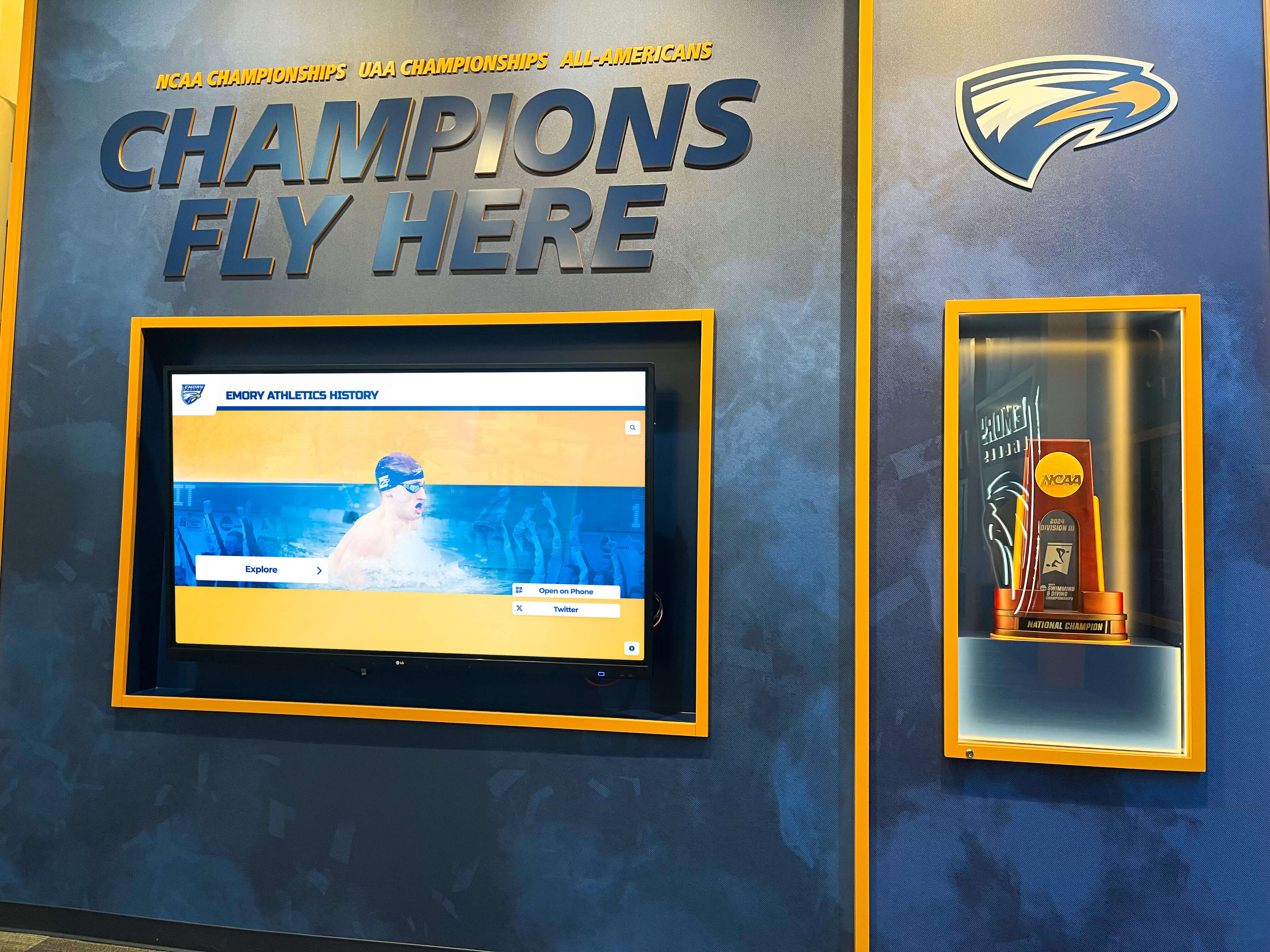
Professional recognition systems celebrate diverse achievements across program history
Strategic Benefits of Effective Record Management
Well-implemented systems deliver value extending beyond simple documentation:
Athlete Motivation and Goal Setting
Visible records inspire performance:
Aspirational Benchmarks
Clear targets for ambitious athletes:
- Specific point totals creating concrete goals
- Understanding what performance levels achieve recognition
- Seeing names of previous record holders
- Tracking personal progress toward milestones
- Creating focus and purpose throughout seasons
Research on athletic history displays demonstrates that prominently featured records significantly increase athlete awareness and goal-setting behavior.
Competitive Drive
Healthy rivalry pursuing excellence:
- Multiple athletes competing for recognition
- Year-over-year improvement visible through records
- Position-specific competitions for category leadership
- Team challenges pursuing collective records
- Legacy motivation wanting names in program history
Recruitment and Program Marketing
Records demonstrate program quality:
Competitive Excellence Proof
Tangible evidence of sustained success:
- Championship history showing winning tradition
- Individual achievement depth across multiple athletes
- Record progression demonstrating development capability
- College placement proving next-level preparation
- Facility quality evident through professional recognition displays
Prospect Engagement
Interactive exploration during campus visits:
- Self-directed discovery of program history
- Seeing specific statistical achievements possible
- Understanding development pathways through player progressions
- Family involvement exploring records together
- Memorable impression distinguishing program from competitors
Programs with comprehensive, accessible record systems report improved recruiting outcomes, particularly when prospects can independently explore detailed program history.
Alumni Connection and Engagement
Recognition maintaining lifelong relationships:
Preserved Achievement
Permanent acknowledgment honoring contributions:
- Alumni discovering their records properly documented
- Children and grandchildren seeing family athletic legacy
- Reunion events centered on program history exploration
- Social sharing extending recognition to personal networks
- Update submissions keeping alumni engaged with program
Community Pride
Shared institutional identity:
- Local businesses displaying program achievements
- Community attendance supporting successful programs
- Media coverage highlighting record performances
- Generational connections through multi-decade history
- Town identity incorporating athletic tradition
Solutions enabling digitizing high school records create permanent archives preventing historical loss while enabling worldwide accessibility.
Measuring Record System Success
Evaluating program effectiveness through quantitative and qualitative assessment:
Engagement Metrics
Data demonstrating utilization:
For Digital Systems:
- Unique visitors and total interactions
- Average session duration indicating engagement depth
- Most-viewed records and athletes revealing interests
- Search queries showing what information visitors seek
- Return visitor rates demonstrating ongoing appeal
- Social sharing volume and reach
- Peak usage times and patterns
Traditional Observation:
- Anecdotal feedback from athletes and visitors
- Coach reports about athlete goal-setting
- Recruitment visitor responses
- Alumni engagement at events
- Media reference frequency
Program Impact Indicators
Broader effects on athletic culture:
Athlete Awareness and Goals
- Survey responses about record knowledge
- Goal-setting documentation referencing specific records
- Performance improvement trajectories toward milestones
- Athlete discussions about records and recognition
- Motivation self-reports from student-athletes
Recruitment Outcomes
- Prospect feedback mentioning record displays
- Enrollment decisions influenced by program presentation
- Yield rates from campus visits
- Competitor comparison responses
- Family impressions during recruitment
Alumni Engagement
- Return visit frequency to campus
- Social media interaction and sharing
- Reunion attendance and participation
- Philanthropic support patterns
- Update submissions and ongoing contact
Return on Investment
Financial and operational value:
Time Savings
- Reduced administrative burden versus traditional methods
- Faster updates eliminating production delays
- Decreased response time for information requests
- Simplified correction processes
- Streamlined seasonal maintenance
Cost Efficiency
- Eliminated recurring costs for physical display updates
- Reduced staff time valued at hourly rates
- Avoided facility renovations for expanded capacity
- Prevented information loss requiring expensive reconstruction
- Enabled multi-use of content across platforms
Most programs implementing comprehensive digital systems report break-even within 2-4 years when accounting for eliminated expenses and staff time savings.
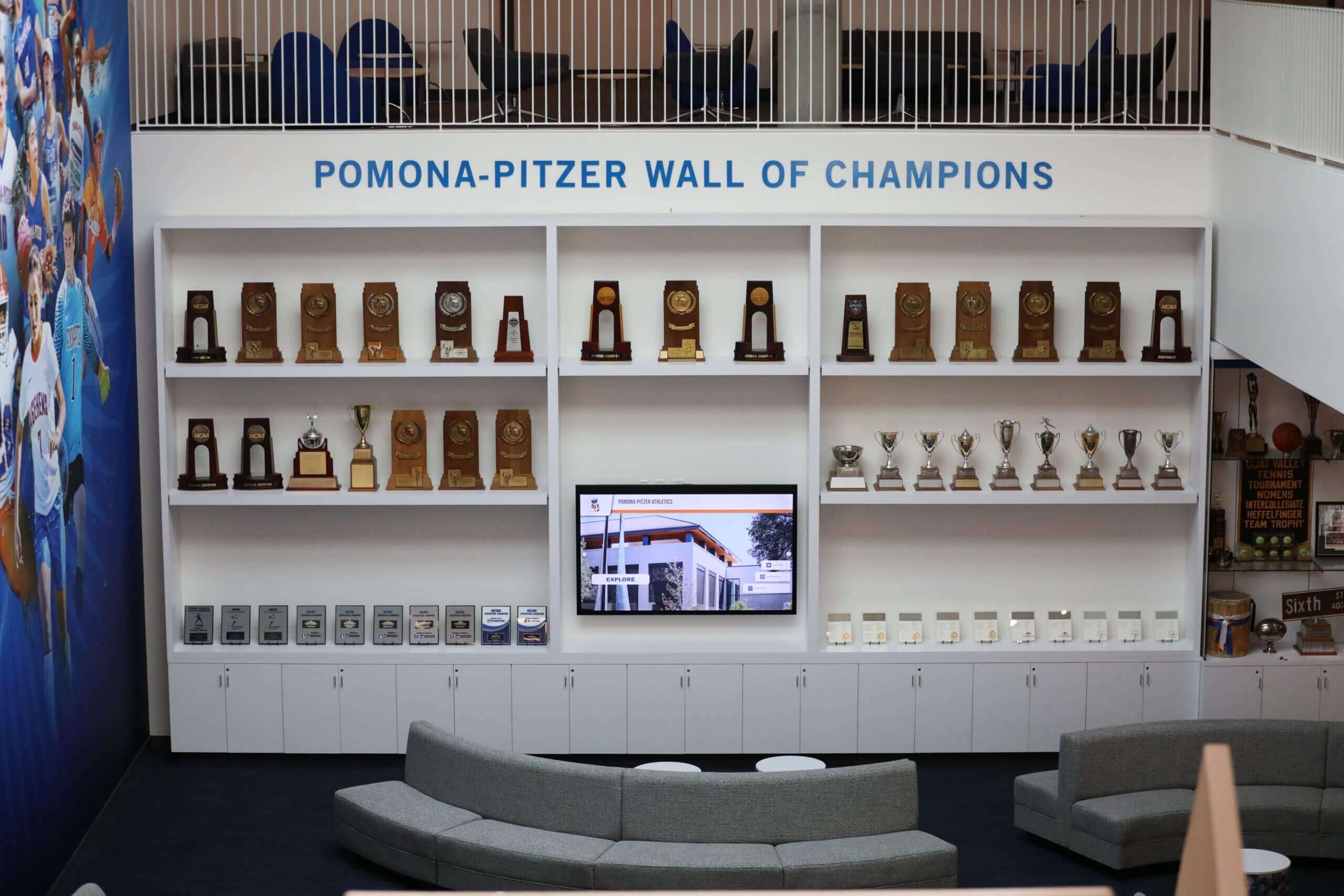
Professional installations create lasting impact supporting multiple program goals
Conclusion: Preserving Excellence While Inspiring Future Achievement
Basketball high school records serve dual purposes—honoring past excellence while motivating future achievement. Effective record management systems preserve institutional memory that might otherwise fade while creating accessible, engaging recognition that inspires current athletes to add their names to program history.
Traditional paper-based and static display approaches struggle with fundamental limitations in capacity, maintenance, accessibility, and engagement that modern digital solutions address comprehensively. Cloud-based platforms with interactive displays provide unlimited capacity, instant updates, multimedia storytelling, searchable databases, and analytics impossible with conventional methods.
Yet technology alone doesn’t guarantee success. Comprehensive basketball record programs require systematic historical research, rigorous verification standards, sustainable operations, and strategic integration with program development goals including recruitment, alumni engagement, and community connection.
Schools implementing modern record systems commonly experience:
- Dramatically reduced administrative burden for record maintenance
- Significantly increased athlete awareness of program history and standards
- Improved recruitment outcomes through professional program presentation
- Enhanced alumni engagement through accessible recognition
- Preserved institutional memory preventing historical loss
- Measurable positive impact on program culture and athlete motivation
Transform Your Basketball Records Management
Discover how Rocket Alumni Solutions can help you create comprehensive digital record systems that preserve program history, inspire current athletes, and streamline recognition management.
Schedule Your Free ConsultationWhether implementing recognition for the first time, modernizing outdated systems, or expanding existing programs, basketball high school records management represents an investment in program culture that delivers returns for decades through preserved legacy, motivated athletes, and engaged communities celebrating court excellence.
The question facing basketball programs isn’t whether to maintain records—all programs do in some form. The question is whether to continue managing limitations and frustrations of traditional approaches or embrace modern solutions that honor the past while building the future through comprehensive, accessible, engaging recognition of basketball excellence.
For schools ready to transform basketball record management, explore how digital record boards specifically designed for athletic programs can eliminate traditional constraints while amplifying recognition impact. Learn about comprehensive athletic recognition solutions celebrating sports traditions across all programs. Discover how schools nationwide are preserving excellence while inspiring future achievement through modern basketball high school records systems that serve programs effectively for generations.































