Schools investing in touchscreen technology face a crucial question: which displays will best serve their educational mission while providing lasting value? With interactive touchscreens now standard across K-12 and higher education, making informed decisions about classroom displays, hallway recognition systems, and common-area engagement tools requires understanding how different solutions serve distinct educational purposes—and which features actually matter for your specific applications.
This comprehensive guide explores the best touchscreen displays for schools in 2025, examining classroom instructional systems, common-area recognition displays, and the critical factors that separate exceptional purchases from expensive mistakes. Whether you’re a technology director planning district-wide rollouts, a principal upgrading facilities, or a decision-maker navigating competing vendor claims, you’ll discover how to select, implement, and maximize touchscreen technology that truly enhances learning environments and school culture.
The touchscreen display market has matured significantly. Educational institutions no longer face questions about whether to implement interactive displays, but rather which technologies best address specific needs across classrooms, hallways, libraries, and community spaces. Making these distinctions matters enormously—choosing classroom presentation systems for hallway recognition applications, or vice versa, results in disappointing outcomes regardless of product quality.
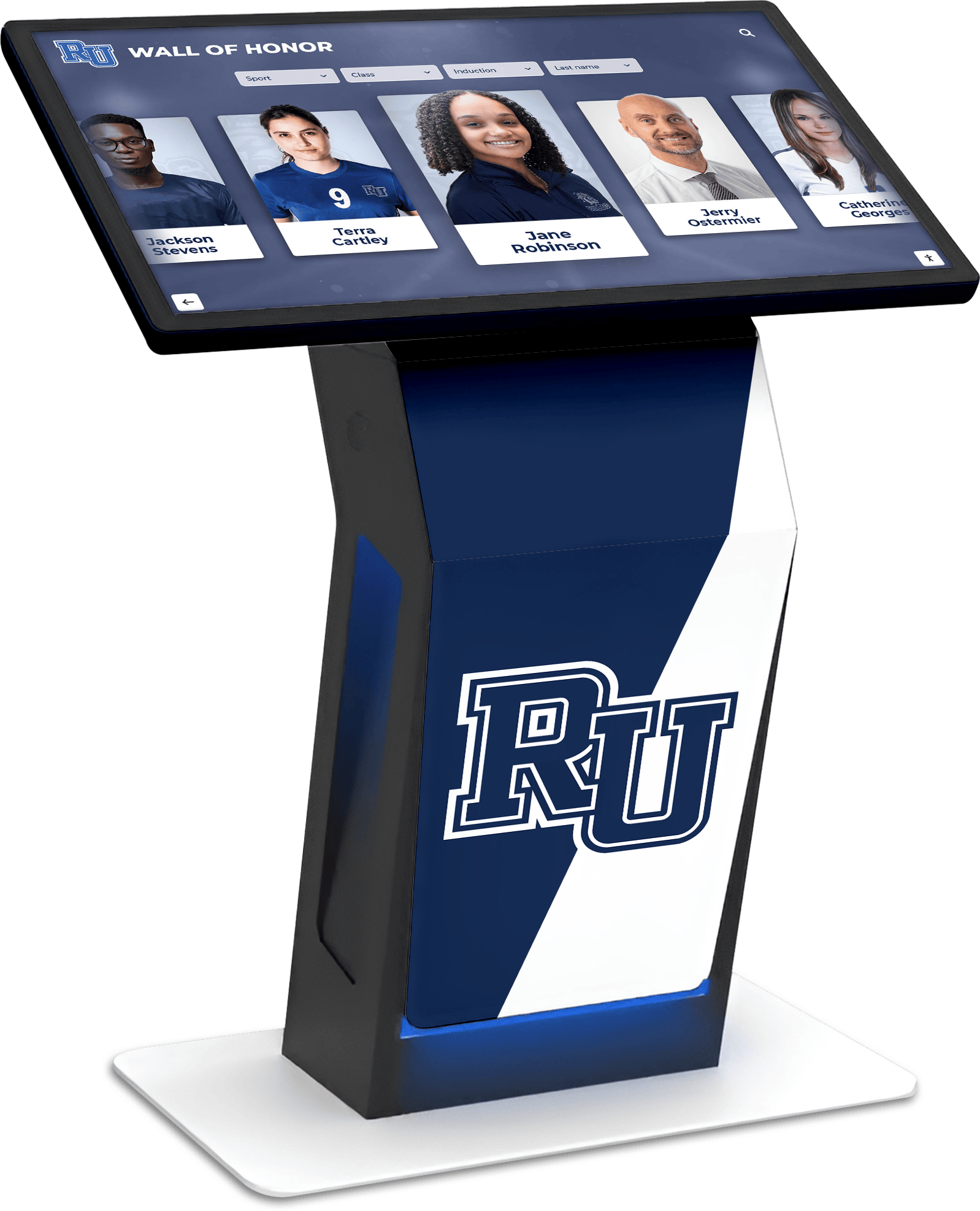
Understanding Different Touchscreen Applications in Schools
Not all interactive displays serve identical purposes in educational environments. Before evaluating specific products, clarifying your primary use cases ensures you assess relevant features rather than being distracted by capabilities that sound impressive but don’t address your actual needs.
Classroom Instructional Displays: Teaching and Collaboration
Classroom interactive displays function primarily as instructional tools, replacing traditional whiteboards and projectors with dynamic, touch-enabled surfaces facilitating instruction, student collaboration, and content presentation.
Essential Classroom Display Characteristics:
- Educational software ecosystems with lesson planning tools, curriculum integration, and student engagement features
- Multi-user simultaneous touch allowing several students to interact concurrently during collaborative activities
- Annotation and markup tools enabling teachers to write, highlight, and diagram over displayed content
- Wireless screen sharing letting teachers and students present from laptops, tablets, and smartphones
- Classroom management integration connecting with systems that monitor student device activity
- Professional installation designed for daily intensive use by multiple classes throughout school years
Leading classroom display manufacturers include Promethean, SMART Technologies, ViewSonic, BenQ, and Newline Interactive—companies specifically designing products for educational instructional environments with appropriate software ecosystems, durability standards, and educational support structures.
Common Area Recognition and Engagement Displays
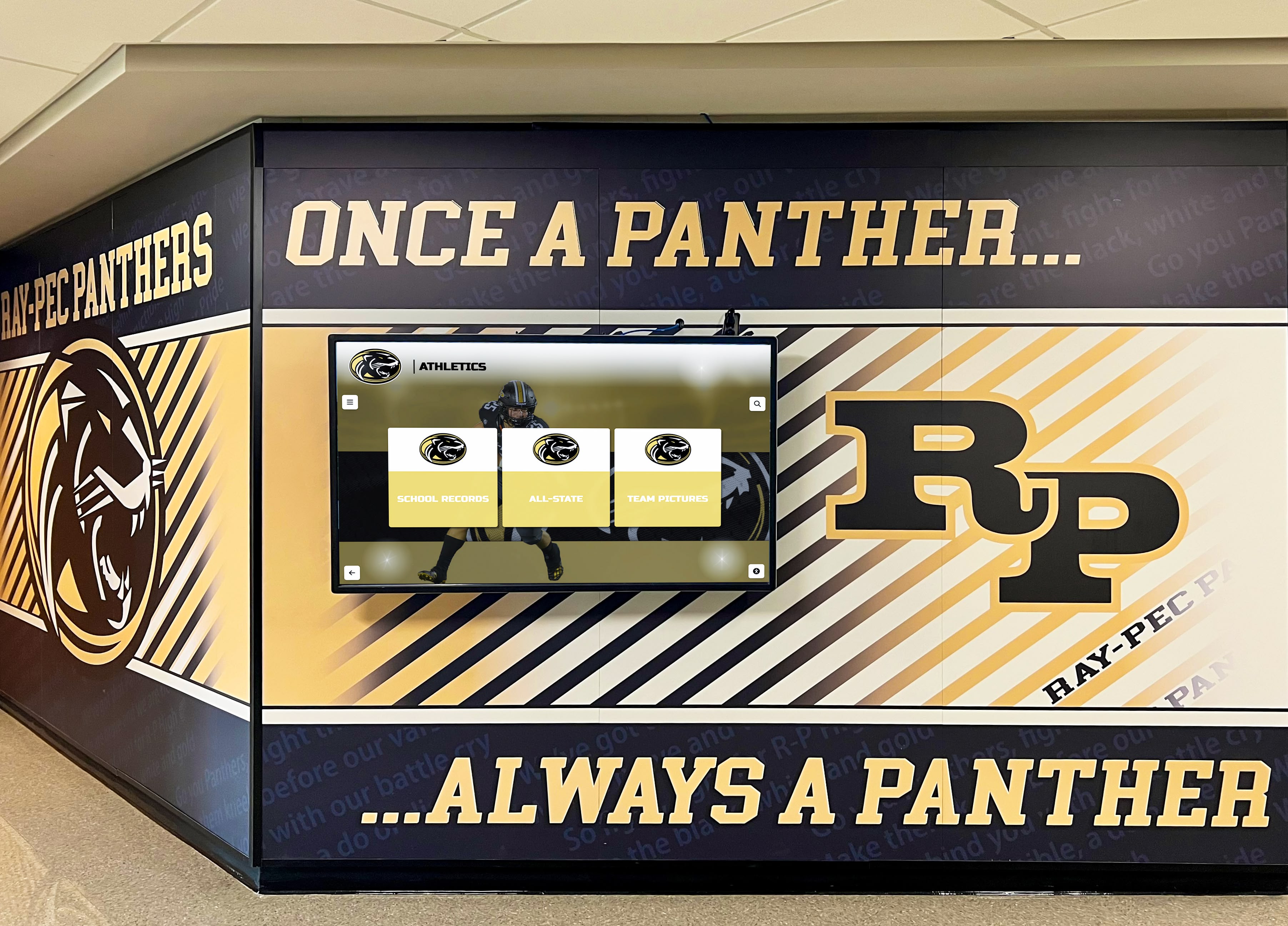
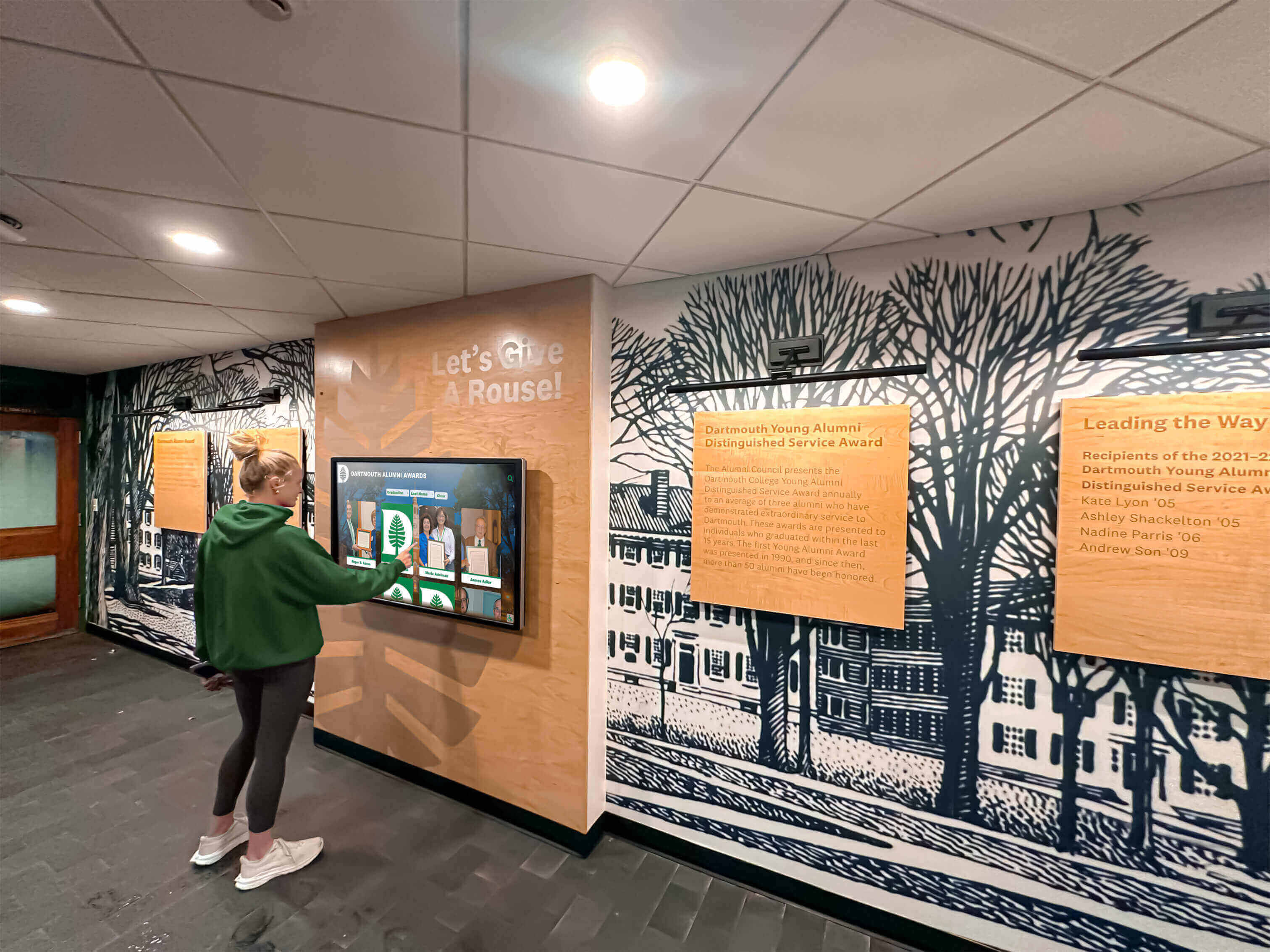
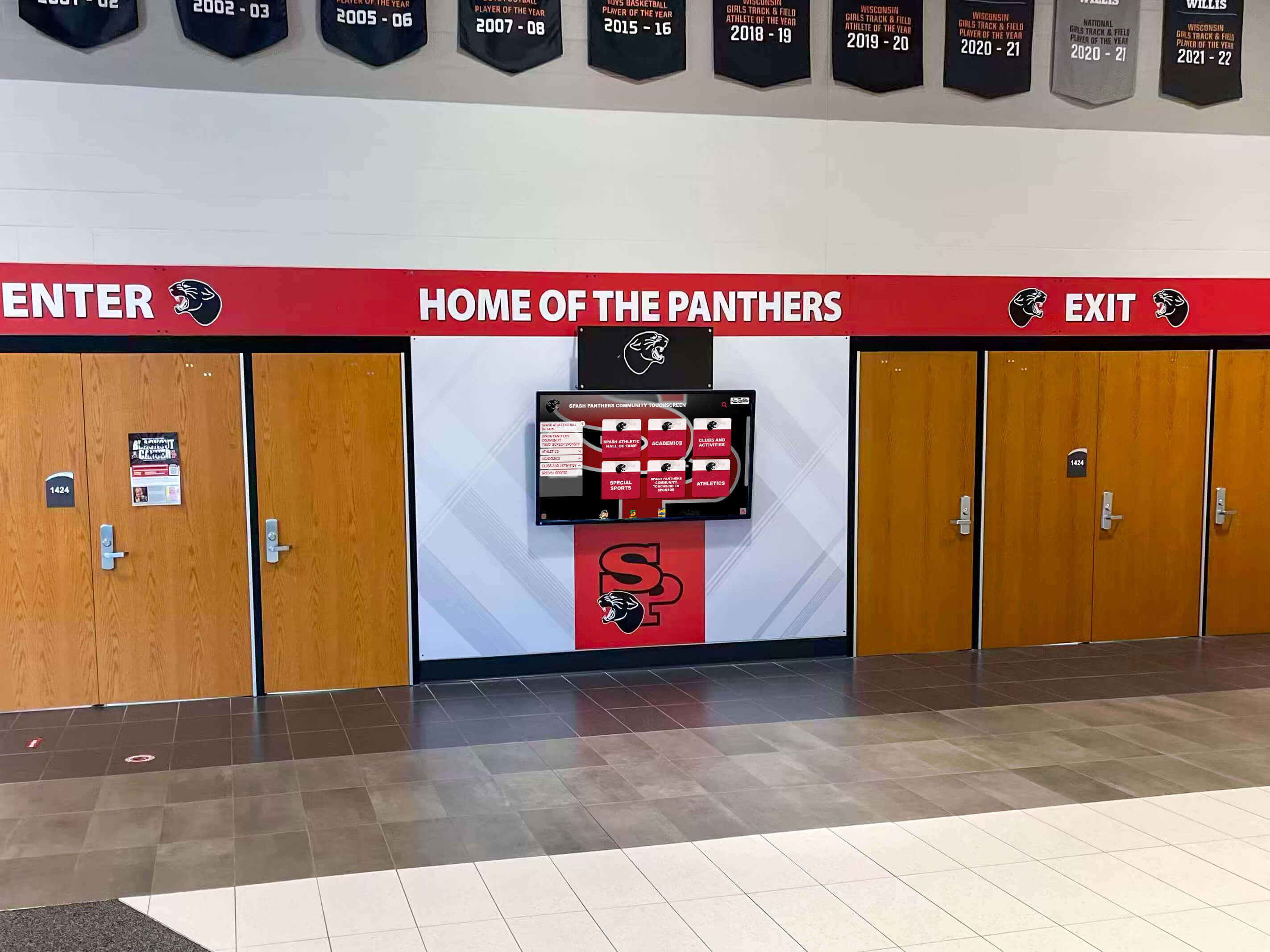
Beyond classrooms, schools increasingly deploy interactive touchscreens in hallways, lobbies, cafeterias, and common areas for entirely different purposes: building school culture, celebrating achievement, sharing information, and creating engagement opportunities that strengthen community bonds.
Essential Recognition Display Characteristics:
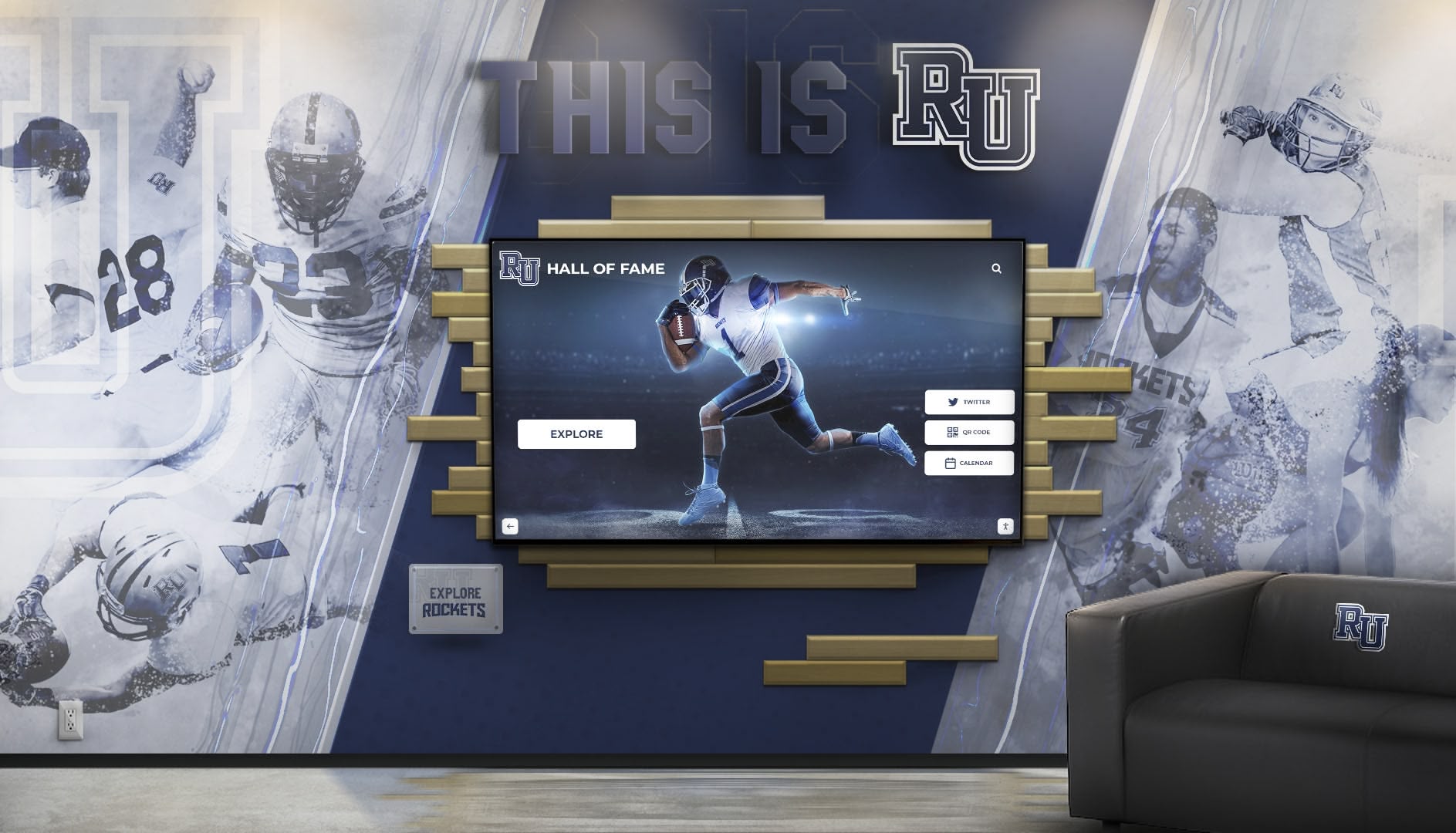
- Visual impact attracting attention in high-traffic corridors and lobbies
- Self-service interaction requiring no teacher facilitation or institutional knowledge
- Content management simplicity enabling frequent updates by non-technical staff
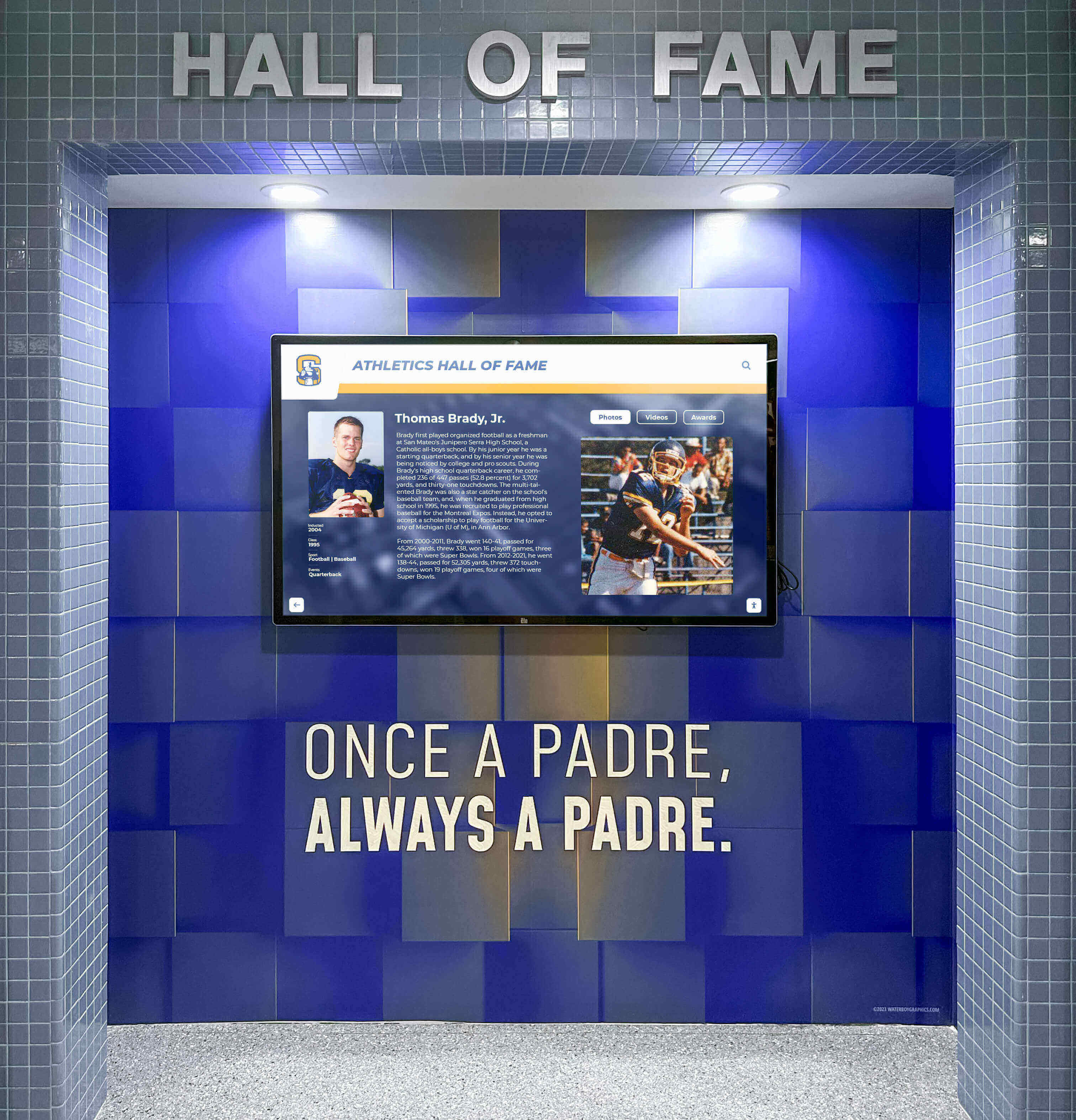
- Multimedia storytelling showcasing photos, videos, accomplishments, and rich biographical content
- Recognition-specific features designed for honoring student and staff achievements
- School branding flexibility reinforcing institutional identity and values
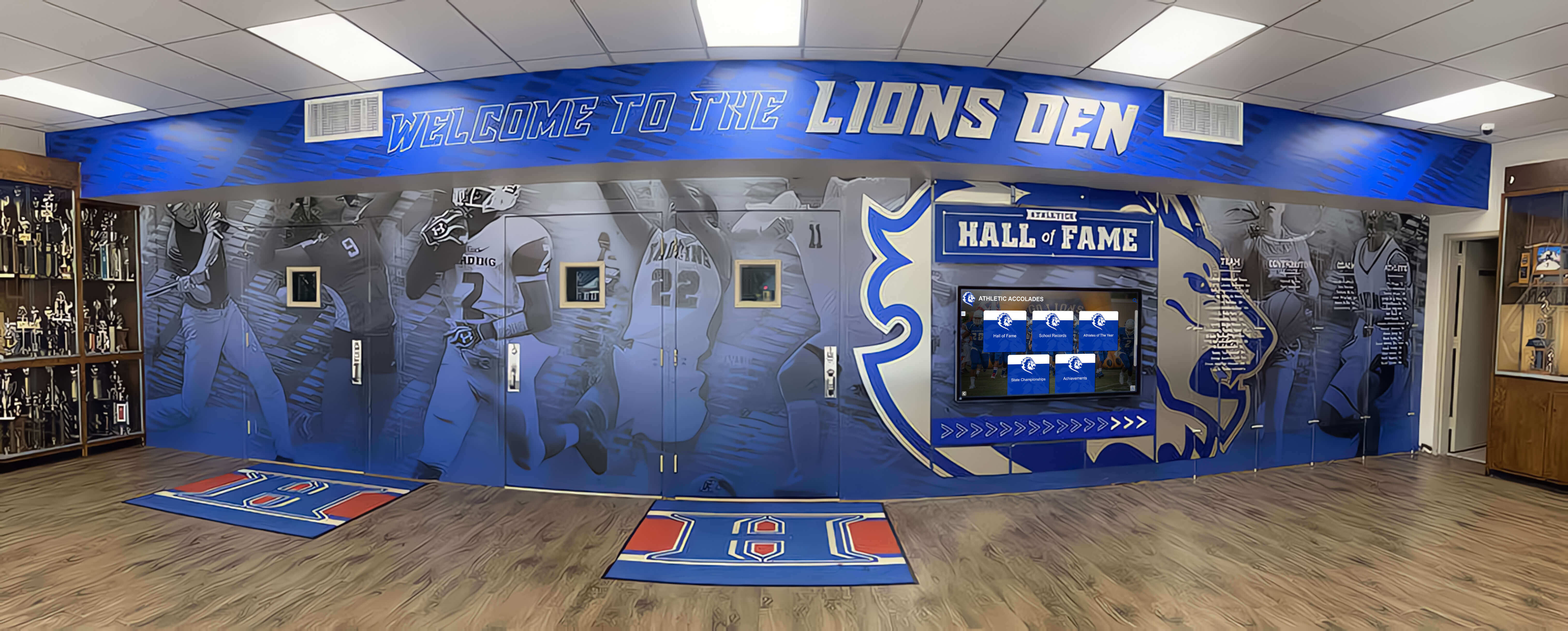
These displays transform underutilized wall space into dynamic recognition opportunities that celebrate achievements traditional trophy cases and bulletin boards cannot adequately showcase while creating engagement touchpoints that build school pride and community connections.
The distinction between these applications matters significantly. Classroom presentation systems optimized for teaching often provide poor experiences when repurposed for hallway recognition, while displays designed for self-service exploration lack features teachers need for instruction. Successful schools match technology to application rather than assuming any touchscreen serves all purposes equally.
Best Touchscreen Displays for Classroom Instruction
If your primary need involves classroom teaching environments, several display categories merit consideration based on specific requirements and budget parameters.
Interactive Flat Panel Displays (IFPDs): The Modern Standard
Interactive flat panels have emerged as the dominant classroom display technology, combining large-format touchscreens with built-in computing power in all-in-one solutions that eliminate projector maintenance and calibration issues.
Why IFPDs Lead Classroom Technology:
Superior Image Quality: 4K resolution has become standard on modern panels, providing crystal-clear text and images visible from all classroom locations. Unlike projector-based systems affected by ambient light, IFPDs maintain consistent brightness and color accuracy regardless of room lighting conditions.
Zero Calibration Requirements: Traditional interactive whiteboards require regular calibration as mounting shifts or projection alignment drifts. IFPDs never require calibration—touch accuracy remains consistent from installation through years of operation.
Built-In Computing: Modern IFPDs include integrated Android or Windows computers, eliminating dependence on separate laptops or desktop computers. Built-in apps for annotation, whiteboarding, and screen sharing enable immediate use without connecting external devices.
Lower Total Ownership Cost: While upfront costs exceed projector alternatives, IFPDs eliminate ongoing lamp replacement expenses, filter cleaning, and calibration labor. According to EdTech Magazine, flat panels increasingly dominate K-12 education due to superior reliability and lower long-term costs.
Durability and Lifespan: Commercial education panels typically offer 50,000-70,000 hour operation ratings—representing 15-20 years of typical classroom use. This longevity far exceeds projector systems requiring lamp replacement every 2,000-5,000 hours.
Popular Educational IFPD Brands in 2025:
- Promethean ActivPanel: Known for educational software integration and teacher-designed features
- SMART Board MX Series: Offering extensive lesson library and collaborative software
- BenQ Board Pro: Praised for phenomenal visual fidelity and supporting up to 40 simultaneous touchpoints
- ViewSonic ViewBoard: Providing cost-effective solutions with strong education features
- Newline Interactive: The U.S. market leader in interactive displays according to recent industry data
Interactive Whiteboards with Projectors: Legacy Technology
Traditional interactive whiteboard systems combining projection technology with touch-sensitive surfaces still operate in many schools, though most districts now specify flat panels for new installations.
When Projector Systems Still Make Sense:
- Schools with existing projector infrastructure and recent lamp investments
- Situations requiring display areas exceeding 100 inches (larger than available flat panels)
- Budget constraints preventing flat panel implementation
- Temporary installations or mobile applications
Why Most Schools Choose Flat Panels Instead:
Modern IFPDs address persistent projector limitations including calibration drift requiring regular adjustment, image washout in bright rooms, shadow casting when presenters stand between projector and screen, projector maintenance including lamp replacement and filter cleaning, and higher long-term costs despite lower initial investment.
For schools making new investments rather than maintaining existing systems, interactive flat panels represent the clear choice for classroom instruction.
Sizing Guidelines for Classroom Displays
Appropriate display sizing ensures visibility from all classroom seating while fitting available wall space and budget constraints.
Classroom Size and Display Recommendations:
- Small classrooms (up to 20 students): 65-75 inch displays provide adequate visibility
- Standard classrooms (20-30 students): 75-86 inch displays ensure rear-row visibility
- Large classrooms (30+ students): 86-98 inch displays or multiple screens accommodate extended viewing distances
- Lecture halls: Multiple displays or continued projection systems serve large audiences
Calculate appropriate sizing by multiplying display diagonal measurement by 1.5-2.5—students at the furthest viewing position should be no more than 2.5 times the screen diagonal away for comfortable viewing without strain.
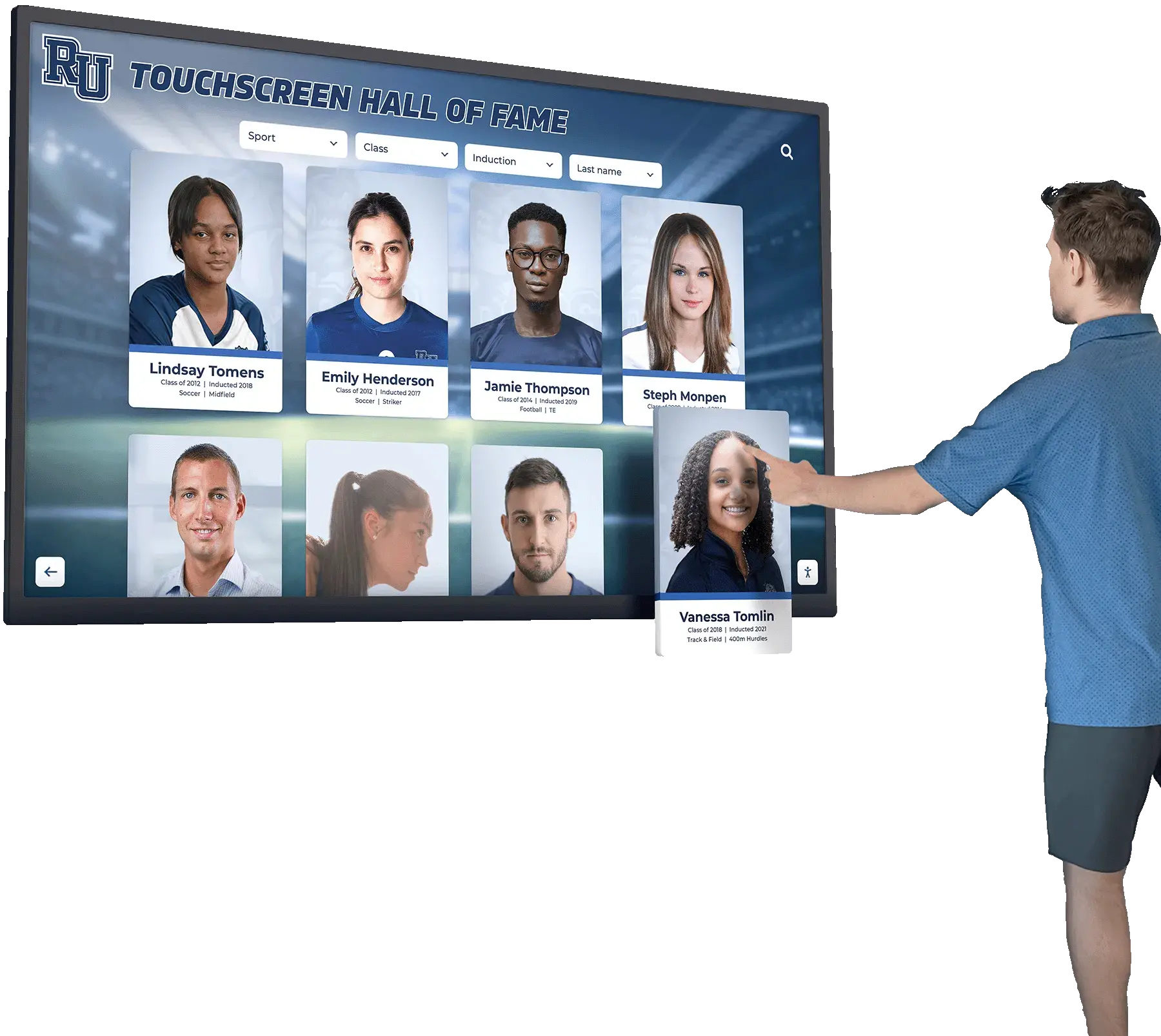
Best Touchscreen Displays for School Hallways and Recognition
While classroom displays facilitate instruction, hallway and common-area displays serve fundamentally different functions: building culture, celebrating achievement, sharing information, and creating engagement opportunities strengthening school community.
Purpose-Built Recognition Display Systems
Specialized interactive recognition displays differ fundamentally from classroom instructional displays, optimizing for self-directed exploration, multimedia storytelling, and content management by staff without technical training.
Essential Recognition System Capabilities:
Intuitive Touch Navigation: Recognition displays must be completely self-explanatory to casual users—students, families, and visitors who have never seen the system should successfully navigate content without instructions, training, or assistance. This requires thoughtful interface design far beyond basic touchscreen functionality.
Profile-Based Content Organization: Unlike slideshow-style digital signage, effective recognition systems organize content around individuals, teams, and achievements. Users should search for specific people, filter by categories, and explore detailed biographical profiles rather than passively watching rotating content.
Cloud-Based Content Management: Staff updating displays should access management systems from any internet-connected device without requiring physical display access. Intuitive drag-and-drop interfaces enable content creation by administrators and staff without technical expertise or IT department involvement.
Multimedia Content Support: Recognition displays should seamlessly incorporate high-resolution photos, video clips, detailed achievement descriptions, statistical records, and biographical narratives. This rich content creates emotional connections and tells stories that static text and photos alone cannot convey.
Automatic Rotation and Featured Content: When not actively touched, displays should cycle through featured content attracting attention while showcasing recognition highlights. Touch interaction should immediately respond, transitioning from attract mode to interactive exploration.
Analytics and Engagement Tracking: Understanding which content resonates with audiences guides future content development. Recognition systems should track interactions, popular searches, session duration, and content views revealing what engages your specific community.
Commercial-Grade Display Hardware Requirements
Recognition installations require commercial-grade displays designed for extended public-space operation rather than residential screens built for occasional home use.
Critical Hardware Specifications:
- Commercial display panels rated for 16-24 hour daily operation with industrial-grade components
- Capacitive or infrared multi-touch providing responsive, accurate touch recognition without calibration
- Tempered glass surfaces 6-7mm thick resisting scratches and damage from repeated public interaction
- High brightness (350-500 nits) ensuring visibility in various lighting conditions including bright hallways
- Fanless or whisper-quiet cooling appropriate for public spaces where noise distracts
- Portrait or landscape flexibility based on available wall space and content design preferences
- VESA mounting compatibility enabling secure wall installation with appropriate brackets
Recognition Display Sizing by Location:
- Hallway installations: 43-55 inch displays for intimate personal viewing experiences
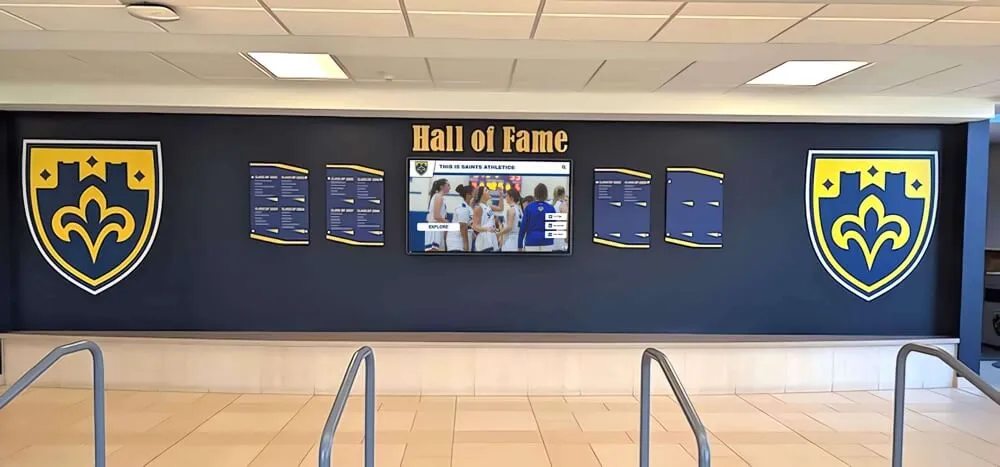
- Main lobby locations: 55-75 inch displays ensuring visibility across larger gathering spaces
- Athletic facilities: 65-86 inch displays matching the scale of gymnasiums and field houses
- Multi-display configurations: Coordinated installations telling comprehensive stories across related content areas
Unlike classroom displays requiring teacher facilitation, recognition systems must succeed with zero training for casual users who approach displays once and expect immediate, satisfying experiences.
Recognition-Specific Software Platforms
Hardware represents only half the equation—software powering recognition displays determines whether systems create engaging experiences or become expensive equipment students ignore.
Why Generic Digital Signage Fails for Recognition:
Generic digital signage platforms designed for advertising and announcements lack features educational recognition requires. Simply displaying rotating slides of names and photos creates experiences barely superior to bulletin boards while failing to leverage touchscreen interaction capabilities.
Essential Recognition Software Features:
Purpose-built platforms like those from Rocket Alumni Solutions specifically address educational recognition through:
- Searchable profile databases enabling users to find specific individuals instantly
- Template systems maintaining visual consistency while allowing content customization
- Category organization structuring content by achievement types, years, sports, or custom groupings
- Related content suggestions connecting users to additional profiles they might find interesting
- Social sharing integration enabling users to share discoveries beyond physical displays
- Approval workflows ensuring content quality before publication
- Multi-site management coordinating content across district-wide installations
- Mobile accessibility providing online access to complete content libraries from anywhere
These specialized capabilities distinguish educational recognition platforms from generic digital signage that merely rotates content but provides none of the interactive depth, searchability, or management flexibility that creates meaningful engagement.
Critical Features Distinguishing Quality Touchscreen Displays
Regardless of application—classroom instruction or recognition—several technical considerations apply to all school touchscreen implementations and separate exceptional products from disappointing ones.
Touch Technology: Infrared vs. Capacitive
Infrared Touch Technology:
Infrared systems detect touch by interrupting invisible light grids projected just above screen surfaces. This technology dominates large-format educational displays due to several advantages:
- Works with any object—fingers, styluses, pointers—providing maximum flexibility
- Supports numerous simultaneous touch points enabling extensive multi-user interaction
- Lower cost for large screen sizes compared to capacitive alternatives
- Proven reliability in educational environments
Infrared systems have slight disadvantages including raised bezels around screen perimeters housing infrared emitters and receivers, and potential interference from bright ambient light (though quality systems minimize this effectively).
Capacitive Touch Technology:
Capacitive systems detect electrical conductivity changes when conductive objects (fingers or special styluses) contact screens. This technology standard in smartphones and tablets offers:
- Smoother glass surfaces with minimal bezels creating sleeker appearance
- Generally more responsive feel approaching consumer device experiences
- Less susceptibility to ambient light interference
Capacitive technology costs more for large formats and requires conductive contact rather than accepting any object. For most educational applications, both technologies perform adequately—base selection on other factors like vendor ecosystem, price, and available sizes rather than touch technology alone.
Response Time and Multi-Touch Capabilities
Touch Response Time:
Modern interactive displays should exhibit touch response under 10 milliseconds—delays beyond this threshold create frustrating lag between touch input and screen response that undermines user experience. Specifications often claim fast response, but actual performance varies. Request demonstration opportunities letting teachers and students test response during procurement evaluation rather than relying solely on vendor specifications.
Multi-Touch Support Requirements:
- Classroom instruction: 10-20 simultaneous touch points enable multiple students to interact concurrently during collaborative activities without touch registration conflicts
- Recognition displays: 2-6 touch points suffice for individual exploration with occasional multi-user interaction
More touch points enable richer collaborative interaction but increase system cost. Specify based on realistic usage patterns rather than maximum theoretical capabilities. A 20-point classroom system provides negligible benefit over 10-point alternatives if typical activities involve 3-4 students, while recognition displays rarely require more than 2-4 simultaneous users.
Durability and Vandal Resistance
Public-area installations require enhanced protection beyond residential equipment that may not survive student interaction.
Essential Durability Features:
- Tempered glass surfaces 6-7mm thick resist scratching from keys, rings, and repeated touching
- Anti-glare coatings maintain visibility without compromising surface hardness
- Ruggedized mounting preventing display removal, tilting, or adjustment by users
- No external buttons that could be damaged, misused, or provide unauthorized access
- Sealed construction preventing foreign object insertion into display mechanisms
- Commercial-grade internal components designed for continuous operation under demanding conditions
Schools serving younger students or experiencing vandalism issues should prioritize maximum durability even at premium pricing. Replacing damaged displays exceeds the cost difference between standard and ruggedized construction, making higher upfront investment for enhanced durability a wise long-term strategy.
Network Connectivity and Remote Management
Connectivity Considerations:
- Wired Ethernet provides reliable, secure connectivity strongly preferred for permanent installations
- WiFi connectivity enables flexible placement but introduces security and reliability considerations requiring evaluation
- 4G/5G cellular appropriate for locations lacking reliable network infrastructure (rare in school buildings)
Remote Management Capabilities:
Modern touchscreen systems should provide:
- Content updates without physical display access enabling changes from offices or remotely
- Software updates deployed across multiple installations simultaneously
- Monitoring and diagnostics identifying issues before users report problems
- Usage analytics revealing engagement patterns and popular content
- Power scheduling reducing energy consumption during non-operational hours
Cloud-based management platforms eliminate on-site server requirements while providing access from any location—critical for multi-building districts managing numerous installations. Systems requiring physical access for routine updates create maintenance burdens that undermine value propositions regardless of hardware quality.
Leading Touchscreen Display Brands for Schools in 2025
Understanding major manufacturers helps frame evaluation discussions and establish baseline expectations for consideration.
Top Classroom Instructional Display Manufacturers
Promethean
Promethean’s ActivPanel series dominates many educational markets through extensive teacher input during product development, comprehensive lesson library and educational content, ActiveLearn classroom management integration, and strong professional development and training resources. Promethean displays generally command premium pricing justified by extensive educational software ecosystems and teacher-designed features.
SMART Technologies
As interactive whiteboard pioneers, SMART maintains significant educational presence through SMART Learning Suite offering extensive collaborative tools, massive lesson marketplace with teacher-created content, integration with major learning management systems, and name recognition supporting teacher acceptance and adoption. SMART pricing typically falls in premium ranges reflecting brand reputation and software value.
BenQ
BenQ Board Pro series earns praise for exceptional visual fidelity with industry-leading color accuracy, support for up to 40 simultaneous touchpoints enabling extensive collaboration, ClassroomCare features including eye care and air quality sensors, and competitive pricing relative to comparable alternatives. BenQ represents strong value propositions for districts prioritizing display quality and collaborative capabilities.
ViewSonic
ViewSonic ViewBoard displays provide cost-effective classroom solutions through myViewBoard digital whiteboarding and lesson delivery software, vCast wireless presentation capabilities, diverse sizing and price point options, and ViewSonic University providing free educational resources. ViewSonic often appeals to budget-conscious districts seeking solid functionality without premium pricing.
Newline Interactive
As the U.S. market leader for interactive displays, Newline offers intuitive user interfaces minimizing training requirements, strong Android-based built-in computing, competitive pricing across product lines, and expanding educational market share. Newline represents excellent consideration for districts evaluating alternatives to established market leaders.
Recognition Display Solution Providers
For hallway recognition and community engagement applications, specialized providers offer purpose-built solutions rather than repurposing classroom technology.
Rocket Alumni Solutions
Rocket Alumni Solutions provides comprehensive recognition platforms specifically designed for educational environments including unlimited profile capacity accommodating decades of achievement, rich multimedia content support for photos, videos, and detailed biographies, intuitive content management requiring no technical expertise, searchable interactive databases with powerful filtering, mobile web access extending reach beyond physical displays, and comprehensive analytics revealing engagement patterns.
Rocket’s specialization in educational recognition versus generic digital signage creates purposeful platforms that celebrate achievements while building school culture through engaging, interactive experiences.
Generic Digital Signage Providers
Various digital signage vendors offer touchscreen capabilities, but these generic platforms typically lack recognition-specific features including profile organization, searchable databases, biographical content templates, educational approval workflows, and achievement-focused interfaces. Schools implementing recognition displays should carefully evaluate whether platforms provide true interactive recognition versus merely touchscreen-enabled slideshows barely superior to static bulletin boards.
Implementation Best Practices for School Touchscreen Displays
Successful touchscreen implementation extends beyond purchasing appropriate hardware—strategic placement, content development, training, and maintenance determine whether technology delivers promised benefits.
Strategic Placement Considerations
Classroom Display Positioning:
- Mounting height: Center displays at 48-54 inches from floor for optimal viewing by seated students
- Viewing angles: Position perpendicular to windows preventing glare and washout
- Power and network: Ensure adequate electrical circuits and network access without exposed cabling
- Interaction clearance: Provide 36-48 inches of clear approach space for teacher and student interaction
- Safety considerations: Secure mounting preventing tip-over accidents with appropriate wall anchors
Recognition Display Positioning:
- High-traffic locations: Main hallways, lobbies, and cafeteria entrances maximize daily visibility
- Dwell time areas: Locations where people naturally pause rather than rush past
- ADA compliance: Mounting heights and approach clearances meeting accessibility standards
- Environmental protection: Avoid direct sunlight, moisture exposure, and extreme temperatures
- Visibility from supervision: Place displays visible from supervised areas discouraging vandalism
Well-positioned displays naturally attract engagement while poorly located installations remain underutilized regardless of technical capabilities or content quality.
Content Strategy Development for Recognition Displays
For common-area recognition displays, content strategy determines success more than hardware specifications. Before installation, develop comprehensive plans addressing:
Content Categories to Include:
Educational recognition encompasses diverse achievement areas beyond athletics:
- Athletic achievements, records, and team championships
- Academic honors, scholarships, and research accomplishments
- Arts and performance recognitions
- Community service and leadership acknowledgments
- Alumni success stories and career achievements
- Historical milestones and institutional traditions
- Staff recognition and retirement tributes
Content Quality Standards:
Establish guidelines ensuring professional consistency:
- Biographical information templates and required fields
- Photo specifications, resolution requirements, and composition standards
- Video length recommendations and production guidelines
- Text length limits and writing style consistency
- Approval processes before content publication
- Update frequency commitments and responsibility assignments
Sustainable Content Development:
Recognition displays require ongoing content addition rather than one-time setup:
- Designate staff responsibilities for content management
- Create student involvement opportunities through media classes or service learning
- Develop alumni contribution processes for updating profiles
- Budget for professional photography and videography when appropriate
- Establish historical content digitization plans for archived materials
Platforms like Rocket Alumni Solutions provide templates, workflows, and guidance helping schools establish sustainable content practices that keep recognition current and engaging rather than becoming static archives quickly outdated.
Training and Adoption Support
Technology succeeds only when users embrace it—comprehensive training and ongoing support determine adoption rates.
Classroom Display Training:
- Initial professional development covering basic operations and features
- Curriculum integration workshops demonstrating instructional applications
- Ongoing support through instructional technology specialists or coaches
- Peer mentoring connecting experienced users with new teachers
- Regular training updates as software capabilities expand
Recognition Display Training:
- Content management platform instruction for designated administrators
- Profile creation workflows and best practice guidance
- Media upload procedures and optimization techniques
- Content scheduling and featuring strategies
- Analytics interpretation for continuous improvement
Build training into implementation timelines rather than treating it as afterthought. Schedule sessions before launch enabling confident usage from day one rather than expecting organic adoption without structured support.
Maintenance and Technical Support Planning
Routine Maintenance Requirements:
- Weekly cleaning using appropriate electronics-safe cleaning products
- Monthly inspection of mounting security and cable connections
- Quarterly software updates and new feature implementation
- Annual professional assessment of system health and performance
Support Infrastructure Essentials:
- Clear reporting processes for technical issues and content questions
- Responsive technical support from vendors or internal IT staff
- Spare equipment for critical installations requiring minimal downtime
- Extended warranties for expensive installations protecting against hardware failure
- Professional development refreshers as staff changes occur
Establish maintenance routines and support resources before deployment preventing small issues from becoming major problems that undermine user confidence and system utilization.
Budget Considerations and Total Cost of Ownership
Touchscreen technology represents significant investment requiring careful financial planning and realistic total cost assessment.
Typical Investment Ranges for 2025
Classroom Interactive Flat Panels:
- Entry-level systems (65-inch): $2,500-$4,500 including basic installation and mounting
- Mid-range systems (75-inch): $4,500-$7,500 with enhanced features and software
- Premium systems (86-inch+): $7,500-$15,000 with advanced capabilities
- Installation infrastructure: Additional $500-$2,500 per classroom for electrical, network, and mounting
Common Area Recognition Display Systems:
- Single display installations (43-55 inch): $6,500-$12,000 including hardware, software platform, installation, and initial content setup
- Large format displays (65-75 inch): $12,000-$20,000 for complete turnkey solutions
- Multi-display configurations: $20,000-$50,000+ for comprehensive recognition systems
- Annual platform fees: Typically 10-15% of initial investment for software, support, and cloud hosting
These ranges represent complete solutions including hardware, software, installation, training, and support—not just display panel costs alone. Comparing proposals requires ensuring apples-to-apples comparisons accounting for all necessary components.
Five-Year Total Cost of Ownership Analysis
Beyond initial acquisition costs, evaluate realistic five-year total ownership costs including:
Ongoing Operational Costs:
- Energy consumption: LCD panels typically consume 200-400 watts during operation, translating to $30-$80 annually per display in typical educational environments
- Software licenses: Cloud platforms charging annual per-display subscription fees
- Extended warranties: Typically 5-10% of hardware cost annually for comprehensive coverage
- Content development: Staff time or contracted services creating and updating recognition material
- Training and support: Professional development sessions and technical assistance
- Network connectivity: Data service fees if cellular connectivity required
Replacement Planning:
Commercial displays offer 7-10 year lifespans under typical educational use. Budget planning should account for eventual replacement ensuring technology remains current rather than operating outdated equipment that users reject despite continued technical function.
Interactive flat panels generally demonstrate lower total ownership cost than projector-based systems despite higher initial investment due to eliminated lamp replacement costs (typically $200-$400 every 18-24 months), reduced maintenance requirements, better reliability minimizing service calls, and longer overall lifespan before replacement becomes necessary.
Funding Strategies and Sources
District Technology Budgets:
Most touchscreen implementations draw from regular instructional technology refresh cycles. Build multi-year deployment plans spreading costs across budget cycles rather than attempting complete building or district upgrades simultaneously that exceed annual allocations.
Facility Improvement Funding:
Common-area recognition displays often qualify under facility improvement budgets funding renovations enhancing school environments. Position proposals emphasizing community-building and culture enhancement rather than purely instructional technology.
Educational Technology Grants:
State agencies, private foundations, and federal programs frequently offer technology grants. Recognition displays supporting digital asset management and community engagement strengthen applications by demonstrating comprehensive educational value.
Booster Organizations and Alumni Associations:
Recognition displays particularly appeal to parent organizations, athletic boosters, and alumni associations seeking visible projects celebrating student achievement. These groups frequently fund displays commemorating specific programs or facility renovations.
Phased Implementation:
Begin with high-visibility pilot installations demonstrating value before seeking funding for broader expansion. Successful early deployments build stakeholder support while allowing operational refinement of content strategies and management practices.
Financing and Leasing:
Many vendors offer financing or leasing arrangements spreading costs over 3-5 years. These structures enable immediate implementation while distributing budget impact across multiple fiscal years, making significant investments more palatable within constrained annual budgets.
How Rocket Alumni Solutions Addresses School Recognition Needs
While classroom instruction remains education’s core mission, the spaces outside classrooms—hallways, lobbies, cafeterias, and common areas—represent equally important opportunities for building school culture, celebrating achievement, and creating the sense of community and belonging that drives student engagement and school pride.
Traditional trophy cases and bulletin boards inadequately showcase the breadth of student and alumni achievement schools want to celebrate. Physical space constraints force difficult choices about what to display, outdated content remains unchanged due to update difficulty, and static presentations fail to capture attention in environments where students pass quickly between classes.
How Rocket Alumni Solutions Transforms School Recognition:
Rather than competing with classroom instructional displays, Rocket’s specialized platform addresses the distinct needs of hallway recognition and community engagement:
Unlimited Recognition Capacity: Digital systems eliminate space constraints—a single 55-inch display showcases more achievements than traditional trophy cases occupying ten times the wall space. Schools can recognize diverse accomplishments across athletics, academics, arts, service, and alumni success without choosing between them due to physical limitations.
Rich Multimedia Storytelling: Recognition extends far beyond names and dates—incorporate photos capturing memorable moments, video clips from performances and competitions, detailed accomplishment descriptions providing context, complete biographical profiles telling individual stories, and statistical records documenting achievement progression. This rich content creates emotional connections impossible through static plaques.
Engaging Interactive Exploration: Intuitive touchscreen navigation invites students, families, and visitors to actively explore content through powerful search, category filtering, biographical browsing, and related content discovery. Analytics show interactive engagement averaging 5-7 minutes per session—dramatically exceeding the seconds people spend glancing at traditional displays.
Simple Content Management: Cloud-based platforms enable content updates from any device without technical expertise. Administrative staff can add new inductees, update biographical information, schedule featured content, and manage entire systems in minutes rather than the hours or days required for physical display updates requiring printing, mounting, and installation.
School Pride and Culture Building: Prominent recognition of achievement demonstrates what schools value while inspiring current students and connecting alumni to institutional legacy. This visible celebration builds the pride and belonging that support academic success, positive behavior, and lifelong alumni relationships.
Cost-Effective Long-Term Solution: While initial investment exceeds traditional displays, digital systems eliminate ongoing costs for printing, engraving, framing, and physical installation labor. Most schools achieve return on investment within 3-4 years through reduced maintenance and update expenses while gaining superior recognition capabilities.
Schools implementing Rocket’s interactive recognition displays report significant impact on school culture, family engagement, community pride, and student motivation—outcomes extending far beyond what standalone hardware provides without comprehensive content platforms and ongoing support.
Making the Right Touchscreen Choice for Your School
With numerous touchscreen options available, making optimal decisions requires clarifying your specific needs and matching them to appropriate solutions rather than assuming all touchscreens serve all purposes equally well.
Decision Framework for Selection
1. Define Primary Use Cases:
- Classroom instruction → Interactive flat panel displays with educational software ecosystems
- Hallway recognition → Purpose-built interactive recognition systems like Rocket Alumni Solutions
- General information display → Basic digital signage with content management
- Wayfinding and directories → Interactive building directories with map integration
- Multi-purpose spaces → Flexible systems supporting diverse applications
2. Assess Technical Requirements:
- Required screen sizes based on viewing distances and space constraints
- Touch technology preferences and multi-user interaction needs
- Network connectivity availability and security requirements
- Content management capabilities matching staff technical skills
- Integration needs with existing systems and platforms
- Mounting complexity and installation requirements
3. Evaluate Budget Realities:
- Available funding and acceptable financing structures
- Total cost of ownership over planned 5-10 year lifecycle
- Ongoing support, maintenance, and content development budgets
- Phased implementation versus complete deployment approaches
- Funding source requirements and spending restrictions
4. Consider Long-Term Support:
- Vendor stability and market presence ensuring ongoing support
- Training and professional development availability
- Technical support responsiveness and quality reputation
- Software update frequency and feature development roadmap
- Hardware warranty length and repair service quality
When to Prioritize Classroom Displays
Invest in classroom interactive displays when:
- Replacing aging projector-based systems reaching end of useful life
- Building new facilities or conducting major classroom renovations
- Implementing instructional technology initiatives emphasizing student collaboration
- Supporting curriculum requiring interactive capabilities like STEM education
- Addressing widespread teacher feedback requesting enhanced teaching tools
When to Prioritize Recognition Displays
Invest in hallway recognition systems when:
- Traditional trophy cases no longer accommodate new achievements
- School culture initiatives emphasize celebration, belonging, and community building
- Alumni engagement programs require modern connection platforms
- Facility upgrades create opportunities for meaningful technology integration
- Building school pride and comprehensive student recognition are strategic priorities
Many schools ultimately implement both—classroom displays supporting instruction while hallway recognition displays build culture—but staged approaches focusing initial resources where needs are greatest often prove most successful than attempting comprehensive deployment simultaneously.
Conclusion: Selecting Touchscreen Displays That Serve Your Educational Mission
Interactive touchscreen technology has evolved from innovative novelty to educational standard—the question facing schools is no longer whether to implement touchscreens but rather how to deploy them most effectively across different environments serving distinct purposes.
Classroom instructional displays will continue evolving as manufacturers add capabilities, improve reliability, and reduce costs. Schools replacing aging projector systems or building new facilities should specify modern interactive flat panels providing superior performance, lower maintenance requirements, and reduced long-term costs compared to traditional alternatives.
Equally important—though frequently overlooked in technology planning—are opportunities beyond classrooms to transform underutilized hallway and common-area spaces into dynamic recognition and engagement zones that build school culture, celebrate achievement, and strengthen community bonds that extend far beyond academic instruction. Purpose-built systems like those from Rocket Alumni Solutions fill this distinct need with specialized platforms optimized for recognition rather than instruction.
The best touchscreen for schools ultimately depends on application context: different spaces serve different purposes requiring different technologies, features, and capabilities. Thoughtful needs assessment, strategic planning, appropriate technology selection, comprehensive training, and sustainable content management together create implementations delivering lasting value rather than expensive installations generating brief enthusiasm before falling into disuse.
Whether enhancing classroom instruction through interactive flat panels or building school culture through hallway recognition displays, interactive touchscreen technology offers schools powerful tools for advancing educational missions—provided schools approach implementation strategically with clear purpose, realistic expectations, and comprehensive plans for maximizing value throughout system lifecycles.
Ready to explore how purpose-built recognition displays can transform your school’s approach to celebrating achievement while building community pride? Contact Rocket Alumni Solutions to discover comprehensive platforms designed specifically for educational recognition that create engaging experiences students, families, and alumni value for generations.































