Athletic achievement represents years of dedication, sacrifice, and excellence that shape student-athletes and define program legacies. Yet many schools and athletic departments still rely on outdated recognition methods that fail to capture the full scope of these accomplishments or engage modern audiences effectively. Traditional trophy cases overflow with decades of awards creating maintenance challenges, while static plaques reduce remarkable athletic careers to engraved text no one reads.
As we move through 2025, athletic directors and administrators face a fundamental question: how do we honor athletic excellence in ways that resonate with digital-native students while preserving the tradition and prestige these awards deserve? The answer lies not in abandoning recognition altogether, but in embracing modern digital approaches that amplify achievement visibility, create interactive engagement, and tell complete athlete stories that static displays simply cannot convey.
This comprehensive guide explores the most effective ways to showcase athletic achievement awards digitally in 2025. From interactive touchscreen recognition systems and web-accessible athlete profiles to social media integration and mobile-responsive displays, you’ll discover practical strategies that athletic departments across the country are using to transform how they celebrate excellence. Whether you’re modernizing a decades-old athletic hall of fame or building a recognition program from scratch, these proven approaches will help you create digital recognition experiences that athletes, families, and communities value deeply.
From understanding why digital recognition outperforms traditional methods through implementation strategies and content best practices, we’ll examine comprehensive solutions that serve multiple stakeholders—inspiring current athletes, connecting alumni, engaging families, and building program pride throughout your community.

Modern digital displays bring athletic achievement recognition into the 21st century while honoring tradition and competitive excellence
Why Traditional Athletic Recognition Methods Fall Short in 2025
Before exploring digital solutions, understanding the limitations of conventional recognition approaches clarifies why athletic departments increasingly seek modern alternatives. Traditional methods served well for decades, but technological advancement and changing expectations reveal significant constraints that digital systems address comprehensively.
Physical Space Limitations Create Recognition Inequity
Trophy cases and wall displays require finite physical space that becomes exhausted as athletic programs grow and achievements accumulate. Athletic directors face impossible choices about which awards receive prominent display versus storage in boxes where no one sees them. Should you prioritize recent championships over historical achievements? Feature certain sports more prominently than others? Remove older recognition to accommodate current success?
These space constraints create unintended consequences. Athletes in sports with limited trophy case allocation feel undervalued compared to programs with dedicated display areas. Historical achievements from decades past disappear into storage because no room exists for comprehensive recognition. Team awards receive prominence while individual excellence gets overlooked due to space limitations rather than achievement significance.
Many schools find their trophy cases representing only 10-15 percent of actual athletic achievements earned over program history—meaning 85-90 percent of recognition-worthy accomplishments remain invisible simply because traditional displays cannot accommodate everything. This limitation makes comprehensive digital recognition systems increasingly essential for athletic departments committed to honoring all achievements equitably.
Static Displays Fail to Engage Modern Audiences
Today’s students grew up with smartphones, tablets, and interactive screens responding instantly to touch. Static trophy cases and wall plaques offer zero interaction—visitors can only look at them passively. This limitation proves particularly problematic for engaging digital-native athletes who expect information to be searchable, filterable, and explorable rather than merely viewable.
Research on visitor engagement with museum exhibits reveals that interactive digital displays generate 8-12 times longer engagement than comparable static displays. People spend seconds glancing at trophy cases but minutes actively exploring touchscreen recognition systems that respond to their curiosity and allow self-directed discovery.
Maintenance Burden Creates Update Delays
Traditional recognition requires ongoing physical maintenance consuming time and budget. New plaques need professional engraving and installation. Trophy cases require opening, rearranging, and securing. Banner displays must be designed, ordered, and mounted. These processes take weeks or months from achievement to recognition, during which excitement fades and moments pass.
Many athletic directors report recognition backlogs of 2-3 years because maintaining physical displays demands resources they simply don’t have. Achievements earned during freshman year might not appear in recognition until after graduation—diminishing the motivational impact these honors should provide.
Limited Storytelling Reduces Impact
Perhaps most significantly, traditional recognition formats severely limit storytelling capability. A plaque displays basic information: name, year, achievement type. A trophy sits in a case with a small label. These formats cannot communicate the complete story behind athletic excellence—the challenges overcome, character developed, records shattered, or community built through athletic pursuit.
For student-athletes, the journey matters as much as the destination. Recognition that captures only the outcome without the story misses opportunities to inspire current athletes through examples of perseverance, leadership, and growth that led to excellence. Families want to see their athletes celebrated comprehensively, not reduced to text on metal. Modern digital storytelling for athletic programs enables the rich narrative recognition that static plaques cannot provide.
No Remote Access for Dispersed Communities
Physical displays benefit only people who physically visit athletic facilities—a small fraction of your athletic community. Alumni who moved away after graduation, families living at distance from campus, prospective student-athletes evaluating programs, and boosters considering support all lack access to recognition showcasing program excellence and honoring achievement.
This limitation means recognition investment reaches minimal audiences while missing opportunities to build program pride, strengthen alumni connections, support recruitment, and demonstrate impact to stakeholders who never see trophy cases no matter how impressive they are.

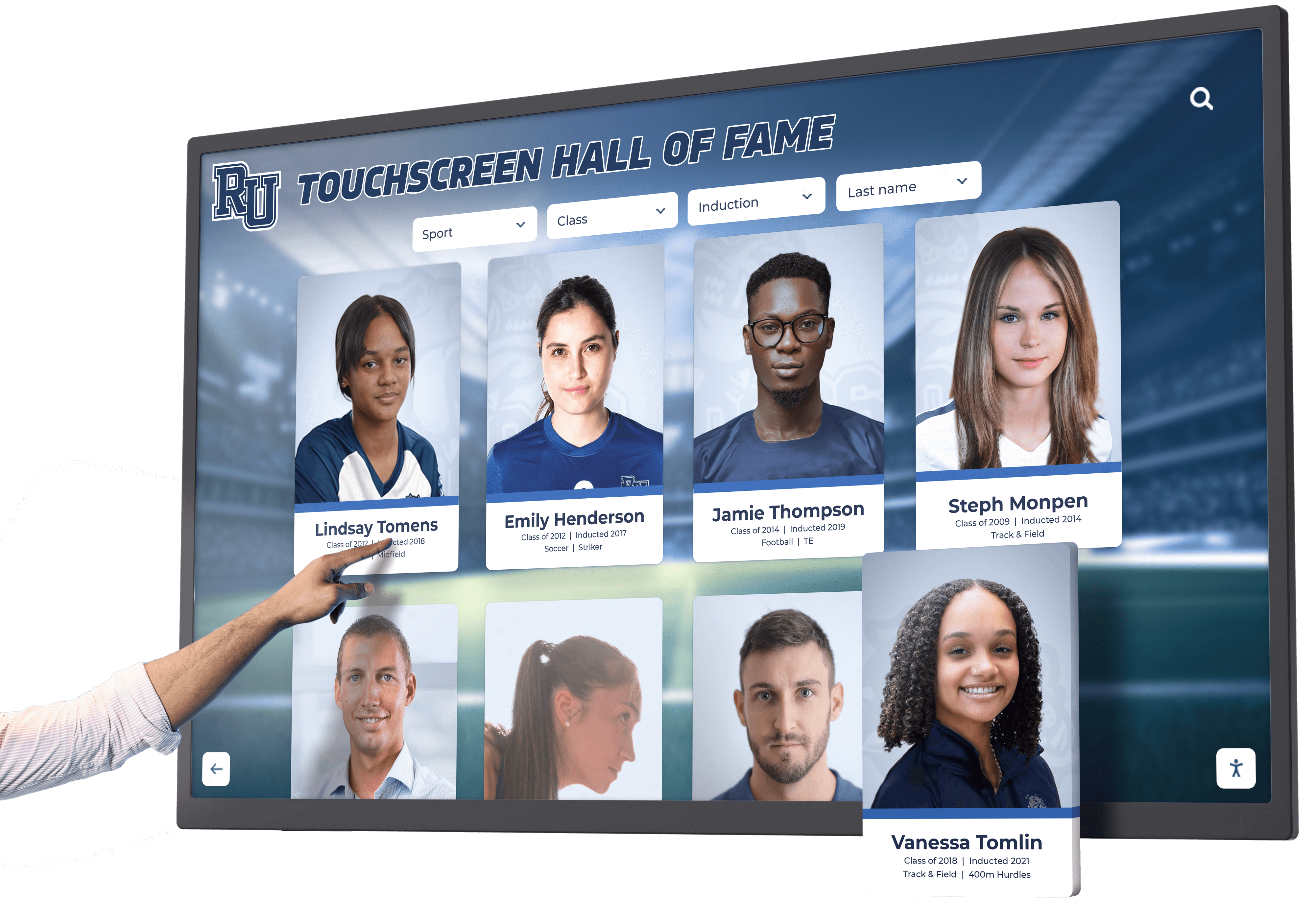
Interactive touchscreen displays enable active exploration of athletic achievements rather than passive viewing
Digital Recognition Method #1: Interactive Touchscreen Recognition Systems
The most comprehensive digital approach to showcasing athletic achievement involves purpose-built interactive touchscreen recognition systems that transform how athletic departments celebrate excellence. These specialized platforms combine hardware and software specifically designed for educational athletic recognition rather than generic digital signage repurposed for sports applications.
How Interactive Touchscreen Recognition Works
Professional athletic recognition systems like those from Rocket Alumni Solutions center on large-format touchscreen displays (typically 55-65 inches for hallway installations or 75+ inches for large spaces) mounted prominently in athletic facilities, main entrances, or hallways where students, families, and visitors naturally gather. These displays run specialized software designed specifically for searchable, interactive recognition rather than simple slideshow presentations.
The user experience prioritizes intuitive discovery. Visitors approach displays showing attractive welcome screens featuring rotating achievement highlights. Touch activates interactive interfaces enabling multiple exploration pathways: search by athlete name to find specific individuals, filter by sport to explore particular athletics, browse chronologically by decade or year, or navigate by achievement type like All-State athletes, 1,000-point scorers, or championship teams.
Each recognition profile combines professional or action photos, comprehensive biographical information, complete statistical records, video highlights when available, achievement descriptions with context, and related connections suggesting similar profiles. This rich multimedia approach tells complete athlete stories rather than reducing careers to basic facts.
Key Features That Make Touchscreen Recognition Effective
The most sophisticated systems include searchable databases with powerful filtering enabling instant discovery, unlimited content capacity accommodating decades of recognition without space constraints, intuitive navigation requiring zero instructions or training, rich multimedia integration supporting photos, videos, statistics, and narratives, cloud-based content management enabling remote updates from any device, web accessibility extending reach beyond physical displays to global audiences, comprehensive analytics revealing engagement patterns and popular content, and professional design tools maintaining visual consistency across hundreds or thousands of profiles.
These capabilities transform recognition from static commemoration into dynamic engagement platforms that serve multiple purposes simultaneously—inspiring current athletes through role model discovery, connecting alumni to institutional legacy, demonstrating program excellence to recruits and families, and building community pride through visible celebration of achievement. Schools implementing interactive touchscreen displays consistently report dramatic increases in community engagement compared to traditional trophy cases.
Implementation Considerations for Athletic Departments
Successful touchscreen recognition requires planning beyond simply purchasing displays. Consider optimal placement locations in high-traffic areas where maximum visibility occurs, appropriate display sizes based on viewing distance and space constraints, network connectivity enabling reliable content updates and management, content development strategies for populating systems with comprehensive historical and current recognition, governance processes determining who maintains content and approves additions, and budget allocation covering hardware, software licensing, installation, and ongoing management. Athletic directors can benefit from comprehensive buying guides for digital recognition displays when planning implementations.
Many athletic departments implement in phases, starting with core displays in primary locations and expanding as resources permit and value becomes demonstrated. This phased approach spreads investment while proving concept effectiveness before comprehensive deployment.
Content Management and Long-Term Sustainability
The true value of interactive touchscreen systems lies not in initial implementation but in sustainable long-term operation that keeps recognition current and comprehensive. The best platforms provide cloud-based content management systems that athletic directors and coaches can access from any internet-connected device without technical expertise. Intuitive interfaces similar to social media platforms enable adding athlete profiles, uploading photos and videos, updating statistics, and publishing recognition in minutes rather than requiring IT support for every change.
Establishing clear processes ensures sustainability: designate specific staff or volunteers responsible for recognition updates, create annual workflows for adding new inductees after season conclusion, develop standards for photo quality and profile comprehensiveness, implement review processes ensuring accuracy before publication, and integrate recognition into existing athletic department operations rather than treating it as separate responsibility.
When management is simple and integrated into existing workflows, recognition stays current. When complex technical processes create barriers, updates get deferred indefinitely and systems become outdated despite initial investment.
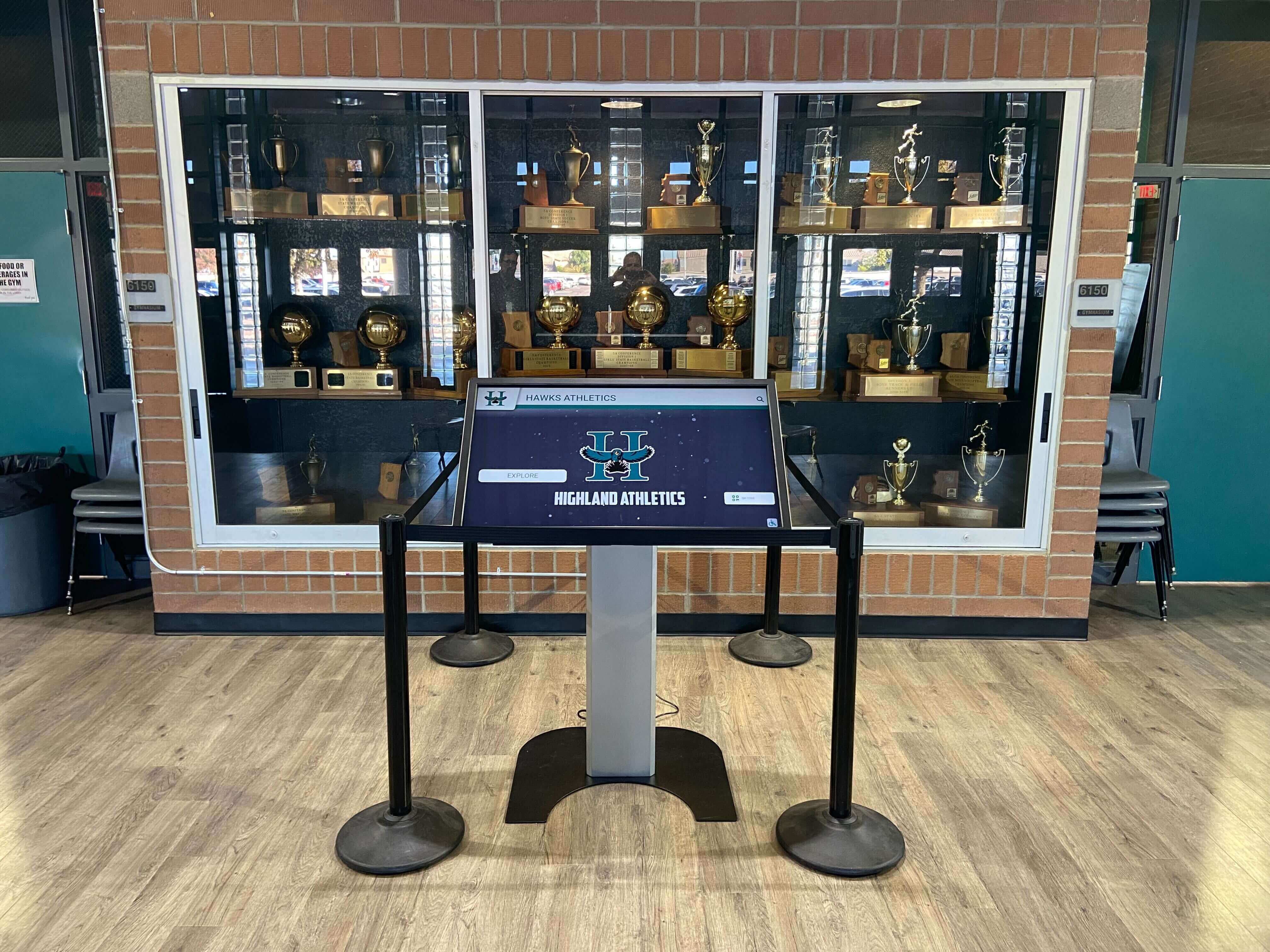
Touchscreen recognition kiosks can coexist with traditional trophy cases while providing expanded capability
Digital Recognition Method #2: Web-Accessible Athlete Profile Databases
While physical touchscreen displays create compelling on-site experiences, web-accessible athlete profile databases extend recognition reach exponentially by enabling access from anywhere globally. This digital approach proves particularly valuable for engaging alumni, connecting families at distance, supporting recruitment, and demonstrating program excellence to broader audiences.
Building Comprehensive Online Recognition Portals
Web-accessible recognition systems function as searchable databases accessible through standard web browsers on computers, tablets, and smartphones. These platforms mirror touchscreen display functionality while optimizing for varied screen sizes and interaction methods. Visitors can browse by sport, search by name, filter by achievement type, or explore chronologically just as they would on physical displays.
The most effective online recognition portals integrate with athletic department websites rather than existing as separate disconnected resources. Embedded directly in athletics pages, these databases become natural extensions of web presence that visitors discover when researching programs, exploring history, or seeking specific information about athletes and achievements. Many institutions find that online awards displays complement physical recognition while dramatically extending reach to dispersed communities.
Essential Features for Effective Online Recognition
Professional web-based recognition systems include responsive design ensuring optimal display on all device types from large desktop monitors to small smartphone screens, powerful search capabilities enabling instant discovery of specific athletes or teams, advanced filtering allowing visitors to narrow results by multiple criteria simultaneously, rich media support displaying high-resolution photos and embedded videos effectively, social sharing features enabling visitors to share specific profiles through email or social platforms, related content recommendations connecting visitors to additional relevant profiles, and analytics tracking revealing engagement patterns, popular content, and visitor behavior.
These features transform online recognition from simple information display into engaging discovery platforms that visitors actively explore. Analytics from schools implementing comprehensive web-accessible recognition consistently show session durations of 8-12 minutes—dramatically longer than typical website engagement—indicating genuine interest and meaningful exploration rather than cursory glancing.
Integration with Athletic Department Digital Ecosystem
The most valuable online recognition integrates with broader athletic department digital presence rather than functioning in isolation. Effective integration strategies include prominent navigation links from main athletics pages to recognition portals, athlete profile links from team rosters connecting current players to alumni from their sports, embedded recognition widgets showcasing recent inductees or notable achievements on homepage areas, social media content generation pulling recognition profiles for automated sharing, and email newsletter integration featuring monthly or seasonal recognition highlights.
This integrated approach ensures recognition reaches maximum audiences by meeting people where they already engage with athletic department content rather than requiring separate destination visits to specialized recognition sites few discover organically.
Mobile Optimization and QR Code Access
With mobile devices accounting for 60-70 percent of web traffic in education contexts, mobile optimization proves essential for effective online recognition. Beyond responsive design, consider mobile-specific enhancements like progressive web app functionality enabling home screen installation and offline access, touch-friendly interface elements optimized for finger interaction rather than mouse cursors, streamlined navigation reducing complexity on smaller screens, and optimized media loading preventing excessive data usage on cellular connections.
Many athletic departments supplement web access with QR codes displayed prominently near physical recognition areas. Visitors can scan codes with smartphones to instantly access web versions of recognition, enabling extended exploration beyond what physical displays provide while facilitating easy sharing with family and friends who aren’t present.
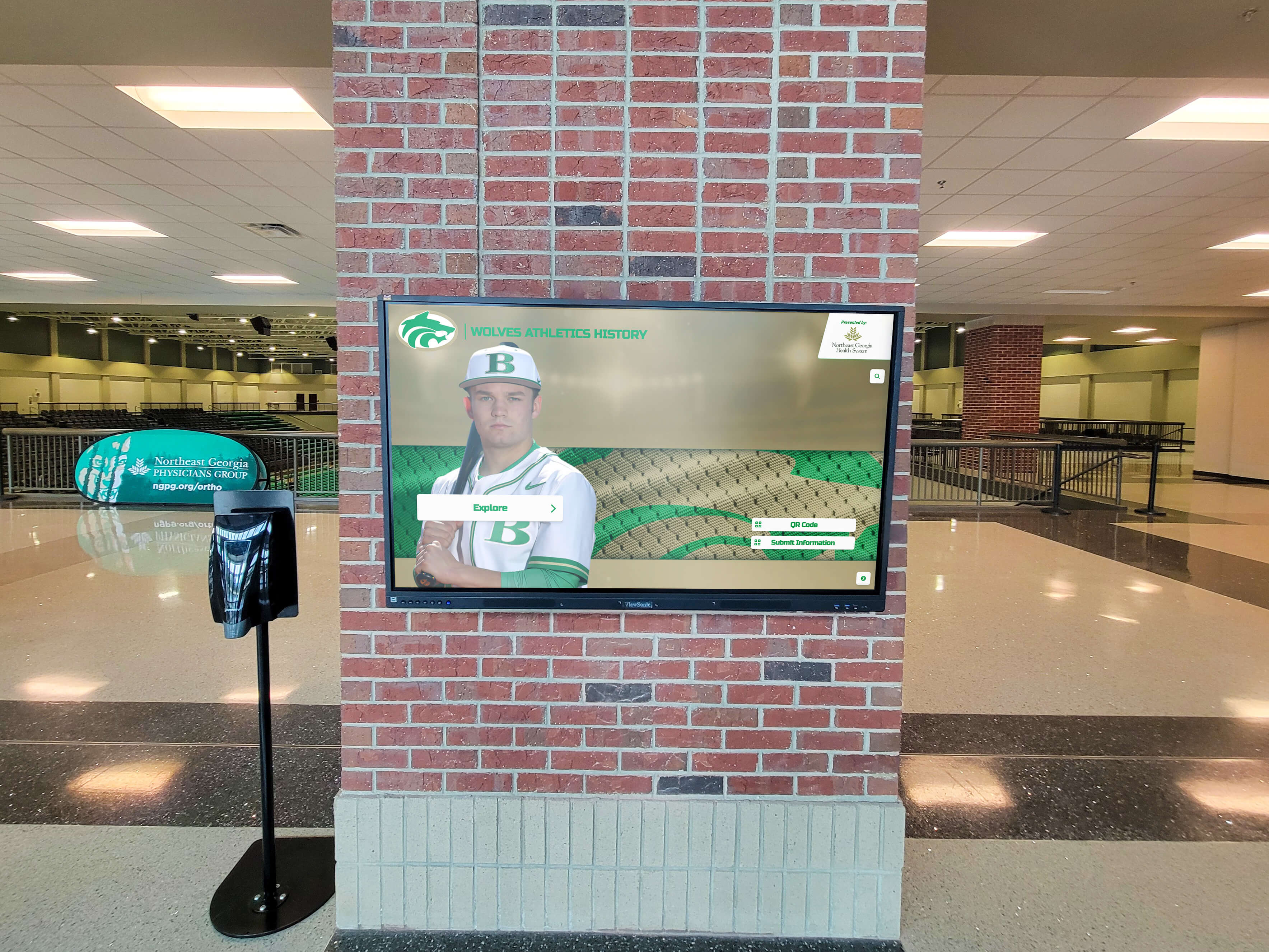
Strategic display placement in athletic facilities creates natural engagement opportunities for students and visitors
Digital Recognition Method #3: Social Media Recognition Campaigns
While touchscreen systems and web portals serve long-term comprehensive recognition, social media platforms provide complementary channels for celebrating athletic achievement through formats optimized for digital sharing and immediate visibility. Strategic social media recognition extends reach to audiences who might never visit athletic facilities or browse recognition databases while creating ongoing engagement throughout athletic seasons.
Platform-Specific Recognition Strategies
Different social media platforms serve distinct recognition purposes based on their unique characteristics and user behaviors. Instagram works well for visual athlete highlights featuring action photos, achievement graphics, and short video clips celebrating individual and team success. Facebook enables longer-form storytelling with detailed achievement descriptions, photo albums documenting seasons or careers, and community discussion through comments and shares. Twitter provides real-time recognition celebrating achievements immediately after they occur during games or competitions. TikTok reaches younger audiences through creative video content highlighting athletic excellence in entertaining formats. LinkedIn serves alumni and college-bound athletes through professional achievement recognition and career progression updates.
The most effective athletic departments develop platform-specific content strategies rather than simply cross-posting identical content everywhere. Each platform receives content optimized for its format, audience expectations, and discovery algorithms while maintaining consistent branding and recognition standards across channels.
Creating Engaging Athletic Recognition Content
Social media recognition succeeds when content balances professional quality with authentic personality. Effective content types include individual athlete spotlights featuring photos, achievements, quotes, and future plans, team celebration posts highlighting championship victories, milestone achievements, or season accomplishments, record-breaking announcements celebrating athletes who shatter program or school records, All-State and honor team recognition acknowledging selection to prestigious athletic honors, college commitment announcements celebrating athletes continuing their athletic careers, throwback features highlighting historical achievements and notable alumni, and game-day recognition celebrating outstanding performances in recent competitions.
High-performing athletic recognition content typically combines strong visual elements like professional photos or short videos, concise achievement descriptions emphasizing significance and context, athlete quotes or coach testimonials adding personal dimensions, relevant hashtags increasing discoverability, tag mentions connecting athletes, families, and teams, and clear calls-to-action encouraging sharing, commenting, or visiting full recognition profiles. Schools can learn from successful examples of Division I athletics digital recognition systems that excel at social media integration.
Measuring Social Media Recognition Impact
Unlike physical displays with difficult-to-measure impact, social media provides comprehensive analytics revealing recognition effectiveness. Key metrics include reach showing how many people see recognition content, engagement measuring likes, comments, shares, and saves indicating content resonance, profile visits tracking how many people click through to athlete profiles or full recognition databases, follower growth demonstrating whether recognition content attracts new community members, and sentiment analysis revealing whether comments express positive reactions and meaningful appreciation.
These metrics enable continuous improvement by revealing which recognition types generate strongest engagement, what content formats audiences prefer, when posting timing maximizes visibility, and which athletes or achievements resonate most strongly with your community. Data-driven recognition strategies consistently outperform intuition-based approaches by aligning content with demonstrated audience preferences.
Building Consistent Recognition Rhythms
The most successful social media recognition establishes consistent rhythms creating anticipation and regular visibility. Consider implementing structured recognition programs like “All-State Athlete Mondays” featuring weekly spotlights on athletes earning prestigious honors, “Throwback Thursdays” highlighting historical achievements and notable alumni from program history, “Weekend Warrior” recognition celebrating outstanding performances from recent competitions, monthly “Athlete of the Month” features providing comprehensive profiles of selected athletes, and seasonal “Senior Spotlight” series recognizing graduating athletes’ complete careers and future plans.
These consistent programs create recognition frameworks ensuring no athlete or achievement gets overlooked while building audience expectations that drive regular engagement with athletic department social media. Followers learn to anticipate recognition content at predictable times, increasing visibility and impact.
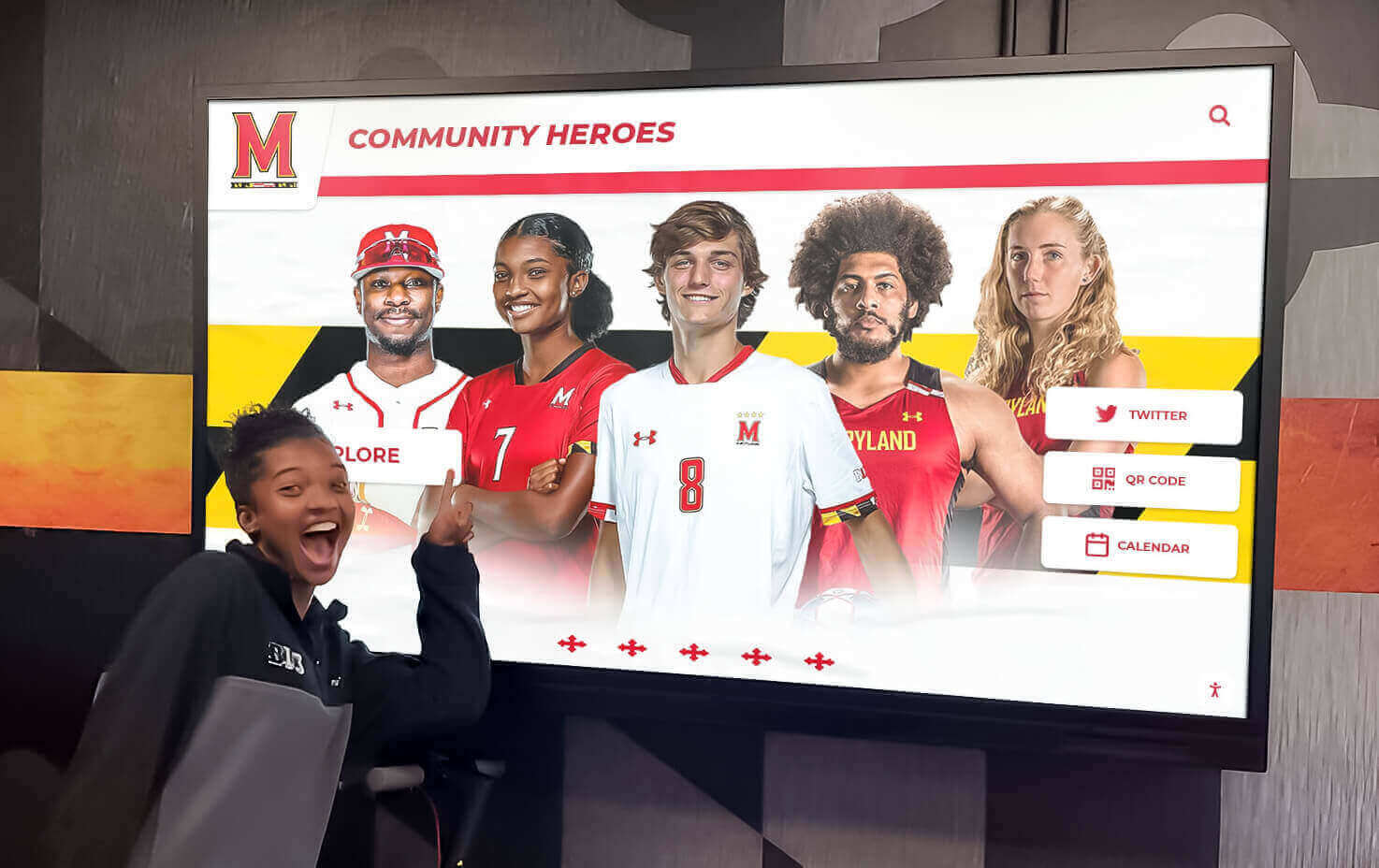
Recognition displays that celebrate local athletes create community pride and program visibility
Digital Recognition Method #4: Email and Newsletter Recognition Features
Email remains one of the most effective digital communication channels with open rates consistently exceeding social media reach, making newsletters and email campaigns valuable vehicles for athletic achievement recognition. This approach proves particularly effective for reaching parents, alumni, boosters, and community members who may not actively follow social media but regularly engage with email communications.
Designing Recognition-Focused Email Content
Athletic department newsletters should prominently feature achievement recognition rather than treating it as secondary content. Effective email recognition formats include dedicated “Athlete Achievement Roundup” sections highlighting multiple recent accomplishments in digestible formats, featured athlete profiles providing comprehensive spotlights on selected individuals, team championship announcements celebrating recent competition success with photos and quotes, hall of fame induction notifications introducing new inductees with links to complete profiles, historical anniversary features marking significant program milestones with retrospective recognition, and alumni success updates reconnecting former athletes with current community.
The most engaging email recognition balances visual appeal with concise text, uses compelling subject lines that specifically mention recognition content, includes direct links to complete profiles on recognition databases, features social sharing buttons enabling easy forwarding, and maintains mobile-responsive design ensuring readability on all devices. Effective recognition programs often coordinate email campaigns with athletic team GPA leaderboards and academic achievement recognition alongside athletic honors.
Segmenting Audiences for Targeted Recognition
Email platforms enable audience segmentation ensuring recognition reaches people most interested in specific content. Consider segmenting by sport-specific lists reaching families and supporters of particular athletics, graduation year cohorts connecting alumni to peers from their era, achievement type groups targeting audiences interested in specific recognition categories, and geographic segments organizing supporters by location for potential local event promotion.
Targeted recognition emails generate significantly higher engagement than mass communications because content feels personally relevant rather than generic. Parents receiving recognition emails specifically about their children’s sports typically show open rates 40-60 percent higher than unsegmented athletic department communications.
Leveraging Email for Hall of Fame and Special Recognition
Major recognition events like hall of fame inductions, retired number ceremonies, or lifetime achievement awards warrant dedicated email campaigns building anticipation and celebrating significance. Multi-email sequences prove effective: announcement emails introducing upcoming recognition events and inductees, profile emails providing detailed biographical information about honorees, invitation emails encouraging attendance at ceremony events, ceremony recaps celebrating successful events with photos and video, and follow-up emails thanking attendees and sharing post-event content.
These campaigns elevate major recognition beyond single mentions, creating sustained visibility that honors significance while building community engagement around celebration events. The extended timeline allows multiple touchpoints ensuring broad awareness even among people who cannot attend in-person ceremonies.
Measuring Email Recognition Effectiveness
Email platforms provide detailed analytics enabling recognition impact measurement. Key metrics include open rates indicating subject line effectiveness and sender reputation, click-through rates showing how many recipients engage with recognition content beyond initial email, link clicks revealing which specific athletes, profiles, or content types generate greatest interest, forwarding and sharing rates measuring whether recipients consider content valuable enough to share with others, and unsubscribe rates indicating whether recognition frequency or content quality needs adjustment.
These insights enable continuous improvement by revealing recognition formats that resonate with audiences, content types generating strongest engagement, and optimal frequency balancing visibility with avoiding fatigue.
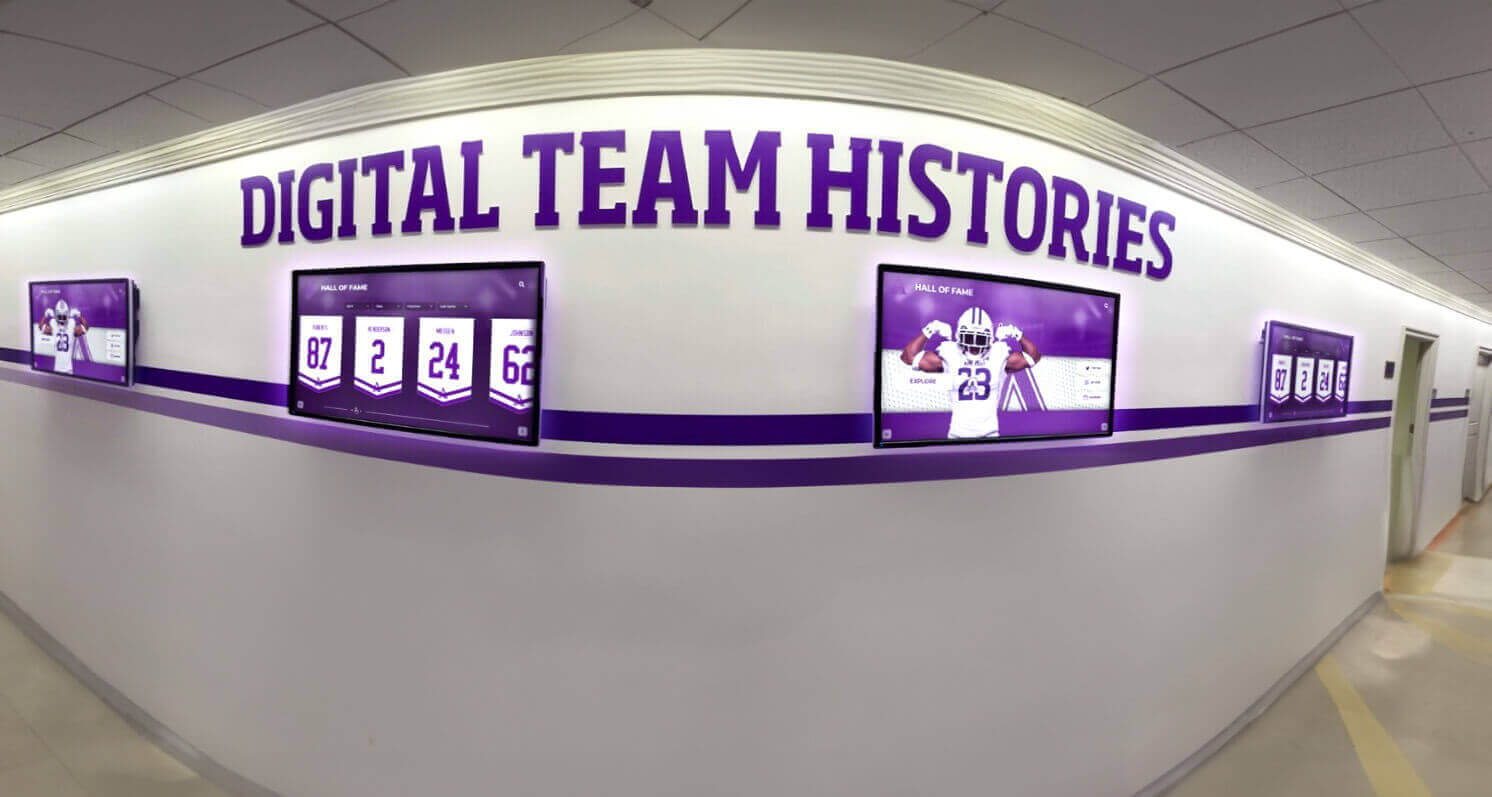
Coordinated digital displays throughout facilities create comprehensive recognition environments
Digital Recognition Method #5: Mobile Apps and Push Notification Recognition
Mobile applications represent the most sophisticated digital recognition approach, providing dedicated platforms optimized specifically for athletic achievement exploration while enabling push notifications that bring recognition directly to users rather than requiring them to seek content actively. While mobile apps require greater investment than other digital methods, they deliver unmatched capability for sustained engagement and comprehensive recognition delivery.
Native vs. Progressive Web Apps for Athletic Recognition
Athletic departments considering app-based recognition face a fundamental choice between native mobile apps requiring installation from app stores versus progressive web apps (PWAs) functioning through web browsers while offering app-like experiences. Native apps provide superior performance, deeper device integration, and higher perceived value but require ongoing development across iOS and Android platforms plus app store approval processes. PWAs offer easier implementation, automatic updates without user action, and cross-platform compatibility but lack some advanced features and discoverability advantages of app store presence.
For most athletic departments, progressive web apps represent optimal balance—providing app-like experiences without complexity and expense of native development while enabling easy access through simple URL visits that can be saved to home screens for app-equivalent convenience.
Essential Features for Athletic Recognition Apps
Effective mobile recognition apps or PWAs include comprehensive searchable athlete databases with advanced filtering, personalized content feeds showing recognition relevant to user interests, push notifications alerting users to new recognition, achievements, or related content, offline access enabling content exploration without internet connectivity, social features allowing commenting, sharing, and engagement with recognition, media galleries organizing photos and videos by sport, season, or athlete, and integration with athletic department calendars, schedules, and other information creating comprehensive athletic experience platforms.
The most successful athletic recognition apps extend beyond simple recognition display to become comprehensive hubs for all athletic department engagement—combining recognition with schedules, rosters, live game updates, ticket information, and community features that drive regular usage establishing recognition as natural component of athletic engagement rather than separate destination users rarely visit.
Leveraging Push Notifications for Recognition Awareness
Push notifications provide powerful mechanisms for ensuring recognition reaches audiences at optimal moments. Effective notification strategies include achievement announcements sent immediately after significant accomplishments occur during competitions, new inductee alerts when hall of fame selections are announced or profiles published, game-day recognition highlighting featured athlete backstories before competitions, anniversary notifications celebrating historical achievements on significant dates, and personalized recognition updates tailored to users’ indicated sport or athlete interests.
The key to effective push notification recognition lies in balancing visibility with avoiding notification fatigue. Limit recognition notifications to genuinely significant achievements rather than overwhelming users with constant alerts they’ll eventually disable. Quality and relevance matter far more than quantity.
Building Engagement Through Gamification
Mobile platforms enable gamification elements that can increase recognition engagement, particularly among younger audiences. Consider implementing achievement systems where users earn badges for exploring recognition profiles, scavenger hunt features encouraging discovery of specific historical athletes or achievements, trivia competitions testing knowledge of program history and records, leaderboards showing which users have explored most recognition content, and collection systems enabling users to bookmark favorite athletes or build custom recognition collections.
While gamification should never overshadow genuine recognition purposes, thoughtfully implemented engagement mechanics can make discovery more rewarding while educating students about athletic program heritage they might otherwise never explore.
Professional athletic facilities increasingly feature interactive recognition systems that engage visitors
Best Practices for Digital Athletic Recognition Content
Regardless of which digital recognition methods you implement, content quality fundamentally determines effectiveness. Even the most sophisticated technology platform fails to engage audiences when recognition content proves superficial, inaccurate, or uninspiring. Athletic departments should invest as much effort in content development as in technology selection to ensure digital recognition achieves its full potential.
Writing Compelling Athlete Recognition Profiles
Effective athlete profiles balance factual achievement documentation with storytelling that reveals personality, growth, and impact beyond statistics. Comprehensive profiles typically include full name with proper spelling and any relevant nicknames, sport and position with years of participation, specific achievements and honors with context explaining significance, statistical highlights showing career progression and notable performances, coach quotes or testimonials about athlete impact, memorable moments or defining characteristics that made athlete special, challenges overcome or character growth demonstrated through athletics, team contributions beyond individual statistics, post-graduation plans or current life updates for alumni, and ideally, athlete reflections on what participation meant personally.
The most compelling profiles move beyond reciting achievements to reveal the person behind accomplishments. Include anecdotes illustrating character, describe relationships with teammates and coaches, explain what motivated excellence, acknowledge setbacks overcome, and connect athletic participation to broader life development. These human dimensions transform recognition from impersonal documentation into meaningful celebration that athletes and families deeply value.
Capturing and Curating High-Quality Visual Content
Digital recognition depends heavily on strong visual content, yet many athletic departments struggle with photo quality and availability. Establish systematic processes for gathering visual content including designating specific people responsible for photographing competitions, practices, and recognition ceremonies; collecting images from parents, professional photographers, and local media covering athletics; establishing quality standards regarding resolution, composition, and appropriateness; organizing photo libraries with clear naming and metadata enabling easy retrieval; and obtaining necessary permissions for photo usage in public recognition.
Professional or high-quality amateur action photos showing athletes in motion prove most compelling for recognition. Static formal portraits work adequately but lack the energy and excitement that action shots convey. When possible, include multiple photos per athlete showing variety—action shots, team photos, individual portraits, and candid moments capturing personality.
Maintaining Accuracy and Credibility
Recognition credibility depends entirely on accuracy. Errors undermine trust while dishonoring those being recognized. Implement verification processes ensuring name spellings are confirmed with athletes or families, statistics are checked against official records, achievement descriptions accurately represent what occurred, photo captions correctly identify individuals shown, and quotes are verified with attributed sources before publication.
When historical recognition involves incomplete records or uncertain details, acknowledge limitations honestly rather than presenting speculation as fact. Phrases like “records indicate,” “according to available information,” or “believed to be” communicate appropriate uncertainty while avoiding definitive claims that might prove inaccurate.
Consider implementing multi-person review where content creators differ from final approvers. Fresh eyes catch errors that creators overlook after extensive work with materials. This review step prevents embarrassing mistakes that would require correction after publication.
Organizing Recognition for Intuitive Discovery
How you organize digital recognition significantly impacts whether users can find content effectively. The best systems enable multiple discovery pathways accommodating different user goals and preferences: chronological organization by year or decade serves users exploring specific eras, sport-specific grouping enables focus on particular athletics, achievement-type categorization allows browsing of specific recognition categories like All-State athletes or 1,000-point scorers, alphabetical listing by last name supports direct searches for known individuals, and team-based organization connects individual athletes to collective achievements.
Consider creating curated collections highlighting thematic connections—multi-sport athletes, family legacy athletes, record holders across different eras, or athletes who continued competing collegially. These collections help users discover connections and patterns they might miss through standard organizational structures. Programs recognizing college commitment announcements alongside historical achievements create powerful narratives about program development pipelines.
Keeping Recognition Current and Comprehensive
Digital recognition platforms eliminate space constraints enabling truly comprehensive recognition across all sports, achievement types, and historical periods. Resist temptation to selectively recognize only major achievements or popular sports—comprehensive inclusion demonstrates that all athletic excellence matters equally regardless of profile or tradition.
Establish regular update cycles ensuring new recognition appears promptly after achievements occur. Immediate recognition while excitement remains high maximizes motivational impact for current athletes while demonstrating that your athletic department values timely acknowledgment. Quarterly or annual update batches diminish recognition power by separating achievement from acknowledgment by months or years.
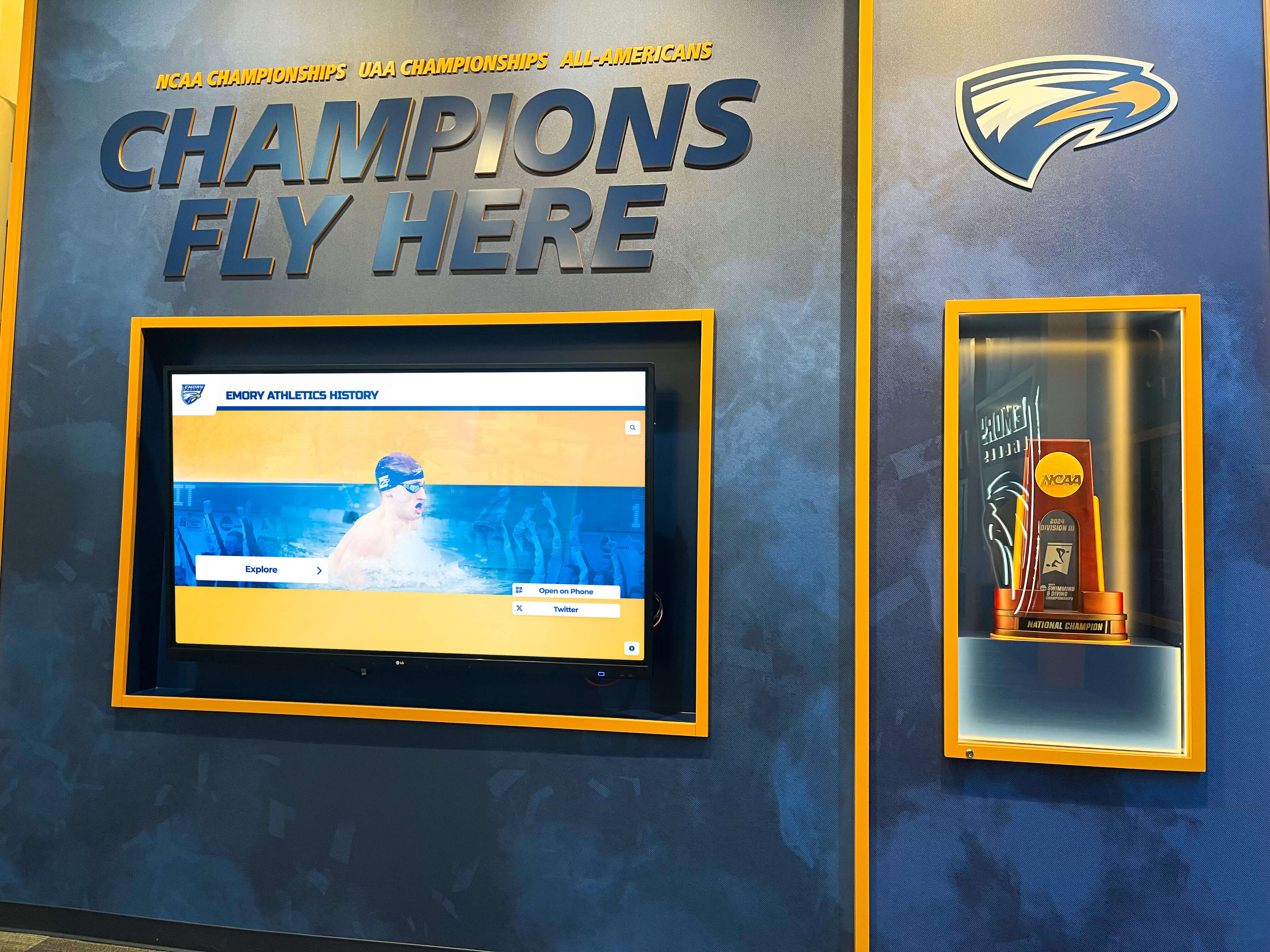
Professional championship recognition displays inspire excellence while documenting program success
Implementing Hybrid Recognition Approaches
Rather than viewing digital and traditional recognition as mutually exclusive alternatives, many athletic departments find that hybrid approaches combining physical and digital elements create optimal results. This strategy preserves traditional elements that hold symbolic importance while adding digital capabilities that expand reach, engagement, and storytelling beyond what physical displays alone can achieve.
Integrating Digital Displays with Existing Trophy Cases
Digital touchscreens can complement rather than replace trophy cases by providing context and storytelling that physical trophies cannot convey. Consider placing interactive displays adjacent to trophy cases enabling visitors to explore detailed information about championships, teams, and individuals associated with visible trophies. QR codes attached to trophy case displays can link to web-based profiles providing comprehensive information about specific achievements.
This integration creates layered experiences where casual visitors enjoy traditional trophy case displays while interested individuals access deeper information through digital enhancements. The physical trophies provide tangible gravitas while digital content delivers comprehensiveness and context.
Creating Digital Archives of Physical Recognition
Many athletic departments possess decades of physical recognition materials—plaques, certificates, newspaper clippings, programs, and memorabilia—stored in boxes where no one sees them. Systematic digitization preserves this content while making it accessible through digital recognition platforms.
Develop digitization projects involving scanning or photographing physical materials, capturing metadata about dates, individuals, and context, organizing digital archives for easy retrieval, and publishing selected materials through recognition platforms. This work creates invaluable historical content while preventing physical deterioration of irreplaceable materials.
Consider involving student groups, booster organizations, or alumni volunteers in digitization projects. These collaborative efforts distribute work while creating engagement opportunities as participants reconnect with athletic program history.
Balancing Digital Innovation with Traditional Ceremonies
Digital recognition enhances but should not replace meaningful in-person recognition ceremonies that hold deep cultural significance. Hall of fame induction ceremonies, jersey retirement events, and senior recognition nights create irreplaceable communal experiences that digital platforms cannot replicate.
Instead, use digital recognition to extend ceremony impact before, during, and after events. Pre-event digital content builds anticipation and educates attendees about honorees. During ceremonies, digital displays can showcase honoree profiles and career highlights. Post-event, comprehensive digital content preserves ceremony moments while extending reach to those who could not attend in person.
This approach positions digital recognition as ceremony amplifier rather than replacement, honoring traditional elements while adding modern capability that expands impact and preserves significance permanently. Schools planning major recognition events can explore strategies for virtual hall of fame induction ceremonies that complement in-person celebrations.
Maintaining Physical Recognition for Symbolic Value
Certain traditional recognition elements hold symbolic value beyond information delivery. Championship banners hanging in gymnasiums, retired jerseys displayed on arena walls, or outdoor monuments commemorating significant achievements serve important symbolic functions that digital displays may not fully replicate.
Athletic departments implementing digital recognition need not eliminate these traditional elements. Instead, consider which physical recognition holds genuine symbolic importance versus what exists primarily because no better alternative existed historically. Preserve symbolic elements while migrating comprehensive recognition to digital platforms better suited for storytelling and engagement.
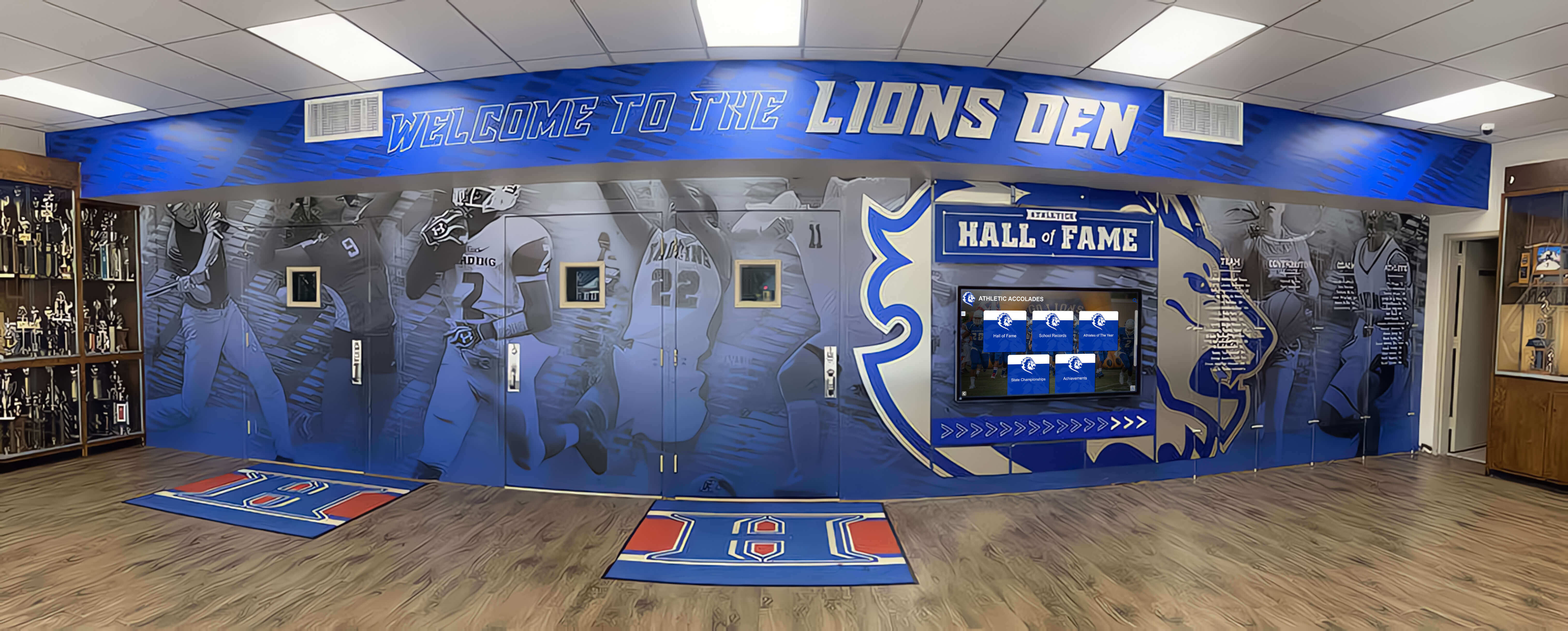
Successful athletic recognition often combines traditional physical elements with modern digital enhancement
Measuring Success and ROI of Digital Athletic Recognition
Athletic departments implementing digital recognition should establish clear success metrics enabling objective evaluation of impact and value. Unlike physical trophy cases with nearly impossible-to-measure effectiveness, digital platforms provide comprehensive analytics revealing engagement patterns, audience reach, and community impact.
Quantitative Metrics for Digital Recognition Effectiveness
Key performance indicators for digital recognition include total interactions measuring how many times users engage with recognition content, session duration indicating how long users spend exploring recognition rather than merely glancing, unique users tracking how many distinct individuals access recognition, return visitor rates showing whether recognition drives sustained rather than one-time engagement, search queries revealing what users seek and how they discover content, most viewed content identifying which athletes, achievements, or content types resonate strongest, geographic reach showing where recognition audiences live locally, regionally, nationally, or internationally, device types revealing whether users primarily access recognition through desktop, tablet, or mobile, and social sharing metrics measuring how often users share recognition through social platforms or email.
These quantitative metrics reveal patterns impossible to observe with physical displays. You can identify which sports generate strongest engagement, what time periods users find most interesting, how recognition usage patterns change seasonally, and whether recognition reaches beyond immediate athletic community to broader audiences.
Qualitative Indicators of Recognition Impact
Beyond analytics, qualitative feedback provides important context about recognition meaning and value. Gather qualitative insights through user surveys assessing satisfaction with recognition comprehensiveness and quality, athlete and family testimonials sharing personal reactions to recognition, recruitment feedback from prospective athletes about recognition influence on school perception, alumni engagement measures tracking whether recognition strengthens institutional connection, and community comments through social media or direct communication expressing appreciation or suggestions.
The most meaningful recognition impact often manifests in stories rather than statistics—alumni reconnecting with programs after discovering themselves in recognition displays, current athletes feeling motivated by role model examples, families expressing gratitude for meaningful recognition of achievement, or community members developing deeper appreciation for athletic program excellence.
Comparing Digital Recognition ROI to Traditional Methods
Digital recognition requires meaningful upfront and ongoing investment, making return-on-investment analysis important for justifying expense. Compare digital recognition costs to traditional alternatives by analyzing plaque fabrication and installation expenses over equivalent periods, trophy case maintenance and expansion costs, staff time required for physical recognition management versus digital updates, visibility and reach comparing physical display audiences to digital platform users, and longevity considering useful life of physical recognition versus digital platform scalability.
Many athletic departments discover that comprehensive digital recognition costs less over 5-7 year periods than equivalent traditional recognition while delivering dramatically greater reach, engagement, and flexibility. Physical recognition requires ongoing per-item expenses as new achievements occur, while digital recognition scales efficiently with minimal marginal cost for additional content.
Using Data to Continuously Improve Recognition
The greatest value of digital recognition analytics lies in enabling continuous improvement based on actual usage patterns rather than assumptions. Regular analysis of recognition metrics reveals opportunities for enhancement: low engagement with specific content types suggests need for improved storytelling or visual quality, high search volume for unavailable content indicates recognition gaps worth addressing, limited return visitor rates might signal need for regular content updates maintaining freshness, geographic concentration of users could suggest opportunities for targeted outreach to underrepresented areas, and device type patterns inform optimization priorities for specific platforms.
Establish quarterly or annual recognition reviews analyzing metrics, gathering qualitative feedback, identifying improvement opportunities, and implementing enhancements based on data-informed insights. This continuous improvement approach ensures recognition remains effective and valued rather than becoming stagnant after initial implementation.
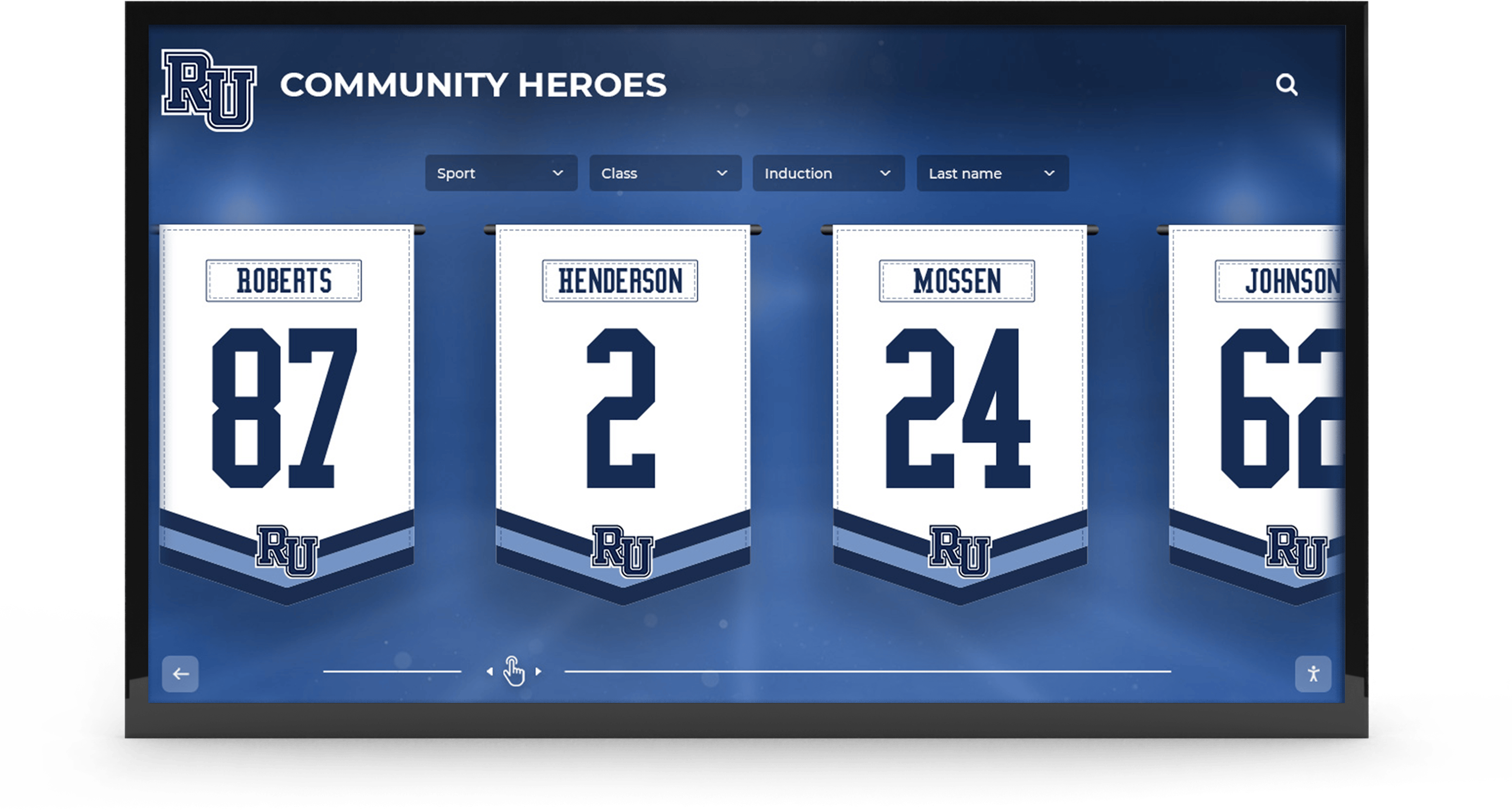
Digital recognition that celebrates community achievement builds program pride and local support
Common Challenges and Solutions for Digital Athletic Recognition
Athletic departments implementing digital recognition commonly encounter similar challenges that can undermine effectiveness if not addressed proactively. Understanding potential obstacles and proven solutions helps ensure successful long-term recognition programs.
Challenge: Limited Historical Content and Documentation
Many athletic departments lack comprehensive historical records documenting past achievements. Older programs often had minimal systematic documentation, photos were never collected centrally, and institutional memory resides with long-time community members whose recollections may be incomplete.
Solutions: Accept that perfect historical comprehensiveness may be unattainable and implement recognition with available content, committing to ongoing enhancement as additional information surfaces. Include disclaimers acknowledging incomplete historical coverage while inviting community submissions. Frame historical content gathering as ongoing community projects involving alumni, families, and boosters who can contribute personal photos, newspaper clippings, programs, and memories. Prioritize recent recognition where complete information exists while gradually building historical depth through continued research.
Challenge: Staff Capacity for Content Development
Creating compelling recognition content requires time for writing profiles, gathering photos, conducting interviews, and ensuring accuracy. Athletic directors and coaches already managing demanding responsibilities often lack capacity for substantial additional content development work.
Solutions: Distribute content work among multiple people responsible for specific sports or recognition categories. Involve student volunteers, booster organizations, or parent groups in content development as service opportunities. Consider hiring part-time assistance specifically for initial content development. Implement in phases starting with limited content that expands gradually as capacity permits rather than delaying indefinitely while pursuing comprehensive completion. Leverage existing content from programs, rosters, and press releases rather than creating everything from scratch.
Challenge: Technology Adoption and User Comfort
Some community members, particularly older alumni less comfortable with digital technology, may initially resist touchscreen recognition or prefer traditional static displays. Comments suggesting “we’re wasting money on unnecessary technology” can surface from those viewing digital recognition skeptically.
Solutions: Acknowledge legitimate perspectives while helping skeptics understand benefits through hands-on experiences. Emphasize how digital systems preserve rather than replace tradition by making historical recognition permanently accessible. Provide patient assistance helping less tech-comfortable individuals navigate displays successfully. Create specific content likely to engage skeptics—comprehensive historical recognition from eras they remember personally, recognition honoring individuals they know, or organizational history they witnessed. Include traditional physical elements alongside digital enhancements rather than forcing complete replacement.
Challenge: Maintaining Long-Term Content Currency
Initial implementation often generates energy ensuring displays launch with quality content, but sustaining updates over years as recognition becomes routine proves difficult. Recognition gradually becomes outdated when new achievements go unrecognized because maintenance falls through organizational cracks.
Solutions: Establish clear processes assigning specific people with content maintenance responsibility. Create annual recognition calendars identifying when updates should occur. Integrate content updates into program conclusion activities when achievements are fresh. Build recognition review into regular staff meetings. Make recognition maintenance part of formal position descriptions rather than treating it as extra responsibility people might address if time permits. Celebrate content milestones publicly to maintain awareness and engagement.
Challenge: Budget Constraints and Financial Limitations
Comprehensive digital recognition requires meaningful investment that some athletic departments struggle to afford from operating budgets. Cost concerns sometimes lead to indefinite deferral while waiting for better financial circumstances.
Solutions: Implement in phases starting with core displays and expanding as resources permit. Seek designated gifts from interested boosters, alumni, or families for specific recognition purposes. Apply for grants from foundations supporting youth development or education. Explore sponsor recognition opportunities within displays creating funding sources. Coordinate with broader facility improvement projects or capital campaigns. Consider financing options spreading costs over multiple years. Target fundraising specifically for recognition projects often attracts donor interest more readily than general operating appeals.
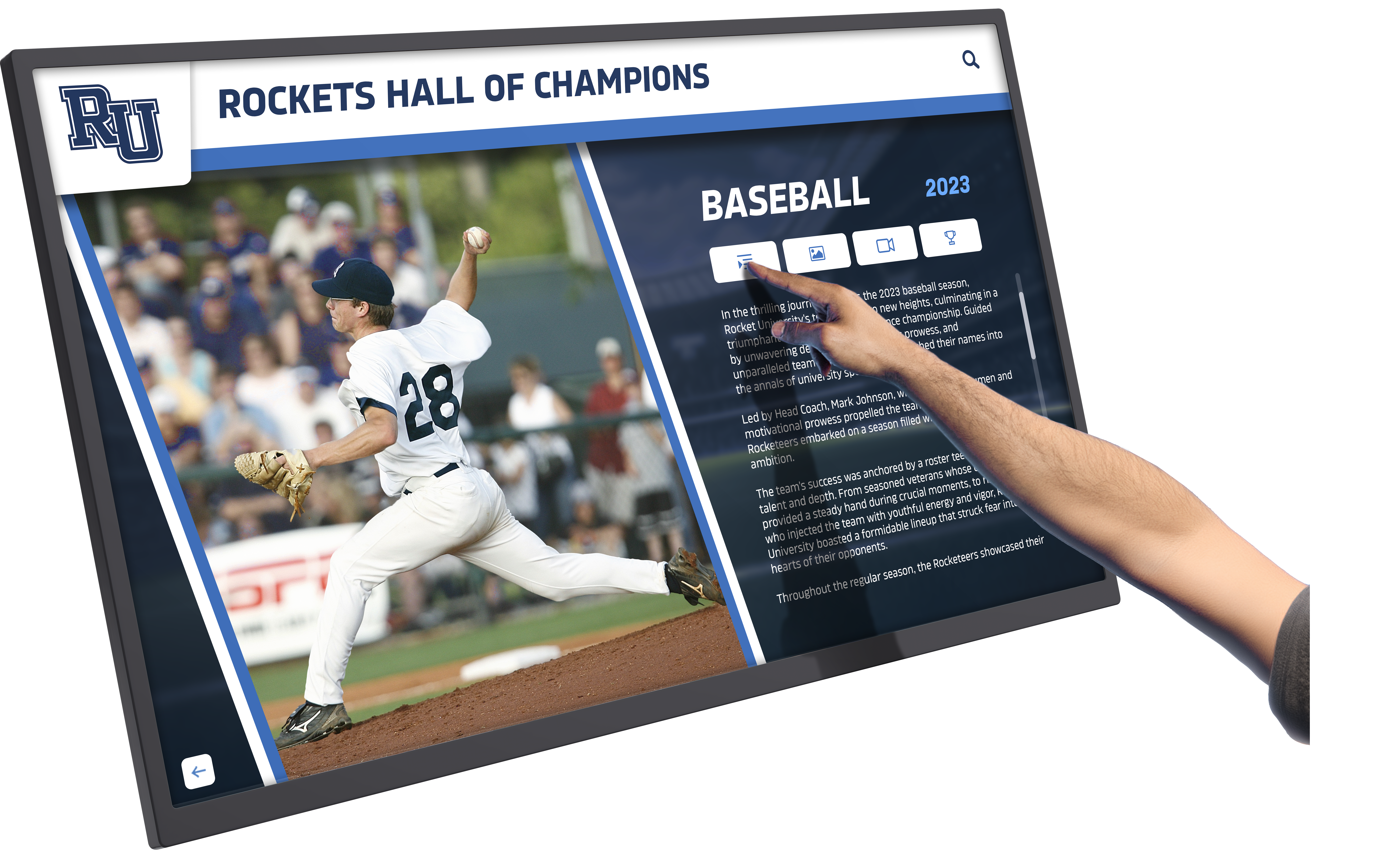
Well-designed interactive displays make athletic achievement exploration intuitive and engaging
Future Trends in Digital Athletic Recognition
Digital athletic recognition continues evolving as technology advances create new capabilities. Athletic departments implementing recognition systems today should consider emerging trends that may influence future enhancements while ensuring current investments remain relevant as capabilities develop.
Artificial Intelligence and Automated Content Enhancement
AI tools increasingly enable automated content enhancement reducing manual work required for comprehensive recognition. Emerging AI capabilities include automated photo enhancement improving historical image quality, intelligent content recommendations suggesting related profiles based on browsing patterns, natural language generation creating draft profile narratives from structured data, automated tagging and categorization organizing content without manual classification, and voice interaction enabling hands-free navigation and search.
While AI enhancements promise efficiency, athletic departments should ensure human oversight remains central. AI-generated content may lack personal touches and contextual understanding that make recognition meaningful. Use AI as productivity tool rather than replacement for human judgment and storytelling.
Virtual and Augmented Reality Recognition Experiences
As VR and AR technologies mature and become more accessible, recognition applications will expand beyond traditional displays. Future capabilities might include virtual tours of historical athletic facilities or championship moments, augmented reality overlays showing additional content when viewing physical trophies or displays through smartphones, immersive 360-degree experiences of significant games or ceremonies, and virtual reality alumni reunions in digital recreations of athletic facilities.
While these technologies remain somewhat futuristic currently, athletic departments should consider whether recognition platforms offer extensibility supporting future integration as VR/AR becomes mainstream.
Enhanced Social Integration and Community Features
Recognition systems will increasingly emphasize community interaction rather than merely displaying static content. Emerging social features include commenting and discussion on recognition profiles, alumni networking connecting former teammates or program participants, crowdsourced content contribution and editing by community members, event coordination for reunions or celebrations, and integration with social media for seamless sharing.
These community features transform recognition from one-directional information provision into dynamic platforms facilitating ongoing relationships and engagement among athletic community members across distance and time.
Predictive Analytics and Personalization
Sophisticated recognition platforms will offer increasingly powerful analytics while enabling personalized experiences. Advanced capabilities include predictive suggestions for content users likely to find interesting based on browsing history, personalized recognition feeds customized to individual interests, cohort analysis revealing how different audience segments interact with content, conversion tracking showing how recognition influences participation, donations, or other desired actions, and machine learning optimization automatically improving content presentation based on engagement patterns.
These capabilities enable recognition that feels individually relevant rather than generic, increasing engagement while providing accountability metrics demonstrating value.
Conclusion: Embracing Digital Athletic Recognition for Lasting Impact
Athletic achievement deserves recognition that matches its significance—celebration approaches that honor excellence comprehensively while inspiring current athletes, connecting alumni, engaging families, and building program pride throughout communities. Traditional recognition methods served admirably for generations, but physical space constraints, limited engagement, maintenance burdens, restricted storytelling, and accessibility limitations reveal that static trophy cases and plaques no longer suffice for modern athletic departments.
Digital recognition approaches transform how athletic departments celebrate excellence through interactive touchscreen systems creating engaging exploration experiences, web-accessible databases extending reach globally to dispersed communities, social media campaigns amplifying visibility and immediacy, email recognition connecting with alumni and families, and mobile apps delivering personalized recognition directly to users. These methods address traditional limitations while creating new capabilities that physical displays simply cannot match.
Successful digital recognition requires thoughtful implementation addressing platform selection, content development, organizational processes, and connection to broader athletic department goals. Athletic departments should evaluate solutions based on recognition needs rather than selecting technology for its own sake, develop comprehensive content strategies ensuring recognition serves intended purposes, establish sustainable governance and maintenance preventing long-term neglect, and measure effectiveness enabling continuous improvement.
The investment in professional digital athletic recognition demonstrates that institutions value and honor athletes, coaches, and supporters who make program excellence possible. Recognition validates years of effort and sacrifice while inspiring current and future generations toward excellence within supportive athletic communities.
Whether your athletic department operates modest single-sport programs or comprehensive multi-sport athletics, thoughtful digital recognition can amplify achievement visibility, strengthen community connections, and build program pride in ways that traditional static displays simply cannot accomplish. Solutions like Rocket Alumni Solutions provide athletic-specific platforms combining sophisticated technology with intuitive management, enabling resource-limited departments to maintain professional recognition honoring past achievement while celebrating present excellence and inspiring future generations.
Your athletic program’s achievements, character development stories, and competitive excellence deserve recognition approaches equal to their significance. Digital athletic recognition provides the tools ensuring celebration reflects the dedication, sacrifice, and remarkable accomplishments that define your program’s legacy.
Transform Your Athletic Recognition Today
Discover how digital recognition systems can help your athletic department celebrate achievements comprehensively while inspiring current athletes and connecting alumni throughout your community.































