Catholic honors student recognition represents a sacred opportunity to celebrate academic excellence while reinforcing the spiritual values that define Catholic education. When Catholic schools systematically honor academic achievement—from honor roll recognition to National Honor Society induction, from perfect attendance to National Merit Scholar designations—they communicate that intellectual development serves both human flourishing and the greater glory of God.
Yet many Catholic schools struggle to create recognition systems that truly reflect their educational mission. Traditional approaches often default to basic honor roll announcements, static plaques that quickly become outdated, or recognition ceremonies that honor only the highest achievers while overlooking students demonstrating significant growth from different starting points. Meanwhile, the faith-based dimension that distinguishes Catholic education from secular schooling often remains implicit rather than explicitly woven into recognition practices.
This comprehensive guide explores evidence-based strategies specifically designed for Catholic school communities seeking to design and implement honors student recognition displays that celebrate diverse academic achievements, motivate students at all levels, reinforce Catholic educational values, and create lasting impact throughout school communities and beyond.
Catholic schools possess unique opportunities to integrate academic recognition with faith formation, positioning intellectual achievement as both personal accomplishment and response to God’s call to develop the gifts and talents entrusted to each student. Effective recognition systems in Catholic schools don’t simply mirror secular approaches—they reflect the distinctive mission of Catholic education that forms students intellectually, spiritually, morally, and socially.
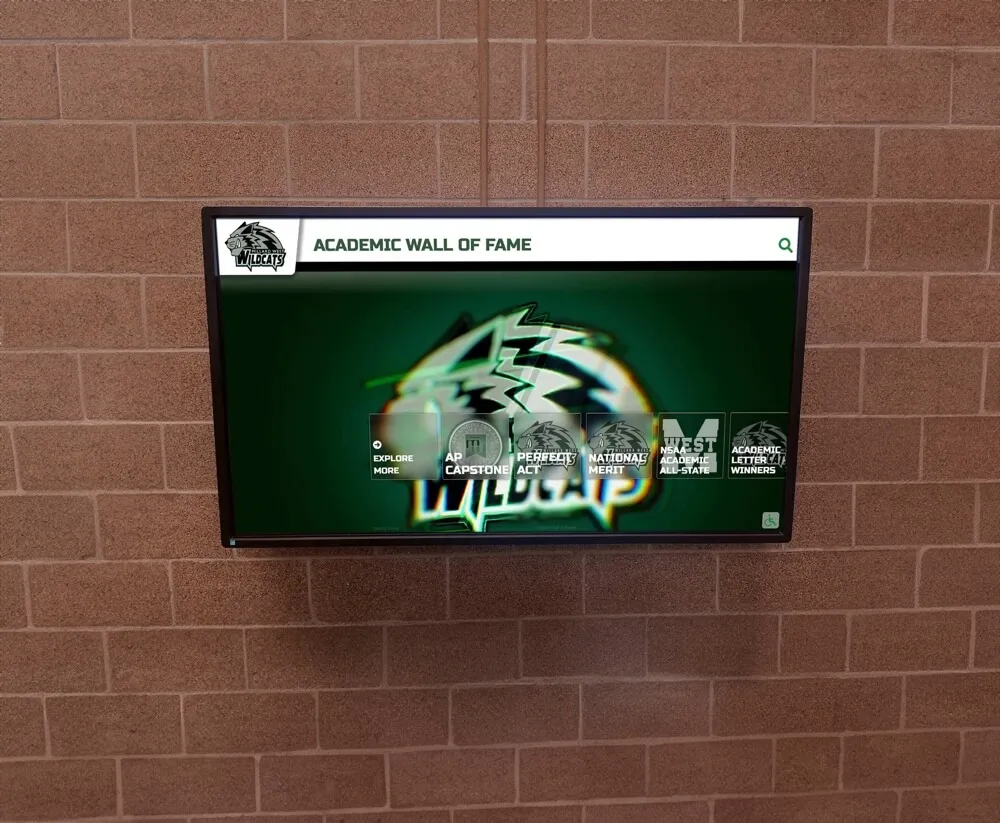
Modern recognition displays in Catholic schools celebrate academic excellence while reinforcing the faith values central to Catholic education
The Catholic Educational Mission and Academic Recognition
Understanding how academic recognition serves the broader mission of Catholic education helps schools design systems that honor achievement while nurturing faith, character, and service—the pillars that distinguish Catholic schooling from purely academic institutions.
Catholic Education’s Distinctive Approach to Excellence
The United States Conference of Catholic Bishops affirms that Catholic schools exist to form students who will transform the world through faith. This mission profoundly shapes how Catholic schools approach academic recognition, viewing intellectual achievement not as an end in itself but as preparation for lives of faith-filled service and leadership.
Intellectual Excellence as Stewardship
Catholic theology teaches that each person receives unique gifts and talents from God, carrying responsibility to develop and use these gifts in service to others. Academic achievement represents faithful stewardship of intellectual gifts—a concept that transforms recognition from mere celebration of personal accomplishment into acknowledgment of faithful response to divine calling.
This theological foundation enables Catholic schools to celebrate academic excellence enthusiastically while preventing unhealthy competition, pride, or the reduction of student worth to academic metrics. Students learn that their intellectual gifts come from God, that developing these gifts honors the Giver, and that ultimately these talents exist for service to others rather than personal aggrandizement.
Formation Beyond Achievement
While Catholic schools certainly value academic excellence, recognition systems should reflect the Catholic educational commitment to forming whole persons—intellectually competent, spiritually mature, morally responsible, and socially engaged. This holistic formation means that comprehensive academic recognition programs in Catholic schools celebrate character development, service contributions, and spiritual growth alongside traditional academic metrics.
Recognition that exclusively honors GPA or test scores misses opportunities to demonstrate that Catholic education values diverse forms of excellence. Students who demonstrate significant academic improvement, those who tutor struggling peers despite heavy academic loads, or those who integrate faith and learning in exceptional ways deserve recognition alongside valedictorians and National Merit Scholars.
Integration of Faith and Learning
Catholic education rejects false dichotomies separating secular knowledge from sacred truth, instead teaching that all truth ultimately finds its source in God. This integration means academic recognition can explicitly connect intellectual achievement to faith, celebrating students who explore connections between their studies and Catholic tradition, who allow their learning to deepen faith commitment, or who use academic gifts to serve others.
Unlike secular institutions that must maintain religious neutrality, Catholic schools can feature scripture, Catholic intellectual tradition, and saints known for scholarship in recognition displays. This faith integration distinguishes Catholic academic recognition while reinforcing that intellectual development serves spiritual purposes.
Core Values Shaping Catholic Academic Recognition
Effective recognition systems in Catholic schools embody distinctive values:
Dignity of Every Person
Catholic social teaching affirms that every human being possesses inherent dignity as a child of God, regardless of academic performance, socioeconomic status, or any other characteristic. This foundational principle requires recognition systems that honor diverse achievements and create opportunities for all students to experience affirmation rather than exclusively celebrating elite performers.
Preferential Option for the Vulnerable
Catholic tradition emphasizes particular concern for those most vulnerable or marginalized. In academic contexts, this might mean intentionally recognizing students who overcome significant obstacles to achieve academically, those with learning differences who demonstrate exceptional effort, or first-generation college students navigating unfamiliar academic demands.
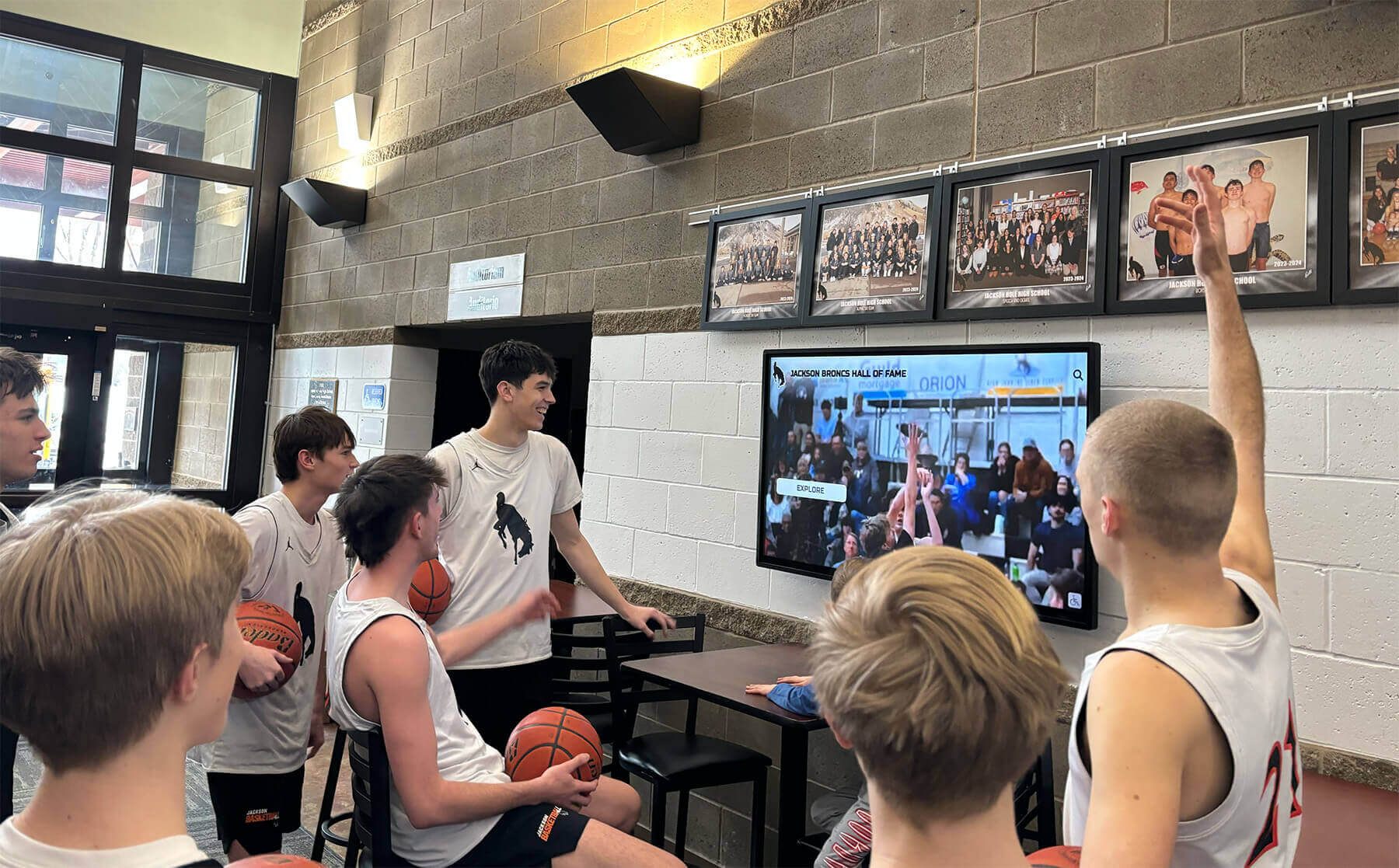
Interactive displays create opportunities for students to explore achievements while building school pride and community
Community and Solidarity
Catholic education emphasizes community and solidarity over individualism, teaching students that they belong to something greater than themselves. Recognition systems should balance celebration of individual achievement with acknowledgment of collaborative learning, peer tutoring, study groups, and the community that supports each student’s success.
Service and Vocation
Catholic schools prepare students not merely for careers but for vocations—their unique callings to serve God and neighbor through their life’s work. Recognition can explicitly connect academic achievement to future service, celebrating students who indicate commitment to using their intellectual gifts in service-oriented professions or who already demonstrate this connection through current service activities.
Types of Academic Recognition in Catholic Schools
Comprehensive recognition systems in Catholic schools address multiple achievement categories reflecting both traditional academic metrics and the distinctive values of Catholic education.
Traditional Academic Honor Categories
Catholic schools recognize standard academic achievements that matter across all educational contexts:
Honor Roll Recognition
Most Catholic schools maintain honor roll systems acknowledging students meeting specific GPA thresholds each marking period or semester. Common designations include:
- Principal’s List/First Honors: Typically 4.0 GPA or all A grades
- Honor Roll/Second Honors: Usually 3.5-3.74 GPA or A/B combinations
- Honorable Mention: Often 3.0-3.49 GPA for schools offering three tiers
Honor roll recognition provides frequent acknowledgment opportunities throughout the academic year, ensuring students experience regular affirmation rather than waiting for annual awards ceremonies. The recurring nature of honor roll recognition also motivates sustained effort across all marking periods rather than just semester or year-end performance.
Many Catholic schools enhance traditional honor roll recognition through digital wall of honor plaques that provide unlimited capacity for recognizing every qualifying student without space constraints that force schools to feature only recent or select honorees.

Individual recognition profiles celebrate specific academic achievements and student journeys throughout their Catholic school experience
National Honor Society and Junior National Honor Society
The National Honor Society (NHS) and Junior National Honor Society (NJHS) provide prestigious recognition for students demonstrating excellence in scholarship, service, leadership, and character—the four pillars perfectly aligned with Catholic educational values. According to the National Association of Secondary School Principals, NHS membership recognizes students for accomplishments while challenging them to develop further through active involvement in school activities and community service.
Catholic schools typically require:
- Academic Threshold: Cumulative GPA of 3.5 or higher for consideration
- Service Component: Demonstrated community service and school involvement
- Leadership Evidence: Leadership roles in academics, activities, or community
- Character Assessment: Teacher recommendations affirming character and integrity
NHS induction ceremonies in Catholic schools often incorporate prayer, scripture readings, and explicit connections between the four pillars and Catholic values. Recognition displays can feature NHS members prominently while documenting their service projects, leadership roles, and how they embody Catholic educational ideals.
Subject-Specific Academic Excellence
Recognizing excellence in specific disciplines encourages students to pursue advanced study while validating diverse academic strengths:
- AP Scholar Awards: College Board designations for AP exam performance
- Subject Departmental Awards: Recognition for top students in mathematics, science, English, history, world languages, theology, and fine arts
- Academic Competition Success: Science Olympiad, Math League, Academic Decathlon, spelling bees, and similar competitions
- Writing and Research Awards: Essay contests, research competitions, publication achievements
Catholic schools can enhance subject recognition by featuring saints associated with specific disciplines—St. Albert the Great for science, St. Thomas Aquinas for philosophy and theology, St. Catherine of Siena for literature and theology—creating explicit connections between academic pursuits and Catholic intellectual tradition.
Advanced Placement and Dual Enrollment Achievement
Students successfully completing college-level coursework while in high school demonstrate exceptional academic commitment deserving systematic recognition. Catholic schools should celebrate:
- AP Exam Scores: Scores of 3, 4, or 5 qualifying for college credit
- Advanced Course Completion: Successfully completing AP, IB, or dual enrollment courses regardless of exam scores
- Academic Rigor: Taking challenging course loads demonstrating intellectual ambition
- College Credits Earned: Total college credits accumulated before high school graduation
Recognition of advanced coursework validates rigorous academic paths while encouraging younger students to challenge themselves academically. This recognition also demonstrates to prospective families that Catholic schools offer academic rigor comparable to or exceeding secular alternatives.
Catholic-Specific Recognition Categories
Beyond universal academic honors, Catholic schools should feature recognition categories reflecting distinctive mission and values:
Theology and Religious Studies Excellence
Catholic schools uniquely offer systematic theology and religious studies as core curriculum. Academic excellence in these disciplines deserves prominent recognition equal to achievement in mathematics, science, or language arts:
- Theology Departmental Awards: Top students in theology courses
- Scripture Knowledge: Biblical literacy and interpretation skills
- Catholic Social Teaching Application: Understanding and application of Catholic social principles
- Catechetical Achievement: Comprehensive knowledge of Catholic doctrine and tradition
- Religious Studies Research: Original research on theological, historical, or ethical topics
Featuring theology excellence prominently in recognition displays communicates that intellectual engagement with faith matters as much as any other academic discipline, countering cultural assumptions that religion represents personal opinion rather than rigorous academic study.
Faith and Learning Integration
Some Catholic schools specifically recognize students who demonstrate exceptional ability to integrate faith with learning across disciplines:
- Integration Essays: Written work connecting course content with Catholic tradition
- Cross-Disciplinary Faith Projects: Projects exploring intersections between specific subjects and Catholic theology
- Faith-Science Dialogue: Work exploring relationships between scientific understanding and religious belief
- Catholic Intellectual Tradition: Engagement with Catholic philosophers, theologians, and thinkers throughout history
This recognition category validates the distinctively Catholic approach to education that refuses to segregate faith from intellectual inquiry.
Service and Justice Awards
Catholic social teaching emphasizes that knowledge without action remains incomplete. Many Catholic schools recognize students who demonstrate commitment to service and justice:
- Service Hour Milestones: Recognition for significant service contributions (100, 200, 500 hours)
- Social Justice Initiatives: Student leadership in addressing poverty, racism, environmental care, or other justice issues
- Mission Trip Participation: Involvement in service immersion experiences
- Community Partnership Leadership: Students leading school partnerships with local service organizations
- Advocacy and Awareness: Students raising awareness about justice issues through education and advocacy
Service recognition integrated with academic honors demonstrates Catholic education’s commitment to forming students who use their gifts for others rather than merely personal advancement. Similar to how community recognition programs celebrate diverse contributions beyond traditional metrics, Catholic school recognition should honor service alongside scholarship.
Character and Virtue Recognition
Catholic schools explicitly teach and model virtues central to Christian life. Some schools recognize students exemplifying particular virtues:
- Respect for Life: Demonstrating commitment to human dignity across all stages and conditions
- Integrity and Honesty: Consistent ethical behavior even when difficult
- Compassion and Mercy: Responding to others’ suffering with practical care
- Humility: Acknowledging gifts and achievements while avoiding pride
- Perseverance: Continuing effort despite challenges or setbacks
Virtue recognition reinforces that character development matters as much as academic achievement in Catholic education, modeling the holistic formation that distinguishes Catholic schools from institutions focused exclusively on academic metrics.
Modern Recognition Display Solutions for Catholic Schools
Traditional recognition approaches—printed honor roll lists posted temporarily, static plaques with limited space, or recognition confined to annual awards ceremonies—struggle to provide the visibility, flexibility, and engagement that contemporary students and families expect.
Digital Recognition Display Advantages
Solutions like Rocket Alumni Solutions transform how Catholic schools approach academic recognition through interactive displays that address traditional limitations while creating new possibilities:
Unlimited Recognition Capacity
Physical space constraints force schools to make difficult decisions about whose achievements receive permanent display. Trophy cases fill quickly, wall plaques accommodate limited names, and adding recognition requires expensive professional engraving and installation.
Digital recognition displays eliminate these constraints entirely:
- Single display showcases unlimited students across all recognition categories
- Historical achievements remain permanently accessible without removing them for current recognition
- Every honor roll student from every marking period receives equal visibility
- All subject areas, special achievements, and recognition types coexist without space competition
- Schools can continuously expand recognition without facility modifications or additional displays
This unlimited capacity enables truly inclusive recognition honoring every deserving student rather than only the highest achievers or most recent honorees. The principles demonstrated in comprehensive academic recognition programs apply equally to Catholic school contexts where celebrating diverse achievements reinforces educational values.
Faith-Integrated Content
Digital platforms enable Catholic schools to explicitly integrate faith throughout recognition content:
- Scripture Integration: Feature relevant Bible verses with specific achievements
- Saint Connections: Associate particular academic achievements with saints known for scholarship, teaching, or intellectual contributions
- Prayer and Blessing: Include prayers or blessings related to learning and knowledge
- Catholic Intellectual Tradition: Reference Catholic thinkers, theologians, and educators throughout history
- Theological Reflection: Include brief reflections connecting academic pursuits to faith
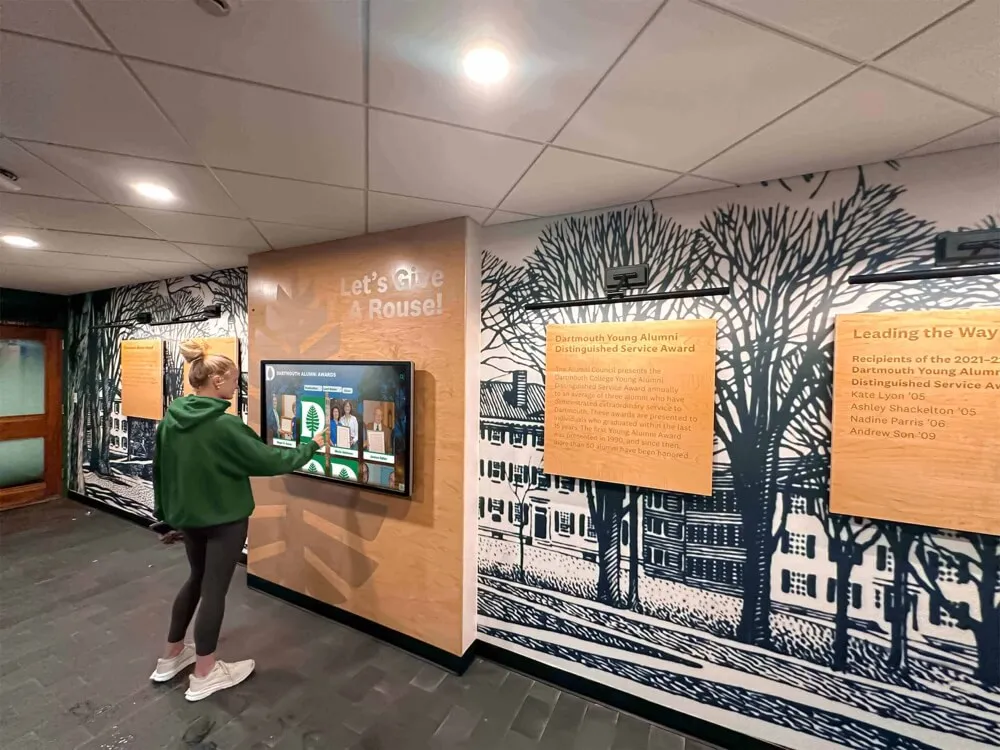
Strategic placement in high-traffic areas ensures recognition receives maximum visibility while reinforcing school pride
This faith integration distinguishes Catholic academic recognition from secular approaches while reinforcing the spiritual purposes underlying intellectual development.
Rich Multimedia Storytelling
Static plaques convey minimal information—typically names and achievement dates. Digital displays support photos, videos, written narratives, and interactive elements that tell complete stories:
- Student Profiles: Detailed profiles featuring photos, achievement histories, activities, interests, and future plans
- Video Features: Student testimonies about faith and learning, teacher reflections on student growth, or recognition ceremony highlights
- Photo Galleries: Academic competition photos, NHS induction ceremonies, awards presentations, or classroom moments
- Achievement Documentation: Certificates, letters, newspaper articles, or other documentation
- Faith Testimonies: Students reflecting on how their Catholic education shaped them spiritually and intellectually
This rich content creates emotional connections impossible with basic name lists, helping younger students envision their own potential while validating the achievements of those recognized.
Simple Remote Management
Cloud-based content management systems enable authorized staff to update recognition displays from any internet-connected device without technical expertise or facility access. Adding honor roll lists, updating NHS member profiles, or featuring recent achievements requires only minutes through intuitive web interfaces.
This management simplicity proves essential for Catholic schools where staff members typically handle multiple responsibilities beyond single specialized roles. When updating recognition takes minimal time and requires no special training or facility visits, it remains current rather than becoming outdated as competing priorities emerge.
Extended Web Accessibility
Comprehensive digital recognition systems include web accessibility enabling anyone with internet connection to explore recognition content from personal devices anywhere. The same content displayed on physical touchscreens in school facilities becomes available through responsive websites optimized for desktops, tablets, and smartphones.
This accessibility proves particularly valuable for Catholic school communities:
- Parish Members: Parish community members supporting the school can view student achievements
- Alumni: Graduates can see current student excellence and recall their own recognition
- Extended Families: Grandparents and relatives unable to visit campus regularly can celebrate student achievements
- Prospective Families: Families considering Catholic school enrollment can preview academic excellence and school culture
- Donors and Benefactors: Those supporting Catholic education financially can see concrete evidence of impact
Web accessibility exponentially extends recognition reach while building pride throughout extended school communities.
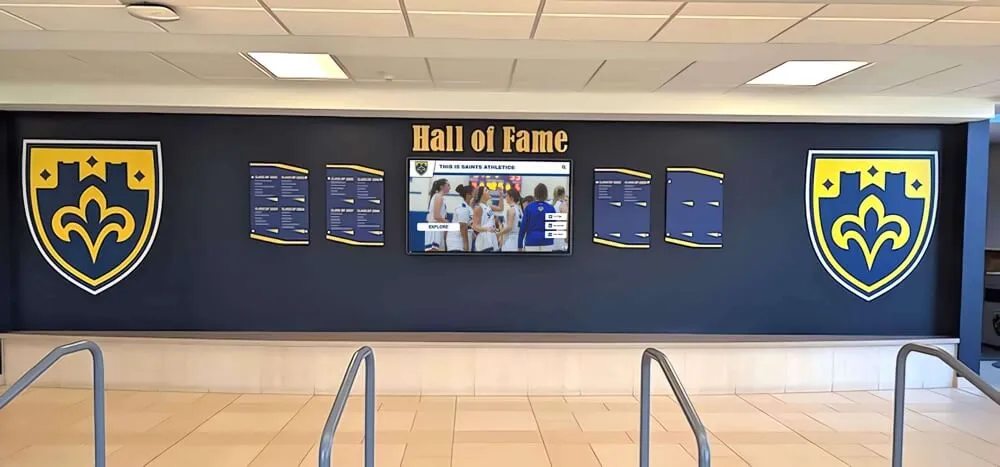
Integrated recognition systems combine digital displays with traditional architectural elements creating comprehensive celebration spaces
Selecting Recognition Display Solutions for Catholic Schools
When evaluating digital recognition systems, Catholic schools should prioritize features supporting both universal needs and distinctive mission:
Content Management Flexibility
Systems should support diverse recognition categories including standard academic honors, Catholic-specific recognition like theology awards or service milestones, and custom categories unique to individual schools. Look for platforms offering:
- Unlimited custom recognition categories
- Flexible data fields accommodating diverse achievement types
- Support for multiple organization methods (by year, achievement type, student, etc.)
- Search and filtering enabling visitors to find specific content easily
- Scheduling capabilities for automatic content publishing
Faith Content Integration
Catholic schools should ensure platforms support explicit faith integration rather than requiring awkward workarounds:
- Custom text fields for scripture verses, saint connections, or faith reflections
- Multimedia support for prayers, blessings, or theological content
- Branding customization allowing Catholic imagery, school religious iconography, and mission language
- Template options suitable for faith-based educational institutions
Family and Community Accessibility
Given Catholic schools’ emphasis on community and the typical involvement of parish communities in school support, accessibility features matter significantly:
- Mobile-responsive web interfaces optimizing content for smartphones and tablets
- Social sharing capabilities enabling families to share achievements through Facebook, email, or other channels
- Multilingual support for schools serving diverse communities including immigrant families
- Privacy controls balancing community celebration with family preferences about student information sharing
Budget Considerations and Sustainability
Catholic schools often operate with limited resources, making cost-effectiveness and long-term sustainability essential:
- Clear pricing including all required components (hardware, software, installation, support)
- Annual licensing or subscription fees fitting realistic Catholic school budgets
- Energy-efficient hardware reducing long-term operational costs
- Longevity and upgrade paths preventing premature obsolescence
- Training and support ensuring staff can manage systems independently without ongoing professional services
Many Catholic schools fund recognition displays through designated development campaigns, memorial gift opportunities, or specific donor cultivation rather than general operating budgets. When presenting recognition projects to potential donors, emphasize how recognition serves the school’s Catholic mission of affirming students as beloved children of God while inspiring excellence that serves others.
Implementing Recognition Displays in Catholic School Environments
Successful implementation requires careful planning addressing technical, organizational, and mission-alignment considerations unique to Catholic educational contexts.
Strategic Placement in Catholic Schools
Location significantly affects recognition visibility and impact. Optimal placements in Catholic schools typically include:
Main Entrance and Lobby Areas
Primary entrances where visitors, prospective families, and daily arrivals immediately encounter recognition create maximum visibility. This placement demonstrates that the school values and celebrates academic excellence prominently rather than hiding achievements in obscure locations.
For Catholic schools, entrance displays can feature recognition alongside mission statements, religious imagery, and welcoming messages that together communicate the school’s identity and values to all who enter.
Chapel or Religious Spaces
Some Catholic schools place recognition displays near chapels or prayer spaces, creating explicit visual connections between faith and academic achievement. This proximity reinforces that intellectual development serves spiritual purposes and that academic gifts should lead students to gratitude and responsible stewardship.
Academic Hallways and Classroom Areas
Recognition visible in daily academic spaces provides consistent inspiration and motivation. Students passing displays multiple times daily receive regular reminders of what their school values while seeing role models they might emulate.
Placement near specific department areas—theology department, science wing, mathematics classrooms—allows for featuring content particularly relevant to those disciplines while students are in related learning contexts.
Gymnasium and Athletic Facilities
While focusing on academic rather than athletic recognition, placement in athletic areas sends important messages that Catholic schools value intellectual achievement as much as athletic accomplishment. This balanced recognition prevents athletic achievements from overshadowing academic excellence in student culture. The comprehensive approach seen in classroom recognition programs can be adapted to honor both academic and athletic achievements equally.
Advancement and Development Offices
Recognition displays in areas where donors and benefactors meet with school leadership provide concrete evidence of how Catholic education forms students intellectually and spiritually. These displays support fundraising conversations by documenting the impact of financial support.

Catholic schools benefit from integrated recognition celebrating both athletic and academic achievements while reinforcing faith values
Content Development Strategies
Comprehensive recognition content requires systematic gathering, organization, and presentation of achievement information:
Historical Content Digitization
Most Catholic schools possess decades of recognition materials in storage—honor roll lists, award programs, newspaper clippings, photographs, and yearbook documentation. Digitizing this historical content creates comprehensive recognition spanning school history rather than only recent achievements.
Develop systematic approaches including:
- Inventory existing materials in archives, storage, and departments
- Prioritize historically significant content and recent years with reliable records
- Scan or photograph physical materials at appropriate resolution
- Record metadata (names, dates, achievement details, context)
- Verify information accuracy through multiple sources when possible
- Catalog content enabling future retrieval and updates
Historical digitization can engage school communities meaningfully. Consider alumni reunion events where graduates contribute photos and memories, student service projects focused on archive organization, or parent volunteer opportunities for scanning and data entry.
Ongoing Content Processes
Establish clear processes ensuring new achievements receive timely recognition:
- Honor Roll Updates: Publish honor roll recognition within one week of report card distribution each marking period
- NHS Induction: Add new NHS members immediately following induction ceremonies
- Year-End Awards: Feature departmental award winners, valedictorians, and special recognitions at graduation conclusion
- Competition Success: Recognize academic competition achievements promptly after results
- Special Achievements: Create submission processes for notable achievements like published writing, research recognition, or external scholarships
Assign clear responsibility for content management rather than assuming someone will handle updates. Many schools designate academic office staff, guidance counselors, or department chairs with specific recognition maintenance roles.
Faith Integration Content
Develop content connecting recognition explicitly to Catholic faith and mission:
- Scripture Selections: Choose relevant Bible verses for specific achievement types
- Saint Biographies: Feature brief biographies of saints associated with scholarship, specific disciplines, or Catholic education
- Virtue Connections: Link particular achievements to Catholic virtues they demonstrate
- Mission Alignment: Include brief reflections on how specific achievements serve the school’s Catholic mission
- Prayer Content: Feature prayers for students, teachers, and academic pursuits
This faith content distinguishes Catholic recognition from secular approaches while reinforcing spiritual dimensions of intellectual development.
Launch and Promotion Strategies
Even sophisticated recognition systems create minimal impact if school communities don’t know they exist or understand how to engage with them.
Dedication and Blessing Ceremony
Catholic schools should ceremonially launch recognition displays through formal dedication including:
- Liturgical Blessing: Invite the school chaplain, pastor, or bishop to formally bless the display and dedicate it to honoring students and glorifying God
- Recognition of Initial Honorees: Invite currently recognized students and their families to inaugural unveiling
- Donor Recognition: Thank individuals or families who funded the recognition system
- Community Celebration: Reception allowing attendees to explore displays and celebrate together
- Documentation: Photos and videos documenting the launch for archives and promotional purposes
Formal dedication ceremonies reinforce that recognition serves the school’s spiritual mission while creating memorable events strengthening community bonds.
Multi-Channel Promotion
Ensure all relevant constituencies learn about recognition resources through diverse communication channels:
- School Newsletters: Feature articles explaining new recognition systems and how families can explore content
- Parent Meetings: Demonstrate displays during open houses, parent-teacher conferences, or advisory meetings
- Student Assemblies: Show students how to explore recognition and encourage them to find themselves and friends
- Social Media: Share highlighted profiles and achievements regularly through Facebook, Instagram, or other platforms
- Website Integration: Feature recognition content prominently on school website with direct links
- Parish Bulletins: For parish-affiliated schools, feature recognition in parish communications reaching broader communities
Integration with School Culture
Maximize impact by incorporating recognition into ongoing school activities:
- Classroom Integration: Teachers reference recognized students as role models during lessons
- Retreat and Reflection: Use recognition content in retreats discussing vocation, stewardship, or gifts and talents
- New Family Orientation: Feature displays during prospective and new family tours
- Alumni Events: Show alumni their own historical recognition during reunion events
- Liturgical Celebrations: Reference academic excellence during academic year opening or closing Masses
These integrations position recognition as living resources central to school culture rather than supplementary displays disconnected from core mission and activities.

Intuitive touchscreen interfaces enable students of all ages to explore recognition content through familiar smartphone-like interactions
Addressing Concerns and Potential Challenges
Catholic schools sometimes encounter concerns when planning or implementing recognition systems. Addressing these thoughtfully ensures systems serve intended purposes while avoiding unintended negative consequences.
Concern: Recognition Creates Unhealthy Competition or Pride
Some educators and parents worry that prominent academic recognition might foster unhealthy competition, pride, or sense of superiority among high-achieving students while discouraging those who struggle academically.
Response: Well-designed recognition systems prevent these problems through:
- Multi-Dimensional Recognition: Celebrate diverse achievements including growth, effort, character, and service alongside traditional academic metrics, ensuring recognition opportunities exist for students with varied strengths
- Faith-Based Framing: Explicitly frame achievements as gifts from God requiring grateful stewardship rather than personal accomplishments justifying pride
- Community Emphasis: Balance individual recognition with acknowledgment of teachers, families, peers, and communities supporting each student’s success
- Virtue Integration: Feature humility, gratitude, and service alongside achievements, modeling that excellence serves others rather than personal ego
- Inclusive Language: Use language emphasizing that recognition celebrates faithful development of gifts rather than inherent superiority
Catholic theology provides strong foundations for celebrating excellence without pride when recognition explicitly connects achievements to gratitude, stewardship, and service.
Concern: Limited Resources for Implementation and Maintenance
Catholic schools often operate with constrained budgets, raising legitimate concerns about whether recognition systems represent wise stewardship of limited resources that might serve other pressing needs.
Response: Recognition systems justify investment through multiple benefits:
- Recruitment and Retention: Professional recognition demonstrates academic excellence to prospective families, supporting enrollment that determines school financial sustainability
- Development and Fundraising: Recognition provides concrete evidence of educational impact when cultivating donors and benefactors
- Student Motivation: Research consistently demonstrates that recognition increases academic engagement and achievement, supporting the school’s core educational mission
- Community Building: Recognition strengthens school community bonds and pride, increasing stakeholder investment and involvement
- Operational Efficiency: Digital systems actually reduce long-term costs compared to ongoing expenses of traditional physical recognition requiring professional updating
Many schools fund recognition through designated campaigns or donor opportunities specifically for recognition rather than drawing from general operating budgets. Memorial gifts, class reunion giving, or anniversary campaigns often successfully fund recognition projects.
Concern: Privacy and Student Information Protection
Some families prefer their children not appear in public recognition due to privacy concerns, adoption situations, safety issues related to custody disputes, or personal preferences.
Response: Recognition systems should include clear privacy policies and opt-out processes:
- Consent Documentation: Obtain explicit permission for recognition display and web publication during enrollment
- Opt-Out Options: Provide simple processes for families to opt out of recognition while still privately acknowledging student achievements
- Information Controls: Limit personal information displayed to name, graduation year, and achievement without addresses, birthdates, or other sensitive data
- Directory Information Policies: Align recognition with official school directory information policies and legal requirements
- Photo Permissions: Obtain separate permissions for photo use beyond basic recognition information
Responsible privacy practices demonstrate respect for family preferences while enabling comprehensive recognition for those who participate.
Concern: Maintenance Requirements and Content Currency
Schools sometimes worry that recognition systems will launch successfully but become outdated quickly when staff members lack time to maintain current content amid competing demands.
Response: Sustainable recognition requires realistic planning:
- Simple Management Tools: Select platforms with intuitive interfaces requiring minimal time to update
- Clear Responsibilities: Assign specific staff members with explicit recognition maintenance duties rather than treating it as extra work anyone might address
- Efficient Processes: Create streamlined workflows for gathering and publishing recognition content
- Bulk Update Capabilities: Use tools enabling rapid bulk updates rather than individual manual entry
- Scheduled Publishing: Set up scheduled automated publishing so content goes live at predetermined times without manual intervention
- Student or Parent Involvement: Engage student service organizations, parent volunteers, or NHS members in content gathering and updating
When implementation planning includes realistic maintenance assessment and appropriate resource allocation, recognition remains current rather than becoming neglected.
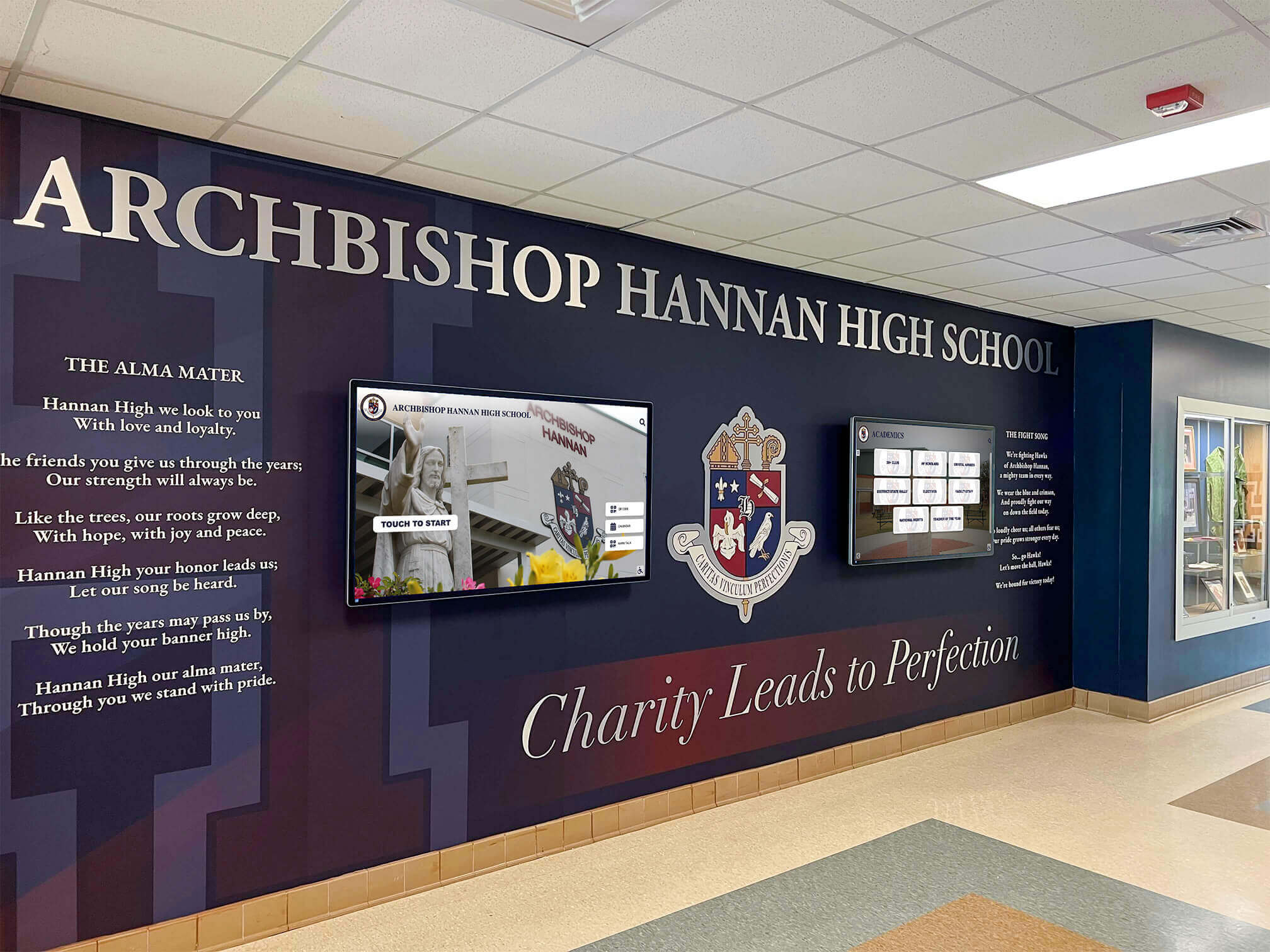
Catholic schools can integrate recognition displays seamlessly with religious imagery and mission-focused design elements
Best Practices for Catholic School Academic Recognition
Successful Catholic school recognition systems embody best practices that maximize impact while remaining true to distinctive mission and values:
Practice 1: Explicitly Connect Recognition to Catholic Mission
Don’t assume faith connections remain obvious—make them explicit. Feature school mission statements alongside recognition, include scripture and saint references throughout content, and regularly articulate how academic achievement serves God’s glory and prepares students for faithful service. This explicit integration distinguishes Catholic recognition from secular approaches.
Practice 2: Celebrate Diverse Forms of Excellence
Honor traditional academic metrics like GPA and standardized test scores while also recognizing growth, improvement, character, service, and faith integration. This comprehensive approach ensures recognition opportunities for students across different backgrounds, abilities, and starting points while modeling Catholic values that affirm every person’s dignity and gifts.
Practice 3: Balance Individual and Community Recognition
While celebrating individual achievements, acknowledge the communities supporting each student’s success—teachers who inspired and challenged them, families who encouraged and supported them, peers who studied alongside them, and the broader school community that created environments enabling their growth. This balanced approach prevents individualism while modeling Catholic emphasis on solidarity and interdependence.
Practice 4: Update Recognition Consistently and Frequently
Recognition that becomes outdated communicates organizational disarray and lack of care more powerfully than absence of recognition. Establish realistic update schedules and assign clear responsibility for maintaining current content. Frequent updates (honor roll each marking period, new achievement profiles within two weeks of occurrence) keep recognition relevant and engaging.
Practice 5: Integrate Recognition Throughout School Culture
Position recognition as central rather than peripheral to school culture by referencing it in liturgies, featuring it during school events, incorporating it in classroom teaching, including it in admissions and development activities, and celebrating it through school communications. This integration signals that academic excellence matters deeply to the school community.
Practice 6: Engage Multiple Stakeholders in Recognition
Involve students in creating content and celebrating peers, engage teachers in nominating and featuring honorees, include families in submission of achievements and updates, invite alumni to contribute historical content, and welcome donors and benefactors to support recognition financially. This broad engagement builds ownership and investment across school communities.
Practice 7: Assess and Improve Recognition Continuously
Regularly evaluate whether recognition serves intended purposes through student surveys about awareness and impact, family feedback on communication and accessibility, staff assessment of management burden, usage analytics from digital displays and web platforms, and qualitative observation of how recognition affects school culture. Use assessment data to refine approaches ensuring recognition remains effective and mission-aligned. Similar to how successful student achievement programs continuously evolve based on feedback, Catholic schools should remain responsive to community input.
Practice 8: Connect Recognition to Future Opportunities
Help students understand that recognition matters beyond immediate affirmation by connecting it to college applications, scholarship opportunities, National Recognition Programs from College Board, and career preparation. This practical emphasis demonstrates that Catholic schools prepare students for worldly success alongside spiritual formation, countering false assumptions that faith-based education compromises academic rigor.
Measuring Recognition Impact in Catholic Schools
Assessing recognition effectiveness ensures systems achieve intended goals while providing accountability for resource investment:
Quantitative Metrics
Track measurable indicators including:
- Participation Rates: Percentage of students receiving recognition each year
- Distribution Equity: Recognition across grade levels, demographic groups, and achievement types
- Engagement Analytics: Digital display interaction frequency and duration, web portal traffic and session length
- Academic Outcomes: Honor roll rates over time, college acceptance and scholarship success for recognized students
- Community Reach: Social media engagement, website traffic, and external visibility of recognition
Qualitative Assessment
Gather stakeholder perspectives through:
- Student Surveys: Student awareness of recognition, impact on motivation, feelings about fairness and inclusivity
- Family Feedback: Parent perceptions of recognition adequacy, communication effectiveness, system accessibility
- Staff Reflection: Teacher observations of recognition’s cultural impact, ease of management, mission alignment
- Alumni Perspective: Graduate reflection on how recognition influenced their school experience
- Mission Alignment: Leadership assessment of whether recognition serves school’s Catholic mission and values
Integration Evaluation
Assess how well recognition integrates with broader school functions:
- Admissions Impact: Prospective family responses to recognition during tours and enrollment decisions
- Development Effectiveness: Donor engagement with recognition content and support for recognition initiatives
- Culture Indicators: Observable changes in student attitudes toward academics, school pride measures
- Communication Integration: How naturally recognition flows through various school communication channels
- Liturgical and Faith Integration: Evidence that recognition connects meaningfully with school’s spiritual life
Regular assessment enables continuous improvement ensuring recognition systems remain effective, sustainable, and aligned with Catholic educational mission. When schools can demonstrate that recognition positively impacts student motivation, family engagement, community pride, and mission fulfillment, it validates investment while building support for continued enhancement.
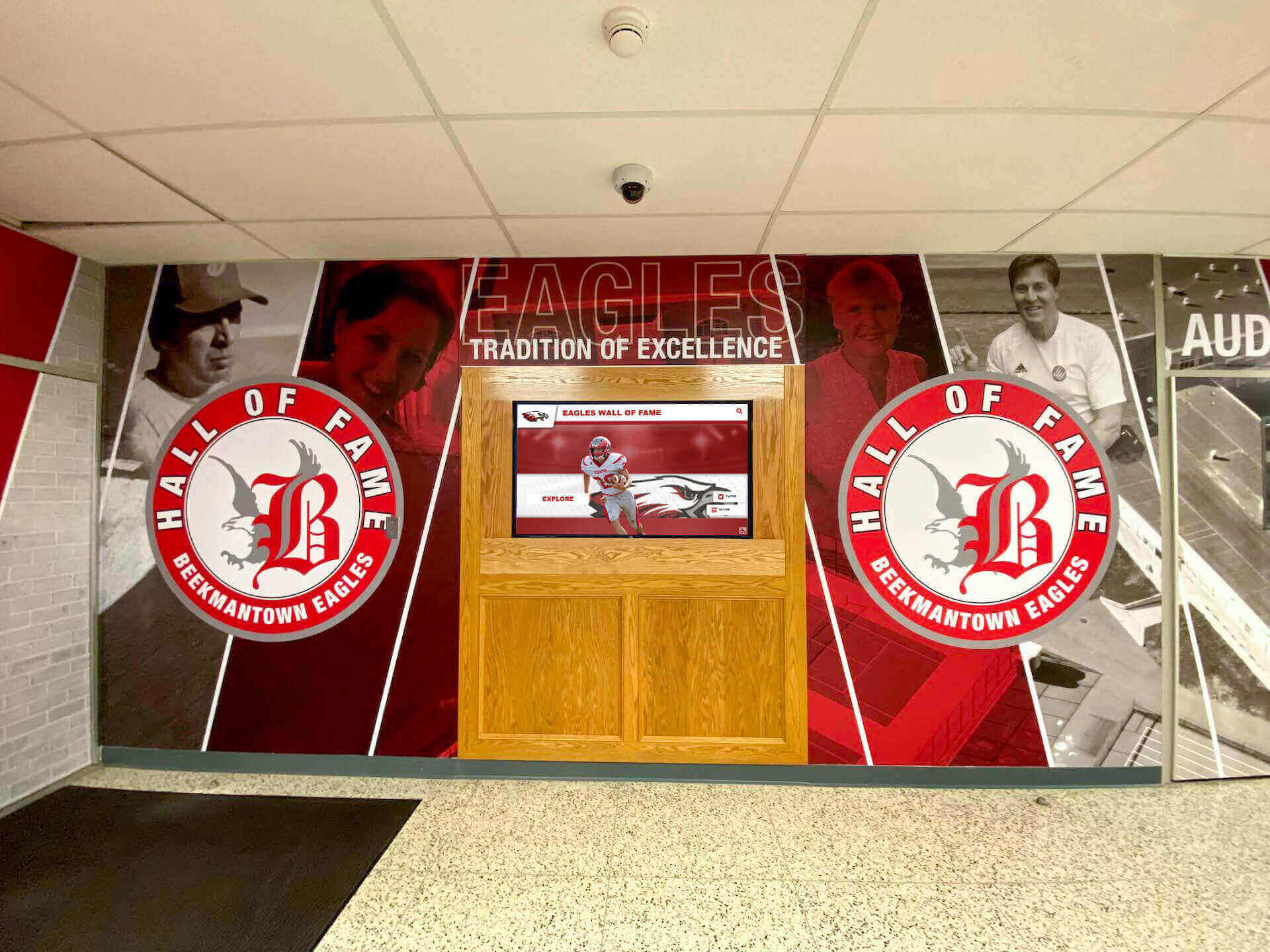
Professional recognition installations create impressive focal points in school entrances while celebrating community excellence
Conclusion: Recognition Serving Catholic Mission and Student Flourishing
Effective Catholic honors student recognition displays represent far more than administrative systems for acknowledging academic achievement—they embody in visible, tangible ways the Catholic educational commitment to affirming each student as a beloved child of God while calling them to faithful stewardship of the unique gifts and talents they’ve received. When Catholic schools systematically celebrate intellectual achievement across multiple dimensions—from traditional academic metrics to faith integration, character development, and service commitment—they create environments where academic excellence becomes understood as both personal fulfillment and response to divine calling.
The strategies explored in this guide provide comprehensive frameworks specifically designed for Catholic school communities seeking recognition systems that honor diverse achievements while remaining authentic to distinctive mission and values. From digital recognition displays that eliminate space constraints to multi-dimensional programs ensuring recognition opportunities at all achievement levels, from explicit faith integration to celebration of service alongside scholarship, these approaches transform academic acknowledgment from occasional token gestures to systematic celebration woven throughout school culture and identity.
Transform Your Catholic School Recognition Program
Discover how modern digital recognition solutions can help your Catholic school celebrate every student's academic achievements while reinforcing the faith values and mission that define your educational community.
Schedule Your Free ConsultationBuilding effective Catholic academic recognition requires moving beyond merely adapting secular models to thoughtfully designing systems that reflect the integrated, holistic, faith-centered approach that distinguishes Catholic education. This means celebrating not just what students achieve but how they achieve it—with integrity, humility, gratitude, and growing awareness that their gifts ultimately exist for service to God and neighbor.
Digital platforms like those offered by Rocket Alumni Solutions make comprehensive recognition achievable across unlimited students and achievement categories while incorporating the faith content, mission language, and spiritual emphasis that position recognition clearly within Catholic educational identity. These solutions enable even resource-limited Catholic schools to maintain professional recognition that honors every achievement while building the positive, motivating educational culture where all students thrive intellectually and spiritually.
Start where you are with recognition programs you can implement immediately, then systematically expand to create comprehensive approaches your students deserve. Every student who receives meaningful recognition for academic accomplishments while understanding these achievements within frameworks of gratitude, stewardship, and service develops stronger connection to both education and faith—precisely the integration that defines successful Catholic schooling.
Your students’ academic achievements deserve celebration that reflects the full richness of Catholic educational tradition. With thoughtful planning, appropriate technology, mission-aligned content, and consistent implementation, you can create recognition systems that honor every achievement while building the faithful, excellent, service-oriented culture where students flourish as both scholars and disciples. The intellectual gifts God entrusts to each student deserve recognition approaches equal to their sacred significance.































