Championship banners hanging proudly in gymnasiums tell stories that transcend final scores and season records. Each banner represents early morning practices, hard-fought victories, team unity, and the culmination of countless hours of dedication. Yet creating championship banners that truly honor these achievements while inspiring future generations requires thoughtful design, strategic planning, and understanding of what makes recognition meaningful.
Whether your team just captured its first championship or you’re adding to a legacy wall filled with decades of excellence, the banners you create become permanent fixtures in your facility—visible reminders of what’s possible through commitment and teamwork. This comprehensive guide explores championship banner ideas that celebrate victories with style, dignity, and lasting impact.
Walk into any successful athletic facility and your eyes naturally drift upward to the championship banners suspended from the rafters or mounted on gym walls. These fabric testaments to excellence create an atmosphere of tradition and achievement that resonates with everyone who enters—current athletes who aspire to join that elite company, alumni who remember their own championship moments, and visitors who immediately recognize program quality.
But not all championship banners deliver equal impact. Some capture attention with bold designs and comprehensive information, while others fade into the background despite representing equally impressive achievements. The difference lies in thoughtful design choices, strategic content decisions, and understanding how championship recognition fits within broader program culture.
Understanding Championship Banner Design Fundamentals
Creating effective championship banners starts with understanding core design principles that ensure your recognition makes appropriate visual impact while remaining legible and meaningful.
Size and Proportion Considerations
Championship banner dimensions significantly influence visual impact and facility aesthetics. Most traditional fabric banners range from 2 feet by 4 feet for smaller displays to 3 feet by 8 feet for prominent championship recognition. The size you choose depends on several factors:
Ceiling Height and Viewing Distance: Gymnasiums with 25-30 foot ceilings require larger banners than facilities with 15-20 foot ceilings to ensure legibility from floor level. As a general guideline, text should be readable from the farthest point in your facility where the banner will be viewed.
Banner Quantity: Facilities displaying dozens of championship banners often use smaller, uniform sizes to prevent visual clutter. Programs with fewer championships can feature larger, more elaborate designs that serve as focal points.
Sport-Specific Traditions: Some sports have established banner size conventions within your conference or state. Basketball and volleyball programs often use taller, narrower banners (2x6 or 2x8), while football banners may be wider and shorter (3x5 or 4x6) to accommodate extensive information.
Consider visual proportion within your facility rather than choosing dimensions arbitrarily. Banners should feel appropriately scaled for the space they occupy—substantial enough to command attention without overwhelming the environment.
Color Theory and School Branding
Championship banners should immediately identify with your program through strategic color use that reinforces school identity while ensuring readability and visual impact.
Primary Brand Colors: Your school’s official colors should dominate banner design. If your school colors are blue and gold, these should be the foundation of your championship banner palette. Consistency across all banners creates cohesive visual storytelling about program excellence.
Contrast for Legibility: Color choices must ensure text and graphics remain legible from distance. Dark text on light backgrounds or light text on dark backgrounds provides essential contrast. Avoid combinations like purple text on black backgrounds or yellow text on white backgrounds that sacrifice readability for aesthetic preferences.
Championship-Specific Accents: Some programs designate specific colors for different championship levels—gold for state championships, silver for regional championships, bronze for conference championships. This color coding helps viewers immediately distinguish achievement levels when scanning multiple banners.
Modern vs Traditional Approaches: Traditional championship banners often feature bold, saturated colors that make strong statements. Contemporary designs sometimes incorporate gradients, metallic accents, or subtle color variations that create sophisticated visual appeal while maintaining school identity.
Typography and Readability
Text selection dramatically influences how effectively championship banners communicate information from distance while maintaining aesthetic appeal.
Font Family Selection: Bold, sans-serif typefaces like Arial Black, Helvetica Bold, or custom athletic fonts ensure maximum readability. Avoid delicate serif fonts, script typefaces, or overly decorative lettering that becomes illegible from viewing distance. The goal is instant recognition, not artistic complexity.
Size Hierarchy: Establish clear visual hierarchy through varying text sizes. The sport name or championship level should appear largest (6-12 inches tall for standard banners), followed by the year (4-8 inches), with supplementary information like team record or coaching staff in smaller text (2-4 inches).
Letter Spacing and Kerning: Adequate spacing between letters and words prevents text from appearing cramped or illegible. Compressed typography might fit more information, but readability always trumps content density on championship banners.
Mixed Case vs All Caps: While all-capitals typography creates bold, uniform appearance, mixed-case text is actually more readable for longer words or phrases. Consider all caps for short, impactful statements (“STATE CHAMPIONS”) while using title case for longer content (“Cross Country 5A State Champions”).
Essential Content: What Should Championship Banners Include?
Determining what information appears on championship banners requires balancing comprehensive recognition with visual simplicity and readability.
Core Information Elements
Every championship banner should include certain fundamental details that provide context and meaning:
Sport Identification: Clearly indicate which sport the championship represents. Don’t assume viewers will recognize this from context—“Boys Basketball” or “Volleyball” should appear prominently.
Championship Year: The season year should be immediately visible. Some programs use the school year (“2025-26”), while others use the calendar year when the championship was won. Choose one format and apply it consistently across all banners.
Championship Level: Specify what the championship represents—“State Champions,” “Regional Champions,” “Conference Champions,” or “District Champions.” This context helps viewers understand achievement significance within competitive structure.
Team Record: Including final season record (“32-4” or “18-2-1”) provides additional achievement context. Undefeated seasons deserve special recognition (“28-0 Perfect Season”).
School Name: While this might seem obvious in your own facility, including school name ensures clarity during facility tours, photographs, and when alumni view images years later.
Optional Enhanced Details
Beyond core information, consider including additional elements that enrich championship storytelling:
Coaching Staff Recognition: Head coach names honor the leadership that guided teams to championships. Long-tenured coaches often appear on multiple banners, illustrating sustained excellence. Some programs include assistant coaches as well, though space limitations may restrict this to head coaches only.
Team Captains: Recognizing team captains acknowledges student leadership that contributed to championship success. This personal touch makes banners more meaningful for those individuals and their families.
Tournament Seeds or Rankings: For tournament-based championships, including your seeding (“3rd Seed”) or preseason ranking adds narrative depth, especially if your team exceeded expectations.
Championship Game Score: Final championship game scores memorialize the culminating moment, particularly for dramatic victories or dominant performances.
Special Achievements: Notations like “First in School History,” “Back-to-Back Champions,” or “Three-Peat” highlight particularly significant accomplishments deserving special recognition.
Mascot or Logo Integration: School mascots or athletic logos add visual interest while reinforcing identity. These graphics should complement rather than compete with essential text information.
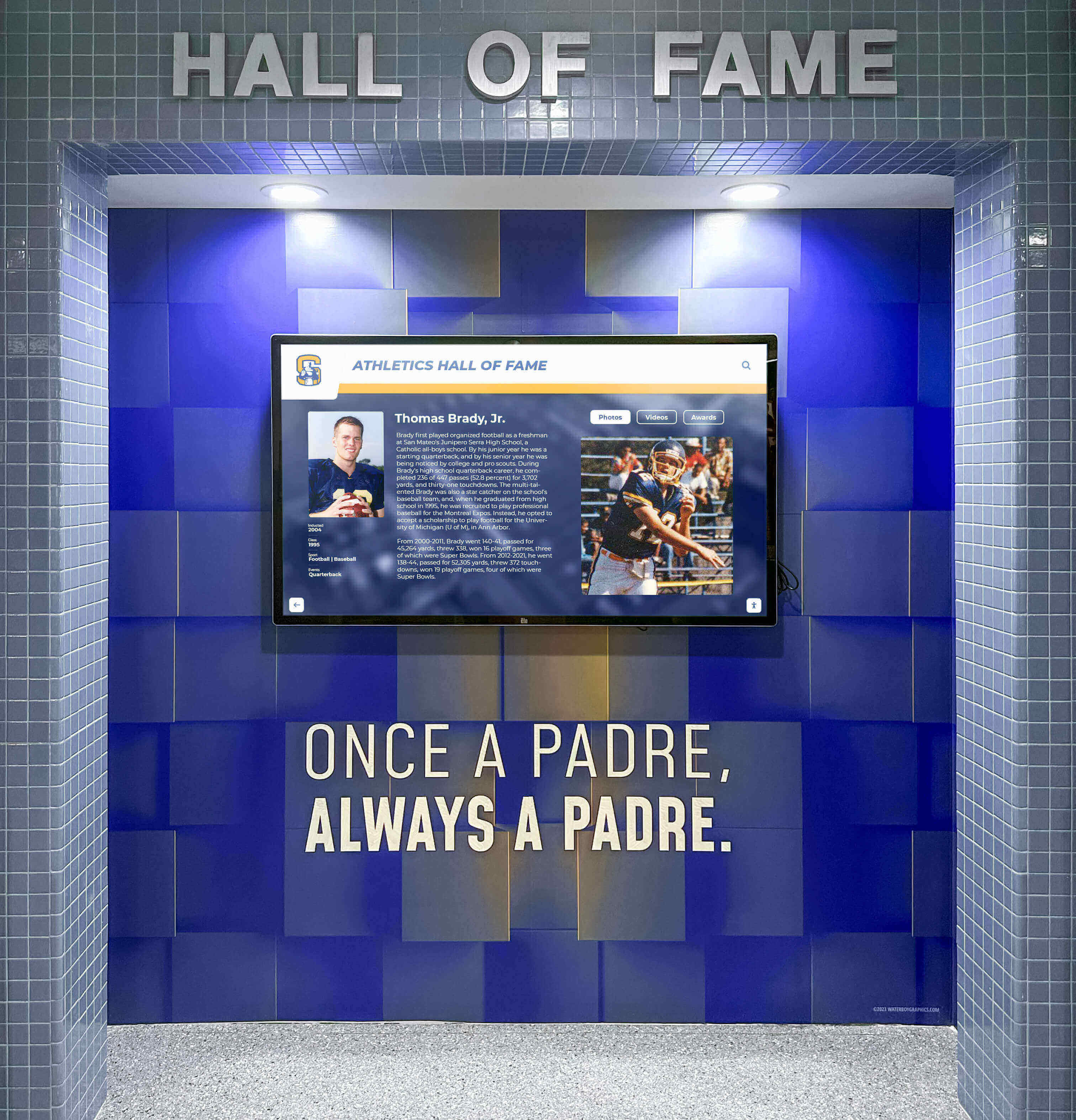
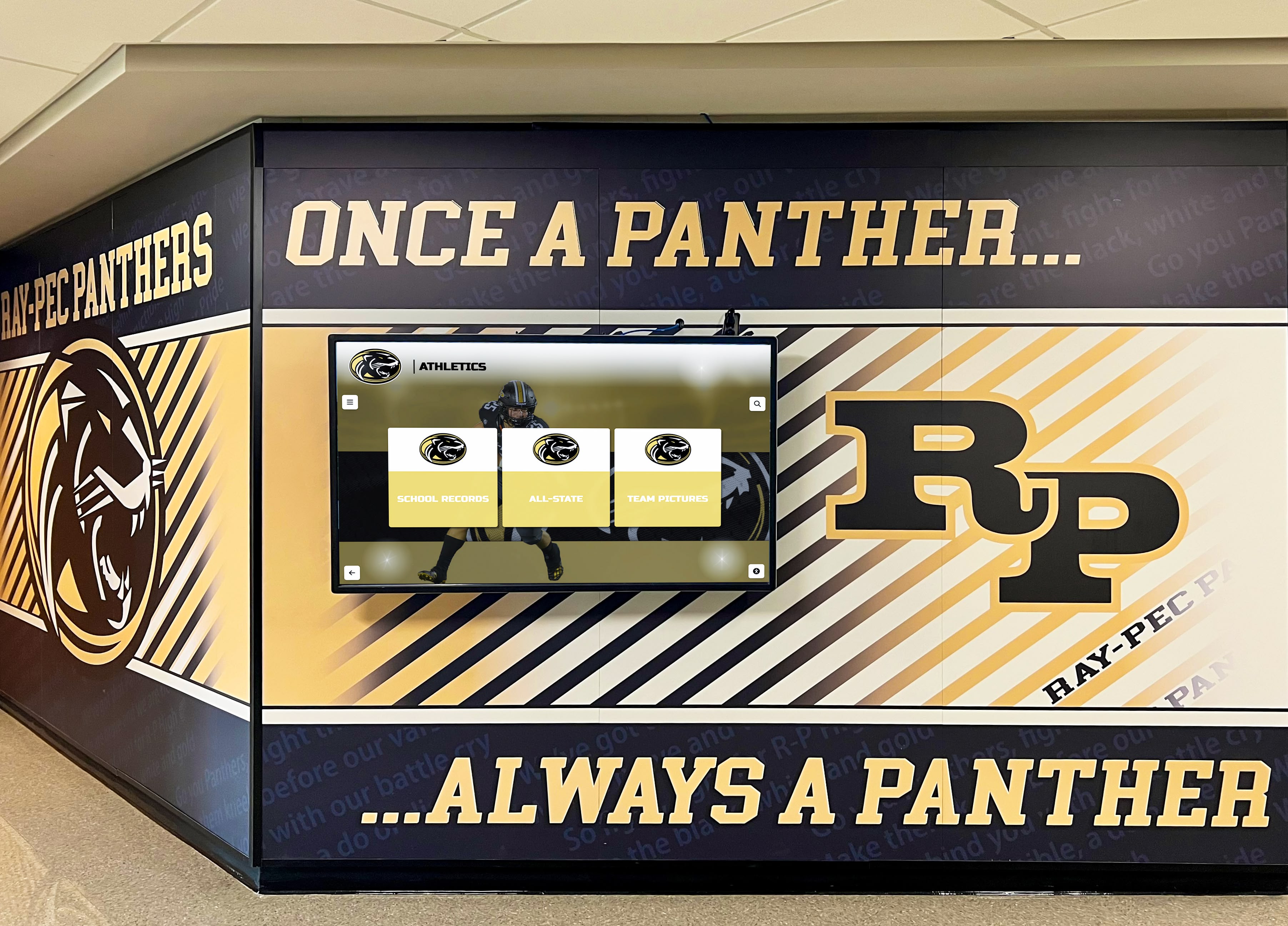
For programs looking to provide even more comprehensive recognition, digital recognition displays can supplement traditional banners by showcasing complete team rosters, season statistics, and championship game highlights that space constraints prevent from appearing on fabric banners.
Creative Championship Banner Design Ideas
Moving beyond standard templates to create distinctive championship banners that reflect your program’s unique identity and values.
Sport-Specific Design Concepts
Different sports suggest different aesthetic approaches that resonate with their unique characteristics and traditions.
Basketball Championship Banners: Basketball banners often incorporate basketball graphics—court diagrams, hoops, or ball silhouettes. Vertical orientation emphasizes the sport’s upward motion. Consider featuring the championship trophy graphic or incorporating team colors into a basketball net design that frames the text.
Football Championship Banners: Football banners frequently use horizontal orientations that accommodate helmet graphics, field diagrams, or football silhouettes. Bold, aggressive typography matches the sport’s intensity. Some programs include the championship game’s final drive or crucial defensive stop as a narrative element.
Volleyball Championship Banners: Volleyball banners can incorporate net graphics, ball silhouettes, or court diagrams. The vertical nature of volleyball play suggests portrait-oriented banners. Consider designs where the text appears to be “served” over a net graphic.
Baseball/Softball Championship Banners: Diamond sports lend themselves to home plate or baseball diamond graphics integrated into banner layouts. Including the championship game score in a scoreboard graphic adds thematic authenticity. Crossed bats or ball-and-glove imagery reinforces sport identity.
Cross Country and Track Championships: Distance running championships might incorporate track lane graphics, finish line imagery, or stopwatch elements. Trophy silhouettes work particularly well for these sports where timing and placement define success.
Swimming Championships: Pool lane graphics, water effects, or stopwatch imagery work well for aquatic sports. Championship times for record-setting performances add meaningful context for swimming and diving banners.
Modern vs Traditional Aesthetic Approaches
Championship banner design philosophy ranges from classic, timeless approaches to contemporary, bold statements that reflect current design trends.
Traditional Championship Banner Design:
- Clean, centered layouts with formal symmetry
- Classic athletic fonts in school colors
- Minimal graphics focusing on text information
- Timeless approach that ages well across decades
- Emphasis on dignity and formal recognition
- Works well for programs with extensive championship histories wanting visual consistency
Contemporary Championship Banner Design:
- Dynamic, asymmetrical layouts creating visual energy
- Modern typography with varying weights and sizes
- Integrated photography or action imagery
- Gradient effects and dimensional design elements
- QR codes linking to digital championship archives
- Appeals to current students while embracing modern aesthetics
Neither approach is inherently superior—the choice depends on facility aesthetics, program tradition, and the atmosphere you want to create. Some programs even use traditional designs for major championships (state titles) while allowing more creative approaches for conference championships, creating visual distinction between achievement levels.
Unique Format Ideas Beyond Standard Rectangles
While rectangular banners dominate most gymnasiums, alternative formats can create distinctive recognition that stands out.
Pennant-Style Banners: Triangular or pennant-shaped banners evoke classic sports aesthetics and create visual variety when mixed with rectangular formats. These work particularly well for conference championships or tournament victories.
Shaped Banners: Custom die-cut banners shaped like sport-specific equipment—basketballs, footballs, soccer balls—create immediate visual recognition, though they cost more than standard rectangles and may sacrifice some informational space.
Multi-Panel Banners: Championship banners consisting of multiple connected panels allow for expansive designs that can include team photos, extensive statistical information, or championship bracket progression. These work well as featured displays for particularly significant championships.
Vertical Pole Banners: For facilities with appropriate mounting structures, pole banners that extend vertically create dramatic visual impact, particularly in entrance areas or concourses leading to competition spaces.
Banner Clusters: Rather than displaying championships individually, some programs group related achievements—all basketball championships together, all championships from a particular decade, or all championships under a specific coach—creating thematic recognition areas.
Strategic Display and Placement Strategies
Where and how you display championship banners significantly influences their impact and the atmosphere they create within athletic facilities.
Gymnasium Display Locations
Traditional banner placement in gymnasiums follows established patterns, though creative alternatives exist for facilities with unique architectural features.
Rafter Suspension: The most common approach suspends banners from gymnasium rafters or ceiling structures using cable systems. This elevated placement ensures visibility without interfering with competition space or spectator sightlines. Rafters typically accommodate the most banners while creating the iconic “championship atmosphere” visitors recognize immediately.
Wall-Mounted Displays: Facilities without suitable ceiling suspension points often mount championship banners directly on gym walls, typically on the ends opposite playing courts or above bleacher seating. Wall mounting allows closer viewing of banner details but consumes more limited wall space.
Above Entrance Displays: Positioning championship banners above main gymnasium entrances ensures every person entering immediately sees championship tradition. This placement makes powerful first impressions during facility tours and recruiting visits.
Championship Wall Concentrations: Some programs designate specific gym walls as “championship walls” where all banners cluster together. This concentrated approach creates impactful visual statements about program excellence, though it may limit capacity compared to distributed placement around the facility.
Beyond the Gymnasium: Expanding Recognition
Championship recognition shouldn’t remain confined to gymnasiums—strategic placement throughout athletic facilities and campuses extends visibility and impact.
Main Entrance Halls: Placing duplicate or alternate championship banners in school main entrances ensures non-athletic visitors see championship achievements. This broader visibility strengthens overall school pride beyond just athletic community members.
Athletic Hallways: Corridors connecting locker rooms, training facilities, and competition spaces provide ideal locations for championship recognition that athletes encounter daily. This constant exposure reinforces program standards and traditions.
Weight Room and Training Facilities: Championship banners in training areas serve motivational purposes, reminding athletes during workouts why they push themselves—to join the championship tradition surrounding them.
Locker Rooms: Some programs display championship banners in locker rooms, creating inspirational environments where current athletes dress beneath reminders of what the program expects and what previous teams achieved.
Outdoor Facilities: Weather-resistant banner materials allow championship recognition at outdoor venues—stadium entrances, press box facades, or fence-mounted displays visible during competitions.
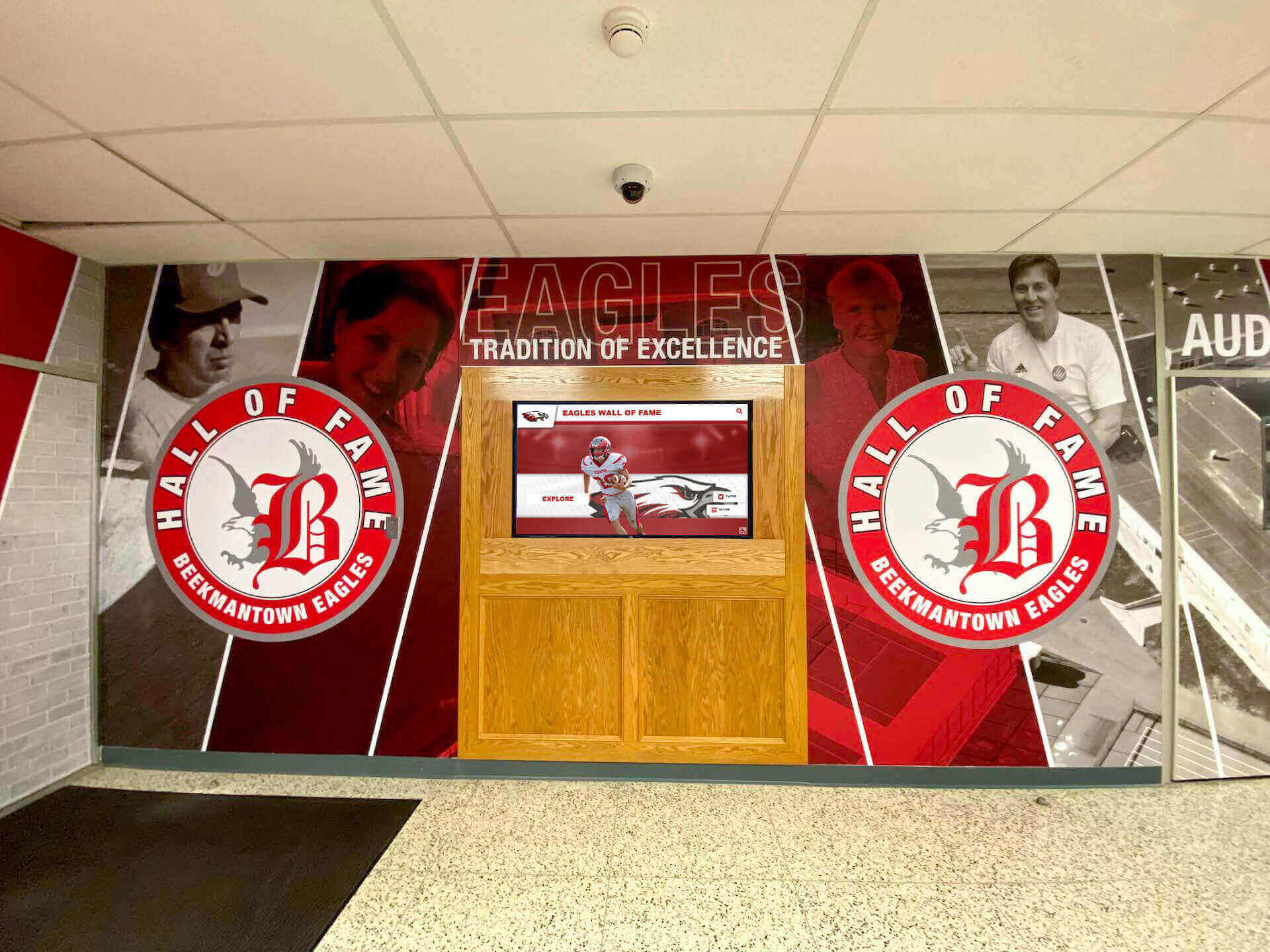
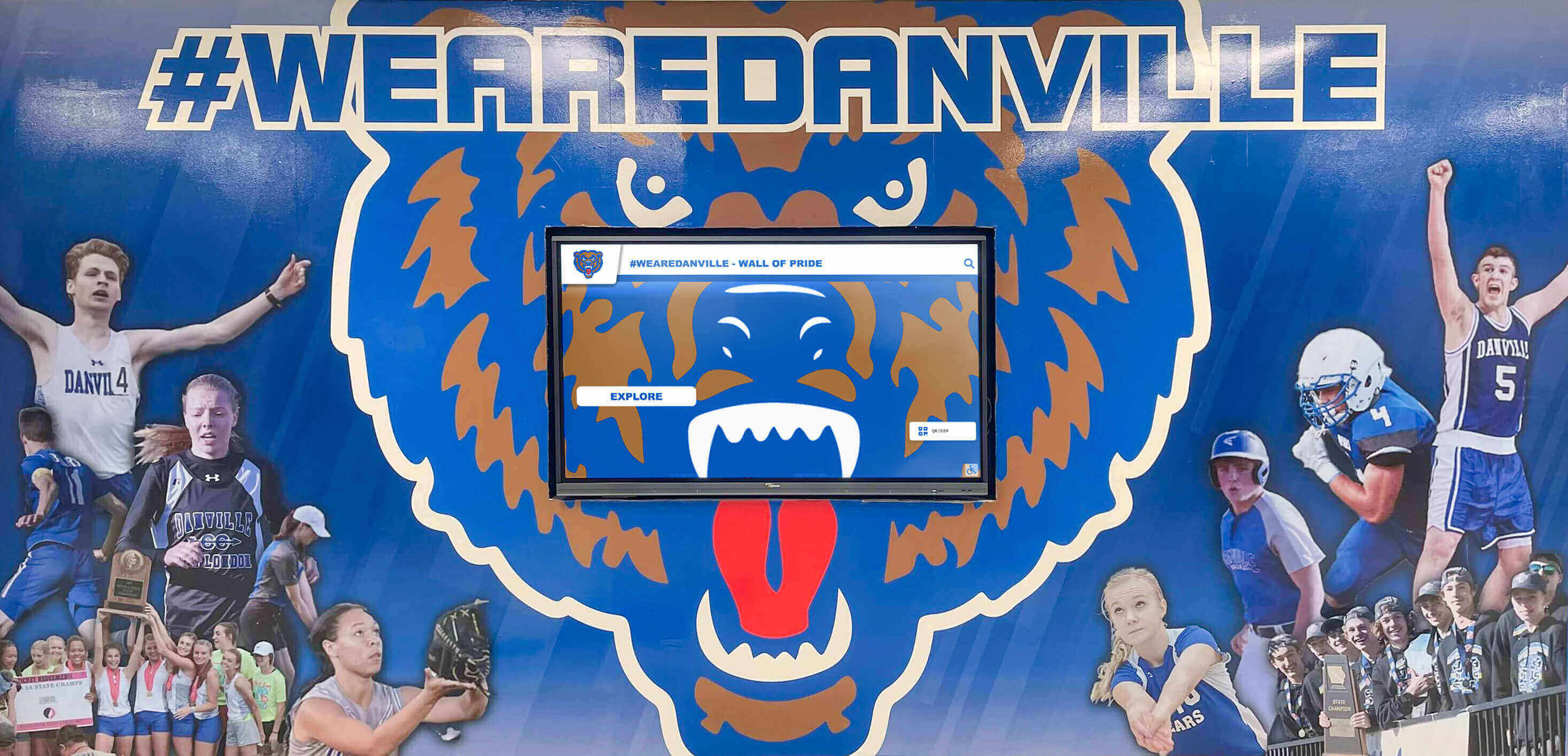
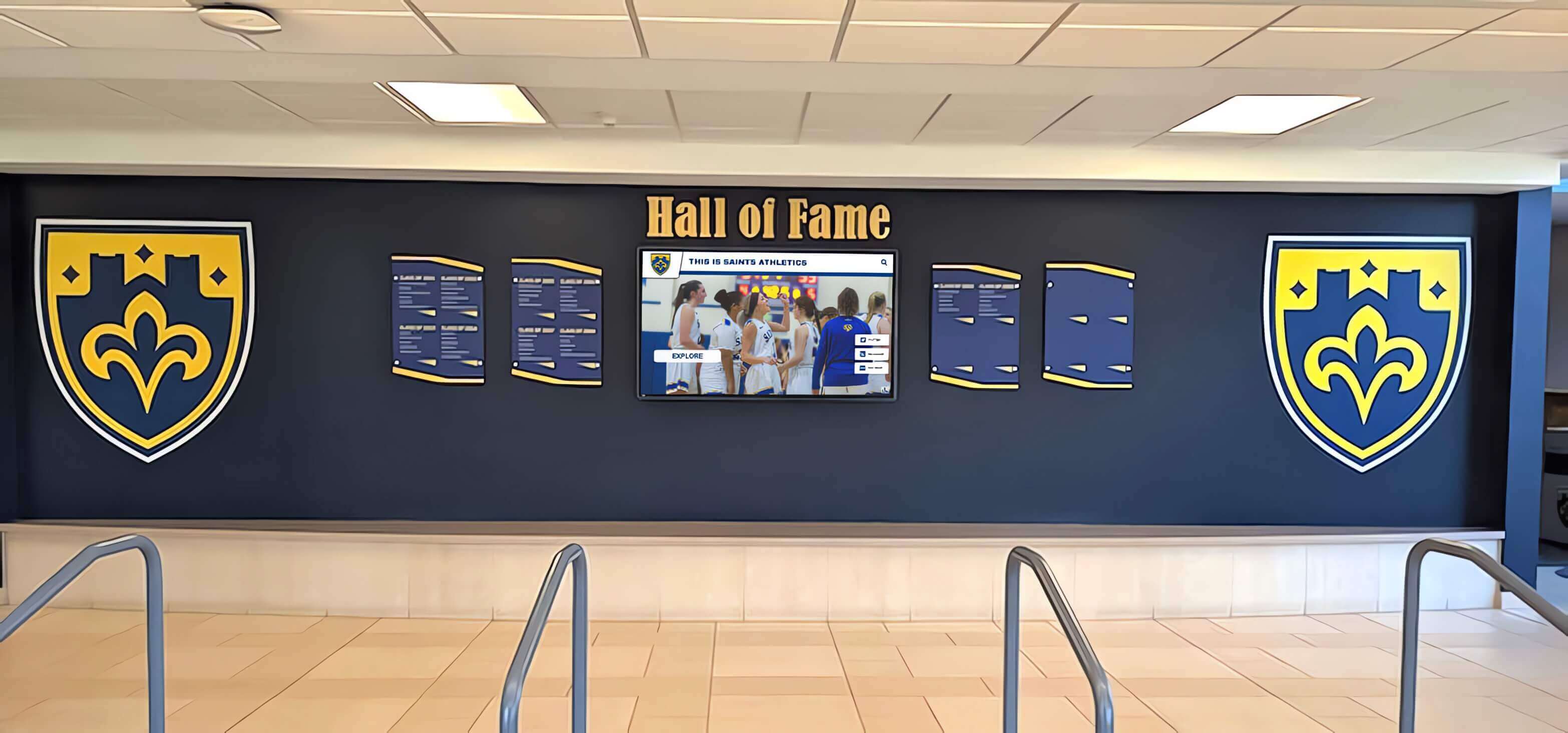
For schools looking to maximize championship visibility across multiple locations, interactive digital displays can replicate championship recognition throughout facilities without the cost of producing multiple physical banners, while adding capabilities like searchable team rosters and championship game highlights.
Creating Visual Hierarchy and Organization
When displaying multiple championship banners, thoughtful organization prevents visual chaos while telling coherent stories about program excellence.
Chronological Organization: Arranging banners in order from oldest to newest creates timeline narratives showing program evolution. This approach works particularly well for long-established programs wanting to showcase sustained excellence across decades.
Sport-Specific Grouping: Clustering all championships for each sport together makes it easy for visitors to understand individual sport success levels. Basketball championships all together, volleyball championships clustered separately, etc.
Achievement Level Grouping: Organizing banners by championship significance—state championships in prime locations, regional and conference championships in secondary positions—creates clear visual hierarchy reflecting achievement importance.
Seasonal Organization: Some programs organize championships by season (fall, winter, spring sports), which can help balance visual weight around facilities if certain seasons dominate championship counts.
Strategic Spacing: Regardless of organizational approach, consistent spacing between banners prevents crowded, cluttered appearances. Allow adequate space between individual banners so each receives appropriate individual recognition rather than blending into indistinct masses.
Material Selection and Production Considerations
Championship banners represent long-term investments requiring durable materials and quality production that ensures years of service in active athletic environments.
Banner Material Options
Different material choices offer varying advantages regarding durability, appearance, cost, and maintenance requirements.
Vinyl Banners: The most common and cost-effective option, vinyl banners provide excellent durability, vivid color reproduction, and weather resistance. They work well indoors and outdoors, resist fading, and typically cost $100-300 depending on size and complexity. Vinyl’s slight sheen creates professional appearance that photographs well.
Mesh Banners: For outdoor locations with wind exposure, mesh materials allow air passage that reduces wind resistance and prevents billowing. Mesh costs slightly more than solid vinyl but significantly extends lifespan in outdoor environments while maintaining good image quality.
Fabric Banners: Traditional felt or wool banners create classic, premium aesthetics with rich colors and elegant appearance. They cost significantly more ($400-800+) and require professional installation but deliver unmatched traditional appeal. Fabric banners work best in climate-controlled indoor facilities.
Nylon Banners: Nylon provides lightweight durability with excellent color vibrancy. It resists wrinkles better than vinyl and creates upscale appearance falling between vinyl and wool in cost. Nylon works well for banners requiring frequent removal and reinstallation.
Canvas Banners: Canvas materials create textured, artistic appearances with sophisticated visual quality. They’re more expensive than vinyl but less than premium felt, offering middle-ground aesthetics suitable for programs wanting elevated presentation without maximum cost.
Production Methods and Quality Considerations
How banners are produced significantly influences their appearance, durability, and longevity.
Digital Printing: Modern digital printing produces sharp, detailed graphics with unlimited color options at reasonable costs. Digital printing works on vinyl, canvas, and fabric materials, delivering professional results suitable for most championship recognition needs.
Appliqué and Embroidery: Traditional premium banners use appliqué (layered fabric pieces sewn together) or embroidered details that create dimensional, tactile quality impossible with printing. These methods cost 3-5 times more than printing but deliver heirloom-quality banners appropriate for the most significant championships.
Screen Printing: For simple designs with limited colors, screen printing offers excellent durability and crisp lines at moderate costs. Screen printing works particularly well for text-focused banners without complex graphics or photographs.
Finishing Details: Quality finishing significantly impacts banner longevity and appearance:
- Hemmed edges prevent fraying and extend lifespan
- Reinforced grommet holes or pole pockets ensure secure mounting
- UV-resistant inks prevent fading in sunlit facilities
- Waterproof coatings protect outdoor banners from weather
- Double-sided printing ensures visibility from multiple angles (though it doubles production costs)
Budgeting for Championship Banners
Championship banner costs vary widely based on materials, size, production methods, and design complexity.
Budget Range Expectations:
- Basic vinyl banners (2x4 feet): $100-200
- Standard championship banners (3x6 feet): $200-400
- Large premium banners (4x8 feet): $400-800
- Custom appliqué banners: $600-1,500+
- Double-sided versions: 1.5-2x single-sided costs
Cost-Saving Strategies:
- Order multiple banners simultaneously for volume discounts
- Use template-based designs rather than custom artwork
- Select standard sizes that don’t require custom setup fees
- Partner with local sign shops for competitive pricing
- Engage with recognition program specialists who offer package pricing
Many athletic programs fund championship banners through booster clubs, alumni associations, or team fundraising rather than general athletic budgets. Championship banners make natural fundraising targets because donors appreciate supporting tangible recognition that honors student achievement.
Integrating Championship Banners with Broader Recognition Programs
Championship banners work most effectively when integrated within comprehensive recognition strategies that celebrate multiple achievement levels and ensure every contributor receives appropriate acknowledgment.
Balancing Team and Individual Recognition
While championship banners appropriately celebrate collective team achievement, complete recognition programs also honor individual contributions that powered championship success.
Supplementary Individual Recognition:
- All-state athlete recognition displays
- School record boards highlighting individual statistical achievements
- Hall of fame inductions honoring the most exceptional contributors
- Team roster displays listing every championship team member
- Academic all-state recognition celebrating scholar-athletes
Modern solutions like Rocket Alumni Solutions provide digital platforms that complement traditional championship banners by showcasing complete team rosters, individual athlete profiles, season statistics, and championship journey details that fabric banners cannot accommodate due to space limitations. These integrated approaches ensure championship banners celebrate team achievement while separate systems honor individual excellence.
Multi-Level Championship Recognition
Not every championship carries equal significance, but all represent meaningful achievement deserving appropriate recognition. Creating tiered recognition approaches honors victories at different competitive levels while maintaining clear distinctions.
Recognition Hierarchy Strategies:
- Reserve premium fabric banners for state championships
- Use vinyl banners for regional and conference championships
- Display state championship banners in most prominent locations
- Create separate recognition areas for different achievement levels
- Consider digital banner displays for less prominent championships
This tiered approach maintains appropriate recognition for all achievements while ensuring the highest accomplishments receive deserved prominence. Athletes competing in sports less likely to win state championships still see their conference and regional victories celebrated, though in ways that distinguish achievement levels appropriately.
Creating Championship Traditions and Ceremonies
Championship banners gain additional significance through formal recognition traditions that celebrate new additions with appropriate ceremony.
Banner Unveiling Traditions:
- Formal banner raising ceremonies during school assemblies
- First home competition banner unveiling with championship team present
- Alumni weekend banner dedications connecting past and present
- Community celebration events honoring championship achievements
- Annual “banner night” ceremonies for all past season championships
These traditions transform banner displays from static recognition into living traditions that connect current students with program history. Athletes understand that their championship achievements will be formally recognized and permanently displayed, providing powerful motivation and creating memorable celebration moments beyond the championship itself.
Maintaining and Updating Championship Banner Displays
Championship banners require ongoing maintenance and strategic planning to ensure they remain effective recognition tools as programs add new achievements.
Physical Maintenance Requirements
Even durable championship banners need periodic maintenance to preserve appearance and ensure continued secure display.
Regular Maintenance Tasks:
- Annual inspection of mounting hardware for security
- Periodic cleaning to remove dust accumulation (particularly for fabric banners)
- Replacement of damaged or faded banners maintaining display quality
- Tightening suspension cables that may stretch over time
- Addressing water damage if facility leaks affect banners
Most vinyl and nylon banners require minimal maintenance beyond occasional dusting, while premium fabric banners may need professional cleaning every 5-10 years depending on facility conditions. Budget for banner replacement every 10-15 years as even quality materials eventually fade or show wear.
Managing Space Constraints
Successful programs inevitably face space limitations as championship counts grow. Planning for this challenge prevents future difficult decisions about which championships deserve display.
Space Management Strategies:
- Establish clear criteria determining which championships receive permanent physical banners
- Create rotation schedules where older banners periodically retire to allow new championship recognition
- Implement hybrid approaches using physical banners for recent championships while transitioning older achievements to digital archives
- Expand display space through facility additions or renovations when possible
- Consider multi-championship banners that list several victories in a sport across years
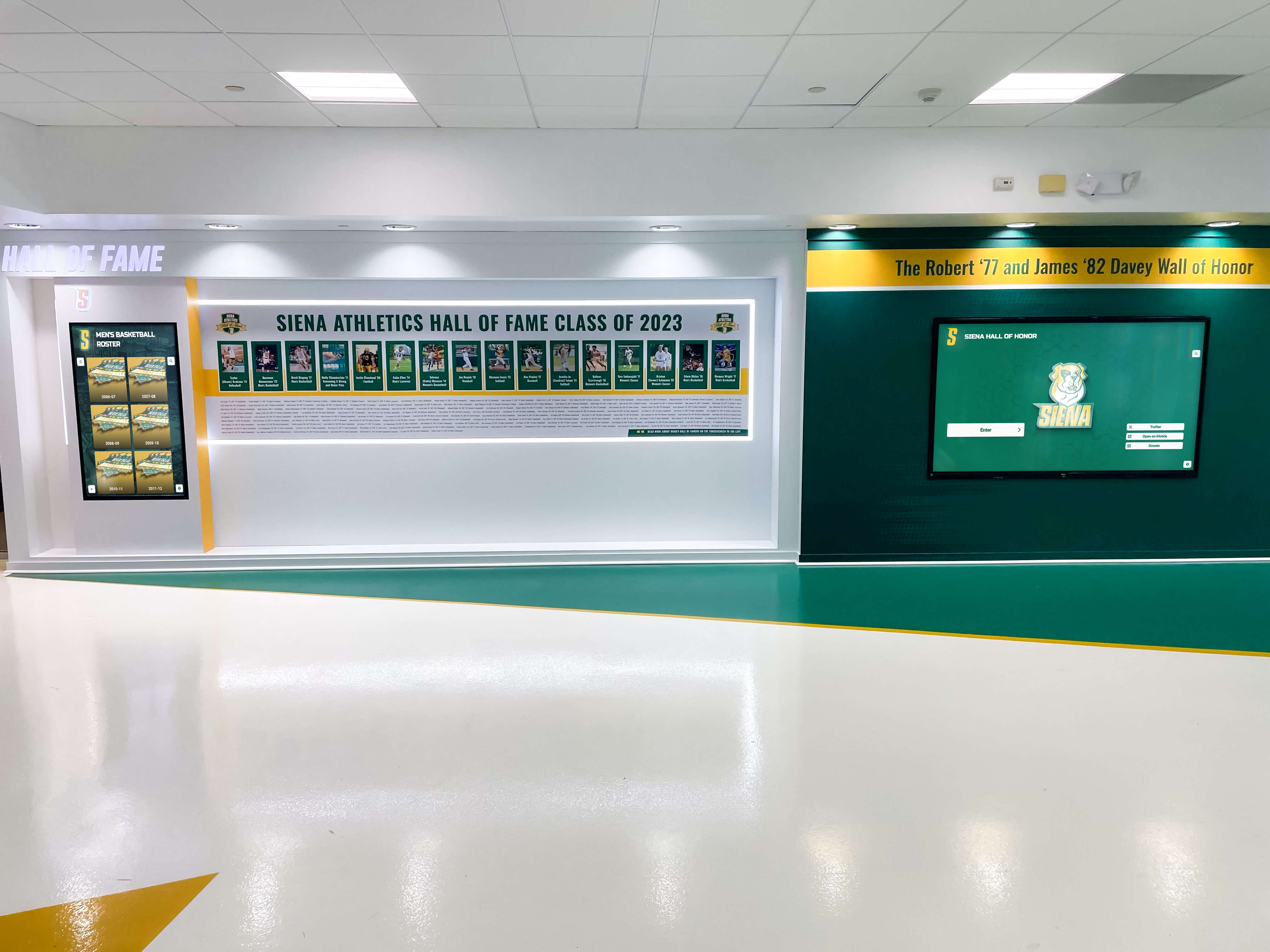
Many programs implement digital recognition systems specifically to solve space constraints while ensuring every championship receives appropriate recognition regardless of physical space limitations. Digital platforms provide unlimited capacity, allowing comprehensive recognition impossible with physical banners alone.
Documenting Championship Banners Digitally
Even programs maintaining traditional physical banners benefit from digital documentation that preserves recognition and extends accessibility.
Digital Documentation Benefits:
- High-resolution photography capturing every banner for archival purposes
- Virtual banner tours accessible to distant alumni
- Social media sharing when new championships are added
- Recruiting materials showcasing championship tradition
- Historical archives preventing loss if physical banners deteriorate
This documentation ensures that even if physical banners eventually retire, the recognition they provided remains accessible permanently. Alumni can view their championship banners online decades after graduation, and comprehensive archives showcase complete program history regardless of current physical display limitations.
Modern Alternatives: Digital Championship Recognition
While traditional fabric banners remain popular and effective, digital recognition technology offers compelling alternatives and complements that solve inherent limitations of physical banners.
Advantages of Digital Championship Displays
Digital recognition platforms provide capabilities impossible with traditional banners:
Unlimited Capacity: Single digital displays can showcase hundreds of championship celebrations with the same visual prominence traditional banners provide for one achievement. Programs never face space constraints preventing recognition of new championships.
Comprehensive Information: Digital systems include complete team rosters, athlete profiles with photos and statistics, season records, championship game details, and video highlights that fabric banners cannot accommodate.
Interactive Exploration: Visitors search for specific championships, athletes, or years rather than passively viewing static displays. This interactivity creates longer engagement and more meaningful connections.
Easy Updates: Adding new championships requires minutes of data entry rather than weeks of banner production and installation. Updates appear instantly across all connected displays and web platforms.
Cost-Effectiveness: While initial digital platform investments exceed single banner costs, comprehensive recognition of all championships costs less digitally than producing hundreds of physical banners as programs accumulate victories.
Remote Accessibility: Web-connected recognition displays allow alumni worldwide to explore championship history, dramatically expanding recognition reach beyond physical facility visitors.
Hybrid Approaches Combining Traditional and Digital Recognition
Many programs discover that combining traditional championship banners with digital recognition provides optimal solutions honoring tradition while embracing modern capabilities.
Effective Hybrid Strategies:
- Display traditional fabric banners for the most prestigious state championships
- Use digital displays to showcase comprehensive championship history including conference and regional titles
- Mount physical banners in primary gymnasium while digital displays in other facilities expand visibility
- Transition older physical banners to digital archives while maintaining recent championships in traditional format
- Create QR codes on physical banners linking to digital profiles with complete team information
This hybrid approach respects the tradition and aesthetic appeal of physical banners while leveraging digital technology’s advantages for comprehensive, accessible recognition that evolves effortlessly as programs add championships.
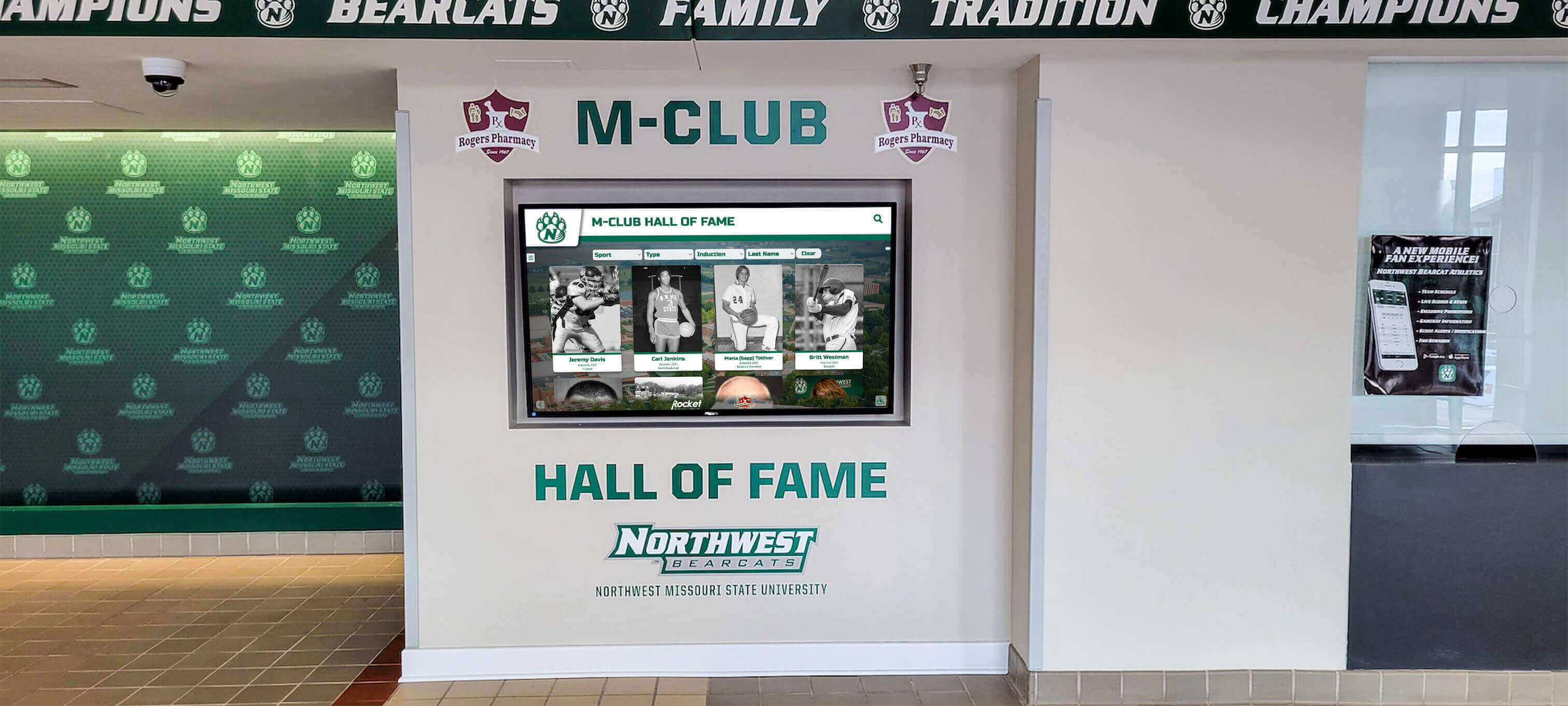
Solutions like Rocket Alumni Solutions specialize in creating these integrated recognition systems where traditional elements and modern technology work together seamlessly, ensuring every championship receives appropriate celebration regardless of physical space constraints or production timelines.
Planning Your Championship Banner Program
Creating effective championship recognition requires systematic planning addressing design standards, production processes, display strategies, and long-term sustainability.
Establishing Design Standards and Guidelines
Consistency across championship banners creates cohesive visual recognition while simplifying production as new championships occur.
Design Standard Documentation:
- Standard banner dimensions for each championship level
- Official color specifications using Pantone or hex codes
- Approved typography selections with size specifications
- Required content elements and optional additions
- Layout templates for different sports and achievement levels
- Quality standards for materials and production methods
These documented standards ensure that championships won in future years receive recognition consistent with existing banners, creating unified visual presentation rather than mismatched displays reflecting whoever happened to design each individual banner.
Production and Installation Processes
Efficient processes ensure prompt championship recognition while maintaining quality and managing costs.
Systematic Production Workflow:
- Designate responsibility for banner creation (athletic director, specific coach, booster club)
- Collect necessary information immediately after championships (photos, team details, statistics)
- Work with consistent vendor relationships ensuring quality and reasonable turnaround
- Schedule installation during off-seasons when facilities are accessible
- Document new banner additions through photography and facility records
- Announce new championship banner unveilings to create celebration moments
Creating templates or working with vendors who maintain your design standards dramatically reduces production time and ensures consistency. Some programs establish standing orders where vendors automatically produce championship banners using established templates whenever notified of new championships, eliminating design phases entirely.
Long-Term Sustainability Planning
Championship recognition programs require sustained commitment and resources across many years and leadership transitions.
Sustainability Considerations:
- Establish clear funding sources for ongoing banner production (athletic budget, booster clubs, fundraising)
- Document processes ensuring smooth transitions when athletic directors or coaches change
- Create digital archives preventing knowledge loss about historical championships
- Plan for inevitable space constraints before they become crises
- Maintain vendor relationships ensuring consistent production quality
- Consider transition strategies to digital platforms if physical space becomes limiting
Programs taking long-term perspectives create championship recognition that evolves smoothly as victories accumulate, leadership changes, and facilities age. The most successful programs view championship recognition as ongoing cultural commitments rather than one-time projects, ensuring recognition quality remains consistent regardless of personnel changes or budget fluctuations.
Conclusion: Creating Championship Recognition That Honors Excellence
Championship banners represent more than colorful fabric suspended from gymnasium rafters—they symbolize dreams achieved through dedication, teamwork valued above individual glory, and standards of excellence that define program culture. When designed thoughtfully and displayed strategically, championship banners create environments that inspire current athletes while honoring those who came before.
The most effective championship recognition balances aesthetic appeal with comprehensive information, traditional approaches with modern innovation, team celebration with individual acknowledgment, and prominent display with sustainable management as victories accumulate. Whether your program chooses classic fabric banners hung from rafters, contemporary vinyl displays mounted on walls, or integrated digital platforms showcasing unlimited championship history, the key is creating recognition that appropriately honors achievement while inspiring future champions.
Every championship your teams win deserves celebration that matches its significance. The banners you create today will remain visible for decades, telling stories about excellence, perseverance, and victory to athletes not yet born. By applying thoughtful design principles, strategic planning, and genuine commitment to honoring achievement, you create championship recognition that serves its essential purposes—celebrating the past, inspiring the present, and establishing standards for the future.
Elevate Your Championship Recognition
Discover how modern recognition solutions can help you celebrate every championship while honoring the student-athletes who earned them. Explore comprehensive platforms designed specifically for athletic programs seeking to create lasting traditions of excellence.
Explore Championship Recognition SolutionsAs your program continues building championship tradition, the recognition systems you implement today will shape athletic culture for generations. Choose approaches that honor excellence comprehensively, inspire continuous improvement, and create environments where current athletes understand they’re part of something larger than themselves—a tradition of championship achievement worth preserving and extending.































