The College Football Hall of Fame represents the pinnacle of achievement in college football, honoring the most distinguished players and coaches who have shaped the sport over more than a century of competition. For universities, high schools, and athletic programs, creating dedicated football halls of fame serves multiple vital purposes—preserving athletic legacy, inspiring current players, strengthening alumni connections, and celebrating the traditions that make football central to institutional identity.
This comprehensive guide explores everything athletic departments and schools need to know about college football hall of fame programs, from understanding the national College Football Hall of Fame in Atlanta to implementing effective recognition displays at your institution. Whether you’re planning a new hall of fame installation or enhancing existing recognition, modern digital recognition solutions offer powerful capabilities for celebrating football excellence while engaging athletes, alumni, and fans for generations to come.
College football occupies a unique position in American sports culture, generating passionate support from millions of fans while serving as a development pathway for professional athletics. The athletes who excel at this level—earning All-American honors, leading championship teams, setting records, and representing their institutions with distinction—deserve recognition that appropriately celebrates their achievements while inspiring future generations of student-athletes.
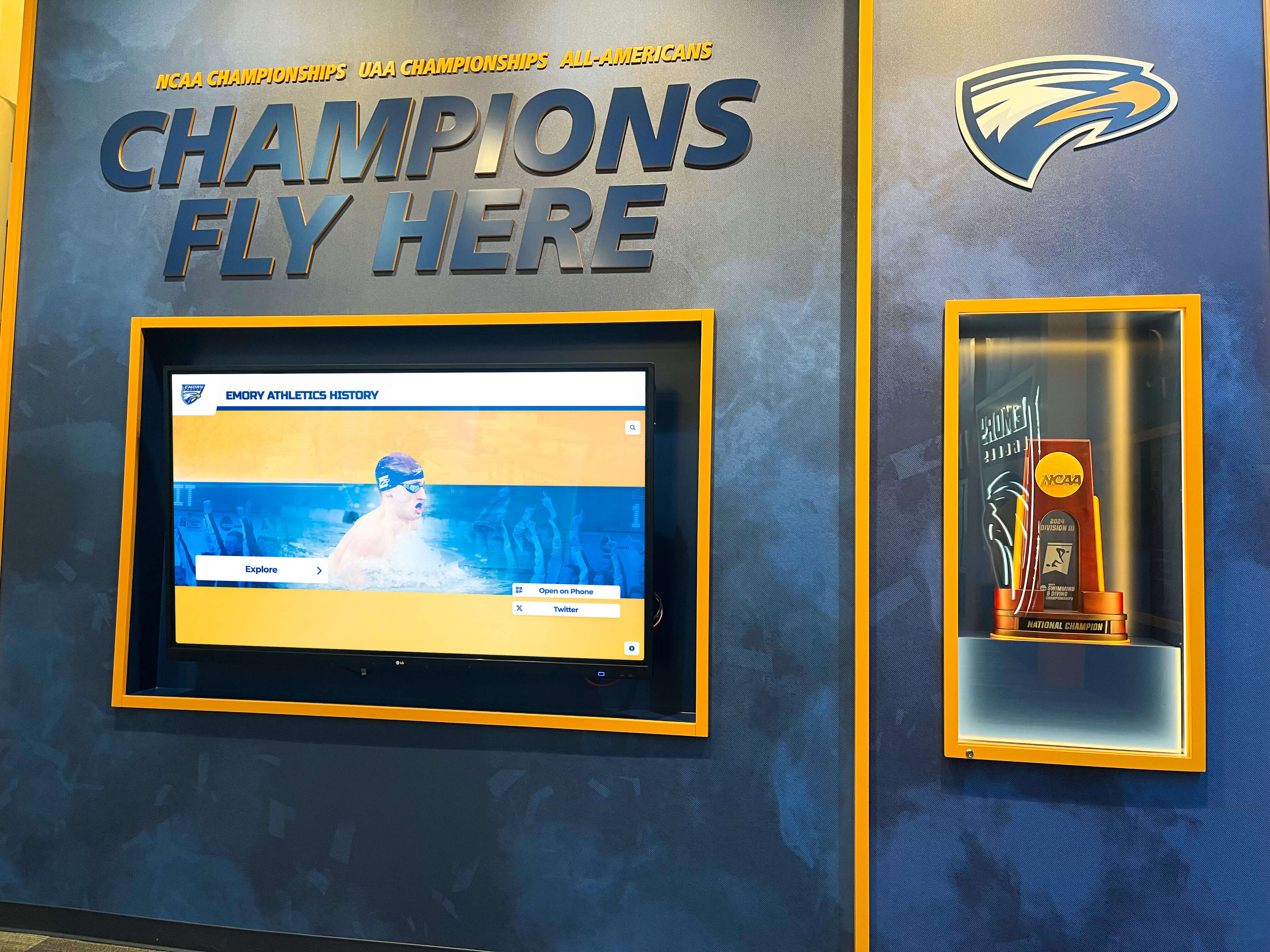
Modern athletic facilities feature comprehensive recognition displays celebrating football and multi-sport excellence
The National College Football Hall of Fame: History and Significance
The College Football Hall of Fame stands as the sport’s ultimate recognition institution, honoring the most distinguished players and coaches from over 150 years of college football history.
Origins and Evolution
The National Football Foundation established the College Football Hall of Fame in 1951, creating a permanent institution dedicated to preserving college football history and honoring its greatest contributors. Originally located in New Brunswick, New Jersey, the Hall of Fame later moved to South Bend, Indiana in 1995, before relocating to its current state-of-the-art facility in Atlanta, Georgia in 2014.
The Atlanta location, adjacent to the Georgia Dome (now Mercedes-Benz Stadium), spans 94,256 square feet and features interactive exhibits, multimedia displays, and comprehensive recognition of every inducted player and coach. The facility represents the evolution from traditional museum displays to engaging interactive experiences that bring college football history to life through modern technology.
Selection Process and Criteria
Induction into the College Football Hall of Fame represents extraordinary selective recognition. According to the National Football Foundation, when the 2025 Hall of Fame class is officially inducted in December 2025, only 1,111 players and 237 coaches will have been inducted from nearly 5.78 million who have played or coached the game during the past 155 years—representing less than 0.02% of all participants.
Player Eligibility Requirements:
- Must have received first-team All-America recognition from a major selector during their playing career
- Must have played their last year of intercollegiate football at least 10 years prior
- Cannot be nominated if currently serving on a coaching staff
- Players become eligible after a 10-year waiting period following their final season
Coach Eligibility Requirements:
- Must have been a head football coach for at least 10 years
- Must have won at least 60 percent of their games
- Must be retired from coaching for at least three years
- Exception: Active coaches over 75 years old who have coached at least 30 years with a .600 winning percentage may be eligible
Selection committees composed of distinguished athletic administrators, media members, and college football historians review nominations annually, with inductees announced each January and officially inducted during the NFF Annual Awards Dinner each December.
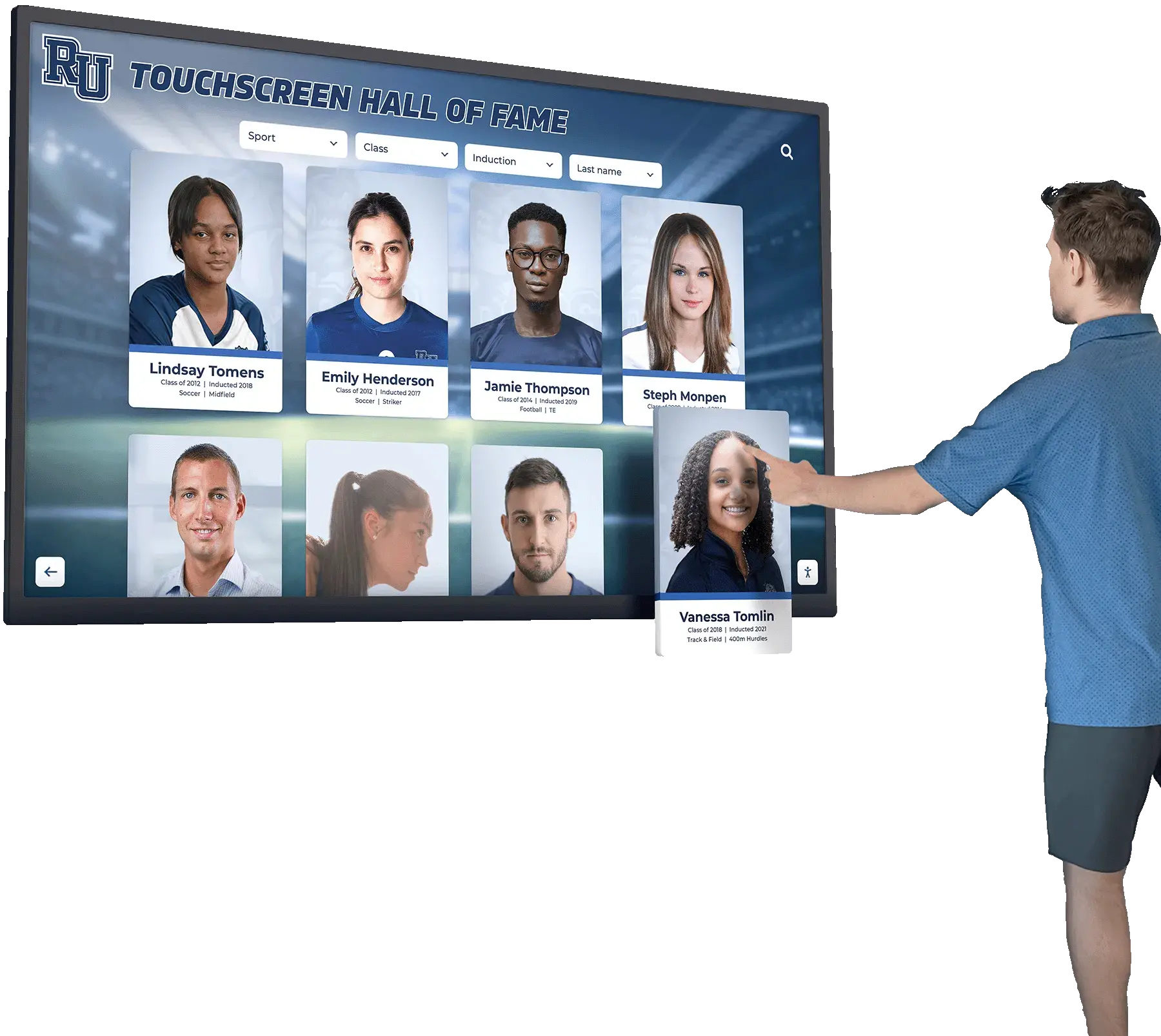
Interactive displays allow visitors to explore comprehensive athlete profiles and career achievements
Notable Inductees and 2025 Class
The College Football Hall of Fame includes legendary figures whose names define college football excellence. Recent inductees demonstrate the caliber of achievement required for recognition.
The 2025 College Football Hall of Fame class announced in January 2025 includes 18 players and four coaches, featuring some of the most recognizable names in recent college football history:
Notable 2025 Coach Inductees:
- Nick Saban (Alabama, LSU, Michigan State, Toledo): Seven-time national champion and arguably the greatest college football coach of all time
- Urban Meyer (Ohio State, Florida, Utah, Bowling Green): Three-time national champion known for innovative offensive systems
- Additional distinguished coaching legends joining this elite group
Notable 2025 Player Inductees:
- Michael Vick (Virginia Tech): Revolutionary dual-threat quarterback who transformed the position
- Haloti Ngata (Oregon): Dominant defensive lineman who anchored championship defenses
- Additional All-Americans representing diverse positions, eras, and programs
These inductees receive multiple forms of recognition including permanent display at the Chick-fil-A College Football Hall of Fame in Atlanta, on-campus recognition salutes at their respective institutions during fall, custom rings created by Jostens, and lifetime membership in college football’s most exclusive fraternity.
Creating Institutional Football Halls of Fame
While the national College Football Hall of Fame honors college football’s absolute elite, individual institutions benefit tremendously from creating their own football hall of fame programs celebrating program-specific legends, championship teams, and significant contributors to local football tradition.
Strategic Purposes of Institutional Recognition
Football hall of fame programs serve multiple vital institutional objectives that justify investment and sustained commitment.
Preserving Athletic History and Tradition: Football programs accumulate rich histories over decades or centuries of competition. Championship seasons, legendary rivalries, record-setting performances, and transformational coaches create institutional memory that risks fading without deliberate preservation. Hall of fame programs function as living archives, documenting achievement while making history accessible and engaging for contemporary audiences who never witnessed historical accomplishments firsthand.
Universities and high schools with football traditions spanning generations possess remarkable stories deserving systematic documentation. Creating an alumni hall of fame provides frameworks applicable to football-specific recognition while addressing unique considerations of athletic programs and competitive achievement.
Inspiring Current Student-Athletes: When current football players see tangible recognition of former players who wore the same uniform, represented the same community, and pursued similar dreams, their own aspirations expand. Recognition displays answer critical questions every athlete asks: What’s possible for someone like me? What standards define excellence here? Who came before me, and how did they achieve success?
Effective hall of fame programs showcase diverse paths to recognition—All-Conference performers, championship contributors, record holders, coaches who built programs, and character leaders who embodied institutional values—demonstrating that multiple definitions of significance merit celebration and remembrance.

Dedicated hall of fame walls create focal points for celebrating football tradition and excellence
Strengthening Alumni Engagement: Former football players often maintain the strongest emotional connections to their alma maters, with athletic experiences creating bonds that persist throughout lifetimes. Recognition programs validate these connections while providing natural touchpoints for re-engagement. Induction ceremonies bring alumni back to campus, recognition announcements create communication opportunities, and displays themselves serve as conversation starters during homecoming weekends and facility tours.
Athletic departments implementing digital alumni hall of fame recognition report significantly increased alumni engagement, with former players visiting more frequently, contributing more generously, and participating more actively in mentorship and volunteer initiatives.
Supporting Recruiting Success: Top recruits evaluate programs based on multiple factors including coaching staff, facilities, competitive opportunity, academic offerings, and program tradition. Hall of fame displays provide concrete evidence of developmental success and championship pedigree that distinguishes programs during competitive recruiting.
When elite prospects tour athletic facilities and encounter displays honoring All-Americans, professional athletes, and championship teams, they visualize themselves as potential future inductees. This aspirational element influences decision-making, particularly when comparing programs with similar competitive profiles and facility quality.
Building Program Culture and Standards: Recognition programs establish and reinforce cultural expectations about what excellence looks like within specific football programs. They communicate standards that transcend individual coaching staffs, creating continuity across coaching changes and demonstrating sustained institutional commitment to competitive achievement, academic excellence, and character development.
Essential Recognition Categories
Comprehensive football hall of fame programs honor diverse contributions across multiple categories ensuring equitable representation and complete celebration of program history.
Legendary Players: Individual player recognition forms the foundation of most football halls of fame. Effective player profiles should include comprehensive biographical information, statistical achievements organized by position and career, All-Conference and All-American honors received, championship team participation and contributions, professional career success when applicable, and academic achievements demonstrating comprehensive student-athlete development.
The most compelling player profiles balance celebrating extraordinary achievement with humanizing the individuals behind the statistics. Video interviews, historical photographs showing progression from freshman to senior, and personal reflections create connections that pure statistics cannot achieve.
Championship Coaching Staffs: Head coaches shape program identity and competitive success as significantly as players, often across decades of influence. Comprehensive coaching recognition should include career records and winning percentages, conference championships and bowl victories, notable players developed and their subsequent success, and coaching philosophy and system innovations that influenced the sport more broadly.
Beyond head coaches, assistant coordinators, position coaches, strength and conditioning professionals, and support staff also deserve recognition when their contributions prove essential to program success. Resources on coaching appreciation and recognition provide frameworks for honoring comprehensive coaching contributions.
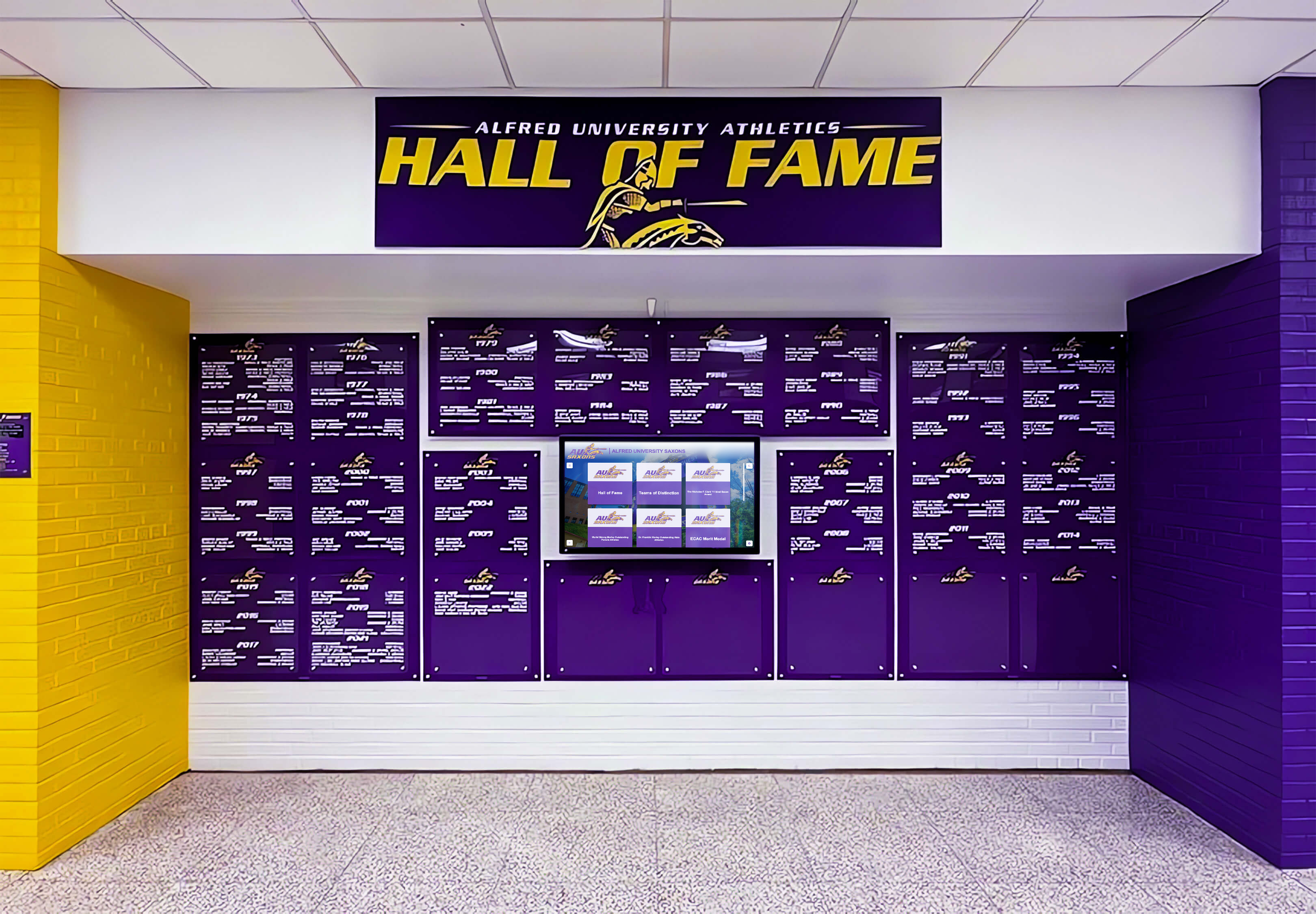
Hall of fame displays celebrate individual and team excellence across program history
Championship Teams and Historic Seasons: Team achievements often resonate more powerfully than individual statistics, particularly in football where collective excellence determines success. Recognition of championship seasons should include complete rosters identifying every contributor, detailed season narratives with game-by-game results, championship game documentation, and contextual information about obstacles overcome and competition defeated.
Conference championship seasons deserve particular emphasis given their significance within competitive conferences. Many programs create timeline displays showing all championship seasons, allowing visitors to explore specific years for detailed team information and individual contributor profiles.
Record Holders and Statistical Leaders: Statistical achievement provides objective measures of excellence that translate across eras and enable meaningful comparisons. Football halls of fame should prominently feature career and season records across all statistical categories—passing yards, rushing yards, receiving yards, touchdowns, tackles, sacks, interceptions, and position-specific achievements.
Digital record board systems prove particularly effective for statistical recognition because they can accommodate extensive records across multiple categories while providing filtering and search capabilities that traditional physical displays cannot match.
Special Recognition Categories: Consider establishing specific categories recognizing particular achievements beyond pure athletic performance:
- Academic All-Americans demonstrating student-athlete excellence
- Character and leadership award recipients embodying program values
- Distinguished service by longtime equipment managers, athletic trainers, or administrators
- Media members and broadcasters who chronicled program history
- Significant benefactors whose philanthropy enabled program advancement
Modern Recognition Solutions for Football Programs
Digital technology has transformed possibilities for honoring football achievement, addressing limitations of traditional approaches while creating new engagement opportunities particularly valuable for programs with extensive histories.
Traditional Physical Recognition Approaches
Physical displays offer timeless presence and don’t require technical infrastructure, making them appropriate for many contexts.
Engraved Plaques and Nameplates: Classic brass or bronze plaques mounted on dedicated walls provide permanent, formal recognition. Individual plaques or nameplates create impressive visual impact, particularly when arranged in organized patterns that grow over time. Traditional plaques work well for institutions valuing permanence and classic aesthetics, though space constraints eventually limit expansion, and updates or corrections require expensive replacement plaques.
Trophy Cases and Display Cabinets: Three-dimensional cases showcase awards, game balls, jerseys, helmets, and artifacts alongside recognition plaques. These installations work particularly well when physical objects meaningfully tell achievement stories. Trophy cases require significant space and ongoing maintenance to keep contents clean, organized, and properly lit.
Wall of Fame Displays: Framed photographs with accompanying biographical text offer more personal connection than simple nameplates. Visitors relate more strongly when seeing inductees’ faces alongside achievement narratives. Photo boards require consistent photography quality and styling while facing similar space limitations as plaque installations.
Interactive Digital Recognition Systems
Modern technology transforms what’s possible in football recognition, eliminating traditional limitations while creating engaging experiences.
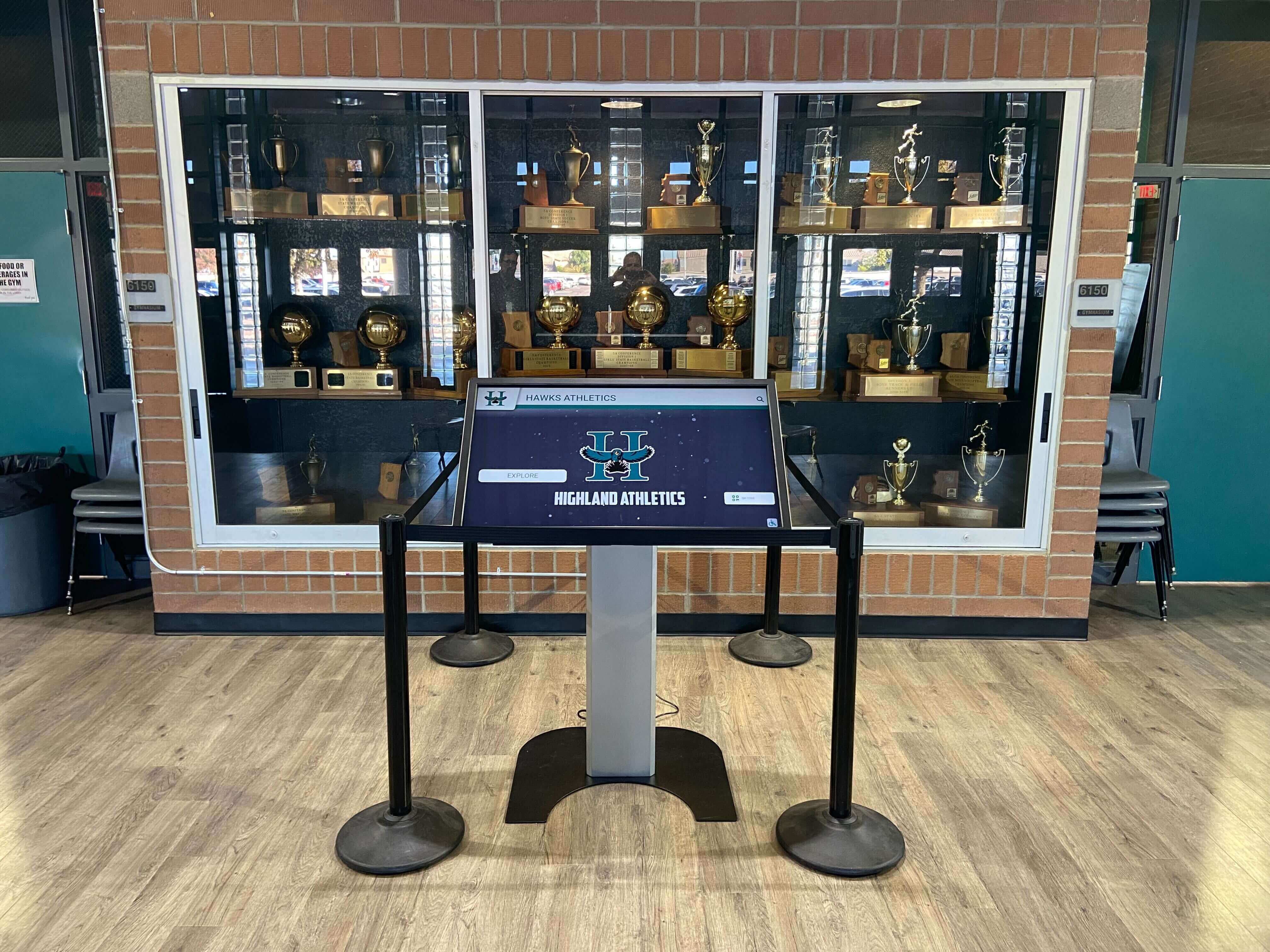
Touchscreen kiosks integrate seamlessly with traditional trophy cases and recognition displays
Unlimited Recognition Capacity: Digital systems accommodate unlimited inductees without space constraints—whether recognizing 50 players or 500, the physical footprint remains constant. Content updates happen instantly through software rather than physical modifications, and multimedia elements create rich storytelling impossible with static displays.
Solutions like Rocket Alumni Solutions specialize in athletic recognition technology, providing purpose-built platforms that address specific needs of football programs with features including position-specific categorization, statistical integration and record tracking, team roster displays with individual player links, and championship season documentation with game-by-game details.
Rich Multimedia Storytelling: Digital platforms support extensive content types that traditional displays cannot accommodate:
- High-resolution photography showing career progression
- Video highlight reels of memorable plays and performances
- Audio interviews with former players and coaches
- Detailed statistical breakdowns by season and career
- Interactive timelines visualizing program history
- Social media integration amplifying recognition reach
These multimedia elements create immersive experiences that bring football achievements to life in ways that text alone cannot achieve. Understanding how digital displays inspire alumni to give back demonstrates broader benefits beyond simple recognition.
Powerful Search and Discovery: Robust search enables visitors to find specific inductees instantly by name, position, era, achievement type, or statistical category. Browsing tools support exploration by championship year, All-Conference selections, record holders, or coach. These discovery capabilities generate extended engagement as visitors explore related content and discover new stories about program history.
Web-Based Hall of Fame Platforms: Digital recognition extends beyond physical displays through online hall of fame platforms accessible to football alumni and fans worldwide. Web platforms enable alumni anywhere to explore hall of fame content, social sharing that amplifies recognition reach throughout broader networks, integration with athletic fundraising and engagement systems, and mobile accessibility for visitors during campus tours and facility visits.
Many programs implement hybrid approaches combining physical touchscreen installations in high-visibility athletic facility locations with online companion platforms accessible globally. This omnichannel strategy maximizes both on-campus impact for current players and recruits while enabling worldwide alumni engagement.
Analytics and Engagement Measurement
Digital recognition systems provide valuable data about visitor engagement including total interactions and unique sessions, average engagement duration per visit, most-viewed player profiles and content, search patterns revealing visitor interests, and peak usage times identifying when engagement occurs most frequently.
This analytics information helps athletic departments understand what content resonates most powerfully, informs decisions about where to invest in additional content development, and demonstrates return on investment to stakeholders who approved recognition expenditures.
Implementing Football Hall of Fame Programs
Successfully launching or enhancing comprehensive football recognition requires systematic planning addressing multiple strategic dimensions.
Establishing Selection Criteria and Processes
Clear selection criteria ensure fairness and maintain recognition program prestige. Most athletic departments establish criteria considering multiple factors:
Competitive Achievement Standards:
- First-team All-Conference selections (number of years and competitive context)
- All-American recognition at any level (consensus, first-team, second-team)
- Conference championship team participation and individual contribution significance
- National championship or major bowl game participation
- Statistical achievements and program records (career or single-season)
- NFL draft selection or professional football career success

Interactive interfaces make exploring detailed player profiles intuitive and engaging
Character and Leadership Considerations:
- Academic achievement and degree completion
- Character demonstration and sportsmanship throughout career
- Leadership roles on teams and in broader campus community
- Positive representation of institution after graduation
- Continued engagement with program and institution
Eligibility Requirements: Most programs require minimum time periods since graduation—typically 5-10 years for most players, potentially longer for active professional athletes—ensuring recognition reflects sustained accomplishment rather than momentary success that may not stand the test of time.
Selection Committee Composition: Selection committees typically include diverse representation from athletic administration, former players from multiple eras, coaching staff input, faculty athletics representatives, and sometimes community representatives with deep program knowledge. This diversity ensures all deserving candidates receive fair consideration and that committee composition doesn’t overweight specific eras at the expense of comprehensive historical recognition.
Content Development Best Practices
Effective recognition requires compelling content that honors inductees appropriately while engaging diverse audiences and telling complete achievement stories.
Comprehensive Profile Structure: Effective player profiles include graduation year and academic honors, significant involvement during playing career, career statistics and achievements by position, All-Conference and All-American recognition, championship team contributions and memorable performances, professional career highlights when applicable, personal reflections on institutional impact, and advice or messages for current players.
Compelling Narrative Writing: Move beyond bullet-point lists to craft engaging narratives using active voice and vivid language, specific details and concrete examples, storytelling structure with beginning-middle-end, challenges overcome and lessons learned, and connections between college experiences and later success.
Position-Specific Recognition: Recognize the unique contributions different positions make to team success. Offensive linemen who never touched the ball but enabled offensive success deserve recognition equivalent to skill position players accumulating statistics. Defensive specialists who excelled in specific schemes merit celebration alongside players who achieved more visible statistical success.
Understanding how to highlight student accomplishments provides frameworks applicable to celebrating athletic achievement while maintaining appropriate educational context.
Budget Planning and Funding Strategies
Recognition program costs vary significantly based on approach and scope. Initial investments for digital implementations typically range from $15,000 to $60,000+ for comprehensive systems including commercial-grade touchscreen hardware, specialized recognition software with annual licensing, initial content development including research and media production, professional installation and integration with facility infrastructure, and launch event and promotional expenses.
Funding Strategies: Athletic department operating budget allocations, dedicated fundraising campaigns positioning recognition as giving opportunities, corporate sponsorships from regional or national companies, naming opportunities for major facility components or recognition elements, and booster club support from passionate football supporters.
Framing recognition as investment in tradition, recruiting, and alumni engagement proves more successful than requesting one-time project funding. The ongoing benefits across multiple strategic priorities justify sustained budget commitments that ensure long-term program vitality and relevance.
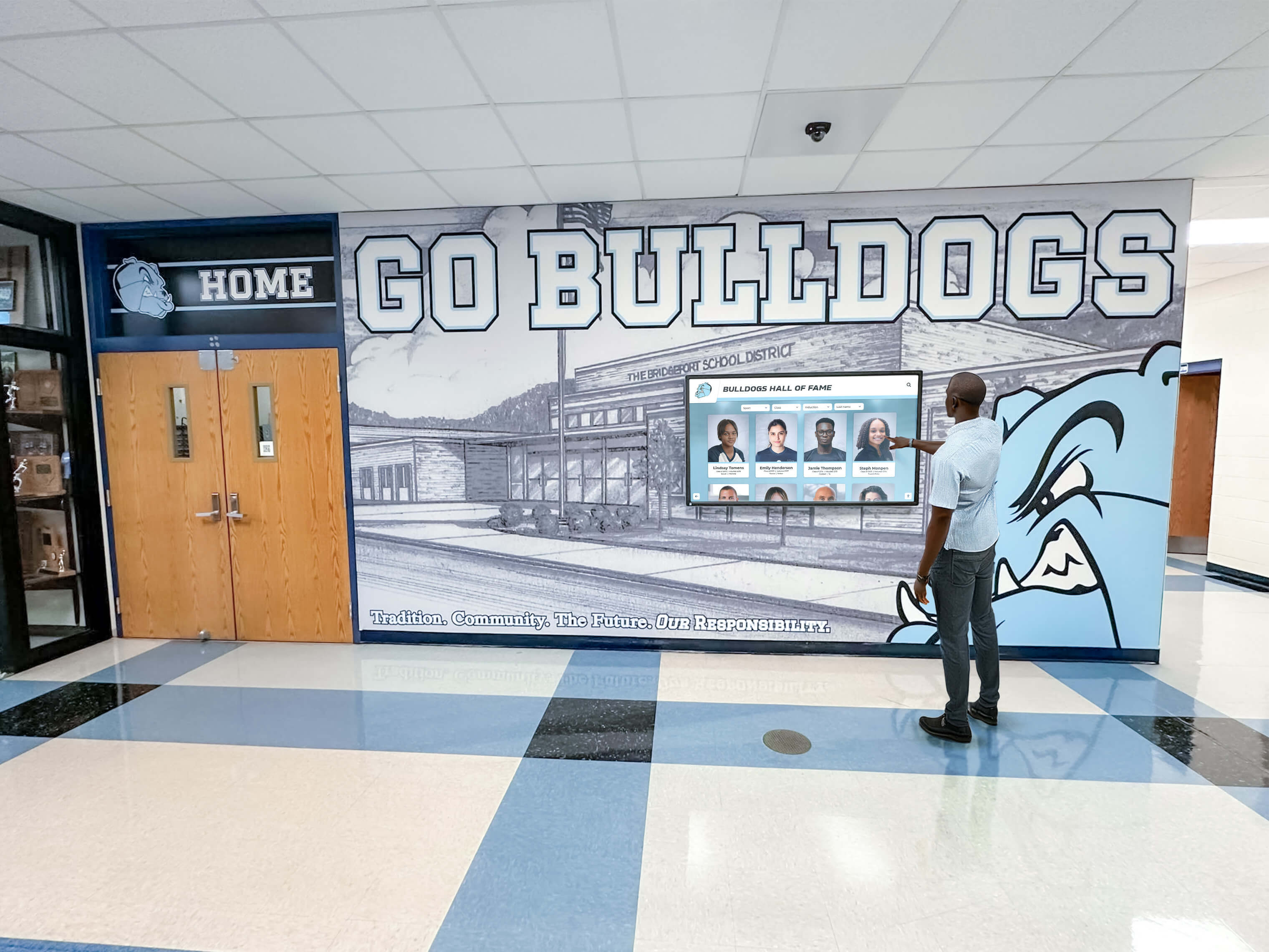
Strategic placement in high-traffic areas maximizes visibility and engagement with recognition displays
Location and Visibility Planning
Recognition display location significantly impacts effectiveness for serving multiple audiences including current players, prospective recruits and families, alumni and boosters, and general campus visitors. Ideal locations provide high visibility in areas with consistent traffic, symbolic significance within athletic facilities, adequate space for comfortable viewing and interaction, and appropriate environmental conditions protecting hardware investments.
Common successful locations for football hall of fame displays include athletic complex main lobbies, stadium club levels and main concourses, football-specific facilities like locker room areas, dedicated athletic heritage rooms when space permits, and strategic positions along official recruiting tour routes.
Some comprehensive programs implement multiple display locations—perhaps a primary installation in the football facility with secondary displays in general athletic areas. Digital platforms make this multi-location approach practical because the same content database populates all displays.
Leveraging Football Recognition for Multiple Benefits
Comprehensive hall of fame programs deliver value extending far beyond simple commemoration when integrated thoughtfully into broader athletic department strategies.
Recruiting Excellence
Top recruits evaluate programs based on numerous factors including coaching quality, facilities, competitive opportunity, academic offerings, and program tradition. Hall of fame displays provide concrete evidence of developmental success and championship tradition that distinguishes programs during competitive recruiting.
Coaching staffs can use interactive digital recognition systems during official visits to showcase position-specific examples, demonstrate consistent player development across multiple coaching eras, highlight academic achievement alongside athletic success, and connect recruits with relevant alumni mentors at their position.
Resources on college commitment recognition demonstrate how celebrating player decisions creates momentum while building program culture around significant recruiting milestones.
Alumni Engagement and Fundraising
Recognition creates powerful emotional responses when former players see their achievements honored publicly. This public celebration strengthens identification with alma mater and football programs, creating goodwill that manifests through increased attendance at games and reunions, participation in mentorship programs for current players, enhanced financial support through annual giving and major gifts, and advocacy during institutional decision-making processes.
Many universities report direct correlation between hall of fame recognition and increased philanthropic support from inducted players and their families. The recognition itself often catalyzes renewed engagement with institution and football programs after years of limited contact.
Understanding the psychology of athletic recognition helps athletic departments maximize engagement impact while supporting broader advancement priorities.
Program Culture and Current Player Motivation
Recognition programs establish and reinforce cultural expectations about what excellence looks like within specific football programs. They communicate standards that transcend individual coaching staffs, creating continuity across coaching changes and demonstrating sustained institutional commitment to competitive achievement.
Current players encountering hall of fame displays daily gain tangible understanding of program standards and expectations. This ambient reinforcement proves particularly effective for younger players and incoming recruits still developing their understanding of program culture and competitive requirements.
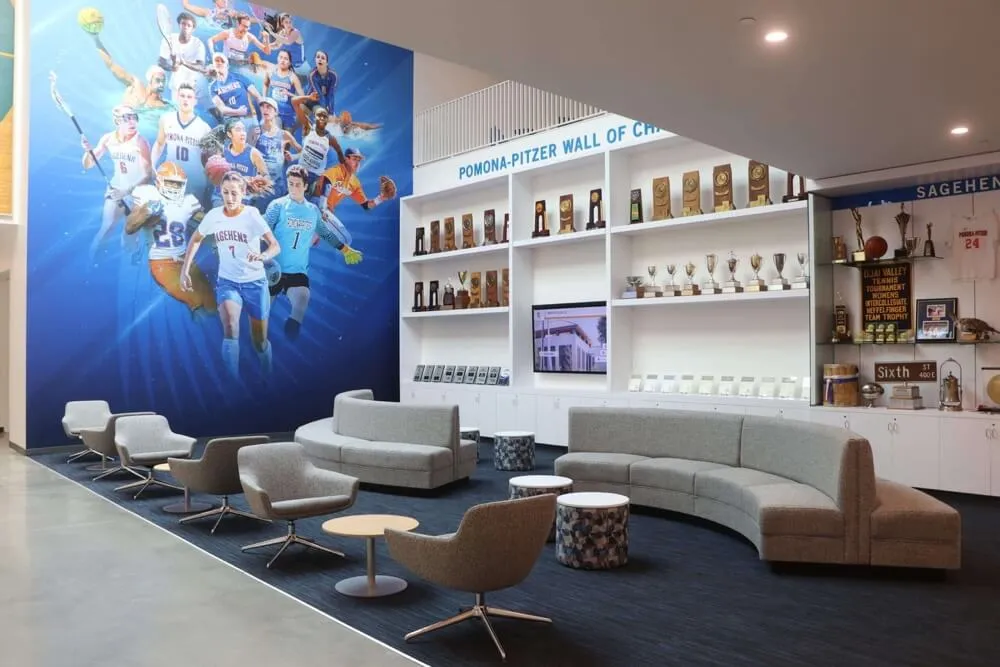
Integrated recognition in team spaces creates daily inspiration for current athletes
Special Considerations for Different Competitive Levels
While fundamental principles apply universally, different competitive contexts present unique considerations.
NCAA Division I Football Bowl Subdivision (FBS)
Major college football programs at the FBS level face unique recognition challenges due to extensive achievement volume, high-profile player development into professional ranks, significant media coverage and public interest, intense recruiting competition, and substantial booster and donor engagement.
FBS programs benefit particularly from comprehensive digital systems that can accommodate hundreds of inductees across decades of competition. The ability to showcase complete career statistics, professional achievements, and multimedia content proves essential for programs competing for top recruits against peer institutions with similar traditions.
Understanding SEC athletics hall of fame approaches provides frameworks applicable to major conference programs managing extensive recognition needs across multiple sports while maintaining football prominence.
NCAA Division II, III, and NAIA Programs
Programs at these levels often emphasize different values including academic achievement alongside athletic success, comprehensive student-athlete development, community engagement and regional pride, and sustained competitive excellence within appropriate competitive contexts.
Recognition programs at these levels should celebrate achievements appropriately scaled to competitive environment—conference championships, All-Conference selections, regional recognition, and contributions to program building deserve celebration equivalent to higher-division accomplishments when evaluated within appropriate contexts.
High School Football Programs
High school football hall of fame displays (concepts applicable to football) often emphasize recent graduates and local achievers whose proximity creates stronger student connections. Recognition categories might include state championship teams, All-State selections, college scholarship recipients, distinguished service by long-time coaches, and community contributors who supported programs.
High schools benefit particularly from showcasing alumni working in varied fields beyond professional sports, demonstrating that football develops life skills applicable to diverse career paths regardless of whether players compete at higher levels.
The Future of Football Hall of Fame Recognition
Recognition technology and approaches continue evolving, bringing new capabilities that will enhance how programs celebrate football excellence.
Enhanced Multimedia and Immersive Experiences
Future recognition systems will likely incorporate increasingly sophisticated technologies including virtual reality experiences recreating championship games and memorable performances, augmented reality features overlaying historical content on physical stadium spaces, AI-enhanced video restoration bringing vintage footage to modern quality standards, and holographic displays creating three-dimensional player presentations.
These technologies will make historical achievements more accessible and engaging for younger audiences who connect naturally with immersive digital experiences, ensuring that recognition remains relevant and compelling across generations of players and fans.
Social Integration and Community Content
Recognition will increasingly incorporate social and participatory elements including verified alumni contributions of memories and photographs, community voting on special recognition categories or greatest moments, live-streaming of induction ceremonies reaching global audiences, and collaborative storytelling where supporters contribute personal connections to honorees.
This participatory approach transforms recognition from institutional top-down initiative into community-owned celebration of shared football tradition, strengthening connections across diverse constituencies while generating authentic content that enriches official recognition.
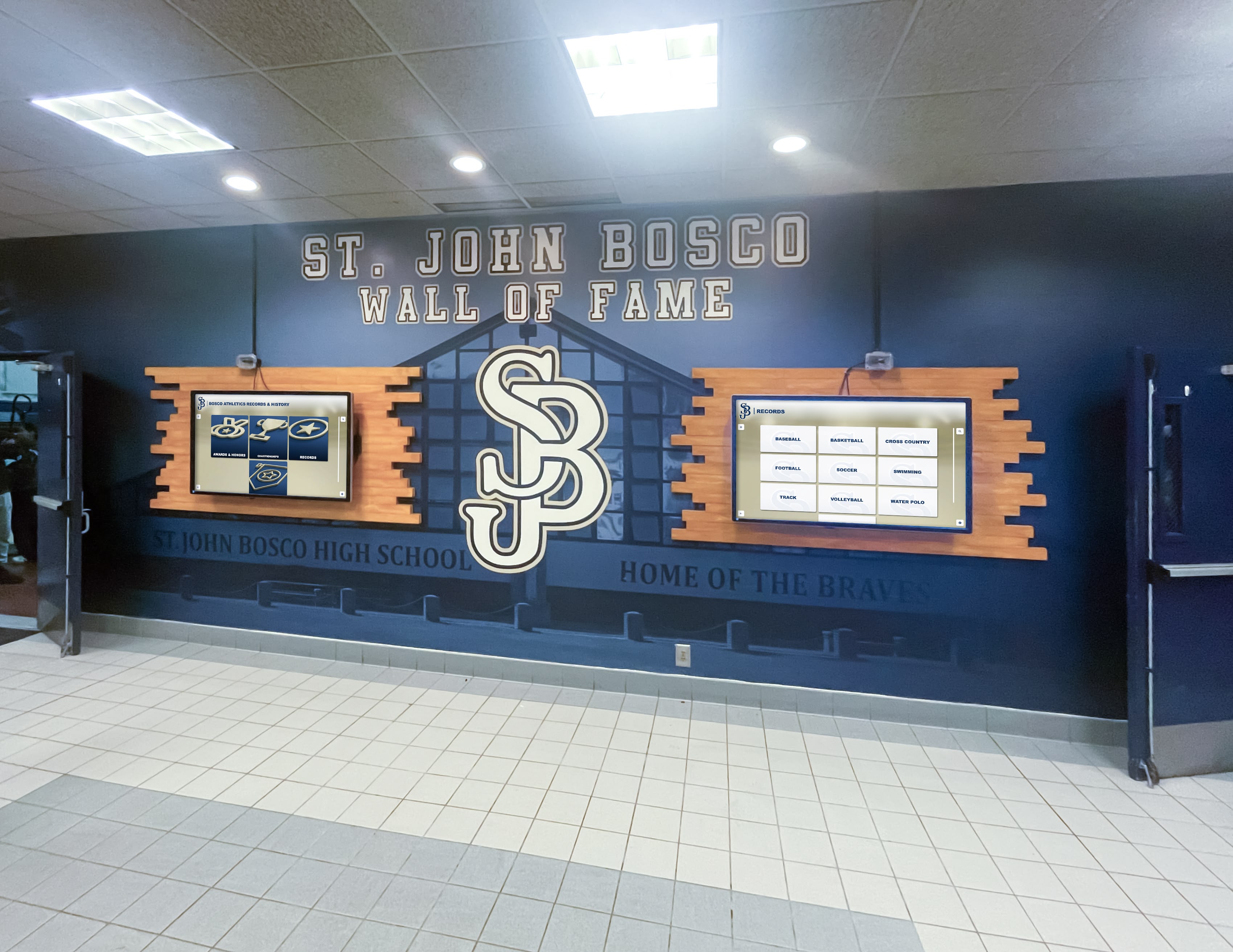
Multi-screen installations provide expanded recognition capacity while creating impressive visual impact
Conclusion: Celebrating Football Excellence for Generations
College football hall of fame programs—whether honoring national legends in Atlanta or celebrating local heroes at individual institutions—serve purposes extending far beyond displaying names on walls. They preserve athletic memory ensuring extraordinary achievements remain visible to future generations. They strengthen alumni connections by demonstrating that contributions matter and deserve celebration. They inspire current players by showcasing concrete examples of excellence at their positions. And they support recruiting, fundraising, and institutional pride by celebrating traditions of competitive success that define football program culture.
Whether implemented through traditional physical displays, modern digital interactive systems, or hybrid approaches combining both elements, effective football hall of fame programs require thoughtful planning addressing selection criteria, content development across all positions and eras, appropriate technology enabling comprehensive recognition, integration with recruiting and advancement priorities, and sustained commitment to ongoing management and enhancement.
The evolution from space-constrained trophy cases to unlimited-capacity digital platforms has fundamentally transformed recognition possibilities for football programs with extensive histories spanning decades or centuries of competition. Programs no longer face impossible decisions about which achievements deserve recognition or which players receive prominence. Digital solutions like Rocket Alumni Solutions enable comprehensive celebration of entire program histories while creating engaging experiences accessible both on campus and worldwide.
For athletic departments seeking to honor football excellence while building traditions for future generations, comprehensive hall of fame recognition represents investment delivering returns across multiple dimensions—enhanced recruiting competitiveness, increased alumni engagement and philanthropic support, strengthened program culture and player motivation, and preserved institutional memory celebrating the athletes and coaches who made football programs into sources of pride for entire communities.
Transform Your Football Recognition Program
Discover how modern digital recognition solutions can help your football program honor legendary players and coaches, inspire current athletes, and strengthen alumni connections for generations to come.
Schedule Your ConsultationReady to celebrate your football program’s legacy? Explore comprehensive recognition solutions designed specifically for football programs, or learn more about athletic history displays and digital trophy case approaches that preserve football excellence while creating engaging experiences for current and future generations of players, alumni, and passionate football supporters.































