When a university volleyball program wins a national championship, the accomplishment represents years of dedication, intense training, strategic coaching, and exceptional teamwork. Yet many institutions struggle with how to appropriately honor these achievements beyond the immediate celebration. Championship banners fade, trophies gather dust in storage, and the athletes who sacrificed so much risk being forgotten as years pass and new teams take the court.
The most forward-thinking universities recognize that championship volleyball teams deserve lasting recognition that inspires current athletes, engages alumni, and celebrates the program’s legacy for decades to come.
This comprehensive guide explores how colleges and universities can create meaningful, sustainable recognition programs for volleyball national championship achievements. Whether your program just captured its first title or you’re looking to modernize how you honor a championship tradition spanning decades, you’ll discover practical strategies for celebrating volleyball excellence through innovative recognition displays, meaningful ceremony traditions, and digital platforms that bring championship stories to life.
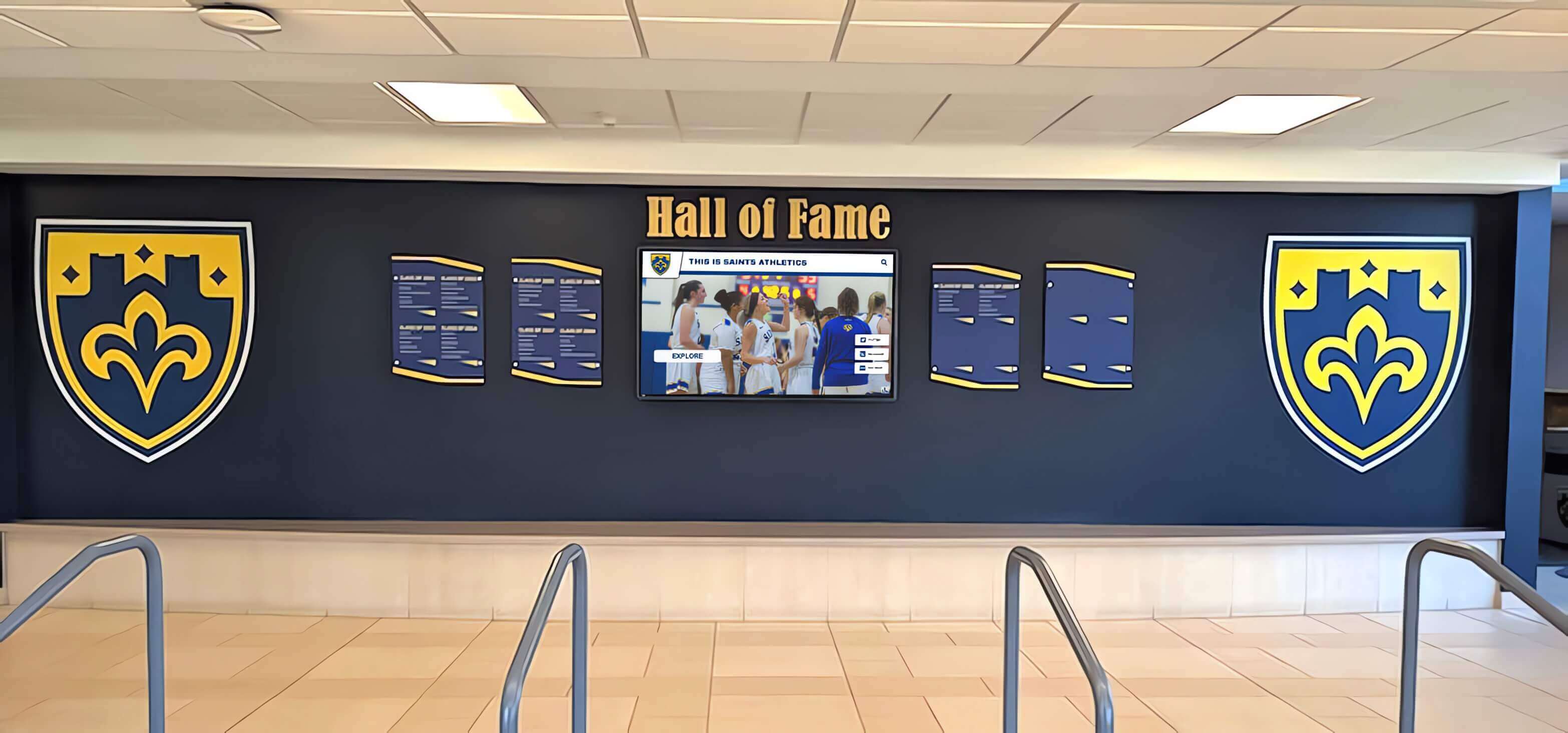
Modern athletic facilities integrate interactive recognition displays showcasing volleyball championships and athlete achievements
Understanding the Significance of College Volleyball Championships
Before exploring recognition strategies, it’s essential to understand what volleyball national championships represent and why they deserve comprehensive, lasting celebration.
The NCAA Volleyball Championship Landscape
College volleyball competition occurs across three NCAA divisions, each with distinct competitive characteristics and championship formats.
Division I Volleyball Championships:
Division I represents the pinnacle of college volleyball, featuring the largest programs with the most resources and the most athletic scholarships. The NCAA Division I Women’s Volleyball Championship concludes each December with a 64-team tournament bracket culminating in championship matches that draw national television audiences and capacity crowds. Programs like Stanford, Penn State, Nebraska, and Texas have built legendary traditions through repeated championship success.
The competition intensity at Division I level demands year-round training, sophisticated coaching systems, strength and conditioning programs, sports medicine support, and recruiting that attracts the nation’s elite high school talent. When Division I programs win national championships, they achieve success within the most competitive environment college sports offers.
Division II and Division III Excellence:
Division II and Division III volleyball championships receive less media attention than Division I but represent equally impressive achievements within their competitive contexts. These programs often operate with limited budgets, smaller coaching staffs, and athletes balancing rigorous academic demands without the time flexibility athletic scholarships provide at Division I level.
Division II programs can offer partial athletic scholarships, creating competitive recruiting landscapes where program culture and academic offerings significantly influence athlete decisions. Division III prohibits athletic scholarships entirely, meaning every athlete chooses their university primarily for academic and cultural fit rather than financial incentives.
Championship success at these levels demonstrates exceptional program development, coaching excellence, and athlete commitment worthy of recognition equal to Division I achievements.
What Championship Success Represents
Volleyball national championships embody multiple dimensions of achievement that recognition programs should acknowledge comprehensively.
Athletic Excellence and Skill Development:
Championship-level volleyball demands extraordinary athletic capabilities including explosive vertical jumping for blocking and attacking, lightning-quick reaction times for defensive plays, precision hand-eye coordination for setting and passing, sustained stamina across multi-hour matches, and mental toughness to execute under extreme pressure.
Athletes reaching championship levels represent the culmination of years of skill development beginning in youth club volleyball, continuing through high school competition, and refining through college training. Championship recognition celebrates this sustained athletic commitment.
Team Chemistry and Collective Achievement:
Unlike individual sports where single athletes can dominate, volleyball success demands seamless team synchronization. Six players must operate as coordinated units where each athlete trusts teammates to fulfill their specialized roles—setters distributing precisely timed sets, outside hitters converting sets into kills, middle blockers disrupting opponent attacks, liberos anchoring defensive systems, and defensive specialists providing passing stability.
Championship teams develop chemistry through thousands of practice hours, shared adversity overcoming losses and setbacks, vulnerability communicating openly about mistakes and improvements, and trust executing complex systems under tournament pressure.
Recognition should honor both individual contributions and the collective achievement that only team sports provide.

Athletics departments use prominent digital displays to showcase championship achievements and honor team excellence
Coaching and Program Building:
Behind every championship volleyball team stands coaching leadership that recruits talented athletes, develops technical and tactical systems, manages complex team dynamics, prepares comprehensive competitive strategies, and sustains program cultures producing consistent excellence.
Many championship coaches spent decades building programs before breakthrough championship success. Their persistence through challenging seasons, commitment to athlete development beyond just winning, and strategic vision positioning programs for sustained competitiveness deserve recognition alongside player achievements.
Academic Achievement Integration:
Student-athletes at all division levels balance demanding academic requirements with volleyball commitments consuming 20+ hours weekly during season. Many championship team members maintain impressive GPAs while competing at elite levels, with scholar-athlete recognition programs honoring this dual excellence.
Championship recognition should acknowledge academic achievement alongside athletic success, demonstrating that universities value complete student development rather than just competitive results.
Traditional Championship Recognition Methods
Universities have employed various recognition approaches for celebrating volleyball championships, each with distinct advantages and limitations.
Championship Banners and Wall Displays
Physical championship banners hanging in volleyball facilities represent the most visible traditional recognition format.
Banner Design and Placement:
Championship banners typically include the year of championship success, specific tournament or division designation (NCAA Division I Champion, Conference Champion, Regional Champion), program mascot or institutional branding, and design elements in school colors creating visual impact.
Banners hang prominently in competition venues where current teams practice and compete daily, creating constant visual reminders of program tradition and championship expectations. Visiting opponents see banners immediately upon entering facilities, establishing psychological advantages before matches even begin.
Limitations of Banner Recognition:
While visually impactful, banners alone provide limited information beyond basic achievement acknowledgment. Visitors cannot identify specific athletes who contributed to championships, understand the journey that produced championship success, explore statistics or memorable moments from championship seasons, or interact with championship history in meaningful ways.
Banners also face practical constraints including finite ceiling or wall space limiting how many championships can be displayed, physical deterioration requiring periodic replacement, difficulty updating when athletes go on to professional careers or other notable achievements, and minimal engagement beyond passive viewing.
Trophy Cases and Physical Displays
Many athletic departments maintain trophy cases showcasing championship hardware, individual awards, and program artifacts.
Trophy Case Benefits:
Physical trophy displays create tangible connections to championship success through actual championship trophies the team received, individual player awards like All-American plaques or conference honors, photographs of championship teams and celebration moments, game balls from championship matches, and historical artifacts like vintage uniforms or equipment.
Well-maintained trophy cases provide impressive focal points in athletic facilities, especially when positioned in high-traffic areas where prospective student-athletes and their families encounter them during campus visits.
Trophy Case Challenges:
Trophy cases face significant limitations including space constraints restricting what can be displayed, maintenance burden requiring regular cleaning and organization, security concerns protecting valuable artifacts from theft or damage, static presentation offering no interactivity or deeper information, and accessibility issues for people unable to visit campus in person.
Additionally, as programs accumulate more championships and honors over decades, athletic departments face difficult decisions about which achievements to display and which to remove or relocate to storage.
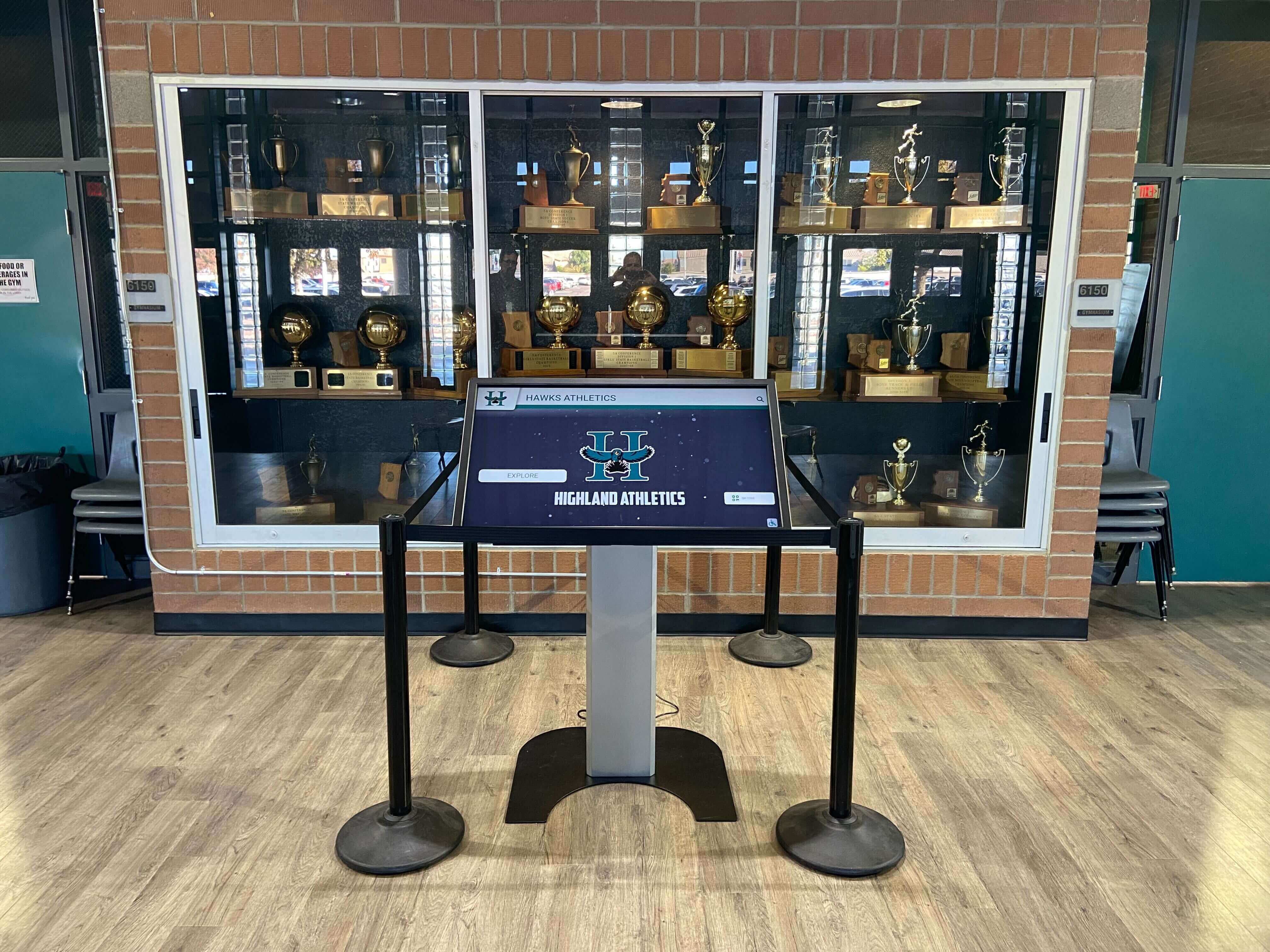
Modern athletic facilities blend traditional trophy displays with digital screens providing comprehensive recognition
Championship Rings and Individual Athlete Recognition
Championship rings provide personal recognition for athletes, coaches, and program contributors.
Ring Traditions:
Universities typically present championship rings during post-season celebration ceremonies, with designs featuring school logos, championship year and designation, athlete names or jersey numbers, and program-specific design elements reflecting team identity.
Rings create tangible personal mementos athletes treasure throughout their lives, serving as conversation starters and sources of pride during alumni gatherings, career networking situations, and family celebrations.
Beyond Individual Keepsakes:
While championship rings appropriately honor individual participants, they don’t provide institutional recognition accessible to broader university communities. Current students never see rings worn by athletes who graduated decades earlier, prospective recruits can’t explore championship team rosters and achievements, and community members can’t engage with championship history unless they personally know ring recipients.
Effective recognition programs provide both personal mementos for participants and institutional displays accessible to broader audiences.
Modern Digital Recognition Solutions for Volleyball Championships
Digital recognition technology has transformed how universities can celebrate volleyball championships, addressing every limitation of traditional approaches while creating engaging experiences that honor achievement comprehensively.
Interactive Digital Volleyball Recognition Displays
Digital recognition displays provide dynamic platforms for showcasing championship volleyball achievements through multimedia storytelling and intuitive interaction.
Unlimited Recognition Capacity:
A single touchscreen display can showcase dozens of championship seasons with detailed information for each team including complete rosters with athlete biographies, season records and tournament progression, individual statistics and achievement highlights, coaching staff and support personnel recognition, video highlights from championship matches and season memorable moments, and historical context situating championships within program timelines.
Universities never face difficult choices about which championships to display prominently and which to relegate to storage. Every championship season receives comprehensive recognition regardless of how many decades ago it occurred.
Engaging Multimedia Content:
Digital platforms enable rich content formats impossible with static physical displays including high-resolution action photography showing championship moments, video compilations of championship-winning points and celebrating players, audio clips from memorable broadcasts or coach interviews, animated statistics visualizing season progression and tournament brackets, and interactive timelines connecting different championship eras and players.
Multimedia presentations create emotional connections with championship stories that photographs and text descriptions alone cannot achieve.
Intuitive Interactive Navigation:
Touchscreen interfaces enable visitors to explore volleyball championships through powerful filtering including browsing by championship year or decade, searching for specific athletes by name, filtering by position to see all championship setters or liberos across program history, comparing statistics between different championship teams, and discovering connections between athletes who went on to professional volleyball careers.
Interactive exploration transforms passive viewing into active engagement, with visitors spending significantly more time exploring digital displays compared to static recognition formats.
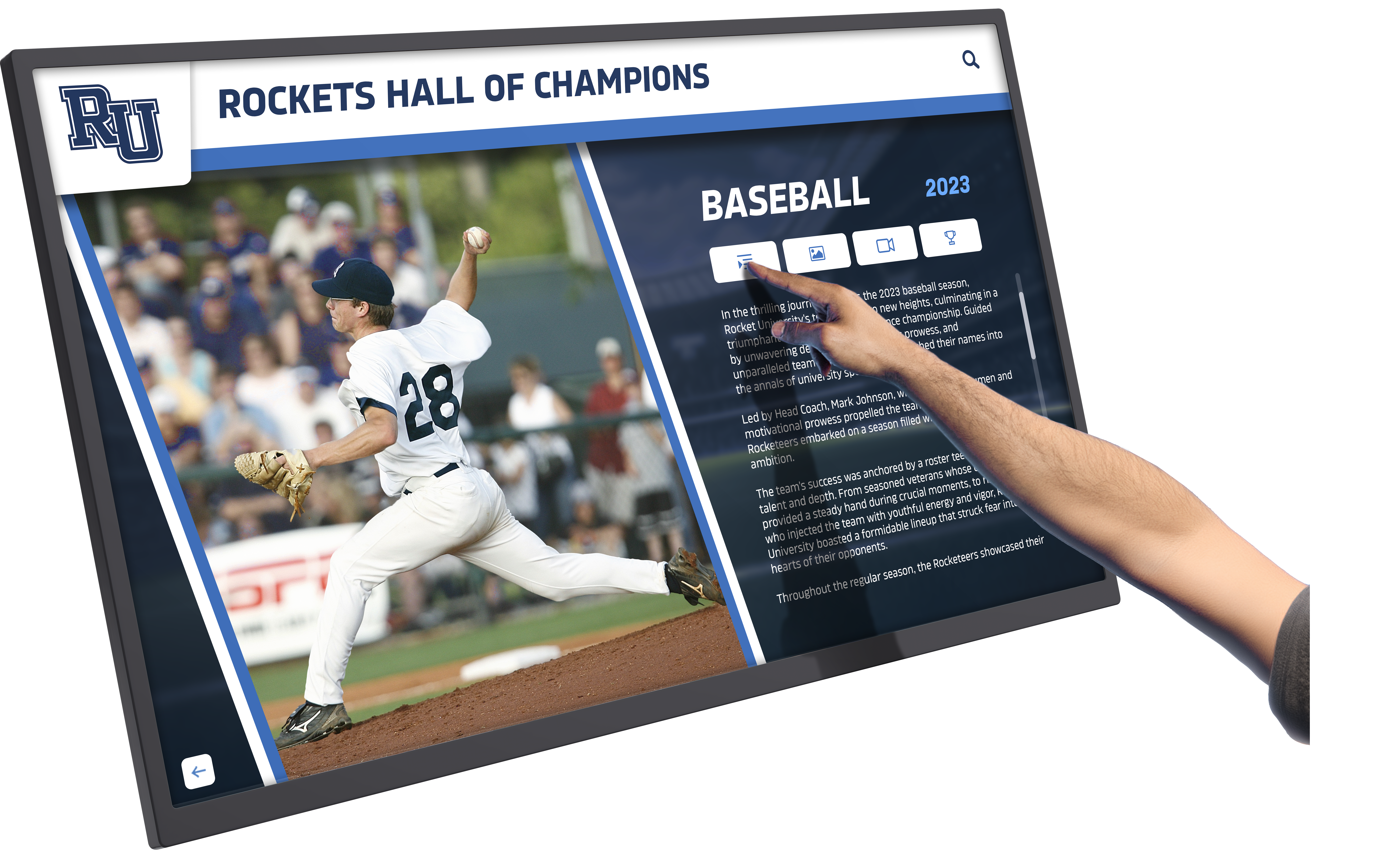
Intuitive touchscreen interfaces enable visitors to explore championship achievements through interactive navigation
Real-Time Updates and Immediate Recognition
Cloud-based content management systems enable athletic directors and sports information staff to update championship recognition instantly as new achievements occur.
Celebrating Success Immediately:
When volleyball teams advance through NCAA tournaments or win championships, recognition can be updated within hours rather than waiting weeks or months for physical banner production. Updated content includes tournament bracket progression and results, real-time statistics and performance highlights, celebration photos and video footage, athlete reactions and coach commentary, and media coverage integration linking to news articles and broadcasts.
Immediate digital recognition capitalizes on championship excitement while momentum remains high, rather than delayed recognition that feels anticlimactic weeks after achievement.
Season-Long Documentation:
Digital platforms enable season-long recognition building beyond just championship celebrations including pre-season player profiles and team introductions, ongoing updates as athletes achieve milestones, tournament previews and predictions as postseason begins, match-by-match updates during championship tournaments, and comprehensive season summaries once seasons conclude.
This continuous documentation creates engagement throughout seasons rather than only when championships are won.
Web and Mobile Accessibility Extending Reach
Modern recognition platforms extend beyond physical campus displays through responsive web interfaces accessible worldwide.
Engaging Distributed Communities:
Web accessibility enables alumni living anywhere to explore championship teams they played on or watched during their student years, families to share their daughters’ championship profiles across social networks, prospective student-athletes to research program championship tradition during recruitment, media to access comprehensive championship information for features and retrospectives, and booster supporters to engage with program history regardless of geographic proximity to campus.
Digital accessibility transforms championship recognition from campus-only experiences into platforms engaging distributed university communities globally.
Social Media Integration:
Digital platforms facilitate championship celebration across social channels through shareable content snippets highlighting individual athletes or moments, embedded video highlights viewable directly within social feeds, clickable links driving traffic to comprehensive championship displays, hashtag campaigns aggregating championship celebration content, and alumni engagement prompts encouraging former players to share memories.
Social amplification extends recognition reach far beyond people who physically visit athletic facilities.
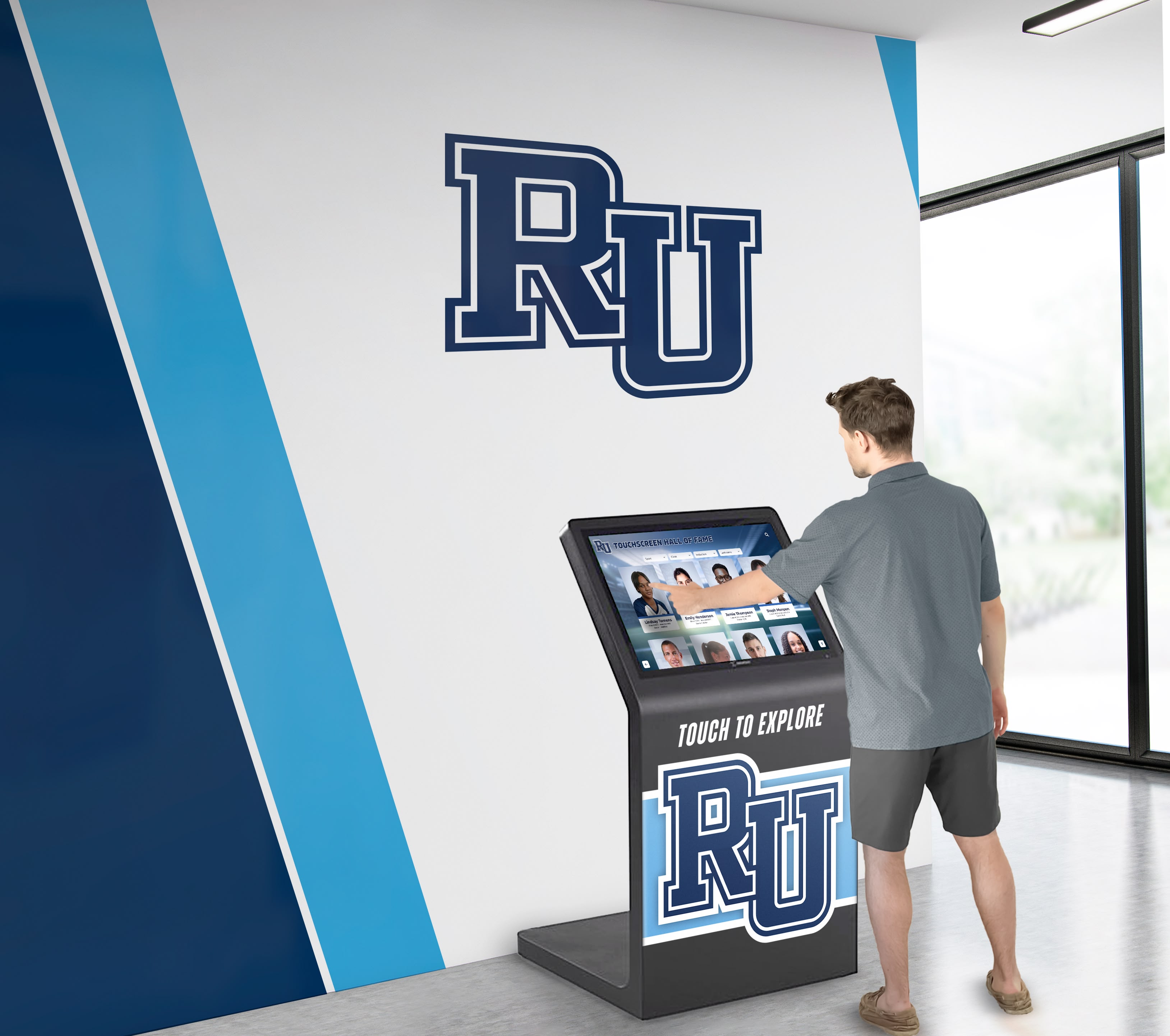
Campus lobby installations make championship achievements accessible to prospective students, alumni visitors, and campus community
Creating Compelling Championship Content
Technology provides platforms, but compelling content creates meaningful recognition that appropriately honors championship achievement and engages audiences.
Comprehensive Championship Team Profiles
Effective championship team documentation moves beyond basic roster lists to craft complete narratives including pre-season expectations and rankings, regular season highlights and challenging moments, tournament progression with match-by-match summaries, championship match detailed accounts preserving key momentum shifts, statistical breakdowns showing individual and team performance metrics, coach perspectives explaining what made teams special, athlete reflections years later about championship experiences, and historical significance within broader program context.
Championship profiles typically require 1,500-2,500 words plus extensive multimedia content creating recognition worthy of the achievement.
Individual Athlete Recognition Within Championships
While championship success represents collective achievement, individual athletes deserve recognition for their specific contributions.
Position-Specific Recognition:
Volleyball recognition should celebrate athletes across all positions including setters who orchestrated offensive systems with precise distribution, outside hitters who converted sets into match-winning kills, middle blockers who shut down opponent attacks and provided offensive quick attacks, liberos who anchored defensive systems with consistent passing, and defensive specialists who provided passing stability in crucial rotations.
Position-specific recognition demonstrates that championship teams need excellence across all roles, not just high-profile attacking positions that casual fans notice most.
Statistical Achievement Documentation:
Compile comprehensive statistics documenting individual excellence including attack percentages and total kills, blocking statistics and stuff blocks, assists totals for setters, digs and defensive statistics, service aces and serving percentages, and awards like All-Tournament team selections or individual match MVP honors.
Quantitative documentation appeals to volleyball enthusiasts who appreciate statistical validation of excellence while providing concrete evidence of individual contributions to championship success.
Post-Championship Career Updates:
Championship recognition gains additional depth when updated to include post-graduation achievements including professional volleyball careers in domestic or international leagues, coaching careers mentoring next generations of players, career accomplishments in fields outside volleyball, community involvement and service contributions, and continued connection to alma mater through alumni engagement or mentorship.
These updates demonstrate that university volleyball experiences launched successful lives beyond just athletic achievement, reinforcing the student-athlete development mission central to college sports.
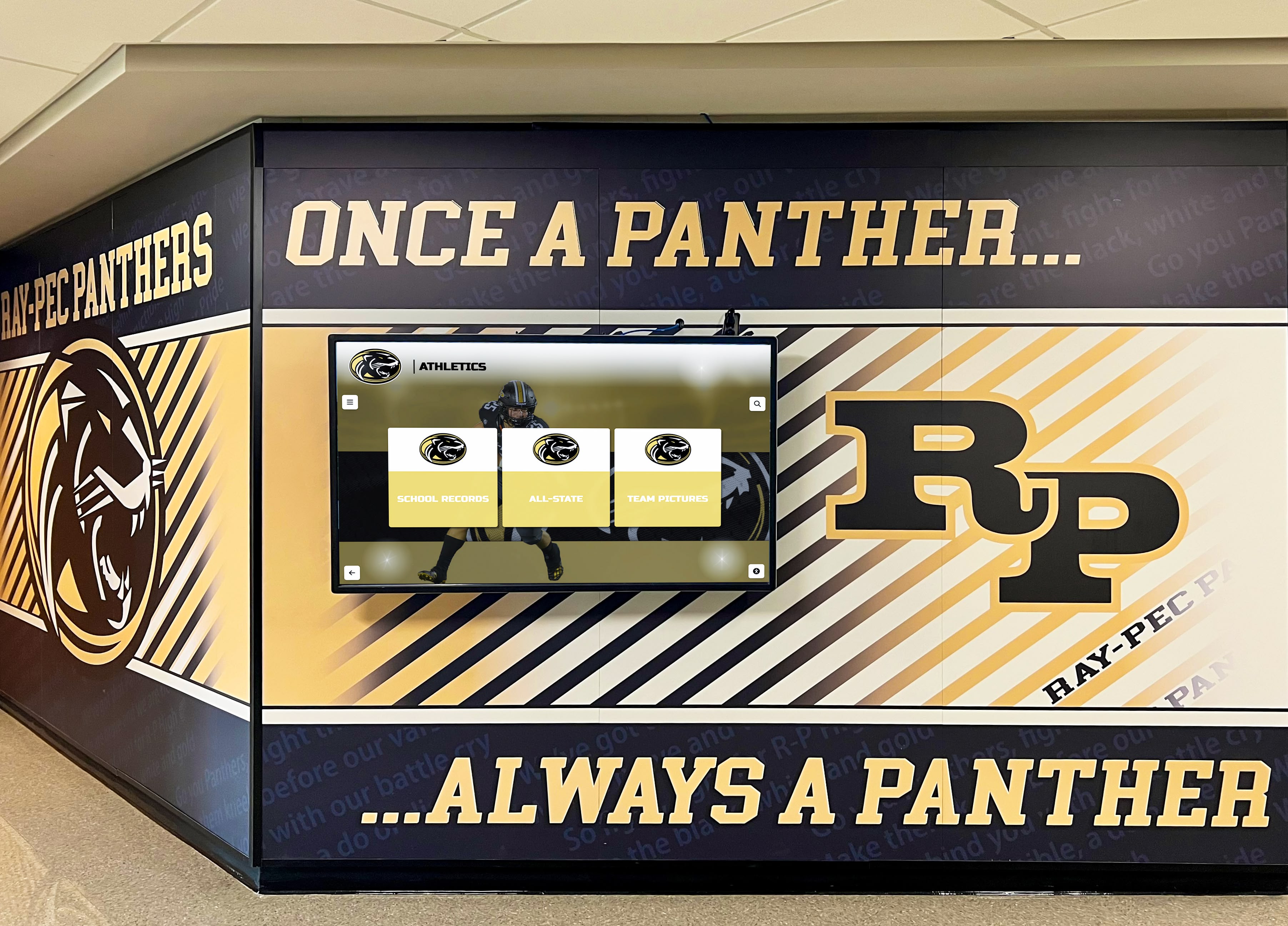
Prominent hallway installations ensure championship recognition reaches entire campus community daily
Coaching Staff and Support Team Recognition
Championship success requires contributions extending beyond athletes on the court, and comprehensive recognition honors everyone who contributed.
Coaching Excellence:
Document coaching staff contributions including head coach philosophy and system development, assistant coaches’ specialized expertise in areas like recruiting, defensive systems, or offensive schemes, volunteer coaches and graduate assistants who supported daily operations, and coaching career context showing championships within broader career arcs.
Many championship coaches spent decades building programs before breakthrough success. Recognition should honor this sustained commitment rather than suggesting championships emerged suddenly without years of foundation-building.
Essential Support Roles:
Championship teams depend on support staff rarely receiving public recognition including athletic trainers preventing and rehabilitating injuries, strength and conditioning coaches developing athletic capabilities, sports psychologists supporting mental preparation and team dynamics, equipment managers ensuring proper gear and facilities, academic advisors helping athletes maintain eligibility and degree progress, and sports information directors documenting and promoting team success.
Comprehensive recognition acknowledging these essential contributions demonstrates that universities value every person contributing to championship success, not just athletes and coaches receiving media attention.
Strategic Placement of Volleyball Recognition Displays
Physical placement of recognition displays significantly influences their visibility, engagement, and impact within university communities.
Volleyball Facility Integration
The most obvious location for volleyball championship recognition is within volleyball-specific facilities where teams practice and compete.
Competition Venue Prominence:
Position displays in high-traffic areas including main entrances where arriving spectators first encounter facilities, lobbies or gathering spaces where people wait before matches or during intermissions, concourses or hallways that funnel spectator traffic, and near concession areas where people congregate during breaks.
Prominent placement ensures maximum visibility during volleyball matches when facilities experience peak usage and when prospective recruits visit during campus tours.
Practice Facility Integration:
If volleyball programs have dedicated practice facilities separate from competition venues, digital displays in practice spaces create daily inspiration for current athletes who see championship traditions constantly during training sessions.
Practice facility displays reinforce championship expectations while reminding athletes that their contributions may someday join celebrated championship teams.
Athletics Department Centralized Recognition
Many universities maintain centralized athletic recognition spaces celebrating excellence across all sports programs.
Multi-Sport Recognition Centers:
Athletic department buildings often include hall of fame spaces or recognition centers showcasing achievement across all varsity sports. Volleyball championship recognition within these shared spaces demonstrates volleyball’s importance within broader athletic program excellence while creating opportunities for fans of different sports to discover volleyball achievements they might not otherwise encounter.
Shared recognition spaces also create natural synergies where visitors exploring football championship displays might discover impressive volleyball tradition, and vice versa.
Recruiting Office Strategic Placement:
Some athletic departments position digital recognition displays in recruiting offices or areas where prospective student-athletes meet with coaching staffs during campus visits. This strategic placement enables coaches to reference championship traditions during recruiting conversations while allowing recruits to independently explore program history through interactive displays.

Interactive displays enable recruits and visitors to explore championship rosters and individual athlete achievements
Campus-Wide Recognition Extending Visibility
Forward-thinking universities extend volleyball championship recognition beyond athletic facilities into broader campus environments.
Student Union and Campus Center Displays:
Positioning recognition displays in student unions or campus centers dramatically increases visibility among general student populations who may rarely visit athletic facilities. These installations expose non-athlete students to championship traditions, build broader campus pride around athletic success, create conversation points during campus social gatherings, and demonstrate university investment in comprehensive student achievement recognition.
Academic Building Integration:
Some universities position athletic recognition in academic buildings particularly relevant to student-athlete concentrations. If many volleyball players major in specific disciplines, recognition displays in those academic buildings honor the integration of athletic and academic achievement while making championship tradition visible in spaces where student-athletes spend significant time.
Alumni Center Prominence:
Alumni centers and facilities frequently host returning graduates, making them strategic locations for championship recognition that engages former students, reminds alumni of athletic tradition during their student years, creates conversation points during alumni gatherings and events, and encourages continued support through booster donations or volunteering.
Championship Celebration Events and Traditions
Beyond permanent recognition displays, formal celebration events create memorable experiences honoring championship achievements while building program traditions.
Post-Championship Celebration Planning
Immediate celebration following championship victories creates peak moments that athletes remember throughout their lives.
On-Site Tournament Celebrations:
Championship victories typically occur at neutral-site tournament venues where universities can organize immediate celebrations including championship trophy presentations with athletic directors and university leadership, family member integration ensuring athletes can celebrate with their support systems, media availability for interviews and photographs, and team celebration time allowing athletes to share accomplishment together.
These immediate celebrations capitalize on emotional peaks while championship victories remain fresh.
Return to Campus Celebrations:
Many universities organize campus welcome celebrations when championship teams return home including airport or campus arrival receptions with fans and students, rally events in central campus locations gathering campus community, pep band performances and cheer team presentations, and public recognition from university presidents and campus leaders.
Campus celebrations engage broader university communities in championship success while creating shared institutional memories.
Formal Recognition Ceremonies
Beyond immediate celebrations, formal recognition ceremonies provide structured acknowledgment appropriate for championship significance.
Banquet Celebrations:
End-of-season banquets provide formal settings for championship recognition including championship rings or commemorative jewelry presentations, video highlight presentations documenting championship journeys, individual award recognition for statistical leaders and special contributions, coach remarks reflecting on season significance and team character, athlete speeches from team captains or seniors, and family member inclusion honoring support systems that enabled success.
Banquet settings create appropriate formality demonstrating that universities treat championship achievement as significant institutional accomplishment worthy of elaborate celebration.
University-Level Recognition:
Some institutions extend recognition beyond athletic department events through board of trustees acknowledgments at public meetings, academic convocation recognitions celebrating student achievement broadly, incorporation into commencement ceremonies when timing aligns, and permanent legacy recognition like naming practice facilities or endowing scholarships.
University-wide recognition demonstrates that championships represent institutional accomplishments reflecting on entire universities rather than isolated athletic department success.
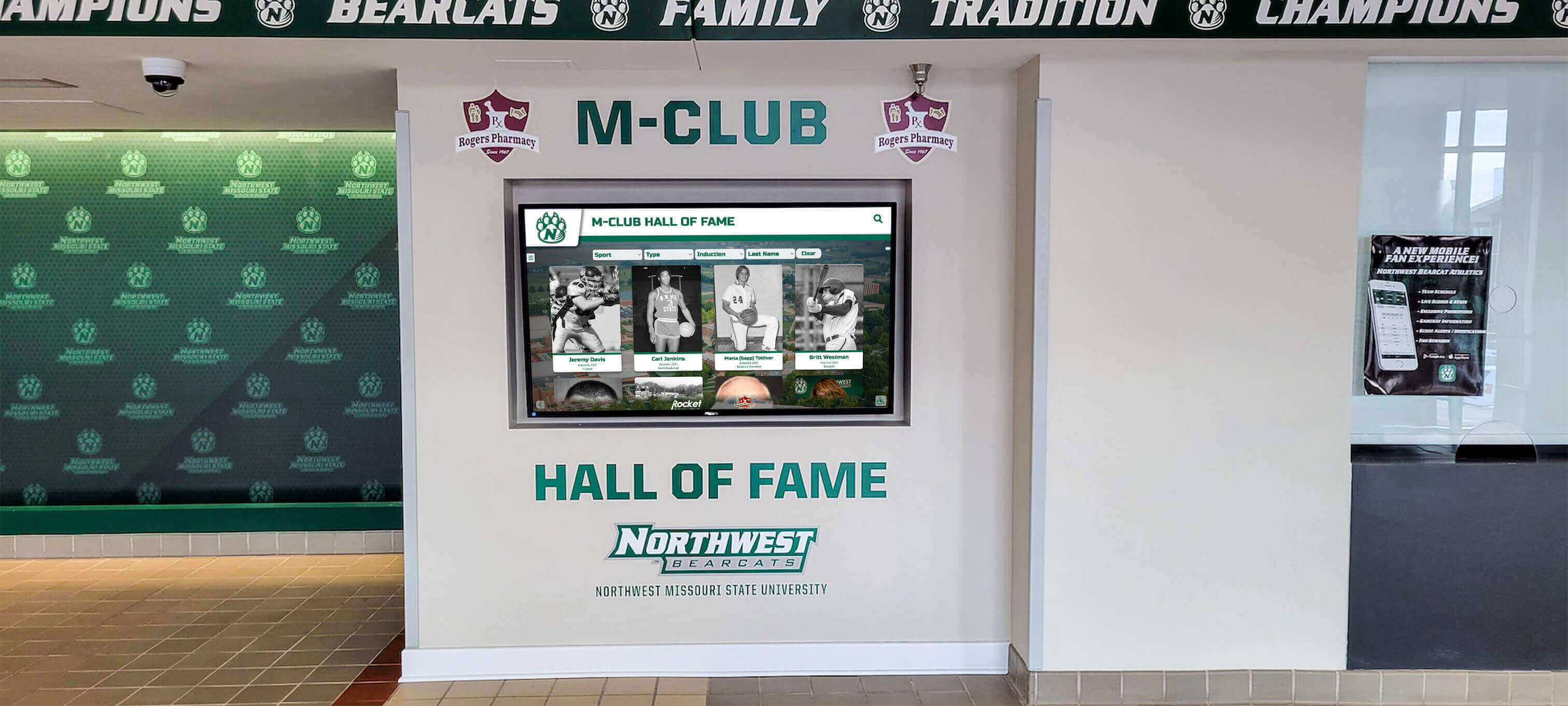
Formal recognition installations honor championship teams alongside individual athlete achievements within comprehensive displays
Building Annual Recognition Traditions
Consistent traditions create cultural significance around championship recognition that extends beyond individual championships to become defining program characteristics.
Anniversary Celebrations:
Mark championship anniversaries at meaningful intervals including 5-year, 10-year, 25-year reunion celebrations, reunion games inviting championship teams back during current season competitions, updated recognition displays adding “where are they now” content about championship team members, and oral history documentation preserving championship stories before memories fade.
Anniversary celebrations maintain connections between championship alumni and current programs while creating multigenerational connections across different championship eras.
Championship Legacy Events:
Create recurring events specifically celebrating championship tradition including championship team meet-and-greet sessions where current athletes interact with former champions, mentorship programs pairing championship alumni with current players, storytelling events where championship athletes share experiences and lessons learned, and championship showcase matches designating specific games to honor championship history.
Legacy events transform championship history from abstract past accomplishment into living tradition connecting generations of athletes.
Women’s Volleyball Championship Recognition and Title IX Considerations
College volleyball’s unique position as predominantly women’s sport creates important recognition considerations related to gender equity in athletics.
Celebrating Women’s Athletic Excellence
Women’s volleyball deserves recognition equal to traditionally male-dominated sports receiving disproportionate attention and resources.
Recognition Parity:
Universities should ensure volleyball championship recognition matches or exceeds recognition provided to football and men’s basketball championships including equivalent display prominence and visibility, similar budget allocations for recognition systems and celebrations, comparable media promotion and public relations support, and equal facility quality and maintenance standards.
Recognition parity demonstrates genuine commitment to gender equity rather than nominal compliance with Title IX requirements while failing to celebrate women’s athletic achievement with equal enthusiasm.
Challenging Historical Recognition Gaps:
Many universities have decades of men’s athletic recognition history while women’s sports championship recognition remains underdeveloped despite equally impressive achievement. Modern digital recognition platforms enable universities to comprehensively document women’s volleyball championship history retroactively, ensuring past championships receive recognition matching contemporary achievements.
Highlighting Volleyball Program Excellence Across Divisions
While Division I programs receive most media attention, championships at all division levels represent extraordinary achievement deserving equal recognition enthusiasm.
Division II and Division III Championship Celebration:
Universities competing at Division II and Division III levels should celebrate championships with recognition systems matching Division I standards including comprehensive digital displays showcasing championship teams, formal recognition ceremonies and banquet celebrations, permanent facility recognition through banners and displays, and media promotion across campus and community channels.
Division level should not determine recognition quality or enthusiasm. Championship achievement at any level deserves celebration matching the difficulty of accomplishment within that competitive context.
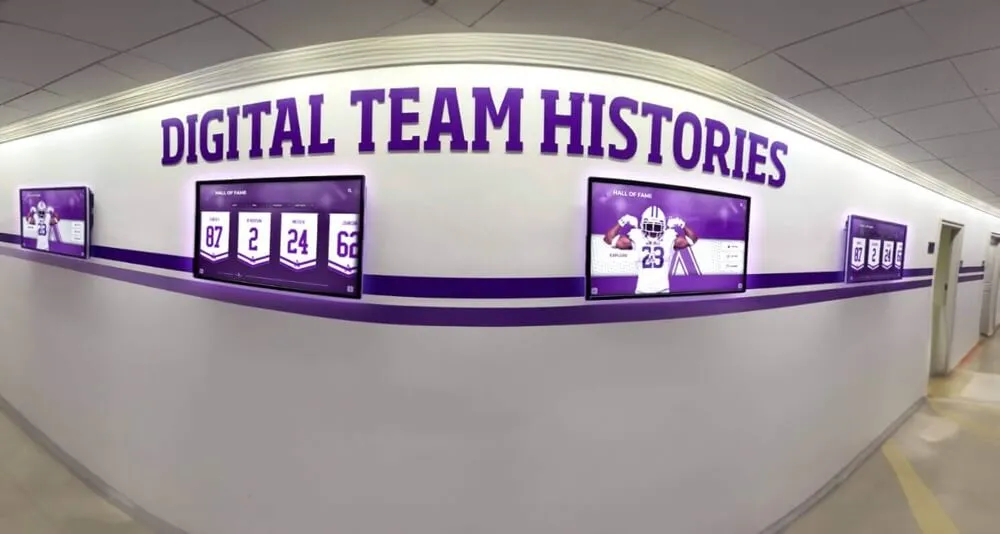
Comprehensive recognition systems honor championships across multiple sports with equal prominence and detail
Connecting Championship Recognition to Recruiting Success
Visible championship tradition significantly influences volleyball recruiting, with recognition displays serving as powerful recruiting tools.
Recognition Impact on Prospective Student-Athletes
High school volleyball players evaluating college programs assess championship tradition as key factor influencing decisions.
Tangible Evidence of Program Excellence:
Championship recognition provides concrete evidence of program quality that recruiting pitches alone cannot match including historical evidence of sustainable success rather than isolated achievements, visual demonstration of program investment in facilities and athlete recognition, proof that programs develop athletes capable of winning at highest levels, and indication of institutional support and resources enabling championship competition.
Comprehensive recognition systems signal to recruits that programs have established championship cultures rather than just aspirational goals.
Connection to Athlete Development:
Interactive recognition displays enable recruits to research former players who competed in similar positions, explore career trajectories of program alumni, understand coaching system continuity and stability, and visualize themselves potentially joining championship tradition.
This research capability helps recruits make informed decisions while strengthening emotional connections to potential future programs.
Digital Platforms as Recruiting Communications Tools
Digital recognition systems provide content that coaches can leverage throughout recruiting processes.
Virtual Recruiting Integration:
Remote recruiting through video conferencing became essential during pandemic years and remains important for geographically distant prospects. Digital recognition platforms enable coaches to screen-share championship displays during virtual meetings, send links to web-based recognition for independent exploration, integrate championship highlights into recruiting presentations, and maintain engagement through social media sharing of championship content.
Digital accessibility makes championship tradition visible to recruits regardless of how many times they can visit campus in person.
Athlete-Generated Content:
Current volleyball players can leverage recognition platforms for recruiting through social media posts highlighting their own profiles within systems, video tours of recognition displays from athlete perspectives, testimonials discussing how championship tradition influenced their decisions, and peer-to-peer recruiting conversations referencing easily-accessible championship content.
Athlete-driven recruiting communications often prove more influential than official institutional messaging, and digital platforms facilitate this peer communication.
Integrating Volleyball Recognition with Broader Athletic Achievement
While volleyball-specific recognition appropriately celebrates the sport, integration with broader athletic achievement recognition demonstrates comprehensive commitment to excellence.
Multi-Sport Recognition Systems
Comprehensive athletic recognition platforms showcase achievement across all sports programs with consistent formats that honor each sport’s unique characteristics while creating coherent institutional narratives.
Consistent Recognition Standards:
Multi-sport systems ensure volleyball receives treatment equivalent to other programs including equal profile depth and multimedia content, similar statistical documentation and achievement celebration, comparable visual prominence in display interfaces, and equivalent investment in content development and maintenance.
Standardization prevents inadvertent inequality where traditionally prominent sports receive disproportionate recognition attention while other programs receive minimal acknowledgment despite equivalent achievement.
Cross-Sport Discovery:
Integrated platforms create opportunities for fans of one sport to discover achievements in others including shared displays in athletic facilities exposing diverse audiences, algorithmic suggestions highlighting similar achievements across sports, and unified athletics websites aggregating all sports recognition in single locations.
This cross-pollination builds broader athletic community where fans appreciate comprehensive program excellence rather than only following individual sports.
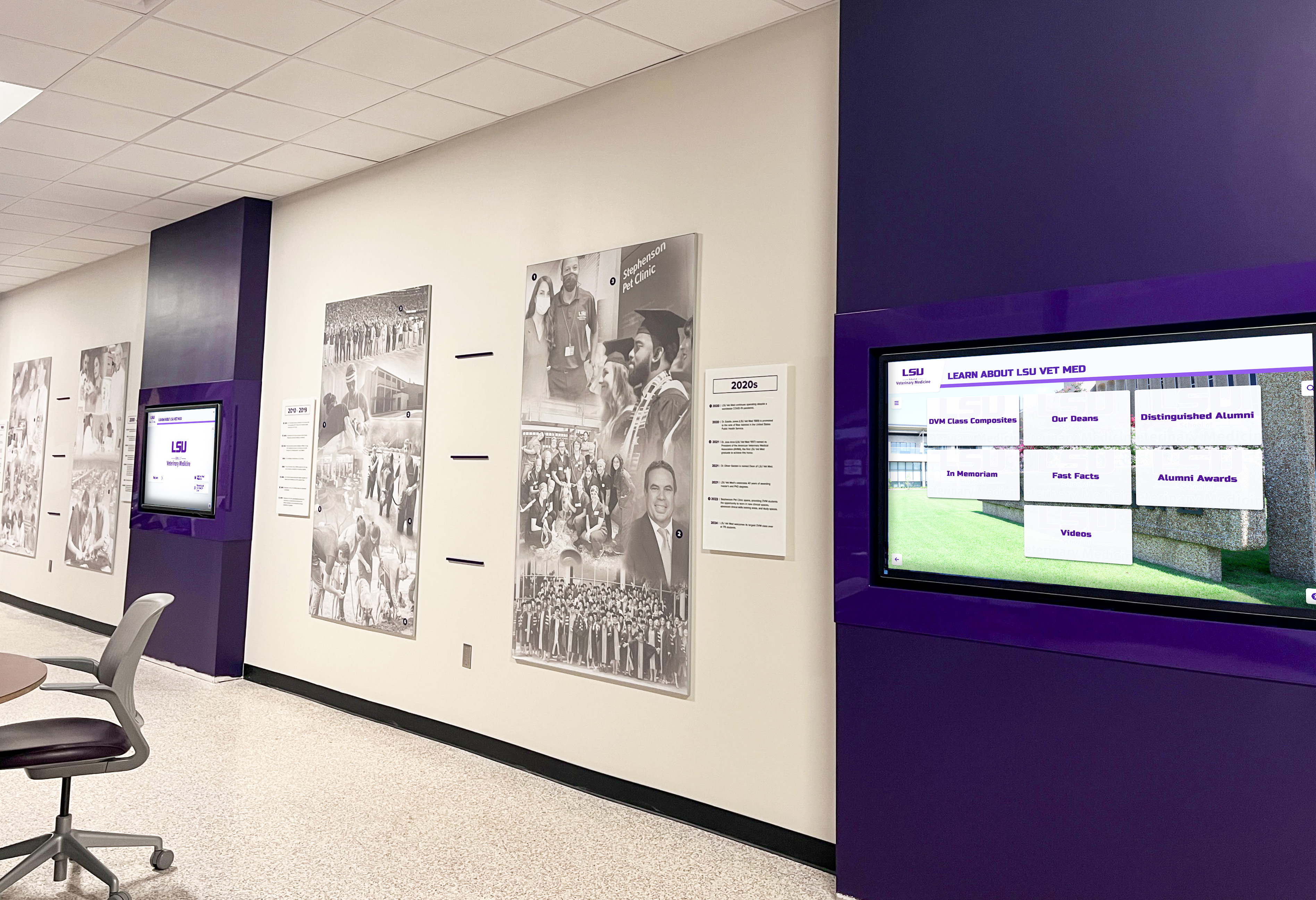
Hallway displays throughout athletic facilities create multiple touchpoints where campus community encounters volleyball championship recognition
Academic Achievement Integration
Comprehensive student-athlete recognition connects athletic excellence with academic achievement, honoring the student-athlete identity central to college sports philosophy.
Scholar-Athlete Championship Recognition:
Volleyball championship recognition should include academic excellence indicators including team GPA statistics documenting collective academic performance, Academic All-American selections on championship rosters, individual academic honors like Dean’s List or departmental awards, graduation rates for championship teams tracking long-term academic success, and major/career information showing diverse academic interests and post-graduation achievements.
This integration demonstrates that championship teams excel in classrooms alongside competition courts, reinforcing that universities develop complete individuals rather than just athletes.
Connection to Broader Achievement Recognition:
Universities maintaining comprehensive achievement recognition systems can integrate athletic championships with other forms of student excellence including academic achievement and research accomplishments, leadership and service contributions, performing arts excellence, and entrepreneurship and innovation achievements.
Integrated recognition demonstrates institutional values celebrating diverse forms of excellence while positioning athletic achievement within broader student success frameworks.
Technology Considerations for Volleyball Recognition Systems
Universities implementing digital volleyball recognition should understand technical requirements ensuring reliable, maintainable systems delivering intended experiences.
Hardware Selection and Specifications
Quality hardware foundations prove essential for recognition systems operating reliably across years.
Commercial-Grade Display Requirements:
Athletic facility displays require commercial-grade touchscreens rated for continuous operation including minimum 50,000-hour panel lifespans, brightness ratings suitable for varied lighting conditions, tempered glass protection withstanding heavy daily use, responsive multi-touch technology supporting intuitive interaction, and commercial warranties covering replacement and repair.
Consumer-grade displays marketed for residential use fail rapidly under athletic facility usage patterns. Commercial-grade hardware costs more initially but delivers dramatically better total cost of ownership.
Mounting and Installation Considerations:
Professional installations ensure displays remain secure and accessible including ADA-compliant mounting heights for universal accessibility, secure mounting to structural supports withstanding accidental impacts, proper cable management hiding connections professionally, adequate ventilation preventing overheating issues, and theft-deterrent mounting in public athletic spaces.
Quality installations appear professionally finished while ensuring operational reliability.
Environmental Factors:
Athletic facilities present challenging environmental conditions including temperature fluctuations in non-climate-controlled venues, humidity variations particularly in pool-adjacent areas, dust accumulation in high-traffic public spaces, and potential vibration from crowd noise and activity.
Hardware selection should account for expected environmental conditions, with ruggedized options available for particularly challenging installations.
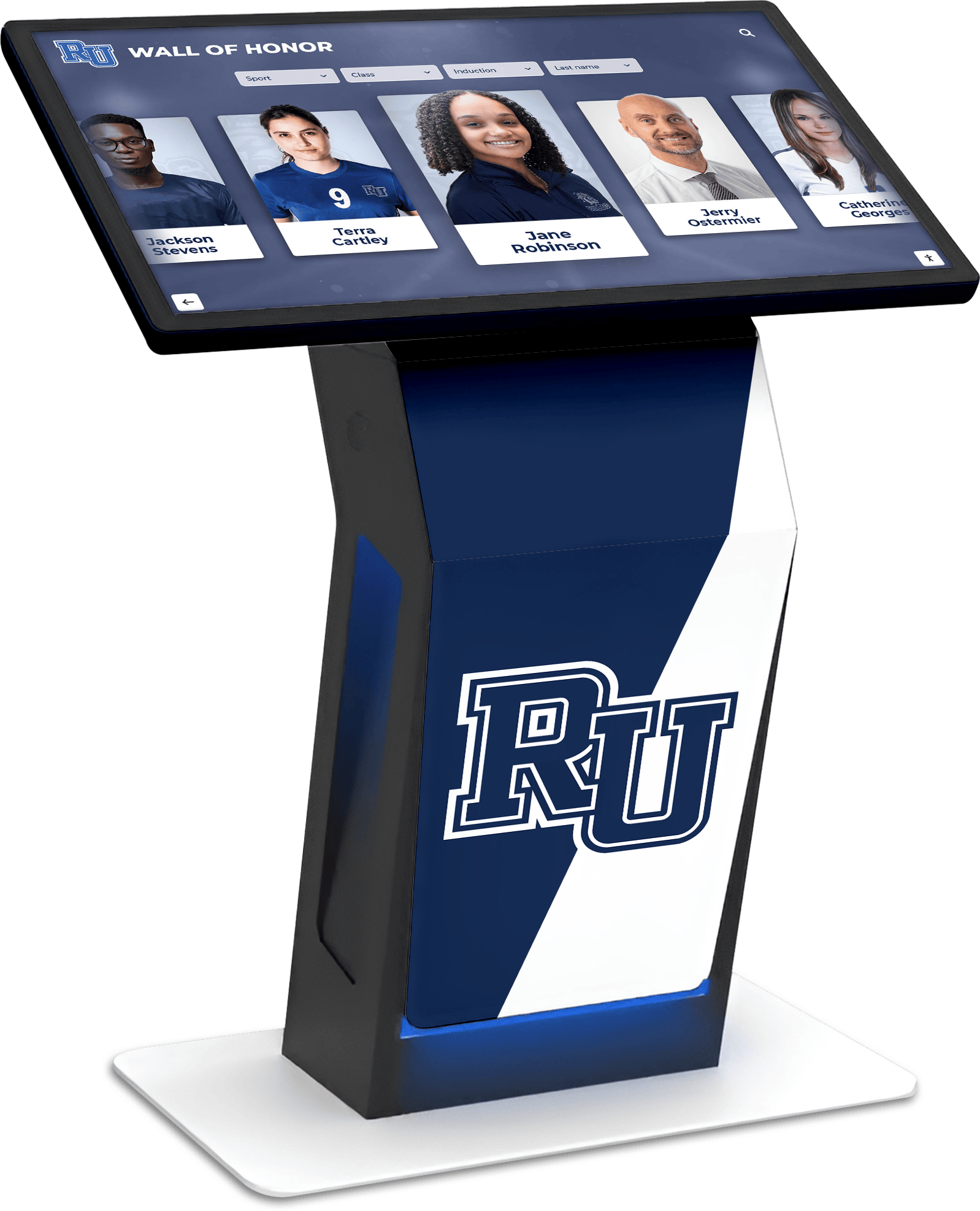
Commercial-grade touchscreen kiosks provide reliable operation in demanding athletic facility environments
Software and Content Management
User-friendly content management systems enable athletic staff to maintain current recognition without technical expertise or IT department dependency.
Cloud-Based Management Advantages:
Modern recognition platforms operate through cloud-based systems providing update capability from any internet-connected device, automatic software updates without local IT intervention, secure credential management controlling editing access, built-in content backup preventing data loss, and simultaneous multi-display management from single dashboards.
Cloud systems eliminate local server maintenance while enabling distributed management where multiple staff members can contribute content.
Intuitive Editing Interfaces:
Staff without technical backgrounds can manage volleyball recognition through visual drag-and-drop content organization, pre-formatted templates for consistent athlete profiles, bulk upload capabilities for efficient historical data migration, scheduled publishing for automatic content updates, and media libraries organizing photos and videos systematically.
Intuitive systems reduce IT department burden while empowering athletic communications staff to maintain timely, accurate recognition.
Network Infrastructure Requirements
Digital displays require reliable network connectivity for content delivery and remote management.
Bandwidth and Reliability:
Recognition systems function effectively with modest bandwidth including 5-10 Mbps sustained connectivity for content delivery, wired Ethernet preferred over wireless for installation reliability, consistent uptime without frequent disconnections, and basic firewall configurations allowing standard HTTPS communication.
Most university networks easily meet these requirements, though athletic facilities occasionally have underdeveloped network infrastructure requiring modest investment.
IT Department Coordination:
Successful implementations require early IT department involvement including network port activation at display locations, firewall rule configuration permitting content management, security review of vendor cloud platforms, ongoing connectivity monitoring and troubleshooting support, and long-term maintenance planning for network infrastructure evolution.
Early coordination prevents installation delays due to unexpected technical issues.
Budget Planning for Volleyball Championship Recognition
Universities planning recognition initiatives need realistic budget frameworks covering initial implementation and ongoing operational costs.
Initial Implementation Costs
Comprehensive volleyball championship recognition requires strategic investment across multiple components.
Digital Display Hardware:
Commercial-grade touchscreen displays suitable for athletic facility installation range from $3,000-$8,000 per display for 43"-55" single displays, $10,000-$20,000 for large-format 65"-75" installations, $15,000-$30,000 for video wall configurations with multiple coordinated screens, and $5,000-$12,000 for outdoor-rated displays in exterior athletic facility locations.
Most volleyball recognition installations utilize one or two displays, though programs with multiple facilities might deploy additional units.
Professional Installation Services:
Expert installation ensures displays operate reliably including basic wall-mounted installation running $800-$1,500, complex installations requiring structural mounting or electrical work at $2,000-$5,000, network infrastructure additions if required at $500-$3,000, and site assessment and planning services at $500-$1,500.
Professional installation prevents amateur mounting issues while ensuring ADA compliance and safety standards.
Software Platform Licensing:
Recognition content management platforms typically charge through annual subscription models including entry-level packages at $1,500-$3,000 annually, mid-tier options with enhanced features at $3,000-$6,000 annually, enterprise solutions for large athletic departments at $6,000-$15,000 annually, and implementation setup fees from $1,000-$5,000 for initial configuration.
Rocket Alumni Solutions provides comprehensive platforms specifically designed for athletic recognition at competitive prices with athletic department-focused support.
Content Development Costs:
Initial content creation requires substantial effort including staff time researching and documenting historical championships, professional photography and videography for current teams, content writing for athlete biographies and team narratives, media digitization for historical photos and video footage, and graphic design for visual elements and templates.
Depending on championship history depth and available internal resources, content development costs range from $2,000-$10,000 for programs with limited history to $10,000-$30,000 for programs with extensive championships requiring comprehensive documentation.

Strategic athletic facility installations position recognition displays where they receive maximum daily visibility
Ongoing Operational Costs
Beyond initial implementation, sustainable recognition requires budget for ongoing operations.
Annual Platform Maintenance:
Software subscription fees typically renew annually as noted above. These subscriptions include cloud hosting infrastructure, ongoing software development and feature enhancements, technical support and troubleshooting assistance, and security updates and platform maintenance.
Subscription models provide predictable budgeting compared to custom-developed solutions requiring unpredictable maintenance and update costs.
Content Update Labor:
Maintaining current recognition requires ongoing staff time including annual updates adding new championship teams as they occur, profile updates when athletes achieve post-graduation milestones, seasonal content refreshes highlighting current team connections to championship tradition, and periodic historical content enhancements improving older championship documentation.
Most athletic departments manage these updates with existing sports information staff, requiring approximately 10-20 hours annually per sport.
Hardware Maintenance and Replacement:
Commercial displays require occasional maintenance including annual professional cleaning and calibration at $200-$500, periodic component replacement like touchscreen overlays at $300-$800 every 3-5 years, and eventual complete hardware replacement after 7-10 years at costs matching original hardware investment.
Budgeting for hardware lifecycle ensures recognition remains operational across decades rather than degrading into non-functional displays undermining intended impact.
Return on Investment Considerations
While recognition systems require investment, they deliver substantial returns through multiple channels.
Recruiting Competitive Advantage:
Championship recognition directly supports recruiting by providing differentiating factors during prospect evaluations, content for recruiting communications and social media, talking points strengthening coach recruiting pitches, and visual evidence of program quality exceeding verbal claims.
If improved recognition contributes to landing even one additional talented recruit who improves team performance, the investment pays substantial returns through enhanced competitive success.
Alumni Engagement and Fundraising:
Comprehensive recognition strengthens alumni connections facilitating increased booster participation and financial contributions, higher event attendance for alumni gatherings, expanded volunteer mentorship programs, and stronger advocacy promoting programs within professional and social networks.
Alumni who feel appropriately recognized maintain stronger institutional connections benefiting athletic departments financially and culturally.
Institutional Pride and Marketing:
Championship recognition contributes to broader institutional marketing through campus visit impressions for prospective students, community engagement demonstrating university athletic excellence, media coverage featuring recognition platforms, and brand differentiation in competitive higher education landscape.
These broader benefits extend beyond athletics budgets while creating value justifying recognition investment.
Best Practices for Sustainable Volleyball Recognition Programs
Long-term recognition success requires strategic approaches ensuring programs remain vibrant across coaching changes, administrative transitions, and evolving technologies.
Establishing Clear Ownership and Responsibilities
Sustainable programs assign clear responsibilities preventing recognition from languishing when individuals leave positions.
Primary Program Management:
Designate specific staff members responsible for recognition including sports information directors managing content updates, athletic communications coordinators maintaining historical accuracy, and athletic directors overseeing strategic recognition decisions and budget allocation.
Document responsibilities in position descriptions ensuring recognition management continues through staff transitions.
Committee Governance:
Consider recognition oversight committees including former championship coaches providing historical perspective, current coaching staff ensuring current team integration, athletic administrators maintaining budget and strategic oversight, and alumni representatives offering external perspective.
Committee governance prevents recognition from becoming single individual’s project that collapses when that person departs.
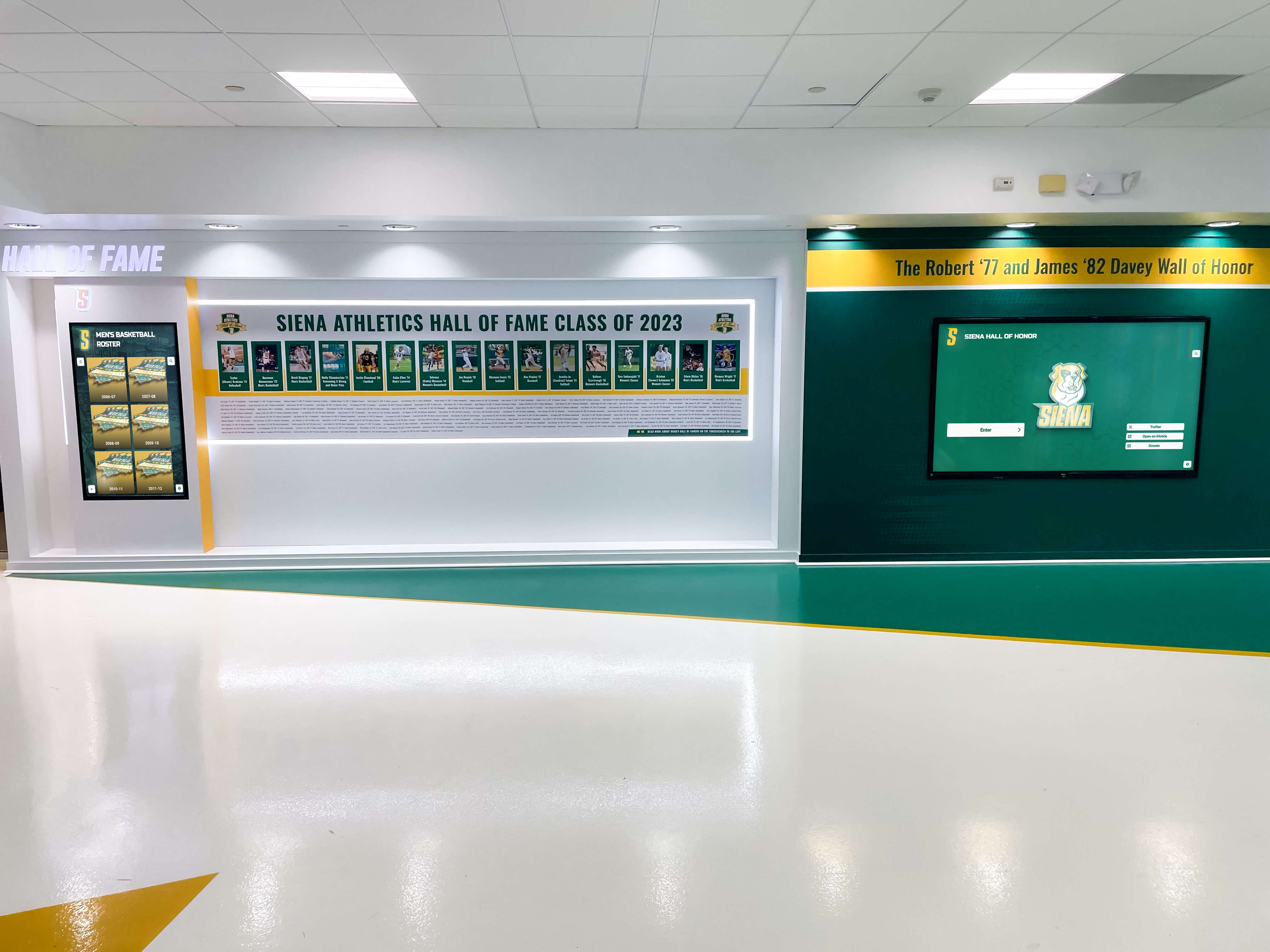
Blended recognition approaches combine traditional elements with digital platforms providing comprehensive celebration
Documentation and Institutional Knowledge Preservation
Maintain comprehensive documentation ensuring recognition continuity.
Standard Operating Procedures:
Document routine processes including content update procedures and approval workflows, technical support contacts and troubleshooting resources, annual review and refresh schedules, and budget planning and allocation processes.
Written procedures prevent knowledge loss during staff transitions.
Historical Research Archives:
Maintain organized archives of championship documentation including official records and statistics, historical photographs and media, coach and athlete contact information, and research notes documenting championship contexts.
Accessible archives enable future enhancements to historical recognition without repeating research efforts.
Regular Assessment and Improvement
Periodically evaluate recognition effectiveness while identifying enhancement opportunities.
Annual Program Reviews:
Schedule regular recognition assessments including content accuracy audits correcting any errors, engagement analytics reviewing display usage patterns, stakeholder feedback from athletes, coaches, and visitors, and competitive benchmarking against peer institution approaches.
Structured reviews ensure recognition remains current and effective rather than becoming stale installations staff ignore.
Technology Evolution Planning:
Digital technology evolves rapidly. Plan for long-term sustainability including hardware replacement budgets for end-of-life displays, platform migration contingencies if vendor circumstances change, format modernization as media standards evolve, and feature enhancements as new capabilities emerge.
Proactive planning prevents recognition from becoming outdated technology undermining intended impact.
Conclusion: Honoring Volleyball Excellence for Generations
College volleyball national championships represent extraordinary collective achievements deserving recognition that matches their significance. Universities that thoughtfully celebrate championship success through comprehensive recognition programs honor the athletes, coaches, and supporters who built championship traditions, inspire current teams to pursue their own championship dreams, engage alumni maintaining lifelong program connections, and demonstrate institutional commitment to excellence extending beyond immediate celebration into permanent institutional memory.
Modern digital recognition technology has transformed what’s possible in celebrating volleyball championships. Interactive displays provide unlimited capacity for comprehensive recognition, rich multimedia content bringing championships to life, instant updates celebrating success immediately, web accessibility extending recognition worldwide, and engaging experiences that captivate visitors while honoring achievement.
Whether celebrating programs’ first championships or honoring decades of volleyball excellence, the principles of effective recognition remain constant: comprehensive documentation preserving complete championship stories, equitable celebration matching recognition to achievement significance, engaging presentation formats maximizing emotional impact, sustainable systems maintaining recognition across generations, and genuine commitment demonstrating that universities value volleyball excellence alongside traditionally prominent sports.
Celebrate Your Volleyball Championship Tradition
Discover how Rocket Alumni Solutions can help you create comprehensive volleyball recognition that honors your championship tradition while inspiring future champions. Our purpose-built platforms specifically designed for athletic recognition provide everything universities need to celebrate volleyball excellence through engaging digital experiences.
Explore Volleyball Recognition SolutionsYour volleyball program’s championship achievements represent years of dedication, sacrifice, and excellence. Those accomplishments deserve recognition that preserves championship stories comprehensively, inspires current athletes to pursue their own excellence, engages alumni maintaining program connections, and demonstrates your institutional commitment to celebrating achievement appropriately.
The question isn’t whether volleyball championships merit comprehensive recognition—their significance is undeniable. The question is whether your institution will embrace modern recognition approaches that honor championship excellence effectively, or continue managing the limitations of traditional methods that fail to celebrate achievements with the depth they deserve.































