Higher education institutions face unprecedented challenges in cultivating and retaining philanthropic support. As giving to U.S. colleges and universities reached $58 billion in fiscal year 2023, the competition for donor attention has intensified dramatically. A well-designed collegiate donor wall serves not merely as acknowledgment but as a strategic advancement tool that strengthens donor relationships, inspires new giving, and builds lasting philanthropic cultures.
Traditional donor recognition approaches—engraved brass plaques, static donor trees, limited capacity displays—increasingly fail to meet the expectations of modern donors who seek meaningful engagement and transparent impact demonstration. Universities implementing innovative recognition strategies report significantly higher donor retention rates, increased giving participation, and enhanced stewardship effectiveness.
The landscape of higher education fundraising continues evolving rapidly. According to recent research, giving to education rose 13.2% in 2024, with foundations and donor-advised funds representing the fastest-growing support sources. Yet the number of individual donors keeps shrinking, making retention and stewardship more critical than ever. Effective collegiate donor walls address these challenges by creating visible testaments to philanthropic impact that inspire continued support while honoring those who invest in educational excellence.
This comprehensive guide explores how universities can leverage donor recognition walls to transform advancement programs. You’ll discover strategic planning approaches, design best practices, technology considerations, and implementation strategies that maximize recognition effectiveness while advancing institutional fundraising goals.
Understanding Collegiate Donor Walls
A collegiate donor wall represents a dedicated recognition system celebrating individuals, families, foundations, and organizations that have contributed financially to support university missions. These displays honor philanthropic commitment across all giving levels, creating tangible demonstrations of how alumni and friends invest in institutional futures.
The Strategic Value of University Donor Recognition
Effective donor recognition delivers measurable benefits extending far beyond simple acknowledgment:
Strengthening Long-Term Relationships: Recognition demonstrates that institutions value supporters as partners in educational missions, not merely funding sources. This authentic appreciation strengthens emotional connections translating to sustained engagement and continued giving.
Improving Critical Retention Rates: Research consistently shows recognized donors demonstrate significantly higher retention rates. While national higher education donor retention averages approximately 43%, institutions with comprehensive recognition programs often achieve 60-70% retention among acknowledged supporters.
Creating Social Proof for Peer Giving: Visible recognition generates powerful social proof encouraging others to contribute. When alumni see classmates, fraternity brothers, sorority sisters, and teammates supporting their alma mater, they’re more likely to give themselves. This peer influence proves particularly powerful during reunion campaigns and class giving competitions.
Building Institutional Credibility: Recognition walls celebrating philanthropic support communicate that graduates care deeply about their university’s future. This validates institutional quality for prospective students and families while strengthening community identity for current students, faculty, and staff.
Establishing Legacy Opportunities: For many donors, public recognition represents opportunities to establish lasting legacies remembered long after their lifetimes. This legacy motivation particularly influences major gift decisions and planned giving commitments that sustain institutions across generations.
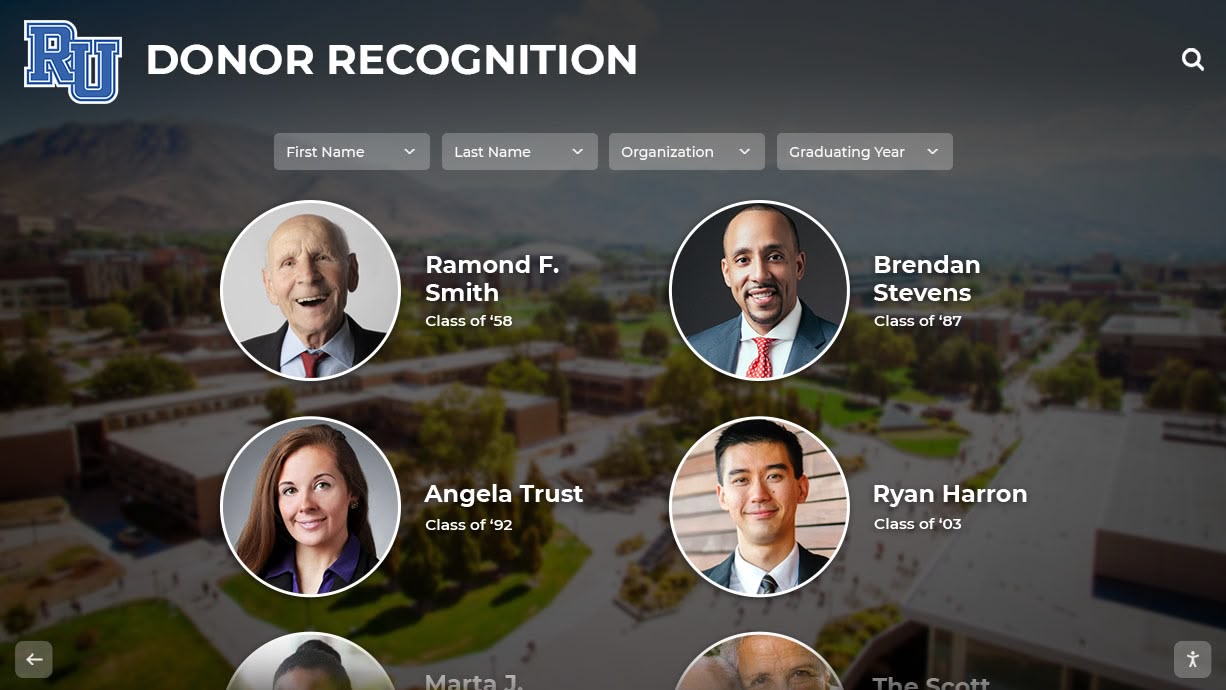
Evolution from Traditional to Digital Recognition
For decades, universities recognized donors through traditional methods—engraved plaques, donor trees, named spaces. While these approaches established important precedents, they carry inherent limitations that modern institutions increasingly find problematic.
Traditional Recognition Constraints:
- Capacity Limitations: Physical walls accommodate only limited donor numbers before requiring expensive expansions
- Update Complexity: Adding new donors requires weeks for fabrication and professional installation
- Ongoing Expenses: Each new donor generates $100-$400 in plaque costs plus installation labor
- Static Presentation: No storytelling capability, multimedia integration, or engagement beyond reading names
- Geographic Restrictions: Recognition visible only to those who physically visit campus locations
- Inflexibility: Impossible to reorganize, restructure, or refresh without complete replacement
Digital Recognition Advantages:
Modern digital donor recognition solutions overcome these limitations while adding capabilities transforming stewardship effectiveness:
- Unlimited Capacity: Recognize donors at all levels without space constraints
- Instant Updates: Add new donors immediately through cloud-based content management
- Rich Storytelling: Incorporate photos, videos, testimonials, and impact narratives
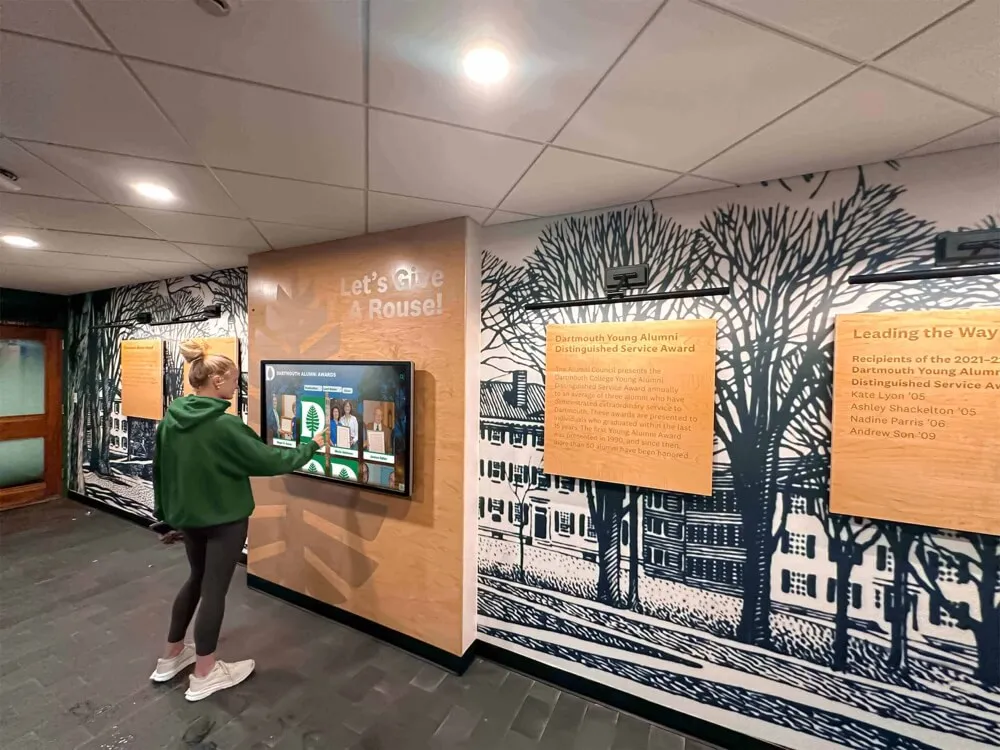
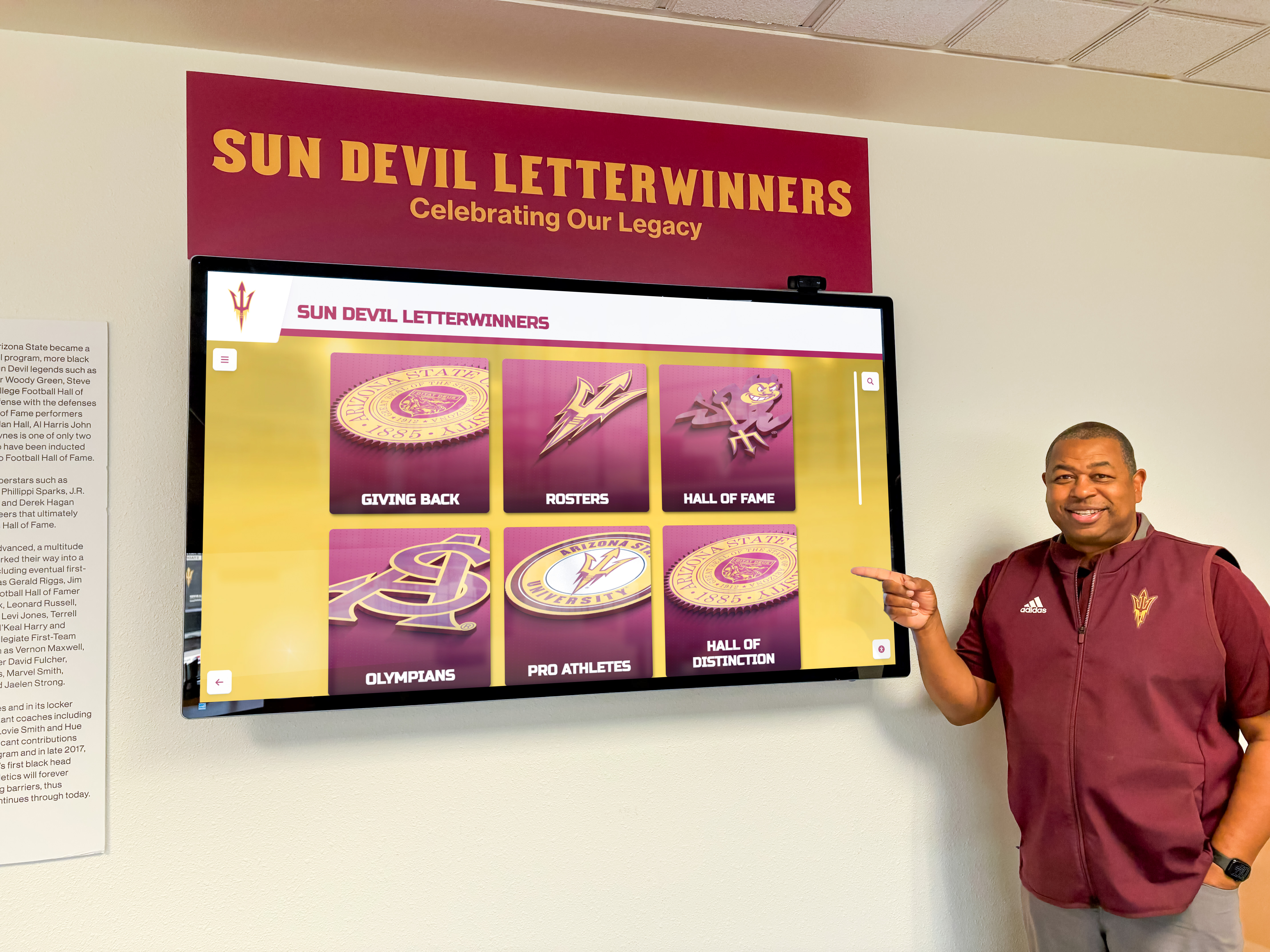
- Interactive Exploration: Enable search, filtering, detailed profile viewing, and discovery
- Global Accessibility: Extend recognition through web platforms accessible worldwide
- Flexible Organization: Easily reorganize by class year, giving level, campaign, or designation
- Engagement Analytics: Track interaction patterns and recognition effectiveness
- Cost Efficiency: Eliminate ongoing plaque expenses after initial technology investment
Universities implementing digital collegiate donor walls typically report significant improvements in donor satisfaction, increases in giving participation, enhanced visitor engagement, and substantial operational efficiencies in recognition program management.
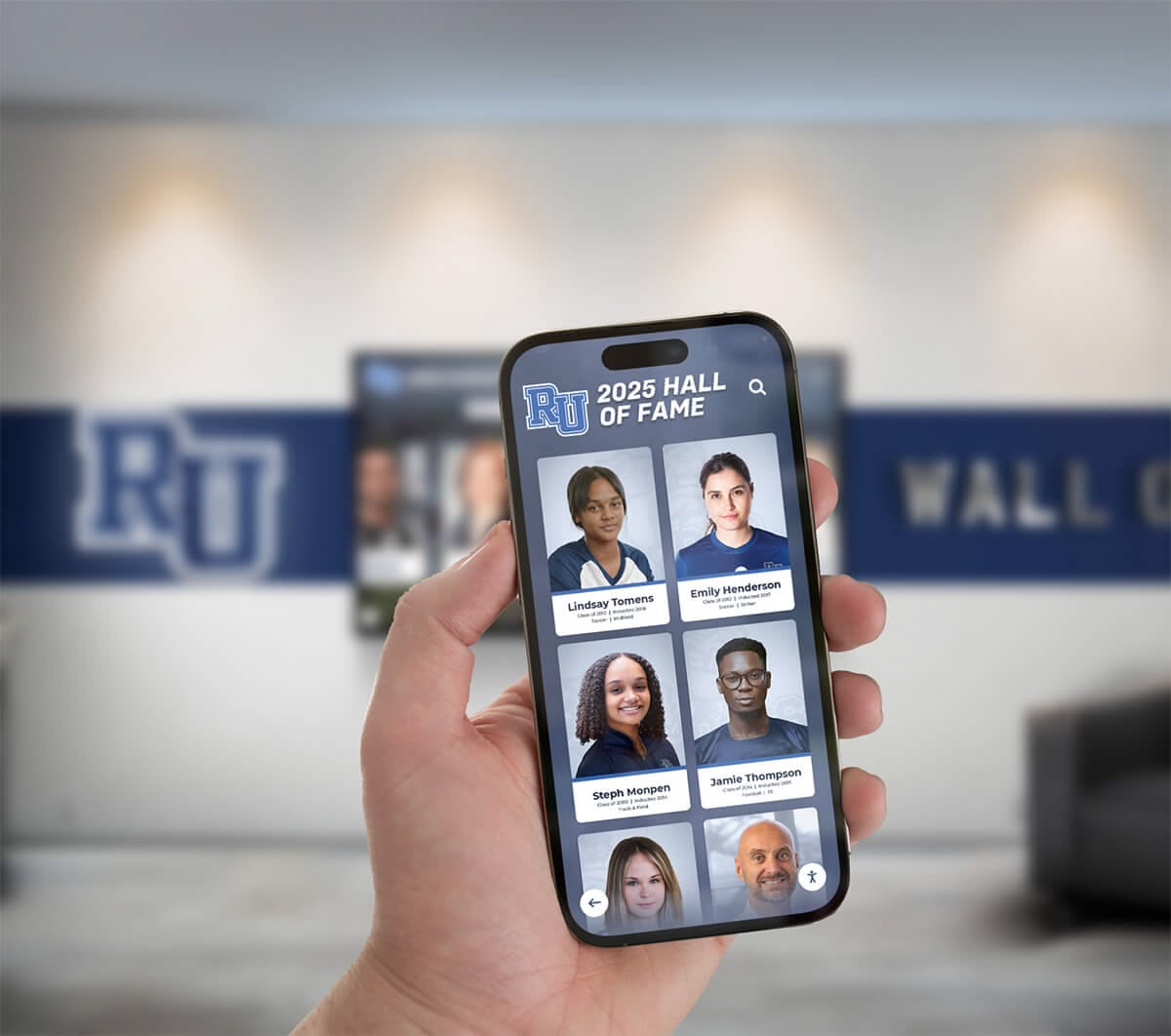
Hybrid Recognition Strategies
Many institutions implement hybrid approaches combining traditional and digital elements. Premium donors might receive featured physical plaques while comprehensive digital displays recognize supporters at all levels. This approach honors tradition while embracing innovation, appealing to diverse donor preferences across generational lines and giving capacities.
Strategic Planning for Collegiate Donor Walls
Successful recognition programs require thoughtful planning addressing donor preferences, institutional culture, advancement priorities, technical requirements, and long-term sustainability.
Defining Recognition Criteria and Giving Societies
Clear criteria ensure recognition programs maintain credibility while honoring diverse contributions appropriately. Consider these strategic decisions:
Cumulative vs. Annual Giving Recognition:
Cumulative lifetime giving recognition honors total support over alumni lifetimes, acknowledging those demonstrating sustained commitment through decades. Annual giving recognition celebrates supporters contributing regularly regardless of amount, emphasizing participation over capacity. Most universities use both approaches—lifetime giving for major donor societies and annual giving for participation-focused recognition.
Recognition Tier Structure for Universities:
Thoughtful giving level structures create pathways encouraging donors to increase support over time:
- Legacy Circle: $10,000,000+ (transformational university-wide impact)
- President’s Circle: $5,000,000-$9,999,999 (major campus initiatives)
- Founder’s Society: $2,500,000-$4,999,999 (significant program funding)
- Dean’s Council: $1,000,000-$2,499,999 (school or college level impact)
- Leadership Society: $500,000-$999,999 (substantial program support)
- Heritage Society: $250,000-$499,999 (endowed support)
- Chancellor’s Circle: $100,000-$249,999 (significant multi-year giving)
- Benefactor’s Club: $50,000-$99,999 (notable campaign support)
- Century Society: $25,000-$49,999 (generous sustained giving)
- Annual Fund Champions: $10,000-$24,999 (committed annual supporters)
Specific thresholds should reflect institutional donor base realities, campaign goals, and competitive positioning. Public universities with broader alumni populations might establish more accessible entry levels, while private institutions with smaller, wealthier alumni communities may set higher minimums.
Alternative Recognition Categories:
Beyond dollar thresholds, consider recognizing:
- Consecutive Years of Giving: Honor loyalty through sustained support (10, 25, 50+ years)
- Young Alumni Leaders: Celebrate recent graduates establishing philanthropic patterns
- Legacy Society Members: Feature planned giving commitments prominently regardless of amount
- Reunion Gift Leaders: Highlight milestone reunion contributions and class giving champions
- Parent Philanthropy: Acknowledge current and former parent support
- Faculty/Staff Giving: Recognize internal community contributions
- Corporate Partners: Honor employer matching gifts and corporate foundations
- Volunteer Leadership: Acknowledge non-monetary contributions of time and expertise
Multiple recognition pathways ensure diverse types of support receive appropriate acknowledgment, broadening participation and deepening engagement across constituent groups.
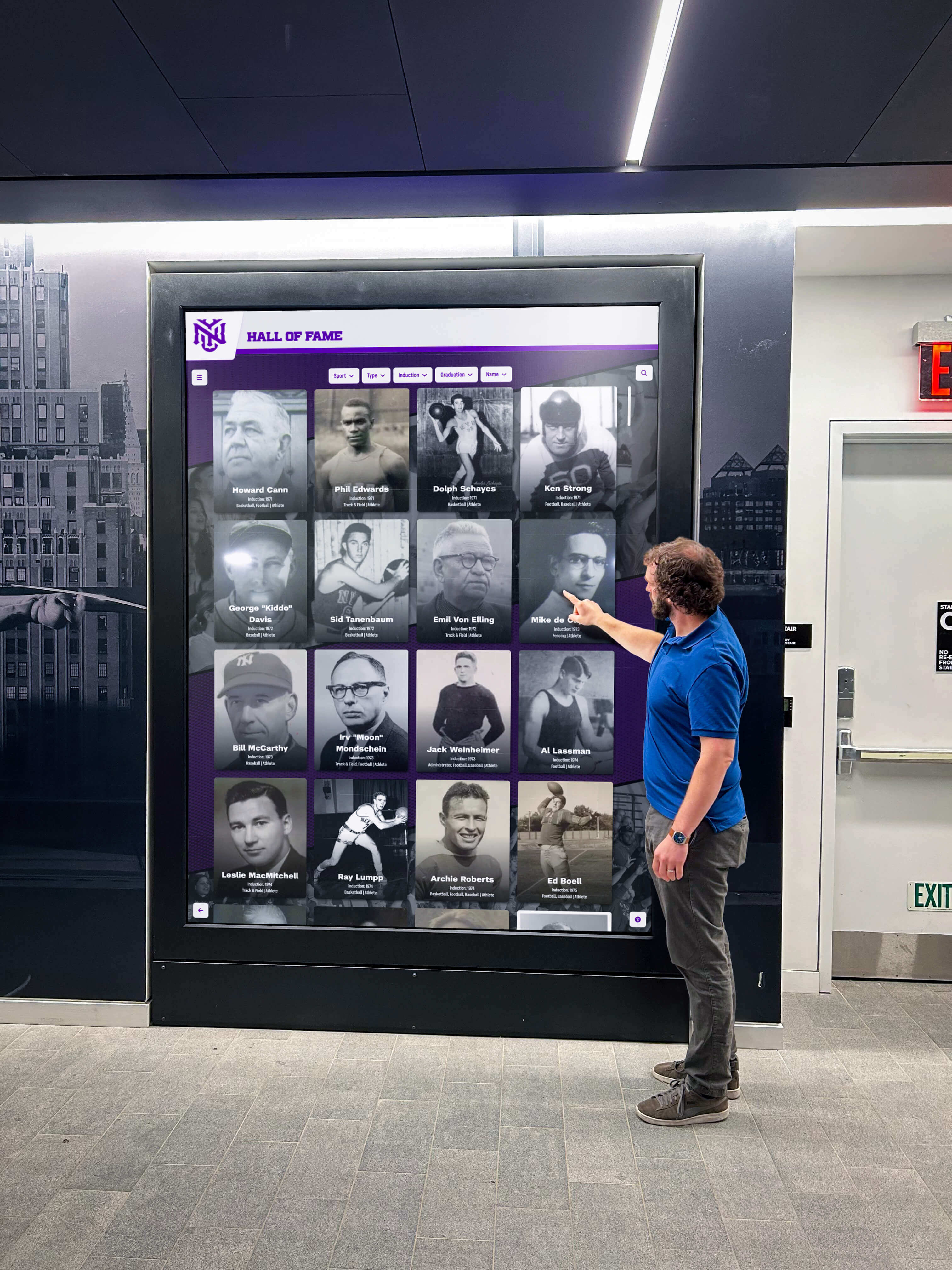
Determining Physical and Digital Presence
Modern recognition strategies increasingly combine physical campus installations with digital platforms accessible remotely, creating omnichannel stewardship experiences.
Physical Display Considerations:
Location profoundly influences engagement and visibility. High-traffic areas ensure maximum donor exposure:
- University advancement office buildings and alumni center lobbies
- Main administrative building entrances and gathering spaces
- Student union buildings and campus centers
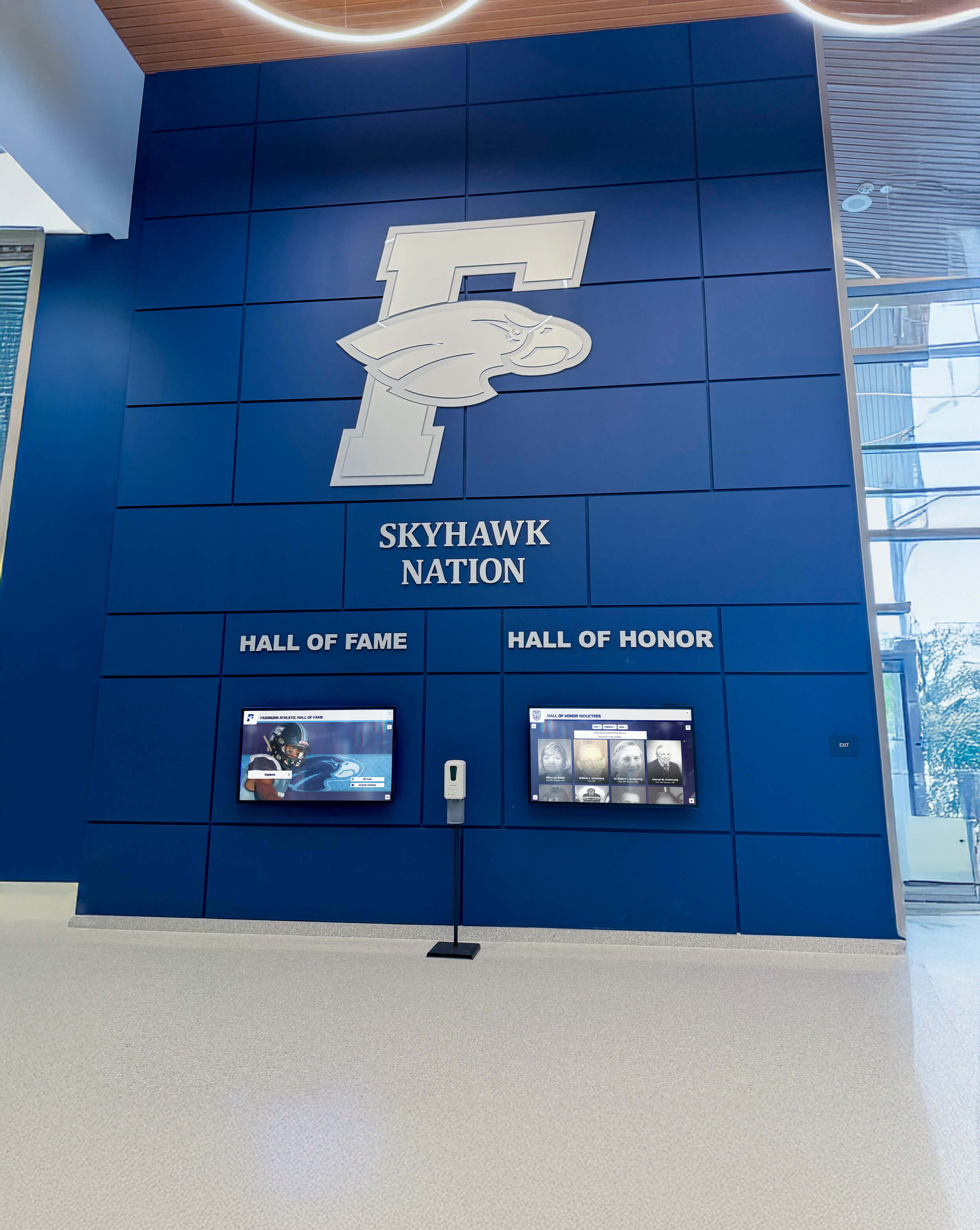
- Major athletic facility concourses and club spaces
- Performing arts centers and cultural venues
- Library main entrances and study commons
- Academic buildings for specific schools or colleges
- Campus visitor centers and admissions facilities
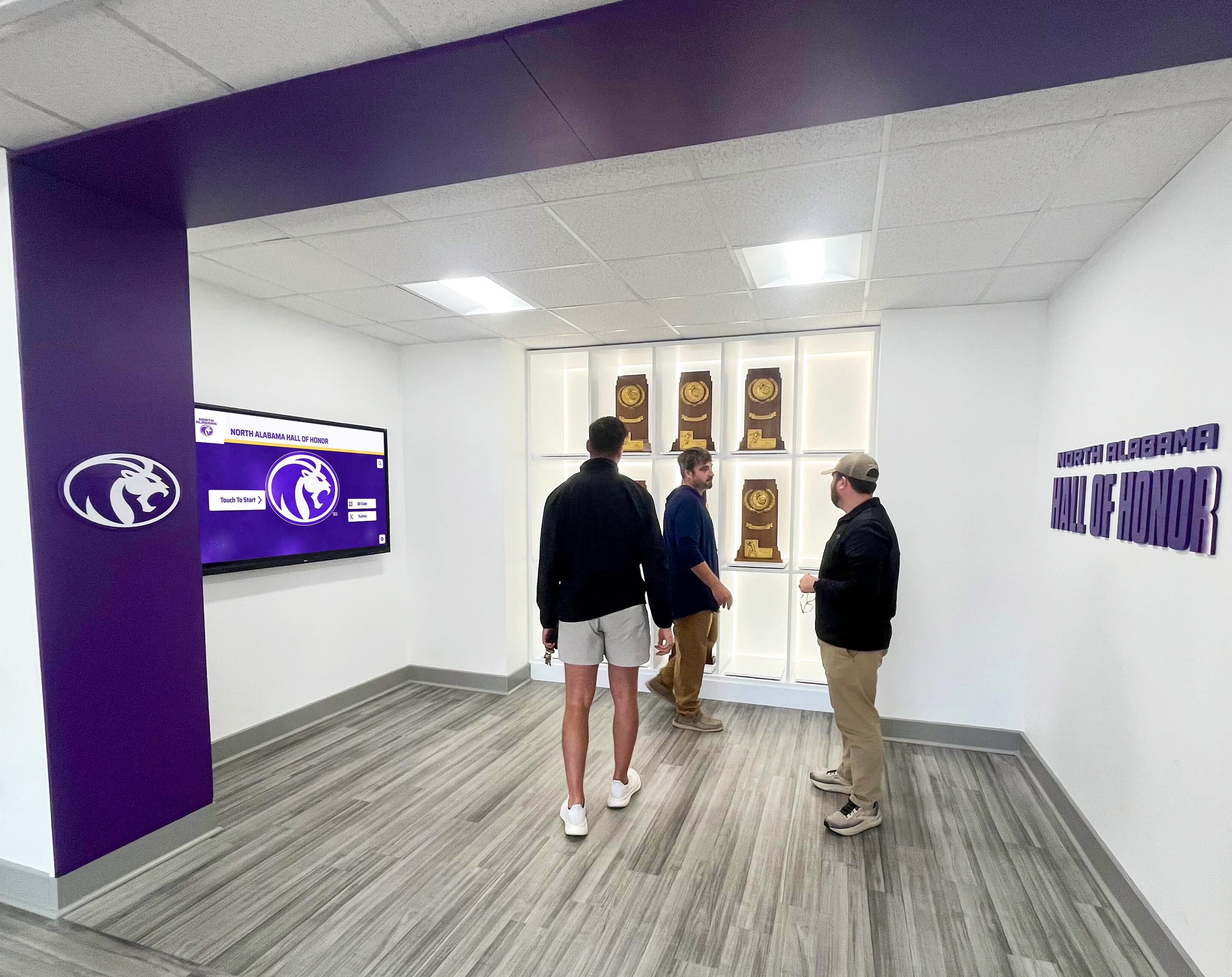
Display size and configuration depend on available space, viewing distances, budget constraints, and intended experiences. Larger touchscreens (65-86 inches) suit spaces where multiple users may interact simultaneously or viewing distances exceed six feet. Solutions like digital recognition displays from Rocket Alumni Solutions provide comprehensive guidance on installation specifications, optimal configurations, and space planning.
Online Recognition Platforms:
Web-based extensions dramatically expand recognition reach to alumni living anywhere globally, parents, corporate partners, and prospective donors researching institutional support. Online platforms should provide full functionality including advanced search, multi-criteria filtering, detailed profile viewing, impact storytelling, social sharing, and responsive mobile experiences.
Consider integration with:
- University advancement website donor recognition sections
- Campaign microsites and giving pages
- Alumni association member portals and directories
- Mobile applications for campus tours and events
- Social media channels and digital communications
This omnichannel approach maximizes recognition investment by serving both on-campus visitors and geographically distant stakeholders through appropriate channels while maintaining consistent messaging and brand identity.
Budgeting for Implementation and Operations
Comprehensive budgeting addresses both initial investment and ongoing operational expenses while demonstrating return on investment to institutional leadership.
Initial Investment Components:
- Hardware: Commercial-grade touchscreen displays, professional mounting systems, network infrastructure, media players ($15,000-$75,000 depending on size, quantity, and features)
- Software: Content management platforms, user interface design, database integration, web hosting ($8,000-$30,000 for enterprise solutions)
- Professional Services: Installation, network configuration, content migration, system integration ($5,000-$20,000)
- Content Development: Research, writing, photo acquisition, video production, profile creation ($10,000-$40,000 depending on donor numbers)
- Training and Support: Administrator instruction, documentation, initial support ($2,000-$5,000)
Ongoing Operational Costs:
- Software Subscriptions: Annual fees for cloud hosting, CMS platforms, technical support, feature updates ($3,000-$10,000 annually)
- Content Updates: Staff time for adding donors, updating profiles, refreshing content ($5,000-$15,000 annually in allocated time or contract services)
- Technical Maintenance: Hardware servicing, software updates, troubleshooting, network monitoring ($2,000-$6,000 annually)
- Content Enhancement: Periodic professional photography, video production, design refreshes ($3,000-$10,000 annually)
Importantly, digital systems’ operational costs remain relatively constant regardless of donor numbers, unlike traditional plaques incurring per-inductee manufacturing and installation expenses. Most universities achieve cost parity with traditional recognition within 3-5 years when accounting for eliminated plaque costs, enhanced fundraising results from improved donor engagement, and stewardship time savings.
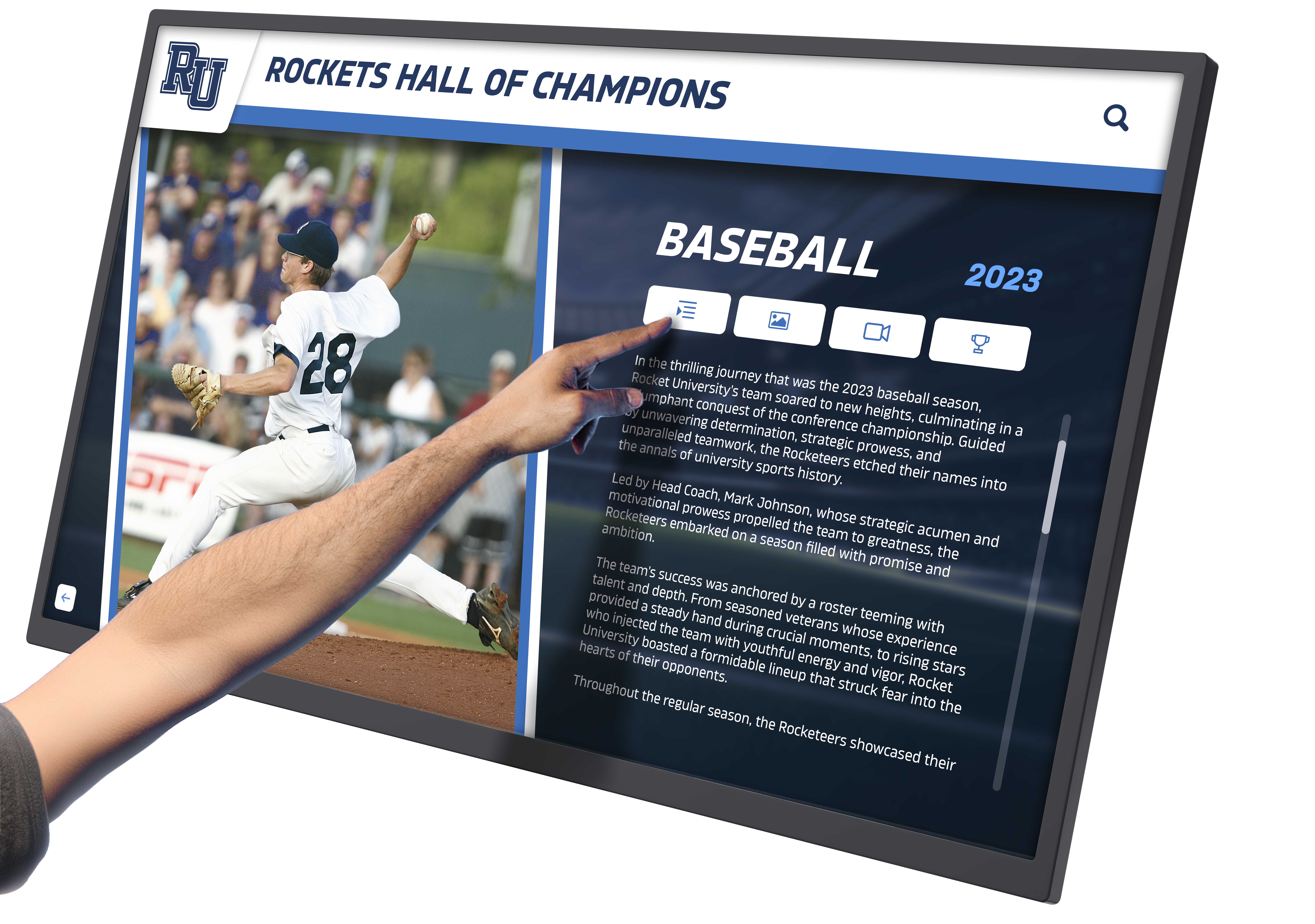
Selecting Technology Partners and Solutions
Technology selection significantly impacts long-term satisfaction, user experience, total cost of ownership, and stewardship effectiveness. Evaluate providers across multiple dimensions:
Purpose-Built vs. Generic Solutions:
Recognition-specific platforms offer purpose-designed features generic digital signage systems lack:
- Profile templates optimized for donor recognition and storytelling
- Search and filtering tailored to advancement needs and user behaviors
- Integration capabilities addressing common fundraising database connections
- Content management workflows designed for non-technical advancement staff
- Analytics measuring recognition effectiveness and engagement patterns
- Stewardship tools supporting broader advancement program objectives
Vendor Evaluation Criteria:
- Higher education expertise and reference customers at peer institutions
- Product roadmap indicating continued development and innovation
- Training quality, documentation completeness, and ongoing support responsiveness
- Financial stability suggesting long-term viability and partnership potential
- Data security, privacy compliance, and institutional standards adherence
- Integration capabilities with existing CRM, fundraising, and campus systems
- Customization flexibility supporting institutional brand and unique requirements
Solutions like Rocket Alumni Solutions’ interactive recognition platforms benefit from specialization in educational recognition, with implementations at hundreds of institutions informing feature development and support practices refined through diverse institutional experiences.
Creating Compelling Content That Honors and Inspires
Technology enables recognition walls, but compelling content drives engagement and stewardship effectiveness. Profiles telling authentic stories create emotional connections inspiring visitors while honoring donors appropriately.
Developing Rich Donor Profiles
Comprehensive profiles balance factual information with personal narratives revealing the humans behind contributions and their motivations for supporting educational missions.
Essential Profile Components:
- Basic Information: Name, class year(s), degree(s), school or college affiliation, hometown, current location
- Giving History: Total contributions, years of consecutive giving, recognition society memberships, campaign participation
- Personal Connection: Brief narrative about relationship with institution and motivation for giving
- Professional Background: Career highlights, notable achievements, industry leadership
- Campus Experience: Memorable moments, influential professors, formative experiences, traditions
- Impact Focus: Specific programs, scholarships, facilities, or initiatives supported
- Family Legacy: Multi-generational connections, legacy admissions, family tradition of support
- Multimedia Elements: Photos, video testimonials, documents, quotes, social media connections
Storytelling Best Practices:
Focus on transformation narratives showing how education influenced life trajectories. Donor profiles explaining how specific courses, research opportunities, mentorships, or campus experiences shaped career directions resonate powerfully with current students and prospective donors evaluating institutional value.
Highlight challenges overcome and obstacles navigated. Stories of first-generation college students succeeding despite limited resources, or professionals pivoting careers mid-stream, or graduates finding purpose after initial uncertainty create relatability and inspiration purely triumphant narratives cannot.
Include specific, concrete details rather than vague generalities. Instead of “successful entrepreneur,” describe the company founded, innovations introduced, employment created, industries transformed, or communities served. Specificity makes achievements tangible and believable rather than abstract.
Connect giving to personal values and motivations. Donors typically give because education transformed their lives, specific experiences proved formative, they want to ensure future students have similar opportunities, or they believe in institutional missions. These authentic motivations create emotional resonance generic appreciation statements cannot.
Privacy and Donor Preferences
Not all donors seek public recognition. Provide clear options for anonymous giving, name-only recognition without biographical details, or comprehensive profiles with storytelling elements. Respect preferences consistently across all recognition channels. Enable donor self-service portals for updating information and managing privacy settings throughout relationships.
Balancing Recognition Across Giving Levels
Effective recognition honors all donors appropriately without creating perceptions of insufficient appreciation at lower tiers or excessive attention at upper levels.
Tiered Recognition Approaches:
- Transformational Recognition ($1,000,000+): Featured profiles with professional photos, video testimonials, detailed narratives, impact statements, prominent homepage placement, and special designation
- Major Gift Recognition ($100,000-$999,999): Enhanced profiles with photos, biographical information, giving motivations, campus connections, and career highlights
- Leadership Recognition ($25,000-$99,999): Standard profiles with photos, degree information, giving history, brief statements, and society membership
- Annual Fund Recognition ($10,000-$24,999): Essential profiles with names, class years, consecutive giving years, and recognition level
- Loyalty Recognition ($1,000-$9,999): Honor roll listing with names, class years, and giving societies
- Participation Recognition (any amount): Searchable database inclusion with names and class years
This differentiation ensures major donors receive distinction befitting significant commitments while guaranteeing all supporters experience genuine appreciation regardless of capacity. The comprehensive approach recognizes that today’s young alumni leader making smaller gifts may become tomorrow’s major donor when recognized and engaged authentically.
Showcasing Philanthropic Impact
Connect donor recognition directly to institutional impact, demonstrating tangible differences contributions make in advancing educational missions and serving students.
Impact Storytelling Elements:
- Scholarship Recipients: Feature students funded by donor generosity, sharing their backgrounds, academic pursuits, career aspirations, and gratitude
- Program Outcomes: Showcase research initiatives, academic programs, student services, and facilities made possible by philanthropic support
- Facility Transformations: Display before-and-after comparisons of donor-funded improvements with usage statistics and student testimonials
- Research Breakthroughs: Highlight discoveries, innovations, and scholarly achievements enabled by endowment support and research funding
- Student Success Metrics: Present data on graduation rates, career placement, graduate school admission, and outcomes for scholarship recipients
- Community Benefit: Demonstrate broader societal impact of donor-supported programs through service learning, economic development, healthcare advancement, cultural enrichment
- Faculty Excellence: Connect donor support to faculty recruitment, retention, research productivity, and teaching innovation
This impact-focused approach demonstrates that recognition isn’t merely donor acknowledgment—it celebrates positive change their generosity creates while providing accountability and transparency modern donors expect. The strategies detailed in major gift giving recognition approaches provide comprehensive frameworks for connecting recognition to measurable institutional impact.
Implementation Best Practices for Universities
Institutions achieving exceptional results with collegiate donor walls follow proven practices refined through implementation experience across diverse higher education contexts.
Content Collection Strategies
Gathering comprehensive information for potentially thousands of donors requires systematic approaches balancing thoroughness with efficiency.
Direct Donor Engagement:
Request that recognized donors provide biographical information, photographs, personal reflections, and impact statements. Most honorees willingly contribute content, appreciating opportunities to influence how achievements and motivations are presented. Provide templates or questionnaires ensuring consistency while making submissions straightforward for busy professionals.
Advancement Database Mining:
Extract foundational information from CRM systems including names, class years, degree information, giving history, contact details, and biographical data already collected through years of relationship management. This establishes baseline profiles enhanced over time through additional research and donor input.
Alumni Records Research:
Mine institutional archives for historical photos, news clippings, yearbook entries, athletic records, and achievement documentation. Many universities possess rich materials remaining inaccessible until digitization projects surface them for recognition purposes.
Digital Archives and Social Media:
Search university social media, alumni publications, development communications, and digital archives for recent photos, event coverage, and donor stories already published. With appropriate permissions, leverage existing content rather than creating everything from scratch.
Collaborative Development:
Engage student workers, graduate assistants, volunteers, or communications staff in content development. Research, interviewing, writing, and photo editing provide valuable experience while accelerating profile creation. Student involvement creates meaningful connections between current learners and philanthropic supporters.
Launch and Promotion Strategies
Strategic launches maximize visibility, engagement, and fundraising momentum while celebrating donors appropriately.
Pre-Launch Foundation Building:
Generate anticipation before official unveilings. Communicate coming recognition programs through email newsletters, social media campaigns, website announcements, and donor communications—building awareness and excitement. Invite community input on recognition approaches, creating ownership and interest before launches.
Strategic Unveiling Events:
Coordinate launches with high-visibility occasions—homecoming weekends, major donor events, campaign kickoffs, milestone anniversaries, commencement activities, or reunion weekends—maximizing attendance and media coverage. Feature recognized donors at launch events when possible, adding personal significance while providing networking opportunities and peer-to-peer cultivation.
Sustained Visibility Practices:
Establish ongoing promotion preventing recognition walls from becoming invisible through familiarity:
- Monthly “Featured Donor” spotlights in advancement communications and social media
- Content calendars ensuring consistent recognition-related posts and stories
- Event integration featuring displays during campus tours, admission visits, and donor gatherings
- Homepage rotations showcasing recognition and celebrating new inductees
- Email signature links from advancement staff to online recognition platforms
- Digital signage integration displaying recognition content across campus
- Reunion programming incorporating recognition exploration and class giving competitions
Integration with Advancement Programs
Collegiate donor walls achieve maximum impact when integrated thoughtfully with comprehensive development strategies rather than existing as isolated recognition initiatives.
Fundraising Campaign Coordination:
Incorporate recognition into cultivation and stewardship practices throughout donor lifecycles. Development officers can reference recognition displays when discussing institutional appreciation, showing prospects how significant contributions receive acknowledgment. Feature active campaigns prominently with real-time progress tracking, demonstrating momentum and inspiring participation through social proof.
Event Programming and Stewardship:
Recognition displays become natural event focal points creating engagement opportunities:
- Position prominently at reunions, homecomings, and donor appreciation events
- Create interactive experiences encouraging attendees to explore classmate profiles and giving histories
- Host induction ceremonies honoring new recognition additions as signature stewardship events
- Integrate recognition into campus tours for prospective students and families
- Feature donor profiles at scholarship recipient receptions connecting funders and beneficiaries
- Showcase impact stories at board meetings demonstrating stewardship effectiveness
Multi-Channel Recognition Strategy:
Coordinate digital displays with comprehensive programs incorporating print recognition (honor rolls, campaign publications), personal communications (acknowledgment letters, phone calls), naming opportunities (spaces, scholarships, professorships), special events (appreciation dinners, exclusive briefings), and online features (website recognition, social media spotlights). Ensure consistency across channels while leveraging each medium’s unique strengths.
The comprehensive approaches detailed in how Rocket helps advancement marketing teams provide frameworks for integrating recognition with broader advancement communication and engagement strategies that drive results.
Advanced Features Enhancing Stewardship Effectiveness
Leading collegiate donor walls incorporate sophisticated functionality extending recognition impact and supporting broader advancement objectives.
Campaign-Specific Recognition and Momentum Building
Leverage digital flexibility for targeted fundraising initiatives creating urgency and inspiring participation:
- Real-Time Progress Tracking: Display current campaign status toward goals with visual progress indicators, fundraising thermometers, and milestone celebrations
- Dynamic Leaderboards: Show giving momentum by class year, athletic team, fraternity/sorority, school or college, or geographic region creating friendly competition and social proof
- Challenge Gift Features: Highlight matching opportunities with countdown timers and impact multipliers creating urgency and demonstrating leverage
- Milestone Celebrations: Automatically celebrate achieving participation thresholds, dollar goals, or donor counts with confetti animations and congratulatory messaging
- Temporary Featured Recognition: Spotlight current campaign participants prominently with “Just Added” or “Recent Supporters” sections maintaining freshness
This dynamic approach maintains excitement throughout multi-year fundraising initiatives while demonstrating transparent progress inspiring participation among prospects seeing peer involvement.
Social Media Integration and Digital Amplification
Extend recognition reach far beyond physical campus locations through strategic social integration:
Social Sharing Capabilities:
Enable donors to share their recognition directly from displays to LinkedIn, Facebook, Instagram, or other platforms. This organic amplification introduces institutions to donors’ professional and personal networks—hundreds or thousands of potential supporters who trust peer recommendations more than institutional marketing messages.
Social Media Aggregation and Display:
Incorporate real-time feeds showing donor posts, volunteer testimonials, scholarship recipient gratitude, and campaign updates expressed through social channels. This user-generated content authenticates organizational impact while creating continuously updating recognition requiring minimal administrative effort.
Digital Storytelling Integration:
Embed recognition profiles within broader digital storytelling efforts including virtual campus tours, online giving platforms, campaign microsites, and alumni engagement applications. Create seamless experiences connecting recognition with cultivation, solicitation, and stewardship at appropriate touchpoints throughout donor journeys.

Analytics and Optimization
Sophisticated analytics transform recognition displays from static acknowledgment into strategic intelligence informing advancement decisions.
Engagement Metrics:
- Total interactions and unique visitors over daily, weekly, monthly, annual time periods
- Average session duration indicating content quality and visitor interest
- Most-viewed profiles revealing compelling stories and popular individuals
- Search query patterns showing visitor interests and information-seeking behaviors
- Return visitor rates demonstrating sustained engagement and repeat usage
- Geographic distribution of online recognition access identifying diaspora engagement
- Device types and platforms informing mobile optimization priorities
Advancement Intelligence:
- Correlation between recognition visibility and subsequent giving behavior
- Donor retention comparisons among recognized versus non-recognized supporters
- Gift upgrade patterns following enhanced recognition or profile additions
- Reunion giving comparisons for classes with featured recognition versus standard inclusion
- Peer influence analysis showing network effects of social sharing
- Content effectiveness metrics identifying story types generating strongest engagement
Strategic Optimization:
Use data-driven insights to continuously improve recognition effectiveness through content gap identification, optimal timing for featuring specific content, navigation improvements reducing friction, recognition approaches generating strongest engagement, and resource allocation toward highest-impact activities.
Measuring Success and Demonstrating Value
Effective recognition programs demonstrate impact through quantifiable metrics and qualitative feedback justifying investments and informing continuous improvement.
Key Performance Indicators for Universities
Fundraising Impact Metrics:
- Donor Retention Rates: Compare retention among recognized versus non-recognized alumni donors across giving levels and class years
- Average Gift Size: Analyze giving increases following recognition implementation by donor segment
- Upgrade Velocity: Track time between giving level increases for recognized donors
- New Donor Acquisition: Monitor first-time giving rates during recognition launch and promotion periods
- Planned Giving Inquiries: Measure legacy society interest following recognition implementation
- Campaign Success: Compare campaign results before and after recognition enhancement
- Cost Per Dollar Raised: Calculate stewardship efficiency improvements through recognition automation
Engagement Analytics:
- Interaction Volume: Total sessions and unique users with recognition displays physical and online
- Content Depth: Average profiles viewed per session indicating exploration thoroughness
- Social Amplification: Recognition content shares extending institutional reach beyond campus
- Web Traffic: Online recognition platform visits from alumni globally with geographic distribution
- Event Participation: Attendance at recognition-related ceremonies and celebrations
- Mobile Engagement: App downloads and mobile recognition access demonstrating convenience value
Operational Efficiency:
- Administrative Time: Staff hours required for recognition program management compared to previous approaches
- Cost Per Donor: Total program costs divided by recognized donors compared to traditional plaque expenses
- Update Frequency: How regularly new inductees are added maintaining currency and relevance
- System Reliability: Uptime and performance metrics ensuring consistent availability for visitors
- Staff Satisfaction: Advancement team feedback on recognition management ease and effectiveness
Donor Satisfaction Assessment
Quantitative metrics reveal behavior patterns but qualitative feedback explains experiences and guides improvements.
Satisfaction Surveys:
Regularly survey donors about recognition experiences through brief questionnaires. Ask about acknowledgment timeliness, recognition accuracy, information completeness, meaningfulness of presentation, and overall appreciation quality. Include questions about preferred recognition methods, content suggestions, and improvement ideas.
Focus Groups and Listening Sessions:
Conduct periodic discussions with donors representing different giving levels, graduation decades, geographic locations, and relationship tenures. Explore recognition preferences, emotional responses to seeing profiles, enhancement suggestions, and integration with broader stewardship. These conversations often reveal insights surveys cannot capture about donor motivations and institutional relationships.
Anecdotal Feedback Collection:
Systematically document unsolicited donor comments, board member observations, advancement staff perspectives, and campus community feedback on recognition effectiveness. This qualitative evidence complements quantitative data in demonstrating value to institutional leadership and identifying opportunities for enhancement.
Common Challenges and Practical Solutions
Institutions implementing collegiate donor walls encounter predictable obstacles. Understanding issues and proven solutions ensures successful outcomes.
Challenge: Incomplete Historical Donor Data
Many universities discover gaps in historical donor records when compiling comprehensive recognition lists. Missing photographs, incomplete biographical information, inconsistent data quality, and inadequate storytelling elements complicate content development for long-time supporters.
Solutions:
- Begin with donors for whom substantial information exists, expanding backward through decades as resources allow
- Create streamlined profiles for historical donors with available information, enriching them as additional materials surface through research or donor submission
- Engage historical societies, university archives, and regional libraries that may possess materials absent from advancement records
- Establish prospective data quality standards preventing future issues through systematic biographical information collection
- Phase implementation starting with strongest data and highest-priority donors, continuously improving over multi-year periods
- Leverage class reunion volunteers and affinity group leaders to help research classmate information
Challenge: Donor Privacy and Recognition Preferences
Some alumni and donors hesitate about public recognition fearing excessive exposure, data security concerns, professional confidentiality requirements, or personal modesty regarding philanthropic contributions.
Solutions:
- Provide clear privacy controls allowing donors to choose recognition levels from completely anonymous to comprehensive biographical profiles
- Implement robust data security measures meeting institutional standards and communicate protections explicitly to concerned donors
- Offer granular preferences enabling donors to specify exactly what information appears publicly (name only, class year, giving level, biography, photos, etc.)
- Respect privacy choices consistently across all recognition channels including physical displays, websites, publications, and events
- Enable donor self-service portals for updating information and managing privacy settings throughout relationships without requiring advancement office intervention
- Establish clear policies addressing recognition for controversial donors or those whose public profiles may generate campus concerns
Challenge: Technology Adoption by Advancement Staff
Advancement professionals sometimes resist new technology, struggle with content management systems, or feel overwhelmed by digital platform complexity, particularly in smaller development offices with limited technical resources.
Solutions:
- Provide comprehensive training emphasizing benefits and time savings rather than just technical mechanics
- Select platforms with intuitive interfaces requiring minimal technical expertise and following familiar web conventions
- Assign technology champions within advancement teams providing peer support and encouraging colleagues
- Offer ongoing assistance, documentation, video tutorials, and refresher sessions as needed throughout relationships
- Build recognition management into existing workflows rather than creating separate processes requiring additional time
- Demonstrate quick wins early showing how digital recognition saves time compared to traditional plaque management
The guidance provided in building sustained alumni engagement ecosystems addresses these institutional challenges comprehensively with practical implementation strategies applicable across diverse institutional contexts.
Challenge: Maintaining Engagement Over Time
Recognition displays risk becoming invisible background elements after initial novelty fades, particularly in high-traffic campus locations where community members pass daily without noticing content.
Solutions:
- Implement regular content refresh schedules introducing new donor stories, updated profiles, and enhanced multimedia monthly or quarterly
- Rotate featured donors seasonally maintaining homepage freshness and highlighting diverse stories
- Integrate with seasonal campaigns, reunion weekends, homecoming celebrations, and athletic events creating timely relevance
- Add interactive elements like quizzes, historical comparisons, and discovery features encouraging repeat engagement
- Monitor analytics adjusting content strategy based on actual visitor behavior patterns and preferences
- Promote recognition through multiple channels maintaining awareness via email, social media, digital signage, and physical directional signage
- Connect recognition to student experiences through orientation programs, campus tours, and academic courses creating educational value
Future Trends in Collegiate Donor Recognition
Understanding emerging technologies and evolving donor expectations helps institutions plan recognition programs remaining relevant for years while supporting future enhancements without requiring complete replacement.
Artificial Intelligence and Personalization
AI capabilities will enable increasingly sophisticated recognition experiences tailored to individual visitors. Systems may automatically generate customized donor recommendations based on visitor class years, suggest personalized content based on search patterns, optimize display timing based on traffic analytics, predict donor recognition preferences, and provide advancement intelligence identifying supporters most responsive to enhanced recognition. These personalization capabilities will make large donor databases feel intimate and relevant to individual users.
Enhanced Impact Visualization and Transparency
Future recognition walls will incorporate sophisticated impact visualization connecting individual gifts to specific measurable outcomes. Interactive dashboards might show real-time metrics about donor-funded programs—students currently enrolled on scholarships with academic progress, patients treated with donated medical equipment, research publications enabled by philanthropic investment, facilities usage statistics, or program outcomes. This unprecedented transparency satisfies donor accountability desires while demonstrating tangible differences contributions make in advancing institutional missions.
Immersive Technologies and Hybrid Experiences
Virtual and augmented reality will create novel recognition experiences bridging physical and digital environments. Donors might virtually tour facilities their gifts funded through VR experiences, use AR smartphone applications to reveal enhanced digital content overlaying physical plaques, or participate in immersive storytelling experiences placing them in scholarship recipients’ journeys. These hybrid approaches honor traditional recognition while adding interactive enhancement appealing to younger donors expecting technology integration.
Blockchain and Verified Digital Credentials
Emerging technologies may enable permanent, verifiable recognition records providing donors with digital collectibles representing their philanthropic contributions. These tokens could be displayed in virtual spaces, shared on professional networks, and preserved as permanent verified records of educational support. Smart contracts might automatically update recognition as donors reach new cumulative giving thresholds without manual advancement office intervention.
Conclusion: Recognition That Transforms University Advancement
Collegiate donor walls represent far more than acknowledgment systems—they embody institutional gratitude, inspire philanthropic behavior, strengthen alumni connections, and build communities united by shared commitment to educational excellence. While traditional plaques served recognition purposes for generations, modern donor expectations, technological capabilities, and advancement best practices demand more comprehensive, engaging, and sustainable approaches.
Digital recognition solutions overcome traditional limitations while adding capabilities fundamentally transforming stewardship effectiveness. Unlimited capacity ensures every donor receives appropriate acknowledgment regardless of giving level. Instant updates provide timely recognition reinforcing positive behavior and demonstrating responsiveness. Multimedia storytelling creates emotional connections inspiring continued support and peer cultivation. Global accessibility serves distributed alumni populations equitably regardless of geographic location. Comprehensive analytics reveal patterns informing strategic optimization and resource allocation.
Successful implementation requires viewing recognition as strategic advancement infrastructure rather than one-time projects. Thoughtful planning addressing criteria, content, technology, stakeholder engagement, and sustainability ensures programs deliver lasting value supporting fundraising goals across presidential administrations and campaign cycles. Ongoing commitment to quality, promotion, measurement, and optimization separates beloved institutional assets from underutilized displays.
For universities ready to transform donor recognition, comprehensive solutions like those from Rocket Alumni Solutions provide proven platforms combining sophisticated technology with intuitive management, dedicated support, and deep higher education expertise. From initial strategic planning through years of sustained engagement growth, the right partner makes the difference between displays and transformative recognition experiences celebrating your institution’s philanthropic community while building stronger support for the future.
When supporters receive recognition genuinely honoring their generosity while demonstrating tangible institutional impact and educational transformation, they become advocates inspiring others to join communities making differences in universities that matter. This transformation from donors to ambassadors represents the ultimate success of effective collegiate donor recognition programs—creating self-perpetuating cultures of giving that advance educational missions for generations to come.































