Employee recognition remains one of the most powerful yet underutilized tools for driving workplace culture, retention, and performance. While many organizations default to sporadic appreciation or predictable employee-of-the-month programs, employees achieving significant contributions often go unnoticed, and accomplishments that could inspire others remain invisible.
This comprehensive guide explores how modern corporate employee recognition programs—particularly those leveraging digital recognition displays—create systematic approaches to celebrate diverse achievements, motivate all employees, and build lasting workplace engagement.
The business case for employee recognition is compelling. According to research from Nectar, over 50% of employees say they would stay longer at a company if they felt more appreciated, and organizations with strong recognition programs see an 1,181% increase in great work. Yet traditional recognition approaches—anniversary certificates, annual reviews, sporadic thank-you emails—struggle to create the visibility and consistency that modern workplaces need.
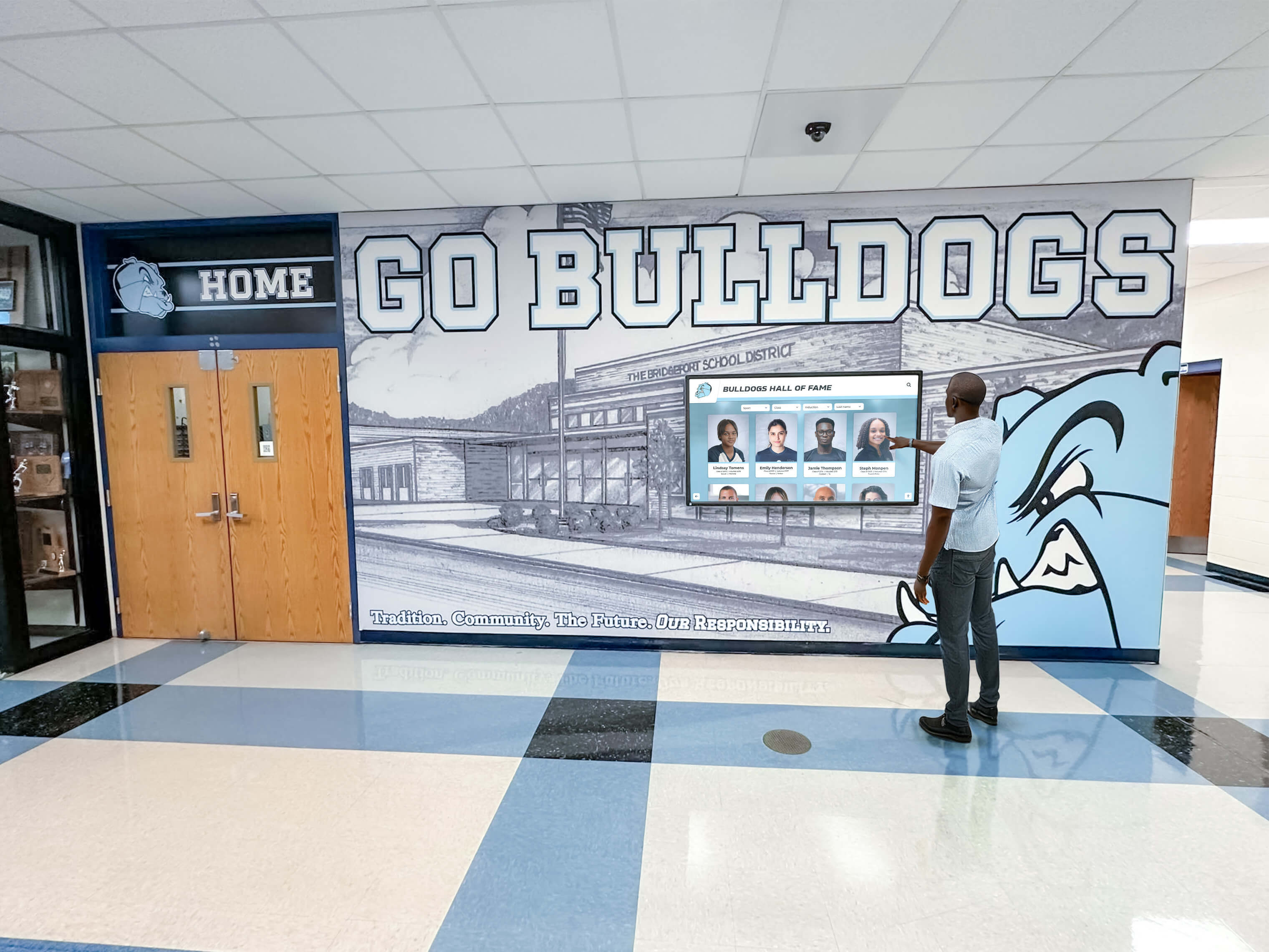
Digital employee recognition displays transform this landscape by providing interactive, scalable, and engaging platforms that make achievement visible throughout your organization while eliminating the space constraints and ongoing costs of traditional recognition methods.

Understanding Modern Employee Recognition Programs
Corporate recognition programs have evolved far beyond gold watches and service anniversary plaques. Today’s most effective programs combine multiple recognition dimensions, tiered acknowledgment structures, and technology platforms that make recognition accessible, consistent, and meaningful.
The Recognition Gap in Corporate America
Despite widespread agreement on recognition’s importance, most organizations face significant gaps in their recognition practices. According to Gallup research on employee retention, only 19% of employees say they’re recognized weekly, yet employees who receive meaningful weekly recognition are 9x more likely to feel a strong sense of belonging at their organization.
This recognition gap creates tangible business costs:
- Retention Impact: Employees who strongly agree that recognition is important are 3.8x more likely to feel connected to their culture
- Engagement Consequences: Recognition-deprived employees show significantly lower engagement scores and productivity metrics
- Cultural Effects: Organizations without systematic recognition struggle to reinforce desired behaviors and values
- Competitive Disadvantage: Companies with strong recognition cultures attract and retain top talent more effectively
Why Traditional Recognition Methods Fall Short
Traditional corporate recognition faces inherent limitations:
Limited Visibility: Plaque-based recognition in executive corridors reaches only a fraction of employees, leaving remote workers and those in satellite offices completely excluded.
High Ongoing Costs: Individual plaques cost $75-$300 each, plus installation labor, creating recurring expenses that limit recognition breadth.
Space Constraints: Physical walls fill quickly, forcing difficult decisions about whose achievements receive display and whose get relegated to storage.
Static Presentation: Traditional displays can’t showcase the rich stories behind achievements or provide context about impact and significance.
Update Complexity: Adding new recognition requires coordination with vendors, installation scheduling, and physical modifications to spaces.
Lack of Searchability: Employees can’t easily find themselves or colleagues in traditional displays without scanning every plaque.
These limitations explain why many corporate recognition programs become inconsistent over time—the operational burden and cost constraints make sustained recognition challenging.
The Business Case for Digital Employee Recognition
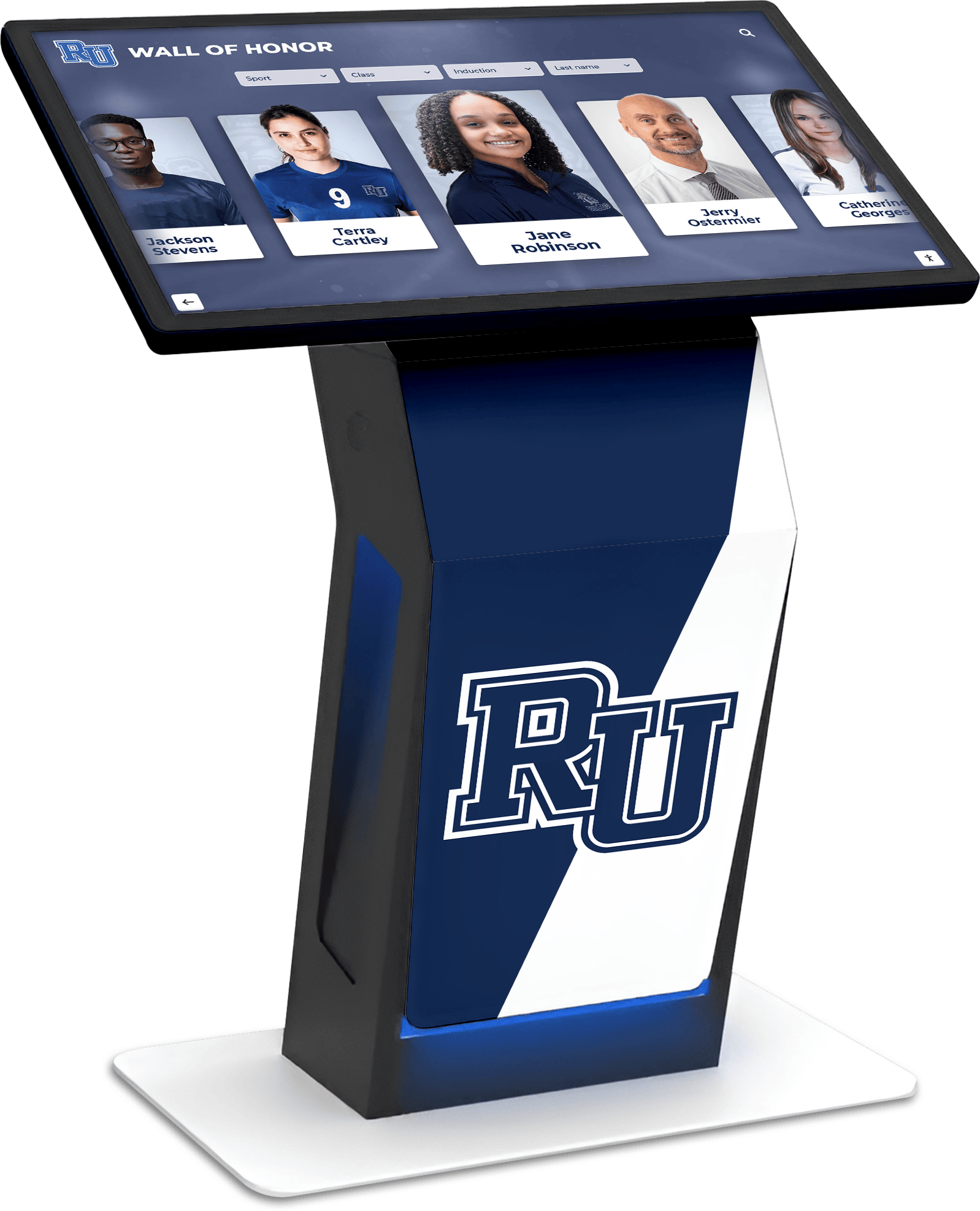
Digital recognition displays address traditional limitations while creating new opportunities for engagement and cultural impact. Solutions like Rocket Alumni Solutions provide corporate-ready platforms that transform recognition from occasional acknowledgment to continuous cultural reinforcement.
Measurable Business Impact
Organizations implementing digital recognition programs consistently report significant returns across multiple dimensions:
Retention and Engagement Improvements
Research from employee recognition platforms shows that employers prioritizing recognition build teams that are 56% less likely to seek new roles. This retention impact translates directly to cost savings—replacing an employee typically costs 50-200% of their annual salary when accounting for recruitment, onboarding, and productivity loss.
According to Vantage Circle’s comprehensive research, organizations with recognition programs experience 784% higher engagement levels, and engaged employees deliver:
- 23% higher profitability according to Harvard Business Review research
- 14% higher productivity based on engagement studies
- 41% lower absenteeism compared to disengaged workers
- Substantially better customer satisfaction scores
Performance Enhancement
Recognition creates positive reinforcement that shapes behavior throughout organizations. Research cited by Terry Berry found that 80% of employees report working harder when appreciated, and 92% are more likely to repeat recognized behaviors.
This performance impact compounds over time as recognition reinforces excellence:
- High-performing employees receive validation that their contributions matter
- Developing employees receive acknowledgment for growth and improvement
- Teams see clear examples of valued behaviors and achievements
- Recognition criteria communicate organizational priorities effectively
Cultural Transformation
Perhaps most significantly, systematic recognition shapes workplace culture. When achievement becomes visible throughout an organization, it creates cultural shifts that elevate performance company-wide. Employees who strongly agree that recognition is important are 3.8x more likely to feel connected to organizational culture.
ROI Calculations for Digital Recognition
While digital recognition displays require upfront investment, the long-term financial benefits create compelling return on investment. Let’s examine a realistic scenario:
Traditional Recognition Costs (Annual)
- New plaques for 50 employees: $7,500-$15,000
- Installation labor: $2,000-$4,000
- Wall space renovation (amortized): $1,500-$3,000
- Administrative time (75 hours @ $50/hr): $3,750
- Total Annual: $14,750-$26,750
Digital Recognition Platform (Annual)
- Initial hardware/software (amortized over 7 years): $2,000-$4,000
- Software subscription/support: $1,500-$3,000
- Administrative time (15 hours @ $50/hr): $750
- Total Annual: $4,250-$7,750
Annual Savings: $10,500-$19,000
Beyond direct cost savings, digital platforms deliver additional value:
- Unlimited employee additions without incremental costs
- Instant updates reflecting real-time achievements
- Remote employee access creating inclusive recognition
- Analytics demonstrating recognition program effectiveness
- Integration with existing HR systems eliminating duplicate data entry
When factoring in retention improvements (reducing turnover by even 2-3% yields substantial savings), the ROI becomes even more compelling.
Essential Components of Effective Recognition Programs
Successful corporate recognition programs share several essential characteristics that maximize impact while remaining sustainable and equitable.
Multi-Dimensional Recognition Criteria
Moving beyond single metrics ensures comprehensive achievement celebration. Organizations with robust recognition programs acknowledge excellence across multiple dimensions:
Performance-Based Recognition
- Sales targets and revenue achievements
- Project completion milestones and delivery excellence
- Quality improvements and process innovations
- Customer satisfaction scores and relationship building
- Problem-solving contributions and creative solutions
Values-Based Recognition
- Demonstration of core company values in daily work
- Leadership behaviors and mentoring contributions
- Collaboration excellence and teamwork
- Customer service orientation and client advocacy
- Ethical decision-making and integrity demonstrations
Growth and Development Recognition
- Skill acquisition and professional development milestones
- Certification completions and continuing education achievements
- Cross-functional learning and role expansion
- Mentorship contributions developing others
- Knowledge sharing and best practice documentation
Tenure and Commitment Recognition
- Service anniversaries and long-term dedication
- Consistent performance over extended periods
- Institutional knowledge contributions
- Loyalty through organizational changes
- Multi-year excellence and sustained impact
This multi-dimensional approach ensures recognition opportunities exist for employees across different roles, contributions, and career stages. As explored in guidance on academic recognition programs, comprehensive recognition systems acknowledge diverse forms of excellence.
Tiered Recognition Structures
Creating multiple recognition levels ensures appropriate acknowledgment at different achievement scales:
Pinnacle Achievement Recognition
These highest honors receive special ceremony, permanent display prominence, and substantial visibility:
- CEO awards for exceptional organizational contributions
- Innovation awards for transformational ideas
- Lifetime achievement honors for career-long excellence
- Industry recognition and external award nominations
- Company hall of fame inductions
Regular Recognition Programs
Systematic ongoing recognition maintains momentum:
- Quarterly performance awards celebrating seasonal achievements
- Monthly team achievement celebrations
- Weekly standout employee highlights
- Daily appreciation and peer acknowledgment
- Milestone celebrations for project completions
Peer-to-Peer Recognition
Empowering employees to recognize colleagues creates powerful workplace connections:
- Colleague nominations and appreciation
- Team member acknowledgment programs
- Cross-departmental recognition initiatives
- Real-time appreciation platforms
- Social recognition and kudos systems
Research shows that organizations implementing peer recognition programs see a 20% boost in overall engagement levels. The combination of top-down and peer-to-peer recognition creates a recognition-rich culture where appreciation flows continuously.
Digital Recognition Display Technology
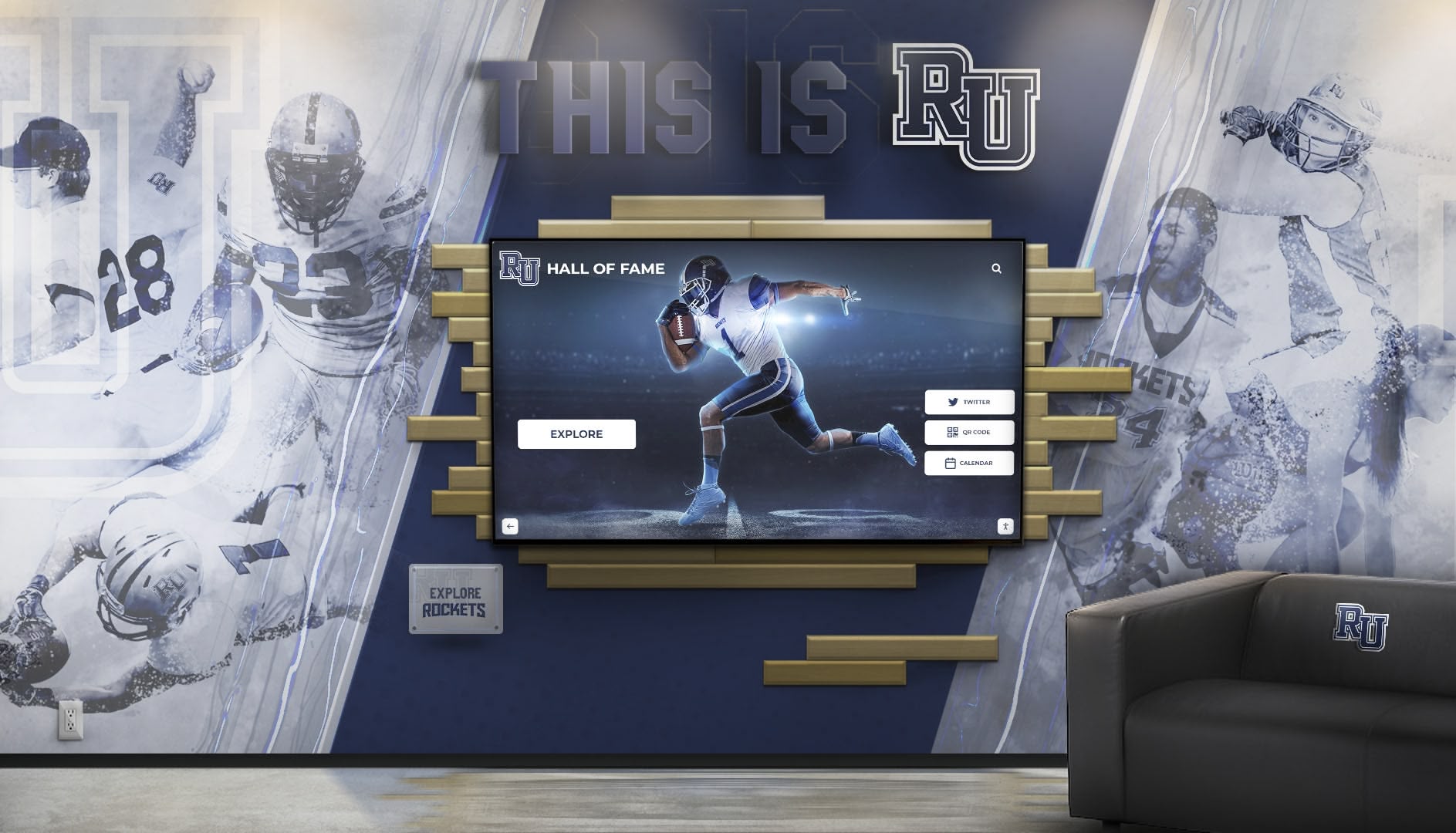
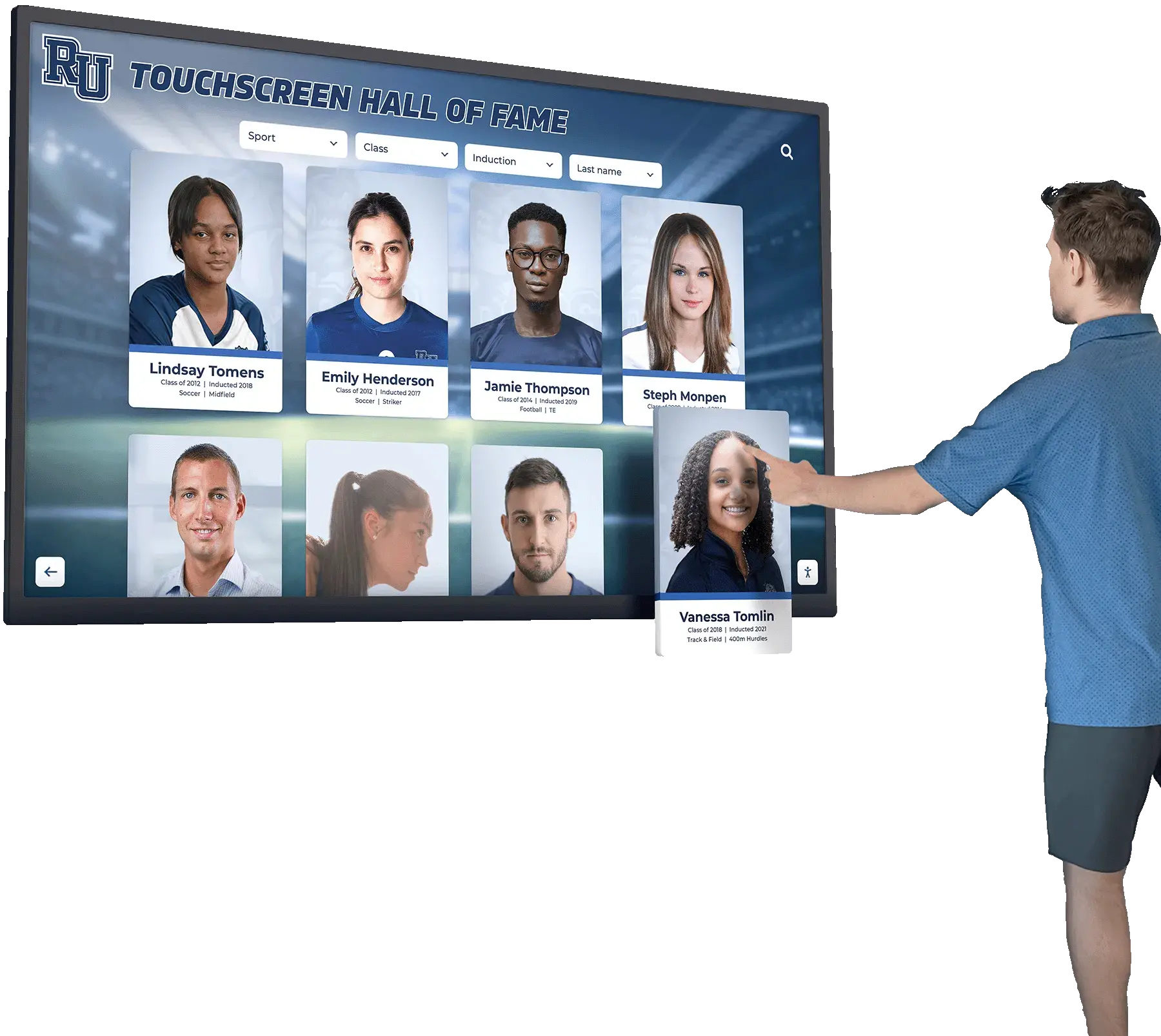
Modern digital recognition displays combine hardware, software, and content management systems to create engaging, scalable recognition platforms. Understanding the technology landscape helps organizations select solutions matching their specific needs.
Hardware Considerations for Corporate Environments
Unlike consumer displays, corporate recognition requires commercial-grade components designed for continuous operation:
Display Specifications
- Size Range: 43-75 inches depending on viewing distance and space
- Resolution: 4K minimum for crisp text and images
- Operation Rating: Commercial displays rated for 16+ hours daily use
- Touchscreen Technology: Multi-touch capacitive overlays supporting intuitive interaction
- Durability: Tempered glass and protective coatings for high-traffic areas
- Connectivity: Ethernet and WiFi support for reliable network access
Mounting and Placement Options
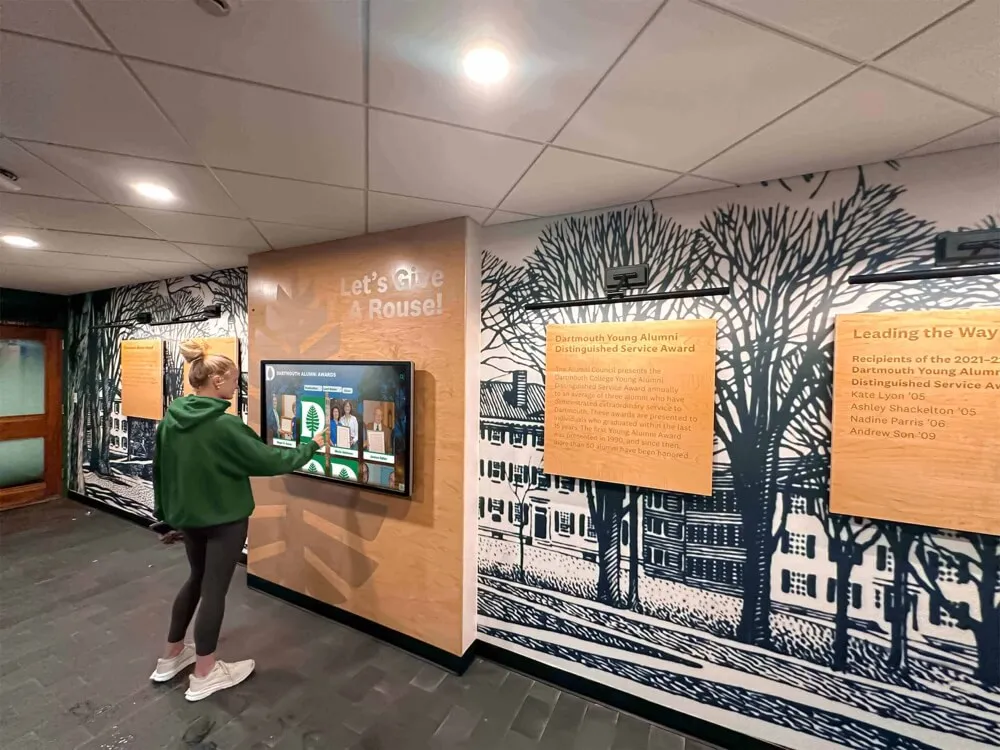
- Wall-Mounted Installations: Space-efficient solutions for lobbies and corridors
- Floor Kiosks: Freestanding displays with built-in security and branding
- Desktop Configurations: Reception area and HR office installations
- Multi-Display Arrays: Coordinated recognition across multiple screens
Strategic placement maximizes visibility and engagement. High-traffic areas—main entrances, cafeterias, elevator lobbies, and common spaces—ensure maximum employee exposure to recognition content. For guidance on placement strategies, principles from displaying school history apply equally to corporate environments.
Software Platforms and Content Management
The software powering digital recognition displays determines usability, flexibility, and long-term value. Modern platforms like Rocket Alumni Solutions provide purpose-built content management designed for recognition programs:
Essential Software Features
- Intuitive Content Management: User-friendly dashboards requiring no technical expertise
- Remote Administration: Update content from any internet-connected device
- Scheduled Publishing: Automate content updates for recognition events
- Bulk Import Tools: Efficiently digitize historical recognition data
- Role-Based Permissions: Control access levels for different administrators
- Mobile Responsiveness: Ensure recognition displays properly on all devices
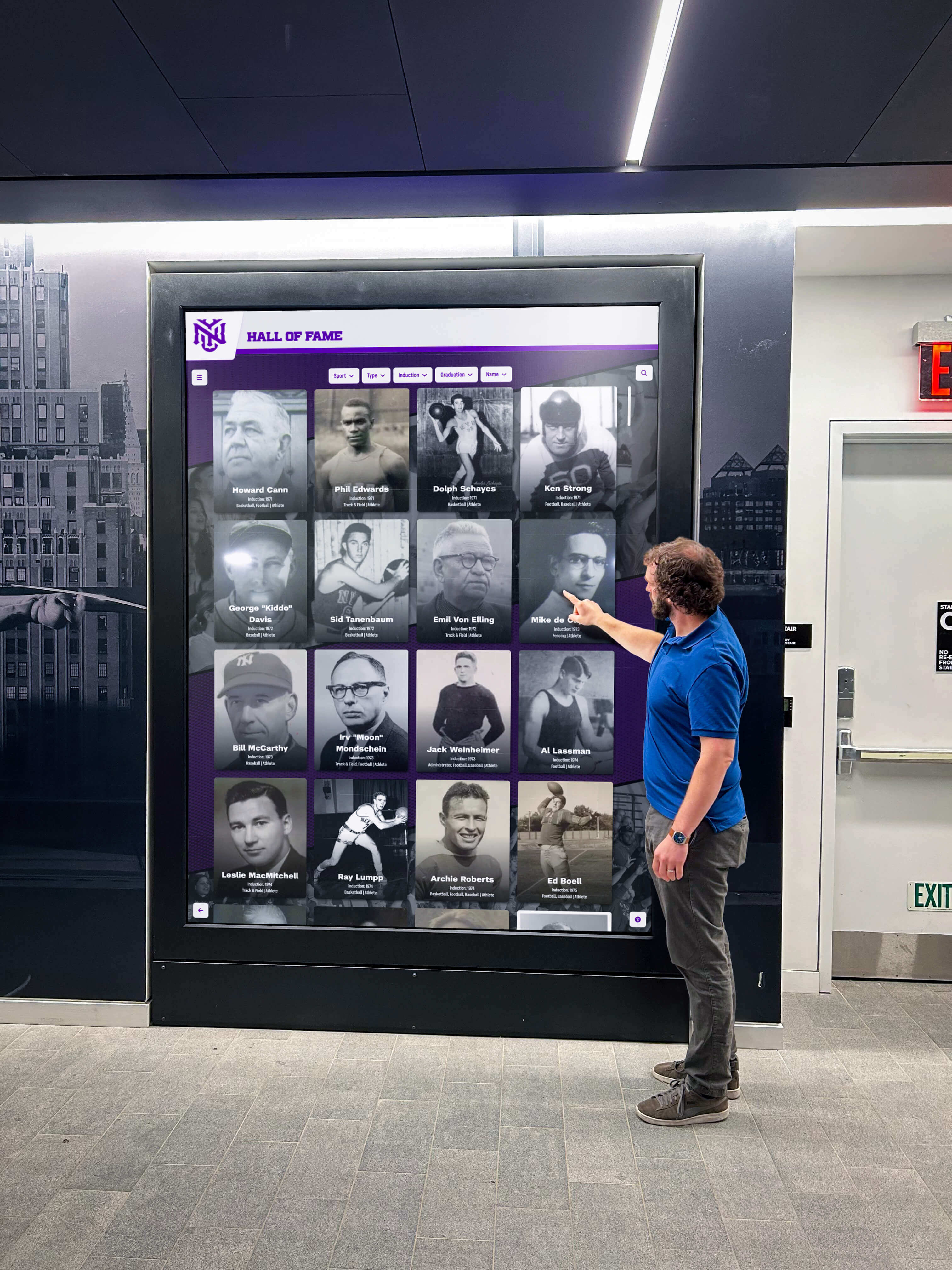
- Search and Filter Capabilities: Enable employees to find themselves and colleagues easily
Integration Capabilities
Effective digital recognition integrates with existing corporate systems:
- HRIS Integration: Automatic synchronization with employee databases
- CRM Connections: Link recognition to customer success and sales achievements
- Communication Platforms: Integration with Slack, Teams, or email for recognition announcements
- Analytics Systems: Track engagement and recognition program effectiveness
- Single Sign-On: Seamless authentication through corporate identity systems
These integrations eliminate duplicate data entry while ensuring recognition information remains current and accurate across all systems.
Web and Mobile Accessibility
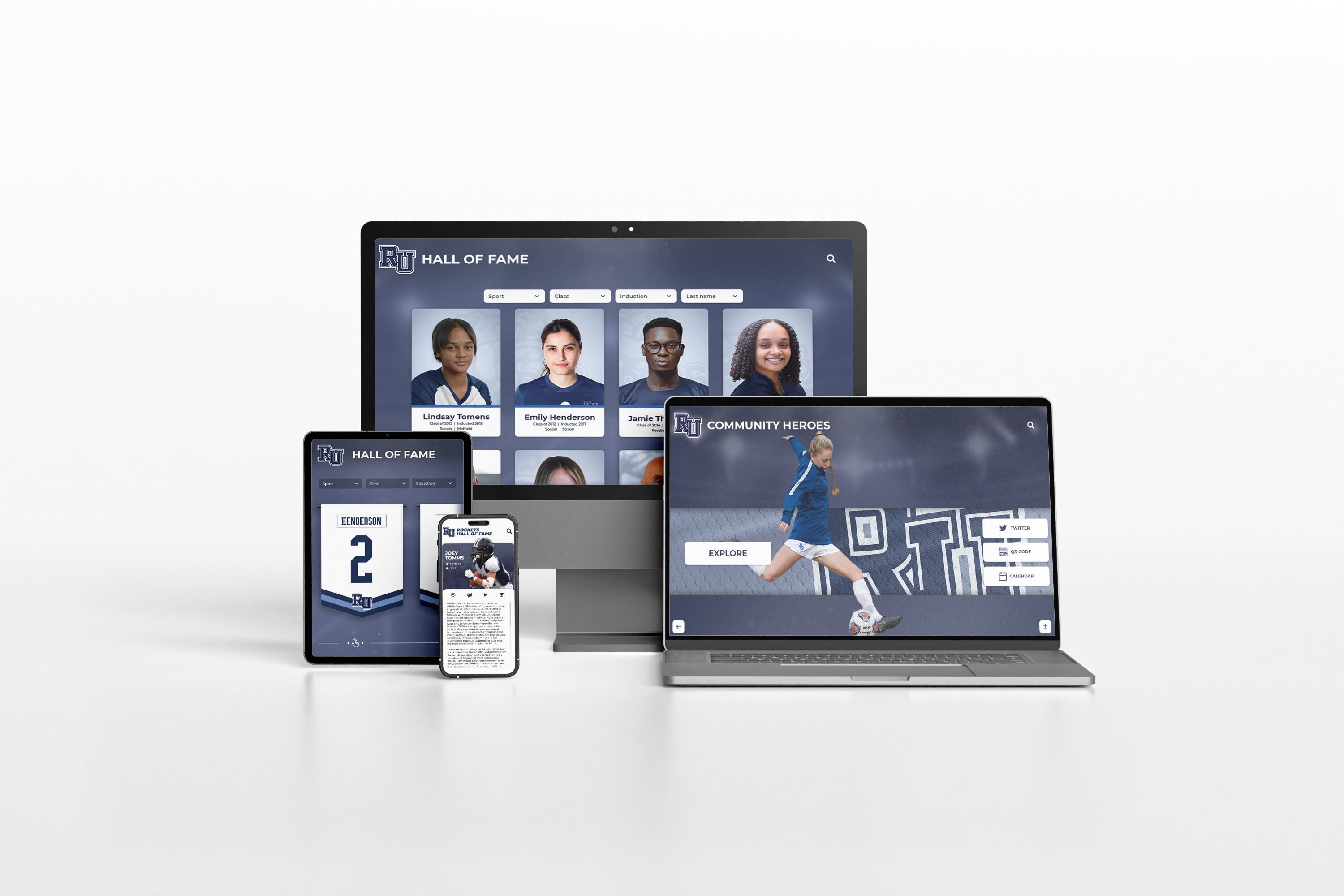
Extending recognition beyond physical displays dramatically increases program reach and impact. Modern recognition platforms provide web-accessible versions ensuring all employees—including remote workers—can engage with recognition content.
Online Recognition Features
- Remote employee access from anywhere worldwide
- Social sharing capabilities enabling viral recognition
- Mobile optimization for smartphone and tablet access
- Integration with company intranets and portals
- Analytics tracking engagement across all platforms
- Direct recognition submission through online forms
This omnichannel approach ensures recognition visibility regardless of employee location or work arrangement—critical for hybrid and distributed workforces.
Department-Specific Recognition Strategies
Effective corporate recognition celebrates excellence across all functions, not just revenue-generating roles. Department-specific approaches ensure all contributions receive appropriate acknowledgment.
Sales and Revenue Team Recognition
Sales achievements deserve systematic celebration beyond commission structures. Recognition programs for revenue teams should acknowledge both individual performance and strategic contributions:
Individual Performance Recognition
- Quota achievement and over-performance awards
- New client acquisition celebrations
- Deal size milestone acknowledgments
- Pipeline development excellence
- Customer retention and expansion recognition
Strategic Achievement Recognition
- Complex deal closing and strategic wins
- Market entry and expansion accomplishments
- Competitive displacement successes
- Long-term relationship building
- Product adoption leadership
Operations and Technical Excellence
Operational achievements require equal systematic acknowledgment. Teams maintaining infrastructure, delivering services, and ensuring quality create the foundation for organizational success:
Efficiency and Quality Recognition
- Process improvement implementations
- Quality metric achievements
- Safety record milestones
- Cost reduction initiatives
- Waste elimination accomplishments
Innovation in Operations
- Technology implementation successes
- Workflow optimization achievements
- Tool and system improvement contributions
- Training and development initiatives
- Cross-team collaboration enhancements
Support Function Recognition
Support roles—finance, HR, legal, IT, facilities—provide essential contributions deserving systematic recognition. These functions often receive insufficient acknowledgment despite their critical importance:
Technical Excellence Recognition
- System reliability and uptime achievements
- Security and compliance milestones
- Technical problem-solving successes
- Infrastructure improvement projects
- Innovation in technical solutions
Service Excellence Recognition
- Internal customer satisfaction scores
- Responsiveness and support quality
- Knowledge base development contributions
- Training and enablement excellence
- Process documentation achievements
As explored in guidance on recognizing diverse achievements, comprehensive recognition systems ensure all functions receive appropriate celebration.
Implementing Digital Recognition in Corporate Settings
Successful implementation requires thoughtful planning, appropriate technology selection, and systematic change management ensuring sustainable adoption.
Planning Phase Essentials
Before selecting technology or designing content, clearly articulate recognition program objectives:
Recognition Goals
- Honor all employees appropriately based on contributions
- Create meaningful connections between achievements and impact
- Inspire current employees to elevate performance
- Attract prospective talent through employer brand enhancement
- Celebrate multi-year contributions and career growth
- Highlight collective impact of team achievements
Engagement Goals
- Increase interaction with recognition content
- Provide searchable access to achievement information
- Create shareable content employees can post on social media
- Integrate recognition with company events and meetings
- Connect recognition to specific programs and initiatives
- Enable real-time updates reflecting current achievements
Operational Goals
- Reduce long-term recognition costs
- Eliminate space constraints for additions
- Streamline recognition updates and maintenance
- Integrate with existing HR and communications systems
- Provide analytics demonstrating program effectiveness
- Create scalable solution for organizational growth
Technology Selection Process
Choosing the right recognition platform requires evaluating multiple factors:
Evaluation Criteria
- Intuitive Content Management: Can non-technical staff easily add and update content?
- Hardware Quality: Will displays operate reliably for years in corporate environments?
- Integration Capabilities: Does the platform connect with existing systems?
- Mobile Accessibility: Can remote employees access recognition content?
- Security Features: Does the solution meet corporate data protection standards?
- Analytics and Reporting: Can you measure recognition program effectiveness?
- Vendor Support: What implementation assistance and ongoing support is provided?
Organizations benefit from partners providing comprehensive implementation support. As detailed in guides about digital recognition displays, vendor selection significantly impacts long-term success.
Content Strategy Development
Compelling content transforms technology into meaningful recognition experiences:
Profile Content Elements
- Employee name, photo, and role
- Recognition category and achievement details
- Date of achievement and duration
- Impact description explaining significance
- Personal statement or quote when available
- Career progression and previous recognitions
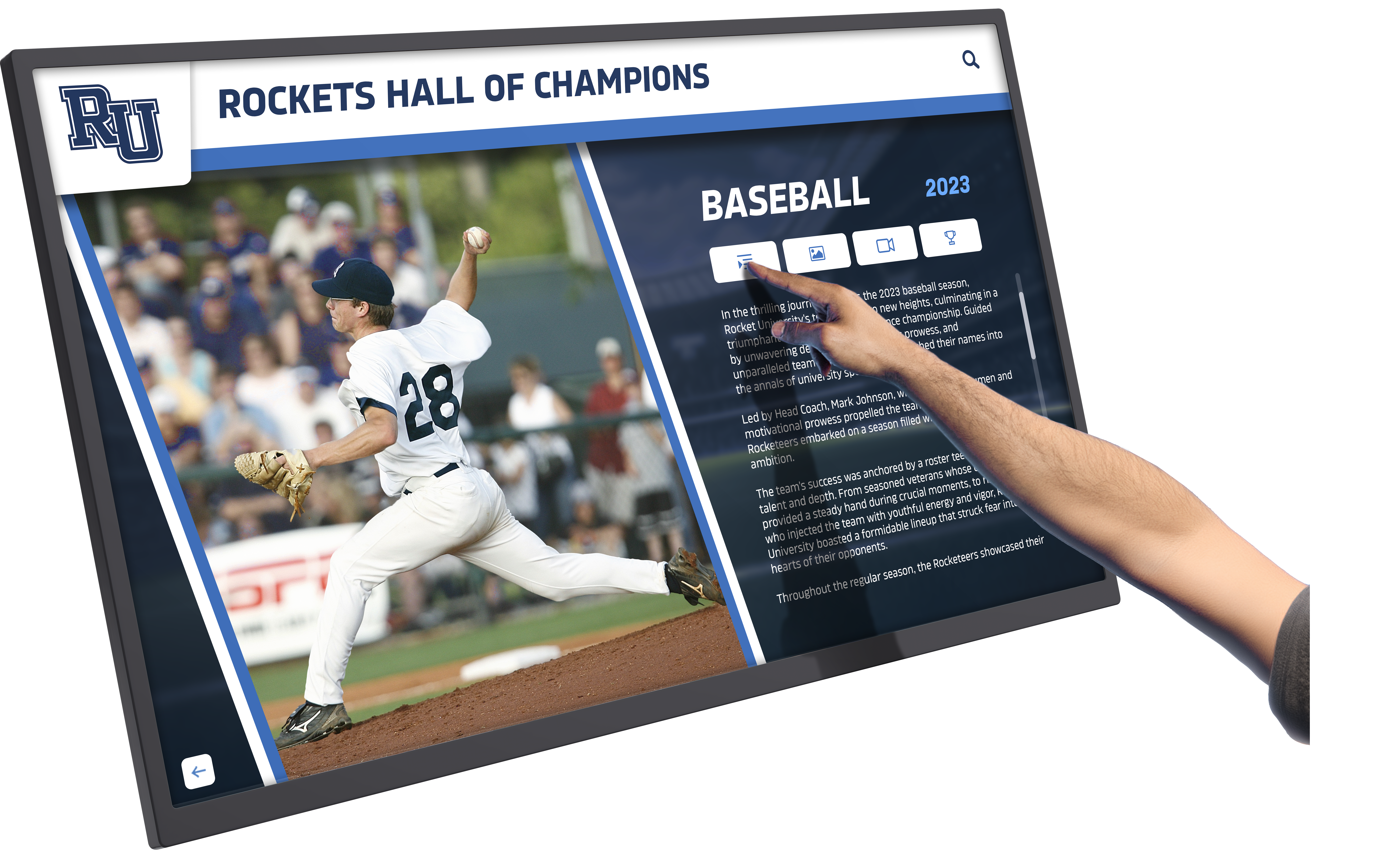
Multimedia Integration
- Professional photography from company events
- Video testimonials from recognized employees
- Project outcome visualizations
- Before/after impact demonstrations
- Team photos celebrating collaborative achievements
Privacy Considerations
Establish clear policies regarding:
- Employee consent for enhanced profiles
- Privacy preferences for information sharing
- Options for anonymous or partial recognition
- Control over personal information display
- Right to update or remove content
Launch and Promotion Strategy
Strategic launch creates momentum ensuring recognition program visibility:
Internal Communication Plan
- All-hands announcement introducing recognition program
- Department-specific presentations demonstrating features
- Email campaigns highlighting recognition opportunities
- Intranet integration featuring recognition content
- Manager training on nomination processes
Launch Event Planning
- Ceremonial unveiling creating excitement
- Recognition of inaugural honorees
- Executive participation demonstrating commitment
- Demonstration sessions teaching navigation
- Feedback collection for continuous improvement
Ongoing Promotion
- Regular features in company newsletters
- Social media sharing of recognition stories
- Integration with company meetings and events
- Contest and gamification creating engagement
- Analytics sharing demonstrating program success
Best Practices for Recognition Program Success
Research-backed best practices maximize recognition program effectiveness while avoiding common pitfalls.
Timeliness and Frequency
Recognition timing significantly impacts employee perception and motivation. According to research from employee engagement platforms, recognition should be immediate and timely to maximize impact and feel more genuine and memorable.
Recognition Cadence Recommendations
- Real-Time Recognition: Acknowledge achievements within days of occurrence
- Weekly Highlights: Feature standout contributions in regular communications
- Monthly Awards: Systematic recognition of monthly excellence
- Quarterly Celebrations: Department and company-wide recognition events
- Annual Honors: Comprehensive year-end recognition ceremonies
Employees recognized weekly are 2.6x more likely to be productive. This frequency ensures recognition remains top-of-mind while preventing the fatigue that comes from constant but meaningless acknowledgment.
Personalization and Authenticity
Recognition effectiveness depends on genuine, personalized appreciation. Generic recognition feels perfunctory and can actually decrease motivation.
Personalized Recognition Elements
- Reference specific contributions and achievements
- Explain impact and outcomes
- Connect to company values and mission
- Include relevant context and details
- Avoid generic templates and boilerplate language
Modern recognition approaches focus on authentic, frequent acknowledgment aligned with company values rather than sporadic, generic appreciation.
Ensuring Equity and Inclusion
Recognition systems must address equity concerns systematically to avoid reinforcing existing biases or creating barriers for certain employee populations:
Multiple Pathway Recognition
- Achievement recognition for employees in all roles
- Growth measures ensuring developing employees receive acknowledgment
- Effort-based recognition valuing work ethic regardless of outcome
- Values-based recognition beyond traditional performance metrics
- Character-based recognition for collaboration and cultural contribution
Accessibility Considerations
- ADA-compliant physical placement and mounting
- Screen reader compatibility for visual accessibility
- High-contrast viewing modes and text magnification
- Multilingual content options for diverse workforces
- Mobile access for employees without regular office access
Bias Avoidance Strategies
- Recognition across all departments, not just revenue functions
- Multiple achievement dimensions beyond quantitative metrics
- Intentional tracking ensuring diverse employees receive acknowledgment
- Regular audits of recognition distribution
- Anonymous nomination options reducing favoritism
As explored in corporate recognition program guides, equity in recognition creates inclusive cultures where all employees feel valued.
Measuring Recognition Program Effectiveness
Regular assessment ensures programs achieve intended goals while justifying resource investment. Comprehensive measurement combines quantitative metrics with qualitative feedback.
Quantitative Metrics
Participation and Coverage Data
- Percentage of employees receiving recognition annually
- Distribution across departments and demographic groups
- Recognition frequency per employee
- Number of recognition categories utilized
- Year-over-year participation trends
Engagement Indicators
- Digital display interaction rates and session duration
- Web-based recognition platform usage statistics
- Social platform engagement with recognition content
- Recognition event attendance rates
- Employee response rates to recognition communications
Business Outcome Correlation
Track relationships between recognition and business performance:
- Retention rates among recognized versus non-recognized employees
- Engagement survey score trends
- Performance metric improvements
- Recruitment success and employer brand strength
- Cultural indicators and workplace satisfaction measures
According to research on recognition ROI, investing in employee recognition programs can deliver returns ranging from 93% to 693%, with some studies showing even higher returns when accounting for improved retention and engagement.
Qualitative Assessment
Numbers tell part of the story, but qualitative feedback provides context and insight:
Employee Feedback Collection
- Surveys about recognition program awareness and impact
- Focus groups exploring recognition preferences
- Exit interviews citing recognition as retention factor
- Testimonials about meaningful recognition experiences
- Manager assessment of recognition program utility
Cultural Indicators
- Observed changes in workplace culture and peer relationships
- Employee motivation and engagement anecdotal evidence
- Behavioral data relating to collaboration and innovation
- Workplace climate survey results
- Employee sense of belonging measures
Regular assessment enables continuous improvement ensuring recognition programs remain meaningful, equitable, and impactful.
Technology Trends Shaping Recognition’s Future
Modern recognition programs leverage emerging technologies for enhanced impact and accessibility.
AI-Powered Recognition Enhancement
Artificial intelligence enables more sophisticated recognition approaches. As noted in recognition trend research, AI-powered suggestion systems can prompt recognition opportunities by leveraging data on performance and preferences to personalize recognition programs and maximize impact.
AI Applications in Recognition
- Recognition timing optimization based on employee preferences
- Achievement pattern identification suggesting recognition opportunities
- Personalized recognition format recommendations
- Predictive analytics identifying employees needing recognition
- Sentiment analysis measuring recognition program perception
Mobile-First Recognition Platforms
Recognition programs must be digital-first and mobile-accessible for modern workplaces. Mobile accessibility is essential, allowing employees to engage with recognition programs anytime and anywhere, increasing participation and engagement.
Mobile Recognition Features
- Native mobile apps for on-the-go access
- Push notifications for recognition updates
- Mobile-optimized browsing and search
- Social sharing directly from mobile devices
- QR code integration linking physical and digital recognition
Integration with Workflow Tools
Recognition programs should live where employees work. Recognition integration with tools like Slack, Teams, or Outlook ensures acknowledgment becomes part of daily work rather than separate programs requiring special access. For technical implementation guidance, resources on kiosk software provide relevant background.
Recognition Program Implementation Checklist
Successful implementation follows systematic planning and execution:
Phase 1: Foundation (Weeks 1-4)
Week 1-2: Build Business Case
- Research digital recognition options and costs
- Calculate ROI comparing traditional and digital approaches
- Identify potential display locations
- Draft preliminary budget estimates
- Secure stakeholder support
Week 3-4: Secure Approval
- Present concept to leadership
- Address concerns and questions
- Secure budget approval
- Identify funding sources
- Establish project team with clear roles
Phase 2: Solution Selection (Weeks 5-8)
Week 5-6: Research Providers
- Request information from multiple vendors
- Schedule demonstrations and consultations
- Review proposals and pricing
- Check references from current clients
- Evaluate platforms against requirements
Week 7-8: Make Decision
- Compare finalists across key criteria
- Negotiate pricing and contract terms
- Secure final budget approval
- Execute contract with selected provider
- Establish project timeline and milestones
Phase 3: Implementation (Weeks 9-16)
Week 9-10: Technical Planning
- Finalize display locations
- Plan electrical and network infrastructure
- Select hardware specifications
- Design mounting or kiosk approach
- Coordinate with facilities for installation
Week 11-12: Content Strategy
- Define recognition tier structure
- Plan profile content elements
- Create content collection workflows
- Establish ongoing update processes
- Develop launch communication plan
Week 13-16: Launch Preparation
- Collect employee information and photos
- Create initial recognition profiles
- Populate content management system
- Train staff on management tools
- Execute launch event and communications
Phase 4: Optimization (Ongoing)
First 90 Days
- Monitor usage analytics closely
- Gather user feedback systematically
- Address technical issues promptly
- Make content improvements based on learning
- Establish regular update rhythm
Long-Term
- Review analytics quarterly
- Refresh featured content regularly
- Expand recognition to additional segments
- Consider additional displays strategically
- Continuously improve based on feedback
For comprehensive planning guidance, implementation resources about digital recognition programs provide detailed frameworks.
Support and Partnership for Recognition Success
Implementing successful corporate recognition requires ongoing support and optimization. Organizations benefit from partners providing comprehensive assistance throughout the recognition program lifecycle.
Implementation Support Services
Planning and Design Assistance
- Recognition program strategy development
- Hardware and placement recommendations
- Content strategy and organizational design
- Integration planning with existing systems
- Change management and adoption strategies
Technical Implementation
- Hardware installation and configuration
- Network setup and testing
- Content management system training
- Integration with HR and communication platforms
- Quality assurance and launch support
Solutions like Rocket Alumni Solutions provide white-glove support approaches that ensure recognition program success, as detailed in guidance about customer success strategies.
Ongoing Optimization
Continuous Improvement Support
- Regular program performance reviews
- Usage analytics and engagement analysis
- Content strategy optimization recommendations
- Feature utilization assessment
- Best practice sharing and training
Proactive Monitoring
- System health monitoring and maintenance
- Performance optimization
- Issue identification and resolution
- Software updates and enhancements
- Security and compliance maintenance
This comprehensive support ensures recognition programs achieve maximum effectiveness while remaining sustainable over time.
Conclusion: Building Recognition-Rich Corporate Cultures
Effective corporate employee recognition programs represent strategic investments in workplace culture, employee engagement, and business performance. When companies systematically celebrate achievements across multiple dimensions—from individual excellence to team collaboration to organizational milestones—they create environments where contribution becomes visible, excellence becomes aspirational, and achievement becomes central to company culture.
The strategies explored in this guide provide comprehensive frameworks for building recognition systems that honor diverse achievements while remaining sustainable, equitable, and aligned with business goals. From digital recognition displays that eliminate space constraints to multi-tiered programs ensuring recognition opportunities at all levels, these approaches transform acknowledgment from occasional gestures to systematic celebration woven throughout organizational culture.
Digital platforms make comprehensive recognition achievable across unlimited employees and achievement categories, while systematic approaches ensure consistent implementation reaching all deserving contributors. Technology enables scalability while maintaining the personal touch that makes recognition meaningful.
Organizations with strong recognition programs see documented improvements in engagement, retention, performance, and culture. These benefits flow from recognition programs that feel genuine, frequent, personalized, and aligned with company values.
Building effective corporate recognition requires moving beyond limiting assumptions about who deserves acknowledgment and how recognition should appear. Start where you are with recognition programs you can implement immediately—improving manager training, establishing peer recognition platforms, implementing regular appreciation cadences—then systematically expand to create comprehensive approaches your employees deserve.
Transform Your Employee Recognition Program
Discover how modern digital recognition solutions can help you celebrate every employee achievement and build a thriving culture of excellence and engagement.
Your employees’ achievements deserve celebration equal to any business milestone. With thoughtful planning, appropriate technology, and consistent implementation, you can create recognition systems that honor every achievement while building the positive, motivating workplace culture where all employees thrive.
Ready to begin? Explore digital recognition display solutions or learn more about building effective recognition strategies that celebrate all contributors and create lasting workplace engagement.































