Debate team achievement boards serve as powerful tools for celebrating forensic excellence, motivating student competitors, and showcasing your program’s success to the broader school community. When schools systematically recognize tournament victories, honor society achievements, speaker awards, and individual growth in speech and debate—they create cultures where intellectual argumentation, public speaking excellence, and competitive forensics become celebrated dimensions of student identity.
Yet many speech and debate programs struggle to create recognition systems that capture the full scope of forensic achievement. Recognition often defaults to generic trophy cases that fail to tell complete competitive stories, bulletin boards that quickly become outdated, or announcements that provide fleeting acknowledgment before achievements fade from view. Meanwhile, the nuanced accomplishments unique to forensics—bid rounds earned, ballots won, speaker points accumulated, degree advances in the honor society—require specialized recognition approaches that traditional athletic display formats cannot adequately address.
This comprehensive guide explores evidence-based strategies for designing and implementing debate team achievement boards that celebrate diverse forensic accomplishments, inspire current and prospective team members, and demonstrate your program’s commitment to excellence in argumentation, advocacy, and public discourse.
Effective debate team recognition extends beyond displaying championship trophies—it creates systematic approaches that acknowledge the multifaceted nature of forensic competition while preserving program history and building competitive culture. Programs that excel at debate recognition create environments where forensic achievement receives visibility and celebration equal to any other competitive endeavor.
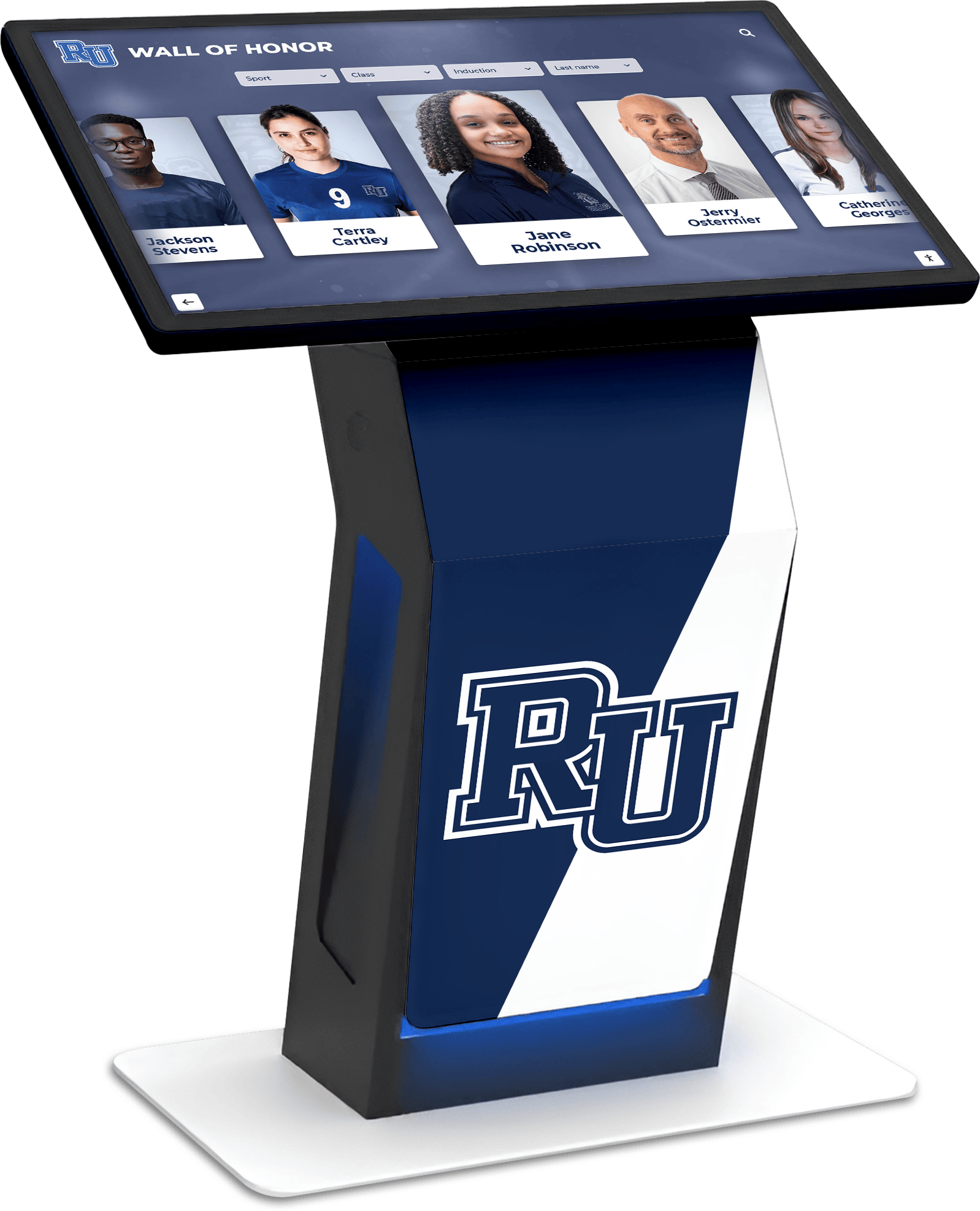
Modern recognition systems celebrate debate team achievements alongside athletic and academic accomplishments
Understanding the Unique Nature of Forensic Achievement
Debate and speech recognition requires understanding the distinctive competitive structure and achievement metrics that set forensics apart from other activities.
The Complexity of Forensic Competition
Speech and debate encompasses remarkably diverse competitive formats requiring different recognition approaches:
Debate Format Diversity
- Policy debate requiring year-long research and evidence gathering
- Lincoln-Douglas debate emphasizing philosophical argumentation
- Public Forum debate focusing on accessible current events discussion
- Congressional debate simulating legislative proceedings
- World Schools debate combining prepared and impromptu formats
- Parli debate demanding rapid case construction without preparation time
Speech Event Categories
- Original Oratory requiring persuasive speech composition and delivery
- Dramatic Interpretation and Humorous Interpretation showcasing performance skills
- Duo Interpretation emphasizing collaborative performance
- Extemporaneous Speaking demonstrating impromptu analysis capabilities
- Informative Speaking combining research and presentation
- Prose and Poetry interpretation highlighting literary analysis
According to the National Speech & Debate Association, these diverse events create multiple pathways for student achievement, each deserving appropriate recognition in comprehensive achievement displays.
Tournament Structure Complexity
- Preliminary rounds determining advancement brackets
- Elimination rounds from doubles through finals
- Speaker awards recognizing individual performance
- Team sweepstakes tracking cumulative program success
- Bid tournaments offering qualification toward championship events
- Local, regional, state, and national competition levels
This complexity means effective debate achievement boards must accommodate far more nuanced recognition categories than simple win-loss records common to many athletic displays.
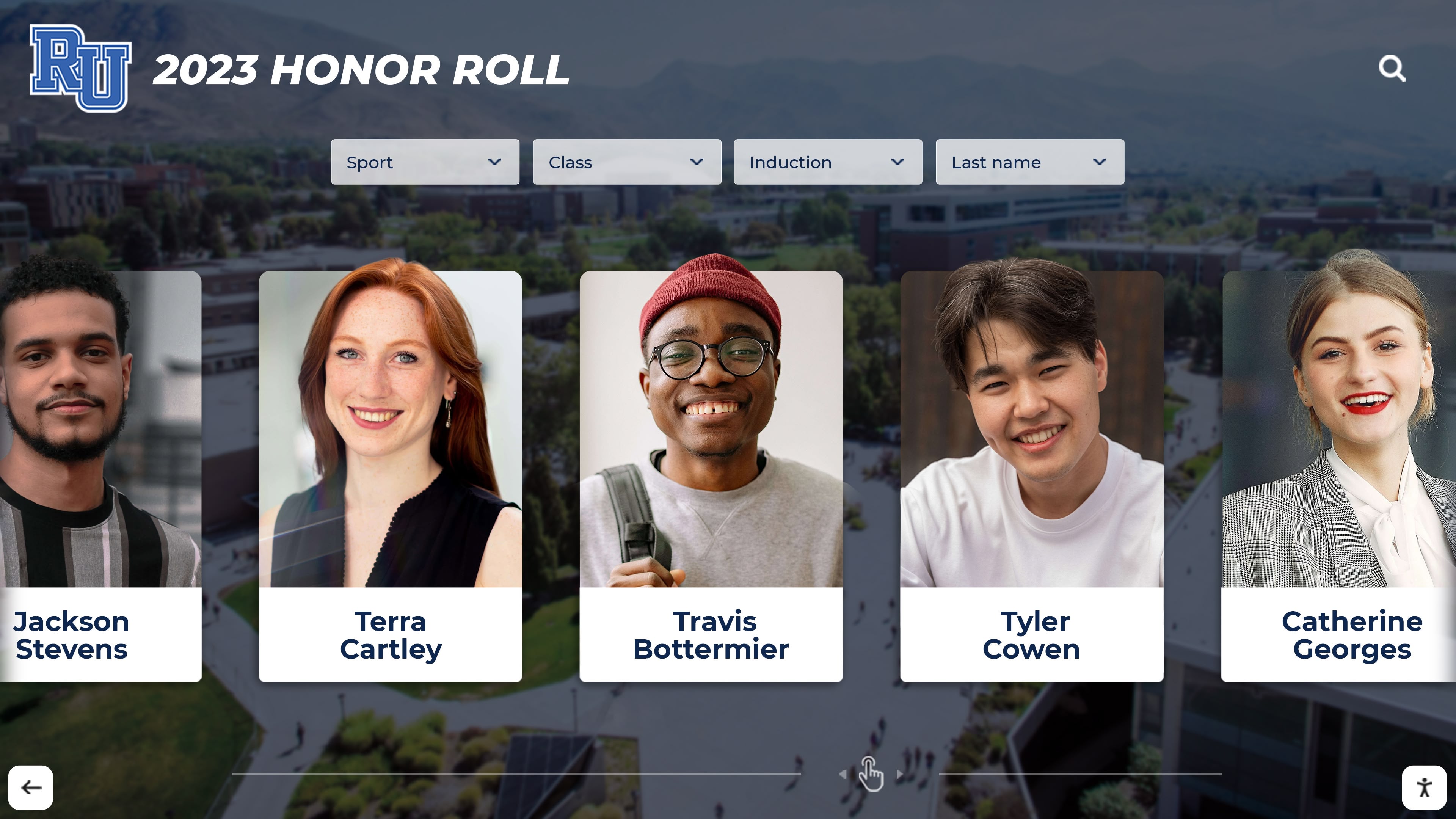
Individual profiles allow detailed documentation of forensic accomplishments and competitive journeys
National Speech & Debate Association Honor Society Recognition
The NSDA Honor Society provides structured achievement recognition deserving prominent display:
Degree Level Achievements According to NSDA student recognition programs, members advance through multiple degree levels based on points earned through competition, service, and leadership. Achievement boards should prominently display:
- Degree advancement milestones from membership through Distinguished degree
- Point accumulation achievements marking competitive dedication
- All-American designations for top national point earners
- Service point recognition for students contributing to program and community
- Honor cords and insignia earned for graduation recognition
Special NSDA Awards National recognition programs include:
- All-American Award: Top national point earners receive this prestigious designation
- Speaking and Service Award: Recognizes students earning 200 service points annually
- Academic All-American: Acknowledges students combining competitive excellence with academic achievement
- Coach of Distinction: Program recognition benefiting from display alongside student achievements
- Premier Distinction: School-level recognition for program excellence
These structured recognition levels provide clear frameworks for achievement board organization while celebrating both competitive success and broader program contributions.
Essential Components of Effective Debate Achievement Boards
Comprehensive forensic recognition systems require multiple recognition categories capturing the full spectrum of debate and speech excellence.
Tournament Achievement Recognition
Competitive success provides the most visible achievement category requiring systematic documentation:
Championship Recognition
- State championship victories in debate and speech events
- National tournament success and finalist achievements
- Invitational tournament championships and top finisher recognition
- District and regional championship acknowledgment
- Online tournament success in contemporary competitive formats
Elimination Round Achievements
- Semifinalist and finalist recognition across events
- Quarterfinal advancement documentation
- Break round achievement acknowledgment
- First elimination round qualifications for newer competitors
- Bid round achievements advancing students toward championship qualification
Learn about comprehensive approaches to academic recognition programs that can extend to forensic achievement.
Speaker Award Recognition Individual speaking excellence deserves specific acknowledgment:
- Top speaker awards at tournaments across competition levels
- Speaker point milestone achievements
- Ranked speaker recognition at major competitions
- Improvement in speaker rankings over competitive seasons
- Consistent top speaker performance across multiple tournaments
Team Sweepstakes Recognition Program-level success demonstrates comprehensive competitive strength:
- Tournament sweepstakes victories showing team depth
- Season-long sweepstakes accumulation
- Division championship recognition
- Comparative year-over-year program growth
- Historical sweepstakes achievement documentation
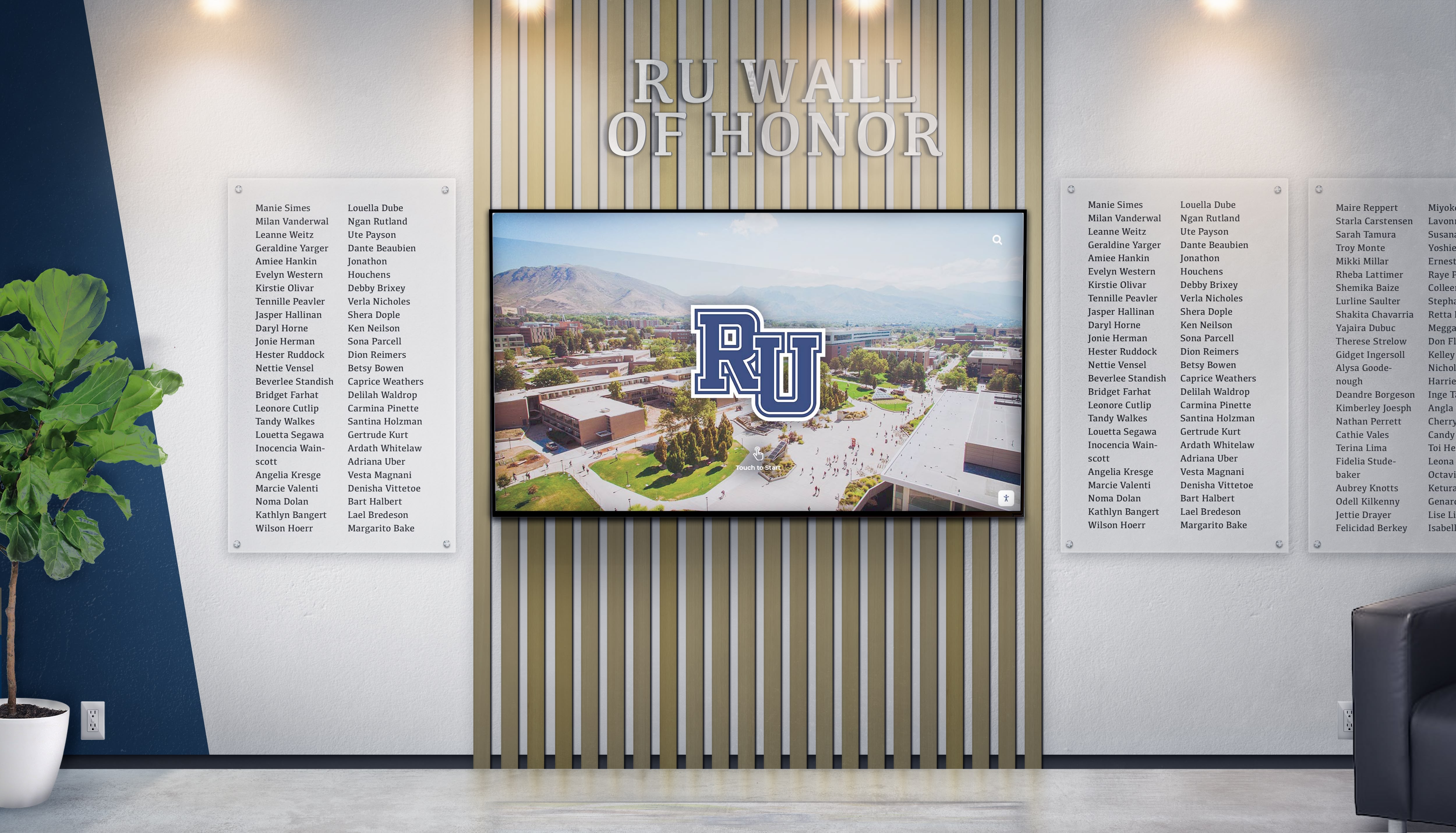
Integrated systems combine digital displays with traditional elements for comprehensive recognition
Individual Achievement Documentation
Beyond tournament-specific recognition, achievement boards should celebrate individual competitive journeys:
Career Achievement Tracking
- Cumulative wins and competitive records across career
- Total elimination round achievements
- Speaker point averages and trends
- NSDA point accumulation and degree progression
- Varsity letter earning and milestone recognition
Event-Specific Recognition Students specializing in particular formats deserve dedicated acknowledgment:
- Policy debate partnership achievements and records
- Lincoln-Douglas circuit success and rankings
- Public Forum team accomplishments
- Congressional debate chamber victories and recognition
- Individual event finals and achievements across speech categories
- Extemp draw survival rates and impromptu success metrics
Growth and Development Recognition Not all significant achievements involve championships:
- First ballot win acknowledgment for novice competitors
- Break round qualification firsts
- Dramatic improvement in rankings or results
- Overcoming performance anxiety or technical challenges
- Mastery of new events or formats
- Mentorship contributions and peer coaching success
Explore strategies for showcasing student accomplishments across multiple dimensions.
Leadership and Service Recognition
Debate programs thrive on student leadership deserving equal visibility with competitive achievements:
Team Leadership Positions
- Team captains and co-captains by year
- Event captains for specific debate and speech formats
- Novice mentors and peer coaches
- Tournament directors and logistics coordinators
- Officer positions in debate club governance structures
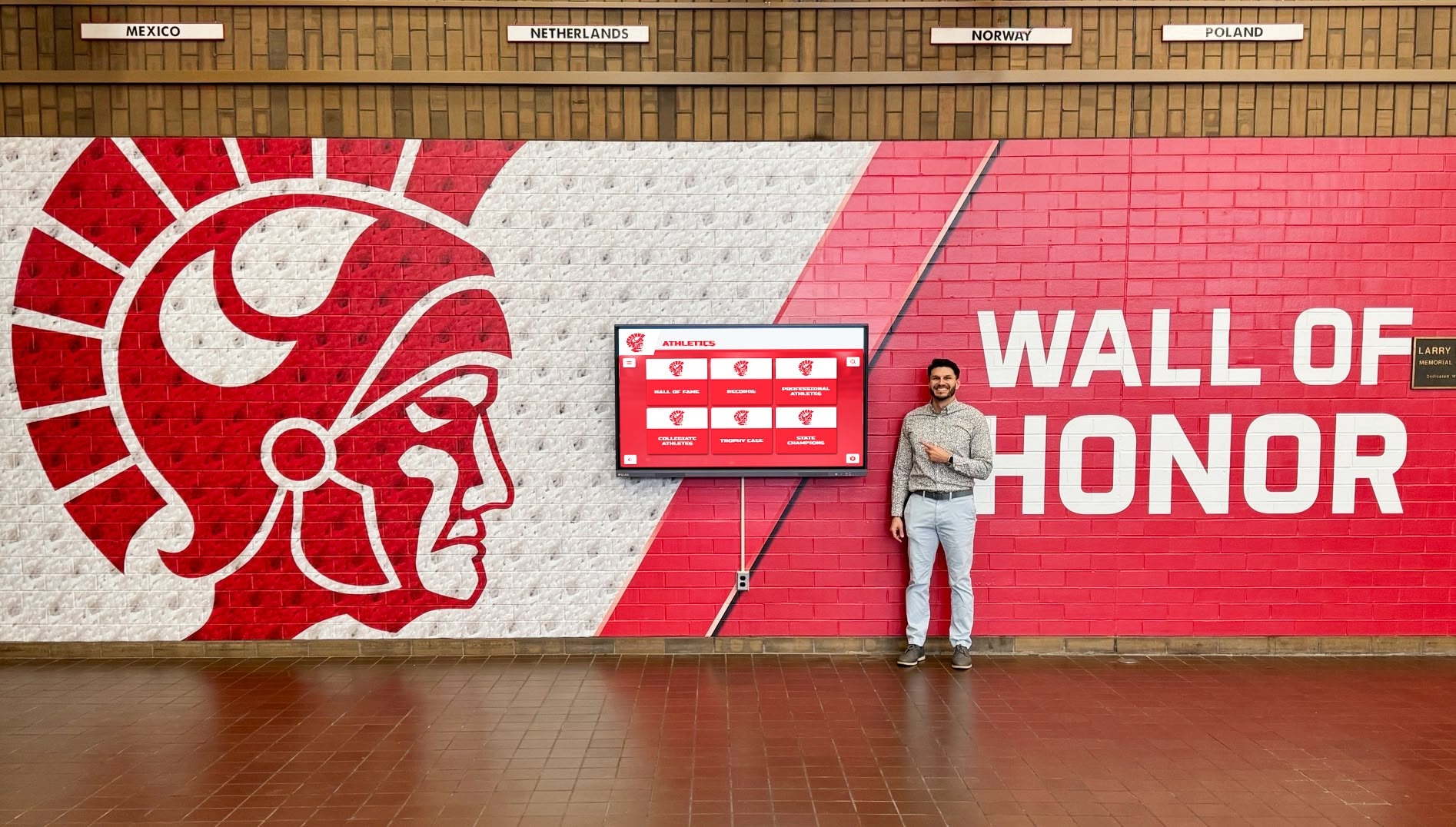
Touchscreen displays make exploring program history engaging and accessible
Program Building Contributions
- Recruitment and membership growth initiatives
- Fundraising leadership and financial contributions
- Tournament hosting and organization
- Community outreach and demonstration performances
- Program promotion and public relations efforts
Service Recognition Beyond Competition
- Debate judging and community service
- Elementary and middle school coaching
- Public speaking workshops and instruction
- Community debate programs and outreach
- Speech education advocacy and promotion
According to the NSDA, service points constitute an essential dimension of honor society advancement, acknowledging that forensic education extends beyond personal competitive success to building robust debate communities.
Recognition Format Options: Traditional vs. Digital Approaches
Schools can implement debate achievement boards using various formats, each offering distinct advantages and limitations.
Traditional Physical Achievement Boards
Conventional recognition formats include familiar approaches with inherent constraints:
Trophy Cases and Display Cabinets
- Physical trophies from tournament victories
- Plaques recognizing individual and team achievements
- Gavels from championship rounds
- Medal displays from speaker awards
- Photographs from competition and team events
Wall-Mounted Recognition Boards
- Engraved plaques listing competitors by year
- Championship banners documenting major victories
- Individual achievement plates in permanent displays
- Photo collages showing team history
- Bulletin boards with updatable achievement documentation
Hallway Display Systems
- Dedicated forensics recognition corridors
- Trophy shelving integrated into school architecture
- Glass cases protecting memorabilia and awards
- Timeline displays showing program evolution
- Achievement listing boards in classroom spaces
While these traditional approaches provide tangible recognition, they face significant limitations: physical space constraints forcing difficult decisions about which achievements receive visibility, static information that requires manual updating, inability to tell complete competitive stories beyond basic identification, and gradual accumulation of outdated content as new achievements demand display space.
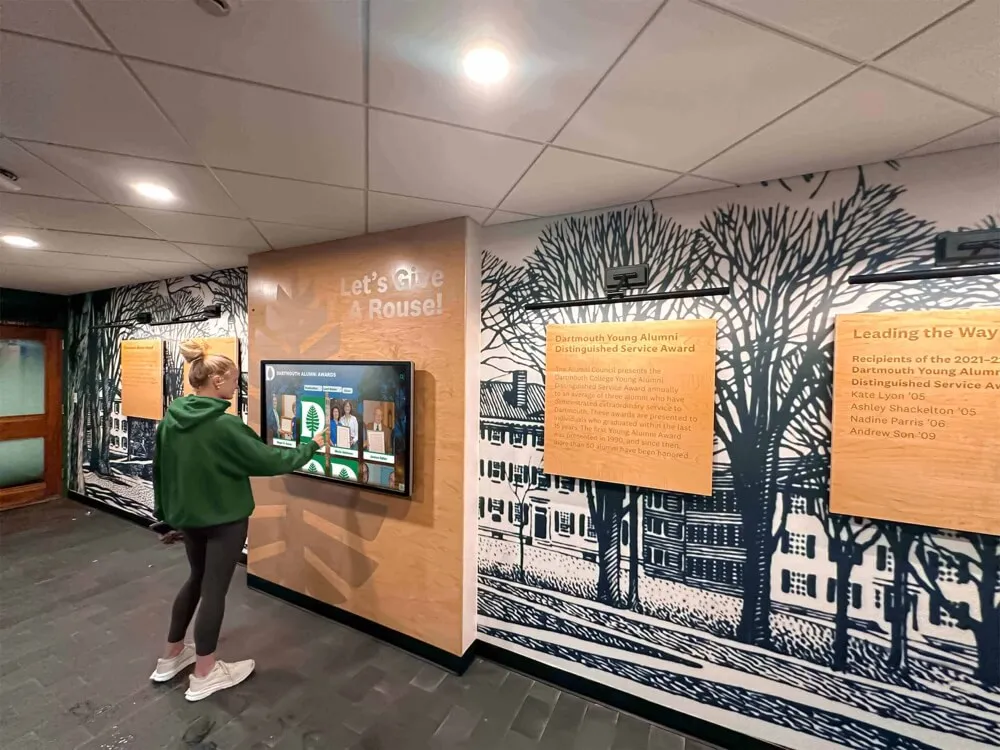
Strategic placement in high-traffic areas maximizes recognition visibility and engagement
Digital Recognition Solutions
Solutions like Rocket Alumni Solutions transform debate team recognition through interactive displays that eliminate traditional limitations while enhancing engagement:
Unlimited Recognition Capacity Digital recognition displays overcome the space constraints that restrict traditional recognition:
- Single display showcases unlimited competitors, tournaments, and achievements
- No need to remove historical recognition to accommodate current success
- Comprehensive archives preserve complete program competitive history
- All events and achievement types receive equal display capacity
- Room for detailed competitive records, speaker statistics, and career documentation
Rich Achievement Profiles Digital systems tell complete forensic stories impossible with plaques and trophies:
- Detailed profiles for each competitor documenting full competitive careers
- Tournament-by-tournament result documentation
- Speaker point tracking and statistical analysis
- Partnership records for debate formats
- Video content featuring championship rounds or memorable speeches
- Judge feedback and ballot excerpts highlighting excellence
- Personal statements reflecting on competitive experience
- Photo galleries documenting competitive journey
Interactive Exploration Features Modern touchscreen systems create engagement impossible with static displays:
- Search functionality enabling students to find specific competitors or tournaments
- Filtering by event type, year, achievement level, or other criteria
- Timeline views showing program evolution across decades
- Statistical dashboards highlighting program trends and records
- Tournament result databases with complete bracket information
- Comparison tools showing historical achievement context
Learn about comprehensive digital solutions in digital hall of fame guide implementations.
Simple Content Management Cloud-based management systems eliminate administrative burden:
- Remote updates from any internet-connected device
- Intuitive interfaces requiring no technical expertise
- Scheduled publishing for automatic post-tournament updates
- Bulk import tools for historical achievement data
- Role-based permissions enabling coach and student manager access
- Template systems ensuring consistent formatting across profiles
Schools report 80-90% reduction in time spent maintaining recognition displays after implementing digital systems, allowing coaches to focus on competitor development rather than display updates.
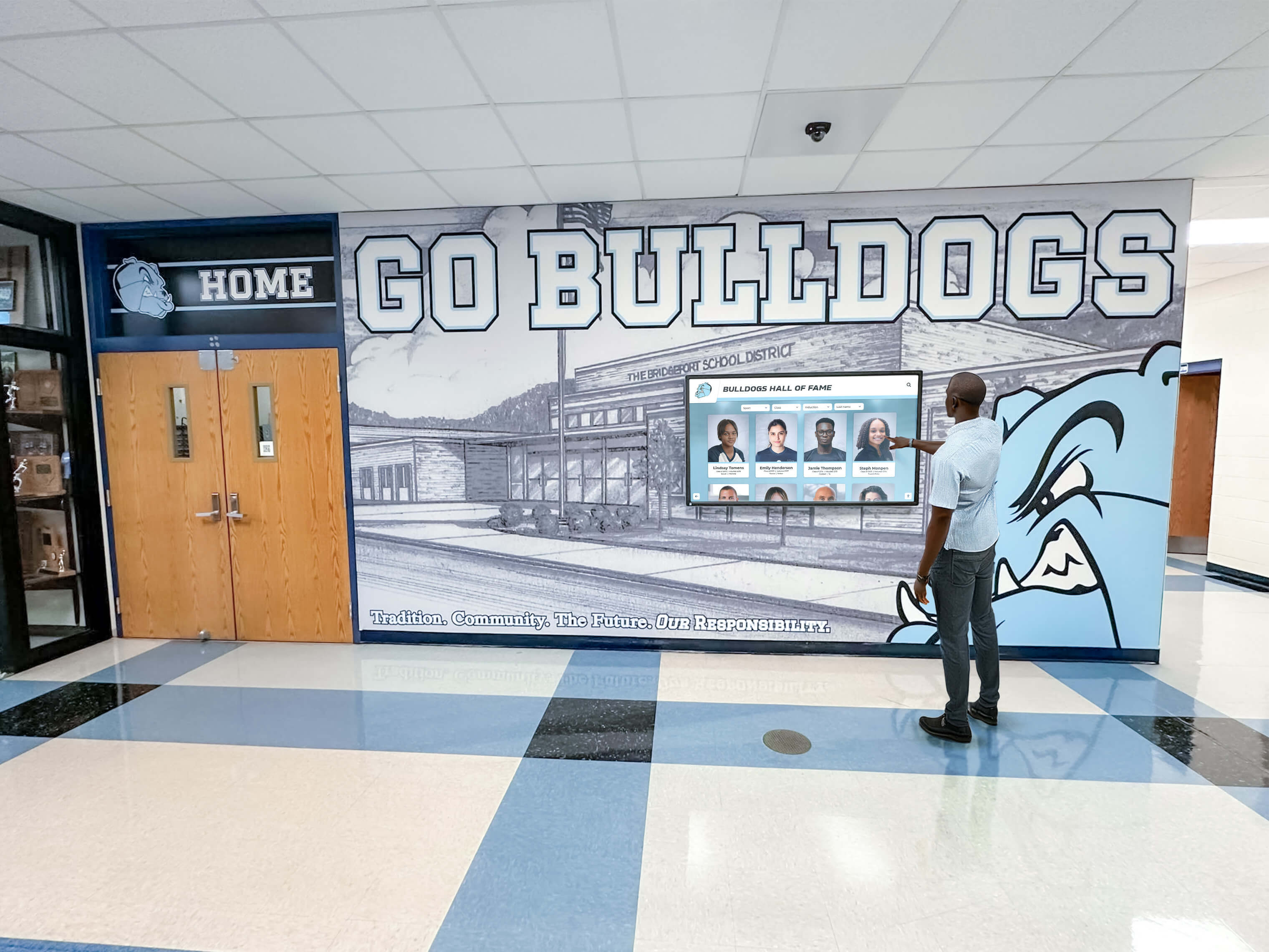
User-friendly interfaces encourage exploration and engagement with program history
Extended Reach Through Web Access Web-accessible recognition amplifies impact beyond physical campus:
- Alumni worldwide can explore program achievements and find their own records
- Current students share tournament success on social media platforms
- Prospective students and families research program quality during recruitment
- College applications benefit from documented forensic achievement evidence
- Community members and supporters celebrate program success remotely
This extended visibility supports recruitment, builds alumni engagement, and provides documentation valuable for college applications and scholarship opportunities.
Implementing Comprehensive Debate Achievement Board Systems
Successful implementation requires systematic planning addressing content organization, display design, and sustainable management.
Content Organization and Structure
Effective achievement boards require thoughtful information architecture:
Chronological Organization
- Year-by-year achievement documentation
- Season-specific tournament results
- Historical timeline showing program evolution
- Graduating class recognition and legacy acknowledgment
- Era-based organization highlighting program phases
Event-Based Organization
- Separate sections for debate formats and speech events
- Policy debate achievement archives
- Lincoln-Douglas recognition sections
- Public Forum team documentation
- Individual events achievement categories
- Congressional debate and supplemental event recognition
Achievement Level Organization
- Championship recognition tier for highest achievements
- Finalist and semifinalist recognition sections
- Elimination round achievement documentation
- Preliminary round success for developing competitors
- Special recognition for breakthrough achievements
Individual Competitor Profiles
- Alphabetical competitor directories
- Search and filter functionality for finding specific students
- Career achievement summaries and statistics
- Partnership documentation for team events
- Competitive journey narratives and highlights
This multi-dimensional organization ensures information accessibility regardless of how users approach the achievement board.
Explore touch screen kiosk software options for implementation.
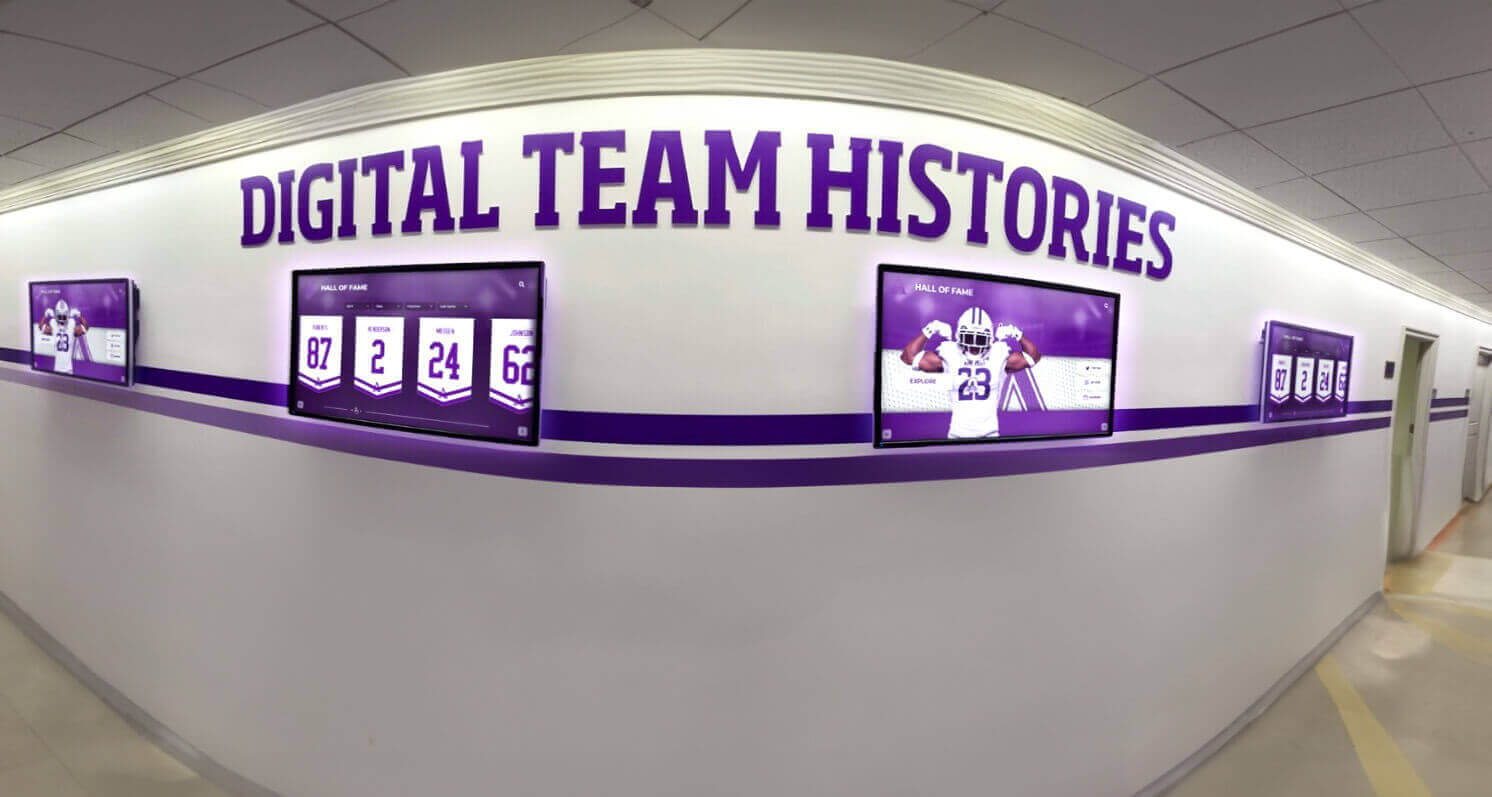
Historical displays connect current competitors with decades of program tradition
Visual Design Considerations
Achievement boards should reflect forensic culture while maintaining professional presentation:
Branding and Identity Integration
- School colors and visual identity incorporation
- Debate team logos and mascot integration
- Event-specific visual themes and iconography
- National Speech & Debate Association branding where appropriate
- Tournament-specific graphics for major competitions
Photography and Visual Content
- High-quality competition photography
- Trophy and award documentation images
- Team photos from major tournaments
- Action shots capturing debate and speech performance
- Historical photographs connecting past and present
Data Visualization
- Win-loss records and statistics
- Speaker point trends and analysis
- NSDA point accumulation tracking
- Tournament participation data over time
- Program growth metrics and visualizations
Accessibility Considerations
- ADA-compliant physical mounting and approach spaces
- Screen reader compatibility for visual accessibility
- High-contrast viewing modes for readability
- Intuitive navigation requiring minimal instruction
- Mobile optimization for web-based extensions
Display Placement and Integration
Strategic positioning maximizes recognition impact:
High-Traffic Campus Locations
- Main entrance lobbies and reception areas
- Hallways leading to auditoriums or speech rooms
- Library and academic centers
- Student commons and gathering spaces
- Near administrative offices where visitors frequent
Forensics-Specific Locations
- Speech and debate classroom or team room
- Practice space and preparation areas
- Tournament preparation rooms
- Coach offices and meeting spaces
- Competition storage areas
Integrated Recognition Systems Achievement boards should connect with broader recognition efforts:
- Inclusion in all-school achievement displays
- Integration with academic honor roll systems
- Connection to student leadership recognition
- Links from school website and communications
- Feature in recruitment materials and tours
Learn about elementary school recognition board approaches adaptable to forensics.
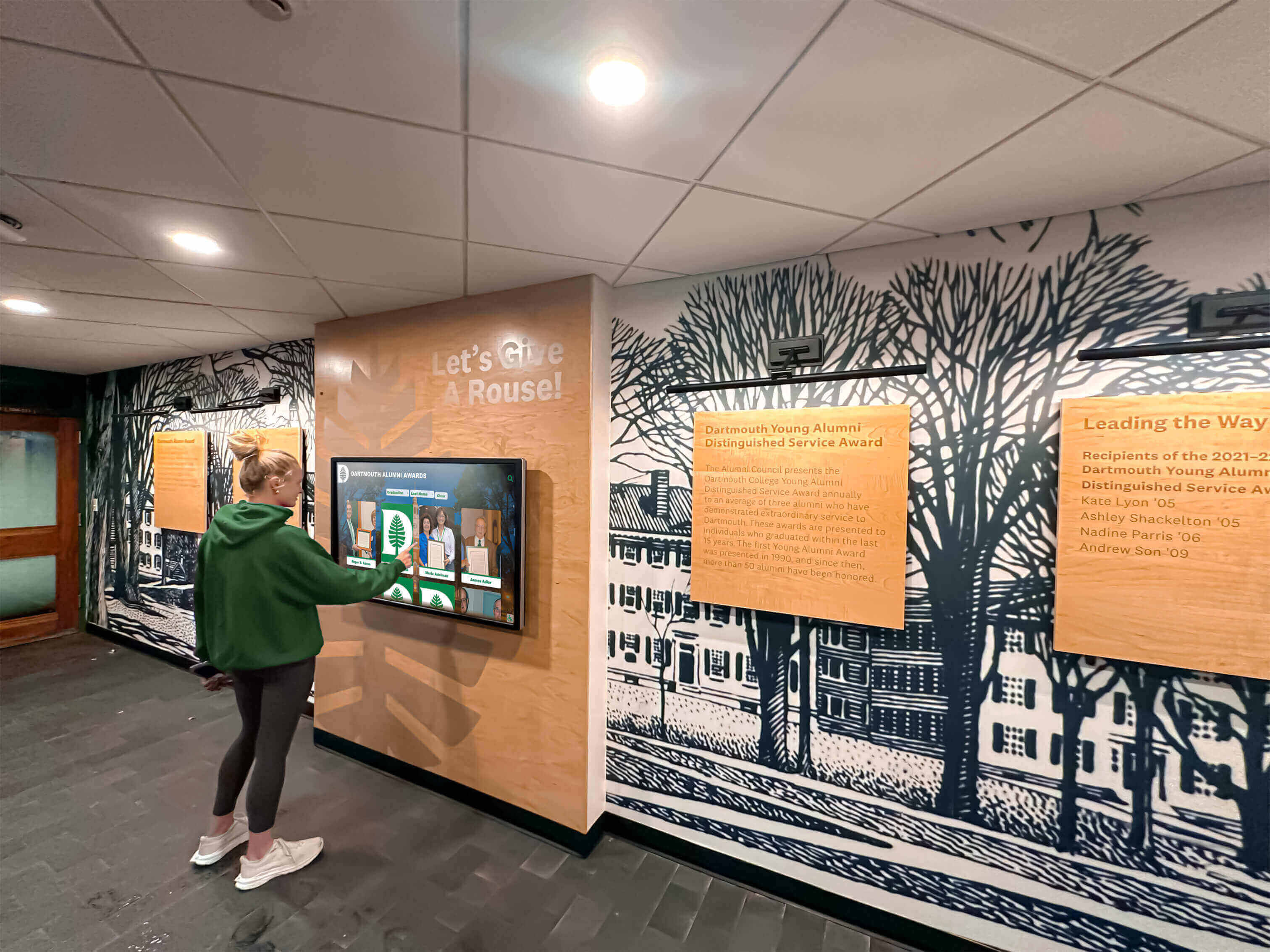
Accessible displays enable students to explore achievements independently
Creating Recognition Content That Tells Complete Stories
Effective debate achievement boards move beyond simple name and tournament listing to document competitive journeys:
Writing Achievement Descriptions
Compelling recognition content requires thoughtful composition:
Tournament Achievement Narratives Rather than simply listing “State Champion - Policy Debate,” comprehensive descriptions provide context:
- Tournament name, location, and competition date
- Division or classification information
- Number of teams or competitors in field
- Notable opponents or challenging rounds
- Specific accomplishments within tournament
- Partnership information for team events
- Speaker awards and rankings earned
Career Summary Development Individual competitor profiles benefit from narrative career overviews:
- Introduction to debate through graduation timeline
- Event progression and format exploration
- Key breakthrough moments and achievements
- Statistical summaries and career records
- NSDA degree advancement and point totals
- Leadership roles and program contributions
- Post-graduation forensic involvement or impact
Partnership Recognition Debate formats requiring partnerships deserve specific acknowledgment:
- Partner team names and years active
- Combined achievement records
- Notable tournament success together
- Strategic approaches and argumentation styles
- Partnership evolution and development
- Breakup and new partnership transitions when applicable
- Individual success before and after partnership
Explore comprehensive student recognition in classroom projects recognition approaches.
Incorporating Multimedia Content
Digital achievement boards enable rich media integration:
Video Content
- Championship round recordings and highlights
- Final speeches from major tournaments
- Documentary footage of competitive journeys
- Interview content with alumni competitors
- Instructional content from top performers
- Team tradition videos and culture documentation
Audio Content
- Championship speech recordings
- Extemp speech archives demonstrating excellence
- Debate round audio from major tournaments
- Coach commentary and analysis
- Alumni reflections on competitive experience
Document Archives
- Case files from championship rounds
- Research and evidence documentation
- Tournament schedules and results
- Judge ballots and feedback
- Program handbooks and guides across years
- Historical team records and statistics
This multimedia approach transforms achievement boards from static name listings into engaging archives documenting forensic excellence comprehensively.
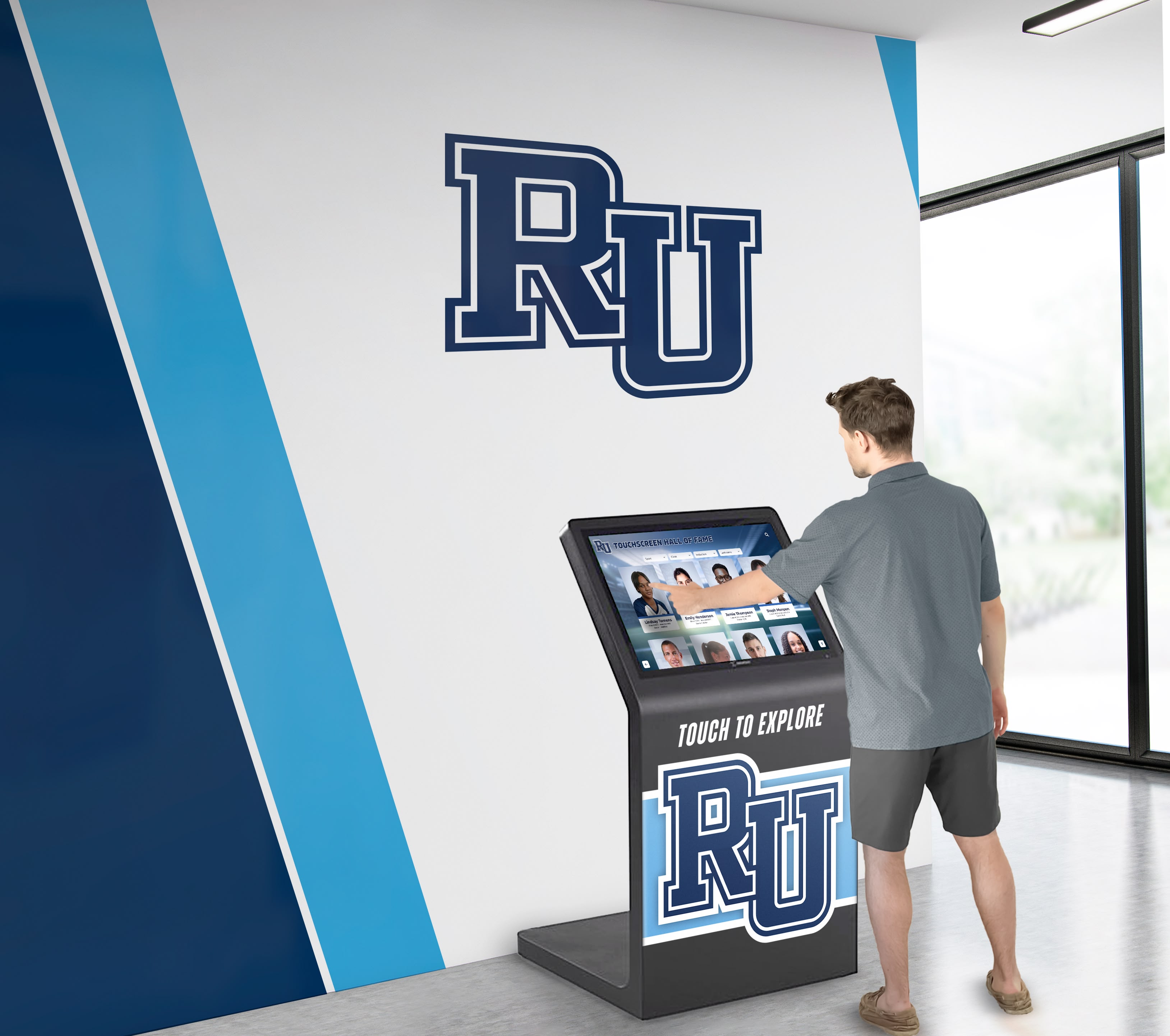
Engaging recognition experiences create positive associations with forensic achievement
Recognition Events and Ceremonies
Achievement boards should connect with formal recognition occasions:
End-of-Season Banquets
Annual recognition events provide natural moments for achievement board updates and celebration:
Award Presentation Ceremonies
- Tournament achievement recognition and trophy distribution
- Speaker award acknowledgment
- NSDA degree advancement recognition
- Team leadership position acknowledgment
- Special achievement and breakthrough awards
- Graduating senior tribute and career retrospectives
Achievement Board Unveiling Season-end banquets provide ideal occasions for revealing updated recognition displays:
- Showcase new achievers added to permanent recognition
- Highlight notable achievements from competitive season
- Recognize historical milestones reached
- Celebrate program growth and evolution
- Generate enthusiasm for upcoming competitive season
Alumni Recognition Integration Recognition events should connect past and present competitors:
- Alumni return for induction into halls of achievement
- Historical competitor recognition and celebration
- Alumni panels and advice sessions
- Mentorship program launches connecting generations
- Fundraising initiatives supporting program continuation
Learn about homecoming festivities that can incorporate forensic recognition.
School-Wide Recognition Integration
Debate achievements deserve visibility beyond internal team events:
Academic Award Ceremonies Include forensic accomplishment in broader student recognition:
- All-school award nights and recognition assemblies
- Honor society induction programs
- Student leadership recognition events
- Graduation acknowledgment for forensic participation
- School publication features and profiles
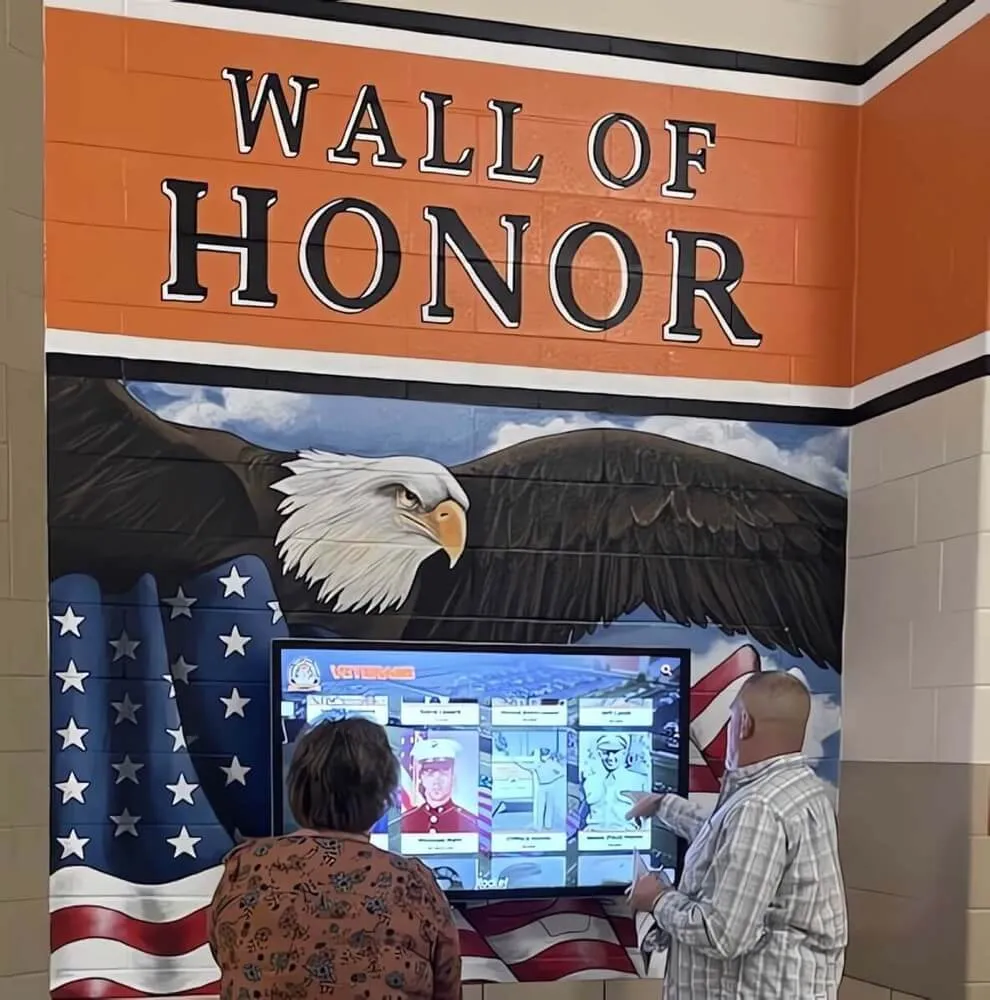
Prominent placement demonstrates institutional commitment to forensic excellence
Morning Announcements and Communications
- Weekly highlights of tournament results
- Individual achievement recognition and congratulations
- Upcoming tournament promotion and support building
- NSDA degree advancement announcements
- Team leadership recognition and introduction
School Publication Features
- Student newspaper profiles of top competitors
- Yearbook sections dedicated to speech and debate
- School website highlights and achievement pages
- Social media posts celebrating tournament success
- Community newsletter inclusions extending recognition beyond campus
This integrated approach elevates forensic achievement to equal status with other celebrated school activities.
Maintaining and Updating Achievement Boards
Sustainable recognition requires systematic management and regular updates:
Post-Tournament Update Protocols
Timely recognition maximizes motivational impact:
Immediate Recognition Updates
- Post-tournament result processing and verification
- Achievement board content updates within days of competition
- Social media announcements linking to updated displays
- Email communications to families highlighting new recognition
- Morning announcement coordination showcasing success
Season-End Comprehensive Updates
- Complete season achievement compilation
- Statistical analysis and record documentation
- NSDA point total updates and degree advancements
- Team ranking and sweepstakes final standings
- Graduating senior career retrospectives and tributes
Long-Term Sustainability Strategies
Programs need systems ensuring recognition continuity:
Responsibility Assignment
- Designated coach oversight for achievement board management
- Student manager roles supporting content updates
- Documentation systems for achievement verification
- Backup procedures ensuring information preservation
- Annual budget allocation for recognition program needs
Historical Documentation Preservation
- Complete tournament result archives
- Competitor profile development and updates
- Photograph and media content organization
- Statistical database maintenance
- Alumni contact information for future engagement
Assessment and Improvement
- Regular feedback from team members about recognition
- Tracking engagement with digital displays
- Monitoring recognition comprehensiveness and inclusivity
- Evaluating motivational impact on recruitment and retention
- Adjusting approaches based on assessment findings
Explore digital wall of fame maintenance best practices.
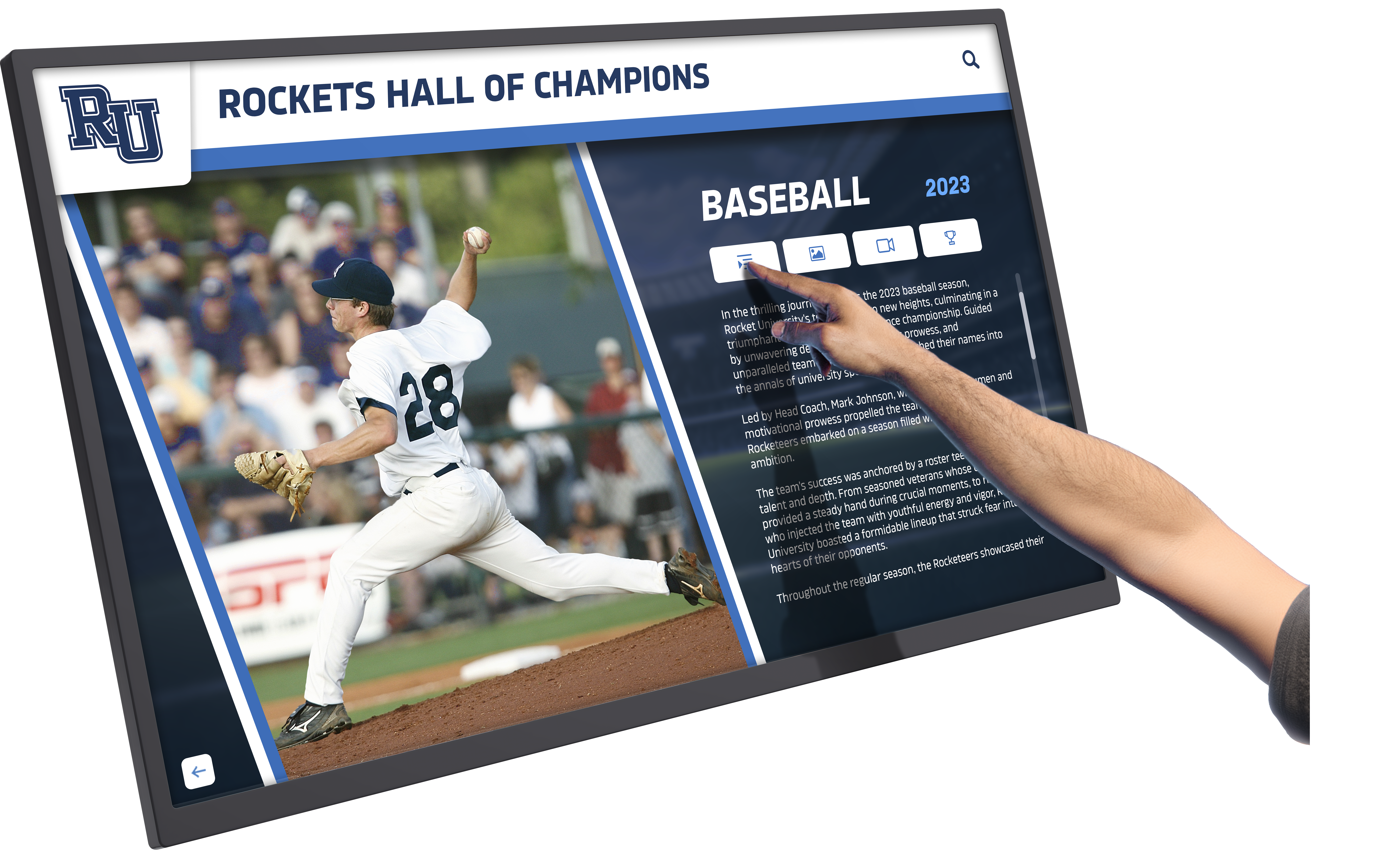
Intuitive interfaces encourage exploration and connection with program achievements
Supporting Program Goals Through Recognition
Effective achievement boards advance broader program objectives beyond celebration:
Recruitment and Growth
Visible recognition attracts prospective team members:
Prospective Student Engagement
- Achievement displays showcasing program quality during tours
- Documentation demonstrating competitive success levels
- Diverse achievement categories showing multiple participation pathways
- Alumni success stories illustrating long-term benefits
- Web-accessible recognition enabling pre-visit research
Publicity and Community Awareness Recognition systems support external communication:
- Media kits featuring achievement documentation
- Grant applications demonstrating program excellence
- Administration presentations showing program value
- Parent organization communications building support
- Community recognition increasing institutional pride
Competitor Development and Motivation
Achievement boards create aspirational targets driving improvement:
Goal Setting and Tracking
- Visible achievement milestones providing clear targets
- Historical context showing attainable excellence
- Diverse recognition categories ensuring multiple pathways
- Progress documentation motivating continued commitment
- Peer achievement inspiration encouraging excellence
Team Culture Building Recognition reinforces program values and identity:
- Shared history creating team unity and tradition
- Excellence expectations normalized through visible achievement
- Growth mindset modeling through improvement recognition
- Leadership exemplars inspiring future captains and mentors
- Service emphasis through balanced competitive and contribution recognition
Learn about student recognition that increases future success for motivation perspectives.
College Application Support
Forensic recognition provides valuable documentation for college admissions:
Achievement Documentation
- Verified competition results and tournament records
- NSDA point totals and degree certifications
- Leadership position verification
- Statistical documentation of accomplishment
- Coach verification and recommendation support
Distinctive Application Content Debate achievement provides competitive advantages:
- Demonstration of intellectual engagement and argumentation skills
- Evidence of public speaking and communication excellence
- Proof of research and analytical capabilities
- Documentation of leadership and mentorship
- Distinctive activities list content differentiating applicants
Digital recognition systems provide easily accessible documentation supporting application materials while creating shareable portfolio content.
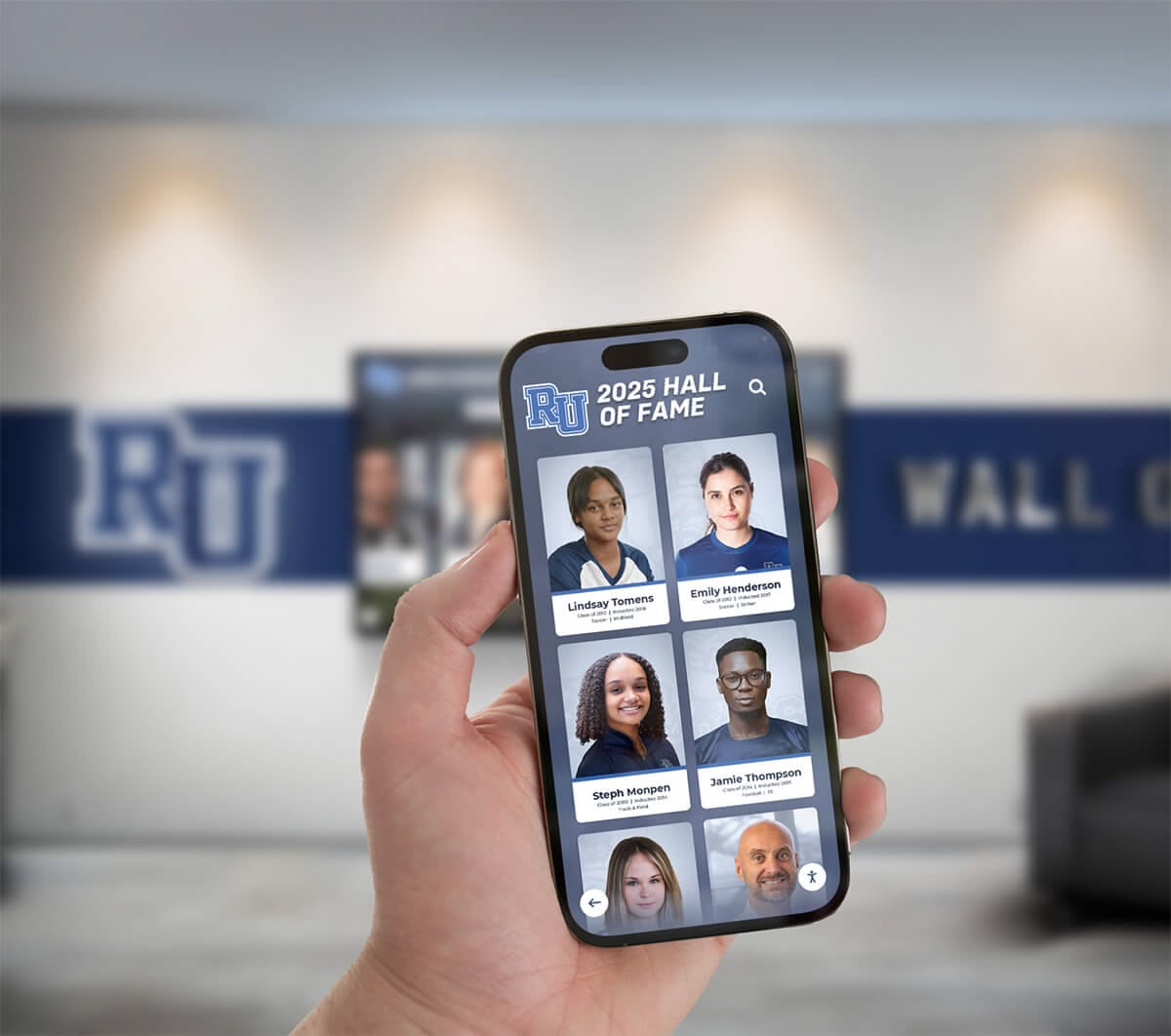
Mobile-optimized systems enable students to access achievement documentation anytime
Special Considerations for Different Program Sizes
Achievement board approaches should scale appropriately:
Small and Developing Programs
Emerging debate teams need recognition systems that celebrate growth:
Milestone-Based Recognition
- First tournament participation acknowledgment
- Initial elimination round qualifications
- Speaker award breakthroughs
- NSDA membership and initial degree achievements
- Growth in team size and participation
Future-Focused Recognition Design
- Systems with expansion capacity as program grows
- Emphasis on improvement and development
- Recognition celebrating participation alongside winning
- Alumni engagement building program foundation
- Historical documentation from program inception
Mid-Sized Competitive Programs
Established programs require balanced recognition systems:
Comprehensive Achievement Documentation
- Multiple event category recognition
- Historical context spanning program development
- Varsity and novice division acknowledgment
- Leadership development alongside competition
- Alumni engagement and tradition building
Large National Circuit Programs
Elite programs need sophisticated recognition infrastructure:
Advanced Statistical Integration
- National ranking documentation and tracking
- Bid round achievement toward championship qualification
- Speaker award point accumulation and rankings
- Tournament circuit performance analysis
- Comparative achievement across competition levels
Depth Recognition Large programs benefit from showcasing competitive depth:
- Multiple finalist recognition from single tournaments
- Team sweepstakes dominance documentation
- Varsity, junior varsity, and novice success across divisions
- Event diversity showing program breadth
- Alumni success transitioning to college competition
Explore approaches in division I athletics digital recognition adaptable to large forensics programs.
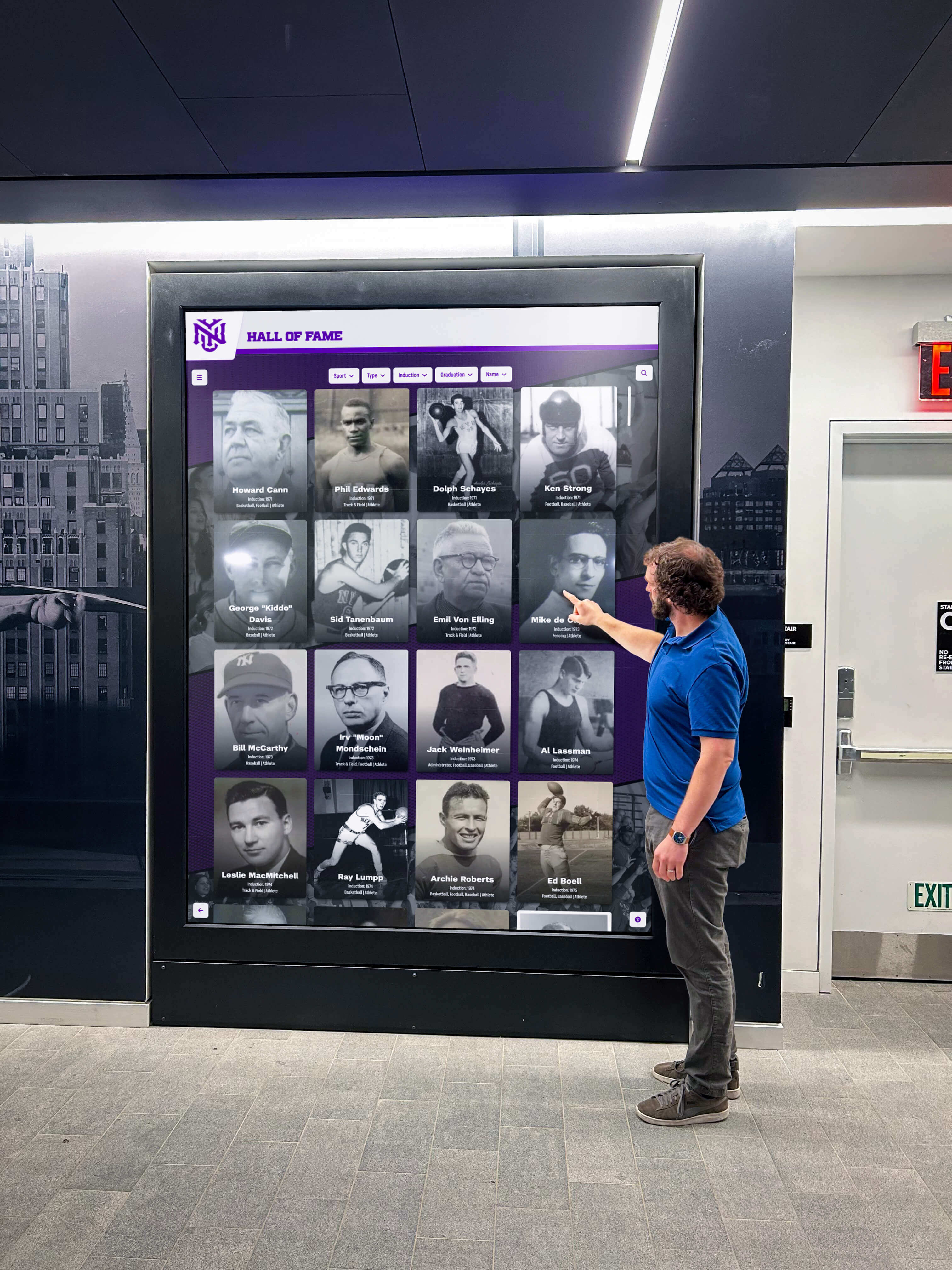
Interactive displays enable families and community members to explore program excellence
Budget Considerations and Implementation Options
Achievement board implementation requires realistic resource planning:
Budget-Friendly Recognition Options
Schools with limited resources can implement effective recognition:
Low-Cost Traditional Approaches
- Bulletin board displays with printed achievement documentation
- Wall-mounted frames for tournament certificates and awards
- Digital photo frames displaying achievement slideshows
- Existing trophy case reorganization and optimization
- Student-designed recognition posters and graphics
Digital Signage Repurposing
- Existing school displays allocated for forensics recognition
- Slideshow content created using free software
- Web-based achievement pages linked from school sites
- Social media recognition maximizing free platforms
- Virtual achievement galleries requiring no physical installation
Mid-Range Investment Options
Moderate budgets enable enhanced recognition:
Professional Display Systems
- Custom trophy cases and recognition cabinetry
- Wall-mounted plaque systems with professional engraving
- Digital picture frames or small displays with automated content
- Professional graphic design for recognition boards
- Website integration with dedicated forensics achievement pages
Comprehensive Recognition Solutions
Programs prioritizing recognition can implement sophisticated systems:
Professional Digital Recognition Platforms Solutions like Rocket Alumni Solutions provide comprehensive capabilities:
- Large-format touchscreen displays with interactive exploration
- Cloud-based content management systems
- Unlimited recognition capacity across all achievement categories
- Mobile and web access extending recognition beyond physical displays
- Professional implementation support and ongoing technical assistance
- Integration with existing school systems and websites
Hybrid Recognition Systems Combining approaches maximizes impact:
- Physical trophies and awards complementing digital comprehensive records
- Traditional plaques for historical competitors with digital systems for current documentation
- Display screens integrated into custom recognition installations
- Web platforms extending physical campus recognition
- Mobile applications providing on-demand achievement access
Learn about implementation in touchscreen kiosk app guide.
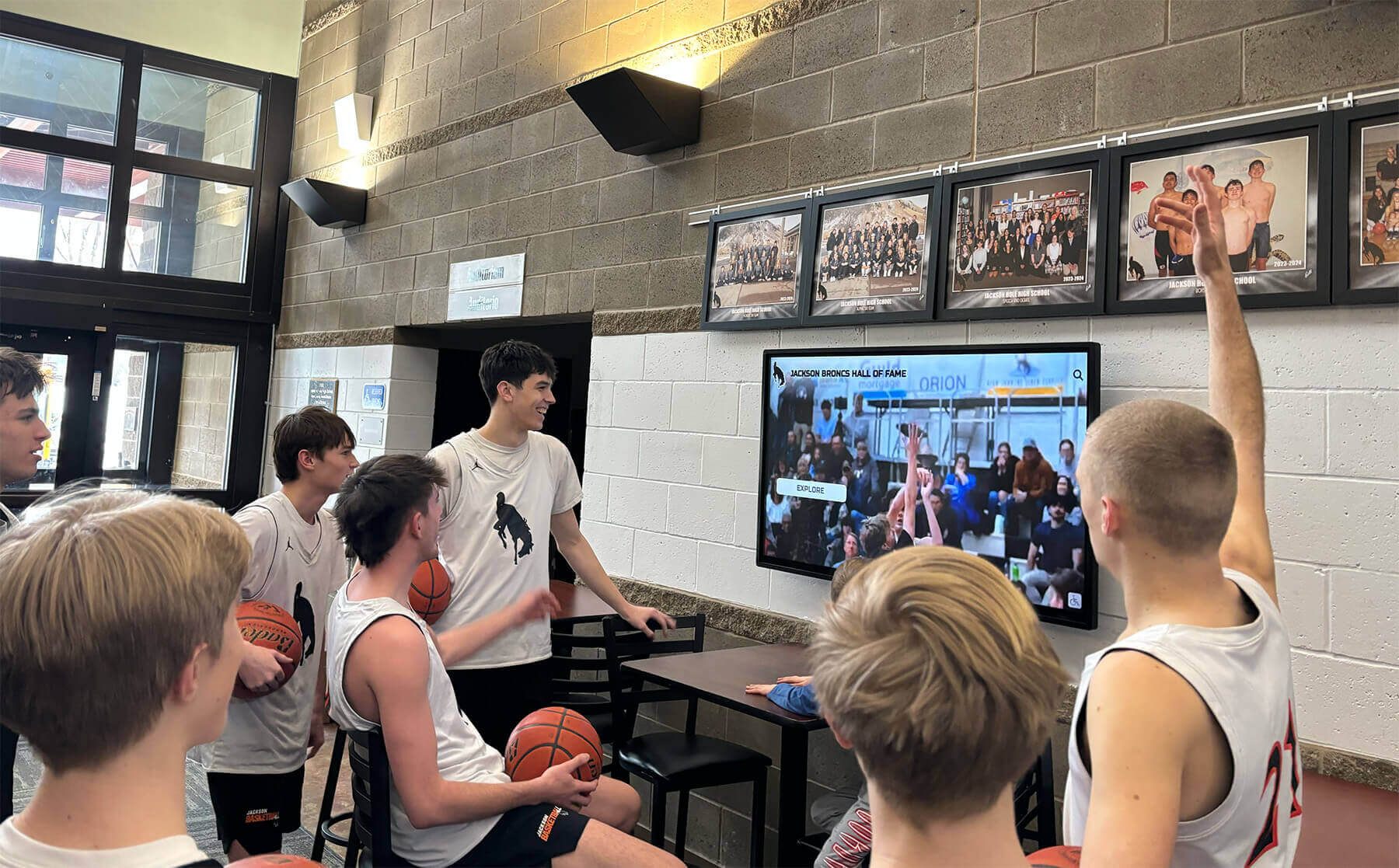
Engaging displays create opportunities for students to connect with program culture
Conclusion: Building Forensic Excellence Through Recognition
Debate team achievement boards represent strategic investments in program culture, competitor motivation, and institutional commitment to forensic education. When schools systematically celebrate tournament success, honor society advancement, speaker excellence, and leadership contributions—they create environments where argumentation skills, public discourse, and intellectual competition become central to student identity and school culture.
The strategies explored in this guide provide comprehensive frameworks for building recognition systems that honor diverse forensic achievements while remaining sustainable, inclusive, and aligned with program goals. From traditional trophy displays documenting championship success to sophisticated digital platforms providing unlimited recognition capacity and interactive engagement, multiple approaches exist matching different resources and priorities.
Transform Your Debate Team Recognition Program
Discover how modern digital recognition solutions can help you celebrate every tournament victory, honor society achievement, and forensic milestone while building lasting program legacy.
Explore Recognition SolutionsEffective forensic recognition extends beyond celebrating winners to documenting complete competitive journeys, preserving program history, and inspiring future generations of debaters and speakers. Digital recognition displays eliminate the space constraints and updating challenges that limit traditional approaches, while interactive features create engagement impossible with static plaques and bulletin boards.
Your debate team competitors dedicate countless hours researching arguments, practicing speeches, and refining advocacy skills that serve them throughout life. They deserve recognition equal to any other competitive endeavor while serving as inspiration for future students discovering the intellectual challenge, competitive excitement, and personal growth that speech and debate provides.
Start where you are with recognition you can implement immediately, then systematically expand to create comprehensive approaches your forensic program deserves. Every competitor whose achievement receives meaningful acknowledgment understands their success mattered, their contribution continues, and their example inspires others to pursue excellence in argumentation and advocacy.
Ready to begin? Explore digital trophy touch wall approaches or learn more about best touchscreen software for implementing comprehensive recognition systems that celebrate all dimensions of forensic excellence—from first preliminary ballot wins to national championship tournaments and everything in between.
Sources:































