
For generations, class composite photographs have adorned school hallways—those formal arrangements of individual portraits organized by class, grade, or graduation year. While these traditional printed composites served their purpose, they face mounting challenges in the digital age: physical deterioration over time, limited wall space forcing difficult decisions about which years to display, static presentations that cannot be updated or enhanced, accessibility restricted to on-campus visitors during specific hours, and high costs for reprinting or updating damaged composites.
Digital class composites represent the evolution of this timeless tradition, combining the formal recognition students and families value with the flexibility, accessibility, and engagement opportunities that modern technology enables. Schools implementing digital composite solutions preserve the aesthetic appeal of traditional photography while gaining interactive displays that engage viewers, unlimited storage capacity for all graduation years, instant updates without printing costs, online access for alumni worldwide, and integration with comprehensive recognition systems.
This comprehensive guide explores everything schools need to know about digital class composites: understanding the transition from traditional to digital formats, benefits that extend far beyond space savings, implementation approaches for schools of all sizes, technical considerations for displays and platforms, creative applications that enhance engagement, and proven strategies for maximizing return on investment.
Understanding Digital Class Composites
What Are Digital Class Composites?
Digital class composites transform traditional printed class photographs into dynamic digital content displayed on screens, websites, and interactive kiosks rather than static wall-mounted frames.
Core Components:
Traditional class composites typically feature individual student portraits arranged in rows with names beneath each photo, class year or grade level identification, school branding and logos, and formal presentation in wooden frames or printed panels. Digital versions maintain these essential elements while adding capabilities impossible with printed formats.
Digital Enhancements:
Modern digital composites incorporate searchable databases allowing instant name lookup, interactive navigation enabling easy browsing across years, multimedia integration including videos and additional photos, real-time updates adding new students or corrections immediately, and online accessibility providing remote viewing from anywhere.

Digital composites create engaging displays in high-traffic school areas
Schools implementing digital composites maintain the tradition and formality families expect while dramatically expanding functionality and accessibility. Students still receive professional photography experiences with formal portraits, but the resulting composites reach far beyond single hallway displays to engage entire communities.
The Evolution from Traditional to Digital
The transition to digital class composites reflects broader changes in how schools approach recognition, photography, and community engagement.
Traditional Composite Limitations:
Physical class composites created significant challenges for schools. Wall space constraints meant schools could display perhaps 10-20 years of composites before running out of room, forcing decisions about which years to remove when adding new classes. Older composites deteriorated as photos faded, frames became damaged, and protective glass broke. Updating composites to correct errors or add students who joined mid-year required expensive reprinting. Only on-campus visitors during school hours could view composites, excluding alumni living elsewhere.
Digital Transformation:
Solutions like Rocket Alumni Solutions address these limitations comprehensively. Digital displays can showcase unlimited graduation years without physical space constraints, as viewers simply scroll or search through decades of class photos. Updates happen instantly through cloud-based content management requiring no physical labor or printing costs. Interactive displays in school lobbies engage visitors with touchscreen navigation, while online portals provide alumni worldwide with access to their class composites from any device.
This transformation doesn’t diminish tradition—it enhances it by making class composites more accessible, more engaging, and more valuable to school communities.
Compelling Benefits of Digital Class Composites
Unlimited Storage Without Space Constraints
Perhaps the most immediate advantage of digital class composites involves eliminating physical space limitations that plague traditional displays.
The Space Problem:
Schools with century-long histories face impossible space equations. A high school displaying composites for 100 graduating classes needs approximately 200-400 square feet of premium hallway wall space, assuming standard frame sizes. This space often doesn’t exist, and even when available, represents extremely valuable real estate schools prefer using for other purposes.
Traditional solutions involved removing older composites to make room for recent classes, storing displaced composites in basements or storage rooms where they deteriorated in obscurity, rotating displays showing different decades on alternating years, or creating “history walls” in remote locations with less visibility.
Traditional Capacity:
- 10-20 years displayed on walls
- Older composites in storage
- Continuous space conflicts
- Difficult access decisions
- Valuable wall space consumed
Digital Capacity:
- Unlimited years in digital system
- All composites equally accessible
- Zero physical space growth
- No removal decisions needed
- Wall space freed for other uses
Digital systems eliminate these compromises entirely. A single 55" touchscreen display can provide access to composites from every year in school history, with each year equally prominent and accessible through simple navigation.
Enhanced Accessibility and Engagement
Digital class composites dramatically expand who can view and interact with class photography.
Geographic Accessibility:
Traditional composites require physical presence at specific school locations during limited hours. Alumni living across the country or internationally cannot casually revisit their class photos without scheduling campus visits. This geographic barrier limits engagement and weakens connections to alma mater.
Digital composites with online access eliminate distance constraints. Alumni anywhere with internet connectivity can explore their class composites, search for classmates, and reminisce about school years. This expanded accessibility strengthens alumni relationships critical for institutional support and fundraising.

Touchscreen displays make class composites interactive and engaging
Temporal Accessibility:
Physical composites are available only when schools are open and accessible. Digital platforms provide 24/7 access through websites and mobile applications. Alumni can explore composites during evening nostalgia browsing sessions or while preparing for reunions, regardless of school operating hours.
Interactive Engagement:
Static printed composites offer only passive viewing. Digital versions enable active engagement through searchable name databases finding individuals instantly across multiple years, zoom capabilities examining photo details, comparison features showing individuals across multiple class years, social sharing sending composite screenshots to classmates, and comment features where alumni share memories about their class years.
Schools implementing interactive recognition displays report that visitors spend significantly longer exploring digital composites compared to traditional printed versions, with average engagement times of 5-8 minutes versus 30 seconds for traditional displays.
Cost Efficiency and Sustainability
While initial digital implementation requires investment, long-term economics strongly favor digital approaches.
Traditional Composite Costs:
Schools typically spend $800-2,500 annually on traditional class composites including professional photography session fees, composite design and layout, printing on archival-quality materials, framing with protective glass, and installation labor. Over decades, these annual costs accumulate substantially.
Additional expenses include reprinting when composites are damaged, creating replacement frames as originals deteriorate, updating composites to correct errors, and storage costs for displaced older composites.
Digital Cost Structure:
Digital implementations involve different economics:
| Expense Type | Traditional Annual | Digital Annual |
|---|---|---|
| Photography | $500-1,200 | $500-1,200 (same) |
| Printing/Framing | $800-1,500 | $0 |
| Installation | $100-300 | $0 (after initial setup) |
| Updates/Corrections | $200-500 | $0 (instant digital updates) |
| Platform/Display | $0 | $300-800 (software subscription) |
Initial digital implementation requires hardware investment (displays, mounting, networking) and setup costs, but annual ongoing costs typically run 40-60% lower than traditional approaches. Most schools achieve return on investment within 3-4 years while gaining dramatically enhanced functionality.
Environmental Sustainability:
Digital composites also support environmental sustainability goals by eliminating annual printing on paper and chemical photo processes, reducing frame material consumption, preventing waste from discarded outdated composites, and minimizing transportation impacts from shipping physical materials.
Schools emphasizing environmental responsibility find digital composites align with broader sustainability commitments while delivering practical benefits.
Integration with Comprehensive Recognition Systems
Digital class composites deliver greatest value when integrated with broader digital recognition platforms rather than functioning as isolated solutions.
Unified Recognition Platforms:
Advanced implementations connect class composites with hall of fame inductee profiles showing student photos alongside current recognition, athletic achievement records linking record holders to their class composite appearances, academic excellence displays highlighting scholars in their graduation year contexts, and alumni spotlights connecting accomplished graduates to their student years.
This integration creates comprehensive recognition ecosystems where all content interconnects meaningfully. Visitors exploring athletic halls of fame can instantly view record holders’ class composites. Alumni browsing composites discover which classmates earned later distinguished recognition. Current students see paths from student portraits to professional achievements.

Integrated systems connect class composites with broader recognition programs
Rocket Alumni Solutions specializes in these integrated approaches, offering platforms where digital trophy cases, class composites, donor recognition, and alumni achievements share unified interfaces and searchable databases.
Implementation Approaches for Different School Sizes
Small Schools and Limited Budgets
Schools with constrained resources can still implement effective digital composite solutions through strategic approaches.
Starting Point Strategies:
Recent Years First: Begin by digitizing and displaying composites from the most recent 5-10 graduating classes covering currently active alumni most likely to engage. This manageable scope delivers immediate value while establishing processes for expanding coverage.
Leverage Existing Equipment: Many schools already own displays or monitors that can be repurposed for composite display. Large TVs in lobbies, unused monitors in media centers, or administrative displays can showcase digital composites without new hardware investment.
Photography Company Partnerships: Some school photography companies provide digital composite files as part of photography packages. Schools should negotiate to receive high-resolution digital files in addition to or instead of printed composites, enabling immediate digital display.
Simple Online Solutions: Free or low-cost website builders, Google Sites, or school website content management systems can host composite galleries accessible to alumni. While not as sophisticated as specialized platforms, these provide valuable access at minimal cost.
Phased Growth Plan: Implement basic digital composites initially, with clear roadmap for enhancement as budget allows. Start with simple slideshow displays, then add touchscreen interaction, then implement searchable databases, eventually integrating with comprehensive recognition platforms.
Medium-Sized Schools with Moderate Resources
Schools with reasonable budgets can implement more comprehensive digital composite programs delivering substantial engagement.
Touchscreen Display Installation:
Invest in dedicated touchscreen display for high-traffic location like main entrance lobby, alumni center, or athletic facility commons. Commercial-grade 55" touchscreen displays with appropriate mounting and networking typically cost $3,000-6,000 installed.
Purpose-built touchscreen software designed for educational recognition creates intuitive navigation, powerful search functionality, attractive visual design reflecting school branding, and easy content management for ongoing updates.
Multi-Year Digitization:
Comprehensively digitize 20-40 years of class composites covering active alumni populations. This substantial coverage demonstrates commitment to history while serving constituencies most likely to engage with digital platforms.
Digitization options include scanning existing printed composites if available, contracting with photography companies to obtain historical digital files, or using volunteer efforts to photograph printed composites for digital conversion.
Online Portal Implementation:
Complement physical displays with web-based access through dedicated alumni portal pages, password-protected galleries for verified alumni, or integrated sections within existing school websites. This dual approach maximizes accessibility through both on-campus touchscreens and remote online viewing.

Medium-sized schools benefit from dedicated composite display installations
Integration Planning:
Design digital composite implementation as foundation for broader recognition programs. Select platforms capable of expanding to include athletic records, academic achievement displays, hall of fame programs, and donor recognition. This strategic approach ensures composite investment contributes to long-term recognition strategy.
Large Schools and Well-Resourced Institutions
Institutions with significant resources can implement sophisticated digital composite programs delivering exceptional engagement and value.
Multiple Display Installation:
Deploy digital composite displays across campus in main entrance lobbies for all visitors, alumni centers with comprehensive historical access, athletic facilities showcasing sports team composites, academic buildings featuring department-specific displays, and libraries providing research access to historical composites.
Multiple installations create distributed access ensuring all constituencies encounter digital composites in relevant contexts.
Complete Historical Digitization:
Digitize comprehensive class composite collections spanning entire institutional history. Century-old schools may digitize 100+ years of composites creating unprecedented historical access. This complete coverage demonstrates commitment to honoring all alumni generations equally.
Professional digitization services specializing in historical photo preservation ensure quality results with careful handling of fragile older composites, high-resolution scanning preserving fine details, color correction and restoration when appropriate, and comprehensive metadata enabling powerful search capabilities.
Advanced Platform Features:
Implement sophisticated recognition platforms offering facial recognition technology assisting with name identification, video integration adding graduation ceremonies and speeches, timeline views showing institutional evolution, social features enabling alumni interaction and memory sharing, analytics dashboards demonstrating engagement and ROI, and mobile applications providing optimized smartphone access.
Professional Content Management:
Larger institutions often designate staff positions or assign existing personnel dedicated time for managing digital recognition content including composite updates, metadata enhancement, historical research, alumni engagement, and platform administration.
This professional attention ensures platforms remain current, accurate, and engaging rather than becoming outdated digital archives.
Technical Considerations and Best Practices
Display Hardware Selection
Choosing appropriate display hardware significantly impacts user experience and long-term satisfaction.
Display Size and Resolution:
Small Format (32-43"): Suitable for individual viewing or small group interactions in confined spaces. Adequate for basic navigation but challenging for detailed viewing.
Medium Format (49-55"): Optimal for most school applications balancing visibility, interaction comfort, and budget. Large enough for compelling viewing while affordable for typical school budgets.
Large Format (65-75"+): Ideal for high-traffic areas or auditorium spaces where multiple viewers gather. Creates impressive visual impact but requires higher budget and special mounting.
Resolution matters significantly. Minimum 1080p (Full HD) for basic clarity, but 4K resolution provides superior detail when users zoom to examine individual photos closely.
Touchscreen vs. Non-Touch:
Touchscreen capabilities transform composites from passive displays into engaging interactive experiences. Touchscreens enable intuitive navigation, rapid searching, and extended engagement. Non-touch displays can present composites effectively using automated rotation or remote control navigation, but lack the engagement power of direct touch interaction.
Most schools find touchscreen investment worthwhile for primary installations while potentially using non-touch displays for secondary locations.
Commercial vs. Consumer Displays:
Consumer TVs cost less initially but lack durability for continuous operation. Commercial displays designed for 24/7 use in business environments offer extended warranties (3-5 years vs. 1 year), higher brightness for well-lit environments, professional mounting options, and heat management for continuous operation.
For school installations operating during extended daily hours, commercial displays justify higher initial costs through longevity and reliability.
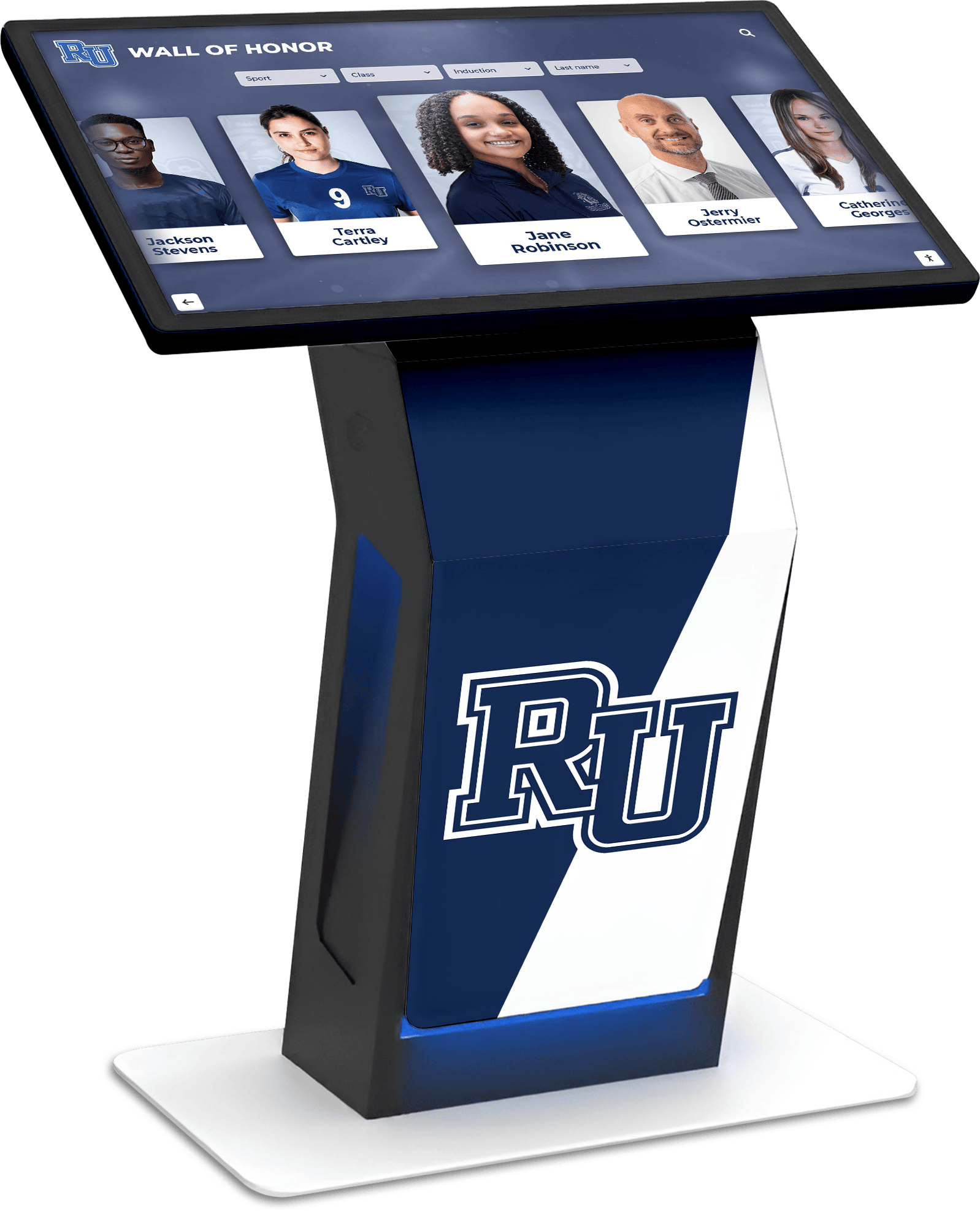
Commercial-grade touchscreen kiosks provide durability and engagement
Software Platform Requirements
Software quality determines whether digital composites delight or frustrate users.
Essential Features:
Intuitive Navigation: Users should understand how to browse composites within seconds without instructions. Visual hierarchies guiding exploration, clear buttons and controls, responsive feedback to touch interactions, and consistent interface patterns create frustration-free experiences.
Powerful Search: Fast text search finding names instantly, filter options by year, class, or other criteria, intelligent suggestions for common misspellings, and results highlighting showing search terms in context enable quick discovery.
Attractive Design: Professional visual design reflecting school colors and branding, high-quality photo presentation maintaining image integrity, smooth animations and transitions, and responsive layouts adapting to different screen sizes create pride in the installation.
Easy Content Management: Schools need simple systems for updating composites. Web-based administration accessible from any device, drag-and-drop photo upload, simple metadata forms for names and details, preview capabilities before publishing changes, and role-based permissions managing access appropriately make ongoing management practical.
Advanced Capabilities:
Sophisticated platforms offer features enhancing value: online access portals extending composites beyond physical displays, mobile companion apps optimizing smartphone experiences, analytics dashboards tracking engagement and demonstrating value, integration APIs connecting to alumni databases and other systems, and customization options tailoring experiences to institutional needs.
Photography and Image Quality Standards
Digital composite quality depends fundamentally on source photography quality.
Minimum Quality Standards:
Digital composites require higher resolution than traditional printing. Printed composites typically used photos at 150-300 DPI at final size. Digital displays, especially with zoom capabilities, benefit from higher resolution.
Recommended standards include minimum 300 DPI at intended display size, individual portrait resolution of at least 1200x1600 pixels, JPEG quality settings of 85-95% avoiding visible compression, and consistent lighting and backgrounds across all students in a composite.
Working with Photography Companies:
School photography companies should provide digital files in addition to traditional printed composites. Contract negotiations should specify file format (high-quality JPEG or TIFF), resolution requirements meeting digital display needs, metadata inclusion (student names associated with files), delivery timeline for digital files, and rights for digital display and online access.
Some photography companies now offer digital-first packages where schools receive digital composites as primary deliverable, with printed composites optional. These packages often reduce costs while providing digital files optimized for screen display.
Metadata and Organization
Well-organized metadata transforms photo collections into valuable searchable databases.
Essential Metadata Fields:
For each composite include year and class identification, complete school name, grade level or classification, and date photographed. For each individual portrait include student full name (first, middle, last), graduation year or class level, and any relevant identifiers linking to student databases.
Optional Enhanced Metadata:
Schools investing in comprehensive metadata add additional biographical information (birthplace, hometown), activities and clubs with participation, athletic teams and achievements, academic honors and recognition, and current contact information for alumni where available.
Enhanced metadata dramatically improves search capabilities and enables sophisticated features like filtering composites by activity participation or tracking individuals across multiple years.
Privacy Considerations:
Digital distribution of student photos requires attention to privacy policies and permissions. Schools should establish clear policies addressing FERPA compliance for educational records, directory information disclosure practices, opt-out processes for students not wanting digital display, and data security for any personal information beyond photos.
Most schools treat class composites as directory information not requiring individual consent, but policies should reflect institutional legal guidance and community expectations.
Creative Applications Beyond Basic Display
Reunion Planning and Engagement
Digital class composites become powerful tools for reunion planning and attendance.
Pre-Reunion Promotion:
Reunion committees use digital composites in promotional campaigns sharing composite screenshots on social media generating nostalgia, creating “find yourself” challenges encouraging classmate interaction, posting throwback content in weeks before reunions, and including composite links in email invitations.
This composite-based promotion typically increases engagement rates 30-50% compared to standard reunion announcements without visual nostalgia elements.
On-Site Reunion Activities:
Digital displays at reunion events create interactive attractions. Large touchscreen displays showing attendees’ class composites become gathering points where alumni reminisce together, search for classmates, and share memories. Social features allowing on-site comments and memory sharing create user-generated content enriching composites permanently.

Digital composites create engaging centerpieces at reunion events
Some schools create custom reunion interfaces highlighting specific class years prominently while maintaining access to adjacent years for comparison and context.
Student Engagement and School Pride
Digital composites engage current students as well as alumni.
Historical Exploration:
Students enjoy exploring composites from parents’ or grandparents’ eras, discovering family connections to school history. Schools with multi-generational student populations create “legacy student” features automatically highlighting when current students share names with historical composite members.
Students also explore fashion evolution, facility changes visible in composite backgrounds, and demographic shifts in student populations across decades. These explorations create appreciation for institutional history and tradition.
Senior Anticipation:
Upcoming graduates anticipate their composite appearance. Schools create excitement by updating displays showing “Class of [Current Year] - Coming Soon” messaging before senior portraits are photographed, revealing composite designs before final versions publish, and allowing seniors to preview composites before official release.
This anticipation builds pride in senior status and strengthens positive associations with school traditions.
Development and Fundraising Applications
Alumni development offices leverage digital composites for cultivation and solicitation.
Donor Cultivation:
Development professionals reference composites during donor meetings, personalizing conversations with visual reminders of donors’ student experiences. Bringing up donors’ composite photos on tablets during cultivation visits creates instant emotional connections and conversation starters.
Capital campaign materials feature composite content illustrating multi-generational institutional impact. Before-and-after facility comparisons show campus evolution from donors’ student years to present, creating compelling cases for continued investment.
Recognition Integration:
Digital donor recognition displays increasingly integrate class composite content connecting donor profiles to their student photos. This integration personalizes recognition while celebrating donors’ long institutional relationships.
“Then and now” presentations showing donors in student composites alongside current professional photos effectively demonstrate institutional impact on individual lives, supporting stewardship and ongoing relationship building.
Research and Historical Documentation
Digital composites serve academic and historical research purposes.
Genealogical Research:
Families researching genealogy use accessible digital composites to verify ancestors’ school attendance, determine accurate graduation years, find maiden names from marriage records, and discover sibling relationships through shared class years.
Schools partnering with local historical societies or genealogical organizations provide valuable community resources while building positive institutional relationships.
Social History Studies:
Researchers study digital composite collections documenting demographic changes in school populations, fashion and cultural trends across decades, naming patterns and ethnic diversity evolution, and social structures visible in formal photography conventions.
Making composites digitally accessible supports historical scholarship while positioning schools as valuable community historical resources.
Measuring Success and Demonstrating Value
Quantifiable Metrics
Schools should track concrete metrics demonstrating composite program value.
Engagement Measurements:
Physical display analytics track daily touchscreen interactions, average session duration, most frequently searched names and years, and peak usage times and days. Online platform analytics measure website visitors and page views, unique users accessing composites, search queries and patterns, and social media shares and reach.
Alumni Relations Impact:
Development and alumni relations offices track reunion attendance rates before and after digital implementation, alumni database updates attributed to composite access, event registrations following composite-based promotions, and giving participation changes correlated with composite engagement.
Operational Efficiency:
Administrative efficiency improvements include staff time savings updating composites digitally, elimination of printing and framing costs, reduction in space management challenges, and decrease in composite-related maintenance needs.
Most schools implementing digital composites document 15-30% increases in reunion attendance, 40-60% growth in online alumni engagement, and administrative time savings of 10-20 hours annually managing composites.
Qualitative Feedback and Satisfaction
Beyond numbers, schools should gather experiential feedback.
User Testimonials:
Collect comments from alumni discovering digital composites, current student reactions to interactive displays, visitor impressions during campus tours, and faculty appreciation for space savings and enhanced access.
Testimonials provide compelling qualitative evidence supporting quantitative metrics in board presentations and funding requests.
Community Response:
Monitor social media mentions and sentiment when composites are promoted, local media coverage of digital composite implementations, prospective family feedback during admissions processes, and staff satisfaction with digital systems versus traditional approaches.
Strong qualitative feedback validates digital composite investments while identifying opportunities for enhancement and expansion.
Getting Started: Implementation Roadmap
Schools ready to implement digital class composites should follow systematic approaches ensuring success.
Phase 1: Planning and Assessment (1-2 Months)
Define Goals and Scope:
Determine primary objectives—space savings, alumni engagement, modernization, or comprehensive recognition strategy. Clarify scope including years to include initially, locations for displays, online access requirements, and integration with other recognition programs.
Inventory Existing Assets:
Catalog available class composites in current condition, identify missing years requiring creation or digitization, assess digital files already available from photography companies, and document current space usage and constraints.
Determine Budget:
Develop realistic budget including hardware costs (displays, mounting, networking), software platform subscription or licensing, historical digitization if needed, installation and setup costs, and ongoing operational expenses.
Select Team:
Assemble implementation team including IT staff for technical requirements, alumni relations for engagement strategy, facilities for installation planning, and administrative leadership for oversight and decision-making.
Phase 2: Vendor Selection and Setup (2-3 Months)
Evaluate Solutions:
Research platforms specifically designed for educational recognition like Rocket Alumni Solutions, compare features against requirements, review pricing and contract terms, and check references from similar schools.
Request demonstrations showing actual platform functionality, ease of content management, search and navigation capabilities, and integration options with existing systems.
Procure Hardware:
Specify display requirements based on locations and budgets, obtain quotes from approved vendors, and coordinate procurement through institutional purchasing processes.
Consider hardware selection guidance for digital halls of fame to ensure appropriate specifications for educational environments.
Prepare Digital Content:
Obtain digital files from photography companies for recent years, scan or photograph historical composites requiring digitization, organize files with consistent naming conventions, and gather metadata (names, years, classes) for initial upload.
Phase 3: Installation and Launch (1-2 Months)
Physical Installation:
Coordinate display mounting and positioning, ensure appropriate power and network connections, conduct testing of all hardware functionality, and train facilities staff on basic troubleshooting.
Content Population:
Upload composite images to management system, enter metadata enabling search functionality, configure navigation and interface elements, and conduct thorough testing of user experience.
Staff Training:
Train designated administrators on content management system, establish update procedures for ongoing composite additions, document common tasks in accessible guides, and identify support contacts for technical assistance.
Promotional Launch:
Announce digital composites through alumni communications, social media promotion across multiple platforms, campus signage directing visitors to displays, and website integration providing online access.
Plan soft launch allowing time to address issues before major promotion, then formal launch event showcasing displays to key stakeholders.
Phase 4: Ongoing Management and Enhancement (Continuous)
Regular Updates:
Add new composites as classes graduate each year, correct errors or omissions discovered by users, enhance metadata with additional information, and refresh promotional content maintaining engagement.
Engagement Campaigns:
Run periodic campaigns highlighting specific class years, reunion-focused promotions for upcoming celebrations, throwback features on social media, and contests or challenges encouraging exploration.
Analytics Review:
Monitor usage metrics and engagement trends, identify popular content and search patterns, gather user feedback through surveys or comments, and use insights to guide enhancement priorities.
Expansion Planning:
Evaluate opportunities for additional display locations, assess integration with broader recognition programs, consider enhanced features based on user feedback, and plan budget for ongoing improvements.
Conclusion: Modernizing Tradition for Lasting Impact
Digital class composites represent thoughtful evolution of beloved school traditions, preserving the formal recognition and community connection that class photography has always provided while dramatically expanding accessibility, engagement, and value. Schools implementing digital composite solutions discover that cherished traditions strengthen rather than diminish through thoughtful modernization.
The transformation from physical frames lining hallways to dynamic digital displays doesn’t eliminate tradition—it amplifies tradition’s reach and impact. Alumni who once needed to visit campus during limited hours to glimpse their class composite can now access it instantly from anywhere. Students exploring school history discover rich connections spanning generations. Current families experience institutional traditions during campus visits through engaging interactive displays.
Ready to Transform Your Class Composites?
Discover how Rocket Alumni Solutions creates engaging digital composite solutions integrated with comprehensive recognition programs specifically designed for schools.
Schedule Your ConsultationWhether your school begins with a single touchscreen display showcasing recent graduating classes or implements comprehensive digital composite programs spanning institutional history, every step toward digital composites delivers value. The technology exists, implementation approaches fit all budgets, and proven benefits extend across alumni engagement, operational efficiency, and community pride.
For schools ready to honor tradition while embracing innovation, digital class composites offer compelling opportunities to celebrate every graduate while building stronger connections that benefit entire school communities. The composites your school creates today will engage alumni for generations—make them as accessible and engaging as possible through thoughtful digital implementation.
Ready to explore digital class composite solutions for your institution? Contact Rocket Alumni Solutions to discover integrated recognition platforms that combine class composites with halls of fame, athletic achievements, and donor recognition in unified systems designed specifically for educational institutions.

























