Every NBA arena tells a story—stories of legendary players who elevated franchises, championship teams that defined eras, and unforgettable moments that became part of basketball history. For decades, these stories lived in static trophy cases, retired jerseys hanging from rafters, and commemorative plaques mounted on concourse walls. Today, forward-thinking NBA teams are transforming how they honor their legacy through digital hall of fame displays that create immersive, interactive experiences celebrating basketball excellence.
From the Boston Celtics’ storied 17 championships to the Los Angeles Lakers’ legendary roster of Hall of Famers, from the Chicago Bulls’ dynasty years to emerging franchises building new traditions, NBA teams are discovering that modern recognition technology offers unprecedented opportunities to engage fans while preserving basketball heritage. These digital systems don’t just display information—they create experiences that deepen fan connection with franchise history while providing dynamic storytelling impossible through traditional recognition methods.
This comprehensive guide explores how NBA arenas are implementing digital hall of fame technology, the benefits these systems deliver for teams and fans, technical considerations for professional sports venues, and how organizations at all levels can apply these same approaches to celebrate their own basketball achievements.
Professional basketball represents entertainment at its highest level—where athletic excellence meets passionate fandom and billion-dollar franchises compete for championship glory. Within this environment, how teams honor their legacy directly influences fan engagement, organizational identity, and community connection. Digital hall of fame displays have emerged as powerful tools helping NBA teams celebrate their past while building stronger relationships with current and future fans.
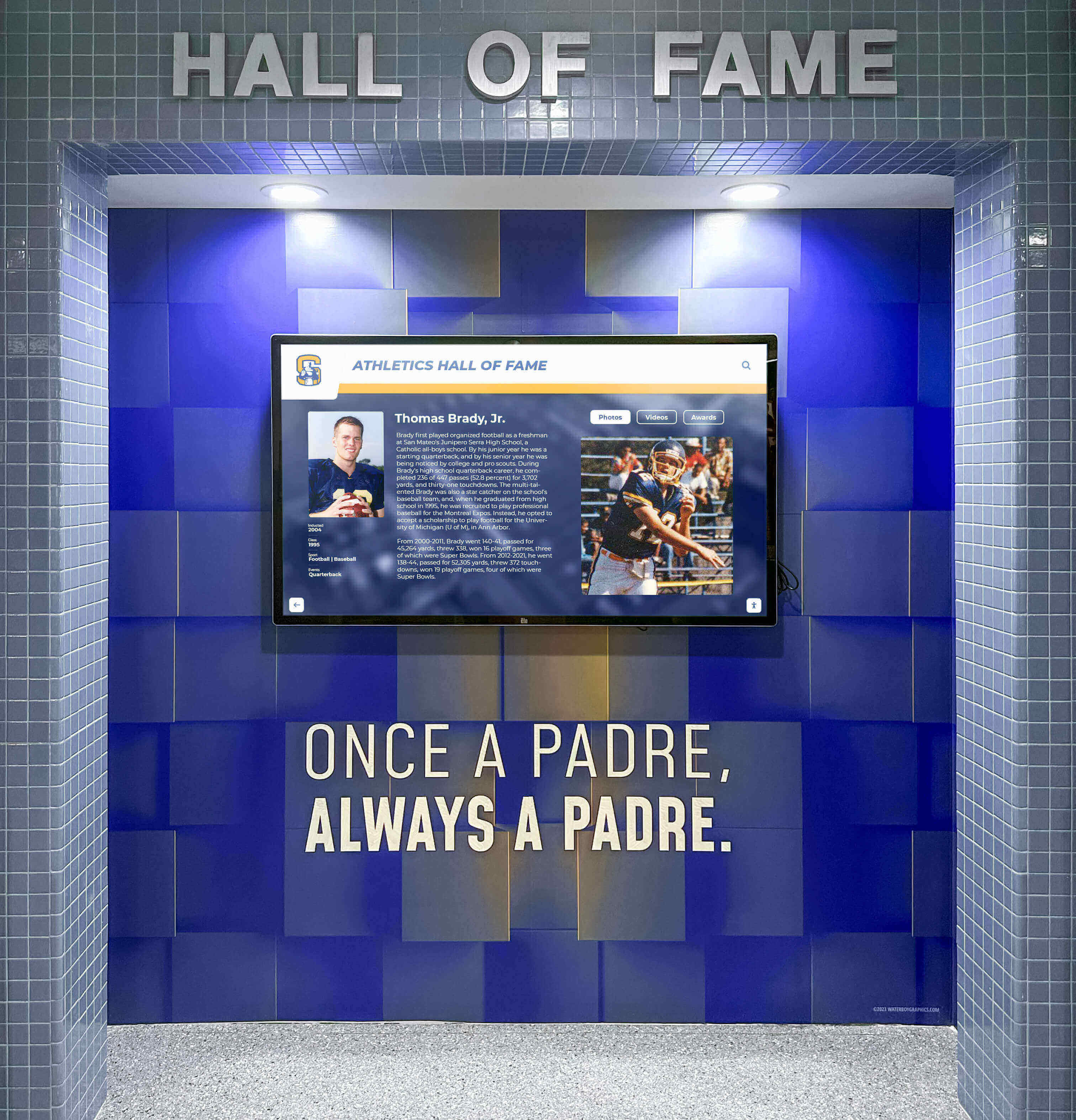
Modern NBA arenas feature sophisticated digital displays that honor franchise legends and championship history
The Evolution of NBA Arena Recognition: From Static Displays to Interactive Experiences
Understanding how NBA recognition has evolved provides context for why digital hall of fame displays represent the next chapter in honoring basketball excellence.
Traditional Recognition in NBA Arenas
For most of professional basketball history, NBA teams honored their legacy through several established methods:
Retired Jerseys and Banners: The most visible recognition, with numbered jerseys and championship banners suspended from arena ceilings creating visual testimony to franchise excellence. While symbolic and prominent, these provide minimal information beyond names and numbers.
Physical Trophy Cases: Glass-enclosed displays showcasing championship trophies, conference finals hardware, and individual awards earned by players and coaches. These create impressive visual presentations but offer limited context and fixed capacity.
Wall-Mounted Plaques: Bronze or engraved plaques commemorating Hall of Fame inductees, significant achievements, or historical milestones. These suffer from space constraints and static information that cannot expand or update.
Printed Programs and Media Guides: Historical information distributed through printed materials requiring regular updates and physical storage while reaching limited audiences.
While these traditional methods established important recognition foundations, they share significant limitations in the digital age:
- Limited storytelling capacity: Minimal space for biographical information, career statistics, or contextual narratives
- Fixed physical footprint: Recognition capacity constrained by available wall and display space
- Static content: Information cannot be updated, expanded, or corrected without physical replacement
- One-dimensional presentation: Text and static images without video, audio, or interactive elements
- Accessibility limitations: Only viewable by fans physically present in specific arena locations
- Maintenance challenges: Physical displays deteriorate over time requiring expensive restoration
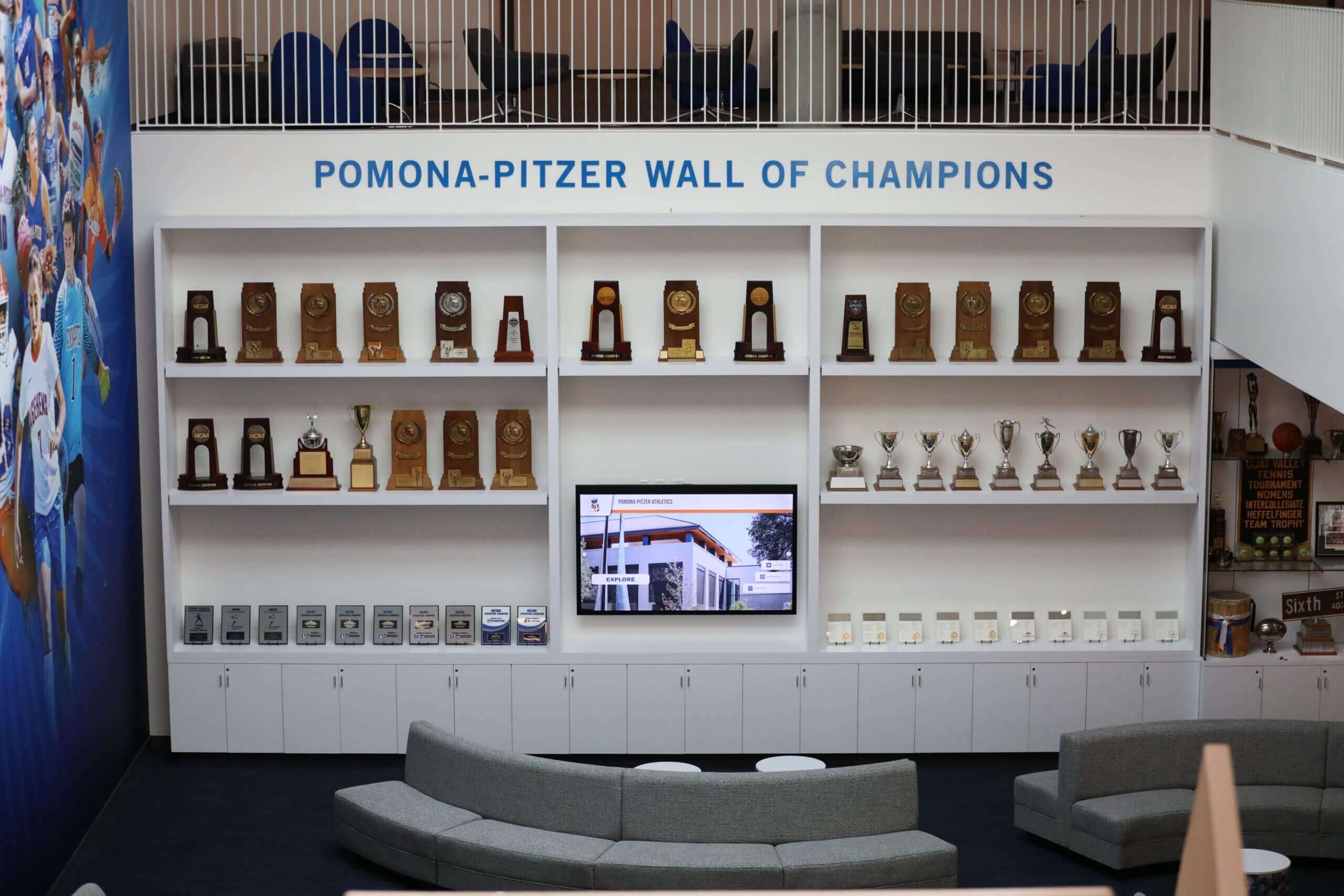
Traditional trophy displays provide visual impact but limited storytelling capabilities compared to digital systems
The Digital Transformation
Beginning in the 2010s, pioneering NBA franchises began experimenting with digital recognition technologies that addressed traditional limitations while creating new engagement opportunities:
First-Generation Digital Displays: Initial implementations primarily featured digital signage showing rotating historical photos and basic statistics—essentially electronic photo frames replacing static prints without genuine interactivity.
Interactive Kiosks: Second-wave installations introduced touchscreen capabilities allowing fans to browse player profiles, search statistics, and explore team history through self-directed navigation rather than passive viewing.
Integrated Multimedia Systems: Current state-of-the-art implementations incorporate comprehensive multimedia content including game footage, interview clips, statistical databases, and contextual storytelling that brings basketball history to life.
Connected Ecosystems: The most advanced systems integrate with team websites, mobile apps, social media, and arena operations creating cohesive digital experiences spanning multiple fan touchpoints.
This evolution reflects broader technological advancement while responding to changing fan expectations shaped by smartphones, streaming media, and interactive digital experiences that have become standard in daily life.
Why NBA Teams Are Investing in Digital Hall of Fame Displays
Professional sports franchises face intense competition for fan attention and engagement. Digital hall of fame systems deliver multiple strategic benefits justifying significant investment.
Enhanced Fan Engagement and Experience
Modern fans expect interactive, personalized experiences rather than passive observation. Digital hall of fame displays meet these expectations through:
Self-Directed Exploration: Fans can browse content based on personal interests—searching favorite players, exploring specific eras, comparing statistical leaders, or discovering lesser-known franchise history. This personalization creates deeper engagement than forced linear presentations.
Extended Dwell Time: Analytics from NBA teams implementing interactive displays show fans spend 5-8 minutes exploring digital recognition compared to 30-45 seconds viewing traditional plaques. This extended engagement creates stronger emotional connections with franchise history.
Shareable Moments: Social media integration enables fans to capture and share favorite content, extending recognition visibility far beyond physical arena boundaries. When fans post legendary moments or player profiles to Instagram, Twitter, or Facebook, franchises gain valuable organic promotion.
Multi-Generational Appeal: Digital systems accommodate different fan demographics—older fans exploring classic players from their youth, younger fans discovering franchise history for the first time, and families creating shared experiences across generations.
This engagement directly supports broader organizational goals around fan loyalty, attendance, merchandise sales, and long-term brand building.
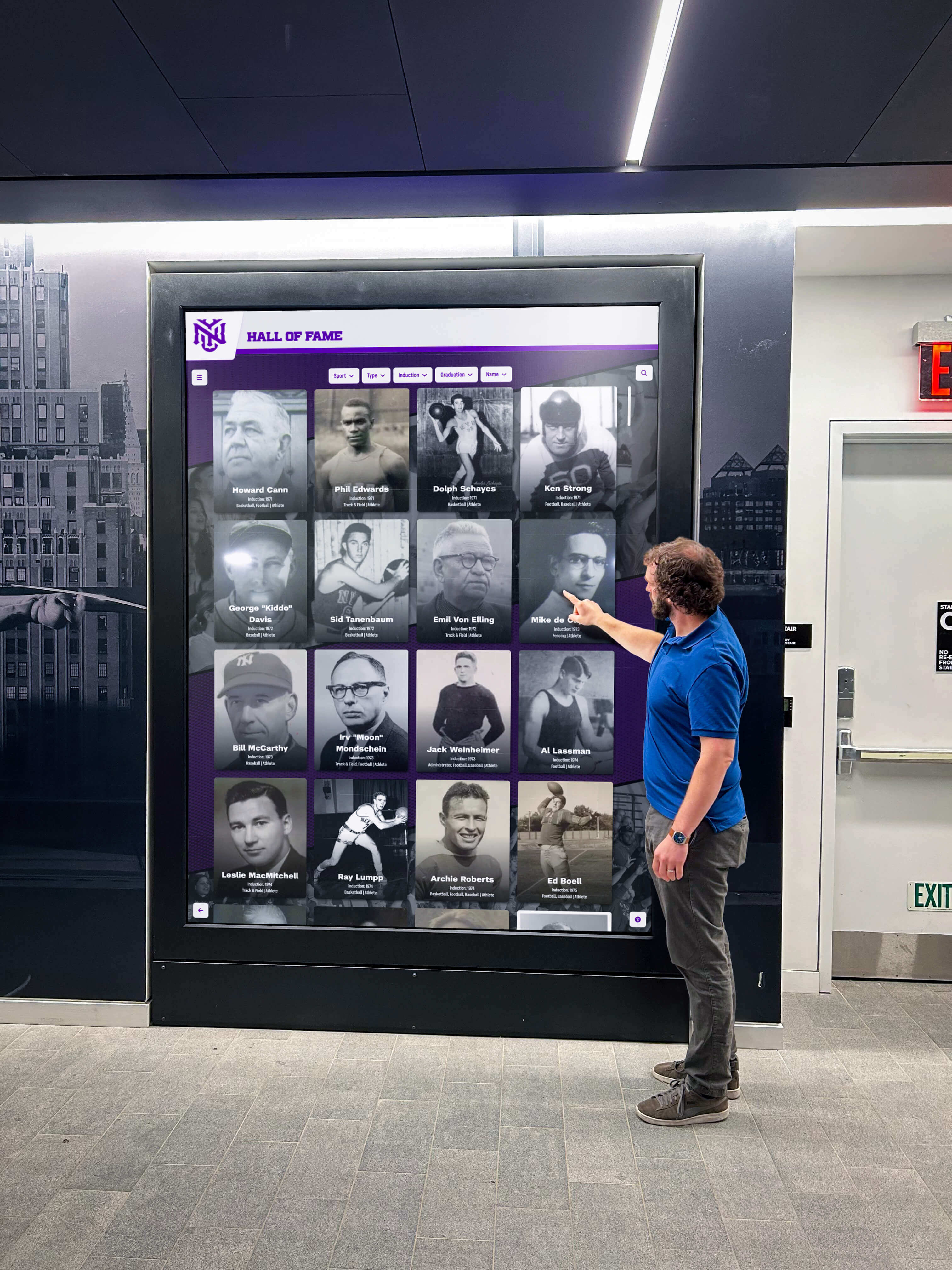
Interactive displays transform passive viewing into active exploration, dramatically increasing fan engagement time
Unlimited Recognition Capacity
Physical space represents a persistent constraint in traditional recognition programs. Digital systems eliminate this limitation:
Comprehensive Historical Coverage: Rather than selecting only the most elite players for limited physical space, digital platforms can recognize everyone who made significant contributions—all-stars, key role players, legendary coaches, significant contributors, and championship teams.
Continuous Expansion: As franchise history continues, digital systems accommodate unlimited additions without removing earlier recognition or requiring facility expansion. The 50th anniversary recognition doesn’t displace the 25th anniversary, and the 2035 champions won’t erase the 2024 team.
Multiple Recognition Categories: Organizations can create distinct recognition tiers—Hall of Fame, All-Star recognition, statistical leaders, championship teams, award winners, and special achievements—each receiving appropriate prominence without space competition.
Supporting Content: Beyond primary recognition, systems can include extensive supporting information including complete statistical archives, historical context about different eras, franchise timeline documentation, and connections between honored individuals.
Teams with long, distinguished histories particularly benefit from unlimited digital capacity. Franchises like the Celtics with 17 championships and countless legendary players can finally provide comprehensive recognition matching their storied legacy rather than difficult selections prioritizing some achievements over others due to physical constraints.
Organizations can explore similar approaches through digital recognition displays that eliminate space limitations while enhancing storytelling capabilities.
Dynamic Content and Real-Time Updates
Professional basketball constantly creates new stories worthy of recognition. Digital systems enable teams to celebrate achievements immediately:
Instant Recognition: When a player reaches a career milestone, achieves a franchise record, or earns individual honors, recognition can appear on digital displays within hours rather than requiring physical plaque manufacturing and installation taking weeks or months.
Evolving Narratives: Player profiles can be continuously enhanced—adding recent achievements to retired players’ legacies, updating career statistics for active players, or incorporating new multimedia content as it becomes available.
Flexible Presentation: Content can be adjusted seasonally, highlighting playoff legends during postseason play, showcasing draft picks during draft periods, or featuring holiday-themed content during special games.
Error Correction: When inaccuracies are identified, digital content can be corrected immediately rather than requiring expensive physical replacement of engraved plaques.
Responsive Storytelling: During special anniversary celebrations, tribute events, or memorial acknowledgments, relevant content can be prominently featured creating timely emotional connections.
This dynamic capability ensures recognition remains current and relevant rather than becoming historical artifact disconnected from present experience.
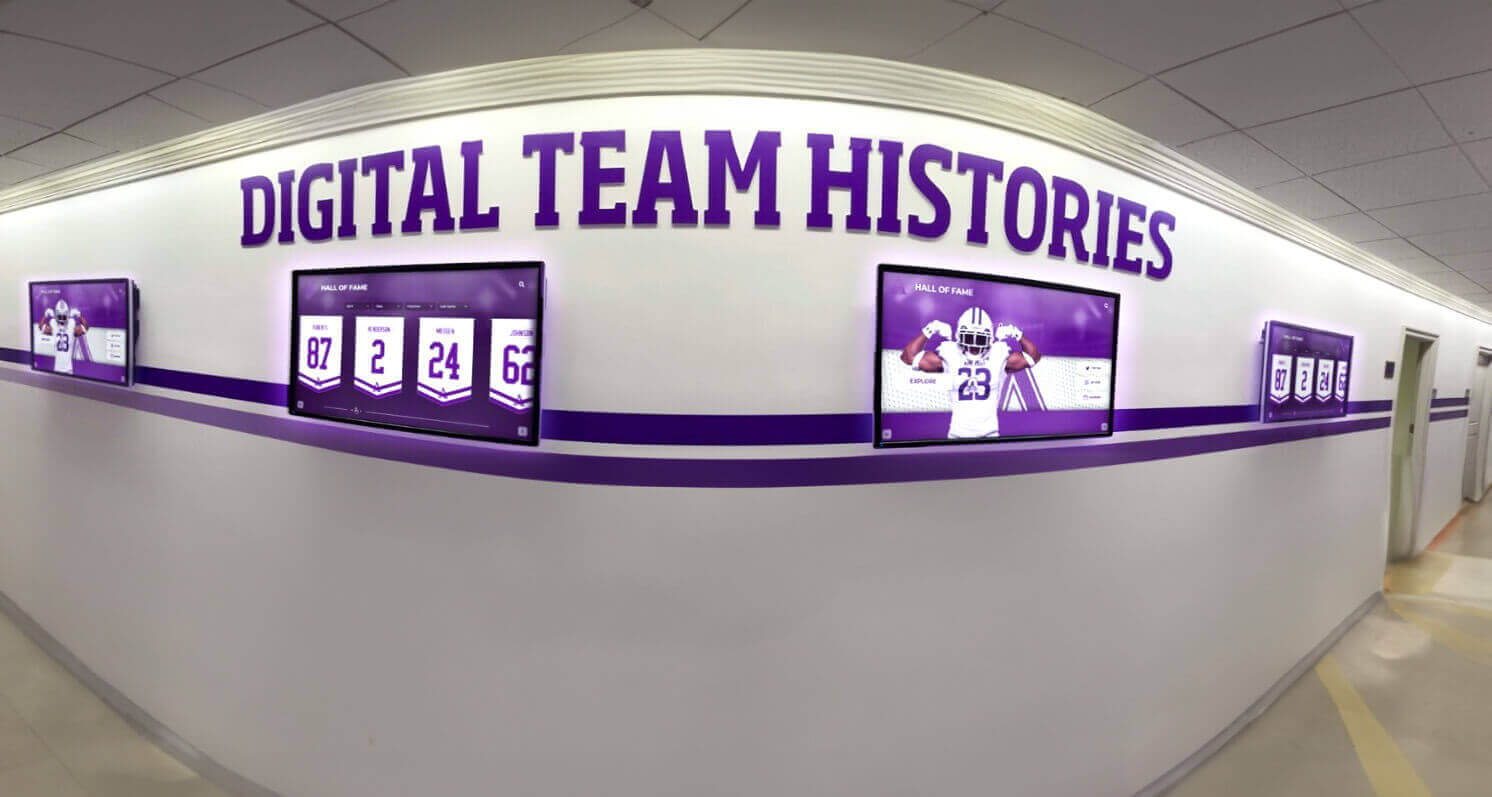
Multi-screen installations enable comprehensive storytelling across different aspects of franchise history
Rich Multimedia Storytelling
Perhaps the most transformative advantage of digital recognition is the ability to tell complete, compelling stories through diverse media:
Video Highlights: Game-winning shots, championship-clinching moments, record-breaking performances, and career-defining plays become core recognition elements. Seeing Michael Jordan’s flu game, Magic Johnson’s junior skyhook, or Ray Allen’s corner three creates emotional impact that static images cannot match.
Audio Integration: Original radio and television broadcast calls of legendary moments, player interviews reflecting on careers, coach testimonials about player impact, and arena sounds capturing game atmosphere add dimensions impossible in silent displays.
Statistical Visualization: Interactive charts showing career progressions, head-to-head comparisons between legendary players, franchise record evolution over time, and statistical context placing achievements within historical frameworks satisfy analytically-minded fans.
Historical Context: Detailed narratives explaining what made achievements significant—rule contexts, competitive landscapes, historical circumstances, and personal challenges overcome—transform raw statistics into meaningful human stories.
Personal Testimonials: First-person accounts from honored players sharing memories, challenges faced, lessons learned, and advice for young players create authentic connections between legends and current fans.
This multimedia richness transforms recognition from simple acknowledgment to comprehensive celebration that honors complete careers and captures what made individuals or teams special.
Professional sports venues can learn from fan experience centers that leverage similar technology to create immersive storytelling environments.
Key Features of Effective NBA Digital Hall of Fame Systems
Based on implementations across professional basketball and insights from leading sports technology providers, several features characterize the most effective digital recognition systems.
Intuitive Touchscreen Navigation
User experience determines whether fans engage deeply or abandon displays after superficial interaction:
Familiar Interface Patterns: The best systems employ navigation paradigms fans recognize from smartphones and tablets—swipe gestures, pinch-to-zoom, tap selections, and intuitive menu structures. When interfaces feel familiar, fans explore confidently without instruction.
Visual Hierarchy: Clear organizational structures help fans understand available content and locate interests quickly. Primary categories (Players, Teams, Championships, Records) should be immediately evident with logical sub-categories underneath.
Powerful Search Functionality: Robust search capabilities let fans jump directly to specific content—type a player name, search by jersey number, filter by position or era, or locate particular achievements. Search should be forgiving of spelling variations and provide helpful suggestions.
Progressive Disclosure: Present essential information immediately while making additional depth accessible through clear pathways. Player profiles might show photo, name, years played, and key statistics prominently, with career highlights, awards, and biographical details available through additional taps.
Responsive Performance: Touchscreens must respond instantly to interactions. Laggy or unresponsive interfaces frustrate users and discourage exploration. Commercial-grade hardware and optimized software ensure smooth experiences even during high-traffic periods.
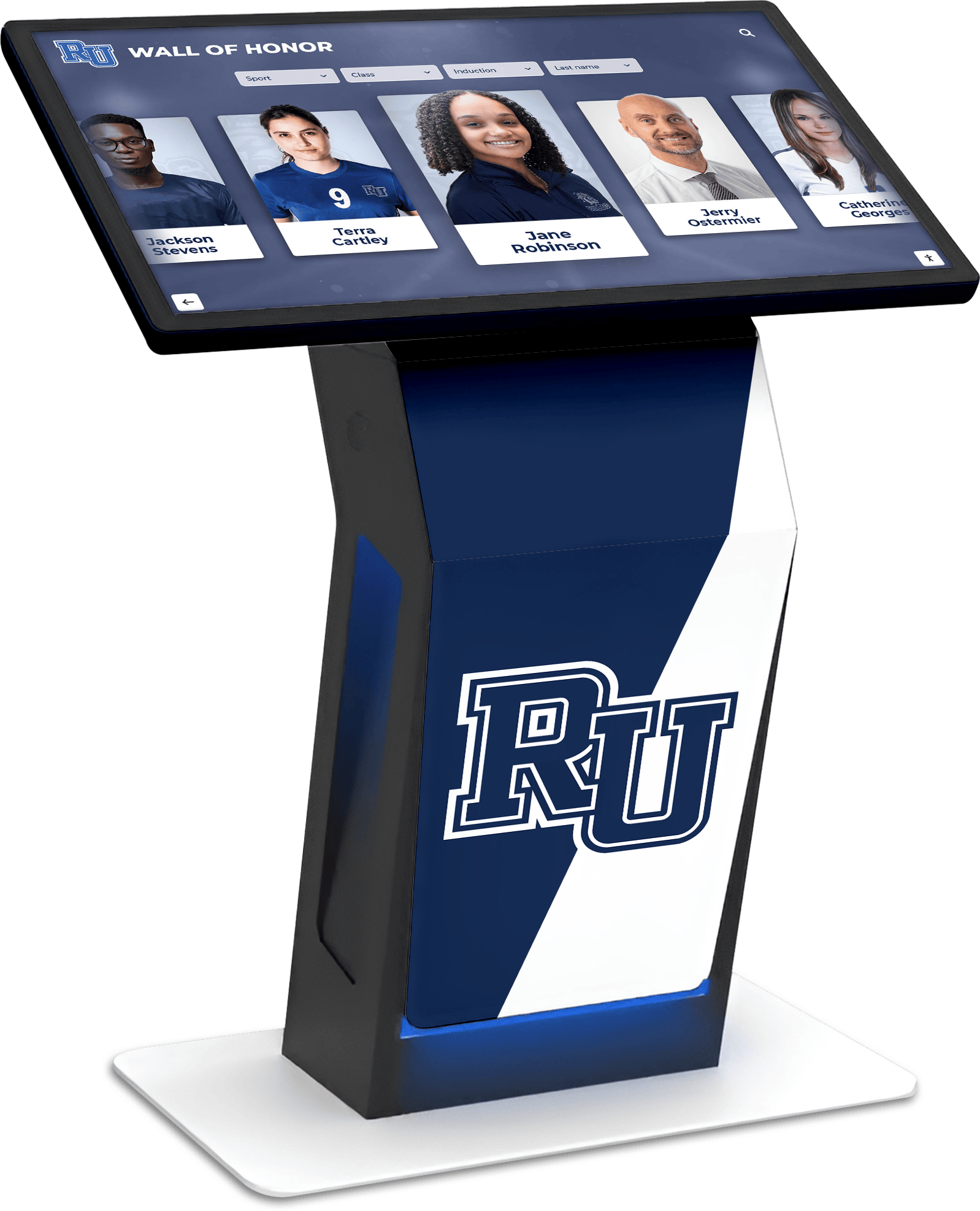
Freestanding kiosks provide 360-degree access and prominent visibility in high-traffic arena areas
Comprehensive Player Profiles
Individual player recognition forms the core of most hall of fame displays. Effective profiles include:
Essential Information: Full name, playing years, jersey number(s), position(s), and high-quality photographs including action shots and portraits from different career stages.
Career Statistics: Complete statistical records including season-by-season breakdowns, career totals and averages, franchise ranking in key categories, and league ranking among all-time greats.
Achievements and Honors: Championship wins, All-Star selections, All-NBA teams, league awards (MVP, Defensive Player of Year, Sixth Man), franchise records held, and Hall of Fame induction status.
Career Narrative: Biographical storytelling covering path to NBA (college, international, draft position), career trajectory highlighting key seasons and turning points, playing style and role on teams, impact on franchise success, and post-playing career accomplishments.
Multimedia Content: Video highlights showcasing signature moves and memorable performances, audio interviews from the player reflecting on career, quotes from teammates and coaches about player’s impact, and historical game footage providing period context.
Context and Comparison: Era-specific information explaining rule differences and league evolution, statistical comparisons with contemporary players and all-time greats, team composition showing supporting casts, and franchise situation during player’s tenure.
This comprehensive approach honors complete careers rather than reducing legendary players to name, number, and statistics.
Championship Team Recognition
Beyond individual players, championships represent franchise pinnacles worthy of extensive celebration:
Team Overview: Championship year, final record, playoff run summary, coaching staff, key roster members, and defining characteristics of the team’s identity and playing style.
Roster Profiles: Recognition of every player who contributed to championships, not just stars, with playing time, statistical contributions, role descriptions, and post-career updates showing what became of championship teammates.
Season Journey: Month-by-month narratives showing how teams developed, key regular season moments that prepared teams for playoff success, trade acquisitions or lineup changes that proved pivotal, and challenges overcome during championship runs.
Playoff Documentation: Complete playoff bracket showing path to championship, game-by-game results with scoring summaries, series turning points and defining performances, and championship-clinching game comprehensive coverage.
Media and Cultural Context: Contemporary newspaper headlines and articles, television broadcast clips, fan reactions and celebrations, and cultural impact of championship within broader community history.
This thoroughness ensures championship teams receive recognition matching their significance rather than being reduced to banner and trophy.
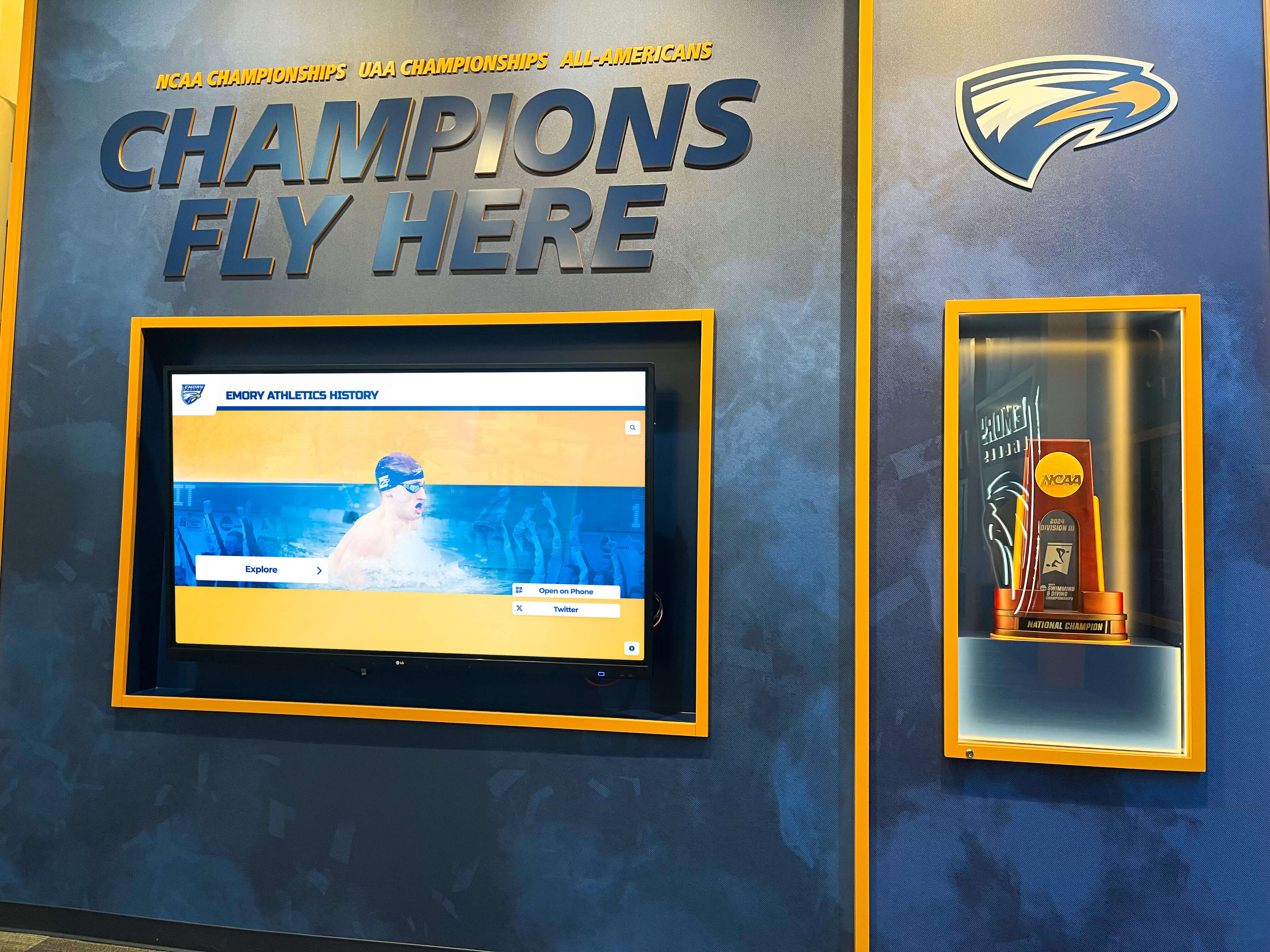
Comprehensive championship displays celebrate complete team achievements beyond single trophies
Statistical Leaders and Records
Basketball fans appreciate statistical documentation. Digital systems excel at presenting statistical information:
Current Record Holders: Real-time display of franchise records in all major statistical categories—points, rebounds, assists, steals, blocks, three-pointers, and advanced metrics.
Historical Progression: Visualizations showing how records evolved over franchise history, who held records previously, and by what margins current records exceed previous marks.
Single-Game Records: Recognition of extraordinary individual performances including franchise records for points, rebounds, assists, and other categories in single games.
Career Leaders: Comprehensive lists showing top performers in all statistical categories across franchise history with comparative statistics enabling era-spanning analysis.
Season Records: Best single-season performances in all categories recognizing both individual excellence and historically great seasons.
Interactive Comparisons: Tools allowing fans to compare statistical leaders across different eras, adjust for pace and rule differences, and view side-by-side career trajectories.
These statistical features satisfy analytically-oriented fans while providing context for evaluating greatness across different eras.
Mobile and Web Integration
Physical displays represent only one component of comprehensive recognition ecosystems:
Mobile Applications: Smartphone apps providing remote access to all recognition content, enhanced search and filtering capabilities, personal favorites and bookmarking functions, push notifications about new additions, and location-aware content highlighting nearby physical displays.
Responsive Websites: Full-featured web platforms making recognition accessible from any internet-connected device, accommodating fans unable to attend games in person, supporting research for media and historians, and providing global visibility for franchise heritage.
Social Media Integration: One-tap sharing of profiles and achievements to Facebook, Twitter, Instagram, and other platforms, automatically generated social graphics maintaining brand consistency, hashtag integration for tracking engagement, and celebration of daily historical milestones engaging followers year-round.
QR Code Connections: Physical signage featuring QR codes linking to expanded digital content, enabling personal devices to access information not displayable on public screens, and bridging physical and digital experiences seamlessly.
This integrated approach ensures recognition extends far beyond arena walls, engaging global fan communities and maximizing institutional investment value.
Technical Implementation Considerations for NBA Arenas
Professional sports venues present unique technical challenges requiring careful planning and specialized solutions.
Hardware Requirements
NBA arenas demand enterprise-grade equipment meeting rigorous operational standards:
Commercial Display Panels: Large-format screens (55"-86") rated for 24/7 continuous operation, high brightness (700+ nits) ensuring visibility in well-lit concourses and lobbies, anti-glare coatings and treatments reducing reflections, and extended warranties covering commercial use rather than residential applications.
Professional Touchscreen Technology: Projected capacitive (PCAP) touch systems supporting multi-touch gestures and smartphone-like responsiveness, vandal-resistant construction protecting against accidental damage in high-traffic environments, tempered glass overlays providing scratch resistance, and rapid touch response times (10ms or less) ensuring smooth interactions.
Robust Computing Infrastructure: Server-grade hardware providing necessary processing power, redundant storage systems protecting against data loss, enterprise network connectivity ensuring reliable operation, and remote management capabilities enabling troubleshooting without physical access.
Mounting and Installation: Custom enclosures integrating displays with architectural elements, secure mounting systems preventing theft or vandalism, cable management maintaining clean professional appearance, and accessibility compliance meeting ADA requirements for height and approach space.
Environmental Considerations: Adequate ventilation and cooling preventing overheating in enclosed installations, power conditioning protecting against electrical issues, surge protection safeguarding expensive equipment, and climate control addressing temperature and humidity in various venue locations.
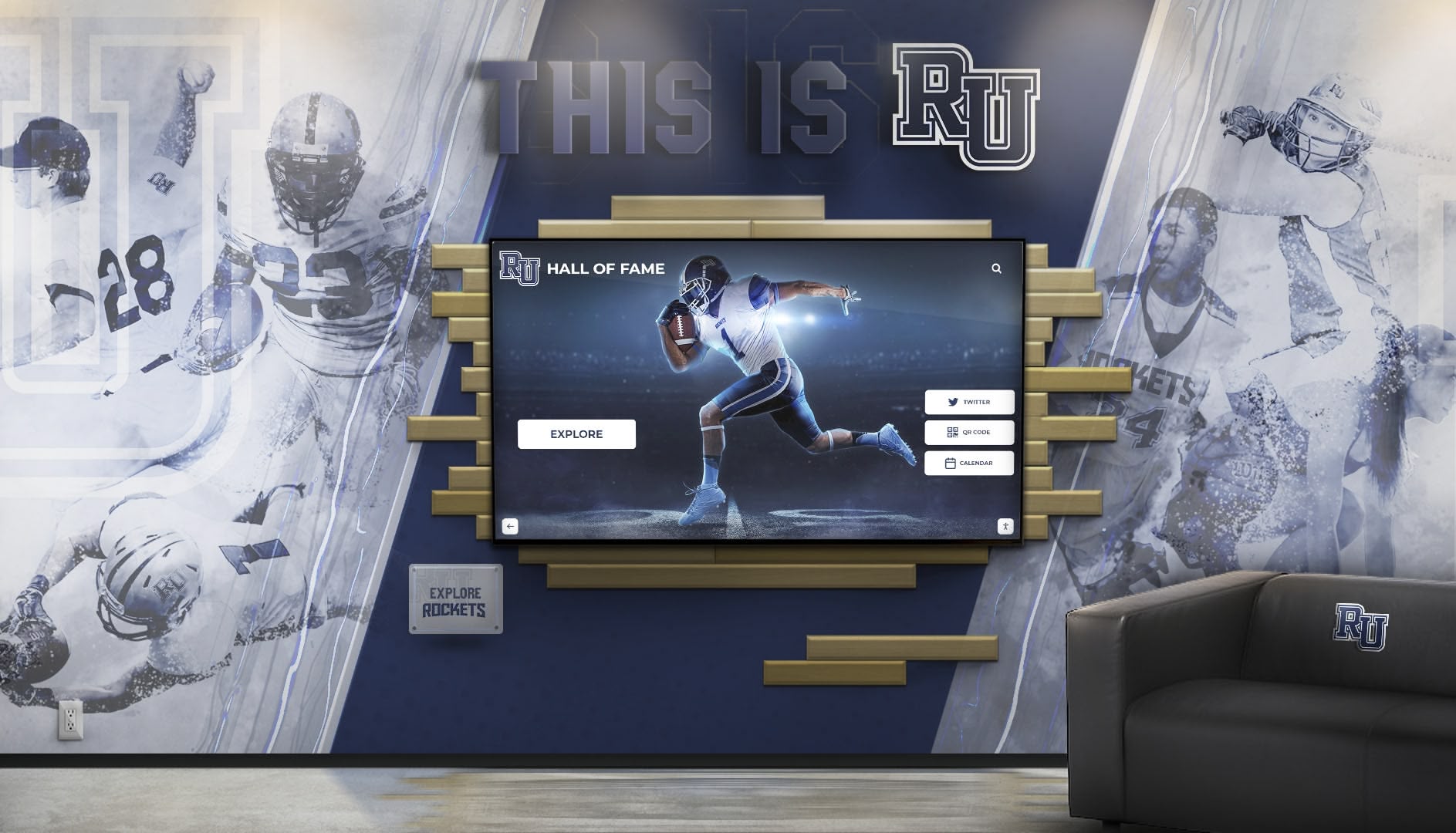
Professional installations integrate recognition displays seamlessly with venue architecture and branding
Software Platform Requirements
Content management systems must meet demanding operational needs:
Scalability: Architecture supporting thousands of profiles without performance degradation, multimedia asset management handling extensive video and photo libraries, concurrent user support accommodating multiple simultaneous interactions, and growth capacity as recognition expands over decades.
Content Management Flexibility: User-friendly interfaces enabling non-technical staff to add and update content, role-based access control allowing appropriate permissions for different team members, workflow systems for content review and approval processes, and version control tracking changes and enabling rollbacks if needed.
Design Customization: Full branding control reflecting team colors, logos, and visual identity, customizable templates accommodating different content types, layout flexibility adapting to various screen sizes and orientations, and theming capabilities supporting special events or seasonal variations.
Robust Search and Filtering: Full-text search across all content including names, statistics, and biographical information, advanced filtering by multiple criteria simultaneously, intelligent suggestions and autocomplete, and saved searches for common queries.
Analytics and Reporting: Usage tracking showing interaction patterns and popular content, search query analysis revealing what fans seek most frequently, session duration metrics indicating engagement depth, and exportable reports supporting continuous improvement efforts.
Integration Capabilities: API access connecting with team databases and systems, social media platform integration for content sharing, mobile app synchronization ensuring consistency across platforms, and third-party service connectivity supporting advanced features.
Organizations seeking similar capabilities can learn from digital recognition board platforms purpose-built for sports recognition applications.
Content Development Process
Implementing comprehensive recognition requires systematic content development:
Historical Research: Archive mining identifying all eligible recognition candidates, statistical verification ensuring accuracy, photo and video rights clearance for legal multimedia use, and biographical research providing context beyond statistics.
Media Production: Professional photography of living honorees for contemporary portraits, video interview recording with players, coaches, and other contributors, highlight reel editing showcasing career-defining moments, and audio production for voiceovers and historical broadcasts.
Writing and Editing: Biographical narrative composition telling compelling career stories, statistical compilation and verification, contextual information explaining era-specific circumstances, and comprehensive fact-checking ensuring accuracy throughout.
Quality Assurance: Technical testing verifying all functionality works correctly, content review by subject matter experts confirming accuracy, accessibility testing ensuring compliance with disability accommodation requirements, and user experience testing with representative fan groups.
Ongoing Maintenance: Regular updates adding recent achievements and new honorees, continuous fact-checking and error correction, seasonal content adjustments highlighting timely recognition, and technical updates maintaining system currency.
This systematic approach ensures high-quality recognition worthy of professional venues and the legends being honored.
Case Studies: NBA Teams Leading Digital Recognition
While specific implementation details vary, several NBA franchises have established recognition benchmarks worth examining.
Boston Celtics: Celebrating Unmatched Championship Legacy
With 17 NBA championships and countless Hall of Famers, the Celtics face unique recognition challenges addressed through comprehensive digital systems. Their approach includes:
Championship Era Organization: Content structured around distinct dynasty periods—the Russell era (1957-1969), the Bird era (1981-1986), and the Pierce-Garnett era (2008), helping fans understand championship context within different team constructions and basketball eras.
Retired Number Recognition: Interactive profiles for all 24 retired numbers (the most in NBA) providing complete career documentation that hanging jerseys alone cannot convey, including players’ impacts on championship success and franchise development.
Statistical Leadership: Comprehensive documentation of franchise statistical leaders across 75+ years, with era adjustments helping fans compare players from radically different basketball periods when rules, pace, and playing styles varied dramatically.
Rivalry Context: Recognition of Celtics-Lakers rivalry through head-to-head championship documentation, legendary player matchups, and defining moments in basketball’s most storied franchise competition.
This comprehensive approach honors the NBA’s most successful franchise appropriately while making decades of history accessible to younger fans discovering Celtics legacy for the first time.
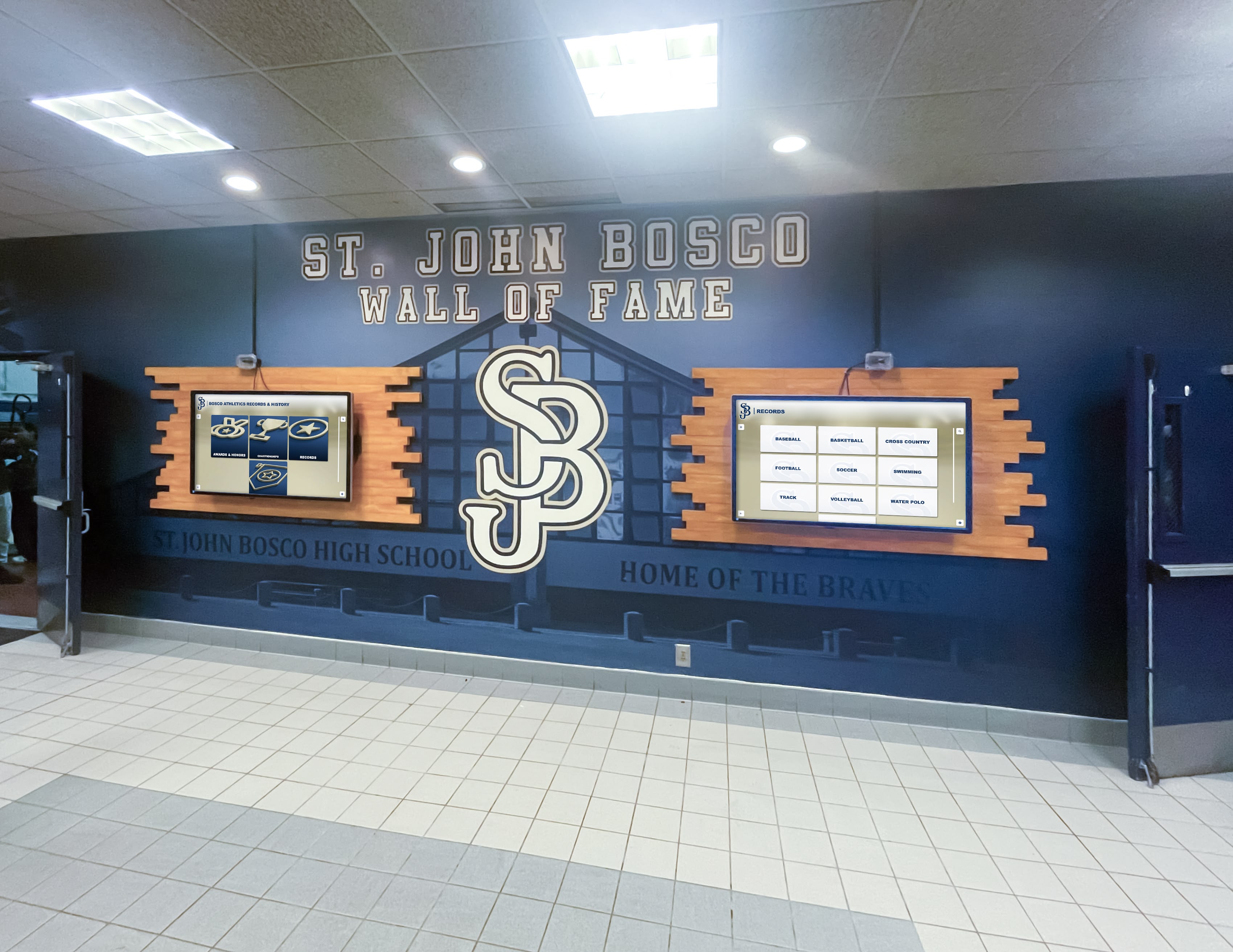
Multiple display installations enable extensive content presentation across different recognition categories
Los Angeles Lakers: Honoring Showtime and Beyond
The Lakers’ legendary history includes championships across multiple eras and arguably basketball’s most recognizable roster of superstars. Their digital recognition emphasizes:
Superstar Celebration: Comprehensive profiles of franchise icons including Magic Johnson, Kareem Abdul-Jabbar, Shaquille O’Neal, Kobe Bryant, and LeBron James, with multimedia content capturing what made each player special and how they shaped franchise identity.
Championship Dynasty Documentation: Detailed coverage of multiple championship runs from 1980s Showtime to early 2000s Shaq-Kobe dominance to 2020 pandemic-era title, showing franchise’s consistent excellence across generations.
Hollywood Connection: Content acknowledging Lakers’ unique position in entertainment capital, celebrity fan culture, and franchise’s broader cultural impact beyond basketball.
Staples Center Integration: Recognition displays integrated throughout arena (now Crypto.com Arena) ensuring fans encounter franchise history throughout venue experience rather than isolated hall of fame location.
The Lakers approach demonstrates how digital systems can honor legendary franchises while maintaining engagement with current era rather than becoming museum-like displays disconnected from present teams.
Chicago Bulls: The Jordan Era and Beyond
The Bulls face distinctive recognition challenges—a franchise defined largely by one player’s unprecedented dominance during the 1990s dynasty. Their digital systems address this through:
Dynasty Deep Dive: Extensive coverage of six championship teams (1991, 1992, 1993, 1996, 1997, 1998) celebrating complete rosters and recognizing role players whose contributions enabled championships, not just Jordan and Pippen.
Historical Context: Recognition of pre-dynasty players and moments including franchise founding, early stars, and building blocks that preceded championship era, ensuring complete franchise history rather than exclusive dynasty focus.
Post-Dynasty Bridge: Coverage of post-Jordan era including Derrick Rose’s MVP season and subsequent teams, demonstrating ongoing franchise commitment to excellence beyond 1990s.
Basketball Impact Documentation: Content exploring Bulls’ influence on global basketball, fashion culture, marketing innovation, and sport’s worldwide expansion during dynasty years.
This balanced approach honors the Jordan legacy appropriately while ensuring recognition encompasses complete franchise history and ongoing organizational narrative.
Benefits for Basketball Programs at All Levels
While this guide focuses on NBA implementation, digital hall of fame technology benefits basketball programs across all competitive levels.
College Basketball Programs
University basketball programs leverage similar technology for:
Recruiting Impact: Campus visit displays showcasing players who competed collegiately before successful professional careers, demonstrating program’s player development capabilities and NBA pipeline credibility to prospects considering scholarship offers.
Alumni Engagement: Recognition connecting former players with current program, facilitating mentorship relationships, and creating giving opportunities around basketball-specific priorities such as facility upgrades or scholarship endowments.
Conference Championship Documentation: Comprehensive celebration of tournament success, regular season titles, and NCAA tournament runs creating institutional pride and historical continuity across coaching changes.
Academic Achievement Integration: Recognition celebrating players’ academic success alongside athletic achievement, highlighting graduation rates and post-basketball career accomplishments demonstrating program’s holistic development commitment.
Organizations can explore approaches through Division I athletics digital recognition systems and Division II athletics recognition tailored to collegiate contexts.
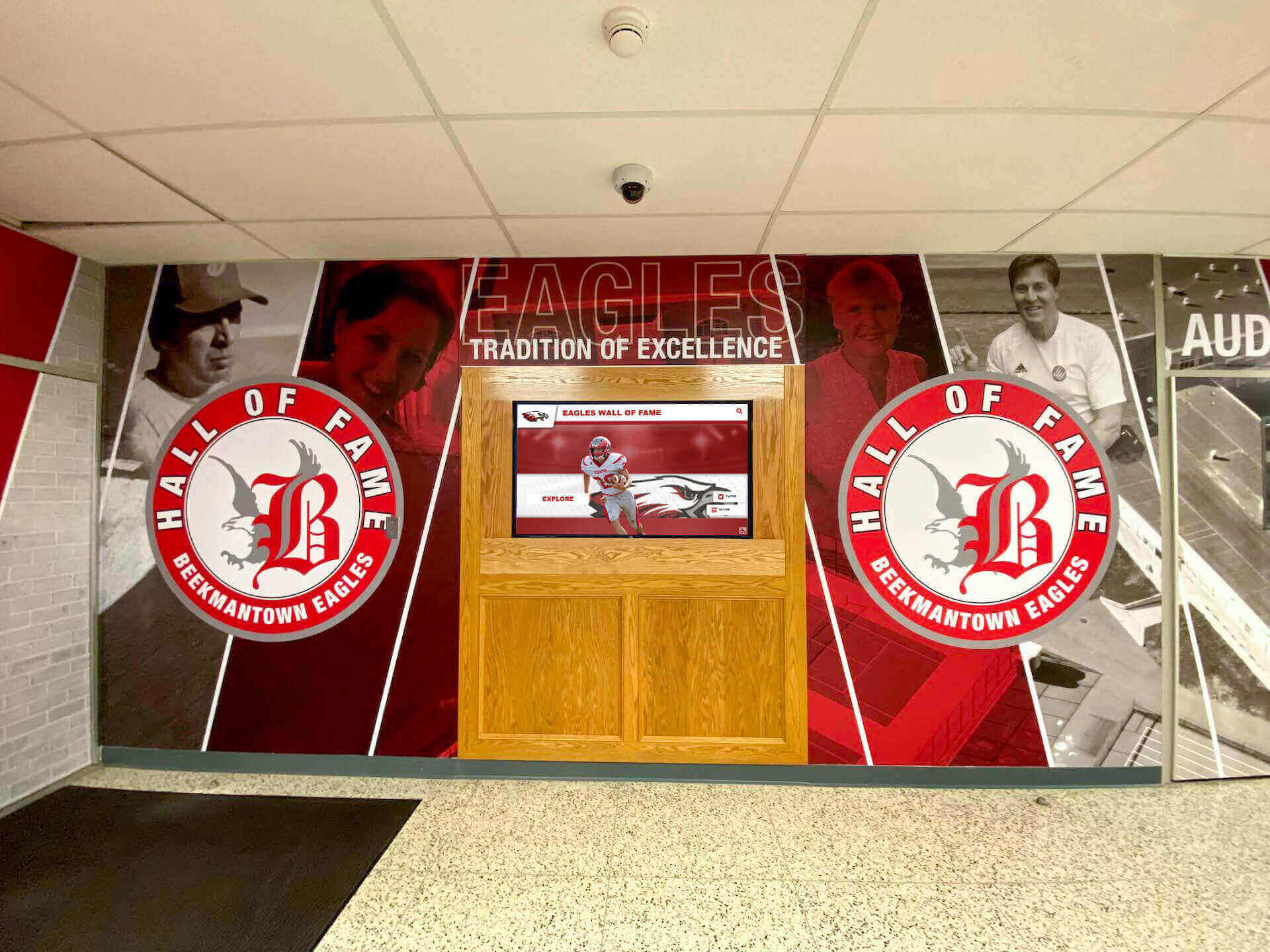
College programs create impactful recognition combining architectural elements with digital technology
High School Basketball Programs
High schools with strong basketball traditions increasingly implement recognition displays:
Local Legend Celebration: Recognition of players who achieved collegiate or professional success, coaches who built program excellence, and championship teams that defined eras in school and community history.
Multi-Sport Integration: Basketball recognition within comprehensive athletic displays honoring achievement across all sports, ensuring balanced recognition while acknowledging basketball’s prominence in many communities.
College Signing Recognition: Systematic documentation of college scholarship recipients, intended majors, scholarship types, and colleges chosen, demonstrating program’s success preparing players for next level.
Community Connection: Recognition extending beyond athletics to include coaches, boosters, and community supporters whose contributions enabled program success, acknowledging basketball’s role in broader community identity.
High schools can learn from high school basketball hall of fame approaches designed specifically for secondary school contexts and budgets.
Youth Basketball Organizations
AAU programs, recreational leagues, and youth basketball organizations find value in recognition systems:
Season Documentation: Year-by-year team photos, rosters, records, and achievements creating continuous organizational memory as players progress through age groups.
Volunteer Recognition: Acknowledgment of coaches, referees, board members, and volunteers whose dedication enables youth basketball opportunities in communities.
Alumni Tracking: Following players’ progression to higher levels, celebrating college signings and professional achievements, and maintaining organizational pride in player development success.
Sponsorship Recognition: Appropriate acknowledgment of financial supporters enabling program operation, equipment purchases, facility access, and tournament participation.
Digital systems scale to organizations of any size, from NBA franchises to community recreation leagues, with appropriate feature sets and investment levels matching organizational needs and resources.
Implementation Planning for Basketball Recognition Systems
Organizations considering digital hall of fame displays should follow systematic planning processes maximizing success probability.
Needs Assessment and Goal Definition
Begin with clear understanding of recognition objectives:
Primary Purposes: Determine whether recognition primarily serves fan engagement, alumni relations, player recruitment, historical preservation, brand building, or multiple purposes simultaneously. Different priorities suggest different feature emphases.
Target Audiences: Identify primary users—season ticket holders, casual fans, recruits and families, alumni, media, or general public. User demographics influence content depth, interface complexity, and multimedia balance.
Content Scope: Define recognition boundaries—Hall of Fame only, all-time greats, everyone who played, statistical leaders, coaches and contributors, or comprehensive organizational history. Scope decisions affect content development requirements and ongoing maintenance.
Success Metrics: Establish measurable objectives such as engagement time targets, usage volume goals, social media sharing benchmarks, or user satisfaction scores enabling objective success assessment.
Budget Parameters: Understand available financial resources including initial capital investment, ongoing operational costs, content development budgets, and maintenance reserves. Realistic budgets prevent underinvestment undermining impact.
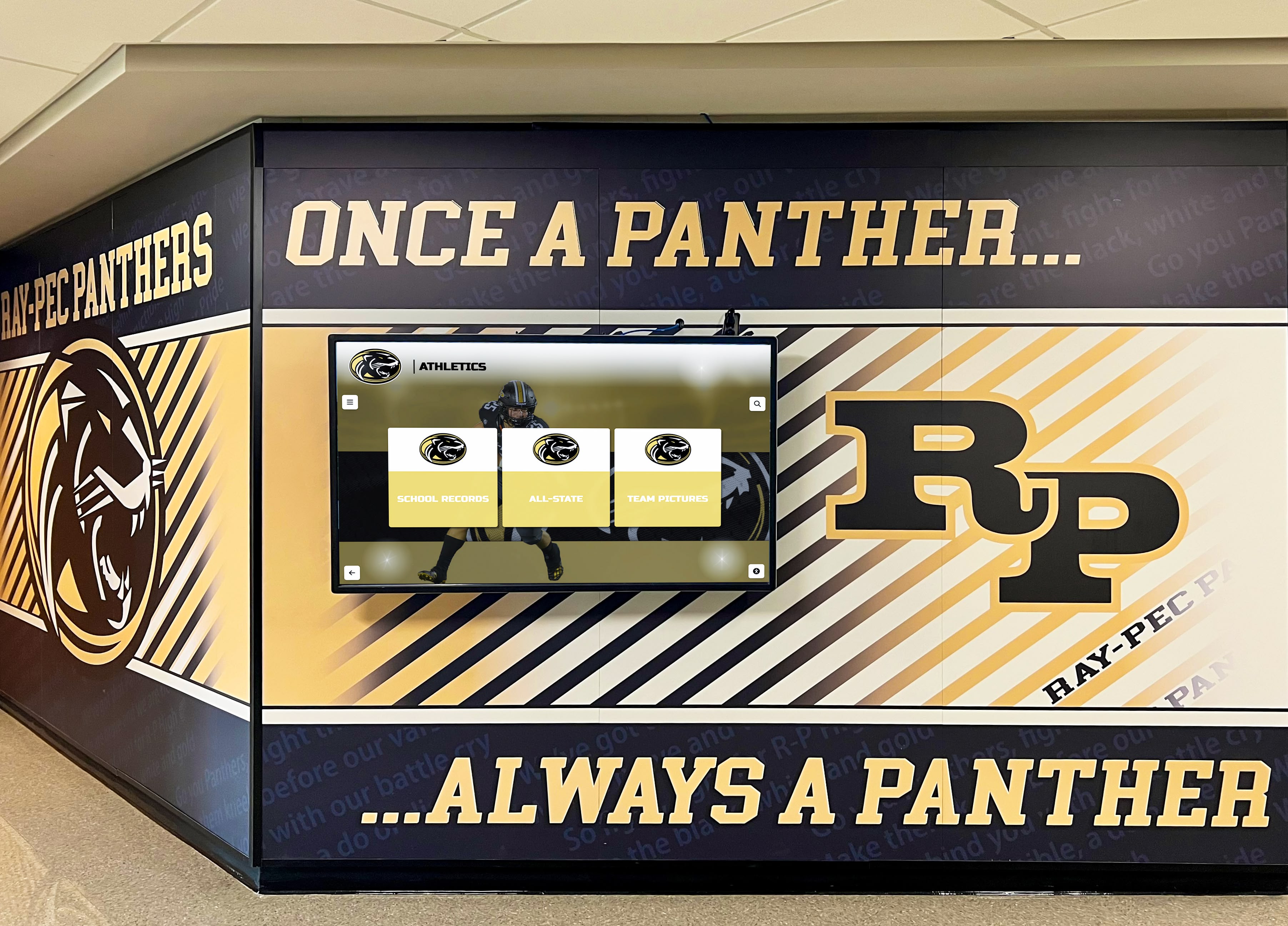
Hybrid approaches combine traditional artistic elements with modern digital technology for comprehensive recognition
Technology Selection
Evaluate platform options systematically:
Purpose-Built vs. General Solutions: Decide between sports-specific recognition platforms offering templates and features tailored to athletic applications versus general digital signage systems requiring extensive customization. Purpose-built solutions typically deliver better results for recognition-focused applications.
Cloud vs. Local Systems: Choose between cloud-based platforms managed remotely with automatic updates versus local server installations providing more control but requiring in-house technical expertise. Most organizations benefit from cloud approaches reducing IT burden.
Vendor Evaluation: Assess providers based on sports recognition experience, client reference quality, platform functionality, content management ease, support responsiveness, and long-term viability. Established vendors with extensive installations provide better risk mitigation.
Total Cost Analysis: Calculate complete ownership costs including hardware acquisition, software licensing, installation and configuration, initial content development, ongoing maintenance, and eventual replacement rather than focusing only on upfront investment.
Integration Requirements: Ensure platforms connect with existing systems including ticketing databases, team websites, mobile apps, CRM platforms, and social media accounts creating cohesive digital ecosystems.
Solutions like Rocket Alumni Solutions provide purpose-built recognition platforms specifically designed for athletic applications, offering basketball-specific templates, statistical presentation optimized for sports, and features addressing common recognition needs across professional, collegiate, and high school programs.
Content Strategy Development
Plan comprehensive content approaches before production begins:
Recognition Criteria: Establish clear, defensible guidelines determining recognition eligibility, ensuring consistency and fairness in selection while accommodating future additions as criteria evolve.
Content Depth Standards: Define minimum information requirements for different recognition levels—Hall of Fame profiles might include extensive multimedia while statistical leaders require less comprehensive treatment.
Research Methodology: Develop systematic approaches for gathering biographical information, verifying statistics, securing photo and video rights, and fact-checking ensuring content accuracy.
Production Workflow: Create efficient processes for content development including research assignment, writing and editing, media production, quality assurance review, and publication approval.
Update Procedures: Establish ongoing maintenance protocols determining update frequency, responsibility assignment, and procedures for new recognition additions ensuring systems remain current rather than becoming stale.
Historical Priorities: For organizations with extensive history, determine phased content development prioritizing recent recognition with comprehensive coverage before systematic historical content addition.
This strategic foundation prevents implementation challenges while ensuring delivered systems meet organizational needs effectively.
Cost Considerations and Return on Investment
Understanding financial implications helps organizations make informed decisions and secure necessary funding.
Implementation Investment Ranges
Digital hall of fame system costs vary based on scope, features, and venue requirements:
Entry-Level Systems ($15,000-$35,000): Single display installation with basic interactive functionality, cloud-based content management, starter content for 50-100 profiles, standard mounting and installation, and first-year software licensing. Suitable for small programs or pilot implementations.
Mid-Range Professional Systems ($50,000-$150,000): Multi-display installation covering multiple venue locations, advanced touchscreen technology with responsive performance, comprehensive content development for 200-500 profiles, custom design matching organizational branding, professional installation with architectural integration, and expanded software features including advanced analytics and social integration.
Enterprise NBA-Level Systems ($200,000-$1,000,000+): Comprehensive venue-wide recognition networks with coordinated displays across concourses, lobbies, and special areas; extensive multimedia production including original video content; complete historical research and content development for all recognition categories; custom software development for unique requirements; premium hardware throughout; and integration with broader venue technology ecosystems.
These ranges reflect complete implementation including hardware, software, content, installation, and first-year operation. Ongoing costs typically represent 10-15% of initial investment annually for software licensing, content updates, and system maintenance.
Return on Investment
Digital recognition delivers value across multiple dimensions:
Fan Experience Enhancement: Improved visitor satisfaction, extended venue dwell time, increased concession and merchandise exposure opportunities, and differentiated game day experience creating competitive advantage versus entertainment alternatives.
Marketing and Brand Value: Enhanced organizational reputation, compelling content for marketing materials and social media, press coverage of recognition launches and special additions, and brand differentiation within competitive sports and entertainment market.
Alumni Engagement: Increased alumni connection with organization, improved giving participation from former players and supporters, volunteer involvement opportunities, and mentor relationships benefiting current players.
Recruitment Advantage: Facility enhancement impressing recruits during visits, demonstration of organizational commitment to honoring achievement, alumni success documentation supporting recruiting narratives, and competitive differentiation versus programs lacking similar recognition.
Historical Preservation: Permanent digital archiving protecting historical content against physical deterioration, organizational memory preservation across personnel changes, and research resource supporting media, historians, and future recognition development.
Operational Efficiency: Reduced long-term recognition costs versus traditional physical displays, simplified update processes requiring minimal staff time, elimination of physical maintenance and periodic replacement, and content reuse across multiple platforms maximizing development investment.
While challenging to quantify precisely, many organizations report that recognition systems deliver measurable improvements in key performance indicators including fan satisfaction scores, social media engagement metrics, alumni participation rates, and facility tour feedback from recruits.
Future Trends in Basketball Recognition Technology
As technology continues advancing, several emerging capabilities will likely influence next-generation recognition systems.
Augmented Reality Enhancements
AR technology could enable:
Virtual Player Appearances: Smartphone apps using AR to display life-size 3D player models in arena concourses, allowing fans to pose with virtual representations of favorite legends for photos.
Enhanced Statistics Visualization: Pointing devices at displays to access additional statistical depth, career timeline visualization, or comparative analysis not shown on primary screens.
Spatial Historical Mapping: Location-aware AR showing historical moments that occurred at specific arena locations—“Championship-clinching shot happened here” overlays marking exact court positions where legendary plays occurred.
Interactive Skill Demonstrations: AR applications showing proper technique for signature moves from legendary players, allowing fans to practice and compare their attempts against professional standards.
Artificial Intelligence Integration
AI capabilities might include:
Personalized Content Recommendations: Systems learning user preferences and suggesting relevant content based on interaction history, search patterns, and expressed interests.
Natural Language Queries: Voice interaction enabling fans to ask questions conversationally—“Who was the leading scorer in the 1986 championship run?"—receiving spoken answers with supporting visual content.
Automated Content Generation: AI systems generating written summaries of careers, championship seasons, or statistical analyses based on structured data, accelerating content production while maintaining quality.
Predictive Analytics: Statistical modeling comparing current players with historical greats, projecting career trajectories, and identifying meaningful statistical patterns across franchise history.
Enhanced Social Integration
Future systems may offer:
Live Social Feeds: Real-time display of social media posts from fans exploring recognition, creating community conversation around franchise history.
Fan Commentary: Moderated user-contributed content allowing fans to share personal memories associated with players or moments being recognized.
Virtual Communities: Online forums and discussion platforms connecting fans around shared interests in specific eras, players, or teams.
Gamification Elements: Achievement systems rewarding fans for content exploration, trivia competitions testing basketball history knowledge, and leaderboards fostering friendly competition around engagement.
Blockchain and NFT Applications
Emerging technology could enable:
Digital Collectibles: Limited-edition digital assets commemorating legendary moments or players, creating new fan engagement and potential revenue opportunities.
Verified Authenticity: Blockchain verification of historical artifacts and memorabilia documented in recognition systems, ensuring authenticity for items in physical collections.
Fan Ownership Elements: Community participation in recognition decisions through token-based voting or community governance approaches.
These emerging capabilities will likely be implemented gradually as technology matures and organizations assess value relative to implementation costs.
Conclusion: Elevating Basketball Recognition for the Digital Age
NBA arenas represent more than simply basketball competition venues—they serve as institutional homes where franchise legacy lives, where fan passion finds expression, and where basketball history is written and honored. Digital hall of fame displays have emerged as transformative tools enabling professional basketball franchises to celebrate their past more comprehensively, engage fans more effectively, and preserve history more permanently than traditional recognition methods allowed.
From the legendary Celtics and Lakers with championships spanning decades to expansion franchises building new traditions, from powerhouse college programs to high school basketball traditions, digital recognition technology scales appropriately for organizations at all competitive levels wanting to honor achievement while engaging modern audiences expecting interactive, multimedia experiences matching digital expectations shaped by smartphones, social media, and streaming entertainment.
The basketball programs most successful in implementing digital recognition share common characteristics: clear vision for recognition purposes beyond simply modernizing displays, strategic technology selection matching organizational needs rather than adopting solutions ill-suited to recognition applications, investment in compelling content development that tells authentic stories worthy of those being honored, thoughtful physical installation maximizing visibility and accessibility, and genuine commitment to ongoing maintenance ensuring systems remain current and relevant rather than becoming digital trophy cases as static as physical predecessors.
Whether honoring NBA legends in professional arenas, celebrating collegiate All-Americans in university facilities, or recognizing local heroes in high school gymnasiums, the fundamental principles remain consistent—tell complete stories that honor full achievements and capture what made individuals special, leverage multimedia capabilities creating emotional connections impossible through text and static images alone, provide interactive exploration enabling fans to discover content matching personal interests, ensure accessibility extending recognition beyond physical locations through web and mobile platforms, and maintain dynamic currency through regular updates keeping recognition connected to present rather than frozen in past.
Ready to Honor Your Basketball Legacy?
Rocket Alumni Solutions helps basketball programs at all levels create compelling digital hall of fame displays celebrating excellence through proven technology and comprehensive support.
Our specialized platform provides basketball-specific templates, intuitive content management, extensive multimedia capabilities, and responsive support enabling you to honor NBA legends, college standouts, or high school heroes with professional recognition systems designed specifically for basketball achievement.
Schedule a ConsultationThe question facing basketball programs isn’t whether digital recognition delivers value—extensive evidence across professional, collegiate, and secondary school implementations confirms transformative impact on fan engagement, alumni connection, player recruitment, and historical preservation. Rather, the question becomes whether your organization will embrace these tools to celebrate basketball excellence while building stronger connections with current and future fans.
Digital hall of fame displays represent investment in organizational identity, fan experience, and institutional legacy. When implemented thoughtfully with appropriate technology, compelling content, strategic placement, and ongoing commitment, these systems transform how basketball organizations honor achievement while creating engagement opportunities impossible through traditional recognition alone.
For NBA teams competing for entertainment dollars in crowded markets, for college programs recruiting top high school talent, for high schools building community pride around basketball tradition, digital recognition provides tools matching modern expectations while honoring timeless values around celebrating excellence and preserving legacy.
The basketball legends being honored—whether Michael Jordan’s gravity-defying dominance, Magic Johnson’s showtime artistry, Larry Bird’s competitive genius, or countless others who elevated professional basketball—deserve recognition matching the significance of their contributions. Digital hall of fame displays finally provide technology capable of honoring these legends appropriately while ensuring future generations can discover and appreciate what made them special long after playing careers ended.
Ready to explore how digital recognition can celebrate your basketball program’s legends while engaging modern fans? Discover how solutions like Rocket Alumni Solutions make professional-quality hall of fame displays accessible for programs at all levels, delivering unlimited recognition capacity for comprehensive storytelling, instant content updates maintaining currency, powerful search enabling easy content discovery, engaging multimedia integration bringing achievements to life, and lasting value across decades of operation honoring basketball excellence for generations to come.































