Athletic record boards line gymnasium walls in schools across the country, displaying decades of achievement through painted names, printed vinyl, and engraved plaques. Each year brings the same frustration: new records break old ones, athletes earn recognition, and programs expand—but wall space remains fixed. Athletic directors face impossible choices about which records to display, which to retire, and how to honor comprehensive achievement when physical boards accommodate only highlights.
Traditional record boards create problems that compound annually. Space limitations force difficult decisions about which sports receive recognition, what records matter enough for permanent display, and how to balance historical preservation with current celebration. Updating painted boards requires hiring professionals, waiting weeks for completion, and spending hundreds per change. Vinyl graphics crack and fade within years. Metal plaques corrode. Meanwhile, records from non-traditional sports, female athletes, and newer programs struggle for recognition simply because prime wall space was allocated decades ago to established sports.
Digital record boards eliminate these fundamental constraints by transforming athletic recognition from fixed physical installations into dynamic interactive systems that honor unlimited achievements, update instantly without fabrication delays, engage visitors through touchscreen exploration, and scale effortlessly as programs grow. This comprehensive guide examines how digital record boards work, what differentiates effective solutions from basic displays, implementation requirements, and how schools nationwide are replacing traditional boards with interactive systems that genuinely celebrate athletic excellence.
Understanding Digital Record Boards: Beyond Basic Scoreboards
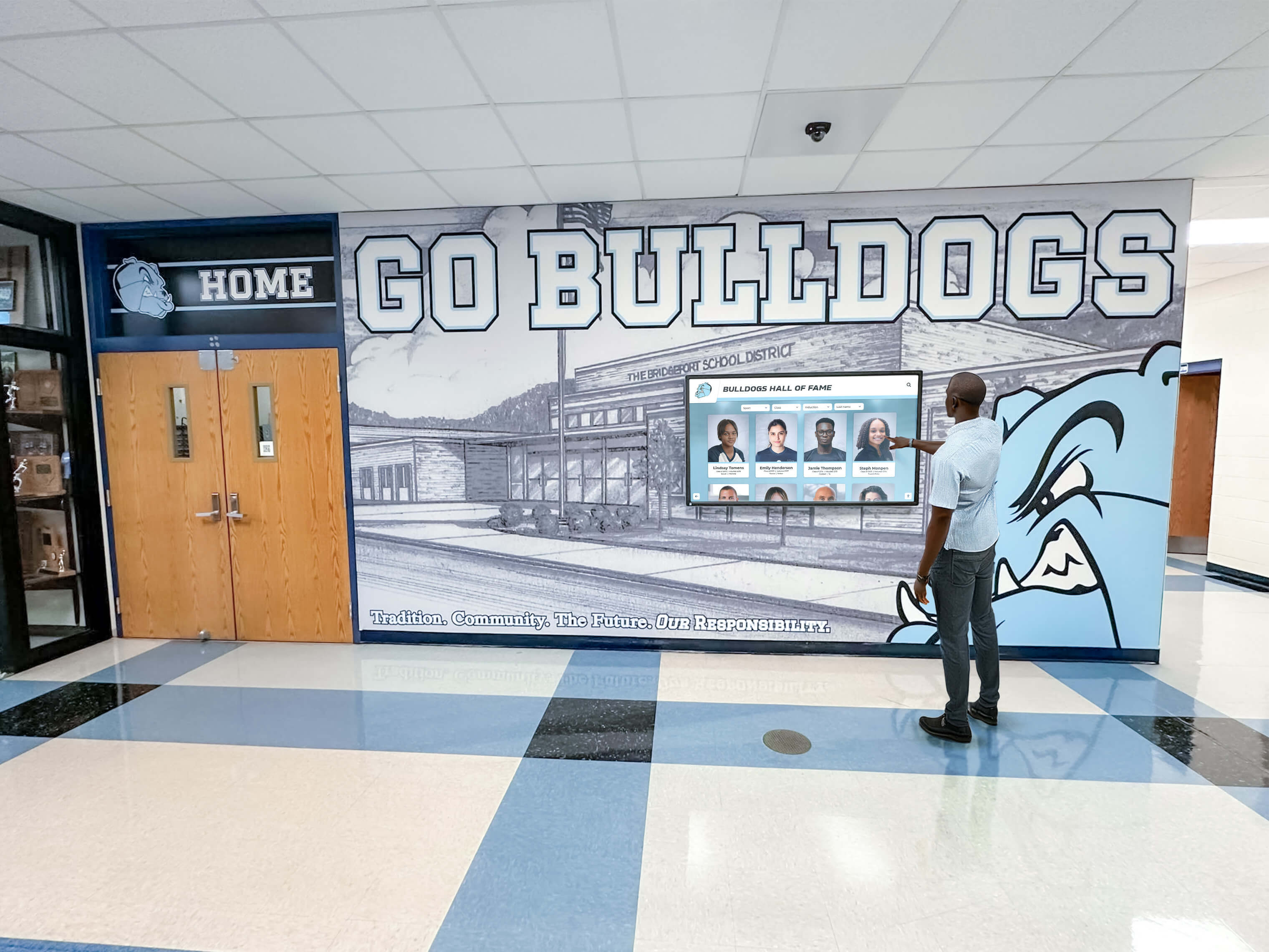
Digital record boards represent specialized interactive display systems designed specifically for showcasing athletic achievements, team histories, individual records, championships, and sports program milestones. These systems differ fundamentally from digital scoreboards, basic signage, or generic displays—they provide comprehensive databases of athletic information accessible through intuitive touchscreen interfaces rather than simply displaying limited information on screens.
Core Capabilities Defining Effective Digital Record Boards
Quality digital record board systems must deliver specific capabilities that distinguish them from basic electronic displays:
Comprehensive Record Database: Systems must organize records by sport, gender, event type, season, and era—enabling visitors to explore varsity football records separately from junior varsity, compare track and field events individually, and understand historical context across decades. Generic displays showing rotating slides lack this organizational depth.
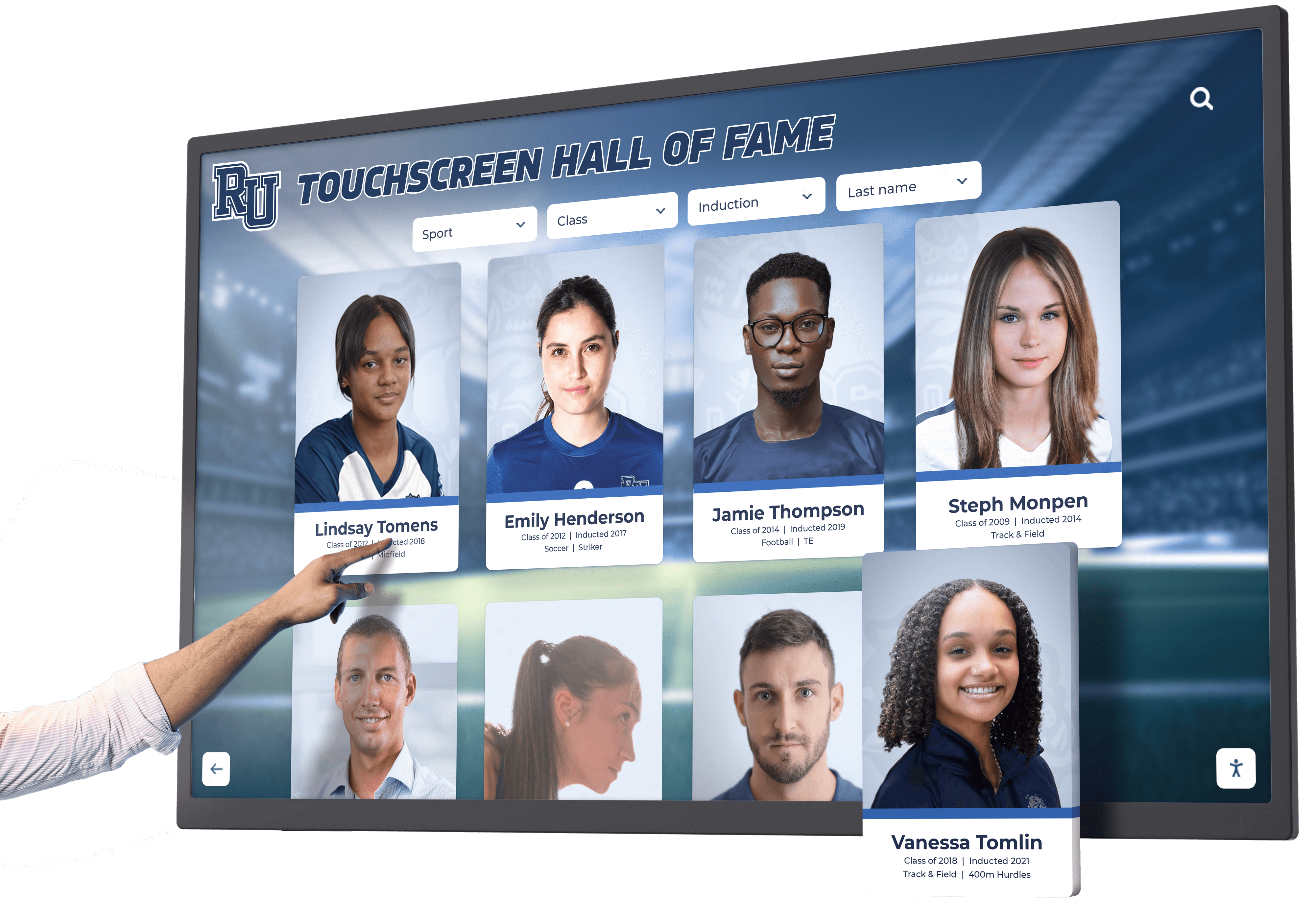
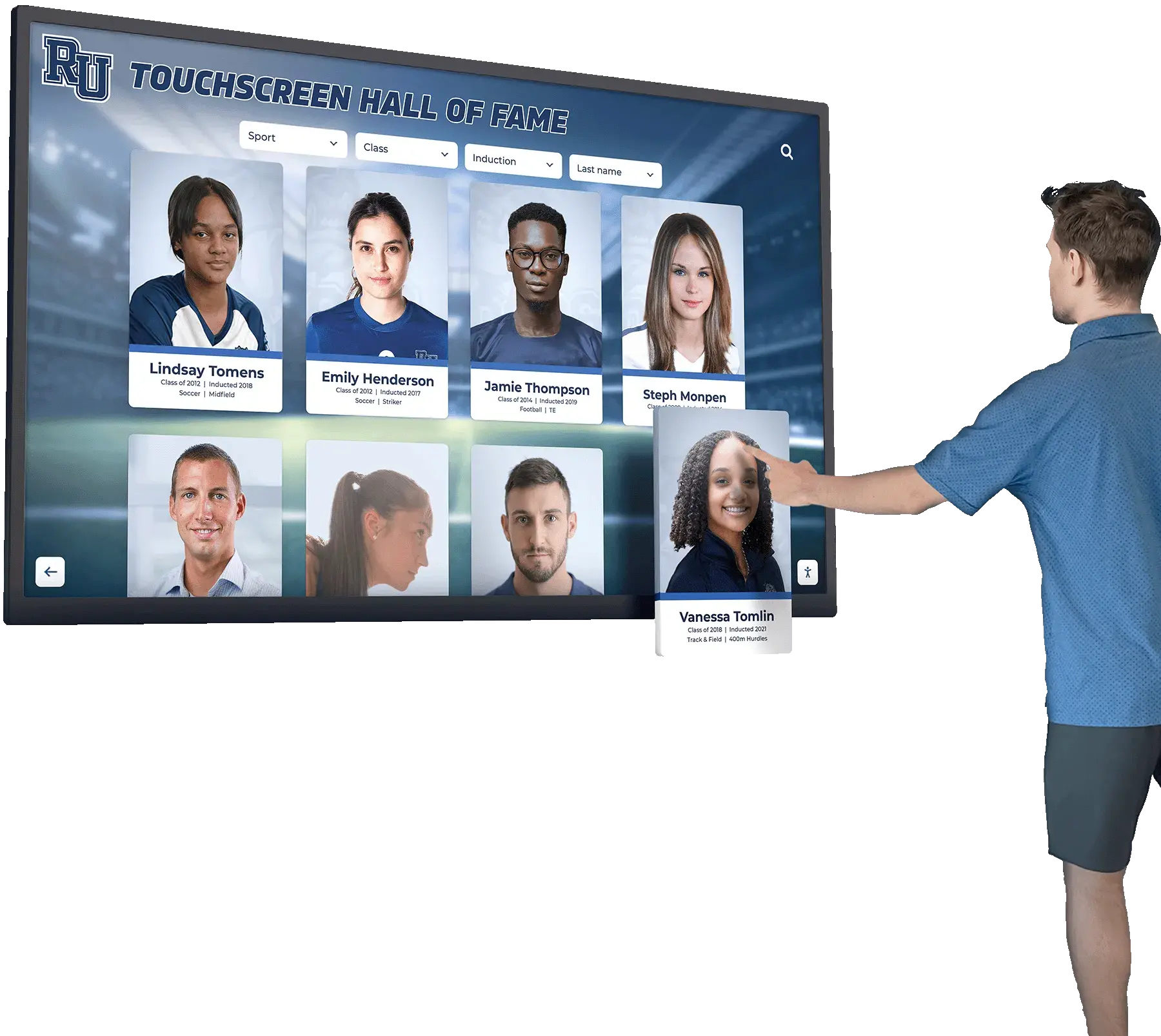
Interactive Touchscreen Navigation: Visitors must search for specific athletes, filter by sport or event, browse championship histories, compare current records to historical achievements, and discover related content through intuitive touch interactions. Passive displays that simply show information without user control waste recognition’s engagement potential.
Detailed Athlete Profiles: Beyond listing names and statistics, effective systems provide comprehensive profiles including high-resolution photos, achievement narratives, career statistics, championship participation, awards received, college commitments, and career highlights. This depth transforms records from simple data points into inspiring stories.
Multimedia Integration: Digital record boards should incorporate game footage, award ceremony photos, newspaper articles, championship banners, team photos, and testimonials from coaches—creating rich multimedia experiences that static boards never approach.
Real-Time Update Capability: Athletic directors must add new records immediately without waiting for vendors, fabrication, or installation. Systems requiring professional services for routine updates create delays and expenses that undermine digital advantages.
Multi-Sport Support: Comprehensive systems accommodate football, basketball, baseball, softball, soccer, track and field, cross country, swimming, wrestling, volleyball, tennis, golf, lacrosse, and emerging sports equally—ensuring recognition isn’t limited to traditional sports that historically dominated limited wall space.
Schools implementing solutions lacking these foundational capabilities inevitably discover they’ve installed expensive slideshow displays rather than genuine interactive record boards—missing the transformative engagement, comprehensive recognition, and administrative efficiency that justify digital investment.
Why Traditional Record Boards Fall Short
Traditional painted and vinyl record boards served schools adequately when athletic programs remained stable, records broke infrequently, and recognition focused narrowly on headline sports. Modern athletic programs face different realities requiring flexible solutions:
Space Exhaustion: Physical boards accommodate finite records determined by wall dimensions—once installed, capacity remains fixed regardless of program growth. Schools adding sports, expanding girls athletics, or recognizing broader achievement types have nowhere to display these accomplishments without removing existing content.
Update Complexity: Changing traditional boards requires hiring painters or vinyl installers, scheduling facility access, completing work during breaks to minimize disruption, and paying $200-$800 per update depending on scope. This friction causes record boards to stagnate, displaying outdated information simply because updating feels burdensome.
Maintenance Deterioration: Painted records fade and chip, vinyl graphics peel and crack, metal plaques corrode and tarnish, and protective coatings yellow with age. Maintaining professional appearance demands periodic complete replacement costing thousands of dollars.
Limited Storytelling: Names and numbers provide minimal context about achievements, circumstances, or significance. Visitors learn that someone holds a record but understand nothing about the athlete, the season, the competition, or why the achievement matters.
Accessibility Barriers: Wall-mounted boards positioned at standard heights create challenges for visitors using wheelchairs, children, or individuals with visual impairments unable to read small text from distances determined by architectural constraints.
Recognition Inequity: Historical space allocation decisions often prioritize traditional male sports over newer programs, female athletics, or non-traditional sports—creating recognition imbalances that digital systems with unlimited capacity eliminate entirely.
Athletic directors replacing traditional boards with digital athletic recognition displays consistently report that the decision ranks among their most impactful facility improvements—transforming problematic maintenance burdens into sources of program pride and community engagement.
Digital Record Board Technologies: Comparing Approaches
Schools exploring digital record boards encounter several technological approaches with dramatically different capabilities, costs, and suitability for comprehensive athletic recognition. Understanding these differences prevents expensive mistakes where schools invest in systems that can’t deliver promised benefits.
True Interactive Touchscreen Systems
Comprehensive digital record board systems feature commercial-grade touchscreen displays powered by specialized recognition software enabling visitors to search, filter, explore, and discover athletic achievements interactively. These systems function as athletic history databases with public-facing touchscreen interfaces rather than simple displays showing predetermined content.
Hardware Components: Commercial touchscreen displays rated for continuous operation, mounting systems appropriate for wall or kiosk installation, media players or integrated computers running recognition software, network connectivity for remote management, and professional cabling maintaining clean appearance.
Software Architecture: Cloud-based content management enabling remote administration, database structures organizing records by multiple taxonomies, intuitive user interfaces requiring no instructions, search algorithms delivering relevant results instantly, and responsive design adapting to various screen sizes.
Content Capabilities: Unlimited record entries without performance degradation, comprehensive athlete profiles with photos and narratives, statistical comparisons across eras and categories, championship documentation with rosters and photos, and multimedia integration including video highlights.
Administrative Features: Simple web-based interfaces enabling non-technical staff to add records, upload media through drag-and-drop workflows, schedule featured content, manage permissions appropriately, and access detailed analytics revealing engagement patterns.
Solutions like Rocket Alumni Solutions exemplify this approach—purpose-built specifically for athletic recognition rather than adapted from other applications, delivering comprehensive functionality through systems designed explicitly for celebrating achievement.
Digital Signage with Limited Interactivity
Some schools implement basic digital signage platforms showing record information through rotating slides or basic menu navigation. While providing digital display capability, these systems lack the comprehensive functionality that distinguishes genuine record boards from simple electronic displays:
Limited Content Depth: Signage templates accommodate brief text and single images per slide—insufficient for comprehensive athlete profiles, detailed statistics, achievement context, or rich storytelling that creates engagement.
Passive Viewing Experience: Content rotates automatically through predetermined sequences—visitors watch whatever happens to display when they pass rather than actively searching for personal interests or exploring related content.
Slideshow Scalability Problems: Displaying 200 records for 10 seconds each requires 33 minutes per complete cycle—ensuring most content remains invisible most of the time as visitor attention spans measure seconds, not half-hours.
Basic Content Management: Administrative interfaces support creating slides but lack record database organization, relationship management, version control, or the structured workflows that maintain consistency across hundreds of profiles.
Generic Rather Than Sport-Specific: Signage platforms serve multiple purposes (announcements, menus, promotions) rather than specializing in athletic recognition—this generalist approach creates gaps in sport-specific features like event categorization, relay team management, or performance standard comparisons.
Schools discovering that digital signage disappointingly replaces static boards with electronic slideshows—providing marginal improvement while missing interactive exploration, comprehensive storytelling, and visitor engagement that justify digital investment—typically attempted to force-fit generic technology into recognition applications requiring specialized solutions.
LED Matrix and Video Wall Displays
Large-format LED installations and video walls create impressive visual impact in athletic facilities but serve fundamentally different purposes than interactive record boards:
Visual Spectacle Rather Than Information Access: LED displays excel at creating atmosphere through dynamic graphics, motion, and scale—but lack the detailed information presentation, searchability, and intimate exploration that record recognition demands.
Limited Resolution for Detailed Content: LED matrix displays with appropriate brightness for large spaces provide insufficient pixel density for readable text in athlete profiles, statistical tables, or achievement narratives requiring clear typography.
One-to-Many Communication: LED walls broadcast content to audiences passively—excellent for scoreboards, promotional displays, and event presentations but mismatched with individual exploration of athletic history where visitors want personal control over what information they access.
Higher Cost for Recognition Applications: Video wall installations typically cost $50,000-$200,000+ depending on size and resolution—investment levels appropriate for marquee entrances or arena scoreboards but excessive for athletic record applications where smaller interactive touchscreens deliver superior functionality at fraction of cost.
Effective facility planning often combines LED displays for visual impact and event communication with interactive touchscreen record boards providing detailed athletic history access—each technology serving its appropriate purpose rather than expecting one solution to accomplish both effectively.
Essential Features to Prioritize in Digital Record Boards
When evaluating digital record board systems, schools should prioritize capabilities delivering the greatest recognition value while ensuring long-term success and administrative sustainability:
Unlimited Record Capacity Without Performance Loss
Record boards must accommodate continuous growth without slowing system responsiveness or requiring costly upgrades. Cloud-based architectures designed for scale handle thousands of records while maintaining instant search results and smooth interface performance.
Schools honoring 50 records today will add 30-50 annually—within a decade, the system contains 400+ records with growth continuing indefinitely. Solutions without genuine scalability force eventual platform replacement, wasting initial investment and creating disruption when systems reach capacity limits.
Intuitive Search and Navigation
Visitors must find specific athletes, explore records by sport or event, compare performances across eras, and discover unexpected connections without instructions or assistance. Interfaces requiring training, complex navigation hierarchies, or technical familiarity fail because most interactions happen casually when visitors pass displays without planning research sessions.
Effective search includes auto-complete suggestions, multiple filtering dimensions, relevant result ranking, related content recommendations, and instant responsiveness making exploration feel effortless. Poor search implementations frustrate visitors who abandon systems after unsuccessful attempts.
Comprehensive Profile Templates
Record boards must tell complete stories, not just list statistics. Athlete profiles should include multiple high-resolution photos, detailed achievement narratives, career statistics organized logically, championship participation, awards and honors, college athletic commitments, coaching testimonials, and social sharing features extending recognition reach beyond physical displays.
Template systems ensure consistency while allowing customization for individual achievements—wrestling profiles emphasize weight class and tournament progression while swimming profiles highlight event specialization and time progressions differently.
Multi-Sport and Multi-Level Organization
Systems must organize content by sport, gender, competitive level (varsity, junior varsity, freshman), and season—enabling visitors to explore exactly what interests them without navigating irrelevant content. Football visitors shouldn’t wade through swimming records to find rushing leaders, and track athletes should filter by specific events immediately.
Comprehensive organization requires database structures more sophisticated than simple folders or playlists—proper taxonomies with multiple classification dimensions enabling precise filtering across numerous criteria simultaneously.
Real-Time Administrative Updates
Athletic directors must add records instantly when achievements occur—not next week after vendor processing. Web-based administrative interfaces accessible from any device enable immediate updates maintaining current, relevant content that reflects program vitality rather than stagnation.
Systems requiring IT involvement, vendor services, or complex workflows for routine updates create barriers ensuring content becomes outdated despite best intentions. Simplicity determines whether record boards remain vibrant recognition showcases or devolve into abandoned installations displaying years-old information.
Professional Customization Reflecting School Identity
Record boards must reflect school branding through customizable color schemes matching athletic identity, logo integration establishing ownership, typography selections ensuring readability while conveying appropriate athletic tone, and template designs maintaining visual consistency across hundreds of profiles.
Generic appearance undermines recognition dignity—records deserve presentation quality reflecting achievement significance rather than looking like commercial signage or amateur slide decks.
Analytics Revealing Engagement and Impact
Administrators need visibility into how community members engage with record boards through viewing data showing popular content, search pattern analysis revealing what visitors seek, engagement duration measuring interaction depth, and trend analysis informing continuous improvement.
These metrics demonstrate value justifying investment, identify opportunities for content enhancement, reveal recognition gaps needing attention, and provide objective evidence countering skeptics questioning digital transformation worth.
Implementation Planning: Building Your Digital Record Board System
Successful digital record board implementations require systematic planning addressing technology selection, content development, facility integration, and community engagement—ensuring systems deliver promised benefits rather than becoming expensive disappointments.
Planning Your Record Recognition Program
Before selecting technology, establish clear vision and structure defining what records deserve recognition, how achievement will be categorized, what information profiles will contain, and how the program will evolve over time:
Record Categories to Include: Team records (wins, championships, tournament achievements), individual records (scoring, performance marks, career statistics), season accomplishments (undefeated campaigns, conference titles), historical milestones (program founding, facility dedications, coaching tenure), and special recognition (athlete of the year, academic honors, sportsmanship awards).
Sport Coverage Decisions: Which sports receive equal recognition versus highlighted prominence, how to balance coverage between high-profile sports with extensive histories and newer programs with limited data, whether to separate male and female athletics or integrate recognition, and how to handle club sports, intramurals, or recreational programs.
Historical Depth Approach: How far back to research records (program inception versus recent decades only), whether to include records from predecessor schools if consolidation occurred, how to handle records from eras with limited documentation, and acceptable confidence levels for historical data accuracy.
Ongoing Content Standards: Who has authority to nominate records, what verification processes ensure accuracy, how frequently content undergoes review, who maintains administrative access, and what approval workflows govern publication.
Strategic planning prevents scope creep while ensuring recognition programs reflect institutional values and serve community needs effectively. Schools implementing digital athletic recognition benefit from clear direction rather than ad hoc decisions made during rushed implementations.
Content Development Strategy
Record board value depends entirely on content quality and completeness. Develop systematic approaches ensuring comprehensive coverage:
Historical Research: Gather information from existing record boards, athletic department files, yearbooks, local newspaper archives, alumni interviews, and coaching records. Many schools discover that assumed records lack documentation while impressive achievements went unrecognized simply because information wasn’t readily accessible.
Photography Collection: High-resolution action photos, team pictures, individual portraits, championship celebrations, and facility images create visual engagement transforming statistics into stories. Prioritize recent high-quality photos while accepting historical images of varying quality rather than leaving profiles text-only.
Athlete Biographies: Beyond statistics, capture achievement context including obstacles overcome, leadership contributions, memorable performances, coaching insights, and post-graduation paths. These narratives transform records from data points into inspiration.
Verification Processes: Establish review protocols confirming record accuracy, resolving conflicting information, determining how to handle disputed or unverifiable claims, and maintaining appropriate confidence standards balancing recognition inclusion against factual rigor.
Phased Implementation: Begin with recent well-documented achievements before systematically expanding historical coverage. This approach delivers quick wins providing immediate value while distributing extensive content creation workload across manageable timeframes rather than delaying launch until achieving impossible comprehensiveness.
Consider engaging students in content development as authentic learning experiences—journalism students write profiles, photography students create portraits, history students research historical achievements, and digital media students produce highlight videos. This approach reduces staff burden while providing valuable educational opportunities for students learning research, writing, digital media, and project management skills.
Hardware Selection and Installation
Software capabilities matter only when paired with appropriate hardware creating professional, reliable, engaging physical installations:
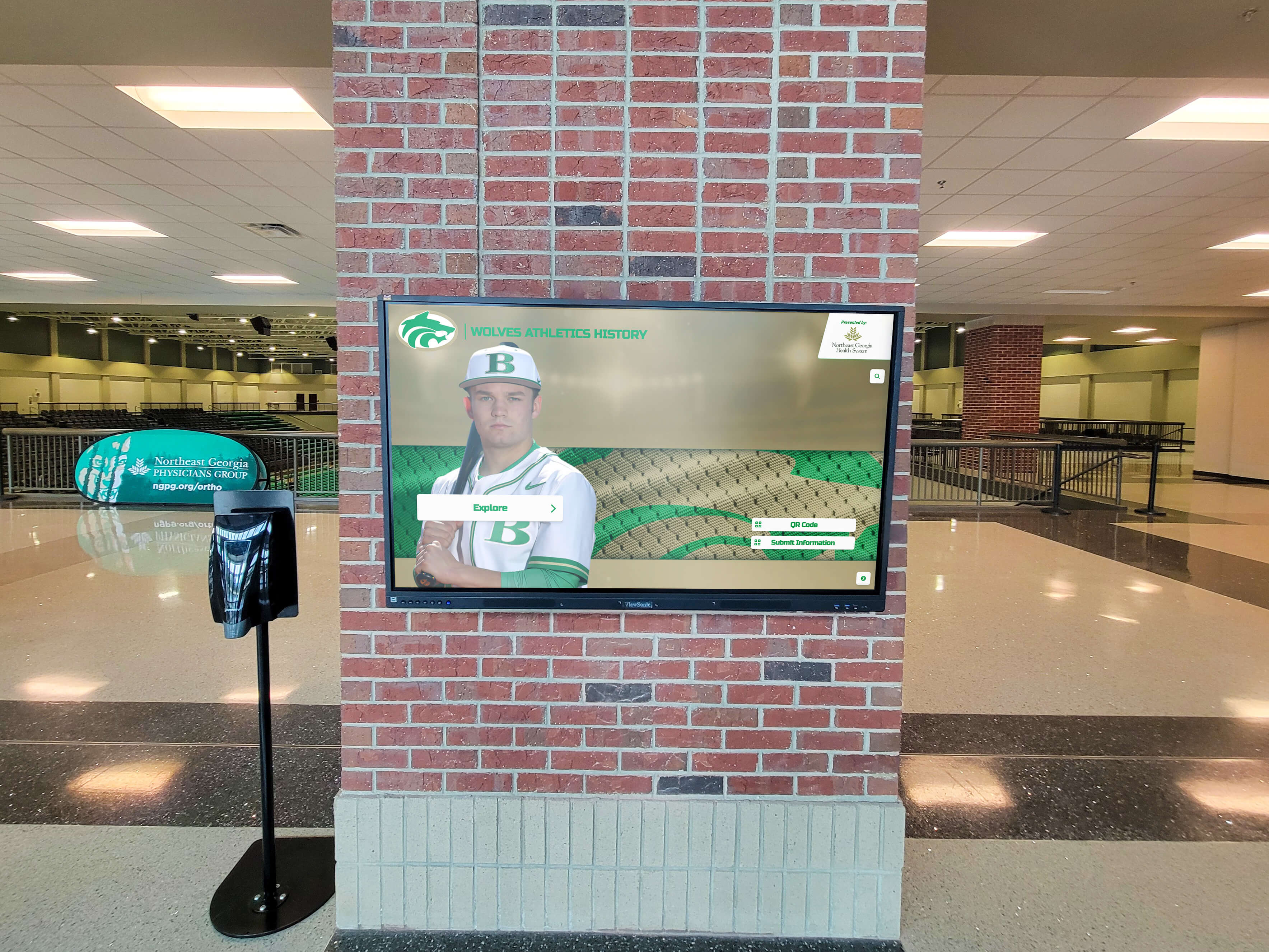
Display Specifications: Commercial-grade touchscreen displays rated for continuous 24/7 operation (not consumer TVs), appropriate screen sizes balancing viewing distance with budget (55"-65" typical for gymnasium walls), resolution sufficient for readable text (4K minimum), and brightness levels appropriate for ambient lighting conditions.
Mounting Solutions: Wall-mount systems with security hardware preventing theft or vandalism, freestanding kiosks for locations without appropriate walls, height positioning ensuring accessibility while preventing damage, and mounting surface compatibility confirmed during planning rather than discovered during installation.
Network Infrastructure: Reliable connectivity for content updates and remote management through wired Ethernet connections preferred over WiFi, sufficient bandwidth for high-resolution media, network security appropriate to school IT policies, and backup connectivity options if primary connections fail.
Power and Cabling: Appropriate electrical circuits avoiding overloading existing infrastructure, professional cable management maintaining clean appearance, conduit installation meeting building codes, and placement coordinating with HVAC, lighting, and architectural features.
Environmental Considerations: Mounting positions avoiding direct sunlight causing glare or thermal stress, protection from moisture in natatoriums or outdoor installations, vandalism prevention in unsupervised areas, and traffic flow accommodation preventing congestion when multiple visitors interact simultaneously.
Work with experienced vendors understanding education environments, providing comprehensive installation services, offering training and support, and maintaining relationships beyond initial sales. Schools implementing best digital displays succeed by matching hardware to software capabilities and institutional needs rather than making decisions based solely on initial cost.
Training and Community Engagement
Technology succeeds when users embrace it enthusiastically rather than viewing it as administrative burden:
Administrator Training: Comprehensive instruction ensuring confident content management through hands-on practice, clear documentation supporting reference needs, understanding of all system capabilities, troubleshooting common issues independently, and knowing when to request support assistance.
Content Standards Documentation: Style guides maintaining consistency across profiles, photography specifications ensuring quality, biographical writing templates providing structure, approval workflow diagrams clarifying responsibilities, and update frequency expectations setting rhythm.
Launch Strategy: Ceremonial unveiling creating excitement and awareness, communication plan announcing system to community members, promotional activities encouraging initial exploration, feedback collection identifying improvements, and celebration of administrative team success implementing new system.
Ongoing Promotion: Regular social media posts highlighting featured records, coordination with athletic events showcasing relevant achievements, incorporation into facility tours for prospective students and families, and recognition of recent record-breaking performances linking to digital profiles.
Recognition programs fail not from technology limitations but from inadequate training, unclear responsibilities, insufficient time allocation, or lack of institutional commitment. Success requires viewing implementation as athletic program enhancement supported by appropriate tools rather than technology installation alone—cultural change creating new possibilities rather than simply electronic replacement of physical boards.
Advanced Features Enhancing Record Board Impact
Beyond essential capabilities, sophisticated digital record board systems offer advanced features amplifying recognition value, administrative efficiency, and community engagement:
Statistical Visualization and Comparison Tools
Rather than simply listing records, advanced systems visualize performance trends across eras, compare current athletes to historical leaders, show progression of records over decades, highlight frequency of record-breaking performances, and identify eras of program excellence through interactive charts and graphs.
These visualizations help visitors understand athletic history context—recognizing when certain eras dominated specific sports, how training evolution impacted performance, and where current teams stand relative to program legacy.
Social Media Integration and Sharing
When athletes achieve recognition on digital record boards, social sharing features enable immediate celebration across platforms where community members gather online. One-click sharing to Facebook, Twitter, Instagram, and LinkedIn extends recognition reach far beyond physical installations to distributed alumni networks, proud families, and interested community members nationwide.
Shared content drives additional traffic back to web-accessible record archives, strengthens school visibility across social platforms, and creates authentic content amplification as community members organically share achievements through their personal networks.
Web and Mobile Portal Access
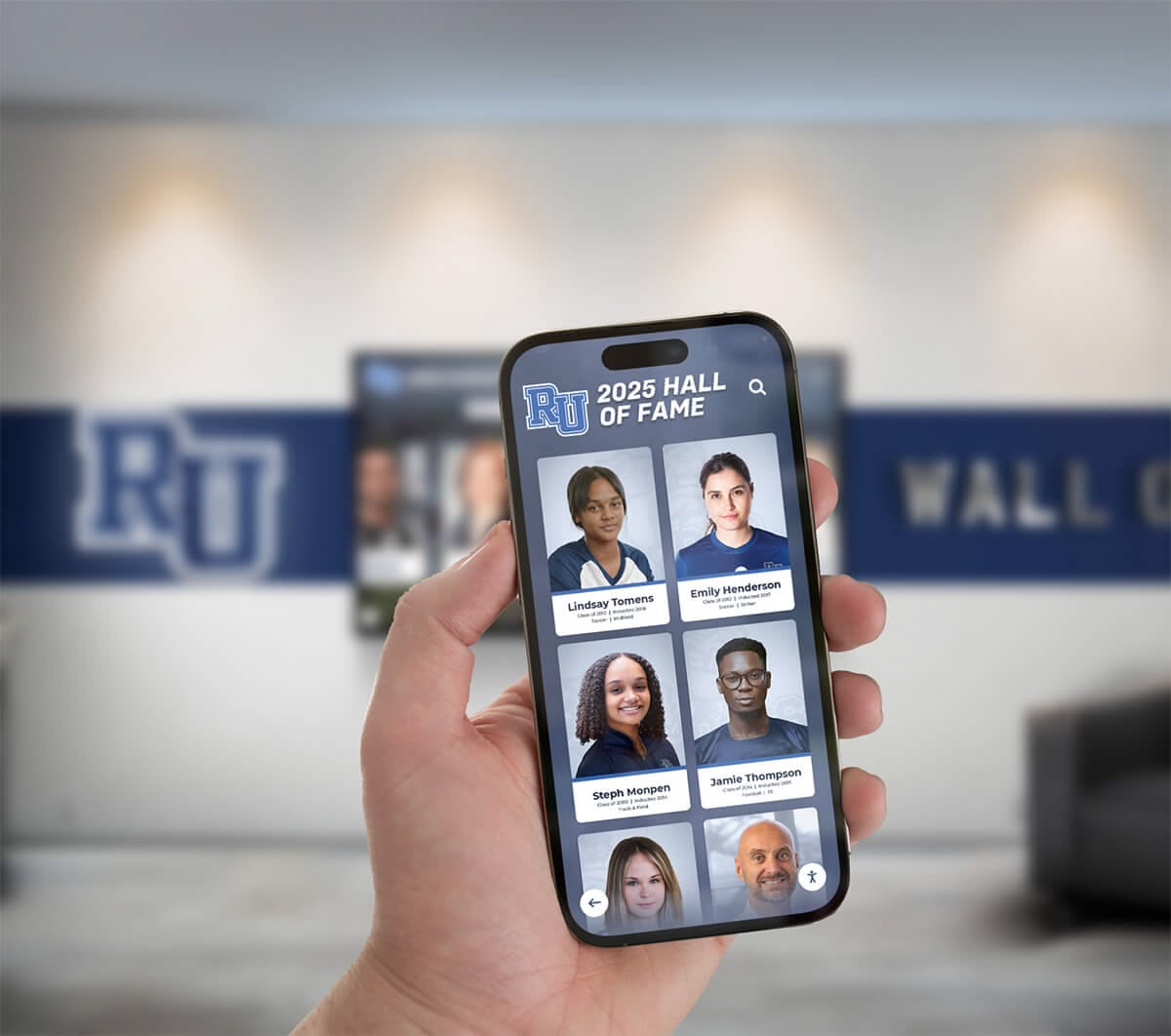
Physical displays serve on-campus visitors, but comprehensive systems extend access globally through responsive web portals enabling alumni anywhere to explore records, mobile apps providing full functionality on smartphones, embeddable widgets for school athletic websites, QR codes linking physical displays to expanded online content, and offline modes for locations with connectivity challenges.
This extended access transforms record boards from single-location installations into comprehensive digital archives accessible to distributed communities worldwide—particularly valuable for alumni maintaining lifelong connections to programs and achievements that shaped their identities.
Video Highlight Integration
Text and photos describe achievements, but video footage brings records to life through embedded game highlights, interview clips, award presentations, championship moments, historical footage, and congratulatory messages from coaches or teammates.
Video integration requires systems supporting multiple formats, streaming optimization for performance, appropriate content moderation, and upload workflows accommodating various source materials—capabilities distinguishing comprehensive platforms from basic displays.
Multi-Location Network Management
Schools with multiple athletic facilities benefit from networked systems where single content platforms power displays in football stadiums, basketball gymnasiums, swimming natatoriums, track facilities, and administrative buildings—update once, publish everywhere instantly.
This architecture ensures consistency across locations while reducing administrative burden compared to managing independent systems separately. Centralized management also enables coordinated content scheduling, unified analytics, and consistent user experiences regardless of which facility visitors encounter.
Championship and Season Archive Pages
Beyond individual records, comprehensive systems maintain complete seasonal histories including team rosters with linked athlete profiles, game-by-game results and statistics, tournament brackets and progressions, championship celebrations and coverage, coaching staff recognition, and season highlight reels.
These archives transform record boards from simple record listings into comprehensive program history repositories—preserving complete athletic legacy rather than only headline achievements.
Cost Considerations and Budget Planning
Digital record board investments vary significantly based on scope, features, and implementation approaches—understanding cost components enables realistic budget planning and value assessment:
Initial System Costs
Complete digital record board implementations typically include:
Hardware Components ($8,000-$18,000 per display): Commercial-grade touchscreen displays ranging $3,000-$8,000 depending on size and specifications, mounting systems or kiosk enclosures adding $1,500-$4,000, media player or integrated computers contributing $800-$2,000, professional installation labor typically $2,000-$4,000 depending on complexity.
Software Licensing ($3,000-$8,000 annually): Cloud-based recognition platforms with ongoing subscription models, content management system access, software updates and improvements, technical support and assistance, and hosting infrastructure maintaining performance.
Initial Content Development ($2,000-$10,000): Professional content creation if schools lack internal resources, photography and videography services, historical research and documentation, profile writing and editing, and initial population of athlete database.
Training and Implementation Support ($1,000-$3,000): Administrator training sessions, documentation development, launch coordination, and initial optimization consulting.
Complete first-year costs for single-display implementations typically range $15,000-$35,000 depending on display size, content scope, customization requirements, and whether schools leverage internal resources versus professional services.
Additional displays connecting to existing content platforms reduce incremental costs significantly—hardware and installation remain necessary but software licensing typically accommodates multiple displays without proportionate increases, and content development has already occurred. Second, third, and additional displays often cost $8,000-$15,000 each when implemented as expansion of existing systems.
Ongoing Operational Costs
Beyond initial implementation, schools should budget for:
Annual Software Licensing: $2,000-$5,000 per year for cloud platform access, updates, support, and hosting Content Updates: Minimal if handled internally; $50-$150 per profile if outsourced to professional services Hardware Maintenance: Minimal during warranty periods; budget $500-$1,500 annually after warranties expire Network and Power: Negligible incremental costs beyond existing infrastructure
Total ongoing costs typically range $2,500-$7,000 annually depending on how extensively schools outsource content creation and whether hardware requires maintenance.
Traditional Record Board Cost Comparison
Digital costs appear high until compared against traditional alternatives over appropriate timeframes:
Initial Traditional Installation: Large painted or vinyl record boards cost $5,000-$15,000 initially Annual Updates: Each record addition costs $200-$800 for painting or vinyl application Periodic Replacement: Every 8-12 years, boards require complete replacement costing $8,000-$20,000 Limited Capacity: Fixed space constrains recognition regardless of program growth
Over 10-year periods, traditional boards typically cost $25,000-$50,000 when accounting for initial installation, annual updates averaging 10-15 records, and mid-period replacement—comparable to digital implementations while providing fraction of capacity, engagement, and flexibility.
Digital record boards achieve cost parity within 4-6 years for most schools while delivering unlimited capacity, instant updates, comprehensive multimedia, and engagement levels that traditional boards never approach. Institutions implementing digital recognition solutions view costs as investments in program celebration rather than expenses—transformation of recognition from maintenance burden to community asset.
Real-World Applications: How Schools Use Digital Record Boards
Understanding how institutions successfully implement digital record boards provides practical insight into application possibilities and creative approaches:
Multi-Sport Athletic Recognition Centers
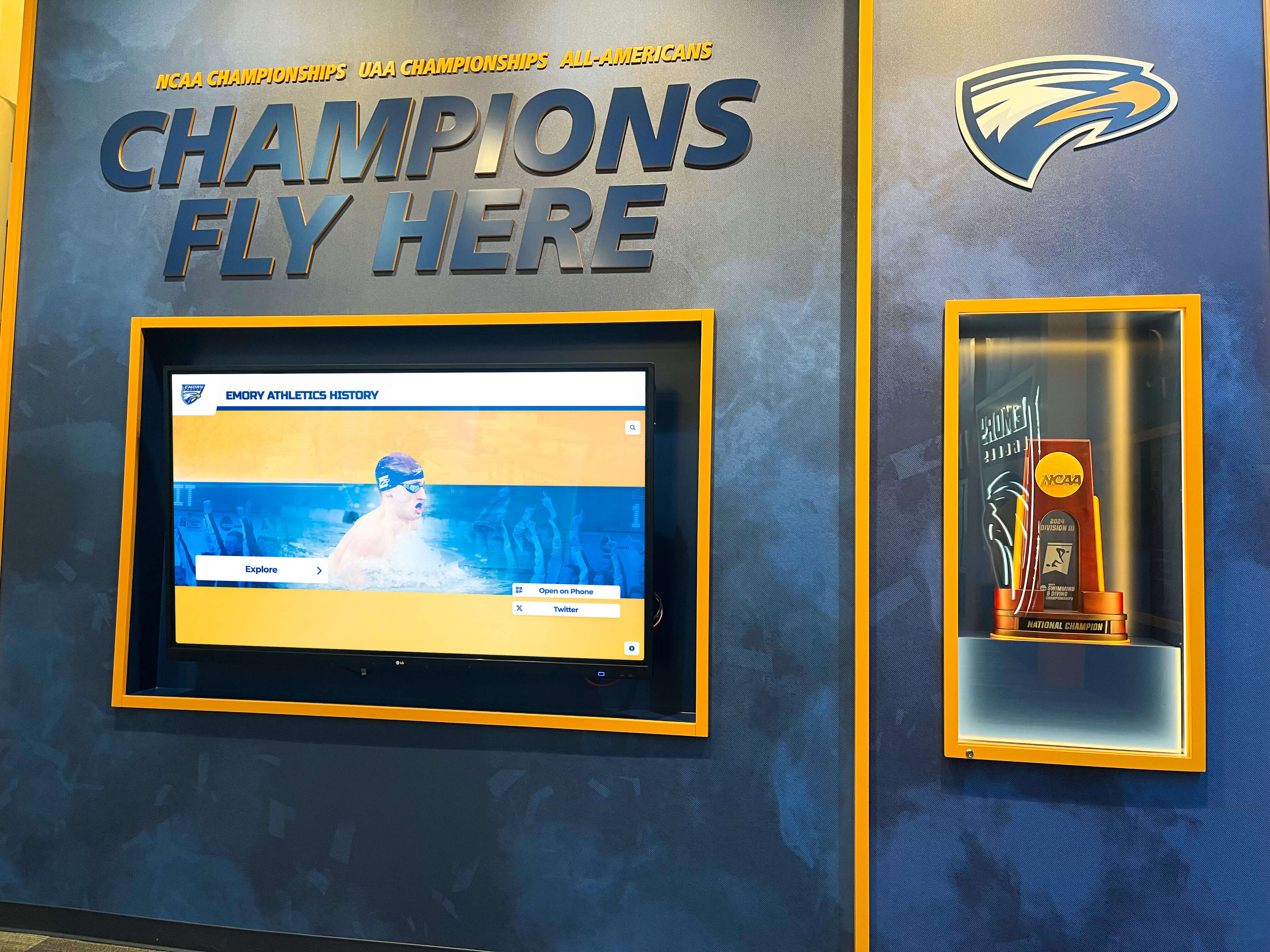
Many schools create centralized athletic recognition spaces where digital record boards display all varsity sports comprehensively. Visitors explore football records, browse basketball leaders, discover track and field champions, and celebrate championship teams across all sports through single unified interface.
This centralized approach ensures equitable recognition across programs rather than prominence determined by available wall space, creates destination locations where athletic tradition concentrates, and provides community gathering spaces celebrating program excellence comprehensively.
Sport-Specific Facility Installations
Alternatively, schools install dedicated displays in individual sports facilities—football complex displays football history, basketball gymnasium celebrates basketball achievements, natatorium showcases swimming excellence. This distributed approach positions recognition where relevant audiences naturally gather while creating sport-specific atmospheres.
Combined approaches often work well—centralized displays in main gymnasiums provide comprehensive coverage while sport-specific installations offer deeper specialty focus in dedicated facilities.
Championship and Achievement Galleries
Some institutions organize digital record boards around achievement themes rather than sports—championship gallery celebrating all title teams, record-breaker showcase highlighting top performances across all sports, hall of fame section featuring inducted athletes and coaches, and team of the decade recognition celebrating outstanding squads.
Thematic organization creates compelling narratives about excellence, tradition, and achievement patterns while enabling cross-sport comparisons and insights about institutional athletic identity.
Historical Timeline Presentations
Digital record boards can present athletic history chronologically through decade galleries, facility dedication timelines, coaching era reviews, and program evolution narratives—helping visitors understand how athletics programs developed over institutional history.
Timeline approaches provide valuable context often missing from sport-specific or record-focused presentations, reveal program philosophy changes across eras, and create opportunities for nostalgic engagement as alumni explore achievements from their own attendance periods.
Dynamic Featured Content
Rather than static displays, digital record boards can dynamically feature current achievements, highlight upcoming competitions, promote athletic events, recognize recent performances, and showcase athlete spotlights coordinated with weekly competitions.
This dynamic approach keeps content fresh and relevant, draws repeat visitors discovering new featured content, and creates regular reasons for community members to check record boards frequently rather than viewing once then ignoring.
Common Implementation Challenges and Solutions
Schools implementing digital record boards occasionally encounter obstacles—understanding common challenges and proven solutions ensures smoother implementations:
Historical Data Gaps and Inconsistencies
Challenge: Many schools discover incomplete historical records, conflicting information, missing documentation, and uncertainty about achievement accuracy when compiling comprehensive content.
Solutions: Accept that perfect completeness is impossible for programs spanning decades—include well-documented achievements confidently while acknowledging gaps rather than delaying indefinitely until achieving impossible comprehensiveness. Use qualifiers like “documented since 1975” when earlier records may exist but lack verification. Engage alumni to submit information and photographs filling historical gaps over time. Prioritize recent well-documented records initially while systematically expanding historical coverage through ongoing research.
Photography Quality Variations
Challenge: Historical photos often exist only in low resolution, poor quality, or physical formats requiring digitization, while recent digital photos may have inconsistent quality or composition.
Solutions: Establish minimum acceptable quality standards while recognizing historical photos of any quality provide value exceeding text-only profiles. Consider professional digitization services for extensive physical archives. Invest in photography for recent athletes lacking quality images. Accept mixed quality across eras as authentic representation of program history rather than artificial uniformity.
Administrator Bandwidth for Content Creation
Challenge: Comprehensive content development requires significant time investment creating profiles, gathering information, writing biographies, and maintaining ongoing updates—burden exceeding available administrative capacity.
Solutions: Implement phased approaches delivering quick wins with initial priority content before expanding systematically. Engage students as authentic learning projects distributing workload while providing educational value. Consider professional content development services for initial population if internal capacity is severely limited. Establish sustainable update workflows focusing on new achievements rather than attempting simultaneous historical comprehensiveness.
Technology Adoption Resistance
Challenge: Some stakeholders prefer traditional recognition approaches, express skepticism about digital effectiveness, or resist change from familiar systems.
Solutions: Emphasize retention of existing recognition rather than replacement—digital supplements physical displays rather than eliminating tradition. Demonstrate systems through interactive presentations allowing hands-on exploration. Share examples from peer institutions showing successful implementations. Acknowledge legitimate concerns while focusing on capabilities addressing actual pain points like space limitations and update complexity. Consider pilot implementations proving value before comprehensive commitments.
Ensuring Long-Term Content Sustainability
Challenge: Initial enthusiasm and content creation sometimes doesn’t translate into sustained long-term maintenance, causing systems to become outdated despite initial success.
Solutions: Establish clear administrative responsibilities defining who maintains content. Integrate record board updates into existing athletic department workflows rather than treating as separate initiative. Calendar regular review sessions ensuring consistent attention. Celebrate content achievements demonstrating value. Select systems with such simple administration that updates feel easy rather than burdensome.
Maximizing Digital Record Board Impact and Engagement
Simply installing systems doesn’t guarantee transformative impact—strategic approaches amplify recognition value and community engagement:
Integration with Athletic Events
Coordinate record board content with upcoming competitions through featuring opponents’ historical matchups, highlighting relevant records potentially threatened, profiling athletes approaching milestones, and celebrating post-competition achievements immediately when performances occur.
This integration creates timely relevance connecting historical recognition to current athletic experiences, encourages community members to check boards regularly for competition-related content, and demonstrates program vitality through continuous updates reflecting ongoing achievement.
Alumni Weekend and Reunion Programming
Digital record boards create powerful engagement opportunities during alumni events through featured content highlighting graduating class eras, display of reunion year team photos and rosters, recognition of era-specific coaches and achievements, and social sharing encouraging reunion attendees to share discoveries with classmates unable to attend.
Many schools position record boards strategically in reunion gathering spaces, promote exploration during events, and coordinate featured content with reunion schedules creating relevant nostalgic experiences strengthening alumni connections.
Prospective Student Recruitment
Athletic tradition significantly influences recruitment—digital record boards provide compelling evidence of program excellence and commitment to athlete recognition. Showcase facilities during campus tours, reference impressive records during athletic recruitment conversations, provide online access enabling remote prospects to explore programs, and demonstrate commitment to celebrating athletic achievement appropriately.
Digital record boards signal institutional investment in athletics, show depth of program tradition, and create professional impressions attracting serious student-athletes evaluating programs based on culture and commitment to excellence.
Community Pride and Visibility
Position displays in high-visibility locations where community members naturally gather—gymnasium lobbies, main entrances, athletic complex commons, and administrative building reception areas. Promote digital record boards through local media highlighting impressive records, social media campaigns encouraging community exploration, and celebration when records break creating newsworthy athletic achievements.
Strong record board implementations become sources of community pride, topics of local media coverage, and authentic marketing demonstrating athletic program excellence organically rather than through promotional messaging.
For schools seeking comprehensive athletic recognition transformation, interactive athletic displays offer capabilities far exceeding traditional approaches while creating engagement patterns that honor achievement appropriately.
Future Trends in Digital Record Board Technology
Understanding emerging trends helps schools make forward-looking investments remaining valuable as technology evolves:
Artificial Intelligence for Enhanced Insights
AI capabilities will enhance record boards through intelligent performance analysis identifying trend patterns, predictive modeling forecasting record progression, natural language search understanding conversational queries, automated profile generation from statistical data, and personalized content recommendation based on visitor interests and viewing patterns.
Schools investing in cloud-based platforms with active development roadmaps will benefit from AI enhancements through standard updates rather than requiring new platform purchases.
Augmented Reality Overlays
AR technology will enable visitors to point smartphones at record boards accessing expanded content, view 3D performance visualizations, watch embedded video highlights, explore interactive statistics, and share discoveries through social platforms—bridging physical installations and digital expansions seamlessly.
Wearable Technology Integration
As wearable performance tracking becomes standard in athletic training, digital record boards may integrate real-time performance data, training progression tracking, fitness milestone celebration, and comprehensive athlete wellness data creating holistic recognition beyond competition statistics alone.
Deeper Performance Analytics
Beyond simple record listings, advanced analytics will visualize performance distributions, statistical significance calculations, historical trend analysis, peer comparisons, and predictive modeling helping athletes understand their achievements within broader performance contexts.
Enhanced Accessibility Features
Advancing accessibility technology will ensure record boards serve all community members through improved voice interaction, better screen reader support, enhanced motor accommodation alternatives, sophisticated translation capabilities, and universal design principles embedded from inception.
Schools prioritizing platforms with strong accessibility commitments and active development will benefit from continuous improvements serving increasingly diverse communities effectively.
Conclusion: Transforming Athletic Recognition Through Digital Innovation
Athletic achievements deserve recognition that honors accomplishment appropriately while inspiring future excellence. Traditional record boards served schools adequately when programs remained stable and space sufficed—but modern athletics demands flexible solutions accommodating growth, simplifying maintenance, engaging communities, and celebrating comprehensive achievement beyond narrow highlights.
Digital record boards eliminate fundamental constraints that limit traditional recognition—providing unlimited capacity for continuous program growth, instant updates without fabrication delays, interactive exploration engaging visitors meaningfully, multimedia storytelling creating emotional connections, and accessibility ensuring recognition serves all community members equally regardless of ability or location.
Schools implementing comprehensive digital record board systems consistently report transformation of recognition from administrative burden into program asset—celebrating athletic excellence comprehensively while strengthening community pride, alumni engagement, and institutional identity around athletic tradition and achievement.
Selecting appropriate technology matters profoundly—purpose-built athletic recognition platforms like Rocket Alumni Solutions deliver specialized capabilities, intuitive administration, and comprehensive functionality that generic signage or basic displays fundamentally lack. The difference between slideshow displays and genuine interactive record boards represents the gap between cosmetic updates and transformative recognition that genuinely honors athletic achievement.
Your athletes dedicate countless hours pursuing excellence, overcoming obstacles, and representing your institution with pride. Their achievements deserve recognition that appropriately celebrates accomplishment while preserving legacy for future generations to discover and emulate.
Ready to transform your athletic recognition program with interactive digital record boards that honor achievement comprehensively? Book a demo to explore how purpose-built recognition platforms eliminate space constraints, simplify administration, and create engaging experiences that genuinely celebrate athletic excellence.































