Walk into any competitive swimming facility and you'll likely see record boards lining the natatorium walls—painted panels, vinyl graphics, or printed boards listing pool records from decades past. But these traditional displays face a persistent challenge: updating them is time-consuming, expensive, and often delayed. Digital swim record boards solve this fundamental problem while transforming pool recognition into engaging, interactive experiences that celebrate every swimmer's achievement comprehensively.
Swimming is a sport built on precise measurement and incremental improvement. Unlike team sports where championships define success, swimming celebrates individual time improvements—often measured in hundredths of seconds—across dozens of events, age groups, and competition levels. This complexity creates unique recognition challenges that traditional static record boards struggle to address effectively.
Solutions like Rocket Alumni Solutions provide purpose-built digital platforms designed specifically for athletic record display, enabling swimming programs to showcase unlimited records with rich multimedia content, searchable databases, and interactive features that static painted boards simply cannot match.
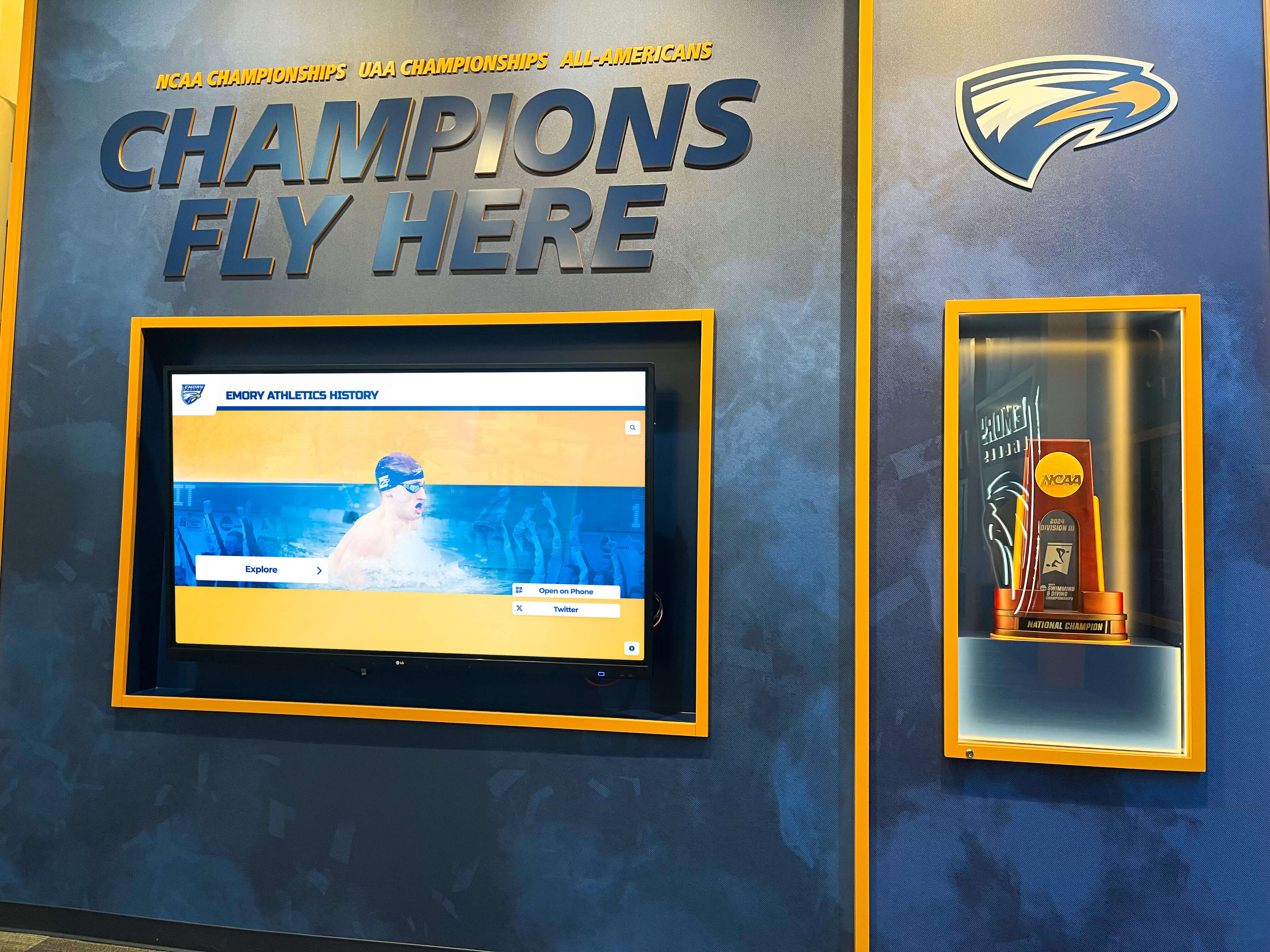
The Swimming Record Display Challenge: Why Pools Need Better Solutions
Competitive swimming programs generate extensive record categories spanning multiple dimensions: stroke specialty (freestyle, backstroke, breaststroke, butterfly, individual medley), distance variations (50, 100, 200, 400, 500, 1000, 1650 yards/meters), relay configurations (200 and 400 medley/freestyle relays), course differences (short course yards, short course meters, long course meters), age group divisions (8U, 10U, 12U, 14U, 15-18, open), and competition levels (pool, team, league, regional, state, national).
A comprehensive swimming program might track 200-400+ individual record categories before even considering historical depth, relay teams, or special achievement recognition like All-America times or Olympic Trials qualifiers.
The Static Record Board Limitation
Traditional approaches to swimming record displays typically involve:
Painted Wall Displays
Permanent or semi-permanent painted graphics featuring team colors, logos, and record listings directly on natatorium walls. While visually impressive when first installed, these displays present significant challenges including extremely expensive updates requiring professional painters, multi-day facility closures for repainting access, impossibility of quick corrections for errors, deterioration from pool humidity and chlorine exposure, and eventual complete replacement needs as designs age.
Most painted record boards go years between updates simply because the process proves too disruptive and expensive to maintain current information.
Vinyl Panel Systems
Removable vinyl panels attached to walls offer somewhat easier updates than painted displays. Programs can order new panels when records change and replace specific sections rather than repainting entire walls. However, this approach still involves production wait times of 2-4 weeks for new panels, professional installation or careful DIY application, accumulated costs as panels are replaced repeatedly, visual inconsistencies as new sections age differently, and storage requirements for replacement panels.
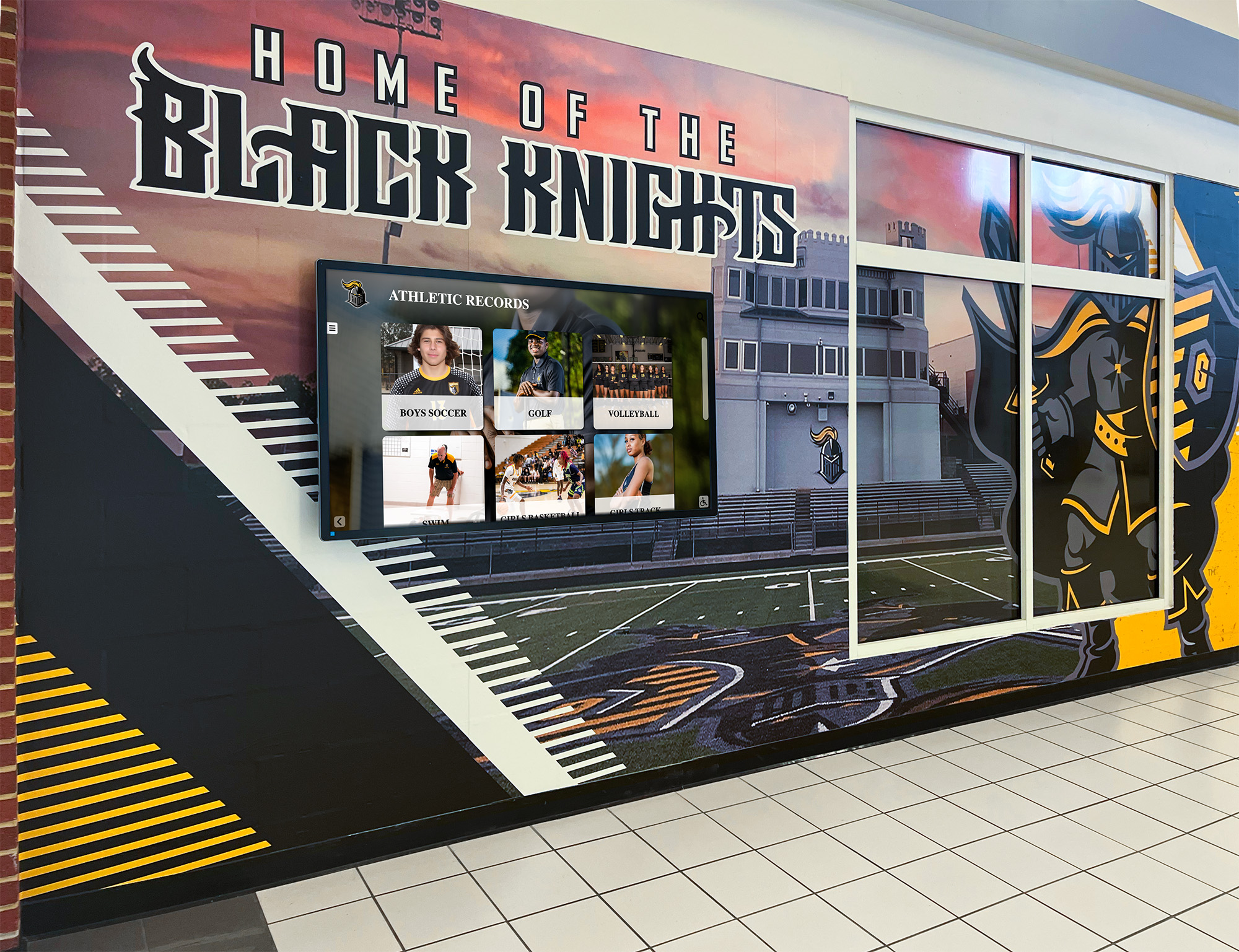
Insert Board Systems
Some facilities use boards with slots or frames where printed cards display individual records. While these systems allow easier updates than painted or vinyl options, they remain limited by physical capacity constraints, manual printing and cutting requirements, susceptibility to moisture damage in pool environments, fading from sunlight exposure, and time-intensive updates requiring physical presence.
The Recognition Gap
The practical difficulties of updating traditional record boards create a recognition gap where recent achievements go uncelebrated for extended periods. Swimmers who break records might not see their names displayed for months—or sometimes years—until the next scheduled update. This delay undermines the motivational value of recognition and fails to capitalize on the excitement surrounding record-breaking performances.
Digital record boards eliminate these delays entirely, enabling instant recognition that maximizes both celebratory impact and motivational value for current team members.
What Makes Digital Swim Record Boards Different
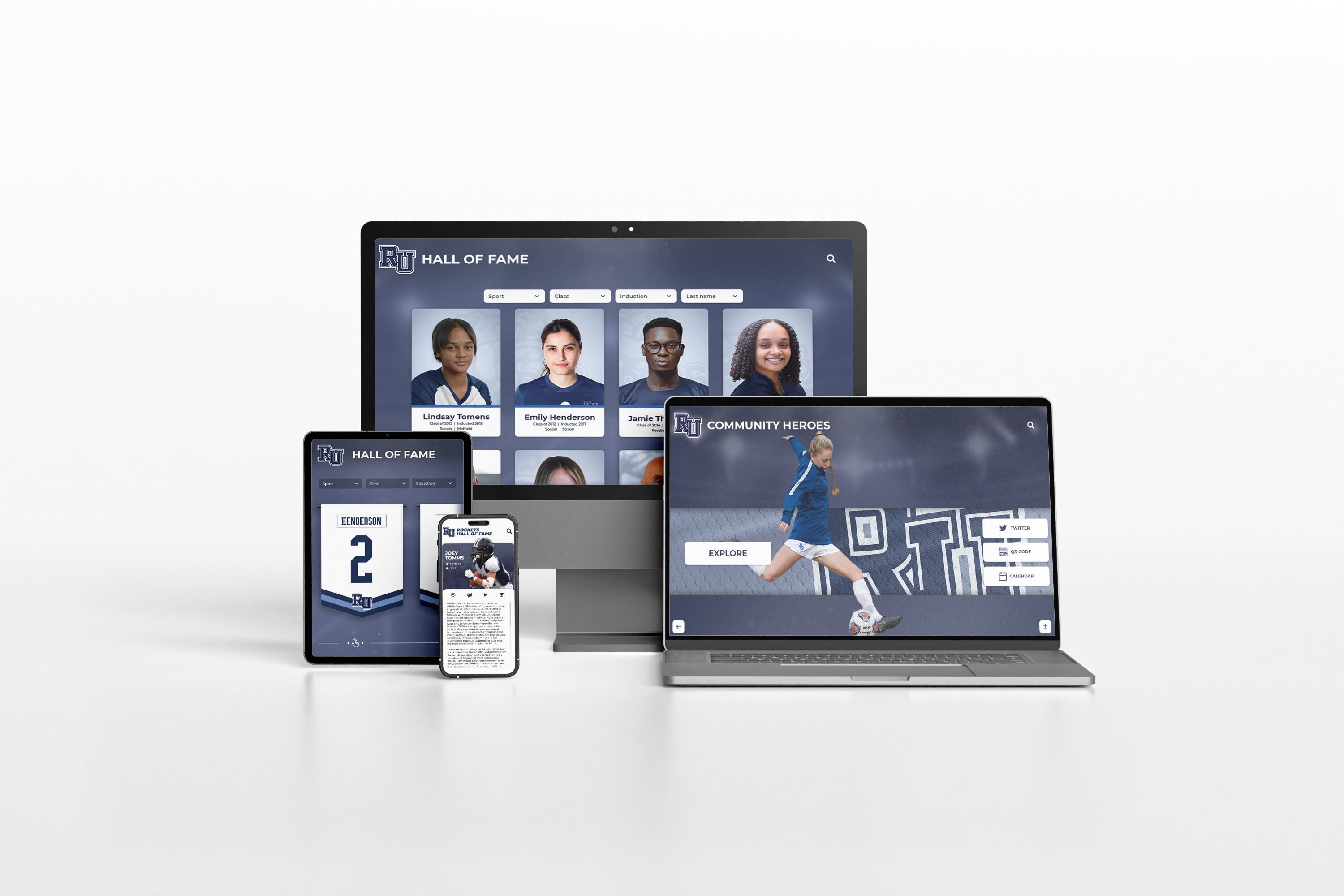
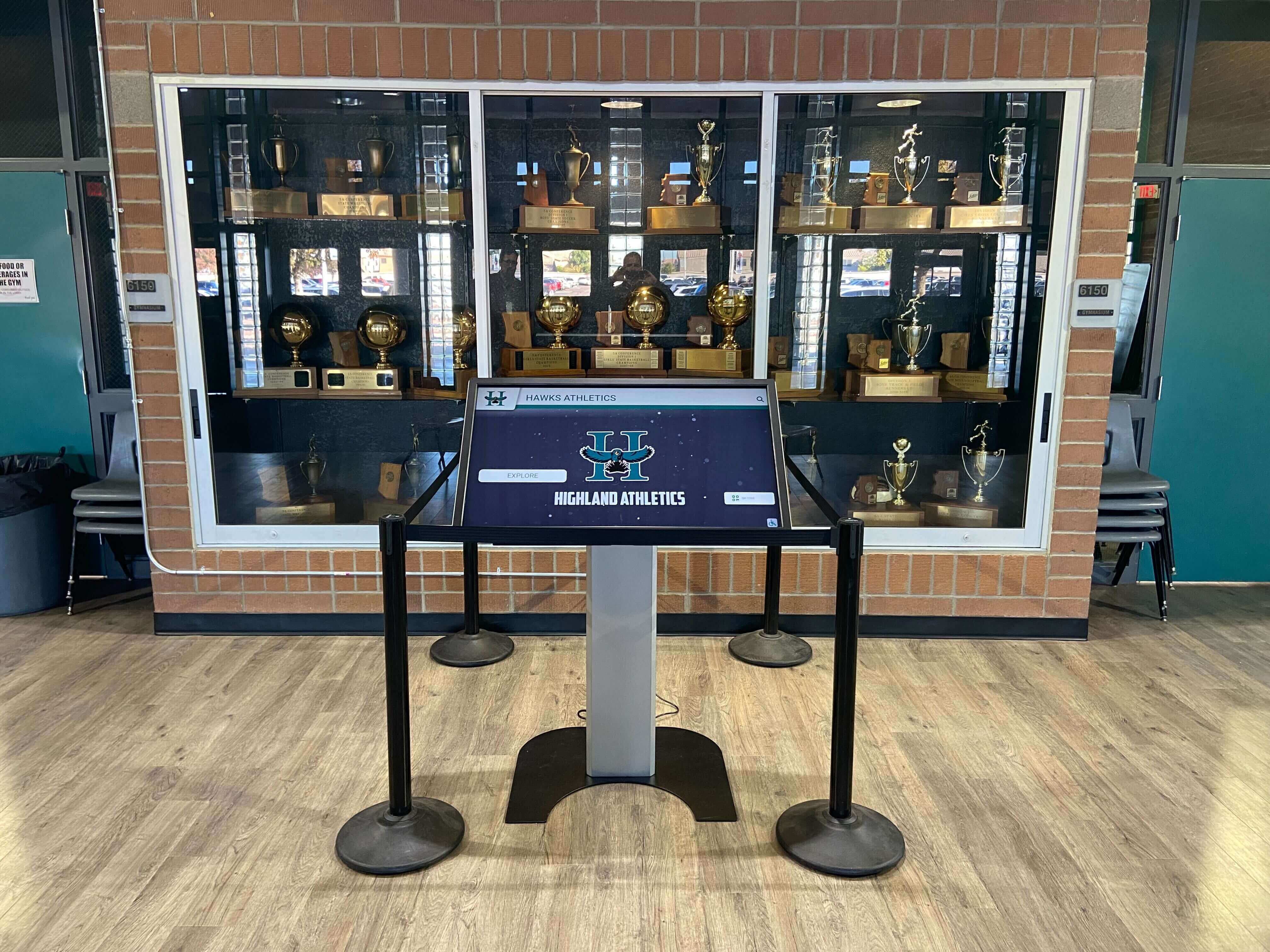
Digital swim record boards replace or supplement traditional static displays with interactive touchscreen systems or dynamic digital screens that showcase unlimited records through high-resolution graphics, detailed swimmer profiles, multimedia content, and continuously updated information.
Core Technology Components
Commercial-Grade Display Hardware
Modern digital swim record boards utilize commercial displays specifically rated for challenging pool environments. Unlike consumer televisions, these displays feature enhanced durability for continuous operation, higher brightness levels suitable for naturally-lit natatoriums, moisture resistance appropriate for humid environments, commercial-grade components rated for 50,000-70,000 hour lifespans, and mounting systems accommodating pool facility requirements.
For interactive applications, multi-touch capacitive technology provides responsive, intuitive navigation that feels natural to swimmers, parents, and visitors exploring content.
Cloud-Based Content Management Platforms
Purpose-built software enables authorized coaches and administrators to manage content from any internet-connected device—pool deck tablets, office computers, or smartphones. This accessibility means records can be updated immediately after meets while results remain fresh and excitement runs high.
Template-based systems ensure consistent professional appearance across all records while accommodating swimming’s unique categorization needs including event-specific templates, age group organization, course type differentiation, relay team configurations, and time comparison features.

Robust Search and Interactive Features

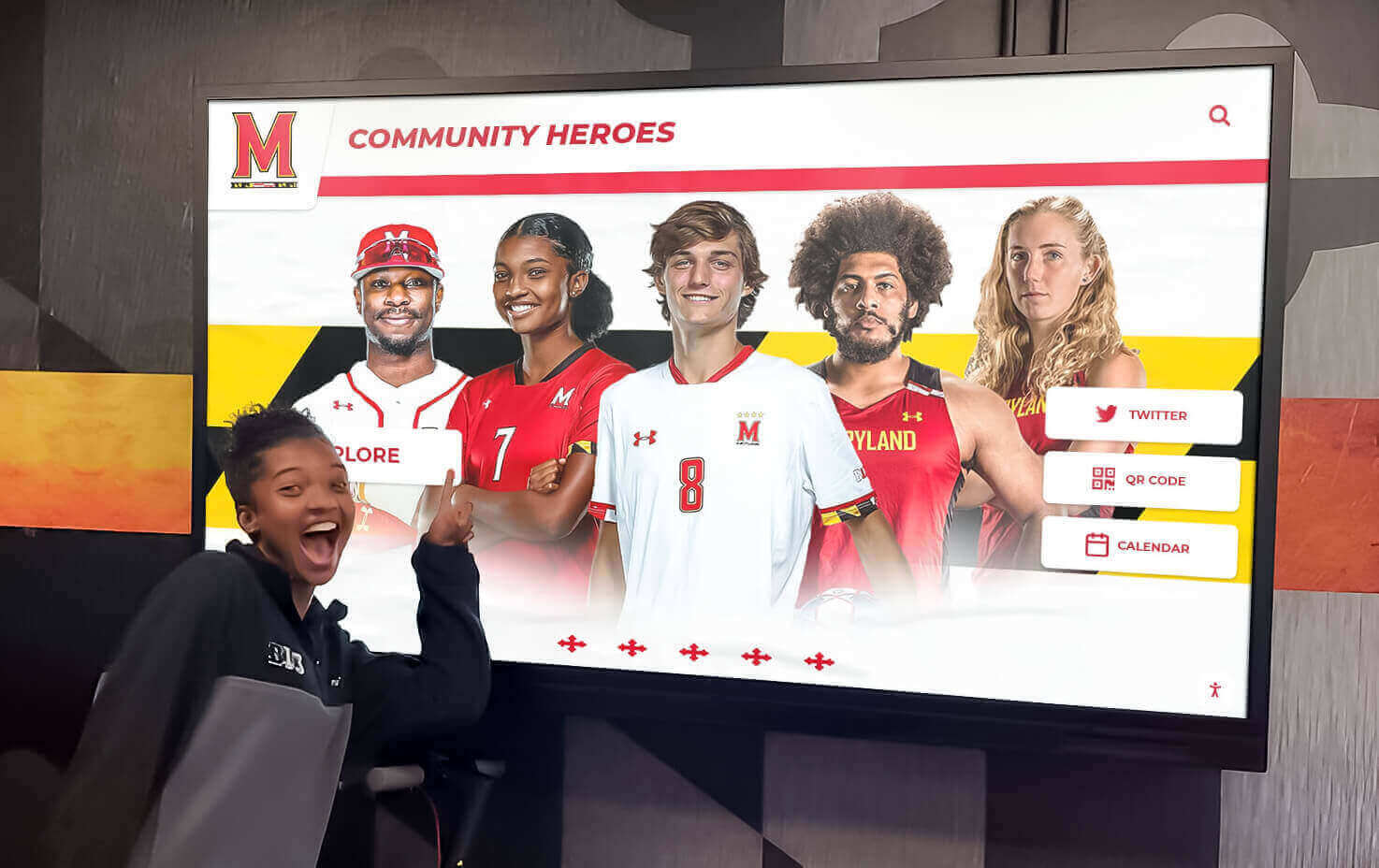
Digital platforms transform static record lists into interactive exploration tools. Users can search by swimmer names to find all records held by specific athletes, browse events to compare records across strokes and distances, filter by time period to see historical progression, view age group records appropriate to specific divisions, compare course types (SCY vs. SCM vs. LCM), and access detailed race information including splits and competition context.
This searchability creates personal connections impossible with traditional boards. Alumni can locate their records within seconds. Current swimmers can track their progress toward pool standards. Parents can find all their children’s achievements across multiple seasons and age groups.
Unlimited Recognition Capacity
The most transformative benefit addresses swimming’s fundamental challenge: unlimited capacity. A single digital display can showcase comprehensive records across all events, age groups, course types, and time periods—content that would require dozens of traditional boards to display physically.
This capacity transformation changes how programs approach recognition entirely. Instead of asking “Which records deserve our limited wall space?” programs ask “How do we best organize and present our complete swimming legacy?”
Programs implementing digital record boards report displaying 10-20 times more achievement content than previous physical displays allowed, ensuring every stroke, every distance, and every age group receives appropriate recognition.
Key Benefits: Why Competitive Swimming Programs Embrace Digital Record Boards
Instant Record Updates After Every Meet
The most immediate operational benefit eliminates the delay between record-breaking swims and public recognition. With digital systems, updating records requires minutes instead of weeks:
- Review official meet results confirming new records
- Log into cloud-based content management system
- Update appropriate record categories with new times
- Add swimmer photos and race details if available
- Publish updates instantly to facility displays
This immediacy enables programs to celebrate achievements while excitement remains high. Swimmers who break records at Saturday morning meets can see their names on the board by Saturday afternoon—creating powerful recognition moments that traditional systems simply cannot deliver.
Compare this to traditional approaches requiring graphic designer consultation, print or paint production scheduling, facility access coordination, and installation labor—processes often consuming 4-8 weeks even for simple updates.
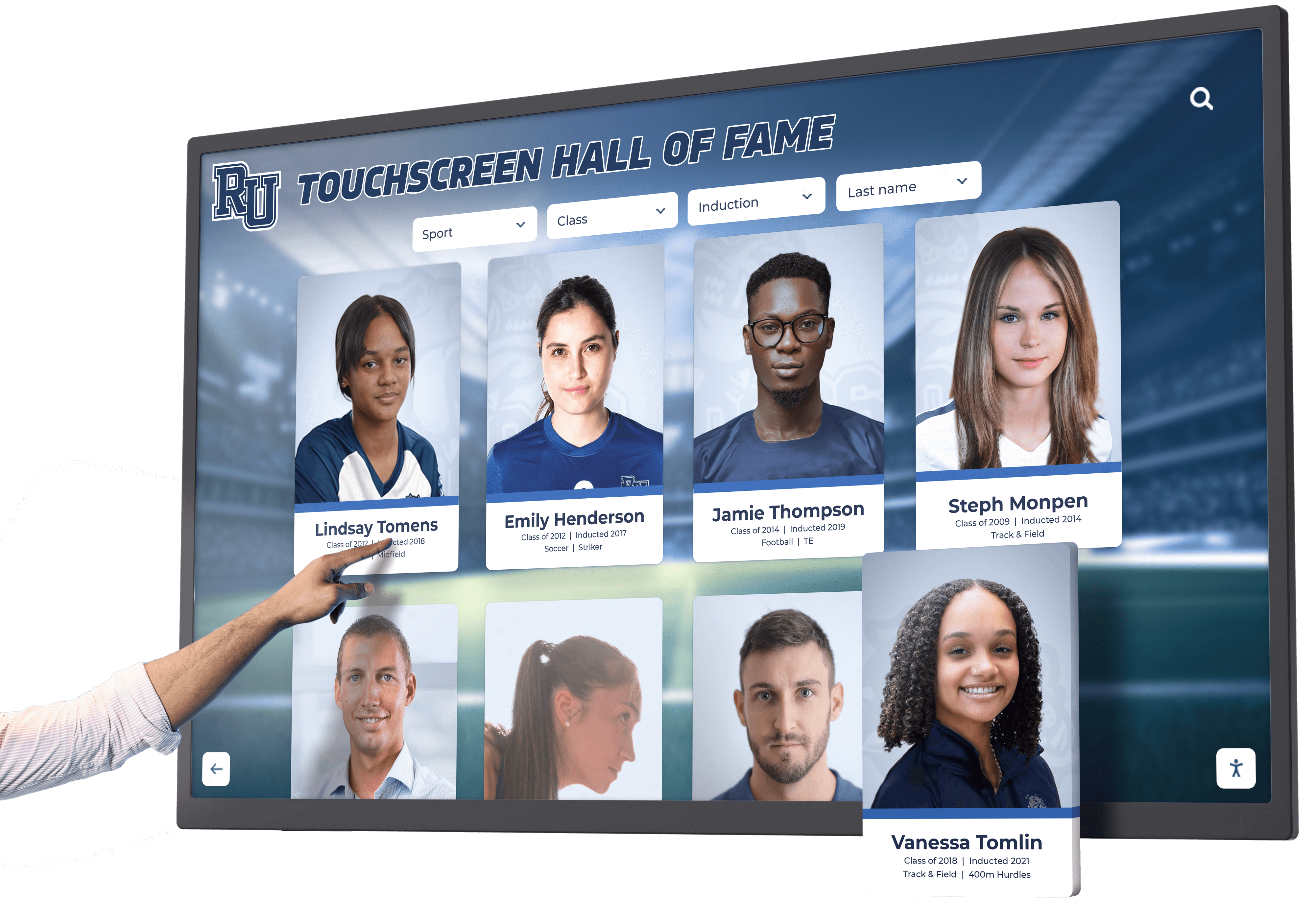
Comprehensive Recognition Across All Categories
Swimming’s complexity demands recognition systems that accommodate diverse achievement categories. Digital record boards excel at organizing and presenting this complexity clearly:
Event-Specific Organization
Individual pages or sections for each competitive event (50 Free, 100 Back, 200 Fly, etc.) displaying records across all tracked categories for that stroke and distance. Swimmers can explore the complete history of their specialty events.
Age Group Recognition
Clear differentiation ensures swimmers compete against appropriate benchmarks. Eight-year-old swimmers see 8U records they might realistically challenge, while senior swimmers pursue open category times. This age-appropriate goal-setting maximizes motivation across all developmental stages.
Course Type Clarity
Short course yards (25-yard pools), short course meters (25-meter pools), and long course meters (50-meter pools) each maintain separate records. Digital systems clearly differentiate these categories, eliminating confusion that often occurs with traditional boards trying to display multiple course types simultaneously.
Historical Depth
Digital capacity enables programs to maintain complete historical records rather than replacing old records as new ones are set. Swimmers from every era remain recognized, creating comprehensive program legacies that honor all contributors to swimming excellence.
This comprehensive approach ensures that all swimmers—regardless of their specialty stroke, competitive level, or when they competed—receive appropriate recognition for their achievements.
Rich Multimedia Storytelling Beyond Times and Names
Swimming records represent more than numbers on a screen. Each time reflects countless training hours, technical refinement, mental preparation, and competitive determination. Digital trophy displays enable programs to tell these complete achievement stories.
Swimmer Profile Integration
Each record can link to comprehensive swimmer profiles including action photography from races, career progression timelines, personal statements or coach tributes, current status and post-swimming activities, and related achievements (other records, championship titles, honors).
Race Context and Details
Record displays can include competition information providing context including meet name and level (conference, state, national), date achieved, winning margin or placement, splits for longer races showing pacing strategy, and video highlights of record-breaking swims when available.
Visual Comparisons and Graphics
Interactive visualizations help users understand achievement significance through time progression charts showing record improvements over decades, comparison graphics displaying current times against state/national standards, age group progression showing development pathways, and historical context positioning achievements within program legacy.
This multimedia depth transforms simple record lists into engaging stories that create emotional connections and inspire current swimmers toward similar excellence.
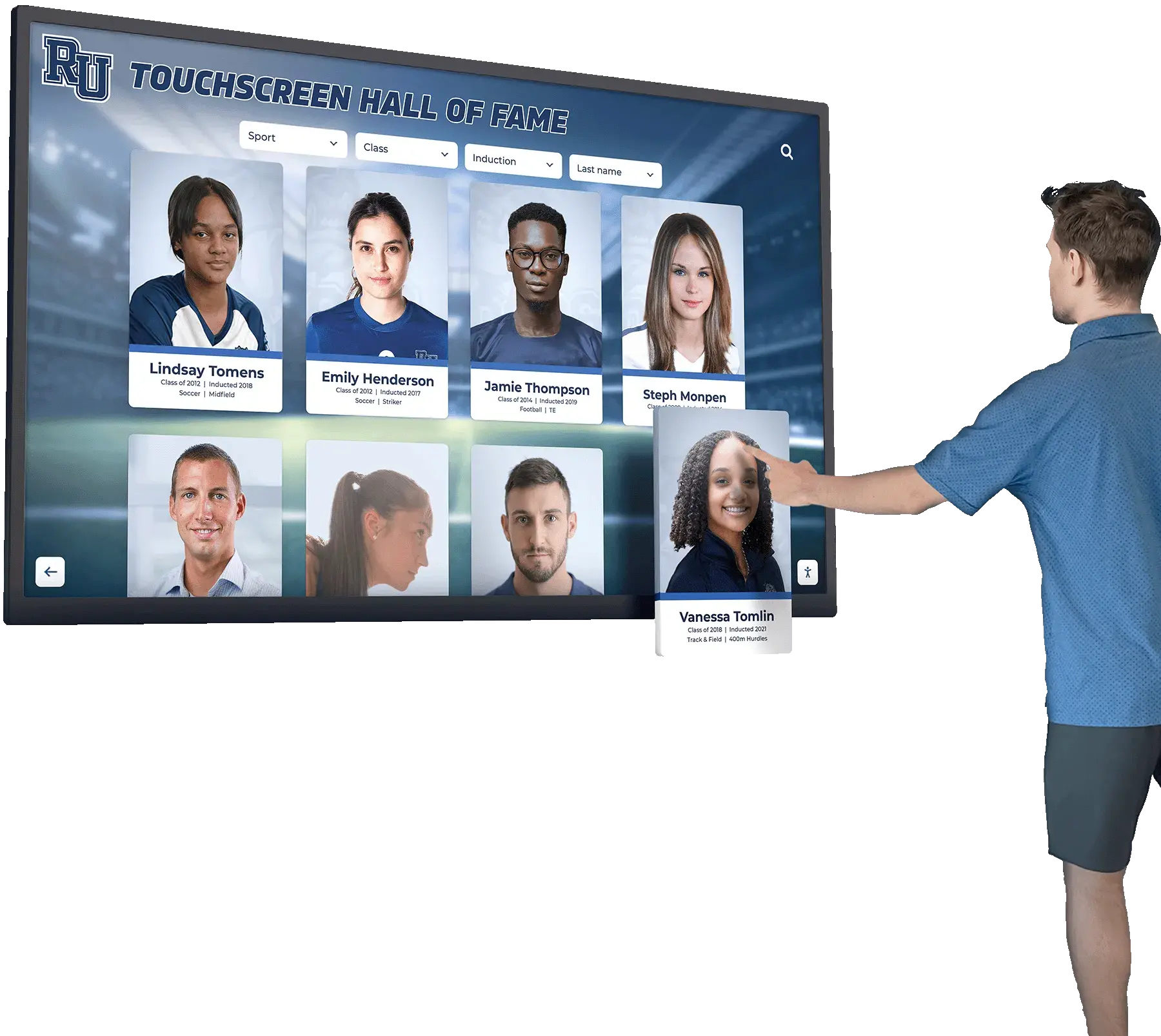
Operational Efficiency and Administrative Benefits
Beyond improved recognition capabilities, digital swim record boards deliver practical operational benefits that appeal to coaches and administrators managing limited resources.
Dramatic Time Savings
Manual record board maintenance consumes significant staff time—often 10-20 hours per season for comprehensive updates. Digital systems reduce this burden by 85-90%, allowing coaches to focus on training rather than administrative tasks.
Eliminated Production and Installation Costs
Traditional updates require recurring expenses for graphic design services, print or paint production, professional installation labor, and correction of errors requiring reproduction. Digital systems eliminate these recurring costs entirely after initial implementation.
Error Correction Simplicity
Mistakes happen—times recorded incorrectly, names misspelled, or events mislabeled. With traditional boards, errors require expensive reproduction. Digital systems enable instant corrections at zero marginal cost, ensuring accurate information without budget implications.
Reduced Facility Disruption
Painting or installing physical record boards often requires facility access during practice hours, ladder or lift equipment, traffic restrictions, and multi-day timelines. Digital content updates occur remotely without disrupting facility operations, coaching schedules, or training activities.
These efficiency gains accumulate substantially over time. Programs implementing digital record boards report 3-5 year return on investment when accounting for avoided update costs and reclaimed staff time.
Extended Engagement Through Web Accessibility
Physical record boards reach only visitors who physically enter your natatorium. Digital recognition systems extend reach dramatically through web-accessible components and social media integration.
Remote Access Features
Web-based portals enable swimmers and families to explore records from home, alumni worldwide to reconnect with their achievements, prospective team members to research program excellence, and media to access information for coverage without facility visits.
Schools report that 60-75% of digital record board views occur through web access rather than physical displays—dramatically expanding recognition reach and impact.
Social Sharing Capabilities
One-click sharing to Instagram, Facebook, Twitter, and other platforms enables swimmers to celebrate achievements with extended networks, programs to promote excellence to wider audiences, and alumni to reconnect through shared swimming memories.
Social sharing generates 6-10x more impressions than standard team communications, amplifying recognition impact while building program visibility and pride.
Recruiting and Program Promotion
Prospective swimmers researching programs can explore complete record histories, understanding program strength, development pathways, and competitive standards. This transparency supports recruiting efforts while demonstrating program commitment to recognizing all levels of achievement.
Student engagement strategies demonstrate how digital recognition platforms create connections extending far beyond physical facility walls.
Implementation Strategies: From Planning to Launch
Successful digital swim record board implementations follow systematic approaches addressing planning, content development, technology selection, and ongoing management.
Phase 1: Assessment and Planning
Record Inventory and Audit
Begin by documenting your current record-keeping systems including what records are currently tracked, which records have reliable verification, what historical records exist in various formats, and where gaps exist in documentation. This inventory reveals the scope of content digitization required and identifies achievements currently lacking recognition due to display constraints.
Most programs discover they possess more historical records than they realized—stored in coach’s files, archived newspapers, old meet programs, and alumni memories. Digital systems finally enable comprehensive display of this complete program history.
Stakeholder Engagement
Involve key constituencies early in planning including head coach defining record categories and priorities, assistant coaches providing event-specific insights, team administrators managing budgets and approvals, facility managers coordinating installation, parent organizations potentially supporting funding, and alumni associations representing historical perspectives.
This engagement builds support and ensures implementations reflect diverse needs rather than single viewpoints.
Goal Definition and Success Metrics
Establish clear objectives beyond “modernize our record board” such as provide comprehensive recognition across all events and age groups, enable immediate updates after every meet, create engaging experiences inspiring current swimmers, preserve complete program history and legacy, support recruiting through professional program presentation, and strengthen alumni connections through accessible recognition.
Clear goals guide subsequent decisions about technology selection, content priorities, and success measurement approaches.
Phase 2: Content Development Strategy
Quality content determines digital record board effectiveness. Poor content execution undermines even excellent hardware and software investments.
Establishing Record Categories
Determine exactly which records your program will track including individual events by stroke and distance, relay configurations, age group divisions, course type differentiations, and special categories (fastest splits, youngest record holders, oldest standing records).
Comprehensive systems might track 300-500+ individual record categories. Start with core competitive events and expand systematically rather than attempting everything simultaneously.
Photography and Multimedia Standards
Establish consistent approaches ensuring professional appearance including high-resolution action photography (minimum 1920x1080), consistent lighting and backgrounds, proper image permissions and usage rights, video highlights of significant swims when available, and historical photo digitization with appropriate attribution.
Consider engaging professional sports photographers for initial documentation of current team members, then train coaches in maintaining standards for ongoing additions.
Historical Research and Documentation
Many swimming programs have rich histories inadequately documented or recognized. Dedicate resources to researching historical records through yearbook and newspaper archives, former coach interviews and records, alumni surveys and memory collection, state association historical records, and meet program archives.
This research creates surprising discoveries—record holders from decades past who deserve recognition, championship teams whose achievements were never properly celebrated, and program traditions worth preserving. Digital capacity finally enables comprehensive historical recognition.
Data Accuracy and Verification
Swimming records demand precision. Establish verification protocols including multiple source confirmation (official meet results, timing system printouts), appropriate rounding (hundredths vs. tenths for hand-timed vs. electronic timing), clear documentation of when/where records were achieved, and systematic review processes before publication.
Maintain documentation supporting each record—future questions will arise, and having verification readily available prevents disputes and builds confidence in your record-keeping integrity.
Phase 3: Technology Selection and Installation
Display Hardware Considerations
Screen specifications depend on viewing distance and natatorium characteristics including size appropriate for primary viewing location (typically 55-75 inches for natatorium walls), brightness sufficient for naturally-lit facilities (minimum 400-500 nits), moisture-resistant construction suitable for pool environments, commercial-grade ratings for continuous operation, and anti-glare treatments accommodating window glare.
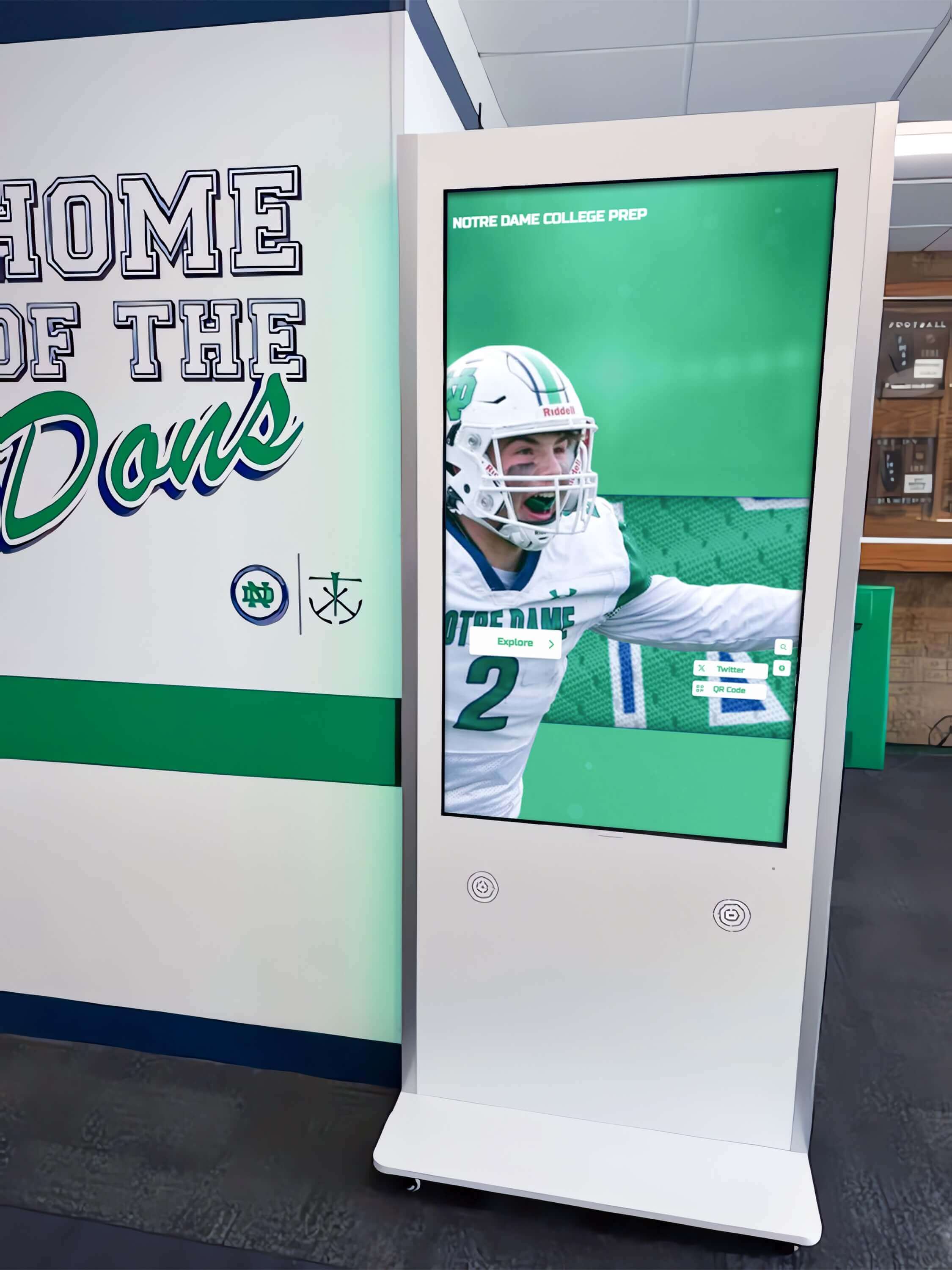
Mounting configurations affect aesthetics, accessibility, and maintenance including wall-mounted systems saving space with clean appearance, protective enclosures for high-contact areas, viewing angle optimization for typical spectator positions, and cable management concealing connections professionally.
Software Platform Requirements
Purpose-built recognition platforms offer significant advantages over generic digital signage software including pre-designed templates optimized for sports records, intuitive interfaces requiring no technical expertise, flexible categorization accommodating swimming’s complexity, built-in search and filtering for user exploration, mobile-responsive designs across all devices, and dedicated support from teams understanding athletic program needs.
Evaluate platforms specifically on swimming-friendly features like easy event organization, age group management, course type handling, relay team configurations, and time comparison visualizations.
Network and Infrastructure Requirements
Reliable connectivity ensures consistent performance including wired Ethernet providing most stable connections, robust WiFi networks offering acceptable alternatives, adequate bandwidth for multimedia content, secure access preventing unauthorized modifications, and backup systems protecting against internet disruptions.
Coordinate with facility IT staff early in planning to address any infrastructure improvements needed before installation.
Phase 4: Launch and Promotion
Ceremonial Unveiling
Create excitement around your digital record board launch including special team meeting or event introducing the new system, demonstration of interactive features and capabilities, recognition of contributors who supported implementation, and media coverage highlighting program innovation.
This ceremonial approach builds enthusiasm while communicating that record recognition matters to your program culture.
Training and Documentation
Ensure staff can manage the system effectively through hands-on training for all administrators who’ll update content, written documentation for common tasks and troubleshooting, identified point people responsible for regular updates, and scheduled review sessions reinforcing best practices.
Most systems prove intuitive enough that extensive training isn’t required—30-60 minutes typically provides sufficient orientation for comfortable independent management.
Communication and Promotion
Inform your community about the new recognition resource including announcements to current team members and families, outreach to alumni through newsletters and social media, website updates featuring record access, media releases highlighting program investment in recognition, and ongoing promotion ensuring the system receives sustained attention.
Digital record boards deliver maximum value when communities actively engage with them—promotion ensures awareness and encourages regular exploration.
Creative Applications Beyond Standard Record Lists
Programs discovering digital record board flexibility find creative applications beyond traditional fastest times recognition.
Improvement Tracking and Time Standards
Swimming emphasizes continuous improvement. Digital systems can showcase not just pool records, but also motivational time standards including age group A/AA/AAA qualifying times, state championship qualifying standards, sectional and national championship cuts, All-America automatic and consideration times, and Olympic Trials qualifying standards.
Displaying these standard progressions helps swimmers understand development pathways and set appropriate goals. Interactive features can show where individual swimmers stand relative to these benchmarks, creating personalized motivation.
Championship Team Recognition
While individual records often receive primary attention, championship teams deserve comprehensive recognition including league championship team rosters, state meet performances and placements, relay team configurations and times, team scoring contributions, and coaching staff involved in championship seasons.
College commitment recognition demonstrates how digital platforms can celebrate team achievements alongside individual records, creating balanced recognition programs honoring all contributors to program success.
Swimmer Development Timelines
Swimming careers span many years—particularly for club programs following swimmers from age 6 through 18. Digital systems can create individual swimmer timelines showing year-by-year improvement across all events, highlighting breakthrough performances and consistent development.
These timelines provide powerful visualization of how dedication and training produce results over time—valuable lessons for younger swimmers just beginning their competitive journeys.
Alumni Achievement Updates
Swimming often launches lifelong connections to the sport. Digital record boards can maintain alumni sections featuring college swimming careers, post-collegiate competition, Masters swimming achievements, coaching or officiating contributions, and swimming-related professional careers.
This ongoing connection demonstrates that swimming excellence extends beyond competitive careers while maintaining relationships between programs and former team members.
Special Recognition Categories
Beyond fastest times, programs can recognize unique achievements including longest-standing records celebrating historic performances, youngest record holders highlighting early excellence, consecutive years holding records demonstrating sustained dominance, and most records held simultaneously by individual swimmers.
These creative categories add interest and dimensionality to record recognition while celebrating achievement diversity beyond simply fastest times.
Addressing Common Questions and Concerns
“What Happens to Our Traditional Painted Record Boards?”
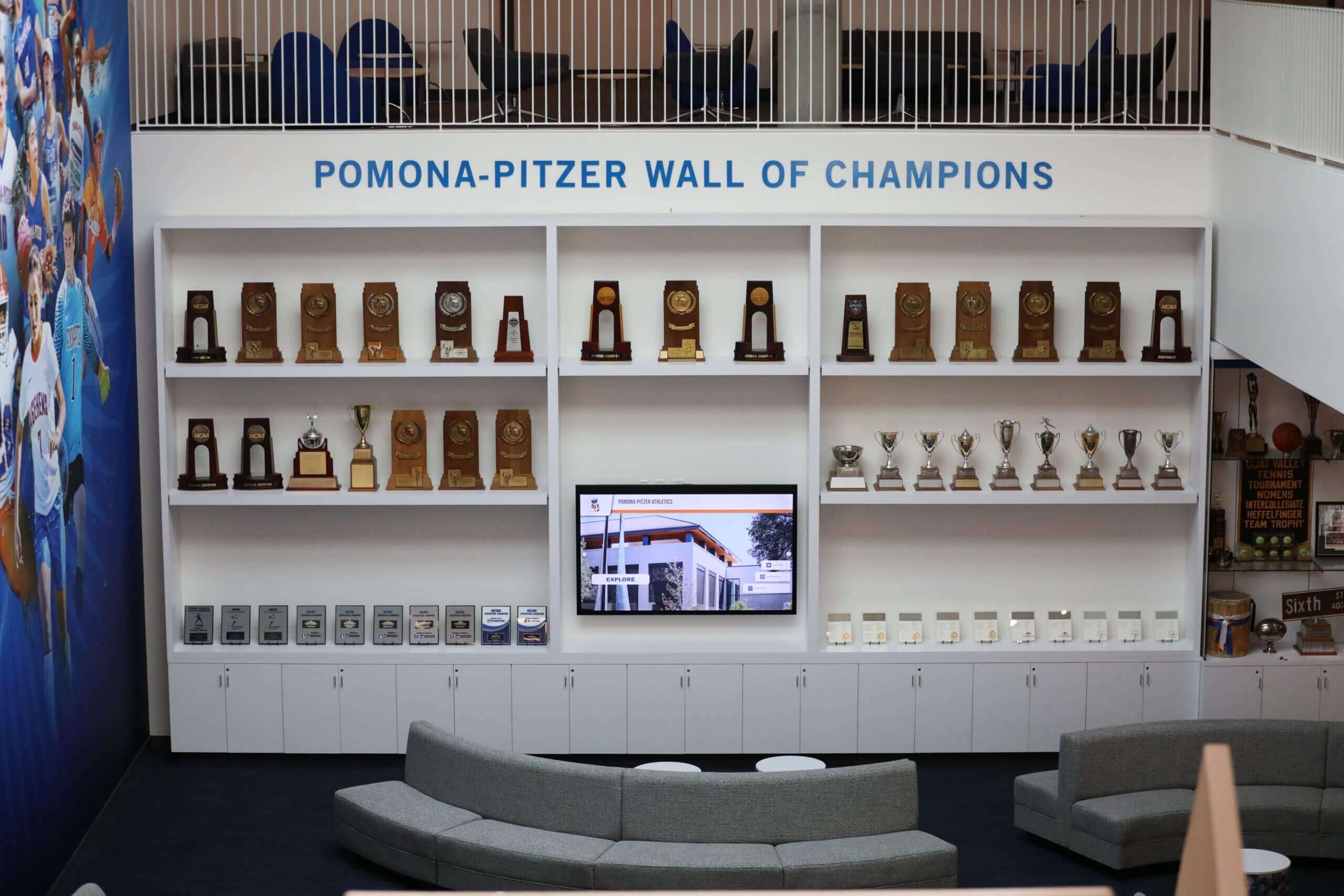
Digital implementations don’t require eliminating existing physical displays. Many programs implement hybrid approaches combining showcasing traditional boards as historical artifacts and program heritage, maintaining selected records on physical boards while displaying comprehensive records digitally, and using physical displays for prominent championship recognition while digital systems handle detailed records.
The key message: digital systems enhance rather than replace recognition by making ALL records accessible while preserving traditional displays that hold sentimental and aesthetic value.
“Can Digital Displays Withstand Pool Environments?”
Commercial displays specifically rated for humid environments provide excellent reliability in natatorium applications including moisture-resistant construction, corrosion-resistant materials and coatings, proper ventilation preventing condensation, commercial-grade components rated for challenging conditions, and protective enclosures when additional security is desired.
Thousands of digital displays currently operate successfully in competitive swimming facilities worldwide, demonstrating proven durability in pool environments. Proper installation and appropriate hardware selection ensure reliable long-term performance.
“How Much Technical Expertise Is Required?”
Modern cloud-based platforms are designed for non-technical users with intuitive interfaces requiring no coding or design skills, template systems ensuring professional results, drag-and-drop content organization, automatic formatting and calculations, and comprehensive support from platform providers.
Most coaches and administrators become comfortable managing content after 30-60 minutes of training. The systems prove substantially easier than learning timing system software or meet management applications already familiar to competitive swimming programs.
“What About Power Outages or Technical Failures?”
Reliable systems include multiple safeguards against downtime including cloud-based content storage preventing data loss, automatic backup and recovery systems, redundant hardware configuration options, quick-swap replacement procedures for hardware failures, and local caching enabling continued operation during brief connectivity disruptions.
Commercial-grade displays prove more reliable than consumer electronics, with typical failure rates under 5% over 5-year periods. Most programs experience fewer technical issues with digital record boards than with traditional timing systems or facility sound equipment.
“Can We Afford Digital Record Boards?”
Implementation costs vary based on display size, features, and customization requirements. Single-display systems with comprehensive software typically range from $8,000-$18,000 for initial setup including commercial display hardware, cloud platform subscription, professional installation, initial content development, and staff training.
When compared to recurring costs of traditional board updates—design services, production, and installation typically costing $2,000-$5,000 per major update—many programs achieve break-even within 3-5 years while gaining capabilities traditional approaches can never provide.
Funding strategies include booster club or parent organization support, alumni fundraising campaigns, naming opportunities for displays, capital improvement budgets, and phased implementation starting small and expanding as benefits demonstrate value.
Advancement support strategies demonstrate how digital recognition investments often attract donor support more easily than traditional facility improvements due to their visible, engaging nature.
Future Trends: Where Swimming Record Technology Is Heading
Digital record board technology continues evolving with emerging capabilities that will further enhance recognition effectiveness.
Timing System Integration
Future systems will likely connect directly with timing systems including automatic record updates immediately following races, real-time comparison during meets showing records threatened, instant verification eliminating manual result entry, and split time analysis comparing record performances.
This integration would eliminate manual updates entirely while providing immediate recognition literally seconds after record-breaking swims.
Personalized Swimmer Portals
Individual athletes could access customized views including personal time progressions across all events, comparison to pool standards and age group benchmarks, improvement suggestions based on split analysis, training performance tracking, and goal-setting tools toward specific time standards.
These personalized features would extend digital record boards from recognition displays into active training and motivation tools integrated into swimmers’ daily competitive experiences.
Enhanced Video Integration
As video capabilities expand, systems might include automatic highlight generation from meet videos, stroke analysis comparisons between current and record-breaking swims, underwater footage integration, and slow-motion technique breakdowns.
This video integration would transform record boards from informational displays into comprehensive swimming education resources.
Social and Community Features
Enhanced social connectivity might enable verified swimmer commenting and storytelling, peer recognition and congratulations, mentor connections between current and former record holders, and community voting for special recognition categories.
These social features would deepen engagement while strengthening team culture and alumni connections.
Conclusion: Honoring Every Swimmer Comprehensively
Competitive swimming generates detailed performance records across dozens of events, age groups, and course types—each representing individual dedication, technical refinement, and competitive excellence. When update complexity and costs force programs to delay recognition or display only selected records, comprehensive achievement celebration becomes impossible.
Digital swim record boards restore complete recognition by making every record accessible, every achievement visible, and every swimmer’s contribution acknowledged. They transform outdated displays and incomplete recognition into organized, engaging showcases preserving complete program histories while inspiring current team members to add their own chapters to ongoing excellence stories.
Whether dealing with static boards desperately needing updates, incomplete record documentation, or simply seeking better ways to celebrate swimming success, digital swim record boards provide practical, engaging solutions. They honor the past comprehensively, celebrate the present immediately, and inspire future achievements through accessible, interactive recognition serving entire swimming communities.
The transition from static limitations to digital possibilities represents more than technology upgrade—it represents commitment to recognizing every swimmer’s achievement, preserving every performance milestone, and ensuring decades of dedication remain visible and valued for generations to come.
Modern swimming programs deserve recognition systems matching the sport’s precision, comprehensiveness, and commitment to measurable excellence. Digital swim record boards deliver exactly that—comprehensive, current, and compelling celebration of everyone who contributes to your program’s competitive success and swimming legacy.
Ready to Transform Your Natatorium Record Display?
Discover how digital swim record boards can honor every achievement while reducing update burdens and administrative costs. Explore comprehensive platforms specifically designed for competitive swimming program recognition needs.
Explore Digital Record Board Solutions






























