Beyond Glass Cases: The Evolution of Achievement Recognition
Traditional trophy cases have served schools and organizations for decades—glass enclosures filled with trophies, plaques, and awards commemorating achievements. But these static displays face inherent limitations: space constraints force difficult decisions about which awards to showcase, dust accumulates on forgotten achievements, and visitors can only glimpse basic information from outside the glass. Digital trophy cases revolutionize achievement recognition by transforming how institutions celebrate excellence through interactive, dynamic displays that overcome all limitations of traditional methods.
Modern digital trophy cases combine touchscreen technology with sophisticated content management systems to create engaging recognition experiences. Instead of physical trophies gathering dust behind glass, schools display comprehensive achievement profiles with photos, videos, statistics, and stories that bring accomplishments to life. These systems offer unlimited capacity, enabling institutions to honor every achievement without ever running out of space or removing older recognition to accommodate new awards.
At Rocket Alumni Solutions, we’ve helped hundreds of schools and organizations transition from traditional trophy cases to digital recognition systems that fundamentally transform how communities celebrate excellence. This comprehensive guide explores everything you need to know about digital trophy cases—from understanding the technology to planning implementation and maximizing long-term value.
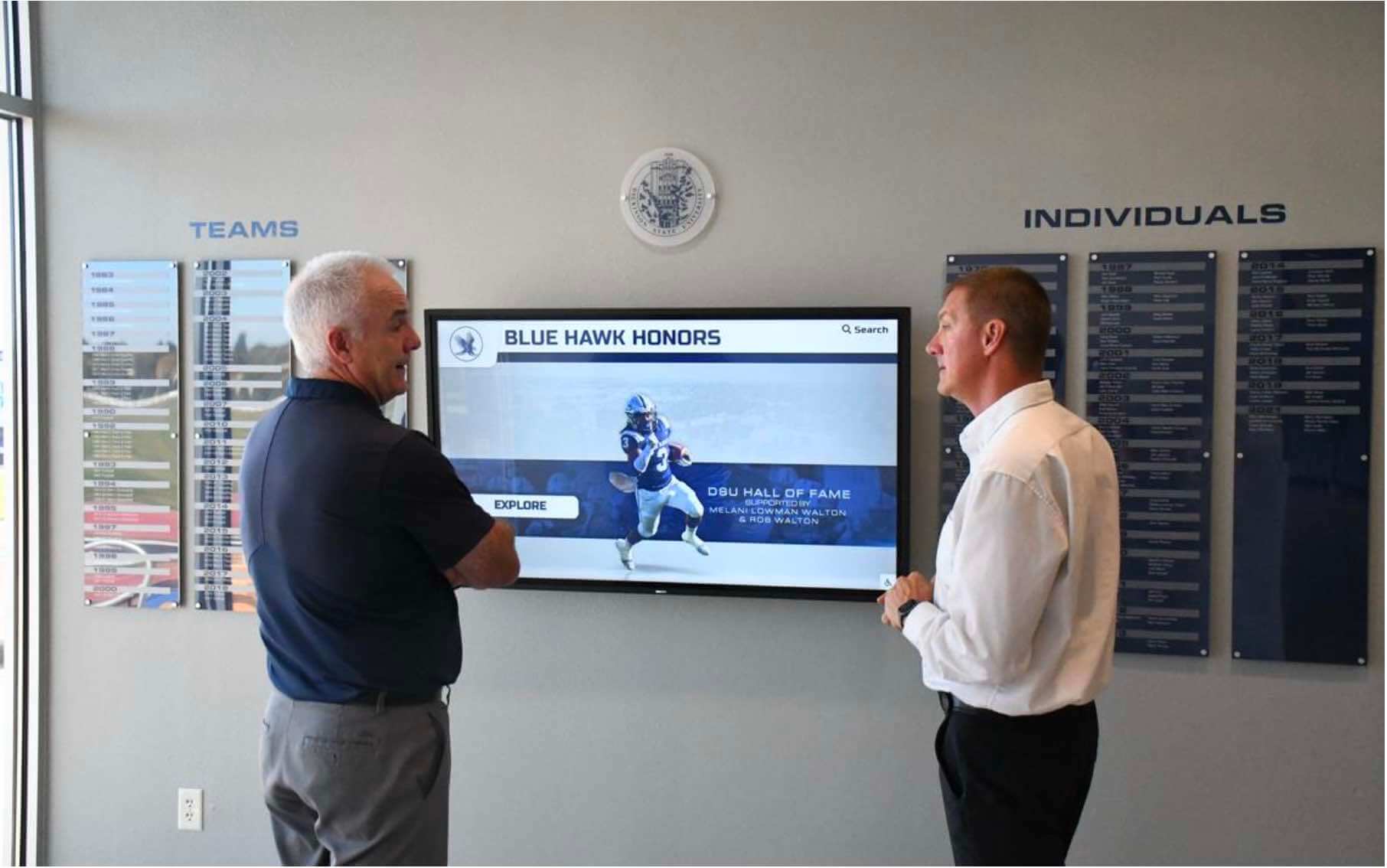
Digital trophy cases provide modern, interactive alternatives to traditional glass display cases
Understanding Digital Trophy Cases: Technology and Capabilities
Digital trophy cases represent the convergence of display technology, interactive software, and cloud-based content management systems designed specifically for achievement recognition.
Core Components of Digital Trophy Systems
Display Hardware:
Commercial-grade touchscreen displays serve as the physical interface for digital trophy cases. These displays range from 43-inch screens suitable for hallway installations to 75-inch or larger screens commanding attention in main entrance areas. Unlike consumer televisions, commercial displays are engineered for continuous operation in public environments, featuring enhanced durability, extended warranties, and robust construction withstanding constant use.
Touchscreen capability transforms passive viewing into active engagement. Multi-touch interfaces support intuitive gestures—swiping through achievements, pinching to zoom on photos, tapping to explore detailed information—creating tablet-like experiences familiar to modern users. This interactivity dramatically increases engagement time compared to traditional trophy case viewing, with visitors spending 5-10 minutes exploring digital content versus 30 seconds glancing at physical trophies.
Recognition Software Platform:
Specialized software designed for achievement recognition distinguishes digital trophy cases from generic digital signage systems. These platforms provide structured frameworks for organizing achievements by category, sport, year, individual, team, or any classification serving institutional needs. Intelligent search and filtering enable visitors to quickly locate specific achievements, individuals, or time periods rather than scanning endless displays hoping to find information.
Content management interfaces allow administrators to easily add, update, or modify recognition content without technical expertise. Cloud-based systems enable remote administration from any internet-connected device, eliminating the need for on-site access to update content. This convenience ensures recognition remains current, with new achievements added immediately rather than waiting for scheduled update cycles.
Solutions like those offered by Rocket Alumni Solutions provide comprehensive platforms specifically designed for educational recognition, incorporating features that general-purpose digital signage systems lack.
Mounting and Installation Options:

Wall-mounted installations maximize space efficiency

Freestanding kiosks offer flexible placement options
Wall-mounted configurations create clean, professional appearances while preserving floor space—ideal for high-traffic corridors or entrance areas. Freestanding kiosks provide flexibility for locations lacking appropriate wall space or requiring portable displays for special events. Protective enclosures shield displays in high-contact environments while maintaining aesthetic appeal and accessibility.
Key Capabilities That Distinguish Digital Trophy Cases
Unlimited Recognition Capacity:
Physical trophy cases hold finite numbers of awards before reaching capacity, forcing institutions to choose which achievements deserve display. Digital systems eliminate these constraints entirely. A single digital trophy case can showcase thousands of achievements with comprehensive information about each—detailed statistics, photos, videos, and narratives impossible to include with physical trophies.
Schools implementing digital trophy displays report finally honoring decades of stored achievements previously hidden in closets and storage rooms due to display space limitations.
Multimedia Content Integration:
Traditional trophy cases display physical objects with minimal context—perhaps a small placard identifying the award. Digital trophy cases incorporate rich multimedia content that tells complete achievement stories:
- High-resolution photos from competitions and award ceremonies
- Video highlights capturing pivotal moments and performances
- Audio recordings of fight songs, crowd reactions, or personal reflections
- Statistical visualizations showing records and performance trends
- Interactive timelines placing achievements in historical context
- Document archives preserving programs, newspaper clippings, and certificates
This multimedia depth transforms recognition from simple acknowledgment into compelling storytelling that engages visitors emotionally and intellectually.
Searchable Achievement Databases:
Physical trophy cases organize achievements spatially, with newer awards typically receiving prominent placement while older accomplishments migrate to less visible areas. Visitors seeking specific information must scan the entire display hoping to locate what they’re looking for.
Digital trophy cases provide powerful search and filtering functionality. Users can instantly locate achievements by typing names, years, sports, or award types. Advanced filters enable browsing patterns like “show me all state championships in basketball” or “display every athlete who won multiple all-conference honors.” This discoverability ensures all achievements receive equal recognition potential regardless of when they occurred.
Remote Content Management:
Traditional trophy cases require physical access for updates—unlocking glass doors, rearranging physical objects, printing and mounting new placards. This manual process creates administrative burdens that often delay recognition updates or discourage frequent maintenance.
Cloud-based digital trophy case platforms enable remote content management from any location. Administrators can add new achievements, update existing information, or reorganize content from office computers or even smartphones. This convenience ensures recognition remains current, with championship trophies appearing immediately after competitions conclude rather than waiting weeks or months for physical updates.

User-friendly content management interfaces simplify achievement recognition updates
Benefits of Digital Trophy Cases for Schools and Organizations
Institutions transitioning from traditional trophy cases to digital recognition systems experience transformative benefits across engagement, administration, space utilization, and cultural impact.
Enhanced Visitor Engagement and Interaction
Traditional trophy cases operate as passive displays—visitors look through glass at physical objects with limited context. Digital trophy cases create active engagement experiences that captivate attention and encourage extended exploration.
Interactive Discovery:
Touchscreen interfaces invite visitors to actively explore achievements through intuitive interactions. Instead of passive viewing, users become active participants—searching for familiar names, filtering by specific sports or years, zooming in on photos, and watching video highlights. This interactivity transforms recognition from something briefly glanced at into engaging experiences that command 5-15 minutes of focused attention.
Analytics from institutions implementing interactive trophy kiosks show dramatic increases in engagement metrics, with digital displays generating 10x longer average viewing times compared to traditional trophy cases.
Personalized Exploration Paths:
Every visitor creates their own journey through achievement content based on personal interests. Alumni returning for reunions can quickly locate their graduation year and explore achievements from their time at the institution. Current students can filter by specific sports or activities they participate in, seeing relevant role models and aspirational achievements. Parents can search for their children’s accomplishments or browse recent recognition.
This personalization ensures content relevance for diverse audiences rather than forcing everyone to follow the same predetermined sequence established by physical trophy case organization.
Social Sharing and Extended Reach:
Physical trophy cases reach only visitors who physically walk past the display. Digital recognition systems extend reach dramatically through web accessibility and social media integration. Many digital trophy case platforms provide web portals where achievement content is accessible online from anywhere in the world, enabling alumni, parents, and supporters to explore recognition remotely.
Integrated social sharing functionality allows users to instantly share specific achievements to social media platforms, amplifying recognition reach exponentially. When an athlete shares their championship trophy profile to Facebook or Instagram, hundreds or thousands of connections see that achievement—extending institutional visibility far beyond campus boundaries.
Administrative Efficiency and Reduced Maintenance
Traditional trophy case maintenance creates ongoing administrative burdens that digital systems dramatically reduce.
Simplified Content Updates:
Adding new achievements to traditional trophy cases requires multiple steps: procuring and preparing physical trophies or plaques, scheduling access to locked cases, physically arranging objects, creating and mounting identification placards, and cleaning and organizing existing content. This process consumes hours of staff time for each update cycle.
Digital trophy cases reduce updates to simple online form submissions. Administrators log into content management systems, fill out achievement information fields, upload photos or videos, and publish—typically completing the entire process in 10-15 minutes. Bulk import tools enable efficient addition of multiple achievements simultaneously, further streamlining administration.
Schools report 85-90% reductions in administrative time spent maintaining recognition displays after implementing digital trophy cases.
Elimination of Physical Maintenance:
Traditional trophy cases require regular physical maintenance: dusting trophies, cleaning glass, replacing burnt-out display lighting, repairing broken locks, and reorganizing displaced objects. Many schools find trophy case maintenance falls to the bottom of facility priorities, resulting in dusty, cluttered displays that diminish rather than enhance institutional image.
Digital trophy cases eliminate nearly all physical maintenance requirements. Commercial displays designed for continuous operation run reliably for years with minimal intervention. Occasional screen cleaning represents the only regular physical maintenance required—a simple task taking minutes rather than the hours traditional trophy case maintenance demands.
Version Control and Content History:
Physical trophy case updates are permanent—once objects are removed or rearranged, previous configurations are lost. If information errors occur, corrections require creating and mounting new placards or labels.
Advanced digital trophy case platforms maintain complete content history, enabling administrators to review previous versions and revert changes if needed. This version control provides safety nets preventing permanent information loss and facilitating error correction without physical production costs.
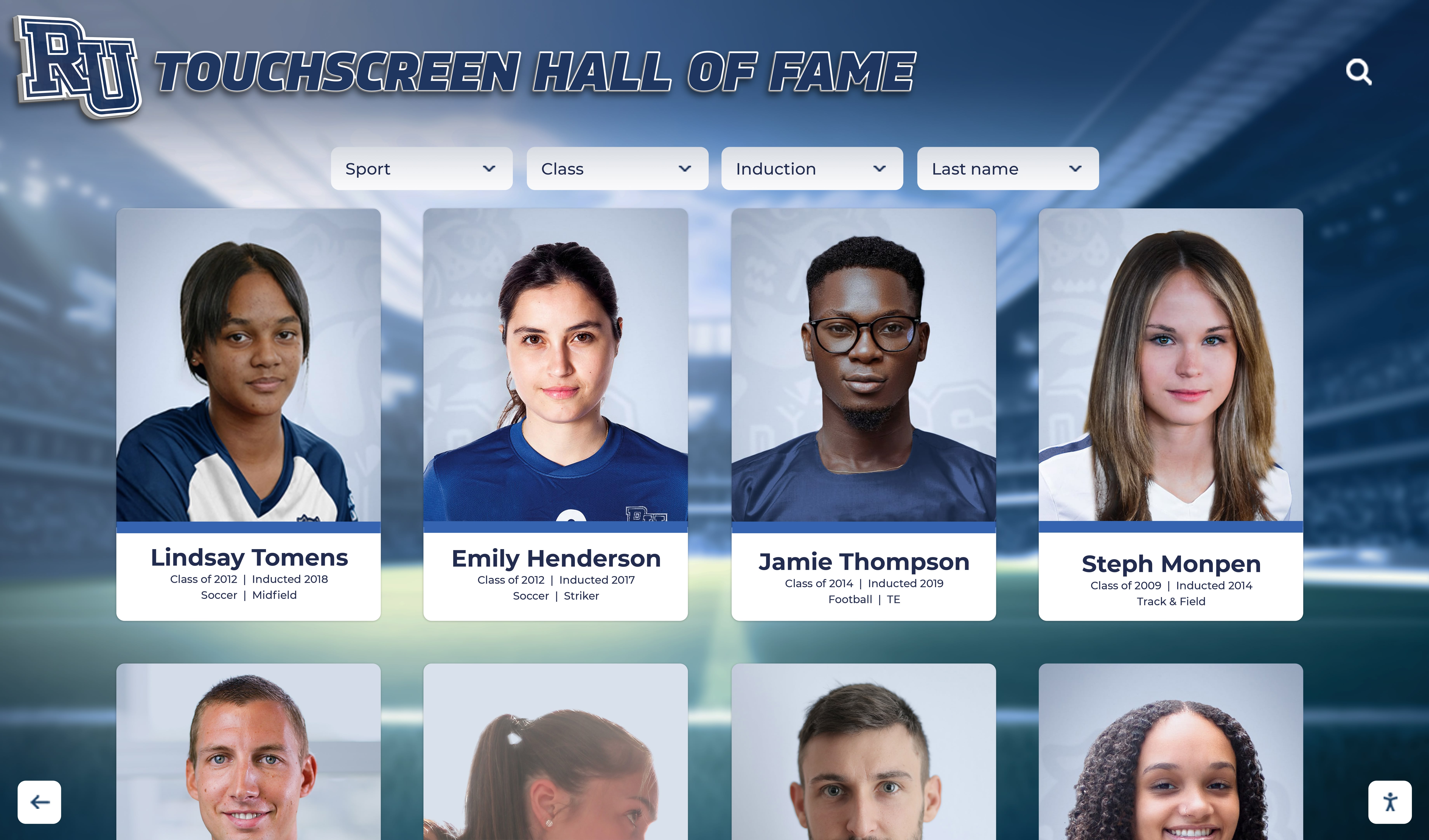
Streamlined content management systems simplify achievement recognition administration
Space Optimization and Flexible Placement
Physical trophy cases consume substantial square footage—often 30-100+ square feet of valuable corridor or lobby space. As achievement collections grow, institutions face impossible choices: expand into more space, remove older trophies to accommodate new awards, or stop adding recognition entirely.
Minimal Physical Footprint:
Digital trophy cases occupy dramatically less space than traditional trophy cases while displaying vastly more content. A single 55-inch wall-mounted display requires only 4-6 square feet of wall space yet can showcase unlimited achievements with comprehensive information about each. This space efficiency enables institutions to reclaim valuable floor space for other purposes while actually increasing recognition capacity.
Strategic Placement Flexibility:
Traditional trophy cases’ large physical footprints limit placement options to corridors and lobbies with sufficient space. Digital displays’ smaller footprints enable strategic placement in high-impact locations: main entrances where they immediately communicate institutional excellence to visitors, cafeterias where entire student bodies encounter recognition daily, athletic facilities where they inspire current athletes, or academic buildings where they celebrate scholarly achievement.
Multiple smaller displays distributed across facilities can replace single large trophy cases, bringing recognition closer to relevant contexts. Athletic achievements can be highlighted in gymnasiums, academic honors can be celebrated in library spaces, and comprehensive recognition can welcome visitors in main entrances.
Scalable Recognition Systems:
As achievement collections grow, digital trophy cases scale effortlessly through software rather than requiring additional physical space. Institutions can begin with single displays and expand to multi-location networks over time, creating comprehensive recognition systems that grow with programs rather than being constrained by physical limitations.
Schools implementing digital record boards find that systems initially focused on athletic achievements naturally expand to incorporate academic, artistic, and service recognition as communities experience digital recognition benefits.
Cost-Effectiveness and Long-Term Value
While digital trophy cases require higher initial investments than basic physical trophy cases, long-term financial analysis reveals compelling value propositions.
Avoided Recurring Costs:
Traditional trophy case systems generate recurring costs that accumulate significantly over time. Physical trophies and plaques cost $100-$500 per item depending on size and customization. Schools honoring 20-40 achievements annually spend $2,000-$20,000 per year on physical recognition items. Over 5-10 years, these recurring costs exceed digital trophy case implementation investments.
Digital systems eliminate recurring physical production costs. Once implemented, adding unlimited new achievements requires only digital content creation—photos, information, and videos schools typically capture anyway. This cost avoidance creates compelling return on investment within 3-5 years for most institutions.
Enhanced Capabilities Justifying Investment:
Digital trophy cases provide capabilities impossible with traditional approaches: unlimited content capacity, multimedia integration, searchable databases, remote administration, web accessibility, and real-time updates. These enhanced capabilities create substantially greater recognition value than traditional trophy cases, justifying higher initial investments through superior functionality and engagement.
Many schools find that digital recognition systems become valuable assets serving multiple purposes beyond simple achievement display—recruitment tools showcasing program excellence to prospective families, fundraising aids demonstrating impact to potential donors, and engagement platforms strengthening alumni connections.
Long Equipment Lifespans:
Commercial-grade displays designed for continuous institutional operation typically provide 6-8 years of reliable service before requiring replacement. Software platforms receive regular updates maintaining currency and security throughout equipment lifespans. This longevity means institutions make one-time implementation investments that serve for many years, rather than continuous spending on physical trophy production.
When hardware eventually requires replacement, existing content and platforms transfer seamlessly to new displays—preserving all recognition content and avoiding content re-creation costs.

Strategic digital trophy case placement transforms underutilized corridors into dynamic recognition spaces
Planning Your Digital Trophy Case Implementation
Successfully implementing digital trophy case systems requires thoughtful planning across location selection, content strategy, technical infrastructure, and change management.
Location Selection and Placement Strategy
Strategic placement dramatically impacts digital trophy case effectiveness and return on investment.
High-Traffic Visibility Locations:
Main entrance lobbies represent prime locations for comprehensive digital trophy cases. These spaces receive maximum visitor traffic and create immediate impressions communicating institutional values and excellence. Prospective families visiting campuses encounter recognition displays first, athletic competitors see opponent achievements, and community members attending events observe institutional culture through recognition priorities.
Cafeterias and student commons where entire populations gather daily ensure recognition reaches internal audiences consistently. These placements keep achievements top-of-mind for current students, creating constant reminders of excellence standards and aspirational models.
Context-Specific Placements:
Athletic facilities benefit from sport-specific digital trophy cases displaying relevant achievements where they inspire current athletes. Gyms, training facilities, and locker room areas provide constant exposure to athletic recognition, reinforcing program traditions and performance expectations.
Academic buildings can showcase scholarly achievements, competition winners, and intellectual accomplishments in environments where academic work occurs. This context-specific recognition communicates that excellence spans all domains, not just athletics.
Arts facilities can highlight performance achievements, creative awards, and artistic recognition in theaters, art studios, and music spaces, celebrating accomplishments that traditional trophy cases often overlook due to limited space.
ADA Compliance and Accessibility:
Display mounting heights must accommodate accessibility requirements, with interactive controls positioned within reach ranges specified by ADA guidelines. Adequate clearance space must surround displays enabling wheelchair users to comfortably approach and interact with content.
Schools planning installations should consult accessibility guidelines for digital recognition displays ensuring inclusive access for all community members.
Content Development and Organization Strategy
Comprehensive content planning ensures digital trophy cases deliver maximum engagement and recognition value.
Achievement Categorization:
Thoughtful organization structures help visitors navigate content intuitively. Common organizational approaches include:
By Activity Domain
Athletics, Academics, Arts, Leadership, Service—broad categories reflecting achievement diversity and institutional priorities. This organization communicates that excellence spans all domains and receives equal celebration.
By Time Period
Decade, year, or season organizations help visitors explore historical progression and locate achievements from specific time periods. This chronological approach benefits alumni seeking their graduation years and provides historical context.
By Achievement Level
National, state, regional, conference, and institutional recognition levels help visitors understand achievement significance and competitive context. This organization highlights top-tier accomplishments while still honoring all recognition.
By Individual or Team
Personal achievement profiles and team accomplishment pages provide natural organization around people and groups. This approach facilitates searching for specific individuals while celebrating collective success.
Most effective digital trophy cases combine multiple organizational approaches, enabling visitors to browse and filter achievements through various pathways based on their interests.
Content Depth and Detail:
Digital trophy cases excel when they provide substantially more information than traditional trophy case placards. Comprehensive achievement profiles should include:
- High-resolution photos from competitions, award ceremonies, and candid moments
- Detailed statistics and performance metrics demonstrating achievement significance
- Narrative descriptions providing context about achievement difficulty and competitive standards
- Individual or team member information with roles and contributions
- Historical context placing achievements within institutional timelines
- Video highlights capturing pivotal performances and memorable moments
- Coach or teacher testimonials describing honoree dedication and character
- Personal reflections from achievers about what accomplishments meant to them
This depth transforms recognition from basic acknowledgment into compelling storytelling that engages visitors emotionally and intellectually.
Historical Content Migration:
Institutions transitioning from traditional trophy cases often possess decades of physical trophies and awards stored in closets, basements, and storage facilities due to display space limitations. Digital trophy case implementation provides opportunities to finally honor these hidden achievements comprehensively.
Systematic digitization projects can capture photos of stored trophies, extract information from placards and certificates, and research achievement context from yearbooks and archives. This migration work initially requires significant effort but results in comprehensive recognition honoring entire institutional histories rather than only recent achievements.
Schools undertaking migration from traditional trophy cases to digital displays typically prioritize recent achievements for initial implementation while systematically adding historical content over time.

Systematic digitization projects transform hidden historical achievements into accessible digital recognition
Technical Infrastructure Requirements
Successful digital trophy case implementations require attention to several technical infrastructure considerations.
Network Connectivity:
Reliable internet connectivity enables remote content management, automatic software updates, and web-based access to recognition content. Wired Ethernet connections provide the most stable connectivity with consistent bandwidth and reliability. Where wiring is impractical, robust WiFi networks with adequate coverage and capacity offer acceptable alternatives.
Power over Ethernet (PoE) solutions can simplify installations by delivering both data and electrical power through single network cables, reducing installation complexity and improving aesthetics by eliminating separate power cords.
Electrical Power:
Displays require dedicated electrical outlets positioned appropriately for wall-mounted or kiosk installations. Many schools integrate electrical work with display installations, ensuring clean appearances without exposed wiring detracting from professional presentation.
Power consumption for digital trophy case displays typically ranges from 150-400 watts depending on screen size—roughly equivalent to running 2-4 traditional light bulbs continuously. This minimal power usage adds negligible amounts to institutional utility costs.
Physical Installation:
Wall-mounted displays require secure mounting to structural elements capable of supporting display weight—typically 50-150 pounds depending on screen size. Professional installation ensures secure mounting, proper cable management, and integration with surrounding architectural elements for clean, professional appearances.
Freestanding kiosk installations require floor space planning and may need anchoring for security and stability in high-traffic areas. Many schools position kiosks near walls or architectural features to prevent tipping while maintaining accessibility.
Security Considerations:
Displays in public spaces require protection against theft, vandalism, and unauthorized access. Protective enclosures with tempered glass or polycarbonate shields protect screens while maintaining touch functionality. Secure mounting systems and fasteners deter theft. Kiosk designs can incorporate locks restricting access to internal components.
Software security measures protect content and prevent unauthorized modifications. Role-based permissions ensure only authorized administrators can update recognition content. Regular software updates maintain security as threats evolve.
Schools should review security considerations for digital recognition systems when planning implementations.
Change Management and Community Engagement
Successfully transitioning from traditional trophy cases to digital recognition requires thoughtful change management addressing community concerns and expectations.
Communicating the Transition:
Some community members—particularly alumni who remember traditional trophy cases fondly—may question digital replacements. Proactive communication explaining benefits, addressing concerns, and demonstrating capabilities helps build support:
- Emphasize that digital systems enable honoring ALL achievements rather than only those fitting in limited physical space
- Demonstrate how multimedia content and detailed information provide more meaningful recognition than objects behind glass
- Highlight web accessibility benefits enabling remote exploration by alumni worldwide
- Show how search functionality makes finding specific achievements easier than scanning physical displays
- Explain cost savings from eliminating recurring physical trophy production expenses
Ceremonial Transitions:
Many schools create ceremonial events marking transitions from traditional to digital trophy cases. These events can include:
- Formal unveiling ceremonies for new digital displays with community celebration
- Photography sessions documenting historical trophy collections before storage
- Timeline presentations showing institutional achievement history through the years
- Recognition of individuals who contributed to historical trophy case maintenance
- Demonstrations teaching community members how to explore new digital systems
These ceremonies honor traditional recognition methods while celebrating modern alternatives, helping communities embrace change rather than resisting it.
Training and Support:
Staff members responsible for content management require training on system operation, content creation best practices, and ongoing maintenance procedures. Most digital trophy case platforms provide intuitive interfaces requiring minimal technical expertise, but structured training ensures administrators feel confident and capable.
Ongoing support resources—help documentation, tutorial videos, responsive technical support—ensure administrators can resolve questions independently and maintain systems effectively long-term.

Comprehensive training ensures staff can effectively manage digital recognition systems
Content Creation Best Practices for Digital Trophy Cases
Engaging, professional content maximizes digital trophy case effectiveness and community impact.
Photography and Visual Content Standards
High-quality visual content dramatically impacts recognition effectiveness and visitor engagement.
Photo Resolution and Quality:
Digital displays showcase photos prominently, making image quality critically important. Photos should be captured or scanned at high resolutions—minimum 1920x1080 pixels for full-screen display, ideally higher for detail viewing and zooming.
Well-lit, properly exposed photos with good composition create professional presentations. Action photos capturing pivotal competitive moments, formal award ceremony photos documenting official recognition, and candid celebration photos showing authentic emotions all contribute to compelling recognition content.
Video Content Guidelines:
Video highlights transform static recognition into dynamic experiences. Effective recognition videos typically run 30-90 seconds—long enough to capture meaningful content but short enough to maintain attention. Video should focus on specific achievements being recognized rather than general highlights, providing direct connection between recognition and evidence.
Technical quality matters for video content. Clear audio, stable footage, and proper lighting ensure professional presentation. Many schools repurpose existing video content from competitions, ceremonies, and news coverage rather than producing original footage specifically for recognition purposes.
Visual Consistency:
Consistent visual standards across all recognition content create professional appearances and reinforce institutional branding. This consistency includes:
- Standardized photo aspect ratios and dimensions
- Consistent graphics and design elements
- Unified color schemes reflecting institutional branding
- Standard layouts for similar content types
- Professional typography and text formatting
Template-based content development helps maintain consistency while streamlining creation processes.
Writing Compelling Achievement Narratives
Written content provides context, tells stories, and creates emotional connections with achievements.
Achievement Context and Significance:
Effective recognition content explains why achievements matter rather than simply stating what occurred. Context about competitive difficulty, historical significance, records broken, or obstacles overcome helps visitors understand achievement importance.
For example, rather than simply stating “2019 State Basketball Champions,” compelling content might explain: “The 2019 basketball team captured the school’s first state championship in 35 years, completing an undefeated season with a thrilling overtime victory in the title game. The championship capped a three-year program rebuilding effort that saw the team improve from a 6-20 record to 28-0 perfection.”
Personal Stories and Quotes:
Individual perspectives from achievers, coaches, or teammates add personal dimensions to recognition content. Brief quotes about what achievements meant, memorable moments, or advice for future athletes and students create authentic connections.
These personal elements transform recognition from institutional documentation into human stories that resonate emotionally with visitors.
Consistent Voice and Tone:
Recognition content should maintain consistent voice reflecting institutional values and culture. Most schools adopt professional but warm tones that celebrate excellence while remaining inclusive and humble. Overly promotional or boastful language can alienate visitors, while excessively formal language can feel distant and cold.
Style guides establishing content standards help ensure consistency across multiple content creators and years of recognition development.

Comprehensive achievement profiles with rich content create meaningful recognition experiences
Ongoing Content Maintenance and Updates
Digital trophy cases require ongoing content maintenance ensuring currency and continued relevance.
Regular Addition of New Achievements:
Recognition systems that stagnate with static content lose community engagement and institutional value. Establishing systematic processes for adding new achievements ensures digital trophy cases remain current and relevant:
- Designate specific staff members responsible for recognition content management
- Create submission workflows enabling coaches, teachers, and advisors to report achievements
- Schedule regular review cycles ensuring new accomplishments are added promptly
- Communicate expectations about recognition timelines to avoid community frustration
Schools implementing content management strategies for digital recognition find that systematic processes make ongoing maintenance manageable rather than overwhelming.
Information Accuracy and Quality Control:
Recognition content requires accuracy to maintain credibility. Verify facts, statistics, and names before publishing content. Many schools implement review workflows requiring content approval from multiple stakeholders before publication, catching errors that individual creators might miss.
Establish processes for community members to report content errors or suggest improvements. Responsive correction of identified issues maintains community confidence in recognition system quality.
Refreshing Historical Content:
While new achievements require priority attention, occasionally revisiting and enhancing historical recognition content maintains system value. Adding newly discovered photos, incorporating video content that becomes available, or expanding narrative descriptions enhances recognition comprehensiveness over time.
Anniversary years provide natural opportunities for historical content enhancement—highlighting 50th anniversaries of championships, recognizing milestone graduations, or commemorating significant institutional events.
Integrating Digital Trophy Cases with Broader Recognition Programs
Digital trophy cases function most effectively as components of comprehensive recognition programs rather than standalone systems.
Connecting Physical and Digital Recognition
Complete recognition programs often combine physical and digital elements strategically rather than choosing exclusively between approaches.
Signature Trophy Displays:
Many schools maintain physical displays for signature achievements—state championship trophies, major awards, or historically significant recognition items. These physical displays in prominent locations honor particularly meaningful accomplishments while digital systems provide comprehensive recognition for all achievements.
This hybrid approach satisfies community members who value traditional physical recognition while leveraging digital capabilities for breadth and depth.
Physical Spaces as Digital Recognition Portals:
Traditional trophy case spaces can be repurposed as digital recognition installations, maintaining the same general function while dramatically expanding capabilities. Removing glass cases and installing digital displays in the same locations preserves familiar recognition areas while modernizing functionality.
This approach minimizes community disruption by maintaining recognition in expected locations rather than relocating it entirely.
QR Code Connections:
Physical recognition elements can connect to digital content through QR codes. Remaining physical trophies might include QR codes linking to comprehensive digital profiles with photos, videos, and detailed information. This bridge connects physical and digital recognition, enabling visitors to explore depth beyond what physical displays can provide.
Web-Based Access and Alumni Engagement
Digital trophy case content accessible through web platforms extends recognition reach far beyond physical campus locations.
Online Achievement Exploration:
Web portals mirroring on-campus digital trophy case content enable alumni, parents, and supporters worldwide to explore achievement recognition remotely. These online platforms particularly benefit alumni who may never physically return to campus but maintain interest in institutional achievement and history.
Effective web platforms provide the same search, filtering, and browsing capabilities as physical touchscreen displays, translated into desktop and mobile-optimized interfaces.
Social Media Integration:
Built-in social sharing functionality enables visitors to instantly share specific achievements to personal social media accounts. When users share championship victories, individual honors, or team accomplishments to Facebook, Twitter, or Instagram, these posts extend institutional visibility to hundreds or thousands of connections.
This organic social amplification provides valuable marketing benefits while celebrating achievements through modern communication channels.
Alumni Profile Updates:
Some advanced digital trophy case platforms enable alumni to submit profile updates, career achievements, and current information directly through web interfaces. This community-contributed content keeps recognition current while strengthening alumni engagement by maintaining ongoing connections beyond graduation.
Schools implementing alumni networking features find that recognition systems naturally evolve into engagement platforms serving broader institutional advancement goals.
Integration with School Communications
Digital trophy case content serves multiple communication and marketing purposes beyond pure recognition.
Recruitment and Admissions Materials:
Achievement recognition content provides powerful evidence of program excellence for recruitment materials. Screenshots, photos, and statistics from digital trophy cases enhance admissions presentations, program brochures, and recruiting communications.
Prospective students and families researching schools increasingly expect to explore achievement history and program traditions online. Comprehensive digital recognition meets these expectations while differentiating programs from competitors.
Athletic and Program Recruiting:
Coaches recruiting athletes benefit from digital trophy case content demonstrating program traditions, competitive success, and recognition culture. Sharing links to championship profiles, record holder recognition, or all-conference honors provides concrete evidence of program quality.
Similarly, academic departments, arts programs, and extracurricular activities use recognition content when recruiting participants and demonstrating program value.
Development and Fundraising Support:
Digital recognition systems support fundraising initiatives by demonstrating impact and honoring donors. Recognition content showing how programs develop excellence provides compelling evidence for donor cultivation. Digital donor recognition walls integrated with achievement recognition create comprehensive systems celebrating both philanthropy and accomplishment.

Comprehensive digital recognition systems integrate achievement celebration with donor recognition
Measuring Success and Return on Investment
Effective digital trophy case implementations include measurement strategies demonstrating value and informing ongoing optimization.
Engagement Metrics and Analytics
Digital systems provide measurement capabilities impossible with traditional trophy cases.
Usage Statistics:
Modern platforms track detailed usage metrics including:
- Total visitor interactions and session lengths
- Popular content and frequently viewed achievements
- Search queries revealing visitor interests
- Peak usage times and traffic patterns
- Navigation paths showing how visitors explore content
- Return visitor rates indicating sustained interest
These metrics provide insights into what content resonates most, how visitors prefer to explore recognition, and overall system usage demonstrating value.
Content Performance Analysis:
Identifying which achievement content generates highest engagement helps inform future content development priorities. Achievements with high view counts, extended viewing times, or frequent social shares indicate content that resonates particularly well with audiences.
Conversely, content receiving minimal attention may need enhancement, better organization, or improved discoverability to ensure all achievements receive appropriate recognition.
Web Analytics:
For digital trophy cases with web accessibility, standard web analytics tools provide additional insights including:
- Geographic distribution of web visitors showing alumni engagement worldwide
- Device usage patterns (desktop vs mobile) informing interface optimization
- Traffic sources revealing how visitors discover recognition content
- Referral patterns showing social media and external link effectiveness
Community Feedback and Satisfaction
Qualitative feedback complements quantitative metrics in assessing digital trophy case success.
Stakeholder Surveys:
Periodic surveys gathering feedback from students, staff, alumni, parents, and community members provide insights into recognition system perception and satisfaction. Key questions might address:
- Awareness of digital trophy case existence and location
- Frequency of interaction and exploration
- Content quality and comprehensiveness perceptions
- Ease of use and interface intuitiveness
- Suggestions for improvements or enhancements
- Overall satisfaction with recognition approach
This feedback identifies strengths to leverage and improvement opportunities to address.
Success Stories and Testimonials:
Collecting specific stories about how digital recognition positively impacted individuals or programs provides compelling qualitative evidence of value. Examples might include:
- Alumni who reconnected with institutions after exploring digital recognition online
- Prospective students who chose schools partly based on recognition culture observed
- Donors who contributed to programs after seeing achievement impact documented
- Current students who were inspired by recognition to pursue specific activities
Cost-Benefit Analysis and ROI Calculation
Demonstrating financial return on investment helps justify initial expenditures and secure funding for expansion.
Cost Comparison with Traditional Approaches:
Comprehensive cost analysis should compare total costs of traditional trophy case approaches versus digital systems over 5-10 year periods:
| Cost Category | Traditional Trophy Cases (10 Years) | Digital Trophy Cases (10 Years) |
|---|---|---|
| Initial Infrastructure | $8,000 - $20,000 | $12,000 - $35,000 |
| Recurring Trophy/Plaque Production | $20,000 - $100,000 | $0 |
| Physical Maintenance | $3,000 - $8,000 | $500 - $1,500 |
| Administrative Time | $15,000 - $40,000 | $2,000 - $6,000 |
| Software/Support | $0 | $6,000 - $15,000 |
| Total 10-Year Cost | $46,000 - $168,000 | $20,500 - $57,500 |
These comparisons demonstrate that digital trophy cases often cost substantially less than traditional approaches over multi-year periods when accounting for avoided recurring expenses.
Indirect Value Creation:
Beyond direct cost comparisons, digital trophy cases create indirect value difficult to quantify but meaningful to institutions:
- Enhanced recruitment through superior achievement presentation
- Improved alumni engagement supporting development initiatives
- Reduced space consumption enabling alternative space utilization
- Extended recognition reach through web accessibility
- Enhanced institutional reputation through modern presentation
Many schools find these indirect benefits justify investment even when direct cost comparisons show marginal differences.
Future Trends in Digital Trophy Case Technology
Digital recognition technology continues evolving with emerging capabilities enhancing future implementations.
Artificial Intelligence and Content Enhancement
AI technologies promise to enhance digital trophy case capabilities in several ways:
Automated Content Creation:
AI systems could potentially generate initial achievement profile content automatically by analyzing photos, extracting information from documents, and synthesizing narrative descriptions—dramatically reducing content creation time while maintaining quality.
Intelligent Recommendations:
Machine learning algorithms could analyze visitor interaction patterns and suggest personalized content recommendations—“based on your interest in 1990s basketball achievements, you might enjoy exploring these related accomplishments.”
Natural Language Interfaces:
Voice-activated search and navigation could complement touch interfaces, enabling visitors to explore content through conversational interactions—“show me all state championships in girls soccer” or “find achievements by the class of 2005.”
Augmented Reality Integration
AR technologies could enhance digital trophy cases by blending physical and digital content:
Mobile AR Experiences:
Visitors using smartphones or tablets could point devices at physical spaces to see augmented content overlaid on their environments—virtual trophies appearing in spaces where they’re recognized, or historical photos appearing at locations where events occurred.
Virtual Trophy Exploration:
3D models of significant physical trophies could be explored virtually, enabling visitors to examine details impossible to see through traditional trophy case glass—rotating objects, zooming in on engravings, or viewing from multiple angles.
Advanced Analytics and Predictive Insights
Future digital trophy case platforms may provide sophisticated analytics capabilities:
Predictive Engagement Modeling:
Systems could predict which types of content will generate highest engagement based on historical patterns, informing content development priorities and resource allocation decisions.
Community Sentiment Analysis:
AI analysis of engagement patterns, social media sharing, and qualitative feedback could provide insights into community sentiment about recognition programs, identifying areas of strong satisfaction and opportunities for improvement.
Comparative Benchmarking:
Platforms could provide anonymous benchmarking data comparing recognition program effectiveness across similar institutions, helping schools understand performance relative to peers and identify best practices.
Emerging technologies continue expanding digital trophy case capabilities and engagement potential
Conclusion: Transforming Achievement Recognition for the Digital Age
Digital trophy cases represent fundamental transformations in how schools and organizations celebrate achievement. By replacing space-constrained physical displays with unlimited digital recognition systems, institutions can finally honor all accomplishments comprehensively while creating engaging experiences that inspire current students and strengthen community connections.
The transition from traditional trophy cases to digital recognition systems requires thoughtful planning, strategic implementation, and ongoing management. But institutions making this transition consistently report transformative benefits: dramatically increased engagement, substantially reduced administrative burdens, comprehensive recognition previously impossible, and cost savings that justify initial investments within several years.
As technology continues evolving, digital trophy case capabilities will expand further, providing even more powerful tools for achievement celebration and community engagement. Schools implementing these systems today position themselves at the forefront of recognition innovation while creating flexible platforms that will grow and adapt for decades to come.
Whether replacing outdated trophy cases that no longer serve institutional needs, implementing recognition for the first time, or expanding existing programs beyond physical limitations, digital trophy cases provide proven solutions that honor the past while embracing the future of institutional recognition.
For schools and organizations ready to transform achievement recognition, solutions like those offered by Rocket Alumni Solutions provide comprehensive platforms specifically designed for educational environments—combining intuitive content management, engaging visitor experiences, and flexible capabilities that serve diverse recognition needs across all types of institutions.
Ready to Transform Your Trophy Case?
Discover how digital recognition systems can honor your achievements more comprehensively while reducing costs and administrative burdens.
Explore Digital Trophy Case Solutions


























