School hallways and common areas tell a story. Walk through any educational institution and the displays lining the walls reveal what that school values, celebrates, and prioritizes. Whether showcasing student artwork, recognizing academic excellence, highlighting athletic achievements, or celebrating school history, display boards serve as visual ambassadors of school culture.
Yet too many schools underutilize this powerful tool. Outdated bulletin boards with yellowing paper, empty trophy cases, or generic motivational posters fail to engage students or communicate meaningful messages about institutional values. The most effective schools recognize that thoughtfully designed display boards do far more than fill wall space—they inspire achievement, build community pride, strengthen student engagement, and create environments where learning and success feel celebrated.
This comprehensive guide explores creative display board ideas proven to transform school spaces from institutional hallways into engaging environments that motivate students and showcase your school’s unique identity.
Display boards shape how students experience school environments daily. Research from the National Association of Secondary School Principals demonstrates that schools with comprehensive, well-maintained recognition displays report 22% higher student engagement scores and measurably stronger school pride indicators compared to schools with minimal or outdated displays.
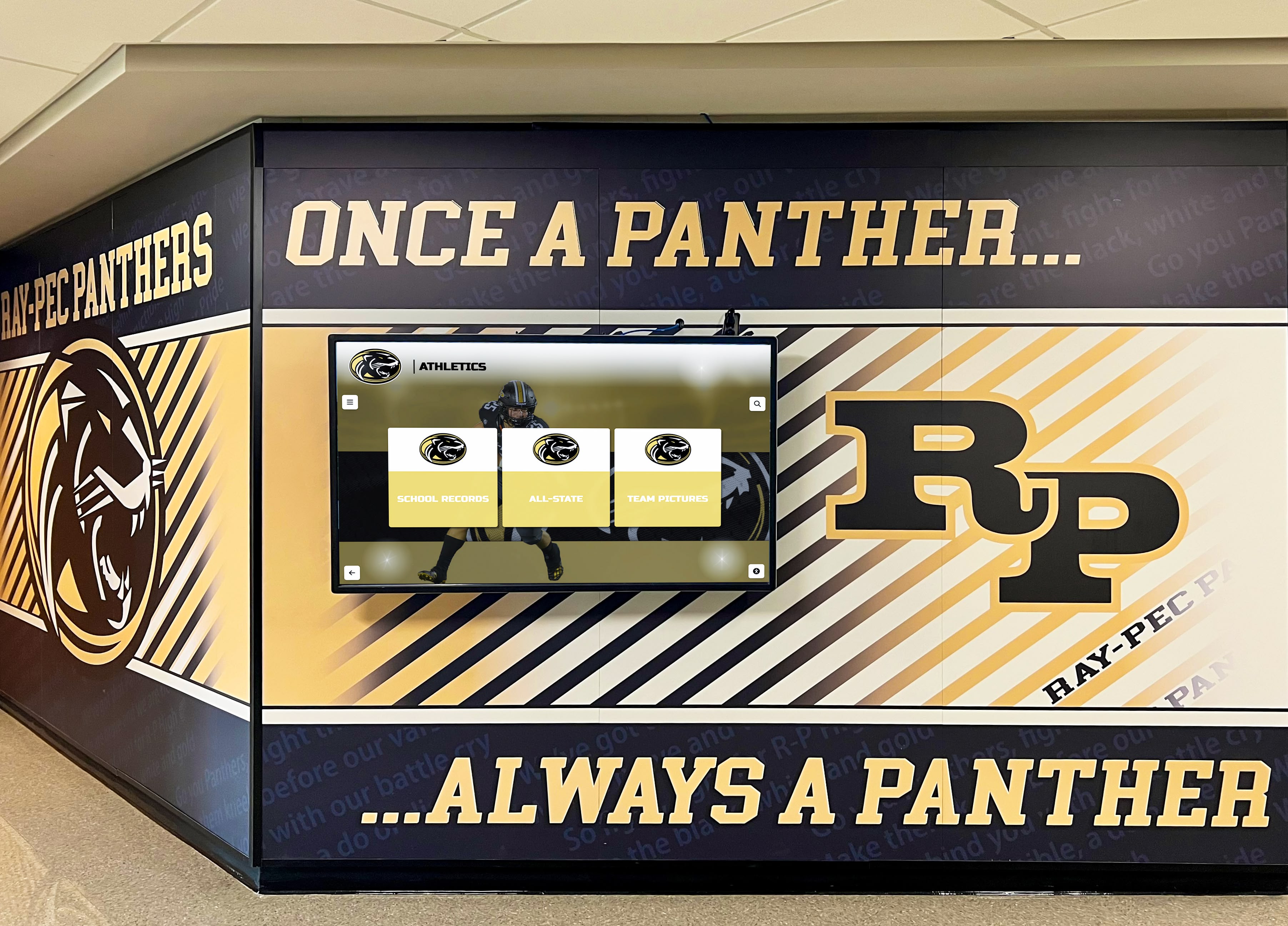
Effective display boards transform hallways into engaging spaces celebrating student accomplishments and school culture
Why Strategic Display Boards Matter
Before exploring specific ideas, understanding the psychological and cultural impact of display boards helps schools invest resources strategically in solutions delivering genuine value.
Creating Positive Learning Environments
Educational psychologists have long recognized that physical environments significantly influence student motivation, behavior, and achievement. Display boards contribute to positive learning environments through multiple mechanisms:
Visual Communication of Values Display boards make abstract institutional values concrete and visible. When schools dedicate prominent space to academic achievement, artistic expression, or community service, they communicate priorities more effectively than mission statements or verbal messaging.
Social Proof and Peer Influence Visible recognition creates positive peer influence. Students seeing classmates celebrated for excellence—whether academic, athletic, artistic, or behavioral—receive clear messages about valued achievements and attainable goals. This social proof normalizes success and makes achievement aspirational.
Sense of Belonging and Community Well-designed displays foster school pride and community connection. Students seeing their own accomplishments, friends’ successes, or school history presented prominently develop stronger institutional identification and belonging.
Environmental Enrichment Thoughtfully designed displays make institutional spaces more visually interesting and cognitively stimulating. Compared to blank walls or neglected bulletin boards, dynamic displays create environments that feel alive, active, and engaged with student experiences.
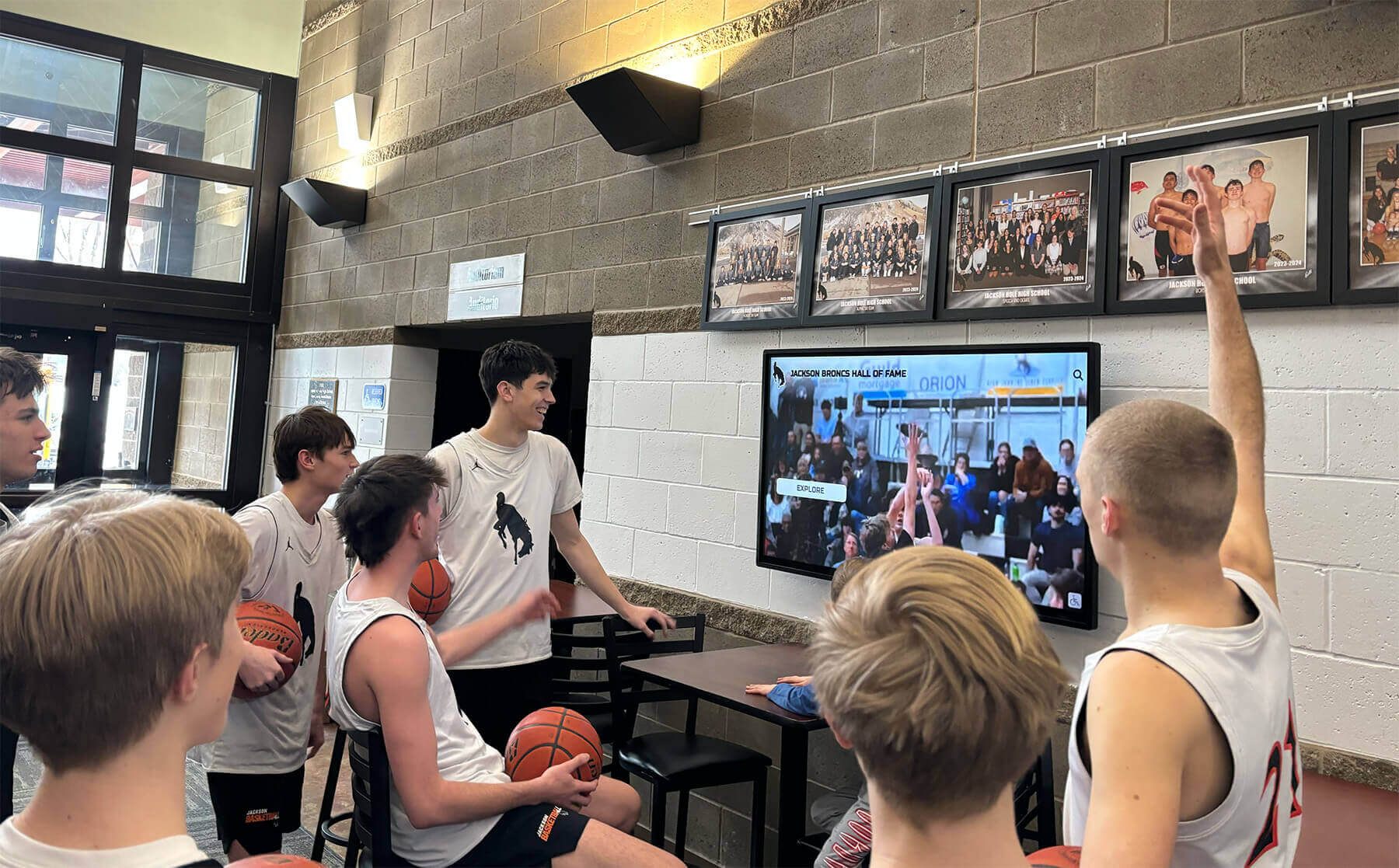
Engaging displays create natural gathering points where students connect with school culture and achievements
Building School Pride and Identity
School pride manifests when students feel genuine connection to institutional identity, tradition, and community. Display boards contribute significantly to pride development through:
Historical Continuity Displays showcasing school history—founding stories, architectural evolution, distinguished alumni, championship teams—connect current students to institutional legacy. This temporal connection creates sense that students participate in something larger than their individual experiences.
Achievement Celebration Systematic recognition demonstrates institutional commitment to celebrating success. When schools invest resources in professionally displaying accomplishments, students internalize that achievements matter and deserve recognition.
Visible Traditions Display boards preserve and communicate school traditions, rituals, and cultural elements that define institutional identity. New students encountering tradition-focused displays quickly understand “how we do things here.”
Community Representation Inclusive displays ensuring diverse students see themselves represented communicate genuine belonging. Conversely, displays that consistently feature limited demographic groups or achievement types signal exclusivity that undermines pride for unrepresented students.
Traditional Display Board Ideas
While modern technology enables powerful new capabilities, traditional bulletin boards and physical displays remain valuable tools when implemented thoughtfully and maintained consistently.
Academic Achievement Displays
Academic excellence deserves visibility equal to athletic accomplishments. Traditional academic displays work effectively when designed strategically:
Honor Roll Recognition Boards Dedicated displays celebrating academic achievement create systematic recognition for scholarly success. Organize by achievement levels—Principal’s List, High Honor Roll, Honor Roll—with clear visual hierarchy communicating distinction while celebrating excellence at multiple levels.
Implementation tips for effective honor roll boards:
- Update promptly after each grading period to maintain relevance
- Include student photos when possible to create visual connection
- Organize by grade level or alphabetically for easy navigation
- Consider special designation for first-time honor roll achievers
- Position in high-traffic areas where recognition receives maximum visibility
Subject Excellence Spotlights Rotate monthly or quarterly displays highlighting exceptional work in specific academic disciplines. Science departments might showcase research projects, mathematics teachers feature problem-solving demonstrations, English departments display exemplary writing, and social studies teachers present historical research.
This rotating approach ensures diverse academic areas receive recognition while keeping content fresh and maintaining student interest.
Standardized Test Achievement Students achieving exceptional scores on standardized assessments deserve systematic recognition. Create displays celebrating ACT 30+ Club members, AP Scholar designations, SAT score milestones, or state assessment excellence. Visible recognition motivates underclassmen while celebrating current achievers.
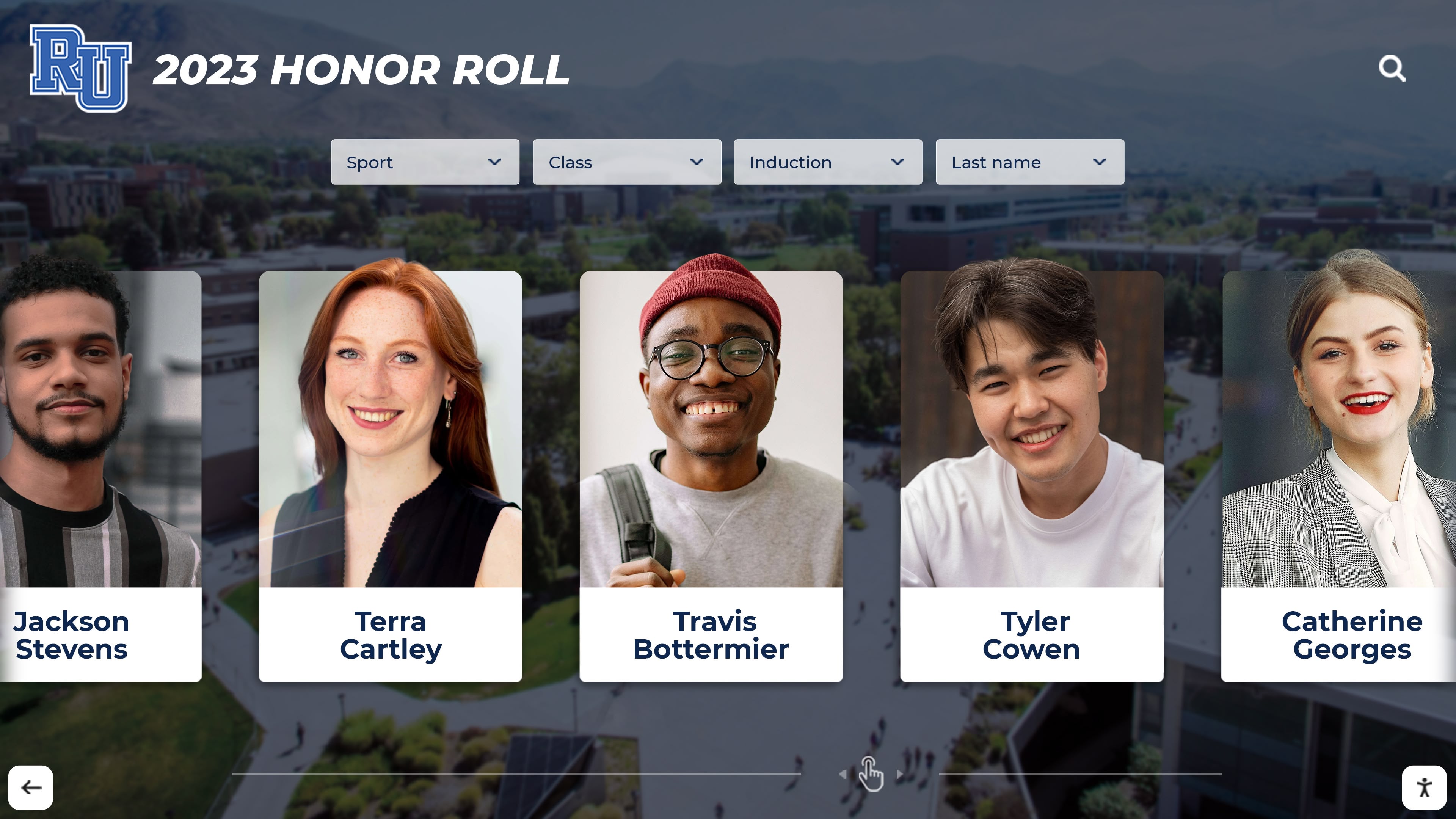
Individual recognition profiles celebrate specific accomplishments and provide inspirational examples for peers
Athletic and Extracurricular Recognition
Sports and activities provide abundant recognition opportunities that build pride and celebrate diverse achievements:
Championship and Award Displays Dedicated boards showcasing athletic championships, conference titles, tournament achievements, and individual awards create visible athletic tradition. Include:
- Team photos with championship gear
- Final scores and tournament brackets
- Individual award winners and statistics
- Coaching milestone recognition
- Historical comparison showing championship progression
Team Season Preview Boards At season start, create engaging displays introducing current teams through roster information with player numbers and positions, season schedules with home game highlights, coaching staff introductions, team goals and mottos, and historical program achievements providing context.
These displays generate excitement while connecting current seasons to athletic tradition.
Fine Arts Excellence Showcases Ensure artistic accomplishments receive prominence equal to athletics through displays featuring theater production highlights with cast photos, music competition results and all-state selections, visual arts competition winners with artwork reproductions, dance team performance highlights, and writing contest winners with excerpt displays.
Comprehensive recognition communicates that schools value diverse forms of excellence equally.
Student Showcase and Work Displays
Beyond recognition, display boards provide excellent venues for showcasing student work and creative expression:
Rotating Art Galleries Transform hallway sections into rotating art galleries displaying student visual artwork. Change exhibits monthly or quarterly to provide multiple students exhibition opportunities while keeping displays fresh.
Gallery-style presentations with proper mounting, labeling including artist name and grade, and thoughtful arrangement communicate that student artwork deserves professional presentation. This elevated treatment validates artistic effort and encourages continued creative development.
Writing and Poetry Displays Showcase exemplary student writing from various genres—essays, poetry, short stories, journalism, research papers. Select diverse writing styles ensuring different strengths receive recognition. Include author photos when possible and brief contextual information explaining assignments or inspiration.
Science Fair and Research Projects Dedicate display space to science fair participants, research projects, engineering challenges, and STEM competition entries. Include project descriptions, methodology summaries, results, and high-quality photos of student presenters with projects.
This recognition validates the substantial effort these projects require while inspiring peers to pursue similar challenges.
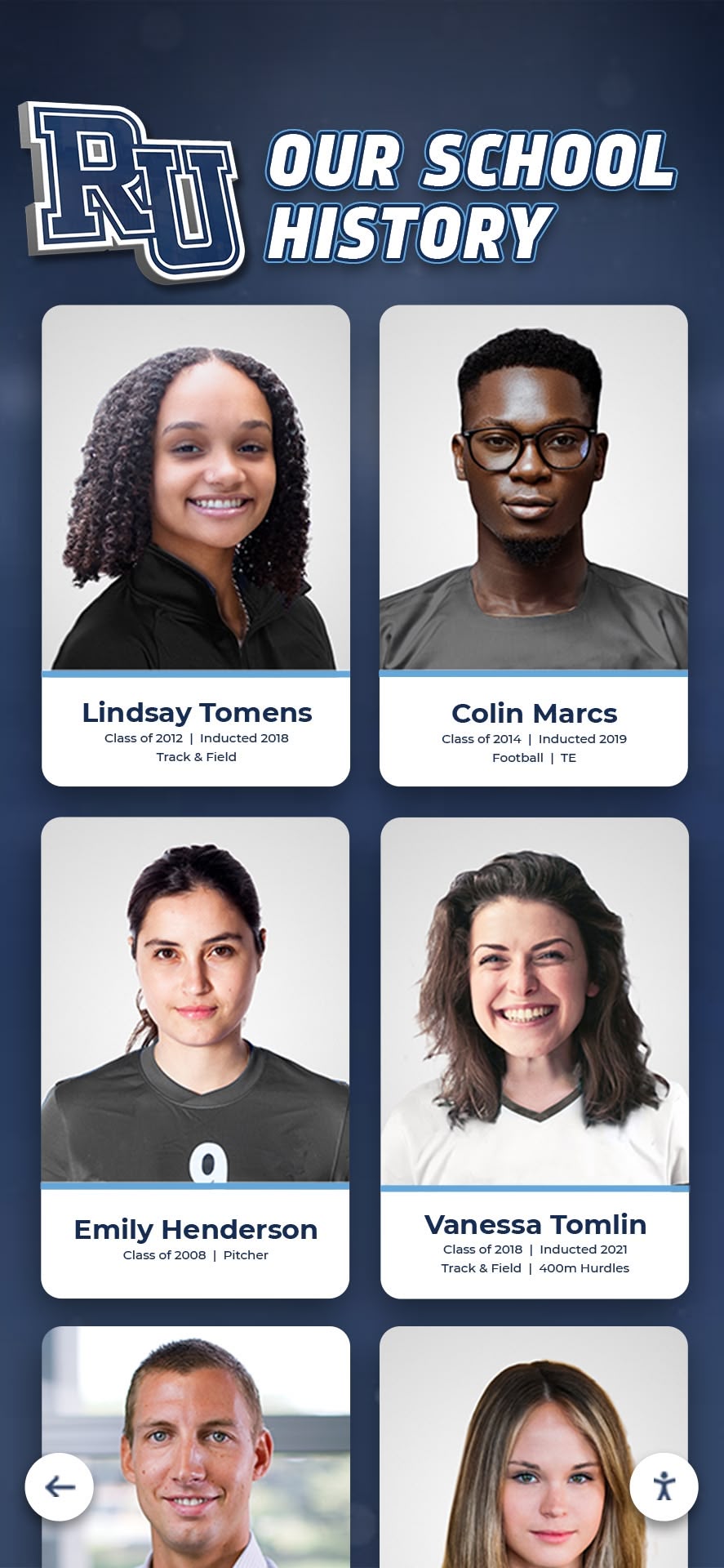
Well-organized displays document diverse achievements creating comprehensive recognition programs
Character and Citizenship Recognition
Effective recognition programs extend beyond academic and athletic achievement to celebrate character qualities and behavioral excellence:
Student of the Month Programs Monthly recognition highlighting students exemplifying specific character traits—kindness, perseverance, leadership, integrity, service—ensures students who may not achieve traditional recognition receive acknowledgment for equally valuable contributions.
Provide clear nomination and selection processes, include diverse achievement types ensuring equitable access, feature recognition prominently in high-traffic locations, and incorporate student photos and achievement narratives explaining specific examples demonstrating recognized qualities.
Community Service Boards Celebrate students and organizations contributing to community through volunteer service. Track aggregate service hours, highlight specific service projects with photos and descriptions, recognize milestone achievements in volunteer hours, and connect service work to school values and missions.
This recognition normalizes community contribution while demonstrating institutional commitment to service beyond academic and athletic pursuits.
Attendance and Punctuality Recognition While less glamorous than championships or honor roll, consistent attendance demonstrates commitment deserving acknowledgment. Create displays recognizing perfect attendance by grading period or semester, attendance improvement awards, and grade-level or school-wide attendance achievements.
Modern Digital Display Board Solutions
While traditional bulletin boards maintain value, digital display technology fundamentally transforms what schools can achieve with recognition and communication displays.
Unlimited Recognition Capacity
Perhaps the most significant advantage: digital systems eliminate physical space constraints that force difficult selection decisions about whose achievements receive visibility.
Comprehensive Achievement Documentation Digital platforms enable schools to recognize unlimited students across all achievement categories without removing past honorees to accommodate current recipients. Honor roll students from five years ago remain as accessible as current semester achievers. Athletes can see complete career statistics rather than just single-season highlights.
This unlimited capacity enables fundamentally different recognition philosophies. Schools no longer must choose whose accomplishments warrant visibility—every deserving achievement gets acknowledged permanently.
Historical Archives Preserving Institutional Memory Digital systems create searchable archives preserving decades of school history. Alumni visiting campus decades after graduation can explore their own achievements and reconnect with memories. Current students researching school history access comprehensive records documenting institutional evolution.
This archival capability transforms recognition from temporary acknowledgment into permanent institutional memory preservation.
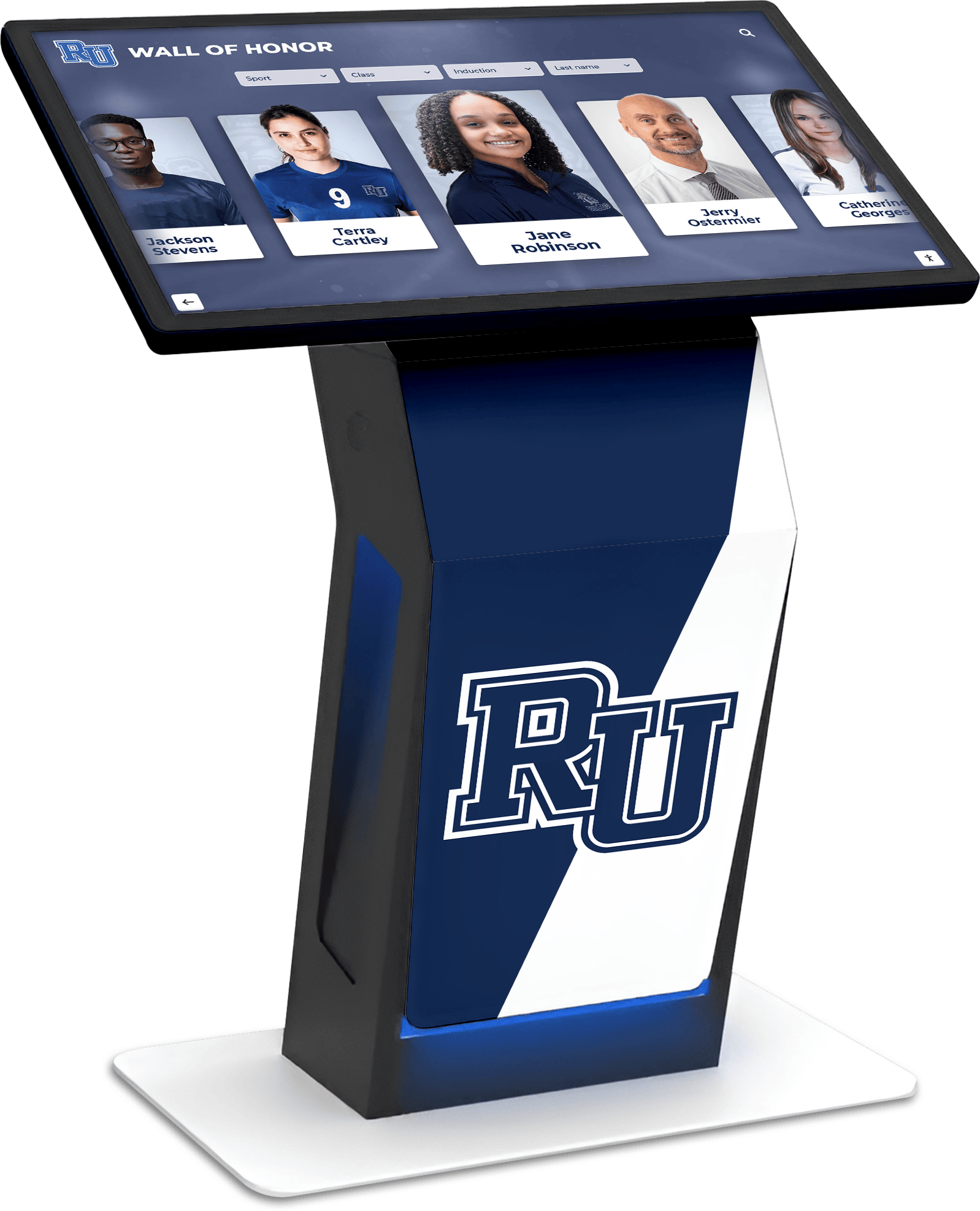
Digital recognition kiosks provide unlimited capacity for comprehensive achievement celebration
Rich Multimedia Recognition
Digital platforms transform recognition from simple name listings into compelling multimedia stories celebrating students comprehensively:
Professional Photography and Video High-quality photos create immediate visual connection while video interviews enable students to share achievement journeys, study strategies, or advice for peers pursuing similar goals. This multimedia richness provides inspirational content impossible with traditional approaches.
Detailed Achievement Narratives Comprehensive text descriptions explain specifically what students accomplished, providing context that makes achievements more meaningful. Rather than “Honor Roll - Quarter 2,” detailed narratives might explain improvement journeys, specific course challenges overcome, or study strategies employed.
Achievement Statistics and Metrics Quantifiable data provides concrete evidence—GPA improvements, test score percentiles, competition rankings, athletic statistics, service hours—helping viewers understand accomplishment magnitude while celebrating measurable success.
Related Content Connections Systems can automatically display multiple achievements by the same students, showing how individuals accumulate recognition across academic careers. A student’s science fair achievement might link to honor roll recognition, athletic participation, and leadership roles—creating comprehensive achievement narratives.
Interactive Exploration Features
Modern touchscreen displays create active engagement rather than passive viewing, significantly increasing recognition impact:
Intuitive Search Functionality Students quickly find themselves, friends, siblings, or role models through name search, enabling personal connection with recognition content. This searchability ensures students actually discover their recognition rather than hoping they encounter it while passing displays.
Sophisticated Filtering Options Browse recognition by achievement type, time period, grade level, sport or activity, or other relevant categories. Filtering helps visitors discover content matching their interests while enabling comprehensive exploration.
Social Sharing Capabilities Appropriate sharing features enable students and families to distribute recognition through personal social networks, extending visibility beyond physical campus while maintaining institutional oversight and privacy considerations.
Research demonstrates visitors spend 5-8 minutes actively exploring interactive displays compared to less than 30 seconds viewing static plaques—engagement creating significantly deeper connection with achievement culture.
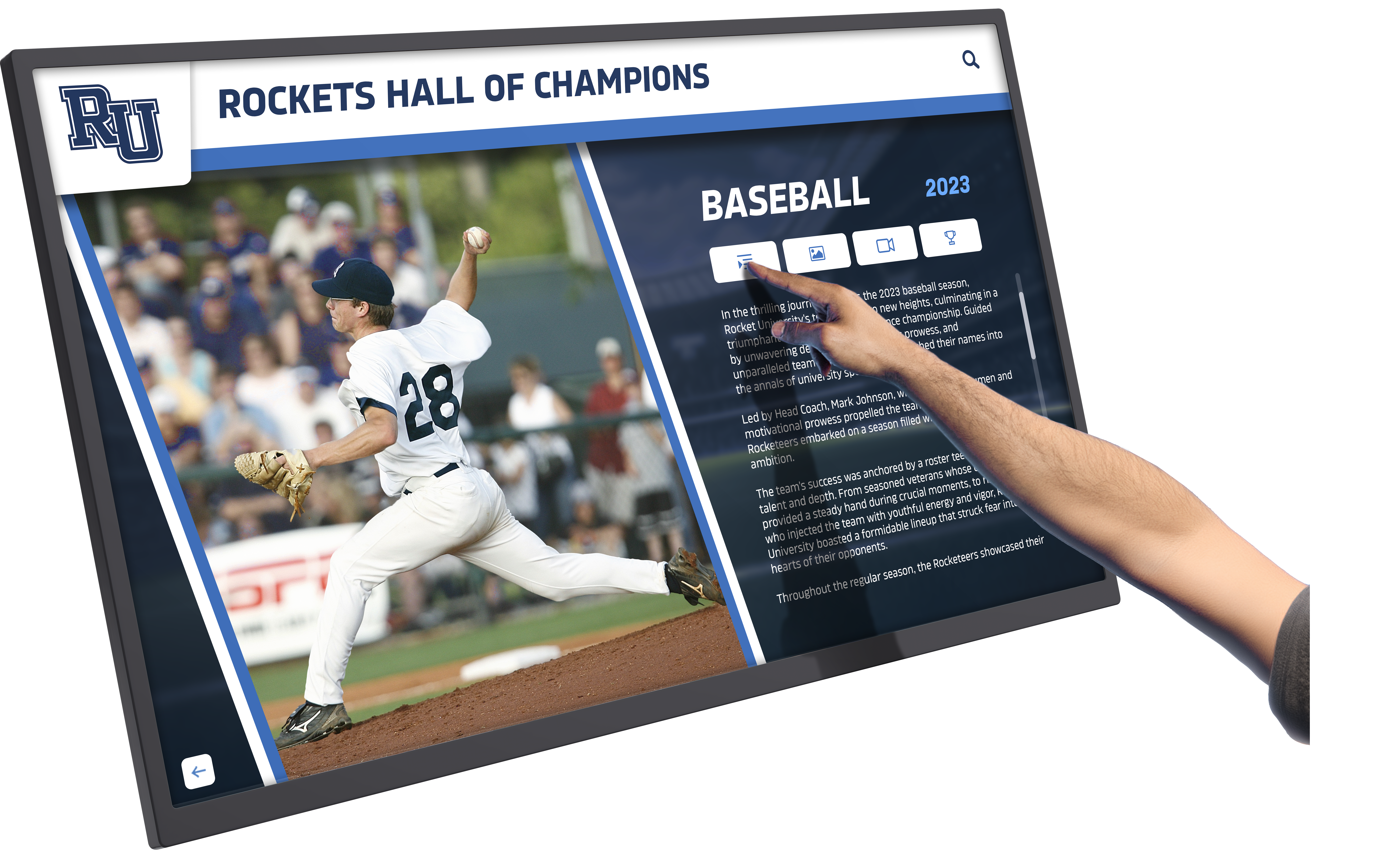
Touchscreen interfaces transform passive viewing into active exploration that increases engagement
Simple Cloud-Based Content Management
Sophisticated display capabilities provide little value if content management requires extensive technical expertise or consumes excessive administrative time.
User-Friendly Management Interfaces Modern platforms provide intuitive web-based interfaces enabling non-technical staff to confidently add and update recognition content. Bulk import capabilities enable efficient data entry from spreadsheets, templates ensure consistent formatting, and scheduled publishing enables predictable update timing.
Remote Access and Updates Cloud-based systems enable content updates from any internet-connected device without requiring physical display access. Administrators can add recognition content from offices, homes, or while traveling—flexibility dramatically reducing maintenance barriers.
Multi-User Permissions Appropriate permission systems enable multiple staff members to manage relevant content sections. Athletic directors control sports recognition, counselors manage academic achievements, and activities coordinators update fine arts displays—distributed responsibility without compromising centralized oversight.
Schools report 80-90% reduction in time spent maintaining recognition displays after implementing modern digital systems compared to traditional approaches requiring manual creation, printing, physical installation, and periodic replacement.
Creative Theme-Based Display Ideas
Thematic displays create visual interest while organizing information in engaging ways that tell coherent stories:
Historical Journey Displays
Decade-by-Decade School Evolution Create chronological displays documenting school history across decades. Include architectural changes with historic building photos, enrollment growth and demographic evolution, curricular program development, championship and achievement milestones, and distinguished alumni from each era.
This temporal organization helps students understand institutional evolution while connecting them to long-term tradition.
Notable Alumni Spotlights Dedicate displays to distinguished alumni who have achieved professional success or made significant contributions. Alumni spotlights provide inspirational examples demonstrating long-term outcomes of education while building pride in graduates who’ve achieved notable accomplishments.
Include career trajectories, professional achievements, community contributions, and advice or reflections about their educational experiences.
Seasonal and Event-Based Displays
Spirit Week and School Events Create dynamic displays supporting school events and traditions. During spirit week, showcase daily themes with participation photos, competition standings, and school spirit messaging. For homecoming, feature game information, royalty nominees, and historical homecoming moments.
Event-aligned displays create excitement while documenting traditions that define school culture.
Holiday and Cultural Celebrations Recognize diverse cultural observances through educational displays explaining traditions, celebrating cultural contributions, and featuring student reflections about personal connections to celebrations. Ensure inclusive representation across multiple cultures and traditions throughout the academic year.
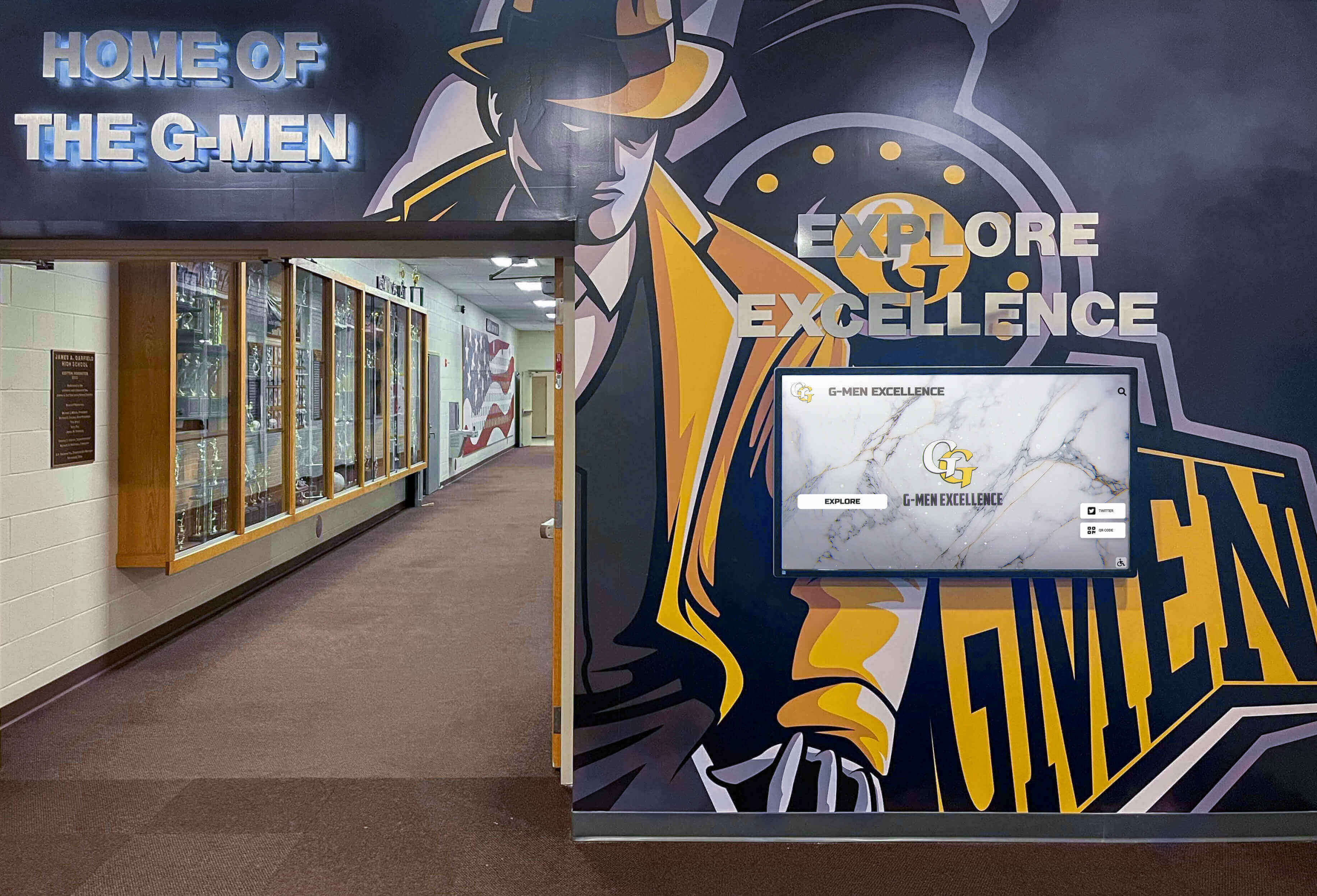
Comprehensive displays integrate multiple elements celebrating history, achievement, and school culture
Motivational and Inspirational Boards
Goal Setting and Growth Mindset Displays Create interactive displays where students post personal academic goals, track progress toward objectives, or share strategies that have helped them improve. This participatory approach builds investment while normalizing goal-setting behaviors.
Include growth mindset messaging emphasizing that abilities develop through effort, celebrating improvement alongside absolute achievement, and providing concrete examples of students who have overcome challenges through persistence.
College and Career Preparation Dedicate display space to college acceptance announcements, scholarship awards, career exploration resources, and alumni career pathway examples. This forward-looking content helps students envision post-secondary possibilities while celebrating peers’ achievements.
Interactive Participation Boards
Question of the Week Pose weekly questions—academic trivia, school history, current events, mathematical puzzles—with answer reveals. This interactive element creates ongoing engagement while encouraging regular display attention.
Student Recommendation Boards Allow students to post book recommendations, study tip suggestions, college visit reflections, or advice for underclassmen. Peer-to-peer content creates authentic engagement while building community through shared wisdom.
Goal Tracking Displays For school-wide initiatives—reading challenges, fitness goals, fundraising campaigns—create visual progress tracking that updates regularly. Visible progress creates momentum and collective investment in shared objectives.
Strategic Display Board Placement
Even excellent content provides limited impact when positioned where students rarely encounter it. Strategic placement maximizes visibility and engagement:
High-Traffic Interior Locations
Main Entrance and Lobby Areas Position prominent displays in main entrances where all students, staff, and visitors pass daily. First impressions communicate institutional priorities—displays in prime entrance locations demonstrate genuine commitment to celebration and communication.
Cafeteria and Commons Approaches Students gather in cafeterias and common areas daily, creating natural congregating points. Recognition and informational displays adjacent to these high-traffic areas ensure regular exposure during informal time when students have capacity for leisurely viewing.
Main Hallway Corridors Long hallways connecting major building sections receive continuous traffic throughout school days. Well-designed hallway displays provide sustained visibility during transitions between classes when students move through buildings multiple times daily.
Athletic Facility Locations Gyms, field houses, and athletic training areas provide natural settings for sports-focused recognition. Athletes spending substantial time in these spaces benefit from prominent achievement displays specific to athletic programs.
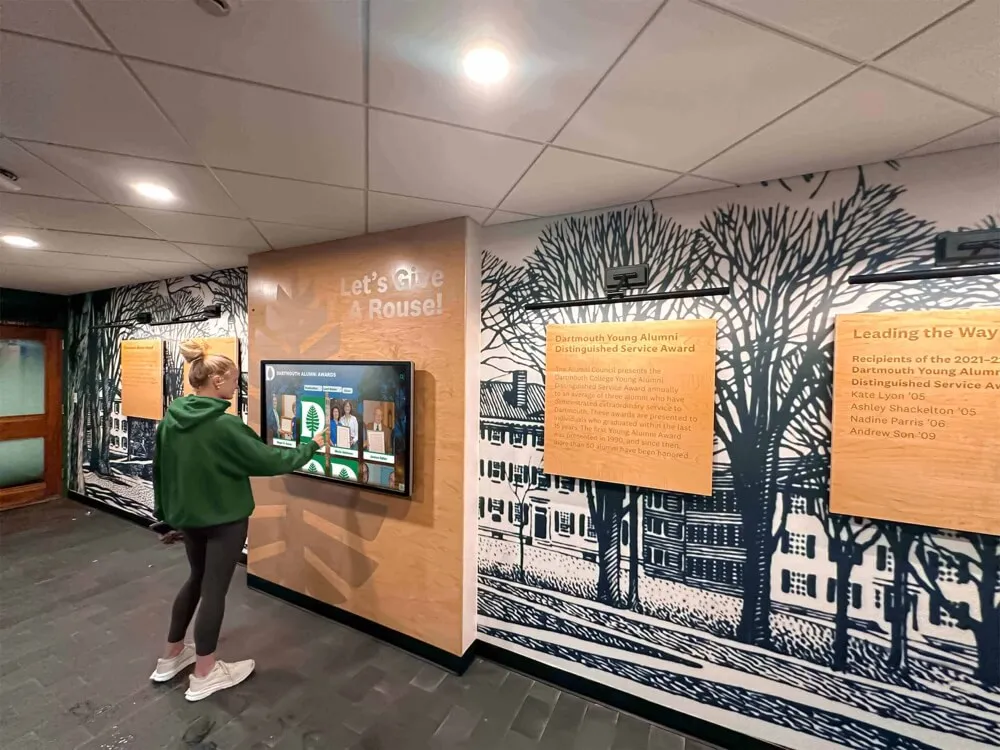
Strategic hallway placement ensures students naturally encounter recognition throughout daily routines
Specialized Location Strategies
Counseling and Administrative Office Areas Students visiting counseling offices discuss academic planning, college preparation, and achievement. Recognition displays in these spaces provide conversation starting points while inspiring academic goal-setting during advising meetings.
Department-Specific Locations Subject-specific displays in academic department areas celebrate discipline-focused excellence. Science wings might showcase STEM achievements, English departments feature writing awards, and fine arts areas display artistic accomplishments.
Library and Media Center Displays Academic recognition displays naturally complement library environments, reinforcing connections between intellectual spaces and achievement celebration. These locations work particularly well for highlighting research projects, writing awards, and academic competitions.
Design Principles for Effective Display Boards
Content quality matters immensely, but presentation determines whether anyone actually engages with that content:
Visual Design Fundamentals
Hierarchical Information Organization Arrange content with clear visual hierarchy—most important information prominently featured, supporting details accessible but secondary. Viewers should immediately grasp primary messages without requiring detailed examination.
Readable Typography Select fonts and sizes ensuring readability from appropriate viewing distances. Main headings should be legible from 10-15 feet, body text readable from 3-5 feet. Avoid decorative fonts that sacrifice legibility for style.
Balanced Composition Distribute visual elements creating balance rather than cluttered or sparse areas. Adequate white space prevents overwhelming viewers while focused content areas draw attention to specific elements.
Consistent Branding Incorporate school colors, logos, and visual identity consistently. This branding reinforces institutional identity while creating professional, cohesive appearance across multiple displays.
Quality Photography Invest in professional-quality photos with proper lighting, composition, and resolution. Blurry, dark, or poorly composed photos undermine content quality and suggest that recognition lacks importance.
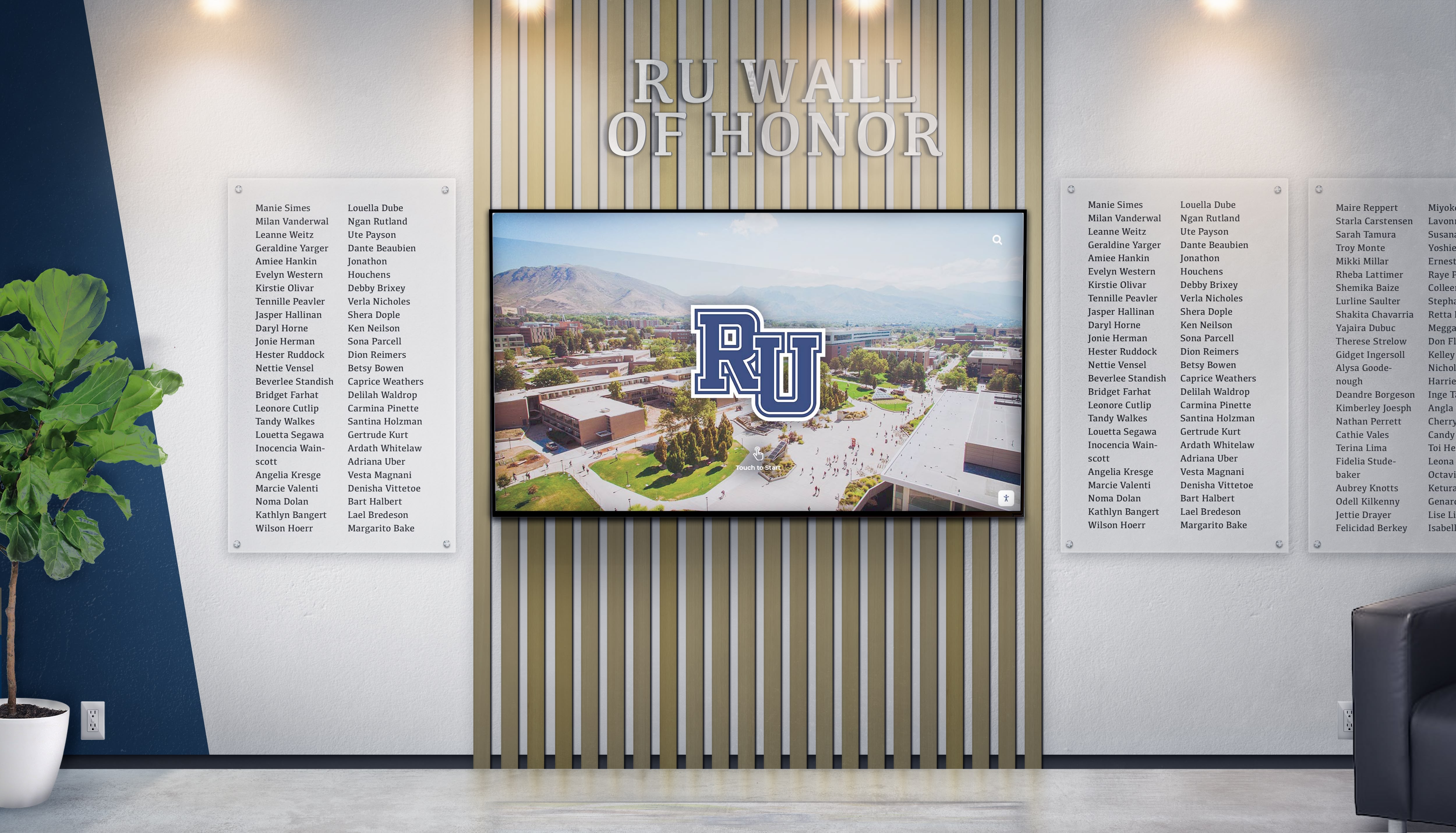
Professional design combining digital and physical elements creates comprehensive celebration spaces
Content Organization Strategies
Clear Category Distinctions Group related content together with clear labels indicating categories—academic achievements separated from athletics, current year distinct from historical archives. Obvious organization enables quick navigation to relevant content.
Chronological or Alphabetical Ordering Within categories, organize content systematically—chronologically for time-based achievements, alphabetically for name-based searching. Predictable organization helps viewers locate specific information efficiently.
Contextual Information Provide adequate context explaining achievements—what competition or assessment students participated in, what selection criteria determined recognition, how many students qualified from total population. Context helps viewers understand accomplishment significance.
Regular Update Schedules Establish predictable update rhythms and maintain them consistently. Quarterly updates aligned with grading periods work well for academic recognition, while seasonal updates suit athletic displays. Calendar reminders ensure updates occur systematically rather than sporadically.
Budget-Conscious Display Solutions
Effective recognition doesn’t require substantial budgets when schools approach displays strategically:
Low-Cost Traditional Approaches
DIY Bulletin Board Designs Cork or fabric-covered bulletin boards provide flexible, low-cost display options. Refresh regularly with updated content, invest in quality printing for professional appearance, use colored paper and borders creating visual interest, and incorporate student artwork or design contributions reducing costs while building ownership.
Poster Board Recognition Large poster boards mounted on walls or easels provide semi-permanent display options. Create templates ensuring consistent design across multiple posters, use color printers producing quality output, and laminate posters extending longevity and maintaining appearance.
Window Clings and Decals Glass surfaces in lobbies, cafeterias, or hallways provide display opportunities through custom window clings celebrating achievements or communicating messages. These removable options create visual impact without permanent installation.
Strategic Technology Investment
Phased Digital Implementation Schools wanting comprehensive digital recognition but facing budget constraints can implement strategically:
- Start with single display in highest-traffic location establishing program viability
- Expand systematically as budget allows based on initial success
- Prioritize locations providing maximum visibility and engagement
- Consider fundraising opportunities through donor naming rights for recognition displays
Blended Traditional and Digital Approaches Combine prominent digital displays in main areas with traditional bulletin boards in secondary locations. This hybrid strategy maximizes impact per dollar while maintaining comprehensive recognition across campus.
Donor and Fundraising Support Recognition displays create natural naming opportunities attracting donor support. Alumni, booster organizations, graduating classes, and community businesses may sponsor displays as visible legacy investments.
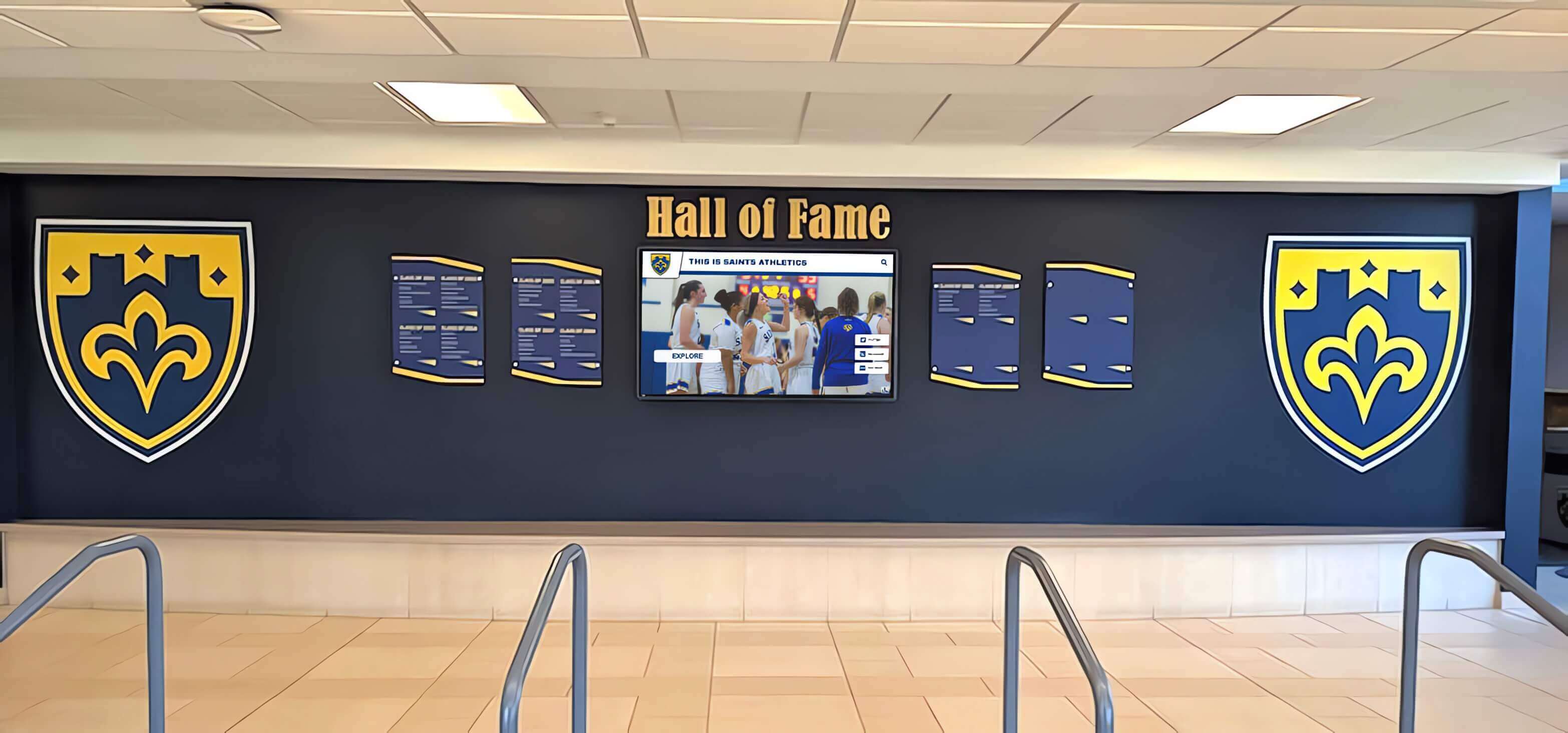
Integrated displays combine multiple recognition approaches maximizing impact and comprehensiveness
Implementing Successful Display Programs
Moving from concept to implementation requires systematic planning addressing content development, maintenance sustainability, and program evaluation:
Planning and Needs Assessment
Stakeholder Input Collection Survey students, families, and staff about recognition priorities gathering perspectives on what achievements deserve celebration, how recognition should be presented, and what would make displays most meaningful and engaging.
Current Program Evaluation Assess existing displays identifying strengths worth preserving, limitations requiring solutions, gaps leaving achievements unrecognized, and opportunities for enhancement through better systems or approaches.
Resource Assessment Evaluate available resources including budget for display systems, staff time for content management, physical spaces suitable for display installation, and technical infrastructure supporting digital solutions if applicable.
Recognition Category Definition Establish comprehensive achievement categories ensuring diverse accomplishments receive acknowledgment—academic performance and improvement, athletic and extracurricular achievements, character and citizenship, leadership and service, and special accomplishments like competitions or certifications.
Content Development and Management
Photography and Media Standards Establish quality standards for visual content including professional-quality images suitable for display viewing, consistent lighting and composition approaches, authentic expressions capturing genuine personality, and regular photography sessions capturing current achievers promptly.
Writing Recognition Narratives Move beyond generic acknowledgment to tell specific achievement stories. Compare generic “Sarah Chen - Honor Roll” to meaningful “Sarah Chen achieved High Honor Roll with 3.85 GPA while balancing advanced coursework. Her improvement in STEM subjects exemplifies how strategic effort produces excellent results.”
Update Responsibility Assignment Designate specific staff members responsible for display program coordination with adequate time allocation. Ambiguous responsibility typically means nobody maintains systems consistently.
Update Process Documentation Create clear procedures for adding new content, removing outdated information, and maintaining display quality. Documented processes enable consistent execution regardless of staff changes.
Program Evaluation and Evolution
Quantitative Metrics Track measurable indicators including percentage of students receiving recognition annually, recognition distribution across demographics and achievement types, display engagement metrics when available, and achievement trends comparing recognized versus non-recognized students.
Qualitative Assessment Gather subjective feedback through student surveys about recognition awareness and impact, family input about program effectiveness, staff observations about cultural influence, and external stakeholder perception of school priorities.
Continuous Improvement Regular assessment enables ongoing refinement ensuring recognition programs remain meaningful, equitable, and impactful rather than continuing unchanged approaches that may lose effectiveness over time.
The Role of Modern Recognition Technology
While this guide explores diverse display approaches, modern digital solutions provide capabilities fundamentally transforming what schools can achieve:
Rocket Alumni Solutions represents the leading platform specifically designed for educational recognition, offering purpose-built features addressing schools’ unique needs through unlimited recognition capacity eliminating selection decisions, intuitive content management requiring minimal expertise, comprehensive achievement organization by type and timeframe, sophisticated search and filtering enabling easy discovery, mobile-responsive web access extending recognition beyond campus, and ongoing platform updates ensuring long-term functionality.
Schools implementing comprehensive digital recognition platforms report transformative benefits including 80-90% reduction in administrative time compared to traditional approaches, measurably higher student engagement with recognition content, improved school culture metrics from climate surveys, enhanced family satisfaction with communication, and preserved institutional history through permanent digital archives.
Transform Your School's Display Program
Discover how modern recognition solutions can help you celebrate every student's accomplishments while building an engaging culture of excellence.
Explore Display SolutionsConclusion: Creating Engaging Display Environments
School display boards represent far more than wall decorations or administrative obligations. When implemented strategically with thoughtful content, professional design, and consistent maintenance, displays become powerful tools for building school culture, celebrating diverse achievements, inspiring student excellence, and creating engaging environments where learning and success feel valued and visible.
The display board ideas explored in this guide provide concrete pathways for schools seeking to transform institutional spaces into dynamic celebration and communication environments. From comprehensive digital platforms accommodating unlimited recognition to creative traditional approaches implemented with renewed strategic focus, schools have numerous options for creating display programs matching their contexts, resources, and communities.
Most importantly, effective display boards serve purposes beyond temporary acknowledgment. They motivate future excellence by making success visible and aspirational, validate student effort demonstrating that achievement produces recognized results, communicate institutional values showing genuine commitment to diverse accomplishments, inspire positive peer influence normalizing excellence across achievement types, and preserve institutional legacy documenting tradition across generations.
Your students’ accomplishments deserve celebration reflecting their significance. Whether implementing comprehensive digital recognition systems that eliminate traditional limitations or strategically enhancing existing approaches through improved content and placement, schools can create display experiences that genuinely honor achievement while building the positive, engaged school culture where all students thrive.
Ready to transform your display program? Explore how digital signage solutions can enhance your recognition efforts, or discover strategies for building positive school culture through comprehensive recognition programs.































