Division III athletics represents a unique philosophy within collegiate sports—one that emphasizes the complete student-athlete experience over athletic specialization. With approximately 450 member institutions and more than 190,000 student-athletes, NCAA Division III is the largest division in the NCAA, yet it operates under a fundamentally different model: no athletic scholarships, shorter competitive seasons, and a commitment to integrating athletics with the full college experience.
In this distinctive environment where student-athletes balance rigorous academics with competitive athletics, digital recognition systems have emerged as powerful tools for celebrating achievement, preserving program history, and building community pride. Unlike their Division I and II counterparts with substantial athletic budgets, Division III programs require cost-effective, space-efficient solutions that can honor unlimited achievements across dozens of sports without compromising limited facility space or straining modest budgets.
This comprehensive guide explores how Division III athletic departments are leveraging digital recognition technology to overcome traditional space limitations, create engaging experiences for current student-athletes and alumni, and demonstrate institutional commitment to celebrating achievement across all sports—not just the most visible programs. Whether you’re an athletic director evaluating recognition options, a development officer seeking to strengthen alumni connections, or a facilities manager planning athletic space renovations, you’ll discover practical insights about implementing digital recognition systems specifically designed for the Division III context.
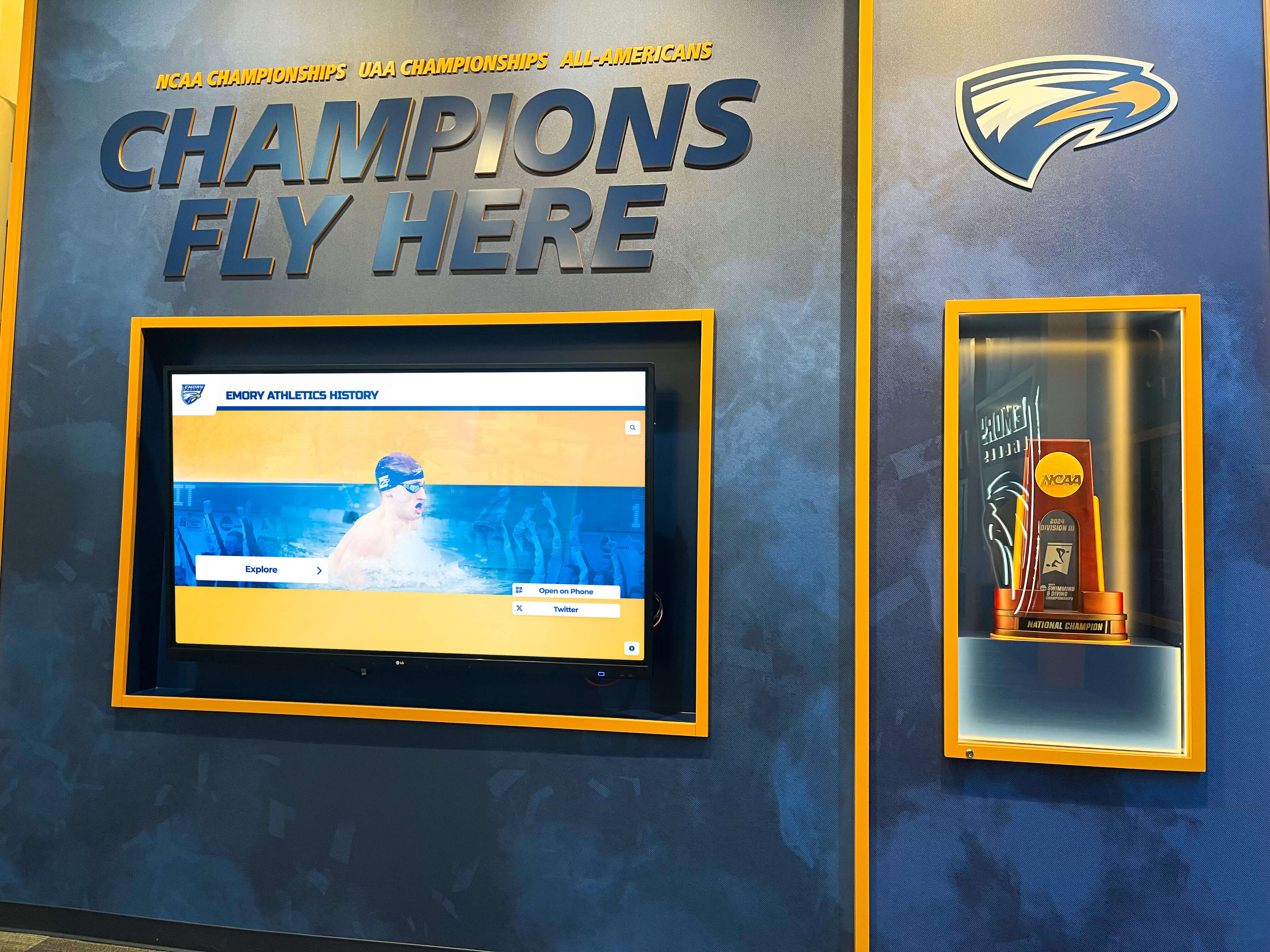
Division III programs create impressive recognition environments that celebrate student-athlete achievement across all sports
Understanding the Division III Athletics Landscape
Before exploring digital recognition solutions, it’s essential to understand what makes Division III athletics distinctive and how these characteristics shape recognition needs and priorities.
The Division III Philosophy: Student-Athletes First
Division III institutions operate under a philosophy fundamentally different from Division I and II programs. The NCAA Division III philosophy statement emphasizes “the participant’s experience” and states that athletics programs are designed to be “an integral part of the educational experience.” According to NCAA data, Division III represents the largest division with approximately 450 member institutions—about 80% private colleges and 20% public institutions.
No Athletic Scholarships: The defining characteristic of Division III is the complete prohibition of athletic scholarships. Financial aid awarded to student-athletes must follow the same procedures as for the general student body, and the proportion of aid given to athletes must be “closely equivalent to the percentage of student-athletes within the student body.” This fundamental difference creates more balanced rosters where athletes compete primarily for love of sport rather than financial compensation.
Academic Integration: Division III student-athletes typically experience shorter competitive seasons with actual off-seasons, allowing participation in other campus activities including study abroad programs, internships, undergraduate research, campus organizations, and recreational sports. This integration means Division III athletes often have more diverse experiences and broader campus involvement than athletes at scholarship-granting institutions.
Smaller Program Scales: While Division III has the most member institutions, individual programs typically operate with smaller budgets, fewer coaching staff, and more modest facilities compared to Division I and II counterparts. The median undergraduate enrollment for Division III schools is approximately 2,750 students, though the range extends from under 500 to over 38,000 students.
These characteristics create unique recognition challenges and opportunities that digital systems are particularly well-suited to address.
Recognition Challenges Specific to Division III Programs
Division III athletic departments face distinctive challenges when implementing recognition programs that honor achievement appropriately while working within institutional constraints.
Multi-Sport Equity: Division III institutions typically sponsor 18-20 varsity sports on average—more than Division I or II schools. This breadth creates strong institutional commitment to providing equitable recognition across all sports rather than privileging traditionally high-profile programs like football and basketball. Traditional trophy cases and plaque walls struggle to provide fair representation when dozens of teams and hundreds of athletes merit recognition annually.
Space Limitations: Many Division III schools occupy historic campuses with limited athletic facilities. Unlike major Division I programs with massive athletic complexes, Division III schools often work with constrained spaces where every square foot counts. Traditional recognition approaches that consume valuable wall and floor space create difficult trade-offs between recognition and functional needs.
Budget Constraints: Athletic budgets at Division III schools typically represent small fractions of Division I program budgets. Recognition initiatives compete with equipment needs, facility maintenance, travel expenses, and coaching salaries. Solutions must demonstrate clear value relative to cost while avoiding ongoing expenses that strain limited resources.
Volunteer and Part-Time Staff: Many Division III athletic departments operate with fewer full-time administrators than single sports at Division I schools. Recognition programs requiring significant ongoing management burden prove unsustainable. Solutions requiring minimal maintenance and straightforward updates fit Division III operational realities better than systems demanding dedicated content management staff.
Historical Preservation: Many Division III institutions have athletic histories spanning a century or more, yet historical documentation often exists only in dusty storage rooms, outdated media guides, and fading memories. Systematic historical preservation requires practical, affordable approaches that enable incremental progress rather than requiring massive upfront digitization investments.
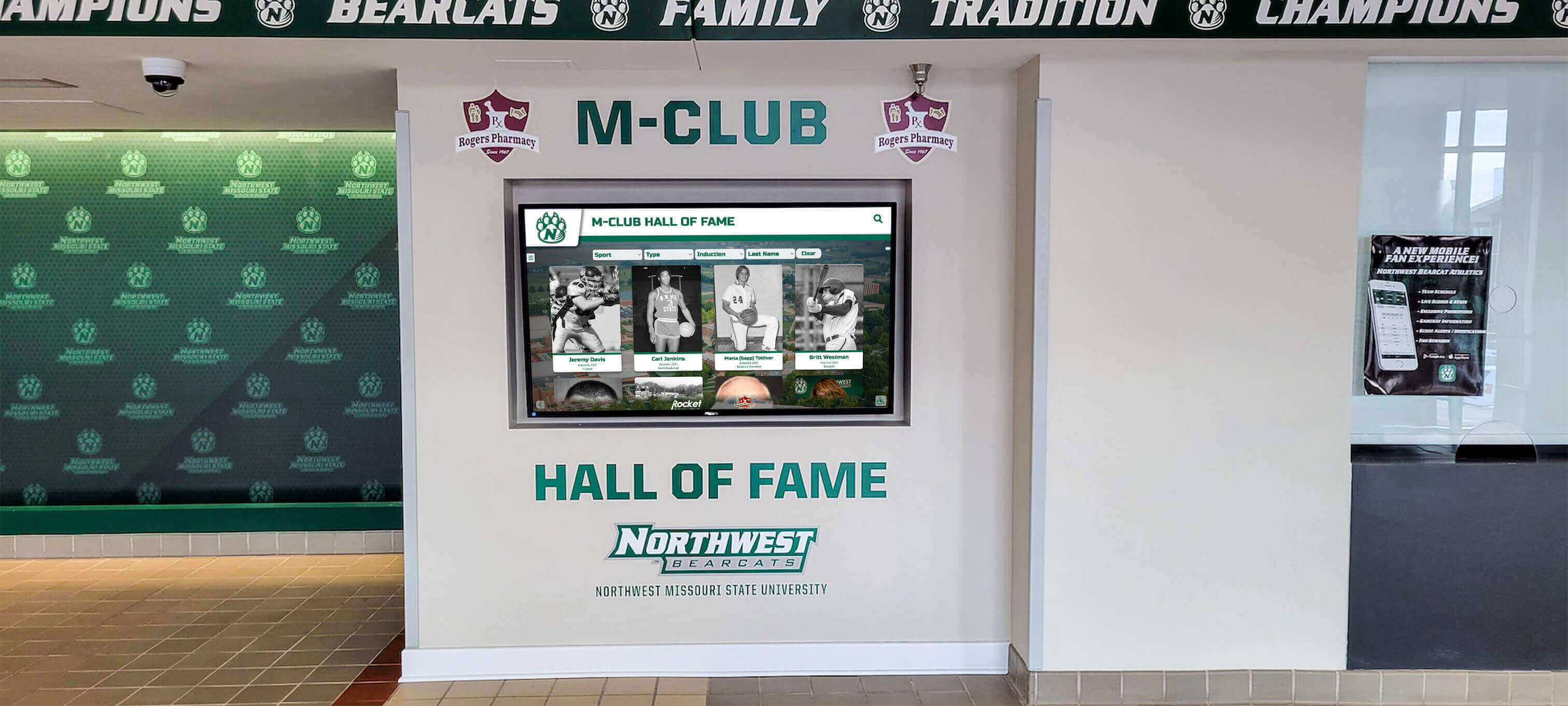
Digital displays enable comprehensive recognition across multiple sports without consuming limited facility space
How Digital Recognition Systems Transform Division III Athletics
Digital recognition technology addresses Division III-specific challenges while creating new possibilities for celebrating student-athlete achievement, strengthening program culture, and engaging diverse stakeholders.
Unlimited Capacity Across All Sports
Perhaps the most transformative benefit digital systems provide Division III programs is elimination of physical space constraints that force difficult decisions about whose achievements merit limited recognition opportunities.
Comprehensive Multi-Sport Recognition: A single touchscreen display can showcase thousands of student-athletes across all varsity programs spanning decades of institutional history. Programs that previously recognized only all-conference selections or championship teams due to space limitations can comprehensively honor every letter-winner, creating truly equitable recognition that reflects Division III values of participation and educational experience over pure competitive excellence.
This comprehensive approach proves particularly valuable for Division III institutions where less visible sports like swimming, cross country, field hockey, and wrestling often produce extraordinary individual and team achievements deserving recognition equal to traditional marquee sports. Solutions like digital hall of fame touchscreen displays enable athletic departments to celebrate accomplishments across all programs without privileging certain sports based on visibility or tradition.
Historical Depth and Continuity: Digital platforms preserve complete recognition history rather than requiring removal of previous honorees to accommodate new achievements. Division III schools with athletic traditions spanning decades or centuries can showcase founding era student-athletes alongside contemporary competitors, creating living historical archives that connect past and present while demonstrating program legacy and institutional commitment to athletics across generations.
Recognition Beyond Elite Achievement: Division III philosophy emphasizes participation and educational experience over pure competitive results. Digital systems enable recognition of diverse achievement types including academic all-conference selections, sportsmanship award recipients, team captains and leaders, milestone achievement markers like 100th career goal or 1,000th career point, and career participation spanning four years of commitment and development.
This breadth of recognition categories honors the complete Division III experience where competitive excellence represents only one dimension of student-athlete contributions to programs and institutions.
Cost-Effective Long-Term Value
Division III athletic departments require recognition solutions delivering clear value relative to investment while avoiding ongoing expenses that strain limited budgets.
Favorable Total Cost of Ownership: While digital recognition requires upfront technology investment, long-term cost comparisons typically favor digital approaches for Division III contexts. Traditional recognition incurs continuous expenses including professional engraving for new plaques and awards, physical installation labor for mounting and display updates, periodic expansion construction as recognition needs grow, ongoing maintenance and cleaning of physical displays, and eventual replacement when materials degrade or aesthetics date.
Digital systems convert these ongoing variable costs into predictable one-time hardware investment plus modest annual software subscriptions where applicable. Many Division III programs achieve cost-neutral operation within 3-5 years compared to traditional recognition approaches while delivering exponentially superior capacity and engagement.
Elimination of Physical Production: Digital recognition eliminates entirely the need for engraving, plaque manufacturing, physical printing, and installation labor that traditional approaches require. Athletic departments report 80-90% reduction in administrative time spent on recognition after implementing digital systems. For Division III programs with limited staff, this time savings proves as valuable as direct cost reductions.
Scalability Without Space Expansion: As programs grow and achievement histories lengthen, traditional recognition requires costly facility expansion to accommodate additional displays. Digital systems accommodate unlimited growth without facility modification, protecting athletic departments from unpredictable capital expenses that could otherwise strain budgets.
Predictable Lifecycle Planning: Quality commercial-grade displays typically provide 50,000-100,000 hours of operation—representing 10-15 years of service in typical Division III applications. This predictable lifecycle enables long-term budget planning and ensures that recognition investments deliver extended value rather than requiring frequent replacement.
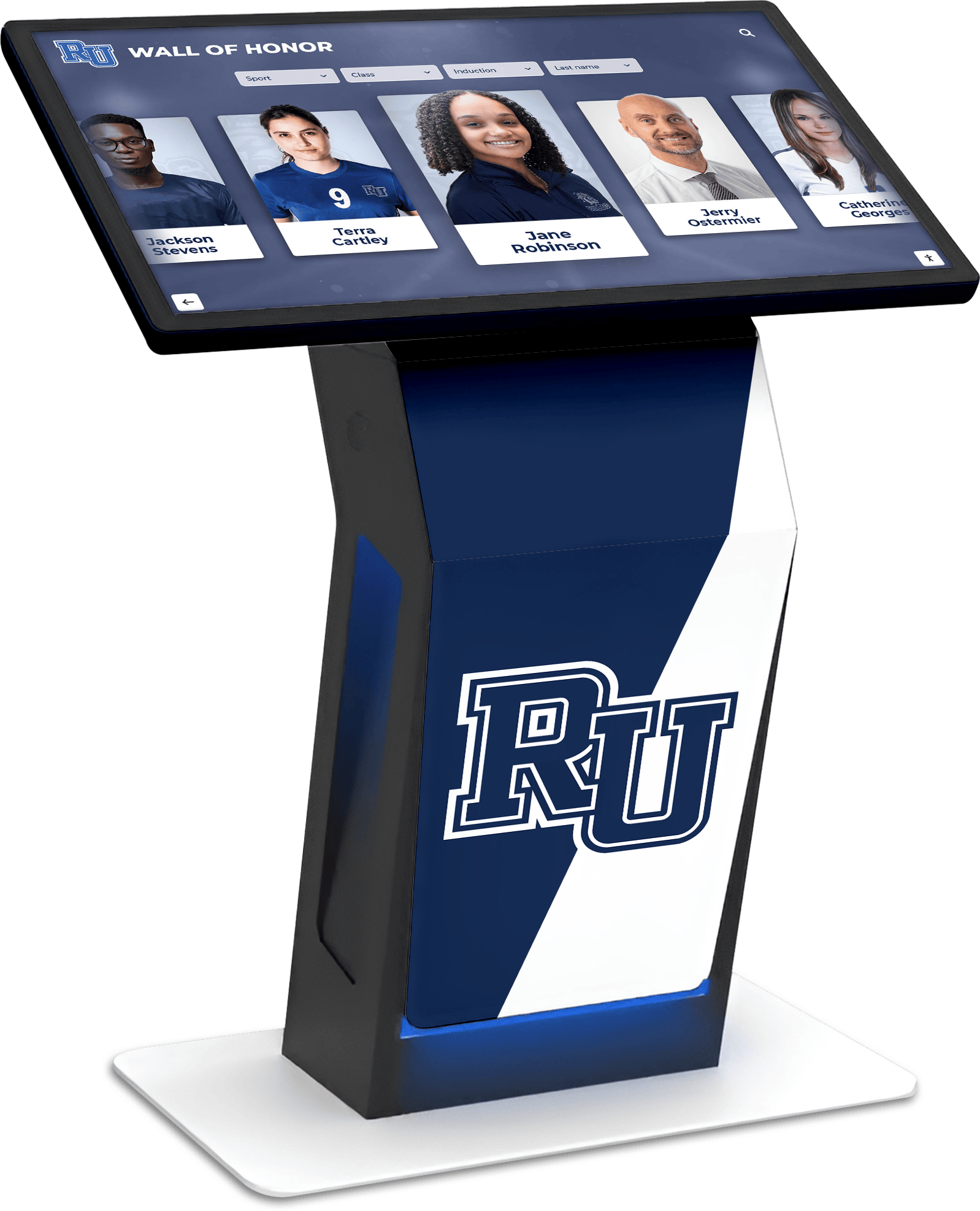
Professional kiosk systems provide turnkey recognition solutions requiring minimal installation and no facility modification
Enhanced Engagement and Inspiration
Digital recognition systems create fundamentally different experiences compared to traditional static displays, generating measurably higher engagement that strengthens impact on current student-athletes, recruits, alumni, and community supporters.
Interactive Exploration: Unlike traditional plaques requiring passive viewing, digital systems invite active exploration where users control their experience. Prospective student-athletes can search for their intended sport to discover program history and achievement standards. Current athletes explore connections to former teammates and coaches who competed before them. Alumni return to campus and instantly locate their own achievements and those of former classmates and competitors.
Research on interactive exhibit engagement demonstrates that touchscreen displays generate 5-10 times longer average visitor interaction compared to static displays. This extended engagement creates opportunities for meaningful reflection, inspiration, and community connection impossible with brief passive viewing of traditional recognition.
Multimedia Storytelling: Digital platforms enable rich multimedia content that brings Division III athletics to life in ways static plaques never can. Programs can include high-resolution action photography from competitions, video highlights of championship moments and career milestones, biographical narratives explaining student-athletes’ complete college experiences, post-graduation updates showing long-term outcomes of Division III participation, and personal reflections about how athletics contributed to educational development.
This multimedia storytelling proves particularly valuable for Division III programs where student-athlete narratives often emphasize balance, character development, leadership growth, and lifelong lessons learned through competition—dimensions that plaques listing only names and statistics cannot convey effectively.
The digital storytelling capabilities available for athletic programs demonstrate how comprehensive content transforms recognition from simple commemoration into compelling narratives that engage audiences while honoring achievement in its full context.
Social Connection and Shared Experience: Interactive displays become gathering points where groups explore recognition together. Prospective families investigate program quality during campus tours. Current teams discover former athletes who set records they’re pursuing. Alumni reunions center on exploring shared history and reconnecting through remembered achievements and forgotten teammates.
These social experiences amplify recognition impact beyond individual acknowledgment to create shared celebration and community connection particularly valuable in Division III contexts where athletics serves explicit purposes of building institutional community and lifelong connections.
Administrative Efficiency for Small Staffs
Division III athletic departments typically operate with fewer administrators than single sports programs at major Division I institutions. Recognition solutions must accommodate limited staff capacity while maintaining professional quality and consistent currency.
Simple Remote Content Management: Cloud-based platforms enable authorized staff to update recognition displays from any internet-connected device without technical expertise, facility visits, or specialized software. Adding new inductees, updating athlete information, uploading championship photos, or making corrections requires minutes through intuitive web interfaces rather than hours coordinating engraving and physical installation.
This management simplicity proves essential for Division III contexts where sports information directors, assistant athletic directors, or even student workers manage recognition alongside numerous competing responsibilities. Systems requiring specialized technical skills or complex processes simply won’t be maintained consistently regardless of initial intentions.
Scalable Content Development: Digital platforms accommodate phased content development approaches that fit Division III resource constraints. Athletic departments can launch with core current content and incrementally add historical material as time and resources permit. This scalability prevents recognition projects from becoming overwhelming all-or-nothing propositions that never launch due to perceived impossibility of immediate comprehensive completion.
Student workers, class projects, and alumni volunteers can contribute to ongoing content development through interviews, research, digitization, and writing. This distributed approach spreads workload while creating engagement opportunities that benefit both recognition programs and contributors.
Consistent Professional Presentation: Digital platforms maintain consistent professional appearance automatically through designed templates and structured content entry. Traditional displays often evolve into inconsistent collections with varied plaque styles, changing formats, and declining aesthetic coherence as different administrators implement recognition across years using available materials rather than coordinated design standards.
This consistency matters particularly for Division III schools where athletics represents institutional identity and values to prospective students, alumni, and broader communities. Professional recognition presentation demonstrates organizational competence and commitment to celebrating achievement appropriately.
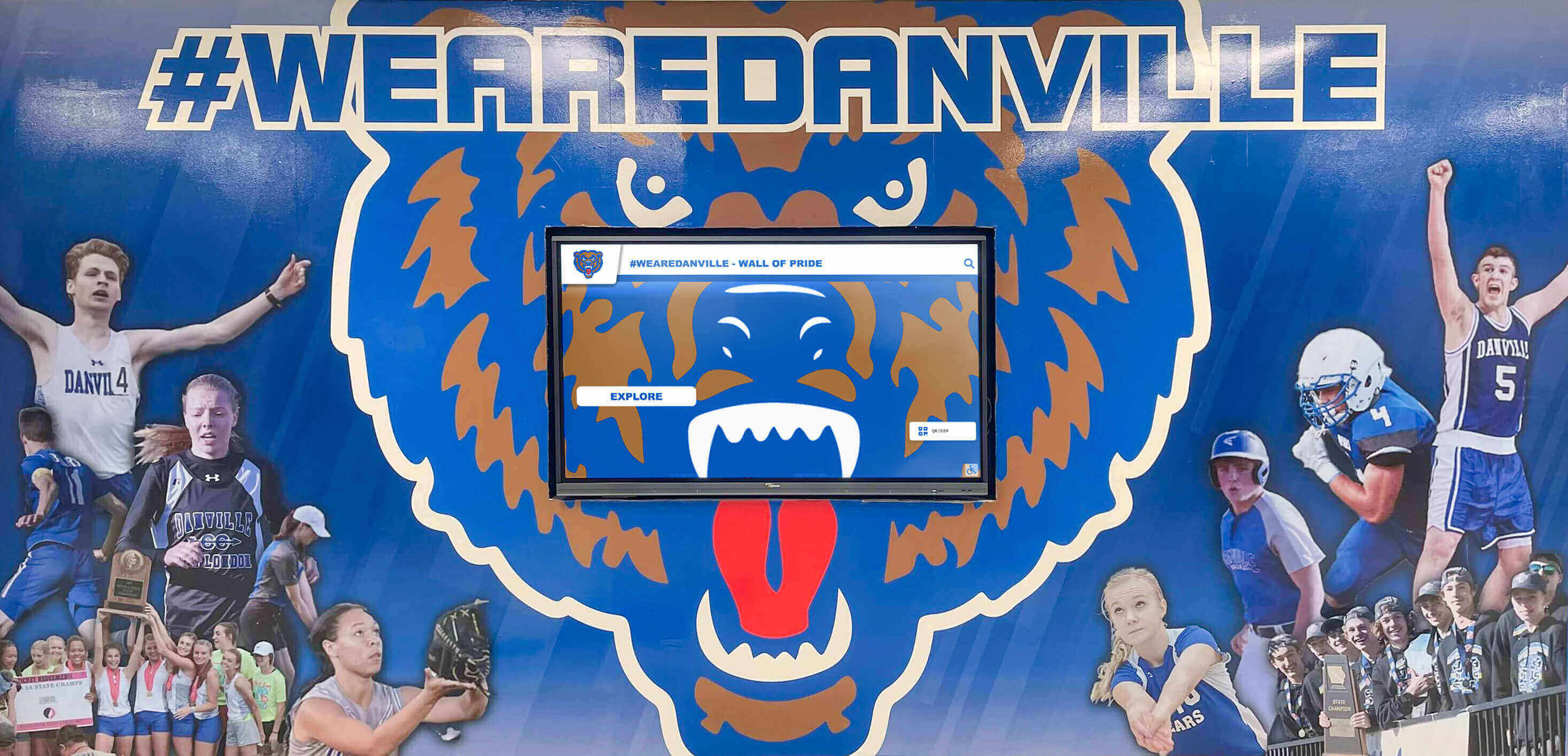
Digital displays integrate seamlessly with traditional athletic murals and branding elements
Strategic Implementation for Division III Athletic Departments
Successful digital recognition implementation requires thoughtful planning addressing Division III-specific contexts, constraints, and opportunities.
Defining Recognition Philosophy and Priorities
Before evaluating specific technology solutions, Division III athletic departments should clearly articulate recognition purposes and priorities that implementations must serve.
Institutional Values Alignment: Division III institutions emphasize diverse values including academic excellence integration with athletics, comprehensive development of student-athletes as complete individuals, balanced participation across numerous sports, character development and ethical competition, and lifelong learning fostered through athletic participation.
Recognition programs should reflect these values explicitly rather than inadvertently contradicting them. If institutions emphasize academic achievement alongside competitive success, recognition should highlight academic all-conference selections and scholar-athletes prominently. If character and sportsmanship receive institutional emphasis, recognition categories should include citizenship awards and ethical leadership examples.
Stakeholder Needs Assessment: Division III recognition serves diverse constituencies including current student-athletes seeking inspiration and role models, prospective recruits evaluating programs and institutional commitment, alumni seeking connection to institutional heritage and former teammates, parents wanting their student-athletes appropriately celebrated, development staff cultivating donor relationships and demonstrating stewardship, and broader campus communities where athletics represents institutional identity.
Understanding these varied stakeholders enables recognition solutions serving all constituencies appropriately rather than optimizing for single groups at others’ expense.
Strategic Priority Definition: Athletic departments should determine whether recognition primarily serves recruiting competitiveness, alumni engagement and fundraising support, current student-athlete inspiration and motivation, historical preservation before memories fade, or institutional pride and community building.
While effective recognition serves multiple purposes simultaneously, clear priority definition helps resolve inevitable trade-offs during planning and ensures resource allocation aligns with most important objectives.
Technology Selection for Division III Contexts
Recognition technology options range from purpose-built recognition platforms through general digital signage systems adapted for athletic applications. Division III departments should evaluate options considering specific institutional contexts and constraints.
Purpose-Built vs. Generic Platforms: Recognition-specific platforms like Rocket Alumni Solutions provide features specifically designed for celebrating achievement including comprehensive athlete profile databases, relationship mapping connecting teammates and coaches, sport-specific statistical displays and record tracking, searchable historical archives spanning decades, and web accessibility extending recognition beyond physical displays.
These specialized capabilities address Division III recognition needs far more effectively than generic digital signage systems designed for announcements, wayfinding, or advertising that lack recognition-specific functionality. While general signage platforms may cost less initially, they require extensive customization to approximate recognition functionality and typically deliver inferior user experiences that undermine engagement value.
Cloud-Based Management Benefits: Cloud-based recognition platforms store content on vendor-operated servers accessed through internet connections, enabling remote management from any device, automatic backups preventing content loss, continuous updates and feature improvements, and integrated web accessibility serving global audiences.
For Division III programs with limited technical staff and resources, cloud-based approaches prove superior to local systems requiring on-site servers, manual backup processes, and facility visits for every content update. The operational simplicity matters more for small departments than theoretical concerns about internet dependency.
Integration Capabilities: Consider whether recognition systems can integrate with existing institutional platforms including student information systems providing enrollment and demographic data, athletic statistics platforms tracking performance and records, advancement databases coordinating donor recognition, and website systems embedding web recognition seamlessly.
These integrations reduce duplicate data entry while ensuring consistency across organizational systems—important efficiency gains for small administrative teams managing multiple systems with limited personnel.
Solutions like those available through interactive hall of fame systems provide specialized capabilities specifically addressing educational institution needs that generic digital signage cannot replicate effectively.
Facility Planning and Installation
Strategic display placement and professional installation significantly impact recognition effectiveness and long-term satisfaction with implementations.
Location Strategy: Optimal display placement for Division III contexts balances several considerations including visibility to diverse audiences at various times, integration with recruiting tour routes ensuring prospects encounter displays, accessibility to current student-athletes who pass displays regularly, alignment with alumni visiting patterns during reunions and athletic events, and practical constraints around electrical power, network connectivity, and existing architecture.
Common successful locations include athletic complex main entrances and lobbies, locker room corridors where athletes encounter displays daily, weight room or training facility areas, gymnasium or field house concourses, and strategic hallway positions along natural traffic patterns.
For schools with distributed athletic facilities across campus, multiple coordinated displays showcasing different sports or content categories create comprehensive recognition presence without requiring single centralized location that may not exist.
Installation Approaches: Recognition displays can be wall-mounted for minimal space consumption, installed in floor-standing kiosks requiring no wall mounting or facility modification, integrated into architectural millwork creating custom environments, or positioned within renovated trophy cases modernizing traditional spaces.
For Division III contexts with limited renovation budgets and historic facilities requiring preservation, kiosk approaches often prove most practical. Professional enclosures provide complete turnkey solutions requiring only electrical power and network connectivity without construction or permanent facility modification that might require institutional approval processes and capital funding.
Accessibility and Universal Design: Recognition displays should be accessible to all community members regardless of physical abilities. Position interactive controls no higher than 48 inches from floor, maintain bottom screen edges below 40 inches mounting height, and ensure adequate clear floor space for wheelchair maneuvering. Software accessibility features including adjustable text size and high contrast modes ensure recognition serves individuals with visual impairments.
Universal design principles benefit all users while ensuring equitable access—consistent with Division III values emphasizing inclusive participation and comprehensive community engagement.
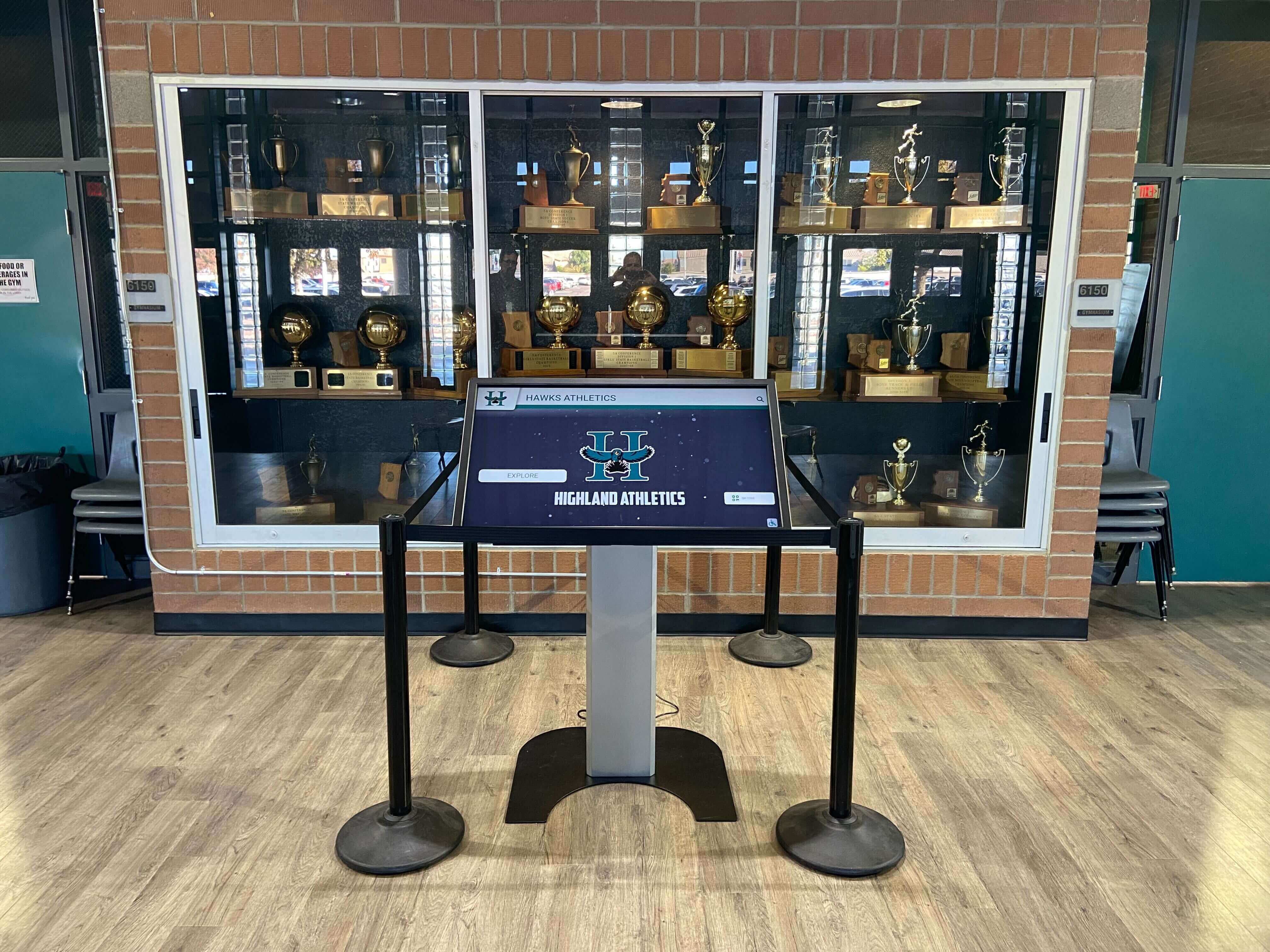
Digital displays complement traditional trophy cases, providing detailed storytelling that physical awards cannot convey
Content Strategies for Comprehensive Division III Recognition
Digital recognition technology enables unprecedented content possibilities, but realizing potential requires systematic content planning, development, and maintenance approaches.
Balancing Historical and Contemporary Content
Effective Division III recognition programs balance celebrating current achievements with preserving institutional athletic heritage spanning decades or centuries.
Phased Historical Development: Most institutions possess extensive athletic history that seems overwhelming when viewed as complete digitization project. Successful approaches break historical work into manageable phases including current decade comprehensive content as foundation, previous decade focused on championship teams and major honorees, earlier decades addressing conference championships and significant milestones, and founding era highlighting program origins and early traditions.
This phased approach creates immediately valuable content while establishing sustainable progression toward comprehensive historical coverage. Alumni often contribute significantly to historical projects by sharing personal photographs, memorabilia, statistics, and stories that institutional archives lack.
Contemporary Recognition Systems: Establish clear processes for identifying current achievements meriting recognition, gathering necessary information and materials promptly, creating profiles maintaining quality standards, and publishing recognition in timely fashion while accomplishments remain current and relevant.
Many Division III programs implement recognition for all-conference selections, academic all-conference honorees, team captains and leadership award recipients, record-breaking performances and milestone achievements, and championship team rosters with individual highlights. This comprehensive contemporary recognition demonstrates ongoing institutional commitment to celebrating achievement across all sports and student-athlete contributions.
Living Alumni Stories: One powerful digital recognition capability involves maintaining ongoing connections with former student-athletes through periodic updates about post-graduation achievements, professional careers, family milestones, and continued institutional connections. These “where are they now” updates demonstrate long-term outcomes of Division III participation while engaging alumni through continued recognition of their life successes beyond athletic careers.
This living recognition proves particularly valuable for Division III programs where student-athletes rarely pursue professional sports careers but frequently achieve notable success in diverse professional, civic, and personal endeavors that reflect comprehensive development emphasis of Division III philosophy.
Sport-Specific Recognition Categories
Comprehensive Division III recognition acknowledges that different sports emphasize varied achievement types requiring tailored approaches to honor appropriately.
Individual Sport Recognition: Sports like track and field, cross country, swimming, tennis, and golf emphasize individual performances and personal records. Recognition should highlight individual event championships and records, all-conference individual selections, national championship qualifiers, school record holders by event or distance, and career progression showing improvement and persistence.
These individual-focused sports often produce numerous achievements worthy of recognition that team-focused approaches might overlook. Digital systems accommodating detailed performance data and event-specific categories serve these sports particularly well.
Team Sport Recognition: Sports like basketball, soccer, volleyball, lacrosse, and hockey emphasize collective achievement and team success. Recognition should include championship team rosters and season narratives, statistical leaders across offensive and defensive categories, all-conference team selections, individual records within team contexts, and memorable games and rivalry moments.
Team sport recognition benefits from multimedia elements showing team chemistry, collective effort, and defining moments that individual statistics cannot fully capture. Video highlights and team photographs bring these achievements to life more effectively than statistics alone.
Specialized Achievement Categories: Consider recognition categories addressing unique Division III contexts including academic all-conference acknowledging scholar-athletes, sportsmanship awards honoring ethical competition and character, captains and leadership positions recognizing influence beyond statistics, four-year letter winners demonstrating sustained commitment, and achievement within academic majors connecting athletics to broader educational experience.
Resources on athletic hall of fame creation provide detailed guidance on developing comprehensive recognition categories serving diverse sports and achievement types.
Engaging Content That Inspires
Beyond basic statistics and biographical facts, effective Division III recognition includes content dimensions that create emotional connections and inspire current student-athletes.
Journey Narratives: Rather than simply listing achievements, tell stories about how student-athletes developed, obstacles overcome, lessons learned, relationships formed, and personal growth experienced. Division III student-athletes often have compelling narratives about balancing demanding academics with competitive athletics, recovering from injuries, developing leadership capacities, or discovering unexpected abilities through athletic participation.
These journey narratives resonate powerfully with current student-athletes facing similar challenges while demonstrating that achievement results from perseverance, commitment, and character rather than pure talent.
Coach Perspectives and Wisdom: Include content from coaches reflecting on memorable athletes, championship seasons, program building efforts, and philosophies about developing student-athletes. Many legendary Division III coaches have decades of wisdom about competition, character, leadership, and life lessons learned through athletics.
This coaching content preserves institutional memory while providing mentorship and inspiration to current teams who benefit from accumulated wisdom of program builders who established traditions and competitive standards.
Impact and Legacy Reflections: When possible, include former student-athletes’ reflections about how Division III participation influenced their lives, careers, and character development. These authentic testimonials from alumni demonstrate long-term value of Division III experience beyond immediate competitive achievements.
Prospective student-athletes and their families value these outcome narratives when evaluating whether Division III athletics aligns with their educational and developmental priorities. Current athletes gain perspective about how today’s challenges and experiences may influence their lives long after final competitions conclude.
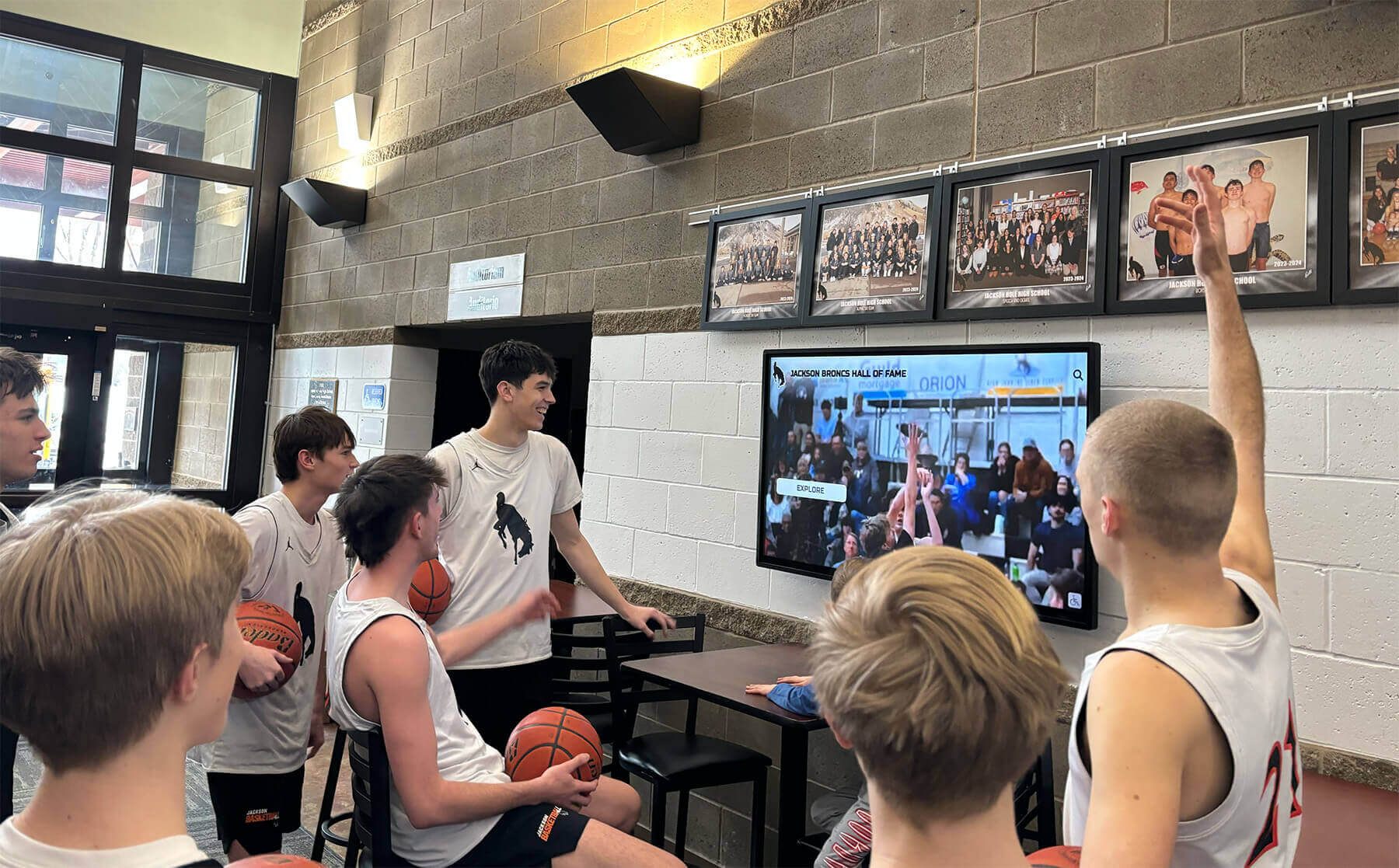
Interactive displays create gathering points where teams explore program history and connect with athletic traditions
Maximizing Recognition Impact in Division III Programs
Digital recognition technology provides powerful capabilities, but realizing full potential requires intentional strategies maximizing awareness, encouraging exploration, and connecting recognition to broader institutional purposes.
Launch and Promotional Strategies
Even exceptional recognition systems create minimal impact if community members don’t know they exist or understand how to engage with them.
Ceremonial Unveiling: Recognition system launches deserve celebration gathering communities around new capabilities. Consider dedication ceremonies including remarks by athletic director and institutional leadership, presentations by featured inductees or representatives, demonstrations of system features and navigation, receptions allowing informal exploration, and media coverage generating awareness throughout broader communities.
For Division III contexts, coordinate launches with natural recognition occasions like homecoming weekends, alumni reunion events, major athletic competitions, or institutional milestone celebrations. This timing maximizes attendance from stakeholders most interested in recognition content while creating narrative coherence connecting recognition to broader institutional events.
Multi-Channel Communication: Promote recognition through diverse channels ensuring all relevant audiences learn about new resources including website homepage features and dedicated recognition pages, social media campaigns highlighting featured achievements, email announcements to athletic alumni and current families, newsletter articles in institutional publications, posters and digital signage throughout athletic and campus facilities, and direct outreach to featured individuals with personal invitations.
Promotional communications should explain not just that displays exist but why they matter and how people benefit from engaging—discovering personal achievements or loved ones’ recognition, exploring institutional athletic heritage, contributing updates or historical content, and sharing achievements through social networks.
Student Athlete Ambassador Programs: Train current student-athletes to serve as recognition ambassadors who demonstrate displays during campus tours and recruiting visits, promote recognition within teams and among peers, contribute content from personal knowledge and experiences, and provide feedback about what current athletes find most inspiring and valuable.
Ambassador programs create human connection supplementing technology while building ownership and pride among those most directly affected by recognition.
Integration with Division III Programming
Maximize recognition impact by intentionally incorporating displays into ongoing institutional activities rather than treating them as isolated installations.
Recruiting and Admissions Integration: Feature recognition prominently during recruiting tours for prospective student-athletes, incorporate displays into campus visit itineraries for prospective families, reference recognition content during recruiting communications and presentations, and use recognition evidence when responding to questions about program quality and competitive standards.
For Division III programs competing for academically talented student-athletes who have numerous college options, comprehensive recognition demonstrating institutional commitment to honoring achievement across all sports can differentiate programs during recruitment. The academic recognition programs many Division III schools implement complement athletic recognition by demonstrating holistic commitment to celebrating diverse forms of excellence.
Alumni Engagement and Development: Position recognition displays as focal points during homecoming weekends, reunion events, and alumni gatherings. Alumni exploring their own achievements and reconnecting with former teammates creates powerful engagement that strengthens institutional bonds.
Athletic alumni often represent highly engaged donor constituencies for Division III institutions. Recognition demonstrating appreciation for their contributions and celebrating their legacies supports development conversations about continued support and philanthropic investment in athletic programs and facilities.
Campus Community Building: When institutions host community events, prospective student programs, family weekends, or other campus gatherings, athletic recognition showcases institutional excellence to broader audiences while building understanding and appreciation for athletics’ role in institutional identity and educational mission.
This visibility helps build campus-wide support for athletics rather than treating athletic programs as isolated from broader institutional purposes—particularly important at Division III schools where athletics serves explicit purposes of comprehensive education and community building rather than primarily commercial or entertainment functions.
Ongoing Content Campaigns: Maintain recognition awareness through regular promotion including “Throwback Thursday” historical features on social media, “Athlete Spotlight” profiles of recent additions, seasonal campaigns relevant to current competitions, anniversary recognitions for milestone years, and championship celebrations connected to current season successes.
Regular content promotion maintains awareness while driving repeated visits as community members return to discover newly featured achievements rather than viewing recognition as static resources requiring only single interactions.
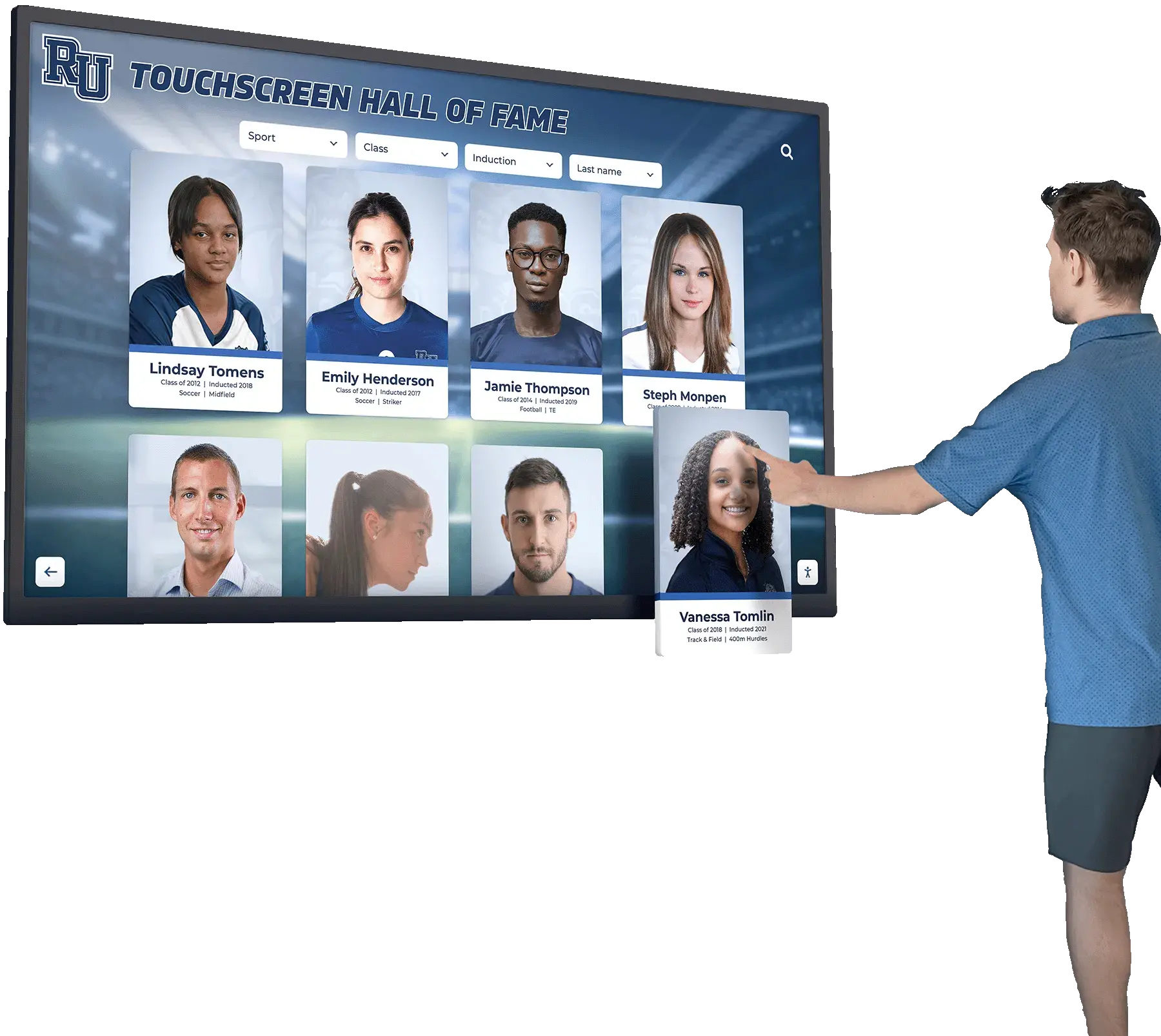
Alumni engagement with recognition displays strengthens institutional connections and supports development relationships
Measuring Recognition Program Success
Systematic assessment demonstrates recognition value to stakeholders while identifying improvement opportunities ensuring programs deliver maximum benefit across time.
Quantitative Engagement Metrics
Track objective measures showing how community members interact with recognition including physical display usage frequency and session duration, web portal traffic volume and page views, search queries revealing what content interests visitors most, social media engagement with recognition content, participation in recognition events and ceremonies, and content growth tracking profiles added over time.
These metrics provide evidence of recognition program reach rather than relying solely on anecdotal impressions. When athletic directors demonstrate to institutional leadership that recognition systems generate thousands of annual interactions across diverse stakeholder groups, it validates investment while building support for continued enhancement.
Qualitative Impact Assessment
Complement quantitative metrics with qualitative insights understanding how recognition affects community members through surveys asking current student-athletes about inspiration and motivation derived from recognition, focus groups with alumni exploring connection and engagement effects, prospect and recruit feedback during campus visits, donor testimonials connecting recognition to philanthropic support, and staff observations about usage patterns and visitor responses.
This qualitative feedback reveals dimensions that metrics miss—how recognition makes people feel, what stories resonate most powerfully, and what enhancements would increase value. These insights inform strategic improvements more effectively than usage numbers alone.
Return on Investment Evaluation
For Division III contexts with limited resources and competing priorities, demonstrate recognition value relative to investment through cost comparisons versus traditional recognition approaches over 5-10 year periods, staff time savings from elimination of physical plaque production and installation, engagement metrics showing interactions far exceeding traditional display viewing, recruitment impact evidence from prospect feedback and commitment decisions, and development outcomes including alumni giving increases and donor engagement.
This comprehensive value assessment helps justify continued investment and expansion while demonstrating responsible stewardship of institutional resources—critical for Division III contexts where every expenditure faces scrutiny regarding educational mission alignment and resource priorities.
The Future of Division III Athletic Recognition
Emerging technologies and evolving expectations continue shaping how Division III institutions honor athletic achievement while serving educational missions.
Enhanced Personalization and Discovery
Future recognition systems will likely incorporate increasingly sophisticated personalization including content recommendations based on visitor interests, customized tours highlighting relevant achievements for specific audiences, predictive displays anticipating what information visitors seek, and adaptive presentations adjusting to different stakeholder groups and contexts.
These personalized approaches will increase engagement by surfacing most relevant content for each visitor rather than requiring manual discovery through comprehensive searching or browsing.
Extended Digital Integration
Recognition increasingly extends beyond physical displays to comprehensive digital ecosystems including mobile applications enabling anywhere access to recognition content, social media integration for community sharing and celebration, livestreaming of induction ceremonies reaching global audiences, and collaborative features enabling alumni to contribute memories and materials.
This digital expansion multiplies recognition reach from hundreds of physical facility visitors to thousands of engaged stakeholders globally—maximizing impact while serving Division III constituencies often geographically dispersed after graduation.
Sustainable Technology Approaches
As institutions prioritize sustainability, recognition technology evolves toward more environmentally responsible approaches including energy-efficient displays and computing systems, sustainable materials in physical installations, digital-first strategies reducing printed materials and physical production, and longevity-focused designs minimizing replacement frequency and lifecycle environmental impact.
Digital recognition typically offers environmental advantages over traditional approaches requiring ongoing production of plaques, trophies, and physical materials that consume resources and generate waste.
Conclusion: Celebrating Division III Excellence Comprehensively
Division III athletics embodies a distinctive philosophy emphasizing balanced student-athlete development, academic integration, and participation across comprehensive sport offerings. Recognition programs serving Division III contexts should reflect these values through equitable celebration across all sports, comprehensive honoring of diverse achievement types, efficient implementation respecting resource constraints, and sustainable approaches enabling long-term program success.
Digital recognition systems address fundamental Division III challenges including space limitations preventing comprehensive traditional recognition, budget constraints requiring cost-effective long-term value, administrative efficiency needs for small staffs, and multi-sport equity demands reflecting institutional values. Quality purpose-built platforms provide unlimited recognition capacity, engaging interactive experiences, rich multimedia storytelling, simple remote management, and extended web accessibility reaching alumni globally.
Whether launching first digital recognition initiatives or enhancing existing programs, Division III athletic departments should prioritize solutions specifically designed for educational contexts, vendors providing long-term partnership and support, content strategies honoring comprehensive achievement, and implementation approaches maximizing stakeholder engagement. Recognition represents more than commemorating past success—it inspires current student-athletes, strengthens alumni connections, builds institutional pride, and demonstrates commitment to celebrating the complete Division III experience.
Solutions like Rocket Alumni Solutions provide comprehensive digital recognition platforms specifically designed for educational institutions celebrating achievement across athletics, academics, and campus life. These purpose-built systems combine intuitive software with professional guidance ensuring successful implementations that serve Division III programs effectively while respecting unique institutional contexts, constraints, and values.
The investment in quality digital recognition demonstrates that institutions genuinely value student-athlete contributions across all sports, commit to preserving athletic heritage for future generations, and embrace contemporary technology serving diverse stakeholders through accessible, engaging experiences that honor achievement comprehensively while strengthening the communities Division III athletics exists to serve.
Ready to Transform Athletic Recognition at Your Division III Institution?
Discover how Rocket Alumni Solutions can help your athletic department create comprehensive digital recognition that celebrates student-athletes across all sports, preserves program history, and strengthens alumni connections—all within Division III budgets and resource constraints.
Schedule Your Free Consultation






























