Creating a donor wall that truly honors your supporters while inspiring future giving requires thoughtful design, strategic planning, and an understanding of what makes recognition meaningful. Whether you’re a school development director seeking to celebrate alumni generosity, a nonprofit executive building donor relationships, or a university advancement professional planning a capital campaign recognition program, the right donor wall design can transform how your organization acknowledges philanthropy and cultivates lasting support.
Today’s most effective donor walls blend timeless recognition principles with modern design approaches that engage audiences, tell compelling stories, and adapt as your donor community grows. This comprehensive guide explores innovative donor wall ideas specifically designed for educational institutions and nonprofits, providing actionable inspiration you can adapt to your unique situation and budget.
Donor recognition serves a dual purpose that extends far beyond simple acknowledgment. Well-designed donor walls demonstrate genuine appreciation to current supporters while creating visible social proof that encourages others to give. Research consistently shows that recognized donors give more frequently, contribute larger amounts, and remain engaged longer than those who receive minimal acknowledgment.
The challenge facing many organizations involves moving beyond generic plaques and outdated approaches toward donor walls that genuinely resonate with modern audiences. The donor wall ideas presented in this guide reflect proven strategies from successful implementations across schools, nonprofits, and universities—organizations that have transformed recognition into a strategic advancement tool rather than an afterthought.
Understanding Modern Donor Wall Design Principles
Effective donor walls balance three essential elements: honoring supporters authentically, inspiring additional giving, and maintaining sustainability over time. Before exploring specific design ideas, understanding these foundational principles ensures your recognition program achieves its strategic objectives.
The Psychology of Effective Donor Recognition
Donor psychology research reveals specific factors that make recognition meaningful and motivating:
Social Validation: Visible recognition creates social proof demonstrating that giving is valued and normalized within your community. When prospective donors see peers and colleagues supporting your organization, they’re significantly more likely to contribute themselves.
Legacy Building: Many donors view public recognition as an opportunity to establish lasting legacies that extend beyond their lifetimes. This motivation particularly influences major gift decisions and planned giving commitments.
Tangible Impact: Donors increasingly expect recognition to demonstrate concrete differences their contributions make. Connecting gifts to specific outcomes—scholarships funded, facilities built, programs launched—satisfies accountability expectations while making contributions feel more meaningful.
Personal Connection: Generic recognition feels hollow. Effective donor walls tell individual stories revealing the humans behind contributions, creating emotional connections that resonate with viewers.
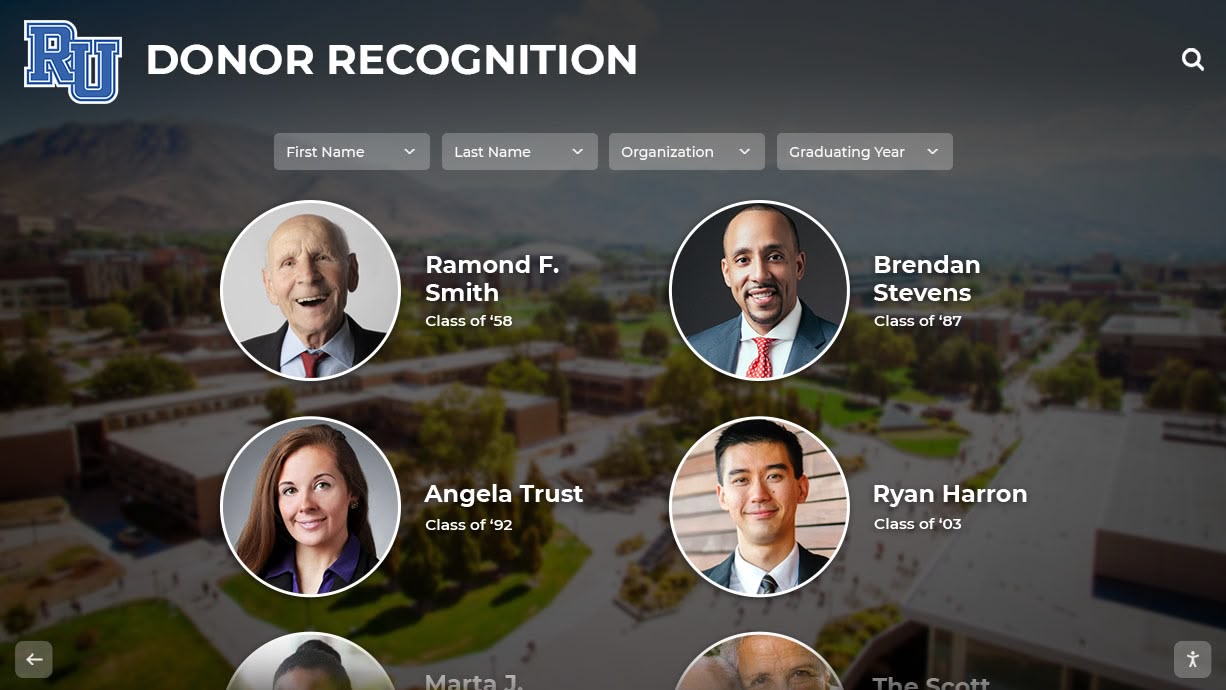
Capacity vs. Flexibility: Planning for Growth
One critical mistake organizations make involves designing donor walls with fixed capacity that quickly becomes inadequate. Consider these scenarios:
The Expansion Problem: Traditional donor walls accommodating 100 brass plaques seem sufficient initially. Five years later, you’ve recognized 98 donors and must decide whether to stop accepting new recognition-level gifts, expand the physical display at considerable expense, or reduce font sizes making the wall difficult to read.
The Update Challenge: Each new donor requires weeks for plaque fabrication and professional installation at $75-$300 per inductee. This creates ongoing expenses that strain development budgets while delaying acknowledgment at the moment donors most value recognition—immediately following their contributions.
The Reorganization Limitation: Campaign priorities evolve, donor levels change, and recognition categories expand over time. Fixed displays cannot adapt without complete replacement, while flexible systems enable reorganization as needs change.
Modern donor wall ideas increasingly prioritize flexibility through digital solutions that eliminate capacity constraints while reducing long-term operational costs. Organizations implementing digital donor recognition systems report significant advantages in scalability, update speed, and total cost of ownership compared to traditional approaches.
Traditional Donor Wall Ideas: Timeless Approaches
While digital solutions offer compelling advantages, traditional donor walls remain appropriate in many contexts. Understanding classic approaches helps you evaluate whether traditional, digital, or hybrid recognition best serves your organization’s needs.
Engraved Plaque Walls
The most traditional donor recognition approach involves brass or metal plaques mounted on dedicated walls, arranged by giving level or chronologically.
Strengths:
- Permanent, prestigious appearance conveying gravitas and permanence
- No technology requirements or maintenance complexity
- Familiar format that donors recognize and appreciate
- Works in any environment without electrical or network infrastructure
Limitations:
- Fixed capacity requiring expensive physical expansion as donor numbers grow
- Per-donor costs of $75-$300 for each plaque plus installation labor
- Cannot display photos, video, detailed stories, or interactive content
- Updates require weeks for fabrication and professional installation
- Impossible to reorganize without removing and replacing all plaques
Best Applications: Small-scale recognition programs honoring limited numbers of donors (under 50), historic buildings where technology seems inappropriate, or supplementary recognition complementing primary digital systems.
Donor Trees and Creative Physical Displays
Artistic donor walls incorporating tree designs, architectural elements, or sculptural components create visual interest while recognizing supporters.
Common Approaches:
- Metal tree sculptures with engraved leaf plaques representing individual donors
- Architectural donor walls integrating recognition into building design elements
- Glass or acrylic panels with printed or etched donor names
- Brick or paver walkways with inscribed donor acknowledgment
- Custom artistic installations reflecting organizational mission or values
These approaches offer aesthetic appeal and conversation-starting design. However, they share the capacity limitations, update complexity, and high per-donor costs inherent to traditional recognition while adding artistic fabrication expenses.
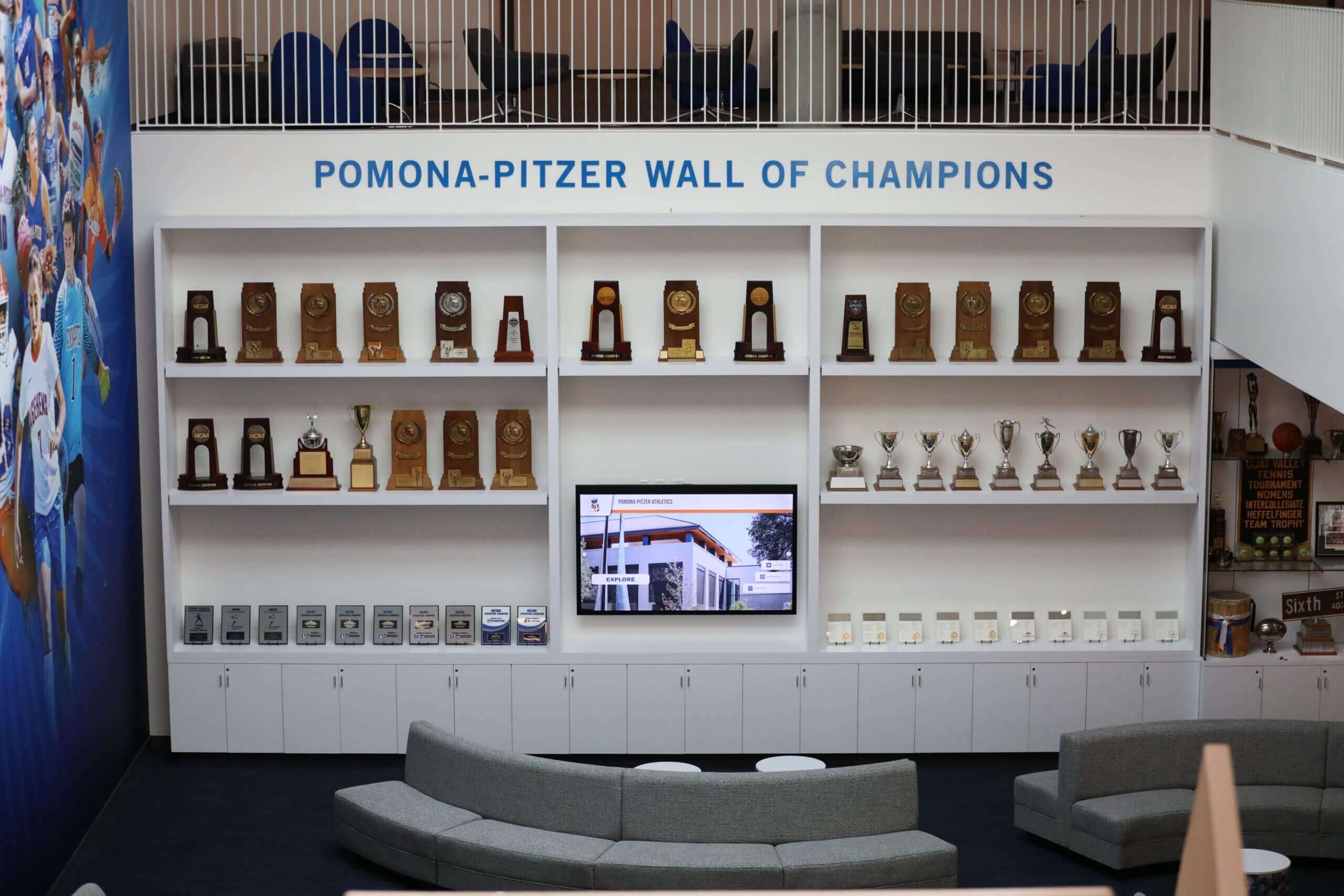
Recognition Giving Societies
Rather than listing every donor individually, some organizations establish named giving societies recognizing donors at specific cumulative levels.
Society Structure Example:
- Legacy Circle: $1,000,000+
- President’s Circle: $500,000-$999,999
- Founder’s Society: $250,000-$499,999
- Leadership Society: $100,000-$249,999
- Heritage Society: $50,000-$99,999
Physical displays feature society descriptions and benefits with individual donor lists organized beneath each level. This approach manages space more efficiently than individual plaques while creating clear giving progression pathways that encourage donors to increase contributions over time.
Digital Donor Wall Ideas: Modern Solutions
Digital donor recognition represents the fastest-growing category of donor wall ideas, offering capabilities that fundamentally transform recognition effectiveness while addressing traditional limitations.
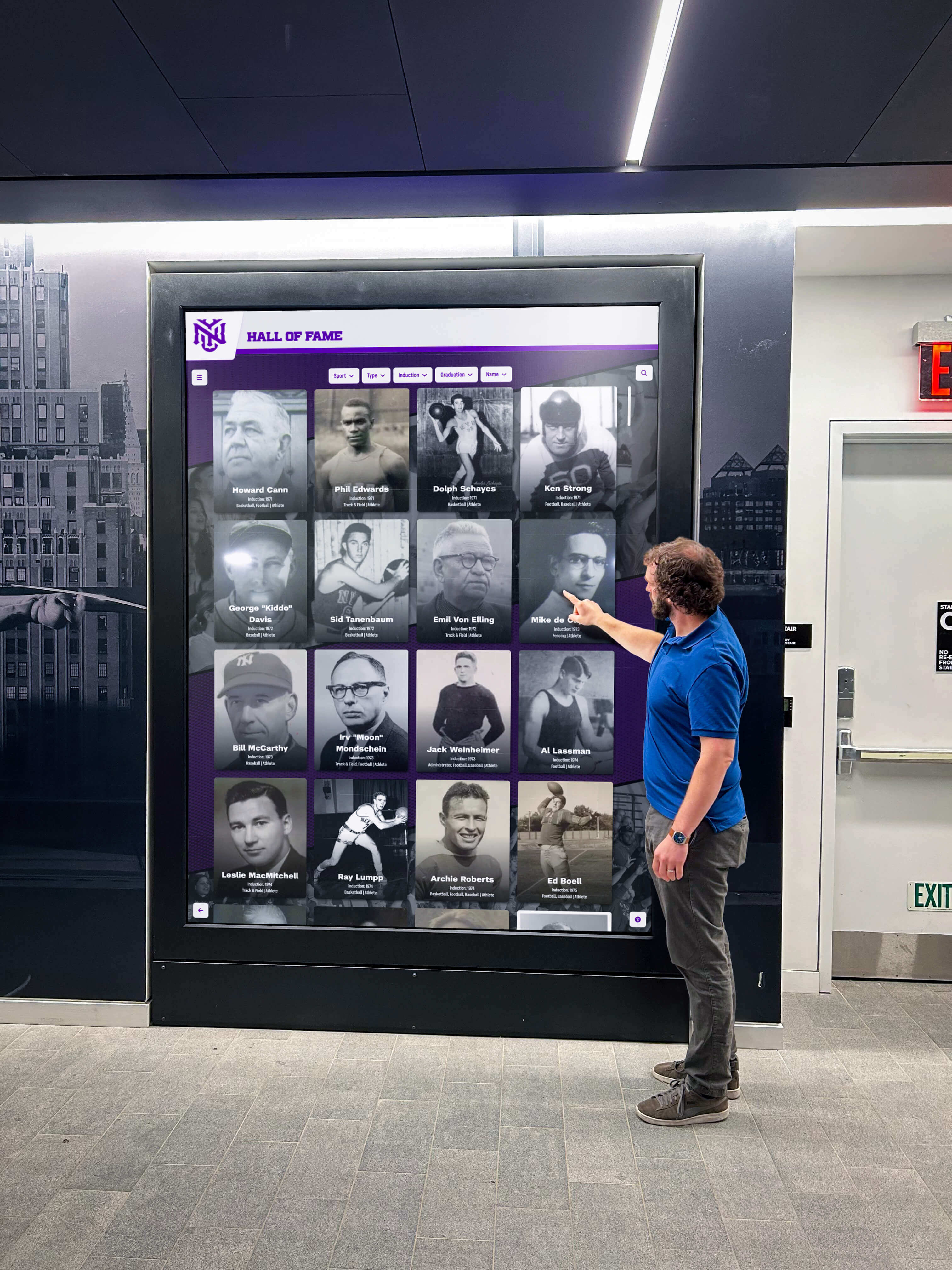
Interactive Touchscreen Recognition Displays
Large-format touchscreen displays provide engaging, searchable donor recognition accessible to campus visitors and event attendees.
Core Capabilities:
- Unlimited donor capacity with no physical space constraints
- Rich multimedia profiles incorporating photos, videos, testimonials, and impact stories
- Search and filtering enabling visitors to find specific donors, classes, or campaigns
- Instant content updates through cloud-based content management systems
- Detailed analytics revealing engagement patterns and popular content
Implementation Considerations:
- Commercial-grade displays sized 43-75 inches depending on viewing environment
- Wall-mounted or freestanding kiosk configurations based on space and aesthetics
- Network connectivity requirements (wired Ethernet preferred for reliability)
- Content management training for advancement staff responsible for updates
Schools and universities implementing interactive touchscreen donor displays report significant improvements in visitor engagement, donor satisfaction, and operational efficiency compared to traditional recognition approaches.
Video Wall Recognition Systems
Multi-screen video wall installations create dramatic visual impact in lobbies, event spaces, and major thoroughfares.
Design Approaches:
- Grid configurations: 2x2, 3x3, or larger screen arrays displaying synchronized content
- Featured donor spotlights: Rotating profiles showcasing individual supporter stories
- Campaign progress displays: Real-time fundraising metrics and goal tracking
- Impact visualization: Photos and videos demonstrating donor-funded outcomes
Video walls work particularly well in large spaces where single displays lack sufficient visual presence. The synchronized content across multiple screens creates cohesive presentations that capture attention and communicate scale.
Web-Based Virtual Donor Walls
Online donor recognition platforms extend acknowledgment beyond physical locations to reach distributed alumni and supporter communities globally.
Essential Features:
- Responsive design ensuring excellent mobile and desktop experiences
- Social sharing enabling donors to broadcast recognition to personal networks
- Search functionality helping visitors find classmates, colleagues, or family members
- Integration with donation platforms creating seamless giving experiences
- Analytics tracking geographic distribution and engagement patterns
Many organizations implement virtual donor walls that mirror physical recognition displays, ensuring all supporters receive acknowledgment regardless of their ability to visit campus. This omnichannel approach maximizes recognition investment while serving geographically diverse constituencies.
Hybrid Recognition Approaches
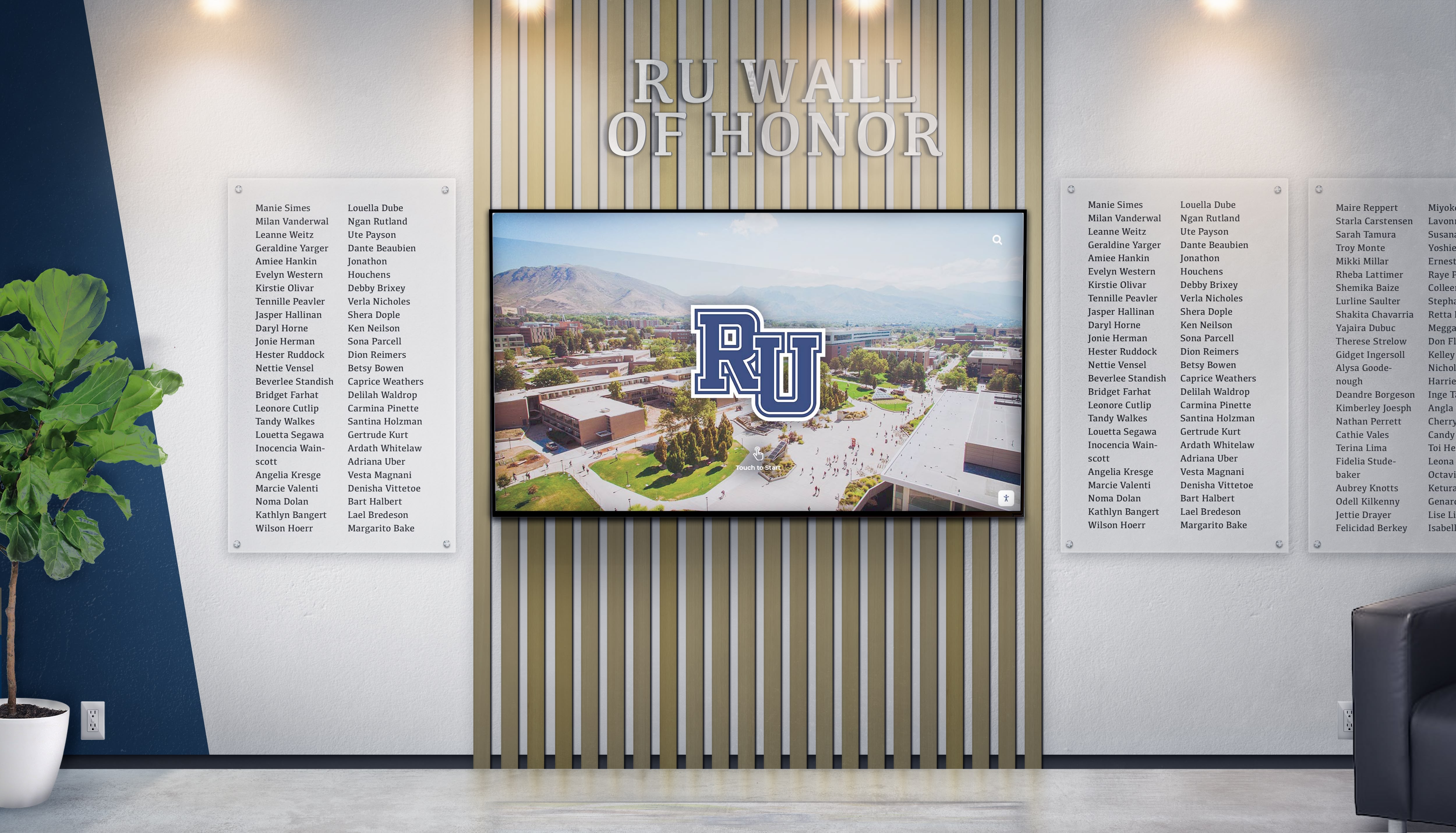
Leading organizations increasingly combine traditional and digital elements, creating recognition programs that honor heritage while embracing innovation.
Common Hybrid Strategies:
- Premium donor plaques for major benefactors complemented by comprehensive digital recognition of all supporters
- Historic donor walls preserved for institutional legacy with adjacent digital displays featuring recent contributors
- Named spaces with traditional dedication plaques supplemented by interactive displays telling detailed donor stories
- Campaign-specific traditional recognition integrated with ongoing digital acknowledgment
This balanced approach appeals to donors across generational preferences while providing flexibility to evolve recognition strategies as needs change.
Donor Wall Ideas by Organization Type
Different organizational contexts create distinct recognition needs and opportunities. These sector-specific donor wall ideas address common scenarios in schools, nonprofits, and universities.
K-12 Schools and Independent Schools
School donor recognition typically focuses on parent giving, alumni contributions, grandparent support, and faculty/staff campaigns.
Effective School-Specific Approaches:
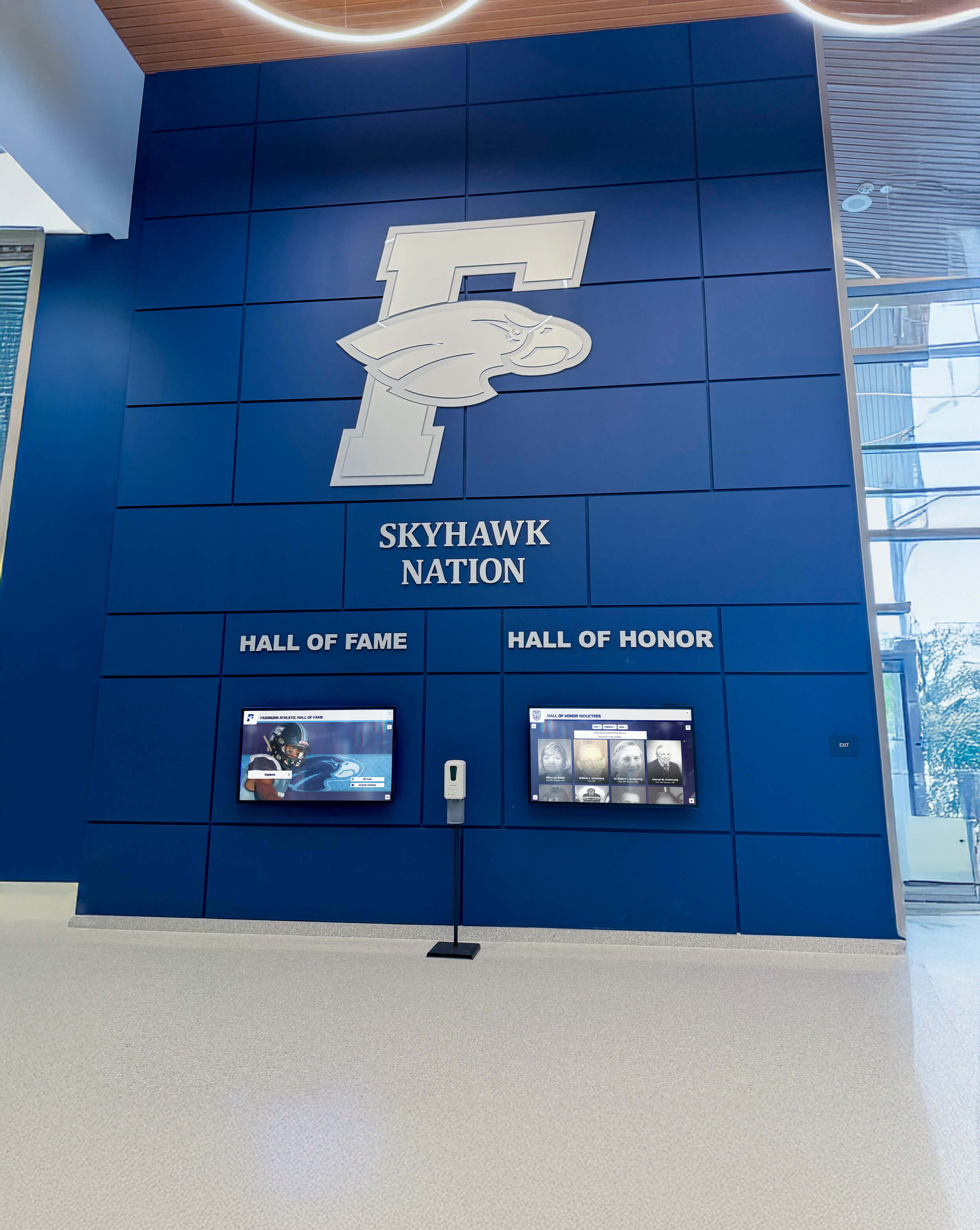
Annual Fund Recognition Walls: Acknowledge all donors contributing to annual giving campaigns regardless of amount, creating cultures of participation. Digital displays enable recognizing thousands of supporters at entry-level giving tiers without space constraints.
Class Participation Displays: Feature graduation classes ranked by participation percentage rather than dollar totals, encouraging broad engagement across economic diversity. This approach particularly resonates with schools valuing inclusive community over wealth concentration.
Grandparents and Legacy Recognition: Celebrate multi-generational family connections by linking current students with their supporting grandparents or alumni parents. These family stories create powerful narratives that inspire giving while strengthening community bonds.
Capital Campaign Recognition: Acknowledge supporters of specific fundraising initiatives—new athletic facilities, academic buildings, technology infrastructure—with dedicated displays that demonstrate project completion and impact.
Nonprofit Organizations
Nonprofits often have limited recognition space while needing to acknowledge diverse supporter categories beyond financial contributions.
Nonprofit-Focused Recognition Ideas:
Multi-Dimensional Giving Recognition: Acknowledge not only financial donors but also volunteers, board members, in-kind contributors, and corporate partners. Digital platforms excel at categorizing diverse support types while ensuring all forms of contribution receive appropriate visibility.
Impact-Connected Recognition: Link individual donors directly to specific outcomes their gifts enabled—families housed, students mentored, meals provided, research completed. This accountability transparency satisfies donor expectations while demonstrating organizational effectiveness.
Volunteer Appreciation Integration: Many nonprofits depend heavily on volunteer support. Comprehensive recognition walls celebrating both financial donors and volunteer contributors strengthen engagement across your entire supporter ecosystem.
Corporate Sponsorship Recognition: Feature business supporters prominently while accommodating logo display, website links, and partnership descriptions that traditional plaques cannot provide.
Nonprofits exploring comprehensive donor recognition strategies find detailed implementation guidance in resources like the nonprofit donor recognition complete guide, which addresses sector-specific challenges and solutions.
Universities and Colleges
Higher education institutions typically manage complex recognition needs spanning multiple campaigns, departments, and donor populations.
University-Specific Recognition Solutions:
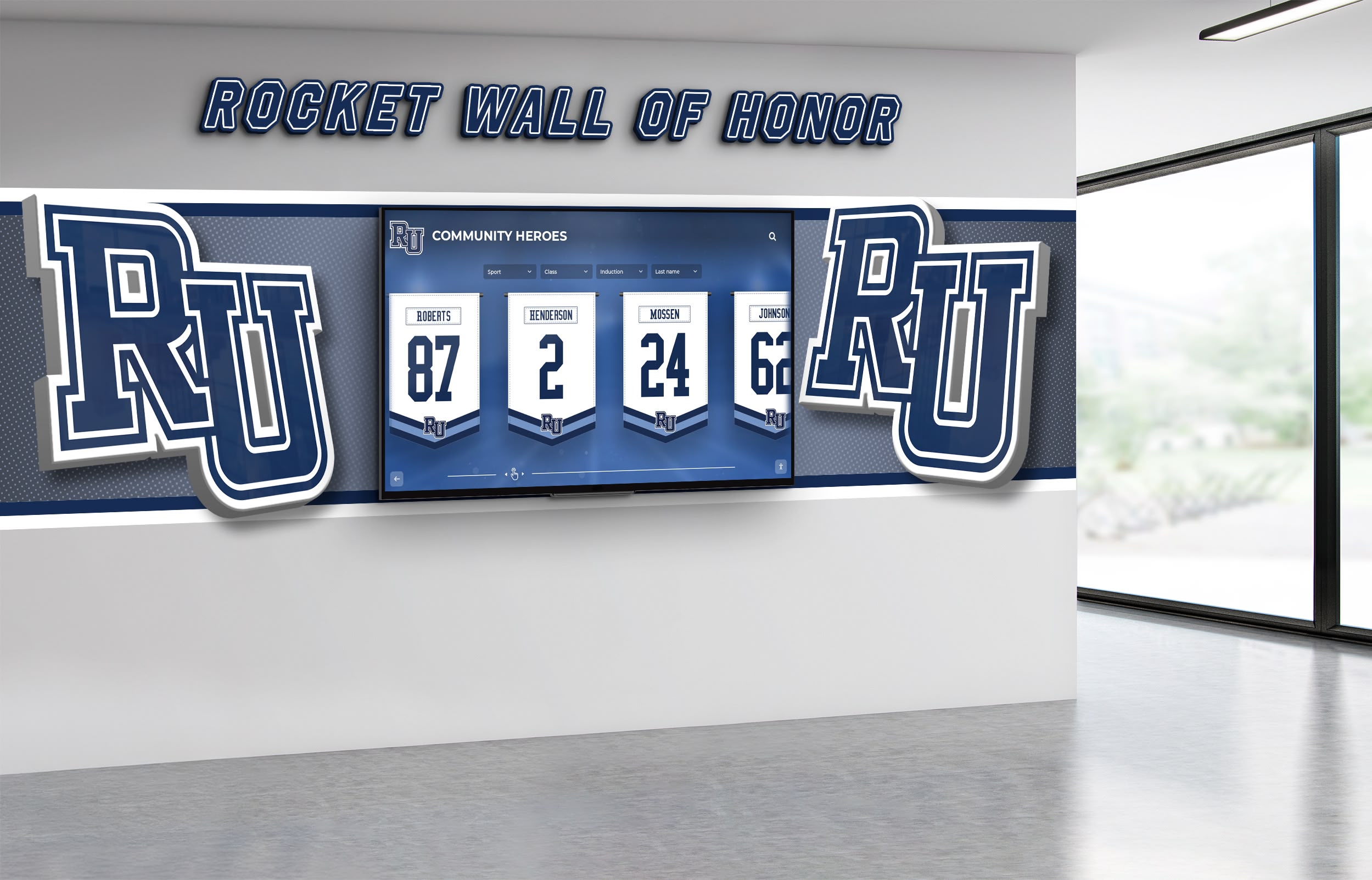
College or Department-Specific Walls: Enable individual schools within universities to recognize their own donor communities while maintaining institutional brand consistency. Distributed recognition displays across campus put acknowledgment where relevant stakeholders spend time rather than concentrating everything in a single administrative location.
Athletic Donor Recognition: Sports programs generate passionate donor communities deserving specialized recognition. Digital displays supporting athletic fundraising can integrate donor acknowledgment with team rosters, championship celebrations, and facility naming recognition.
Endowment and Scholarship Recognition: Connect named endowments and scholarships with current beneficiaries, demonstrating ongoing impact of legacy gifts. Feature student testimonials and academic achievements enabled by donor generosity.
Capital Campaign Progress Tracking: During active fundraising initiatives, real-time campaign progress displays create urgency and momentum. Digital donor walls can showcase current status toward goals, recognize recent gifts immediately, and highlight matching opportunities.
Design Elements That Enhance Donor Walls
Beyond choosing traditional vs. digital approaches, specific design elements significantly impact recognition effectiveness. These considerations apply across organization types and recognition formats.
Tiered Recognition Levels
Clear giving level structures create pathways encouraging donors to increase contributions over time while ensuring appropriate acknowledgment at all levels.
Recognition Tier Best Practices:
Establish Meaningful Distinctions: Tier thresholds should reflect your donor base realities. A small nonprofit might establish meaningful recognition levels starting at $1,000 cumulative giving, while a major university might begin premium recognition at $100,000+.
Create Achievable Progression: Space tiers to make advancement realistic. Jumps from $1,000 to $2,500 to $5,000 feel attainable. Jumps from $1,000 to $10,000 discourage donors from attempting increases.
Differentiate Recognition: Higher tiers should receive demonstrably enhanced acknowledgment—featured placement, detailed profiles, multimedia content, event access—justifying increased commitment.
Name Recognition Societies: Memorable society names create identity and prestige. “Founder’s Circle” or “Legacy Society” sounds more compelling than “Donors giving $100,000+.”
Visual Hierarchy and Layout
How you organize and present donor information dramatically affects engagement and perception.
Layout Principles:
Featured Positioning: Highest-level donors deserve prominent placement—eye-level positioning, larger format, enhanced visual treatment. This differentiation honors exceptional commitment while motivating others toward similar recognition.
Logical Organization: Group donors by clear categories—giving level, graduation class, campaign, or alphabetically within tiers. Visitors should understand organizational logic immediately without extensive explanation.
Whitespace and Readability: Cramped layouts overwhelm viewers. Generous spacing, clear typography, and visual breathing room make recognition walls inviting rather than overwhelming.
Brand Consistency: Recognition displays should reflect your organization’s broader visual identity—colors, fonts, logos, imagery—creating cohesive institutional presentation.
Storytelling Through Multimedia
Moving beyond names and numbers to tell authentic donor stories transforms recognition from acknowledgment into inspiration.
Storytelling Elements:
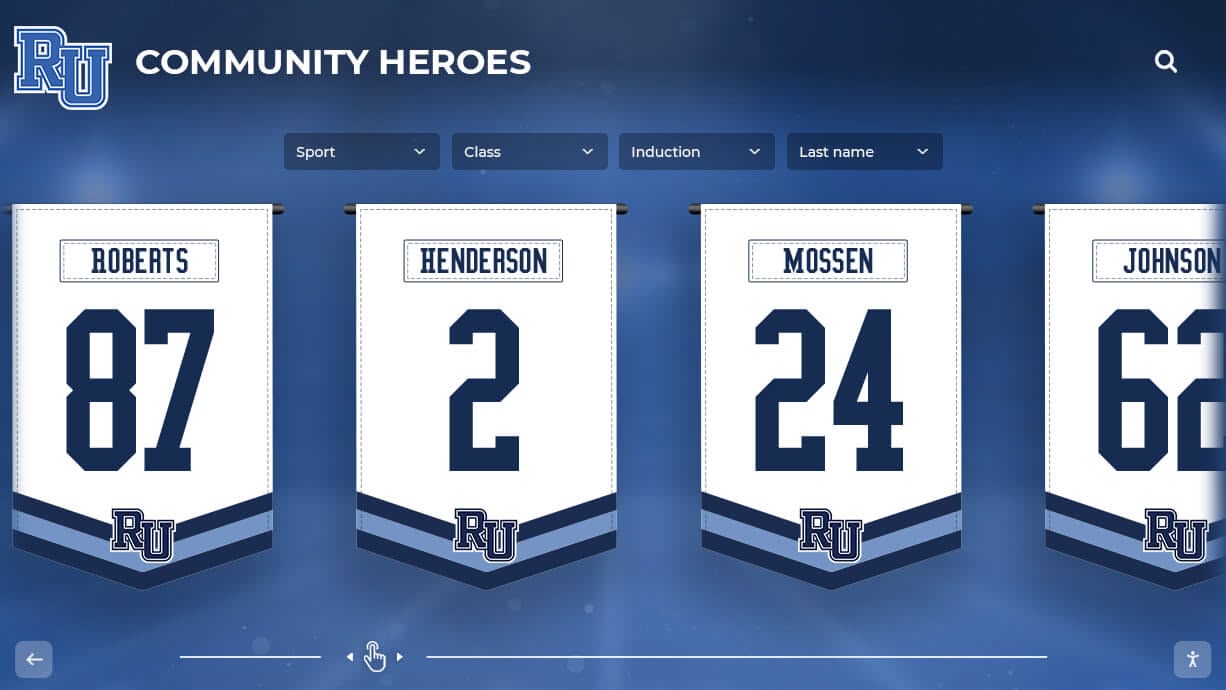
Personal Narratives: Brief biographical information revealing why donors support your organization creates emotional connections. A paragraph explaining that a scholarship donor was the first in their family to attend college provides context making recognition meaningful rather than transactional.
Impact Visualization: Photos of scholarship recipients, videos of completed facilities, testimonials from program beneficiaries demonstrate concrete outcomes donors enabled. This accountability satisfies modern philanthropic expectations while making contributions feel significant.
Historical Context: For long-term supporters, noting consecutive years of giving or evolution of their relationship with your organization honors sustained commitment while modeling ongoing engagement for newer donors.
Donor Reflections: When possible, include brief quotes from donors explaining their motivation. Authentic voices resonate more powerfully than institutional messaging alone.
Budgeting for Donor Wall Projects
Understanding realistic costs ensures appropriate budget allocation and prevents mid-project surprises. Donor wall expenses vary significantly based on approach, scale, and complexity.
Traditional Donor Wall Costs
Initial Investment Components:
- Brass plaques: $75-$300 per donor (depending on size and engraving complexity)
- Wall preparation and mounting surface: $1,000-$5,000 (depending on existing conditions)
- Professional installation labor: $1,500-$4,000 (for comprehensive walls)
- Design and layout services: $1,000-$3,000 (if using professional designers)
Ongoing Costs:
- New plaques for additional donors: $75-$300 each plus installation
- Periodic cleaning and maintenance: $200-$500 annually
- Expansion or reconfiguration when space fills: $5,000-$15,000 every 5-10 years
Total Traditional Donor Wall Costs (recognizing 100 donors): $15,000-$35,000 initially, plus $2,000-$6,000 annually for new donor additions
Digital Donor Wall Costs
Initial Investment Components:
- Commercial touchscreen display (43-75 inches): $3,000-$15,000 depending on size
- Software platform and content management system: $2,000-$8,000 initial setup
- Installation and network configuration: $1,000-$4,000
- Initial content development (100 donor profiles): $2,000-$6,000
- Training for advancement staff: $500-$1,500
Ongoing Costs:
- Annual software subscription and hosting: $1,000-$3,000
- Content updates (staff time): $1,000-$3,000 annually in allocated time
- Technical support and maintenance: $500-$1,500 annually
- Hardware refresh after 7-10 years: $3,000-$15,000
Total Digital Donor Wall Costs (recognizing 100+ donors): $8,500-$34,500 initially, plus $2,500-$7,500 annually for operations
Cost Comparison Analysis
When comparing traditional and digital approaches, organizations should calculate 10-year total cost of ownership rather than focusing exclusively on initial investment.
Traditional 10-Year Total: $15,000-$35,000 (initial) + $20,000-$60,000 (ongoing additions for 100 donors over 10 years) = $35,000-$95,000
Digital 10-Year Total: $8,500-$34,500 (initial) + $25,000-$75,000 (10 years operations) + $3,000-$15,000 (hardware refresh) = $36,500-$124,500
While digital systems may cost more over 10 years in some scenarios, they offer dramatically superior capabilities: unlimited capacity beyond 100 donors, multimedia storytelling, instant updates, remote accessibility, and detailed analytics. Most organizations find the enhanced value justifies the investment, particularly when recognizing large donor communities or managing active fundraising campaigns.
For comprehensive budget planning guidance addressing various scenarios, review detailed cost analysis in the donor walls complete guide.
Implementation Planning: From Concept to Completion
Successful donor wall projects require systematic planning addressing stakeholder alignment, content development, technical requirements, and launch strategy.
Defining Recognition Criteria
Before designing displays or selecting technology, establish clear criteria determining who receives recognition and at what levels.
Key Criteria Decisions:
Cumulative vs. Annual Giving: Will you recognize lifetime cumulative giving, or acknowledge annual fund participation regardless of total giving history? Many organizations use both approaches—cumulative totals for major donor societies and annual recognition for participation-focused acknowledgment.
Minimum Thresholds: What giving level qualifies for recognition? Setting thresholds too high limits participation and potentially excludes many supporters. Setting them too low creates unwieldy recognition lists. Analyze your donor distribution to identify natural breaking points.
Gift Types Included: Do you count only cash contributions, or include planned giving commitments, in-kind donations, and fundraising event proceeds? Document which gift types qualify to ensure consistent application.
Recognition Duration: Will donors remain on displays indefinitely, or require ongoing giving to maintain recognition? Annual participation walls typically rotate yearly, while cumulative recognition remains permanent.
Privacy Preferences: Provide donors clear options for public recognition, anonymous giving, or name-only acknowledgment without additional details. Respect stated preferences consistently across all recognition channels.
Content Collection and Development
Gathering comprehensive donor information requires systematic approaches ensuring accuracy and completeness.
Data Sources:
Fundraising Database: Extract foundational information including names, giving history, contact information, and biographical data already collected through donor management systems.
Direct Donor Engagement: Request that recognized donors provide photographs, biographical narratives, and personal reflections. Most honorees willingly contribute content, appreciating opportunities to influence presentation.
Historical Research: Mine institutional archives, past publications, and event records for historical donor information and photographs. Student workers or volunteers can assist with research acceleration.
Content Standards: Establish templates ensuring consistency across donor profiles. Define required fields (name, giving level, graduation year) and optional enhancements (photos, quotes, impact focus) creating uniform presentation.
Technical Requirements Assessment
Digital donor walls require specific infrastructure. Evaluate these requirements during planning to identify issues before they become implementation roadblocks.
Physical Requirements:
- Electrical capacity: Commercial displays draw 200-400 watts; verify adequate circuit capacity
- Mounting surface: Assess wall construction to ensure structural support for display weight
- ADA accessibility: Ensure touchscreen height (15-48 inches to center) and approach clearance meet guidelines
- Environmental conditions: Avoid locations with direct sunlight, excessive heat, or moisture
Network Requirements:
- Internet connectivity: Cloud-based content management requires reliable connection (1-5 Mbps typical)
- Firewall configuration: IT departments must whitelist required domains and ports
- Wired vs. wireless: Ethernet connections provide superior reliability for permanent installations
- Remote management: Verify ability to update content and troubleshoot remotely
Launch and Promotion Strategy
Strategic launches maximize visibility while establishing ongoing engagement patterns.
Pre-Launch Activities:
- Build anticipation through email newsletters, social media, and donor communications
- Invite initial recognized donors to unveil events, creating personal investment
- Prepare media releases and photography for launch coverage
- Train staff on content management before public unveiling
Launch Event Ideas:
- Coordinate with existing events (galas, reunions, campaign kickoffs) maximizing attendance
- Feature recognized donors as speakers sharing why they give
- Provide interactive demonstrations encouraging attendee exploration
- Capture photos and testimonials for post-event promotion
Sustained Visibility:
- Monthly featured donor spotlights in communications channels
- Social media content calendars ensuring consistent recognition posts
- Event integration positioning displays prominently at gatherings
- Annual induction ceremonies celebrating new recognition additions
Selecting the Right Donor Wall Solution
With numerous traditional and digital options available, selecting the approach that best serves your organization’s specific needs requires systematic evaluation.
Evaluation Criteria Framework
Organizational Context:
- How many donors do you currently recognize, and what growth do you anticipate?
- How frequently do new donors reach recognition levels requiring acknowledgment?
- What physical space do you have available for recognition displays?
- What budget can you allocate initially and for ongoing operations?
Stakeholder Preferences:
- Do donors express preferences for traditional or modern recognition approaches?
- What aesthetic fits your institutional culture and architectural environment?
- How important is remote accessibility for geographically distributed supporters?
- What level of storytelling and impact demonstration do donors expect?
Operational Capacity:
- Who will manage content updates, and what technical expertise do they possess?
- What IT support is available for network configuration and troubleshooting?
- How much staff time can you dedicate to recognition program maintenance?
- Do you have in-house design capabilities, or need vendor support?
When to Choose Traditional Donor Walls
Traditional approaches remain appropriate when:
- Recognizing relatively few donors (under 50) with slow growth rates
- Operating in historic buildings where technology seems architecturally inappropriate
- Working with donor populations strongly preferring traditional acknowledgment
- Facing significant technology constraints (no reliable network, limited IT support)
- Implementing supplementary recognition complementing primary digital systems
When to Choose Digital Donor Walls
Digital solutions deliver superior value when:
- Managing large donor communities (100+ supporters) with regular growth
- Needing to tell rich stories with photos, videos, and detailed narratives
- Requiring instant updates acknowledging gifts at the moment they occur
- Serving geographically distributed constituents through remote access
- Seeking detailed analytics revealing engagement patterns and recognition effectiveness
Vendor Selection Considerations
For digital donor walls, vendor selection significantly impacts long-term satisfaction and success.
Vendor Evaluation Questions:
- How long has the vendor specialized in donor recognition (vs. generic digital signage)?
- Can you speak with 3-5 reference clients at similar organizations?
- What training and ongoing support do they provide to advancement staff?
- How is content management structured—intuitive browser-based interface vs. complex software?
- What happens to your content if you change vendors or they cease operations?
- Do they provide comprehensive installation, or only ship hardware requiring local integrators?
- What warranty coverage and technical support commitments do they offer?
Organizations seeking purpose-built donor recognition platforms rather than generic digital signage find comprehensive solutions like Rocket Alumni Solutions’ interactive displays specifically address advancement needs with features designed for recognition effectiveness, intuitive management, and sustained engagement.

Measuring Donor Wall Effectiveness
Sophisticated organizations view donor walls as strategic investments requiring accountability through measurable outcomes rather than one-time projects.
Quantitative Impact Metrics
Fundraising Performance Indicators:
- Donor retention rate comparisons: Track retention among recognized vs. non-recognized supporters
- Average gift size analysis: Monitor giving increases following recognition implementation
- Upgrade velocity: Measure time between giving level increases for recognized donors
- New donor acquisition: Track first-time giving rates during recognition program periods
- Recognition return on investment: Compare recognition program costs to incremental giving attributed to enhanced stewardship
Engagement Analytics (for digital displays):
- Total interactions and unique visitors over time
- Average session duration indicating content quality and engagement depth
- Most-viewed profiles revealing compelling stories that resonate
- Search patterns showing what visitors seek
- Return visitor rates demonstrating sustained interest
Operational Efficiency:
- Administrative time required for recognition management
- Cost per donor recognized (total program costs ÷ recognized donor count)
- Update frequency measuring how current recognition remains
- System reliability ensuring consistent availability
Qualitative Feedback Assessment
Quantitative metrics reveal behavior patterns, but qualitative feedback explains experiences and preferences.
Donor Satisfaction Research:
- Survey recognized donors about acknowledgment timeliness, accuracy, meaningfulness
- Conduct focus groups with supporters representing different demographics and giving levels
- Document unsolicited feedback and testimonials from donors, board members, and staff
- Monitor social media mentions and sentiment regarding recognition
Stakeholder Observations:
- Advancement staff perspectives on recognition program effectiveness
- Event attendee reactions when encountering donor displays
- Prospective donor responses during cultivation when viewing recognition
- Current student engagement with donor stories and impact narratives
Common Donor Wall Challenges and Solutions
Organizations implementing donor recognition programs encounter predictable obstacles. Understanding these challenges and proven solutions ensures successful outcomes.
Challenge: Limited Historical Donor Data
Many organizations discover significant gaps in historical donor records when compiling comprehensive recognition lists—missing photographs, incomplete biographical information, inconsistent data quality.
Solutions:
- Begin with donors for whom substantial information exists, expanding backward as resources allow
- Create streamlined profiles for historical donors, enriching them as additional information surfaces
- Engage long-term staff, board members, and institutional archives to locate missing materials
- Establish prospective data quality standards preventing future information gaps
- Implement phased approach recognizing complete profiles first while researching others
Challenge: Donor Privacy Concerns
Some supporters hesitate about public recognition, fearing excessive exposure, data security issues, or unwanted solicitation attention.
Solutions:
- Provide clear privacy controls allowing donors to choose recognition levels from anonymous to comprehensive
- Implement robust data security measures and communicate protections explicitly
- Offer granular preferences enabling donors to specify exactly what information appears publicly
- Respect privacy choices consistently across all recognition channels and platforms
- Enable self-service preference management through secure donor portals
Challenge: Maintaining Engagement Over Time
Recognition displays risk becoming invisible background elements after initial novelty fades.
Solutions:
- Implement regular content refresh schedules introducing new donor stories monthly
- Rotate featured donors quarterly maintaining visual freshness
- Integrate seasonal campaigns and timely content creating ongoing relevance
- Monitor analytics adjusting strategy based on actual visitor behavior patterns
- Promote recognition through multiple communication channels maintaining awareness
- Connect recognition to events and gatherings where stakeholders naturally congregate
Challenge: Staff Technology Adoption
Advancement professionals sometimes resist new technology or struggle with content management systems, creating operational bottlenecks.
Solutions:
- Select platforms with intuitive interfaces requiring minimal technical expertise
- Provide comprehensive initial training emphasizing benefits rather than just mechanics
- Assign internal technology champions providing peer support and advocacy
- Offer ongoing refresher sessions and vendor support as questions arise
- Build recognition management into existing advancement workflows rather than creating separate processes
Future Trends in Donor Recognition
Understanding emerging capabilities helps organizations plan recognition programs that remain relevant and effective for years while supporting future enhancements.
Artificial Intelligence and Personalization
AI capabilities will enable increasingly sophisticated recognition experiences tailored to individual viewer interests. Systems may automatically generate personalized content recommendations based on visitor behavior, optimize display timing based on traffic analytics, and provide predictive insights identifying donors most responsive to enhanced recognition approaches.
Enhanced Impact Visualization
Future donor walls will incorporate sophisticated impact visualization connecting individual gifts to specific measurable outcomes. Interactive dashboards might display real-time metrics about donor-funded programs—current scholarship recipients, research discoveries enabled by philanthropic investment, facility usage statistics, community members served. This transparency satisfies donor accountability expectations while demonstrating tangible differences contributions make.
Augmented Reality Experiences
Mobile augmented reality applications will overlay digital recognition content onto physical spaces through smartphone cameras. Visitors might point phones at traditional plaques to reveal enhanced digital profiles, watch video testimonials, or explore interactive timelines showing donor relationships with institutions. This hybrid approach honors traditional recognition while adding modern engagement layers.
Social Integration and Viral Recognition
Recognition platforms will increasingly integrate social media, enabling donors to share acknowledgment directly to personal networks with one-touch posting to Facebook, LinkedIn, Instagram, or other platforms. This amplification extends recognition reach far beyond physical locations while introducing institutions to donors’ networks—thousands of potential new supporters who trust peer recommendations.
Conclusion: Creating Recognition That Inspires
Effective donor wall ideas balance honoring current supporters authentically with inspiring future giving through visible examples of philanthropic impact and community. Whether you implement traditional plaques, sophisticated digital displays, or hybrid approaches, the principles remain constant: recognize contributions meaningfully, demonstrate tangible impact, create accessibility for all stakeholders, and maintain sustainability over time.
The most successful donor recognition programs view walls not as one-time projects but as strategic advancement infrastructure deserving ongoing attention, investment, and optimization. Organizations that commit to excellence in donor acknowledgment—through thoughtful design, compelling storytelling, and sustained promotion—cultivate stronger donor relationships, increased giving participation, and self-perpetuating cultures of philanthropy.
For schools, nonprofits, and universities ready to transform donor recognition, modern solutions like those from Rocket Alumni Solutions provide comprehensive platforms combining sophisticated technology with intuitive management and dedicated support. From initial planning through years of sustained engagement growth, the right approach transforms donor walls from simple acknowledgment into powerful strategic tools that celebrate your supporters while building lasting philanthropic communities.
Build Your Donor Recognition Program with Confidence
Rocket Alumni Solutions delivers comprehensive donor wall solutions designed specifically for schools, nonprofits, and universities seeking professional recognition systems that honor supporters while inspiring continued giving. Our platform addresses every requirement outlined in this guide—from design flexibility to content management to measurable engagement analytics.
Whether you're launching a new recognition program, modernizing traditional displays, or expanding existing donor walls, we'll help you implement solutions that authentically celebrate your supporters while meeting your strategic advancement objectives. Our team provides design consultation, content development support, technical implementation, and ongoing training ensuring your recognition program achieves its full potential.
Frequently Asked Questions
How much does a typical donor wall cost?
Donor wall costs vary significantly based on approach and scale. Traditional brass plaque walls recognizing 100 donors typically cost $15,000-$35,000 initially plus $2,000-$6,000 annually for additions. Digital touchscreen donor walls range from $8,500-$34,500 initially with $2,500-$7,500 annual operations costs. While digital may cost more over 10 years, they offer unlimited capacity, multimedia capabilities, instant updates, and remote accessibility. Calculate total cost of ownership over 10 years rather than comparing only initial investments when evaluating options.
What giving level should we set for donor wall recognition?
Recognition thresholds should reflect your donor base distribution and fundraising goals. Analyze your giving pyramid to identify natural breaking points. Small nonprofits might establish meaningful entry levels at $1,000 cumulative giving, while major universities may begin premium recognition at $25,000-$100,000+. Consider creating multiple tiers acknowledging different contribution levels—annual fund participation starting at lower thresholds with enhanced recognition for major gifts. The goal is making recognition meaningful without being so restrictive that few donors qualify or so inclusive that lists become unwieldy.
Should we recognize annual giving or cumulative lifetime contributions?
Many organizations use both approaches serving different strategic purposes. Cumulative lifetime giving recognition honors sustained commitment over decades, acknowledging total philanthropic impact. Annual giving recognition celebrates current participation regardless of amount, emphasizing ongoing engagement over wealth. Consider implementing both: lifetime giving societies for major donor acknowledgment and annual honor rolls recognizing all current supporters. This dual approach honors both transformational generosity and consistent participation.
How do we handle donors who prefer remaining anonymous?
Effective recognition programs respect donor privacy preferences while accommodating various comfort levels. Provide clear options during gift processing: fully anonymous with no public acknowledgment, name-only recognition without biographical details, or comprehensive profiles including photos and stories. Implement preference management systems allowing donors to update recognition choices as comfort levels evolve. Some initially hesitant donors later appreciate opportunities for fuller recognition after seeing how acknowledgment is handled. Always honor stated preferences consistently across all recognition channels.
What happens if our donor wall fills up?
Capacity limitations represent the primary disadvantage of traditional donor walls. Options include expensive physical expansion, reducing font sizes (compromising readability), or stopping recognition of new donors (unacceptable for active fundraising). This challenge drives many organizations toward digital donor walls offering unlimited capacity without physical space constraints. If you’re implementing traditional recognition, calculate realistic capacity needs for 10-20 years, not just current donors. Better to have excess capacity initially than face expensive expansion within 3-5 years.
Can we update donor walls ourselves or do we need vendor support?
Digital donor walls specifically designed for educational and nonprofit recognition typically provide intuitive browser-based content management systems that advancement staff operate without technical expertise. Quality vendors offer comprehensive initial training plus ongoing support for questions. Traditional donor walls require professional engraving and installation services for each addition—you cannot update them yourself. When evaluating digital vendors, request demonstrations of actual content management interfaces to assess whether your team can comfortably handle updates without requiring constant vendor assistance.
How do we measure if our donor wall is actually effective?
Track both quantitative metrics and qualitative feedback. Quantitatively, monitor donor retention rates comparing recognized vs. non-recognized supporters, average gift sizes before and after enhanced recognition, time between giving level increases, and new donor acquisition during recognition periods. For digital walls, engagement analytics reveal interaction volume, session duration, and popular content. Qualitatively, survey donors about recognition satisfaction, conduct focus groups exploring preferences, and document unsolicited testimonials. Compare recognition program costs to incremental giving attributed to enhanced stewardship to calculate return on investment.
Should we include corporate sponsors and in-kind donors, or only financial contributors?
This depends on your organizational strategy and community composition. Many nonprofits depend significantly on corporate partnerships and in-kind contributions deserving acknowledgment alongside cash donors. Creating separate recognition categories for different contribution types ensures appropriate acknowledgment without suggesting equivalence between, for example, a $50,000 cash gift and $50,000 in donated services. Digital donor walls excel at managing multiple recognition categories through filtering and search, whereas traditional walls struggle to accommodate diverse supporter types in limited space. Consider who provides essential support deserving visible appreciation, then structure recognition accordingly.































