Donor walls serve as permanent acknowledgments of generosity, transforming individual contributions into visible community achievements while inspiring future giving. Organizations seeking to implement or modernize donor recognition face important decisions about format, placement, technology, and investment that directly impact fundraising effectiveness and donor satisfaction.
Modern donor wall solutions span traditional engraved plaques to interactive digital displays offering multimedia storytelling, unlimited capacity, and real-time updates. Each approach carries distinct advantages, costs, and maintenance requirements that align differently with organizational priorities, budgets, and donor demographics.
This comprehensive 2026 guide examines every aspect of donor wall planning and implementation—from recognition philosophy and tier structure through technology selection, design principles, installation requirements, and long-term management. Whether implementing first-time recognition or modernizing existing systems, organizations will find actionable specifications, budget frameworks, and strategic insights for creating donor walls that strengthen relationships and advance fundraising objectives.
Effective donor recognition extends beyond obligation to become strategic cultivation that measurably improves retention, inspires gift increases, and demonstrates stewardship values central to philanthropic partnerships. Organizations report donor retention rates 35-40% higher among properly recognized supporters compared to those receiving minimal acknowledgment.
The 2026 donor recognition landscape reflects technological advances enabling richer storytelling, operational efficiencies reducing administrative burden, and shifting donor expectations favoring transparency, accessibility, and authentic engagement over traditional formality.
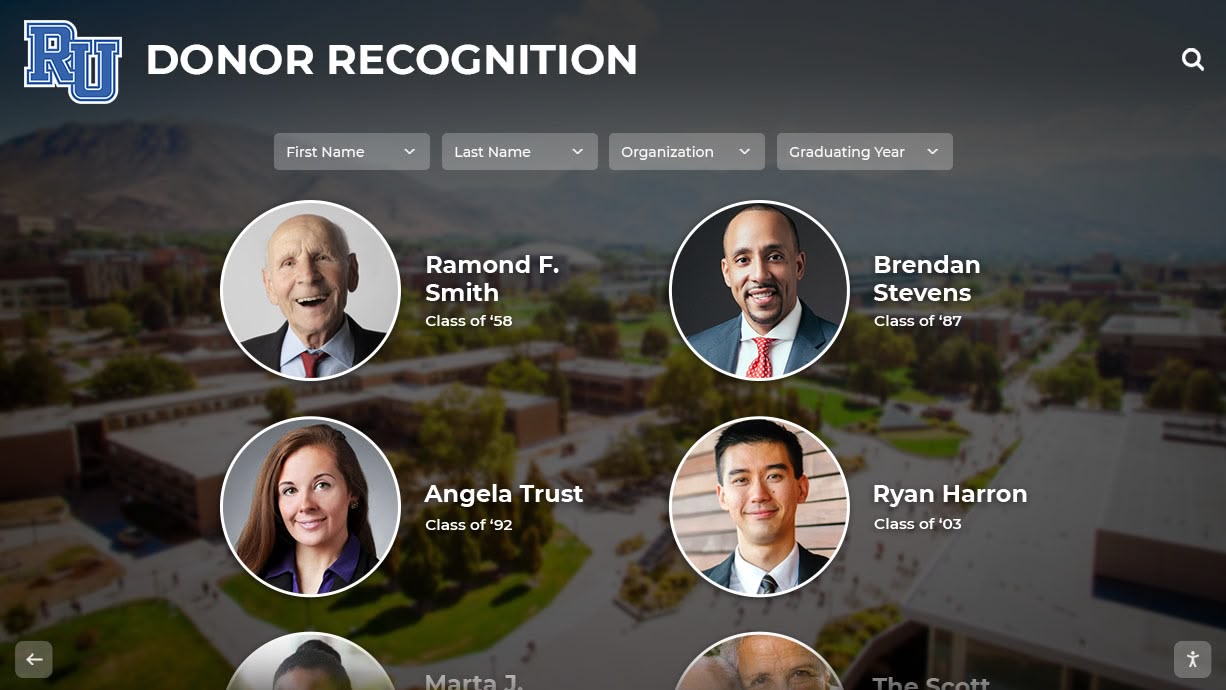
Understanding Donor Walls: Purpose and Strategic Value
Donor walls fulfill multiple organizational objectives simultaneously—honoring past generosity, demonstrating campaign progress, creating aspirational models for prospective donors, and reinforcing stewardship priorities throughout institutional culture.
The Dual Purpose of Recognition Displays
Donor Stewardship Function Recognition walls provide tangible acknowledgment meeting fundamental donor needs for appreciation and validation. Research consistently shows proper recognition directly influences retention—donors who feel genuinely valued demonstrate 45-60% higher renewal rates and give 25-35% more over their lifetime compared to minimally acknowledged supporters.
Public recognition creates emotional reinforcement connecting donors to organizational mission and community. Seeing one’s name displayed prominently triggers pride, belonging, and continued investment in causes supporting personal values.
Fundraising Cultivation Tool Beyond honoring existing donors, recognition displays actively cultivate future giving by:
- Demonstrating widespread philanthropic participation normalizing giving behavior
- Providing accessible entry-level recognition inspiring first-time donors
- Highlighting major gift opportunities through aspirational recognition tiers
- Providing visual campaign progress indicators motivating participation
- Creating conversation opportunities during tours and donor meetings
Organizations implementing strategic recognition programs report 18-25% increases in donor participation rates within 12-18 months of installation. Educational institutions can learn from successful academic recognition programs that apply similar principles to student achievement.
Why Donor Wall Investment Matters in 2026
The competitive fundraising environment makes effective recognition more critical than ever. Nonprofit retention rates average just 45%, with first-time donors particularly vulnerable to lapse—only 19% make second gifts according to recent sector research.
Recognition investments deliver measurable returns through:
Improved Lifetime Donor Value Retaining donors just one additional year increases lifetime contribution value by 20-30% on average. Recognition programs consistently improving retention by 35-40% generate significant revenue impact when applied across entire donor populations.
Reduced Acquisition Costs Acquiring new donors costs 5-7 times more than retaining existing supporters. Recognition investments improving retention reduce ongoing acquisition requirements, redirecting resources toward cultivation and major gift development.
Enhanced Organizational Reputation Visible donor recognition demonstrates stewardship values to prospective supporters evaluating giving opportunities. Organizations displaying appreciation culture attract donors seeking meaningful philanthropic partnerships.
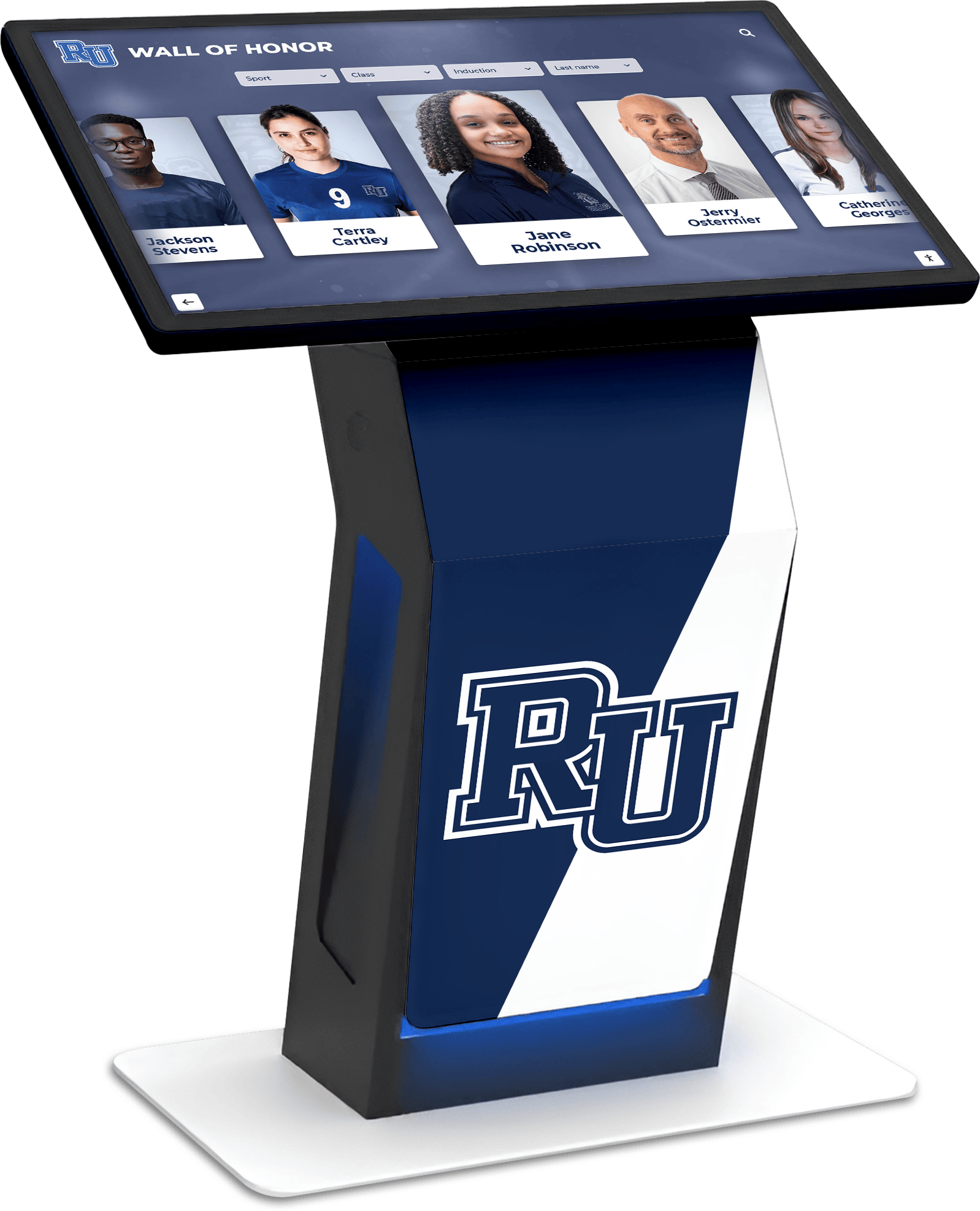
Donor Wall Format Options: Comprehensive Comparison
Organizations must choose between traditional physical recognition, modern digital displays, or hybrid approaches combining both methods. Each option offers distinct advantages depending on organizational priorities, resources, and donor preferences.
Traditional Donor Wall Systems
Physical donor walls featuring engraved nameplates mounted on architectural elements have served organizations for decades and remain appropriate for many recognition programs.
Standard Physical Wall Components
- Individual engraved nameplates (brass, aluminum, acrylic, or glass)
- Mounted backing panels providing consistent layout structure
- Header signage identifying recognition program and giving societies
- Tiered sections organizing donors by contribution levels
- Illumination systems highlighting recognition areas
- Protective coverings or security mounting systems
Traditional Donor Wall Cost Ranges
Entry-Level Physical Systems ($5,000-$12,000)
- Single recognition wall accommodating 100-200 donors
- Basic engraved nameplates on mounted backing panels
- Standard materials without custom fabrication
- Straightforward installation in prepared space
Mid-Range Physical Systems ($12,000-$35,000)
- Multi-section walls accommodating 300-600 donors
- Enhanced materials including architectural glass or specialty metals
- Custom design elements reflecting organizational branding
- Integrated illumination creating visual impact
- Professional installation including wall preparation
Premium Physical Systems ($35,000-$100,000+)
- Architecturally integrated recognition featuring custom fabrication
- Premium materials including carved stone, artistic metalwork, or specialty glass
- Multiple recognition sections with distinct design elements
- Sophisticated lighting design and environmental integration
- Complex installation requiring specialized contractors
Advantages of Traditional Donor Walls
- Permanent physical presence requiring no technology infrastructure
- Traditional aesthetic appealing to donors valuing classic approaches
- No ongoing technology maintenance or software updates required
- One-time capital investment with predictable costs
- Familiar recognition format widely understood across generations
Limitations of Traditional Systems
- Fixed physical capacity eventually requiring expansion purchases
- Update costs averaging $25-$45 per new nameplate including engraving and installation
- Space constraints forcing difficult decisions about long-term capacity
- Static presentation limited to names, dates, and giving ranges
- On-site-only visibility excluding remote supporters
- Labor-intensive updates requiring vendor coordination and installation scheduling
- Inflexibility when organizational recognition policies evolve
Organizations with stable donor populations, traditional constituency preferences, and minimal update frequency may find physical walls appropriate for their recognition needs.
Digital Donor Recognition Display Systems
Modern digital recognition displays address traditional limitations while offering expanded functionality transforming donor acknowledgment from static listing to engaging experience.
Digital Donor Wall Components
- Commercial-grade touchscreen displays (43"-98" depending on space and budget)
- Wall mount systems or freestanding kiosk enclosures
- Content management software enabling remote updates
- Network connectivity (wired Ethernet or WiFi)
- Cloud-based hosting for recognition content and donor databases
- Search and filter functionality for visitor engagement
- Multimedia content support (photos, videos, impact stories)
Technical Specifications for Digital Donor Displays
Organizations evaluating digital recognition should assess these technical requirements:
Display Hardware Specifications
- Screen Resolution: Minimum 1920x1080 (Full HD); 4K (3840x2160) recommended for screens over 55"
- Brightness: 350-500 nits for indoor installations ensuring visibility in varied lighting
- Operating Hours Rating: Commercial displays rated for 16-24 hour daily operation
- Touch Technology: Capacitive touchscreen supporting multi-touch gestures for intuitive navigation
- Processor Performance: Adequate computing power for smooth scrolling, search, and media playback
- Warranty Coverage: Minimum 3-year commercial warranty on hardware components
Software and Content Management Requirements
- Cloud-based CMS accessible from any internet-connected device
- Intuitive interface enabling non-technical staff to update content
- Batch import functionality for historical donor data migration
- Scheduled publishing capabilities for recognition events
- Role-based permissions controlling administrative access
- Automated backup systems protecting donor information
- Search functionality by name, giving level, year, or program
- Social sharing capabilities extending recognition reach
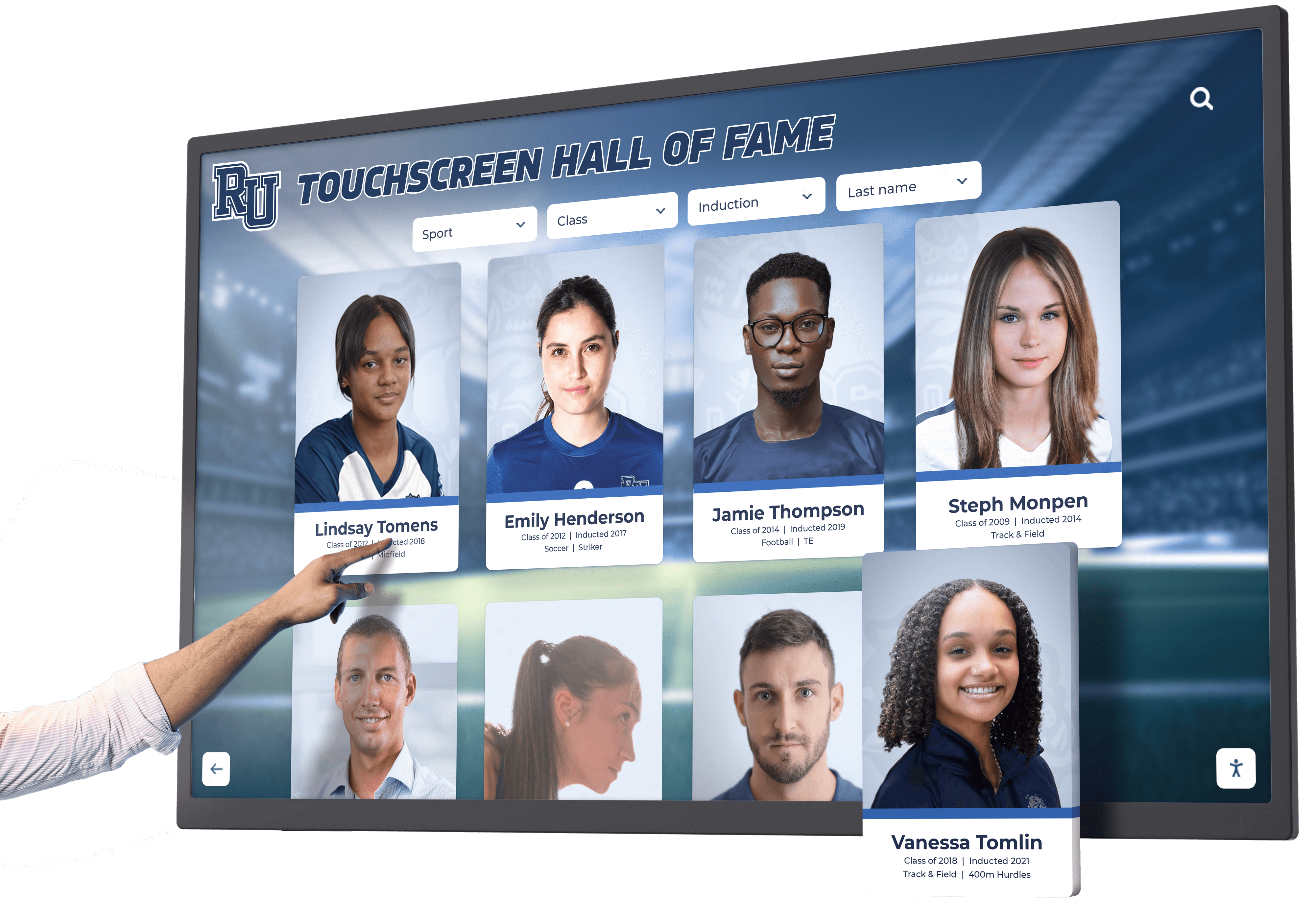
Digital Donor Wall Cost Ranges
Single Display Digital Systems ($10,000-$20,000)
- 43"-55" commercial touchscreen with wall mount
- Basic content management software with essential features
- Installation including power and network connectivity
- Initial content setup for existing donor population
- Staff training on content management system
- First-year software licensing and support
Enhanced Digital Systems ($20,000-$40,000)
- 55"-75" commercial display with premium mounting or kiosk enclosure
- Comprehensive content management platform with advanced features
- Custom interface design reflecting organizational branding
- Extensive content development including donor profiles and impact stories
- Integration with existing donor management systems
- Multi-year software licensing and technical support
Multi-Display Digital Installations ($40,000-$100,000+)
- Multiple coordinated touchscreens creating comprehensive recognition environment
- Freestanding kiosk options with architectural integration
- Advanced features including analytics, social integration, web accessibility
- Professional content development services
- Comprehensive staff training programs
- Enterprise-level support and maintenance agreements
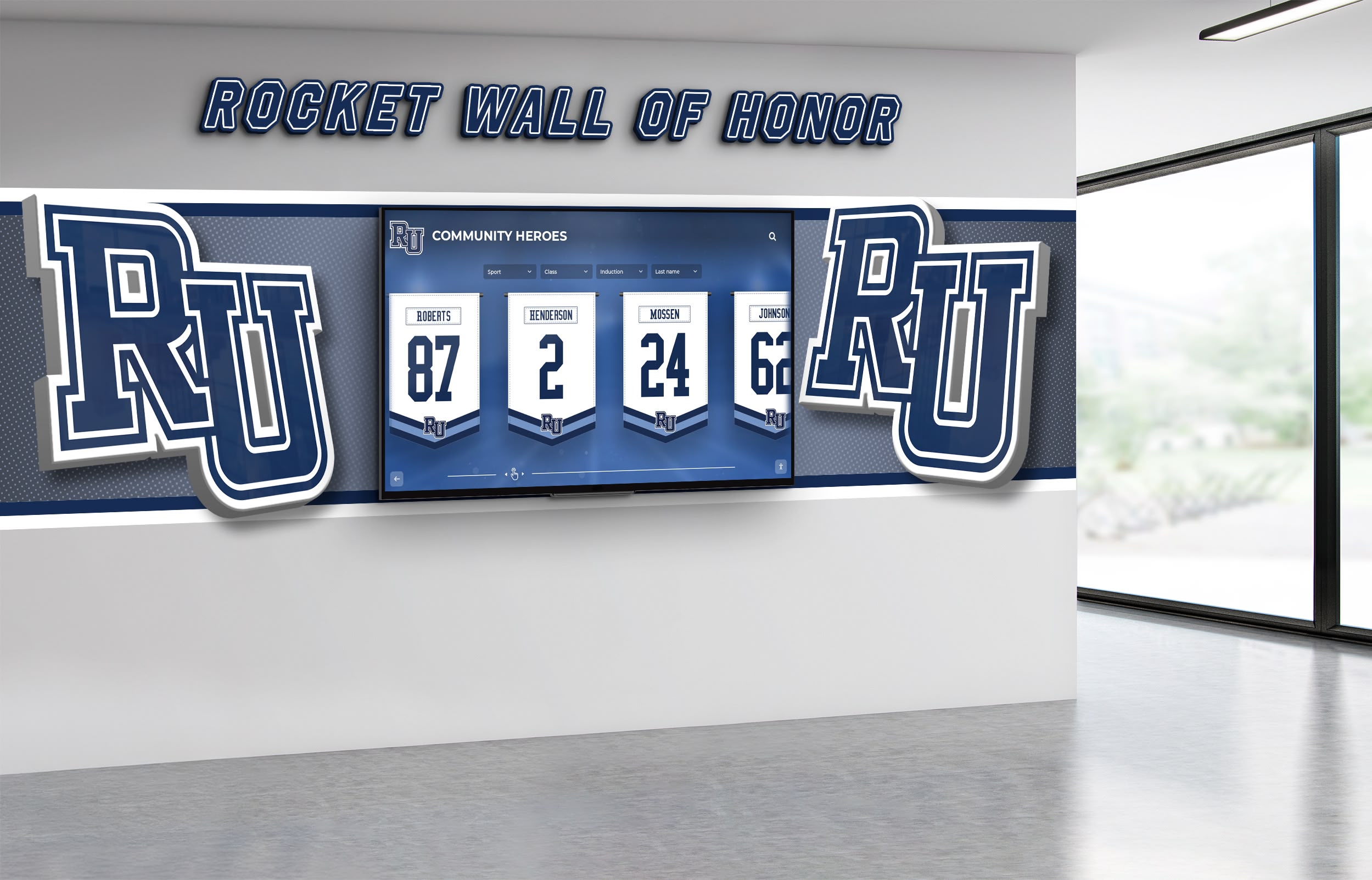
Solutions like Rocket Alumni Solutions provide integrated recognition platforms combining commercial-grade hardware with intuitive content management specifically designed for donor recognition applications, enabling organizations to honor unlimited donors, update content remotely, and extend recognition reach through web accessibility.
Advantages of Digital Donor Recognition
Unlimited Recognition Capacity Digital systems accommodate thousands of donors across all giving levels without physical space constraints. Organizations never face difficult decisions about removing historical donors as lists grow, ensuring comprehensive recognition preserving complete philanthropic records.
Operational Efficiency
- Remote content updates from any device eliminating vendor coordination
- Zero per-donor costs for additions after initial implementation
- Scheduled publishing for recognition ceremony announcements
- Bulk import tools for historical donor migration
- Automated backups protecting recognition data
- 80-90% reduction in administrative time compared to traditional systems
Enhanced Storytelling Capabilities
- Donor profiles sharing personal connections to organizational mission
- Impact videos demonstrating specific outcomes contributions enabled
- Photo galleries highlighting programs and facilities donors supported
- Interactive timelines connecting supporters to institutional history
- Searchable databases enabling visitors to locate specific contributors
- Campaign progress visualization inspiring continued participation
Extended Reach and Accessibility
- Web accessibility enabling donors worldwide to view recognition
- Social sharing capabilities expanding visibility across networks
- Mobile-optimized viewing across all devices
- Integration with organizational websites maintaining brand consistency
- 24/7 accessibility versus limited on-site viewing opportunities
Real-Time Campaign Integration Digital displays can feature active fundraising campaigns with:
- Real-time progress meters toward campaign goals
- Challenge match visualizations creating urgency
- Recent donor additions inspiring immediate participation
- Milestone celebrations acknowledging collective achievement
Organizations implementing digital recognition report significant improvements in donor satisfaction, with 73% of surveyed donors preferring digital recognition over traditional plaques according to 2025 sector research.
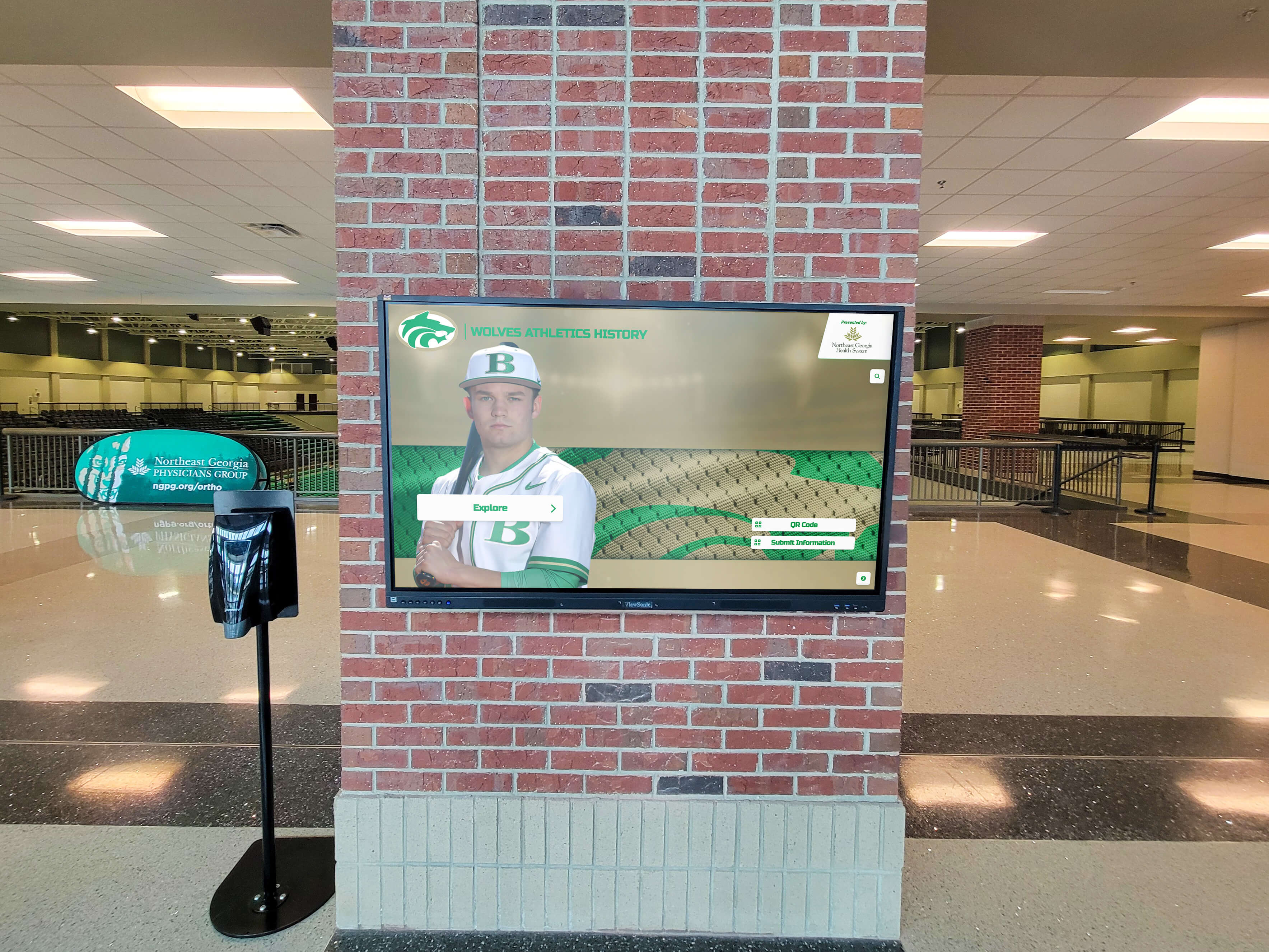
Hybrid Recognition Models
Many organizations achieve optimal results combining traditional elements with digital innovation, honoring diverse donor preferences while leveraging modern capabilities.
Common Hybrid Approaches
Pinnacle Giving Traditional Recognition Reserve physical plaques or naming opportunities for highest giving levels ($100,000+) while highlighting broader participation through digital displays. This approach provides traditional permanence valued by major donors while offering scalability for growing donor populations.
Architectural Anchors with Digital Supplements Create architectural recognition spaces featuring traditional design elements supplemented by digital displays providing detailed storytelling, impact visualization, and searchable donor databases.
Program-Specific Recognition Mix Implement traditional recognition for endowed funds, named spaces, or capital campaign leadership while using digital displays for annual giving societies, volunteer recognition, and program-specific supporters.
Historical Traditional, Contemporary Digital Maintain existing traditional recognition honoring historical donors while implementing digital systems for current and future recognition, creating visual timeline connecting past generosity to ongoing support.
Hybrid models enable organizations to respect tradition while embracing innovation, meeting diverse donor preferences across generational and giving level differences.
Planning Your Donor Recognition Program
Successful donor wall implementation begins with strategic planning addressing organizational culture, donor preferences, recognition philosophy, and practical requirements.
Defining Recognition Tiers and Giving Societies
Effective recognition structures organize donors by contribution levels creating clear framework while inspiring giving growth through aspirational advancement opportunities.
Recognition Tier Development Principles
- Match thresholds with organizational fundraising capacity and donor demographics
- Create meaningful differentiation between adjacent levels motivating upgrades
- Provide accessible entry points encouraging broad-based participation
- Include aspirational upper levels for major gift cultivation
- Accommodate both annual and cumulative lifetime giving recognition
- Consider special categories beyond monetary thresholds (legacy commitments, volunteer leadership, consecutive year giving)
Sample Recognition Tier Framework
Annual Giving Societies
- Visionary Circle: $50,000+ annual giving
- Leadership Society: $25,000-$49,999 annual
- Cornerstone Guild: $10,000-$24,999 annual
- Patron Circle: $5,000-$9,999 annual
- Benefactor Society: $2,500-$4,999 annual
- Supporter Circle: $1,000-$2,499 annual
- Friend Society: $500-$999 annual
Cumulative Lifetime Recognition
- Heritage Society: $1,000,000+ lifetime giving
- Legacy Circle: $500,000-$999,999 lifetime
- Founders Guild: $250,000-$499,999 lifetime
- Cornerstone Society: $100,000-$249,999 lifetime
Organizations should adjust these thresholds based on donor capacity and community giving patterns. The key is creating sufficient distinction between levels to motivate advancement while maintaining meaningfulness at each tier.
Recognition Society Naming Strategies
Effective recognition level names connect to organizational mission and values while creating aspirational identity donors feel proud associating with. Organizations can reference examples from donor recognition wall planning resources showcasing diverse naming approaches:
Mission-Connected Names
- Environmental organizations: “Steward Circle,” “Conservator Society,” “Guardian Guild”
- Educational institutions: “Scholarship Circle,” “Innovation Council,” “Access Society”
- Healthcare organizations: “Healing Circle,” “Wellness Society,” “Care Partners”
- Arts institutions: “Patron Circle,” “Benefactor Society,” “Maestro Guild”
Place-Based Names Organizations with significant geographic identity can reference location: “Bay Area Leadership Council,” “Mountain Region Benefactors,” “Historic District Preservation Society”
Values-Aligned Names Connect recognition tiers to organizational values: “Excellence Circle,” “Impact Society,” “Transformation Partners,” “Future Fund Leaders”
Historical Names Long-established organizations can reference founding dates or significant milestones: “1892 Heritage Society,” “Centennial Circle,” “Founder’s Guild”
Avoid generic corporate terminology (“Platinum Level,” “Gold Tier”) that doesn’t resonate with mission-driven donor motivation. Instead, craft names reflecting organizational identity and values donors support.
Location Selection and Placement Strategy
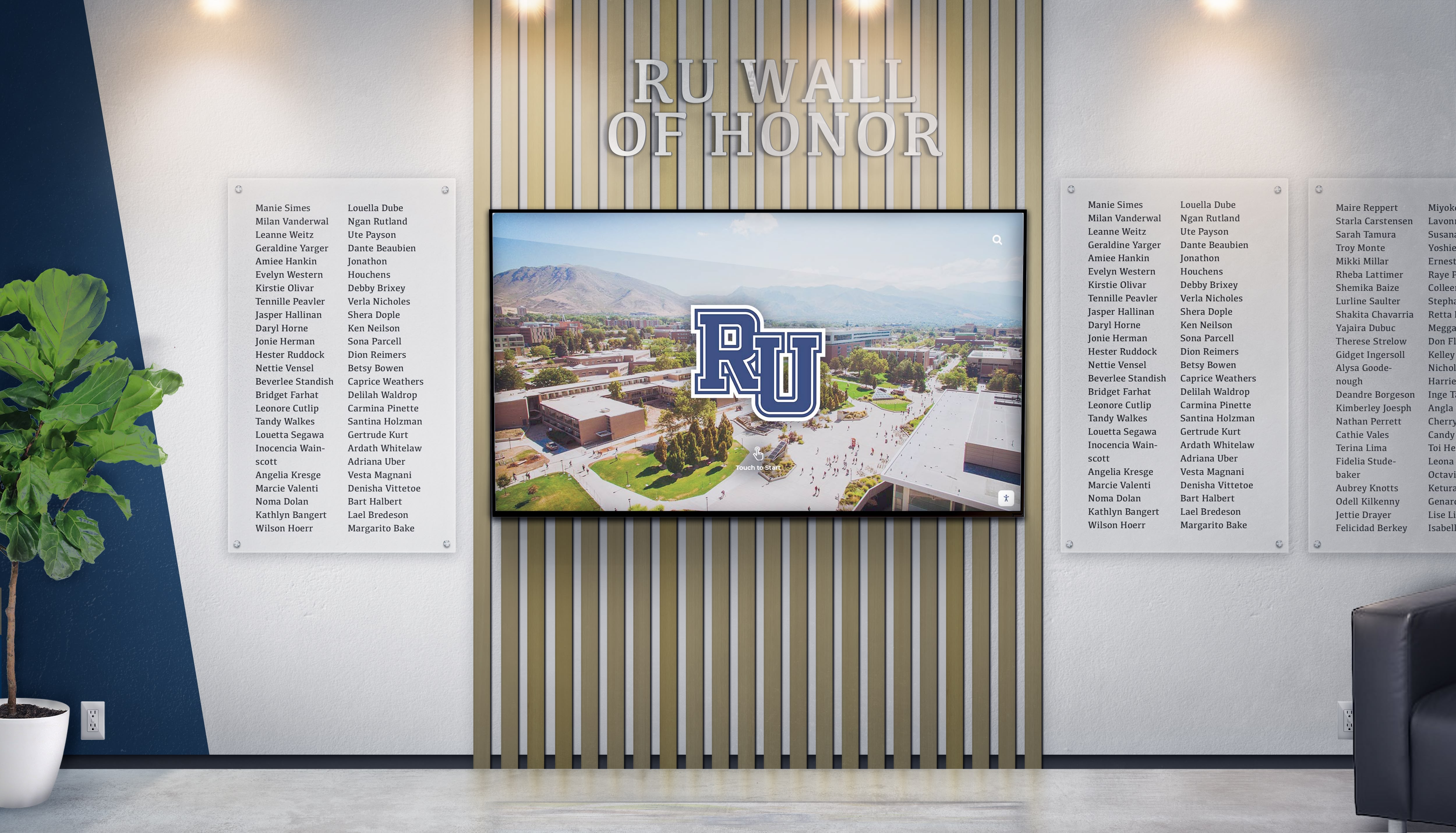
Strategic donor wall placement maximizes visibility, creates meaningful engagement opportunities, and demonstrates organizational commitment to recognition.
Optimal Location Criteria
High-Traffic Areas
- Main entrance lobbies and reception areas greeting all visitors
- Corridor intersections creating natural pause points
- Adjacent to auditoriums, meeting rooms, or program spaces
- Near elevator banks in multi-story facilities
- Waiting areas outside leadership offices
Visibility Considerations
- Clear sight lines from multiple approach angles
- Adequate lighting supporting easy viewing without glare
- Comfortable viewing zones with sufficient personal space
- Protection from direct sunlight affecting display visibility
- Acoustically appropriate environments for digital displays with audio
Contextual Appropriateness
- Locations connecting donors to programs or facilities they supported
- Proximity to beneficiary activity demonstrating impact
- Spaces reinforcing organizational mission and values
- Areas where donors visit during cultivation activities and events
Walk facilities during typical operating hours observing traffic patterns and identifying natural gathering spaces that would showcase recognition effectively. Involve stakeholders from development, facilities, and programming in location assessment discussions.
Technical Infrastructure Requirements for Digital Displays
Organizations implementing digital recognition must verify technical feasibility:
Electrical Infrastructure
- Dedicated 110V power outlet within 6 feet of display location
- Adequate circuit capacity (check breaker panel)
- Surge protection recommended for equipment investment protection
- Concealed wiring channels or conduit for professional appearance
Network Connectivity
- Wired Ethernet connection providing most reliable performance (strongly preferred)
- WiFi access with adequate signal strength (-67 dBm or stronger) if wired unavailable
- Minimum 10 Mbps bandwidth for content updates and cloud connectivity
- Network security accommodations allowing content management system access
Physical Mounting
- Wall stud locations and load-bearing capacity assessment
- Mounting height accommodating ADA accessibility (48" maximum to touch center)
- Clearance requirements (30" minimum approach zone for touchscreens)
- Cable management solutions maintaining clean installation
Environmental Conditions
- Temperature range: 32°F-95°F (0°C-35°C)
- Humidity: 20%-80% non-condensing
- Protection from direct sunlight causing screen glare
- Vibration or impact considerations in high-traffic areas
Document these specifications during planning preventing installation complications and ensuring optimal performance.
Design Principles for Effective Donor Recognition
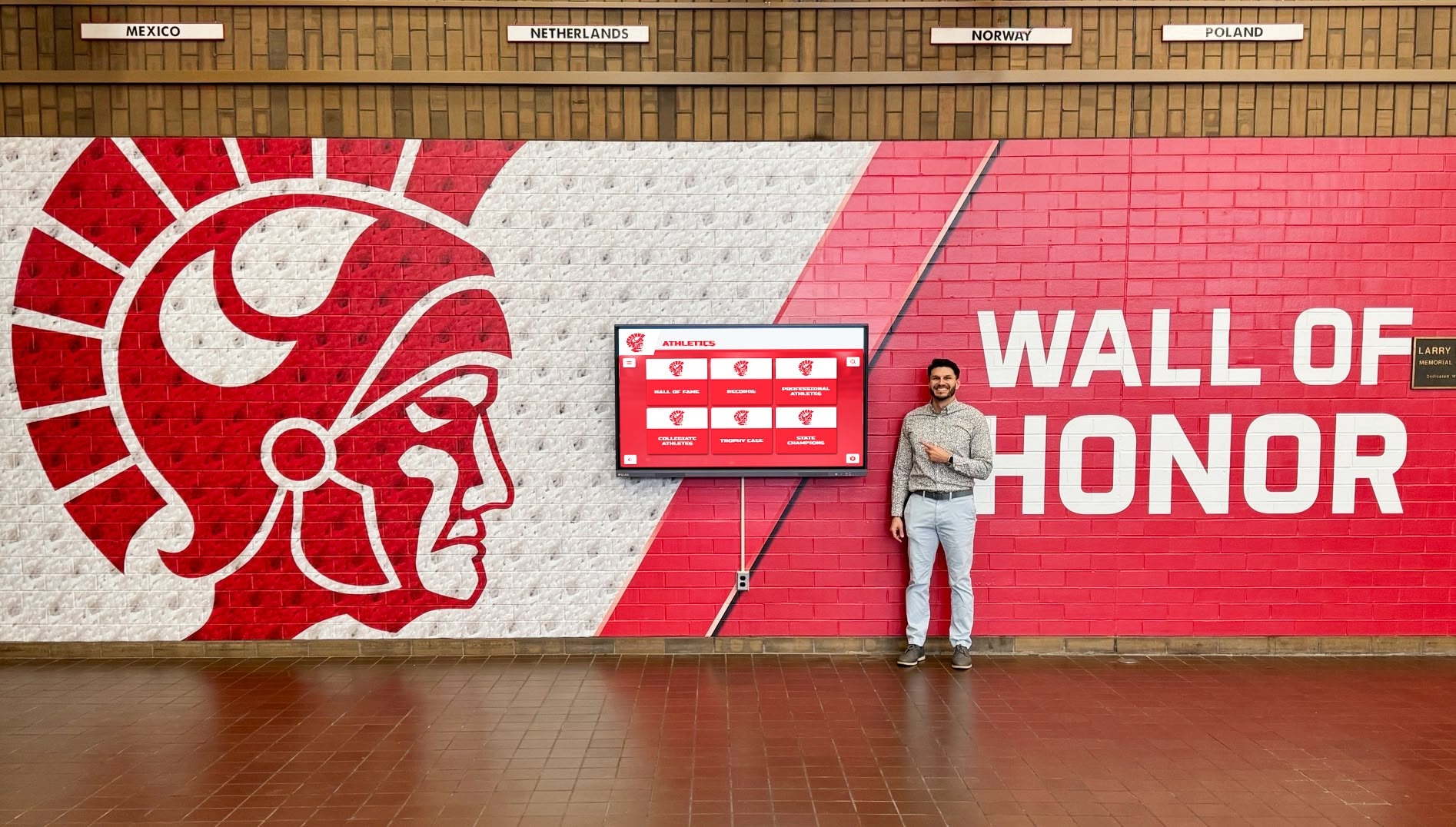
Thoughtful design transforms donor walls from simple name listings into compelling recognition experiences that honor supporters meaningfully while inspiring future giving.
Content Organization and Information Architecture
Essential Recognition Elements Every donor acknowledgment should include:
- Donor name (using preferred format confirmed with supporter)
- Recognition tier or giving society designation
- Recognition period or lifetime giving milestone achieved
- Optional additions: City/state, special designations (memorial gifts, legacy society), years of consecutive support
Enhanced Digital Display Content
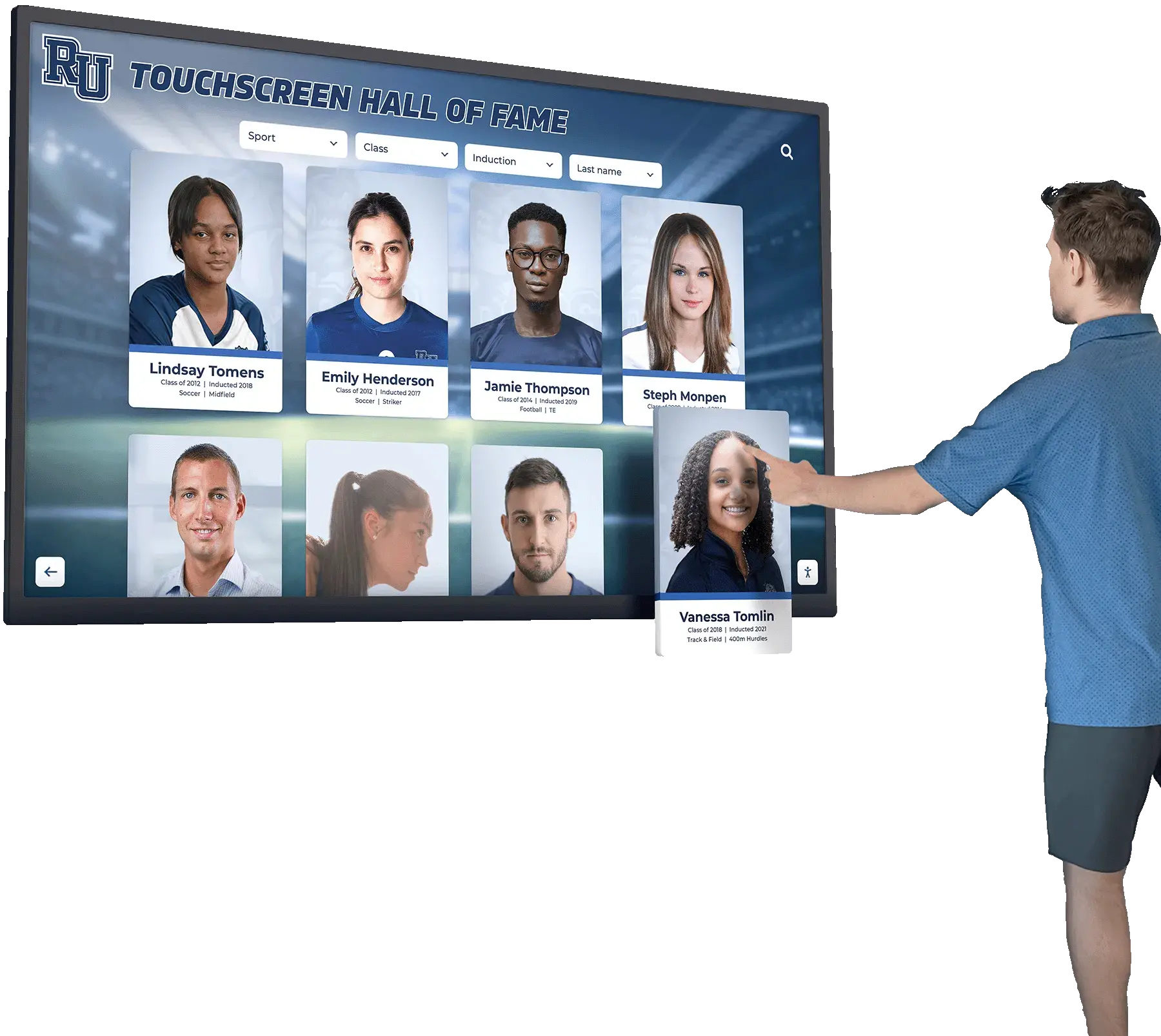
Digital recognition systems enable richer donor profiles:
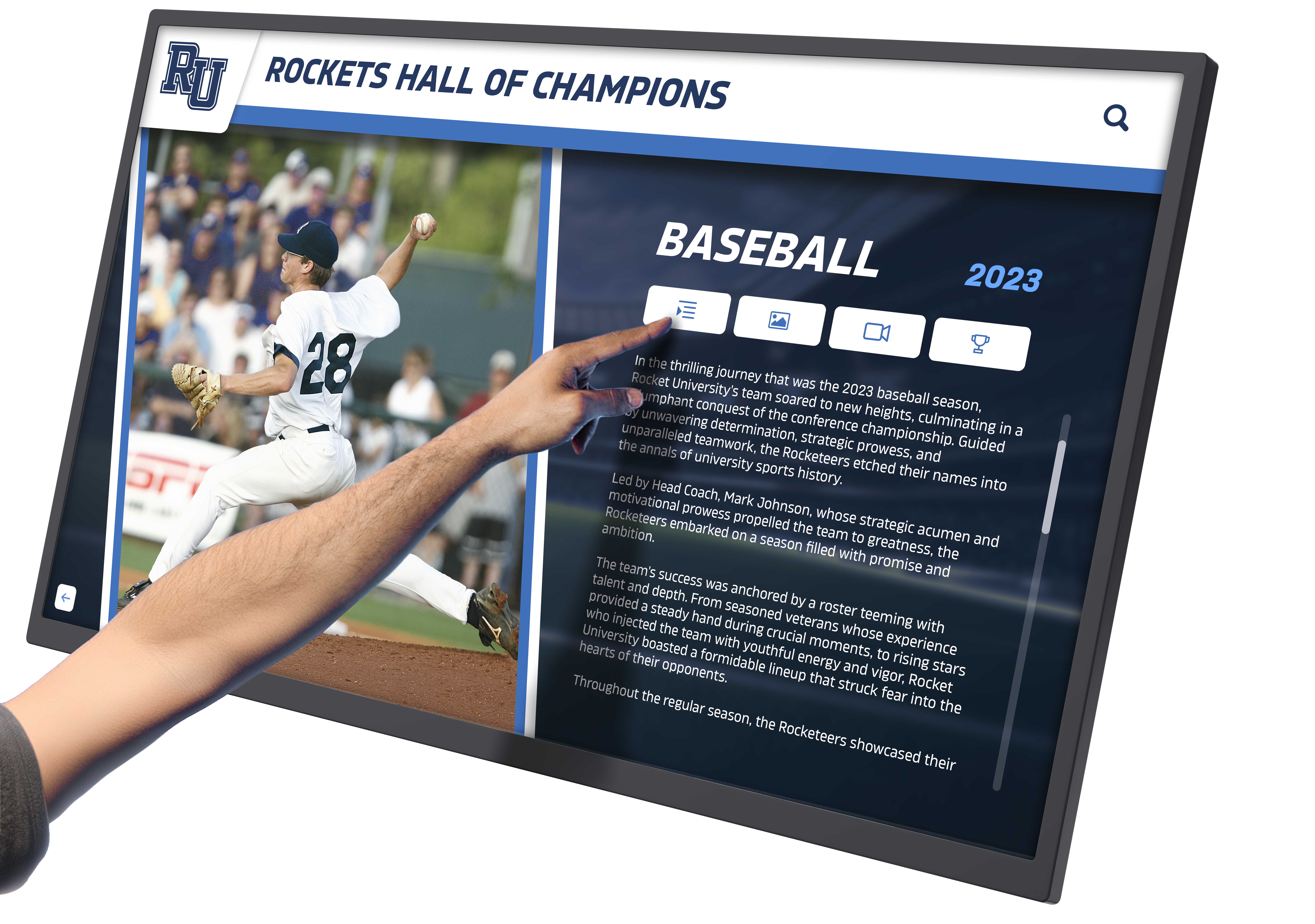
- Personal statements explaining connection to organizational mission
- Photos from events, program sites, or personal archives
- Video testimonials sharing philanthropic motivation stories
- Timeline visualizations showing giving history and engagement evolution
- Specific programs or initiatives supported
- Impact metrics demonstrating outcomes contributions enabled
- Links to related organizational content and beneficiary stories
Organizations implementing comprehensive digital profiles report 6-8 minute average visitor engagement compared to 60-90 seconds for traditional name listings—demonstrating enhanced storytelling’s effectiveness. Similar engagement patterns appear in unique donor wall designs that prioritize visitor interaction.
Search and Navigation Design
Intuitive organization ensures all donors receive visibility:
- Alphabetical browsing enabling quick location of specific names
- Filtering by recognition tier, giving level, or society membership
- Search by name, location, graduation year, or affiliation
- Program-specific donor views connecting supporters to initiatives
- Timeline-based exploration (campaign years, decade views, anniversaries)
- Random or rotating featured donor spotlights
- “Donors like you” discovery suggesting related profiles
Effective navigation prevents recognition systems from becoming “hidden databases” where only tech-savvy visitors access content.
Visual Design Best Practices
Organizational Branding Integration
- Consistent color palettes reflecting institutional identity
- Typography matching organizational style guides
- Logo placement maintaining brand visibility
- Design elements connecting to architectural context
- Photography styles consistent with organizational communications
Inclusive Recognition Design
Avoid creating visual hierarchies suggesting lower-level donors matter less:
- Provide dignified presentation across all recognition tiers
- Use consistent design quality regardless of gift size
- Balance aspiration encouragement with gratitude for current support
- Avoid language implying modest gifts receive lesser appreciation
- Create equal information depth across giving levels
Readability and Accessibility
Design for diverse audiences:
- Text sizes readable from typical viewing distances (6-10 feet)
- High-contrast color combinations ensuring visibility
- Sans-serif fonts maximizing readability
- Screen reader compatibility for visually impaired visitors
- Text magnification options for low-vision users
- Appropriate mounting heights accommodating wheelchair users
- Closed captioning for video content
- Alternative text for images supporting assistive technologies
Organizations should reference Web Content Accessibility Guidelines (WCAG) 2.1 Level AA standards when designing digital recognition systems. Nonprofits can explore additional guidance through nonprofit digital wall mount displays specifically designed for accessibility.
Implementation Process and Timeline
Successful donor wall projects follow structured approaches ensuring coordination across planning, design, procurement, content development, installation, and launch phases.
Standard Implementation Timeline
Phase 1: Planning and Requirements (Weeks 1-3)
- Conduct stakeholder meetings defining project scope, objectives, and priorities
- Complete facility assessment documenting potential locations and technical infrastructure
- Establish budget parameters and identify funding sources
- Define recognition tier structure, naming conventions, and policies
- Survey donor preferences regarding recognition approaches and content
- Develop project charter documenting decisions and accountabilities
Phase 2: Vendor Selection and Design (Weeks 4-7)
- Issue requests for proposals (RFPs) if organizational procurement requires competitive bidding
- Evaluate vendor proposals against defined requirements and budget
- Conduct vendor demonstrations and reference checks
- Select recognition system provider and finalize contracts
- Develop design concepts incorporating branding, content strategy, and user experience
- Review and approve mockups, layouts, and sample content
Phase 3: Content Development (Weeks 8-11)
- Compile comprehensive donor lists with accurate names, tiers, and recognition periods
- Verify donor information accuracy through database cross-referencing
- Gather enhanced content for digital displays (photos, profiles, testimonials, impact stories)
- Digitize historical donor records if implementing archival recognition
- Write acknowledgment messaging, program descriptions, and impact content
- Obtain donor approvals for published content where required
Phase 4: Technical Preparation (Weeks 12-13)
- Coordinate facility preparation (electrical installation, network connectivity, wall preparation)
- Schedule installation minimizing operational disruption
- Arrange vendor access and facility coordination
- Prepare launch communications and promotional materials
- Develop staff training plans and documentation
Phase 5: Installation and Training (Weeks 14-15)
- Execute physical installation and system configuration
- Load initial content and conduct comprehensive testing
- Verify all functionality including search, navigation, and media playback
- Provide staff training on content management and system operation
- Conduct stakeholder walkthrough addressing questions and concerns
- Resolve any technical or content issues before public launch
Phase 6: Launch and Promotion (Week 16)
- Execute dedication ceremony or launch event (optional but recommended)
- Distribute communications announcing new recognition system
- Promote recognition through donor newsletters, social media, and website features
- Monitor system performance and visitor engagement
- Collect initial feedback informing refinement
This 16-week timeline provides realistic pacing for comprehensive donor wall implementation. Projects may accelerate for simpler installations or extend for complex multi-location systems.
Project Team Roles
Internal Project Manager (Development/Advancement Staff)
- Coordinates overall timeline and stakeholder communication
- Ensures budget adherence and secures necessary approvals
- Facilitates decision-making and resolves issues
- Serves as primary vendor liaison
Content Coordinator (Development/Communications Staff)
- Manages donor data collection and verification
- Develops enhanced content for digital displays
- Maintains brand consistency across all messaging
- Coordinates donor communications about recognition
Technical Coordinator (Facilities/IT Staff)
- Oversees site preparation and infrastructure implementation
- Manages network connectivity and security requirements
- Coordinates installation access and facility impacts
- Provides ongoing technical support post-installation
Vendor Project Manager (Recognition System Provider)
- Delivers system design, fabrication, and production
- Manages installation and system configuration
- Provides comprehensive training and documentation
- Offers post-installation support and maintenance
Clear role definition prevents coordination gaps and ensures accountability throughout implementation.
Budget Planning and Financing Options
Donor wall investments require careful budget planning considering all cost components and exploring creative financing approaches maximizing organizational resources.
Comprehensive Budget Components
Hardware and Display Costs (40-50% of traditional budgets; 35-45% of digital budgets)
- Display panels or touchscreen systems
- Mounting systems (wall mounts, kiosks, enclosures)
- Commercial-grade equipment meeting operational requirements
- Extended warranty or equipment protection plans
Software and Content Management (digital systems only; 15-20% of budget)
- Content management system licensing (annual or multi-year)
- Cloud hosting and data storage
- Custom interface design and branding
- Integration with donor management systems
Installation and Integration (15-25% of budget)
- Electrical infrastructure preparation and installation
- Network connectivity setup and configuration
- Physical mounting and installation labor
- System configuration, testing, and commissioning
Content Development (15-25% of budget)
- Initial donor data compilation, cleaning, and verification
- Historical record digitization and migration
- Enhanced content creation (photography, videography, profile writing)
- Design services for layouts and visual elements
- Impact story development and production
Training and Support (5-10% of budget)
- Staff training on content management and system operation
- User documentation and reference guides
- Technical support agreements (annual or multi-year)
- Maintenance plans for hardware and software
Project Management and Contingency (10-15% of budget)
- Internal staff time allocation for coordination
- Vendor management and oversight activities
- Contingency budget for unexpected requirements or changes
Creative Financing Strategies
Capital Campaign Integration Include recognition system costs within capital campaign budgets presenting recognition as campaign deliverable inspiring participation. Allocate percentage of unrestricted campaign gifts to recognition investment, or identify specific donors interested in funding recognition systems.
Naming Opportunity for Recognition Space Offer naming rights for the recognition area itself, creating meta-recognition where major donor sponsors the space honoring all supporters. Typical naming gift ranges for recognition spaces: $50,000-$250,000 depending on facility prominence.
Phased Implementation Budget constraints need not prevent recognition modernization:
- Begin with single core display expanding to additional screens over time
- Implement basic functionality initially adding enhanced features in future phases
- Start with priority donor populations (major gifts, legacy society) expanding recognition breadth incrementally
- Upgrade from traditional to digital approaches as replacement cycles occur
Technology Grant Opportunities Research foundation and corporate grants supporting:
- Organizational capacity building and infrastructure improvement
- Technology adoption for operational efficiency
- Communications and engagement enhancement
- Facility improvement and capital projects
Donor-Sponsored Recognition Systems Approach major donors about funding recognition systems as legacy contributions. Present as opportunity to enable appreciation culture benefiting entire donor community while receiving naming recognition for the sponsorship.
Multi-Year Pledge Options Spread recognition system investment over 3-5 years through pledge arrangements, aligning costs with fundraising growth enabled by improved recognition and retention.
Organizations should calculate return on recognition investment considering:
- Improved donor retention value (35-40% higher retention = significant revenue impact)
- Reduced ongoing update costs (digital systems eliminate $25-45 per-donor engraving expenses)
- Administrative efficiency gains (80-90% reduction in recognition management time)
- Enhanced major gift cultivation through professional recognition presentation
Most organizations achieve positive ROI within 3-4 years when accounting for these combined benefits. Organizations planning recognition systems should review comprehensive donor recognition examples showcasing diverse implementation approaches and outcomes.
Ongoing Management and Maintenance
Recognition walls require systematic management ensuring accuracy, functionality, and continued donor satisfaction throughout their operational lifetime.
Digital Recognition System Maintenance
Content Management Tasks
- Add new donors quarterly or following major fundraising events (15-30 minutes per update session)
- Update donor information as giving levels advance (real-time or monthly batches)
- Refresh program impact content demonstrating current organizational outcomes (quarterly)
- Rotate featured donor stories maintaining visitor engagement (monthly)
- Archive historical content while keeping displays current and relevant
Technical Maintenance Requirements
- Perform software updates ensuring security and functionality (quarterly or as released)
- Monitor system performance, connectivity, and uptime (automated monitoring recommended)
- Clean touchscreens monthly using electronics-safe microfiber cloths and appropriate cleaning solutions
- Inspect physical components for wear or damage (quarterly)
- Verify backup systems protecting donor data (automated daily backups)
- Test disaster recovery procedures (annually)
Performance Monitoring Digital recognition systems provide analytics tracking:
- Display interaction frequency and session duration
- Most-viewed donor profiles and content sections
- Search term analysis revealing visitor interests
- Peak usage times informing optimal content update strategy
- Geographic distribution of web-based recognition access
- Social sharing frequency and reach
These metrics inform content optimization ensuring recognition remains engaging and effective.
Organizations report minimal ongoing costs for digital recognition—primarily staff time for content updates (averaging 2-4 hours monthly) and routine physical maintenance requiring no specialized expertise.
Traditional Recognition Wall Maintenance
Physical Update Requirements
- Add new donor plates as recognition occurs (ongoing cost $25-$45 per plate including engraving and installation)
- Reorganize plate arrangements as sections fill existing capacity (labor-intensive)
- Polish or refinish metal components maintaining appearance (annually or bi-annually)
- Replace damaged, tarnished, or corroded plates as needed
- Expand wall capacity when space constraints require (significant capital reinvestment every 5-10 years)
Administrative Overhead
- Coordinate engraving vendor relationships and order processing
- Schedule installation timing minimizing facility disruption
- Verify plate information accuracy before engraving (errors require costly replacement)
- Document donor positions for future reference and inquiries
- Manage donor inquiries about recognition status and timeline
The cumulative time and financial costs of traditional recognition maintenance often exceed long-term total cost of ownership for digital systems, particularly for organizations with growing donor bases requiring frequent updates.
Recognition Program Policy Documentation
Establish written policies addressing:
- Recognition criteria and giving thresholds for each tier
- Annual versus lifetime giving recognition determinations
- Processes for adding new donors and updating information
- Timeline expectations for recognition publication after gift processing
- Anonymous donor handling procedures respecting privacy preferences
- Memorial and tribute gift recognition protocols
- Naming opportunity guidelines and approval workflows
- Recognition duration policies (perpetual versus time-limited)
- Correction procedures for errors or donor request changes
- Donor name format standards ensuring consistency
Clear policies ensure consistent, fair recognition administration while preventing misunderstandings affecting donor relationships.
Measuring Recognition Program Effectiveness
Regular assessment ensures recognition investments achieve intended objectives of donor satisfaction, retention improvement, and giving growth.
Quantitative Success Metrics
Donor Retention Analysis Compare these metrics before and after recognition implementation:
- Overall donor retention rate across all giving levels
- Retention rates by recognition tier identifying differential impacts
- First-time donor second-gift conversion rates
- Multi-year donor retention measuring long-term loyalty
- Lapsed donor reactivation success through renewed recognition outreach
Target benchmark: 35-40% improvement in retention among recognized donor populations
Giving Growth Indicators
- Average gift size changes among recognized donors
- Recognition society enrollment trends over time
- Upgrade rates between recognition tiers
- Frequency of repeat gifts within annual periods
- Major gift pipeline development from mid-level recognition participants
Engagement Metrics (digital systems)
- Display interaction frequency (daily/weekly/monthly visitor counts)
- Average session duration per visitor interaction
- Search patterns revealing how visitors explore donor information
- Content popularity identifying most-viewed profiles and stories
- Web accessibility statistics showing remote recognition engagement
- Social sharing frequency extending recognition reach
Financial ROI Calculations Calculate recognition program return on investment:
- Recognition system costs versus incremental retention revenue value
- Administrative efficiency improvements reducing ongoing operational costs
- Gift growth attributed to recognition program participation
- Planned giving inquiries generated through legacy society visibility
- Major gift cultivation success leveraging recognition displays
Qualitative Assessment Methods
Donor Feedback Collection
- Brief post-gift surveys measuring recognition satisfaction (aim for 20%+ response rates)
- Focus groups with donors across giving levels exploring appreciation experiences
- Individual conversations during stewardship visits collecting anecdotal insights
- Exit interviews with lapsing donors identifying recognition shortcomings
- Testimonials from satisfied donors sharing recognition program impact
Observation and User Testing
- Watch visitors interacting with recognition displays noting navigation patterns and confusion points
- Test search and filter functionality ensuring intuitive user experience
- Review content comprehensiveness identifying gaps or outdated information
- Assess physical condition and technical performance during facility tours
- Solicit feedback from front-line staff observing donor reactions
Peer Benchmarking
- Compare recognition approaches with similar-sized organizations in your sector
- Attend professional association conferences exploring recognition innovation
- Review published case studies and sector research on recognition best practices
- Network with peer development professionals about effective strategies
Regular assessment enables continuous improvement ensuring recognition remains meaningful, impactful, and aligned with evolving donor expectations.
2026 Trends in Donor Recognition
The donor recognition landscape continues evolving with technological advances and changing donor expectations shaping next-generation approaches.
Personalization and Donor Control
Modern donors expect greater control over their recognition:
- Self-service donor portals enabling profile updates, photo uploads, and testimonial submissions
- Granular privacy controls allowing donors to specify exactly what information appears publicly
- Recognition preview capabilities letting donors review content before publication
- Customizable notification preferences for recognition updates and campaign features
Organizations implementing donor-controlled recognition report 25-30% higher profile completion rates and increased satisfaction with recognition experiences.
Integration with Fundraising Technology Ecosystems
Leading recognition systems integrate seamlessly with broader fundraising technology:
- Real-time synchronization with donor management systems (Salesforce, Blackbaud, DonorPerfect)
- Automated recognition updates triggered by gift processing
- Campaign management integration featuring active fundraising initiatives
- Event management connections highlighting attendance and volunteer participation
- Wealth screening integration informing cultivation prioritization
These integrations reduce administrative burden while ensuring recognition accuracy and timeliness. Schools implementing similar recognition technology can explore digital signage content strategies for creating engaging donor content.
Storytelling and Impact Visualization
Recognition increasingly emphasizes impact demonstration over simple acknowledgment:
- Data visualization showing collective donor achievement toward organizational goals
- Beneficiary testimonial videos expressing gratitude and describing life-changing support
- Before/after program documentation illustrating transformation enabled by philanthropy
- Interactive timelines connecting current donors to organizational history and future vision
- Geographic heat maps visualizing widespread philanthropic community support
Impact-focused recognition helps donors understand and take pride in outcomes their generosity creates. Churches and religious organizations can adapt these approaches through interactive donor board strategies that maintain appropriate spiritual context.
Accessibility and Inclusive Design
Organizations prioritize universal recognition access:
- Multi-language support accommodating diverse donor communities
- Voice navigation for visitors with visual impairments
- Simplified interfaces serving users with cognitive disabilities
- Mobile-first design ensuring smartphone accessibility
- Closed captioning and transcripts for video content
Accessible recognition demonstrates inclusive organizational values important to many donors while expanding recognition reach.
Sustainability and Environmental Responsibility
Digital recognition aligns with environmental stewardship priorities:
- Elimination of physical materials, engraving chemicals, and mounting hardware
- Reduced waste from updates, expansions, and obsolete recognition removal
- Lower energy consumption versus traditional illuminated displays
- Demonstration of organizational commitment to ecological responsibility
Environmentally conscious donors appreciate recognition approaches reflecting sustainability values.
Organizations implementing modern recognition reflecting these trends report enhanced donor engagement and satisfaction while positioning themselves as forward-thinking institutions worthy of philanthropic investment. Educational institutions can learn from school wall of fame implementations that successfully balance donor recognition with student achievement.
Common Challenges and Practical Solutions
Organizations implementing donor walls frequently encounter predictable challenges. Anticipating these issues and planning mitigation strategies prevents project delays and dissatisfaction.
Challenge: Incomplete or Inaccurate Historical Donor Data
Problem: Legacy donor records contain inconsistencies, duplicate entries, incomplete information, or recognition tier ambiguities requiring extensive cleanup before display implementation.
Solutions
- Begin data cleanup 3-6 months before planned recognition launch
- Establish clear data standards (name formats, tier assignments, recognition periods)
- Cross-reference giving records with donor communications verifying accuracy
- Contact donors directly when information requires clarification rather than making assumptions
- Accept imperfect initial launch with documented improvement plan rather than delaying indefinitely
- Implement ongoing data quality processes preventing future issues
Challenge: Donor Privacy Preferences
Problem: Some donors prefer anonymous recognition or have specific preferences about public acknowledgment creating tension between appreciation visibility and respecting privacy.
Solutions
- Survey major donors about recognition preferences during gift conversations
- Create “Anonymous Donor” placeholder recognition maintaining display completeness
- Offer flexible options (publicly anonymous but privately acknowledged in select forums)
- Document preferences in donor management systems informing all future recognition decisions
- Respect opt-out requests while maintaining private stewardship communications
- Provide differential recognition levels (name only versus enhanced profile) accommodating varied comfort
Challenge: Limited Budget for Desired Recognition Scope
Problem: Recognition program vision exceeds available funding requiring prioritization and creative approaches maximizing impact within resource constraints.
Solutions
- Implement phased approach beginning with core functionality expanding capabilities over time
- Focus initial investment on priority donor populations (major gifts, legacy society, leadership donors)
- Consider hybrid models using traditional approaches for some tiers and digital for others
- Explore financing options including donor sponsorship of recognition system itself
- Research technology and capacity-building grants supporting infrastructure investments
- Negotiate payment terms with vendors spreading investment across multiple budget cycles
Organizations exploring cost-effective recognition approaches should consider comprehensive digital donor recognition solutions offering better long-term value than traditional systems when accounting for update costs and administrative efficiency.
Challenge: Change Resistance from Traditional Donors
Problem: Long-time supporters express preference for traditional recognition approaches creating concern about digital system adoption and acceptance.
Solutions
- Conduct stakeholder education explaining digital advantages (unlimited capacity, storytelling, accessibility)
- Provide donor previews and demonstrations building familiarity and comfort with technology
- Implement hybrid approaches preserving traditional elements while adding digital capabilities
- Share examples from peer organizations demonstrating donor satisfaction with digital recognition
- Emphasize how digital systems honor tradition while enhancing recognition possibilities
- Maintain traditional recognition options for pinnacle donors strongly preferring classic approaches
Challenge: Technical Integration Complexity
Problem: Organizational IT infrastructure limitations, network security policies, or technical support constraints create implementation complications.
Solutions
- Engage IT staff early in planning identifying constraints and requirements
- Select recognition vendors experienced with nonprofit and educational environments
- Choose cloud-based solutions minimizing on-premise infrastructure requirements
- Establish clear technical specifications and vendor responsibilities in contracts
- Budget for external technical support if internal IT capacity is limited
- Prioritize user-friendly systems requiring minimal technical expertise for daily operation
Donor Wall Vendor Selection Criteria
Choosing the right recognition system provider significantly impacts project success and long-term satisfaction.
Essential Evaluation Criteria
Industry Experience and Expertise
- Years serving nonprofit, educational, or healthcare sectors
- Portfolio demonstrating successful projects at organizations similar to yours
- Understanding of donor recognition best practices and fundraising dynamics
- References from comparable organizations willing to discuss their experiences
Technology Capabilities
- Hardware quality and commercial-grade specifications
- Content management system ease of use for non-technical administrators
- Integration capabilities with existing donor management platforms
- Mobile and web accessibility extending recognition reach
- Analytics and reporting functionality demonstrating engagement
Design and Customization
- In-house design capabilities creating professionally branded recognition
- Customization flexibility accommodating unique organizational requirements
- Sample work demonstrating design quality and aesthetic range
- Collaborative design process incorporating stakeholder input
Implementation and Support
- Comprehensive project management ensuring on-time, on-budget delivery
- Staff training quality preparing administrators for system management
- Ongoing technical support responsiveness and availability
- Software update frequency maintaining security and functionality
- Long-term vendor stability ensuring sustained support
Pricing Transparency
- Clear itemization of all costs (hardware, software, installation, training, support)
- Transparent licensing models (annual subscriptions versus multi-year agreements)
- Understanding of upgrade paths and future expansion costs
- Flexible payment options accommodating organizational budget cycles
Value-Added Services
- Content development assistance for initial implementation
- Historical data migration support
- Best practice guidance based on sector experience
- User community or knowledge base for ongoing learning
Organizations should request detailed proposals from 3-5 vendors, check references thoroughly, and insist on system demonstrations before making final selection decisions.
Building Your Donor Recognition Strategy
Effective donor walls represent strategic investments in donor relationships delivering measurable returns through improved retention, increased giving, and enhanced organizational reputation.
The comprehensive planning frameworks, technical specifications, design principles, and implementation guidance provided in this 2026 guide equip organizations to create recognition programs that:
- Honor every supporter regardless of giving level through inclusive, dignified acknowledgment
- Tell compelling stories connecting donors to mission impact and organizational achievements
- Operate efficiently through appropriate technology selection reducing ongoing administrative burden
- Scale sustainably accommodating organizational growth without capacity constraints
- Inspire future giving by demonstrating appreciation culture and philanthropic community
- Deliver measurable ROI through improved donor retention and lifetime value
Organizations implementing strategic recognition following these best practices position themselves to build loyal donor communities generating sustainable funding rather than constantly replacing lapsed supporters.
Next Steps: From Planning to Implementation
Immediate Actions (This Month)
- Convene stakeholder planning team including development, communications, facilities, and leadership
- Assess current recognition program strengths and gaps
- Survey donor preferences about recognition approaches and content
- Evaluate potential recognition locations and technical infrastructure
- Establish preliminary budget parameters
Short-Term Planning (Next 2-3 Months)
- Define recognition tier structure and giving society names
- Develop content strategy outlining what information will be included
- Request vendor proposals based on defined requirements
- Secure budget approval and identify funding sources
- Select recognition system provider and finalize contracts
Implementation Execution (Following 3-4 Months)
- Develop design concepts and approve layouts
- Compile and verify donor data for initial content
- Coordinate facility preparation and installation scheduling
- Load content and test system functionality thoroughly
- Train staff on content management and system operation
- Launch recognition with appropriate promotion and celebration
Digital recognition platforms like Rocket Alumni Solutions specialize in donor recognition applications, providing integrated solutions combining commercial-grade touchscreen displays with intuitive content management, unlimited recognition capacity, remote updating capabilities, and web accessibility. These purpose-built systems enable organizations to showcase every supporter, tell compelling impact stories, and create engaging recognition experiences strengthening donor relationships.
Ready to Transform Your Donor Recognition Program?
Discover how modern recognition solutions can help you honor every supporter, demonstrate impact, and build lasting philanthropic partnerships that sustain your mission.
Explore Recognition SolutionsYour donors’ generosity deserves recognition equal to its importance in advancing your mission. Transform acknowledgment from administrative obligation to strategic relationship cultivation inspiring continued partnership and creating sustainable funding for the work that matters most.































