Fenway Park stands as America’s most beloved ballpark—a cathedral of baseball where generations of Red Sox fans have witnessed triumph, heartbreak, and unforgettable moments that define the sport’s rich history. From Ted Williams’ legendary swing to David Ortiz’s clutch October performances, the Green Monster has cast its shadow over countless baseball milestones that deserve celebration matching their significance. Yet as stadium technology evolves and fan expectations shift toward interactive experiences, forward-thinking sports venues are discovering that traditional static displays and printed programs no longer adequately honor athletic excellence or engage modern audiences.
Professional sports stadiums increasingly embrace interactive recognition technology that transforms how venues celebrate player achievements, preserve franchise history, and create immersive fan experiences. While Fenway Park currently features impressive LED displays and modern broadcast technology, imagine the possibilities if iconic venues deployed purpose-built interactive touchscreen systems—like those from Rocket Alumni Solutions—specifically designed for comprehensive athlete recognition and fan engagement that traditional signage simply cannot replicate.
This exploration examines how interactive touchscreen recognition technology could revolutionize how professional baseball stadiums honor their legends, engage fans with franchise history, and create lasting connections between current players and the iconic athletes who built championship traditions. Whether implemented at historic venues like Fenway Park or modern stadiums seeking to enhance fan experiences, these digital recognition solutions address challenges that traditional trophy cases, wall plaques, and static displays have long struggled to overcome.
From unlimited capacity accommodating century-long franchise histories to rich multimedia storytelling bringing legendary moments to life, interactive recognition displays represent the future of how professional sports celebrate excellence while creating experiences that modern fans expect from world-class athletic venues.
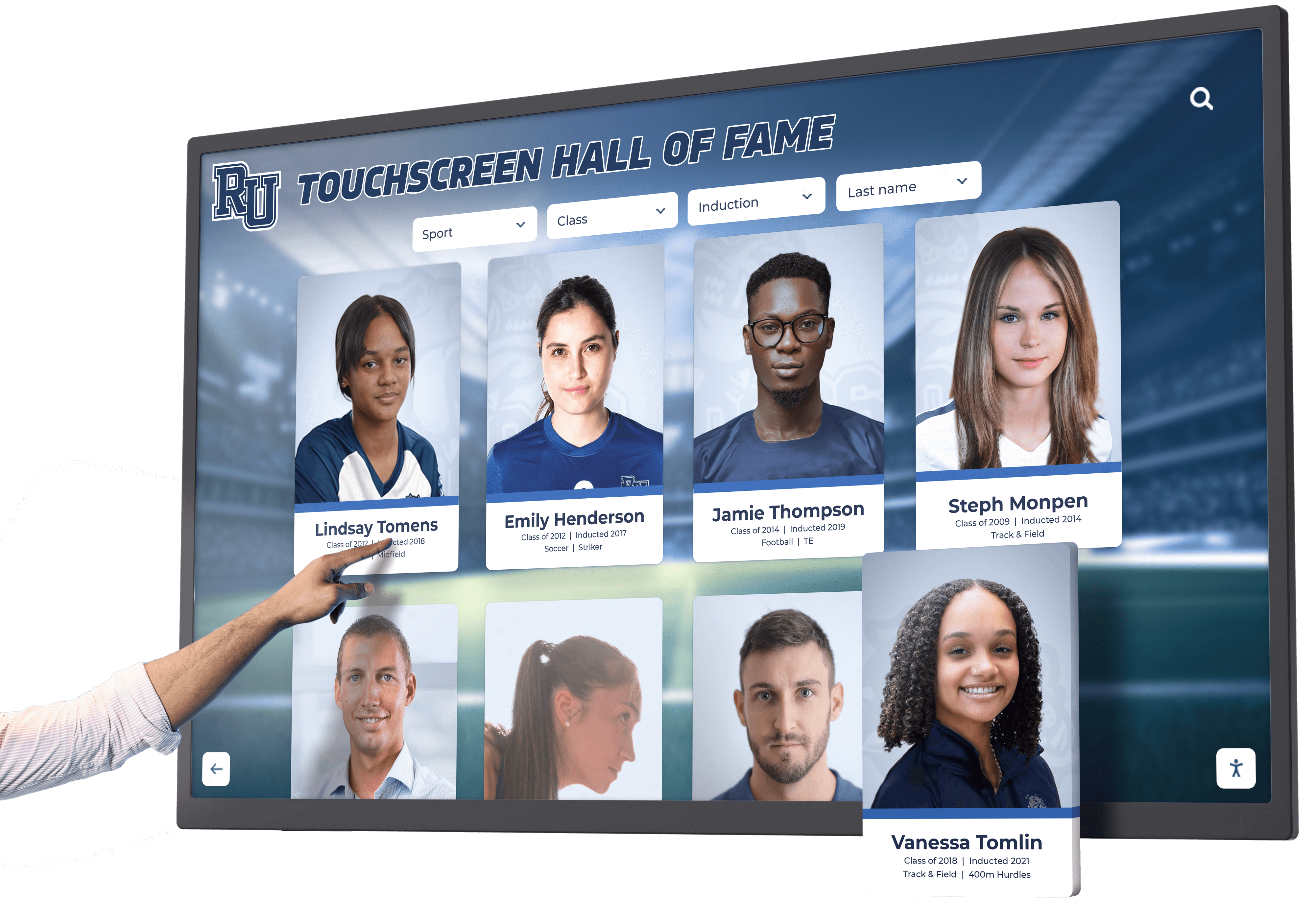
Interactive touchscreen displays enable fans to explore comprehensive player profiles, historical moments, and franchise achievements
Why Professional Baseball Stadiums Need Modern Recognition Technology
Understanding the limitations of traditional recognition methods reveals why forward-thinking sports organizations invest in purpose-built interactive display systems.
The Challenge of Honoring Century-Long Franchise Histories
Professional baseball teams accumulate decades—often over a century—of player achievements, championship victories, and franchise milestones deserving permanent recognition. The Boston Red Sox franchise, established in 1901, has produced hundreds of accomplished players across multiple eras, from Cy Young and Tris Speaker through Carl Yastrzemski and Pedro Martinez to contemporary stars. Traditional recognition approaches struggle to honor this vast achievement comprehensively.
Space Constraints and Physical Limitations
Stadium walls, hallways, and concourses offer finite physical space for plaques, photos, and trophy displays. Even in historic venues with extensive square footage, capacity limitations force difficult decisions about which players, moments, or achievements receive prominent recognition. Retired numbers displayed throughout ballparks represent only the most legendary contributors, while countless accomplished players who shaped franchise success remain underrecognized due to simple space constraints.
Trophy rooms and team halls of fame solve some recognition needs but typically remain accessible only during stadium tours rather than normal game attendance, limiting visibility to dedicated fans rather than casual visitors who might benefit most from discovering franchise history. Physical displays also deteriorate over time—photos fade, plaques tarnish, and static information becomes outdated as active players’ careers evolve and new statistics emerge.
The Modern Fan Experience Gap
Contemporary sports fans—particularly younger demographics—expect interactive digital experiences throughout daily life. Passive viewing of static plaques or printed information feels increasingly outdated compared to smartphone apps, video highlights, and social media content that characterize modern sports consumption. Stadiums that fail to modernize recognition risk creating disconnects between rich franchise histories and audiences who might deeply appreciate that legacy if presented through engaging contemporary formats.
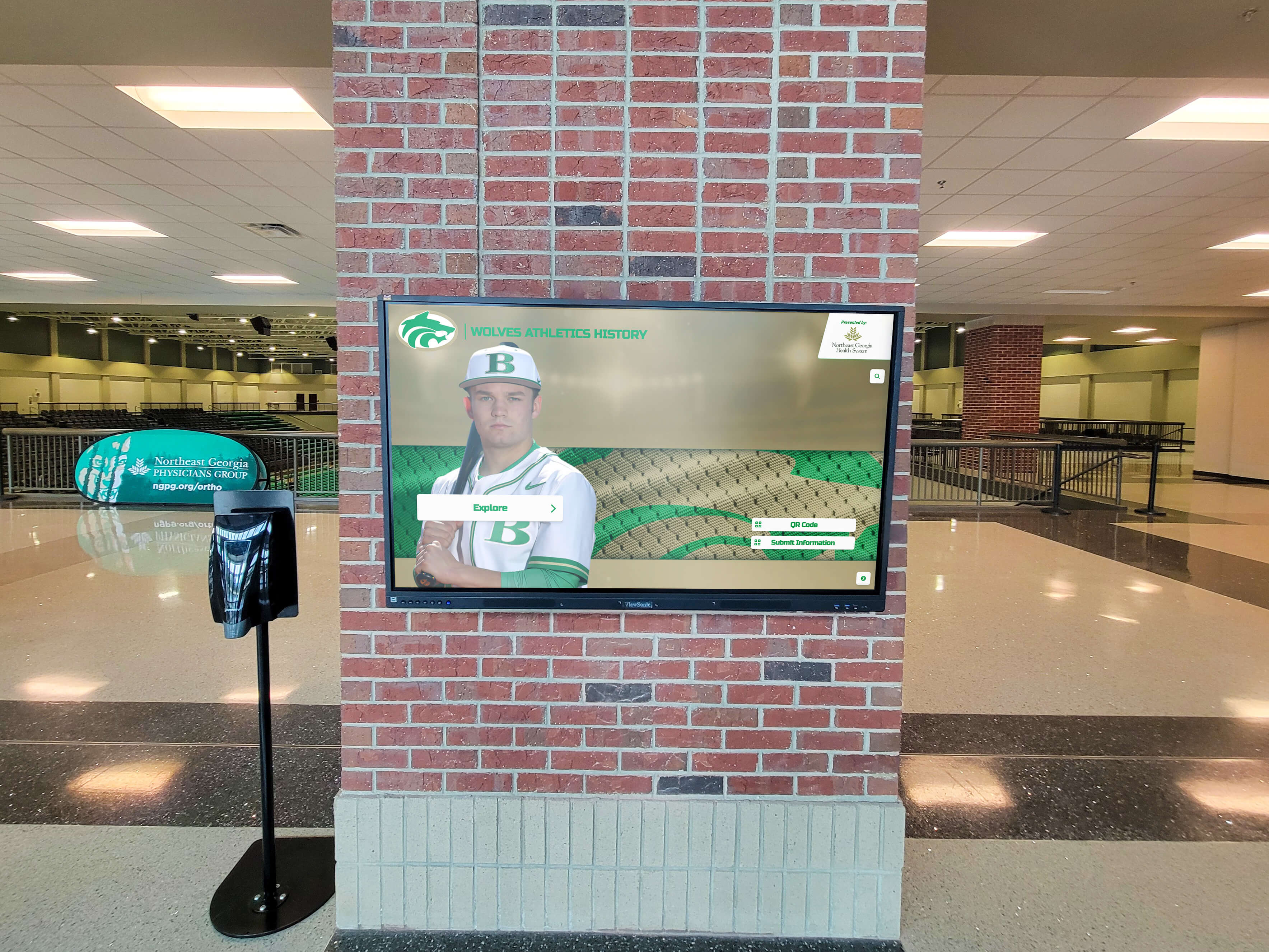
Modern stadium displays combine visual impact with comprehensive content celebrating baseball excellence
Fan Engagement Opportunities Beyond Game Day
Professional sports venues increasingly function as year-round destinations rather than solely game-day facilities. Stadium tours, special events, community gatherings, and corporate functions bring diverse visitors experiencing venues outside traditional game contexts. Interactive recognition technology creates engagement opportunities that traditional displays cannot match.
Stadium Tours and Historical Exploration
Fenway Park’s popular guided tours attract hundreds of thousands of annual visitors eager to experience baseball history firsthand. Interactive touchscreen displays positioned throughout tour routes would enable visitors to explore player profiles deeply, watch highlight reels from championship seasons, discover statistical comparisons across different eras, and learn detailed stories behind iconic moments. This self-directed exploration allows individuals to focus on content matching personal interests rather than following predetermined tour scripts.
Visitors could search for favorite players regardless of era, compare statistical achievements across positions or decades, explore World Series championship teams comprehensively, and share discoveries through social media directly from displays. These personalized experiences create memorable connections with franchise history while generating organic promotion through visitor content sharing.
Pre-Game and Concourse Engagement
Fans arriving early for games or spending time in concourses during innings benefit from compelling content beyond concession stands and merchandise shops. Interactive recognition displays positioned strategically throughout venues create gathering points where fans explore together, discuss favorite players, and share baseball memories—strengthening community atmosphere that defines great stadium experiences.
Parents introduce children to franchise legends they remember from youth, visiting fans discover connections between their favorite teams and Red Sox history, and casual attendees develop deeper appreciation for the franchise through accessible engaging content. This engagement enhances overall game-day experience value beyond the competition itself.
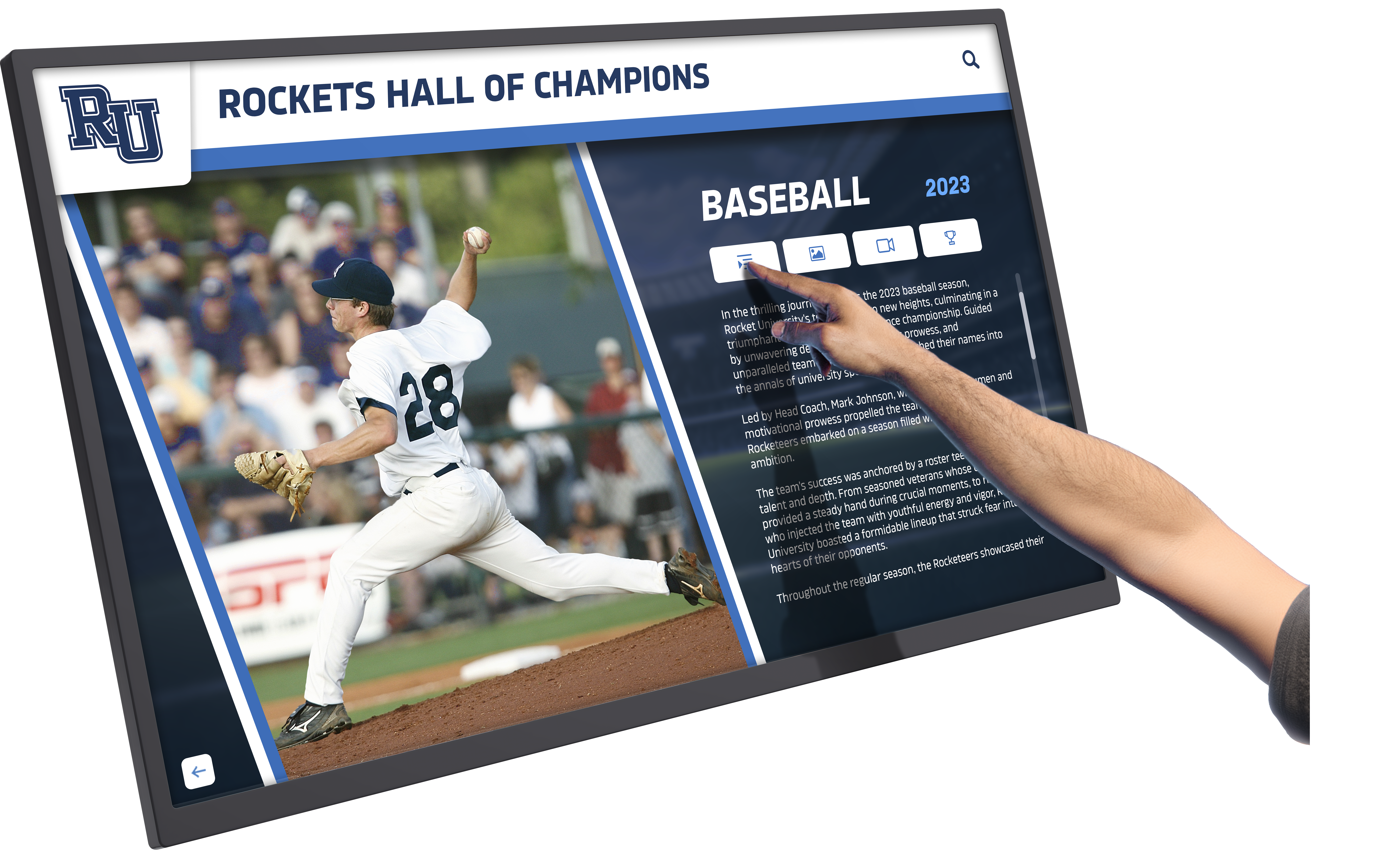
Intuitive touchscreen interfaces enable fans of all ages to explore baseball history independently
Core Capabilities of Interactive Baseball Recognition Systems
Purpose-built recognition platforms designed specifically for athletic achievement deliver capabilities that generic digital signage cannot replicate effectively.
Unlimited Recognition Capacity for Comprehensive Franchise Histories
Unlike physical displays constrained by wall space, digital recognition systems accommodate unlimited player profiles, championship documentation, and historical content without forcing difficult exclusion decisions.
Complete Player Archives
A single interactive display can showcase comprehensive profiles for every significant player in franchise history—from Hall of Fame legends to accomplished contributors whose careers might not warrant individual plaques but collectively define organizational success. Each profile includes career statistics, biographical information, notable achievements, memorable moments captured through photos and video, contemporary news coverage and quotes, and post-playing career information.
This comprehensive approach ensures that recognition extends beyond superstars to honor the depth of talent that sustains successful franchises across generations. Role players, defensive specialists, and fan favorites receive appropriate acknowledgment rather than being forgotten due to limited recognition capacity.
Championship Team Documentation
Every championship season deserves thorough documentation celebrating the complete story behind victory. Interactive systems enable rich multimedia presentations for each title including complete team rosters with individual player contributions, season journey documenting key series and turning points, playoff performance statistics and highlights, coaching staff recognition, and contemporary media coverage preserving historical perspectives.
For franchises like the Red Sox with multiple championships across different eras—from 1903 and 1918 through the 2004 curse-breaking victory and subsequent titles—comprehensive documentation creates accessible archives that newer fans can explore while longtime supporters relive cherished memories.

Searchable player databases enable instant discovery of any athlete regardless of era or position
Rich Multimedia Storytelling Capabilities
Digital platforms transform recognition from simple name-and-statistics listings into immersive experiences that bring baseball history to life through compelling multimedia content.
Video Highlight Integration
The most powerful feature distinguishing digital recognition from traditional plaques involves embedded video content showing athletes in action rather than just describing achievements through text. Fans can watch Ted Williams’ elegant swing, relive David Ortiz’s grand slam in the 2013 ALCS, experience Pedro Martinez’s dominant performances, and discover classic moments from eras predating personal memories—creating emotional connections that static information cannot achieve.
Video content particularly benefits younger fans who never witnessed legendary players firsthand. Reading that Carl Yastrzemski won the Triple Crown in 1967 provides factual information, but watching highlight reels from that season creates appreciation for his exceptional talent that transforms historical knowledge into genuine admiration.
Statistical Visualization and Comparison Tools
Modern fans consume sports through advanced statistics and analytical perspectives. Interactive displays can present traditional counting stats alongside contemporary metrics like WAR, OPS+, and defensive runs saved—providing context that helps audiences understand achievement significance regardless of statistical familiarity levels.
Comparison features enable fascinating historical analysis: How do Mookie Betts’ defensive metrics compare to earlier Red Sox outfielders? Where does David Ortiz rank among franchise power hitters? How did pitching styles evolve across different eras? These exploratory capabilities transform passive recognition into engaging discovery experiences.
Solutions like Rocket Alumni Solutions provide purpose-built platforms combining these multimedia capabilities with intuitive interfaces specifically designed for athletic recognition rather than generic digital signage adapted awkwardly for sports contexts.
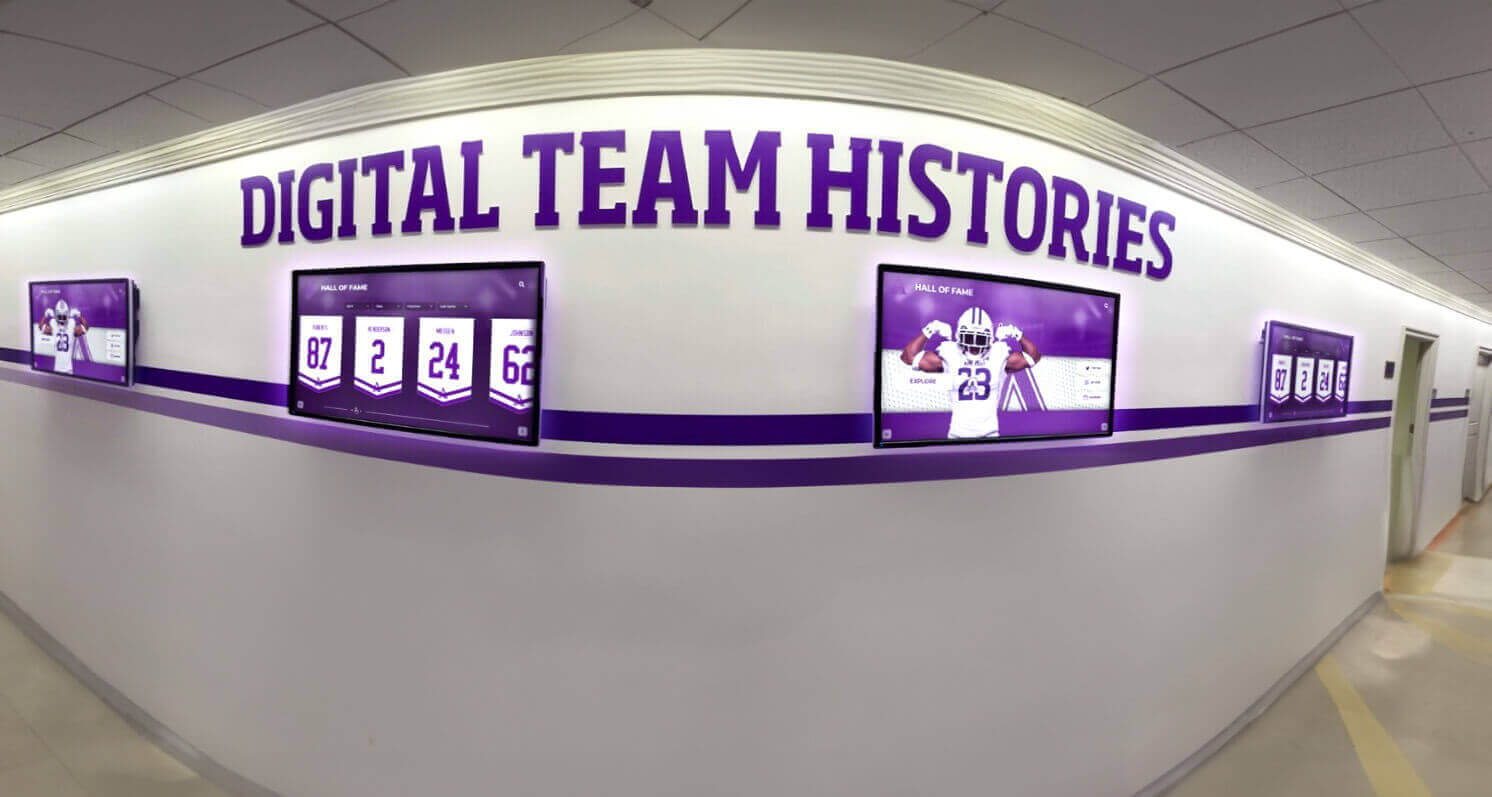
Strategic placement throughout venues ensures comprehensive coverage of team history and achievements
Intuitive User Interfaces for Diverse Audiences
Recognition technology succeeds only when audiences actually engage with content. User-friendly interfaces ensure accessibility across age ranges, technical comfort levels, and baseball knowledge depths.
Simple Navigation and Search
Touchscreen displays should offer multiple discovery pathways accommodating different user preferences. Name search enables finding specific players instantly, position filters help fans explore great shortstops or catchers across franchise history, era selection focuses on particular decades or teams, achievement categories highlight award winners or milestone accomplishments, and random exploration introduces users to players they might not seek intentionally.
These varied navigation options ensure that every visitor—from knowledgeable historians to casual fans—can access content matching their interests and exploration styles.
Accessibility Considerations
Professional venues serve diverse audiences requiring thoughtful accessibility features. Displays should accommodate appropriate mounting heights for wheelchair users, text size adjustments for vision variations, audio descriptions for visually impaired visitors, multiple language options for international audiences, and intuitive gestural controls familiar from smartphone usage.
These inclusive design elements ensure recognition serves entire communities rather than limited demographics, demonstrating organizational commitment to honoring achievement accessibly.
Strategic Implementation Considerations for Professional Stadiums
Successful recognition technology deployment requires systematic planning addressing multiple interconnected factors specific to professional sports venue contexts.
Optimal Placement Throughout Stadium Environments
Interactive displays deliver maximum value when positioned strategically in locations where diverse audiences naturally congregate and where extended engagement feels appropriate.
High-Traffic Concourse Locations
Primary concourses connecting seating sections receive constant foot traffic before games, between innings, and during post-game departures. Displays positioned in these areas capture audiences naturally passing by while creating reasons to arrive early or linger after games exploring content. Multiple installations distributed throughout venues ensure comprehensive coverage rather than limiting recognition to single locations only certain sections access.
Stadium Tour Routes
For venues offering guided tours like Fenway’s popular program, positioning displays along primary tour paths enhances guided experiences while enabling self-directed exploration. Tour guides can reference displays when discussing specific players or eras, then allow time for visitors to explore independently according to personal interests.
Premium Spaces and Hospitality Areas
Club spaces, suite levels, and premium hospitality areas host visitors with particular appreciation for franchise history and achievement. Interactive recognition displays in these environments demonstrate organizational commitment to excellence while providing compelling content that enhances premium experience value. Corporate guests and season ticket holders especially appreciate these touches that differentiate premium areas beyond simply better sight lines.
Entry Plazas and Exterior Installations
Weather-protected exterior displays welcome visitors before entering venues, building anticipation while celebrating the franchise legacy fans are joining. These prominent installations make immediate statements about organizational values and create distinctive visual identities for venues—imagine approaching Fenway Park and encountering impressive interactive displays celebrating Red Sox legends as you near Yawkey Way.
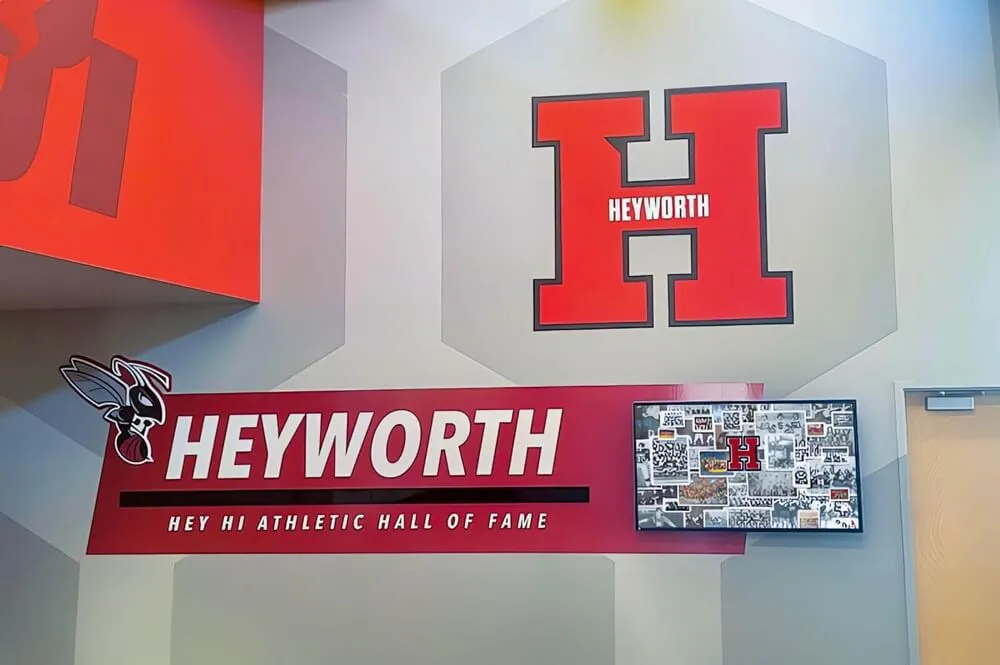
Professional installations demonstrate organizational commitment to celebrating athletic excellence permanently
Content Development and Historical Documentation
Comprehensive recognition requires systematic content gathering, historical research, and ongoing documentation ensuring accuracy and completeness across franchise histories spanning decades or centuries.
Historical Research and Archive Development
Franchises with long histories must conduct thorough research documenting achievements across all eras. This involves reviewing organizational archives and record books, researching contemporary newspaper coverage from different decades, consulting team historians and longtime employees, interviewing former players and coaches when possible, digitizing historical photos and footage from obsolete formats, and verifying statistical information through multiple authoritative sources.
This research often reveals compelling stories beyond well-known legends—discovering accomplished players who’ve been underrecognized, uncovering fascinating biographical details, and preserving perspectives from eras that might otherwise fade from collective memory.
Multimedia Content Production
Beyond gathering existing materials, comprehensive displays benefit from original content creation including video compilation editing highlight reels from archived footage, documentary-style productions exploring significant franchise moments, contemporary interviews with alumni reflecting on careers, statistical visualization graphics presenting information engagingly, and photography capturing current recognition installations and events.
Professional production quality matters—content representing prestigious franchises should match broadcast standards audiences expect from major sports organizations rather than appearing amateurish or incomplete.
Resources exploring digital storytelling for athletic programs provide frameworks applicable to professional sports contexts despite educational focus.
Technology Platform Selection and Integration
Choosing appropriate recognition platforms significantly impacts long-term satisfaction, maintenance requirements, and capability to achieve recognition objectives.
Purpose-Built vs. Generic Digital Signage
Generic digital signage systems designed for advertising or wayfinding lack features specifically supporting athletic recognition. Purpose-built platforms like those from Rocket Alumni Solutions offer dedicated functionality including sports-specific content templates, athlete profile structures, statistical integration capabilities, achievement taxonomies organized for sports contexts, and intuitive content management designed for athletic department workflows rather than requiring technical expertise.
While generic signage might appear less expensive initially, hidden costs emerge through customization requirements, ongoing technical support needs, and limitations preventing full recognition vision realization. Purpose-built systems deliver superior long-term value through specialized capabilities and streamlined operations.
Cloud-Based Management Benefits
Modern recognition platforms operate through cloud-based content management systems enabling updates from any internet-connected device without requiring physical display access. This proves particularly valuable for professional organizations where content administrators may work remotely or across multiple venues, where frequent updates reflect evolving player careers and statistics, where seasonal content rotations maintain fresh relevant displays, and where emergency updates respond to breaking news or unexpected events.
Cloud platforms also provide automatic backups preventing content loss, version history enabling error recovery, multi-user permissions allowing appropriate access levels, and centralized management for organizations operating multiple facilities or teams.
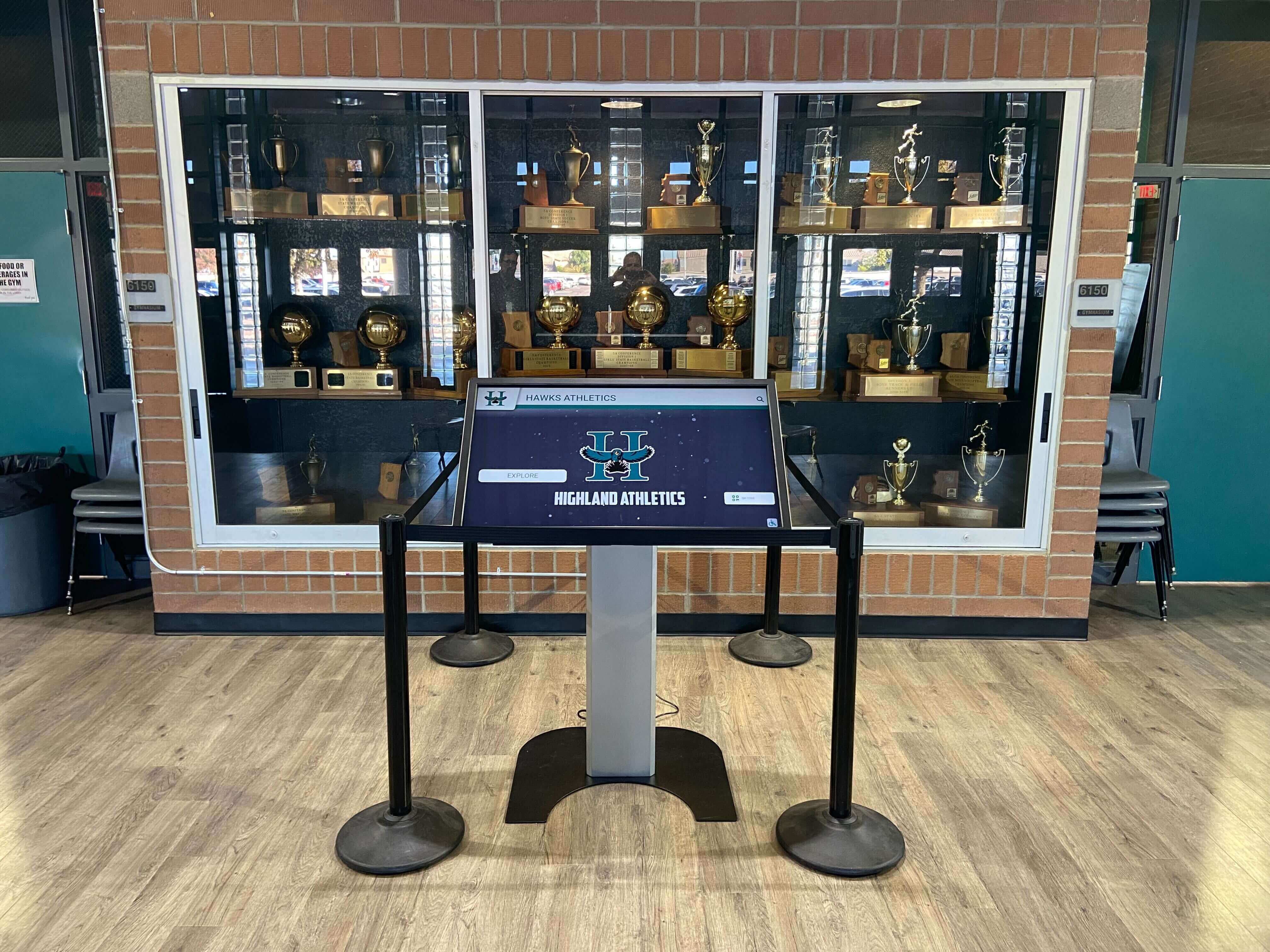
Kiosk installations provide dedicated recognition stations becoming destination experiences within venues
Beyond Professional Stadiums: Recognition Applications Across Athletic Contexts
While professional venues like Fenway Park represent high-profile applications, interactive recognition technology delivers value across diverse athletic contexts from colleges to high schools.
College Athletics and Professional Alumni Recognition
University athletic programs that produce professional athletes gain significant recruiting and prestige advantages by prominently recognizing alumni careers. Interactive displays showcasing former players who reached professional levels provide tangible evidence of program quality that resonates powerfully with prospective student-athletes and their families.
Comprehensive profiles documenting college careers alongside professional achievements create complete narratives showing development pathways. Resources about NFL hall of fames explore similar concepts applicable across professional sports contexts including baseball, basketball, and others.
High School Programs Building Athletic Traditions
High schools that produced professional or college athletes possess powerful recognition opportunities connecting current students to inspiring achievement examples. Local legends who reached professional baseball provide more relatable inspiration than distant superstars—when students understand that someone from their specific school achieved athletic excellence at the highest levels, abstract dreams become tangible possibilities.
Recognition programs celebrating these alumni strengthen community pride while demonstrating that pathways to athletic success exist from every starting point regardless of school size or resources. Guides about state championships display systems explore recognition approaches applicable across achievement levels.
Youth Organizations and Community Baseball Programs
Amateur baseball organizations, travel team programs, and community leagues also benefit from recognition systems celebrating participant achievements, documenting team histories, and building organizational cultures around excellence pursuit. Interactive displays scaled appropriately for amateur contexts make professional-quality recognition accessible at every competitive level.
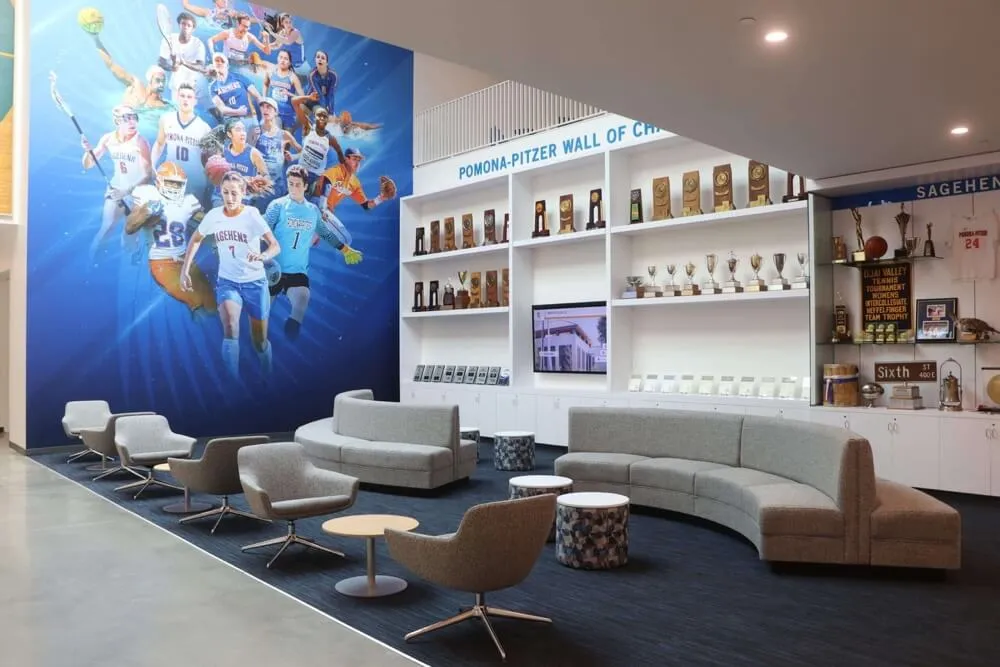
Comprehensive recognition environments combine multiple elements celebrating athletic achievement holistically
The Future of Stadium Recognition Technology
Emerging technologies promise even more sophisticated recognition capabilities as interactive display systems continue evolving.
Artificial Intelligence and Personalized Experiences
Future recognition systems may leverage AI to create personalized experiences based on user preferences and behaviors. Displays could recognize season ticket holders through mobile app integration, suggesting content matching viewing history, highlighting players who performed in games attended, or connecting users with alumni sharing hometowns or colleges.
These personalized approaches deepen engagement by making vast content archives feel curated specifically for individual visitors rather than overwhelming audiences with generic presentations of complete franchise histories.
Augmented Reality Integration
AR technologies could overlay historical information onto physical stadium locations—pointing smartphones at specific seats could reveal famous moments that occurred in those sections, viewing the field through AR could show legendary plays replayed at actual locations, and exploring stadiums could unlock historical content tied to physical spaces throughout venues.
These immersive experiences would transform stadium visits into comprehensive educational experiences beyond simply attending games.
Social Integration and User-Generated Content
Advanced platforms might enable fans to contribute personal stories, photos from attended games, or memories connected to specific players—creating community-driven recognition complementing official franchise content. This participatory approach strengthens emotional connections while generating authentic content that resonates particularly powerfully with other fans.
Implementing Interactive Recognition: Practical Considerations
Organizations considering recognition technology deployment should address several practical factors ensuring successful implementations and long-term satisfaction.
Budget Planning and Investment Justification
Interactive recognition systems represent significant investments requiring careful financial planning. Typical installations range from $15,000-$50,000 per display depending on screen size, features, installation complexity, and content development requirements. Comprehensive venue-wide implementations with multiple displays, extensive content development, and custom integration naturally cost considerably more.
However, recognition technology delivers value extending far beyond initial investment through enhanced fan experiences increasing attendance and engagement, premium hospitality differentiation justifying higher ticket prices, merchandise and concession revenue from fans spending more time in venues, positive brand reputation demonstrating organizational commitment to honoring achievement, and alumni engagement creating connections that often translate into financial support.
Many organizations fund recognition projects through booster club campaigns, alumni fundraising, corporate sponsorships, or capital improvement budgets rather than operating expenses—recognizing these as long-term infrastructure investments similar to seating or facility upgrades.
Vendor Selection and Partnership Considerations
Choosing recognition technology partners significantly impacts project success and ongoing satisfaction. Organizations should evaluate vendors based on sports-specific expertise and relevant portfolio examples, implementation support including installation, training, and content development assistance, ongoing technical support and maintenance services, platform capabilities matching specific recognition objectives, financial stability ensuring long-term platform availability, and customer references from similar organizations.
Rocket Alumni Solutions specializes in comprehensive recognition systems specifically designed for athletic contexts, providing turnkey implementations that minimize organizational burden while ensuring professional results that honor achievements appropriately.
Ongoing Operations and Content Management
Recognition technology succeeds long-term only through sustainable operational processes ensuring content remains current, accurate, and engaging. Organizations should designate clear responsibility for content management and updates, establish regular review schedules ensuring accuracy, develop workflows for adding new content as careers progress, plan periodic content refreshes maintaining contemporary appeal, and monitor analytics revealing engagement patterns informing content strategy.
The most successful recognition programs integrate these operational requirements into existing workflows rather than treating them as separate burdensome additions requiring extensive additional resources.
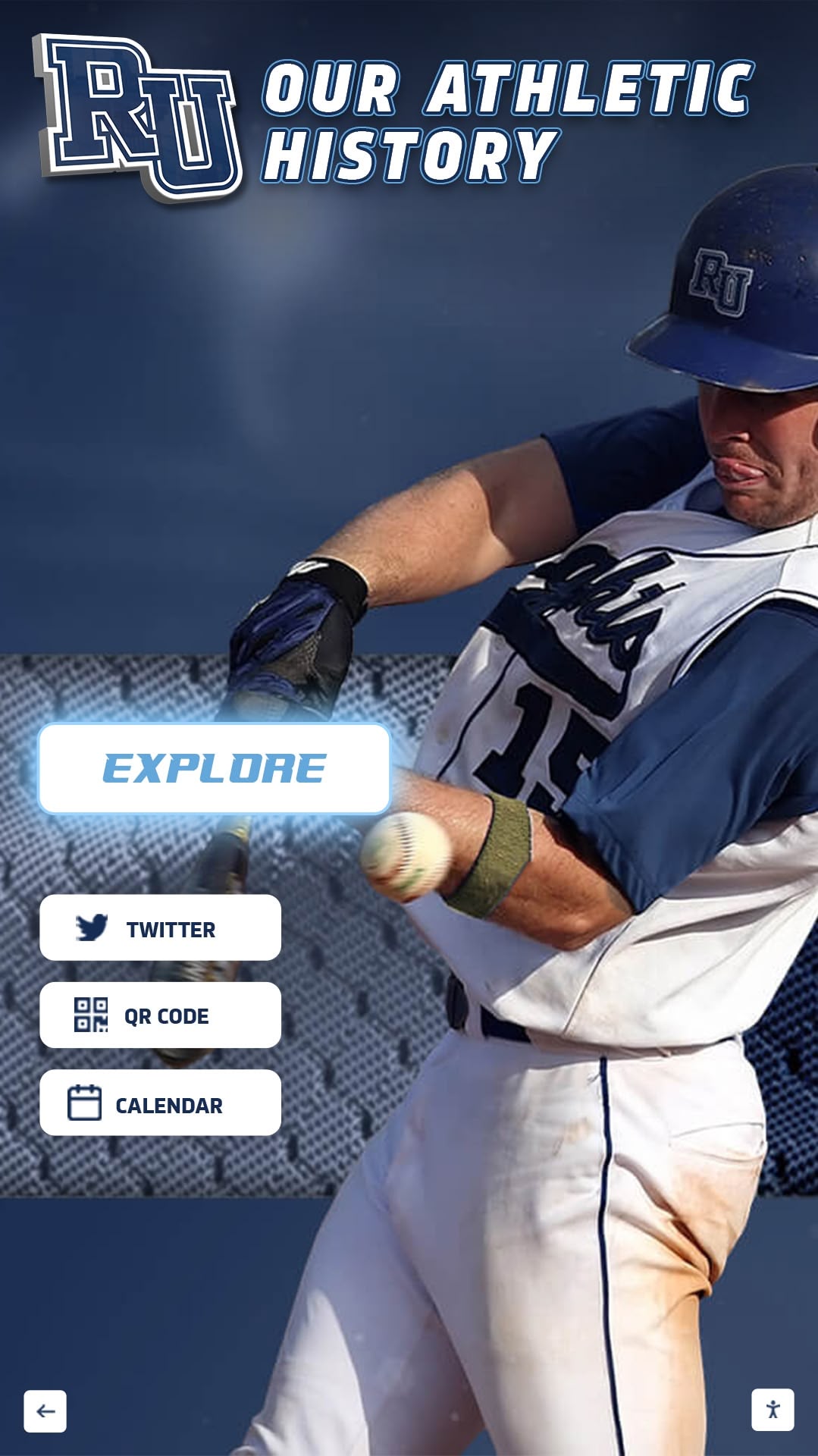
High-quality visuals and professional presentation honor athletic achievement appropriately
Conclusion: Transforming How Professional Sports Honor Excellence
Interactive touchscreen recognition technology represents transformational advancement in how professional sports stadiums celebrate athletic achievement, preserve franchise history, and engage modern audiences expecting immersive digital experiences. While iconic venues like Fenway Park currently rely primarily on traditional recognition methods and broadcast-focused display technology, purpose-built interactive systems would unlock compelling capabilities that static plaques and generic signage simply cannot replicate.
From unlimited capacity accommodating century-long franchise histories through rich multimedia storytelling that brings legendary moments to life, from intuitive interfaces enabling fans of all ages to explore independently through strategic placement creating engagement throughout venue environments—comprehensive recognition systems address longstanding challenges while creating experiences that modern audiences value deeply.
As professional sports organizations increasingly recognize that stadiums function as year-round destinations rather than solely game-day facilities, investments in recognition technology deliver returns extending far beyond initial costs. Enhanced fan experiences, differentiated premium hospitality, strengthened alumni connections, and positive organizational reputation all flow from commitment to honoring achievement appropriately through modern technology matching the significance of athletic excellence being celebrated.
Whether implemented at historic venues rich with championship tradition or contemporary stadiums building new legacies, interactive recognition displays transform how professional baseball—and all professional sports—connect current audiences with the legendary athletes whose achievements built foundations for ongoing success. The question facing forward-thinking organizations isn’t whether to invest in modern recognition technology, but rather how quickly to implement systems that honor the past while engaging present and future generations of fans who will carry sporting traditions forward.
Ready to Transform Your Athletic Recognition Program?
Discover how Rocket Alumni Solutions can help you create engaging interactive displays that honor achievement, preserve history, and create memorable experiences for fans, athletes, and communities.
Schedule Your Free Consultation






























