The foyer is where first impressions form, where visitors transition from outside to inside, where community members pause before proceeding. For schools, universities, nonprofits, and community organizations, these threshold spaces carry extraordinary significance—they communicate institutional values, showcase accomplishments, and set the tone for every experience that follows.
A thoughtfully designed institutional foyer does far more than simply direct foot traffic. It welcomes visitors with warmth, celebrates achievement with pride, tells stories that connect past to present, and creates an immediate sense of belonging. Yet many institutions struggle with foyer spaces that feel cold, outdated, or disconnected from the vibrant communities they serve. Cluttered bulletin boards, outdated signage, and forgotten trophy cases fail to capture organizational character or engage the people who pass through daily.
The challenge intensifies as institutions recognize that physical spaces directly impact engagement, pride, and the emotional connections that drive participation, support, and loyalty. Creating foyer spaces that genuinely welcome diverse audiences—students, alumni, donors, prospective families, community members—requires strategic thinking about design, technology, storytelling, and authentic celebration of collective identity.
This comprehensive guide explores proven foyer design ideas that transform underutilized entrance spaces into engaging environments where communities gather, achievements receive recognition, and institutional character finds clear expression. Whether renovating a grand entrance hall, refreshing a modest lobby, or reimagining a high-traffic corridor that serves as your de facto foyer, you’ll discover practical strategies for creating welcoming spaces that strengthen connections while showcasing your organization’s unique legacy.
Throughout this guide, we’ll examine design principles that apply across institutional types, explore specific elements ranging from architectural features to digital technology, and provide implementation guidance addressing real-world constraints around budget, space, and ongoing maintenance. You’ll learn how successful institutions balance tradition with innovation, permanence with flexibility, and aesthetic appeal with practical functionality.
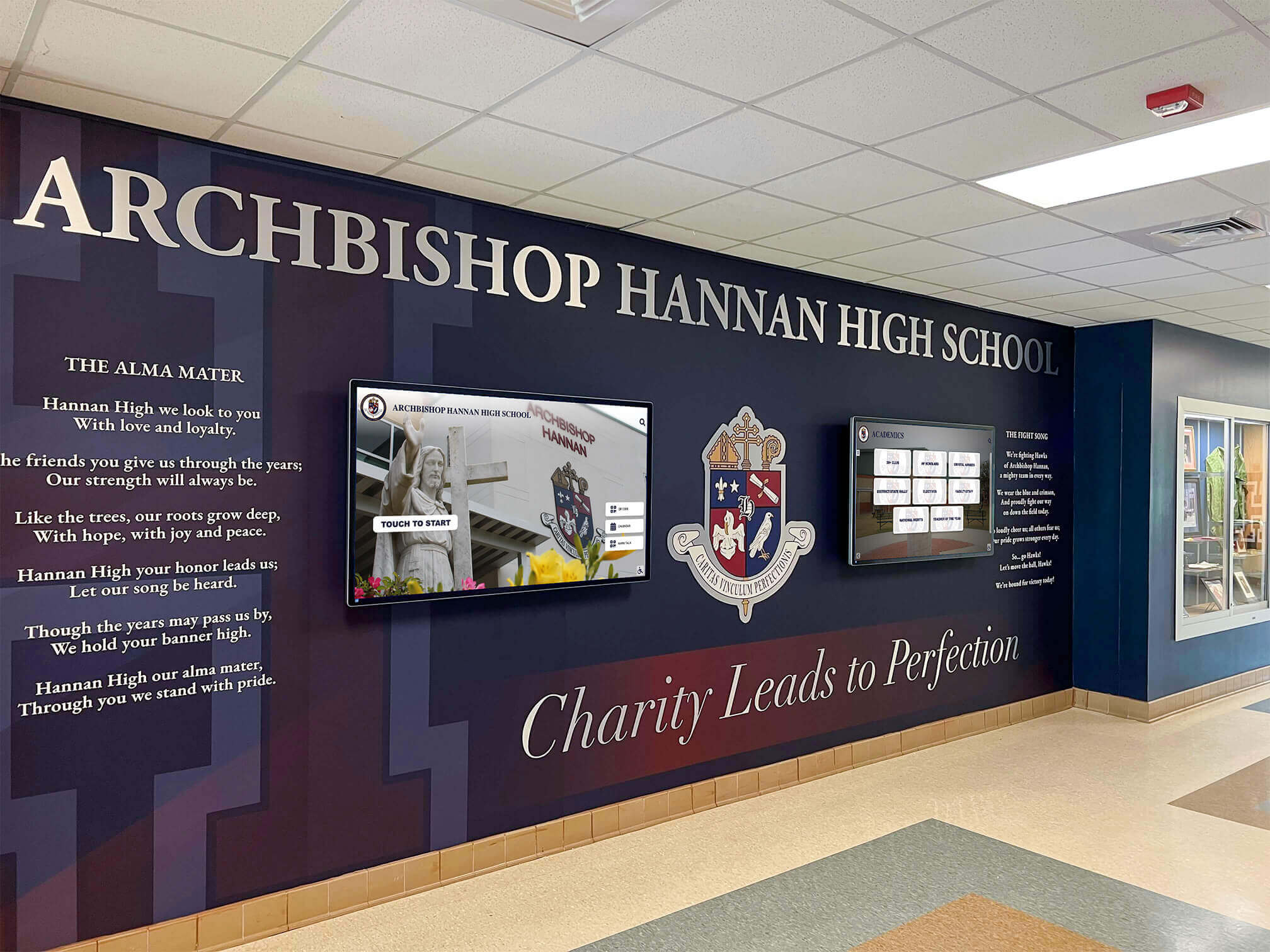
Successful foyer design combines visual impact with functional elements that engage visitors from the moment they enter
Understanding Institutional Foyer Functions
Before exploring specific design approaches, understanding how institutional foyers differ from residential or commercial entrances helps guide design decisions that serve organizational objectives.
Multiple Purposes Beyond Circulation
Residential foyers primarily manage traffic flow between exterior and interior spaces. Institutional foyers must accomplish far more—they serve as orientation spaces where visitors determine where to go next, recognition venues celebrating organizational achievements and community members, gathering areas enabling informal conversations and connections, brand communication zones establishing immediate organizational identity, and educational resources conveying institutional history and values.
This functional complexity means effective institutional foyer design requires deliberate planning rather than treating the space as mere circulation infrastructure. Each design element should serve at least one of these core purposes, with the most successful features accomplishing multiple functions simultaneously.
Diverse Audience Considerations
Unlike commercial spaces designed primarily for customers or residential foyers welcoming personal guests, institutional foyers must serve remarkably diverse audiences with different needs and expectations. Daily community members—students, staff, members—pass through repeatedly and require spaces that remain engaging despite constant exposure. First-time visitors need immediate clarity about navigation and organizational character without overwhelming complexity.
Alumni and former members seek recognition of their connection and memories of their time in the organization. Prospective families evaluate institutional quality based partly on first impressions from entry spaces. Donors and supporters look for evidence of appropriate stewardship and organizational vitality. Community partners assess whether spaces feel welcoming to external collaborators.
This audience diversity requires foyer designs that work effectively for everyone simultaneously—providing wayfinding clarity for newcomers while maintaining interest for familiar faces, honoring tradition while demonstrating contemporary relevance, celebrating individual achievements while reinforcing collective identity.
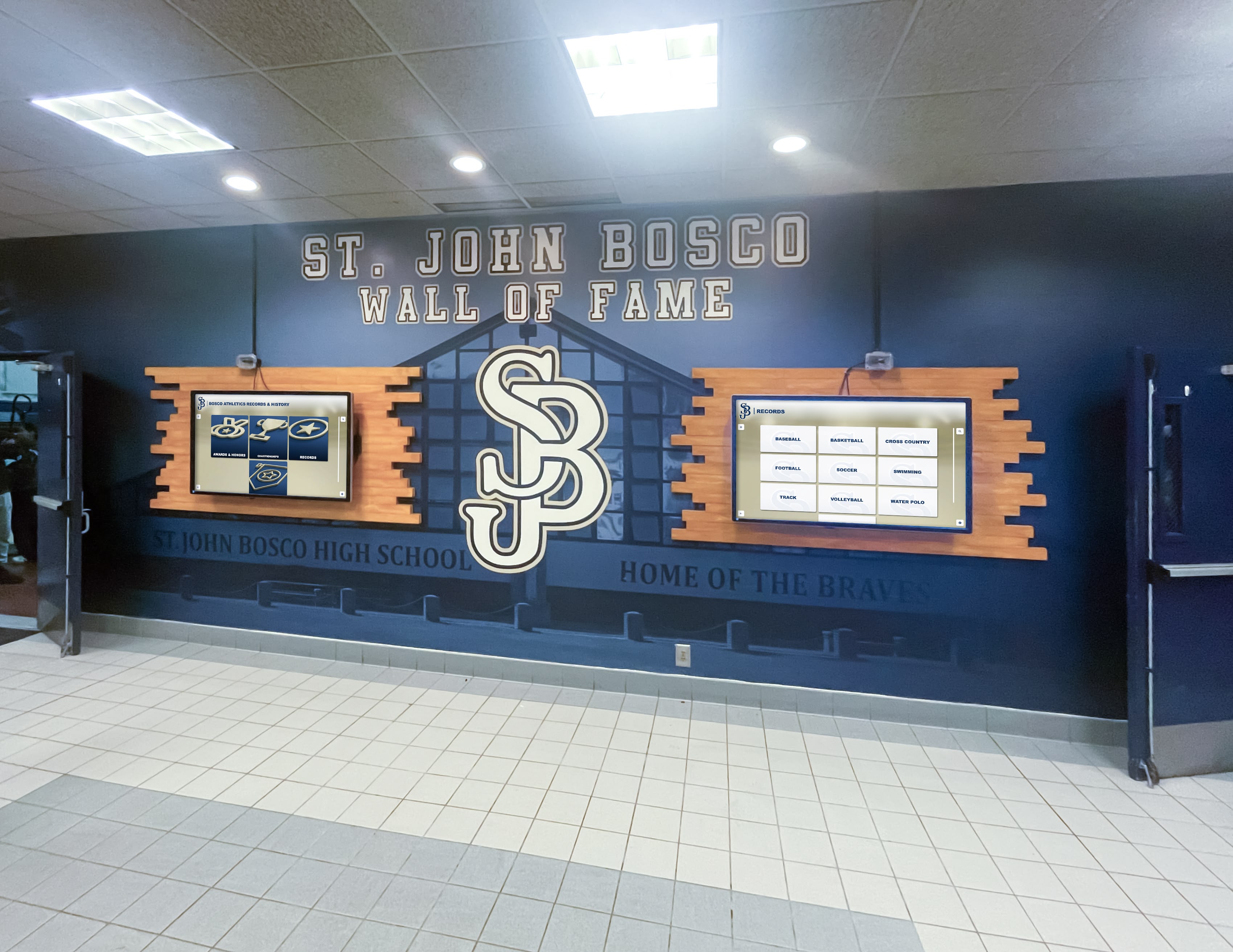
Effective foyer design serves diverse audiences from first-time visitors to daily community members
Setting Organizational Tone
The foyer establishes immediate expectations about organizational character, values, and culture. Well-designed entry spaces communicate whether institutions feel formal or casual, traditional or innovative, student-centered or achievement-focused, welcoming or exclusive. These implicit messages form within seconds of entry, often before conscious evaluation begins.
Design choices carry meaning whether intentional or not. Trophy cases suggest competitive excellence but risk feeling exclusive if dominated by elite achievement. Donor recognition walls demonstrate fundraising success but might feel transactional without proper context. Contemporary digital displays signal innovation and investment but may alienate traditionalists if implemented without respect for heritage.
The most effective institutional foyers deliberately craft the tone they wish to convey rather than allowing it to emerge accidentally through accumulated decisions. This intentionality requires clarity about organizational identity and the first impression that authentically represents institutional character.
Core Design Principles for Institutional Foyers
Several fundamental principles guide successful foyer design across diverse institutional contexts and architectural styles.
Balance Openness with Purpose
Institutional foyers should feel open and welcoming without appearing empty or purposeless. Visitors should experience immediate spatial clarity—understanding where they are, recognizing navigation options, identifying help resources if needed. However, empty spaces with minimal design elements risk feeling cold or suggesting organizational decline rather than intentional minimalism.
The balance comes from combining clear sightlines and unobstructed circulation paths with deliberate focal points that draw attention and provide visual interest. Recognition displays, donor walls, mission statements, or architectural features create these intentional focus areas while maintaining adequate circulation space around them.
Avoid the common mistake of treating foyer walls as bulletin boards where every department competes for visibility. This approach creates visual chaos that overwhelms visitors rather than welcoming them. Instead, establish clear hierarchy with primary focal points receiving prominent placement while secondary information occupies designated areas that don’t compete with the main visual narrative.
Honor Heritage While Embracing Innovation
Many institutions struggle with tension between preserving tradition and demonstrating contemporary relevance. Foyer design presents opportunities to resolve this tension by thoughtfully combining historical recognition with modern approaches.
Historical elements might include archival photographs showing organizational evolution, preserved artifacts from founding eras, traditional architectural details reflecting historical character, recognition of founders and early leaders, or displays documenting institutional milestones across decades. These elements communicate continuity, acknowledge the foundation upon which current success builds, and honor those who came before.
Contemporary elements demonstrate ongoing vitality through digital recognition displays showing current achievements, modern materials and design aesthetics, technology enabling interactive exploration, real-time information about current activities, and visual branding reflecting contemporary organizational identity.
The most successful foyers integrate these elements coherently rather than creating jarring juxtapositions between “old” and “new” sections. For example, digital donor walls can celebrate both historical benefactors and current supporters in unified presentations that honor heritage while demonstrating continued philanthropic engagement.
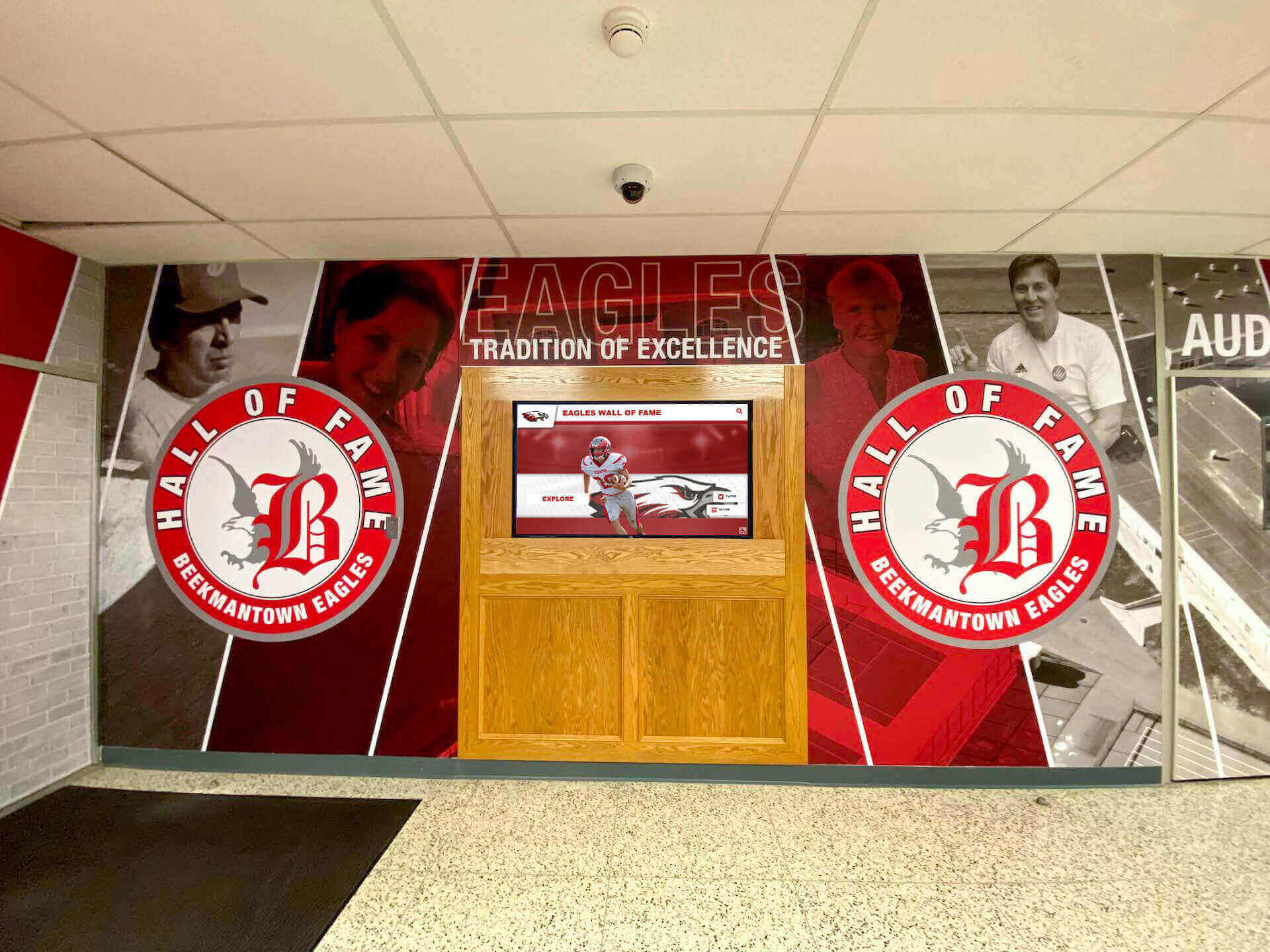
Thoughtful design honors institutional tradition while incorporating contemporary elements that demonstrate ongoing vitality
Create Clear Visual Hierarchy
Effective foyer design establishes clear hierarchy directing attention to the most important elements first, then guiding discovery of secondary information. Without intentional hierarchy, every element competes equally for attention, resulting in visual chaos where nothing stands out.
Primary elements deserve the most prominent positioning and largest scale. These might include institutional name and logo, mission or values statements, major recognition displays, or architectural focal points. Visitors should notice these elements immediately upon entry without searching.
Secondary elements provide important information but shouldn’t compete with primary focal points. These might include directional wayfinding, event announcements, program information, or specific achievement recognition. Strategic positioning around primary elements ensures visibility without creating competition.
Tertiary elements supply detailed information for interested visitors but shouldn’t clutter the visual narrative. These might include detailed directories, policy notices, or granular program descriptions. Placing these elements in designated zones—information kiosks, side corridors, reception areas—keeps them accessible without overwhelming entry experiences.
Incorporate Dynamic Elements
Static foyer designs risk becoming invisible to daily community members who pass through repeatedly. Incorporating dynamic elements that change periodically maintains engagement even for familiar audiences.
Dynamic content might include rotating recognition spotlights featuring different community members monthly, digital displays showing current activities and upcoming events, seasonal decorations reflecting academic calendars or organizational cycles, student or member artwork refreshed periodically, or achievement updates celebrating recent successes.
These changing elements give community members reasons to notice the foyer even after hundreds of passages, while also demonstrating organizational vitality to visitors. Solutions like digital signage content management make it practical to maintain fresh content without extensive staff effort.
Ten Essential Foyer Design Ideas for Institutions
These proven concepts can be implemented individually or combined to create comprehensive entrance environments suited to various organizational contexts and budgets.
1. Interactive Digital Recognition Walls
Commercial-grade touchscreen displays transform institutional recognition from static plaques to engaging, explorable experiences that honor unlimited numbers of community members without physical space constraints.
Transformative Capabilities:
- Unlimited recognition capacity allowing comprehensive community celebration
- Rich multimedia storytelling through photographs, videos, and detailed biographies
- Intuitive search and browse functions helping visitors discover specific individuals
- Instant content updates maintaining current, accurate information
- Web accessibility extending recognition globally to distant community members
Interactive displays excel at combining multiple institutional needs in single installations. The same screen that showcases donor recognition can also present alumni achievements, student honors, staff recognition, and institutional history—all organized through intuitive navigation that lets each visitor explore content relevant to their specific interests.
For schools, these systems can celebrate athletic achievements, academic excellence, artistic accomplishments, and community service within unified platforms. Nonprofits can honor donors, volunteers, program participants, and community partners. Universities can showcase distinguished alumni, faculty research, student achievements, and institutional milestones.
Solutions like Rocket Alumni Solutions provide comprehensive digital recognition ecosystems purpose-built for institutional environments, combining commercial-grade hardware rated for continuous operation, intuitive content management enabling non-technical staff to maintain current information, and responsive web platforms extending recognition beyond physical locations.
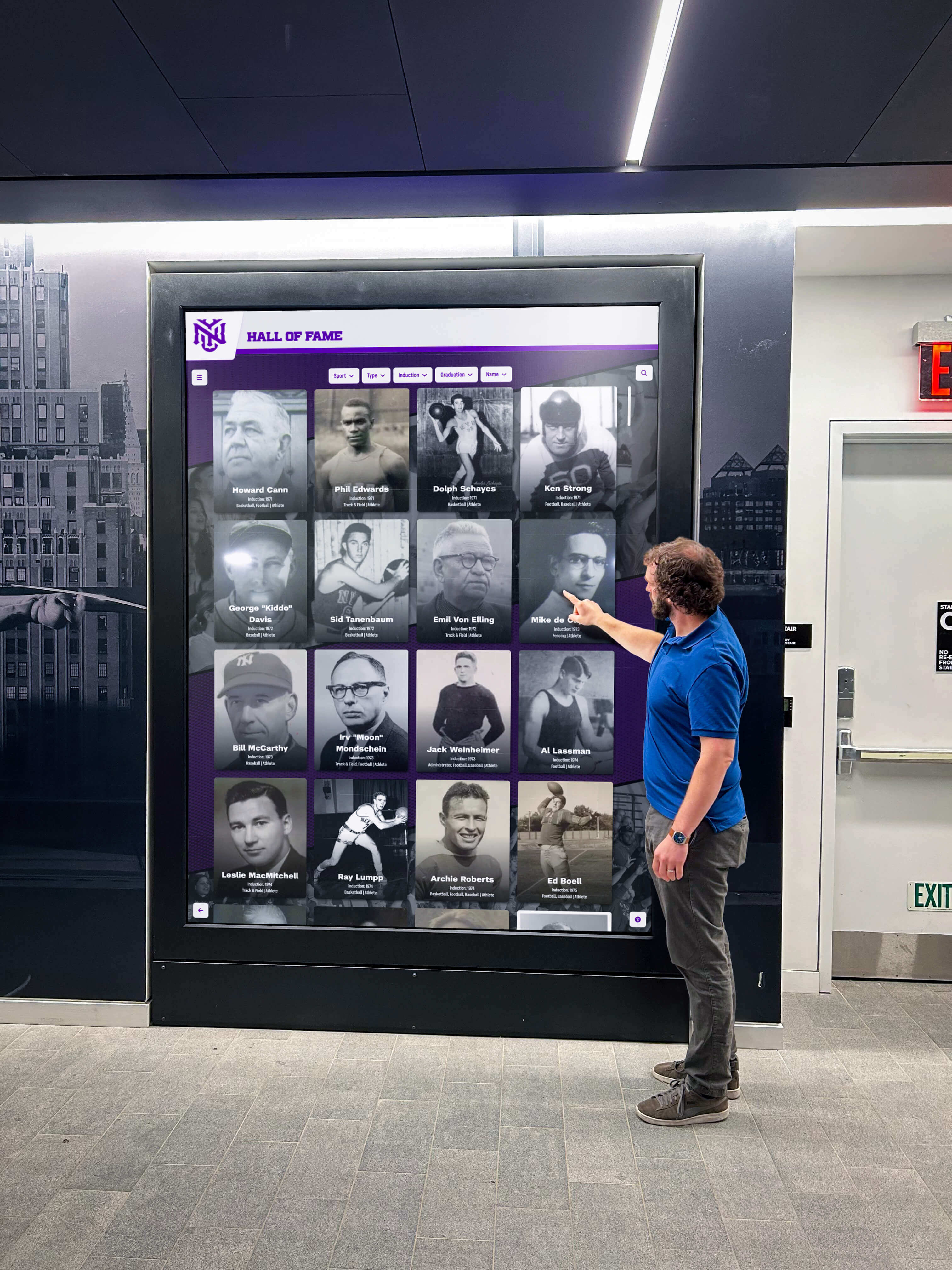
Interactive displays invite active exploration rather than passive viewing, creating memorable engagement with institutional recognition
Implementation Considerations:
Budget: Initial investments typically range $10,000-$35,000 depending on display size (43"-75" commercial screens), mounting complexity, and content development needs. Annual software subscriptions generally cost $2,000-$5,000. While higher than traditional plaques initially, digital systems eliminate per-person incremental costs that make traditional recognition increasingly expensive as honoree populations grow.
Location: Position displays in high-visibility areas where visitors naturally pause rather than rapid circulation paths. Ensure adequate space for 2-3 people to comfortably interact simultaneously without blocking traffic flow. Consider lighting carefully—avoid positions where windows create glare that makes screens difficult to view.
Content Development: Plan adequate time and resources for initial content creation. Gathering historical information, securing quality photographs, and developing biographical profiles requires substantial effort. Many institutions underestimate this phase, then struggle with impressive hardware displaying sparse content.
Best For: Institutions committed to comprehensive recognition programs; organizations with growing populations exceeding practical traditional display capacity; communities valuing storytelling and engagement over purely memorial functions; organizations with some technical capability for content management.
2. Heritage Timeline Installations
Chronological displays visualizing organizational history create compelling narratives showing institutional evolution from founding through present day.
Timeline Design Approaches:
- Horizontal wall-length installations showing decade-by-decade progression
- Vertical timelines rising from floor to ceiling emphasizing upward growth
- Digital scrolling timelines enabling deep exploration of extensive histories
- Integrated architectural timelines incorporated into structural elements
- Hybrid physical-digital combinations presenting artifacts alongside contextual information
Effective timeline designs balance historical depth with visual clarity. Rather than attempting comprehensive documentation of every year, successful timelines identify pivotal moments, transformative eras, and representative achievements that collectively tell coherent stories about organizational development.
For schools, timeline milestones might include founding and early years, facility expansions and campus development, academic program additions, championship seasons, distinguished alumni achievements, community impact initiatives, and technological innovations. For nonprofits, timelines might showcase founding mission and early programs, service milestone achievements, geographic expansion, major campaigns, partnership developments, and program evolution responding to changing community needs.
Heritage timelines particularly resonate during milestone anniversary celebrations—centennial events or significant founding anniversaries—when communities naturally focus on reflecting about organizational journeys.
Best For: Institutions with substantial history worth celebrating; organizations marking significant anniversaries; communities whose historical context helps explain current character; institutions where understanding heritage builds pride and connection.
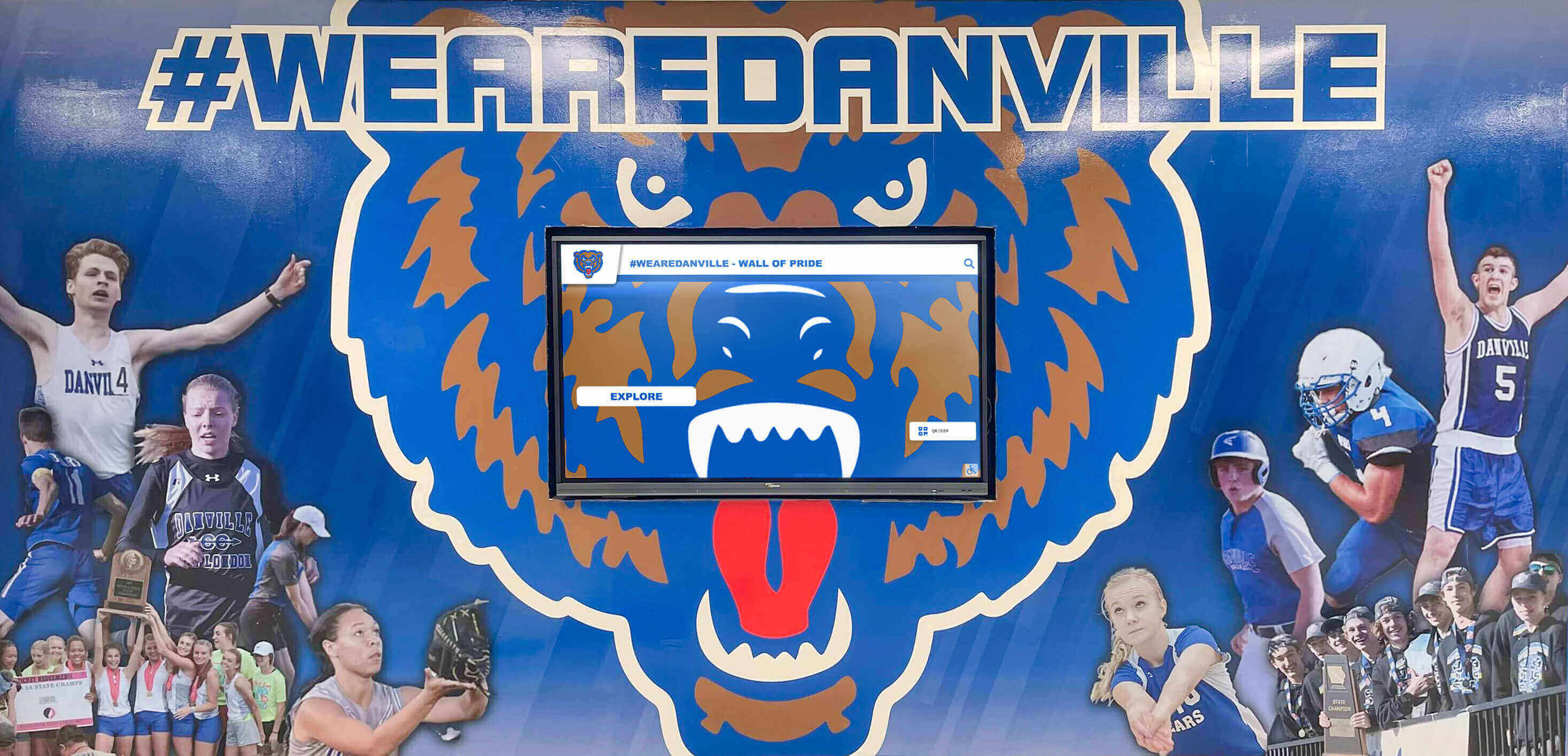
Heritage timelines connect past achievements to present community while documenting organizational evolution
3. Mission and Values Statement Displays
Prominent presentation of core mission and values establishes immediate clarity about organizational purpose and character.
Effective Mission Display Elements:
- Clear, concise mission statements avoiding jargon or complexity
- Visual representation through imagery reflecting stated values
- Supporting text explaining how missions translate to daily practice
- Stories demonstrating values in action through specific examples
- Connection between stated mission and visible organizational achievements
Mission displays work best when they feel authentic rather than obligatory. Rather than relegating mission statements to small plaques visitors ignore, successful institutions make mission central to foyer design—using scale, positioning, materials, and visual treatment that communicate “this matters fundamentally to who we are.”
Consider incorporating mission into architectural elements rather than treating it as applied signage. Etched glass, dimensional lettering, integrated lighting, or artistic interpretation creates permanence and gravitas that printed plaques cannot achieve. For institutions whose missions emphasize specific values—service, innovation, excellence, community—the physical presentation should embody these values through material choices and craftsmanship quality.
Mission displays provide particular value during prospective visitor tours. When families considering school enrollment or donors evaluating nonprofit partnerships encounter mission statements presented with obvious care and prominence, they receive clear messages about organizational priorities and authenticity.
Best For: Organizations with clear, compelling missions central to identity; institutions where articulated values genuinely drive decision-making; communities wanting to ensure every visitor immediately understands organizational purpose; organizations whose missions differentiate them from similar institutions.
4. Welcome and Wayfinding Integration
Combining welcoming messages with clear navigation information helps visitors feel both emotionally welcomed and practically oriented.
Integrated Wayfinding Solutions:
- Digital directories showing building layouts, office locations, and navigation paths
- Interactive touchscreen maps enabling visitors to search destinations and view directions
- Clear signage hierarchy distinguishing primary destinations from secondary locations
- Multilingual options ensuring accessibility for diverse community members
- Event information showing daily schedules and current activities
Effective wayfinding balances comprehensiveness with simplicity. Visitors need enough information to navigate confidently but become overwhelmed when presented with excessive detail about every possible destination. Successful systems organize information hierarchically—prominently featuring common destinations while making comprehensive directories available for specific needs.
For complex campuses or multi-building facilities, digital wayfinding touchscreens provide searchable directories that guide visitors to specific destinations. These systems can integrate with recognition content, allowing single displays to serve both welcome/recognition and wayfinding functions during different interaction modes.
Consider accessibility carefully when designing wayfinding systems. Ensure adequate color contrast for vision-impaired visitors, provide information at appropriate heights for wheelchair users, include tactile elements where helpful, and offer multilingual content for diverse communities.
Best For: Institutions with complex facilities where navigation challenges visitors; organizations serving diverse populations including many first-time visitors; communities where confusion about locations creates poor initial experiences; institutions wanting unified systems addressing both welcome and orientation needs.
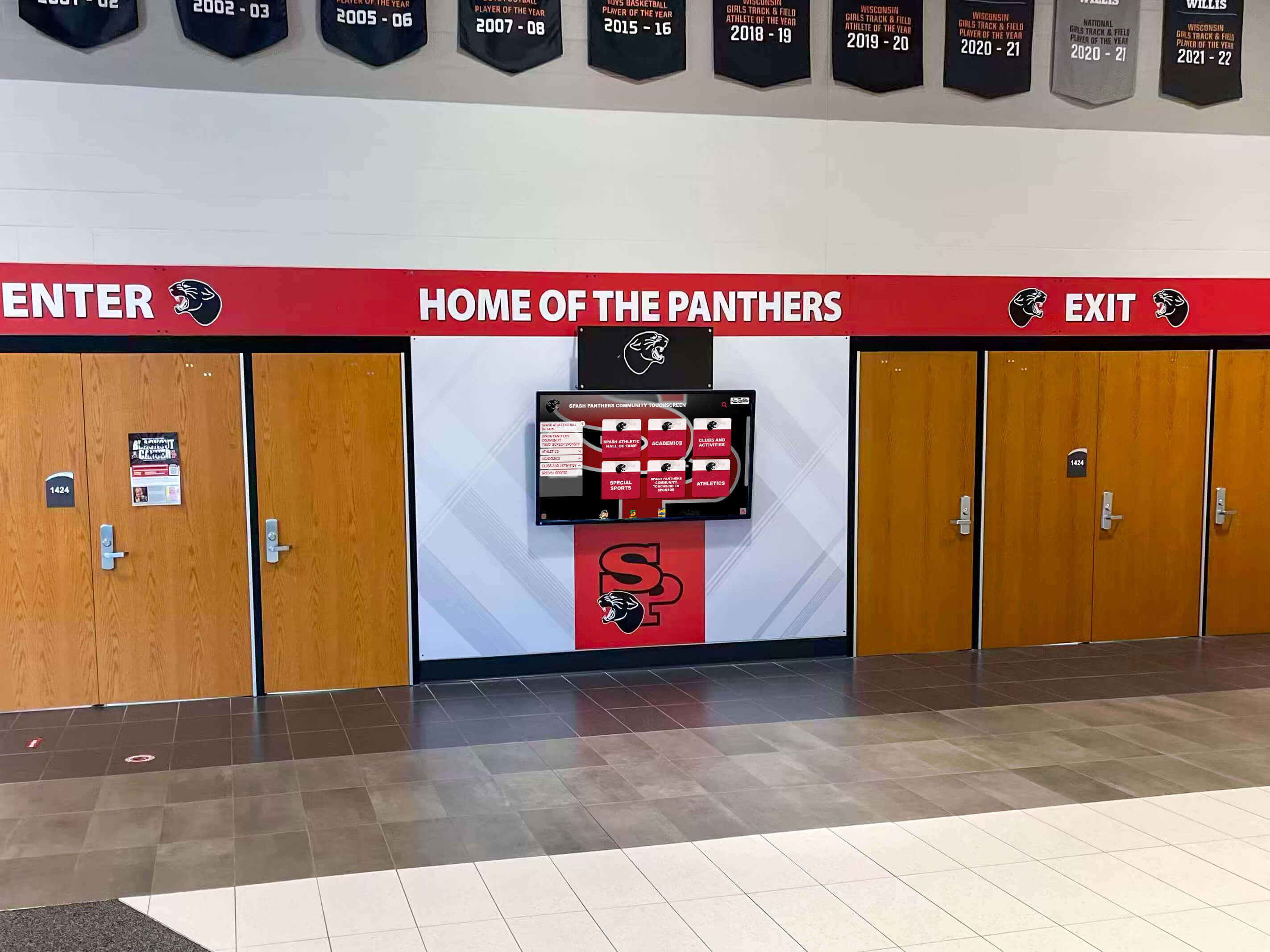
Integrated wayfinding combines practical navigation with welcoming design that orients visitors both physically and emotionally
5. Student and Member Work Showcases
Displaying current student artwork, member projects, or community creations brings foyers to life with authentic evidence of organizational impact.
Showcase Design Options:
- Rotating gallery spaces featuring different artists or classes periodically
- Digital screens showing portfolios of student or member work
- Physical display cases presenting three-dimensional projects
- Interactive installations where visitors can engage with creative work
- Recognition of creators alongside displayed work
Work showcases accomplish multiple objectives simultaneously. They celebrate student or member achievement, demonstrate organizational impact through tangible examples of community output, create dynamic environments that change regularly, and provide authentic content that feels more personal than institutional messaging.
For schools, rotating student artwork seasonally gives visual arts programs valued recognition while maintaining fresh foyer aesthetics. Digital displays can showcase portfolios from multiple classes or grade levels, rotating through diverse examples. Academic institutions might display student achievement recognition alongside creative work, celebrating excellence across multiple dimensions.
For nonprofits, member work showcases might feature beneficiary stories, program participant creations, volunteer project documentation, or community partner collaborations. These displays demonstrate organizational impact more convincingly than abstract mission statements by showing authentic results of programmatic work.
Best For: Educational institutions wanting to celebrate student achievement; organizations whose work involves creative output; communities valuing authentic representation over polished marketing; institutions seeking dynamic content requiring modest resources to maintain.
6. Comfortable Seating Areas with Recognition Context
Creating actual gathering spaces within foyer areas transforms them from circulation paths into destinations where community members linger and connect.
Seating Area Design Elements:
- Comfortable furniture appropriate to organizational character and traffic patterns
- Proper spacing allowing private conversations without blocking circulation
- Recognition displays integrated as environmental context rather than isolated installations
- Natural lighting or quality artificial lighting creating welcoming ambiance
- Convenient amenities like charging stations, WiFi access, or refreshment areas
Seating areas acknowledge that foyers serve social functions beyond simple entry and exit. Alumni reconnecting during visits need spaces to catch up. Prospective families meeting with admissions staff appreciate comfortable waiting areas. Community members arriving early for events benefit from comfortable spaces to gather.
Recognition displays work particularly well as context for seating areas. Rather than trophy walls that visitors view briefly then move past, recognition elements surrounding gathering spaces encourage extended engagement. Alumni catching up might browse nearby displays finding former teammates. Parents waiting for appointments might explore alumni achievements relevant to programs their children are considering.
Consider acoustics carefully when designing foyer seating areas. Hard surfaces common in institutional architecture create echo and noise that make conversation difficult. Acoustic treatments—ceiling panels, wall absorption, soft furnishings—improve comfort significantly. Balance openness that prevents isolated corners feeling unsafe with enough separation that multiple conversations don’t interfere with each other.
Best For: Institutions with adequate foyer square footage to dedicate space beyond circulation; organizations where community gathering represents important values; institutions serving significant numbers of visitors who wait for appointments or tours; communities where facilitating connection ranks among organizational priorities.
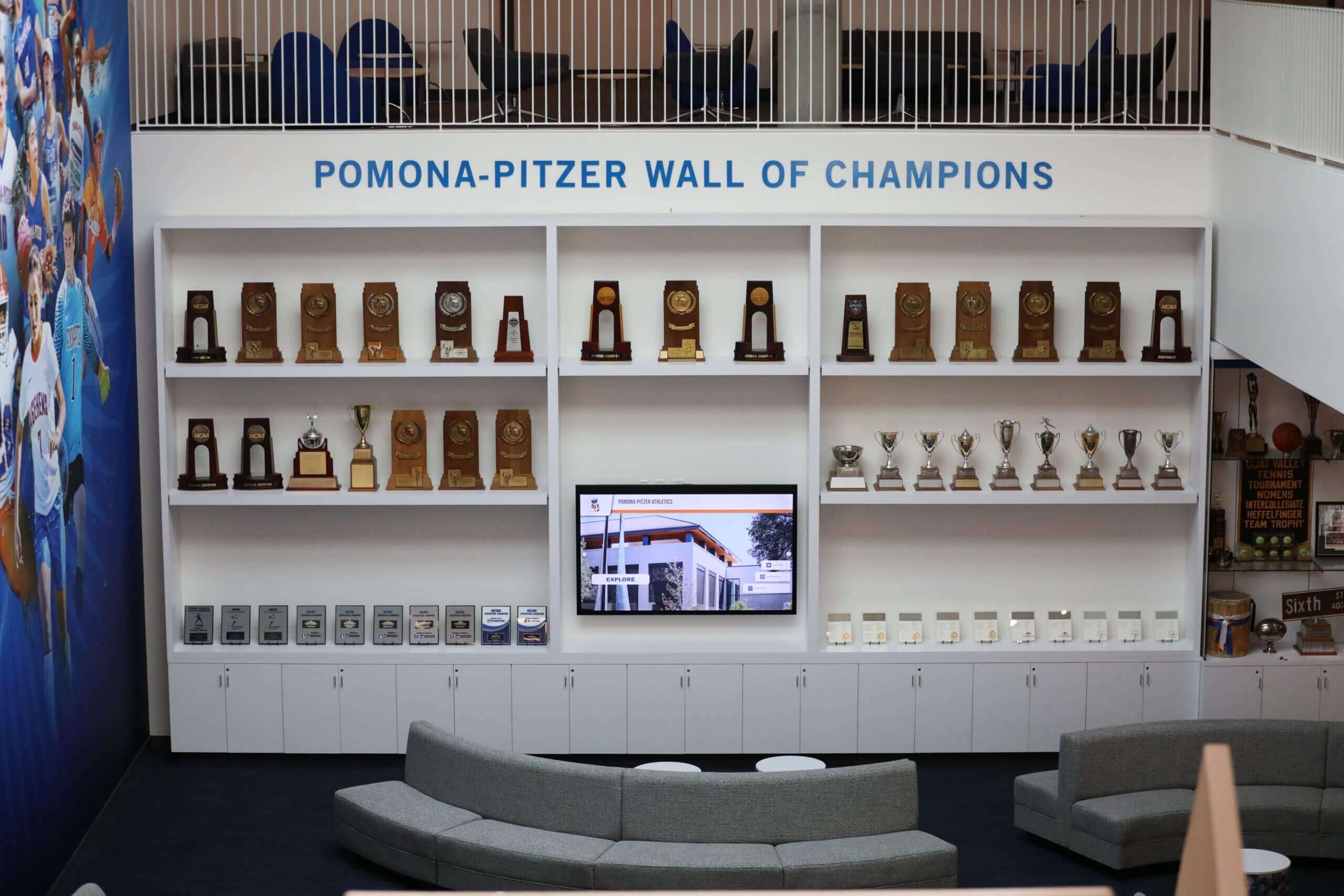
Comfortable seating transforms foyers from circulation paths into gathering spaces that encourage connection and extended engagement
7. Architectural Feature Enhancement
Preserving and highlighting existing architectural character creates foyers that feel authentic to building history while establishing distinguished aesthetic character.
Feature Enhancement Approaches:
- Restored historical details receiving appropriate highlighting
- Original materials preserved and properly maintained
- Period-appropriate lighting emphasizing architectural elements
- Complementary contemporary additions respecting historical character
- Interpretive information explaining architectural significance
Many institutional buildings possess architectural features that deserve emphasis rather than concealment. Original woodwork, tile floors, decorative plaster, stained glass, or distinctive structural elements connect current communities to building history while creating visual distinction impossible to achieve through applied decoration.
Feature enhancement works particularly well when combined with modern recognition technology. Historical architecture provides visual warmth and character, while contemporary displays add functionality and dynamic content. This combination honors tradition while demonstrating continued institutional investment and innovation.
Consider subtle lighting that emphasizes architectural features. Uplighting highlighting ceiling details, accent lighting revealing decorative elements, or natural light maximized through cleaned windows creates drama that makes spaces memorable. Historical fixtures might be restored to functionality or reproduced in period-appropriate styles that maintain aesthetic coherence.
Best For: Institutions occupying buildings with distinctive architectural character; organizations valuing historical preservation alongside contemporary function; communities whose building heritage connects to organizational identity; institutions with renovation budgets accommodating proper restoration work.
8. Photography and Visual Storytelling Walls
Curated photography installations create immediate emotional connection by showing authentic community experiences rather than abstract institutional messaging.
Photography Installation Concepts:
- Large-format prints creating dramatic visual impact
- Grid installations showing diverse community faces and activities
- Lightbox displays emphasizing selected powerful images
- Digital slideshow walls presenting hundreds of community photographs
- Thematic collections telling specific stories about institutional character
Effective photography showcases feel authentic rather than staged. The best images capture genuine moments—students deeply engaged in learning, community members collaborating on projects, athletes celebrating victories, artists absorbed in creation, or community gatherings showing authentic connection. These authentic moments communicate institutional character more convincingly than any written marketing could achieve.
Consider representation carefully when selecting showcase photography. Images should reflect community diversity across multiple dimensions—roles, demographics, programs, activities. Visitors seeking evidence that they would belong in the community look for people who resemble them or their children. Photography that inadvertently suggests homogeneity or exclusivity discourages prospective community members who don’t see themselves represented.
For ongoing freshness, plan regular updates incorporating recent photography. Many institutions capture thousands of excellent photographs annually but struggle to display them beyond websites or social media. Foyer installations provide physical presence for this visual documentation, celebrating current community life alongside historical recognition.
Best For: Institutions with strong photography documentation of community life; organizations whose authentic community diversity deserves visible celebration; institutions seeking emotional connection through visual storytelling; communities comfortable with periodic content updates to maintain currency.

Authentic photography installations communicate institutional character through genuine moments that written messages cannot match
9. Donor Recognition and Gratitude Displays
Thoughtfully acknowledging philanthropic support demonstrates stewardship while inspiring continued giving through visible appreciation.
Donor Recognition Approaches:
- Digital donor walls allowing unlimited recognition without space constraints
- Giving society acknowledgment organized by contribution levels
- Campaign progress displays showing fundraising goals and achievements
- Impact storytelling connecting gifts to tangible institutional improvements
- Recognition of volunteer leadership alongside financial contributions
Effective donor recognition feels genuine rather than transactional. The most successful displays emphasize gratitude and impact rather than simply listing names and amounts. Connecting recognition to the specific programs or facilities that gifts enabled helps prospective donors visualize how their potential contributions would make tangible differences.
Consider recognition approaches that honor modest annual donors alongside major benefactors. While giving societies acknowledging different contribution levels remain appropriate, ensure displays don’t inadvertently suggest that only large gifts merit institutional appreciation. Many institutions find that comprehensive approaches recognizing all donors—perhaps featuring major gifts prominently while listing all supporters in searchable digital formats—best balance fundraising strategy with inclusive gratitude.
For institutions launching capital campaigns, campaign progress displays build momentum by celebrating milestones while demonstrating broad community support. Live updating ensures accuracy as campaigns progress, maintaining excitement and encouraging continued participation. Learn more about effective approaches in this guide to nonprofit donor recognition.
Best For: Institutions with active development programs where visible recognition serves fundraising strategy; organizations wanting to demonstrate appropriate stewardship to current and prospective donors; communities where philanthropic support represents significant institutional values; institutions with sufficient donor populations to justify dedicated recognition systems.
10. Interactive History and Archive Access
Providing touchscreen access to institutional archives transforms foyers into research resources while celebrating historical depth.
Archive Access Features:
- Searchable databases of historical photographs, documents, and memorabilia
- Timeline explorers enabling deep investigation of specific eras
- Biographical directories documenting community members throughout history
- Document collections showing publications, correspondence, or records
- Video oral histories capturing first-person memories from longtime community members
Interactive archive access serves multiple purposes simultaneously. Researchers investigating institutional history find convenient access to primary sources. Alumni seeking specific memories or classmates navigate directly to relevant periods. Current community members discover historical context that deepens understanding of present character. Prospective families learn institutional heritage that influences their evaluation of organizational quality and stability.
For schools, archived yearbooks provide particularly engaging content. Alumni love rediscovering their younger selves and former classmates, while current students enjoy seeing how campus life looked in previous generations. Adding supplementary context—historical background on specific years, explanations of cultural references contemporary students might not recognize, or biographical updates on featured individuals—transforms yearbook archives from nostalgic curiosities into genuine educational resources.
Technical considerations include digitization costs for historical materials, storage requirements for large image databases, interface design enabling intuitive navigation of complex archives, and ongoing curation ensuring content accuracy and appropriate context. Consider partnerships with historical societies, university archives programs, or professional digitization services if internal capacity is limited.
Best For: Institutions with substantial historical archives deserving accessibility; organizations whose historical depth represents competitive advantage; communities valuing research and historical understanding; institutions with resources to invest in proper digitization and interface development.
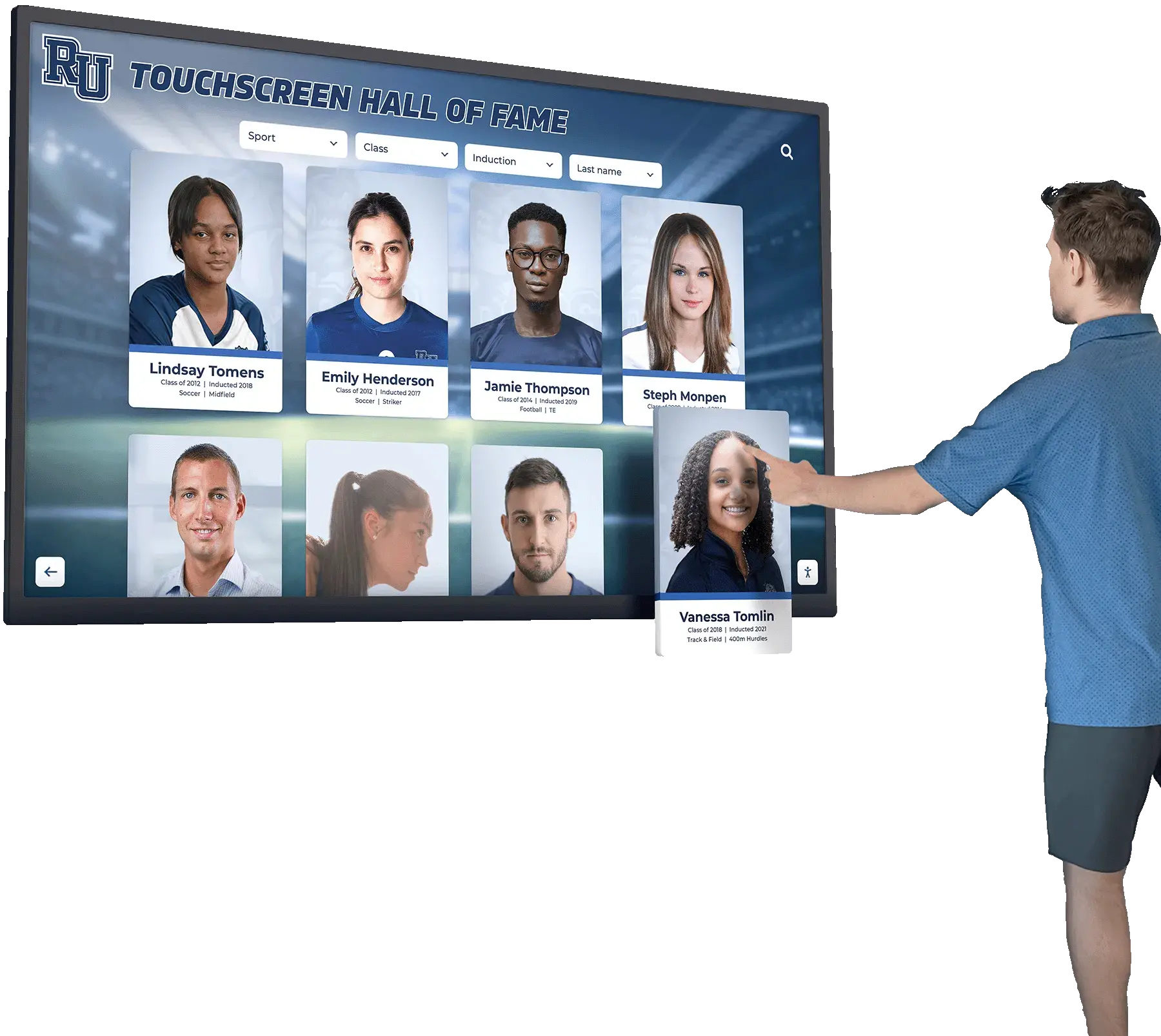
Interactive archive access transforms institutional history from storage boxes into accessible resources that engage current communities
Budget Planning and Implementation Strategies
Creating effective institutional foyer designs requires strategic budget allocation balancing immediate needs with long-term sustainability.
Investment Ranges and Realistic Budgeting
Foyer renovation budgets span enormous ranges depending on space size, current condition, design ambition, and technology integration.
Budget Planning Guidelines:
Under $5,000:
- Paint and cosmetic refreshing of existing spaces
- Modest furniture additions or replacements
- Simple signage updates with clear wayfinding
- Basic lighting improvements
- Minor decorative elements
$5,000-$15,000:
- Comprehensive paint, flooring, and cosmetic improvements
- Quality furniture creating genuine gathering spaces
- Professional signage systems with cohesive branding
- Recognition plaques or modest traditional display installations
- Improved lighting with architectural emphasis
$15,000-$40,000:
- Significant environmental redesign with architectural elements
- Commercial-grade interactive touchscreen displays with content development
- Comprehensive recognition systems (traditional or digital)
- Quality materials and finishes reflecting institutional character
- Professional design services ensuring cohesive execution
$40,000-$100,000:
- Major architectural renovations transforming space functionality
- Multiple interactive displays throughout connected areas
- Custom millwork, built-in elements, or architectural features
- Premium materials and finishes appropriate to institutional positioning
- Comprehensive technology integration across multiple systems
$100,000+:
- Complete space reconstruction with structural modifications
- High-end architectural solutions with custom design
- Extensive technology ecosystems with advanced features
- Museum-quality displays and installations
- Professional project management and comprehensive implementation
Total Cost of Ownership:
Consider ongoing costs beyond initial investment. Traditional displays often incur per-addition costs for engraving or fabrication each time new honorees are added. Digital systems typically include annual software subscriptions ($2,000-$5,000) but minimal per-person incremental costs, making them increasingly cost-effective as honoree populations grow.
Maintenance costs—cleaning, repairs, content updates, eventual component replacement—vary by approach. Traditional displays require occasional physical maintenance but minimal ongoing management costs. Digital systems need regular content updates, software maintenance, and eventual hardware replacement (commercial displays typically last 6-10 years), but provide far greater flexibility and capacity.
Phased Implementation Approaches
Strategic phasing enables institutions to begin with core capabilities while planning systematic expansion as budgets permit.
Phase 1: Foundation (Year 1)
- Address critical cosmetic improvements (paint, flooring, lighting)
- Establish primary focal point (recognition display, mission statement, or architectural feature)
- Implement basic wayfinding ensuring visitor orientation
- Create core gathering space if square footage permits
- Develop content and messaging frameworks guiding future expansion
Phase 2: Enhancement (Year 2-3)
- Add secondary recognition or information displays
- Incorporate dynamic content elements (digital displays, rotating showcases)
- Improve comfort and functionality (seating, acoustics, amenities)
- Develop historical timeline or archive access if appropriate
- Expand content depth in existing systems
Phase 3: Refinement (Year 3+)
- Add sophisticated technology integration if not included initially
- Incorporate advanced features responding to usage patterns
- Complete comprehensive recognition addressing all relevant populations
- Establish sustainable maintenance and content update processes
- Assess impact and refine based on community feedback
Phased approaches prevent overwhelming initial investments while building institutional knowledge and demonstrating value that justifies continued funding. Early phases establish frameworks and infrastructure that subsequent additions leverage, making expansion more cost-effective than attempting comprehensive solutions immediately.
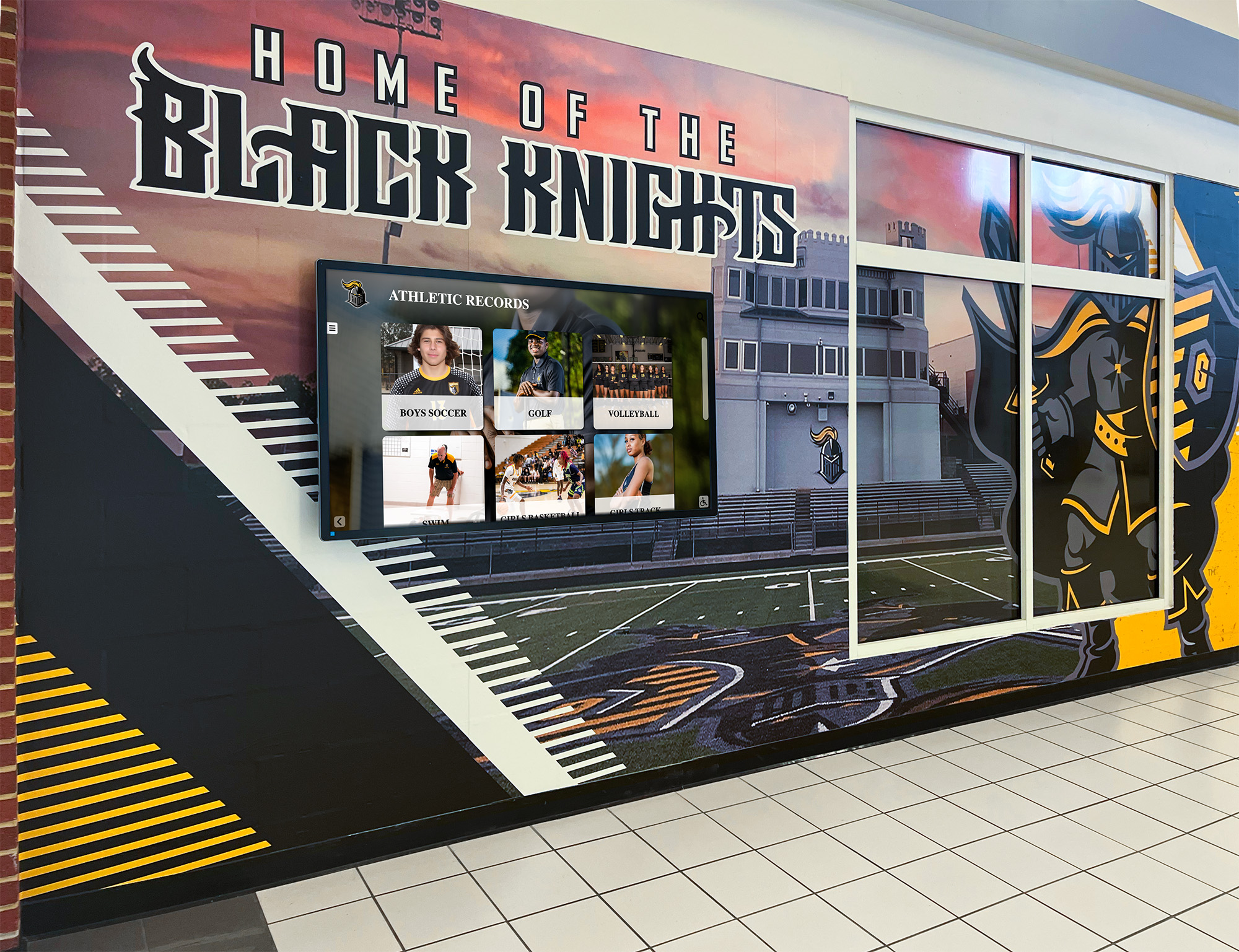
Phased implementation enables institutions to create impact with initial investments while planning systematic enhancement over time
Funding Strategies Beyond Operating Budgets
Creative funding approaches can offset institutional budget constraints when operating funds cannot accommodate desired investments.
Alternative Funding Sources:
- Donor-funded capital projects specifically supporting facility improvements
- Naming opportunities for major spaces or specific recognition components
- Reunion or milestone anniversary gifts directed toward welcome area enhancements
- Corporate or community partnerships supporting institutional visibility
- Foundation grants focused on educational facility improvements
- Crowdfunding campaigns engaging broad alumni or community participation
Advancement professionals frequently find that foyer renovation projects attract donor support particularly readily. Unlike programs or endowments with abstract impact, facility improvements provide visible, tangible results that donors can experience personally during every campus visit. The dual benefit—honoring donors while improving spaces for everyone—makes foyer projects compelling philanthropic opportunities.
When soliciting support for foyer improvements, emphasize lasting impact. Well-designed entrance spaces serve communities for decades, touching thousands of visitors annually. Connecting gifts to specific elements—“your support will fund the interactive recognition display”—helps donors visualize exactly what their contributions enable.
Maintenance and Long-Term Management
Creating impressive foyer spaces is only the beginning. Long-term success requires consistent maintenance and regular updates keeping spaces current and welcoming.
Establishing Sustainable Maintenance Routines
Both environmental and content maintenance matter for sustaining foyer quality over time.
Physical Space Maintenance:
- Daily cleaning appropriate to materials and traffic levels
- Regular inspection identifying needed repairs before failures occur
- Periodic deep cleaning addressing accumulated wear
- Seasonal maintenance addressing weather-related concerns
- Planned replacement cycles for elements with limited lifespans
Content and Technology Maintenance:
- Regular content updates maintaining currency and accuracy
- Software updates ensuring security and functionality
- Hardware monitoring detecting potential issues before failures
- Backup procedures protecting against data loss
- Regular review of content relevance and engagement
Assign clear responsibility for maintenance tasks rather than assuming someone will handle them. Foyers maintained by everyone theoretically often receive attention from no one practically. Explicit assignments—facilities staff own physical maintenance, advancement staff manage recognition content, communications team oversees mission messaging—ensure accountability.
Planning for Evolution and Refresh
Even excellent foyer designs eventually feel dated as aesthetics evolve and organizational character develops. Planning refresh cycles from initial design ensures spaces remain relevant rather than becoming embarrassing time capsules.
Refresh Planning Considerations:
- Major refreshes every 8-12 years maintaining contemporary feel
- Minor updates every 2-3 years preventing staleness
- Technology replacement as hardware reaches end-of-life
- Content archives ensuring historical information preservation
- Budget cycles accommodating planned maintenance and upgrades
Digital elements particularly benefit from planned refresh cycles. While quality commercial displays last 6-10 years, surrounding technology evolves rapidly. Mounting systems, content management platforms, network infrastructure, and user interface expectations all change significantly over display lifespans. Planning for these evolutions prevents technology from becoming outdated before the end of its useful life.
Special Considerations for Different Institution Types
While core foyer design principles apply broadly, different institutional contexts create unique considerations.
K-12 Schools and Educational Institutions
School foyers must welcome diverse audiences—students who pass through daily, families evaluating enrollment, alumni reconnecting with alma mater, and community members attending events.
School-Specific Design Priorities:
- Student-appropriate scale and accessibility ensuring displays work for all ages
- Safety and supervision considerations maintaining clear sightlines
- Celebration balancing athletics, academics, arts, and service equally
- Dynamic content reflecting current student work and achievement
- Durability appropriate to heavy traffic and youthful energy
School foyers provide ideal locations for trophy case modernization, replacing space-constrained traditional displays with digital systems accommodating unlimited achievement recognition across all programs. This ensures equitable celebration while avoiding difficult decisions about what gets displayed versus stored when recognition populations outgrow available space.
Universities and Higher Education
College and university foyers often serve grand architectural spaces requiring solutions scaled appropriately to building character while addressing complex audiences.
Higher Education Considerations:
- Alumni engagement supporting advancement objectives
- Research showcase opportunities demonstrating institutional impact
- Prospective student and family impression management during admissions tours
- Faculty and staff recognition alongside student achievement
- Integration with campus-wide digital signage and communication systems
University foyers might incorporate research highlights, distinguished alumni profiles, student organization showcases, and academic program information alongside traditional recognition elements. The challenge lies in organizing this complexity coherently rather than overwhelming visitors with disconnected information competing for attention.
Nonprofit Organizations and Community Centers
Nonprofit foyers must welcome diverse stakeholders—program participants, volunteers, donors, community partners—while demonstrating organizational impact and inspiring continued support.
Nonprofit-Specific Elements:
- Mission-centered design ensuring purpose remains clear and prominent
- Impact demonstration showing tangible program results
- Inclusive recognition honoring volunteers alongside financial donors
- Accessibility appropriate to served populations
- Community gathering space supporting programmatic activities
Nonprofit organizations particularly benefit from storytelling approaches that show program impact through beneficiary narratives, volunteer experiences, and community transformation documentation. These authentic stories demonstrate organizational effectiveness more convincingly than statistics or abstract mission statements.
Religious and Faith-Based Institutions
Houses of worship and faith-based organizations balance welcoming guests with maintaining sacred character appropriate to religious contexts.
Faith-Based Design Approaches:
- Reverent aesthetics respecting worship space character
- Mission and theological grounding appropriately prominent
- Community celebration honoring service and participation
- Accessibility welcoming diverse community members
- Traditional materials and approaches honoring heritage
Religious institutions might incorporate scripture or theological statements, historical denominational context, ministry recognition, community service celebration, and worship space technology supporting both sacred and functional needs.
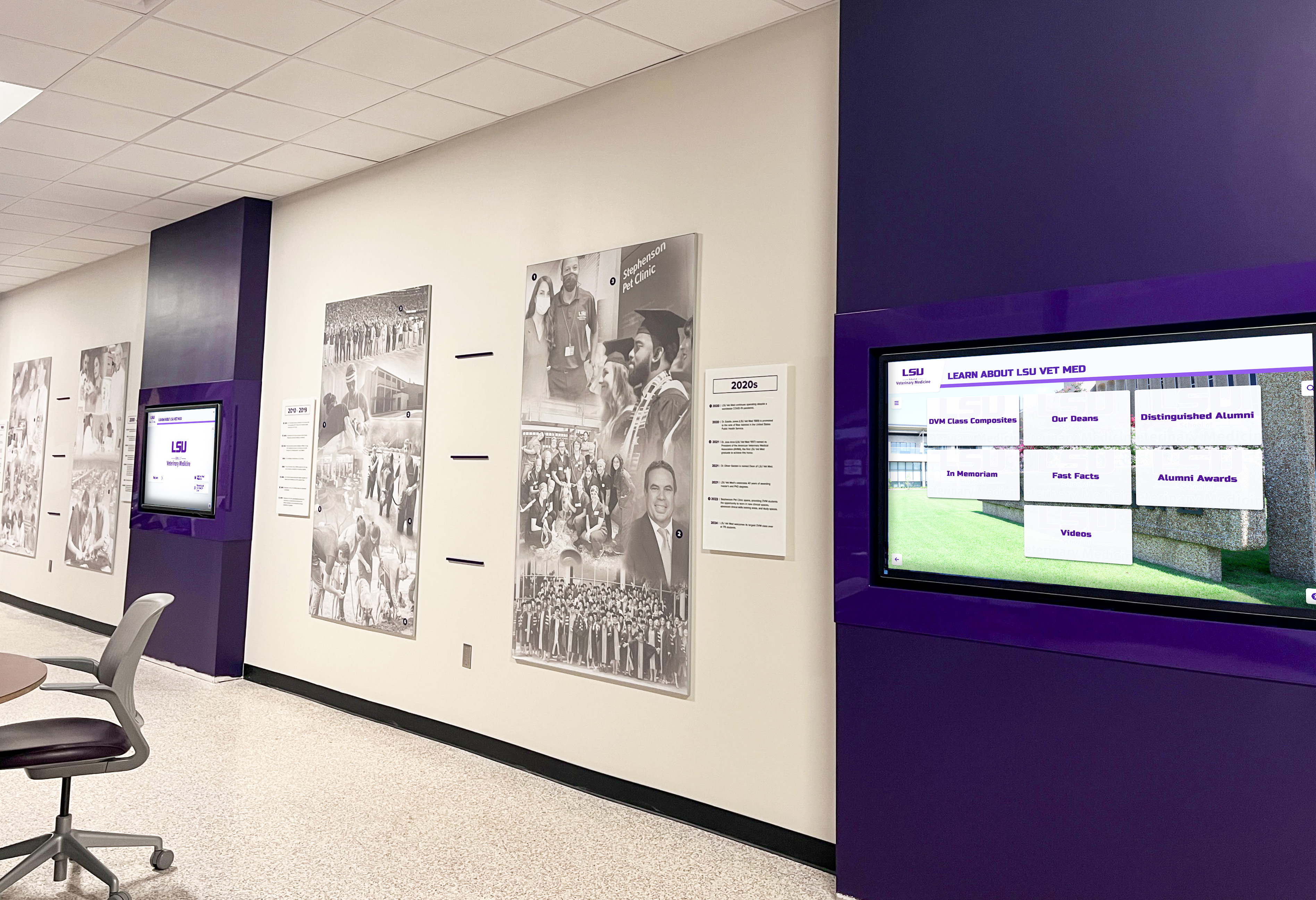
Institution type influences specific design priorities while core principles about welcome, recognition, and community remain universal
Technology Integration Best Practices
Digital technology enables foyer capabilities impossible with traditional approaches, but successful integration requires thoughtful planning beyond simply purchasing hardware.
Selecting Appropriate Technology Solutions
Not all digital displays suit institutional foyer environments. Consumer electronics designed for home use fail quickly under continuous institutional operation. Proper technology selection ensures longevity and reliability.
Essential Technology Characteristics:
- Commercial-grade hardware rated for continuous 24/7 operation
- Capacitive touchscreen technology providing responsive interaction
- High brightness levels remaining visible in varied lighting conditions
- Enterprise-grade content management enabling non-technical staff operation
- Reliable network connectivity supporting remote content updates
- Comprehensive warranty and support appropriate to institutional contexts
Solutions like Rocket Alumni Solutions specialize in institutional applications, providing hardware, software, support, and content frameworks designed specifically for school, nonprofit, and community organization needs. Purpose-built platforms eliminate the complexity of attempting to adapt general-purpose technology to specialized institutional requirements.
Content Management and Update Processes
Digital technology only succeeds when institutions commit to ongoing content management maintaining current, accurate information. Technology vendors can provide excellent tools, but institutions must dedicate appropriate staff time to content stewardship.
Sustainable Content Management:
- Clear ownership assigning specific individuals to content responsibilities
- Regular update schedules preventing content from becoming outdated
- Quality standards maintaining consistent professional presentation
- Approval workflows ensuring appropriate review before publication
- Training ensuring staff comfort with management tools
- Documentation enabling transition when responsible individuals change roles
Many institutions underestimate content management requirements, assuming that initial setup completes the project. In reality, successful digital recognition requires ongoing attention maintaining currency. Schools must add new achievement recognition annually. Alumni accomplishments deserve updates as graduates achieve new career milestones. Donor recognition must remain accurate as philanthropy continues.
The most successful implementations treat content management as ongoing operational responsibility rather than occasional project work. Assigning dedicated time—perhaps 2-4 hours monthly for modest programs or 8-15 hours monthly for comprehensive systems—ensures content receives necessary attention without creating crisis situations when updates become overdue.
Accessibility and Universal Design
Digital technology in institutional foyers must serve all community members equally, requiring intentional accessibility attention.
Digital Accessibility Requirements:
- Screen positioning and mounting heights accommodating wheelchair users
- Color contrast ensuring visibility for vision-impaired visitors
- Text sizing appropriate for varied visual capabilities
- Touch target sizes supporting motor control variations
- Audio alternatives for hearing-impaired visitors where relevant
- Multilingual content serving diverse community populations
Accessibility extends beyond compliance to genuine usability. Meeting technical accessibility standards while creating interfaces that remain difficult for non-expert users provides little practical value. The goal is universal usability where every community member can comfortably explore content regardless of ability, age, or technical sophistication.
Test accessibility with diverse users during implementation. What seems intuitive to technically skilled staff may confuse visitors less comfortable with touchscreen interaction. Observing genuine users struggling with interfaces reveals design flaws that specifications alone cannot identify.
Measuring Success and Demonstrating Impact
Assessment ensures foyer investments achieve intended objectives while justifying continued maintenance and eventual refresh funding.
Meaningful Metrics and Assessment Approaches
Usage and Engagement Indicators:
- Physical traffic patterns and dwell time in foyer spaces
- Interactive display usage statistics (touches, sessions, duration)
- Web analytics for online extensions of physical recognition
- Visitor feedback and satisfaction surveys
- Observation of how different audiences engage with specific elements
Institutional Impact Measures:
- Alumni engagement metrics (event attendance, giving participation)
- Prospective family feedback during admissions tours
- Donor satisfaction with recognition appropriateness
- Community pride and institutional reputation perception
- Staff and student feedback about space quality and functionality
Operational Effectiveness:
- Wayfinding effectiveness and reduction in directional questions
- Staff efficiency managing content and maintaining systems
- Technology reliability and uptime
- Maintenance cost tracking against budget projections
- Content update frequency and timeliness
Comprehensive assessment combines quantitative metrics with qualitative feedback. Numbers reveal usage patterns and engagement levels, but conversations with users explain why specific elements succeed or fail to resonate. Both forms of data inform refinement ensuring foyer spaces continuously improve based on actual community needs rather than assumptions.
Continuous Improvement Through Feedback
Regular assessment enables responsive refinement rather than assuming initial designs permanently solve all challenges.
Improvement Strategies:
- Annual comprehensive reviews evaluating all foyer elements
- Quarterly content audits ensuring information currency
- User testing when significant changes are contemplated
- Competitive analysis observing how peer institutions approach similar challenges
- Technology monitoring identifying emerging capabilities worth considering
The most successful institutions treat foyer spaces as evolving programs requiring ongoing attention rather than completed projects. This continuous improvement mindset ensures spaces remain relevant and effective indefinitely rather than declining into irrelevance as organizational contexts evolve.
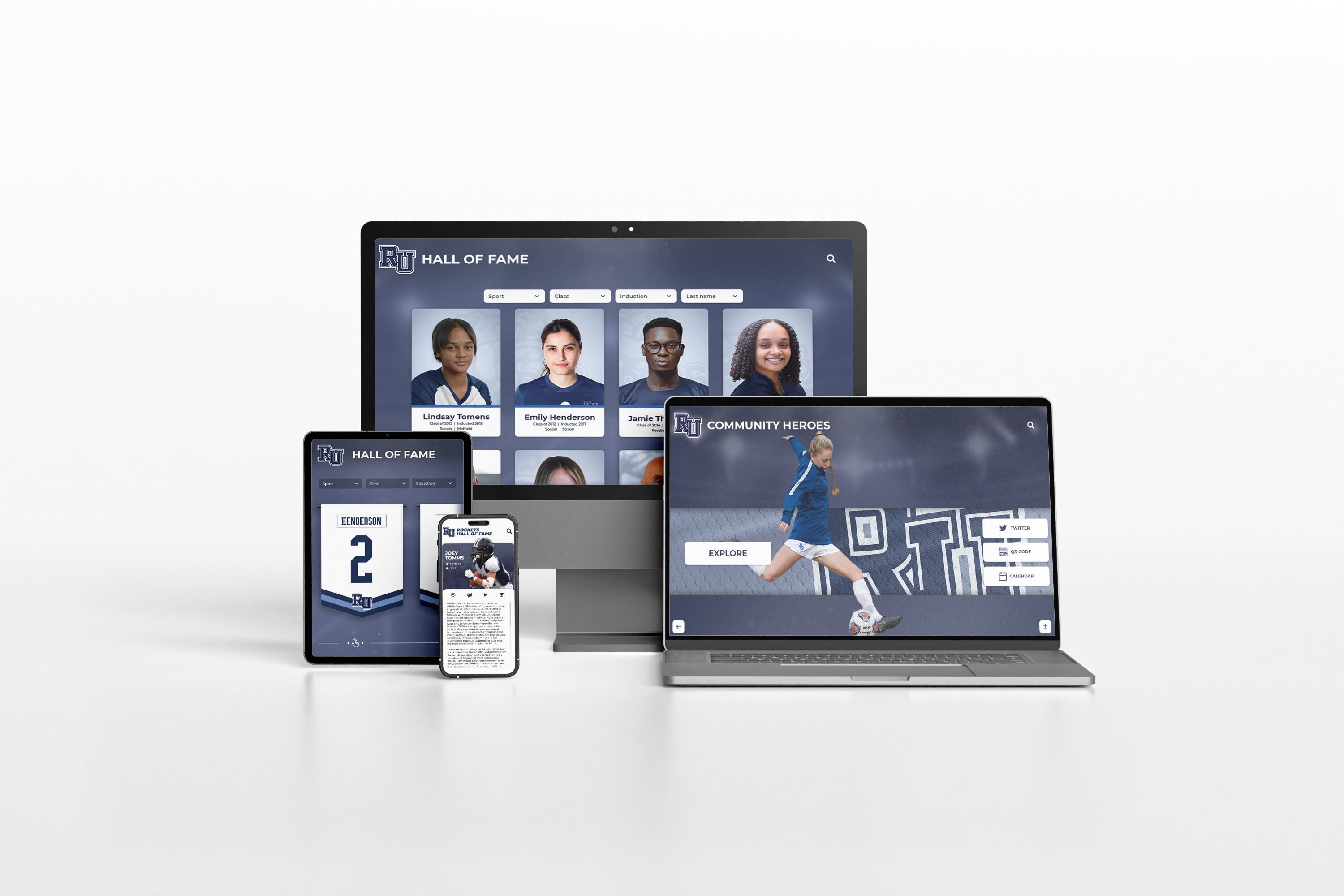
Regular assessment and responsive refinement ensure foyer spaces continuously improve based on actual usage and community feedback
Conclusion: Creating Foyers That Welcome and Inspire
Institutional foyer design represents strategic investment in community building, organizational pride, and authentic connection that delivers value extending far beyond aesthetic improvements. When institutions thoughtfully create entrance spaces that genuinely welcome diverse visitors while celebrating community achievements and clearly expressing organizational character, they establish foundations for engagement, pride, and connection that strengthen everything that follows.
The design ideas explored throughout this guide provide frameworks applicable across institutions of all types, sizes, and budgets. From interactive digital displays revolutionizing recognition capacity to comfortable gathering spaces encouraging community connection, from heritage timelines celebrating institutional evolution to mission statements establishing clear purpose—contemporary options enable every organization to create foyer spaces worthy of the communities they serve.
As you plan foyer improvements, remember that the most successful designs balance multiple priorities simultaneously. They honor tradition while embracing innovation, creating permanence while maintaining flexibility, achieving aesthetic excellence while ensuring practical sustainability, celebrating individual accomplishment while reinforcing collective identity, and welcoming first-time visitors while maintaining interest for familiar community members.
Most importantly, effective foyer spaces authentically represent institutional character rather than projecting aspirational images disconnected from reality. The genuine achievements of real community members told through authentic stories create more powerful impact than any marketing messaging. Physical spaces that truly reflect organizational values resonate more deeply than impressive designs disconnected from actual institutional culture.
For institutions ready to transform recognition and welcome experiences through modern interactive technology, comprehensive solutions like Rocket Alumni Solutions provide proven platforms combining sophisticated capabilities with intuitive management. From strategic planning through sustained community engagement, the right technology partner makes the difference between foyer spaces that fade into background and transformative entrance environments that celebrate legacy while building stronger communities.
Ready to Transform Your Institutional Foyer?
Discover how Rocket Alumni Solutions can help you design welcoming entrance spaces that celebrate achievement, communicate mission, and inspire connection through interactive digital recognition purpose-built for educational institutions, nonprofits, and community organizations.
Schedule Your Free ConsultationYour institution’s entrance deserves a space that matches the significance of your community’s accomplishments. With strategic planning, appropriate design decisions, thoughtful technology integration, and sustained commitment to maintenance and evolution, you can create foyer environments that don’t just welcome visitors but actively strengthen the connections, pride, and shared identity that make communities thrive. Start exploring the approaches that best align with your institutional needs, and take the first steps toward entrance spaces that truly celebrate your organization’s extraordinary character and achievements.































