The digital recognition landscape stands at an inflection point. While digital walls of fame have already revolutionized how schools, universities, and organizations celebrate achievements—moving beyond static plaques and overcrowded trophy cases—the next wave of innovation promises to be even more transformative. Artificial intelligence, immersive technologies, predictive analytics, and hyper-personalization are converging to create recognition experiences that don’t just display achievements but actively engage communities, foster connections, and deliver measurable institutional value.
As we look toward 2025 and beyond, forward-thinking institutions are asking critical questions: How will AI reshape the way we curate and present recognition content? What role will augmented and virtual reality play in bringing achievement stories to life? How can predictive analytics help us understand what content resonates most deeply with different audiences? And perhaps most importantly, how do we implement these emerging technologies in ways that enhance rather than complicate the core mission of honoring excellence?
This comprehensive exploration examines the future trends that will define the next generation of digital walls of fame. From machine learning algorithms that personalize every visitor’s journey to blockchain technologies that verify achievement authenticity, from voice-activated interfaces that make recognition universally accessible to spatial computing that blends physical and digital celebration—these innovations represent more than technological upgrades. They signal a fundamental reimagining of how institutions connect past achievements with present communities and future aspirations.

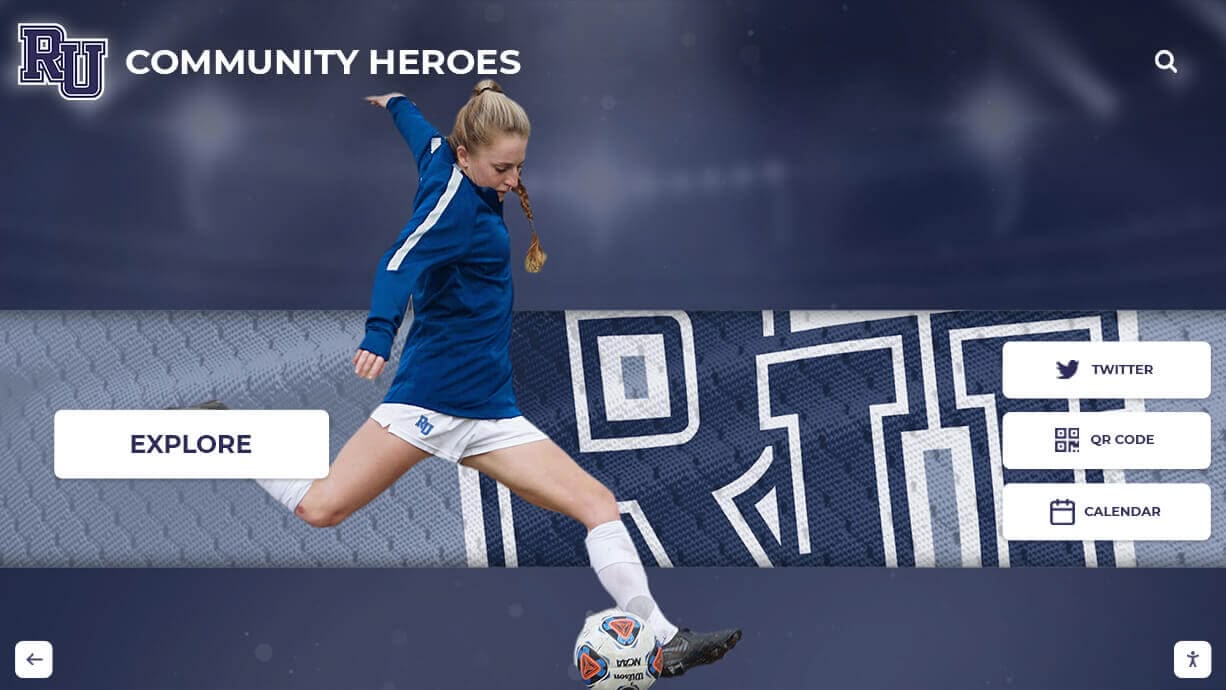
Next-generation digital recognition systems combine intuitive interfaces with powerful emerging technologies
The Evolution of Recognition Technology: Where We Are Today
Before exploring emerging trends, understanding the current state of digital recognition provides essential context for appreciating how dramatically the landscape is poised to evolve.
First-Generation Digital Recognition: Static to Dynamic
The initial wave of digital walls of fame primarily focused on solving space constraints inherent in traditional physical displays. Early systems essentially digitized static content—scanning plaques, photographing trophies, and creating searchable databases accessible through touchscreens or websites. While this represented significant progress over physical limitations, the experience remained largely passive: visitors could search and browse, but the technology didn’t fundamentally transform how people engaged with achievement stories.
Second-Generation Systems: Interactive Engagement
Current state-of-the-art solutions like Rocket Alumni Solutions represent second-generation digital recognition, offering rich multimedia integration, intuitive touchscreen interfaces, cloud-based content management, social sharing capabilities, and web accessibility extending recognition beyond physical locations. These platforms have proven remarkably effective—schools report engagement times of 5-7 minutes compared to 30-60 seconds for traditional displays, and advanced analytics demonstrate measurable ROI through alumni connections and fundraising correlations.
Yet even as organizations implement these sophisticated systems, the technology enabling the next leap forward is rapidly maturing. The question isn’t whether AI and emerging technologies will transform digital recognition, but rather how quickly institutions will adopt these capabilities and what competitive advantages early adopters will secure.
Artificial Intelligence: The Intelligence Layer Transforming Recognition
Artificial intelligence represents the most significant technological shift in digital recognition, moving systems from passive information repositories to intelligent platforms that learn, adapt, and personalize experiences.
AI-Powered Content Curation and Recommendations
Modern streaming services have trained audiences to expect personalized recommendations based on viewing history and preferences. The same machine learning algorithms are now being adapted for digital recognition platforms, creating experiences where each visitor encounters content most relevant to their interests and connections.
Intelligent Content Discovery analyzes visitor behavior patterns—which profiles they view longest, which achievement categories they explore repeatedly, which time periods interest them most—and uses this data to surface related content they’re likely to find compelling. When an alumnus views their former basketball coach’s profile, the system might automatically suggest teammates from their era, subsequent championship teams that built on their legacy, or current athletes breaking records they once set.
AI algorithms personalize recognition experiences based on visitor interests and behavior
Relationship Mapping takes this further by identifying non-obvious connections between honorees. Machine learning can detect that two distinguished alumni, inducted decades apart, both studied under the same influential teacher, competed in different sports during overlapping years, or now work in related industries. These discovered connections create natural pathways for exploration that humans might never manually program, enriching the storytelling dimension of recognition displays.
Contextual Relevance adjusts featured content based on current events and temporal context. During homecoming weekend, AI systems can automatically prioritize content from milestone reunion years. When a notable alumnus appears in news coverage, their profile receives prominent placement. As championship seasons unfold, historical context about past championship teams surfaces automatically, creating timely connections between present pursuits and past excellence.
Natural Language Processing and Conversational Interfaces
The evolution from keyword search to conversational interaction fundamentally changes how visitors discover recognition content.
Voice-Activated Navigation enables visitors to interact naturally: “Show me all state championships in the 1990s,” “Find athletes who competed in multiple sports,” or “Which alumni became doctors?” Natural language processing interprets these queries, understanding intent rather than requiring precise keyword matching. This accessibility particularly benefits visitors with visual impairments or limited mobility, making recognition universally accessible in ways traditional interfaces cannot match.
Smart Search Enhancement goes beyond simple matching to understand query context and correct common errors. When visitors search “John Smith basketball,” the system recognizes they likely mean “Jon Smyth” who played basketball in the 1980s, automatically suggesting the correct spelling while also surfacing other basketball players from similar eras. This intelligent interpretation dramatically reduces zero-result searches that frustrate visitors and prevent content discovery.
Question-Answering Capabilities transform recognition displays from databases to knowledge systems. Instead of searching for information, visitors can ask questions: “Who holds the record for most career touchdowns?” “Which decade had the most championship teams?” “How many alumni have become professional athletes?” The AI processes these natural questions and provides direct answers with supporting evidence and related content, creating conversational experiences that feel intuitive and engaging.

Voice activation makes digital recognition accessible to all visitors regardless of ability
Automated Content Enhancement and Generation
AI doesn’t just help visitors find content—it actively improves and expands recognition materials with minimal human effort.
Intelligent Photo Enhancement automatically improves historical images that might be faded, poorly lit, or low resolution. Machine learning algorithms can upscale images, enhance contrast, correct color balance, and even colorize black-and-white photographs while maintaining authenticity. This means decades of archived photos become display-ready without expensive manual restoration.
Automated Caption Generation analyzes photos to identify subjects, activities, locations, and contexts, generating descriptive captions that improve accessibility and searchability. While human review ensures accuracy, AI dramatically reduces the time required to properly catalog and describe historical image collections.
Content Summarization takes lengthy biographical information and generates concise summaries optimized for different viewing contexts. The same honoree profile might display a two-sentence summary on browse screens, a paragraph on detail views, and complete biographical information on dedicated profile pages—all automatically generated from comprehensive source content to ensure consistency while optimizing for each viewing scenario.
Translation Services powered by neural machine translation make recognition content accessible to multilingual communities instantly. Schools serving diverse populations can offer content in multiple languages without maintaining separate content repositories, ensuring all families can engage with recognition regardless of their primary language.
Immersive Technologies: Augmented and Virtual Reality in Recognition
While AI provides the intelligence layer, immersive technologies create experiential dimensions that transform passive viewing into active participation.
Augmented Reality: Blending Physical and Digital Recognition
Augmented reality overlays digital content onto physical spaces, creating hybrid experiences that combine the tangible presence of traditional recognition with the unlimited capacity and multimedia richness of digital systems.
Spatial Recognition Displays enable visitors to point smartphones or tablets at physical spaces—hallways, gymnasiums, fields—and see digital overlays showing historical photos from those exact locations, achievement markers identifying where records were set, virtual plaques appearing on walls without physical installation, and temporal sliders revealing how spaces looked in different eras. A visitor standing at midcourt in a gymnasium could see AR overlays showing every championship team photo taken at that spot across decades, creating powerful connections between current spaces and historical moments.
Interactive Trophy Visualization allows physical trophy cases to trigger rich digital content. Pointing a device at a championship trophy launches detailed team profiles, season highlight videos, player statistics and career trajectories, coaching insights and game strategies, and fan memories and contemporary news coverage. The physical trophy becomes a portal to comprehensive storytelling rather than a static artifact with a basic engraved plaque.
This augmented approach particularly appeals to institutions hesitant to completely abandon traditional recognition. Physical displays retain their symbolic importance while digital overlays provide the depth and flexibility that modern digital trophy cases deliver, creating the best of both approaches.

Augmented reality bridges physical and digital recognition seamlessly
Virtual Reality: Immersive Achievement Experiences
While AR enhances physical spaces, virtual reality creates entirely new experiential dimensions for recognition.
Virtual Hall of Fame Tours transport visitors into immersive environments designed specifically for recognition. Alumni living across the country or around the world can don VR headsets and “walk” through virtual recognition spaces, experiencing spatial design and architectural context impossible in pure web interfaces. These virtual environments might recreate historical campus locations as they appeared in different eras, allowing alumni to return not just to recognition content but to remembered places.
360-Degree Achievement Moments capture and preserve significant events in immersive formats. Championship games, induction ceremonies, groundbreaking celebrations, and milestone events can be recorded in 360-degree video, allowing future generations to stand virtually in the crowd, experiencing the atmosphere and energy of historic moments. This preservation transforms recognition from information about achievements to visceral experiences of achievement moments.
Interactive Achievement Simulations enable visitors to experience challenges that honorees overcame. A record-setting athletic performance might be recreated as an interactive VR experience showing the difficulty of the accomplishment. Scientific breakthroughs could be demonstrated through simulations that visitors can manipulate. Leadership challenges might be presented as decision-making scenarios. These immersive simulations create understanding and appreciation impossible through text descriptions alone.
Predictive Analytics and Behavioral Intelligence
Beyond helping visitors find content, advanced analytics predict what will resonate most and proactively optimize recognition strategies.
Engagement Prediction and Optimization
Machine learning models analyze historical engagement patterns to forecast which content types, formats, and organizational strategies will generate strongest visitor interest.
Content Performance Forecasting examines characteristics of high-performing profiles—media richness, biographical depth, achievement diversity, temporal relevance—and identifies patterns. The system might discover that profiles featuring 3-5 photos and one short video generate 40% longer engagement than text-only profiles, or that achievement stories emphasizing challenges overcome resonate more deeply than those focusing solely on final accomplishments. These insights guide content development priorities, ensuring effort focuses on elements that deliver measurable engagement improvements.
Personalization at Scale uses visitor behavioral data to customize experiences without requiring explicit user accounts or preferences. The system recognizes that a visitor exploring primarily athletic content probably wants more sports-related recommendations, while someone reading extensive biographical information likely appreciates detailed storytelling. These implicit preferences drive real-time personalization without visitors needing to configure settings or create profiles.
Optimal Update Timing analyzes traffic patterns to determine when content updates generate maximum impact. If Thursday afternoons see highest traffic, the system might recommend scheduling major content releases for Thursday mornings to capitalize on peak audience availability. If certain visitor cohorts engage primarily during specific seasons, content relevant to those audiences can be featured during their high-activity periods.
Predictive Community Engagement
Analytics don’t just optimize the display itself—they inform broader institutional engagement strategies.
Alumni Reengagement Prediction identifies individuals whose engagement patterns suggest receptiveness to reconnection outreach. Someone who recently spent significant time exploring their graduation year cohort, viewed multiple former teammate profiles, and returned for several sessions demonstrates reawakened institutional connection. Development teams can prioritize these individuals for targeted communications, knowing their timing aligns with demonstrated interest.
Donor Propensity Modeling correlates recognition engagement patterns with giving behavior. While causation remains complex, institutions can identify characteristics of engaged visitors who subsequently become donors—time spent viewing donor recognition, exploration of institutional impact stories, repeated return visits—and use these patterns to inform fundraising prioritization and messaging strategies.
Student Recruitment Intelligence tracks prospective student and family engagement during campus visits. When tours include digital recognition displays, analytics reveal which content categories capture most attention, how long families engage, and which aspects of institutional history resonate strongest. This intelligence informs recruitment messaging, helping admissions teams emphasize aspects of institutional culture and achievement that data shows appeal most to prospective families.

Predictive models identify optimization opportunities and engagement patterns
Blockchain and Decentralized Verification
As credential fraud becomes increasingly sophisticated, blockchain technology offers solutions for verifiable, tamper-proof achievement records.
Immutable Achievement Records
Blockchain creates permanent, unforgeable records of achievements that can be independently verified by anyone without relying on centralized authorities.
Digital Achievement Credentials issued on blockchain provide cryptographically secure verification that specific individuals accomplished specific achievements. An athlete’s state championship participation, an academic award, or a leadership recognition becomes a permanent digital credential that the honoree controls and can share with prospective employers, graduate schools, or professional organizations. Unlike traditional transcripts that require institutional verification requests, blockchain credentials enable instant, independent verification.
Authenticity Verification addresses growing concerns about fabricated credentials and accomplishment claims. When recognition is backed by blockchain verification, anyone can confirm that displayed achievements are legitimate institutional records rather than unverified claims. This verification layer becomes particularly valuable for institutions with significant prestige, where credential fraud attempts are most common.
Decentralized Recognition Networks
Blockchain enables new models of recognition that span institutional boundaries.
Cross-Institutional Achievement Portfolios allow individuals to aggregate achievements from multiple schools, organizations, and stages of life into unified recognition profiles they control. An individual might compile recognitions from high school athletics, undergraduate academic honors, graduate research achievements, professional certifications, and community service awards into a comprehensive achievement narrative that transcends any single institution’s records.
Verified Legacy Chains trace achievement lineages and mentorship relationships across generations. Blockchain records might document that a distinguished professional was mentored by a notable alumnus, who was taught by a legendary faculty member, creating verifiable chains of influence and development that enhance institutional storytelling while providing individuals with verified narratives of their formative relationships.
Accessibility and Universal Design
Future digital recognition platforms prioritize inclusive experiences ensuring all community members can meaningfully engage regardless of ability.
Multimodal Interaction Frameworks
Next-generation systems support diverse interaction methods matching individual needs and preferences.
Adaptive Interfaces automatically adjust to visitor capabilities. Screen readers integrate seamlessly for visually impaired visitors. Voice control enables hands-free navigation for visitors with limited mobility. High-contrast modes and customizable text sizes accommodate various visual needs. Simplified navigation modes support visitors with cognitive differences. Rather than treating accessibility as an afterthought, future platforms design inclusivity into core architecture from inception.
Braille Display Integration connects digital recognition to refreshable braille displays, ensuring blind visitors access complete content rather than simplified summaries. Achievement profiles, biographical information, and statistics all become available in braille, providing full participation rather than separate, limited experiences.
Sign Language Integration uses video or avatar-based American Sign Language (ASL) interpretation for key content, ensuring deaf and hard-of-hearing visitors experience storytelling richness often conveyed through audio in multimedia presentations.
The most effective accessibility approaches recognize that universal design benefits everyone. Features designed for specific accessibility needs—like voice control or keyboard navigation—often create better experiences for all users regardless of ability.

Inclusive design makes digital recognition accessible to every community member
Integration Ecosystems: Recognition as Platform
Future digital walls of fame function less as standalone displays and more as central nodes in comprehensive institutional engagement ecosystems.
Seamless System Integration
Alumni Database Synchronization enables two-way data flow between recognition platforms and alumni relations systems. When alumni update contact information or career details through recognition displays, these updates flow automatically to institutional CRM systems. Conversely, major achievements recorded in alumni databases trigger recognition platform updates, ensuring displays remain perpetually current without duplicate data entry.
Development Platform Connection integrates recognition with fundraising systems, automatically updating donor recognition walls when gifts are received, highlighting impact stories aligned with campaign priorities, and providing donors with personalized views of how their support enabled specific achievements. This integration transforms recognition from retrospective celebration to forward-looking fundraising tool demonstrating the impact of philanthropic support.
Social Media Amplification automatically generates shareable content from recognition updates. When new inductees are added, the system creates formatted social media posts with images, biographical highlights, and achievement summaries that marketing teams can schedule across platforms. This automation ensures recognition consistently contributes to institutional social media presence without requiring dedicated content creation for each platform.
API-Driven Extensibility
Open APIs allow institutions to build custom integrations matching their unique needs and workflows. Athletics departments might integrate with sports management software to automatically update athletic record boards. Academic institutions could connect with research databases to showcase faculty and student publications. Community organizations might link with volunteer management systems to recognize service contributions. These custom integrations transform recognition platforms from closed systems to flexible foundations supporting diverse institutional priorities.
Emerging Technologies on the Horizon
Several nascent technologies promise to influence digital recognition as they mature over the coming years.
Holographic Displays
Three-dimensional holographic projections could bring achievement recognition into physical spaces without traditional display hardware. Holographic “statues” of distinguished honorees might appear in building lobbies, visible from multiple angles without screens or projectors. While current holographic technology remains expensive and limited, costs are declining rapidly, suggesting broader adoption within the next 5-10 years.
Biometric Personalization
Facial recognition or other biometric technologies could enable frictionless personalization without requiring visitors to identify themselves actively. When a registered alumnus approaches a display, the system could automatically highlight their graduation year cohort, former teammates, or individuals they’ve previously viewed. While powerful, biometric applications raise significant privacy concerns requiring thoughtful policy frameworks that balance personalization benefits with individual privacy rights.
Brain-Computer Interfaces
Though currently experimental, brain-computer interface technology could eventually enable thought-driven navigation through recognition content. Visitors might explore displays simply by focusing attention on elements of interest, eliminating physical interface barriers entirely. While mainstream adoption remains distant, research institutions are already experimenting with these capabilities for accessibility applications.
Quantum Computing Applications
As quantum computing matures, its pattern recognition capabilities could revolutionize how institutions identify meaningful connections within massive achievement datasets. Quantum algorithms might discover non-obvious relationships, career trajectory patterns, and impact correlations invisible to classical computing approaches, generating insights that fundamentally reshape how institutions understand their achievement ecosystems.
Implementation Strategies: Adopting Future Technologies Thoughtfully
Understanding emerging trends differs significantly from implementing them effectively. Institutions that successfully leverage new technologies follow disciplined adoption strategies balancing innovation with practical considerations.
The Phased Adoption Framework
Phase 1: Foundation Building establishes strong current-generation digital recognition with robust content management, intuitive user experiences, comprehensive analytics, and proven engagement. Organizations cannot successfully adopt advanced technologies without first mastering fundamental digital recognition. Attempting to implement AI or AR on top of poorly designed base systems yields disappointing results.
Phase 2: Pilot Implementation tests emerging technologies through limited deployments before institution-wide rollout. A single display might pilot voice activation, a specific content category might experiment with AR features, or a subset of visitor traffic might experience AI-powered personalization. Pilots provide learning opportunities and demonstrate value before major investment.

Systematic implementation strategies ensure successful technology adoption
Phase 3: Measured Expansion scales proven technologies based on pilot learnings and demonstrated ROI. If voice activation generates 30% longer engagement and receives positive visitor feedback, expansion across additional displays justifies investment. If AR features see limited adoption despite availability, resources redirect toward technologies demonstrating stronger impact.
Phase 4: Continuous Evolution treats technology adoption as ongoing process rather than one-time project. Regular evaluation of emerging capabilities, systematic testing of new features, visitor feedback integration, and performance optimization ensure recognition platforms remain current rather than becoming outdated within a few years of implementation.
Vendor Selection Criteria for Future-Ready Platforms
Organizations selecting digital recognition platforms should evaluate vendors not just on current capabilities but on their commitment to innovation and ability to incorporate emerging technologies.
Technology Roadmap Transparency: Leading vendors share development priorities and planned feature releases, helping institutions understand how platforms will evolve. Does the vendor actively invest in AI, AR, and other emerging capabilities? Do they have research partnerships with technology leaders? Have they demonstrated ability to incorporate new technologies as they mature?
Platform Flexibility: Future-ready systems offer extensible architectures supporting custom integrations and new capabilities without requiring complete platform migrations. API availability, modular design, and separation between content and presentation layers signal platforms built for evolution rather than rigid legacy architectures.
Vendor Innovation Track Record: Examine vendor histories of incorporating new technologies. Have they consistently adopted emerging capabilities as they’ve become viable? Do they lead innovation or follow years behind? Platform longevity matters less than demonstrated ability to evolve with technological change.
Solutions like Rocket Alumni Solutions exemplify vendors committed to incorporating emerging technologies thoughtfully—offering robust current capabilities while investing in research and development that ensures platforms remain at the innovation forefront.
Measuring Success: Analytics for Emerging Technologies
As institutions adopt new recognition technologies, measurement frameworks must evolve to capture their unique value propositions.
AI-Specific Success Metrics
Recommendation Acceptance Rate tracks how frequently visitors engage with AI-suggested content. High rates (60%+) indicate effective personalization algorithms. Low rates suggest algorithms require refinement or that suggested content doesn’t align with visitor interests.
Voice Interaction Completion Rate measures what percentage of voice-initiated sessions successfully complete intended tasks. Frequent abandonment indicates natural language processing limitations or frustrating user experiences requiring improvement.
Search Zero-Result Reduction quantifies how effectively AI reduces failed searches through intelligent interpretation and suggestion. Decreasing zero-result rates demonstrate improving query understanding and content matching.
Immersive Technology Engagement Metrics
AR Feature Adoption Rate tracks what percentage of visitors choose to engage AR capabilities when available. Low adoption might indicate unclear value propositions, technical barriers, or insufficient promotion rather than lack of interest.
VR Session Duration measures time spent in virtual recognition environments. Longer sessions suggest compelling experiences, while brief interactions might indicate disorienting interfaces or limited content value in immersive formats.
Immersive Content Sharing tracks how frequently visitors share AR or VR experiences through social media. High sharing rates indicate experiences visitors find novel and worth recommending to their networks.
Integration Impact Assessment
Cross-Platform Engagement Correlation measures whether recognition platform engagement correlates with activity in integrated systems. Do individuals who engage deeply with recognition subsequently increase alumni directory participation, event registration, or giving? These correlations help quantify recognition’s contribution to broader institutional goals.
Data Synchronization Efficiency tracks how effectively integrated systems maintain data consistency. Frequent synchronization errors or data conflicts indicate integration architecture requiring refinement.
Preparing Your Institution for the Future of Recognition
As digital recognition technology advances rapidly, institutions can take concrete steps today to position themselves for successful adoption of emerging capabilities.
Building Organizational Readiness
Technology Literacy Development ensures stakeholders understand emerging capabilities and their potential applications. Regular education on AI, AR, analytics, and other technologies helps leadership make informed investment decisions rather than reacting to vendor marketing claims or dismissing innovations due to unfamiliarity.
Culture of Experimentation encourages pilot programs and controlled testing rather than demanding guaranteed success before attempting new approaches. Institutions that view emerging technologies as learning opportunities rather than all-or-nothing investments typically achieve better long-term outcomes than those paralyzed by demands for perfect certainty.
Flexible Budgeting allocates resources for innovation rather than restricting technology budgets exclusively to maintaining existing systems. Even modest innovation budgets—perhaps 10-15% of technology spending—enable meaningful experimentation without jeopardizing core operations.
Community Engagement in Innovation
User Feedback Loops systematically gather visitor input on existing features and desired capabilities. Communities often identify use cases and opportunities that institutional staff might overlook. Student focus groups, alumni surveys, and visitor feedback mechanisms ensure innovations address genuine needs rather than implementing technology for its own sake.
Beta Testing Programs invite engaged community members to test new features before public release, providing real-world feedback while building excitement and buy-in for coming enhancements. Beta participants become advocates who help broader communities understand and adopt new capabilities.
Transparency About Evolution helps stakeholders understand that digital recognition platforms will continuously evolve rather than remaining static after initial implementation. This expectation management prevents surprise or resistance when new features launch, instead fostering anticipation for ongoing improvements.
The Human Element: Technology Serving Recognition’s Core Purpose
Amid enthusiasm for emerging technologies, the fundamental purpose of recognition remains unchanged: honoring individual and collective achievement in ways that inspire current community members while preserving institutional memory for future generations.
The most successful implementations of advanced recognition technologies maintain this human-centered focus. AI personalizes experiences not to showcase algorithms but to help visitors discover stories that resonate personally. Immersive technologies create experiential dimensions not for technological novelty but to convey achievement significance more powerfully than text alone allows. Analytics optimize engagement not to maximize metrics but to ensure recognition fulfills its core mission of connecting communities with their achievement heritage.
Technology serves recognition, not the reverse. Institutions that maintain this principle while thoughtfully adopting emerging capabilities will create recognition experiences that honor the past, engage the present, and inspire the future with unprecedented effectiveness.

Advanced technology serves the timeless purpose of meaningful achievement recognition
Conclusion: Embracing the Future While Honoring the Past
The future of digital walls of fame promises experiences far richer and more engaging than today’s sophisticated systems. Artificial intelligence will personalize every visitor’s journey through recognition content. Augmented and virtual reality will transform achievement viewing into immersive experiences. Predictive analytics will continuously optimize what content surfaces when and to whom. Blockchain will provide tamper-proof verification of achievements. Universal design will ensure inclusive access regardless of ability.
Yet amid this technological transformation, the essential purpose remains constant: celebrating excellence, preserving institutional memory, inspiring current community members, and honoring those whose achievements deserve recognition. The most effective future implementations will balance cutting-edge capabilities with timeless recognition principles, leveraging technology to enhance rather than complicate the core mission of meaningful achievement celebration.
Ready to Future-Proof Your Recognition Program?
Discover how Rocket Alumni Solutions combines proven recognition effectiveness with forward-looking technology integration, ensuring your digital wall of fame remains at the innovation forefront while delivering measurable value today.
Explore Future-Ready RecognitionOrganizations implementing or upgrading digital recognition systems today should prioritize platforms built for evolution—solutions offering robust current capabilities while demonstrating commitment to incorporating emerging technologies as they mature. By selecting vendors with clear technology roadmaps, flexible architectures, and proven innovation track records, institutions position their recognition investments to deliver value for decades rather than becoming outdated within a few years.
The future of digital walls of fame isn’t distant speculation—it’s emerging now through early adopters, vendor research and development, and rapid technological advancement. Institutions that understand these trends, prepare their organizations for adoption, and partner with innovative vendors will create recognition experiences that honor achievement with unprecedented effectiveness while building communities through meaningful connection with institutional heritage.
The question isn’t whether AI, immersive technologies, and advanced analytics will transform digital recognition—they will. The question is whether your institution will lead this transformation or follow years behind. By understanding emerging trends today and taking concrete steps toward readiness, you can ensure your recognition program remains at the forefront of innovation while fulfilling its timeless mission of celebrating excellence and preserving achievement for generations to come.
























