Gatorade Player of the Year awards represent one of the most prestigious honors a high school athlete can earn. Since 1985, the Gatorade Player of the Year program has recognized outstanding athletic excellence, academic achievement, and exemplary character in high school sports. Each year, these awards celebrate students who excel not just on the field, but in the classroom and their communities.
For schools and athletic departments, Gatorade Player of the Year recipients represent the pinnacle of athletic programs—role models who embody excellence across multiple dimensions. Yet many schools struggle with how to appropriately honor these prestigious achievements. Traditional banners fill up gymnasium walls, trophy cases overflow, and years after graduation, these remarkable accomplishments risk being forgotten or relegated to storage boxes when space runs out.
This comprehensive guide explores effective strategies for recognizing Gatorade Player of the Year recipients in ways that preserve their legacies permanently while inspiring current and future student-athletes.
When student-athletes earn Gatorade Player of the Year recognition, they join an elite group that includes professional sports legends who received the same honor during their high school careers. These achievements deserve recognition approaches that match their significance—celebration methods that honor excellence today while preserving legacies for decades to come.
From understanding the prestige of Gatorade awards through practical recognition strategies and space-saving digital solutions, you’ll discover how athletic departments can celebrate these exceptional achievements without the limitations of traditional physical displays that eventually run out of room.
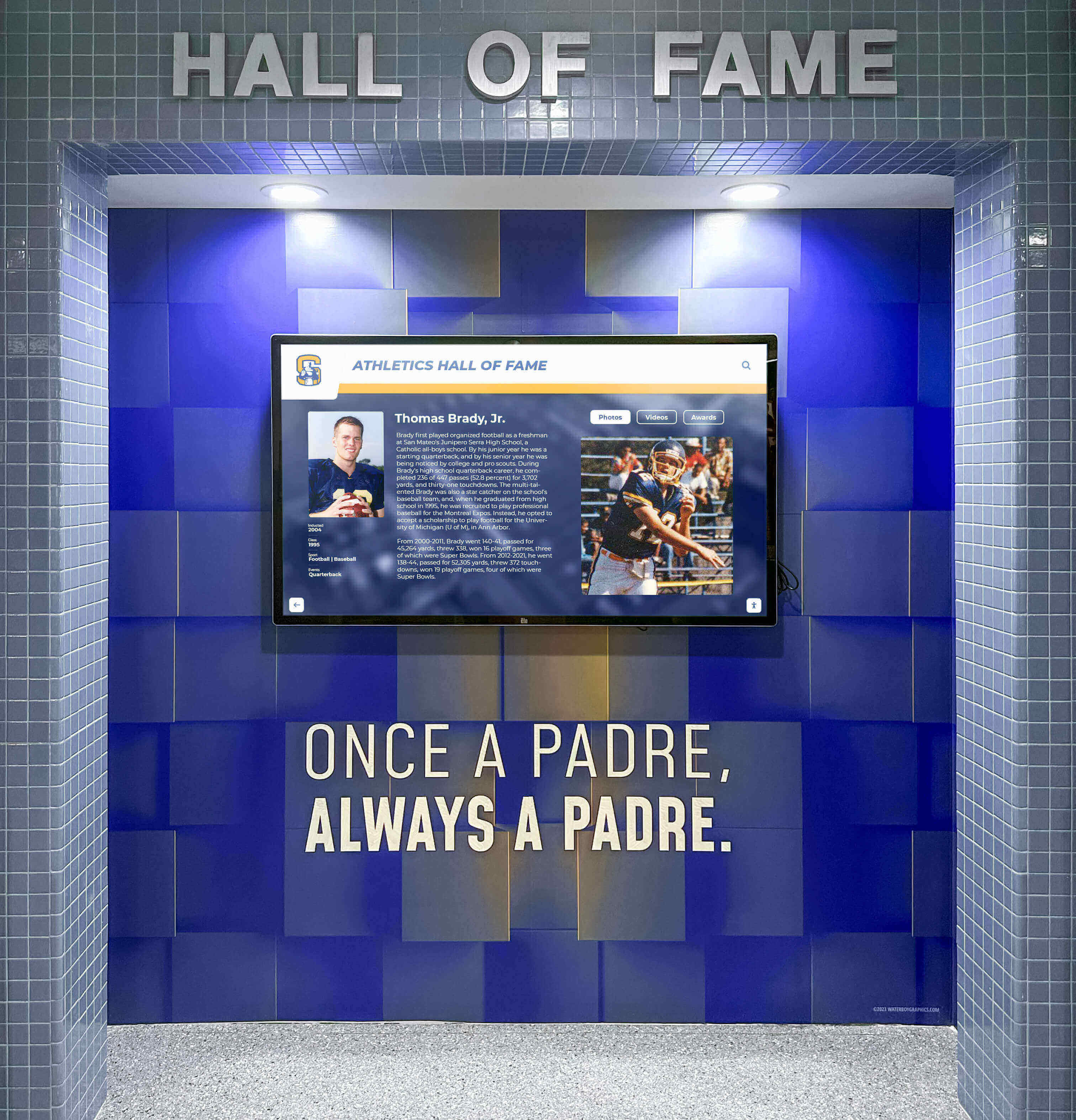
Modern digital recognition displays preserve Gatorade Player of the Year honors permanently without space constraints
Understanding Gatorade Player of the Year Awards
Before exploring recognition strategies, understanding the significance and scope of these prestigious awards clarifies why they merit special acknowledgment within athletic programs.
Program History and Prestige
The Gatorade Player of the Year program launched in 1985 with the recognition of exceptional high school football players. Over nearly four decades, the program has expanded to honor outstanding athletes across multiple sports including football, basketball, baseball, softball, volleyball, soccer, track and field, cross country, and more.
What distinguishes Gatorade Player of the Year awards from other athletic recognition is the comprehensive selection criteria. Winners must demonstrate:
Athletic Excellence: Outstanding performance and statistics within their sport, recognition from coaches and media, and impact on team success.
Academic Achievement: Strong grade point averages and commitment to academic excellence alongside athletic participation.
Exemplary Character: Community involvement, leadership qualities, and positive impact beyond sports participation.
This holistic approach to recognition means Gatorade Players of the Year represent complete student-athletes who excel across all dimensions of high school experience. Many recipients go on to compete at the collegiate and professional levels, with numerous current professional athletes having earned Gatorade recognition during high school.
Selection Process and Criteria
The rigorous selection process ensures only the most deserving athletes receive recognition. State-level winners are selected first through a comprehensive evaluation of athletic performance, academic records, and character demonstrations. State winners then compete for national recognition in their respective sports.
This tiered structure means schools might celebrate state-level Gatorade winners annually while national recognition represents even rarer achievement. Both levels deserve prominent acknowledgment within athletic programs, as even state-level recognition places student-athletes among the elite performers in their sport statewide.
Athletic directors and coaches often invest significant effort documenting achievements and preparing nominations for deserving athletes. When these efforts result in Gatorade recognition, schools naturally want to honor recipients in ways that reflect the prestige these awards carry.

Searchable digital displays enable easy discovery of Gatorade award winners among broader athletic achievements
Traditional Recognition Methods and Their Limitations
Many athletic departments rely on conventional approaches to honor Gatorade Player of the Year recipients, yet these traditional methods present significant constraints that digital solutions address comprehensively.
Championship Banners and Wall Displays
Perhaps the most common recognition approach involves championship banners displaying Gatorade award winners alongside conference championships, state titles, and other major accomplishments. These banners hang prominently in gymnasiums, field houses, and athletic facilities where athletes train and compete daily.
Banner recognition provides excellent visibility and creates visually impressive displays that communicate program excellence. Athletes competing beneath banners featuring Gatorade winners receive constant reminders of the standards their predecessors established.
However, banner recognition faces inherent limitations:
Space Constraints: Gymnasiums have finite wall space. As programs accumulate achievements over decades, athletic directors face difficult choices about which accomplishments receive banner recognition versus which must be removed or omitted due to space limitations. Schools might hang banners for recent Gatorade winners while earlier recipients’ recognition sits in storage.
Limited Information: Banners typically display basic information—athlete name, year, and sport. They cannot convey the complete stories behind achievements: career statistics, academic accomplishments, community impact, or where graduates went on to compete. This reduction of remarkable athletic careers to basic text fails to capture what made these athletes special.
Deterioration Over Time: Physical banners fade, accumulate dust, and eventually require replacement. The ongoing maintenance burden and replacement costs add up, particularly for programs with extensive recognition histories spanning decades. Many schools exploring athletic facility additions find that managing physical displays consumes resources better allocated elsewhere.
Trophy Cases and Awards Display
Trophy cases represent another traditional recognition approach, with some schools dedicating specific areas to Gatorade achievement alongside conference and state championship trophies, individual awards, and team recognition.
Quality trophy cases create prestigious display environments that communicate program excellence to visitors, prospective athletes, and community members. The physical presence of trophies and awards provides tangible evidence of achievement that many find compelling.
Yet trophy case recognition shares the space limitation challenges of banner displays. Cases fill up over years and decades, forcing athletic departments to make difficult decisions about what receives display versus what goes into storage boxes. The question “do we remove older recognition to make room for current achievements?” creates uncomfortable choices where celebrating present excellence means erasing past legacies.
Maintenance Requirements: Trophy cases require regular dusting, organizing, and updating. Labels fade and need replacement. Glass requires cleaning. Lock mechanisms need maintenance. These seemingly small tasks accumulate into significant time investments that busy athletic directors and facilities managers struggle to prioritize consistently.
Accessibility Limitations: Trophy cases benefit only people who physically visit athletic facilities. Alumni who moved away after graduation, families living at distance, college recruiters evaluating programs remotely, and community members who cannot regularly access campus never see recognition no matter how impressive the display. This limited accessibility means recognition investment reaches only a small fraction of potentially interested audiences. Schools can address this limitation through interactive touchscreen displays that complement web-accessible recognition.
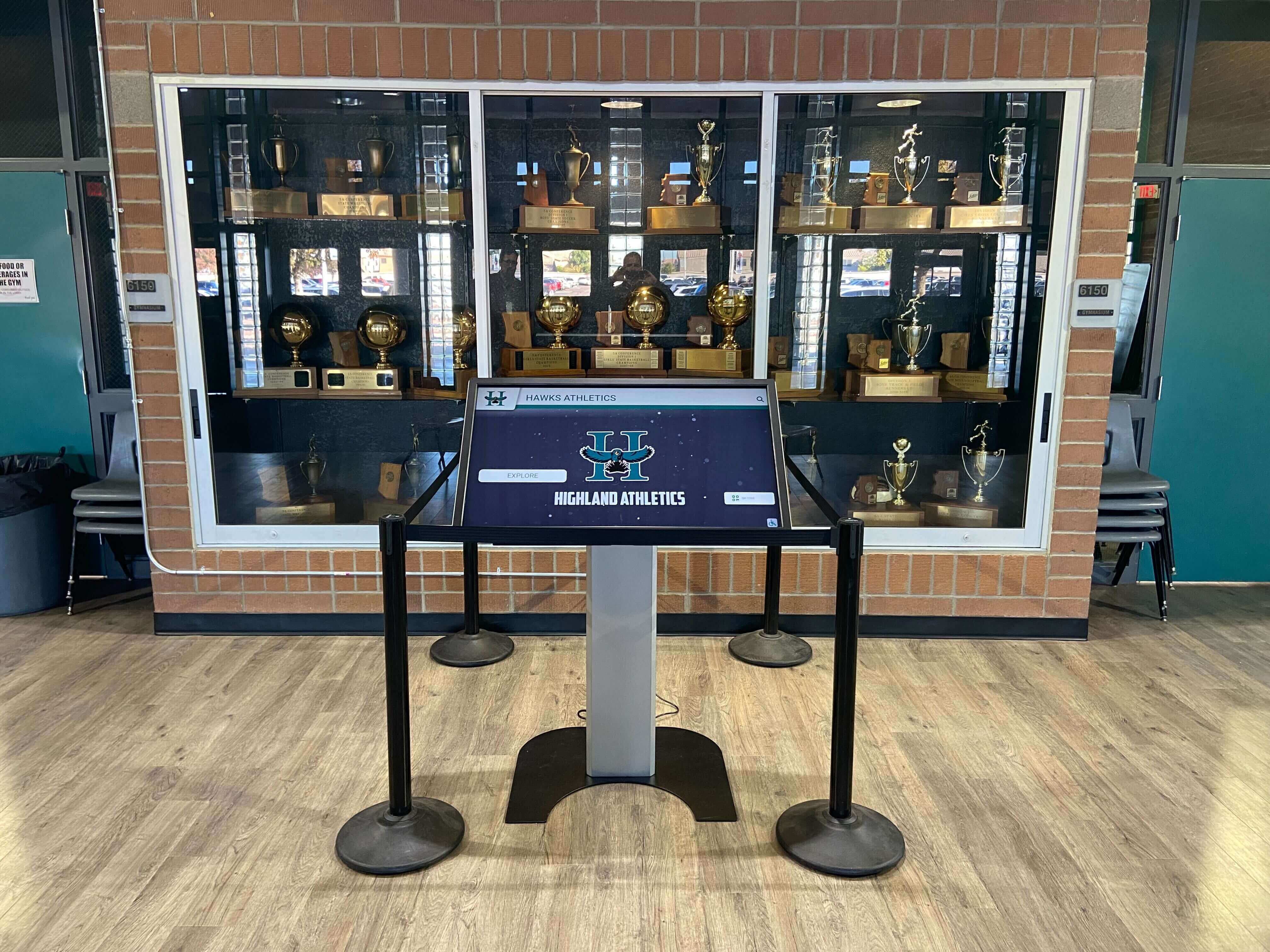
Digital displays can complement traditional trophy cases while providing unlimited recognition capacity
Plaques and Wall-Mounted Recognition
Some athletic departments install permanent plaques or wall-mounted displays featuring Gatorade Player of the Year recipients. These approaches often involve professional engraving on metal or acrylic plaques mounted in hallways, lobbies, or athletic facilities.
Plaque recognition feels prestigious and permanent. Quality engraving on durable materials can last for decades with minimal maintenance. Hallway placement provides high visibility to students passing between classes daily.
However, plaque-based recognition faces similar constraints to banners and trophy cases:
Fixed Space: Wall-mounted plaques occupy permanent positions. Once installed, they’re difficult and expensive to relocate. As programs continue producing Gatorade winners over years, wall space fills up. The investment in professional engraving and installation means most schools cannot regularly update or expand plaque displays.
Static Information: Like banners, plaques present basic information—name, year, sport. They offer zero interaction and cannot accommodate the rich storytelling that brings athletic achievements to life. Visitors spend seconds glancing at plaques before moving on, limiting engagement and impact. Research comparing static versus interactive displays consistently shows dramatically higher engagement with interactive content.
Update Complexity: Adding new plaque recognition requires contacting vendors, ordering new plaques with appropriate matching materials and styles, waiting for production, and arranging professional installation. This process takes weeks or months from achievement to recognition, diminishing the motivational impact that timely acknowledgment provides.
Space-Saving Digital Recognition Solutions
Digital recognition systems eliminate the space constraints that plague traditional approaches while providing capabilities that physical displays simply cannot match. For Gatorade Player of the Year recognition specifically, digital solutions offer compelling advantages.
Interactive Touchscreen Recognition Systems
Purpose-built interactive touchscreen recognition systems represent the most comprehensive digital approach to honoring Gatorade award winners alongside broader athletic achievements. These specialized platforms combine large-format touchscreen displays with cloud-based content management specifically designed for athletic recognition rather than generic digital signage.
How Touchscreen Recognition Works
Professional athletic recognition systems feature prominent displays (typically 55-75 inches depending on installation location) mounted in athletic facilities, main entrances, or high-traffic hallways. These displays run specialized software enabling intuitive exploration through search, filtering, and browsing.
For Gatorade Player of the Year recognition specifically, athletic departments can create dedicated sections or filters enabling visitors to view all Gatorade recipients throughout program history. Users approach displays showing attractive welcome screens, touch to activate, then navigate to Gatorade award winners through several pathways:
- Direct search by athlete name for finding specific individuals
- Filter by achievement type to view only Gatorade winners
- Browse chronologically by decade or year to explore historical recipients
- Navigate by sport to see Gatorade winners in specific athletics
Each Gatorade recipient’s profile combines professional or action photos, comprehensive biographical information, complete career statistics, achievement context explaining what made them special, academic accomplishments and GPA, community involvement and character examples, post-graduation updates showing college or professional careers, and related connections linking to teammates or other award winners.
This multimedia storytelling approach honors the complete student-athlete rather than reducing remarkable careers to names on banners. Families deeply appreciate recognition that captures what made their athletes special beyond statistics alone.
Unlimited Recognition Capacity
Perhaps the most significant advantage digital systems provide is unlimited recognition capacity. Single touchscreen displays can showcase hundreds or thousands of athletes across decades of program history without any space constraints. Athletic directors never face difficult choices about removing earlier Gatorade winners to make room for current recipients.
This unlimited capacity enables truly comprehensive recognition honoring every achievement equitably regardless of when it occurred. A school’s first-ever Gatorade Player of the Year from 30 years ago receives equal digital presence as last season’s winner—both preserved permanently with complete profiles accessible instantly through search. Many programs implementing digital athletic recognition find this equitable treatment particularly valuable.
Simple Content Management
Modern recognition platforms provide cloud-based content management systems accessible from any internet-connected device. Athletic directors and coaches can log in through standard web browsers to add new Gatorade recipients, upload photos and career highlights, update biographical information, and publish recognition in minutes rather than waiting weeks for physical banner or plaque production.
Intuitive interfaces similar to social media platforms require no technical expertise. Drag-and-drop photo uploads, simple text fields for entering information, and built-in templates maintaining visual consistency make content management straightforward even for less tech-comfortable staff.
This management simplicity ensures recognition stays current. When an athlete earns Gatorade recognition in December, their profile can appear on displays and web platforms within days while excitement remains high rather than waiting until the following season when impact diminishes.
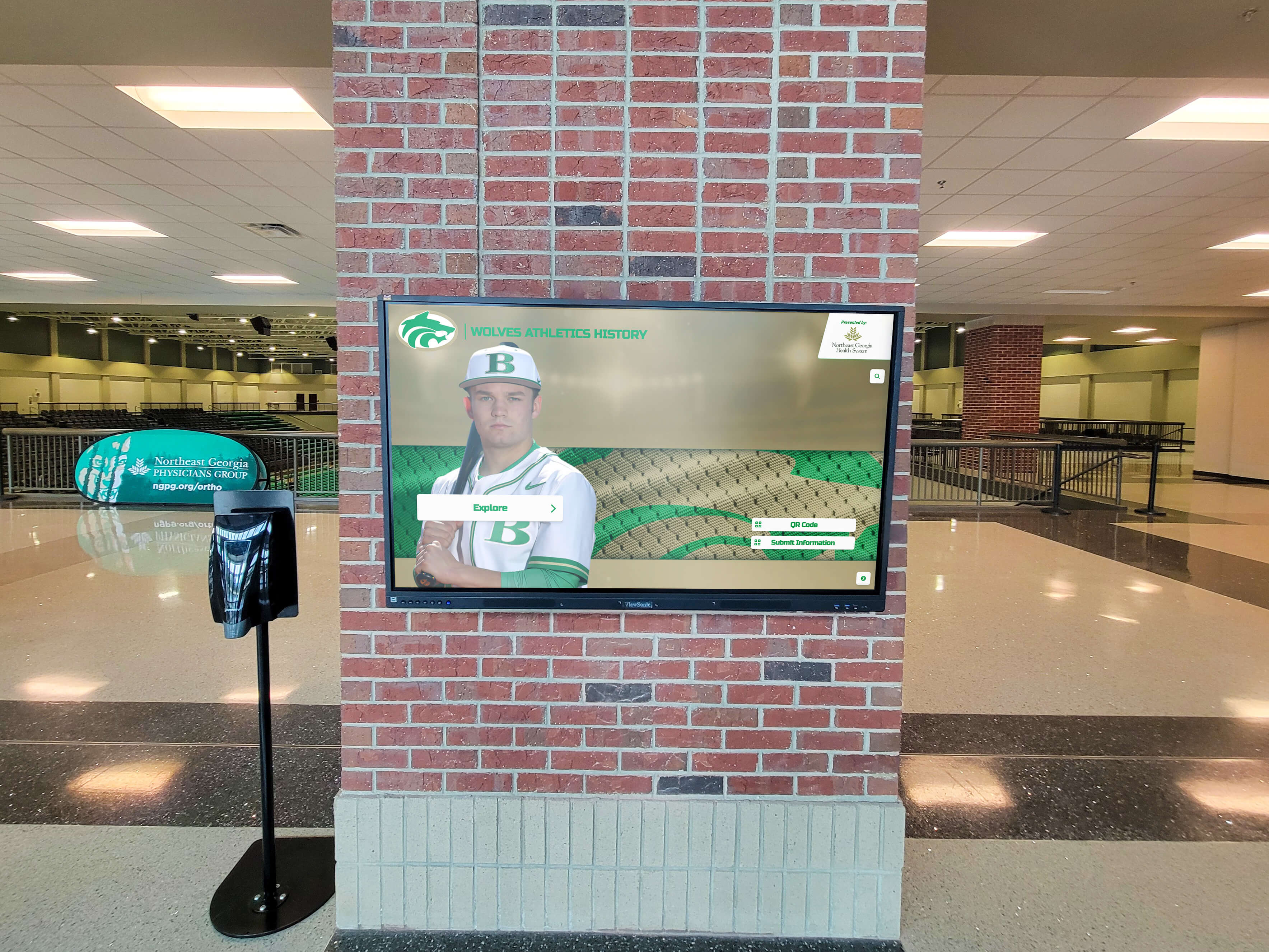
Strategic display placement creates engagement opportunities while eliminating space constraints of traditional recognition
Web-Accessible Recognition Extensions
While physical touchscreen displays create compelling on-site experiences, web-accessible recognition extends reach exponentially by enabling access from anywhere globally. This proves particularly valuable for Gatorade Player of the Year recognition, as these prestigious achievements interest audiences beyond immediate school communities.
Online Recognition Portals
The most sophisticated recognition platforms provide both physical displays and web portals accessible through standard browsers on computers, tablets, and smartphones. This dual approach means Gatorade award winners receive recognition visible to campus visitors through touchscreens while remaining accessible to:
- Alumni who graduated years ago and moved away but want to see their recognition preserved
- Families living at distance from campus who cannot regularly visit athletic facilities
- College recruiters researching program excellence and notable alumni
- Community members and boosters demonstrating local pride in achievement
- Prospective student-athletes and families evaluating program quality during recruitment
Web portals mirror touchscreen functionality with search, filtering, and detailed profile pages while optimizing for varied screen sizes. Mobile responsiveness ensures excellent experiences whether viewed on large desktop monitors or small smartphone screens. Schools implementing web-accessible athlete databases consistently report global engagement from alumni and families worldwide.
Social Media Integration
Digital recognition platforms often include social sharing capabilities enabling easy distribution through social media. When schools publish new Gatorade recipient profiles, athletes and families can share their recognition through Facebook, Twitter, Instagram, and other platforms, extending visibility throughout their social networks.
This organic sharing amplifies recognition impact far beyond what physical displays achieve while building program visibility and pride. A single Gatorade Player of the Year recognition shared across athlete, family, and school social channels might reach thousands of people who would never see gymnasium banners.
Hybrid Recognition Approaches
Many athletic departments find that combining traditional and digital recognition creates optimal results. This hybrid approach preserves meaningful physical elements while adding digital capabilities that expand reach and eliminate space limitations.
Physical Display with Digital Enhancement
Consider placing a dedicated banner or display panel in your gymnasium highlighting “Gatorade Player of the Year Recipients” while mounting a touchscreen display adjacent providing comprehensive interactive access to all winner profiles with complete information. QR codes on the physical banner can link to web-based recognition enabling smartphone access to extended content.
This combination honors tradition through physical presence while delivering digital advantages of unlimited capacity, rich storytelling, and remote accessibility. Visitors receive the best of both worlds—the gravitas of physical recognition plus the engagement and comprehensiveness of interactive digital content.
Rotating Physical Recognition
Some schools maintain limited physical banner or plaque displays featuring recent Gatorade winners (perhaps the most recent 5-10 years) while preserving complete historical recognition digitally. This approach provides traditional recognition for current and recent athletes while ensuring earlier recipients remain permanently accessible through digital platforms rather than disappearing into storage.
When physical space fills with recent recognition, earlier banners can be ceremonially transitioned to digital-only recognition at alumni events or homecoming celebrations, honoring the transition from physical to permanent digital preservation. Programs exploring athletic recognition transitions find this phased approach respects tradition while embracing modern capability.
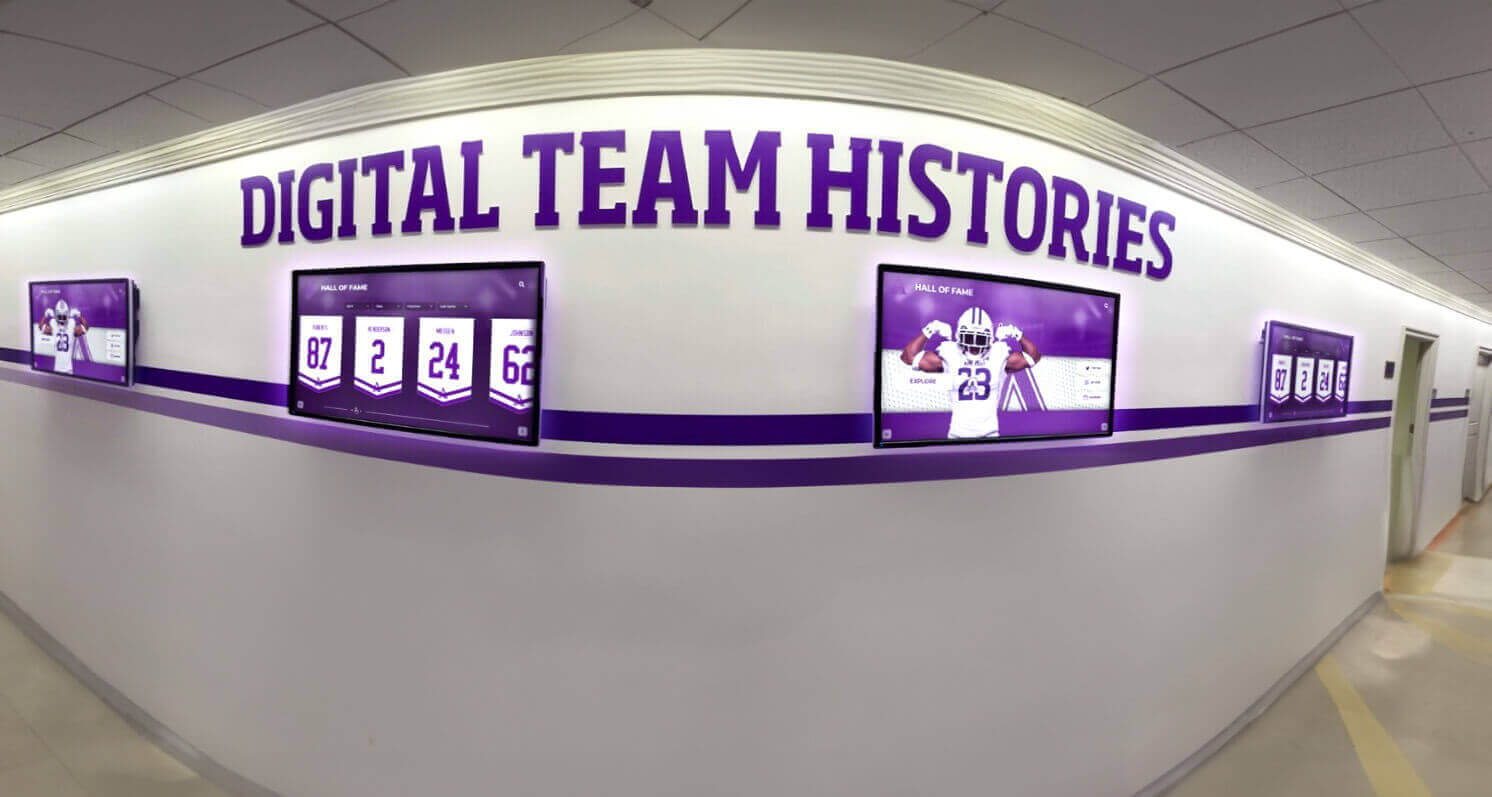
Multiple coordinated displays create comprehensive recognition environments throughout athletic facilities
Building Comprehensive Gatorade Award Recognition
Beyond simply displaying names and years, effective recognition tells complete stories about what made Gatorade Players of the Year exceptional. This storytelling approach maximizes motivational impact while creating meaningful tributes that athletes and families deeply value.
Essential Recognition Content Elements
Comprehensive Gatorade recipient profiles should include multiple content dimensions:
Athletic Achievements and Statistics
Document the specific athletic excellence that earned Gatorade recognition:
- Season statistics and performance metrics that distinguished them
- Team accomplishments and championships during their career
- Conference, district, regional, and state recognitions earned
- Record-breaking performances and program milestones achieved
- Coach testimonials explaining what made them special as athletes
- Signature moments or performances that defined their careers
This statistical and performance documentation provides context helping current athletes understand the level of excellence required for Gatorade recognition. Numbers alone cannot capture athletic greatness, but combined with narrative description, they paint complete pictures of achievement.
Academic Excellence Documentation
Since academic achievement factors significantly into Gatorade selection, profiles should highlight educational accomplishments:
- Grade point average and class rank
- Advanced Placement, International Baccalaureate, or honors course participation
- Academic awards and recognitions like honor roll or National Honor Society
- Standardized test achievements when appropriate
- Academic interests and strongest subjects
This academic information reinforces that Gatorade winners excel in classrooms as well as athletic venues. For younger athletes, these examples normalize the expectation that athletic and academic excellence coexist rather than compete. Many schools coordinate Gatorade athletic recognition with academic recognition programs celebrating the complete student-athlete.
Character and Community Impact
The character dimension of Gatorade awards deserves equal recognition alongside athletic and academic achievements:
- Community service involvement and volunteer activities
- Leadership positions in athletics and broader school community
- Mentorship of younger athletes and positive team influence
- Specific examples illustrating character qualities
- Overcoming adversity or challenges faced during athletic careers
These character elements often resonate most deeply with families and provide the most powerful inspiration for younger athletes. Statistics and awards document what athletes accomplished, but character stories reveal who they were as people.
Post-Graduation Updates
Following Gatorade recipients beyond high school graduation adds valuable context:
- College athletic participation and achievements
- Academic pursuits and degree programs
- Professional athletic careers when applicable
- Career paths and professional accomplishments
- Continued community involvement
These updates demonstrate how high school achievement connected to future success while enabling alumni to see how their peers’ lives developed. Current students benefit from seeing concrete examples of how athletic excellence, academic commitment, and strong character lead to meaningful opportunities.
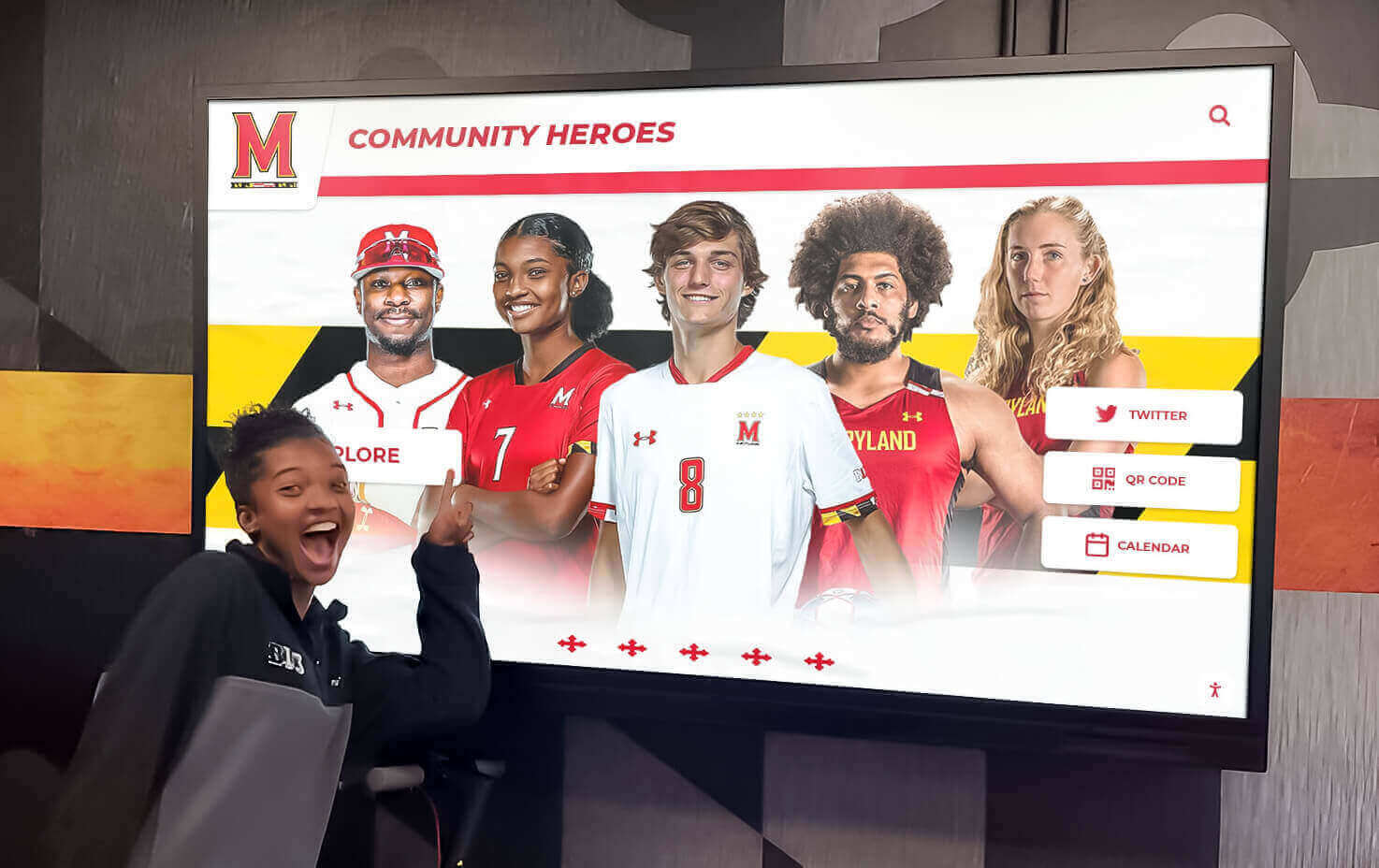
Recognition that tells complete athlete stories creates deeper engagement than basic name and year listings
Visual Content Best Practices
Digital recognition depends heavily on strong visual content. Thoughtful photo selection and presentation significantly impact profile quality and engagement.
Action Photography
The most compelling athletic recognition features action photos capturing athletes competing in their sports:
- Game or competition photos showing athletes in motion
- Photos capturing significant moments like scoring, defending, or celebrating
- Images illustrating athletic ability and competitive intensity
- Multiple photos showing different aspects of athletic participation
Action photography conveys athletic excellence in ways that formal portraits cannot. Visitors spending time exploring recognition profiles consistently engage longest with dynamic action shots showing athletes doing what made them special.
Photo Quality Standards
While professional photography is ideal, high-quality amateur photos work well when professionals aren’t available:
- High resolution images that display clearly on large screens
- Proper exposure avoiding too-dark or too-bright images
- Sharp focus on the athlete rather than blurry motion
- Appropriate framing highlighting the athlete
- Multiple photos per athlete when possible
Many athletic departments work with parent volunteers who photograph competitions, providing quality image sources for recognition. Establish photo collection processes early in seasons ensuring adequate images exist when athletes earn Gatorade recognition. Programs can explore athletic achievement documentation strategies for systematic approaches to capturing visual content.
Multimedia Integration
Beyond photos, digital recognition can incorporate video content when available:
- Highlight videos showing significant plays or performances
- Interview clips with athletes discussing their experiences
- Game footage illustrating athletic ability
- Celebration moments capturing emotional significance
- Video messages from coaches or teammates
Video integration transforms recognition from static display into dynamic celebration that engages visitors more effectively than photos and text alone. While video isn’t essential, its inclusion elevates profile quality significantly when content exists.
Implementing Digital Recognition for Gatorade Awards
Athletic departments ready to implement or upgrade Gatorade Player of the Year recognition should follow systematic planning processes ensuring successful, sustainable programs.
Assessment and Planning Phase
Evaluate Current Recognition Approaches
Begin by documenting how your athletic department currently recognizes Gatorade award winners:
- What physical recognition exists (banners, plaques, trophy cases)?
- How accessible is current recognition to students, families, and broader community?
- What content is included versus what’s missing from current recognition?
- How does current recognition handle historical versus recent recipients?
- What budget and staff time does current recognition require?
This assessment clarifies gaps that digital solutions can address while identifying valuable traditional elements worth preserving in hybrid approaches.
Define Recognition Goals and Priorities
Establish clear objectives for Gatorade recognition programs:
- Inspire current student-athletes toward excellence through role model examples
- Honor past recipients appropriately regardless of graduation year
- Provide accessible recognition to alumni, families, and broader community
- Eliminate space constraints limiting comprehensive recognition
- Reduce administrative burden of maintaining physical displays
- Create engaging recognition that visitors actively explore
Clear goals enable evaluating solution options against specific needs rather than selecting technology for its own sake. Schools planning comprehensive athletic hall of fame displays benefit from goal clarity during planning phases.
Gather Historical Content
Implementing comprehensive digital recognition requires collecting historical information about past Gatorade recipients:
- Create lists of all Gatorade award winners throughout program history
- Gather available photos from school archives, yearbooks, and family collections
- Document athletic statistics and achievements from record books
- Collect newspaper articles and media coverage from achievement years
- Request biographical information and post-graduation updates from alumni
This content gathering often represents the most time-intensive implementation phase. Consider spreading historical content development over several months or years while launching recognition systems with complete information for recent recipients and gradually expanding historical depth.
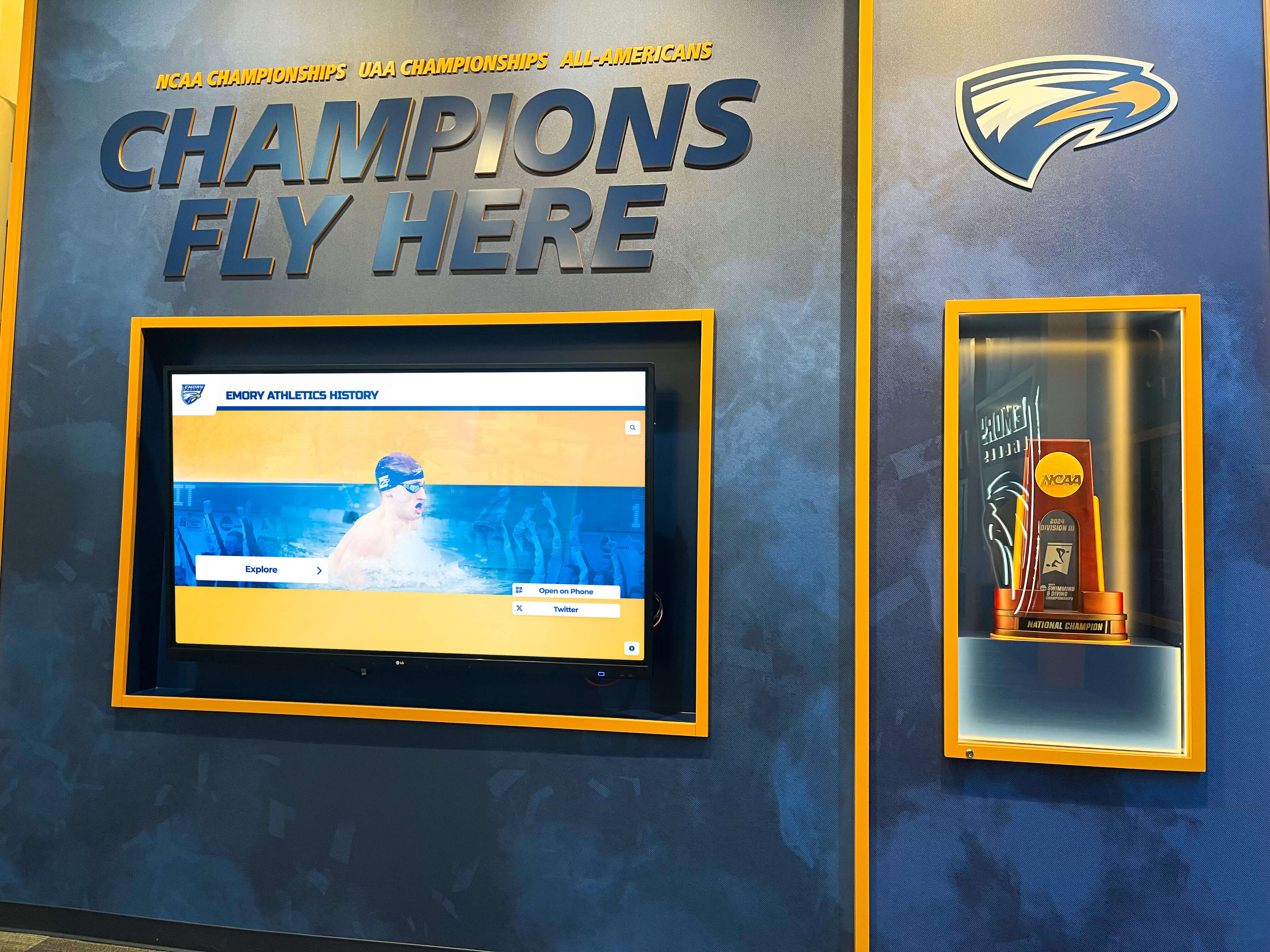
Comprehensive digital recognition preserves decades of achievement in formats that never run out of space
Technology Selection Considerations
Platform Capabilities Assessment
Effective digital recognition requires platforms specifically designed for athletic recognition rather than generic digital signage repurposed for sports applications. Evaluate solutions based on:
Content Management Requirements
- Intuitive interfaces enabling updates without technical expertise
- Cloud-based access from any internet-connected device
- Bulk import tools for efficiently loading historical content
- Template systems maintaining visual consistency
- Media management for organizing photos and videos
Display and Accessibility Features
- Interactive touchscreen capability for on-site displays
- Mobile-responsive web access for remote viewing
- Powerful search and filtering enabling easy content discovery
- Support for rich media including photos and videos
- Unlimited content capacity without additional costs
Sustainability Factors
- Affordable licensing matching athletic department budgets
- Reliable technical support and training
- Regular platform updates without disruption
- Analytics revealing engagement patterns
- Long-term vendor stability
Solutions like Rocket Alumni Solutions provide purpose-built athletic recognition platforms combining these essential capabilities. Avoid generic digital signage systems requiring extensive customization to function effectively for recognition purposes.
Hardware Planning
Physical touchscreen displays require thoughtful hardware decisions:
Display Sizing: Select screen sizes based on viewing distances and installation locations. Hallway displays typically work well at 55-65 inches while large gathering spaces might utilize 75-86 inch displays for visibility from greater distances.
Mounting Considerations: Wall-mounted displays create clean installations in existing facilities. Freestanding kiosk options provide flexibility when wall mounting isn’t feasible. Consider ADA accessibility requirements for appropriate mounting heights.
Network Connectivity: Displays require reliable internet connectivity for content updates and management. Evaluate WiFi signal strength in planned installation locations or plan for hardwired ethernet connections ensuring reliability.
Environmental Factors: Consider ambient lighting, potential glare from windows, temperature ranges, and physical access when selecting installation locations and display specifications.
Launch and Ongoing Management
Initial Content Development
Prioritize content development focusing on recent Gatorade recipients where complete information exists:
- Create comprehensive profiles for all recipients from the past 5-10 years
- Develop recognition categories or filters highlighting Gatorade awards specifically
- Design welcome screens and navigation promoting Gatorade winner discovery
- Test content on actual displays ensuring quality presentation
- Gather feedback from athletes, families, and staff before public launch
This phased approach enables launching with quality content while avoiding delays waiting for complete historical compilation. Announce plans to gradually expand historical recognition over subsequent months as content development continues.
Promotion and Communication
Ensure your community knows about new recognition programs:
- Announce digital recognition at athletic events and ceremonies
- Feature recognition in school newsletters and athletic department communications
- Demonstrate displays at open houses and community events
- Promote web access through social media and email campaigns
- Train coaches and staff to reference recognition when recruiting athletes
Effective promotion ensures investment in recognition systems achieves maximum engagement and community awareness.
Sustainable Management Processes
Long-term recognition success depends on establishing clear management responsibilities:
- Assign specific staff members responsible for content updates
- Create annual workflows for adding new Gatorade recipients
- Develop standards for photo quality and profile comprehensiveness
- Implement review processes ensuring accuracy before publication
- Schedule regular content audits maintaining current information
Build recognition management into existing athletic department operations rather than treating it as separate responsibility. When recognition becomes routine part of season-end activities, it remains current without additional burden. Athletic departments benefit from exploring recognition program management strategies ensuring long-term sustainability.
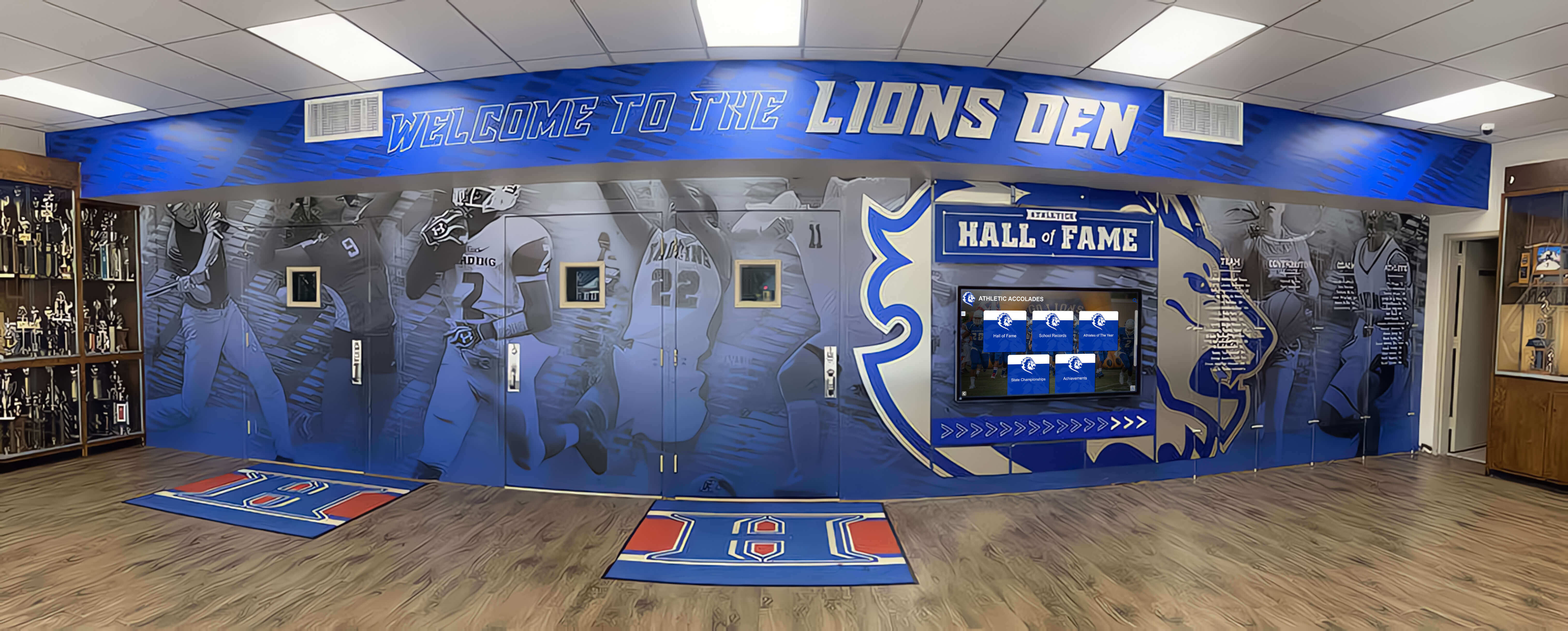
Successful recognition often combines traditional physical elements with modern digital enhancement
Recognition Beyond Gatorade: Comprehensive Athletic Achievement
While this guide focuses specifically on Gatorade Player of the Year awards, these prestigious honors exist within broader athletic achievement contexts. Effective recognition programs honor Gatorade winners while celebrating comprehensive athletic excellence across all achievement levels.
Creating Tiered Recognition Systems
Athletic programs should develop recognition structures acknowledging achievement at multiple levels:
Pinnacle Recognition: Gatorade Player of the Year, All-American selections, state champion athletes, and program record holders receive top-tier recognition with prominent features and comprehensive profiles.
Significant Achievement: All-State and All-Conference athletes, regional champions, district record holders, and specialized award recipients receive substantial recognition acknowledging their accomplishments.
Participation and Contribution: All athletes contributing to teams deserve acknowledgment for their participation even when they don’t achieve top honors. Digital recognition systems enable inclusive approaches celebrating everyone who represented programs.
This tiered structure maintains special significance for Gatorade awards and equivalent honors while ensuring recognition opportunities exist for athletes at all achievement levels. Comprehensive approaches create cultures where all contribution receives appreciation rather than recognition limited to top performers only. Programs can explore athletic team recognition approaches for multi-level celebration systems.
Coordinating Athletic and Academic Recognition
Gatorade awards specifically honor athletes who excel athletically, academically, and characteristically. This holistic recognition approach suggests natural coordination between athletic and academic celebration programs.
Consider creating recognition systems that present complete student profiles including:
- Athletic achievements and Gatorade or equivalent awards
- Academic honors like National Merit recognition or honor roll
- Character recognition such as community service awards
- Leadership positions in athletic and academic contexts
This comprehensive approach reinforces that excellence spans multiple dimensions rather than compartmentalizing achievement into separate athletic and academic categories. Students viewing recognition see role models who succeeded across all areas of high school experience rather than excelling narrowly in single dimensions.
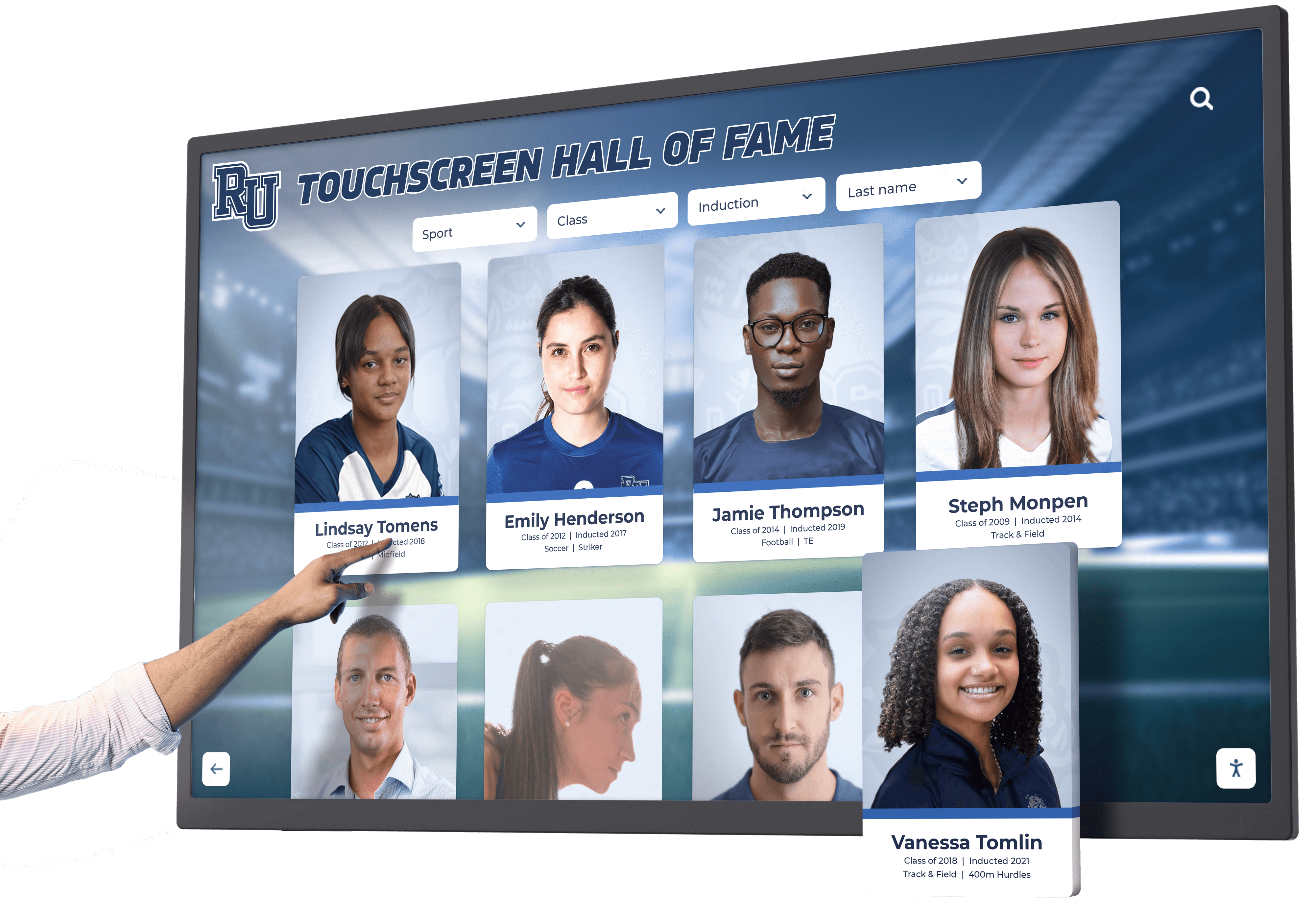
Interactive recognition systems enable exploration of individual achievement stories and career development
Budget Considerations and Funding Strategies
Athletic departments implementing digital recognition for Gatorade awards and broader achievements should plan appropriate budget allocations and explore funding sources beyond operating budgets.
Digital Recognition Investment Components
Comprehensive digital recognition requires investment in several areas:
Technology Costs
- Touchscreen display hardware (typically $3,000-8,000 per display depending on size and features)
- Software licensing for recognition platforms (varies by vendor and features)
- Installation including mounting, cabling, and network connectivity
- Ongoing software maintenance and support fees
Content Development Expenses
- Staff time for compiling historical information and creating profiles
- Photography and video production when professional content doesn’t exist
- Graphic design for templates and visual elements when customization is desired
- Potential contractor assistance with bulk content development
Ongoing Operational Costs
- Annual software licensing or subscription fees
- Occasional hardware maintenance or replacement
- Staff time for regular content updates
- Network connectivity and electricity (typically minimal)
While these investments require planning, digital recognition typically costs less over 5-7 year periods than equivalent traditional recognition when comparing ongoing plaque, banner, and trophy case expenses with digital alternatives providing dramatically greater capacity and capability.
Funding Approaches
Athletic departments can pursue several funding strategies for recognition investments:
Designated Donor Contributions: Many boosters, alumni, and families respond positively to opportunities funding specific recognition purposes. Consider soliciting dedicated gifts for “Gatorade Player of the Year Recognition Display” or “Athletic Excellence Hall of Fame” projects. Donors often find recognition projects more compelling than general operating support.
Booster Organization Partnerships: Athletic booster organizations frequently seek meaningful projects supporting programs. Recognition systems benefiting current athletes through inspiration while honoring alumni often align well with booster missions and funding priorities.
Capital Campaign Integration: Schools conducting broader facility improvement campaigns or capital fundraising can include recognition systems as campaign components. Recognition projects offer tangible donor-funded outcomes with high visibility.
Memorial or Tribute Opportunities: Families interested in honoring deceased athletes or coaches sometimes welcome opportunities funding recognition programs that include specific memorial components while benefiting broader athletic communities.
Sponsorship Arrangements: Some athletic departments secure recognition system sponsorships from local businesses receiving appropriate acknowledgment within displays. This approach requires balancing sponsor visibility with maintaining recognition focus on student achievement.
Phased Implementation: Budget constraints need not delay recognition entirely. Many athletic departments implement single displays initially, then add additional units as resources permit. Launch recognition programs with achievable initial investments, demonstrate value, and expand over subsequent years.
Schools exploring comprehensive fundraising for athletic recognition benefit from targeting multiple funding sources rather than relying solely on operating budgets.
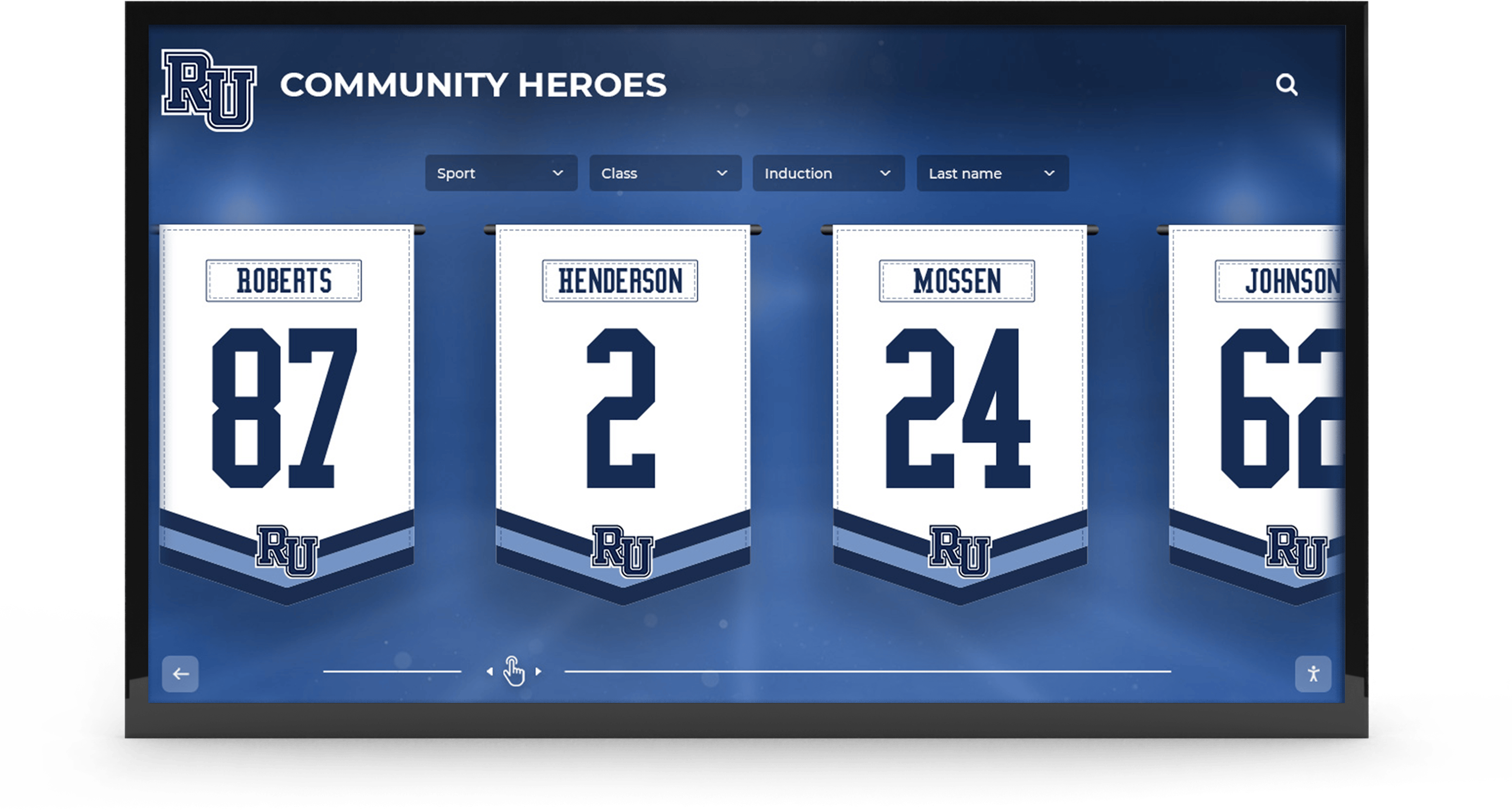
Digital recognition creates opportunities for community partnerships and local business support
Measuring Recognition Program Success
Athletic departments implementing new recognition approaches should establish metrics enabling objective evaluation of impact and value.
Engagement and Usage Metrics
Digital recognition platforms provide analytics revealing how audiences interact with content:
Interaction Measurements
- Total sessions showing how many times displays are accessed
- Average session duration indicating engagement depth
- Search queries revealing what users seek
- Most viewed profiles identifying popular content
- Return visitor rates showing sustained interest versus one-time viewing
These quantitative metrics reveal patterns impossible to observe with physical displays. You can identify which Gatorade recipients generate strongest interest, how recognition usage changes seasonally, and whether displays reach beyond athletic teams to broader school communities.
Accessibility Metrics
- Web platform visitors showing remote recognition access
- Geographic distribution revealing whether recognition reaches alumni at distance
- Device types indicating desktop versus mobile usage patterns
- Social sharing frequency measuring organic content distribution
- Referral sources showing how users discover recognition
Web analytics demonstrate whether recognition achieves goals of extending reach beyond physical campus to dispersed alumni and family networks.
Qualitative Impact Indicators
Beyond analytics, gather qualitative feedback about recognition meaning and influence:
Stakeholder Testimonials
- Athlete and family appreciation for comprehensive recognition
- Alumni responses to seeing their achievements preserved digitally
- Coach observations about motivational impact on current athletes
- Community feedback about program pride and visibility
- Prospective student-athlete recruitment influence
The most meaningful recognition impact often appears in personal stories rather than statistics—athletes inspired by predecessor examples, families expressing gratitude for honoring achievement, or alumni reconnecting with programs after discovering preserved recognition.
Cultural Indicators
- Observed changes in athletic program pride and identity
- Student awareness of program traditions and excellence
- Community engagement with athletic department communications
- Media coverage referencing recognition and program history
- Alumni attendance at recognition events and ceremonies
These qualitative indicators reveal whether recognition achieves broader goals of building program culture, strengthening community connections, and creating environments where excellence becomes aspirational.
Conclusion: Preserving Gatorade Excellence for Future Generations
Gatorade Player of the Year awards represent remarkable achievements by exceptional student-athletes who excel athletically, academically, and characteristically. These prestigious honors deserve recognition approaches that match their significance—celebration methods that inspire current athletes, preserve legacies permanently, and honor excellence in ways that physical space limitations cannot constrain.
Traditional recognition through banners, plaques, and trophy cases has served athletic programs well for generations. However, as achievements accumulate over decades, space constraints force difficult choices about whose accomplishments receive visibility versus whose disappear into storage. Digital recognition solutions eliminate these limitations while providing capabilities traditional approaches simply cannot match.
Interactive touchscreen displays combined with web-accessible platforms create unlimited recognition capacity accommodating every Gatorade recipient throughout program history. These systems enable rich multimedia storytelling that captures complete athlete achievements rather than reducing careers to names on plaques. Cloud-based management allows prompt updates celebrating recognition while excitement remains high rather than waiting months for physical production.
Perhaps most significantly, digital recognition extends reach from campus-only visibility to global accessibility. Alumni who moved away after graduation, families living at distance, college recruiters evaluating programs, and community members throughout your region can explore Gatorade award winners and broader athletic achievements from anywhere, building program pride and visibility impossible with physical displays.
Athletic departments implementing digital recognition preserve tradition while embracing modern capability. Hybrid approaches combining meaningful physical elements with comprehensive digital enhancement honor convention while solving practical constraints that physical recognition faces over time. The investment in professional digital recognition demonstrates that programs value athletes sufficiently to preserve their legacies permanently rather than discarding recognition when space runs out years after graduation.
Whether your program celebrates one Gatorade Player of the Year or dozens across multiple decades, their achievements deserve recognition approaches equal to their significance. Digital platforms like those from Rocket Alumni Solutions provide athletic departments with tools ensuring celebration reflects the dedication, excellence, and remarkable accomplishments that define your program’s greatest athletes.
Your Gatorade Player of the Year recipients and all athletic achievers deserve recognition that lasts forever—not just until gymnasium walls fill up or trophy cases overflow. Digital athletic recognition provides the permanent, accessible, comprehensive celebration worthy of their excellence.
Transform Your Athletic Recognition
Discover how digital recognition systems can preserve your Gatorade Player of the Year awards and broader athletic achievements permanently while inspiring current and future athletes.































