Graduation recognition programs represent far more than ceremony logistics and diploma distribution—they are institutional celebrations marking transformative educational journeys, honoring student dedication, acknowledging family support, and preserving graduating class legacies for future generations. As schools seek meaningful ways to celebrate seniors beyond a single commencement ceremony, many are discovering that comprehensive recognition programs combining traditional celebrations with modern digital displays create lasting tributes that honor achievements while strengthening alumni connections and school pride.
This comprehensive guide explores how schools can develop graduation recognition programs that authentically celebrate senior accomplishments, engage families and communities, establish enduring traditions, and leverage interactive technology to preserve graduating class memories permanently in ways that inspire current students and future generations.
Graduation represents the culmination of years of academic effort, personal growth, extracurricular involvement, and community contributions. Yet traditional recognition methods—yearbook pages that fade, ceremony programs discarded after commencement, trophy cases with limited space—struggle to capture the complete significance of senior achievements or preserve these accomplishments beyond graduation day. Modern graduation recognition programs, particularly those incorporating interactive digital displays, transform temporary celebrations into permanent institutional legacies that honor graduates comprehensively while creating engagement opportunities extending far beyond commencement ceremonies.
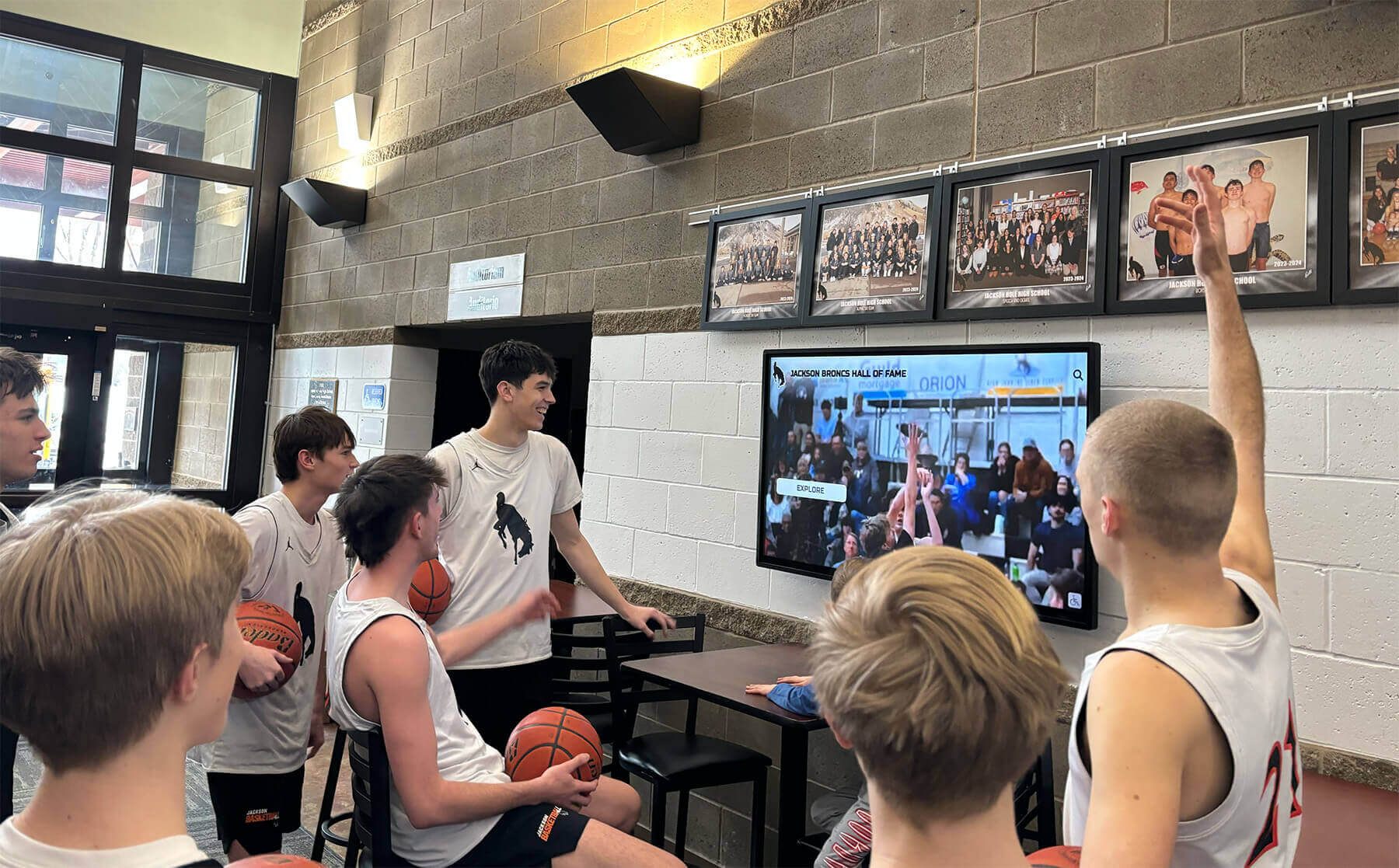
Modern recognition displays transform school hallways into interactive spaces celebrating senior achievements
Understanding Comprehensive Graduation Recognition
Before implementing specific recognition programs, understanding what makes graduation recognition meaningful helps schools create celebrations that resonate authentically with students, families, and communities while establishing traditions that strengthen institutional culture.
Why Graduation Recognition Matters Beyond Commencement
Graduation ceremonies provide important celebratory moments, but comprehensive recognition programs extend appreciation throughout senior year and preserve achievements permanently rather than limiting celebration to single-day events.
Validating the Complete Senior Experience
Graduation recognition should celebrate holistic student development beyond academics including academic achievement and scholarly excellence, athletic accomplishments and team contributions, arts and performance achievements, leadership positions and community service, character development and personal growth, and overcoming challenges and demonstrating resilience. Comprehensive programs acknowledge that education develops complete individuals whose contributions span multiple dimensions deserving recognition beyond GPA and test scores.
Creating Lasting Institutional Memory
While individual students and families treasure graduation memories, schools benefit from preserving graduating class legacies as part of institutional history. Digital recognition displays enable schools to maintain searchable archives of every graduate with detailed profiles, accomplishment records, and multimedia content ensuring that student contributions remain accessible and celebrated decades after graduation.
Strengthening Alumni Connection
Students who experience meaningful graduation recognition maintain stronger connections to their schools throughout life. When schools invest in celebrating graduates comprehensively, students develop deeper institutional loyalty translating to alumni engagement through reunions, mentorship, advocacy, and philanthropy supporting future generations.

Permanent digital displays ensure graduate achievements remain celebrated for generations
Inspiring Current Students
Current underclassmen who observe comprehensive senior recognition see tangible evidence that their schools value student accomplishments and honor commitment appropriately. Quality recognition programs motivate younger students by demonstrating that dedication, achievement, and contribution receive lasting institutional appreciation, encouraging sustained effort throughout educational journeys.
Components of Effective Graduation Recognition Programs
Comprehensive recognition programs integrate multiple components working together to celebrate graduates authentically throughout senior year and preserve legacies permanently.
Pre-Graduation Recognition Throughout Senior Year
Effective programs celebrate seniors consistently across final year rather than concentrating recognition exclusively during graduation week through monthly senior spotlights highlighting individual students, senior superlative awards celebrating diverse achievements and personalities, senior night celebrations honoring graduating athletes, academic awards ceremonies recognizing scholarly excellence, and arts showcases featuring graduating performers and artists.
Distributed recognition throughout senior year ensures all students receive appreciation while building anticipation toward commencement celebrations.
Commencement Ceremony Elements
Graduation ceremonies themselves include traditional recognition components like individual diploma presentation and name recognition, honor graduate distinction for academic excellence, special awards for outstanding achievement, valedictorian and salutatorian addresses, and senior class speaker presentations sharing student perspectives.
Ceremonial recognition provides important public acknowledgment validating years of effort before families and communities.
Post-Graduation Legacy Preservation
Recognition extending beyond graduation day includes permanent digital halls of fame featuring graduating class profiles, online alumni directories maintaining graduate connection, reunion coordination facilitating continued community, mentorship programs connecting graduates with current students, and distinguished alumni recognition celebrating post-graduation achievements.
Ongoing recognition maintains graduate connection while demonstrating that institutional appreciation extends throughout alumni lives.
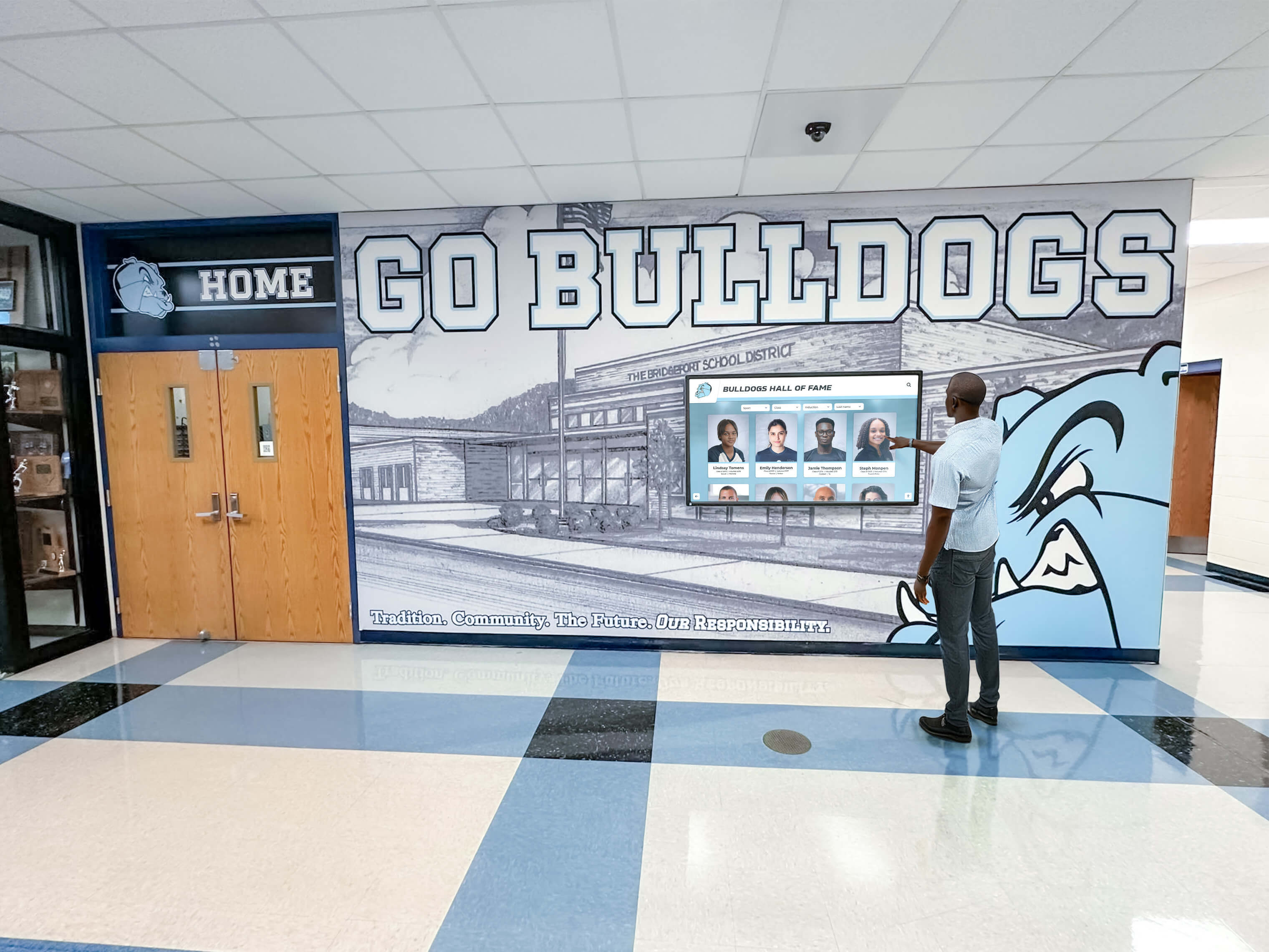
Interactive displays allow visitors to explore detailed graduate profiles and accomplishments
Planning Comprehensive Senior Recognition Throughout the Year
Effective graduation recognition programs require thoughtful planning coordinating multiple celebration opportunities throughout senior year rather than concentrating all recognition efforts during graduation week.
Fall Semester Recognition Opportunities
Senior year begins with opportunities establishing recognition patterns and building excitement toward graduation.
Senior Class Welcome and Orientation
Opening senior year with dedicated recognition establishes tone celebrating the graduating class including senior assembly welcoming the class formally, distribution of senior privileges and traditions, introduction to graduation requirements and planning, presentation of class history timelines connecting to alumni, and unveiling senior year recognition programs and opportunities.
Early celebration creates excitement while establishing that schools prioritize honoring the graduating class throughout the entire final year.
Back-to-School Recognition Features
Fall recognition opportunities include senior photo displays in prominent hallway locations, digital slideshow features highlighting individual seniors, senior parking spot decoration traditions, homecoming court recognition celebrating school spirit, and fall sports senior night celebrations honoring graduating athletes.
Visible fall recognition ensures seniors feel celebrated from the beginning rather than waiting until spring for acknowledgment.
Academic and Extracurricular Milestone Recognition
Throughout fall semester, recognize senior achievements including early college admission acceptances, National Merit Scholar recognition, All-State athletic selections, arts competition achievements, and community service milestone completion.
Timely recognition of fall achievements demonstrates ongoing attention to senior accomplishments rather than retrospective acknowledgment during graduation week.
Spring Semester Intensified Recognition
Spring semester brings increased recognition opportunities building toward graduation celebrations.
Senior Week Special Events
Many schools establish senior week traditions preceding graduation including senior breakfast or luncheon, senior talent show or variety performance, senior prank day (supervised and approved), senior service day giving back to school, and senior awards ceremony recognizing diverse achievements.
Concentrated celebration creates special senior year memories while honoring students comprehensively beyond single graduation ceremony.
Athletic and Arts Final Celebrations
Spring brings final performances and competitions warranting dedicated recognition through spring sports senior night celebrations, final concert and theater performances honoring graduating performers, arts showcase exhibitions featuring senior work, and final competition recognition for debate, robotics, and academic teams.
Activity-specific recognition ensures that students whose primary contributions occurred outside academics receive appropriate celebration honoring their complete high school involvement.
Academic Awards and Honor Society Recognition
Formal academic recognition events include honor society inductions and recognition, departmental academic awards ceremonies, scholarship winner announcements, honor graduate distinction revelation, and valedictorian and salutatorian recognition.
Academic celebration communicates that schools value scholarly excellence while providing deserving students appropriate public acknowledgment for intellectual achievement.
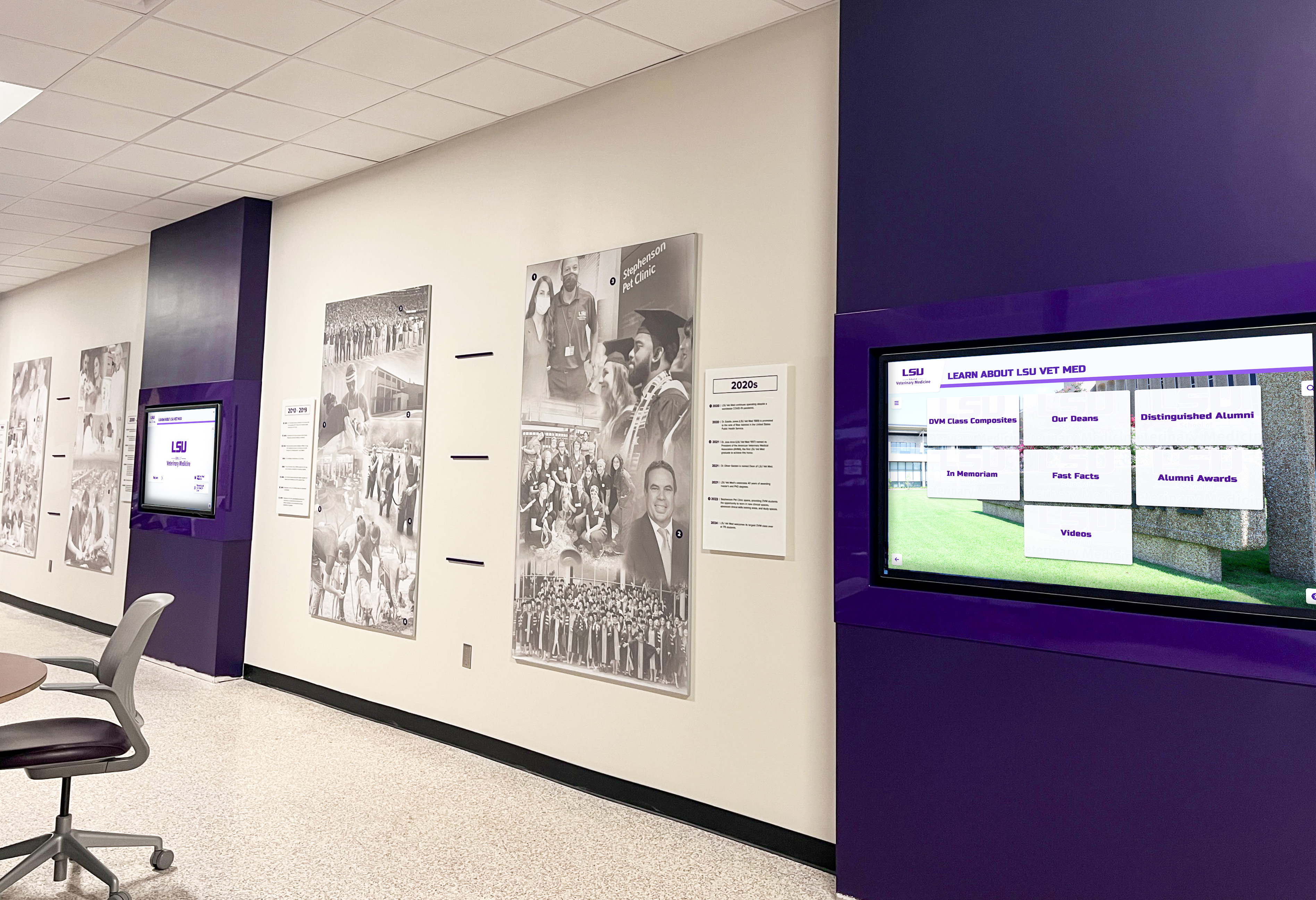
Year-round recognition programs celebrate diverse student achievements across academics, athletics, and arts
Commencement Weekend Celebrations
Graduation weekend itself includes multiple recognition opportunities ensuring comprehensive celebration.
Baccalaureate Services
Baccalaureate provides reflective recognition opportunity featuring inspirational speakers addressing graduating class, recognition of student spiritual development and values, acknowledgment of family support and sacrifice, and celebration of personal growth beyond academics.
Baccalaureate ceremonies offer meaningful recognition complementing formal commencement celebrations.
Commencement Ceremony Recognition
The graduation ceremony itself includes processional entry establishing ceremonial significance, individual diploma presentation with name recognition, honor graduate and award recipient identification, student speaker presentations, and traditional elements like class gifts and memory videos.
Ceremonial formality communicates institutional respect for graduation significance while providing families with meaningful celebration experiences.
Post-Ceremony Receptions and Celebrations
Following formal commencement, many schools host reception opportunities including graduate reception with refreshments and socializing, family photograph opportunities with graduates and administrators, memory table displays featuring senior year highlights, and distribution of commemorative graduation materials.
Post-ceremony events provide less formal celebration opportunities where families can congratulate graduates while reflecting on educational journeys completed.
Implementing Digital Recognition Displays for Permanent Graduate Celebration
While traditional recognition methods serve important ceremonial purposes, digital recognition displays preserve graduate achievements permanently while creating interactive experiences that engage current students, alumni, and visitors long after graduation ceremonies conclude.
Advantages of Digital Graduation Recognition
Modern digital recognition solutions offer capabilities that traditional methods cannot match for celebrating graduates comprehensively.
Unlimited Recognition Capacity
Physical space constraints force difficult decisions about which graduates and achievements to display prominently. Digital systems eliminate these limitations entirely enabling comprehensive profiles for every graduate, detailed achievement records across all categories, unlimited photograph and video storage, searchable databases facilitating alumni discovery, and capacity to add graduating classes indefinitely without removing previous years.
Schools can honor every student appropriately rather than selecting limited graduates for physical display space.
Rich Multimedia Storytelling
Digital platforms enable recognition depth impossible through static displays including professional portrait photographs, candid school experience photos, video messages from graduates, achievement timelines showing growth, extracurricular involvement documentation, college destination and future plans, and links to online profiles and social media.
Comprehensive multimedia profiles tell complete student stories celebrating holistic development and diverse contributions.
Interactive Exploration and Discovery
Interactive touchscreen displays invite engagement through search functionality finding specific graduates, filtering by graduation year, achievement type, or activity, photo galleries showing school experiences, video content featuring student voices, connection mapping showing relationships between alumni, and social sharing allowing graduates to share their profiles.
Interactive features transform passive viewing into active exploration encouraging extended engagement with graduate achievements.
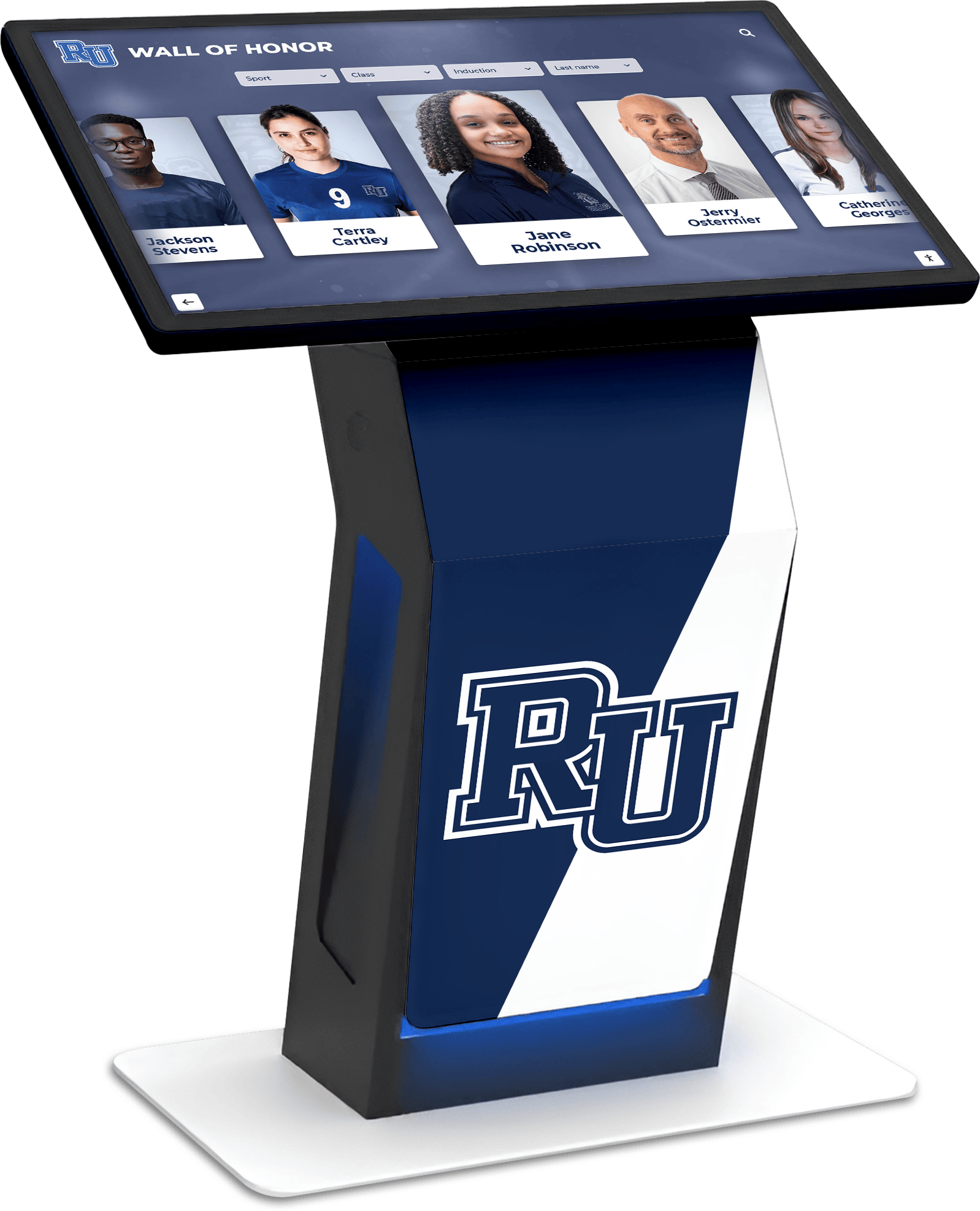
Touchscreen kiosks provide intuitive access to comprehensive graduate profiles and achievement records
Remote Access and Alumni Engagement
Digital recognition extends beyond physical campus locations through web accessibility allowing global graduate viewing, social media integration enabling achievement sharing, alumni update submission portals maintaining current information, virtual reunion coordination connecting distant graduates, and email notification when new recognition is added.
Remote access transforms campus-only recognition into globally accessible celebration maintaining graduate connection regardless of location.
Cost-Effective Long-Term Solution
While initial digital system investment exceeds traditional display costs, long-term financial benefits create compelling value including elimination of annual printing and engraving costs, reduced physical space requirements, minimal ongoing maintenance expenses, unlimited capacity eliminating expansion costs, and remote content management reducing administrative time.
Many schools achieve return on investment within 3-4 years while gaining recognition capabilities that traditional methods cannot provide.
Designing Effective Digital Graduate Recognition Displays
Implementing digital recognition requires thoughtful planning ensuring systems meet institutional needs while creating engaging user experiences.
Content Structure and Organization
Effective displays organize graduate information intuitively including chronological organization by graduation year, categorical organization by achievement type, alphabetical searchable directories, featured graduate rotations highlighting diverse students, and anniversary class spotlights celebrating milestone reunions.
Logical organization ensures that visitors can discover desired information efficiently while encouraging broader exploration of graduate achievements.
Profile Content Standards
Comprehensive graduate profiles typically include official graduation portrait photograph, graduation date and class information, academic honors and distinctions, athletic achievements and team involvement, arts and performance accomplishments, extracurricular activities and leadership positions, community service contributions, college destination and future plans, and personal statements or reflection messages.
Standardized content ensures every graduate receives equitable comprehensive recognition while maintaining consistent presentation quality.
Visual Design and Branding
Digital displays should reflect institutional identity through school colors and branding integration, professional graphic design maintaining quality, consistent typography and layout standards, high-resolution photographs ensuring visual quality, and dynamic content rotation maintaining visitor interest.
Professional presentation communicates institutional respect for graduates while creating visually appealing displays that enhance campus environments.
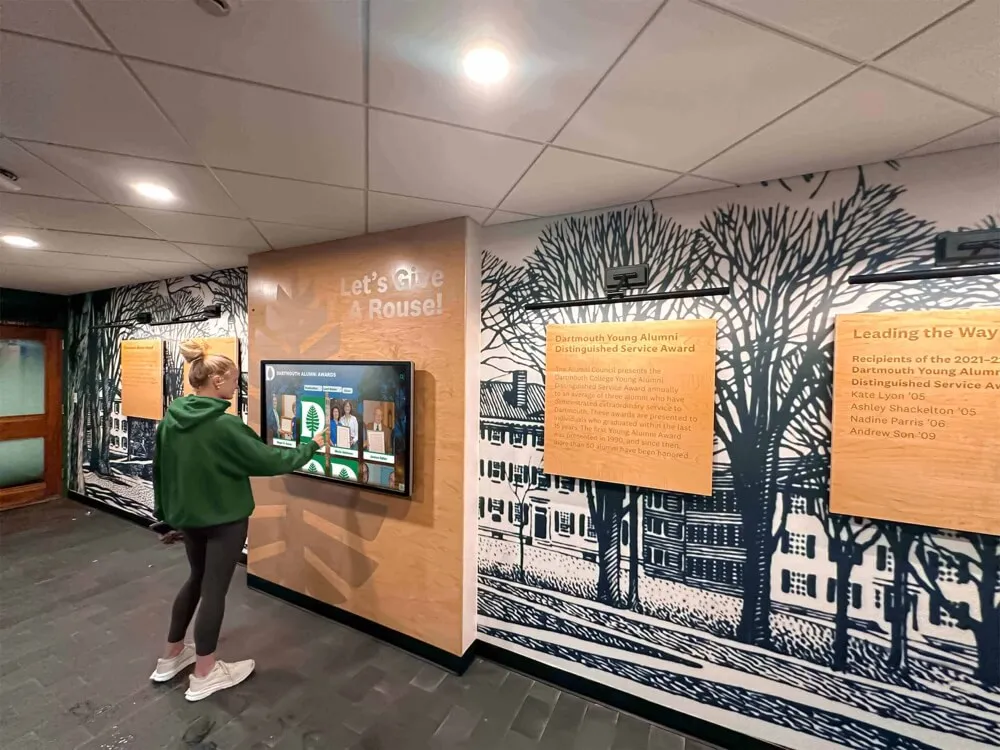
Professional digital displays enhance campus environments while celebrating institutional legacy
Physical Placement Strategy
Display location significantly impacts visibility and usage including high-traffic corridor placement ensuring visitor exposure, entrance lobby installations creating positive first impressions, athletic facility recognition celebrating athletic graduates, performing arts center displays honoring arts achievements, and library or academic building installations emphasizing scholarly excellence.
Strategic placement maximizes display visibility while connecting recognition to relevant campus spaces.
Integration With Broader Recognition Ecosystem
Graduate recognition displays work most effectively when integrated within comprehensive institutional recognition systems including athletic record boards celebrating team achievements, academic honors boards recognizing scholarly excellence, alumni achievement displays featuring distinguished graduates, donor recognition walls acknowledging philanthropic support, and historical timeline displays providing institutional context.
Integrated recognition systems create cohesive institutional narratives celebrating complete community contributions.
Establishing Academic Honor Recognition Programs
While comprehensive graduation recognition celebrates diverse achievements, academic excellence deserves dedicated recognition programs honoring scholarly accomplishment.
Traditional Academic Honors
Schools maintain various established academic distinction programs that recognize graduating student scholarly achievement.
Latin Honors Recognition
Many institutions award Latin honors based on cumulative GPA including Summa Cum Laude (highest distinction, typically top 5%), Magna Cum Laude (high distinction, typically top 10%), and Cum Laude (distinction, typically top 25%). Latin honors provide standardized recognition allowing comparison across institutions while motivating academic excellence throughout high school careers.
Honor Roll Recognition
Consistent academic performance throughout high school warrants recognition through four-year honor roll achievement, semester-by-semester honor recognition, principal’s list for highest achievement, and perfect attendance combined with academic excellence. Sustained excellence demonstrates consistent effort deserving recognition beyond final year accomplishment.
Department-Specific Academic Awards
Subject area recognition celebrates discipline-specific excellence including mathematics achievement awards, science research recognition, English and language arts honors, social studies and history awards, world language proficiency recognition, and arts and music excellence acknowledgment. Departmental awards ensure that students excelling in specific areas receive appropriate recognition from faculty who witnessed their scholarly development.
National Recognition Programs
Various national programs provide external validation of academic excellence warranting institutional celebration including National Honor Society membership, National Merit Scholar recognition, AP Scholar distinctions, state and regional academic competitions, and Presidential Education Award recipients. External recognition provides objective achievement validation while bringing institutional prestige through student accomplishment.
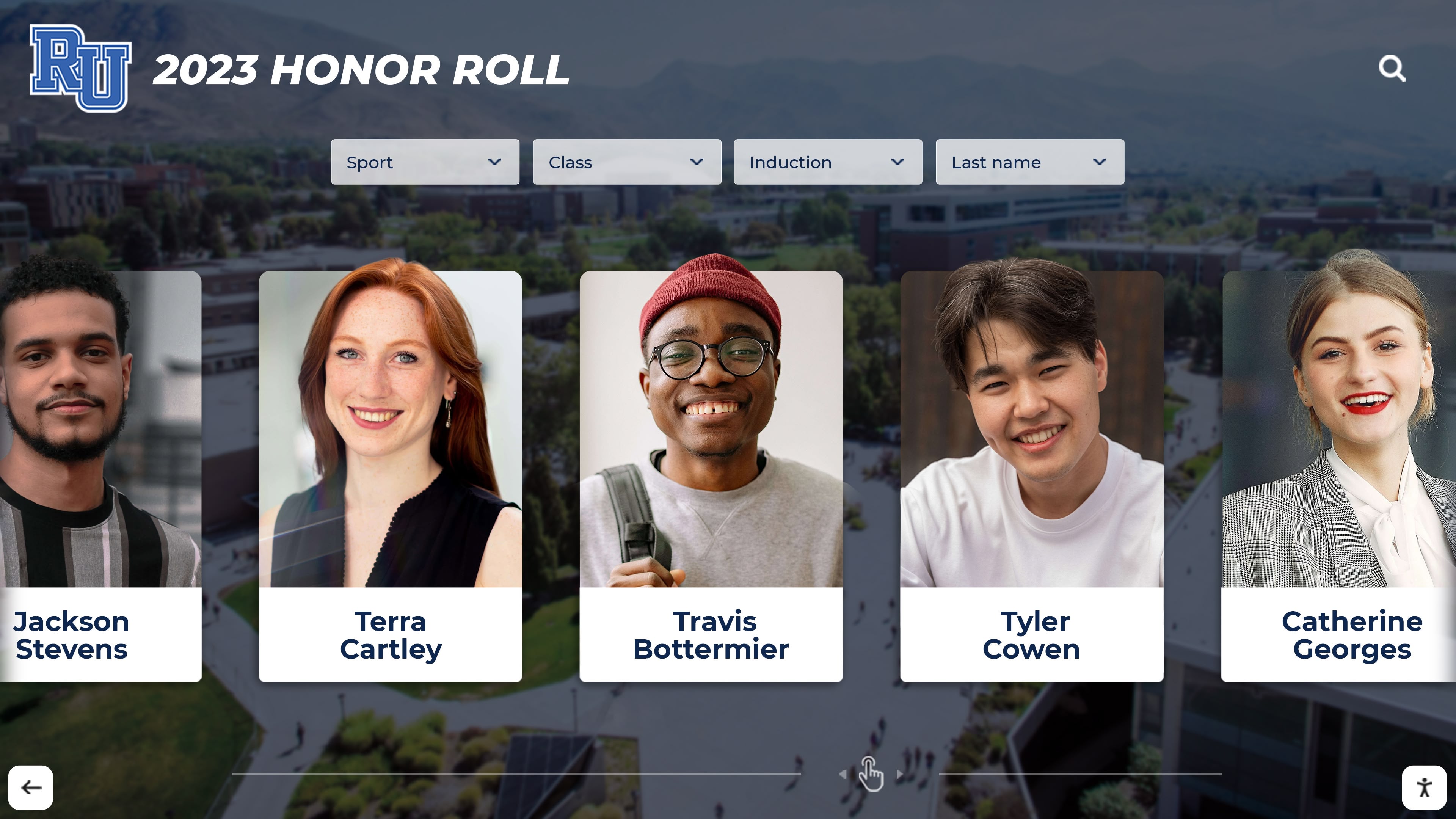
Academic recognition programs celebrate scholarly excellence and intellectual achievement
Creating Comprehensive Academic Recognition Displays
Digital platforms enable schools to recognize academic achievement more comprehensively than traditional methods allow.
Multi-Year Academic Achievement Tracking
Digital systems can display longitudinal academic excellence including four-year honor roll progression, semester-by-semester GPA tracking, academic improvement recognition, course rigor and advanced placement tracking, and cumulative academic achievement milestones.
Historical tracking demonstrates sustained excellence while recognizing academic growth and improvement deserving celebration alongside consistent high achievement.
Academic Competition and Scholarship Recognition
Schools can comprehensively recognize competitive academic achievement through academic team competition results, individual competition achievements, scholarship awards and values, college admission accomplishments, and research project recognition. Comprehensive competition recognition celebrates intellectual achievement extending beyond classroom performance.
Integration With College and Career Information
Graduate profiles can include post-graduation plans including college destinations and acceptances, intended majors and academic interests, scholarship and financial aid awards, career pathway programs and certifications, and military service commitments.
Future planning information provides context for high school achievement while creating accountability encouraging students to pursue articulated goals.
Developing Athletic Graduate Recognition Programs
Athletic participation represents significant high school experiences for many students deserving dedicated recognition celebrating years of competition, teamwork, and dedication.
Comprehensive Senior Athlete Recognition
Athletic recognition programs should celebrate complete athlete contributions beyond statistics and competition results.
Senior Night Celebrations
Traditional senior night ceremonies provide important public recognition during final home competitions including pre-game recognition ceremonies, family acknowledgment and appreciation, biographical athlete introductions, presentation of commemorative gifts, and photograph opportunities with families and teammates.
Senior nights create emotional celebration moments validating years of athletic commitment while honoring family support enabling participation.
Statistical and Record Achievement Recognition
Digital athletic recognition can comprehensively document athlete accomplishments including career statistical summaries, school records established or approached, all-conference and all-state selections, championship participation and contributions, and milestone achievements like 1,000-point scorers or similar distinctions.
Complete statistical recognition validates athletic excellence while preserving achievements as part of institutional athletic history.
Leadership and Character Recognition
Athletic recognition should celebrate qualities beyond performance including team captain and leadership positions, sportsmanship and character awards, academic achievement balancing athletics, community service and representation, and teammate and coach testimonials about impact.
Comprehensive recognition acknowledges that athletic programs develop complete individuals whose contributions extend beyond competitive results.
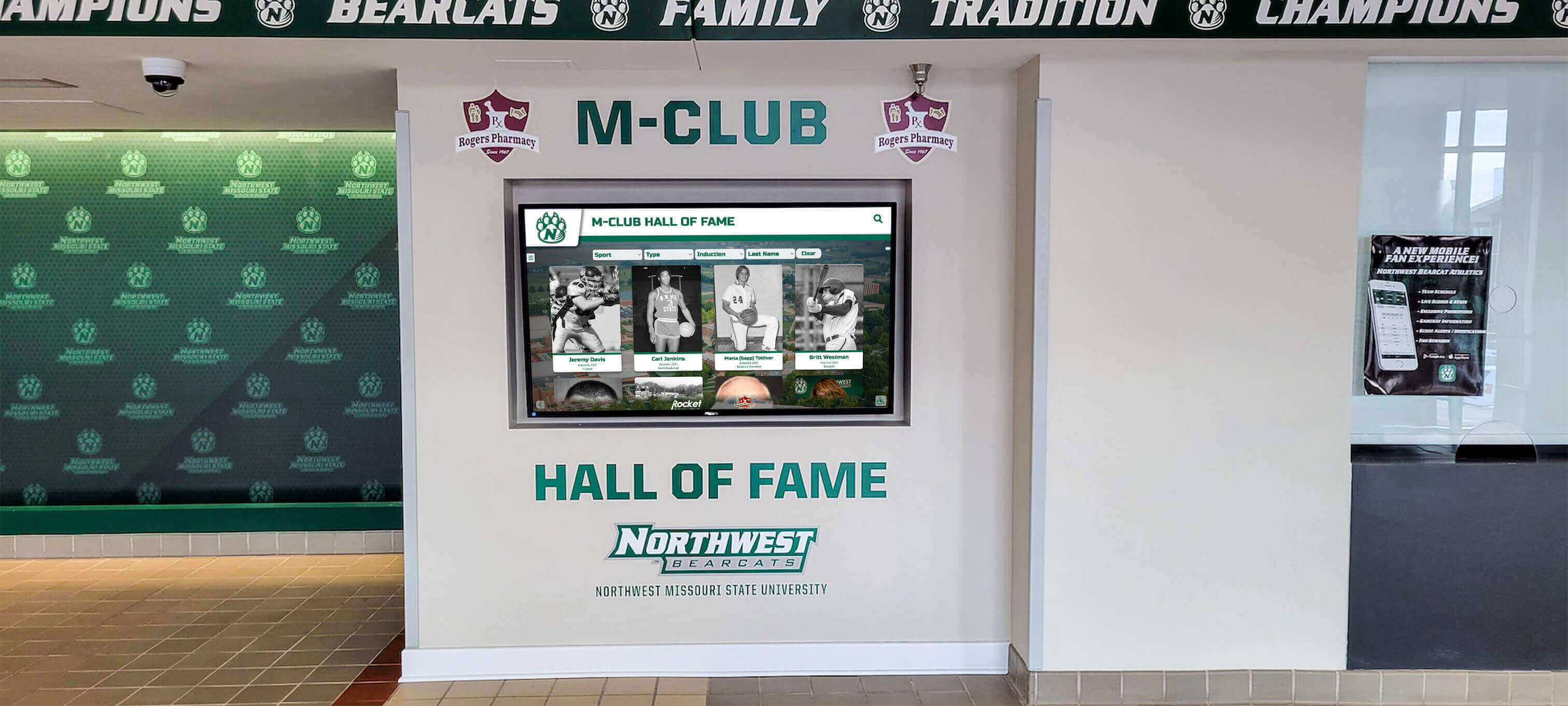
Athletic displays preserve graduate sport achievements as part of institutional competitive legacy
Creating Multi-Sport Recognition Systems
Schools benefit from coordinating athletic recognition across all programs ensuring equitable celebration regardless of sport profile or season.
Unified Digital Athletic Recognition
Comprehensive systems can feature all-sport graduate directories, sport-specific achievement sections, cross-sport multi-athlete recognition, athletic award and honor documentation, and team championship celebrations including graduating athletes.
Unified recognition ensures that athletes from all sports receive equitable celebration regardless of program visibility or competitive success.
Celebrating Arts, Activities, and Extracurricular Achievements
Complete graduation recognition programs honor diverse contributions including arts performance, leadership activities, and community involvement deserving celebration alongside academic and athletic accomplishment.
Performing Arts Graduate Recognition
Students dedicating years to music, theater, and dance deserve recognition celebrating artistic development and performance contributions.
Performance Documentation
Digital recognition can preserve performing arts legacies through production photographs and program documentation, performance video highlights, role and performance listings, arts competition achievements, and all-state and honor ensemble selections.
Comprehensive documentation ensures that performing arts achievements receive recognition comparable to athletic and academic accomplishments.
Arts Leadership Recognition
Leadership in arts programs warrants specific acknowledgment including section leader and principal positions, student director and choreographer roles, technical theater leadership, arts club officer positions, and peer mentorship contributions.
Leadership recognition celebrates students who elevated programs through organizational contribution beyond personal performance.
Student Leadership and Activities Recognition
Schools should recognize students who contributed through leadership and activity involvement including student government positions and initiatives, club leadership and organization, peer mentorship and tutoring, school improvement projects and advocacy, and special event planning and coordination.
Activity recognition celebrates students whose primary contributions occurred through leadership and organization rather than competition or performance.
Community Service and Citizenship Recognition
Students demonstrating exceptional community engagement deserve specific recognition celebrating civic contribution including volunteer hour documentation, community project leadership, service organization membership, citizenship awards and recognition, and social impact initiatives.
Service recognition communicates that schools value civic engagement and community contribution as essential dimensions of complete education.
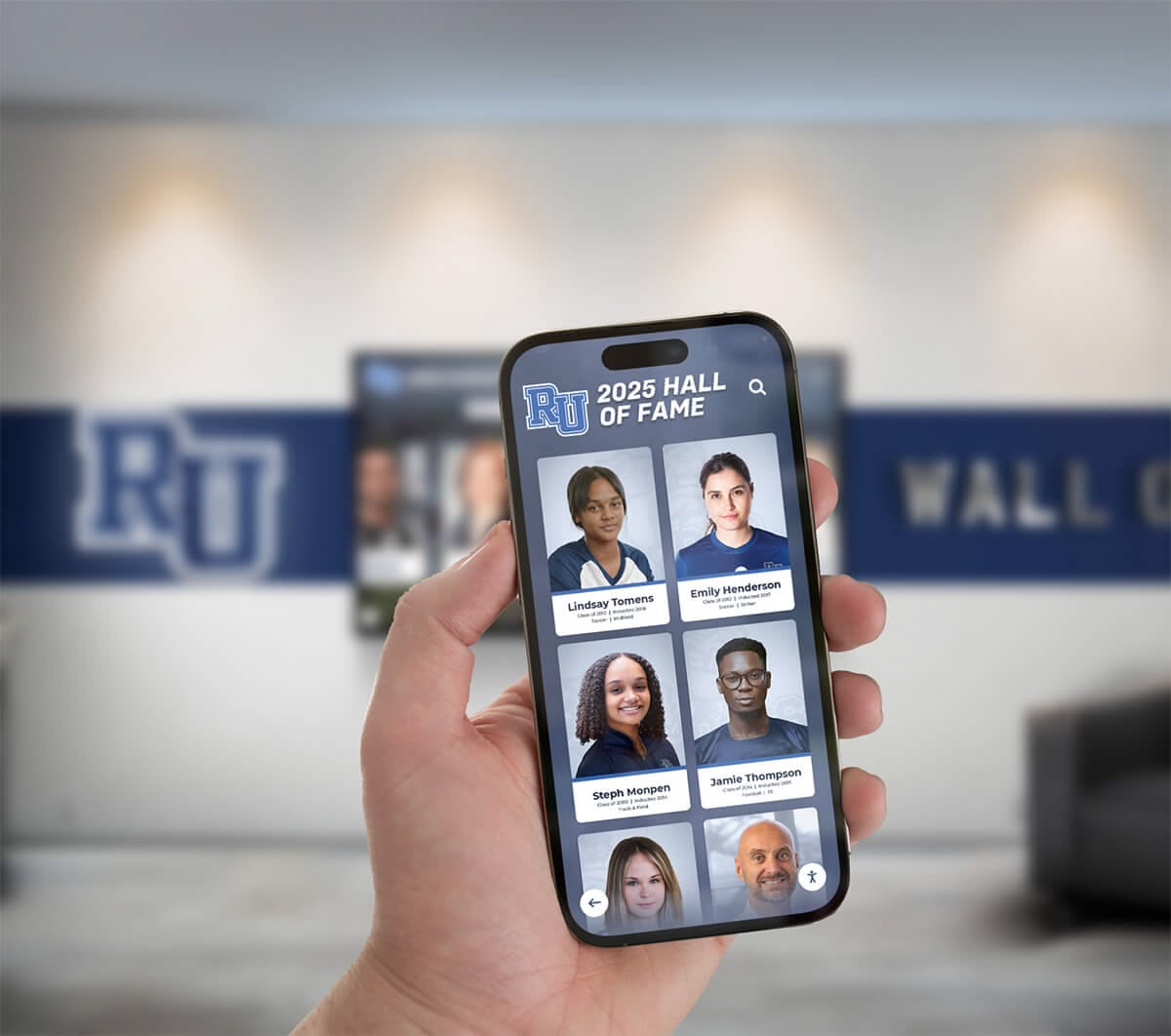
Mobile access allows graduates to share their achievements with family and friends worldwide
Leveraging Technology for Enhanced Graduate Recognition
Modern technology platforms enable recognition capabilities extending far beyond what traditional methods provide, creating engagement opportunities that strengthen alumni connection and institutional community.
Cloud-Based Content Management
Solutions like Rocket Alumni Solutions provide intuitive platforms enabling schools to manage graduate recognition efficiently through remote content administration from any location, bulk import capabilities for historical classes, scheduled content updates and rotations, role-based permissions for multiple administrators, and automatic backups protecting institutional data.
User-friendly management systems ensure that recognition programs remain current without requiring technical expertise or consuming excessive administrative time.
Mobile and Web Accessibility
Digital recognition extends beyond physical displays through responsive web interfaces accessible from any device, dedicated mobile applications for enhanced functionality, QR codes connecting physical and digital content, social media integration enabling achievement sharing, and email notifications announcing new recognition.
Remote access transforms campus-specific recognition into globally accessible celebration maintaining graduate connection regardless of geographic location.
Analytics and Engagement Tracking
Modern platforms provide data revealing recognition program impact including display interaction metrics and popular content, web and mobile access statistics, search patterns revealing graduate interest, social sharing and engagement rates, and alumni update submission frequency.
Analytics demonstrate recognition value while revealing opportunities to enhance programs based on actual usage patterns.
Integration With Existing School Systems
Digital recognition platforms can connect with institutional systems including student information systems for data synchronization, alumni database platforms for information coordination, digital signage networks for content distribution, fundraising and development platforms connecting recognition to philanthropy, and website content management enabling embedded displays.
System integration eliminates redundant data entry while creating cohesive digital ecosystems connecting recognition to broader institutional goals.
Best Practices for Implementing Graduation Recognition Programs
Successful recognition programs follow established practices ensuring meaningful celebration while avoiding common implementation challenges.
Establishing Content Standards and Guidelines
Clear standards ensure consistent, equitable recognition including standardized profile information requirements, photograph specification and quality standards, content review and approval processes, privacy considerations and family permissions, and ongoing maintenance and update procedures.
Standards prevent recognition quality variation while ensuring appropriate content control and legal compliance.
Engaging Students in Recognition Program Development
Student involvement creates authentic recognition programs reflecting graduate values including student input on recognition categories and features, senior class representatives coordinating content collection, peer nomination processes for special recognition, graduate testimonials and reflection contributions, and student ambassador programs promoting engagement.
Student participation ensures recognition resonates authentically while distributing program responsibilities beyond administrative staff.
Communicating Recognition Programs to Families
Effective family communication maximizes participation and appreciation including early notification of recognition programs and opportunities, clear instructions for information and content submission, timeline communication ensuring adequate preparation time, privacy policy explanation regarding displayed information, and ongoing updates about recognition additions and features.
Proactive family communication builds excitement while ensuring that recognition programs receive necessary family support and participation.
Creating Sustainable Recognition Program Models
Long-term program success requires sustainable operational models including dedicated budget allocation for ongoing maintenance, assigned administrative responsibility with adequate time allocation, annual content collection and update calendars, training programs ensuring staff capability, and periodic program evaluation and improvement processes.
Sustainable models ensure recognition programs remain active and current rather than becoming outdated displays reflecting only initial implementation enthusiasm.
Conclusion: Creating Lasting Legacies Through Comprehensive Recognition
Graduation recognition programs represent far more than ceremonial traditions—they are institutional commitments to honoring student achievement, preserving educational legacy, and maintaining community connection across generations. Schools that invest in comprehensive recognition programs combining meaningful ceremony with modern digital preservation create lasting tributes that celebrate graduates authentically while strengthening institutional culture and alumni engagement.
Interactive digital displays from solutions like Rocket Alumni Solutions transform temporary graduation celebrations into permanent institutional legacies accessible to current students, alumni, families, and visitors for decades following commencement. By honoring every graduate comprehensively through searchable profiles, multimedia content, and remote accessibility, schools demonstrate enduring commitment to student achievement while creating recognition programs that inspire current students and strengthen community pride.
As schools plan graduation recognition programs for coming years, the combination of traditional ceremonial celebration with innovative digital preservation creates comprehensive recognition honoring the complete significance of educational achievement—validating years of student effort, acknowledging family support, establishing institutional traditions, and preserving graduating class legacies as permanent chapters within evolving school histories.
Explore how Rocket Alumni Solutions can help your school create comprehensive graduation recognition programs that celebrate senior achievements permanently while strengthening alumni connection and institutional pride for generations to come.































