Walk into any championship-caliber athletic program and you’ll immediately notice something beyond quality equipment and well-maintained facilities: the walls themselves seem to speak. Gym wall art transforms blank concrete and cinder block into visual narratives that celebrate history, motivate current athletes, and communicate program values to everyone who enters the space. These aren’t mere decorations—they’re strategic environmental design elements that shape athletic culture, build pride, and create psychological home-court advantages that influence performance.
Yet many athletic directors and coaches struggle when faced with empty gym walls. Budget constraints limit options. Maintenance concerns raise questions about durability. Design uncertainties create paralysis—what imagery motivates without becoming dated? How do you balance team history with current athletes? Which wall spaces deserve investment versus simple paint? What solutions can grow and update as programs evolve rather than becoming frozen monuments to past seasons?
This comprehensive guide explores proven gym wall art ideas that transform athletic spaces into inspiring environments. Whether you’re redesigning a high school gymnasium, updating a community recreation center, or reimagining a college field house, you’ll discover design strategies, display options, and implementation approaches that turn walls from overlooked backgrounds into powerful motivational tools that define athletic culture and celebrate achievement.
School gymnasiums serve multiple functions—physical education classes, competitive athletics, community events, graduation ceremonies, and assemblies—making wall art decisions particularly impactful. The right visual elements enhance every one of these uses while creating cohesive environments that reflect institutional values and athletic program identity.
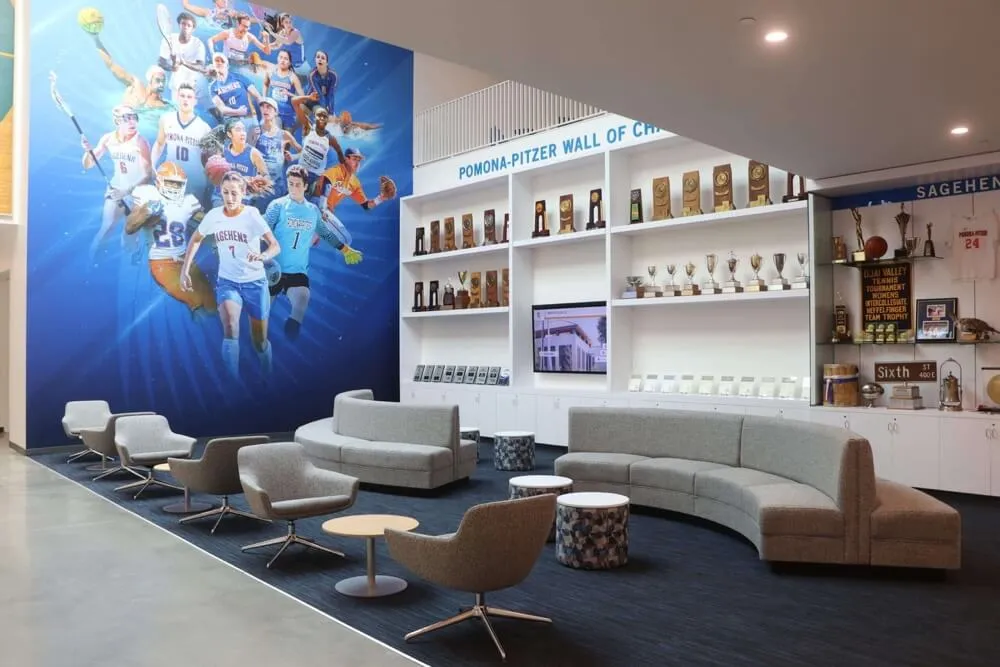
Comprehensive gym wall art combines traditional recognition displays with dynamic visual elements that celebrate athletic achievement
Understanding Gym Wall Art: Purpose Beyond Decoration
Before selecting specific wall art options, understanding the strategic purposes these visual elements serve helps prioritize design decisions and budget allocation toward solutions that deliver meaningful impact.
The Psychology of Athletic Environments
Environmental psychology research consistently demonstrates that physical spaces influence behavior, emotions, and performance. In athletic contexts, gym wall art contributes to several psychological functions:
Identity Reinforcement: Visual elements displaying team colors, mascots, logos, and program histories reinforce athletic identity. Athletes surrounded by imagery celebrating their program internalize that identity more deeply, increasing commitment and effort levels.
Motivation Through Aspiration: Wall art showcasing championship banners, record holders, and hall of fame inductees creates aspirational targets. Current athletes literally see what excellence looks like in their program, making abstract goals concrete and achievable.
Home Advantage Creation: Intimidating or impressive gym aesthetics create psychological advantages during competition. Visiting teams enter spaces saturated with home team imagery, subtly reinforcing the host’s territorial claim and historical success.
Community Connection: Gym wall art that honors donors, community supporters, alumni, and program history builds connections beyond current rosters. This broader community engagement strengthens support systems that sustain programs through coaching changes and competitive cycles.
Schools increasingly integrate both traditional and modern recognition approaches. Digital hall of fame displays complement painted murals by providing flexible recognition that can update as programs evolve without requiring complete redesigns.
Key Functions of Effective Gym Wall Art
Strategic gym wall art serves distinct functions that guide design decisions:
Achievement Recognition: Dedicated wall spaces honor individual athletes, championship teams, record holders, and hall of fame members. This recognition validates excellence while setting standards current athletes strive to meet.
Brand Communication: Mascot imagery, school colors, logos, and visual motifs communicate athletic program identity immediately upon entry. Consistent branding creates professional impressions that influence recruiting, community support, and institutional pride.
Program History Documentation: Timeline displays, vintage photos, championship banners, and historical narratives connect current athletes to program legacies. This continuity builds respect for tradition while demonstrating sustained excellence.
Value Communication: Motivational quotes, core values displays, and inspirational imagery communicate program philosophies beyond what coaches say in practices. Environmental messaging reinforces cultural expectations consistently.
Wayfinding and Information: Practical wall elements including directional signage, facility maps, schedules, and informational displays serve functional purposes while contributing to overall aesthetic cohesion.
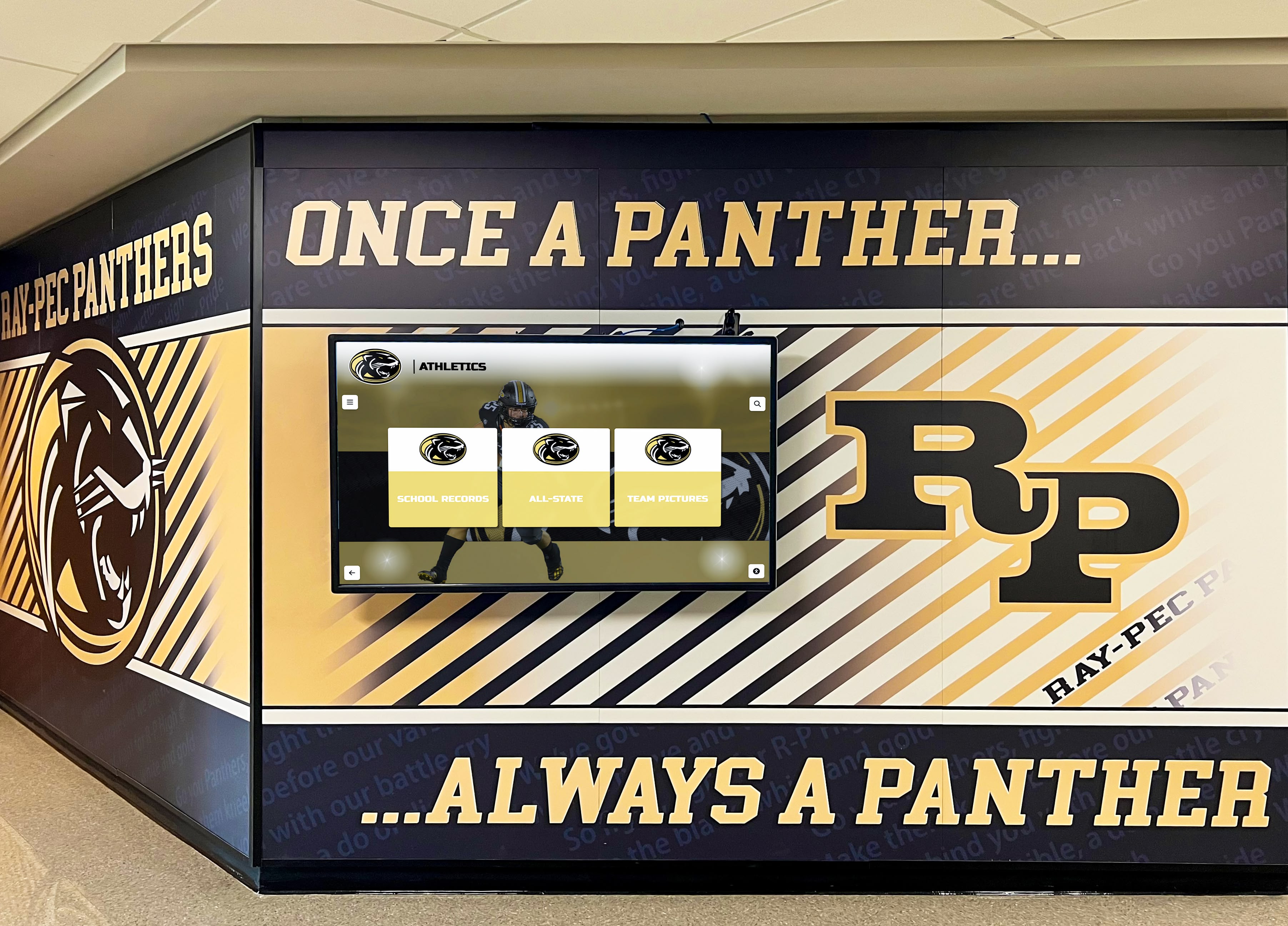
Modern gym wall art combines traditional murals with interactive technology for comprehensive athletic space transformation
Types of Gym Wall Art: Options for Every Budget and Space
Successful gym transformations typically combine multiple wall art types, creating layered visual environments that serve different functions while maintaining aesthetic cohesion. Understanding available options helps prioritize investments based on budget, space characteristics, and program priorities.
Painted Murals: Foundation Visual Elements
Large-scale painted murals remain gym wall art cornerstones, offering permanent, impactful imagery that defines athletic space character.
Mascot Murals: Oversized mascot imagery creates immediate brand identity and visual impact. The best mascot murals position the mascot in dynamic, athletic poses rather than static logo reproductions, conveying movement and energy appropriate for athletic spaces.
Sport-Specific Scenes: Action imagery depicting specific sports—basketball players driving to the hoop, volleyball players at the net, wrestlers in competition—celebrates program diversity while creating visual interest. These murals work particularly well in multi-sport facilities where rotating teams share spaces.
Abstract Geometric Designs: Schools with modern aesthetic preferences or contemporary architecture often choose abstract murals using team colors in geometric patterns. These designs age well, avoid sports-specific limitations, and create sophisticated environments that work for non-athletic events.
Historical Scene Recreation: Programs with significant historical moments might commission murals recreating championship games, legendary athletes, or defining program milestones. These narrative murals build connection to program heritage while serving as conversation starters for visitors.
Timeline Murals: Linear historical timelines tracking program evolution from founding through present work particularly well on long gym walls. These chronological displays can incorporate vintage photos, achievement markers, and era-specific design elements that document program growth.
When planning mural projects, many schools also create complementary recognition systems. Interactive kiosk solutions enable visitors to explore athletic achievements in depth while murals provide immediate visual impact.
Vinyl Graphics and Decals: Flexible and Scalable
Vinyl wall graphics offer cost-effective alternatives to painted murals with significant practical advantages including easier installation, replacement flexibility, and precise design execution.
Large-Format Graphics: Full-wall vinyl installations can replicate painted mural aesthetics at lower costs with faster installation timelines. Modern printing technology produces photorealistic imagery, gradient effects, and complex designs that would challenge even skilled mural artists.
Dimensional Lettering: Three-dimensional vinyl or acrylic letters creating motivational phrases, team names, or program mottos add depth and sophistication. These dimensional elements create shadow lines that enhance visual interest while maintaining clean, professional aesthetics.
Window Graphics: Gym windows often present design challenges—too small for major focal points but awkward when left blank. Vinyl window graphics featuring team imagery, achievement statistics, or motivational content transform these spaces into productive design elements.
Floor-to-Ceiling Graphics: Modern wide-format printing enables seamless graphics that span entire walls without visible seams. These installations work particularly well for photographic imagery, creating immersive environments that transport viewers into different settings.
Removable and Repositionable Options: Special vinyl materials enable temporary or seasonal displays that change throughout the year. This flexibility allows programs to highlight current teams, upcoming events, or seasonal campaigns without permanent commitment.
Recognition Walls: Celebrating Achievement
Dedicated recognition walls honoring individual and team excellence serve both motivational and archival functions while creating focal points that celebrate program success.
Hall of Fame Displays: Traditional hall of fame walls featuring plaques, photos, and biographical information honor the most accomplished alumni and program contributors. The challenge with static displays involves managing limited space as inductee classes accumulate—many programs discover their original hall of fame walls reach capacity within years.
Championship Banner Displays: Hanging banners celebrating conference championships, state titles, and tournament achievements provides immediately visible success markers. Strategic lighting and mounting systems transform these banners from afterthoughts into dramatic focal points.
Record Board Displays: Permanent or updateable boards listing program records—scoring leaders, performance bests, team achievements—create tangible targets current athletes chase. The most effective record boards organize achievements by category and era, making current records contextually meaningful.
Programs seeking flexible recognition solutions increasingly adopt digital trophy case displays that accommodate unlimited achievements without physical space constraints while enabling detailed storytelling impossible with traditional plaques.
Senior Recognition Walls: Annual displays honoring graduating senior athletes maintain program continuity while ensuring every athlete receives recognition regardless of individual achievement levels. These walls communicate that contributions matter beyond statistics and championships.
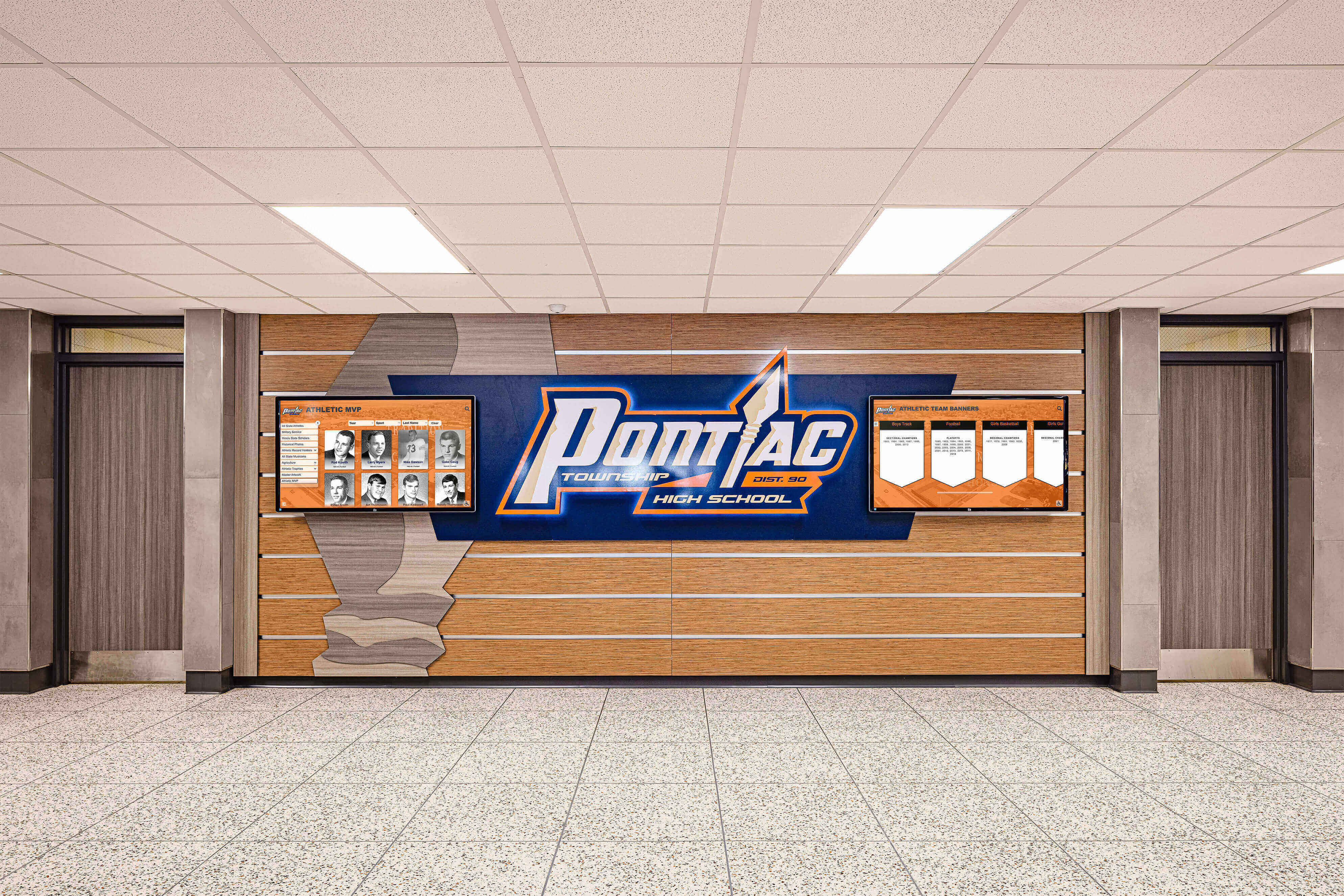
Dedicated recognition displays transform gym corridors into celebration spaces that honor athletic achievement across multiple sports and eras
Digital Display Integration: Modern Recognition Solutions
Interactive digital displays represent gym wall art’s newest evolution, offering unprecedented flexibility, engagement capabilities, and information density traditional static displays cannot match.
Touchscreen Recognition Systems: Interactive touchscreens enable comprehensive athlete databases that visitors explore by sport, year, achievement type, or name search. These systems solve the fundamental limitation of physical plaques—finite space—while providing rich multimedia content including photos, videos, statistics, and biographical narratives.
Video Wall Installations: Large-format LED or LCD video walls create dramatic focal points displaying highlight reels, live competition feeds, achievement slideshows, and motivational content. Modern video walls adapt to different events—displaying team content during competitions, general motivational material during PE classes, and institutional branding during community events.
Dynamic Digital Signage: Smaller digital displays positioned throughout athletic facilities provide rotating content—upcoming schedules, current scores, athlete spotlights, sponsor recognition, and announcements. This dynamic content keeps environments fresh and relevant without requiring physical updates.
QR Code Integration: Even when using traditional static displays, integrating QR codes provides digital extensions. Visitors scanning codes access additional content—full athlete profiles, game footage, historical documents, and multimedia stories that static displays cannot accommodate.
Schools implementing recognition walls should consider how coach appreciation displays complement athlete recognition, ensuring comprehensive programs that acknowledge all contributors to athletic success.
Motivational and Inspirational Content
Beyond achievement recognition, gym wall art should include motivational elements that communicate program values and inspire excellence.
Quote Installations: Carefully selected motivational quotes from coaches, athletes, philosophers, or cultural figures provide daily inspiration. The most effective quote installations use high-quality typography, strategic placement at eye level in high-traffic areas, and designs that integrate aesthetically rather than appearing as afterthoughts.
Core Values Displays: Programs with defined core values—sportsmanship, excellence, respect, determination, teamwork—benefit from wall displays that visualize these principles. Pairing each value with supporting imagery and brief explanatory text reinforces cultural expectations beyond verbal communication.
Goal Visualization Boards: Interactive spaces where current teams post season goals, track progress, and celebrate milestone achievements create ownership and accountability. These working displays might include whiteboards, magnetic systems, or digital screens that teams update throughout seasons.
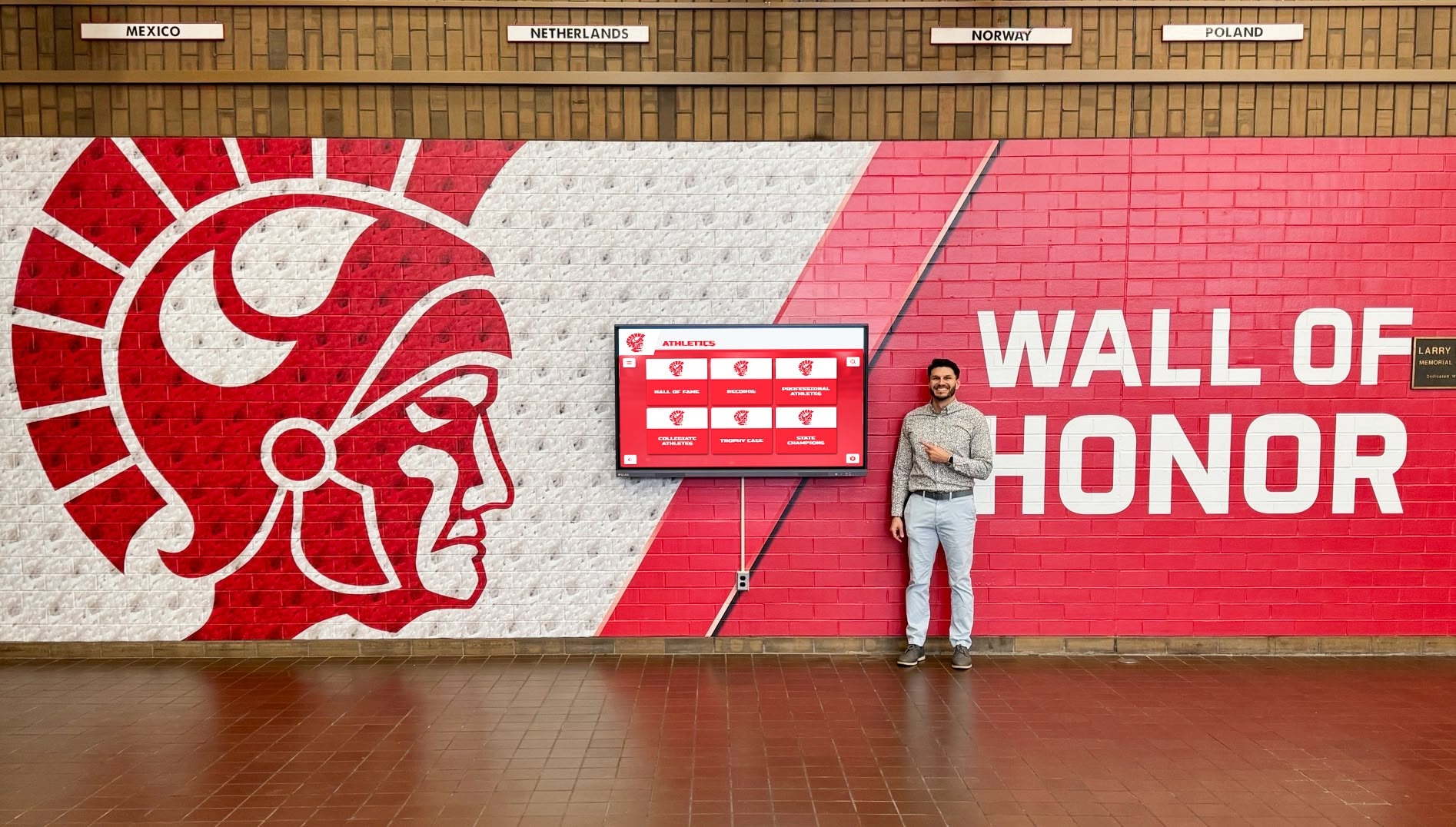
Strategic gym wall art placement in high-traffic areas ensures maximum visibility and engagement with motivational and recognition content
Design Principles: Creating Cohesive Athletic Environments
Selecting individual wall art elements matters less than how those pieces combine into cohesive environments that feel intentionally designed rather than randomly accumulated. Several design principles guide effective gym wall art implementation.
Color Strategy and Brand Consistency
Athletic spaces should reflect strong, consistent color strategies that reinforce program identity while creating visually pleasing environments.
Dominant Color Selection: Primary team colors should dominate gym wall art, creating unmistakable brand identity. However, using these colors at full saturation across every surface creates overwhelming environments—strategic variation in tone, shade, and intensity maintains interest while preventing visual fatigue.
Accent Color Integration: Secondary and accent colors provide visual breaks that prevent monotony. Neutral tones—grays, whites, blacks—often work as accent colors that allow primary brand colors to dominate without overwhelming.
Color Psychology Considerations: Different colors create distinct psychological effects. Reds and oranges convey energy and aggression appropriate for competition spaces. Blues and greens create calmer environments better suited for training areas or athletic academic centers. Understanding these associations helps assign colors to different gym zones strategically.
Consistency Across Elements: All wall art components—murals, vinyl graphics, digital displays, recognition plaques, signage—should share color palettes. This consistency creates professional, intentional aesthetics rather than appearing haphazard.
Scale and Proportion
Gymnasium spaces typically feature high ceilings and expansive walls that demand appropriately scaled artwork—designs that work in classrooms or offices often disappear in athletic facilities.
Oversized as Standard: Gym wall art should trend toward larger scales than initially feels comfortable. Elements that seem oversized in planning often read as appropriately proportioned once installed in actual gym environments where viewing distances are significant.
Focal Point Hierarchy: Not every wall requires equal treatment. Identify 2-3 primary focal points—typically the main entrance wall, the wall behind primary seating, and walls visible during competition—for major investment. Secondary walls can receive simpler treatments that support rather than compete with main focal points.
Viewing Distance Calculations: Consider typical viewing distances when selecting imagery detail levels and text sizes. Fine details and small text legible at close range become invisible from bleacher seating. Main viewing areas should feature bold, simple imagery with text large enough to read from maximum viewing distances.
Balance Between Permanence and Flexibility
Effective gym wall art strategies balance permanent elements that define lasting program identity with flexible components that adapt as programs evolve.
Permanent Foundations: Elements unlikely to change—mascots, school names, team colors, architectural murals—justify more permanent, expensive installation methods. These foundations create stable visual identities that persist across coaching changes and competitive cycles.
Flexible Recognition: Achievement recognition should employ systems that accommodate growth and change. Running out of physical space for new inductees or champions creates awkward situations where excellent solutions are digital history archives that expand infinitely while preserving all program history.
Seasonal Updates: Spaces designated for current team information, upcoming events, or rotating recognition should use easily updateable systems—digital displays, magnetic systems, or simple-to-replace graphics—that enable frequent changes without significant expense.
Modular Design Thinking: When planning permanent installations, consider how designs might expand, adapt, or integrate future additions. Leaving deliberate space for growth or designing systems with built-in modularity prevents premature obsolescence.
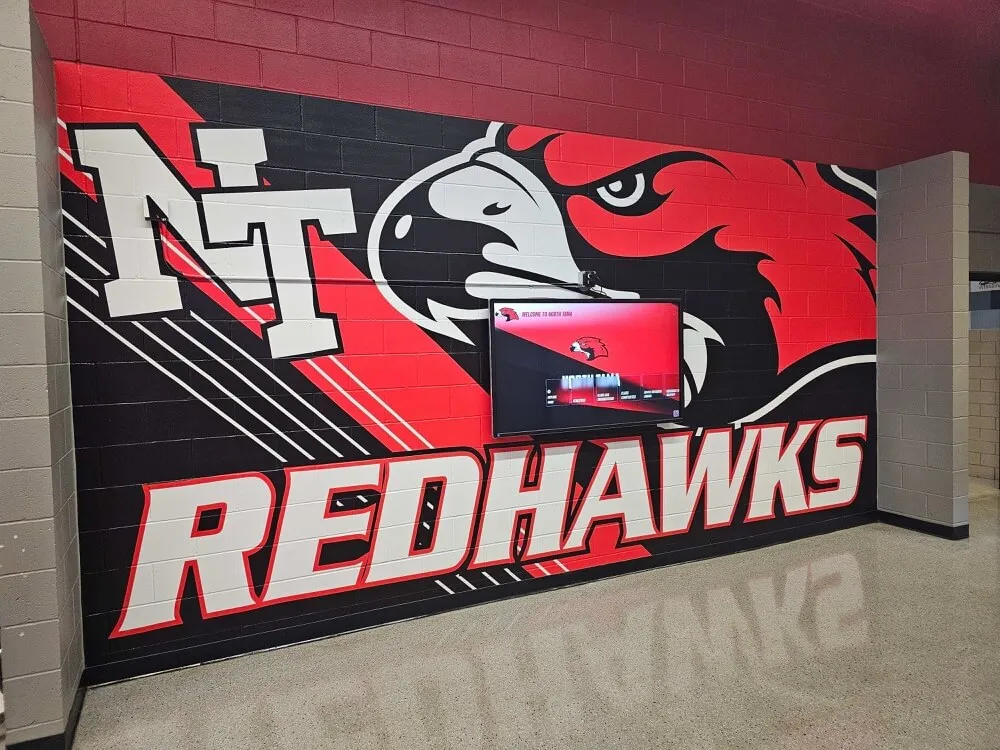
Successful gym wall art balances permanent branded elements with flexible digital displays that adapt to current teams and achievements
Implementation Strategies: From Concept to Completion
Understanding design principles and available options matters little without practical implementation strategies that navigate budget constraints, approval processes, timeline pressures, and technical challenges inherent in gym wall art projects.
Planning and Budgeting
Successful gym wall art projects begin with thorough planning that aligns visual goals with financial realities and institutional priorities.
Needs Assessment: Before designing solutions, inventory existing conditions—wall surfaces, ceiling heights, lighting, architectural features, current displays, and pain points with existing installations. This assessment identifies priorities and constraints that inform design directions.
Stakeholder Input: Gather perspectives from coaches, athletes, athletic directors, facilities managers, alumni, and boosters. Different stakeholders notice different priorities—coaches emphasize motivation, facilities managers worry about maintenance, alumni care about history preservation, and athletes want current recognition. Comprehensive input creates buy-in while identifying requirements design teams might otherwise overlook.
Phased Implementation: Most programs cannot afford comprehensive gym makeovers simultaneously. Develop multi-year plans that tackle highest-priority spaces first while creating cohesive long-term visions. Phased approaches allow budget spreading while ensuring individual phases contribute toward unified end results rather than appearing disjointed.
Fundraising Integration: Major gym wall art projects often involve fundraising campaigns. Consider whether recognition opportunities for donors—naming rights for specific wall sections, donor recognition boards, or sponsor displays—might offset costs while building community investment in renovations.
Many schools tie athletic facility improvements to broader recognition initiatives. Alumni gathering space design considerations often intersect with gym wall art planning, creating cohesive campus environments that celebrate achievement across athletic and academic domains.
Surface Preparation and Installation Considerations
Gym walls present unique challenges compared to typical interior spaces, requiring careful surface preparation and installation planning.
Surface Assessment: Gymnasium walls commonly feature cinder block, concrete, or painted masonry that may be porous, textured, or damaged. Professional assessment identifies surface preparation requirements—patching, priming, sealing—necessary before installation. Inadequate preparation leads to adhesion failures, uneven finishes, and shortened display lifespans.
Moisture and Temperature: Many gymnasiums lack climate control equivalent to academic buildings, exposing wall art to temperature fluctuations and humidity variations that stress materials. Selecting installation methods and materials rated for these conditions prevents failures common in gym environments.
Impact Resistance: Athletic spaces experience balls, equipment, and general wear that would never occur in office buildings. Wall art in high-risk areas requires protective measures—acrylic covers over valuable displays, impact-resistant materials, or strategic placement outside direct lines of athletic activity.
Professional Installation: While some wall art types enable DIY installation, complex murals, large vinyl graphics, and digital display integration typically justify professional installation that ensures proper execution, appropriate warranties, and compliance with manufacturer specifications.
Maintenance and Longevity Planning
Gym wall art represents significant investments that deserve protection through appropriate maintenance and longevity planning.
Cleaning Protocols: Establish cleaning schedules and approved methods for different wall art types. Some materials tolerate aggressive cleaning while others require gentle approaches. Documenting these requirements and training custodial staff prevents damage from inappropriate cleaning methods.
Damage Response Plans: Despite preventive measures, athletic environments inevitably experience wall art damage. Establishing clear reporting channels, repair procedures, and budget allocations for maintenance ensures small damage gets addressed before becoming major problems.
Update Schedules: Recognition displays require regular updates as new athletes earn honors, teams win championships, and records fall. Define responsibility and frequency for updates, ensuring displays remain current rather than becoming dated monuments to past eras.
Digital System Maintenance: Interactive displays require ongoing technical maintenance—software updates, content management, hardware servicing, and troubleshooting. Budget for annual maintenance contracts or in-house technical support that keeps systems functioning optimally.
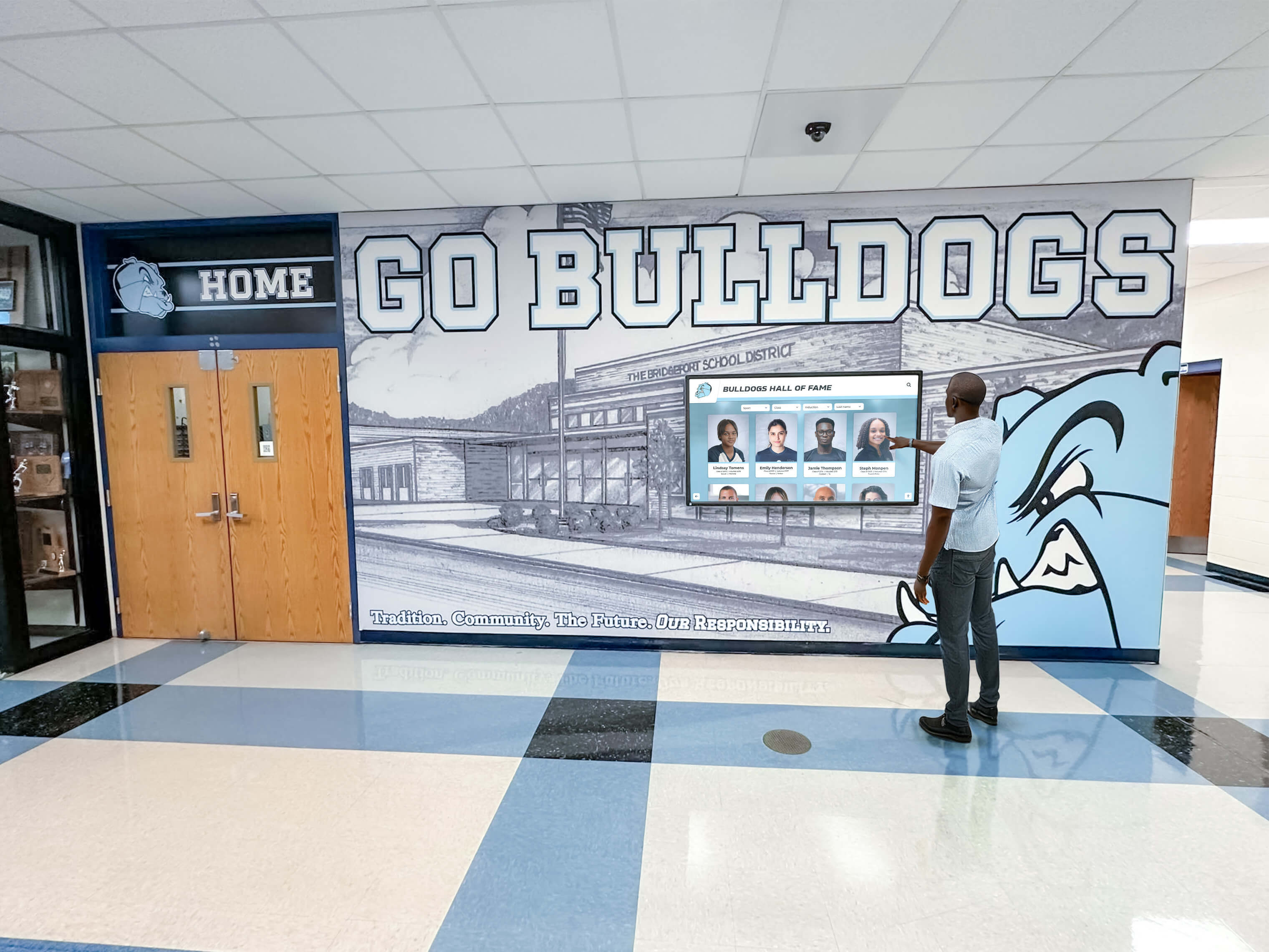
Digital recognition systems require ongoing maintenance planning but offer unmatched flexibility for celebrating expanding athletic achievements
Special Considerations: Addressing Common Challenges
Every gym wall art project encounters unique challenges based on facility characteristics, budget constraints, institutional cultures, and technical limitations. Understanding common issues and proven solutions helps navigate these challenges effectively.
Limited Budget Solutions
Outstanding gym wall art doesn’t require unlimited budgets—strategic thinking and creative approaches deliver impressive results within tight financial constraints.
DIY and Student Involvement: Art students, booster volunteers, or talented community members might create murals or graphics at material-only costs. These community-created installations often generate additional pride since stakeholders contributed directly to their creation. However, ensure quality standards through professional design guidance even when execution involves volunteers.
Phased Vinyl Graphics: Instead of comprehensive mural installations, start with vinyl accent elements—motivational quotes, small mascot graphics, or simple geometric patterns using team colors. These affordable starting points create immediate improvement while building toward more comprehensive future phases.
Repurposing and Upcycling: Creative approaches transform salvaged materials into wall art—old gym floor sections become display backgrounds, vintage uniforms frame as shadow boxes, retired equipment arranges into artistic installations. These approaches create unique aesthetics while minimizing costs.
Grant Opportunities: Research grants from athletic associations, booster foundations, arts councils, or corporate sponsors that support athletic facility improvements or school beautification projects. Many communities offer funding sources that cover partial costs when incorporated into broader facility enhancement initiatives.
Schools might also explore recognition solutions that celebrate achievements across programs. Academic achievement displays create comprehensive campus cultures that honor excellence in all forms, potentially enabling budget pooling across athletic and academic departments.
Preserving Historical Elements
Many gymnasiums contain historical wall art—vintage murals, legacy plaques, or aged displays—that carry sentimental value despite aesthetic limitations. Balancing historical preservation with contemporary updates requires thoughtful approaches.
Restoration versus Replacement: Assess whether existing historical elements justify restoration. Sometimes professional cleaning, repair, and proper lighting transform neglected historical displays into focal points that honor heritage while feeling curated rather than forgotten.
Integration Strategies: Design new wall art that incorporates or references historical elements rather than competing with them. Contemporary designs might echo colors, imagery, or motifs from vintage displays, creating visual bridges between eras that honor history while embracing modern aesthetics.
Documentation Before Removal: When historical elements require removal, document them through professional photography and archiving before disposal. These historical records can integrate into digital displays, preserving memories even when physical artifacts no longer occupy wall space.
Designated Heritage Spaces: Consider concentrating historical preservation in dedicated areas—a heritage hallway or historical corner—rather than spreading aged elements throughout facilities. This approach enables the rest of the space to receive contemporary treatment while respecting history in intentional, well-maintained areas.
Multi-Sport Facility Considerations
Gymnasiums hosting multiple sports face challenges creating wall art that feels appropriate for diverse teams sharing spaces.
Sport-Neutral Branding: Emphasize school-wide branding—mascots, colors, and institutional identity—rather than sport-specific imagery in shared spaces. This inclusive approach ensures all athletes feel represented rather than privileged or overlooked based on their sport.
Comprehensive Recognition Systems: Ensure recognition displays include equivalent opportunities across all sports. Digital systems excel in multi-sport settings since they accommodate unlimited content across diverse programs without physical space constraints limiting which sports receive prominent placement.
Rotating Seasonal Displays: Designate specific wall spaces for current season recognition that rotates throughout the year—fall sports during autumn, winter sports during colder months, spring sports as weather warms. This rotation ensures all programs receive featured status at appropriate times.
Unified Visual Language: When including sport-specific elements, maintain consistent design languages across all sports. Whether murals, graphics, or displays, using common design systems, color treatments, and proportional scales prevents some sports from appearing more valued than others.
The Impact of Gym Wall Art on Athletic Culture
Beyond aesthetics and recognition, gym wall art significantly influences athletic program culture, recruiting success, community engagement, and long-term program sustainability.
Recruiting Advantages
High school recruits and their families evaluate facilities alongside coaching and academic factors when considering programs. Impressive gym environments create immediate positive impressions that influence recruiting outcomes.
Visual Program Quality Signals: Prospective athletes interpret facility quality—including gym wall art—as indicators of overall program investment and competitiveness. Well-designed spaces signal that institutions value athletics and invest in providing competitive advantages.
Tradition and Success Communication: Wall art displaying championship histories, hall of fame inductees, and accomplished alumni demonstrates sustained excellence. These visual success markers reassure recruits they’re joining programs with established winning traditions rather than unproven experiments.
Culture Visualization: Program culture remains abstract until prospects experience it directly. Gym wall art that displays core values, motivational themes, and community connections helps recruits understand program philosophies before making commitment decisions.
Schools showcasing their traditions might also implement touchscreen building directories that provide comprehensive campus information while highlighting athletic achievements, creating cohesive recruitment experiences.
Alumni Engagement and Fundraising
Gym wall art that honors program history creates powerful alumni connections that translate into ongoing engagement and financial support.
Memory Activation: Alumni visiting renovated gymnasiums featuring updated recognition displays experience powerful nostalgia. Seeing their own achievements honored or discovering teammates and competitors displayed in halls of fame activates memories that strengthen emotional connections to programs and institutions.
Giving Motivation: Alumni who feel recognized and valued demonstrate higher giving rates. Recognition displays that honor not just championship teams but all participants communicate that contributions mattered, motivating support from broader alumni bases beyond only the most decorated athletes.
Multi-Generational Connection: When current athletes see names they recognize—parents, neighbors, coaches who played previously—program history feels personally relevant rather than abstract. This generational continuity builds program loyalty that persists across coaching changes and competitive cycles.
Community Pride and Support
Athletic programs exist within broader communities that provide support, attendance, and resources. Gym wall art contributes to community pride that sustains programs during challenging periods.
Visible Investment: Community members who see quality gym environments recognize that their tax dollars or donations are visibly improving facilities. This transparency builds support for future funding requests and bond initiatives.
Identity and Belonging: Communities develop identity around successful athletic programs. Gym wall art that celebrates local athletes creates sources of community pride that extend beyond participants to include broader populations who derive identity from local team success.
Accessibility and Inclusion: Recognition displays that honor diverse contributors—athletes, coaches, boosters, donors, officials, and volunteers—communicate that programs value broad participation. This inclusivity expands support bases beyond just athlete families.
Some programs recognize diverse achievements through creative recognition strategies. Academic honor recognition alongside athletic displays creates comprehensive cultures celebrating excellence across domains, building broader community investment.
Emerging Trends in Gym Wall Art
As technology advances and design philosophies evolve, new gym wall art trends are emerging that forward-thinking programs are already implementing.
Augmented Reality Integration
Augmented reality (AR) technology enables physical wall art to trigger digital experiences through smartphone or tablet cameras, adding information layers to static displays.
Interactive Plaques: Traditional hall of fame plaques enhanced with AR capabilities enable visitors to scan inductees and view highlight videos, career statistics, biographical information, and interviews that static plaques cannot accommodate.
Historical Overlays: AR can superimpose historical photos or videos onto current gym spaces, allowing visitors to see how facilities looked in past eras or view historic games as if happening in current spaces.
Self-Guided Tours: AR-enabled wall art creates self-guided facility tours where visitors explore at their own pace, scanning elements to access additional content rather than requiring live tour guides.
Sustainability Considerations
Environmental consciousness increasingly influences design decisions, prompting consideration of sustainable materials and practices in gym wall art installations.
Eco-Friendly Materials: Low-VOC paints, recycled materials, and sustainably sourced products reduce environmental impacts while meeting growing expectations for responsible facility management.
Energy-Efficient Digital Displays: When implementing digital displays, selecting energy-efficient models with automatic brightness adjustment and scheduling capabilities reduces operational costs and environmental footprints.
Longevity Focus: Choosing durable materials and timeless designs reduces replacement frequency, minimizing waste and resource consumption over facility lifecycles.
Social Media Integration
Modern gym wall art increasingly considers social media potential—how spaces photograph, whether they create shareable moments, and how they extend program reach beyond physical visitors.
Instagram-Worthy Moments: Designing wall art sections specifically for photos creates shareable content that amplifies program visibility when athletes, alumni, and visitors post to social media platforms.
Hashtag and Handle Integration: Including program hashtags and social media handles within gym wall art encourages tagging and following, building digital communities around physical spaces.
QR Code Social Links: Incorporating QR codes that direct to social media profiles, highlight reels, or digital photo galleries extends static displays into dynamic online experiences.
Programs celebrating achievement across domains might implement solutions like valedictorian recognition systems that create comprehensive cultures honoring excellence in all forms.
Conclusion: Transforming Spaces, Elevating Programs
Gym wall art represents far more than aesthetic improvement—it constitutes strategic investment in athletic culture, program identity, and competitive advantage. The walls surrounding athletes during practices, competitions, and celebrations communicate values, celebrate achievements, and shape psychological environments that influence performance, motivation, and program pride.
Whether your gymnasium needs comprehensive transformation or targeted improvements, approaching wall art strategically creates lasting impact. The most successful projects balance permanent elements that define stable program identity with flexible systems that adapt as programs evolve. They honor history while celebrating current athletes. They operate within budget constraints while refusing to accept mediocrity. They serve practical functions—recognition, motivation, information—while creating aesthetically compelling environments that impress recruits, engage alumni, and build community pride.
The spaces where athletes train and compete deserve as much attention as the programs themselves. Blank walls represent missed opportunities to motivate, inspire, recognize, and communicate. Thoughtfully designed gym wall art transforms these overlooked spaces into powerful tools that define program culture, celebrate achievement, and create competitive advantages that influence outcomes both on and off competition surfaces.
As you plan your gym wall art project, remember that the most impactful installations prioritize authenticity over trends, strategic thinking over random decoration, and long-term vision over short-term fixes. Your gymnasium walls will influence countless athletes, families, alumni, and community members over decades—invest in transforming those surfaces into environments that genuinely elevate your athletic program.
Transform Your Athletic Spaces with Modern Recognition Solutions
Discover how interactive digital displays and touchscreen recognition systems complement traditional gym wall art, creating comprehensive athletic environments that celebrate achievements while adapting as your programs grow and evolve.
Explore Recognition SolutionsSchools seeking to maximize their gym wall art investments increasingly integrate traditional and digital recognition approaches that work together rather than competing. Rocket Alumni Solutions provides interactive touchscreen displays, cloud-based content management platforms, and mobile-accessible recognition systems specifically designed for athletic programs. These solutions enable unlimited athlete recognition across all sports and achievement levels while providing maintenance-free operation that eliminates the ongoing update burden associated with traditional static displays. The systems integrate seamlessly with existing gym wall art—complementing murals, championship banners, and permanent installations rather than replacing elements that already work effectively.
Whether you’re implementing painted murals, vinyl graphics, traditional recognition plaques, or digital interactive displays, the goal remains consistent: creating athletic environments that inspire excellence, celebrate achievement, and build program cultures that attract talent, engage alumni, and generate community pride. Thoughtful gym wall art transforms blank surfaces into powerful motivational tools that define program identity and create lasting competitive advantages. Your walls should work as hard for your program as your athletes do—make sure they’re living up to that potential.































