Planning a hall of fame induction ceremony represents one of the most meaningful ways to honor your school’s athletic legends. These events celebrate decades of achievement, reconnect alumni with their alma mater, and inspire current student-athletes to pursue their own path to greatness. But creating a memorable ceremony requires thoughtful planning that balances tradition, engagement, and logistics.
This comprehensive guide provides actionable ideas for every aspect of your induction ceremony—from pre-event planning and venue selection to program elements, technology integration, and post-event follow-up. Whether you’re launching your first ceremony or refreshing an established tradition, you’ll find concrete strategies to create an event that genuinely honors your inductees while strengthening your school community.
Athletic halls of fame serve as permanent tributes to excellence, but the induction ceremony brings that recognition to life. The ceremony transforms names on plaques or digital displays into personal stories, emotional connections, and shared pride. When done well, these events become anticipated traditions that alumni plan vacations around and current students remember for years.
Planning Timeline: When to Start and What to Do
Successful hall of fame induction ceremonies require 4-6 months of advance planning to coordinate all necessary elements effectively.
6 Months Before: Foundation Work
Establish your selection committee and process. Your committee should include athletic directors, former coaches, booster club representatives, and school administrators who understand program history and can evaluate nominations objectively.
Set clear selection criteria. Document specific standards for induction including minimum achievement thresholds like all-conference or all-state honors, team success metrics such as state championships, statistical records or milestone achievements, character and sportsmanship requirements, and time since graduation standards—typically 5-10 years minimum.
Clear criteria prevent controversy and help current athletes understand what level of achievement earns permanent recognition.
Solicit nominations and compile candidate information. Open nomination periods allowing coaches, alumni, and community members to recommend deserving individuals. Request detailed supporting documentation including career statistics, achievement verification, newspaper clippings, photos, and testimonials explaining why each nominee merits induction.
4-5 Months Before: Selection and Announcement
Review nominees and make final selections. Your committee evaluates candidates against established criteria, discusses relative merits, and votes to determine the induction class. Most schools induct 3-8 individuals or teams annually, balancing comprehensive recognition with maintaining the honor’s exclusivity.
Notify inductees personally before public announcement. Contact selected individuals by phone to deliver the news personally, allowing time for private celebration before public disclosure. This personal touch demonstrates respect and gives inductees time to plan attendance.
Announce the induction class publicly. Issue press releases to local media, post announcements on school websites and social media, send communications to alumni networks, and create anticipation within your school community.
Public announcements generate excitement and begin building attendance for your ceremony.
3 Months Before: Event Logistics
Select your ceremony date and venue. Strategic timing significantly impacts attendance. Consider homecoming weekends that naturally attract alumni, major athletic events with built-in audiences, basketball or football banquets following successful seasons, or dedicated hall of fame weekends making recognition the central focus.
Your venue should accommodate expected attendance comfortably while providing appropriate atmosphere. School gymnasiums work well for larger events, auditoriums provide formal settings with excellent acoustics, athletic facilities create authentic sports ambiance, and off-campus banquet facilities offer catering convenience.
Secure necessary vendors and services. Book catering well in advance, especially during peak seasons. Arrange audio-visual equipment including quality microphones, projection systems, and lighting. Consider professional photography and videography to document the event permanently. Hire printing services for programs, plaques, or awards if needed.
Design your program flow. Create a detailed timeline allocating appropriate time for each program element. A typical 90-120 minute ceremony provides sufficient time without losing audience attention.
6-8 Weeks Before: Content Development
Gather inductee biographical information. Request from each honoree detailed career statistics and achievements, high-quality photos from their playing days, memorable game stories or highlights, current professional information, and personal reflections on what their athletic career meant.
This information forms the foundation for speeches, video tributes, and program materials.
Produce recognition materials. If presenting physical awards, order plaques, trophies, or custom items. Update digital displays with new inductee profiles for schools using interactive recognition systems. Design and print ceremony programs including inductee biographies, schedule of events, acknowledgments, and sponsor recognition if applicable.
Create video tribute presentations. Compile historical photos and game footage, interview former coaches or teammates, add appropriate music and graphics, and edit to 3-5 minutes per inductee maintaining audience engagement without excessive length.
2-4 Weeks Before: Final Coordination
Confirm attendance and collect speeches. Verify which inductees will attend and how many guests each will bring. Request acceptance speeches in advance if possible, setting time limits (typically 3-5 minutes) to keep the program moving.
Promote the event extensively. Send invitations to alumni, especially those from inductees’ eras. Post regularly on social media with inductee highlights and ceremony details. Distribute posters throughout school buildings and community locations. Send press releases to local media outlets for coverage.
Conduct final vendor confirmations. Reconfirm catering details including headcount and dietary restrictions. Test audio-visual equipment and backup systems. Confirm photographer/videographer arrival and shot list. Review venue logistics including setup time, parking, and accessibility.
Week of Event: Final Preparations
Prepare physical materials. Print ceremony programs and any necessary signage. Organize plaques or awards for presentation. Create registration materials for check-in. Prepare name tags if using them.
Brief all participants. Meet with emcees and speakers explaining program flow and timing. Review expectations with presenters and guests. Walk through technology cues with AV team. Conduct ceremony rehearsal if time permits.
Ceremony Format and Program Elements
The program structure sets the tone and pace for your event. Balance formality with warmth, honor with entertainment, and structure with spontaneity.
Opening Elements That Set the Right Tone
Welcome and opening remarks (5-7 minutes). Your school principal, athletic director, or hall of fame committee chair should welcome attendees, acknowledge special guests including previous inductees, explain the significance of hall of fame recognition, and express gratitude for attendance.
Keep opening remarks concise and warm, setting a celebratory tone without lengthy preambles.
National anthem or school song (3-5 minutes). This traditional element adds ceremony while engaging student musicians or local performers. Consider having current student-athletes perform, creating intergenerational connections.
Recognition of previous inductees (5 minutes). Ask previous hall of fame members in attendance to stand for acknowledgment. This honors the continuum of excellence while helping inductees understand they’re joining an elite group.
Inductee Recognition Approaches
You have several options for structuring individual recognition. Choose the approach that best fits your class size and time constraints.
Individual presentation format: Present one inductee at a time with biographical introduction by emcee or presenter, video tribute highlighting career achievements, acceptance speech from inductee or family representative, and plaque or award presentation with photo opportunity. This format works well for smaller classes (3-5 inductees) allowing comprehensive focus on each individual.
Group introduction with individual speeches: Present brief biographical overviews of all inductees consecutively, followed by individual acceptance speeches and award presentations. This compressed format accommodates larger classes while giving each inductee speaking time.
Panel or conversation format: For smaller, intimate ceremonies, consider moderated conversations where inductees share stories, answer questions, and interact with each other. This format creates spontaneous moments and reveals personality beyond formal speeches.
Making Video Tributes Memorable
Video presentations transform statistics into stories when done thoughtfully. Effective tribute videos include historical footage showing athletes competing in their prime, interviews with coaches explaining what made athletes special, statistics and achievements presented visually, career timeline documenting progression and highlights, and current footage if athletes can’t attend in person.
Keep videos focused—3-5 minutes maximum per inductee. Longer videos lose audience attention regardless of content quality. Use professional-quality audio and graphics, as poor production diminishes the honor you’re trying to convey.
For schools with digital recognition displays, consider creating permanent video content accessible through your interactive system, allowing the ceremony presentation to live on for years.
Acceptance Speech Guidelines
Provide inductees with clear guidelines ensuring speeches are meaningful yet concise. Suggest they acknowledge family members and supporters who made success possible, thank coaches, teammates, and mentors who influenced their careers, share a memorable moment or story from their playing days, reflect on lessons learned through athletics, and encourage current student-athletes to pursue excellence.
Set time limits of 3-5 minutes and communicate them clearly. Consider appointing a timekeeper with gentle signals when speakers approach their limit. Long speeches diminish the experience for other honorees and audience members.
Special Recognition Elements
Deceased inductee recognition. When inducting athletes or coaches posthumously, family acceptance speeches become especially emotional. Provide tissues, allow appropriate time for composed responses, and consider presenting special memorial plaques or awards. Video tributes take on additional significance as family treasures.
Team induction considerations. Championship teams present logistical challenges since rosters may include 15-40 individuals. Consider having the head coach accept on behalf of the team, inviting all available team members to stand for recognition, showing team photos with full rosters, and creating individual profiles in digital systems even if not all attend the ceremony.
Coach and contributor categories. Hall of fame programs often expand beyond just athletes to include coaches who built programs, administrators who supported athletics, donors or community members who enabled success, and officials or volunteers who served for decades.
These categories acknowledge that athletic excellence requires comprehensive support systems beyond just players.
Closing Elements
Closing remarks (3-5 minutes). Thank attendees for participating, acknowledge sponsors and volunteers who made the event possible, announce next year’s nomination period and timeline, and invite guests to reception or social time.
Reception or social time (30-60 minutes). Post-ceremony gatherings allow personal congratulations, photo opportunities, and reconnection among alumni. If budget allows, provide light refreshments. This informal time often creates the most meaningful moments and lasting memories.
Creative Ceremony Enhancement Ideas
Beyond standard program elements, these enhancements elevate ceremonies from good to memorable.
Interactive Recognition Display Unveiling
For schools implementing digital hall of fame systems, the induction ceremony provides the perfect unveiling opportunity. Create a dramatic reveal moment by covering the display until the appropriate moment, having inductees participate in activation or ribbon cutting, conducting live demonstrations showing how to navigate profiles, and inviting attendees to explore after the formal program.
This approach connects traditional ceremony with modern technology, showing how recognition extends beyond the event itself.

Student-Athlete Participation
Current team members benefit tremendously from participation in induction ceremonies. Consider having student-athletes serve as ushers welcoming guests and distributing programs, perform national anthem or school songs, present awards or plaques to inductees, read biographical introductions, or conduct video interviews with inductees for social media.
This involvement creates mentorship connections and helps current athletes understand they’re part of an ongoing tradition of excellence.
Sponsor and Donor Recognition
Many hall of fame programs rely on booster clubs or community donors for funding. Ceremonies provide appropriate venues to acknowledge support through sponsor logos in programs and presentations, recognition announcements during formal program, dedicated displays or signage at the event, and special seating or reception access for major donors.
Balance donor recognition with keeping the focus on inductees themselves. Recognition should enhance rather than dominate the ceremony.
Historical Timeline Presentations
Create compelling visual presentations showing your program’s evolution over decades through era-by-era highlight reels, historical uniform displays, championship trophy exhibitions, statistical progression charts, and facility evolution photos showing how programs grew.
These elements provide context helping audiences appreciate the legacy inductees join.
Live Demonstration or Skills Showcase
For certain sports, brief demonstrations add entertainment value and athletic authenticity. Consider skills challenges where current athletes demonstrate excellence, coaching clinics with inductees sharing expertise, or highlight reel recreation where current players attempt famous moves.
Keep demonstrations brief and ensure they complement rather than overshadow inductee recognition.
Venue Selection and Setup Considerations
Your ceremony venue significantly impacts the event experience. Consider these factors when selecting and configuring your space.
Capacity and Layout Requirements
Calculate expected attendance conservatively including inductees and their families (typically 8-12 guests each), previous hall of fame members, school administration and staff, current student-athletes and families, general alumni and community members, and media representatives.
School gymnasiums accommodate large crowds and provide authentic athletic atmosphere but may lack acoustics and formal ambiance. Auditoriums offer excellent sight lines and audio quality but may feel disconnected from athletics. Banquet facilities provide catering convenience and professional atmosphere but incur rental costs. Consider hybrid approaches where formal programs occur in auditoriums followed by receptions in athletic facilities with hall of fame displays.
Audio-Visual Requirements
Ceremony quality depends heavily on technical execution. Essential AV elements include quality microphone systems with wireless options for mobility, projection systems or large screens visible throughout the venue, professional lighting ensuring speaker visibility and video quality, reliable audio playback for video tributes and music, and backup systems for every critical component.
Test all equipment thoroughly before guests arrive. Technical failures during ceremonies diminish the honor you’re trying to convey.
Stage and Presentation Area
Create a focal point that appropriately honors inductees through raised platforms or stages ensuring visibility, backdrop or signage establishing professional setting, seating for inductees creating clear ceremony focus, podium or speaking position with proper lighting, and award or plaque display tables positioned for presentation photos.
Consider sight lines carefully—every attendee should clearly see presentations without obstruction.
Accessibility Considerations
Ensure your ceremony welcomes all attendees through accessible entrance and parking clearly marked, seating areas accommodating wheelchairs or mobility devices, accessible restrooms identified in programs, assistive listening systems if available, and adequate aisle width for safe movement.
Schools must comply with ADA requirements while creating inclusive environments where everyone can participate fully.
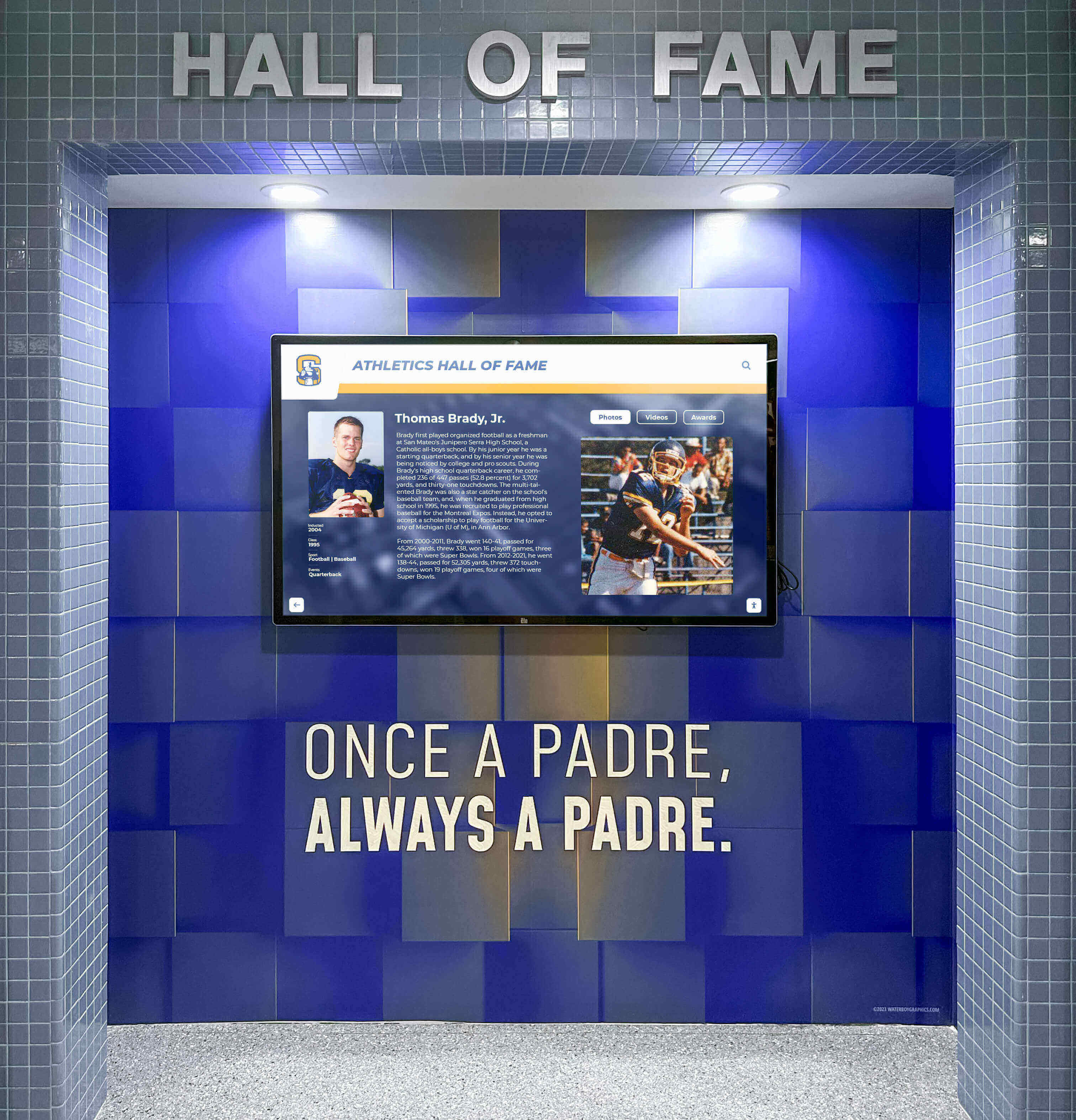
Technology Integration for Enhanced Ceremonies
Modern technology dramatically expands how schools recognize inductees while extending ceremony impact beyond the physical event.
Livestreaming for Remote Participation
Many alumni and family members can’t attend ceremonies in person due to geographic distance, scheduling conflicts, health considerations, or travel costs. Livestreaming extends participation and creates permanent documentation.
Effective livestreaming requires dedicated cameras positioned for optimal views, microphone systems capturing clear audio, reliable internet bandwidth supporting video streaming, platform selection like YouTube, Facebook Live, or dedicated streaming services, and technical operator managing transitions and monitoring quality.
Promote livestream access in advance and archive recordings for permanent access. Many attendees who watch live streams later become in-person participants in future years.
Social Media Integration
Create ceremony-specific hashtags enabling real-time sharing and conversation. Encourage attendees to post photos and congratulations throughout the event. Designate staff members to live-tweet highlights, quotes, and moments. Share professional photos immediately after the ceremony concludes.
Social media extends ceremony impact exponentially, reaching audiences far beyond physical attendees while creating shareable moments that amplify recognition.
Digital Programs and Mobile Access
Consider digital program alternatives supplementing or replacing printed materials through mobile-responsive event websites, QR codes linking to detailed inductee profiles, interactive kiosk displays for on-site exploration, and digital photo galleries uploaded in real-time.
Digital programs reduce printing costs while providing richer content than physical materials allow.
Permanent Digital Recognition
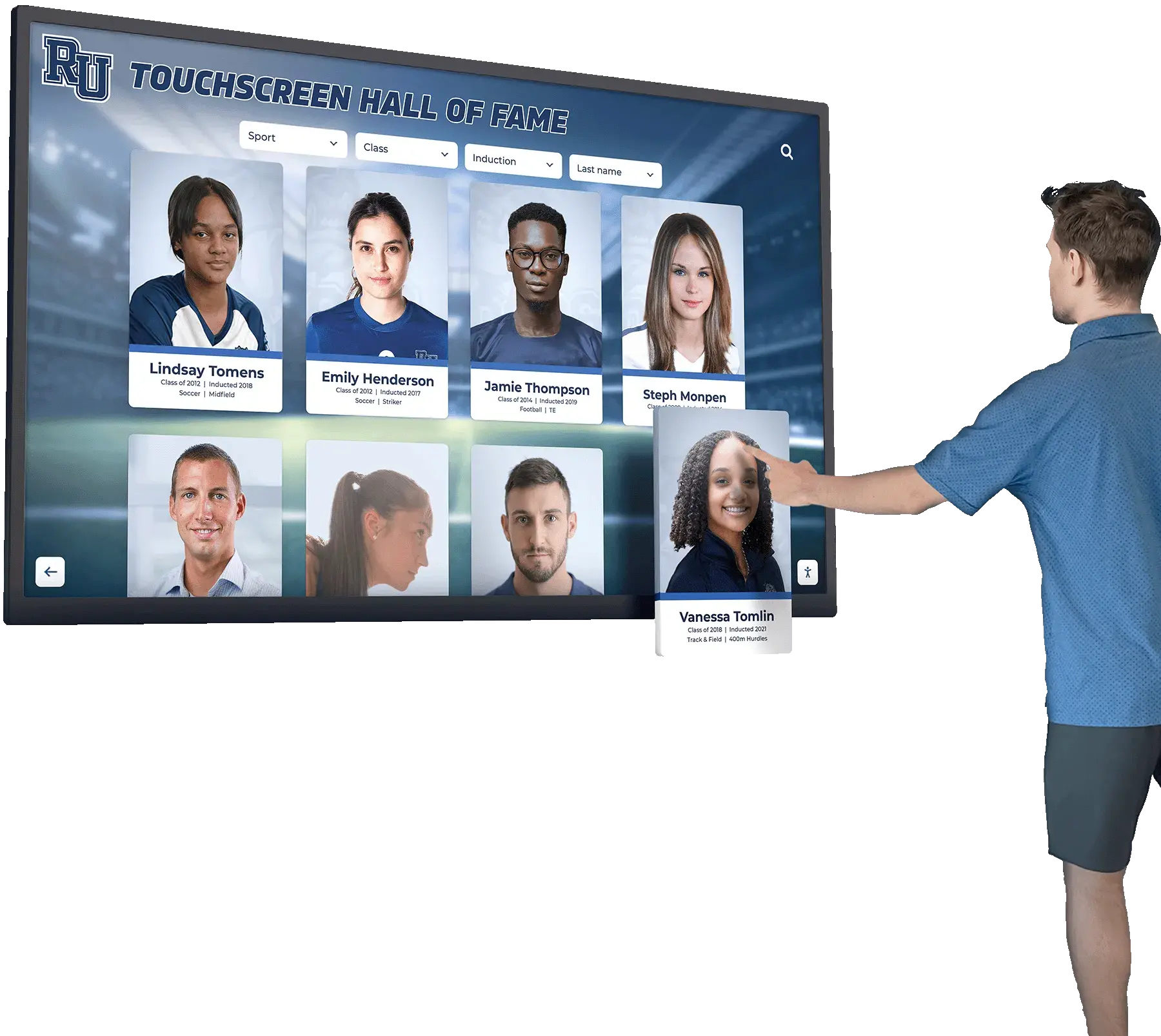
The ceremony represents one moment, but modern recognition continues indefinitely. Schools implementing comprehensive digital systems ensure inductee profiles remain permanently accessible through web-based platforms available worldwide, mobile applications enabling handheld exploration, touchscreen displays in athletic facilities, and shareable content alumni can post on personal networks.
This permanent digital presence means recognition initiated at the ceremony continues inspiring and engaging audiences for years.
Funding Your Induction Ceremony
Hall of fame ceremonies require budget allocation for venue rental, catering, audio-visual equipment, awards and plaques, programs and printing, photography and videography, and promotion and communications. Most schools use combined funding approaches.
Booster Club and Donor Support
Athletic booster organizations naturally align with hall of fame recognition. Engage boosters through presenting sponsorship opportunities with recognition tiers, soliciting event underwriting for specific elements, coordinating ticket sales if using ticketed model, and organizing fundraising campaigns tied to ceremonies.
Document how donated funds will be used and recognize contributors appropriately during events.
Budget-Friendly Alternatives
Schools with limited budgets can host meaningful ceremonies through leveraging existing facilities eliminating rental costs, using student talent for performance elements, requesting volunteer photography and videography, creating digital rather than printed programs, and focusing resources on core elements rather than expensive add-ons.
The most meaningful aspects of induction ceremonies cost little—the program content, speeches, and recognition itself matter far more than lavish production.
Sustainable Funding Models
Establish recurring funding through dedicated hall of fame endowments or funds, annual budget allocations for ceremonies, sponsorship partnerships providing consistent support, or modest ticket charges covering catering costs.
Sustainable funding ensures ceremonies continue consistently rather than depending on annual fundraising efforts.
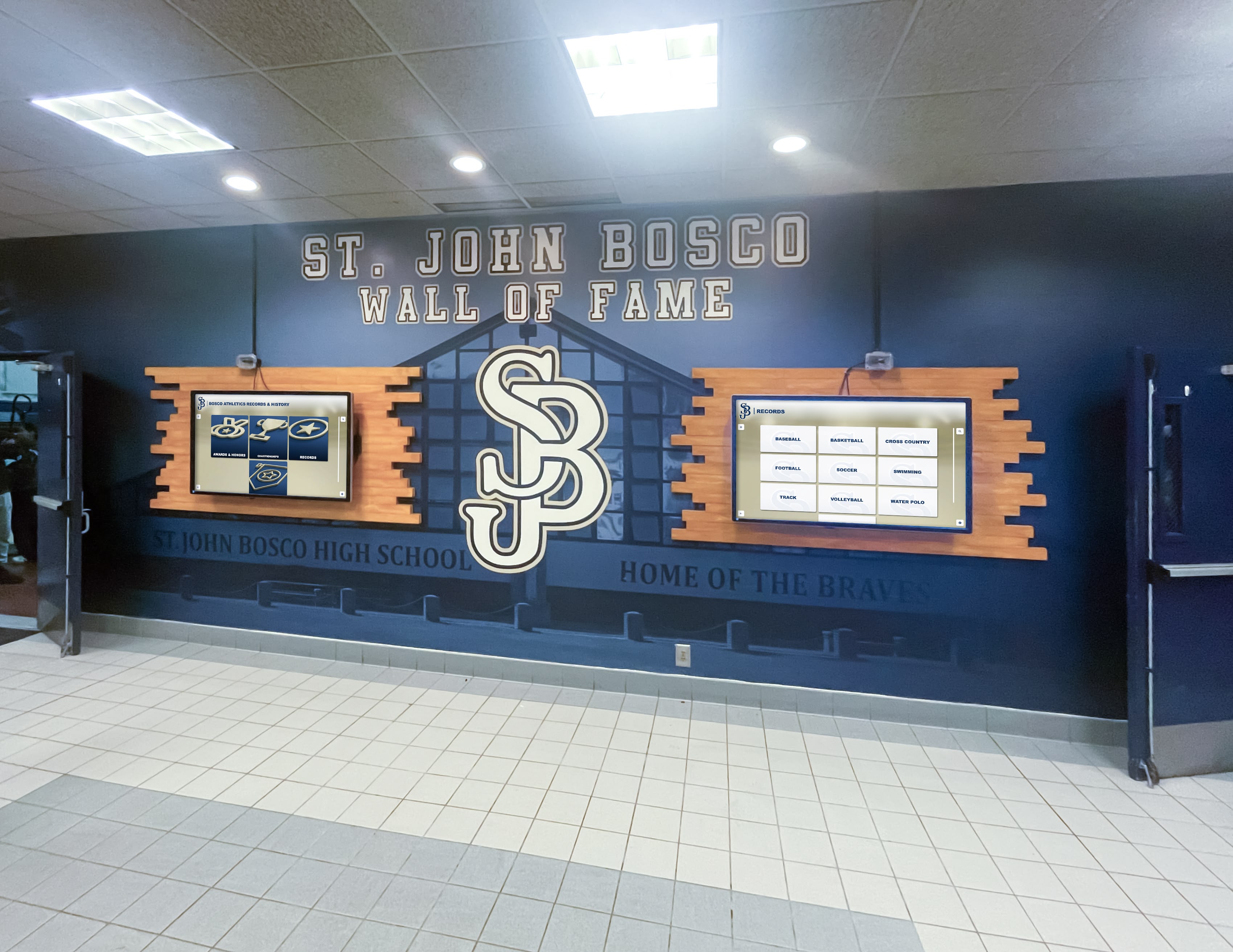
Post-Ceremony Follow-Up and Documentation
The work continues after ceremonies conclude. Proper follow-up extends impact and sets up future success.
Immediate Post-Event Actions
Within 48 hours of your ceremony, send thank-you messages to inductees, presenters, and volunteers. Post ceremony photos and videos on school websites and social media. Distribute press releases with results and photos to local media. Update hall of fame displays or websites with new inductee information. Send digital copies of programs to attendees who requested them.
Prompt follow-up demonstrates professionalism while sharing ceremony highlights with broader audiences.
Creating Permanent Documentation
Preserve ceremony records through complete video recordings archived for historical access, professional photo galleries organized and backed up, printed programs saved in school archives, media coverage collected and catalogued, and ceremony details documented for future planning reference.
This documentation becomes increasingly valuable as years pass and institutional memory fades.
Inductee Engagement Strategy
The induction ceremony begins relationships, not ends them. Continue engaging inductees through annual reunion events or recognition gatherings, mentorship program connections with current athletes, speaking opportunities at team banquets or events, fundraising campaign involvement, and social media community building.
Inducted members often become program ambassadors supporting current athletes and promoting institutional pride.
Feedback Collection and Improvement
Gather input improving future ceremonies through post-event surveys to inductees and attendees, committee debriefing sessions discussing what worked well, budget analysis comparing expenses to outcomes, attendance tracking and demographic analysis, and technology performance evaluation.
Continuous improvement ensures each ceremony builds on previous successes while addressing identified weaknesses.
Common Ceremony Planning Mistakes to Avoid
Learn from others’ experiences by avoiding these frequent pitfalls.
Insufficient advance planning. Attempting to organize ceremonies in 6-8 weeks creates unnecessary stress and compromises quality. Start planning 4-6 months ahead minimum.
Overcrowded programs. Trying to recognize too many inductees in one ceremony diminishes individual recognition. Most programs work best with 3-8 inductees maximum.
Inadequate time management. Ceremonies exceeding two hours lose audience attention regardless of content quality. Enforce time limits strictly.
Poor audio-visual execution. Technical failures during emotional moments create lasting negative memories. Test everything thoroughly with backup plans ready.
Neglecting current student-athletes. When ceremonies exclude current teams, you miss valuable mentorship and motivation opportunities. Find meaningful ways to involve current athletes.
Insufficient promotion. Assuming people will attend without extensive communication guarantees disappointing turnout. Promote aggressively across multiple channels.
Forgetting accessibility needs. Excluding attendees with disabilities due to inadequate planning creates unnecessary barriers and potential legal issues.
Sample Ceremony Timeline
This detailed timeline provides a working framework adaptable to your specific needs.
Pre-Ceremony (60 minutes before start)
- 6:00 PM: Setup crew arrives, arranges seating, tests AV equipment
- 6:15 PM: Registration table opens, staff welcome early arrivals
- 6:30 PM: Inductees and families arrive for private reception
- 6:45 PM: Final AV checks, microphone tests, video cue verification
- 6:50 PM: Doors open to general attendees, ushers distribute programs
Formal Ceremony (7:00 PM start, 90-minute program)
- 7:00-7:05: Welcome and opening remarks
- 7:05-7:08: National anthem performed by student group
- 7:08-7:12: Recognition of previous inductees
- 7:12-7:27: First inductee (3-minute video, 5-minute speech, 2-minute award presentation)
- 7:27-7:42: Second inductee
- 7:42-7:57: Third inductee
- 7:57-8:00: Brief intermission
- 8:00-8:15: Fourth inductee
- 8:15-8:30: Fifth inductee
- 8:30-8:35: Closing remarks and announcements
- 8:35-9:30: Reception with light refreshments
This schedule accommodates five inductees with adequate time for each while maintaining reasonable total duration. Adjust based on your class size and venue constraints.
Integrating Ceremonies with Digital Recognition Systems
Modern hall of fame programs increasingly combine traditional ceremony elements with permanent digital displays that showcase inductees year-round.
Ceremony as System Launch or Update
If your school is implementing a new digital hall of fame display, the induction ceremony provides an ideal unveiling opportunity. Create dramatic moments by covering the display until the proper reveal time, having inductees participate in activation, and conducting live demonstrations showing capabilities.
For schools with existing systems, ceremonies provide annual update opportunities showcasing new content, features, or capabilities.
Creating Ceremony Content for Digital Display
Ceremony planning should include developing content that lives beyond the event through professional photography captured specifically for digital profiles, video tribute editing optimized for touchscreen playback, detailed biographical content entered into content management systems, and statistical documentation preserved in searchable formats.
This dual-purpose approach ensures ceremony production work delivers lasting value rather than single-use content.
Interactive Elements During Ceremonies
Incorporate digital displays directly into ceremony programs by showing live navigation of inductee profiles, demonstrating search and filtering capabilities, highlighting multimedia elements like videos or photo galleries, and encouraging attendee exploration during receptions.
These demonstrations help audiences understand that recognition extends beyond the ceremony itself through permanent, accessible digital systems.
Measuring Ceremony Success
Effective programs track both quantitative metrics and qualitative outcomes demonstrating value while identifying improvement opportunities.
Quantitative Success Indicators
Track concrete metrics including total attendance compared to previous years, livestream viewership during and after events, social media engagement and reach, media coverage secured, and donor or sponsor participation levels.
These numbers demonstrate program health and help justify budget allocations.
Qualitative Impact Assessment
Beyond numbers, evaluate broader influence through inductee satisfaction with recognition experience, attendee feedback on program quality, current student-athlete responses to inspiration and mentorship, alumni engagement patterns following ceremonies, and community perception of athletic program excellence.
Qualitative feedback reveals whether ceremonies achieve intended cultural and motivational impacts.
Long-Term Program Indicators
Assess hall of fame program health over time through nomination quality and quantity trends, community awareness of recognition standards, alumni participation in ceremonies and related events, student-athlete performance motivated by recognition opportunities, and fundraising support for athletic programs.
Healthy hall of fame programs strengthen overall athletic culture and institutional pride.
Special Considerations for Different School Sizes
Ceremony planning approaches vary based on institutional size and resources.
Small Schools and Programs
Schools with limited budgets or smaller communities can host meaningful ceremonies through intimate formats emphasizing personal connections, combined recognition events honoring multiple achievement types, volunteer-driven production reducing costs, emphasis on content quality over production scale, and creative venue use in gymnasiums or commons areas.
Small school ceremonies often create more personal, memorable experiences than large institutional events.
Large Schools with Extensive Programs
Schools with long athletic traditions face different challenges including managing large inductee classes across multiple decades, balancing recognition across numerous sports and genders, accommodating hundreds of potential attendees, maintaining consistent ceremony quality standards, and managing comprehensive digital archives.
Large programs benefit from dedicated committees, professional event management, and robust technology platforms managing extensive content.
Multi-Sport vs. Sport-Specific Recognition
Some schools maintain separate halls of fame for major sports like basketball or football, while others recognize all sports together. Each approach has merits including sport-specific focus enabling deeper tradition celebration but requiring multiple ceremonies, comprehensive approaches simplifying logistics while risking sports receiving unequal attention.
Most schools find comprehensive programs work best, using category-based recognition ensuring all sports receive appropriate acknowledgment.
Year-Round Hall of Fame Engagement
The most successful programs extend recognition far beyond annual induction ceremonies through ongoing activities keeping hall of fame visible and relevant.
Regular Content Updates and Additions
Keep recognition current by adding new achievement milestones as they occur, updating inductee biographical information reflecting career progression, incorporating recently discovered historical content, highlighting “throwback” profiles celebrating anniversaries, and featuring seasonal connections during sport seasons.
Active management demonstrates that hall of fame recognition remains vibrant, not static.
Alumni Engagement Opportunities
Create year-round touchpoints through mentorship programs connecting inductees with current athletes, speaking engagements at team events or banquets, homecoming weekend reunion activities, social media campaigns highlighting different inductees, and fundraising opportunities supporting current programs.
These connections strengthen alumni relationships while providing current athletes with role models and mentors.
Educational Integration
Connect hall of fame content to educational objectives by incorporating athletic history into school curriculum, using inductee stories in character education programs, featuring hall of fame profiles in school publications, creating student projects researching and documenting athletic history, and engaging classes in nomination research and recommendation.
Educational integration ensures hall of fame recognition reinforces broader institutional values beyond just athletics.
Creating Lasting Memories Beyond the Ceremony
The most memorable induction experiences include thoughtful touches extending recognition beyond the formal program.
Personalized keepsake programs. Rather than generic printed programs, create custom booklets for each inductee including personal photo collections, career timelines, statistics and achievements, congratulatory messages from coaches and teammates, and family acknowledgments.
Professional photography sessions. Arrange formal photo opportunities before ceremonies including individual inductee portraits, family group photos, class group photos with all inductees, photos with previous inductees, and posed shots at hall of fame displays.
Custom awards and recognition items. Beyond standard plaques, consider framed jerseys or uniforms, custom artwork featuring inductees, engraved crystal or metal awards, commemorative rings or jewelry, or custom photo books documenting careers.
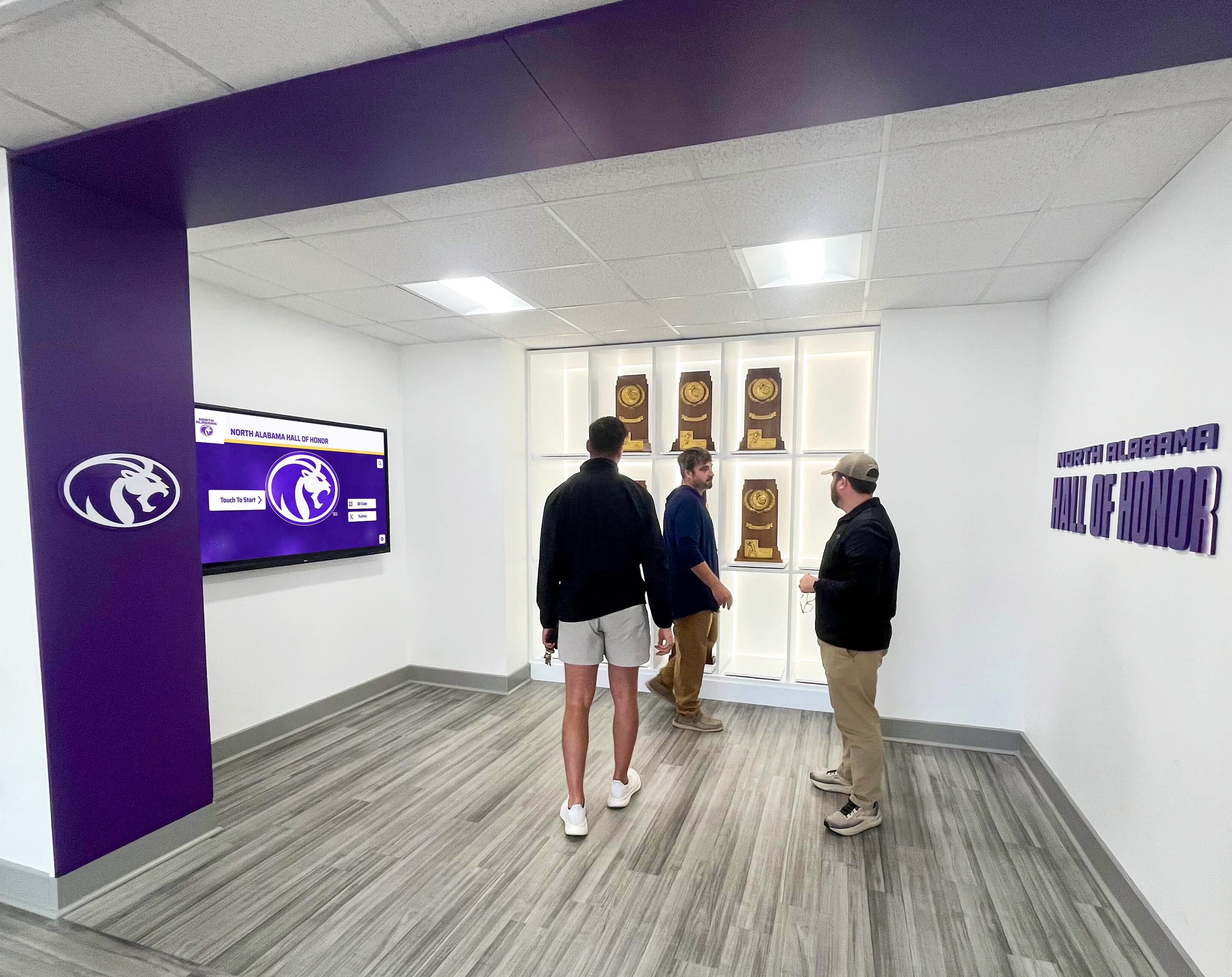
Permanent venue recognition. Some schools create physical elements honoring inductees including named locker rooms or training spaces, engraved bricks or pavers in athletic facilities, banners hanging in gymnasiums, and dedicated display cases with memorabilia.
Building Sustainable Ceremony Traditions
The most successful programs create consistent traditions that strengthen over time rather than reinventing approaches annually.
Consistent timing and scheduling. Hold ceremonies at the same time each year—perhaps always during homecoming weekend or the Saturday before Thanksgiving. Predictable scheduling helps alumni plan attendance years in advance.
Signature ceremony elements. Develop unique traditions specific to your institution like particular songs or performances, signature award designs, traditional speeches by athletic directors, involvement of school mascots, or closing rituals unique to your school.
Documentation and knowledge transfer. Create comprehensive planning guides documenting every aspect of ceremony organization, maintain contact lists for vendors and volunteers, preserve successful program templates and timelines, and establish transition procedures when committee members change.
Continuous improvement mindset. Successful programs constantly evolve by gathering feedback after each ceremony, benchmarking against other respected programs, adopting new technology thoughtfully, and maintaining core traditions while refreshing presentations.
The Role of Technology Partners in Ceremony Success
Schools implementing modern recognition programs benefit from partnerships with technology providers who understand educational contexts and athletic recognition.
Solutions like Rocket Alumni Solutions provide comprehensive platforms supporting both ceremony planning and permanent digital recognition through ceremony content development assistance, video production and editing support, live event technology coordination, permanent digital display implementation, ongoing content management training, and technical support ensuring reliable operation.
These partnerships allow athletic directors and committees to focus on content and relationships rather than managing complex technology independently.
Create Unforgettable Hall of Fame Celebrations
Rocket Alumni Solutions provides comprehensive support for schools planning hall of fame induction ceremonies and implementing permanent digital recognition systems. Our platform combines intuitive content management with professional display technology, enabling you to honor athletic excellence both during special events and year-round through engaging digital experiences.
Whether you're planning your first induction ceremony or enhancing an established tradition, we'll help you create memorable events that genuinely honor inductees while building lasting connections with alumni and inspiring current student-athletes. Our team provides ceremony planning guidance, content development support, professional display installation, and ongoing technical assistance ensuring your recognition program succeeds.
Conclusion: Honoring Excellence Through Meaningful Ceremonies
Athletic hall of fame induction ceremonies represent far more than awards presentations or recognition programs. These events celebrate institutional values, preserve athletic history, inspire future excellence, strengthen community bonds, and demonstrate that achievement earns lasting honor.
The most successful ceremonies balance planning and spontaneity, tradition and innovation, formality and warmth. They honor individual excellence while celebrating team contributions. They create emotional connections while maintaining professional execution. And they provide memorable experiences while building sustainable programs that strengthen over time.
Whether you’re planning an intimate ceremony recognizing a handful of inductees or a major event celebrating dozens of legends, the principles remain consistent: start planning early with clear timelines, establish fair selection criteria and transparent processes, create comprehensive program content honoring each inductee appropriately, leverage technology extending recognition beyond the physical event, involve current student-athletes creating mentorship opportunities, promote extensively ensuring strong attendance, execute professionally with attention to every detail, and follow up building lasting engagement beyond the ceremony itself.
Modern digital recognition technology transforms what’s possible in celebrating athletic excellence. Interactive displays provide unlimited capacity for comprehensive recognition, rich multimedia content bringing athletic careers to life, instant updates celebrating achievements in real-time, web accessibility extending recognition worldwide, and engaging experiences that captivate visitors throughout the year.
Schools implementing comprehensive hall of fame programs—combining meaningful induction ceremonies with permanent digital recognition—create powerful traditions that honor past excellence while inspiring future achievement. These programs demonstrate that athletic success receives lasting recognition, motivating current athletes to pursue their own path to greatness while strengthening the entire school community through shared pride in athletic tradition.
Ready to plan an unforgettable induction ceremony or implement a comprehensive digital hall of fame system? The guidance in this article provides the foundation, and experienced partners like Rocket Alumni Solutions offer the technology and support transforming plans into reality. Your school’s athletic legends deserve recognition that matches their achievements—celebration that’s memorable, meaningful, and permanent.































