Schools establishing hall of fame programs face two interconnected challenges: creating fair selection frameworks that honor genuine achievement while maintaining community trust, and presenting those inductees in ways that preserve their stories for future generations. The selection process determines who receives recognition, while the display method determines how effectively that recognition resonates with visitors decades later.
Most athletic directors discover that selection criteria require far more precision than initially expected. Vague standards like “outstanding achievement” generate disputes and accusations of favoritism, while overly restrictive criteria exclude deserving candidates based on arbitrary thresholds. The presentation challenge compounds this—traditional plaques reduce accomplished athletic careers to brief text that visitors rarely read, creating a disconnect between the honor bestowed and the recognition actually received.
This guide provides the complete framework for both establishing defensible selection criteria and presenting inductees through modern digital displays that tell complete achievement stories. You’ll understand how to structure nomination processes, evaluate candidates objectively, document decisions, and implement interactive recognition systems that engage visitors rather than simply occupying wall space.
Understanding Selection Authority and Decision-Making Structures
Before establishing criteria, schools must determine who holds authority to make induction decisions and what role different stakeholders play in the process.
Selection Committee Formation
Most successful hall of fame programs use selection committees rather than single-person decisions. Committee structures distribute responsibility across multiple perspectives while preventing perception that one individual controls recognition.
Optimal committee composition typically includes 5-9 members:
- Athletic director (often serves as chair)
- Head coaches from different sports (2-3 rotating positions)
- School administrator or principal representative
- Alumni association or booster club representative
- Former athlete or community member with historical perspective
Committees smaller than five members lack diverse viewpoints. Larger committees struggle to coordinate schedules and reach consensus efficiently.
Term limits prevent permanent control by any faction. Implement 3-year terms with maximum consecutive service limits, then require a break before members can serve again. Stagger term expirations so you don’t lose all experienced members simultaneously—aim to replace one or two committee members each year rather than the entire committee at once.
Recusal protocols maintain credibility by requiring committee members to abstain from deliberations when conflicts exist. Document clear recusal requirements covering immediate family members, athletes they personally coached, or situations involving financial interests. When a member recuses, document the recusal in committee minutes to demonstrate procedural integrity.

Establishing Decision-Making Procedures
Selection committees need documented procedures that answer operational questions before disputes arise.
Voting thresholds: What percentage constitutes approval? Simple majority (50% plus one)? Two-thirds supermajority? Unanimous consent? Higher thresholds ensure broader consensus but may exclude strong candidates when committee members disagree on subjective factors.
Ballot procedures: Secret ballots reduce pressure to vote with influential members and encourage honest evaluation. Open voting increases accountability but may discourage dissenting opinions. Document which approach your committee will use and why.
Tie-breaking mechanisms: When votes split evenly, who makes final decisions? Common approaches include giving the chair tie-breaking authority, requiring additional deliberation until consensus emerges, or deferring tied candidates to the following year’s consideration.
Meeting frequency and quorum: How often does the committee meet? What minimum attendance constitutes valid proceedings? Spring meetings work well for most schools, allowing evaluation after athletic seasons conclude. Require at least two-thirds attendance for valid votes to ensure decisions represent committee consensus rather than whoever showed up.
Core Selection Criteria Categories
Effective hall of fame criteria organize into distinct categories, each requiring specific measurement standards and documentation.
Individual Achievement Standards
Individual athlete recognition typically focuses on measurable accomplishments that provide objective verification.
State-level recognition represents achievement beyond local competition. Common qualifying standards include:
- All-state first team selections in any sport
- State championship individual titles in wrestling, track events, swimming, or other individual sports
- State tournament MVP or player of the year awards
- State record holders in officially tracked categories
State-level criteria minimize subjective evaluation—either the athlete received official recognition or didn’t—reducing controversy potential.
School record holders demonstrate measurable superiority across program history. When establishing record-holder criteria, define which statistical categories qualify. Focus on primary statistics like points scored, yards gained, or career wins rather than obscure secondary metrics that few people track or verify.
Consider requiring records to stand for minimum periods (5-10 years) before triggering automatic hall of fame consideration. This ensures records represent sustained excellence rather than statistical anomalies created by unique circumstances that subsequent athletes haven’t replicated.
College scholarship recipients demonstrate achievement validation by external evaluators. Athletic scholarships to NCAA Division I, II, or III programs indicate that college coaches assessed the athlete as worthy of substantial investment. However, scholarship criteria favor athletes in sports offering many scholarships (football, basketball) over those in sports with limited scholarships (swimming, tennis), so consider whether this creates unintended bias.
Professional athletic careers represent the highest achievement level. Athletes who compete professionally, regardless of duration, typically qualify automatically for hall of fame consideration. Professional careers occur rarely enough that automatic inclusion doesn’t overwhelm recognition programs.
Team Championship Recognition
Championship teams represent collective achievement requiring different evaluation than individual honors.
State championships typically trigger automatic team recognition. However, specification details matter significantly. Do you recognize teams from all competitive classifications equally? Class A state champions compete in different contexts than Class AAAA champions. Document whether championship teams receive recognition regardless of classification or whether you create tiered recognition systems.
What about state runner-up teams? Semifinalists? Clear placement thresholds prevent future expansion debates when teams that didn’t quite win championships seek recognition based on “getting close.”
Conference championships occur more frequently than state titles but represent significant achievement in competitive conferences. Many programs establish qualifying criteria beyond the championship itself:
- Undefeated conference records
- Conference championships combined with deep playoff advancement
- Multiple consecutive conference titles demonstrating sustained excellence
- Championships in conferences known for strong competition
Define these standards explicitly rather than leaving conference championship recognition to case-by-case committee discretion.
Historic season milestones recognize teams that achieved remarkable records without winning ultimate championships. Consider standards for:
- Undefeated regular seasons
- School-record win totals that exceed previous program bests
- Statistical dominance (fewest points allowed, highest scoring averages)
- Advancement significantly beyond typical program performance
These milestone criteria require careful definition because “significant advancement” varies by program tradition. A semifinal appearance might be routine for perennial powers but historic for developing programs. Document how your committee will evaluate context when assessing team achievement.
Multi-Sport Athlete Excellence
Athletes competing successfully in multiple sports demonstrate exceptional versatility and year-round commitment that single-sport specialists cannot match.
Minimum achievement thresholds prevent recognizing mere participation. Common frameworks require:
- Varsity letters in 3+ sports during a single academic year
- All-conference or higher recognition in 2+ sports
- Varsity participation spanning all three athletic seasons
- State-level recognition achieved in multiple sports
Evaluation approach: Should multi-sport participation alone merit consideration, or must multi-sport athletes also meet single-sport achievement standards? Some programs create standalone multi-sport criteria recognizing athletic versatility as independently valuable. Others treat multi-sport participation as enhancement to primary sport achievements. Document your approach to prevent inconsistent application when evaluating actual candidates.
Remember that multi-sport athletes were more common in past eras before year-round sport specialization became standard. Apply era-appropriate evaluation when comparing historical multi-sport athletes with modern single-sport specialists.
Nomination Process Implementation
Clear nomination procedures create accessible pathways for community members to suggest candidates while maintaining manageable committee workload.
Eligibility Timeline Standards
Waiting periods prevent selection based on recent memory rather than sustained historical significance. Most programs require 5-10 years between graduation and hall of fame eligibility. This timeline allows:
- Post-high school accomplishments that enhance credentials
- Perspective distinguishing exceptional careers from strong-but-not-hall-of-fame achievement
- Emotions surrounding recent competitions to settle before evaluation
However, truly exceptional accomplishments sometimes merit expedited consideration. Olympic medals, professional careers at elite levels, or national championships warrant immediate recognition regardless of graduation timing. Document your standard waiting period while creating provisions for rare exceptional cases.
Nomination Submission Requirements
Open vs. restricted nomination: Define who may submit nominations. Open processes where any community member can nominate increase engagement but generate higher volumes requiring committee screening time. Restricted processes limiting nominations to coaches, athletic directors, or committee members reduce administrative burden but risk missing deserving candidates without strong advocates.
Many programs use combination approaches where anyone can suggest candidates through informal channels, but committee members review suggestions and formally nominate those meeting basic criteria thresholds.
Required documentation ensures committees have sufficient information for informed evaluation:
- Complete biographical information (name, graduating class, sports participated in)
- Specific achievements with dates and verification sources
- Statistical accomplishments and school records
- Supporting materials (photographs, newspaper clippings, awards documentation)
- Letters of recommendation from coaches, teammates, or community members
Detailed documentation requirements discourage frivolous nominations lacking substantive achievement basis while ensuring committees can evaluate candidates thoroughly.
Submission deadlines create structured annual cycles. Typical deadlines fall in early spring, allowing committee evaluation after fall and winter sports conclude but before summer when members are less available. Communicate deadlines clearly through athletic department websites, booster club communications, and local media.
Evaluation Frameworks That Quantify Achievement
Transform subjective judgment into structured evaluation by implementing scoring systems that quantify achievement relative to documented criteria.
Point-Based Scoring Models
Assign numerical values to different achievement categories, creating quantifiable candidate comparisons:
| Achievement Category | Point Value |
|---|---|
| State championship team member | 10 points |
| All-state first team selection | 15 points |
| School record holder (current) | 12 points |
| Conference championship team | 5 points |
| All-conference first team | 6 points |
| Multi-sport letter winner (3+ sports) | 8 points |
| College scholarship recipient | 7 points |
| Professional athletic career | 20 points |
| Olympic or international competition | 25 points |
Adjust point values reflecting your program’s priorities and competitive context. Programs competing in strong conferences might weight conference achievements higher than those in less competitive leagues.
Qualification thresholds provide objectivity while maintaining committee discretion:
- 30-40 points: Strong candidate meriting serious consideration
- 50+ points: Presumptive inductee unless extraordinary circumstances exist
- 75+ points: Automatic induction without requiring committee deliberation
Thresholds reduce personal bias while allowing committees to consider contextual factors that raw point totals miss.
Contextual Adjustment Documentation
Scoring systems capture quantifiable achievements but miss important context. Document how committees should weigh factors like:
Era adjustments: Three-sport athletes were more common before year-round sport specialization. Competition levels have intensified in some sports while expanding in others. Evaluate athletes relative to their competitive era rather than applying modern standards retroactively.
Program maturity considerations: Early achievements occurred when programs were establishing traditions and competitive standings. Athletes who pioneered programs merit recognition even when raw statistics don’t match later era achievements from mature programs.
Injury impact assessment: Athletes whose careers ended prematurely due to injury deserve consideration when clear trajectory pointed toward qualification absent the injury.
Character and citizenship factors: When achievement levels are comparable between candidates, how should committees weigh sportsmanship, leadership, and character? Some programs create formal character criteria. Others leave character as informal tie-breaking consideration.
Schools implementing comprehensive selection frameworks often find that platforms like Rocket Alumni Solutions provide structured profile templates ensuring consistent evaluation documentation across all candidates.
Achievement Verification and Documentation
Before finalizing inductions, verify claimed achievements through reliable sources rather than relying on memory or unconfirmed reports.
Official Recognition Verification
Confirm all-state selections, championship participation, and official awards through:
- State athletic association records and historical archives
- Conference office documentation and championship records
- School yearbooks from relevant years
- Newspaper archives from achievement periods (many libraries maintain digital archives)
- Official team records and coaching documentation
When historical records prove difficult to locate, document verification attempts in committee files and note any limitations in permanent records. Incomplete verification differs from fabricated achievements—acknowledge uncertainty rather than presenting unverified claims as confirmed facts.
Statistical Record Confirmation
For athletes recognized based on school records:
- Verify official record books showing the athlete held the record at the documented time
- Document dates records were set and (if applicable) when broken
- Cross-reference multiple sources when possible to confirm accuracy
- Establish source hierarchy determining which records receive precedence when conflicts exist
Statistical discrepancies occasionally surface when informal records maintained by different sources conflict. Document which sources your program considers authoritative and apply that standard consistently across all candidates.
Media and Photographic Documentation
Collect supporting materials that will enhance recognition displays:
Photographs: Locate action shots, team photos, and award ceremony images. For historical inductees, contact local historical societies, newspaper archives, or family members who may have preserved materials.
Video footage: Recent athletes may have game film or highlight reels. Older achievements might be documented in local news broadcasts archived by television stations or libraries.
News coverage: Newspaper articles provide contemporary accounts of achievements and community response. Many newspapers have digitized historical archives searchable by name and date.
Personal artifacts: Consider including scanned images of medals, awards, certificates, or other recognition materials that document achievement.
Schools that maintain comprehensive documentation find these materials invaluable when implementing digital recognition displays allowing rich multimedia profiles beyond what static plaques can accommodate.
Presenting Inductees Through Digital Display Systems
After establishing selection criteria and choosing inductees, schools must determine presentation methods that honor achievement effectively and sustainably.
Traditional Display Limitations
Physical plaques and trophy cases face inherent constraints that digital systems address:
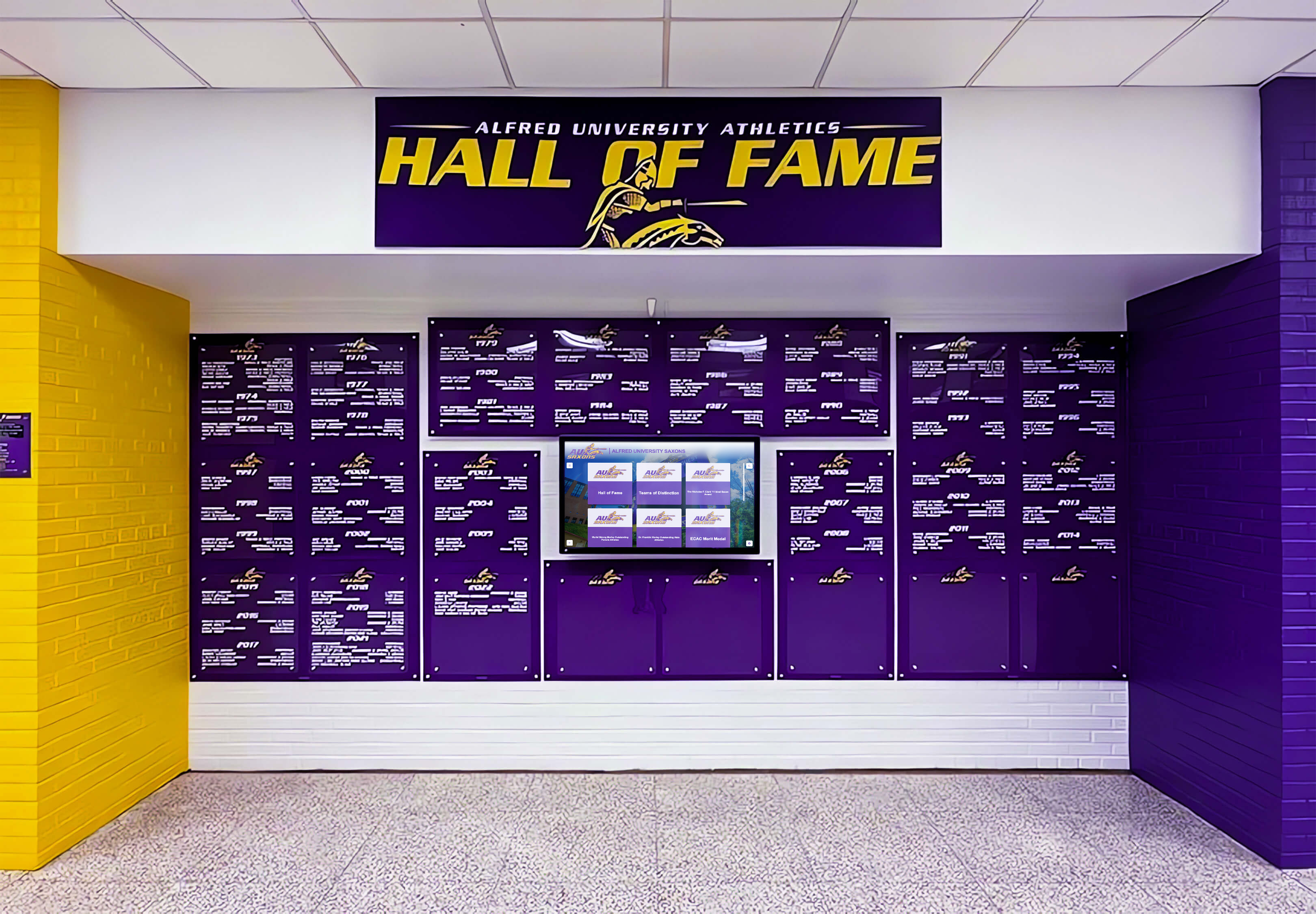
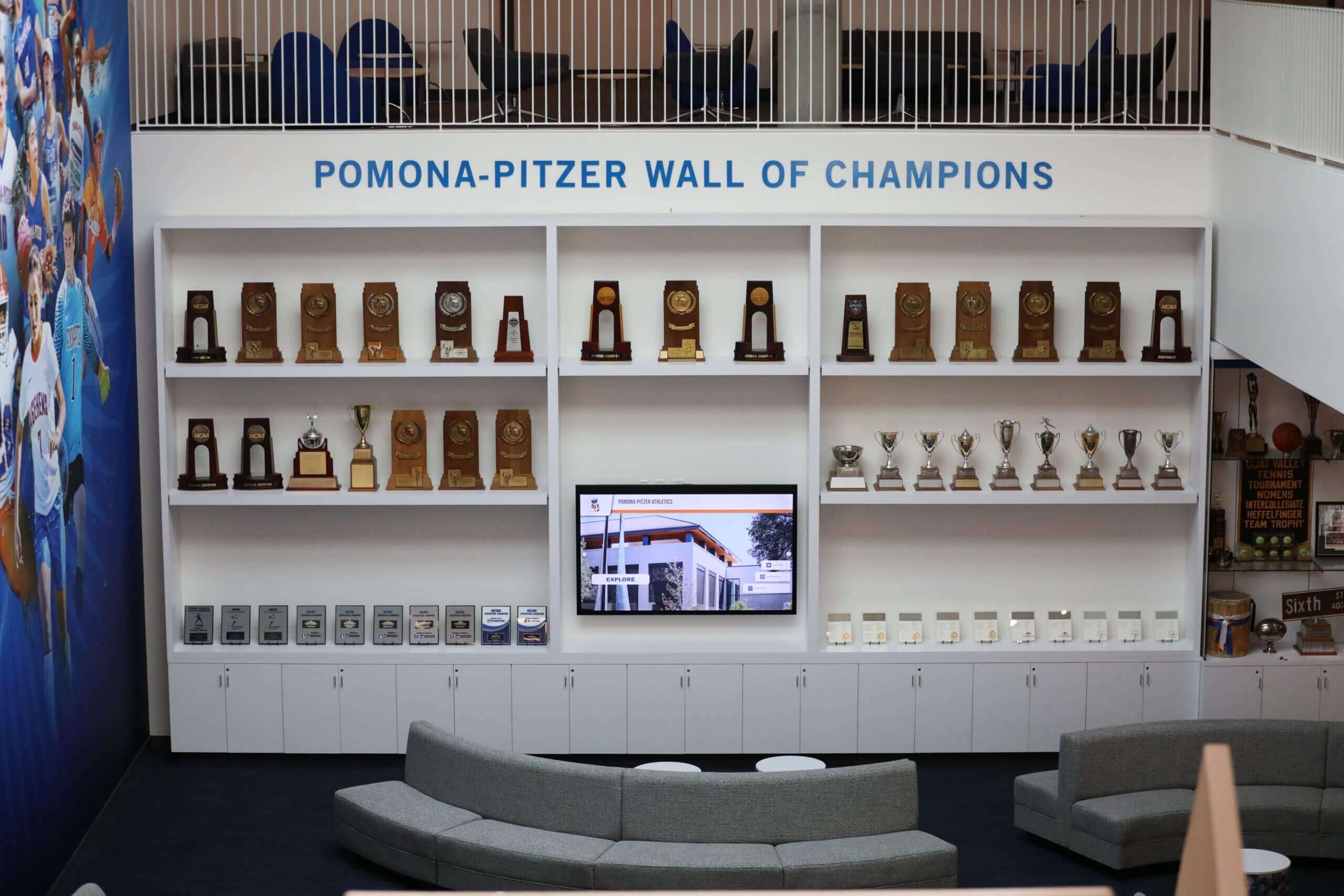
Space limitations: Wall space limits total recognition capacity. Schools must choose between recognizing dozens of deserving athletes or maintaining readable, uncrowded displays.
Update complexity: Adding new inductees requires physical modifications—engraving, fabrication, installation—creating delays and costs that discourage keeping recognition current.
Information constraints: Plaques limit information to brief text. Complex athletic careers reduce to name, year, and perhaps one achievement line.
Static presentation: Visitors cannot search, filter, or explore based on personal interests. Everyone sees identical information regardless of what aspects most interest them.
Maintenance requirements: Physical materials deteriorate. Brass tarnishes, frames fade, glass scratches. Maintaining professional appearance requires ongoing attention and periodic restoration.
Digital Display Advantages for Hall of Fame Recognition
Modern interactive displays address traditional limitations while creating engagement impossible with static materials.
Unlimited recognition capacity: Digital systems accommodate thousands of profiles without physical space constraints. Schools can recognize every deserving athlete rather than making difficult exclusion choices based on wall space availability.
Instant remote updates: Add new inductees, correct errors, enhance existing profiles, or update information from any internet-connected device without physical modifications or fabrication delays. Annual induction ceremonies can feature profile reveals added remotely that morning.

Rich multimedia storytelling: Include multiple photographs spanning athletic careers, video highlights from championship games, statistical tables showing performance, career timelines tracking progression, coach testimonials, and post-athletic career updates. Tell complete achievement stories rather than reducing careers to engraved text.
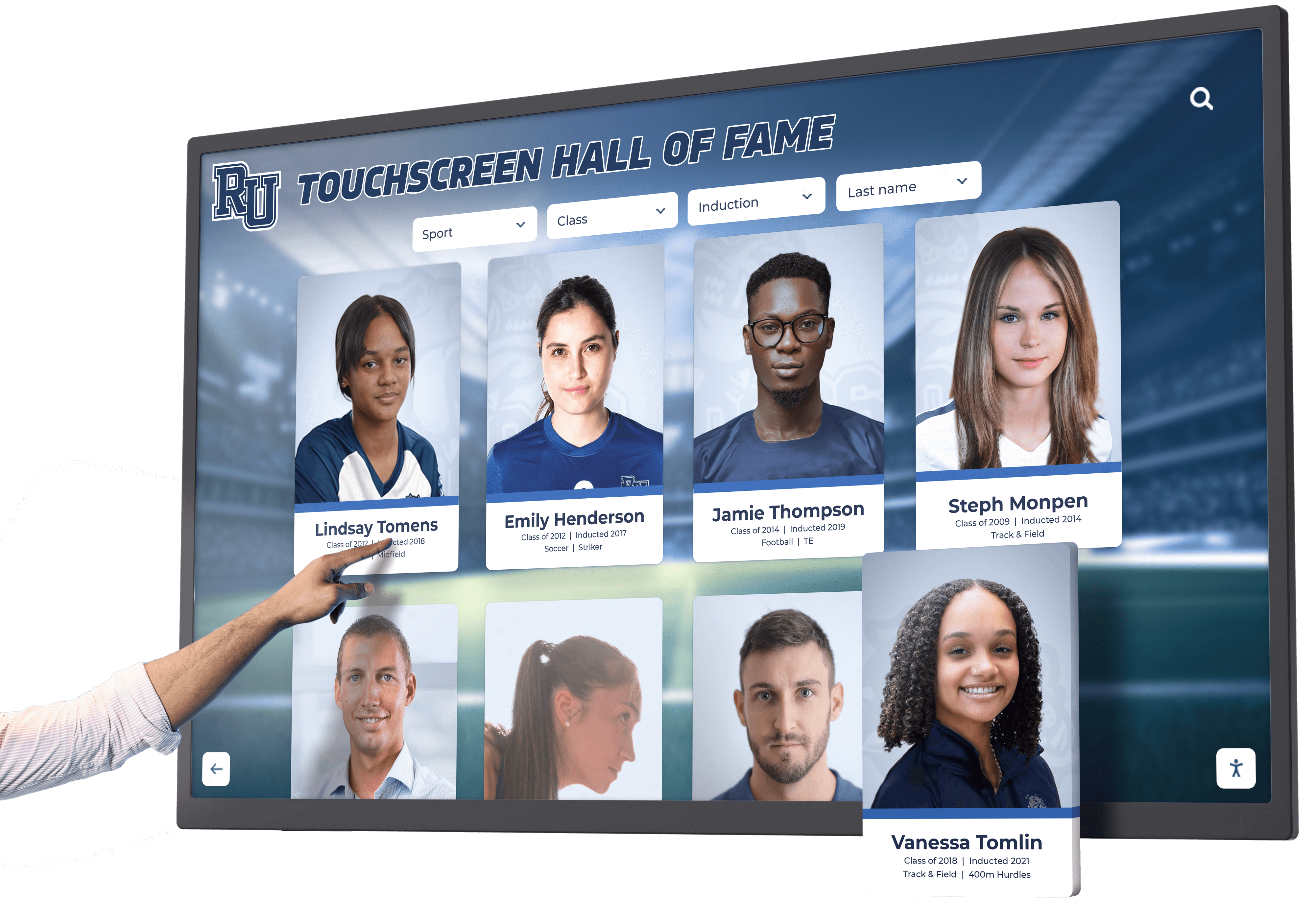
Searchable, filterable exploration: Visitors search for specific athletes, filter by sport or graduating class, explore championship teams, or browse all-time statistical leaders. Each visitor creates personalized experiences based on individual interests rather than consuming identical static information.
Web accessibility beyond campus: Alumni explore hall of fame recognition from anywhere, share profiles via social media, and maintain connection regardless of geographic distance. Digital systems extend recognition reach far beyond visitors who happen to walk past physical displays.
Consistent professional appearance: Digital displays maintain identical appearance over decades without physical deterioration, tarnishing, or fading that plagues traditional materials.
Many schools implementing comprehensive recognition programs find that solutions like Rocket Alumni Solutions provide specialized platforms designed specifically for athletic recognition, with interfaces optimized for achievement presentation and integration with annual induction ceremonies.
Digital Display Content Structure and Organization
Effective digital hall of fame displays require thoughtful content organization ensuring visitors can discover information intuitively.
Profile Template Standards
Create consistent biographical structures for every inductee:
Essential elements every profile should include:
- Full name (as it appears in official school records)
- Graduating class year
- Sport(s) and position(s) played
- Varsity letters earned and participation years
- Championships and tournament achievements (conference, regional, state)
- Individual recognition (all-state, all-conference, player awards)
- School records held with statistical documentation
- Induction year and class
Enhanced elements that digital platforms enable:
- Multiple photographs from different career stages
- Action shots from significant games or competitions
- Video highlights of championship moments or signature performances
- Complete statistical tables showing career performance
- Coach quotes or testimonials describing impact
- Post-high school athletic continuation (college, professional, international)
- Current biographical information and career updates
- Team roster links for championship team members
Navigation and Filtering Structures
Organize content allowing multiple discovery paths based on different visitor interests:
Sport-based browsing: Visitors interested primarily in basketball explore only basketball inductees. Football fans focus on gridiron achievement. Each sport receives dedicated section with complete coverage.
Era-based exploration: Alumni from specific decades explore contemporaries. Visitors interested in program history trace evolution across eras. Organize by decade or graduating class ranges.
Achievement-based filtering: Show only state championship teams, or filter to all-time statistical leaders, or display professional athletes from your program. Allow visitors to focus on specific achievement types matching their interests.
Direct search functionality: Visitors who know exactly which athlete they want to learn about search by name and jump directly to that profile without browsing categories.
Championship team rosters: Present championship teams with complete rosters linked to individual athlete profiles. Visitors exploring a 1995 state championship football team can click any player name to view that athlete’s complete profile.
Schools implementing interactive digital displays should request vendor demonstrations showing how actual users navigate content, not just static mock-ups that look impressive but prove difficult to use in practice.
Technical Specifications for Display Installation
Digital hall of fame displays require specific infrastructure. Verify these requirements before vendor selection to prevent installation complications.
Location Assessment Criteria
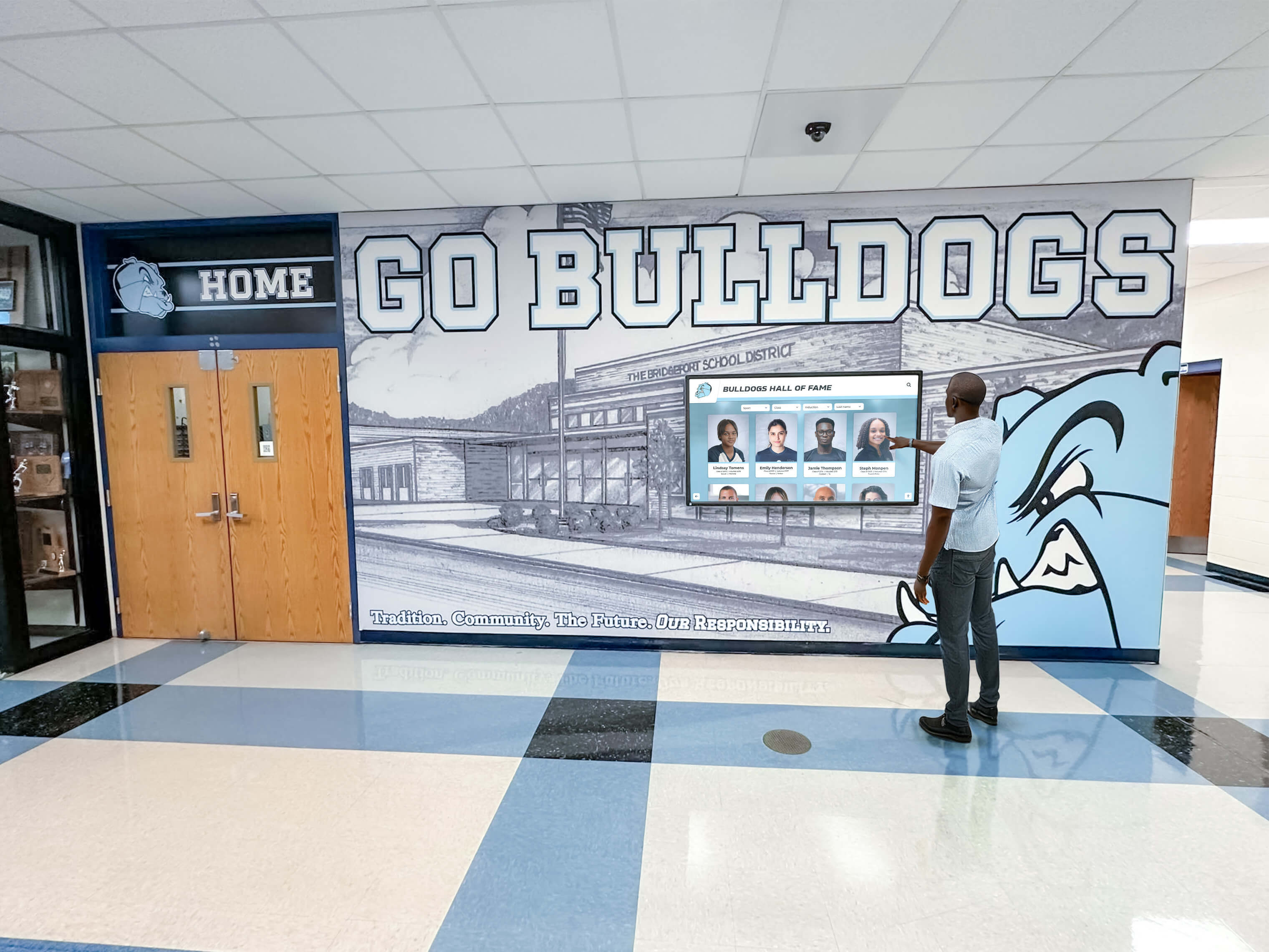
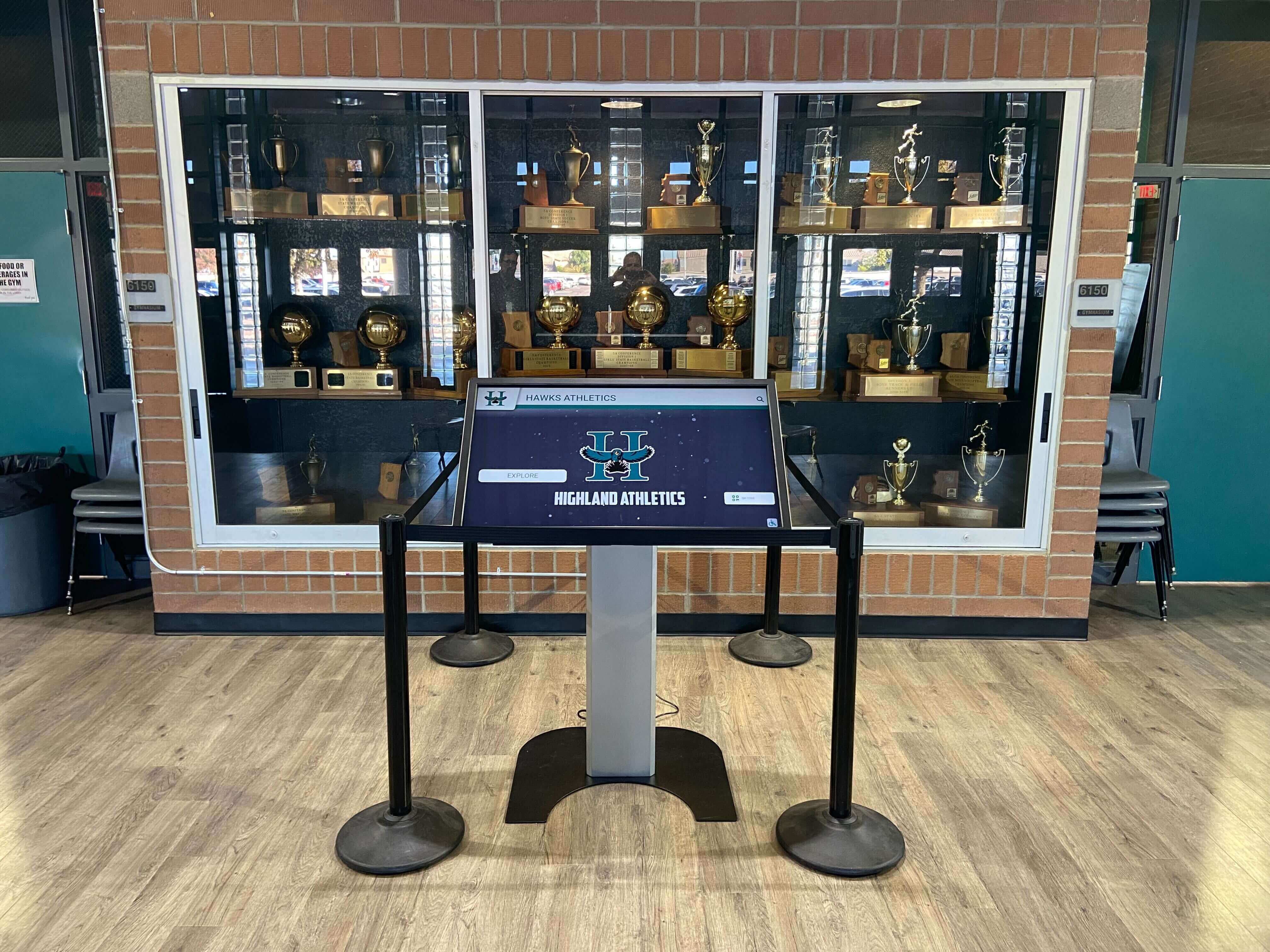
Foot traffic and visibility: Install displays where students, visitors, and alumni naturally congregate. Main athletic facility entrances, gymnasium lobbies, and school front entrances typically provide high visibility. Avoid isolated hallway locations where displays receive minimal engagement regardless of content quality.
Power infrastructure: Commercial displays draw 200-400 watts continuously. Verify adequate electrical capacity exists at proposed locations. Calculate: (display wattage ÷ voltage) × 1.25 safety factor. A 300-watt display on 120V circuit requires: (300 ÷ 120) × 1.25 = 3.125 amps. Verify the circuit can accommodate this load plus any other connected equipment.
Network connectivity: Cloud-based content management requires reliable internet access. Test connectivity at proposed locations—concrete walls, metal construction, and large open spaces can create wireless signal challenges. Hardwired Ethernet provides superior reliability for permanent installations when available.
Mounting surface capacity: Commercial displays weigh 40-100 pounds. Standard drywall cannot support this weight. Verify solid mounting surfaces (concrete, CMU blocks, or wood studs) exist at proposed locations, or plan to install backing supports during construction.
ADA compliance: Mount touchscreens with interactive elements centered 15-48 inches above floor level, allowing comfortable access for both seated and standing users. Provide clear approach space of at least 30 × 48 inches in front of displays.
Hardware Specification Requirements
Commercial-grade displays: Specify commercial displays rated for 16-24 hour daily operation, not consumer televisions designed for residential use. Commercial displays have 50,000+ hour lifespans and include extended warranty coverage appropriate for institutional settings.
Touchscreen technology: Infrared or capacitive touchscreen technology provides responsive interaction. Verify touch responsiveness before purchase—displays requiring multiple touches or failing to register light touches frustrate users and reduce engagement.
Screen size appropriateness: Larger isn’t always better. 55-inch displays work well for individual kiosks. 65-75 inch displays suit main lobby installations. Larger displays require greater viewing distances and may overwhelm smaller spaces. Visit existing installations to assess size appropriateness rather than making decisions from specification sheets alone.
Mounting hardware security: Specify anti-theft mounting systems securing displays to walls or anchoring floor-standing kiosks to prevent tipping. School environments require secure mounting that withstands incidental contact without damage or safety risks.
Content Management and Long-Term Maintenance
Hall of fame displays require ongoing maintenance to remain accurate, current, and professionally presented. Establish protocols during implementation rather than addressing issues reactively.
Annual Update Cycle Procedures
Schedule consistent annual timing—typically late spring after athletic seasons conclude—to review and update content:
Collect new achievements: Document the concluded season’s championships, individual records, all-state selections, and academic honors. Gather photographs and statistics while information is readily available rather than attempting to reconstruct details years later.
Verify accuracy across existing profiles: Confirm graduating class years, check statistical records against official sources, update college placement information for recent graduates, and correct any errors discovered during the year.
Identify historical gaps: Document past achievements that haven’t been recognized, locate missing photographs that need to be found, and note incomplete athlete profiles requiring additional research.
Plan induction ceremony integration: Coordinate with selection committees to ensure new inductee profiles are prepared and ready for revelation during annual ceremonies. Many schools unveil new profiles during induction events, creating ceremonial moments that honor inductees while demonstrating display capabilities.
Staff Training and Transition Planning
Document standard operating procedures covering routine updates, troubleshooting common issues, vendor contact information, and system documentation access. Written procedures ensure consistency regardless of which staff member performs updates.
Train multiple administrators rather than designating single system managers. Staff changes are inevitable—having backup administrators prevents situations where only one person knows how to update critical recognition systems.
Schedule refresher training when staff transitions occur. Quality vendors provide ongoing training support rather than limiting instruction to initial installation. Confirm training availability during vendor evaluation.
Technical Maintenance Protocols
Daily checks: Verify displays are functioning when staff arrives each morning. Note performance issues, error messages, or unusual behavior for vendor reporting.
Weekly cleaning: Clean touchscreens using electronics-safe cleaners. Avoid harsh chemicals or abrasive materials that damage screens or anti-glare coatings.
Quarterly reviews: Check system logs for errors or warnings, verify content management system functionality, apply required software updates or security patches, and test backup systems.
Annual comprehensive inspection: Complete thorough system assessment, review warranty status and service coverage, plan for hardware updates or replacements approaching end-of-life, and audit content accuracy across all profiles.
Schools implementing comprehensive digital signage services find that proactive maintenance schedules prevent minor issues from becoming major problems requiring extensive troubleshooting or system downtime.
Special Recognition Categories Beyond Athletes
While athletic achievement drives most hall of fame programs, many schools expand recognition to honor contributors who shaped program success without competing.
Coaching Excellence Recognition
Create separate criteria for coaching achievement rather than applying athlete standards:
Minimum service requirements: Typically 10+ years coaching at your institution demonstrates sustained commitment rather than brief tenure.
Championship achievement: State championships coached, conference titles won, playoff advancement records. Document competitive achievement under their leadership.
Athlete development impact: Number of athletes who earned college scholarships, all-state selections produced, or statistical leaders developed. Coaching success isn’t measured solely by championships but by athlete growth.
Program building contributions: Coaches who established new programs, revived struggling programs, or significantly advanced competitive standing merit recognition even when raw win totals or championship counts don’t reach thresholds applied to established programs.
Professional recognition: State or national coach of the year awards, selection to coaching association leadership positions, or contributions through clinics and training programs that advanced the sport beyond your local program.
Contributor and Builder Recognition
Some programs honor administrators, boosters, officials, or community members who made extraordinary contributions:
Long-term administrative leadership: Athletic directors who served through significant program growth, facility development, or competitive advancement.
Major funding contributions: Individuals or organizations that funded facility construction, equipment purchases, or program initiatives enabling success.
Medical and training support: Team physicians, athletic trainers, or physical therapists who served programs for decades ensuring athlete health and safety.
Media and documentation: Journalists, photographers, or statisticians who chronicled and preserved achievement records allowing current recognition programs to access historical information.
Contributor categories require careful definition preventing expansion that dilutes athlete recognition focus. Many programs limit contributor inductions to one per annual class or require truly exceptional contribution standards rather than recognizing anyone who provided any service.
Addressing Common Selection Challenges and Disputes
Even with clear criteria, committees face recurring challenges requiring policy guidance and documented precedents.
Comparing Achievement Across Different Sports
How do you compare a state champion wrestler with a three-sport athlete who never won championships? Evaluation frameworks must account for sport-specific contexts.
Sport-specific considerations: Team sport championships require collective success that individual athletes cannot control alone. Individual sport state titles represent personal achievement within competitive fields. Participation numbers vary—sports with high participation face more competitive state qualification than sports with limited participation.
Rather than forcing universal standards that advantage certain sports, consider sport-specific qualification paths where excellence in any sport can achieve hall of fame recognition. Point-based frameworks can adjust for sport context—state championships worth 15 points regardless of sport, but individual state titles worth additional points reflecting personal achievement, and team championships where athletes played statistically significant roles receiving contextual bonuses.
Managing Family and Community Pressure
High-profile nominations generate family advocacy and community pressure that can influence committees toward inclusion despite marginal criteria alignment.
Maintain selection confidentiality: Committee deliberations should remain confidential. Public discussion of specific candidate weaknesses creates community friction without serving productive purposes.
Document decisions thoroughly: When committees choose not to induct nominees, document specific criteria gaps in internal records. Future questions can reference documented rationales rather than reconstructing reasoning from memory.
Communicate standards publicly: Make selection criteria publicly available so nominators understand expectations before submitting nominations. Clear public standards provide objective reference points when discussing outcomes with disappointed families.
Allow annual renomination: Strong candidates not selected in first eligible years can be renominated in subsequent years. Sometimes timing matters—competitive nomination pools or missing documentation might prevent initial selection even for deserving candidates who later gain recognition when circumstances change.
Handling Historical Oversights
Long-established programs occasionally discover historical athletes who clearly deserved recognition but were overlooked when programs were established or during subsequent selection cycles.
Retroactive recognition processes: Establish procedures allowing committees to proactively identify and recognize historical athletes independent of formal nominations. Historical research often uncovers deserving candidates without living advocates to submit nominations.
Era-specific induction classes: Some programs periodically conduct historical recognition classes honoring athletes from specific decades or eras. This approach prevents hall of fame programs from becoming exclusively focused on recent, well-remembered athletes while earlier pioneers are forgotten.
Documentation standards for historical recognition: Historical athletes may lack complete documentation. Define minimum verification requirements for historical recognition, acknowledging that records from 50+ years ago may be incomplete compared to recent athletes with extensive documentation.
Schools implementing athletic hall of fame displays find that digital systems particularly suit historical recognition since unlimited capacity allows comprehensive historical coverage without space constraints forcing difficult exclusion decisions.
Implementation Validation Checklist
Before launching your hall of fame program, verify that you’ve addressed critical planning requirements.
Selection Framework Documentation
- Selection committee composition defined with term limits specified
- Voting procedures and quorum requirements documented
- Recusal protocols established for conflict situations
- All recognition categories clearly defined with specific achievement thresholds
- Point-based scoring system created (if using quantitative evaluation)
- Era adjustment approaches documented
- Appeals or reconsideration processes established
Nomination Process Specifications
- Eligibility timeline clearly documented (years since graduation required)
- Nomination submission procedures established (who can nominate, how, by when)
- Required documentation specified for nominations
- Verification procedures defined for achievement claims
- Annual nomination cycle dates scheduled
Display Implementation Planning
- Technical requirements assessed at proposed locations
- Electrical capacity and network connectivity verified
- Display size and mounting approach selected
- Vendor evaluation completed with references checked
- Content templates created for consistent profile structure
- Initial content batch prepared for system launch
- Staff training scheduled with backup administrators identified
Sustainability Protocols
- Annual content review cycle scheduled
- Maintenance protocols documented and responsibility assigned
- Staff transition procedures created with written documentation
- Budget allocated for recurring costs (software, electricity, maintenance)
- Induction ceremony timing and format planned
- Communication strategy for launch and ongoing promotion established
This checklist ensures comprehensive preparation, preventing common oversights that create operational problems after programs launch.
Moving Forward: Implementing Your Hall of Fame Program
Athletic directors and administrators who have reviewed this framework now have the tools to create defensible, sustainable hall of fame programs that honor achievement while maintaining community trust.
Your immediate implementation steps:
Form your selection committee with diverse representation ensuring fair evaluation across sports, eras, and achievement types.
Draft selection criteria documents using the frameworks provided, customized for your program’s competitive context and institutional priorities.
Establish nomination procedures creating accessible pathways for community suggestions while maintaining manageable administrative workload.
Determine display approach evaluating whether traditional physical displays or modern digital platforms best serve your long-term recognition needs.
Plan inaugural induction ceremony creating memorable launch events that establish program prestige and community excitement for annual recognition.
For schools seeking recognition solutions that accommodate unlimited inductees with rich multimedia profiles, remote content management, and integration with academic achievement programs, digital platforms provide future-proof investments that grow with programs over decades.
Build Your Hall of Fame Recognition Program with Expert Guidance
Rocket Alumni Solutions provides comprehensive hall of fame solutions designed specifically for athletic directors establishing or modernizing recognition programs. Our platform supports unlimited inductees with detailed profiles, multimedia content integration, intuitive search and filtering, remote content management, and accessibility features ensuring inclusive recognition.
We offer selection criteria development consultation, nomination process templates, evaluation framework guidance, comprehensive training, and ongoing support ensuring your recognition program honors achievement while maintaining operational sustainability. Whether you're recognizing decades of athletic tradition or launching new recognition initiatives, we'll help you implement systems that celebrate excellence effectively.
Frequently Asked Questions
How do schools typically decide between open nominations and restricted committee-only nominations?
Open nomination processes where any community member can suggest candidates increase engagement and ensure broad participation but generate higher volumes requiring significant committee screening time. Restricted processes limiting formal nominations to coaches, athletic directors, or committee members reduce administrative burden but risk missing deserving candidates without advocates in decision-making positions. Most successful programs use hybrid approaches where anyone can suggest candidates through informal channels, but committee members review suggestions and formally nominate those meeting basic criteria thresholds. This balances accessibility with administrative practicality while ensuring committees focus evaluation time on qualified candidates rather than screening clearly unqualified suggestions.
What happens when current athletes break records held by existing hall of fame inductees?
When current athletes break records held by hall of fame inductees, the original inductee typically remains recognized for their historical achievement while the new record holder becomes eligible for future consideration based on current criteria. Hall of fame recognition honors achievement within its era—the fact that records are subsequently broken doesn’t diminish the original accomplishment’s historical significance. Update record documentation to reflect current holders while maintaining historical recognition of previous record holders. Digital recognition systems excel at showing record progression timelines where visitors can explore how records evolved across program history, honoring both past and present excellence while acknowledging athletic program advancement.
Should scholar-athlete recognition use separate criteria from pure athletic achievement?
Most programs create distinct scholar-athlete criteria recognizing combined academic and athletic excellence rather than forcing these athletes to meet pure athletic achievement thresholds. Typical scholar-athlete standards require minimum 3.5 GPA combined with full-season athletic participation and varsity letter earning, or recognition of only athletes receiving external academic honors like academic all-state or conference scholar-athlete awards. Creating separate scholar-athlete categories honors students who balanced demanding academic commitments with athletic participation at high levels, even when their athletic statistics alone might not reach pure athletic achievement thresholds. Document whether your scholar-athlete category stands independently or requires athletes to meet both academic and athletic criteria.
How do committees handle situations where coaches or prominent community members advocate aggressively for specific candidates?
Strong advocacy from influential figures can pressure committees toward inclusion despite objective criteria gaps. The best defense is transparent, documented criteria applied consistently. When committees evaluate candidates, score them using established frameworks before discussing individual cases. This prevents influential members from framing evaluation before objective assessment occurs. If advocacy pressure persists, committees should document specific criteria gaps preventing selection and reference those documented standards when explaining decisions. Confidential deliberation processes prevent public pressure during evaluation. Term limits and diverse committee composition reduce situations where any single influential person controls outcomes across multiple years.
What should schools do when historical athletes clearly deserve recognition but documentation proving their achievements is incomplete or missing?
Historical athletes from 40+ years ago often lack complete documentation—yearbooks went missing, newspaper archives have gaps, official records weren’t maintained comprehensively. Establish minimum verification standards for historical recognition that acknowledge documentation limitations. Require some form of credible verification—yearbook references, local history society records, multiple witness accounts from reliable sources—but don’t demand the complete documentation you’d require for recent athletes. Document verification limitations in inductee profiles rather than presenting unverified claims as confirmed facts. Many programs note “based on available historical records” or similar qualifiers when inducting historical athletes with incomplete documentation, honoring their achievements while acknowledging verification constraints.
Can schools recognize coaches and contributors in the same hall of fame as athletes without diluting athletic focus?
Many programs successfully integrate coach and contributor recognition by establishing separate criteria categories with distinct evaluation frameworks. Rather than competing with athletes using identical achievement standards, coaches receive evaluation based on coaching-specific accomplishments—championship teams coached, career win totals, athlete development success, and program building impact. Contributors receive recognition through service and impact criteria. Maintain athlete recognition as primary focus by limiting non-athlete inductions to one per annual class or establishing higher threshold standards for non-athlete recognition. Clearly communicate whether your hall of fame honors exclusively athletes or embraces broader athletic program contributors, and document the balance between categories to prevent gradual expansion that shifts focus away from athlete achievement.
Additional Resources
Athletic directors establishing hall of fame programs may find value in related planning resources:
- Athletic Recognition Wall Implementation Guide - Technical specifications and vendor evaluation frameworks
- Digital Trophy Case Planning - Alternative recognition formats and display configurations
- School History Software Selection - Content management platform evaluation
- Wrestling Hall of Fame Ideas - Sport-specific recognition approaches
- Basketball Hall of Fame Implementation - Sport-specific selection criteria and display methods
- Interactive Touchscreens for Museums and Galleries - Content organization strategies applicable to hall of fame displays
- Team Recognition Awards Guide - Building comprehensive athletic recognition programs
These resources provide complementary frameworks that athletic directors can adapt to specific recognition program needs, creating comprehensive implementation toolkits for celebrating athletic excellence across multiple formats and recognition categories.































