When the final whistle blows on a high school football playoff run, the memories of those games deserve to be celebrated and preserved for generations. Whether your team hoisted the championship trophy or fought valiantly through each round, playoff achievements represent the pinnacle of athletic dedication and deserve recognition that matches their significance.
High school football playoffs create some of the most memorable moments in a student-athlete’s life. The intensity of postseason competition, the community rallying behind their team, and the stakes that seem higher with each advancing round all contribute to experiences that participants will remember forever. For athletic directors, coaches, and school administrators, properly recognizing these playoff achievements serves multiple critical purposes: honoring the athletes who earned these accomplishments, inspiring future teams to reach similar heights, and strengthening the connection between the school and its community.
This comprehensive guide explores every aspect of high school football playoff awards and recognition, from immediate post-season celebrations to permanent displays that preserve competitive legacy for decades to come. Whether you’re planning your first awards banquet or seeking to modernize how your school celebrates athletic excellence, you’ll find practical strategies and proven approaches that create meaningful, lasting recognition.
Understanding High School Football Playoff Structure
Before diving into recognition strategies, it’s helpful to understand the playoff structure that creates these achievements worth celebrating. High school football playoffs vary significantly across different states and athletic associations, but most follow similar organizational principles.
State athletic associations typically organize playoff brackets based on competitive divisions or classifications. These divisions generally separate schools by enrollment size, ensuring that small rural schools aren’t competing directly against large suburban programs with vastly different resources. Within each division, teams qualify for playoffs through various methods—conference championships, win-loss records, power ratings, or selection committees—depending on the state’s specific system.
Playoff rounds progress through distinct stages. First-round games typically feature the highest number of teams, with subsequent rounds narrowing the field through quarterfinals, semifinals, and ultimately the state championship game. Some states hold championship games at neutral sites like college or professional stadiums, creating especially memorable experiences for participating teams and communities.
The competitive intensity increases dramatically with each advancing round. Teams that make deep playoff runs demonstrate not just talent but consistency, resilience, and the ability to perform under mounting pressure. This progression creates natural recognition milestones—qualifying for playoffs, winning first-round games, reaching semifinals, competing in championship games, and winning state titles all represent distinct achievement levels worthy of celebration.
Types of Football Playoff Awards and Recognition
High school football playoff recognition encompasses multiple categories, each celebrating different aspects of postseason achievement. Comprehensive recognition programs address team accomplishments, individual performance, and the collective effort that makes playoff success possible.
Team Achievement Awards
Championship teams deserve the most prominent recognition. State championship winners have reached the absolute pinnacle of high school football competition in their division. These teams typically receive championship rings, banners, and permanent recognition in school athletic displays. The recognition should include the complete roster, coaching staff, and support personnel who contributed to the championship season.
Runner-up teams that reached the championship game also deserve significant recognition. Making the state title game represents extraordinary achievement, and while finishing second may feel disappointing immediately after the loss, these teams accomplished what the vast majority of programs never achieve. Recognition should honor their journey to the championship game and celebrate the excellence required to reach that stage.
Semifinalist teams reached the final four in their classification. This represents elite performance, and schools should create recognition categories that acknowledge teams reaching semifinals. Many programs use designations like “Final Four” or “State Semifinalist” to formalize this achievement level.
Team Recognition Categories
- State Championship Teams
- State Runner-Up (Championship Game)
- State Semifinalist (Final Four)
- Regional/District Champions
- Playoff Qualifier Teams
- Undefeated Season Records
- Extended Playoff Runs (# of playoff wins)
Information to Include
- Year and final record
- Complete team roster with jersey numbers
- Coaching staff and titles
- Playoff results by round
- Season highlights and key victories
- Team photos from playoff games
- Championship or playoff game details
Regional and district championships represent the first playoff milestone for many teams. While not as prestigious as state titles, these achievements demonstrate the team’s dominance within their geographic area and earned their advancement to higher playoff rounds. Schools should acknowledge these accomplishments as important steps in the competitive progression.
Simply qualifying for playoffs deserves recognition in many programs. Depending on the state and division, making playoffs might be a rare achievement or a regular occurrence. Schools should establish consistent recognition for playoff qualifying teams, even if they don’t advance beyond the first round. This acknowledges the work required to achieve a winning record and earn a playoff berth. Schools can use fall sports playoff schedule displays to prominently showcase team achievements throughout the postseason.
Individual Player Awards
Beyond team accomplishments, individual players deserve recognition for exceptional playoff performance. Player of the Game awards for each playoff contest celebrate outstanding individual performances. These can be selected by coaches, voted on by teammates, or determined through statistical performance. Documenting these awards creates recognition opportunities for multiple players throughout the playoff run.
All-State Playoff Team selections recognize the best performers across all teams during playoff competition. Some state athletic associations or media organizations formally select all-state playoff teams. Even without official selections, schools can create their own all-playoff team recognition for players who excelled during postseason play. For comprehensive guidance on recognizing all-state honorees, explore strategies for all-state athlete recognition displays.
Offensive and Defensive Player of the Playoffs awards acknowledge the players who made the most significant contributions throughout the entire playoff run. These awards should consider performance across all playoff games rather than just one exceptional performance. Statistical leaders in key categories—rushing yards, passing touchdowns, tackles, interceptions—can be formally recognized for their playoff totals.
Most Valuable Player for playoff runs deserves special recognition. While MVP awards are common for entire seasons, creating a specific playoff MVP category highlights the player most responsible for the team’s postseason success. This distinction acknowledges that playoff performance under increased pressure carries special significance.
Senior leadership awards recognize the graduating players who led the team through playoff competition. Seniors playing in playoffs know each game could be their last, creating emotional intensity that younger players haven’t yet experienced. Acknowledging senior contributions during playoff runs honors their leadership and experience.
Coaching and Staff Recognition
Head coaches who guide teams to successful playoff runs deserve formal recognition. Milestone achievements like first playoff appearance, first playoff victory, first championship game appearance, or first state title represent career-defining accomplishments for coaches. Schools should maintain records of these coaching achievements alongside player recognition.
Assistant coaches contribute enormously to playoff success but often receive less recognition than head coaches. Comprehensive recognition programs acknowledge offensive coordinators, defensive coordinators, special teams coaches, and position coaches who prepared players for playoff competition.
Support staff including trainers, equipment managers, team doctors, strength and conditioning coaches, and administrative personnel all play critical roles in playoff success. While they may not appear on the field, their contributions make playoff runs possible. Thoughtful recognition programs find ways to acknowledge these essential contributors.
Planning the Post-Season Awards Banquet
The traditional end-of-season awards banquet provides the first major opportunity to formally recognize playoff achievements. Effective banquets create memorable celebration experiences that honor athletes while strengthening team culture and community connection.
Timing and Venue Selection
Timing the awards banquet requires balancing several considerations. Holding the event too soon after the season ends may not allow sufficient time for preparation, especially if the team made a deep playoff run. However, waiting too long risks losing momentum and having some attendees unavailable due to winter sports commitments or holiday schedules. Most programs schedule banquets 2-4 weeks after the season concludes, providing adequate preparation time while maintaining connection to the season.
Venue selection depends on budget, expected attendance, and desired atmosphere. School cafeterias offer low-cost options with easy logistics but may lack ambiance. Local restaurants or banquet facilities provide more formal settings but increase costs. Community centers, civic organization halls, or athletic facilities can offer middle-ground solutions. The venue should comfortably accommodate all players, coaches, families, and other invited guests with adequate seating, serving space, and ideally audiovisual capabilities for presentations.
Banquet Format and Program Structure
A well-structured program keeps the event moving while ensuring all recognition moments receive appropriate attention. Most effective banquets follow a general format that balances formality with celebration.
The program typically begins with a welcome and opening remarks from the athletic director or principal, acknowledging everyone’s contributions to the season. A meal service follows, whether buffet style, plated service, or potluck depending on budget and venue. During or after the meal, coaches present season highlights, often with video or photo slideshows showcasing memorable plays and moments from playoff games.
Award presentations form the centerpiece of the program. Rather than presenting all awards at once, consider organizing them by category or significance, building toward the most prestigious honors. This creates natural progression and maintains audience engagement. Coaches should prepare brief remarks explaining each award and why the recipient earned it, adding context that makes the recognition more meaningful.
Senior recognition deserves special attention, as the banquet may be the final team gathering for graduating players. Many programs create special senior presentations, display poster boards with photos throughout their career, or have seniors share brief reflections on their experience.
Sample Banquet Program Timeline
- 6:00-6:30 PM: Registration, social time, photo opportunities
- 6:30-7:15 PM: Meal service
- 7:15-7:25 PM: Welcome remarks and season overview
- 7:25-7:45 PM: Season highlights video/presentation
- 7:45-8:30 PM: Award presentations by category
- 8:30-8:45 PM: Senior recognition and reflections
- 8:45-9:00 PM: Closing remarks and team photo
- 9:00 PM: Social time continues
Guest speakers can enhance banquets if scheduled appropriately. Alumni who played for the program and went on to college athletics or professional careers provide inspiring perspectives. Local sports media figures, college coaches, or community leaders who support the program all work well as guest speakers. Keep guest remarks relatively brief (10-15 minutes maximum) to maintain focus on current players.
Award Categories to Consider
Beyond the team and individual awards already discussed, effective banquets often include additional categories that recognize diverse contributions and characteristics. Most Improved Player awards celebrate athletes who made the greatest development progress during the season. Coaches’ Award recognizes a player who may not be the most talented but demonstrates exceptional work ethic, attitude, and team commitment. Best Teammate awards acknowledge players who positively influenced team culture and supported others.
Position-specific awards recognize the best performer at each position group—top offensive lineman, best defensive back, most effective receiver, etc. This ensures players at every position receive recognition opportunities, not just skill position players who accumulate statistics. Special teams awards acknowledge kickers, punters, long snappers, and return specialists whose contributions often go overlooked.
Academic achievement awards recognize scholar-athletes who excelled in the classroom while competing in football. Many state associations select academic all-state teams; schools should celebrate players earning these honors. Setting minimum GPA thresholds for academic awards (often 3.5 or higher) maintains prestige while creating recognition opportunities for students who prioritize both athletics and academics. Learn more about implementing academic honor roll recognition programs that celebrate student-athletes’ achievements both on and off the field.
Creating “fun” award categories can add entertainment value when done respectfully. Best Celebration, Hardest Hitter, Best Pre-Game Speech, or Most Likely to Become a Coach all provide lighter moments during the program. These should complement serious recognition rather than replace it, and humor should always respect athletes rather than mock them.
Banquet Decoration and Ambiance
Even modest budgets can create memorable banquet atmospheres through thoughtful decoration. Team colors should dominate the color scheme, using balloons, streamers, and tablecloths in school colors. Football-themed centerpieces can range from simple (footballs on stands) to creative (DIY goalposts made from PVC pipe, football helmet displays).
Photo displays add significant value. Create poster boards or digital slideshows showing highlights from throughout the season, especially playoff games. Action shots, sideline celebrations, and locker room moments all work well. If budget allows, create individual poster boards for seniors featuring their career highlights.
Video presentations elevate the experience dramatically. Compile highlight reels from playoff games, showing key plays, touchdowns, defensive stops, and celebrations. Set these to music that resonates with the team. If someone on the coaching staff, in the booster club, or among parents has video editing skills, the results can be remarkable. Many modern smartphones have sufficient video capabilities, and free editing software makes professional-looking presentations achievable.
Recognition displays from previous seasons, if available, add historical context. Bringing championship trophies, displaying framed photos of past great teams, or using digital recognition systems to showcase program history all connect current achievements to longer traditions. Consider implementing touchscreen banner displays that showcase championship history in an engaging, interactive format.
Creating Permanent Recognition Displays
While banquets provide immediate celebration, permanent displays ensure playoff achievements remain visible and celebrated for years and decades to come. Effective permanent recognition preserves athletic legacy while inspiring future players.
Traditional Physical Displays
Schools have long relied on physical displays to preserve athletic achievements. Championship banners hung in gymnasiums provide the most visible traditional recognition. These cloth or vinyl banners typically include the year, sport, and championship designation (e.g., “2024 State Football Champions - Division 3”). Banners create impressive visual impact when multiple championships from various sports line gymnasium walls.
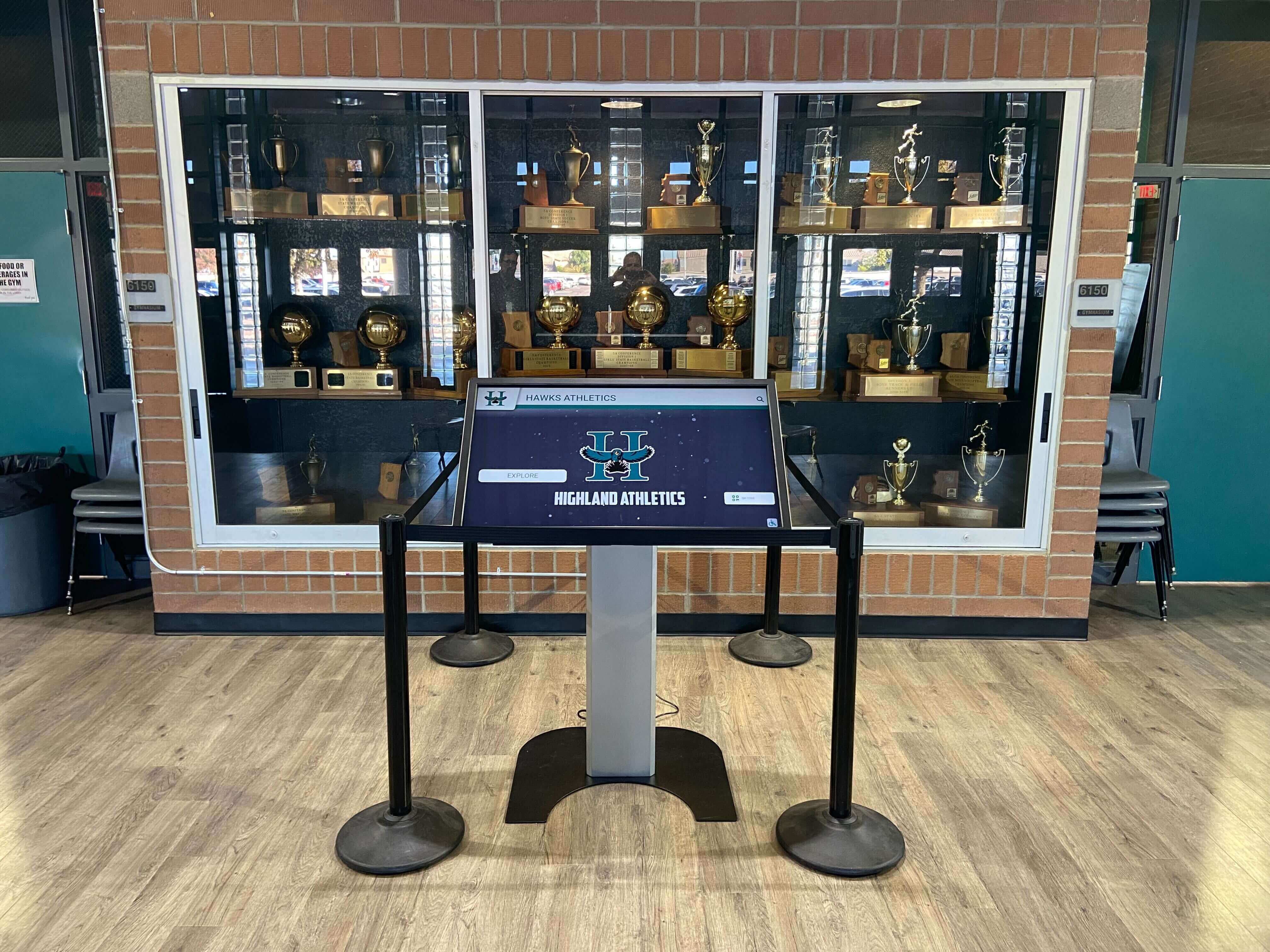
Trophy cases display championship trophies, plaques, and memorabilia from playoff runs. Well-maintained trophy cases with proper lighting become showcases that community members, prospective families, and visitors see when entering athletic facilities. The limitation is that trophy cases fill quickly, and finding space for each season’s new achievements becomes progressively challenging.
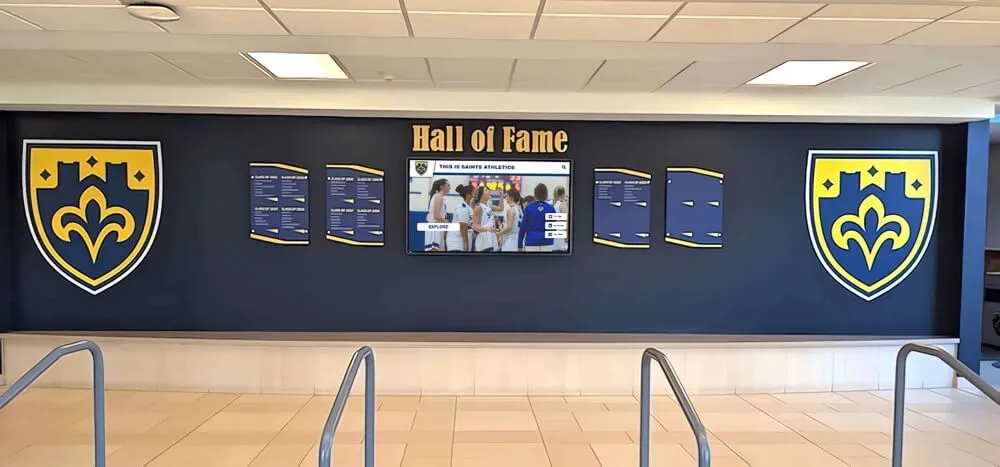
Engraved plaques listing championship teams, playoff participants, and individual award winners create permanent records but require physical space that eventually becomes limited. Painted record boards on gymnasium walls showing championship years work well for schools with long traditions but become difficult to update as more championships accumulate.
The fundamental challenge with traditional displays is space limitation. Even schools with extensive wall space and large trophy cases eventually face difficult decisions about what to display and what to store away. Maintenance of physical displays also requires ongoing attention—trophies tarnish, banners fade, and painted walls chip over time. Many schools face difficult choices when championship banners exceed available gym wall space, requiring creative solutions to honor all achievements.
Modern Digital Recognition Systems
Digital recognition displays overcome the space limitations that constrain traditional approaches while providing engagement capabilities that static displays cannot match. Modern systems transform how schools preserve and present athletic achievements.
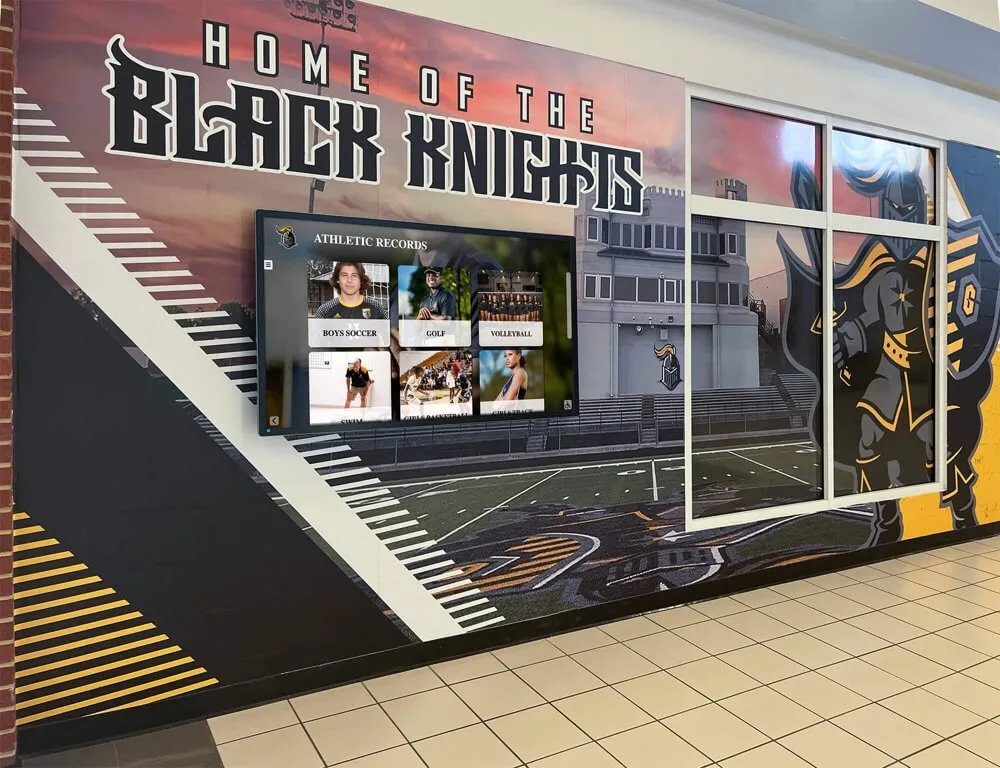
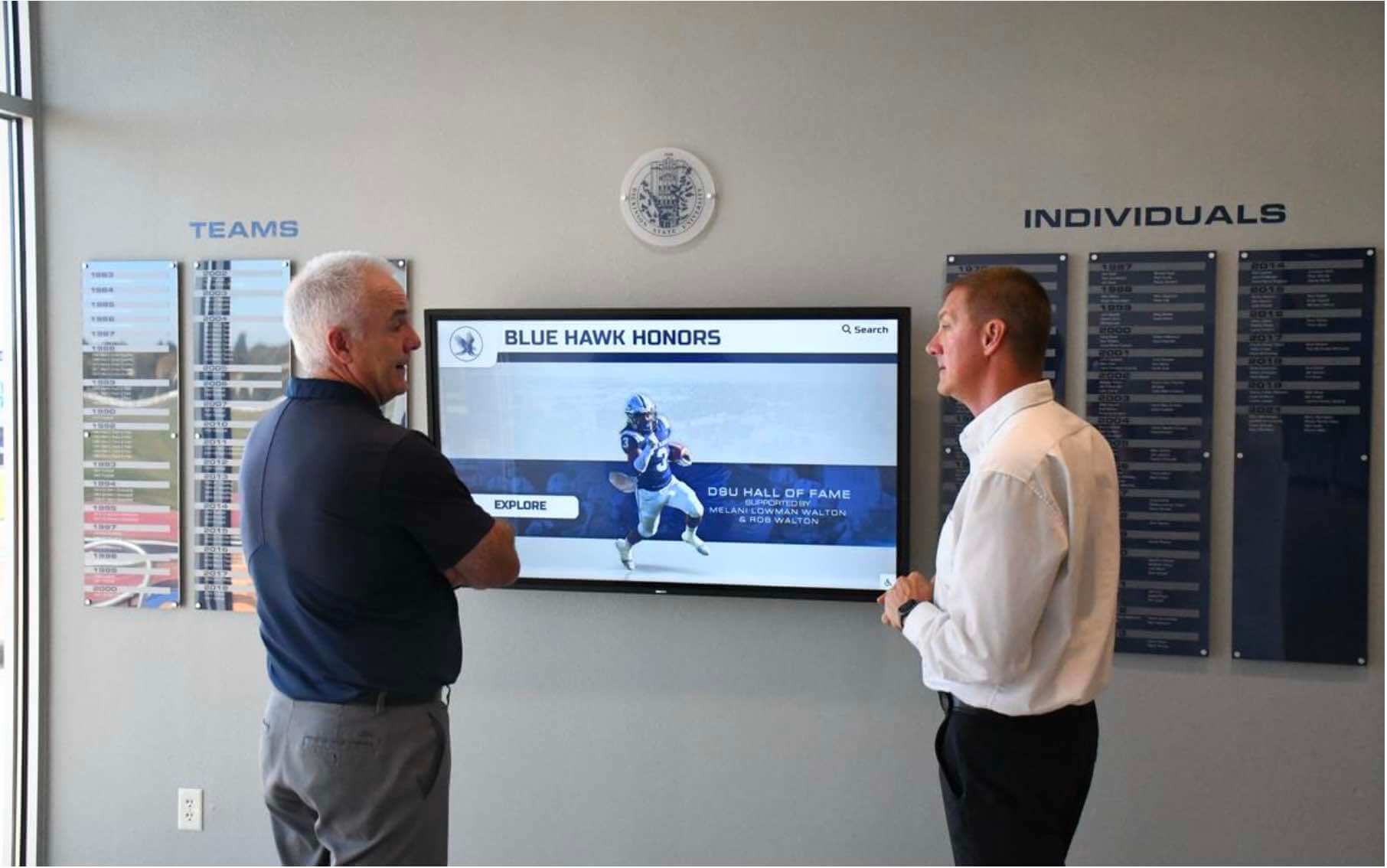
Digital displays can showcase unlimited content without physical expansion. A single touchscreen can present every championship team in school history, complete rosters, detailed statistics, photos, and even video highlights. When new playoff achievements occur, adding content takes minutes through web-based management systems rather than requiring physical construction or engraving.
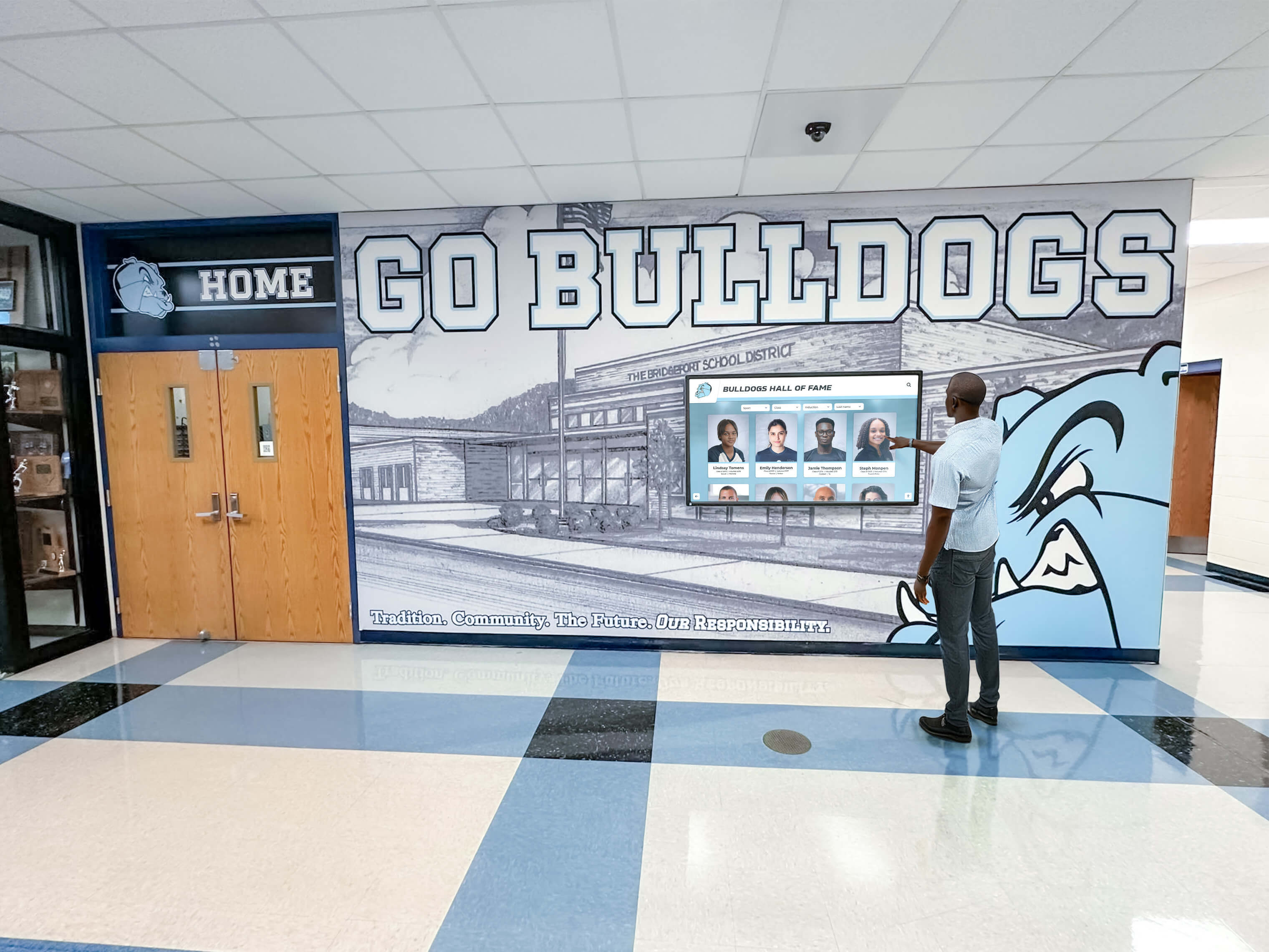
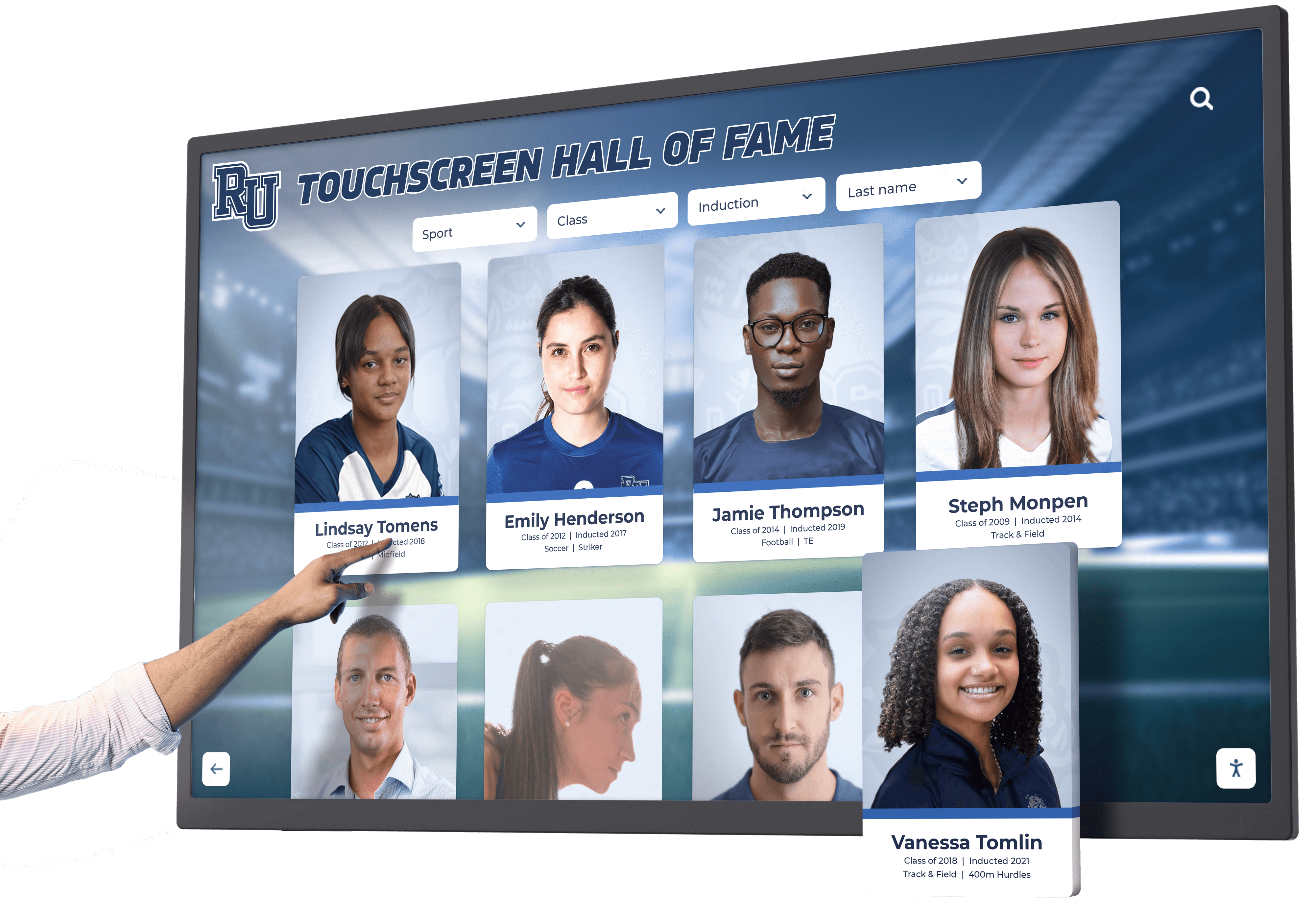
Interactive touchscreens invite exploration that passive displays cannot provide. Visitors can search for specific teams or years, filter by sport or achievement level, and explore detailed information about teams and players that interest them. This personalized exploration creates deeper engagement than traditional displays where viewers passively observe whatever happens to be presented.
Digital Display Advantages
- Unlimited content capacity
- Instant updates without physical work
- Rich multimedia (photos, video, statistics)
- Interactive search and filtering
- Remote web and mobile access
- Professional, consistent presentation
- Easy to correct errors
Content Capabilities
- Complete championship team rosters
- Playoff bracket visualization
- Individual player profiles
- Season statistics and records
- Game highlight videos
- Coach interviews and reflections
- Historical timeline presentations
Management Benefits
- Cloud-based content management
- Multi-user access with permissions
- Scheduled content displays
- Automated backups
- Template-based content creation
- Bulk import capabilities
- Analytics on display usage
Solutions like Rocket Alumni Solutions specialize in creating athletic recognition displays designed specifically for schools. These systems provide intuitive interfaces that require no technical expertise, allowing athletic directors and coaches to update displays easily. The same content displayed on physical screens can simultaneously be available via web browsers and mobile apps, allowing alumni anywhere to explore their school’s athletic history.
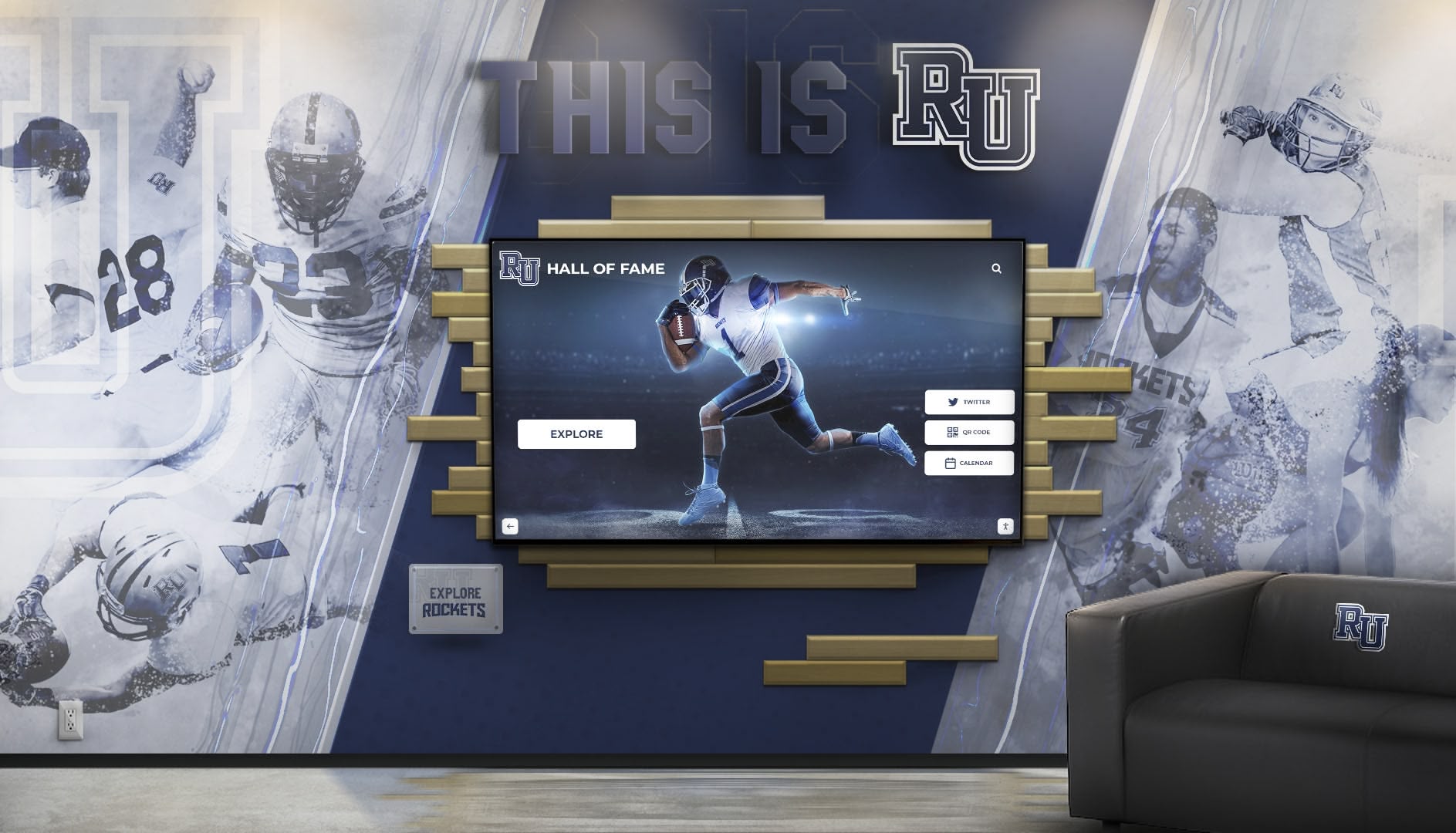
Digital displays excel at presenting the comprehensive information that makes recognition meaningful. Rather than just listing “2023 State Champions,” digital systems can show the complete roster with player photos, detailed playoff results from each round, season statistics, championship game highlights, and coach reflections on the championship run. This depth creates recognition that truly honors the achievement.
Hybrid Recognition Approaches
Many schools find that combining traditional and digital recognition creates optimal solutions. A championship banner or trophy provides tangible, physical presence that some find meaningful, while digital displays provide comprehensive detail and unlimited capacity for additional information.
For example, a school might hang championship banners for state titles in the gymnasium, maintaining that visible tradition, while using digital displays to provide complete information about each championship team, showcase semifinalist and quarterfinalist teams that don’t merit banners, present individual award winners, and create searchable databases of all playoff participants throughout school history.
This hybrid approach respects tradition and history while embracing the capabilities that modern technology offers. It acknowledges that different recognition methods serve different purposes—banners create instant visual impact, while digital systems support exploration and discovery. Learn more about digital trophy wall solutions that combine the best of traditional and modern recognition.
Social Media and Digital Celebration
Modern recognition extends beyond physical spaces to include social media and digital platforms where much of the school community engages daily. Effective programs leverage these channels to amplify recognition and extend its reach.
Real-Time Playoff Recognition
During playoff runs, social media provides immediate recognition opportunities. Post-game celebration photos and videos capture authentic emotion minutes after victories. Player of the game announcements recognize outstanding performances while interest is highest. Advancement graphics showing the bracket and celebrating the next-round berth maintain excitement between games.
Creating consistent visual templates for playoff social media maintains professional presentation. Design graphics that can be quickly updated with game results, upcoming opponent information, and player spotlights. Branded graphics reinforce team identity and create cohesive communication throughout the playoff run.
Video content generates high engagement on social platforms. Brief highlight compilations from playoff games, coach and player interviews after victories, and behind-the-scenes content showing team preparations all perform well. Even smartphone video, when edited thoughtfully, creates compelling content that the school community enthusiastically shares.
Post-Season Recognition Content
After playoff runs conclude, social media remains valuable for recognition. Season recap videos highlighting the best moments from the playoff run create shareable content that players and families eagerly post to their own networks. Individual player spotlights recognizing award winners extend recognition beyond the banquet to broader audiences.
Championship announcements and celebration content obviously generate excitement, but thoughtful programs also create recognition content for teams whose seasons ended before championships. Celebrating the seniors on playoff teams, highlighting the accomplishments of reaching quarterfinals or semifinals, and recognizing program-record playoff wins all create positive recognition regardless of final outcome.
Alumni engagement through social media connects current achievements to program history. Sharing throwback content featuring championship teams from previous decades, inviting alumni to share their playoff memories in comments, and highlighting connections between current and former players all strengthen intergenerational bonds within the program community.
Digital Award Certificates and Graphics
Create digital award certificates for playoff achievements that recipients can share online. Well-designed graphics announcing all-state selections, MVP awards, or championship team membership provide recognition content that athletes proudly share with their networks, exponentially expanding the reach of your recognition efforts.
These digital awards don’t replace physical trophies or plaques but complement them by creating recognition that travels through digital networks. When a player shares their all-state playoff team graphic to Instagram and receives congratulations from friends, family, and community members, the recognition reaches audiences far beyond those who attended the awards banquet.
State-Specific Recognition Programs and Awards
Many state athletic associations and football organizations sponsor formal recognition programs that schools should leverage when celebrating playoff achievements. Understanding these programs ensures your athletes receive all available recognition.
State Athletic Association Awards
Most state high school athletic associations select all-state football teams at the conclusion of each season. Selection processes vary—some states use coaches’ votes, others rely on media selections, and some employ combination approaches. These all-state teams typically include first team, second team, and honorable mention selections across both offense and defense.
Making all-state teams represents significant achievement and deserves prominent recognition. Schools should track which athletes earn all-state honors and ensure this information appears in awards banquets, digital recognition displays, and school communications. All-state recognition frequently influences college recruiting and scholarship opportunities.
Academic all-state teams celebrate student-athletes who excel both athletically and academically. These programs typically require minimum GPA standards (commonly 3.5 or higher) along with significant playing time or achievement. Academic all-state recognition demonstrates well-rounded excellence and deserves equal prominence to purely athletic honors.
Some state associations recognize individual statistical achievements—leading passers, rushers, tacklers, and scorers across the entire state. While less common than all-state team selections, these statistical leadership categories create additional recognition opportunities for outstanding performers.
National Recognition Programs
The National Football Foundation (NFF) sponsors multiple high school football recognition programs. The NFF National High School Academic Excellence Awards recognize the top academic football teams from each state, with winning teams receiving financial grants for their schools. Teams compete based on cumulative GPA weighted by roster size, creating recognition for programs that prioritize academics alongside athletics.
The Gatorade Player of the Year program represents one of the most prestigious individual honors in high school sports. State winners receive significant recognition and compete for national player of the year honors. Selection considers athletic excellence, academic achievement, and exemplary character. Schools whose players earn Gatorade recognition should celebrate these achievements prominently.
MaxPreps, a leading high school sports media platform, maintains national rankings and all-American teams across multiple sports including football. While focus understandably centers on state competition, national recognition provides additional prestige for programs competing at the highest levels.
Involving the School Community in Recognition
Effective recognition programs extend beyond the athletic department to engage the entire school community. This broader involvement strengthens school culture while ensuring athletic achievements receive appropriate visibility.
Student Body Recognition
Pep rallies celebrating playoff runs create memorable community experiences. Holding rallies before playoff games builds excitement and demonstrates school support. Post-championship rallies allow the entire student body to celebrate together, creating shared memories that strengthen school culture and identity.
Morning announcement recognition during playoff runs maintains visibility throughout the school. Announcing game results, highlighting exceptional performances, and building anticipation for upcoming playoff games keeps students engaged with the team’s journey.
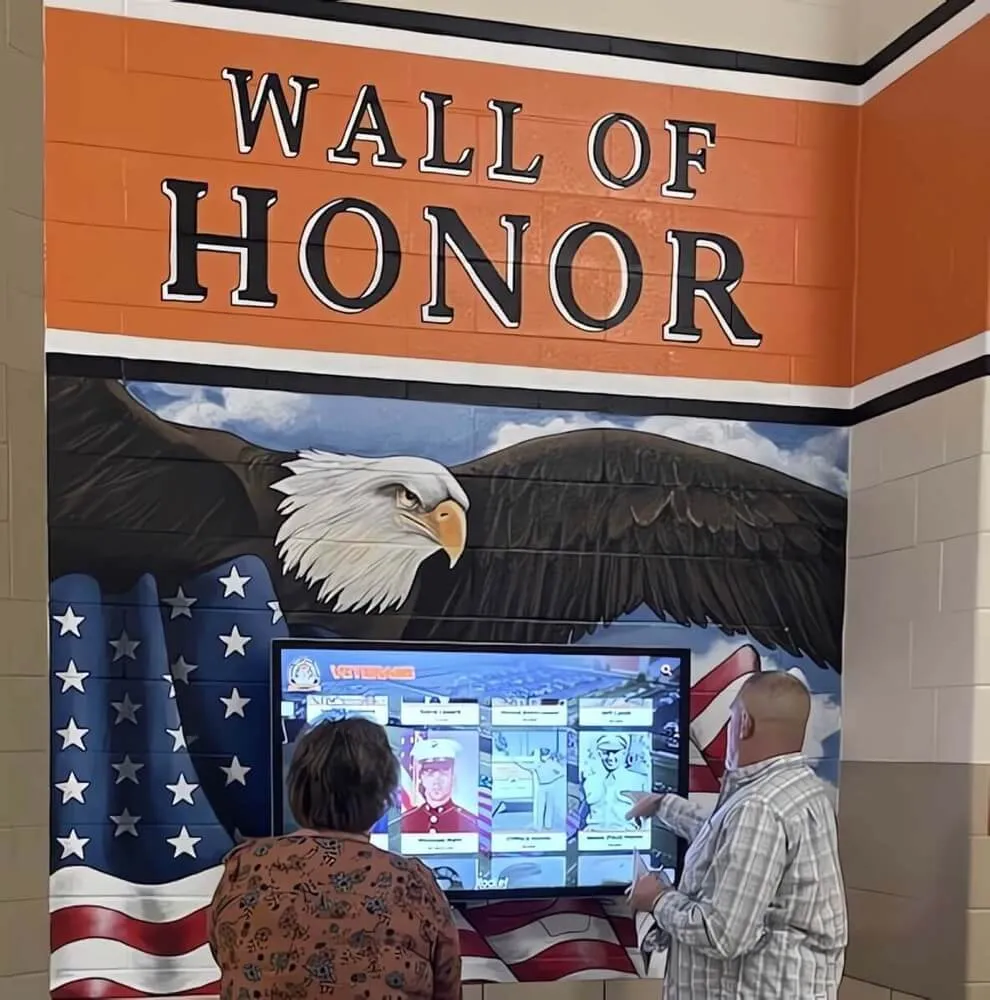
Visual displays throughout the school broadcast playoff success. Hallway posters, cafeteria decorations, and digital signage all communicate that something special is happening with the football program. This visibility elevates the importance of athletic achievement within the overall school culture. Schools can create exciting hallway displays that showcase playoff accomplishments and build school-wide enthusiasm.
Faculty and Staff Involvement
Teachers wearing team colors or school spirit shirts during playoff weeks demonstrates institutional support for athletic programs. This simple gesture communicates to student-athletes that their entire school community values their efforts and achievements.
Faculty recognition of student-athletes in classes acknowledges the balance these students maintain between academics and demanding athletic commitments, especially during playoff periods when practice intensity increases and games require travel and time.
Community Celebration
Local business partnerships create community-wide celebration. Restaurants hosting team meals after playoff victories, businesses displaying congratulatory signs, and sponsors supporting recognition efforts all demonstrate community investment in school athletics.
Local media coverage amplifies recognition far beyond the school community. Athletic directors should proactively provide information to local newspapers, radio stations, and television outlets. Press releases about playoff achievements, providing quotes from coaches and players, and inviting media to banquets or recognition events all generate coverage that honors athletes while strengthening school-community relationships.
Community recognition extends playoff celebration beyond school boundaries. Some communities hold parades after championship victories, municipal buildings display congratulatory signs, and local governments issue proclamations recognizing championship teams. These community-wide celebrations demonstrate that high school football success impacts and unifies entire communities.
Budget Considerations for Recognition Programs
Comprehensive recognition programs require financial resources, but effective programs can operate across various budget levels. Understanding costs and creative funding approaches helps schools create recognition that fits their resources.
Core Recognition Costs
Awards and trophies represent essential expenses. Championship trophies for team recognition, individual awards for various categories, medals or certificates for all playoff participants, and special recognition for seniors all require budgeting. Costs range from a few hundred dollars for modest programs to several thousand for comprehensive recognition including significant awards.
Banquet expenses vary enormously based on venue, catering choices, and attendance. School cafeteria potlucks might cost under $500 total, while catered events at restaurants or banquet facilities can exceed $5,000 depending on attendee numbers and meal selections. Most programs find middle-ground solutions between $1,000-$3,000 for moderately formal banquets.
Permanent display costs depend entirely on the approach chosen. Traditional trophy cases and engraved plaques might cost $2,000-$10,000 for quality installations. Digital recognition systems typically range from $8,000-$25,000 for initial installations depending on screen size and features, but these costs amortize over many years while accommodating unlimited content additions without further physical construction expenses.
Sample Recognition Program Budgets
Modest Budget ($1,500-$3,000): Simple awards banquet in school cafeteria with potluck meal, individual awards for major categories, basic social media recognition, and traditional plaques or painted recognition on gymnasium walls.
Mid-Range Budget ($5,000-$10,000): Catered awards banquet at local restaurant or community venue, comprehensive award categories with quality trophies, professional photography and videography, traditional trophy case additions, and enhanced social media campaigns with designed graphics.
Comprehensive Budget ($15,000-$30,000): Formal awards banquet with guest speakers and multimedia presentations, extensive award categories with substantial trophies, professional event photography and video production, and digital recognition display system with ongoing content management.
Fundraising and Sponsorship Opportunities
Athletic booster clubs typically provide primary funding for recognition programs. These organizations exist specifically to support athletic programs financially, and championship recognition represents exactly the type of investment that boosters enthusiastically support. Presenting clear plans and budgets to boosters generates support for recognition initiatives.
Sponsorship opportunities from local businesses create funding without taxing booster club budgets. Businesses might sponsor the awards banquet in exchange for recognition at the event and in promotional materials. Local restaurants might donate or discount catering in exchange for acknowledgment. Companies might sponsor specific award categories, with their support recognized when awards are presented.
Ticket sales for awards banquets, when handled sensitively, can offset costs. Rather than charging expensive ticket prices that might prevent families from attending, modest ticket fees ($10-$20 per person) that cover basic meal costs while maintaining accessibility often work well.
Alumni fundraising specifically for recognition displays can be highly effective. Alumni who see that their contributions will create permanent recognition of achievements often respond generously. Campaigns that allow alumni to sponsor specific years or teams create personal connections that motivate giving.
Long-Term Maintenance and Updates
Creating recognition systems is just the beginning. Long-term success requires consistent maintenance and regular updates that ensure displays remain current, accurate, and impressive.
Annual Update Processes
Establishing regular schedules for adding new playoff achievements prevents recognition systems from becoming outdated. Most programs review and update displays annually, typically during the summer before the new football season begins. This timing allows the previous season’s achievements to be added while generating excitement for the upcoming season.
The annual update process should be systematic. Document the concluded season’s playoff achievements, identifying teams and individuals meeting recognition criteria. Collect quality photos from playoff games, working with school photographers, parents, or media outlets. Gather complete rosters, statistics, and game results. Develop content following established templates for consistency. Implement updates through digital content management systems or by ordering new plaques and making physical additions to traditional displays.
For digital systems, annual updates are straightforward. Athletic directors or designated staff log into cloud-based management platforms, add new championship teams or playoff participants using established templates, upload photos and information, and publish updates that appear immediately on displays. This simplicity ensures displays remain current without requiring technical expertise or physical construction.
Traditional displays present greater challenges for annual updates. Engraving new plaques, painting additional championship years on walls, or finding space in trophy cases that may already be full all require planning, coordination, and often additional expense. Many schools find themselves unable to maintain traditional displays’ currency, leading to recognition that appears outdated and undermining its effectiveness.
Accuracy Verification and Corrections
Athletic records occasionally contain errors. Names get misspelled, statistics prove incorrect, or game results get recorded inaccurately. Recognition systems must include processes for identifying and correcting errors to maintain credibility.
Digital systems make corrections simple—edit the relevant content through the management interface and publish updated information immediately. This flexibility prevents minor errors from becoming permanent embarrassments. Traditional engraved plaques or painted displays allow no such corrections; errors become permanent unless expensive restoration or replacement occurs.
Establishing channels for reporting potential errors helps maintain accuracy. Let coaches, players, alumni, and community members know how to report concerns about recognition content. Investigate reported errors by checking multiple sources. Make corrections promptly when errors are verified.
Technology Upgrades and Replacements
Digital recognition displays require eventual hardware upgrades as technology ages. Commercial-grade displays typically last 6-10 years of continuous operation before requiring replacement. Budgeting for eventual display replacement prevents recognition systems from becoming technologically obsolete.
Software updates and improvements occur more frequently than hardware replacement. Most digital recognition platforms continuously enhance features and capabilities. Schools should ensure their systems receive regular software updates that provide improved functionality and maintain security.
Measuring Recognition Impact
While recognition programs have inherent value, measuring their impact provides data that helps justify continued investment and guides program improvements.
Athlete and Family Feedback
Direct feedback from athletes and families provides valuable qualitative assessment. Post-banquet surveys asking what aspects of recognition were most meaningful, what could be improved, and how recognition affected athletes’ experience help guide future planning. Simple questionnaires distributed at banquets or emailed afterward typically generate useful responses.
Anecdotal feedback from coaches, players, and parents often reveals recognition program impact. Comments about how much banquets meant to families, expressions of pride about permanent displays, and appreciation from athletes for specific awards all indicate that recognition efforts are achieving desired effects.
Community Engagement Metrics
Social media metrics provide quantifiable data about recognition reach. Tracking post engagement (likes, comments, shares) for playoff recognition content compared to other athletic program posts indicates whether recognition efforts are resonating with audiences. Growing social media following during playoff runs suggests increased community interest and engagement.
Website traffic to digital recognition displays shows engagement levels. If your school has implemented web-accessible recognition systems, tracking how many visitors view championship team pages, how long they spend exploring content, and what they search for provides insights about what recognition content matters most to your community.
Attendance at awards banquets compared to previous years indicates changing interest levels. Growing attendance suggests increasing community engagement with recognition programs, while declining attendance might signal need for format changes or improved promotion.
Program Development Indicators
Long-term program success metrics may correlate with recognition efforts, though isolating recognition’s specific impact proves challenging. Tracking youth program participation, freshman team numbers, and overall program enrollment over time can indicate whether visible celebration of athletic achievement is attracting more students to football. Research consistently shows that student recognition increases future success and motivates continuing excellence.
Alumni engagement with athletic programs sometimes increases following implementation of comprehensive recognition systems, particularly digital displays that alumni can access remotely. Tracking alumni donations, attendance at events, and communication with athletic departments may show recognition program impact on long-term alumni relationships. Explore strategies for alumni gathering area design that incorporates recognition displays to strengthen connections with former players.
Creating Your Football Playoff Recognition Plan
Schools ready to implement or enhance football playoff recognition should approach the effort systematically, ensuring all stakeholders align on objectives, resources, and long-term commitment.
Recognition Planning Checklist
- Define Recognition Objectives: Clarify what you want recognition programs to accomplish
- Inventory Current Recognition: Document existing awards, displays, and celebrations
- Identify Gaps and Opportunities: Determine what's missing from current recognition
- Establish Award Criteria: Document clear standards for various recognition categories
- Plan Awards Banquet: Select date, venue, format, and program structure
- Budget Recognition Expenses: Estimate costs for awards, banquet, and displays
- Identify Funding Sources: Engage boosters, sponsors, and other supporters
- Design Permanent Displays: Choose between traditional, digital, or hybrid approaches
- Develop Communication Plan: Determine how to promote and share recognition
- Assign Responsibilities: Designate who will manage various recognition elements
- Implement Recognition Program: Execute plans for immediate and permanent recognition
- Gather Feedback: Assess what worked well and what could improve
- Establish Annual Process: Create systems ensuring recognition continues consistently
Form a recognition committee including athletic directors, head coach, booster club representatives, school administrators, and perhaps a parent representative. This diverse committee ensures multiple perspectives inform recognition decisions and broader stakeholder buy-in supports implementation.
Research recognition approaches used by other programs in your conference, region, or state. Understanding what peer schools do provides useful benchmarks and may spark ideas you hadn’t considered. Many athletic directors willingly share information about recognition programs when contacted by counterparts facing similar challenges.
Consult with recognition specialists who can provide expert guidance. Companies like Rocket Alumni Solutions that specialize in athletic recognition can share best practices, show examples from other schools, explain options at various budget levels, and help you design recognition programs that achieve your specific goals.
Future Trends in Athletic Recognition
The landscape of athletic recognition continues evolving as technology advances and schools seek increasingly engaging ways to celebrate achievement. Understanding emerging trends helps schools make recognition investments that remain relevant for years to come.
Enhanced Digital Interactivity
Recognition displays are becoming more interactive and engaging. Beyond basic touchscreens, future systems may incorporate gesture controls, voice commands, and augmented reality features that create immersive exploration experiences. Students might use smartphones to scan recognition displays and access additional content, statistics, or video highlights not visible on the main screen.
Social Media Integration
Automatic social media generation from recognition systems streamlines communication. When new championship information is added to digital displays, the system could automatically generate social media posts with appropriate graphics and information. This integration ensures that recognition efforts reach digital platforms where much of the community engages without requiring manual content creation.
Video and Multimedia Expansion
As storage costs decrease and bandwidth increases, recognition systems will incorporate more video content. Championship teams might receive video profiles showing season highlights, coach interviews, and player reflections. These multimedia elements create more engaging recognition than static text and photos alone.
Artificial Intelligence Applications
AI technology may soon assist with recognition content creation, automatically generating written summaries of championship seasons from statistical inputs, creating highlight reels by identifying key plays from game footage, and suggesting content organization based on viewer interaction patterns. While human judgment and creativity remain essential, AI tools could make comprehensive recognition more achievable for time-constrained athletic departments.
Remote and Virtual Access
Post-pandemic, expectations for remote access to school resources have increased dramatically. Future recognition systems will prioritize seamless experiences across physical displays, web browsers, and mobile devices. Alumni across the country or around the world will explore their school’s athletic history as easily as visitors standing in front of physical displays. Discover how digital hall of fame touchscreen systems provide both on-site and remote access to athletic achievements.
Conclusion: Honoring Excellence, Inspiring Greatness
High school football playoff achievements represent extraordinary accomplishments resulting from years of dedication, countless hours of practice, and the determination to compete at the highest levels. These achievements deserve recognition that matches their significance—celebration that honors the athletes who earned success, preserves their accomplishments for future generations, and inspires current and future players to pursue similar excellence.
Effective recognition programs balance immediate celebration through post-season banquets and social media with permanent displays that preserve playoff legacy for decades. Whether through traditional trophy cases and championship banners or modern digital recognition systems with unlimited capacity and interactive features, the key is creating recognition that remains visible, accessible, and meaningful long after the final whistle blows.
The investment in comprehensive recognition programs pays dividends that extend far beyond their direct costs. Athletes feel properly honored, families see that their students’ achievements matter to the institution, younger players gain concrete goals to pursue, alumni maintain connections with their schools, and communities unite around shared athletic traditions and success.
Digital recognition solutions like those offered by Rocket Alumni Solutions have transformed what’s possible for celebrating playoff achievements. These systems eliminate the space constraints that limit traditional displays while providing engagement capabilities that static plaques cannot match. The same investment that once recognized just a few championship teams can now showcase unlimited achievements with comprehensive detail, photos, videos, and statistical information that truly honors athletic excellence.
As you plan recognition for your football program’s playoff achievements, remember that you’re creating more than displays or hosting events. You’re building traditions that strengthen your athletic program, honoring student-athletes who have earned recognition, and inspiring future players who will see what’s possible through dedication and excellence. The recognition you create today will impact your school community for generations, preserving memories that deserve to be celebrated forever.
Whether your team won championships or competed valiantly through playoff rounds, effective recognition celebrates the effort, honors the achievement, and strengthens the tradition that makes high school football meaningful for athletes, families, and communities. Start planning your recognition program today, and create lasting celebrations of athletic excellence that will inspire your program for years to come.































