Intent: Define the essential planning framework and implementation requirements for creating sustainable high school wall of fame programs that celebrate achievement comprehensively while building community pride.
High school walls of fame serve as powerful recognition platforms that celebrate student achievement, honor alumni contributions, and inspire future excellence throughout school communities. These dedicated recognition spaces showcase athletic accomplishments, academic achievements, performing arts success, and community service contributions that define institutional legacy and tradition.
Yet many schools struggle with wall of fame planning and implementation—facing questions about selection criteria, display formats, location choices, funding approaches, and long-term sustainability. Without systematic frameworks addressing these considerations, recognition programs risk becoming incomplete implementations that fail to deliver lasting community value or inadvertently create equity concerns through inconsistent recognition standards.
This comprehensive guide provides practical implementation frameworks for high school wall of fame programs spanning planning, selection criteria development, display technology evaluation, content management strategies, and ongoing program administration. Whether launching new recognition initiatives or enhancing existing displays, you’ll discover actionable specifications and proven approaches that transform wall of fame concepts into sustainable programs celebrating achievement across your school community.
From establishing selection committees through choosing appropriate display technologies and maintaining recognition relevance across decades, we’ll explore the operational requirements that separate successful wall of fame implementations from disappointing installations that never achieve recognition purposes or community engagement goals.
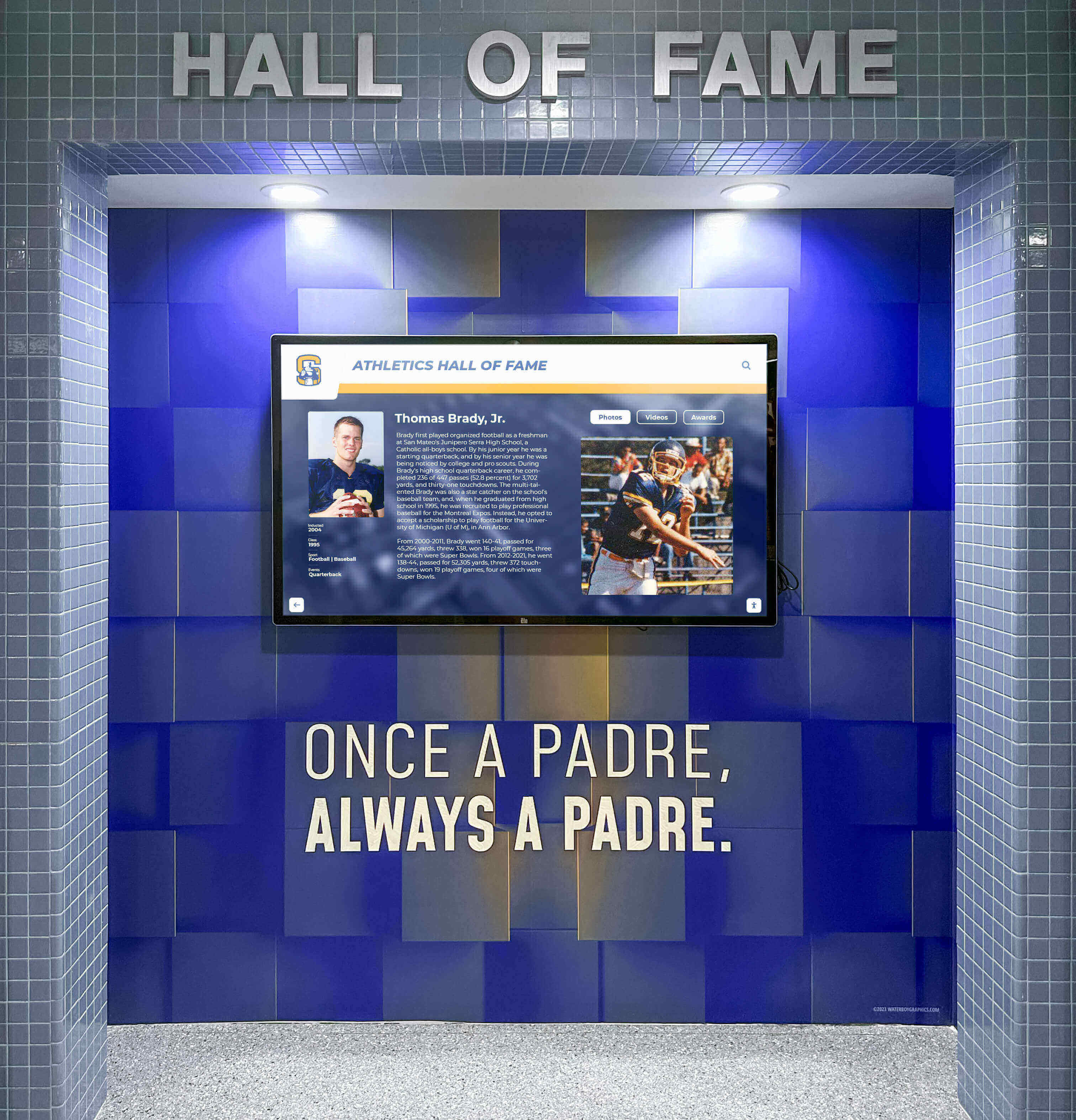
Professional wall of fame installations in high-traffic locations ensure recognition reaches broad school audiences while celebrating institutional legacy
Planning Your High School Wall of Fame: Essential Pre-Implementation Considerations
Successful wall of fame programs begin with systematic planning addressing fundamental questions about recognition purpose, scope, administration, and resources before making any display technology decisions or installation commitments.
Defining Recognition Purpose and Scope
Clear purpose definition establishes foundation ensuring wall of fame implementations serve intended goals while maintaining focus across years of operation:
Recognition Categories and Dimensions
Determine which achievement areas merit wall of fame recognition within your institutional context. Most high schools address these core categories:
- Athletic achievement including individual athlete recognition, team championships, coaching excellence, and program milestone accomplishments
- Academic excellence encompassing valedictorians, National Merit recognition, scholarship recipients, and subject-specific achievements
- Performing and fine arts success including state competition results, ensemble accomplishments, individual excellence awards, and program legacy recognition
- Community service contributions highlighting sustained service, significant project leadership, and organizational impact
- Alumni achievement celebrating post-graduation success, professional distinction, and ongoing school support
- Staff and faculty recognition honoring extraordinary teaching excellence, program building, and institutional service
According to guidance from the National Federation of State High School Associations, defining clear categories ensures consistent recognition standards while preventing scope creep that undermines program sustainability.
Schools should consider whether wall of fame recognition will be comprehensive across all categories or initially focused on specific areas with planned expansion as programs mature and resources allow. Phased implementation approaches often prove more sustainable than attempting immediate comprehensive programs exceeding administrative capacity.
Historical vs. Contemporary Focus
Establish temporal scope defining how far back recognition will extend and whether historical research will populate initial displays comprehensively:
- Complete historical archives documenting achievement from founding through present require significant research investment but create compelling depth demonstrating institutional legacy
- Contemporary focus beginning from program launch forward proves more manageable administratively while still building valuable recognition traditions
- Hybrid approaches recognizing major historical achievements and milestones while comprehensively documenting contemporary accomplishments balance depth and sustainability
Many schools find that beginning with systematic contemporary recognition while conducting gradual historical research creates manageable workload avoiding overwhelming staff with unsustainable initial content development burdens.
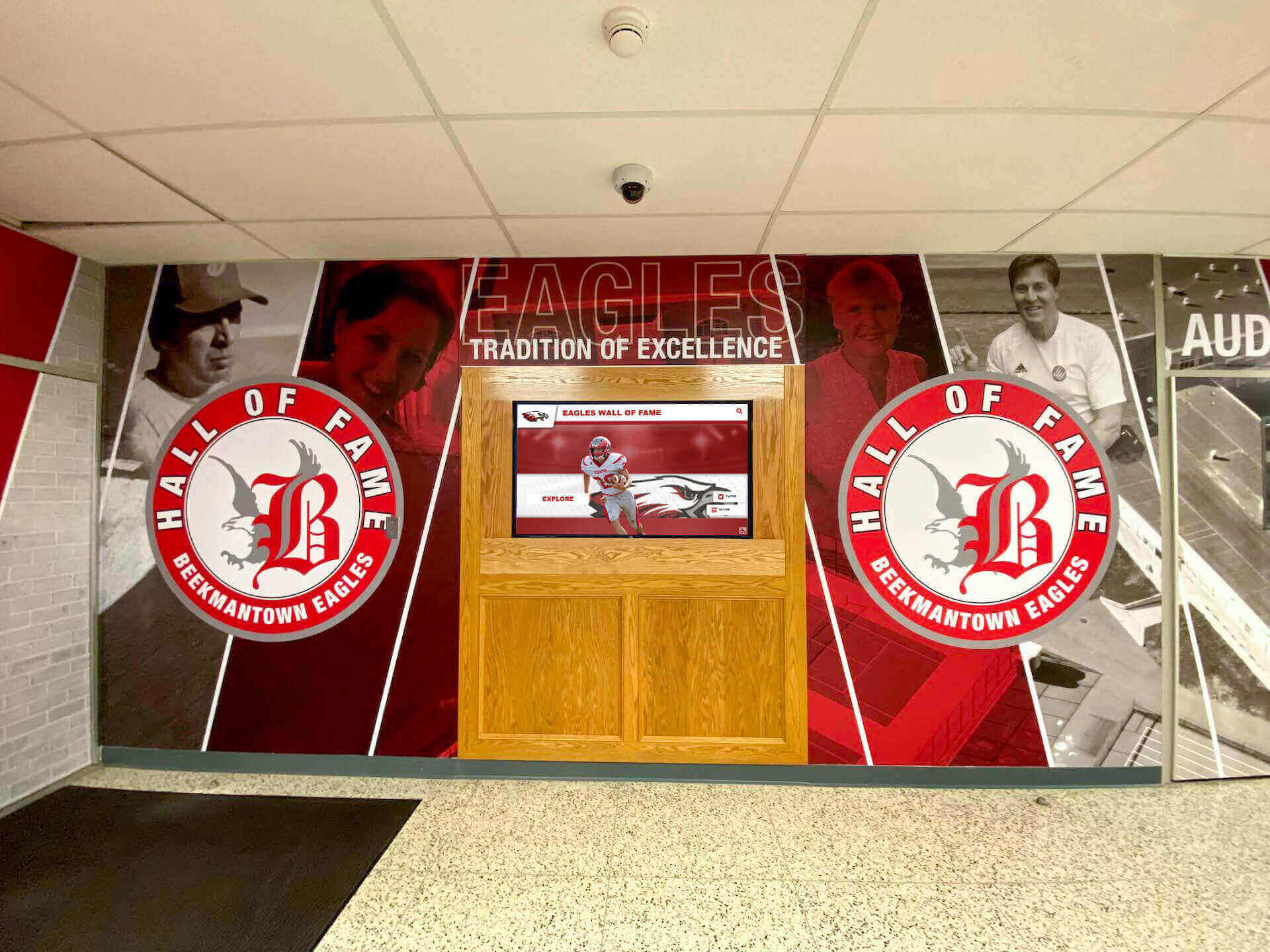
Coordinated wall of fame installations integrate with existing school branding and architectural elements creating cohesive recognition environments
Establishing Selection Criteria and Standards
Systematic selection criteria ensure fair, consistent recognition decisions while maintaining program integrity across changing administrators and committee membership:
Eligibility Requirements and Timing
Define clear eligibility standards addressing when individuals qualify for recognition consideration:
Most high schools implement these standard timing requirements:
- Individual athletes and students qualify after 10-year waiting period following graduation ensuring sustained accomplishment significance and perspective about lasting impact
- Coaches and administrators become eligible after 5-year waiting period following retirement or departure from the institution
- Teams qualify for recognition immediately following championship or significant achievement seasons
- Alumni become eligible after 10-year waiting period allowing demonstration of post-graduation success and impact
Waiting period requirements serve important purposes including preventing recency bias favoring current program participants, allowing time for perspective about lasting achievement significance, creating distance from personal relationships influencing judgment, and ensuring recognition celebrates sustained excellence rather than momentary success.
Achievement Thresholds and Recognition Standards
Establish specific accomplishment criteria defining what achievement levels merit wall of fame induction within each recognition category:
For athletic recognition, common thresholds include:
- All-state first team selection or equivalent regional recognition
- All-time program record establishment in quantifiable achievement areas
- Individual state championship or equivalent competitive accomplishment
- Professional sport achievement or college athletic scholarship
- Sustained multi-sport excellence across high school career
- Coaching achievements including state championships, milestone win totals, or program-building impact
Academic recognition criteria typically address:
- Valedictorian or top academic ranking designation
- National Merit Scholar or equivalent standardized achievement
- Major scholarship recipient status indicating competitive academic excellence
- Sustained 4.0 GPA maintenance across high school career
- Significant academic competition achievement at state or national level
Solutions like TouchWall displays for high schools enable recognition of comprehensive achievement across multiple categories without physical space constraints limiting program breadth.
Building Your Selection Committee
Effective wall of fame administration requires dedicated committees with clear responsibilities, diverse representation, and systematic processes ensuring consistent recognition decisions:
Committee Composition and Representation
Selection committees should include:
- Athletic director or designee representing competitive programs
- Principal or assistant principal providing administrative oversight
- Alumni association representative ensuring graduate perspective
- Faculty member representing academic programs
- Community member offering external perspective
- Student representative when appropriate for program context
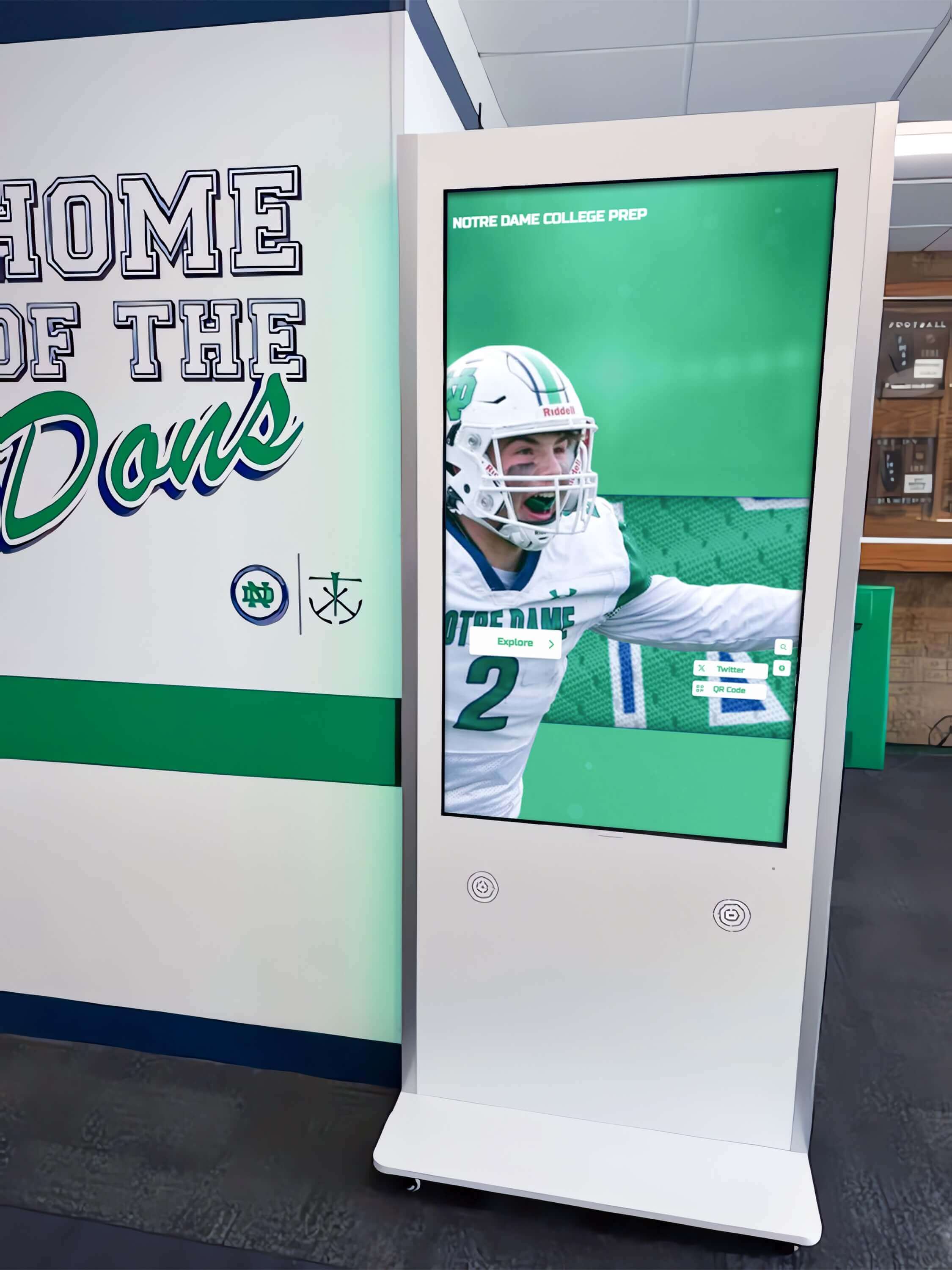
Strategic placement in high-traffic hallways ensures wall of fame recognition receives consistent visibility from students, staff, and visitors
Diverse committee composition prevents single-perspective bias while ensuring recognition decisions reflect comprehensive institutional values rather than narrow program interests.
Nomination and Evaluation Processes
Systematic processes maintain consistency and fairness:
- Open nomination periods with clear submission requirements and deadlines
- Structured nomination forms documenting achievement specifics and supporting evidence
- Confidential committee evaluation using established scoring criteria
- Documentation requirements for achievement claims preventing unsupported nominations
- Appeal processes addressing nomination questions or concerns
- Public announcement protocols for selected inductees
Committee processes should be documented in written operating procedures ensuring continuity when membership changes and providing transparency about how recognition decisions occur. Many schools implementing athletic hall of fame programs find that documented procedures significantly improve program consistency and stakeholder confidence in selection fairness.
Display Technology Options: Traditional, Digital, and Hybrid Approaches
Wall of fame display technology fundamentally shapes recognition capacity, administrative burden, visitor engagement, and long-term program sustainability. Understanding options enables informed decisions aligned with institutional priorities, budgets, and capabilities.
Traditional Physical Display Approaches
Conventional wall of fame implementations use permanent physical materials creating tangible presence within school facilities:
Engraved Plaque Systems
Traditional plaques mounted on dedicated walls provide classic recognition aesthetic:
Advantages include permanent tangible presence, minimal ongoing technology requirements, and traditional appearance many communities value. However, physical plaques face significant limitations including finite capacity requiring eventual wall expansion or inductee removal, labor-intensive updates requiring professional engraving and installation, limited information capacity beyond names and basic achievement details, and no engagement features beyond passive viewing.
Material considerations affect appearance and longevity:
- Bronze plaques provide premium appearance with excellent durability but represent highest cost option
- Aluminum plaques offer good durability at moderate cost with various finish options
- Acrylic plaques cost least but may show wear more quickly in high-traffic environments
Professional installation requires proper wall structure verification, level mounting ensuring visual quality, secure attachment preventing theft or damage, and coordinated layout maintaining consistent appearance as recognition grows.
Trophy Case Integration
Some schools incorporate wall of fame recognition within existing trophy case displays:
This approach leverages existing infrastructure while co-locating recognition with championship trophies and awards creating comprehensive achievement showcases. However, trophy cases face severe space limitations restricting how many individuals receive recognition, complex access requirements for updates in secured cases, and physical depth constraints limiting display possibilities.
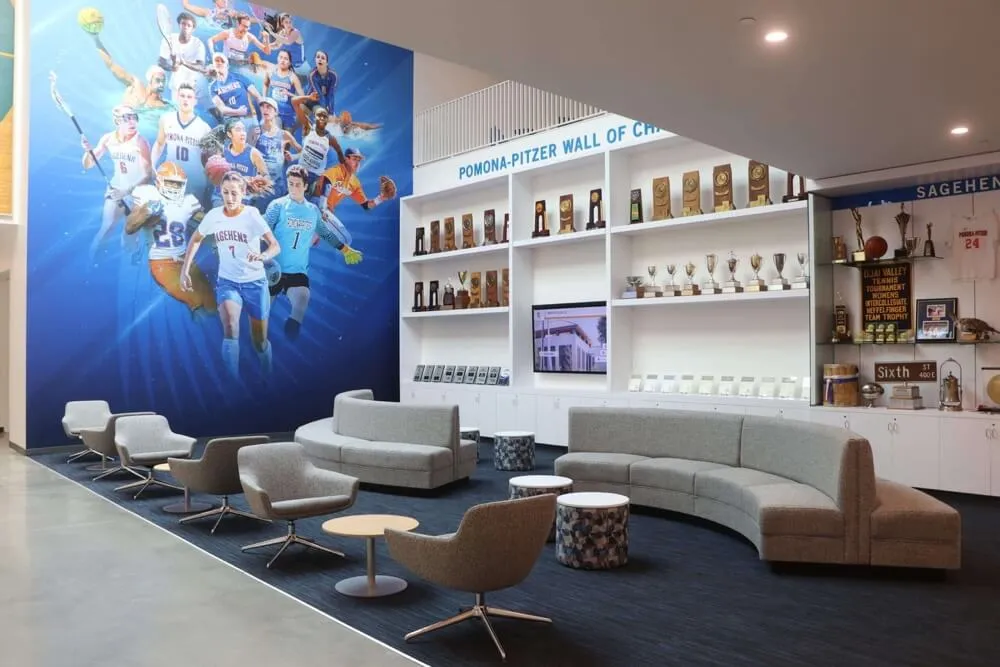
Traditional trophy displays complement digital recognition creating multi-dimensional achievement showcases celebrating institutional legacy
Digital Interactive Display Solutions
Modern digital recognition platforms address traditional display limitations while creating new engagement capabilities impossible with physical plaques:
Touchscreen Display Capabilities
Interactive digital displays transform wall of fame functionality across multiple dimensions:
Unlimited Recognition Capacity: A single display accommodates unlimited inductees across all categories spanning complete institutional history without requiring additional physical space as recognition grows. Schools implementing digital hall of fame touchscreen systems consistently cite unlimited capacity as the most valuable benefit, enabling comprehensive recognition previously impossible with space constraints.
Rich Multimedia Content: Digital platforms showcase high-resolution photography, video highlights capturing performances and competitions, audio interviews with inductees, comprehensive biographical narratives, achievement statistics and records, and connected content linking teammates, coaches, and related accomplishments. This multimedia depth creates compelling storytelling impossible with engraved plaques.
Interactive Exploration Features: Touchscreen interfaces enable visitors to search for specific individuals by name, filter by achievement category or year, explore team rosters and group accomplishments, discover connected relationships between inductees, and control their experience rather than passive viewing. Research on interactive recognition displays demonstrates 5-10 times longer average engagement compared to traditional static displays.
Simple Remote Content Management: Cloud-based platforms enable authorized administrators to update recognition from any internet-connected device without facility visits, technical expertise, or specialized software. Adding new inductees requires minutes through intuitive interfaces rather than weeks coordinating engraving and installation.
Extended Web Accessibility: Modern platforms provide web access enabling anyone to explore wall of fame content from personal devices anywhere globally, not just visitors to physical facilities. This extended reach multiplies recognition impact while engaging geographically distant alumni and community members.
Solutions like Rocket Alumni Solutions provide purpose-built recognition platforms specifically designed for school wall of fame applications, offering features generic digital signage systems cannot replicate effectively.
Hardware Specifications and Requirements
Digital wall of fame installations require several integrated components:
Display panels for recognition applications typically range from 43-inch minimum for smaller spaces through 65-75 inches for major lobby installations. Commercial-grade displays designed for continuous operation prove essential—consumer televisions lack durability for 12-16 hour daily operation across years of service. Professional displays provide 50,000-100,000 hour operation life compared to 20,000-30,000 hours for consumer units.
Mounting options include wall mounting for lowest profile installation, floor-standing kiosk enclosures providing turnkey solutions requiring no construction, or architectural millwork integration creating custom recognition environments. Wall mounting requires appropriate wall structure supporting display weight—most 65-inch commercial displays weigh 70-90 pounds requiring solid wall backing rather than hollow drywall.
Infrastructure requirements include dedicated electrical circuits providing reliable power, network connectivity via wired Ethernet or quality WiFi for content management, appropriate ambient lighting avoiding direct sunlight creating screen glare, and consideration of ADA accessibility requirements for touchscreen placement height and wheelchair approach space.
Professional installation by experienced integrators familiar with touchscreen software and recognition applications ensures proper mounting, secure connections, optimal positioning, and reliable long-term operation worth investment in most circumstances.
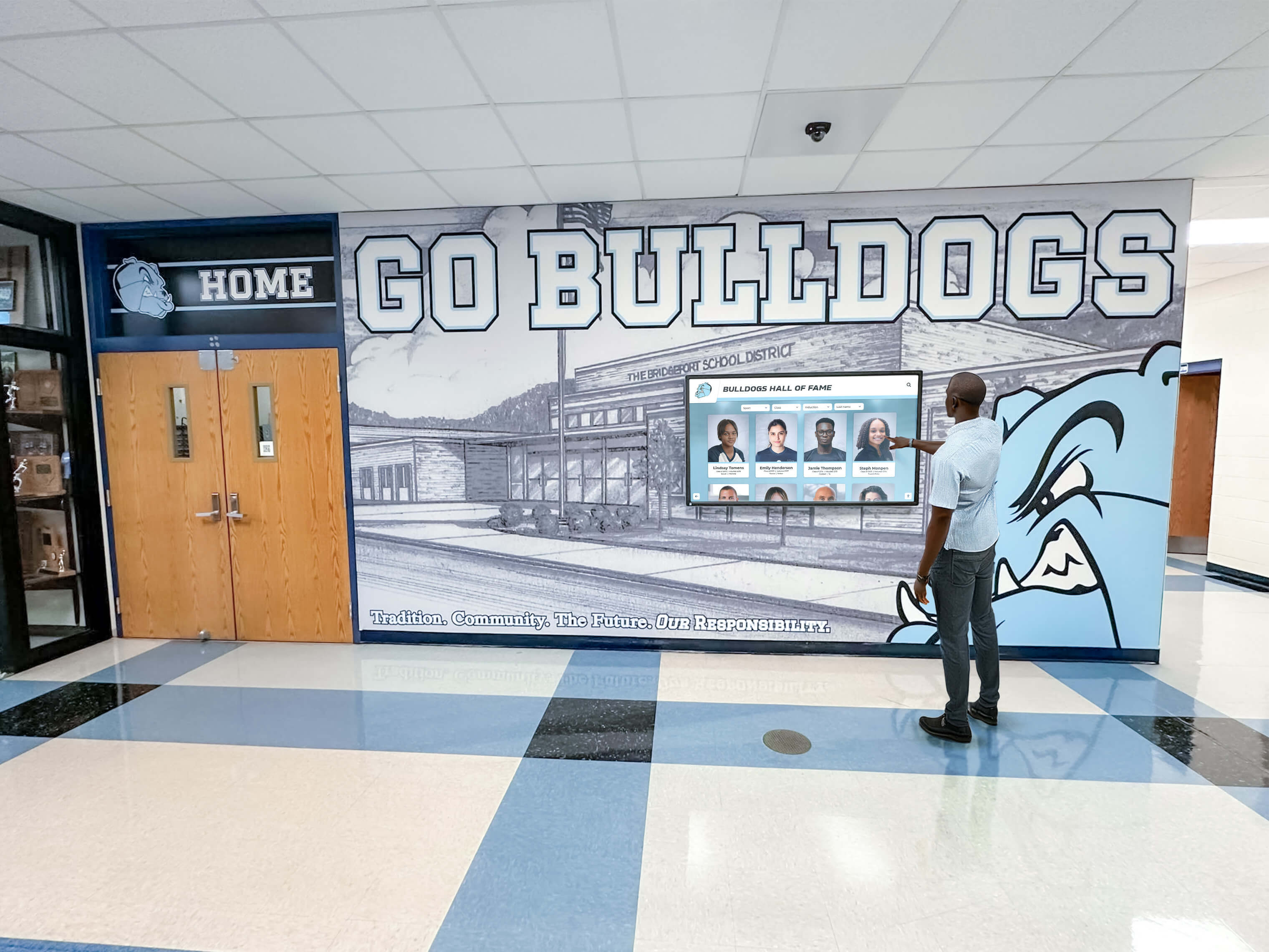
Intuitive touchscreen interfaces enable visitors of all ages to explore wall of fame content without instruction or assistance
Hybrid Approaches Combining Physical and Digital Elements
Many schools find that hybrid implementations combining traditional physical recognition with digital enhancement deliver optimal balance:
Coordinated Physical-Digital Programs
Hybrid approaches typically include:
- Traditional engraved wall listing all inductee names providing permanent tangible presence
- Adjacent touchscreen display offering detailed profiles, multimedia content, search functionality, and extended information impossible on plaques
- Physical trophy and award displays complemented by digital storytelling about championships and accomplishments
- Printed programs and ceremony materials coordinated with digital recognition content
This approach preserves traditional aesthetic many communities value while adding digital engagement capabilities and administrative simplicity. The permanent physical wall creates sense of permanence and tradition, while digital systems provide depth, flexibility, and ongoing content updates without construction requirements.
According to insights from developing recognition timelines and displays, hybrid approaches often generate highest stakeholder satisfaction by honoring tradition while embracing contemporary technology capabilities.
Implementation Considerations for Hybrid Programs
Successful hybrid implementations require:
- Coordinated design ensuring visual consistency between physical and digital elements
- Content strategy defining what information appears on physical displays versus digital platforms
- Budget allocation addressing both physical construction and digital technology investment
- Maintenance planning for both physical plaque updates and digital content management
- Space allocation ensuring adequate room for both display types without overcrowding
Schools should evaluate whether hybrid complexity serves recognition goals or if focused traditional or digital approaches prove more appropriate for specific contexts and capabilities.
Location Selection and Facility Planning Requirements
Strategic placement significantly impacts wall of fame visibility, engagement, and long-term satisfaction with recognition investments:
High-Traffic Location Selection Criteria
Optimal wall of fame placement balances multiple factors:
Visibility and Traffic Volume
Prime locations include main entrance lobbies ensuring all visitors encounter recognition, athletic facility entrances connecting recognition to competitive venues, commons and cafeteria areas where students gather daily, hallway intersections serving as natural gathering points, and administrative corridors welcoming office visitors.
Evaluate foot traffic patterns during typical school days noting where students, staff, and visitors naturally congregate and transit. Recognition placed in isolated locations rarely achieves engagement regardless of display quality.
Environmental Considerations
Display locations must address:
- Lighting conditions avoiding direct sunlight creating screen glare on digital displays or fading physical plaques
- Climate control ensuring stable temperature and humidity protecting sensitive electronics
- Physical security considerations preventing vandalism or theft
- Acoustic environment for installations including video content
- Architectural compatibility ensuring recognition complements rather than conflicts with existing design
Many schools find that conducting site surveys with potential vendors before making location commitments prevents expensive discoveries of incompatibilities after equipment purchase.
Entrance lobby placements ensure wall of fame recognition greets all visitors while making institutional pride immediately visible
Infrastructure Assessment and Preparation
Before finalizing location decisions, verify infrastructure supporting chosen display technology:
Electrical Requirements
Digital displays require:
- Dedicated 15-20 amp circuits preventing operational interruptions from shared circuit breakers
- Outlets positioned appropriately for display mounting location minimizing visible cable runs
- Conduit installation for concealed wiring in new construction or major renovations
- Surge protection preventing equipment damage from power fluctuations
Traditional physical displays require adequate lighting—consider adjustable lighting allowing recognition emphasis during evening events while reducing energy consumption during unoccupied periods.
Network Connectivity
Cloud-based digital recognition requires reliable internet access:
- Wired Ethernet connections provide most reliable operation with consistent bandwidth
- Quality WiFi networks can support recognition displays if signal strength is verified in installation locations
- Minimum 5-10 Mbps sustained bandwidth for video content and remote management
- Network security configurations allowing cloud platform communication without exposing systems to vulnerabilities
Verify connectivity before installation rather than discovering network limitations after display mounting.
Structural Requirements
Wall-mounted displays require appropriate backing:
- Concrete or concrete block walls provide ideal mounting structure
- Wood stud walls require identification of studs and verification of load capacity
- Metal stud walls may require backing board installation for secure mounting
- Drywall alone cannot support display weight—structural enhancement required
Physical plaque installations similarly require proper backing preventing sagging or failure over time as weight accumulates with additional plaques.
ADA Compliance and Accessibility Planning
Recognition displays must be accessible to all community members regardless of physical abilities:
Physical Accessibility Standards
According to ADA requirements:
- Interactive display controls positioned no higher than 48 inches from floor for wheelchair accessibility
- Bottom of display screens not exceeding 40 inches mounting height
- Clear floor space of at least 30x48 inches for wheelchair approach and maneuvering
- Adequate aisle width accommodating wheelchair passage when others are using displays
Digital Accessibility Features
Software accessibility includes:
- Adjustable text size accommodating visual impairments
- High contrast viewing modes improving visibility
- Screen reader compatibility for vision-impaired users when feasible
- Alternative text descriptions for images and visual content
Solutions focused on accessible digital displays and recognition ensure compliance while serving all community members equitably.
Content Development and Management Strategies
Wall of fame success depends primarily on content quality and relevance rather than technology sophistication—systematic content strategies ensure displays deliver intended recognition value:
Initial Content Population Approaches
Launching wall of fame programs with substantial content creates immediate value rather than sparse disappointing displays:
Historical Research Methods
Developing comprehensive historical content requires systematic approaches:
- Review yearbooks, programs, newspapers, and school publications documenting past achievements
- Contact alumni associations and long-time community members providing institutional memory
- Search online databases and athletic records for competition results and state championship documentation
- Review existing physical trophy displays, banners, and recognition materials
- Conduct targeted outreach to specific graduating classes requesting information and materials
Many schools find that designating student research projects or volunteer committees for historical digitization distributes work while creating meaningful engagement opportunities. Solutions for digital archives and historical preservation streamline systematic content development.
Contemporary Achievement Documentation
Establishing processes capturing current achievements prevents future historical research burden:
- Automatic inclusion processes for achievements meeting established criteria
- Regular athletic director and counselor reports identifying qualifying accomplishments
- Student and family self-nomination opportunities with verification requirements
- Systematic photography and content collection during competitions and ceremonies
- Integration with existing school information systems providing achievement data
Building these processes into existing workflows proves more sustainable than relying on retrospective research years after achievements occur when documentation becomes challenging.
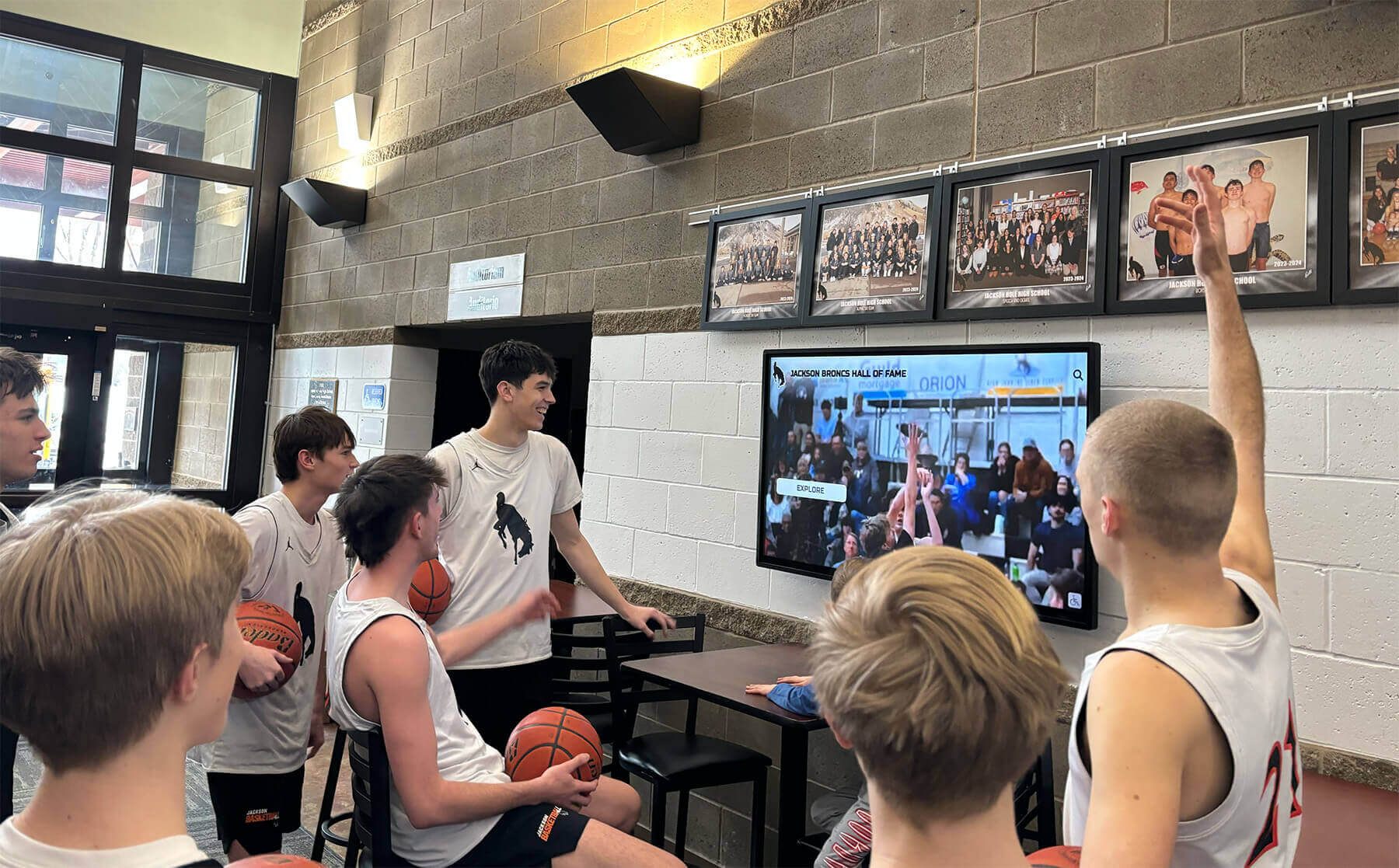
Engaging multimedia content including game highlights and team photos creates recognition displays that attract and hold student attention
Ongoing Content Management Requirements
Sustainable wall of fame programs require defined responsibilities and systematic processes ensuring consistent content quality across years:
Administrative Role Assignment
Designate specific staff members with wall of fame management responsibility:
- Athletic director or designee managing sport achievement recognition
- Counselor or academic administrator overseeing academic excellence recognition
- Development or alumni relations staff coordinating alumni achievement content
- Communications staff ensuring writing quality and visual consistency
- Technology staff addressing technical issues and display operation
Clear accountability prevents recognition management from becoming neglected as competing priorities demand attention. Include wall of fame responsibilities in position descriptions rather than treating them as informal additional duties.
Content Quality Standards
Establish standards ensuring professional consistency:
- Writing style guidelines defining voice, tone, and biographical format
- Photography requirements specifying resolution, composition, and subject matter
- Video specifications for length, format, and technical quality
- Approval workflows preventing errors and inappropriate content
- Update schedules for refreshing content and maintaining accuracy
Documented standards maintain quality as multiple contributors add content across years despite changing staff membership.
Update Frequency and Scheduling
Define regular rhythms for recognition updates:
- Annual induction ceremonies adding new honorees
- Quarterly content refreshes highlighting different recognition categories or time periods
- Real-time achievement updates for qualifying current accomplishments
- Historical content additions as research uncovers previously undocumented achievements
- Biographical updates when alumni provide career progression information
Regular update schedules keep recognition feeling current and relevant rather than static archives receiving occasional attention.
Funding and Budget Planning Considerations
Wall of fame implementations require both initial investment and ongoing operational support—comprehensive budget planning ensures program sustainability:
Initial Implementation Costs
Budget categories for new wall of fame programs typically include:
Display Technology and Equipment
- Digital touchscreen displays ranging from $3,000-8,000 for 43-55 inch units through $8,000-15,000 for 65-75 inch commercial displays
- Mounting hardware and kiosk enclosures adding $500-3,000 depending on approach
- Computing systems if required separately from integrated displays
- Network infrastructure enhancements if existing connectivity proves inadequate
- Professional installation services typically $500-2,000 depending on complexity
Traditional physical displays include:
- Professional engraving costs typically $50-200 per plaque depending on size and material
- Wall construction and finishing if new dedicated space required
- Mounting hardware and installation labor
- Lighting systems emphasizing recognition displays
Content Management Platform Subscriptions
Purpose-built recognition software typically costs $1,000-3,000 annually for cloud-based platforms providing content management, web accessibility, and technical support. While representing ongoing expense, subscription models include continuous updates, hosting, security, and support eliminating need for internal technical resources.
Some schools implementing comprehensive recognition systems like Rocket Alumni Solutions find that subscription costs are offset by elimination of physical plaque expenses and dramatically reduced administrative burden.
Initial Content Development
Budget for historical research and content creation:
- Staff time for research, writing, and multimedia development
- Photography and videography services if needed
- Historical document scanning and digitization
- Contract services for initial content population if internal capacity insufficient
Ongoing Operational Costs
Sustainable programs require annual budget allocation:
Annual Technology Costs
- Software subscriptions for digital platforms
- Display warranty and support contracts
- Network connectivity and electricity
- Hardware replacement reserves for eventual upgrades
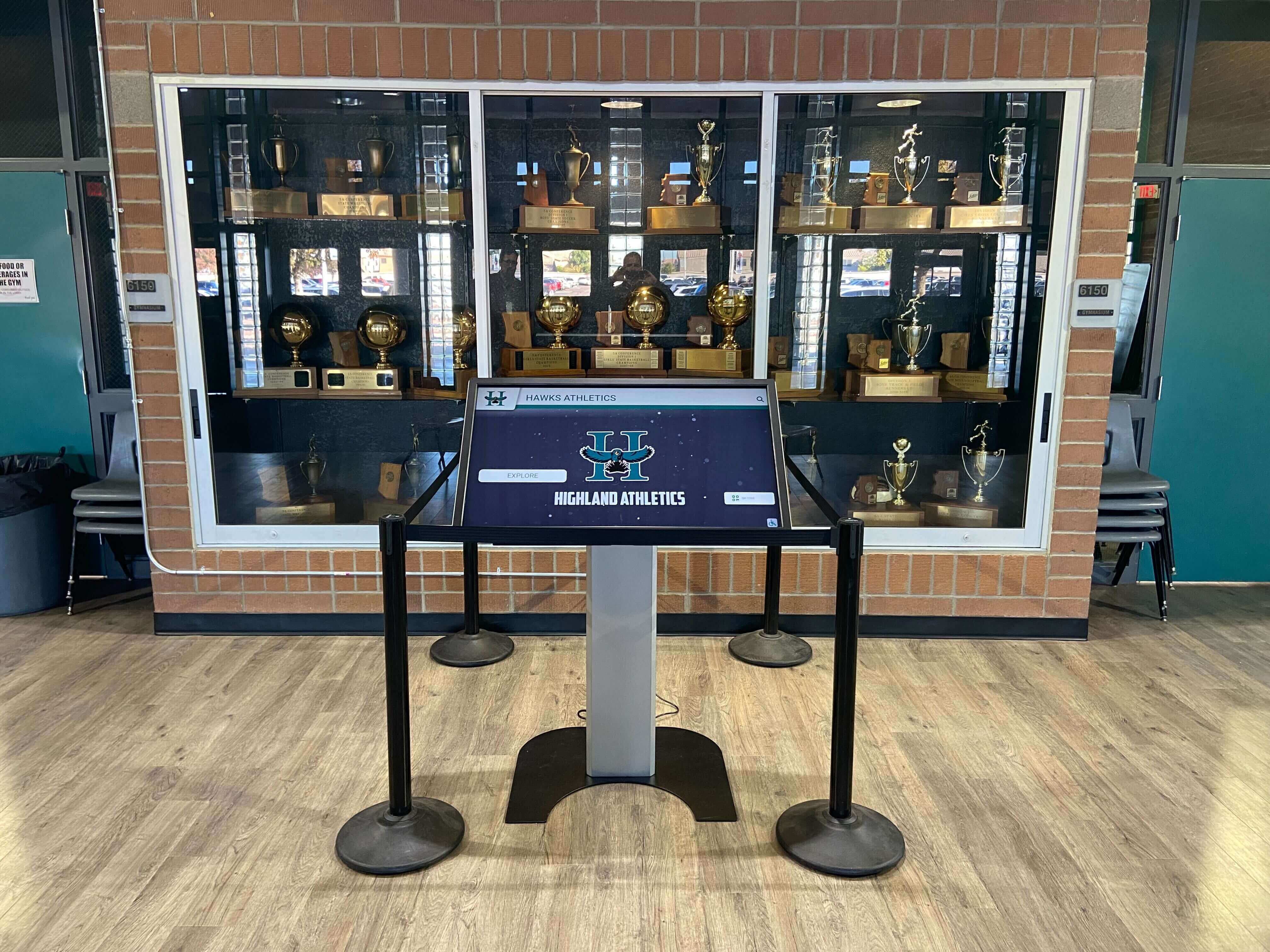
Kiosk enclosures provide professional standalone installations integrating naturally with traditional trophy case displays
Content Management Resources
- Staff time for ongoing content updates
- Photography and video production
- Recognition ceremony expenses
- Communications and promotion costs
Physical Maintenance
- Plaque engraving for traditional displays
- Cleaning and upkeep
- Lighting maintenance
- Facility updates as programs grow
Funding Source Development
Schools fund wall of fame programs through various approaches:
Booster Club and Alumni Association Support
Athletics booster organizations and alumni associations frequently underwrite recognition program costs as natural extensions of their support missions. These groups often fund initial installations, annual induction ceremonies, ongoing technology costs, and content development expenses.
Sponsorship and Donation Programs
Some schools create naming opportunities or sponsorship levels:
- Major donors funding initial installations receive naming recognition
- Annual sponsors supporting induction ceremonies gain visibility
- Individual plaque sponsorships where families or businesses fund specific recognition
- Memorial opportunities honoring deceased community members through recognition support
Ensure sponsorship approaches maintain recognition integrity and avoid appearance that wall of fame status can be purchased rather than earned through achievement.
School Operating Budget Allocation
Recognition celebrating institutional mission and community building often merits direct budget support rather than relying exclusively on external funding. Operating budget allocation ensures program stability regardless of fundraising variability while demonstrating institutional commitment to recognition.
Implementation Timeline and Phased Rollout Approaches
Successful wall of fame programs follow systematic implementation addressing planning, development, launch, and ongoing operation:
Phase 1: Planning and Design (Months 1-3)
Initial planning establishes program foundation:
Weeks 1-4: Committee Formation and Goal Setting
- Assemble selection committee with diverse representation
- Define recognition purpose, categories, and scope
- Research peer institution programs for best practice insights
- Conduct stakeholder input gathering for requirements definition
Weeks 5-8: Criteria Development and Process Design
- Draft selection criteria and eligibility requirements
- Design nomination and evaluation processes
- Document committee operating procedures
- Establish content quality standards and formatting guidelines
Weeks 9-12: Technology Evaluation and Budget Development
- Research display technology options aligning with requirements
- Evaluate vendors and request proposals
- Assess facility locations and infrastructure requirements
- Develop comprehensive budget and identify funding sources

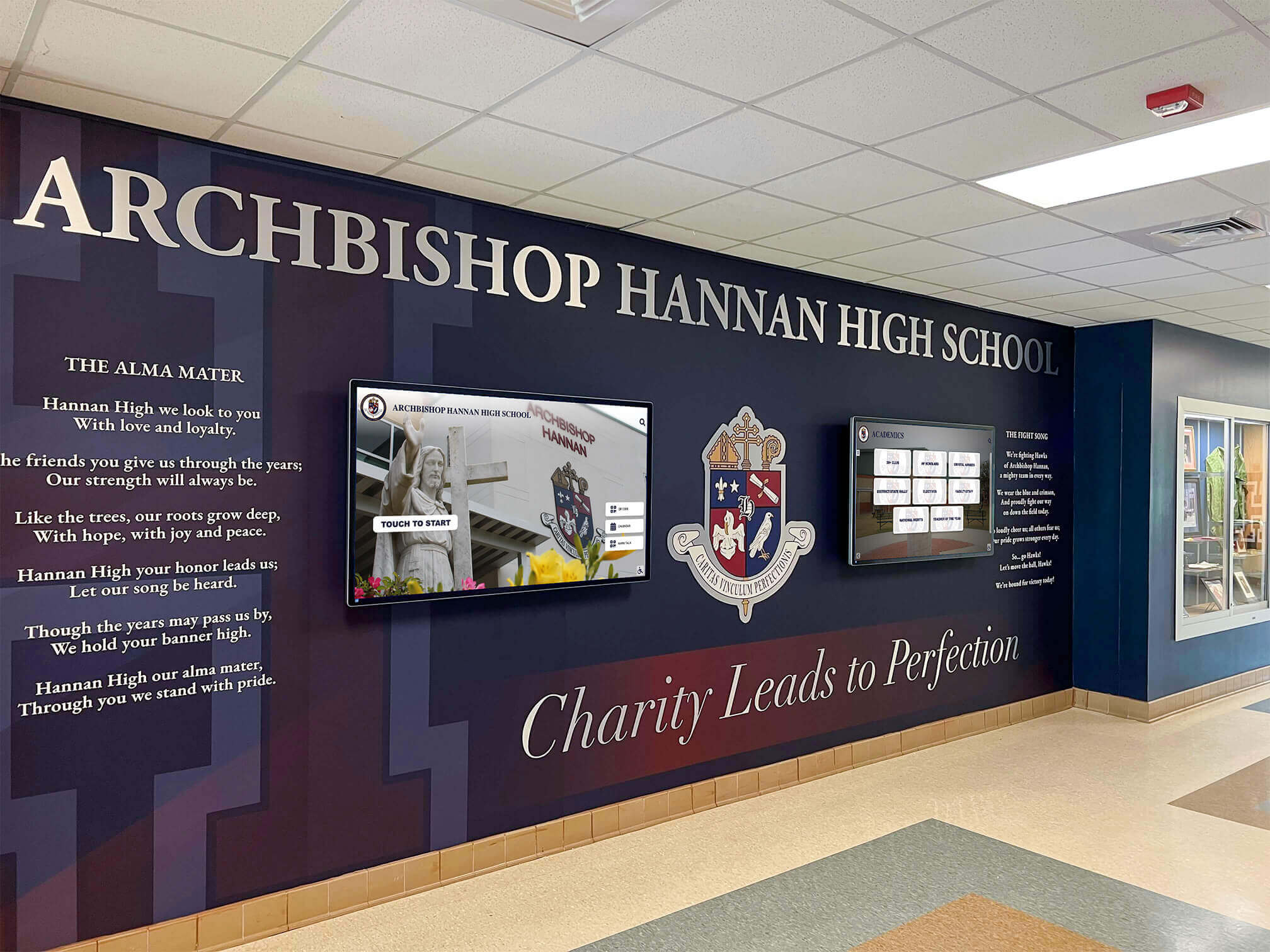
Coordinated color schemes integrating school branding create cohesive recognition environments celebrating institutional identity
Phase 2: Development and Installation (Months 4-6)
Implementation phase transforms planning into operational reality:
Content Development
- Conduct historical research identifying initial inductees
- Develop biographical profiles and gather photography
- Create multimedia content including video interviews when feasible
- Build content databases and organize materials systematically
Technology Acquisition and Installation
- Finalize vendor selection and place equipment orders
- Complete any required facility modifications or infrastructure enhancements
- Schedule professional installation coordinating with school calendar
- Conduct staff training on content management platforms and processes
Program Launch Planning
- Schedule dedication ceremony and public unveiling
- Develop promotional communications across multiple channels
- Prepare printed programs and ceremony materials
- Coordinate media coverage generating community awareness
Phase 3: Launch and Promotion (Months 7-8)
Public launch establishes wall of fame presence within school culture:
Dedication Ceremony
- Host formal unveiling event with stakeholder attendance
- Include remarks by leadership about recognition importance
- Provide demonstrations of interactive features and navigation
- Offer reception enabling attendees to explore displays informally
Explore effective recognition event planning approaches for ceremony organization.
Multi-Channel Promotion
- Website features and dedicated recognition pages
- Social media campaigns highlighting capabilities and featured inductees
- Newsletter articles in school and community publications
- Direct outreach to featured individuals and families
- Media partnerships generating local coverage
Integration with School Activities
- Incorporate displays into campus tours for prospective families
- Reference wall of fame during orientation and assemblies
- Use recognition as teaching examples and role models
- Feature newly added achievements during daily announcements
Phase 4: Ongoing Operation and Enhancement (Ongoing)
Sustainable programs require continuous attention and systematic improvement:
Regular Content Updates
- Annual induction processes adding new honorees
- Quarterly content refresh highlighting different categories
- Real-time achievement updates for qualifying accomplishments
- Biographical updates as alumni provide career information
Program Assessment
- Track engagement metrics and display utilization
- Gather stakeholder feedback on program effectiveness
- Monitor recognition distribution across student populations
- Assess achievement of stated program goals
Continuous Improvement
- Refine selection criteria based on operational experience
- Enhance content quality and presentation
- Expand recognition categories addressing identified gaps
- Update technology as capabilities improve and hardware ages

Card-based interface designs present inductee profiles in visually appealing formats inviting exploration and discovery
Measuring Wall of Fame Impact and Program Success
Systematic assessment demonstrates recognition value while identifying improvement opportunities:
Quantitative Success Metrics
Measurable indicators include:
Engagement and Utilization
- Physical display interaction frequency and average session duration from analytics
- Web portal traffic volume and page views
- Search queries revealing what community members seek
- Social media sharing frequency and content reach
- Recognition ceremony attendance rates
Content and Coverage
- Total inductees recognized across categories
- Historical depth spanning institutional timeline
- Recognition distribution across achievement areas
- Annual growth rate in content and profiles
- Percentage of eligible achievements receiving recognition
Stakeholder Awareness
- Survey responses measuring community awareness of recognition program
- Student recognition recall indicating program visibility
- Alumni engagement with wall of fame content
- Family satisfaction with recognition received
- Prospective family awareness during admission process
Qualitative Impact Assessment
Numerical metrics complement qualitative understanding:
Cultural Impact Indicators
- Observed changes in achievement aspiration and pursuit
- Student discussions referencing wall of fame role models
- Alumni testimonials about recognition meaning
- Family expressions of pride and appreciation
- Community perception of institutional excellence
Program Effectiveness Evaluation
- Selection committee satisfaction with processes and outcomes
- Administrative assessment of management workload sustainability
- Staff perception of recognition impact on school culture
- Student awareness of recognition criteria and opportunities
- Equity assessment ensuring diverse achievement celebration
Schools implementing comprehensive recognition programs like those enabled by effective hall of fame displays report measurable improvements in school pride, alumni engagement, and prospective family interest after wall of fame implementations.
Common Challenges and Problem-Solving Approaches
Anticipating typical issues enables proactive planning preventing problems rather than reactive problem-solving:
Space Limitation Challenges
Problem: Traditional physical displays quickly reach capacity forcing difficult decisions about inductee removal or expansion construction.
Solutions:
- Digital recognition platforms eliminate space constraints entirely through unlimited capacity
- Rotating physical displays highlighting different inductee groups periodically
- Hybrid approaches using permanent name walls with digital profile details
- Strict criteria limiting recognition to only highest achievements reducing volume
Funding and Resource Constraints
Problem: Limited budgets delay implementation or force compromises undermining program quality.
Solutions:
- Phased implementations beginning with achievable scope expanding as resources allow
- Partnership development with booster clubs and alumni associations
- Sponsorship programs generating external funding support
- Operating budget allocation recognizing recognition as core institutional function
- Technology selections balancing capability with budget realities
Learn about budget-friendly recognition approaches for resource-constrained programs.
Content Development Burden
Problem: Historical research and ongoing content management exceed available staff capacity.
Solutions:
- Student research projects distributing work while creating educational opportunities
- Alumni engagement requesting assistance with historical documentation
- Volunteer committees supporting research and content development
- Vendor implementation services providing turnkey initial content development
- Simplified biographical formats reducing development time per inductee
Equity and Inclusion Concerns
Problem: Recognition appears to favor certain groups or achievement areas creating perceptions of inequity.
Solutions:
- Multiple recognition categories ensuring diverse achievement celebration
- Clear documented criteria applied consistently preventing favoritism
- Regular distribution analysis identifying imbalances for correction
- Inclusive nomination processes enabling broad community participation
- Recognition committee diversity ensuring multiple perspectives
Comprehensive approaches to academic recognition programs demonstrate equity considerations across diverse achievement areas.
Conclusion: Building Lasting Recognition Legacy Through Systematic Wall of Fame Implementation
High school walls of fame represent powerful recognition platforms celebrating achievement, honoring excellence, and inspiring future success throughout school communities. When implemented thoughtfully using the systematic frameworks explored throughout this guide—addressing planning essentials, selection criteria, technology options, content strategies, and ongoing administration—these programs create lasting recognition infrastructure serving schools across decades of operation.
The operational requirements for successful wall of fame programs are well-defined and achievable regardless of school size, budget, or existing resources. From establishing selection committees and documenting clear criteria through choosing appropriate display technology and building sustainable content management processes, schools can implement recognition programs that honor achievement comprehensively while maintaining administrative efficiency and program consistency across years.
Technology selection fundamentally shapes recognition capacity and engagement. Traditional physical displays provide tangible permanence many communities value but face inherent limitations including finite capacity, labor-intensive updates, and minimal information depth. Modern digital recognition platforms like TouchWall by Rocket Alumni Solutions address these limitations while creating interactive exploration experiences, multimedia storytelling capabilities, and unlimited recognition capacity impossible with conventional approaches. Many schools find that hybrid implementations combining traditional elements with digital enhancement deliver optimal balance honoring tradition while embracing contemporary capability.
Beyond technology, sustainable programs require systematic content development strategies, defined administrative responsibilities, adequate budget allocation, and regular assessment ensuring recognition achieves intended cultural impact. Wall of fame programs succeed or fail based primarily on operational execution rather than display quality—systematic implementation frameworks prove essential for long-term program health.
Your school’s achievements deserve recognition celebrating accomplishment appropriately while inspiring excellence throughout your community. Whether launching new wall of fame initiatives or enhancing existing programs, the planning frameworks and implementation specifications explored in this guide provide actionable roadmaps transforming recognition concepts into operational reality.
Ready to Build Your High School Wall of Fame?
Discover how TouchWall by Rocket Alumni Solutions can help you create comprehensive recognition displays celebrating unlimited achievement with professional content management, interactive exploration, and web accessibility extending recognition throughout your community.
Schedule Your Free TouchWall ConsultationBegin with systematic planning addressing recognition purpose and scope, establish clear selection criteria and administrative processes, evaluate technology options aligned with institutional needs and capabilities, and build content management approaches ensuring long-term sustainability. The recognition program your community deserves starts with comprehensive planning using proven frameworks that separate successful implementations from disappointing installations failing to achieve recognition goals.
Ready to explore implementation specifics? Review complete guides for school recognition displays or learn about alumni wall of fame approaches connecting current students with institutional legacy and graduate achievement.































