Hockey rinks serve as more than athletic facilities—they are gathering places where communities unite, traditions flourish, and memories are created. From youth leagues to collegiate programs and professional franchises, hockey rinks hold decades of history: championship teams, record-breaking players, legendary coaches, and defining moments that shape program identity. Yet traditional recognition methods—banners hanging from rafters, trophy cases in lobbies, and plaques on walls—can only tell fragments of these rich stories.
Interactive touchscreen technology is revolutionizing how hockey facilities celebrate their heritage. Modern digital recognition displays transform lobbies, concourses, and locker room areas into dynamic museums of team history, allowing visitors to explore complete rosters, view championship game highlights, discover statistical records, and connect with the players and coaches who built winning traditions. This comprehensive guide explores how hockey rinks are leveraging touchscreen displays to honor past teams while inspiring current and future generations.
Hockey recognition extends beyond celebrating victories—it creates connections between generations, demonstrates organizational commitment to honoring those who contributed to success, and provides inspiration showing current players they can add their own chapters to continuing stories. Understanding how to effectively recognize hockey history helps facilities maximize engagement while preserving legacies that might otherwise fade with time.
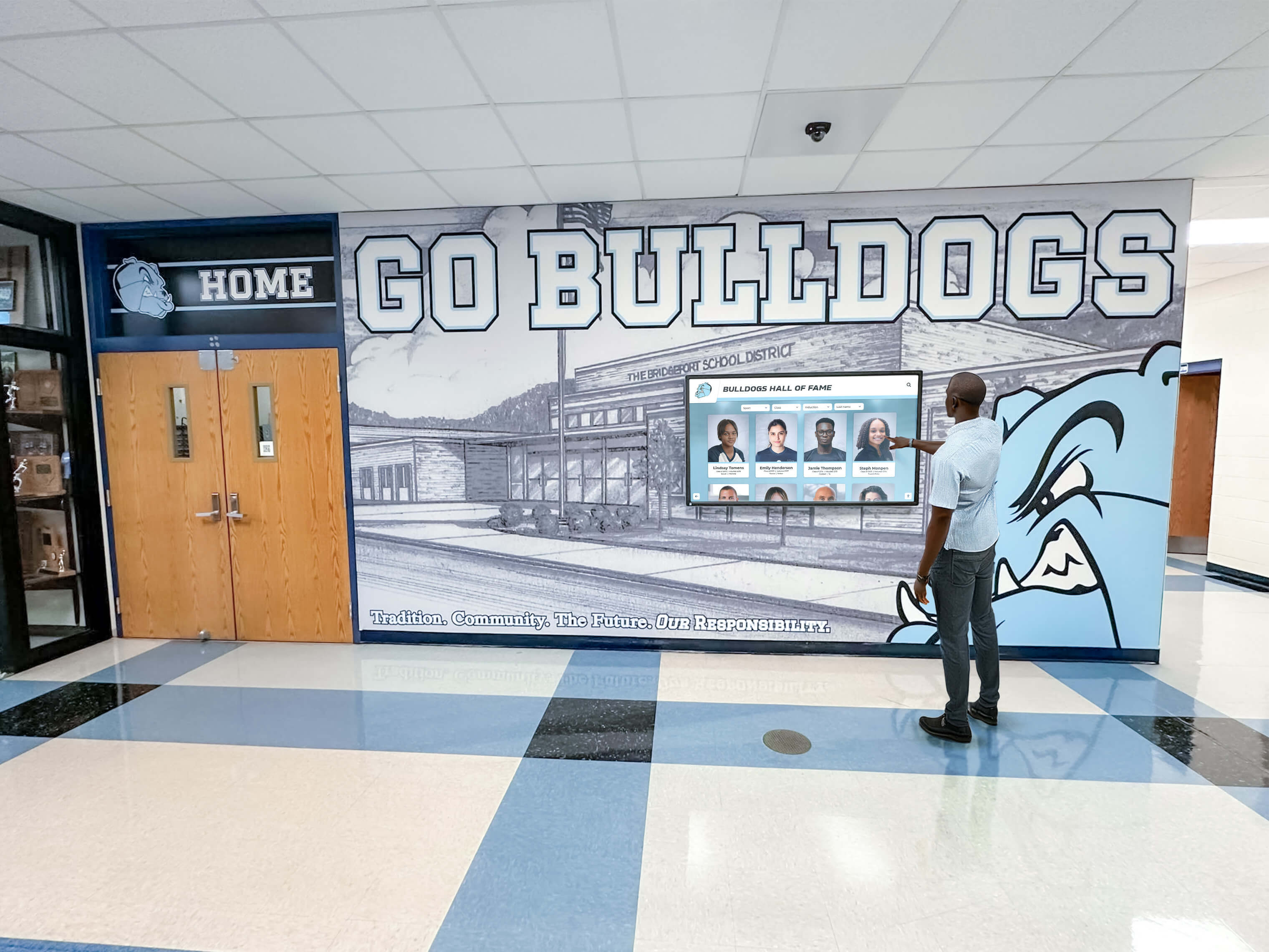
Modern touchscreen displays bring hockey history to life through interactive exploration and multimedia storytelling
The Evolution of Hockey Recognition in Rinks
Hockey facilities have always sought ways to honor achievements and celebrate history. Understanding how recognition has evolved helps contextualize why digital touchscreen solutions represent such significant advancement.
Traditional Hockey Recognition Methods
For decades, hockey rinks relied on physical recognition approaches that, while meaningful, faced significant limitations:
Championship Banners:
Banners suspended from arena ceilings celebrate championship seasons, conference titles, and significant achievements. These highly visible elements create impressive visual impact during games, reminding players and fans of past glory. However, banners provide minimal information—typically just year, achievement type, and perhaps team record—leaving visitors wanting deeper context about championship rosters, key moments, and the stories behind victories.
Trophy Cases:
Glass-enclosed display cases in lobby areas showcase championship trophies, individual awards, and significant memorabilia. While these tangible artifacts connect visitors to history, physical space constraints force selective highlighting. Many deserving teams and individuals receive insufficient recognition simply because display capacity cannot accommodate comprehensive documentation.
Wall Plaques and Engraved Boards:
Traditional plaques and engraved name boards permanently document individual honors, all-conference selections, record holders, and other achievements. Once installed, these static displays cannot be updated without expensive fabrication, leading to recognition gaps as recent achievements await addition while older content becomes outdated.
Physical Photo Displays:
Framed photographs of past teams line hallways and meeting rooms, providing visual connections to history. However, photos typically lack context—visitors may see team pictures without understanding season records, key players, or what made particular seasons significant.
Limitations of Traditional Approaches
While traditional recognition methods serve important purposes, several inherent limitations restrict their effectiveness:
Space Constraints:
Physical displays require wall space, glass cases, or hanging positions that many facilities lack. Championship programs with decades of achievements face impossible decisions about which teams, players, and moments receive prominence while others disappear into storage or remain unrecognized.
Static Content:
Once installed, traditional displays remain unchanged until expensive renovation occurs. Records broken last season won’t appear for months or years, current rosters receive no recognition until seasons conclude, and historical content cannot be corrected or expanded as new information emerges.
Limited Storytelling:
Names on plaques and photos on walls provide minimal narrative context. Visitors cannot discover the stories behind championships, understand what made particular players exceptional, or appreciate how teams overcame adversity to achieve success. The emotional connections that compel continued engagement remain largely absent.
Maintenance Challenges:
Physical displays require regular cleaning, experience wear and deterioration, and demand periodic replacement. Trophy cases develop condensation, photos fade under lighting exposure, banners accumulate dust, and engraved plaques become difficult to read as finish wears away.
Accessibility Issues:
Traditional displays offer limited accessibility for visitors with disabilities. Those with vision impairments cannot read small engraved text, individuals using wheelchairs may be unable to view content at certain heights, and no accommodation exists for hearing-impaired visitors who might benefit from audio descriptions.
For organizations exploring alternatives to limited physical recognition, digital recognition platforms eliminate space constraints while enabling comprehensive storytelling impossible with traditional displays.
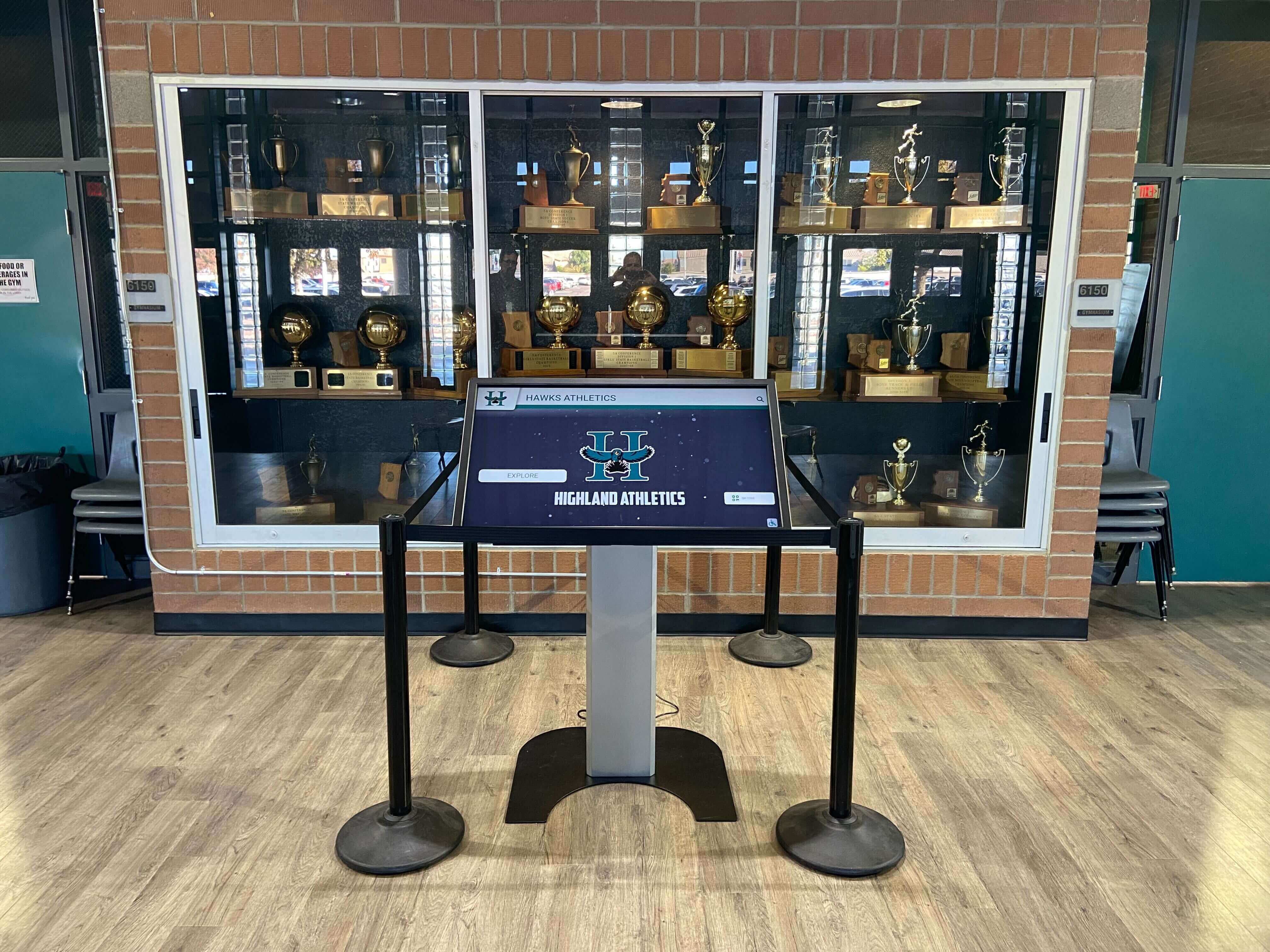
Combining traditional trophy displays with interactive touchscreens creates comprehensive recognition experiences
Why Hockey Facilities Are Adopting Touchscreen Recognition
Hockey rinks, from community youth facilities to elite collegiate arenas and professional stadiums, are increasingly implementing touchscreen recognition displays. Several compelling factors drive this adoption.
Unlimited Recognition Capacity
The most immediate advantage digital touchscreens provide is essentially unlimited recognition capacity. Unlike physical displays constrained by available wall space or case dimensions, digital platforms can showcase:
- Every championship team throughout program history, not just recent decades
- Complete rosters for each season with player profiles, photos, and statistics
- Comprehensive record books documenting statistical achievements across all positions
- Individual award winners from conference honors through national recognitions
- Coaching histories with career statistics and biographical information
- Facility evolution showing how rinks developed over time
- Special achievements like tournament performances and rivalry game results
This comprehensive capacity ensures that every deserving team and individual receives appropriate recognition rather than being excluded due to physical space limitations.
Dynamic, Updatable Content
Cloud-based content management systems enable instant updates as achievements occur. When teams win championships, players break records, or alumni reach professional hockey milestones, recognition displays update immediately rather than waiting months for physical fabrication.
This real-time capability keeps recognition current and relevant. Current season rosters appear alongside historical teams, recent records show where they fit in program hierarchy, and breaking news about alumni professional careers updates automatically. Visitors engage with living recognition that grows continuously rather than static displays frozen at installation.
Rich Multimedia Integration
Digital touchscreens enable storytelling impossible with traditional plaques and banners. Comprehensive recognition incorporates:
Video Highlights:
Championship game clips, season highlight reels, individual player performances, and historical footage bring past achievements to life. Visitors can watch the overtime goal that won the conference championship, see record-breaking performances as they occurred, and experience defining moments that shaped program identity.
Complete Photo Galleries:
Unlimited photo capacity showcases team photos, action shots, facility evolution, and historical imagery documenting program development across decades. Unlike limited physical displays, digital galleries can include hundreds or thousands of images categorized by season, player, achievement type, or chronological era.
Audio Integration:
Recorded interviews with former players and coaches, radio broadcast calls of significant moments, and audio narratives explaining historical context add depth unavailable in visual-only presentations. Visitors can hear firsthand accounts from those who lived the history being recognized.
Statistical Databases:
Complete statistical records covering individual and team performance across seasons enable visitors to compare eras, identify trends, and appreciate how current achievements fit within broader program history. Interactive record boards show not just who holds records but how those marks have evolved over time.
Interactive Timelines:
Chronological presentations showing program evolution help visitors understand how teams developed, when breakthrough moments occurred, and how historical context influenced program trajectories. Timelines can integrate championships with facility improvements, coaching changes, and league realignments that affected program development.
For hockey programs seeking comprehensive historical documentation, digital recognition systems enable multimedia storytelling that creates emotional connections traditional displays cannot match.
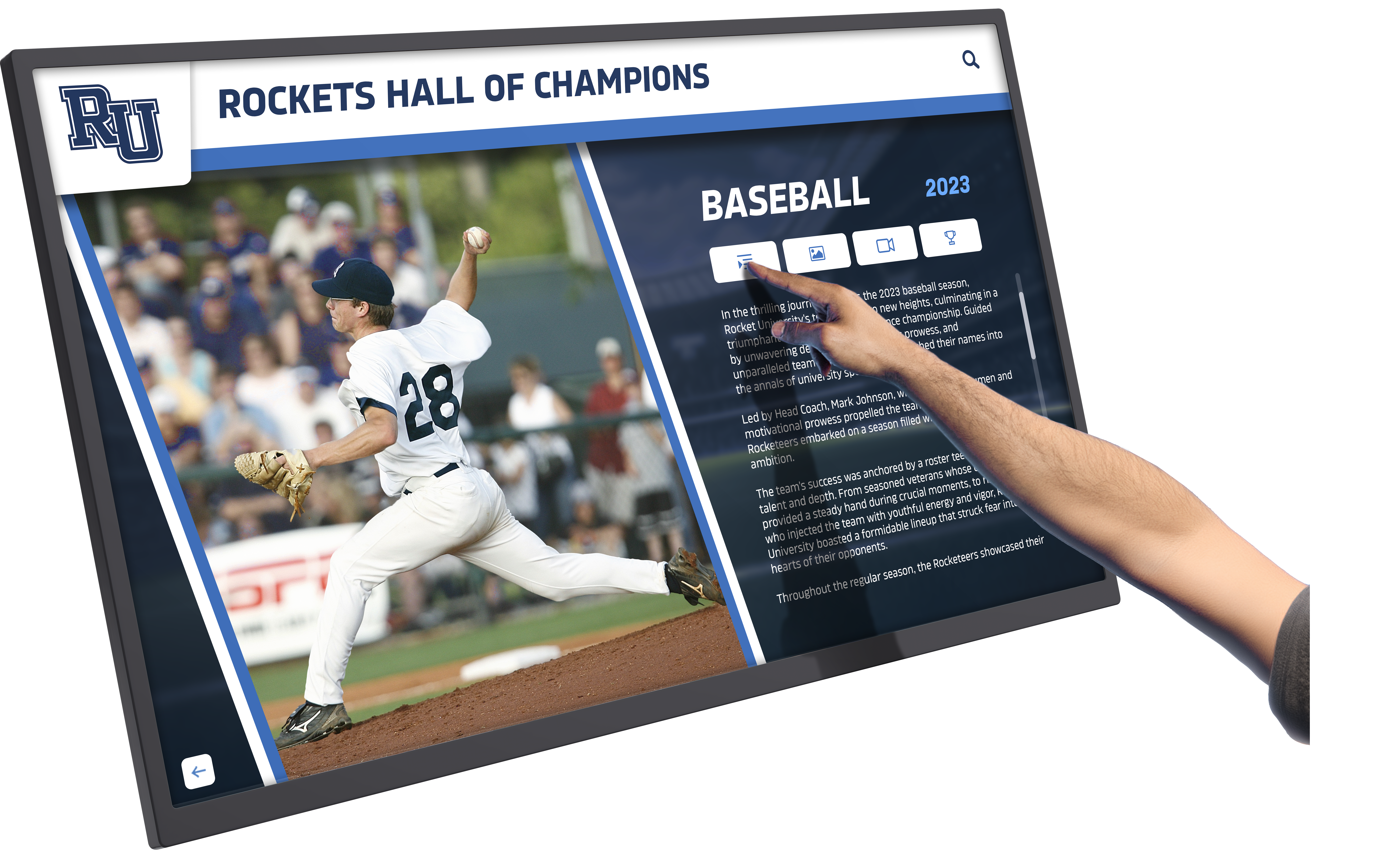
Touchscreen interfaces allow personalized exploration of team history and individual achievements
Enhanced Visitor Engagement
Traditional static displays receive brief glances as visitors pass by. Interactive touchscreens create substantially higher engagement through:
Personalized Exploration:
Touchscreen interfaces allow visitors to explore content matching their specific interests. Parents can locate their children’s teams, alumni can find their own playing careers, current players can research program records they’re pursuing, and general visitors can discover whatever aspects of history interest them most—all through intuitive search and navigation.
Extended Interaction Time:
Research on museum display engagement demonstrates that interactive exhibits retain visitor attention substantially longer than static presentations. While traditional plaques might receive 5-10 seconds of attention, interactive touchscreens commonly engage visitors for several minutes as they explore multiple content sections, view videos, read narratives, and discover connections between different historical elements.
Social Sharing Integration:
Modern digital recognition platforms enable visitors to share discoveries on social media, send content to their devices, or generate custom reports combining favorite elements. This sharing capability extends recognition reach far beyond the physical facility, allowing alumni worldwide to engage with program history regardless of geographic distance.
Educational Value:
Interactive displays can incorporate contextual information helping visitors understand hockey’s evolution, rules development, statistical significance, and how particular achievements compared to national standards during specific eras. This educational component appeals to younger visitors learning the sport while providing interesting context for experienced hockey enthusiasts.
Cost-Effective Long-Term Solution
While initial digital display installation requires investment, the long-term economics favor touchscreen solutions over continuous physical display updates:
No Fabrication Costs:
Adding content to digital systems involves uploading files through content management platforms rather than commissioning physical plaques, engraved boards, or printed materials. A championship team requiring $2,000-5,000 in traditional plaque fabrication can be comprehensively recognized digitally for negligible marginal cost.
Reduced Maintenance:
Digital displays require minimal physical maintenance beyond screen cleaning. No trophy polishing, photo frame replacement, banner washing, or glass case repair becomes necessary. Content corrections occur through software updates rather than expensive physical rework.
Scalability:
Programs can begin with focused content covering recent decades and systematically expand recognition backward through history as time and resources permit. This scalability allows phased implementation rather than requiring complete historical documentation before launch.
Multi-Purpose Functionality:
Recognition displays can serve additional functions beyond historical documentation. The same screens can showcase current season schedules, display live statistics during games, feature sponsor content, provide facility wayfinding, or communicate announcements—delivering additional value beyond pure recognition.
For youth and community hockey programs considering recognition investments, digital solutions provide professional-quality results within limited budgets while maintaining flexibility for continuous expansion.
Types of Hockey Content for Touchscreen Recognition
Effective hockey recognition encompasses diverse content categories, each serving distinct purposes while contributing to comprehensive program documentation.
Championship Team Recognition
Championship seasons represent pinnacle achievements deserving thorough commemoration beyond banner identification:
Complete Rosters:
Every player who contributed to championship success deserves recognition, not just stars who scored winning goals. Digital displays enable complete rosters with:
- Individual player photos and biographical information
- Season statistics and accomplishments
- Playing history showing career development
- Post-career information for alumni tracking professional or coaching careers
Season Narratives:
Championship seasons feature compelling stories—how teams overcame early struggles, developed chemistry, handled adversity, peaked during playoffs, or upset favored opponents. Written narratives supported by photos and video clips bring these seasons to life comprehensively.
Championship Game Documentation:
The games that clinched titles deserve special highlighting with:
- Complete game statistics and scoring summaries
- Video highlights showing key moments and goals
- Player and coach quotes captured after victories
- Crowd photos and arena atmosphere documentation
- Game programs and ticket stubs as historical artifacts
Tournament Progression:
For programs competing in playoff tournaments, showing complete tournament paths helps visitors appreciate the multiple victories required for championship success. Bracket visualizations, game-by-game recaps, and cumulative statistics demonstrate sustained excellence necessary for tournament championships.
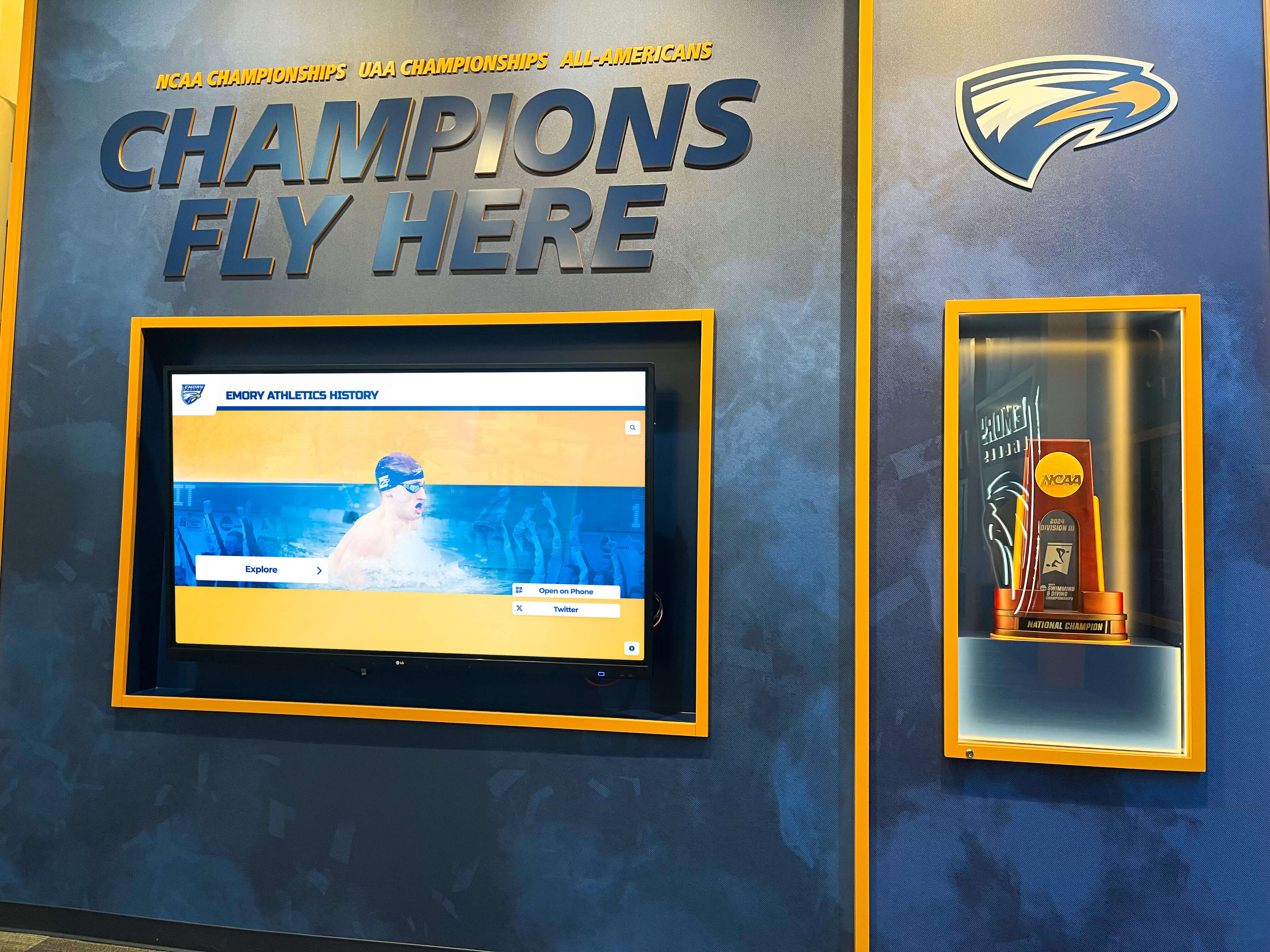
Championship recognition celebrates the teams, players, and moments that define program excellence
Individual Player Recognition
Hockey success depends on individual excellence, making comprehensive player recognition essential:
Career Statistical Records:
Digital record boards showcase individual statistical achievements across categories:
- Goals, assists, and points for forwards
- Goals against average and save percentage for goaltenders
- Plus/minus ratings and penalty minutes
- Special teams statistics for power play and penalty kill
- Career milestones like 100-point seasons or 30-goal campaigns
Interactive record boards can display all-time leaders, single-season records, career marks, and statistical trends showing how records evolved across program history.
All-Conference and Award Recipients:
Players earning conference recognition, league awards, or national honors deserve permanent recognition. Digital displays can document:
- All-conference team selections organized by position and season
- League-specific awards like player of the year, rookie honors, and sportsmanship recognition
- National awards including All-American selections
- Team-specific honors like MVP, most improved, or leadership awards
Career Profiles:
Comprehensive individual profiles provide complete career documentation:
- Season-by-season statistics showing performance progression
- Career highlights and memorable moments
- Photo galleries from playing careers
- Quotes from players about experiences and memories
- Post-career information tracking professional hockey, coaching careers, or life accomplishments
Jersey Number Recognition:
Many programs retire jersey numbers for legendary players. Digital recognition can showcase retired numbers with:
- Complete career documentation justifying retirement
- Ceremony footage and photos from retirement events
- Comparisons showing how honorees’ achievements compared to program history
- Quotes from teammates, coaches, and opponents about impact
For programs recognizing diverse athletic achievements beyond just statistics, comprehensive recognition platforms celebrate the complete athlete rather than just performance numbers.
Coaching Excellence Recognition
Coaches shape program culture, develop players, and architect success strategies deserving permanent recognition:
Career Records and Achievements:
Comprehensive coaching documentation includes:
- Career win-loss records and winning percentages
- Championship titles and playoff achievements
- Years of service and roster development
- Notable victories over ranked opponents or rivals
- Conference championships and tournament success
Coaching Philosophy and Impact:
Beyond statistics, effective coaching recognition captures philosophy and influence:
- Recorded interviews discussing coaching approaches and team-building strategies
- Testimonials from former players describing impact on their development
- Documentation of players progressing to higher competitive levels or coaching careers
- Team culture development and program-building achievements
- Tactical innovations and strategic contributions to hockey evolution
Coaching Trees:
Successful programs often produce coaches who lead other programs. Documenting these “coaching trees” shows program influence extending beyond direct competition.
Facility and Program Evolution
Hockey rinks evolve substantially over decades. Documenting this evolution provides historical context:
Facility Development:
Chronological documentation showing:
- Original facility construction and specifications
- Renovation projects and capacity expansions
- Technology upgrades including new scoreboards, lighting, or seating
- Locker room improvements and training facility additions
- Historical photos showing facility appearance across eras
League and Conference History:
Programs typically compete in leagues or conferences that evolve over time. Documenting:
- League membership changes and conference realignments
- Rivalry development and traditional opponents
- League championship history and tournament performance
- Significant rule changes affecting play during different eras
Program Milestones:
Non-championship milestones that shaped program identity:
- First games and inaugural season documentation
- Introduction of girls’ or women’s hockey programs
- Transition between competitive divisions or levels
- First professional players or Olympic representatives
- Attendance records and notable games
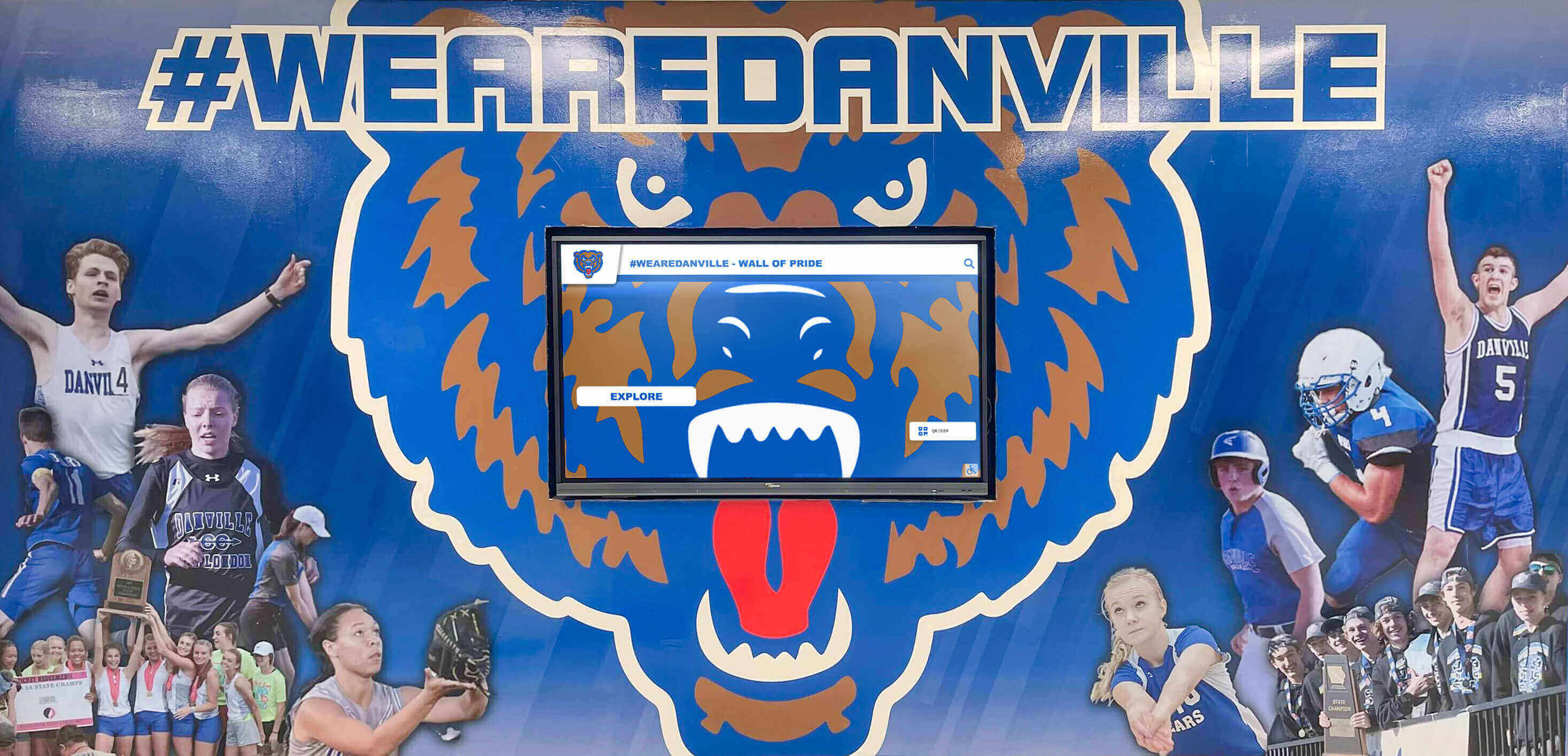
Combining traditional murals with modern digital displays creates comprehensive facility recognition
Rivalry and Traditional Opponent Documentation
Hockey rivalries create emotional investment and memorable moments deserving special recognition:
Rivalry History:
Comprehensive documentation of traditional rivalries including:
- All-time series records against key opponents
- Notable games and dramatic finishes
- Players who excelled in rivalry games
- Trophy games or named competition documentation
- Playoff meetings and championship implications
Traditional Tournaments:
Many programs participate in annual tournaments or holiday showcase events. Recognizing:
- Tournament championship history and records
- Memorable tournament performances
- Traditional tournament opponents and notable games
- Tournament MVP and all-tournament selections
Alumni Professional Achievement Tracking
Many youth, high school, and college hockey players continue to higher levels. Tracking alumni progression demonstrates program development quality:
Professional Player Tracking:
Documentation of alumni reaching professional hockey:
- Players drafted or signed to professional contracts
- NHL appearances and career statistics
- Minor league and European professional careers
- Career highlights and notable professional achievements
Collegiate Advancement:
For youth and high school programs, tracking players advancing to college hockey:
- College commitments organized by institution
- Division I, II, and III representation
- Academic achievements alongside athletic success
- Players earning college hockey awards and recognition
Coaching Careers:
Alumni who become coaches continue program legacy:
- Former players now coaching at various levels
- Coaching achievements and team development
- Philosophy connections to original program training
For high school hockey programs tracking alumni advancement, recognition systems maintain engagement with former players while inspiring current participants to pursue continued hockey excellence.
Implementing Touchscreen Recognition in Hockey Facilities
Successfully integrating touchscreen recognition requires thoughtful planning addressing technical, content, and strategic considerations.
Optimal Display Placement
Location significantly impacts engagement and visibility:
High-Traffic Entry Areas:
Main lobby entrances offer maximum visibility as every visitor passes during arrival. Position displays prominently but not obstructing traffic flow. Consider:
- Eye-level mounting for standing adult viewers
- Accessible positioning accommodating wheelchair users
- Adequate space allowing groups to gather without blocking pathways
- Proximity to seating areas enabling extended viewing
Concourse Locations:
For larger facilities with concourses circling rinks, multiple displays can showcase different content:
- Historical teams in one location, current season information elsewhere
- Different displays featuring specific eras or achievement categories
- Strategic placement near concessions or gathering areas where visitors naturally congregate
Locker Room Areas:
While access restrictions may limit public viewing, locker room area displays serve important purposes:
- Inspiration for current players seeing program history before games
- Alumni return visits generating reconnection opportunities
- Team meetings incorporating historical context into preparation
Community Spaces:
Many hockey facilities include community rooms, meeting spaces, or spectator lounges. These locations provide opportunities for:
- Extended engagement without interfering with high-traffic flow
- Comfortable viewing environments encouraging thorough exploration
- Group gatherings where teams can view content together
Technical Considerations
Proper technical specifications ensure reliable operation and positive user experience:
Display Size and Resolution:
Hockey recognition benefits from larger displays providing adequate visual impact:
- Minimum 55-inch displays for clear visibility in spacious facilities
- 65-75 inch screens ideal for lobby areas with significant viewing distances
- 4K resolution ensuring sharp text and image clarity
- Commercial-grade displays rated for continuous operation
Touchscreen Technology:
Responsive touch capabilities enable intuitive interaction:
- Capacitive touchscreens providing smartphone-like responsiveness
- Multi-touch capability allowing zoom gestures and simultaneous users
- Anti-glare treatments reducing visibility issues in brightly lit areas
- Protective screen covers preventing damage from aggressive interaction
Mounting and Protection:
Hockey facilities experience significant foot traffic and occasional equipment movement:
- Secure wall mounting preventing accidental dislodging
- Protective enclosures preventing impact damage
- Climate-appropriate installations handling temperature and humidity variations
- Tamper-resistant designs preventing unauthorized access to equipment
Network Connectivity:
Content management requires reliable network access:
- Hardwired ethernet connections providing stable bandwidth
- Backup wireless connectivity ensuring continued operation during network issues
- Remote management capability allowing off-site content updates
- Automatic error reporting alerting administrators to technical problems
For organizations implementing recognition technology, professional installation guidance ensures optimal configuration and staff training for successful long-term operation.
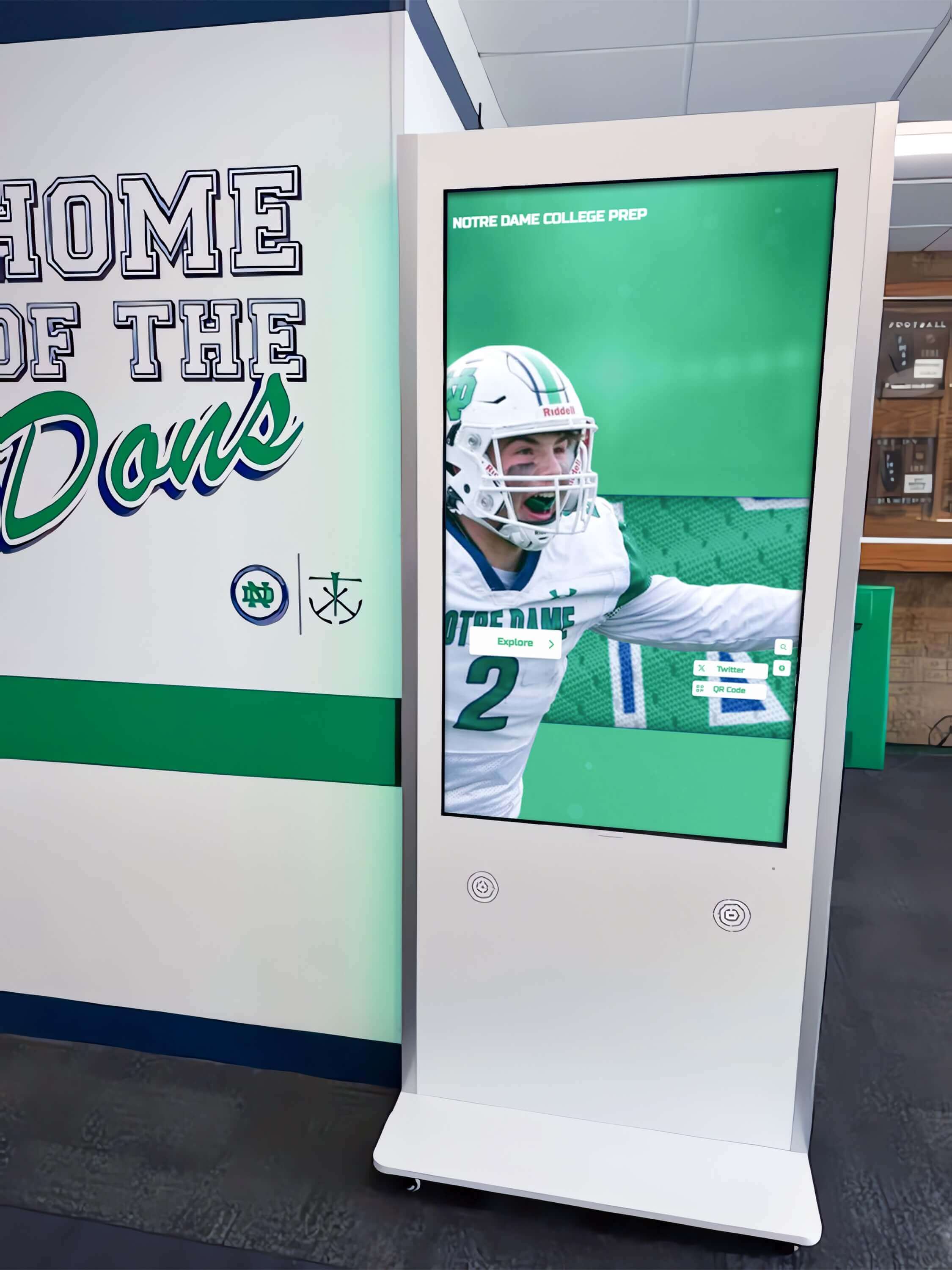
Strategic placement in high-traffic hallways maximizes visibility and visitor engagement
Content Development Strategy
Comprehensive content creation requires systematic approaches:
Phase 1: Priority Content
Begin with highest-value content generating immediate impact:
- Current season rosters and schedules
- Recent championship teams (last 10-15 years)
- Current record holders across major statistical categories
- Retired jerseys and hall of fame members
This initial content provides immediate value while establishing foundation for expansion.
Phase 2: Historical Expansion
Systematically expand backward through program history:
- Championship teams from previous decades
- Statistical leaders from different eras
- Coaching histories and program leadership
- Facility evolution and significant milestones
Dedicated research may be required locating historical information from pre-digital eras. Local libraries, historical societies, and alumni networks often maintain valuable documentation.
Phase 3: Enhanced Storytelling
Add depth through multimedia and narrative content:
- Video interviews with alumni and coaches
- Championship game footage and highlight reels
- Detailed season narratives and team stories
- Expanded photo galleries and historical imagery
Phase 4: Continuous Updates
Establish ongoing processes maintaining current relevance:
- Post-season updates adding completed seasons
- Record book updates when marks fall
- Alumni achievement tracking for professional and collegiate progressions
- Special features highlighting anniversaries and notable dates
Content Sourcing
Building comprehensive recognition content requires systematic information gathering:
Organizational Archives:
Begin with existing institutional records:
- Historical game programs and media guides
- Championship documentation and team photos
- Statistical records and scorebooks
- Previous recognition materials and trophy documentation
Alumni Networks:
Former players and coaches provide valuable content:
- Personal photo collections from playing careers
- First-hand accounts of memorable seasons and games
- Career update information for alumni tracking
- Verification of historical information and filling gaps in records
Local Media Sources:
Newspaper archives, radio stations, and local sports coverage contain:
- Game recaps and season coverage
- Player profiles and feature stories
- Historical context about significant moments
- Statistics and record documentation
Digital Archives:
Online resources offer readily accessible information:
- League and conference statistical databases
- Historical newspaper archives through library systems
- Social media groups dedicated to program history
- Photo sharing platforms with historical imagery
Solutions like Rocket Alumni Solutions provide purpose-built platforms designed specifically for athletic recognition, combining intuitive content management with comprehensive features supporting hockey programs’ unique needs while honoring traditions through modern technology.
Real-World Applications Across Hockey Levels
Touchscreen recognition serves valuable purposes across all levels of hockey competition, from youth programs through professional franchises.
Youth and Community Hockey Programs
Community rinks hosting youth hockey leagues benefit significantly from recognition technology:
Participation Recognition:
Youth programs prioritize inclusive recognition celebrating participation alongside competitive achievement:
- Team photos for every squad regardless of competitive success
- Individual player profiles for all participants
- Season highlights showing skill development and memorable moments
- Volunteer coach recognition honoring dedication to youth development
Development Tracking:
Digital platforms can document player progression through age groups:
- Multi-year career tracking as players advance through levels
- Skill milestone recognition celebrating development achievements
- Team evolution showing how squads form and develop together
- Alumni tracking showing progression to high school and beyond
Community Building:
Youth hockey depends on strong community support. Recognition demonstrates:
- Volunteer appreciation for coaches, officials, and administrators
- Sponsor recognition supporting program operation
- Facility history showing community investment over decades
- Special event documentation including tournaments and celebrations
For community sports organizations, recognition solutions demonstrate that achievement comes in many forms while celebrating dedication across all participation levels.
High School Hockey Programs
High school hockey recognition serves educational and community-building purposes:
Four-Year Career Documentation:
High school programs can comprehensively document complete careers:
- Freshman through senior year progression
- Statistical development and achievement growth
- Academic recognition alongside athletic excellence
- Leadership development and team contribution
Conference and League Recognition:
High school hockey operates within conference structures creating recognition opportunities:
- All-conference selections across positions
- Conference championship documentation
- Rivalry game results and traditional competitions
- State tournament participation and success
College Advancement Celebration:
For programs sending players to college hockey, recognition demonstrates:
- College commitment announcements and signing celebrations
- Division I, II, and III placement documentation
- Academic scholarship recognition
- Continued tracking of college hockey careers
Community Identity:
High school hockey often represents significant community identity:
- Tradition documentation showing decades of program history
- Community support recognition celebrating fan dedication
- Alumni return events and reconnection opportunities
- Integration with broader school athletic achievement
Collegiate Hockey Programs
College hockey features intense competition and passionate fan bases making recognition particularly valuable:
Championship Era Documentation:
College programs accumulate championship achievements deserving thorough documentation:
- Conference regular season and tournament titles
- National championship appearances and victories
- Historical eras showing program evolution
- Rivalry trophy documentation and traditional competitions
Professional Development Pipeline:
College hockey serves as primary development path to professional hockey:
- NHL draft selections and professional signings
- Professional career tracking showing ongoing achievements
- Comparison with national development trends
- Olympic and international competition representation
Academic Excellence Recognition:
College athletics emphasize academic achievement alongside athletic success:
- Academic All-American selections
- Team GPA recognition and scholar-athlete honors
- Graduation rate documentation
- Post-hockey career success in non-athletic fields
Facility and Resource Documentation:
Major college programs invest significantly in facilities:
- Arena construction and renovation history
- Training facility development and technology integration
- Historical attendance records and fan support documentation
- Tradition evolution showing how program culture developed
For collegiate athletic programs, comprehensive recognition systems celebrate excellence across multiple dimensions while connecting past achievement with present aspiration.
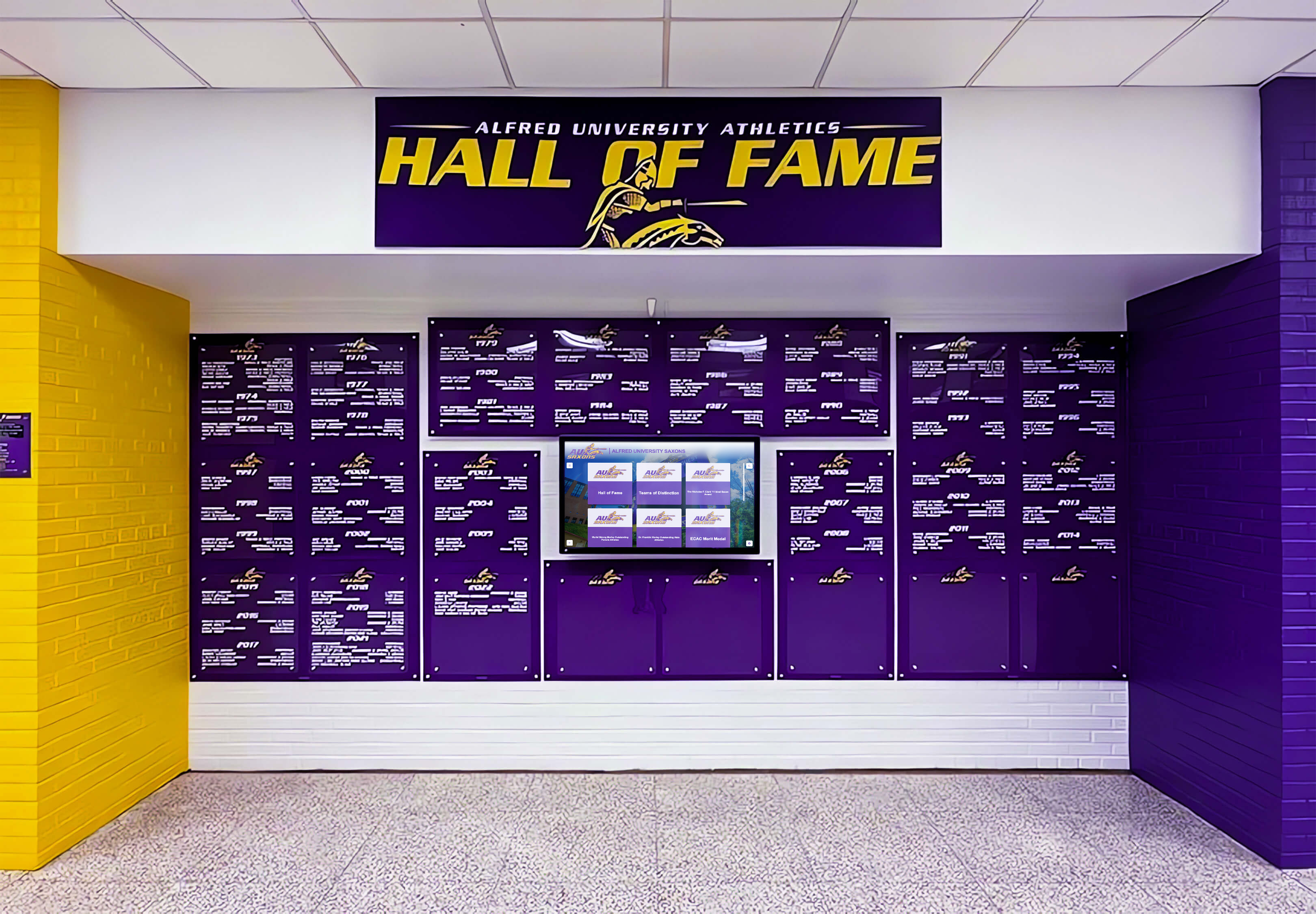
College hockey programs benefit from comprehensive recognition celebrating decades of achievement
Professional Hockey Franchises
Professional organizations use recognition to strengthen fan connections and honor franchise history:
Franchise History Documentation:
Professional franchises accumulate rich histories across decades:
- Stanley Cup championships and playoff achievements
- Retired number recognition with comprehensive career documentation
- Hall of Fame members and franchise legends
- Significant milestones and achievement anniversaries
Fan Engagement:
Recognition displays serve fan experience purposes:
- Pre-game entertainment and arena atmosphere enhancement
- Historical content connecting multiple generations of fans
- Interactive elements allowing personalized exploration
- Social media integration encouraging sharing and engagement
Revenue Generation:
Professional organizations can integrate commercial elements:
- Sponsor recognition within historical content
- Merchandise tie-ins promoting throwback jerseys and memorabilia
- VIP experiences incorporating historical elements
- Season ticket holder exclusive content and features
Maximizing Engagement and Impact
Simply installing touchscreen displays doesn’t guarantee effective recognition. Maximizing impact requires strategic approaches to content, promotion, and integration.
Content Best Practices
High-quality content creation determines engagement success:
Visual Quality:
Professional presentation standards maintain credibility:
- High-resolution photos showing clear detail
- Consistent image formatting and sizing
- Color correction ensuring accurate reproduction
- Video editing removing extraneous content and ensuring proper pacing
Writing Quality:
Well-written narratives engage readers and convey respect:
- Clear, concise descriptions avoiding excessive jargon
- Accurate information verified through multiple sources
- Consistent voice and style maintaining professionalism
- Careful editing eliminating errors and awkward phrasing
Balance and Inclusivity:
Comprehensive recognition requires balanced approaches:
- Recognition spanning program history, not just recent decades
- Inclusion of non-star contributors who supported team success
- Gender equity ensuring women’s hockey receives appropriate recognition where applicable
- Diverse achievement recognition beyond just championships and statistics
Promotional Strategies
Effective promotion ensures community awareness and engagement:
Launch Events:
Formal unveiling generates initial awareness:
- Invitation to alumni, community members, and media
- Guided demonstrations showing content and features
- Media coverage in local newspapers and broadcast outlets
- Social media promotion reaching broader audiences
Ongoing Communication:
Continuous promotion maintains awareness:
- Regular social media posts featuring specific content elements
- Email newsletters to alumni highlighting new additions
- In-game announcements directing spectators to displays
- Website integration with virtual access to content
Alumni Engagement:
Targeted outreach to former players encourages return visits:
- Personalized notifications when individual profiles are added
- Anniversary celebrations of championship teams
- Homecoming events incorporating recognition activities
- Opportunities for alumni to contribute content and memories
Integration with Broader Programs
Recognition displays function most effectively when integrated with comprehensive programs:
Current Season Connection:
Link historical content to present activities:
- Display current team pursuing historical records
- Highlight tradition days when wearing throwback jerseys
- Feature anniversary recognition of past championships during current season games
- Show current players whose families have multi-generational program history
Educational Integration:
Schools can incorporate recognition into educational activities:
- History classes studying local sports history as community development
- Writing classes creating player profiles and season narratives
- Media production classes capturing video content
- Math classes analyzing statistics and trend identification
Development and Fundraising:
Recognition can support institutional advancement:
- Donor recognition for those supporting program operations
- Fundraising appeals emphasizing tradition maintenance
- Legacy giving opportunities connected to recognition
- Naming opportunities for specific content sections or features
For organizations seeking complete recognition solutions, digital platforms integrate recognition with broader institutional goals creating multiple value dimensions beyond pure historical documentation.
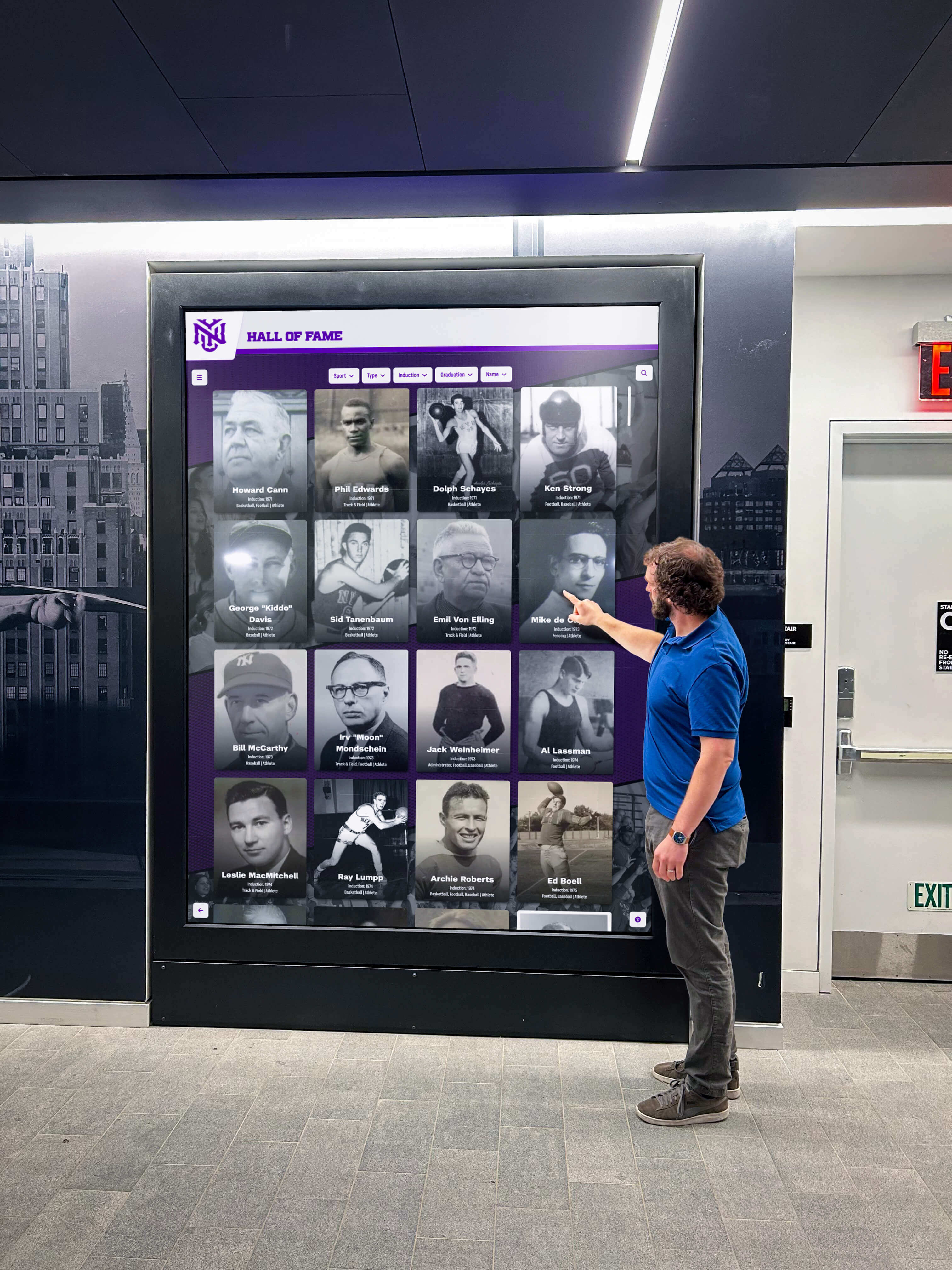
Engaging, intuitive interfaces encourage extended exploration and deeper connection with program history
Overcoming Common Implementation Challenges
Organizations implementing touchscreen recognition commonly encounter specific challenges. Understanding these obstacles and solutions helps ensure successful deployment.
Budget Constraints
Recognition technology requires investment that may strain limited budgets:
Phased Implementation:
Rather than comprehensive immediate deployment, consider:
- Single display installation demonstrating value before expansion
- Priority content focus on highest-value recognition
- Gradual content expansion as resources and time permit
- Additional displays added as budget allows over multiple years
Partnership and Sponsorship:
External funding sources can offset costs:
- Corporate sponsorships providing implementation funding
- Alumni fundraising specifically supporting recognition projects
- Grant opportunities from hockey organizations or community foundations
- In-kind contributions from technology vendors
Multi-Purpose Utilization:
Maximize return on investment through diverse applications:
- Recognition displays serving multiple programs (if facility hosts various sports)
- Additional functions beyond recognition (schedules, announcements, wayfinding)
- Revenue generation through advertising or sponsored content
- Facility rental marketing showcasing modern amenities
Limited Historical Information
Many programs lack comprehensive historical records, particularly from pre-digital eras:
Systematic Research:
Dedicated effort can recover substantial historical information:
- Local library newspaper archives containing game coverage and season summaries
- Historical society collections including community sports documentation
- Alumni outreach requesting personal records, photos, and memories
- League and conference records potentially maintaining historical statistics
Incomplete Documentation Acknowledgment:
Where information gaps exist, honest acknowledgment maintains credibility:
- Note which records are incomplete or uncertain
- Request community assistance filling historical gaps
- Update content as new information emerges
- Celebrate what is known rather than dwelling on gaps
Focus on Available Content:
Begin with well-documented recent history:
- Comprehensive recognition of recent decades with complete records
- Gradual historical expansion as research uncovers information
- Priority focus on championship teams and major achievements where documentation typically survives
- Acceptance that some historical periods may remain partially documented
Technical Expertise Requirements
Organizations may lack internal expertise for content creation and system management:
User-Friendly Platforms:
Select solutions designed for non-technical users:
- Intuitive content management requiring no coding knowledge
- Template-based design simplifying consistent formatting
- Cloud-based systems accessible from any device
- Comprehensive training and support from vendors
Vendor Support:
Professional assistance ensures successful implementation:
- Initial content migration and system setup
- Staff training on content management and maintenance
- Ongoing technical support addressing issues
- Regular system updates maintaining current functionality
Student and Volunteer Engagement:
Internal resources can support content development:
- Student projects creating player profiles and team histories
- Alumni volunteers contributing research and writing
- Community service opportunities for photography and video editing
- Multi-generational collaboration connecting young people with program history
Solutions like Rocket Alumni Solutions provide comprehensive support addressing these challenges through intuitive platforms, professional implementation assistance, and ongoing support ensuring successful long-term operation.
Maintenance and Content Currency
Recognition systems require ongoing maintenance remaining current and relevant:
Established Update Processes:
Regular schedules prevent recognition from becoming outdated:
- Immediate post-season updates adding completed seasons
- Quarterly reviews identifying needed corrections or additions
- Annual comprehensive audits ensuring accuracy
- Designated staff responsibility for maintenance
Sustainable Workload:
Maintenance must remain manageable long-term:
- Batch updates rather than attempting constant real-time changes
- Template approaches simplifying repetitive content creation
- Automated feeds where possible for statistics and schedules
- Realistic expectations about update frequency
Content Quality Standards:
Maintain consistent quality as content expands:
- Style guides ensuring consistent writing and formatting
- Image standards specifying resolution and composition requirements
- Review processes catching errors before publication
- Periodic audits identifying needed improvements
The Future of Hockey Recognition Technology
Digital recognition continues evolving with emerging technologies offering new possibilities:
Artificial Intelligence Applications
AI technologies enable capabilities previously requiring extensive manual effort:
Automated Content Generation:
AI can assist creating initial content drafts:
- Player profile templates populated from statistical databases
- Season summaries generated from game results and statistics
- Image captioning and metadata creation
- Content recommendations based on user behavior
Enhanced Search:
Natural language processing improves content discovery:
- Conversational search understanding questions like “Who scored the most goals in the 1990s?”
- Automatic categorization organizing content by themes, eras, or achievement types
- Related content recommendations encouraging extended exploration
- Predictive search suggesting queries based on partial input
Augmented Reality Integration
AR technology can enhance recognition experiences:
Physical-Digital Integration:
AR applications bridge physical spaces with digital content:
- Smartphone apps overlaying historical content on physical locations
- Banner and trophy case enhancement with detailed information appearing through devices
- Virtual tours allowing remote exploration of facility recognition
- Interactive scavenger hunts engaging youth visitors
Immersive Experiences:
Advanced AR creates compelling interactions:
- Virtual player introductions showing historical figures as if present
- Perspective views placing visitors in championship game moments
- Comparative visualizations showing how historical records compare to current achievements
- Time-travel experiences showing facility evolution across decades
Virtual Reality Possibilities
VR technology offers ultimate immersive recognition:
Historical Game Recreation:
VR can transport visitors to past championships:
- 360-degree recreations of significant games
- Player perspective experiences showing action from ice level
- Interactive elements allowing users to control viewing angles
- Combined with actual game footage for authentic experiences
Virtual Museums:
Complete recognition experiences accessible remotely:
- Comprehensive VR facility tours accessible worldwide
- Alumni engagement regardless of geographic location
- Educational experiences for hockey history study
- Preservation of facilities before renovation or replacement
Data Analytics and Personalization
Advanced analytics enable increasingly personalized experiences:
User Behavior Tracking:
Understanding engagement patterns improves content:
- Identification of most-viewed content informing development priorities
- Navigation pattern analysis revealing usability issues
- Demographic insights showing which audiences engage most
- A/B testing determining optimal content presentations
Personalized Recommendations:
Customized content suggestions increase engagement:
- Recognition of returning visitors with remembered preferences
- Related content suggestions based on viewing history
- Customized experiences for different user types (alumni, parents, recruits, fans)
- Dynamic content prioritization showing different users different defaults
For organizations interested in cutting-edge recognition technology, innovative platforms continue advancing capabilities while maintaining ease of use and practical implementation.
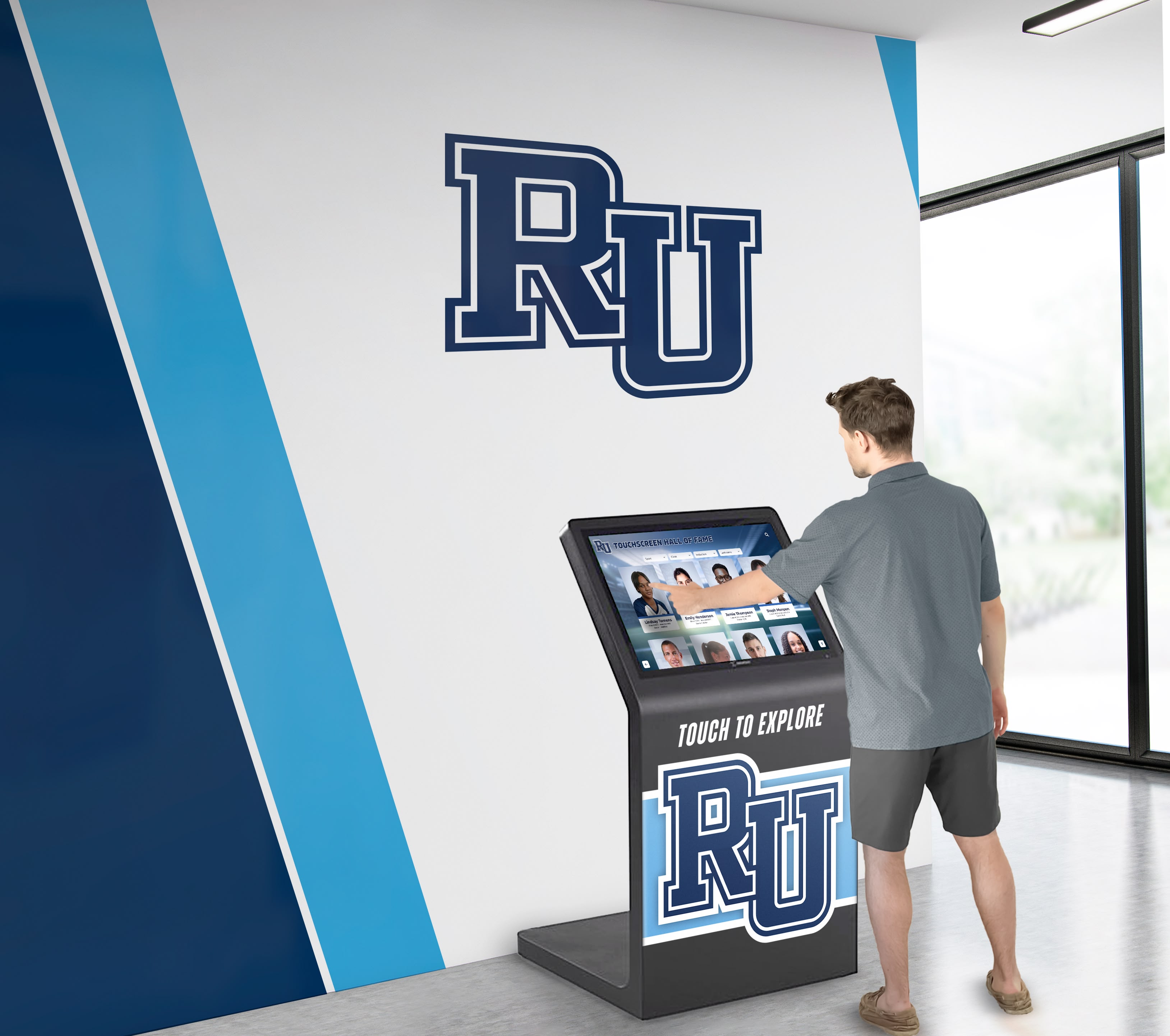
Modern recognition technology creates engaging, intuitive experiences connecting visitors with program history
Building Lasting Hockey Traditions Through Recognition
Effective recognition accomplishes far more than documenting past achievements—it builds lasting traditions connecting generations while inspiring future excellence.
Connecting Generations
Multi-generational program participation creates powerful bonds:
Family Legacy Recognition:
Special attention to multi-generational families strengthens connections:
- Family trees showing multiple generations of program participation
- Special events celebrating legacy families
- Comparison features showing how family members’ achievements relate
- Opportunities for family members to contribute shared memories
For programs with significant multi-generational participation, family legacy recognition celebrates these unique connections while demonstrating enduring program value.
Alumni Mentorship Integration:
Recognition can facilitate mentorship connections:
- Alumni profiles including contact information for mentorship volunteers
- Current player access to former players’ experiences and advice
- Formal mentorship programs connecting current athletes with alumni
- Career guidance leveraging alumni professional expertise
Inspiring Current Players
Historical recognition serves powerful motivational purposes:
Record Pursuit Visualization:
Players pursuing records benefit from clear context:
- Display of current records and historical progression
- Distance from current players to program marks
- Historical context showing significance of potential achievements
- Recognition of record-breaking performances immediately upon occurrence
Championship Standard Setting:
Past success establishes expectations:
- Championship team recognition showing sustainable excellence standards
- Emphasis on how past teams achieved success through specific approaches
- Connection between current team aspirations and historical achievements
- Integration of past championship strategies into current team preparation
Role Model Identification:
Current players find inspiration in predecessors:
- Similar playing styles or positions showing development paths
- Players who overcame similar challenges
- Career trajectories demonstrating progression possibilities
- Character and leadership examples beyond pure athletic achievement
Strengthening Community Identity
Hockey programs often represent significant community identity elements:
Tradition Celebration:
Recognition reinforces shared community traditions:
- Documentation of traditional events and celebrations
- Preservation of unique program customs and rituals
- Historical context explaining tradition origins
- Continuity demonstration showing tradition maintenance across decades
Community Investment Acknowledgment:
Recognition can honor broader community support:
- Volunteer recognition celebrating countless hours of dedication
- Facility funding acknowledgment for those who invested in infrastructure
- Booster organization history and supporter contributions
- Community leader recognition for program advocacy
Unifying Force:
Comprehensive recognition brings communities together:
- Multi-generational gatherings around shared history
- Common reference points creating conversation connections
- Pride reinforcement in community achievement
- Inclusion emphasis ensuring all community members see themselves represented
For community sports organizations, comprehensive recognition approaches demonstrate that programs value everyone who contributes to success, not just star athletes.
Conclusion: Honoring the Past, Inspiring the Future
Hockey rinks represent far more than ice surfaces surrounded by boards—they are gathering places where communities unite, traditions flourish, and memories spanning generations are created. The teams that have competed on these rinks, the players who developed skills and character, the coaches who mentored and inspired, and the communities that supported programs through decades deserve recognition matching the significance of their contributions.
Interactive touchscreen technology transforms hockey recognition from limited banners and trophy cases into comprehensive, engaging museums of program history. These digital platforms eliminate space constraints, enable rich multimedia storytelling, provide real-time updates, and create personalized exploration experiences impossible with traditional recognition approaches. From youth leagues to professional franchises, hockey organizations are discovering that digital recognition strengthens community connections, inspires current participants, and preserves legacies for future generations.
Transform Your Hockey Rink Recognition
Discover how Rocket Alumni Solutions can help your hockey program create compelling touchscreen recognition displays celebrating championship teams, honoring individual excellence, and inspiring future generations through comprehensive, interactive technology designed specifically for hockey facilities.
Schedule Your Free ConsultationEffective hockey recognition accomplishes multiple essential purposes: it demonstrates organizational respect for those who built program success, provides inspiration showing current players they can add their own chapters to continuing stories, creates connections between generations of participants, strengthens community identity and pride, preserves history that might otherwise fade with time, and attracts prospective players and families seeking programs with strong traditions.
Whether your hockey program spans eight decades or eight seasons, comprehensive recognition celebrates your unique story while honoring everyone who contributed. Solutions like Rocket Alumni Solutions provide purpose-built platforms combining intuitive content management, professional design, comprehensive support, and features specifically addressing hockey recognition needs.
The championship teams that battled to overtime victories, the players who set records still standing decades later, the coaches who developed generations of athletes, the facilities that hosted countless memorable moments—these elements comprise your program’s heritage. Modern touchscreen recognition ensures that heritage receives the comprehensive, engaging celebration it deserves while inspiring countless future players who will add their own achievements to your continuing legacy.
Ready to transform your hockey rink recognition with interactive digital displays that honor your complete program history? Contact Rocket Alumni Solutions to explore how touchscreen technology can celebrate your hockey tradition while building connections between past excellence and future aspirations, or discover more about athletic recognition best practices that engage communities and preserve legacies for generations to come.































