Crowning homecoming kings and queens represents one of the most anticipated moments in the high school calendar—a celebration of leadership, school spirit, and student achievement. Yet within weeks of the coronation ceremony, recognition often fades to a single yearbook photo or dusty trophy case plaque. Modern digital recognition displays transform fleeting homecoming celebrations into lasting tributes that honor royalty year-round while preserving decades of school tradition through interactive, engaging platforms accessible to current students, alumni, and the broader school community.
This comprehensive guide explores how schools can create meaningful, enduring recognition for homecoming courts using digital solutions that celebrate tradition while meeting contemporary expectations for interactive, multimedia experiences that resonate with today’s students and community members.
Homecoming royalty represents more than popularity contests—these students typically embody school values through academic achievement, athletic or artistic excellence, community service, and demonstrated leadership. They serve as ambassadors during homecoming week and beyond, representing their schools at games, parades, alumni events, and community functions. Creating recognition displays worthy of their contributions while preserving institutional history requires solutions that go far beyond traditional static plaques.
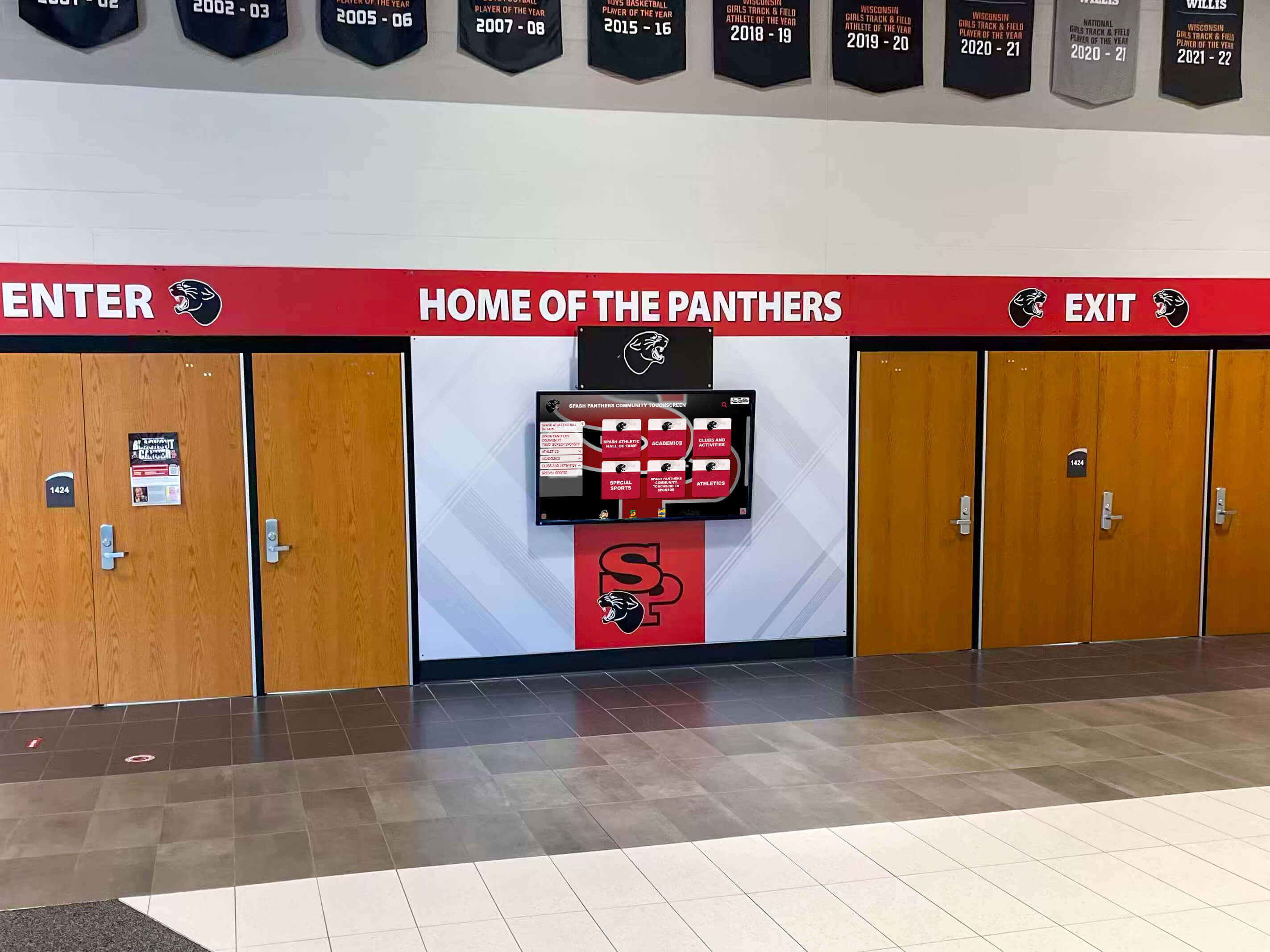
Welcoming displays celebrating school pride set the tone for comprehensive homecoming recognition programs
Understanding the Evolution of Homecoming Court Recognition
Traditional homecoming recognition has followed predictable patterns for decades—a photograph in the yearbook, names engraved on a plaque in the main office or trophy case, perhaps a composite photo displayed in a hallway. While these methods preserve basic information, they fail to capture the full significance of homecoming honors or tell the complete stories of students selected for these distinctions.
The Limitations of Traditional Recognition Methods
Schools maintaining conventional recognition approaches face multiple challenges that diminish the impact and longevity of homecoming honors:
Space Constraints: Physical trophy cases and wall displays have finite capacity. As decades pass, schools face difficult decisions about which years to display prominently and which to relegate to storage or discard entirely. Many schools maintain visible recognition for only the most recent five to ten years, with earlier honorees effectively erased from daily school consciousness despite their historical significance.
Static Information: Traditional plaques display only names and years—nothing about the students’ accomplishments, activities, or the qualities that led to their selection. A homecoming queen from 1985 receives identical recognition to one from 2025: a name and date. The personalities, achievements, and stories that made these students special vanish entirely.
Limited Accessibility: Physical displays remain accessible only to those who physically visit school buildings during open hours. Alumni living in other states cannot share their homecoming memories with children or grandchildren. Community members interested in school history have no way to explore traditions without scheduling campus visits.
Minimal Engagement: Static displays in hallways become invisible background elements that students pass daily without noticing. There’s no interactivity, no exploration, no connection to current school community. Recognition becomes wallpaper rather than inspiration.
Maintenance Challenges: Physical displays require regular cleaning, repair, and updating. Faded photos, tarnished plaques, and outdated information create impressions of neglect rather than celebration. Many schools struggle to maintain consistent quality across decades of recognition.
Modern Expectations for Recognition Programs
Today’s students, families, and communities expect more engaging, accessible, and comprehensive recognition than previous generations. Several factors drive these evolving expectations:
Digital Native Audiences: Current students have never known a world without smartphones, social media, and on-demand access to information. They expect interactive experiences where they can explore, search, share, and discover rather than passively viewing static information.
Multimedia Storytelling: Modern audiences consume content through video, photos, and rich narratives rather than text alone. Recognition that tells complete stories through multiple media formats resonates far more powerfully than names on plaques.
Year-Round Engagement: Contemporary schools recognize that homecoming represents just one moment in ongoing efforts to build school spirit and alumni connection. Recognition programs should engage community members throughout the year, not just during homecoming week.
Inclusive Recognition: Beyond just kings and queens, modern homecoming programs honor entire courts, spirit competition winners, participation leaders, and diverse contributors to homecoming success. Recognition systems must accommodate this broader celebration while maintaining appropriate emphasis on primary honorees.
Accessibility and Reach: Families expect to share recognition beyond physical school buildings—on social media, in digital newsletters, through websites accessible from anywhere. Recognition systems should enable rather than limit this natural desire to celebrate achievement broadly.
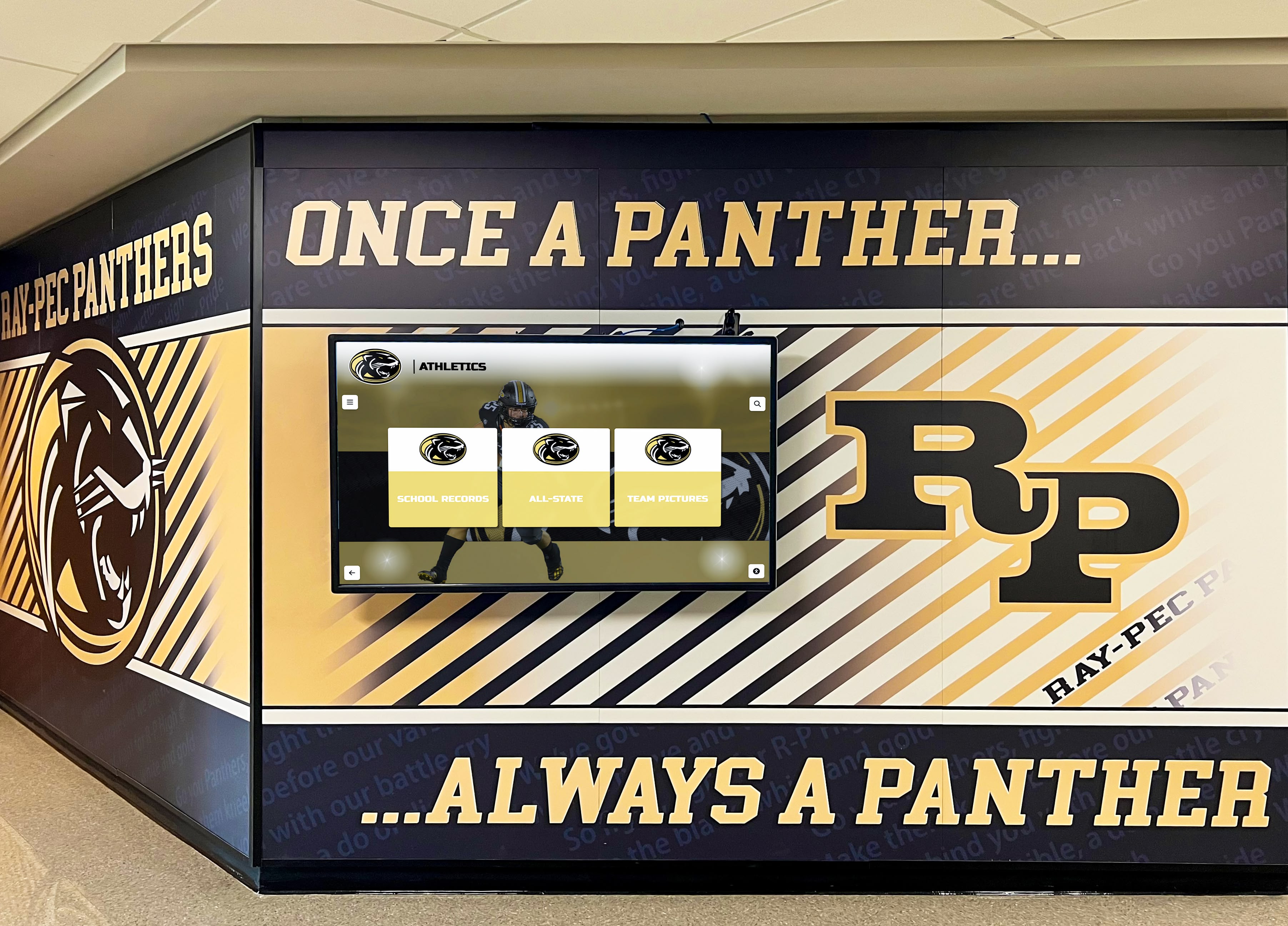
Modern recognition displays integrate seamlessly into school environments while celebrating achievement in engaging formats
The Strategic Value of Comprehensive Homecoming Recognition
Thoughtful homecoming recognition delivers benefits extending far beyond honoring individual students. Schools leveraging comprehensive recognition systems accomplish multiple strategic objectives simultaneously:
Building Lasting School Spirit and Tradition
Connecting Past to Present: When current students explore decades of homecoming history through interactive displays, they understand themselves as part of continuing traditions rather than isolated graduating classes. Seeing homecoming kings and queens from the 1960s, 1980s, and 2000s demonstrates that school spirit transcends individual generations—today’s students join legacies extending back decades.
Creating Aspirational Goals: Comprehensive profiles showing the achievements, activities, and leadership of previous homecoming royalty provide concrete examples of what schools value and honor. Students understand that selection reflects sustained excellence across academics, activities, service, and character rather than single qualities or momentary popularity.
Preserving Institutional Memory: Schools represent communities extending across generations. As faculty, administrators, and community members change, institutional memory fades without systematic preservation. Comprehensive homecoming recognition maintains accessible historical records that keep traditions alive and visible regardless of personnel transitions.
Strengthening Alumni Engagement and Connection
Alumni engagement represents a critical component of school success, influencing everything from mentorship programs and career guidance to financial support and community advocacy. Homecoming recognition plays surprising roles in alumni relationship building:
Providing Reunion Focal Points: Alumni returning for reunions naturally gravitate toward recognition displays featuring their graduation years. Interactive alumni recognition systems create gathering spaces where returning graduates explore memories together, identify classmates they’ve lost touch with, and share stories with spouses and children about their school experiences.
Enabling Remote Engagement: Web-accessible recognition allows alumni who cannot physically return to campus to explore homecoming history, share their profiles with family members, and maintain emotional connections to institutions that shaped their formative years. This remote accessibility proves particularly valuable for alumni living far from school locations or with circumstances preventing travel.
Demonstrating Institutional Pride: Schools investing in quality recognition systems send clear messages that they value traditions, honor achievement, and maintain pride in institutional history. Alumni feel validated knowing their contributions remain recognized and accessible rather than forgotten or relegated to dusty storage boxes.
Creating Natural Communication Opportunities: Updates to digital recognition systems provide authentic reasons to contact alumni—notifying them when their profiles are added or updated, inviting them to submit additional photos or information, or informing them about special features highlighting their graduating classes. These communications maintain connections through personally relevant content rather than generic appeals.
Enhancing Student Recruitment and School Marketing
Prospective students and families evaluate schools across multiple dimensions during selection processes. Quality recognition programs influence perceptions in subtle but meaningful ways:
Demonstrating School Culture: Comprehensive homecoming recognition visible during campus tours showcases vibrant school spirit and strong traditions. Prospective families see evidence of tight-knit communities where achievements receive lasting acknowledgment rather than fleeting attention.
Highlighting Holistic Values: When homecoming recognition profiles emphasize not just appearances but academic excellence, leadership, service, and character, prospective families understand that schools value well-rounded achievement. This messaging particularly appeals to families prioritizing character development alongside academics.
Showcasing Technology Integration: Modern interactive displays demonstrate schools’ commitments to technology integration and contemporary learning environments. This proves particularly important for families evaluating multiple school options and considering which institutions prepare students for technology-rich futures.
Creating Shareable Content: Digital recognition displays generate authentic, engaging content for school social media, websites, and marketing materials. Stories about homecoming royalty, traditions, and celebrations resonate far more powerfully than generic institutional messaging.
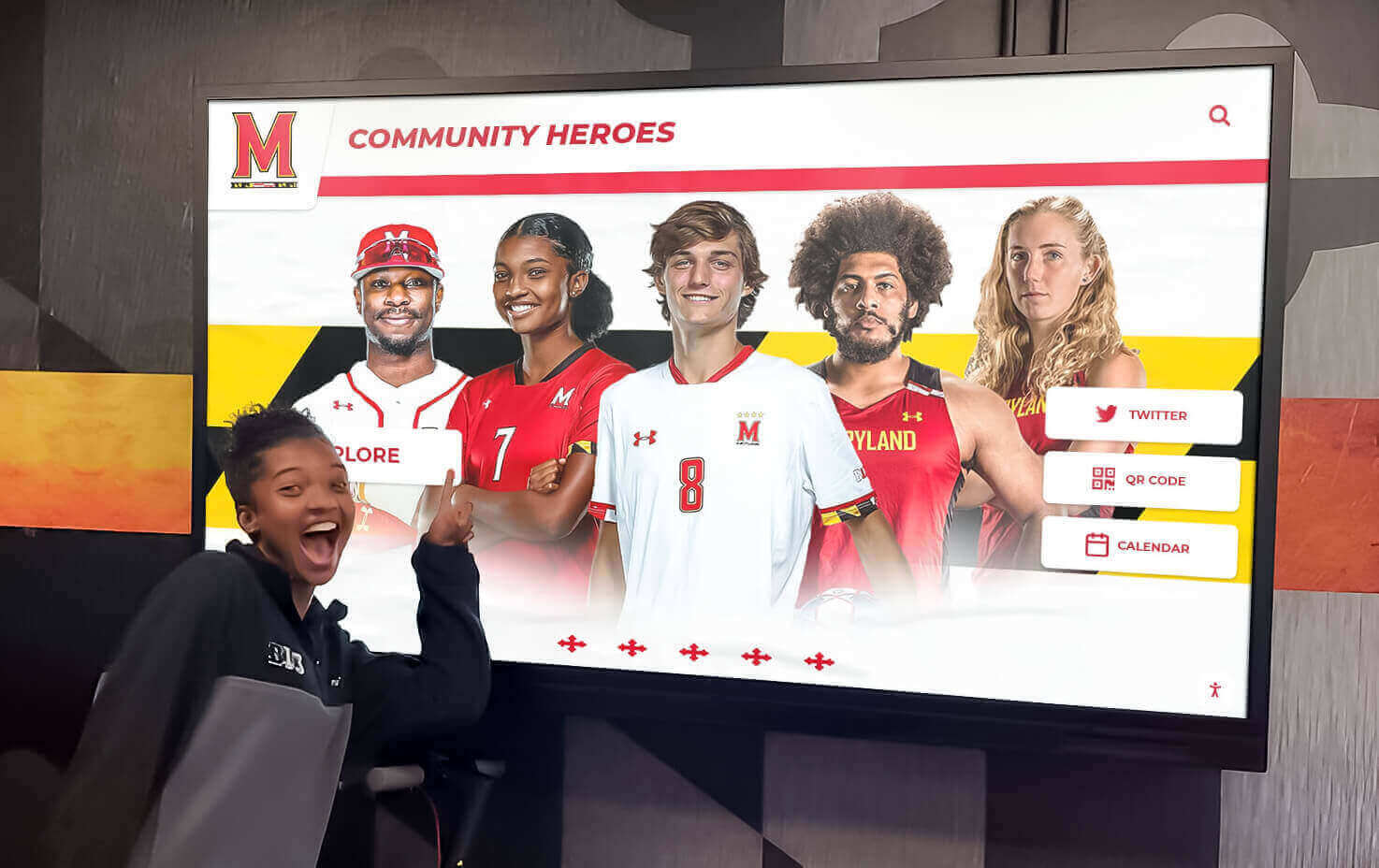
Interactive displays invite active exploration and discovery rather than passive viewing, dramatically increasing engagement
Components of Effective Homecoming Recognition Displays
Creating recognition systems that honor homecoming royalty appropriately while preserving traditions requires thoughtful attention to both content and presentation. The most effective systems incorporate several key elements:
Comprehensive Profile Information
Moving beyond simple names and dates to rich profiles transforms recognition from bureaucratic record-keeping into compelling storytelling:
Biographical Essentials: Complete profiles include graduating class year, hometown, and basic biographical information providing context about each student’s background and community connections.
Academic Achievements: Recognition of academic honors, GPA achievements, Advanced Placement courses, academic awards, and college acceptances demonstrates that homecoming royalty represents excellence beyond social popularity. Including this information reinforces that selection reflects comprehensive achievement.
Activities and Involvement: Detailed listings of sports participation, club memberships, performing arts involvement, student government positions, and other activities show the breadth of royalty members’ contributions to school communities. This information helps current students understand that homecoming honors reward sustained, multifaceted engagement.
Leadership and Service: Documentation of leadership positions held, community service contributions, volunteer hours, mentorship roles, and impact on school culture highlights the character qualities schools seek to recognize and encourage. These elements prove particularly important for demonstrating that homecoming selection reflects values rather than popularity alone.
Personal Statements and Reflections: Including honorees’ own words—their thoughts on receiving recognition, favorite school memories, advice to younger students, or reflections on what their schools meant to them—adds authentic personal voices that bring profiles to life and create emotional connections with viewers.
Future Plans and Outcomes: Information about college choices, career aspirations, scholarship awards, and (for historical profiles) actual career outcomes demonstrates the long-term trajectories of homecoming royalty. Alumni returning years later to find their profiles updated with career information feel valued and connected.
Recognition Context: Brief explanations of selection processes, nomination criteria, or what made specific years’ homecoming celebrations particularly memorable provide context helping viewers understand the significance of recognition. This proves especially valuable for historical profiles where current students lack context about past eras.
Rich Multimedia Content
Digital recognition platforms enable multimedia storytelling impossible with traditional static displays:
Professional Portrait Photography: High-quality portrait photographs capturing honorees’ personalities create visual anchors for profiles. Unlike yearbook photos constrained by strict formatting, recognition display portraits can reflect individual style and character while maintaining professional quality.
Coronation Ceremony Coverage: Video or photo documentation of announcement moments, coronation ceremonies, and immediate reactions preserves the emotional highlights of homecoming recognition. These materials become treasured memories for honorees and fascinating historical content for future students.
Campaign and Nomination Materials: For schools with competitive selection processes, including campaign posters, nomination speeches, or candidate introduction videos provides complete documentation of homecoming journeys from nomination through selection.
Event Participation Documentation: Photos of royalty members participating in parades, attending alumni receptions, representing schools at games, or engaging in homecoming week activities show the responsibilities and experiences accompanying these honors beyond the coronation moment itself.
Historical Context Images: Period photographs showing broader homecoming celebrations, school facilities, fashion trends, or cultural contexts help viewers understand how schools and traditions have evolved across decades. A 1970s homecoming court photo becomes exponentially more interesting when accompanied by images of that era’s campus, student fashions, and celebration styles.
Video Interviews and Messages: Short video messages from honorees sharing favorite memories, advice, or reflections create powerful personal connections impossible through text and static images alone. For historical honorees, recordings from reunion events or anniversary celebrations add living voices to archived recognition.
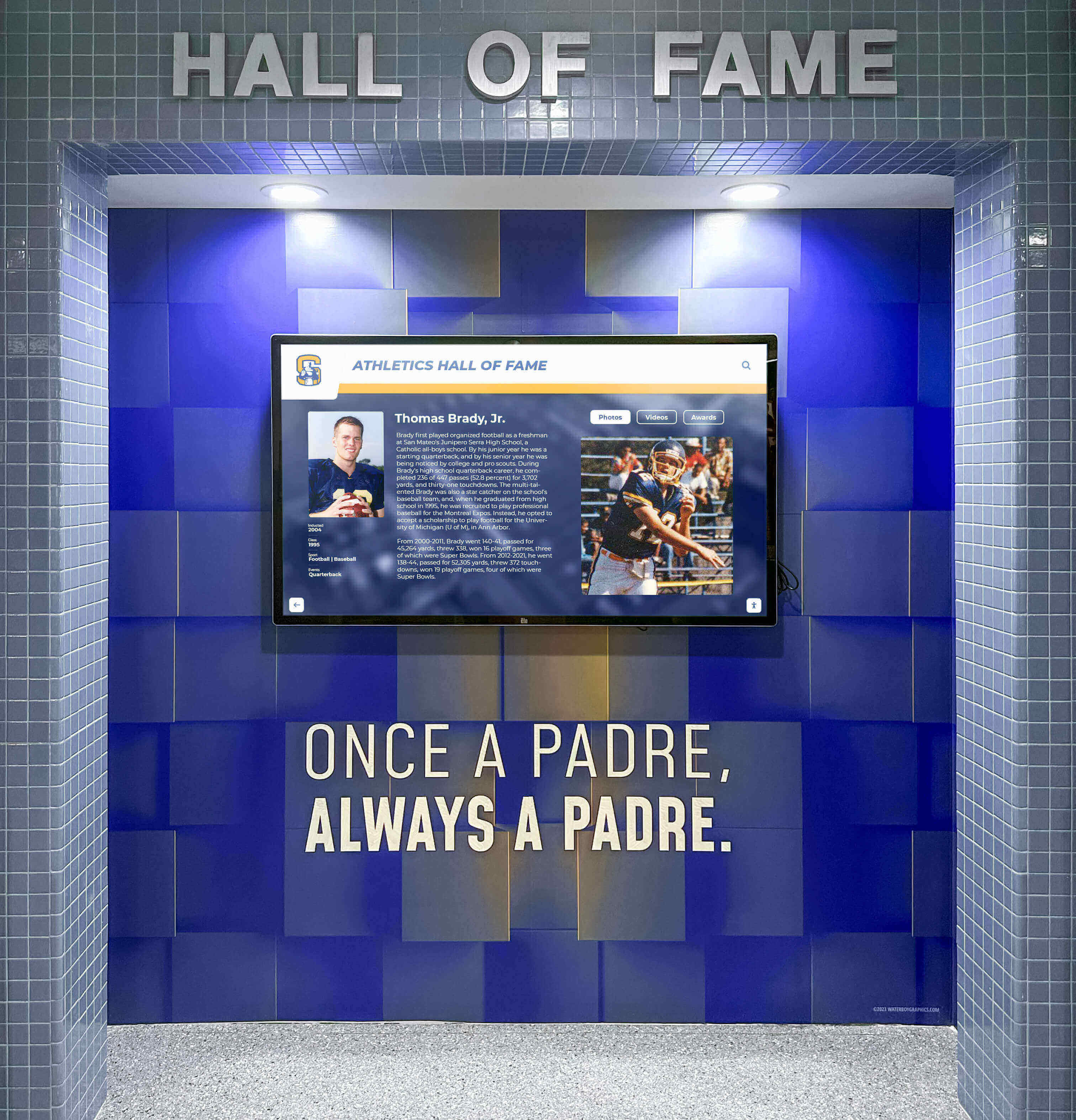
Strategic placement in high-traffic areas ensures recognition receives visibility while becoming natural gathering and conversation space
Interactive Exploration Features
The most engaging recognition systems enable active exploration rather than passive viewing:
Advanced Search Capabilities: Visitors should easily search by name, year, graduating class, activities, or other criteria to quickly locate specific individuals or explore particular eras. A parent visiting during open house can immediately find their own homecoming recognition from 1995. Current students can search for older siblings, cousins, or community members they know.
Filtering and Sorting Options: Users might filter to view only kings, only queens, entire courts, or specific positions. Chronological browsing from earliest to most recent or reverse-chronological viewing provides multiple navigation paths accommodating different user preferences and purposes.
Related Content Connections: Profiles can link to related individuals—other court members from the same year, teammates from athletic programs, fellow members of clubs or activities. These connections enable organic discovery where users follow interest threads rather than viewing predetermined content sequences.
Social Sharing Integration: Built-in sharing capabilities enable honorees, families, and community members to easily share profiles via social media, email, or text message. This amplifies recognition reach exponentially—a physical display might be seen by 500 people weekly, but social sharing can reach thousands.
Timeline and Historical Views: Visual timeline interfaces showing homecoming history across decades enable users to understand tradition evolution while browsing chronologically. Decade-based groupings with contextual information about each era enhance historical perspective.
Multi-Language Support: In diverse school communities, offering recognition content in multiple languages ensures accessibility for all families and community members regardless of primary language. This inclusive approach demonstrates respect for entire school communities.
Integration with Broader School Recognition
Homecoming displays should connect with comprehensive school recognition systems rather than existing as isolated programs:
Cross-Referencing with Other Honors: When homecoming royalty members also receive athletic, academic, or service recognition, creating clear connections between these honors demonstrates the multifaceted excellence schools value. A student might appear in homecoming recognition, athletic hall of fame, and academic honor roll—showing this holistic achievement provides complete pictures of individual contributions.
Contextualizing Within School History: School history timeline displays can reference homecoming traditions as components of broader institutional narratives. This integration shows how homecoming fits within larger school cultures and traditions rather than existing as isolated annual events.
Alumni Career and Achievement Updates: As alumni achieve professional success, earn recognition in their fields, or make notable contributions to their communities, updating their homecoming profiles with this information demonstrates long-term outcomes of school experiences. This proves particularly powerful for current students seeing concrete examples of where school experiences can lead.
Commemorating Special Anniversaries: Milestone homecoming celebrations—50th anniversaries, centennial observances, or other significant occasions—can receive featured treatment within recognition systems, with special collections of historical content, alumni interviews, or retrospective materials providing rich context about tradition evolution.
Technology Solutions for Homecoming Recognition
Implementing effective digital recognition requires selecting appropriate technology platforms matching school needs, budgets, and technical capabilities:
Touchscreen Kiosk Displays
Physical interactive displays in school buildings provide the most visible and accessible recognition options for current students, staff, and campus visitors:
Strategic Placement Considerations: Location dramatically impacts engagement. Priority locations include main entrance lobbies where all students, staff, and visitors pass daily; cafeterias where students gather socially with time to explore during lunch; athletic facility entrances capturing game day traffic from community members; and alumni gathering areas near development offices or reunion event spaces.
Hardware Specifications: Commercial-grade touchscreen displays sized 42-75 inches depending on viewing distances and space constraints provide optimal user experiences. Consumer-grade equipment cannot withstand school environment usage patterns and fails prematurely. Professional installation including secure mounting, proper viewing heights (approximately 48-52 inches from floor to screen center), and adequate user clearance space ensures accessibility and safety.
Kiosk Enclosures: Floor-standing kiosk installations offer flexibility for locations without appropriate wall-mounting options while providing built-in protection for displays, concealed cable management, and professional appearances. Wall-mounted installations work well where permanent mounting locations exist and aesthetics favor low-profile approaches.
Connectivity Requirements: Reliable network connectivity enables remote content management and automatic updates. Hardwired Ethernet connections provide most reliable performance, though high-quality WiFi can suffice if infrastructure supports consistent connectivity. Adequate electrical power with surge protection prevents damage and ensures continuous operation.
Web-Based Recognition Platforms
Digital recognition shouldn’t remain confined to physical school locations. Web-based platforms extend recognition accessibility globally:
Responsive Design: Recognition platforms must work seamlessly across desktop computers, tablets, and smartphones. Families expect to explore homecoming history from any device, and responsive design ensures optimal experiences regardless of screen size or input method.
Alumni Access: Web platforms enable alumni anywhere globally to explore their homecoming recognition, share profiles with families, and maintain emotional connections to schools regardless of geographic distance. This remote accessibility proves particularly valuable for schools with alumni dispersed across regions or countries.
Embedding in School Websites: Recognition content should integrate smoothly into existing school websites rather than requiring separate platforms with different logins and interfaces. Embedded solutions provide seamless user experiences while leveraging existing website traffic and navigation structures.
Privacy and Access Controls: Schools must balance desire for broad recognition with privacy concerns and family preferences. Flexible access controls enable schools to make certain content publicly accessible while restricting other materials to authenticated users. This proves particularly important for content including personal information beyond names and dates.
Search Engine Optimization: Well-implemented web recognition platforms make school homecoming traditions discoverable through search engines, helping prospective families researching schools understand traditions and culture while enabling alumni searching for their own homecoming memories to easily locate information.
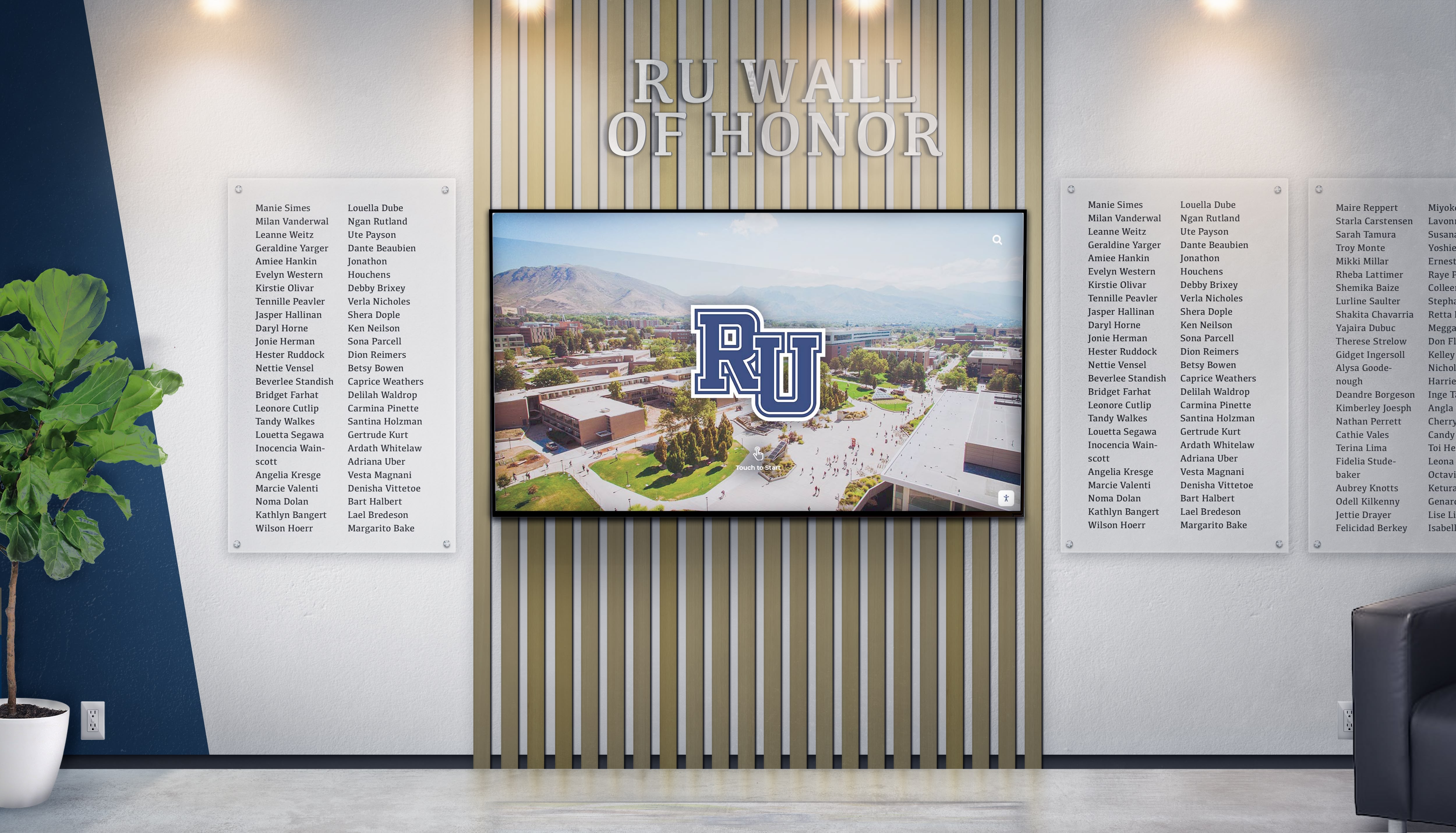
Comprehensive recognition systems celebrate diverse achievements while providing intuitive navigation for exploring decades of tradition
Cloud-Based Content Management
The systems managing recognition content dramatically impact long-term sustainability and ease of use:
User-Friendly Interfaces: Non-technical administrators must easily add, edit, and organize content without requiring specialized training or ongoing IT support. Intuitive content management systems with clear workflows prevent displays from becoming neglected when initial implementation enthusiasm fades.
Remote Administration: Cloud-based platforms enable authorized administrators to update content from any internet-connected device rather than requiring physical presence at school buildings or access to specific computers. This flexibility proves essential for coordinating content contributions from multiple stakeholders or updating displays during homecoming week as events unfold.
Automatic Backup and Recovery: Built-in backup systems protect against accidental deletions, hardware failures, or other data loss scenarios. Automatic backups eliminate the need for manual backup procedures that busy administrators might overlook under time pressure.
Version Control: Content management systems should track who made what changes and when, enabling rollback to previous versions if errors occur. This accountability and recovery capability proves essential for systems maintained by multiple administrators or student teams.
Scalability: Recognition platforms should accommodate growing content libraries without performance degradation or storage limitations. As schools add decades of historical content and rich multimedia materials, systems must scale smoothly without requiring migrations to new platforms or architectural overhauls.
Analytics and Usage Tracking: Understanding how visitors engage with recognition displays—which content receives most attention, how long users interact, what search terms they use, when usage peaks occur—enables continuous improvement and demonstrates program value to stakeholders evaluating investments.
Solutions from Rocket Alumni Solutions
Purpose-built recognition platforms like those from Rocket Alumni Solutions provide comprehensive systems designed specifically for educational institutions’ recognition needs. These platforms combine touchscreen displays, web accessibility, intuitive content management, and ongoing support into integrated solutions rather than requiring schools to piece together multiple separate technologies.
Specialized education recognition platforms offer distinct advantages over generic digital signage or general-purpose content management systems. They include templates and workflows specifically designed for student recognition, built-in best practices from hundreds of school implementations, support teams understanding educational contexts and challenges, and pricing models aligned with school budgets and procurement processes.
Implementing Homecoming Recognition Programs: Practical Steps
Successful implementation requires systematic planning addressing content, technology, stakeholder engagement, and long-term sustainability:
Phase 1: Planning and Preparation
Assemble Implementation Team: Successful recognition programs require diverse perspectives and expertise. Core team members typically include administration representatives providing oversight and resource allocation, student activities or student life coordinators who manage homecoming programs and understand historical context, alumni relations staff connecting to graduates and historical records, technology coordinators ensuring technical infrastructure and support, and student representatives offering current student perspectives on what would engage peers.
Define Scope and Priorities: Schools should establish clear priorities for phased implementation. Most successful programs begin by comprehensively recognizing current year homecoming royalty—establishing content standards, workflows, and quality benchmarks with manageable scope. Subsequent phases expand to recent history (previous 5-10 years) using accessible yearbook archives and relatively easy alumni contact. Later phases work systematically through historical eras, potentially coordinating with class reunion projects where alumni contribute materials from their graduation years.
Establish Content Standards: Consistent quality across years requires clear standards established before content creation begins. Content guidelines should specify required information for all profiles (name, year, class, basic biography), preferred information when available (activities, achievements, future plans), optional enrichment content (personal statements, advice to future students, career updates), photography specifications including format, resolution, and composition standards, video requirements including length, format, and technical specifications, and guidelines for writing style, tone, and voice ensuring professional consistency.
Budget and Secure Funding: Comprehensive cost estimates should account for hardware (touchscreen displays, mounting solutions, installation), software (recognition platform licensing, typically annual), initial content development (scanning historical materials, gathering information, creating profiles), professional photography for current honorees, ongoing maintenance and support, and marketing and launch activities. Funding sources might include general operating budgets, alumni association contributions, parent organization support, memorial or tribute gifts, athletic booster clubs, or technology budget allocations.
Phase 2: Content Development
Gather Historical Materials: Comprehensive recognition requires collecting materials from multiple sources. Essential resources include yearbook archives providing photos and basic information about historical honorees, school newspaper archives often containing articles about selections and celebrations, athletic department records documenting homecoming game details and halftime ceremonies, alumni association files potentially including reunion materials or historical documentation, long-serving faculty members’ personal archives and institutional memory, and community newspaper archives with local coverage of homecoming celebrations.
Contact Honorees for Input: While historical research provides basic information, direct contact with honorees yields richest content. Outreach strategies include email campaigns to alumni with known addresses, social media posts in alumni groups requesting participation, invitation letters for milestone reunion classes asking members to contribute collectively, and announcements in alumni newsletters explaining recognition projects and requesting submissions. Standardized information request forms ensure consistent data collection while minimizing barriers to participation.
Create Compelling Profiles: Following established content standards, build profiles that tell complete stories rather than listing bare facts. Strong profiles include contextual information about what schools and communities were like during honorees’ eras, explanations of how homecoming selection processes worked in different time periods, connections between individual honorees and broader school history or notable events, and balanced attention across all honored individuals rather than disproportionate focus on most recent or most accomplished.
Digitize Archival Materials: Historical photographs, programs, newspaper clippings, and other physical materials require professional digitization for inclusion in digital displays. Scanning specifications should ensure adequate resolution for large screen display (minimum 300 DPI for photographs), appropriate file formats preserving quality while managing file sizes, color correction and restoration for aged or faded materials, and metadata documentation identifying sources, dates, and subjects for all digitized materials.
Phase 3: Launch and Promotion
Soft Launch Testing: Before formal announcement, conduct thorough testing with representative users. Test groups should include students unfamiliar with content providing genuine first-impression feedback, staff members who might contribute future content evaluating management workflows, alumni representing different eras assessing historical content accuracy and completeness, and technology staff verifying performance, connectivity, and troubleshooting procedures.
Plan Launch Event: Formal recognition system launches create awareness while generating excitement. Effective launch events might include unveiling ceremonies with remarks from administration, alumni, and students, reunion of past homecoming royalty from multiple eras, media coverage from local news outlets highlighting institutional investment in tradition, social media campaigns introducing features and encouraging exploration, and recognition of implementation team members and major contributors.
Integrate into Homecoming Week: The most natural launch timing coincides with homecoming celebrations when attention already focuses on these traditions. During homecoming week, schools can feature historical content leading up to current coronation, conduct live updates as current homecoming week events unfold, create QR code connections between printed programs and digital profiles, and host guided tours of new recognition displays during alumni events.
Create Promotional Materials: Ongoing awareness requires sustained promotion through multiple channels. Schools should develop printed flyers and posters in high-traffic areas, email announcements to students, families, and alumni, social media content showcasing interesting profiles and features, website features explaining recognition programs and how to access them, and presentations during parent nights, open houses, and other community gatherings.
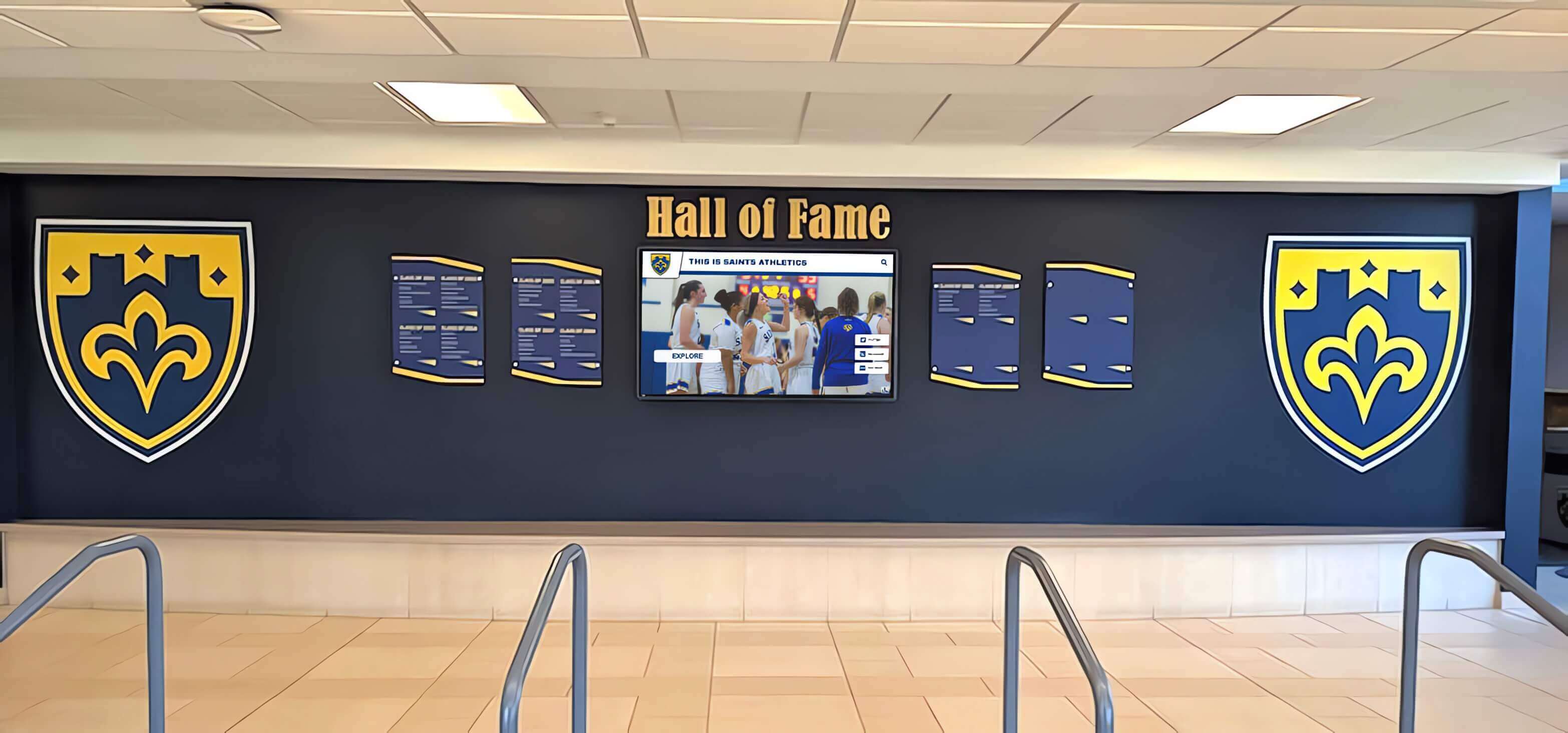
Professional recognition displays demonstrate institutional commitment to honoring achievement while preserving traditions for future generations
Phase 4: Sustainability and Growth
Establish Annual Update Cycles: Sustainable recognition requires predictable workflows integrated into annual homecoming planning. Standard timelines might include early fall collection of candidate information and photographs as court selection begins, homecoming week documentation through assigned photographers capturing ceremonies and events, immediate post-homecoming addition of current year honorees while details remain fresh, and quarterly historical content additions systematically building archival completeness.
Assign Clear Responsibilities: Long-term success requires designated accountability. Role assignments should identify primary recognition program coordinator with ultimate responsibility, backup administrators providing coverage during absences, content contributors from activities, athletics, and alumni offices, student managers if leveraging student involvement, and technical support contacts for platform or hardware issues.
Train Stakeholders: Comprehensive training prevents displays from deteriorating due to administrator uncertainty or turnover. Training programs should include initial intensive sessions for primary administrators (4-8 hours), quick-reference guides and video tutorials for occasional contributors, annual refresher training as school years begin, succession training when responsible parties change roles, and clear escalation procedures when questions or issues arise.
Monitor and Evaluate: Regular assessment demonstrates value while identifying improvement opportunities. Key metrics include engagement analytics showing daily interactions and popular content, user feedback through periodic surveys or comment capabilities, achievement of strategic goals like alumni engagement or recruitment support, cost per interaction calculations demonstrating value for investment, and comparison to peer institutions regarding recognition program comprehensiveness. Review findings at least annually, adjusting content strategies, promotional approaches, and feature priorities based on actual usage patterns and stakeholder feedback.
Best Practices for Homecoming Recognition Content
Creating engaging recognition requires attention to both information architecture and storytelling:
Writing Compelling Profiles
Lead with Achievement: Profile openings should immediately establish why individuals received recognition. Rather than beginning with “John Smith was a member of the Class of 2020,” start with “John Smith’s leadership of the school recycling initiative and captaincy of the state championship soccer team exemplified the excellence and service that earned him Homecoming King recognition in 2020.”
Show Rather Than Tell: Concrete examples create more powerful impressions than general statements. Instead of “Sarah was a leader,” write “Sarah organized the first student-run blood drive, recruiting 200 donors and establishing an annual tradition continuing today.”
Include Authentic Voices: Quotations from honorees themselves, their teachers, coaches, or peers add personal dimensions that bare facts cannot convey. “This recognition meant everything because it showed that our school community values more than just grades or touchdowns—it celebrates people who care about making our school better for everyone” provides insight no third-person description can match.
Connect to Current Students: Profiles should help current students see relevance to their own experiences. Noting that a 1985 honoree now works as a pediatrician, crediting her high school biology teacher with inspiring her career path, creates tangible connections showing how high school experiences shape futures.
Balance Consistency with Individuality: While all profiles should include core information categories, flexibility allows emphasis on what made each honoree unique. Athletic standouts might warrant more detail about sports achievements while artists might deserve extended treatment of creative contributions. Standardization shouldn’t become straitjackets preventing personality from emerging.
Curating Visual Content
Prioritize Quality Over Quantity: One excellent photograph makes far greater impact than multiple mediocre images. For historical eras where high-quality photos prove scarce, one clear image surpasses several grainy or poorly composed alternatives that undermine recognition dignity.
Provide Context Through Composition: When space permits, environmental portraits showing honorees in meaningful contexts—the athlete on their field, the artist with their work, the service leader at their volunteer site—tell richer stories than isolated headshots against plain backgrounds.
Ensure Consistency Across Eras: Visual presentation should maintain consistent dignity and quality whether showcasing 1960s black-and-white photographs or current digital images. Standardized framing, sizing, and layout treatments create professional coherence across decades despite varying source material quality.
Include Celebration Documentation: Photos and videos from coronation ceremonies, homecoming dances, parade participation, and other events document the experiences accompanying recognition rather than just final outcomes. These materials become treasured memories for honorees while providing engaging content for viewers exploring recognition displays.
Respect Copyright and Permissions: Schools must maintain clear documentation of rights to use all images and videos, obtaining necessary permissions from photographers, media outlets, or original creators. Systematic permission processes prevent future complications when individuals or organizations question usage rights.
Organizing for Discoverability
Create Multiple Navigation Paths: Users arrive at recognition displays with diverse purposes—some seeking specific individuals, others browsing chronologically, still others exploring by interest area. Effective systems accommodate various approaches through robust search, chronological timelines, category browsing, and featured content highlighting notable honorees or special anniversaries.
Implement Thoughtful Categorization: Beyond basic chronological organization, consider additional categories like decade groupings, distinguished achievement highlights (honorees who went on to notable careers), multi-generational families (multiple family members honored across years), or thematic collections (military service members, education professionals, healthcare workers) that reveal interesting patterns and connections.
Connect Related Content: Profile pages should link to related individuals—other court members from the same year, teammates or co-participants in activities, family members also honored. These connections enable organic exploration where users follow interest threads discovering content they wouldn’t have searched for explicitly.
Feature Seasonal Content: During homecoming week, featured content might highlight historical homecoming celebrations from the same date decades earlier, creating “on this day” connections. During reunion weekends, feature profiles from specific classes celebrating milestones. This dynamic highlighting keeps displays fresh despite relatively stable underlying content.
Addressing Common Concerns and Challenges
Schools implementing comprehensive homecoming recognition inevitably encounter predictable concerns requiring proactive responses:
Privacy and Permission Issues
Establish Clear Policies: Written policies should specify what information schools will include in recognition displays, who can request removal or modification, how long after graduation content remains publicly accessible, and procedures for handling deceased alumni or sensitive situations. Communicating policies clearly during implementation prevents later conflicts.
Implement Opt-Out Mechanisms: Some individuals or families prefer privacy over recognition. Simple opt-out processes during enrollment or upon request respect these preferences while enabling broad recognition for the vast majority who appreciate visibility.
Handle Historical Content Thoughtfully: For homecoming honorees from decades past, reasonable efforts to obtain permission demonstrate good faith, though complete certainty about consent from all individuals may prove impossible. Focus on respectful, dignified presentation that former honorees would likely appreciate, balanced against recognition’s educational and historical value to current communities.
Respond Quickly to Concerns: When individuals request modifications, corrections, or removals, prompt responses demonstrate respect and institutional responsiveness. Most situations resolve easily with minor edits, and fast action prevents escalation while building goodwill.
Maintaining Long-Term Engagement
Plan for Content Refresh: Even excellent content grows stale if never updated. Scheduled refresh cycles might add career updates for historical honorees, include new photos from reunion events, feature alumni interviews during milestone anniversaries, or create special collections around themes like public service, entrepreneurship, or educational leadership.
Leverage Student Involvement: Student journalism classes can research and write profiles. Photography students can capture professional-quality portraits. Video production students can create documentary segments. Technology students can assist with platform management. These curriculum connections develop student skills while distributing workload and building student ownership of recognition programs.
Connect to Annual Events: Integration with recurring events maintains visibility and relevance. Options include homecoming celebrations with special features and reunions, alumni weekend receptions near recognition displays, open houses showcasing programs to prospective families, graduation ceremonies honoring outgoing seniors who may become future honorees, and national honor society or other achievement celebration connections demonstrating comprehensive recognition.
Track and Celebrate Milestones: Program milestones create natural promotion opportunities—the 100th profile added, the 10th anniversary of displays, the first alumnus to achieve notable recognition after graduation. These celebrations generate renewed attention while demonstrating sustained commitment.
Budget Sustainability
Start Appropriately Scoped: Schools need not create comprehensive systems immediately. Beginning with current honorees and gradually building historical content distributes costs while enabling learning and refinement before major investments. Phased approaches prove more sustainable than ambitious initial projects overwhelming limited resources.
Identify Diverse Funding Sources: Rather than relying on single funding sources, successful programs tap multiple contributors. Individual memorial gifts honoring specific honorees, class reunion fundraising projects supporting their graduation year content, alumni association budget allocations, booster club contributions, and general school technology funds collectively provide sustainable support.
Demonstrate Return on Investment: Systematic measurement and communication of program benefits—alumni engagement, student recruitment impact, community relations, and school culture enhancement—justify continued investment. Recognition program analytics and metrics provide concrete evidence of value delivered.
Plan for Technical Lifecycle: Hardware eventually requires replacement and software platforms need periodic updates. Multi-year budget planning that acknowledges 5-7 year replacement cycles for displays and annual software costs prevents surprise expenses causing program deterioration when equipment ages.
The Future of Homecoming Recognition
Technology evolution continues creating new possibilities for celebrating tradition while meeting contemporary expectations:
Emerging Capabilities
Enhanced Interactivity: Advancing touch technology and interface design will enable ever more intuitive, engaging exploration. Natural language search allowing conversational queries (“show me homecoming courts from the 1990s who played basketball”), gesture-based navigation familiar from smartphone interfaces, and multi-user simultaneous interaction supporting group exploration will enhance accessibility and engagement.
Artificial Intelligence Integration: AI-powered features may eventually include automatic photo organization and facial recognition connecting individuals across different images, intelligent content recommendations based on viewing patterns, automated profile generation from basic data inputs, natural language processing of historical documents, and sophisticated search understanding contextual intent rather than requiring precise terminology.
Virtual and Augmented Reality: While still emerging, VR and AR technologies could eventually enable virtual “walks” through historical homecoming celebrations, augmented reality overlays bringing historical photos to life when viewing physical locations, and immersive storytelling experiences that transport viewers into past eras.
Social Integration: Deeper integration with social platforms might allow alumni to comment on profiles, tag themselves or friends in photos, share memories and stories directly within recognition systems, and connect with classmates for reunion planning or ongoing relationships.
Preparing for Evolution
Maintain Data Portability: Recognition content should remain accessible in standard formats independent of specific display technologies or platforms. This ensures investments in content creation remain protected even as technologies inevitably change. High-resolution source files, standardized metadata, and platform-independent content storage provide insurance against technological obsolescence.
Build Flexible Systems: Rather than rigid, custom-built solutions tightly coupled to specific technologies, effective recognition systems maintain flexibility allowing feature additions, platform migrations, or integration with emerging capabilities without complete rebuilds.
Stay Connected to School Community Needs: Regular feedback from students, alumni, and stakeholders reveals how recognition programs should evolve. Schools should resist simply chasing technological novelty, instead focusing on capabilities that genuinely enhance recognition effectiveness and community engagement.
Conclusion: Honoring Tradition, Inspiring Excellence
Homecoming king and queen recognition represents far more than acknowledging popularity or crowning royalty during halftime ceremonies. These honors celebrate students who embody school values—leadership, service, achievement, and character—while representing institutions to broader communities. Creating recognition programs worthy of these students while preserving traditions for future generations requires moving beyond static plaques to comprehensive digital solutions that tell complete stories, engage community members actively, and remain accessible year-round rather than just during homecoming week.
Modern digital recognition displays transform how schools honor homecoming royalty, enabling rich multimedia profiles, searchable historical archives, and interactive exploration impossible through traditional methods. These platforms preserve institutional memory while inspiring current students through tangible examples of excellence and achievement their schools value. They strengthen alumni connections by maintaining accessible recognition regardless of geographic distance or time since graduation. They demonstrate to prospective families that schools take tradition seriously while embracing contemporary technology.
Most importantly, comprehensive homecoming recognition programs validate the efforts of students who dedicate themselves to making their schools better. When students understand that excellence receives more than fleeting attention—that their achievements will be preserved, celebrated, and shared with future generations—they develop deeper commitments to service, leadership, and excellence. They understand themselves as part of continuing traditions rather than isolated individuals, and they gain motivation to leave their schools better than they found them.
Whether you’re launching your school’s first systematic homecoming recognition program, revitalizing displays that have fallen into neglect, or enhancing already strong traditions, the principles explored throughout this guide provide frameworks for creating meaningful, engaging recognition that honors both individual achievement and institutional tradition.
Ready to Transform Your Homecoming Recognition?
Discover how Rocket Alumni Solutions can help you create comprehensive digital recognition displays that honor homecoming royalty, preserve school traditions, and engage your entire community through interactive platforms accessible anywhere, anytime.
Schedule Your Free ConsultationYour homecoming traditions deserve recognition programs as special as the students you honor. By leveraging modern technology thoughtfully—maintaining focus on authentic celebration rather than flashy features—schools create lasting tributes that strengthen community, preserve history, and inspire future generations to pursue the excellence and leadership that homecoming recognition celebrates.
This homecoming season, consider how your school recognizes its royalty. Will this year’s king and queen receive the same fading yearbook photos and forgotten plaques as their predecessors, or will you implement recognition that tells their complete stories, preserves their achievements permanently, and inspires countless students following in their footsteps? The choice you make determines whether homecoming recognition remains bureaucratic obligation or becomes authentic celebration of the values, traditions, and excellence that define exceptional school communities.































