Organizations that effectively celebrate their history and recognize past achievements consistently outperform those that don’t when it comes to fundraising. The connection isn’t coincidental—honoring the past creates emotional connections, demonstrates stewardship, and builds the trust necessary for donors to invest in your future.
Research shows that institutions with strong recognition programs experience donor retention rates 30-40% higher than those without. When people see their contributions acknowledged and their legacies preserved, they’re not just more likely to give again—they give more generously.
This comprehensive guide explores why honoring the past is one of your most powerful fundraising tools, and how modern recognition strategies can transform your development efforts while strengthening community bonds across generations.

The Psychology Behind Recognition and Giving
Understanding why recognition drives giving requires examining the fundamental motivations behind philanthropy. Donors don’t just give to solve problems—they give to be part of something meaningful, to create lasting impact, and to build legacies that outlive them.
The Four Pillars of Recognition-Driven Giving
1. Social Proof and Validation
When donors see others recognized for their contributions, it validates giving as a valued behavior within your community. Recognition creates social proof that philanthropy matters and is celebrated. This principle, studied extensively in behavioral economics, shows that people are significantly more likely to engage in behaviors they see others being positively acknowledged for.
Digital donor walls provide visible evidence of a culture of giving, encouraging others to join this recognized community of supporters.
2. Legacy and Immortality
Ernest Becker’s research on human motivation reveals that people have a fundamental need to create something lasting beyond their lifetimes. Recognition programs tap into this powerful drive by offering donors tangible evidence that their contributions will be remembered.
When you honor past donors and achievements, you’re not just acknowledging what they did—you’re demonstrating your organization’s commitment to preserving legacies. This assurance makes future donors confident that their own contributions will be similarly honored.
3. Impact Visibility
Donors need to see that their contributions create real change. Recognition programs that connect past giving to current outcomes provide this crucial visibility. When you showcase how previous generations’ philanthropy built the programs, facilities, or scholarships that serve your mission today, you create a compelling narrative about giving’s long-term impact.
4. Community Belonging
Recognition creates a sense of belonging to something larger than oneself. When you honor alumni, past donors, and historical achievements, you reinforce that giving isn’t a transaction—it’s an entry into a community of people who share values and commit to a common cause.

The Recognition-Giving Cycle
Effective recognition creates a self-reinforcing cycle:
- Past contributions are celebrated through visible recognition
- Current donors see this commitment to honoring support
- Trust builds in the organization’s stewardship
- Giving increases from both recognized and new donors
- New recognition celebrates these contributions
- The cycle continues and strengthens
Organizations that understand and leverage this cycle build sustainable fundraising programs that grow stronger over time.

How Historical Recognition Drives Current Fundraising
Many organizations treat history as separate from fundraising, maintaining archives and displays as purely commemorative. This represents a missed opportunity. Strategic historical recognition directly supports development efforts in multiple ways.
Demonstrating Institutional Stewardship
When prospects see how carefully you’ve preserved and honored past contributions, they gain confidence that their own gifts will be similarly valued and stewarded. This is particularly crucial for major gifts, planned giving, and endowment contributions where donors are making long-term commitments.
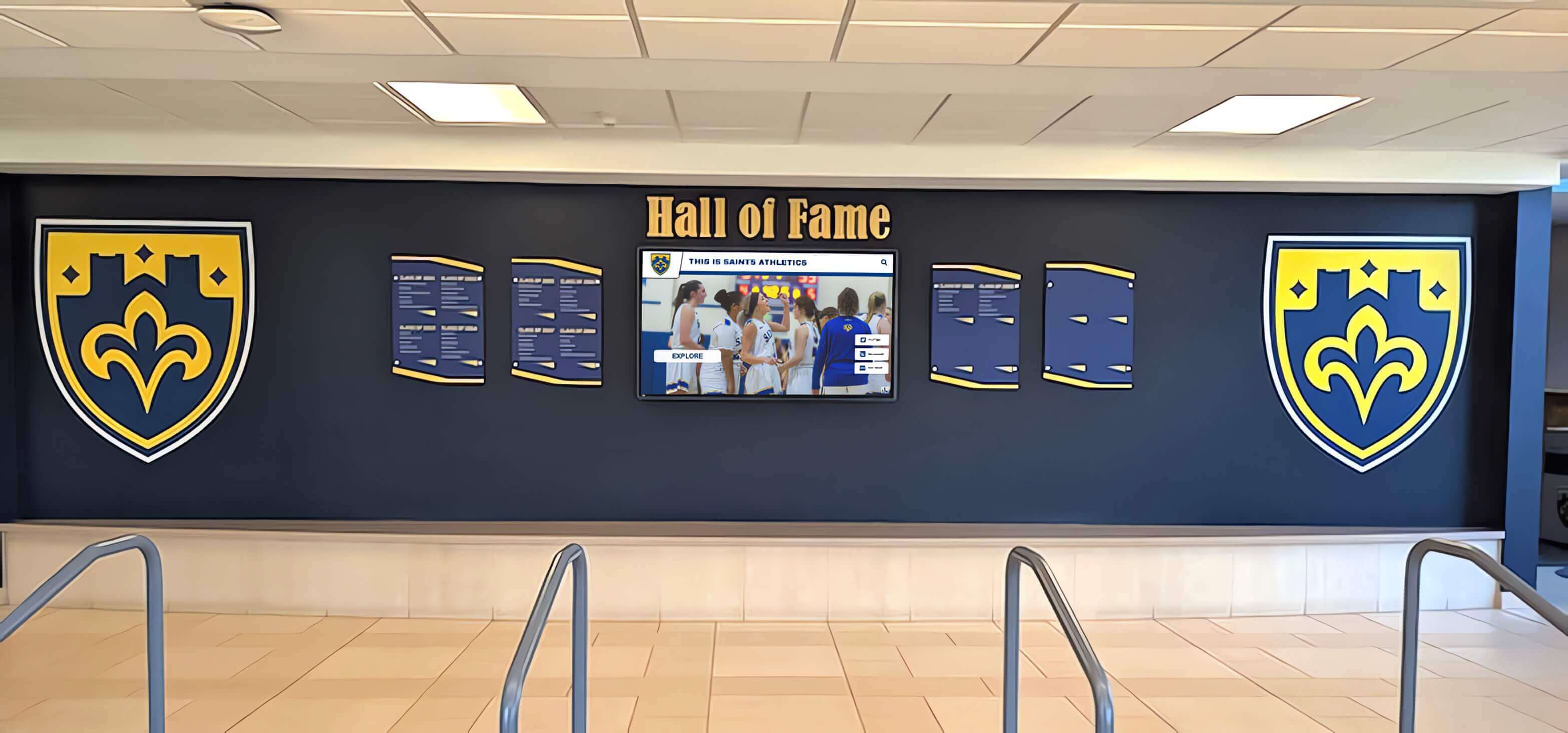
Touchscreen halls of fame showcase your institution’s commitment to honoring contributors across decades, providing tangible evidence of responsible stewardship that extends far beyond financial reporting.
Creating Multi-Generational Connection
Organizations that effectively tell their stories across generations create emotional resonance with diverse donor segments:
- Older donors see their own experiences and contemporaries honored, reinforcing their connection to the institution
- Mid-career alumni discover role models and predecessors who paved the way for their own success
- Young professionals understand they’re part of a continuous legacy of achievement and contribution
- Parents and families envision their own children being recognized in similar ways in the future
This multi-generational appeal broadens your donor base and creates giving pathways for supporters at different life stages.

Providing Natural Solicitation Opportunities
Recognition programs create organic fundraising moments:
Anniversary Campaigns: Milestone years (50th, 100th anniversaries) provide natural opportunities to celebrate history while soliciting support. When you honor past achievements, you can frame current needs as continuing that legacy.
Recognition Gaps: When you review historical recognition, you often discover notable individuals or achievements that weren’t properly honored. Campaigns to address these gaps engage family members, contemporaries, and those who value the same accomplishments.
Enhancement Opportunities: Existing recognition can be upgraded or expanded, creating giving opportunities for those who want to honor specific individuals or eras more comprehensively.
Identifying Prospective Donors
Historical recognition helps identify prospects in several ways:
- Family connections: Relatives of honored individuals often have both means and motivation to support organizations that valued their family members
- Peer networks: Contemporaries of recognized individuals may have similar capacity and connection to your mission
- Shared values: People who achieved similar accomplishments may identify with recognized individuals and want to support the same causes
- Industry connections: Professionals in fields where your alumni achieved success may want to support organizations that produced such leaders
Digital recognition displays with search and filtering capabilities make it easy to identify these connection points and research prospects systematically.
Modern Recognition Strategies That Maximize Fundraising Impact
While the principles connecting recognition to fundraising are timeless, modern technology offers unprecedented opportunities to honor the past in ways that actively support current development efforts.
Interactive Digital Recognition Platforms
Traditional plaques and static displays have significant limitations for fundraising purposes:
- They can’t be updated without physical renovation and expense
- They have limited space, forcing difficult decisions about who to recognize
- They provide minimal information about recognized individuals and their impact
- They can’t connect viewers to giving opportunities
- They offer no analytics about engagement or interest
Solutions like Rocket Alumni Solutions transform recognition into dynamic, fundraising-integrated experiences:
Fundraising-Integrated Recognition Features:
- Unlimited Recognition Capacity: Honor all giving levels without space constraints, making every donor feel valued
- Rich Storytelling: Share detailed impact narratives showing how past giving created current success
- Giving Integration: Connect recognition directly to donation opportunities with embedded calls-to-action
- Searchable Databases: Help visitors find connections to recognized individuals, creating personal relevance
- Regular Updates: Keep content fresh and relevant, giving people reasons to return and re-engage
- Analytics: Track which content generates interest, informing prospect research and campaign strategies
- Web Accessibility: Extend recognition beyond physical visitors to reach global alumni and donor networks

Campaign-Specific Recognition Initiatives
Structure recognition programs to support specific fundraising campaigns:
Capital Campaign Recognition Tiers: Create giving levels that correspond to recognition opportunities:
- Founding Legacy Society ($100,000+): Featured profiles with video interviews and comprehensive impact stories
- Heritage Circle ($50,000-$99,999): Dedicated recognition section with photos and biographical information
- Tradition Keepers ($25,000-$49,999): Named recognition in specific content categories
- Guardian Society ($10,000-$24,999): Inclusion in donor honor roll with graduation year and connection
- Supporter Recognition ($1,000-$9,999): Names listed in appreciation directory
Each tier provides clear value while honoring contributions appropriately. Digital scholarship recognition demonstrates how tiered recognition can be implemented effectively.

Annual Fund Integration: Connect recurring giving to ongoing recognition:
- Consecutive years of giving highlighted with special recognition
- Cumulative giving totals tracked and celebrated at milestone levels
- Monthly giving programs featured with dedicated recognition sections
- Year-over-year increases acknowledged publicly
This approach makes annual giving feel significant rather than routine, improving retention and upgrade rates.
Planned Giving Recognition: Create special legacy societies for those including your organization in estate plans:
- Dedicated recognition space for legacy society members
- Flexible recognition options respecting privacy preferences
- Family interviews and stories documenting their motivation for legacy gifts
- Connection of legacy gifts to specific impact areas or endowments
Virtual hall of fame platforms can create special sections for different recognition societies, making each feel distinctive and valued.
Storytelling That Connects Past to Future
The most effective recognition for fundraising purposes doesn’t just list names and dates—it tells compelling stories that connect historical contributions to current needs and opportunities.
Impact Narrative Structure:
- Historical Context: What was the need or challenge when the original contribution was made?
- The Gift: What did donors contribute and what motivated their generosity?
- Immediate Impact: What changed directly because of that support?
- Lasting Legacy: How does that original gift continue to create value today?
- Current Opportunity: What similar challenges exist now that today’s donors can address?
This narrative structure helps current prospects see themselves in the story of past donors, understanding how their contributions will similarly create lasting impact.
Multi-Media Storytelling: Modern recognition platforms support rich storytelling through:
- Video interviews with donors about their motivation and satisfaction
- Photo galleries showing programs and facilities their gifts created
- Timeline visualizations connecting original gifts to current outcomes
- Interactive maps showing geographic impact of contributions
- Data visualizations demonstrating measurable results from past giving
These elements create emotional engagement that statistics and text alone cannot achieve. Creating video content for digital hall of fame provides guidance on developing compelling multimedia recognition.

Specific Recognition Programs That Drive Fundraising Results
Beyond general principles, certain recognition program structures have proven particularly effective at generating philanthropic support.
Named Recognition Opportunities
Offering donors the chance to name spaces, programs, scholarships, or positions in honor of themselves or others creates powerful giving motivation:
Physical Naming Rights:
- Buildings, wings, and major facilities
- Classrooms, labs, and specialized spaces
- Athletic fields, performance venues, and outdoor spaces
- Equipment, vehicles, and major assets
Program Naming Rights:
- Endowed scholarships and fellowships
- Academic chairs and professorships
- Annual programs and signature events
- Research initiatives and special projects
Digital Recognition Naming:
- Recognition display naming rights (“The Smith Family Hall of Fame”)
- Content category sponsorship (“Athletics Recognition presented by…”)
- Decade or era sponsorship (“1990s Excellence sponsored by…”)
- Feature naming (“Search powered by the Jones Family Foundation”)
The key is creating enough naming opportunities at various price points that donors across the giving spectrum can participate. Digital hall of fame planning budget guide helps organizations structure recognition opportunities financially.
Reunion and Milestone Giving Programs
Class reunions and personal milestones create natural recognition and giving opportunities:
Reunion Giving:
- Class gift campaigns tied to reunion years
- Recognition of participation rates and total class giving
- Competition between reunion classes for highest participation
- Permanent recognition of milestone reunion classes (25th, 50th)
Personal Milestones:
- Birthday giving campaigns (50th, 60th birthdays)
- Anniversary gifts marking significant life events
- Memorial giving honoring deceased family members or friends
- Recognition on behalf of children, grandchildren, mentors
These programs work because they connect giving to natural moments of reflection when people are already thinking about legacy and life accomplishments. Homecoming awards touchscreen display shows how special event recognition can be integrated into broader fundraising strategies.

Volunteer and Service Recognition
Recognizing non-financial contributions builds community goodwill and often leads to future philanthropic support:
Volunteer Recognition Categories:
- Board service and leadership positions
- Committee participation and project leadership
- Event volunteers and program supporters
- Mentorship and career guidance providers
- Community ambassadors and advocates
Research consistently shows that volunteers become donors and donors become volunteers—the two forms of support are complementary. Recognition that celebrates both creates pathways for deeper engagement.
Digital volunteer recognition platforms make it easy to honor diverse forms of contribution, expanding your engaged supporter base.
Historical Achievement Recognition
Celebrating institutional history and notable achievements creates pride that translates to philanthropic support:
Recognition Focus Areas:
- Distinguished alumni who achieved career success or notable impact
- Athletic records and championship teams
- Academic achievements and scholarly recognition
- Artistic accomplishments and creative excellence
- Innovation and entrepreneurship success stories
- Community service and humanitarian contributions
This recognition serves multiple fundraising purposes:
- Creates emotional connection to institutional success that people want to support
- Identifies prospects among recognized individuals and their networks
- Demonstrates outcomes showing what institutional support makes possible
- Builds pride among alumni and community members that motivates giving
Hall of fame wall design guide provides strategies for creating recognition displays that maximize emotional impact and connection.
Measuring the Fundraising Impact of Recognition Programs
To justify investment in recognition programs and optimize their fundraising effectiveness, organizations need clear metrics connecting recognition to giving outcomes.
Direct Fundraising Metrics
Recognition-Attributed Giving:
- Donations directly tied to recognition programs (named opportunities)
- Gifts made in response to recognition events or launches
- Increases in giving following personal recognition
- Campaign success rates when recognition is featured prominently
Donor Retention Analysis:
- Compare retention rates between recognized and non-recognized donors
- Track retention improvement following enhanced recognition implementation
- Measure repeat gift frequency in relation to recognition experiences
- Analyze multi-year retention patterns for different recognition tiers
Gift Upgrading:
- Track donors who increase giving levels following recognition
- Monitor movement into higher recognition societies
- Measure average time between upgrades for recognized vs. non-recognized donors
- Analyze correlation between recognition quality and gift size increases
Engagement Indicators
Recognition Content Interaction:
- Time spent with digital recognition displays (in-person and online)
- Search queries and content views in recognition databases
- Social media sharing of recognition content
- Comments, reactions, and engagement with recognition communications
Event Attendance:
- Participation in recognition events and unveiling ceremonies
- Reunion attendance rates when recognition is featured
- Special program attendance among recognized individuals and their networks
Volunteer Recruitment:
- Volunteer applications following volunteer recognition programs
- Board and committee interest among recognized community members
- Mentorship program participation by recognized alumni
These engagement indicators often predict future giving, making them valuable leading metrics for development officers.
Relationship Quality Measures
Donor Satisfaction:
- Survey responses about recognition program satisfaction
- Net Promoter Scores related to recognition experiences
- Qualitative feedback about feeling valued and appreciated
- Complaints or concerns about recognition (or lack thereof)
Connection Strength:
- Self-reported feelings of connection to the organization
- Likelihood to recommend the organization to others
- Pride in association with the institution
- Intention to include organization in estate plans
Measuring ROI digital hall of fame provides detailed frameworks for quantifying recognition program value.
Implementation: Building Recognition Programs That Drive Giving
Understanding principles is valuable, but implementation determines results. Here’s a practical framework for creating recognition programs that actively support fundraising.
Phase 1: Assessment and Strategy (Weeks 1-4)
Current State Analysis:
- Audit existing recognition programs and assets
- Review donor feedback about current recognition practices
- Analyze giving patterns and retention rates
- Identify recognition gaps and missed opportunities
- Benchmark against similar organizations
Stakeholder Input:
- Interview development staff about recognition and fundraising connections
- Survey donors about recognition preferences and satisfaction
- Consult board members about recognition priorities
- Engage alumni and community members in focus groups
Strategic Planning:
- Define recognition program goals tied to specific fundraising objectives
- Establish budget and resource requirements
- Create implementation timeline
- Identify key performance indicators
- Develop measurement and evaluation plan
Phase 2: Technology and Platform Selection (Weeks 5-8)
Requirements Definition:
- Determine technical requirements based on strategy
- Identify must-have vs. nice-to-have features
- Assess integration needs with existing systems (donor database, website)
- Consider staff capacity for ongoing content management
Solution Evaluation:
- Research available platforms and technologies
- Request demonstrations from potential vendors
- Check references from similar organizations
- Compare costs against budget and expected ROI
Digital recognition solutions like Rocket Alumni Solutions offer comprehensive platforms specifically designed to integrate recognition with fundraising, including features like donation links, prospect tracking, and campaign integration.
Platform Selection:
- Make vendor selection based on strategic fit
- Negotiate contract terms and implementation support
- Establish project timeline and milestones
- Assign internal responsibilities and project leadership


Phase 3: Content Development (Weeks 9-16)
Content Strategy:
- Define recognition categories and inclusion criteria
- Establish content standards and templates
- Create style guide for consistency
- Plan content development workflow and responsibilities
Content Gathering:
- Collect information about individuals and achievements to be recognized
- Digitize historical photos, documents, and materials
- Conduct interviews for video content and testimonials
- Research background information and impact stories
Content Creation:
- Write profiles, biographies, and impact narratives
- Edit and produce video content
- Design graphics and visual elements
- Build databases and organize content hierarchies
Digital asset management for schools provides systems and workflows for efficiently managing recognition content.
Phase 4: Integration and Launch (Weeks 17-24)
Technical Implementation:
- Install physical displays if applicable
- Configure software platforms and content management systems
- Integrate with existing donor databases and websites
- Test all functionality thoroughly
Training:
- Train development staff on recognition program features
- Prepare content administrators for ongoing management
- Educate frontline staff on how to discuss recognition opportunities
- Create documentation and reference materials
Launch Campaign:
- Plan recognition program unveiling event
- Develop communication strategy for different stakeholder groups
- Create promotional materials highlighting recognition opportunities
- Coordinate media coverage and publicity
Fundraising Integration:
- Connect recognition tiers to active fundraising campaigns
- Train development officers to present recognition opportunities
- Create proposals and collateral materials featuring recognition
- Establish processes for fulfilling recognition commitments
Phase 5: Optimization and Growth (Ongoing)
Performance Monitoring:
- Track metrics established in strategic planning phase
- Gather feedback from donors and stakeholders
- Analyze engagement analytics and identify trends
- Monitor fundraising outcomes tied to recognition
Continuous Improvement:
- Refine content based on what generates most engagement
- Adjust recognition tiers and opportunities based on results
- Enhance storytelling based on donor feedback
- Update technology features as platforms evolve
Program Expansion:
- Add new recognition categories as opportunities arise
- Develop additional recognition-driven fundraising campaigns
- Expand to additional locations or platforms
- Create special programs for specific donor segments
Content strategies digital recognition offers ongoing guidance for keeping recognition programs fresh and engaging.
Overcoming Common Challenges
Even well-planned recognition programs encounter obstacles. Anticipating and addressing these challenges ensures successful implementation.
Challenge: Limited Budget for Recognition Technology
Solutions:
- Start with phased implementation focusing on highest-priority recognition
- Leverage recognition program itself as fundraising opportunity (soliciting donors to fund the recognition system)
- Explore leasing or payment plan options to spread costs
- Begin with web-based recognition before investing in physical displays
- Partner with other departments to share costs (use displays for multiple purposes)
Free wall of fame touchscreen strategies can help organizations with very limited budgets begin recognition programs.
Challenge: Incomplete Historical Information
Solutions:
- Crowdsource information from alumni and community members
- Use recognition program launch as opportunity to gather missing information
- Start with what you have and commit to ongoing enhancement
- Create submission process for alumni to update their own information
- Partner with historical societies or archivists for research assistance
Challenge: Donor Privacy Concerns
Solutions:
- Offer recognition opt-in/opt-out options
- Provide different levels of recognition detail based on donor preferences
- Create anonymous giving recognition categories
- Allow donors to designate recognition in honor/memory of others instead of themselves
- Clearly communicate privacy policies and options
Challenge: Recognition Backlog and Administrative Burden
Solutions:
- Prioritize recognition for major donors and recent contributors first
- Create batch processes for adding multiple individuals efficiently
- Recruit volunteers to assist with content development
- Simplify recognition tiers to reduce administrative complexity
- Use automation and database integration to reduce manual entry
Benefits digital asset management school districts discusses systems that reduce administrative burden of recognition programs.
Challenge: Measuring Direct ROI
Solutions:
- Establish baseline metrics before implementation for valid comparison
- Use control groups (recognized vs. non-recognized donors with similar profiles)
- Track multiple indicators rather than focusing solely on immediate donations
- Consider long-term retention value rather than just immediate gifts
- Include qualitative measures (satisfaction, engagement) alongside quantitative metrics
Case Studies: Recognition Programs That Transformed Fundraising
Examining how real organizations have successfully leveraged recognition to drive fundraising provides practical insights and inspiration.
Case Study 1: Regional University - Multi-Generational Giving Campaign
Challenge: University struggled to engage mid-career alumni (25-40 years post-graduation) who had low giving participation rates despite successful careers.
Recognition Strategy: Implemented comprehensive digital hall of fame featuring distinguished alumni across all eras, with particular focus on 1980s-2000s graduates who had achieved career success but weren’t engaged.
Fundraising Integration:
- Created “Next Generation Legacy Society” for alumni establishing recurring gifts
- Offered opportunity to honor mentors and influential professors through named scholarships
- Structured reunion giving campaigns around recognition in decade-specific sections
- Connected recognition to career networking opportunities
Results:
- 47% increase in mid-career alumni participation within 18 months
- Average gifts from this segment increased 35%
- 23 new planned giving commitments from alumni wanting legacy recognition
- $2.8M raised in campaign specifically tied to recognition opportunities
Key Success Factors: Recognition featured real career achievements and connected giving to honoring people who had influenced these alumni during their time at the university. The networking dimension added tangible value beyond pure recognition.
Case Study 2: Independent School - Historical Archive Digitization Campaign
Challenge: School had extensive historical materials in storage with no effective way to share this heritage with current families and alumni.
Recognition Strategy: Launched campaign to fund digitization of historical archives and creation of interactive historical timeline with comprehensive recognition of key figures throughout school history.
Fundraising Integration:
- Created giving levels corresponding to decades of school history
- Offered naming opportunities for timeline sections and historical content categories
- Engaged reunion classes in “adopting” specific eras to sponsor their digitization
- Structured recognition to include both historical figures and campaign donors
Results:
- Raised $185,000 toward $150,000 goal (exceeded target by 23%)
- 156 unique donors including many first-time contributors
- Reunion giving increased 62% compared to previous year
- Generated significant press coverage that attracted new family enrollment
Key Success Factors: Campaign appealed to nostalgia and school pride while creating tangible preservation outcome. Multiple entry-level giving opportunities enabled broad participation.

Case Study 3: Healthcare Foundation - Legacy Society Enhancement
Challenge: Foundation had traditional planned giving society but struggled to recruit new members and engage existing ones beyond annual letters.
Recognition Strategy: Created dedicated digital recognition experience for legacy society members featuring their stories, motivations for planned gifts, and connections to specific hospital programs.
Fundraising Integration:
- Offered video interview opportunities with professional production quality
- Connected legacy society members with specific departments they wanted to support
- Created annual legacy society gathering at hospital featuring recognition unveiling
- Developed marketing materials using recognition content to promote planned giving
Results:
- Legacy society membership grew from 47 to 94 members in two years
- Documented planned gift value increased from $4.2M to $11.7M
- Three realized bequests referenced recognition program in donor correspondence
- Legacy society members made $430,000 in additional current gifts
Key Success Factors: Recognition program made abstract planned giving feel concrete and meaningful. Storytelling around legacy society members inspired others to join this recognized community.
Conclusion: Making Recognition Central to Development Strategy
The most successful fundraising organizations don’t treat recognition as an afterthought or purely ceremonial function—they position it as a central element of comprehensive development strategy. When done well, recognition programs:
- Generate immediate fundraising through named opportunities and campaign integration
- Improve donor retention by demonstrating stewardship and appreciation
- Identify prospects through historical connections and family networks
- Build institutional pride that motivates philanthropic support
- Create content for marketing and communication programs
- Strengthen community across generations and stakeholder groups
The organizations that excel at connecting recognition to fundraising share several characteristics:
- Strategic Integration: Recognition is planned alongside fundraising campaigns, not added afterward
- Modern Technology: Digital platforms provide scale, flexibility, and engagement that traditional methods cannot match
- Compelling Storytelling: Recognition goes beyond names and dates to share meaningful impact narratives
- Multiple Entry Points: Recognition opportunities exist for donors at all levels and forms of contribution
- Continuous Evolution: Recognition programs are regularly enhanced and updated to maintain relevance
As you develop or enhance your recognition programs, remember that honoring the past isn’t about dwelling on history—it’s about demonstrating the lasting value of contributions, the continuity of your mission, and the impact of generosity across time. When prospects see this commitment, they gain confidence that their own gifts will be similarly valued, stewarded, and remembered.
Digital recognition solutions like those offered by Rocket Alumni Solutions provide the platforms and tools to implement recognition strategies that actively support fundraising while honoring your community’s legacy appropriately.
Transform Recognition Into Your Most Powerful Fundraising Tool
Discover how integrated recognition platforms can strengthen donor relationships while driving philanthropic support for your mission.
Request Your Recognition Strategy ConsultationThe question isn’t whether to invest in recognition programs—it’s whether you can afford not to. In an increasingly competitive fundraising environment, organizations that honor the past most effectively will be those best positioned to fund their futures.




















