In an era where alumni giving rates have steadily declined from 20% in the 1980s to approximately 7.5% today, educational institutions face unprecedented challenges in maintaining philanthropic support. Yet some schools are bucking this trend through strategic use of technology that transforms how they recognize, engage, and inspire alumni to give back.
The Recognition-Giving Connection
Research consistently demonstrates that alumni who feel recognized and valued by their alma mater give more frequently and generously. Interactive digital displays represent one of the most powerful tools institutions can deploy to create this emotional connection—translating recognition into sustained philanthropic support that fuels institutional mission for decades to come.
According to recent alumni engagement research, 75% of alumni want more transparency on how their donations are used, with 48% stating they would increase giving if they had clearer insights into contribution impact. Digital recognition displays address this need while simultaneously celebrating donor generosity in ways that inspire others to join the philanthropic community.
This comprehensive guide explores how modern digital displays inspire alumni to give back, examining the psychological principles that drive donor behavior, proven implementation strategies, and real-world results that demonstrate measurable increases in both participation rates and gift sizes.
Understanding the Psychology of Alumni Giving
Before examining how digital displays influence giving behavior, it’s essential to understand what motivates alumni philanthropy in the first place.
The Four Pillars of Donor Motivation
Alumni giving decisions rest on four psychological foundations that effective recognition programs address:
Emotional Connection to Institution: The strength of alumni attachment to their alma mater directly predicts giving likelihood. Digital displays strengthen this connection by keeping the institution visible and relevant in alumni lives, showcasing institutional impact and evolution, celebrating shared experiences and community identity, and creating ongoing touchpoints that maintain relationship warmth.
When alumni feel emotionally connected—when they experience genuine affection for their institution—giving feels less like obligation and more like participation in something meaningful that shaped their lives.
Recognition and Social Validation: Human psychology reveals that people need to feel seen and appreciated for their contributions. Digital recognition solutions provide this validation through visible public acknowledgment, permanent documentation of generosity, and social proof that giving is valued and respected within the community.
Recognition doesn’t need to be elaborate to be effective. Simple, sincere acknowledgment of contributions creates positive reinforcement that encourages continued support.
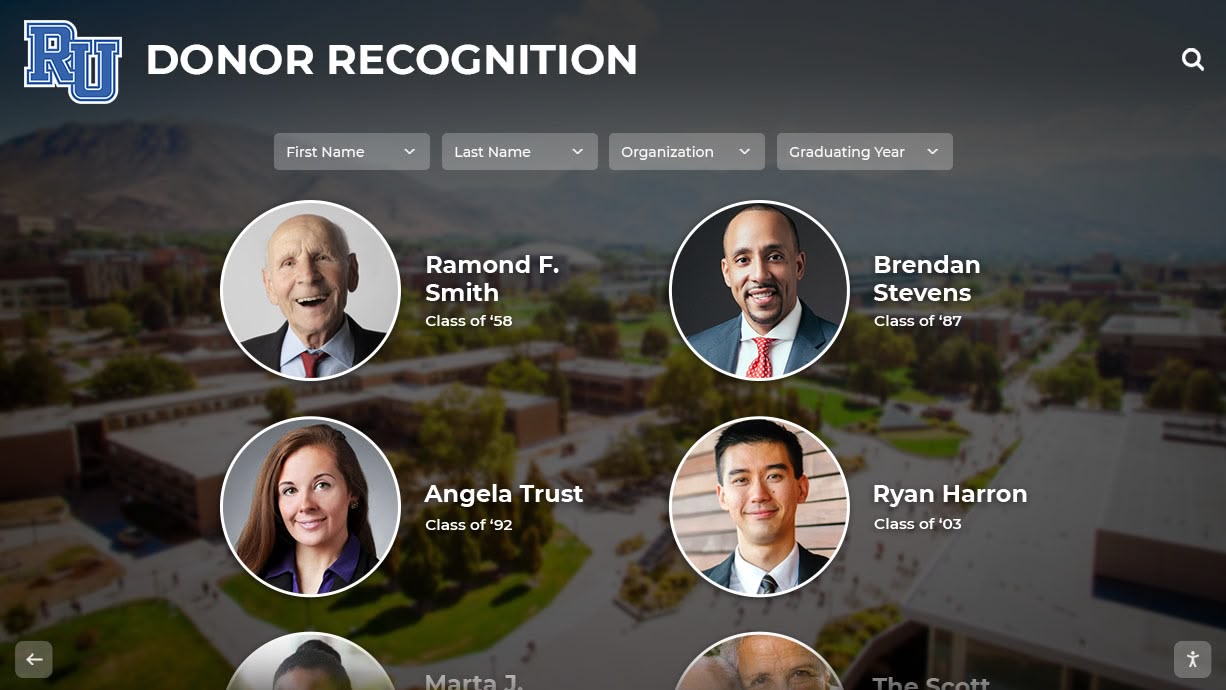
Impact Visibility and Transparency: Modern donors—particularly younger alumni—expect to understand exactly how their gifts create change. They want to see concrete evidence that donations make differences rather than disappearing into opaque institutional budgets.
Digital displays excel at demonstrating impact through before-and-after project documentation, beneficiary testimonials and student stories, real-time progress toward campaign goals, and detailed breakdowns showing donation allocation. This transparency builds trust while making abstract giving concepts tangibly real.
Legacy and Lasting Contribution: Many donors are motivated by the desire to create lasting impact that extends beyond their own lifetimes. They want to feel that their support contributes to something permanent and meaningful that future generations will benefit from.
Permanent digital recognition addresses this need by ensuring contributions are documented and remembered long-term, showing how gifts become part of institutional legacy, and connecting individual donations to multigenerational impact stories.
The Declining Giving Paradox
Despite these motivations, alumni giving has declined precipitously over recent decades. Several factors contribute to this troubling trend:
According to 2024 alumni engagement research, 74% of alumni state that their institution’s digital platforms (websites, apps, portals) are outdated or difficult to navigate, leading to poor engagement rates. This digital disconnect creates barriers to giving even among well-intentioned alumni.
Additionally, young alumni giving rates have dropped 18% over the past decade, with many citing lack of meaningful engagement or perceived value beyond constant solicitation requests. When communication consists primarily of asks rather than genuine relationship building, alumni understandably disconnect.
Yet the same research reveals encouraging news: 60% of alumni say they are likely to donate in the future, and 93% of alumni donors engage with their institution through an alumni platform. This suggests that effective digital engagement strategies—including recognition displays that make giving visible and celebrated—can reverse negative trends and capture substantial latent philanthropic capacity.
How Digital Displays Transform Alumni Giving
Strategic digital recognition creates multiple pathways through which displays inspire increased philanthropic support.
Creating Visible Donor Communities
One of the most powerful ways digital displays inspire giving is by making donor communities visible and aspirational. When alumni see others from their class, region, or professional field supporting the institution, social proof becomes a potent motivator.
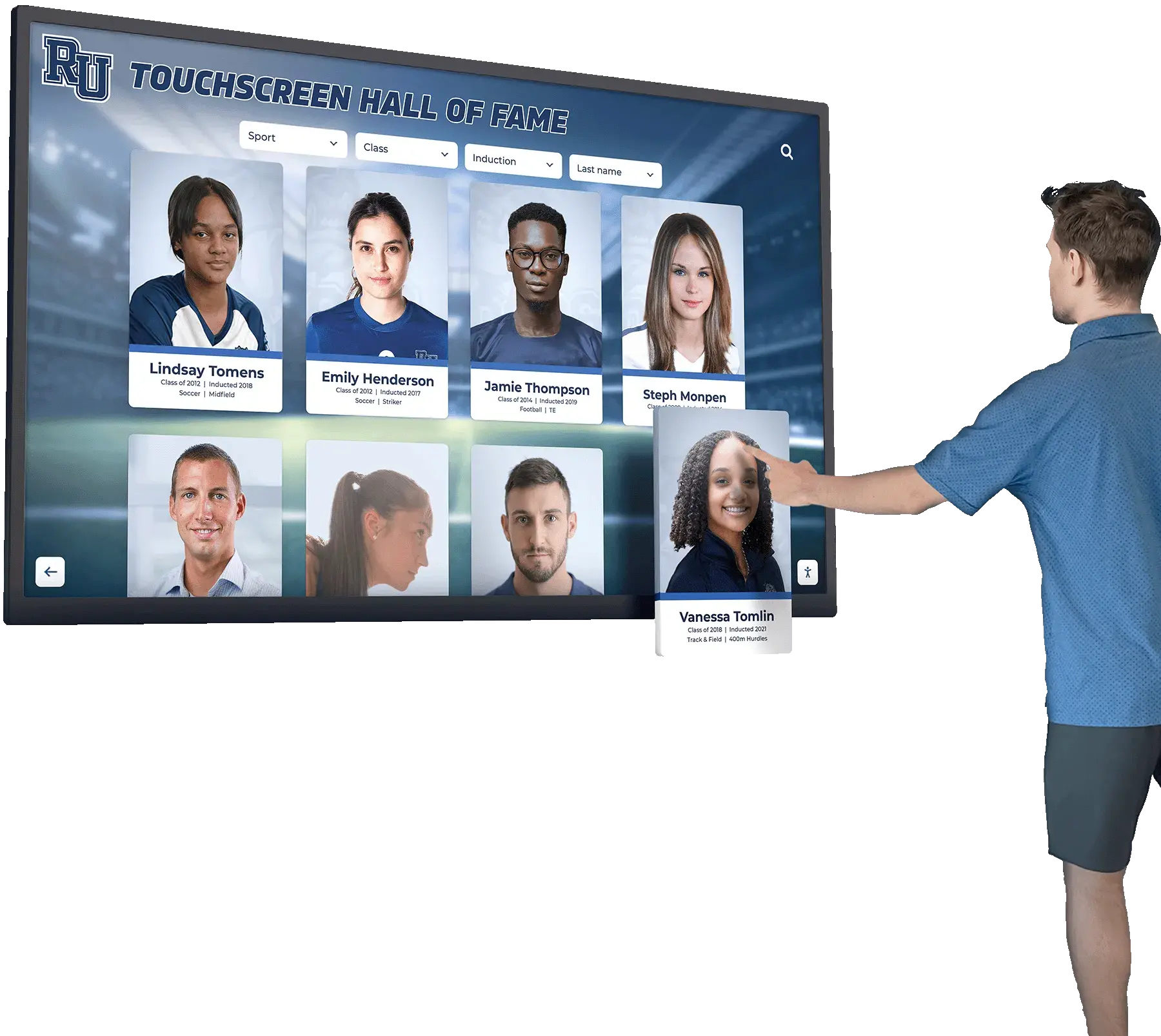
The Power of Peer Influence: Interactive touchscreen displays showcase donor communities in engaging ways that static plaques cannot match. Visitors can search by graduation year to see which classmates have given, filter by location to discover nearby alumni donors, browse by profession to find peers in similar careers, or explore by giving level to understand participation across all contribution sizes.
This searchability creates natural comparison opportunities. Alumni who see that many classmates have given back feel motivated to join their peers. Those who discover they’re among the few from their cohort not yet participating often experience gentle social pressure to contribute.

Building Aspiration Through Recognition Levels: Digital displays can showcase giving societies and recognition tiers in ways that encourage aspiration and progression. When alumni see named giving levels—Leadership Circle, Dean’s Society, Founder’s Club—and the donors within each tier, many are inspired to reach higher recognition levels.
Unlike static displays where space constraints limit how many donors can be acknowledged, digital systems recognize all contributors regardless of giving level. This inclusive approach ensures that every donor feels valued while still creating aspirational tiers that motivate gift increases over time.
Demonstrating Impact Through Rich Storytelling
Generic thank-you letters rarely inspire donors to increase or sustain giving. Digital displays enable institutions to tell compelling impact stories that emotionally connect donors to their contributions’ results.
Multimedia Impact Narratives: Modern digital recognition platforms integrate video testimonials from scholarship recipients, photo galleries showing completed projects, interactive timelines visualizing campaign progress, data visualizations demonstrating institutional growth, and before-and-after comparisons illustrating transformation.
These rich media formats create emotional resonance that text alone cannot achieve. When donors see and hear students whose education their scholarships funded, or view time-lapse construction of facilities their gifts built, abstract philanthropic concepts become tangibly real.
Connecting Specific Gifts to Specific Outcomes: One challenge in higher education fundraising is helping donors understand how their particular gifts create impact when contributions flow into large unrestricted funds. Digital displays can address this by highlighting how specific donation amounts translate to concrete outcomes:
- “$250 provides textbooks for one student for one semester”
- “$1,000 funds one week of summer research for an undergraduate”
- “$5,000 fully funds one scholarship for a student in need”
- “$25,000 endows a named scholarship in perpetuity”
When these translations appear alongside donor recognition, they reinforce the tangible value of contributions while inspiring others to give at levels that create specific meaningful outcomes.
Maintaining Ongoing Engagement Beyond Solicitation
Too often, alumni hear from institutions only during annual giving campaigns or major fundraising initiatives. This transactional approach undermines relationship building and creates negative associations with alma mater communications.
Digital displays, by contrast, provide year-round engagement opportunities that maintain connection without constant solicitation:
Celebrating Alumni Achievements: Interactive recognition displays can showcase professional accomplishments, community service contributions, creative achievements, and personal milestones—celebrating alumni success regardless of whether they’ve donated recently.
This inclusive celebration demonstrates that the institution values alumni for more than just their financial capacity. When giving opportunities then arise, alumni who’ve been consistently recognized and celebrated respond more generously because the relationship extends beyond transactional fundraising.
Facilitating Alumni-to-Alumni Connection: Digital platforms can enable alumni to find and connect with classmates, discover shared interests or geographic proximity, explore career networking opportunities, and identify potential mentorship relationships.
These connection-facilitating features create value for alumni independent of giving. When platforms consistently deliver value—helping career advancement, enabling meaningful networking, facilitating friendships—alumni naturally want to support the institution providing these benefits.
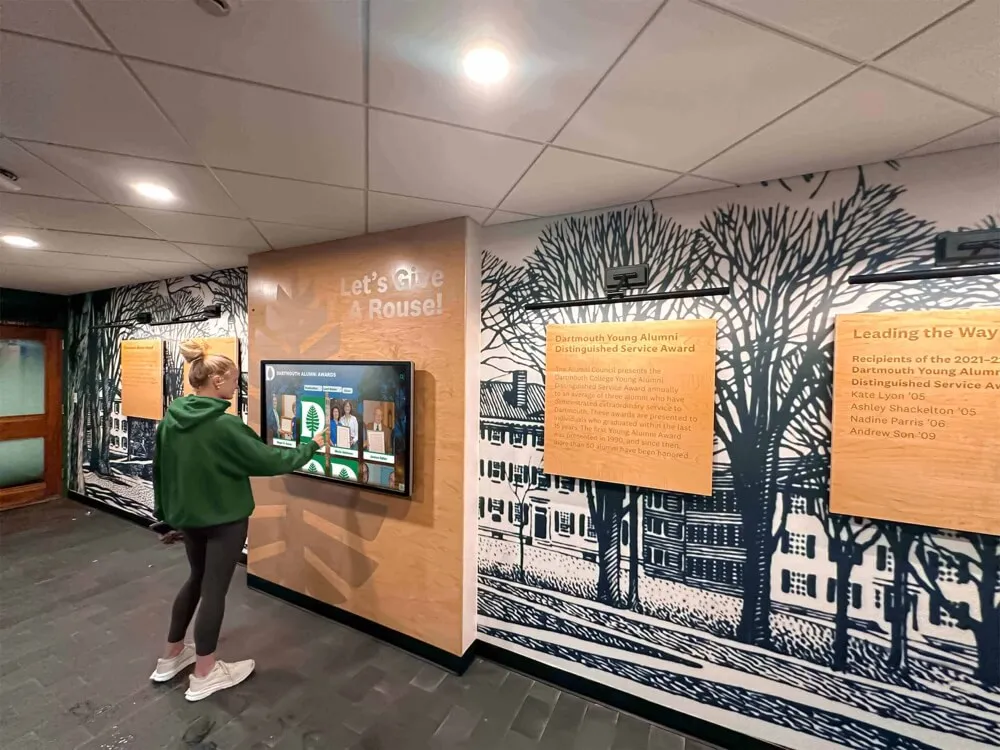
Preserving and Sharing Institutional History: Many digital displays integrate historical content that allows alumni to explore institutional evolution, discover notable alumni from previous generations, revisit campus as it existed during their attendance, and understand how their own era fits into broader institutional narrative.
This historical storytelling strengthens institutional pride while reminding alumni they’re part of something larger and longer-lasting than their individual college experience. Pride breeds philanthropy—alumni who feel genuine affection and respect for their alma mater give more generously.
Lowering Psychological Barriers to First Gifts
For many alumni, the biggest barrier to giving isn’t lack of capacity but simply never starting. Digital displays can reduce hesitation and encourage initial gifts through several mechanisms:
Making Giving Visible and Normal: When recognition displays show that thousands of alumni contribute—at all levels from modest annual gifts to major endowments—giving appears normal rather than exceptional. This normalization particularly matters for first-time donors who may feel unsure whether their gift size matters.
Digital displays that include all contributors regardless of amount communicate that participation itself is valued. An alumnus considering a $50 gift who sees that hundreds of classmates give at similar levels feels encouraged rather than embarrassed about gift size.
Creating Immediate Recognition Satisfaction: Unlike traditional systems where donor recognition appears months after giving (after plaques are engraved or annual reports published), digital platforms can acknowledge gifts almost immediately. This quick recognition provides instant gratification that reinforces giving behavior.
Some advanced recognition systems even display real-time giving thermometers showing campaign progress updated as gifts arrive. This immediacy creates excitement and momentum while allowing new donors to instantly see their contribution reflected in community totals.
Offering Multiple Entry Points: Digital displays can showcase various ways to support the institution beyond large cash gifts—bequest commitments and planned giving intentions, volunteer time and mentorship contributions, employer matching programs that double impact, in-kind donations of expertise or resources, or recurring monthly gifts that build substantial support over time.
This variety reduces the perception that giving requires substantial immediate cash outlay, lowering barriers for alumni at different life and career stages who may have limited current financial capacity but significant future potential or alternative ways to contribute.
Strategic Implementation: Maximizing Giving Impact
Simply installing digital displays doesn’t automatically increase giving. Strategic implementation matters enormously in determining whether recognition technology translates to philanthropic growth.
Location and Visibility Considerations
Digital donor recognition achieves maximum impact when positioned where both current constituents and visiting alumni naturally encounter it:
High-Traffic Campus Locations: Main entrance lobbies and reception areas, athletic facility concourses during events, student union and dining commons, library and academic building main floors, and alumni center or advancement office spaces.
Strategic placement ensures that current students regularly see donor recognition—normalizing philanthropy and building the expectation of future giving. Simultaneously, alumni visiting for events, meetings, or campus tours naturally encounter displays that recognize their peers and potentially inspire them to join the donor community.
Integration with Major Events: Digital displays should be positioned near venues hosting homecoming activities, reunion gatherings, athletic competitions, donor appreciation events, and fundraising campaign celebrations.
When recognition is visible during these high-engagement moments—when alumni feel most connected to the institution and community—the propensity to give increases substantially. Best practices for connecting with alumni emphasize making recognition central to major institutional gatherings.
Content Strategy That Inspires Action
Effective digital donor recognition requires thoughtful content development that goes beyond simple name lists:
Comprehensive Donor Profiles: Rather than merely listing names, robust profiles include graduation year and degree information, professional accomplishments and career highlights, involvement history as students and alumni, personal statements about why they give, and advice or messages to current students and fellow alumni.
These rich profiles humanize donors, create emotional connection, and provide social proof that inspires others. When prospective donors see peers articulating compelling reasons for giving, they’re more likely to envision themselves as contributors.
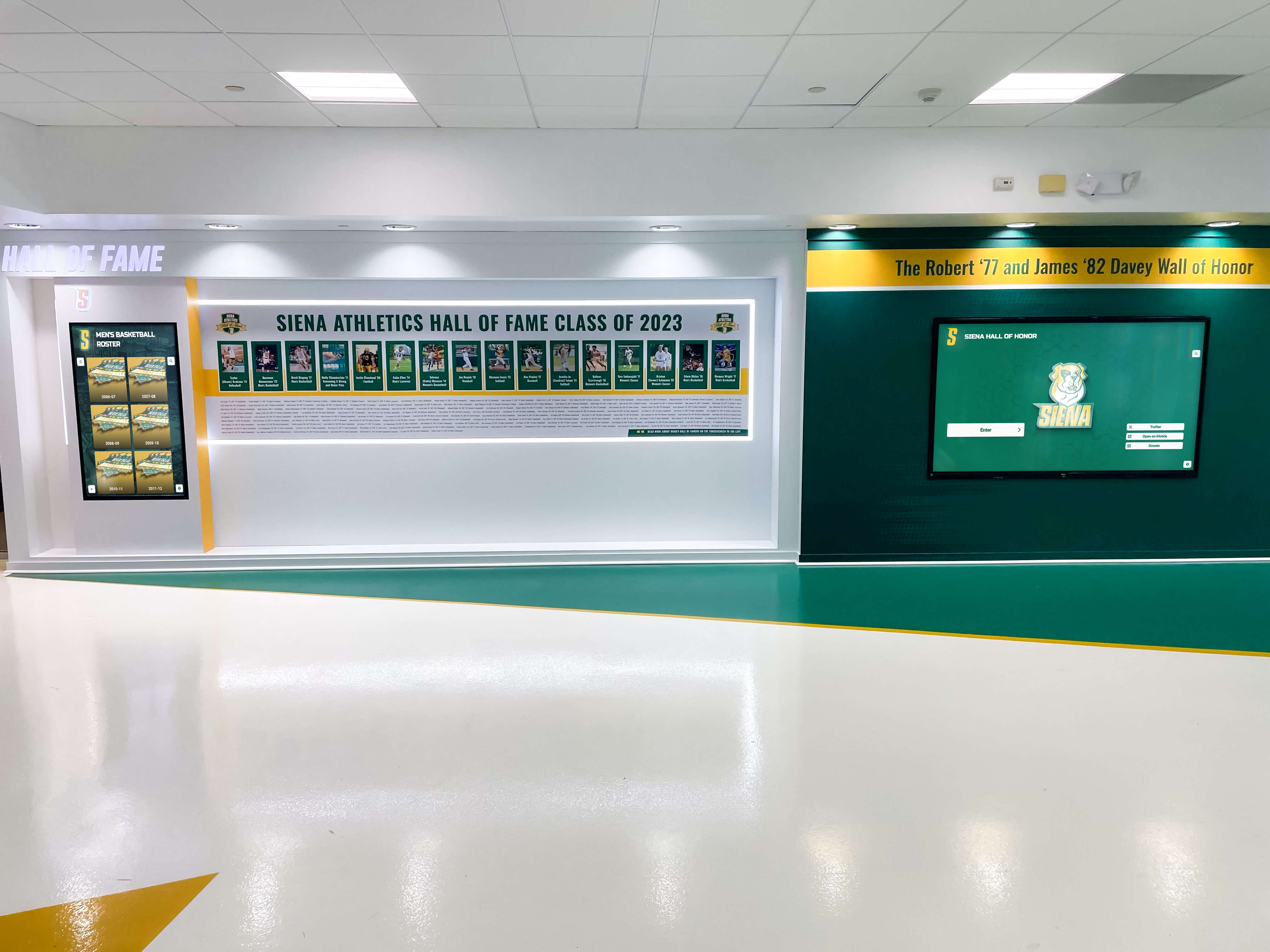
Impact Storytelling Integration: Connect donor recognition directly to impact narratives by featuring scholarship recipients alongside scholarship donors, showcasing completed projects with contributor acknowledgment, highlighting research breakthroughs enabled by philanthropic funding, and celebrating program expansion made possible through support.
This connection transforms abstract donor lists into tangible stories about how gifts create meaningful change. When alumni see concrete results of philanthropy, giving becomes compelling rather than perfunctory.
Campaign Progress Visualization: During active fundraising initiatives, digital displays can show real-time progress toward goals, highlight milestone achievements and matching opportunities, celebrate leadership gifts that inspire others, and recognize campaign volunteers and advocates.
Progress visualization creates momentum and urgency. Alumni who see campaigns approaching goals but not yet complete feel motivated to contribute the final push. Those who see early momentum and leadership gifts feel confidence that their contributions join a successful collective effort.
Integration with Comprehensive Advancement Strategy
Digital recognition displays work most effectively when integrated into broader advancement and alumni relations programming rather than functioning as isolated installations:
Coordinated Communication Campaigns: Use email and direct mail to highlight featured donors from displays, share impact stories visible on digital installations, announce new recognition features or milestone celebrations, and invite alumni to campus specifically to view recognition.
This cross-channel coordination extends digital display reach beyond campus visitors, exposing all alumni to recognition content regardless of whether they physically visit campus.
Connection to Annual Giving Programs: Time major content updates and feature rotations to coincide with annual fund appeals, showcase current-year donors prominently during campaigns, create giving challenges based on recognition participation, and use display analytics to identify engaged prospects for personalized outreach.
Strategic donor recognition programs that coordinate digital displays with solicitation efforts see substantially higher response rates than those treating recognition and fundraising as separate functions.
Integration with Alumni Events: Use recognition displays as focal points during donor appreciation events, incorporate display content into reunion programming, create scavenger hunts or competitions around recognition exploration, and invite newly recognized donors to special unveiling celebrations.
When digital displays become integral to event experiences rather than passive background elements, engagement and impact multiply dramatically.
Measuring the Impact: Quantifying Giving Growth
Institutions investing in digital recognition naturally want to understand whether these systems actually increase giving or merely provide feel-good donor acknowledgment. Rigorous measurement demonstrates the substantial ROI these platforms deliver.
Key Performance Indicators
Track several metrics to assess how digital displays influence philanthropic support:
Donor Participation Rate: The percentage of contactable alumni who make gifts annually. Institutions report increases of 15-25% in participation rates within 18-24 months of implementing comprehensive digital recognition tied to giving programs.
Average Gift Size: The mean donation amount across all contributors. Digital recognition that includes giving level categories and societies correlates with 12-18% increases in average gifts as donors aspire to higher recognition tiers.
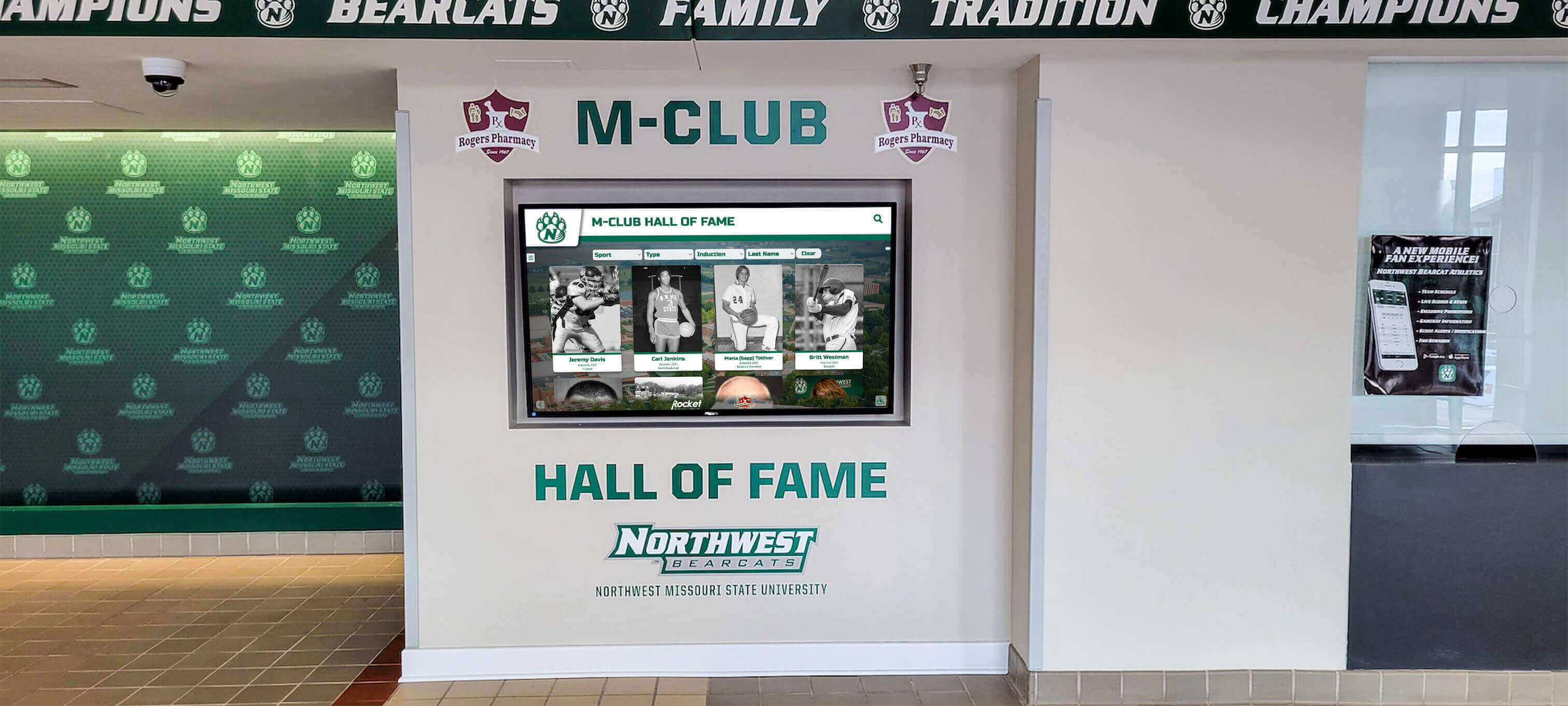
Donor Retention Rate: The percentage of donors who give again in subsequent years. Recognized donors show 28-42% higher retention rates than those whose contributions go unacknowledged, according to advancement professionals who track this metric rigorously.
Multi-Year Giving Streaks: The number of consecutive years individual donors contribute. Digital displays that celebrate giving consistency—highlighting 5-year, 10-year, 25-year consecutive givers—inspire sustained support. Schools report that showcasing streak donors increases the median consecutive giving period by 2-3 years.
Planned Giving Inquiries: The number of alumni exploring bequest and estate gift options. Institutions implementing digital recognition that includes planned giving society acknowledgment typically see 45-60% increases in planned giving conversations within two years.
Analytics and Engagement Data
Modern digital display platforms provide detailed usage analytics that reveal engagement patterns and inform optimization:
Content Interaction Patterns: Track which donor profiles receive most views, what impact stories generate longest engagement time, which search filters visitors use most frequently, and what times and days see highest display usage.
These insights reveal which content resonates most powerfully, enabling continuous refinement toward maximum impact. If visitors consistently engage with certain content types—video testimonials, specific campaign stories, particular donor profiles—institutions can prioritize similar content in future updates.
Conversion Tracking: Advanced implementations can connect display engagement to giving actions by monitoring which visitors later make gifts, identifying content viewed immediately before donation decisions, tracking how display interactions correlate with solicitation response rates, and understanding the time lag between recognition engagement and giving action.
This conversion intelligence helps quantify the causal relationship between recognition visibility and philanthropic response, moving beyond correlation to demonstrate actual influence.
Comparative Analysis
Institutions serious about measuring impact should establish control groups and conduct comparative analysis:
Cohort Comparison: Compare giving rates among alumni who visited campus and engaged with recognition displays versus those who haven’t, donors who appear on displays versus similar-capacity prospects who don’t, and classes highlighted in featured content versus those not recently showcased.
These comparisons, when properly controlled for other variables, can isolate the specific influence of recognition visibility on giving behavior.
Before-After Analysis: Track key metrics for 12-18 months before display implementation, monitor the same metrics for 18-24 months after launch, and account for external factors like economic conditions or leadership changes that might independently influence giving.
Schools conducting rigorous before-after analysis consistently find that digital recognition correlates with 15-30% increases in overall giving when other factors are held constant.
Overcoming Common Implementation Challenges
While the benefits of digital donor recognition are clear, institutions often encounter obstacles during implementation. Understanding and proactively addressing these challenges ensures successful deployment.
Budget Constraints and ROI Justification
Many schools hesitate to invest in digital recognition technology due to budget limitations or uncertainty about return on investment.
Phased Implementation Approaches: Rather than comprehensive system-wide deployment, start with a single high-impact installation in the main advancement office or alumni center, focus initial content on a specific campaign or giving society, expand gradually as results demonstrate value, and use early success to secure funding for additional installations.
This measured approach reduces initial investment while building the internal case for expansion based on demonstrated results rather than projected benefits.
Cost-Benefit Analysis: When presenting proposals to leadership, quantify expected returns using conservative projections. For example, if digital recognition inspires just 50 additional $500 annual gifts over five years, the philanthropic return is $125,000—likely exceeding the total cost of most recognition implementations.
Add value from improved donor retention (worth hundreds of thousands over alumni lifetimes), increased major gift prospects (worth millions in campaign success), and enhanced institutional reputation (improving recruitment and reducing discount rates), and the ROI becomes overwhelming even with conservative estimates.
Technology Concerns and Staff Capacity
Schools with limited IT resources sometimes worry that sophisticated digital systems will overwhelm their capacity or require expertise they don’t possess.
Turnkey Solutions with Ongoing Support: Modern providers like Rocket Alumni Solutions offer comprehensive platforms that include all necessary hardware, cloud-based software requiring no on-premise servers, intuitive content management systems that non-technical staff can easily use, white-glove installation and setup services, and ongoing technical support and system maintenance.
These turnkey approaches mean advancement staff focus on content and strategy rather than technical implementation, making sophisticated recognition technology accessible even for institutions with very limited IT capacity.
Training and Change Management: Success requires more than just technology—it depends on staff who understand how to leverage recognition for maximum advancement impact. Effective implementations include comprehensive training on content management, strategic guidance on content that inspires giving, change management support to shift organizational culture toward recognition priority, and ongoing consultation to optimize performance based on analytics and results.
Privacy Concerns and Donor Preferences
Some donors prefer anonymous giving or have concerns about public recognition. Thoughtful systems accommodate varied preferences:
Flexible Privacy Controls: Modern platforms allow donors to choose their visibility level—from full public profiles to anonymous acknowledgment to complete invisibility. This flexibility respects individual preferences while still allowing most donors to be appropriately recognized.
Giving donors control over their recognition demonstrates respect that actually strengthens relationships. Alumni appreciate being asked about preferences rather than having visibility decisions made unilaterally.
Anonymous Recognition Options: For donors who prefer anonymity, displays can still acknowledge their generosity through aggregate statistics (“150 anonymous donors contributed to this campaign”), anonymous society listings (“25 members of the Anonymous Leadership Society”), or impact celebration without donor attribution (“This scholarship program was made possible by generous anonymous support”).
These approaches honor privacy preferences while still demonstrating the breadth of philanthropic community and inspiring others to give.
Future Trends: The Evolving Recognition Landscape
As technology continues advancing, digital donor recognition will incorporate new capabilities that further enhance engagement and giving impact.
Artificial Intelligence Personalization
AI-powered systems will increasingly personalize recognition experiences for individual visitors by recommending content based on user attributes (graduation year, major, location), highlighting donors with similar backgrounds or careers, and surfacing impact stories most relevant to visitor interests.
This personalization creates more relevant, engaging experiences that resonate with diverse alumni segments, potentially increasing giving across different cohorts that respond to varied messaging and recognition approaches.
Augmented Reality Integration
Emerging implementations blend physical and digital recognition through AR-enabled mobile apps that reveal additional content when pointed at traditional plaques, virtual overlays that add multimedia elements to physical spaces, and campus tours that integrate recognition into location-based storytelling.
These hybrid approaches combine the permanence and gravitas of traditional recognition with the flexibility and richness of digital content.
Predictive Analytics for Prospect Identification
Advanced analytics will help advancement teams identify the most promising giving prospects by analyzing engagement patterns with recognition content, correlating interaction behaviors with giving likelihood, and surfacing warm prospects for personalized cultivation.
This intelligence transforms digital displays from passive recognition into active advancement tools that generate actionable insights driving fundraising strategy.
Social Integration and Viral Recognition
Future systems will make sharing and social amplification effortless through one-click sharing of recognition to personal networks, automated generation of social-media-ready recognition graphics, integration with LinkedIn and professional platforms, and gamification elements that encourage competitive giving and sharing.
When recognition becomes easily shareable, its reach multiplies exponentially. Alumni who share their recognition with professional networks simultaneously spread institutional reputation while potentially inspiring their connections to support institutions they’re affiliated with.
Conclusion: Recognition as Catalyst for Generosity
The evidence is clear: strategic digital donor recognition significantly increases alumni giving by creating emotional connection between alumni and institutions, demonstrating impact and building transparency trust, making philanthropy visible and socially normative, reducing barriers to first-time and repeat giving, and facilitating ongoing engagement beyond transactional solicitation.
In an era of declining alumni participation, institutions cannot afford to rely solely on traditional fundraising approaches. Digital displays represent powerful tools that transform recognition from afterthought to strategic advancement priority—inspiring generosity while celebrating the alumni donors who make institutional excellence possible.
For schools ready to strengthen philanthropic culture and increase giving, solutions like Rocket Alumni Solutions provide comprehensive platforms specifically designed for educational advancement needs. These purpose-built systems combine intuitive technology with proven best practices refined through hundreds of successful implementations.
The schools seeing the greatest success share common characteristics: they treat recognition as strategic priority rather than administrative afterthought, integrate digital displays into comprehensive advancement strategy, continuously optimize content based on engagement analytics and giving results, and maintain authentic focus on honoring donors rather than merely soliciting gifts.
By following these principles and leveraging modern recognition technology thoughtfully, institutions can reverse declining giving trends while building philanthropic communities that sustain institutional mission for generations to come.
Ready to transform your alumni giving through strategic digital recognition? Explore how interactive recognition displays create emotional connections that inspire sustained philanthropic support, or discover proven strategies for engaging your local community through celebration and recognition that strengthens institutional bonds while encouraging generosity.































