Indoor sports facilities serve as vital community assets where athletes develop skills, teams build camaraderie, and communities gather to support local programs. Whether you’re an athletic director planning a new gymnasium, a facilities manager renovating existing spaces, or a community center administrator expanding recreational offerings, thoughtful facility design determines whether your investment creates lasting value or persistent frustration.
This comprehensive planning guide walks through the critical decisions shaping successful indoor sports facility design—from initial space allocation and surface selection to lighting systems, accessibility requirements, and strategic recognition opportunities that build community pride. You’ll discover how to balance competing demands, avoid common design mistakes, and create facilities that serve diverse programs effectively while staying within realistic budgets.
Planning an indoor sports facility requires balancing numerous competing requirements. Basketball programs need adequate court dimensions and ceiling heights. Wrestling teams require specialized mat storage and climate control. Community fitness classes demand flexible multipurpose spaces. Spectators expect comfortable viewing areas and accessible amenities. Administrative staff need functional offices and equipment storage.
Defining Your Facility Requirements and Program Priorities
Before sketching floor plans or selecting finishes, clarify exactly what your facility must accomplish. Different stakeholders have competing visions—successful planning requires structured requirements gathering that identifies true needs versus aspirational wants.
Conducting Stakeholder Needs Assessment
Gather input systematically from all groups who will use your facility. Athletic coaches articulate sport-specific requirements including court dimensions, ceiling heights, storage needs, and specialized equipment spaces. Physical education teachers identify curriculum needs spanning diverse activities beyond competitive athletics. Community program directors outline recreational programming requiring flexible multipurpose spaces. Facility maintenance staff explain operational considerations affecting long-term sustainability. Administrative leadership establishes budget constraints and strategic priorities.
Schedule individual meetings rather than large group sessions that often devolve into unproductive debates. Document specific requirements with measurable criteria—“adequate basketball shooting clearance” becomes “minimum 25-foot ceiling height above court surface.”
Primary Use vs. Secondary Functions
Most indoor sports facilities serve multiple purposes, but design excellence requires prioritizing primary functions. A facility designed primarily for competitive basketball with secondary community recreation differs fundamentally from a multipurpose community center accommodating occasional basketball.
Primary Function Design Implications:
When competitive athletics drive design, specifications emphasize regulation dimensions meeting governing body standards, spectator seating and viewing angles optimized for game attendance, specialized flooring and equipment meeting competitive standards, adequate practice and competition scheduling capacity, and storage for competitive equipment and seasonal gear.
When community recreation leads priorities, design emphasizes flexibility supporting diverse programming, simple transitions between different activity configurations, inclusive accessibility for varied age groups and abilities, cost-effective finishes prioritizing durability over aesthetics, and minimal specialized equipment reducing operational complexity.
Clear primary function identification prevents compromised designs that serve no purpose particularly well. Build facilities optimizing for primary use while accommodating secondary functions within that framework.
Capacity Planning and Growth Projections
Right-size facilities based on realistic usage projections rather than worst-case scenarios or aspirational growth. Oversized facilities waste resources on unused capacity while undersized spaces create persistent scheduling conflicts and program limitations.
Realistic Capacity Assessment:
Analyze current participation numbers across all programs using your facility. Project growth based on demographic trends, community development patterns, and historical program expansion rates. Account for seasonal variations in different sport and recreation programs. Consider time-of-day utilization patterns identifying peak demand periods.
Many facilities experience 60-70% average utilization—peak demand during after-school and evening hours with significant unused capacity during school days and weekend mornings. Design decisions should optimize for typical utilization patterns rather than accommodating occasional peak demands that create persistent unused capacity.
Space Allocation and Layout Planning
Effective facility layout maximizes usable space while creating logical flow between related functions. Poor layout decisions create operational inefficiencies that frustrate users and limit programming flexibility for decades.
Court and Competition Space Dimensions
Athletic competition spaces require precise dimensions meeting governing body standards. Undersized courts prevent hosting official competitions while excessive clearances waste valuable space.
Standard Competition Dimensions:
- Basketball: Regulation high school courts measure 84 feet by 50 feet with minimum 10-foot side clearances and 6-foot end clearances. Collegiate courts extend to 94 feet by 50 feet. Ceiling heights require minimum 25 feet above court surface.
- Volleyball: Courts measure 60 feet by 30 feet with minimum 6-foot clearances on all sides. Ceiling heights need 23-26 feet minimum depending on competition level.
- Indoor Soccer/Futsal: Dimensions vary based on age groups and governing bodies, typically ranging from 82-138 feet by 49-82 feet.
- Wrestling: Competition mats measure 42 feet by 42 feet minimum including safety zones, requiring adequate ceiling clearance for throwing techniques.
- Indoor Track: Full 200-meter tracks require approximately 100,000 square feet. Smaller facilities often incorporate sprint straightaways or compact training layouts.
When facilities accommodate multiple sports, convertible configurations using retractable dividers, removable equipment, and multi-sport flooring enable efficient space sharing. Two regulation basketball courts configured perpendicular to each other might convert to four cross-court practice courts or six volleyball courts depending on program needs.
Support Space Requirements
Athletic programming requires substantial support spaces beyond primary competition areas. Inadequate support facilities create operational bottlenecks that undermine athletic space investments.
Essential Support Facilities:
Locker Rooms and Restrooms: Size based on peak simultaneous usage—typically tournament scenarios hosting visiting teams. Include secure team locker rooms, day-use lockers for general recreation, official changing areas for referees, and accessible restroom facilities meeting ADA requirements. Modern standards provide 15-20 square feet per user in team locker rooms.
Equipment Storage: Allocate 8-12% of total facility square footage for equipment storage. Basketball standards, volleyball net systems, wrestling mats, physical education equipment, maintenance supplies, and seasonal gear all require organized accessible storage preventing clutter in athletic spaces.
Athletic Training and First Aid: Dedicated athletic training rooms serve competitive programs. Minimum 200-300 square feet accommodates examination tables, ice machines, treatment equipment, and secure medication storage. Locate near competition spaces for quick injury access.
Officials and Game Management: Competition venues need officials’ changing rooms, scorer’s tables, announcement booths, and administrative spaces supporting event operations.
Spectator Amenities: Restroom capacity, concession areas, and accessible seating require careful sizing. Inadequate spectator facilities create negative experiences that reduce community support regardless of athletic space quality.
Multipurpose Design Strategies
Budget constraints often require facilities serving diverse functions. Strategic multipurpose design enables this flexibility without compromising primary uses.
Effective Multipurpose Approaches:
Divisible Gymnasium Spaces: Retractable divider curtains or movable partitions allow large gymnasiums to subdivide into smaller practice courts or activity areas. Quality divider systems provide reasonable sound attenuation enabling concurrent programming without excessive interference.
Convertible Court Markings: Multi-sport flooring accommodates basketball, volleyball, badminton, and indoor tennis through color-coded court markings. Clear visual differentiation prevents confusion while maximizing space utilization.
Flexible Activity Rooms: Smaller multipurpose rooms adjacent to main gymnasiums serve fitness classes, wrestling practice, martial arts programs, dance instruction, and community meetings. Durable flooring, wall protection, and modular equipment storage enable rapid transitions between diverse uses.
Community Event Capabilities: Design elements like accessible stages, audio-visual infrastructure, and flexible seating arrangements allow gymnasiums to host graduation ceremonies, community gatherings, and special events providing civic value beyond athletic programming.
Flooring Systems and Surface Selection
Flooring represents one of the most critical and expensive facility design decisions. Surface characteristics directly impact athlete safety, performance capabilities, maintenance requirements, and long-term operational costs.
Hardwood Court Systems
Maple hardwood remains the premium choice for competitive basketball and volleyball facilities. Quality hardwood systems provide optimal ball response, traction characteristics, and shock absorption protecting athletes during high-impact activities.
Hardwood System Components:
Modern hardwood installations consist of multiple layers working together. Subfloor systems provide structural foundation and moisture protection. Resilient underlayment—typically rubber pads or spring systems—absorbs shock and provides the “give” that reduces impact forces on athlete joints. Maple flooring planks install over underlayment with expansion gaps accommodating seasonal movement. Polyurethane finish coatings protect wood while maintaining appropriate friction levels.
Hardwood Maintenance Requirements:
Hardwood floors demand regular maintenance including daily dust mopping removing abrasive dirt particles, periodic damp mopping with appropriate wood floor cleaners, annual screening and recoating restoring finish surfaces, and complete refinishing every 8-12 years depending on usage intensity. Budget $2-4 per square foot annually for proper hardwood maintenance.
Cost Considerations:
Expect hardwood installation costs of $8-15 per square foot for quality systems including underlayment and finishing. This initial investment provides 30-50 year lifespan with proper maintenance, making hardwood cost-effective for primary competition venues despite higher upfront costs compared to alternatives.
Synthetic Sport Surfaces
Synthetic flooring systems offer versatile alternatives to hardwood with distinct advantages for certain applications. Modern synthetic surfaces provide excellent performance characteristics suitable for many athletic and recreational programs.
Synthetic Surface Types:
Cushioned Vinyl and Rubber: Rolled or poured rubber surfaces excel in multipurpose facilities, fitness areas, and weight rooms. These surfaces provide excellent shock absorption, simplified maintenance, and resistance to moisture and impact damage. Costs typically range $5-12 per square foot installed.
Modular Sport Tiles: Interlocking plastic tiles create portable or semi-permanent sport courts. Quick installation, easy replacement of damaged sections, and potential for seasonal removal make modular systems attractive for outdoor covered areas or multipurpose spaces serving non-athletic functions. Expect costs of $3-8 per square foot.
Poured Polyurethane Systems: Seamless poured surfaces provide high-performance athletic flooring competitive with hardwood for many applications. These systems offer customizable thickness, shock absorption characteristics, and traction properties while eliminating the maintenance complexity of wood floors.
Specialized Activity Flooring
Specific programs require specialized flooring beyond general-purpose court surfaces.
Wrestling and Martial Arts: Wrestling rooms need high-density foam mats (typically 2-inch thickness) providing impact absorption for throws and takedowns. Permanent installations use bonded foam flooring while many programs use roll-out mat systems for flexible space usage.
Fitness and Weight Training: Rubber flooring in 3/8 to 3/4-inch thickness protects subfloors from dropped weights while providing cushioning for standing exercises. Interlocking rubber tiles or rolled rubber both perform well, with costs ranging $2-6 per square foot.
Indoor Track Surfaces: Indoor running tracks require specialized polyurethane or rubber surfaces engineered for appropriate energy return and impact absorption. Full tracks represent major investments while smaller facilities might include sprint straightaways using similar materials.
Surface Selection Decision Framework
Choose flooring based on primary use, budget constraints, and maintenance capabilities:
- Competitive basketball/volleyball as primary use → Hardwood court system
- Multipurpose recreation with diverse activities → Cushioned vinyl or rubber surface
- Budget-constrained or heavy non-athletic use → Modular tile or poured polyurethane
- Wrestling/martial arts focus → Specialized mat system with storage
- Fitness and strength training → Rubber surface in appropriate thickness
Quality flooring represents 15-25% of total facility construction costs. Avoid economizing excessively on surfaces—inadequate flooring undermines athlete safety and satisfaction regardless of other facility features.
Lighting Design for Athletic Facilities
Proper illumination enables safe athletic activity, provides comfortable spectator viewing, and creates environments where users enjoy spending time. Poor lighting causes eye strain, creates safety hazards, and makes facilities feel uncomfortable regardless of other design qualities.
Illumination Level Requirements
Different activities require specific lighting intensities measured in foot-candles (fc) or lux.
Athletic Activity Lighting Standards:
- Recreational play and practice: 30-50 fc provides adequate illumination for physical education classes and recreational use
- Competitive high school athletics: 50-75 fc enables comfortable play and spectator viewing for most indoor sports
- Advanced competition and televised events: 75-100+ fc required for high-level competition, especially when video recording or broadcast
- Fitness and weight rooms: 30-50 fc adequate for general use with supplemental task lighting at specialized stations
Maintain uniform illumination across activity areas. Variations exceeding 20% between brightest and darkest areas create visual adaptation challenges that affect performance and increase injury risk.
LED Lighting Systems
LED technology has transformed athletic facility lighting through superior performance, energy efficiency, and operational advantages over traditional metal halide or fluorescent systems.
LED System Advantages:
Modern LED fixtures provide instant on/off capability without warm-up delays, enabling lights to turn on immediately when spaces are needed rather than burning continuously or forcing users to wait for warm-up. Energy consumption typically drops 50-70% compared to metal halide systems with comparable light output. Operational lifespans of 50,000-100,000 hours dramatically reduce relamping frequency and maintenance labor.
LED Quality Considerations:
Not all LED fixtures perform equally. Color rendering index (CRI) measures how accurately colors appear under artificial lighting—specify fixtures with minimum 80 CRI, with 90+ CRI preferred for competitive venues. Flicker-free operation prevents strobing effects during rapid movement. Proper thermal management ensures rated lifespan and prevents premature failure.
Glare Control and Distribution:
Shield light sources preventing direct view of bright elements that cause discomfort and impair vision. Specify fixtures with proper cutoff angles and optical control directing light onto playing surfaces rather than dispersing into spectator areas. For basketball and volleyball, avoid fixtures directly above court areas where players look upward tracking balls—offset lighting positions reduce glare during play.
Lighting Control Systems
Advanced control systems optimize operational efficiency and user experience.
Control Capabilities:
Scene-based controls enable preset lighting levels appropriate for different activities—full brightness for competitions, reduced levels for practice sessions, minimal lighting for cleaning and maintenance. Occupancy sensors automatically illuminate spaces when users enter and turn off lights after spaces empty, reducing energy waste without requiring user intervention. Daylight harvesting integrates with available natural light, dimming electric lighting when windows provide adequate illumination.
Budget controls as part of initial construction. Retrofit installations cost substantially more than integrated systems specified during design phases.
HVAC and Climate Control Considerations
Indoor sports facilities create substantial heating, cooling, and ventilation demands. Athletic activity generates significant heat loads requiring removal. Large volumes create conditioning challenges. Spectator attendance compounds these demands during events. Proper HVAC systems create comfortable environments while controlling operational costs.
Capacity and Load Calculations
Size HVAC systems based on realistic usage rather than maximum theoretical capacity. Account for heat generated by occupants during athletic activity—active athletes produce 3-4 times more heat than sedentary occupants. Include heat gain from lighting systems, solar loads through windows, and equipment operation. Factor in peak attendance scenarios during competitions and events.
Undersized systems cannot maintain comfortable conditions during peak use. Significantly oversized systems cycle inefficiently, provide poor humidity control, and waste energy. Work with mechanical engineers experienced in athletic facility design who understand activity-specific loads.
Air Distribution and Circulation
Gymnasiums with high ceilings create air stratification challenges where warm air accumulates at ceiling levels while lower occupied zones remain cold. Destratification fans circulate air preventing excessive temperature gradients. Properly designed air distribution systems deliver conditioned air to occupied zones without creating uncomfortable drafts on sweaty athletes.
Maintain slight positive building pressure preventing outdoor air infiltration and reducing heating/cooling loads. Provide adequate outside air ventilation meeting code requirements for occupancy levels—typically 15-20 cubic feet per minute per person minimum.
Humidity Control
Indoor athletic facilities require dehumidification in humid climates to prevent slippery floors, comfort issues, and long-term moisture damage to building components and athletic flooring. Maintain relative humidity between 30-50% year-round for optimal comfort and floor protection.
Dedicated dehumidification systems or HVAC equipment with enhanced moisture removal capabilities manage humidity loads. In cold climates, humidification prevents excessively dry winter conditions that affect respiratory comfort and hardwood flooring stability.
Energy Efficiency Strategies
Athletic facilities represent significant operational costs—energy-efficient design reduces long-term expenses.
Efficiency Approaches:
High-efficiency equipment (minimum 90+ AFUE furnaces, 16+ SEER cooling) reduces energy consumption despite higher initial costs. Variable-speed systems modulate capacity matching actual loads rather than operating at full capacity continuously. Programmable controls reduce conditioning when facilities are unoccupied—setback temperatures during nights and weekends save substantial energy. Proper insulation and air sealing of building envelope minimizes heating and cooling loads. Energy recovery ventilation captures heat or coolness from exhaust air, reducing the energy required to condition incoming outside air.
Budget 25-35% of total facility construction costs for HVAC systems. Energy-efficient design typically adds 5-10% to mechanical system costs while reducing operational expenses 20-40%, achieving payback within 3-7 years.
Accessibility and Safety Requirements
Indoor sports facilities must accommodate users of all abilities while maintaining safe environments during normal operations and emergency situations.
ADA Compliance Essentials
Americans with Disabilities Act (ADA) requirements establish minimum accessibility standards for public facilities including athletic venues.
Key Accessibility Requirements:
Accessible routes connect building entries, parking areas, spectator seating, locker rooms, and other facility spaces. Routes maintain minimum 36-inch clear width with level surfaces or compliant ramps where grade changes occur. Spectator seating areas include wheelchair locations distributed throughout seating—typically 1% of seating capacity with minimum required quantities based on total seats. Locate accessible seating with sight lines comparable to general seating, not isolated in distant or inferior viewing positions.
Locker rooms and restroom facilities include accessible stalls, benches, and fixtures meeting ADA dimensional and equipment requirements. Ensure accessible family/companion restrooms available for users requiring assistance.
Playing surfaces require accessible routes for wheelchair athletes participating in adaptive sports programs. Some facilities designate specific courts with accessible features supporting wheelchair basketball, adaptive volleyball, and other inclusive programs.
Safety and Emergency Planning
Athletic facilities require comprehensive safety measures addressing both routine and emergency situations.
Safety System Requirements:
Emergency exits distribute throughout facilities with illuminated exit signs, properly rated fire doors, and panic hardware enabling quick egress. Exit quantities and locations must meet building codes based on occupancy loads. Adequate exit widths accommodate rapid evacuation during emergencies without bottlenecks.
Fire suppression systems in many jurisdictions require sprinklers throughout athletic facilities. When required, use specialized sidewall sprinklers or protective cages preventing damage from athletic activities while maintaining fire protection. Some facilities segregate systems, using standard sprinklers in support spaces while protecting gymnasium ceilings with specialized athletic sprinkler heads.
Automated external defibrillators (AEDs) should be readily accessible—sudden cardiac arrest affects young athletes with undiagnosed conditions. Position AEDs visibly in multiple locations with maximum 3-minute retrieval time from any facility area. Train staff in AED operation and CPR.
First aid stations with medical supplies, ice, and treatment capabilities address minor injuries preventing escalation. For competitive venues, dedicated athletic training rooms provide professional medical support during practices and events.
Protective Equipment and Padding
Protect athletes from impact with fixed building elements and equipment.
Impact Protection:
Wall padding protects athletes in basketball, volleyball, and court sports where players extend beyond court boundaries during play. Install high-density foam padding extending minimum 6 feet above floor level on walls within 10 feet of court boundaries. Choose padding colors contrasting with walls helping athletes judge distance from boundaries.
Padded goal posts, wall-mounted basketball backstops, and other equipment protect users from impacts. Proper installation heights and clearances prevent head injuries during normal play.
Secure all wall-mounted equipment including basketball backstops, volleyball standards, and bleacher systems. Equipment failures cause catastrophic injuries—specify professional-grade installation with regular inspection protocols.
Equipment Selection and Storage Solutions
Athletic equipment represents significant ongoing investment beyond initial facility construction. Strategic equipment selection and organized storage extend useful life while supporting diverse programming.
Primary Athletic Equipment
Core equipment varies based on sports programs supported by your facility.
Basketball Equipment: Ceiling-mounted or wall-mounted backstops with breakaway rims meeting safety standards. Fixed systems cost $3,000-8,000 per basket while portable units run $800-2,500. Ceiling-mounted systems maximize flexibility for multi-sport use by removing equipment from floor areas.
Volleyball Equipment: Floor sleeve systems for net standards ($400-800 per court) with quality nets and referee stands ($300-600). Some facilities use ceiling-mounted net systems eliminating floor sleeves, though these cost more ($2,500-5,000 per court) and reduce setup flexibility.
Wrestling Mats: Quality mat systems cost $8,000-15,000 for regulation 42x42-foot competition mats. Lighter practice mats provide more economical options. Mat storage requires substantial space—vertical storage racks organize mats compactly while allowing air circulation preventing mold.
Fitness Equipment: Weight training equipment, cardiovascular machines, and functional fitness gear vary widely in cost and quality. Budget $20,000-50,000 for basic fitness room equipment, with comprehensive facilities investing $100,000+ in commercial-grade machines and free weights.
Storage Planning and Organization
Disorganized equipment storage creates safety hazards, damages expensive equipment, and frustrates users unable to locate needed items efficiently.
Effective Storage Strategies:
Dedicate 8-12% of total facility square footage to equipment storage. Segregate storage by equipment type and program—basketball equipment separate from volleyball gear, seasonal sport equipment in distinct areas, physical education supplies organized by activity type.
Incorporate storage rooms adjacent to gymnasiums enabling quick equipment access without long transport distances. For multipurpose facilities requiring frequent setup changes, convenient storage reduces setup time and encourages full facility utilization.
Use vertical storage racks, wall-mounted systems, and overhead solutions maximizing storage capacity within available square footage. Mobile equipment should have designated locations with clear identification—label storage areas preventing random placement that creates clutter.
Secure storage for valuable equipment deters theft while restricting access to potentially dangerous items. Lock weight rooms, equipment cages, and storage areas when not supervised. Inventory systems track equipment assignment and usage patterns informing replacement cycles and loss prevention.
Recognition and Branding Opportunities
Indoor sports facilities offer valuable opportunities to celebrate athletic achievement, build community pride, and create environments inspiring current athletes while honoring program history. Strategic recognition elements transform utilitarian gymnasiums into facilities that emotionally connect users to institutional traditions and values.
Digital Recognition Display Systems
Modern digital technology revolutionizes how facilities showcase athletic achievement compared to traditional trophy cases and static plaques with inherent space limitations.
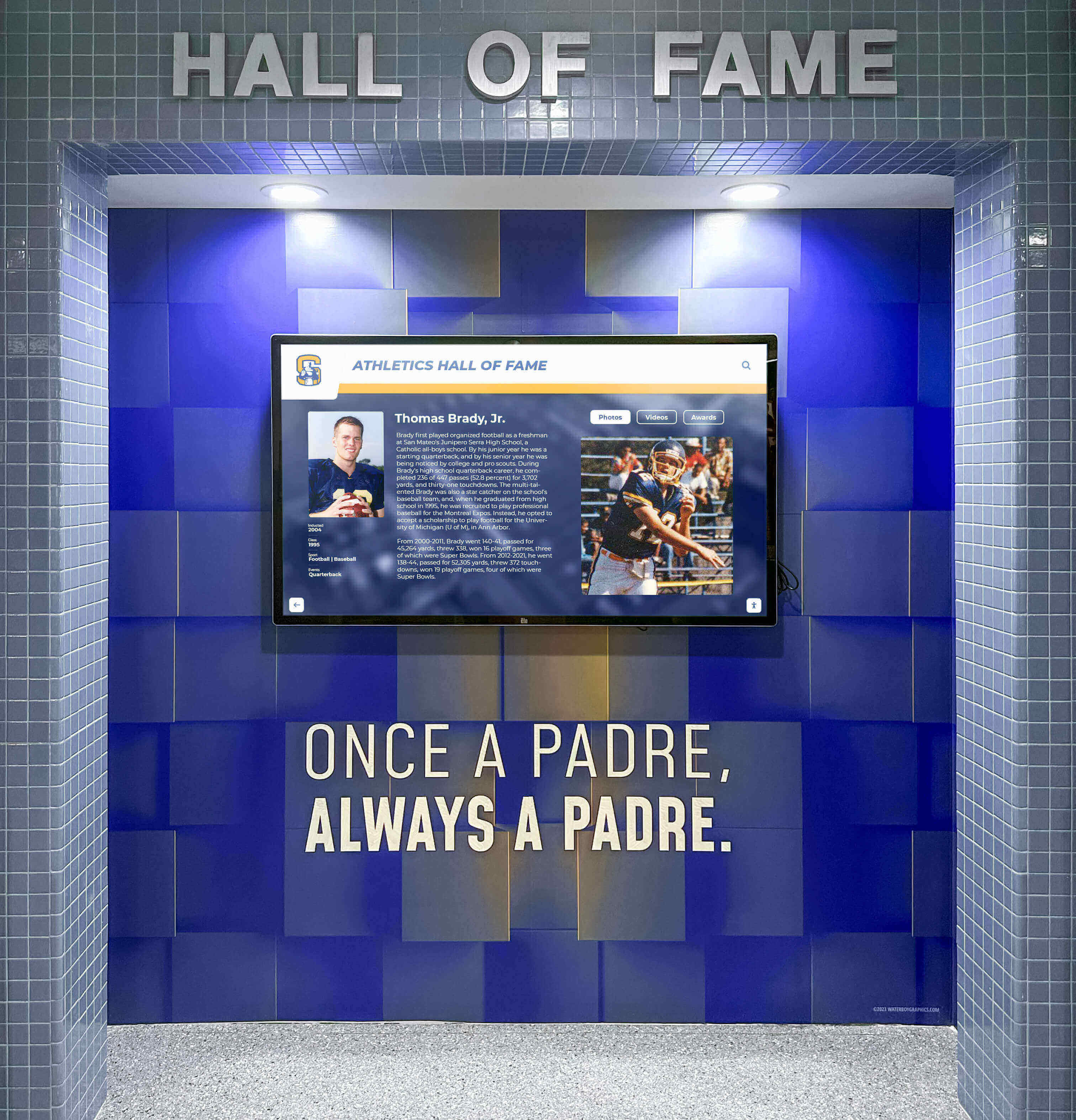
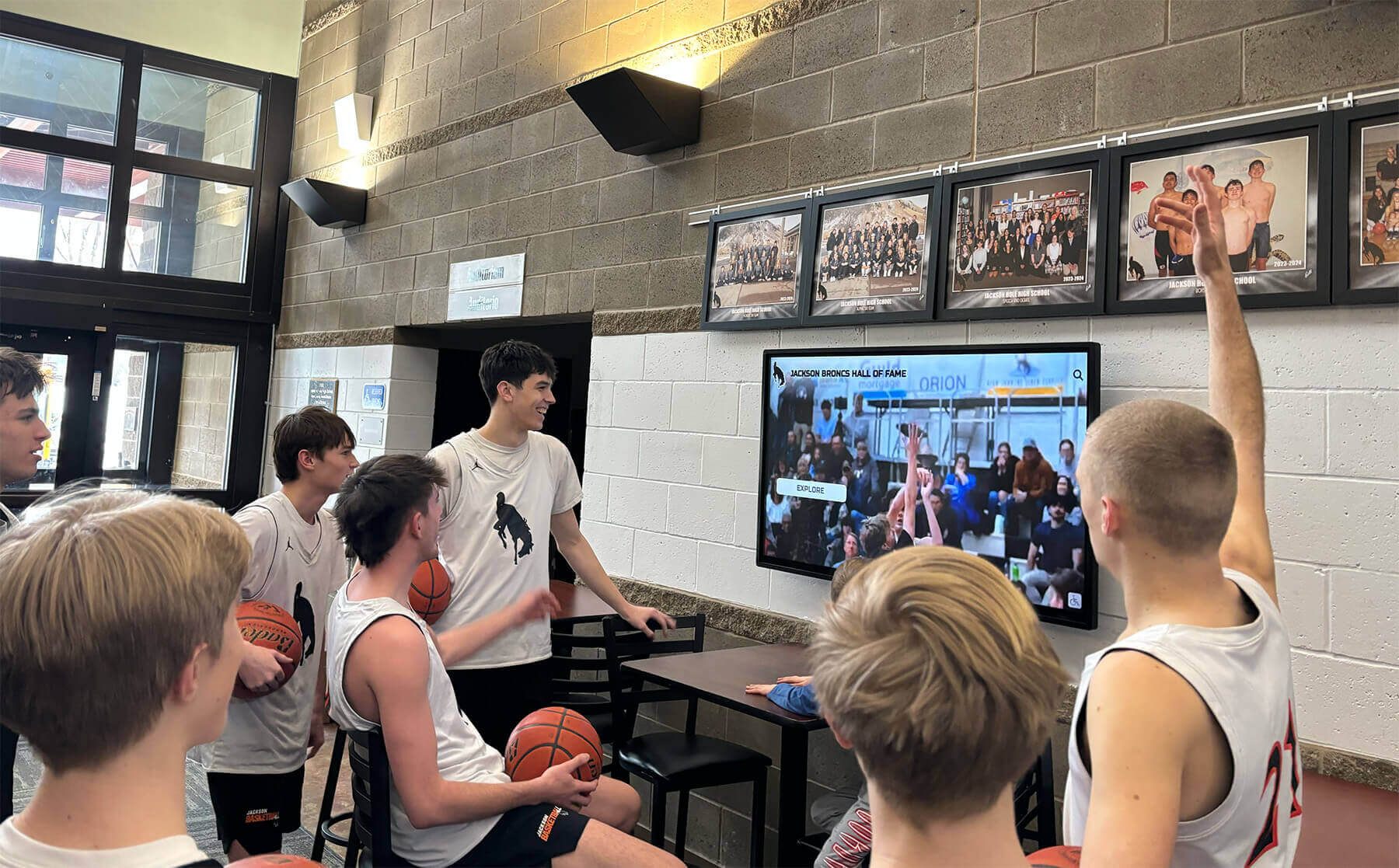
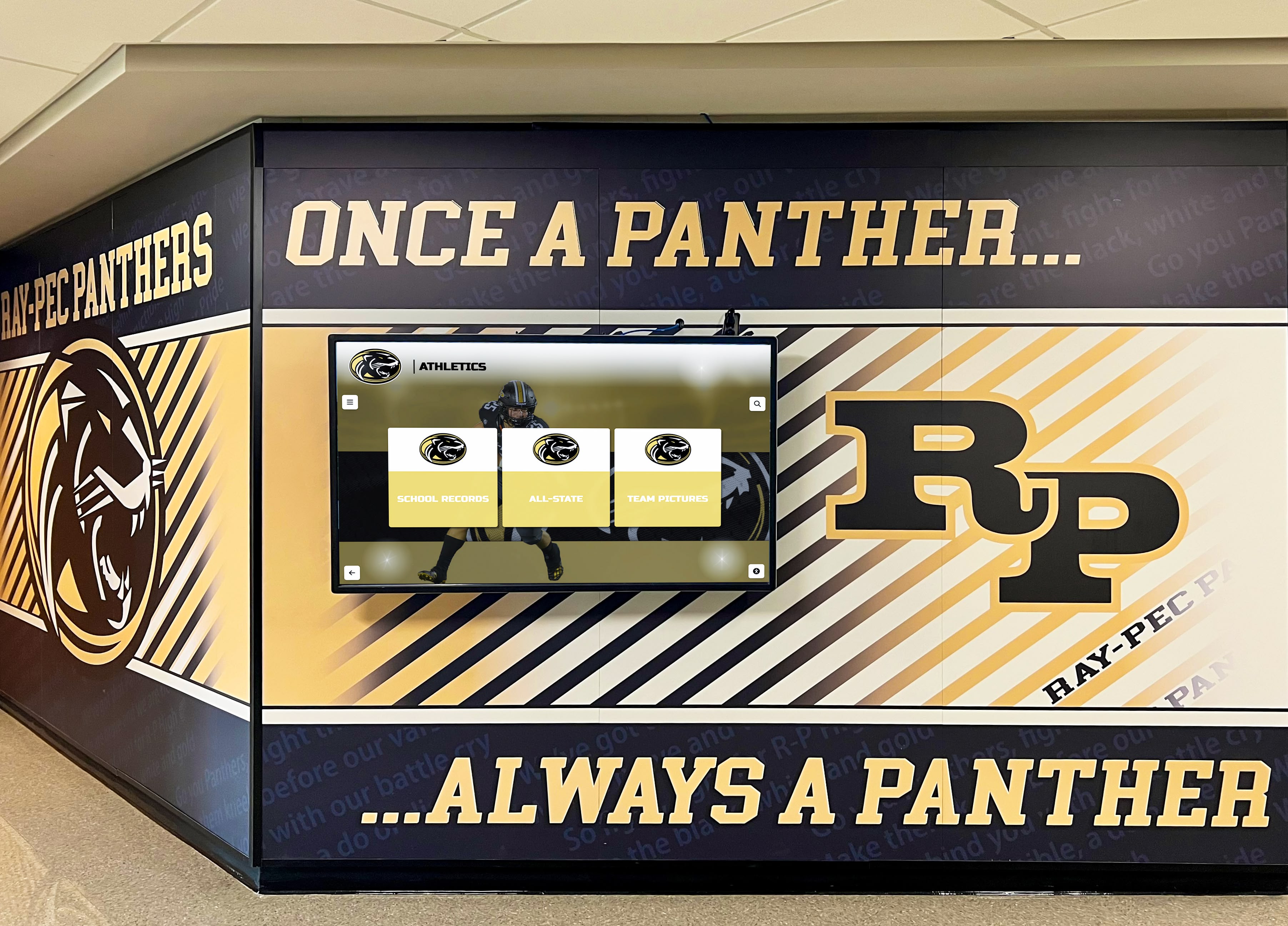
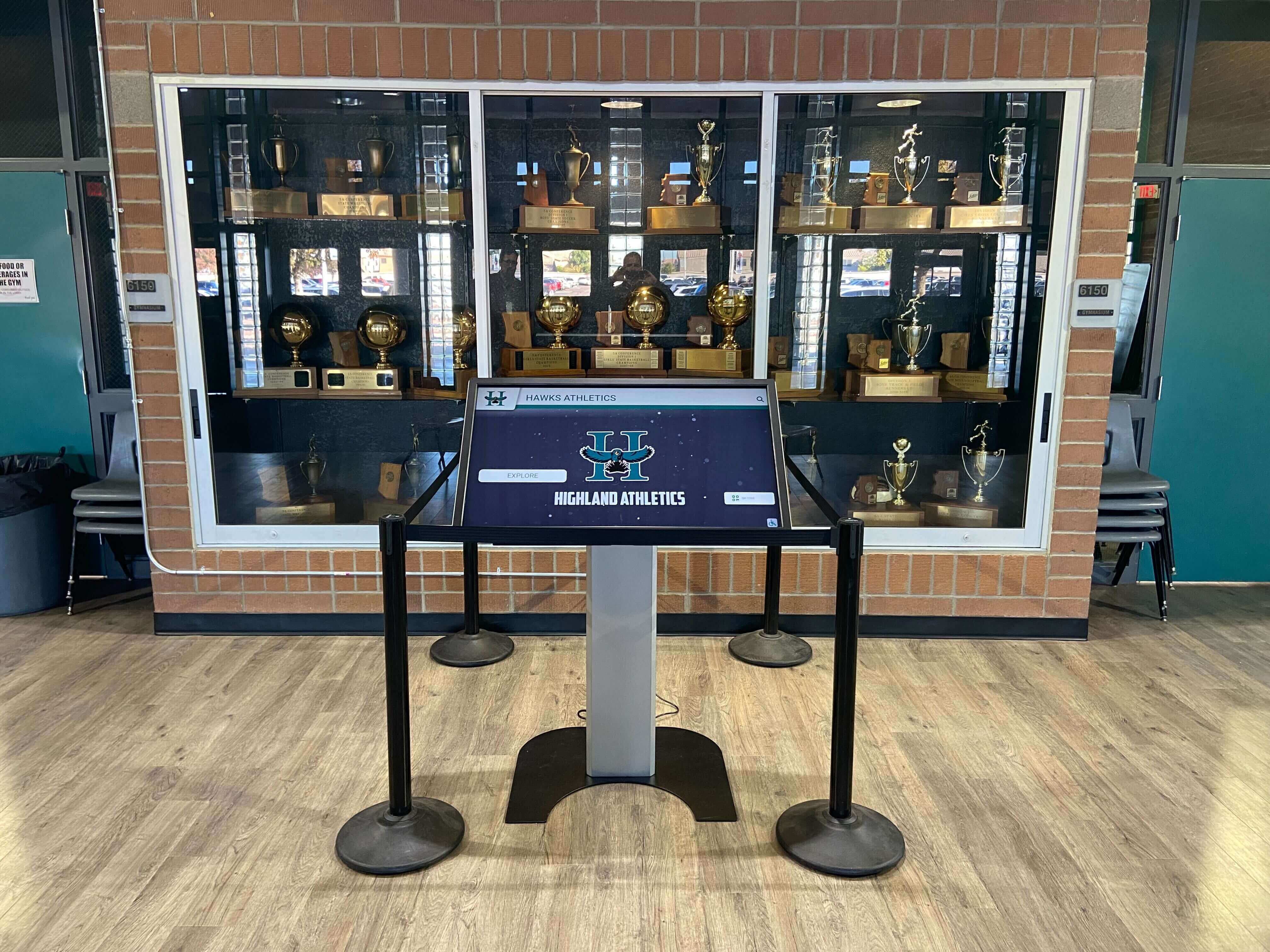
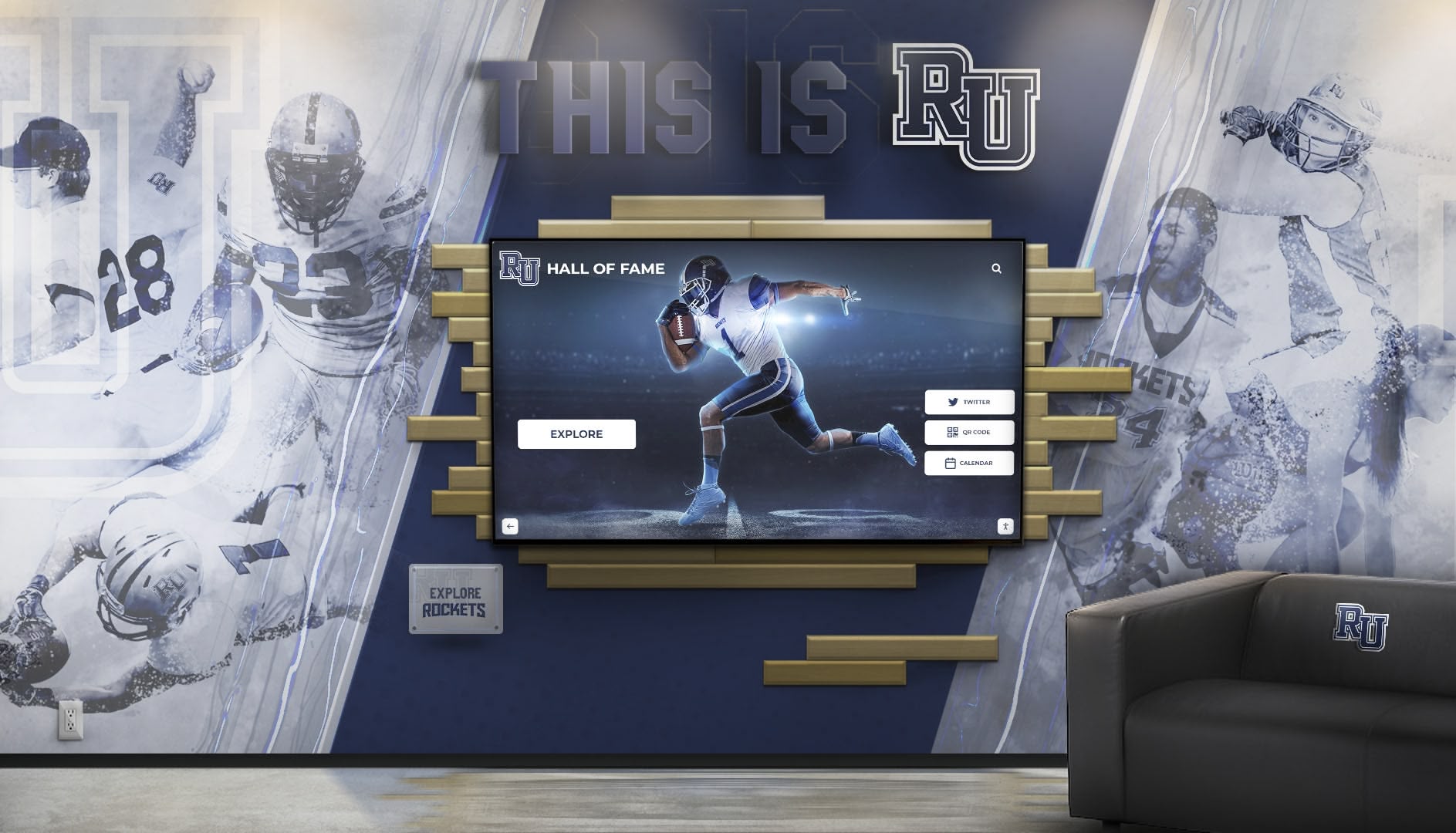
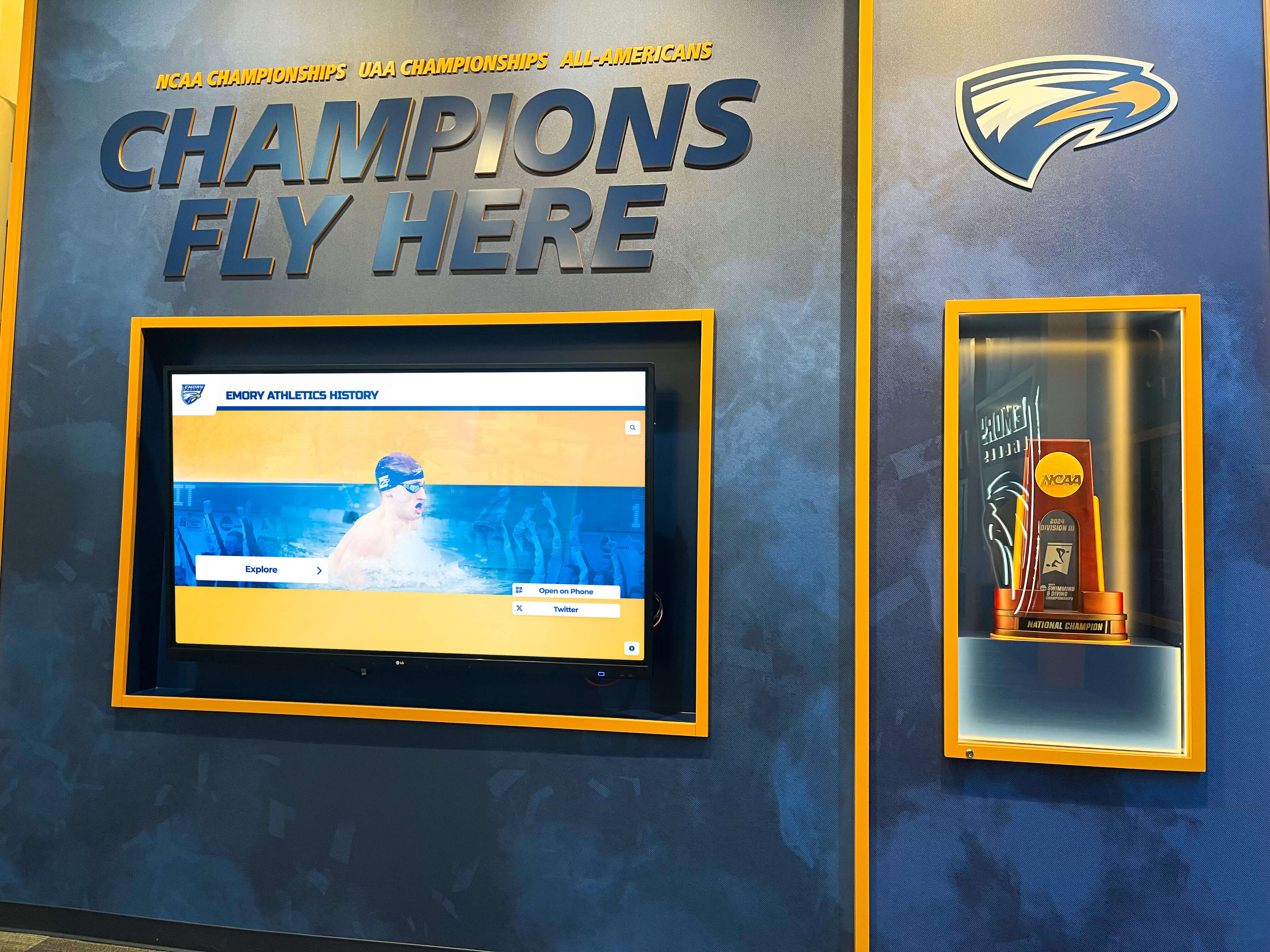
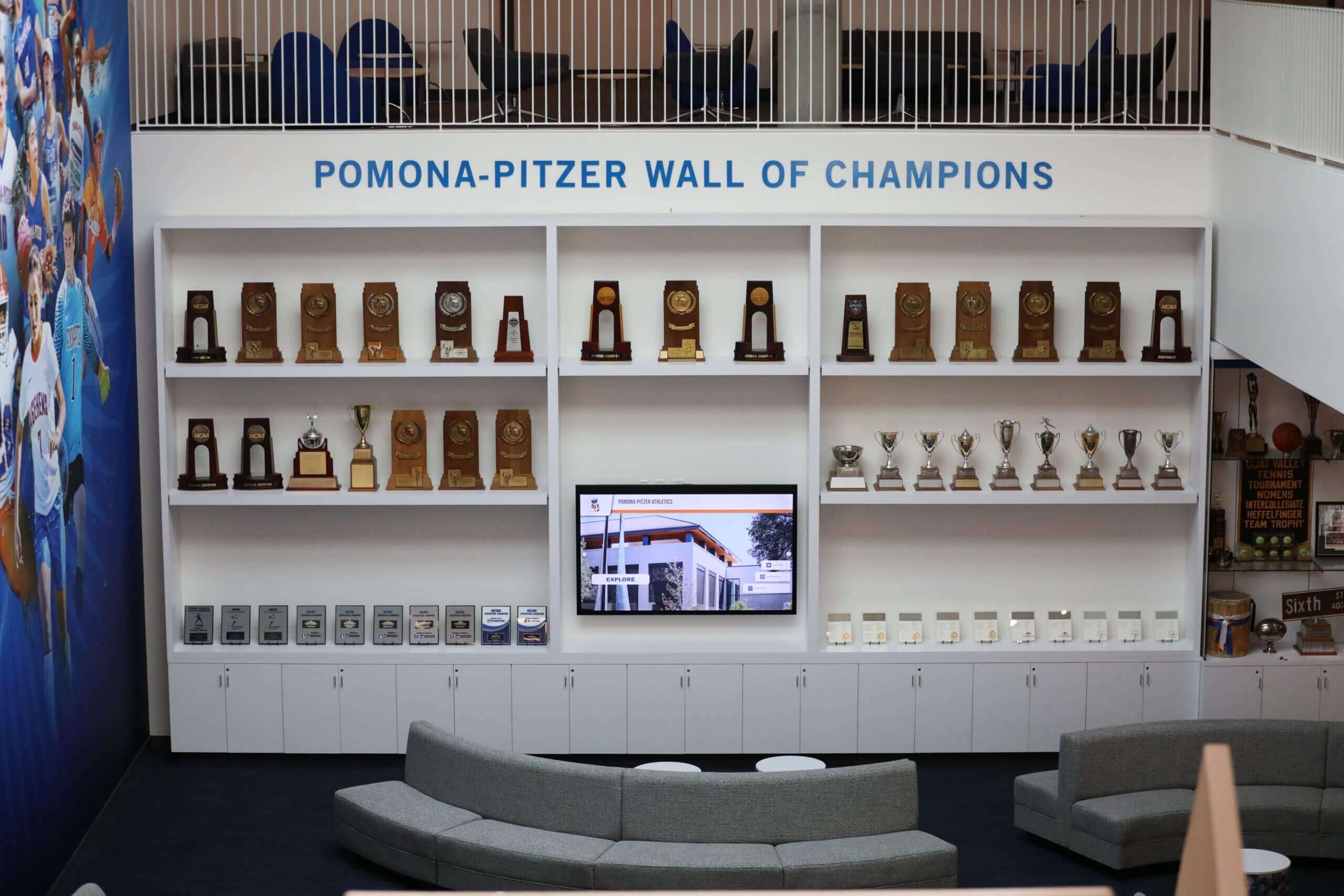
Interactive touchscreen displays transform recognition from passive viewing to engaging exploration. Athletes, families, and community members interact with comprehensive databases showcasing decades of achievement without physical space constraints. A single 55-inch display accommodates more recognition than traditional trophy cases occupying ten times the wall space.
Digital Recognition Capabilities:
Unlimited capacity enables recognizing all worthy achievements across all sports without choosing between programs due to space limitations. Schools can celebrate championship teams, individual record holders, all-conference selections, academic all-stars, and coaching milestones comprehensively.
Rich multimedia storytelling incorporates photos capturing memorable moments, video clips from competitions and celebrations, detailed accomplishment descriptions providing context, complete biographical profiles honoring individual contributions, and statistical records documenting achievement progressions. This depth creates emotional connections impossible through engraved plaques displaying only names and dates.
Searchable databases allow visitors to find specific athletes, teams, years, or achievement types instantly rather than scanning crowded trophy cases hoping to locate particular recognition. Category filtering, year browsing, and keyword search make exploration intuitive and satisfying.
Real-time updates mean new achievements receive immediate recognition. Rather than waiting months for engraving and installation, administrators add content within minutes using cloud-based management systems accessible from any device. This responsiveness keeps recognition current and relevant.
Purpose-built platforms like those from Rocket Alumni Solutions specifically address athletic recognition needs versus generic digital signage that merely displays rotating slides. These specialized systems provide intuitive content management requiring no technical expertise, approval workflows ensuring quality before publication, mobile web access extending reach beyond physical displays, and comprehensive analytics revealing which content engages your community.
Traditional Recognition Elements
Digital systems complement rather than completely replace traditional recognition. Thoughtful facilities incorporate both approaches creating layered recognition experiences.
Complementary Traditional Recognition:
Championship banners hung from gymnasium rafters provide immediate visual impact celebrating team success. Banner programs typically recognize conference championships, regional titles, and state/national championships with consistent design reflecting institutional branding.
Donor recognition displays honor individuals and organizations providing financial support for facility construction and improvements. Dedicated recognition walls or digital donor displays show appreciation while encouraging continued philanthropic engagement.
School history timeline displays in facility lobbies and corridors connect current programs to institutional heritage, building pride through understanding how athletic traditions evolved across decades.
Retired jersey displays and championship team showcases create focal points in high-visibility locations. Frame actual game-worn jerseys or create replica displays with accompanying plaques explaining significance.
Branding and Wayfinding
Cohesive branding elements create professional environments while practical wayfinding helps visitors navigate facilities efficiently.
Visual Identity Integration:
Incorporate school or community center colors, logos, and mascots throughout facilities creating consistent visual identity. Floor graphics, wall murals, column wraps, and branded elements reinforce identity without requiring expensive construction features.
Wayfinding signage directs visitors to locker rooms, restrooms, concessions, athletic training rooms, and specific courts or activity areas. Clear directional signs reduce confusion during events when facilities host visitors unfamiliar with layouts.
Court identification systems designate specific courts with names or numbers—essential in multi-court facilities running simultaneous programs or tournament play. Permanent graphics or changeable signage both work depending on usage patterns.
Budget Development and Cost Management
Indoor sports facility projects represent substantial capital investments requiring careful financial planning and realistic cost estimation. Understanding typical costs and effective strategies for managing budgets prevents disappointing compromises or project abandonment mid-construction.
Typical Construction Cost Ranges
New facility construction costs vary substantially based on size, finishes, equipment, and regional factors. Understand rough order-of-magnitude costs for planning purposes.
General Construction Costs:
Basic gymnasium structures with minimal amenities typically run $150-250 per square foot. These facilities include regulation courts, basic locker rooms, mechanical systems, and standard finishes suitable for physical education and recreational programming.
Mid-range athletic facilities with quality finishes, spectator seating, and athletic support spaces cost $250-400 per square foot. These projects incorporate better mechanical systems, quality flooring, enhanced locker facilities, and moderate spectator accommodations.
Premium competition venues with extensive amenities exceed $400-600+ per square foot. High-end facilities feature specialized flooring, comprehensive spectator amenities, advanced HVAC and lighting systems, dedicated strength facilities, sports medicine rooms, and premium finishes throughout.
A basic 15,000 square foot gymnasium might cost $2.25-3.75 million, while a comprehensive 50,000 square foot athletic complex could require $12.5-30 million depending on included amenities and finish quality.
Major Cost Category Breakdown
Understand where construction budgets allocate to identify potential savings areas or justify necessary expenditures.
Typical Budget Distribution:
Site preparation and foundation work: 8-12% of total budget Structural systems and building envelope: 20-25% Mechanical, electrical, and plumbing: 25-30% Flooring and athletic surfaces: 8-12% Interior finishes: 10-15% Athletic equipment and furnishings: 5-8% Architectural and engineering fees: 8-12% Contingency and owner costs: 10-15%
Mechanical systems often surprise administrators who underestimate HVAC, electrical, and plumbing costs in facilities with high ceilings, substantial conditioning loads, and extensive spectator amenities.
Renovation vs. New Construction Decisions
When existing facilities require updates, evaluate whether renovation or new construction provides better value.
Renovation Advantages:
Lower upfront costs compared to new construction—typically 50-70% of new building costs for comparable space. Faster project timelines maintain program continuity with less disruption. Existing infrastructure including utilities, parking, and site access reduce site development costs. Preservation of functional elements saving costs where existing components meet needs.
Renovation Challenges:
Hidden conditions within existing buildings create scope and budget uncertainty until construction begins. Constrained layouts may prevent optimal space allocation and flow. Phased construction maintaining partial operation during renovation increases costs and complexity. Building code compliance may require extensive upgrades triggering major system replacements. Sustainability issues like asbestos or lead paint abatement add costs not present in new construction.
Generally, if renovation costs exceed 60-70% of new construction costs for comparable functionality, new construction often provides better long-term value through optimized layouts, modern systems, and extended service life without deferred maintenance issues.
Funding Strategies and Sources
Most facility projects combine multiple funding sources rather than relying on single revenue streams.
Common Funding Approaches:
Capital referendums and bond issues provide primary funding for major school facility projects. Successful referendums require comprehensive community engagement explaining needs, benefits, and financial impacts transparently.
State facility improvement grants in many regions supplement local funding. Research available programs and application timelines early—competitive grants require substantial lead time for proposal development.
Fundraising campaigns targeting alumni, community members, and local businesses supplement institutional funding. Major facility improvements provide compelling fundraising cases with naming opportunities incentivizing significant donations. Booster organizations and athletic foundations often lead facility fundraising efforts.
Public-private partnerships in community settings enable shared funding and operation between municipalities and private organizations. These arrangements spread costs while creating facilities serving broader community needs.
Phased implementation spreads costs across multiple budget cycles rather than requiring full funding upfront. Initial phases might construct basic facilities while later additions include enhanced amenities as funding becomes available.
Cost Control Strategies
Keep projects within budgets through disciplined planning and decision-making.
Effective Cost Management:
Establish realistic budgets based on comparable recent projects in your region. Optimistic budgets lead to painful cuts mid-project or incomplete facilities. Include adequate contingencies (minimum 10-15%) for unforeseen conditions and scope clarifications inevitably arising during construction.
Make early decisive decisions about scope and priorities. Last-minute changes during construction cost dramatically more than initial specification decisions. Engage experienced athletic facility architects and engineers—their expertise prevents costly mistakes and identifies value engineering opportunities maintaining functionality while reducing costs.
Competitively bid major systems and equipment. Sole-source specifications eliminate competition potentially increasing costs 15-30%. Where specific products perform better, document performance requirements justifying specifications rather than defaulting to proprietary systems.
Consider lifecycle costs, not just initial construction expenses. Energy-efficient systems, durable finishes, and quality equipment reduce long-term operational costs often providing better overall value despite higher upfront investment.
Technology Integration and Future-Proofing
Modern indoor sports facilities incorporate technology supporting athletic programming, operational efficiency, and community engagement. Strategic technology planning during design prevents expensive retrofits while enabling future capabilities as technologies evolve.
Infrastructure and Connectivity Planning
Build robust technology foundations supporting current needs while accommodating future expansion.
Essential Technology Infrastructure:
High-capacity network connectivity throughout facilities enables video systems, digital displays, administrative operations, and user WiFi access. Install abundant network drops in all spaces during construction—adding connectivity later costs substantially more. Provide 1-10 gigabit fiber or high-speed connections to facility network cores with managed switches distributing connectivity to endpoints.
Electrical infrastructure must support technology loads including dedicated circuits for network equipment, AV systems, and digital displays. Provide sufficient power capacity preventing circuit overloads when equipment expands. Convenience outlets every 6-8 feet along walls support mobile equipment and user device charging.
Conduit pathways between spaces facilitate future cabling without tearing into finished walls and ceilings. Generously sized conduits (minimum 2-inch diameter) provide adequate capacity for multiple cable runs as systems expand.
Audio-Visual and Communication Systems
Athletic facilities benefit from integrated communication and presentation capabilities.
AV System Capabilities:
Sound reinforcement systems enable announcements, music, and special event audio throughout gymnasiums and gathering spaces. Properly designed systems provide even coverage at appropriate volume levels without feedback or dead zones. Budget $15,000-40,000 for quality gymnasium sound systems depending on space size and complexity.
Video display capabilities range from single presentation screens to comprehensive video wall systems. Large LED video displays create dynamic environments for competitions, community events, and recognition presentations. Projection systems or flat panel displays serve smaller spaces economically.
Integrated control systems allow staff to operate lighting, audio, video, and climate control through unified interfaces rather than managing separate disparate systems. Centralized control reduces training requirements and operational complexity.
Video Recording and Analysis Infrastructure
Many athletic programs utilize video for coaching, recruiting, and archival purposes. Design infrastructure supporting video capture even if immediate implementation isn’t planned.
Install conduit pathways from multiple camera mounting positions to central equipment locations. Provide power and network connectivity at typical camera positions around courts and activity spaces. This infrastructure enables straightforward camera installation when programs are ready without disruptive construction.
Cloud-based video platforms increasingly replace local recording systems, requiring robust internet connectivity to handle video upload bandwidth. Ensure network infrastructure can support uploading HD video from multiple cameras simultaneously without impacting other network uses.
Digital Recognition and Information Systems
Interactive displays throughout facilities serve multiple functions including athletic achievement recognition, building directories and wayfinding, event information and scheduling, community announcements and messaging, and donor recognition and fundraising visibility.
These systems require network connectivity, appropriate electrical circuits, and secure mounting. Plan locations during design—lobby entrances, main corridors approaching gymnasiums, locker room lobbies, and spectator gathering areas all benefit from digital information systems.
Modern cloud-based platforms enable content management from any location without requiring physical display access. This flexibility allows staff to update information quickly keeping content current and relevant—essential for building community engagement rather than displaying outdated static information.
Sustainability and Future Adaptability
Design for evolution and changing needs over decades of facility operation.
Future-Proofing Strategies:
Flexible spaces adapt to changing programs and activities more readily than single-purpose facilities. Multipurpose rooms, convertible court layouts, and modular equipment enable responding to shifting community needs without major reconstruction.
Adequate ceiling heights (minimum 25 feet, preferably 28-30 feet in gymnasiums) accommodate diverse activities including volleyball, basketball shooting clearance, and potential future uses. Undersized ceiling heights create permanent limitations no amount of renovation addresses economically.
Oversized mechanical rooms and electrical spaces provide physical capacity for system expansion as building uses intensify or technologies advance. Plan 20-30% excess capacity beyond initial installation.
Modular building design allows future expansion through strategic additions. Consider future growth during initial site planning and building orientation—leave adjacencies available for logical expansion even if immediate funding doesn’t support full build-out.
Administrative and Support Spaces
While athletic spaces receive primary attention during planning, adequate administrative and support facilities enable effective program management and daily operations.
Coaching and Administrative Offices
Athletic staff require functional workspace for planning, meetings, film review, and administrative responsibilities.
Office Planning Considerations:
Provide private offices for athletic directors, head coaches, and senior staff requiring confidential conversations and concentrated work. Shared workspace accommodates assistant coaches and support staff with individual desk stations in open or semi-private configurations.
Meeting spaces within athletic suites support staff collaboration, athlete meetings, and parent conferences. Rooms accommodating 6-12 people with appropriate technology support most coaching staff needs.
Locate offices with visibility to athletic spaces enabling coaches to monitor practices and facility use. Windows overlooking gymnasiums or training rooms provide this supervision capability while maintaining acoustic separation for concentration.
Equipment Issue and Maintenance Areas
Athletic operations require dedicated spaces for equipment distribution, maintenance, and administrative functions.
Operational Support Spaces:
Equipment issue windows or rooms serve as distribution points for team gear, uniforms, and practice equipment. Secure cages with transaction counters facilitate controlled equipment distribution preventing loss while maintaining inventory organization.
Maintenance and repair workshops provide space for equipment servicing including basketball hoop adjustments, volleyball net repairs, and general maintenance tasks. Adequate workspace with proper tools and supplies extends equipment life while reducing outsourced repair costs.
Laundry facilities in larger programs handle team uniform washing and towel service. Commercial washers and dryers with appropriate capacity serve multi-sport programs generating substantial laundry volumes. Calculate capacity needs based on teams served and turnaround time requirements.
Reception and Public-Facing Areas
Facility lobbies and entry areas create first impressions for recruits, visitors, and community members.
Entrance and Lobby Design:
Generous entry lobbies accommodate gathering before and after events, serve as waiting areas for program participants, provide spaces for informal conversations and community building, and showcase institutional identity and achievement through recognition displays and branding.
Reception or welcome desks assist visitors, direct traffic during events, and provide staff presence enhancing security. Counter space with storage, communication equipment, and computer access enables effective operation.
Trophy and recognition displays in prominent lobby locations celebrate program history and achievement. Digital recognition systems provide unlimited capacity while traditional trophy cases and wall displays maintain tangible physical presence valued by many communities.
Comfortable seating areas with appropriate environmental control make lobbies welcoming gathering spaces rather than mere circulation corridors. Parents waiting during practices and visitors attending events appreciate quality amenities demonstrating hospitality.
Common Design Mistakes to Avoid
Learning from others’ expensive mistakes prevents repeating errors that create persistent problems throughout facility lifespans.
Undersizing Support Spaces
Administrators frequently allocate inadequate space for essential support functions in favor of maximizing visible athletic spaces. This prioritization creates operational problems.
Insufficient storage forces equipment into gymnasiums creating clutter and safety hazards. Undersized locker rooms create congestion and poor user experiences. Inadequate mechanical rooms prevent system expansion or maintenance access. Cramped offices reduce staff effectiveness and satisfaction.
Allocate adequate support space during planning—adding square footage later proves far more expensive than slightly larger initial construction.
Ignoring Acoustics
Hard reflective surfaces essential for athletic flooring, walls, and ceiling spaces create terrible acoustics. Uncontrolled reverberation makes announcements unintelligible and general noise levels uncomfortable.
Strategic acoustic treatment reduces reverberation without compromising athletic functionality. Acoustic wall panels in spectator areas, acoustic baffles or clouds suspended from ceilings, and sound-absorptive materials in support spaces all improve acoustic comfort. Budget 2-4% of construction costs for acoustic treatment in gymnasiums and multipurpose spaces.
Poor Spectator Amenities
Inadequate restroom capacity creates long lines and poor experiences during events. Insufficient or uncomfortable seating reduces attendance. Lack of accessible viewing positions violates ADA requirements while excluding community members with disabilities.
Design spectator amenities for peak event attendance, not typical practice use. Calculate restroom fixture counts based on maximum attendance scenarios. Provide comfortable seating with good sight lines. Ensure accessible seating integrates throughout spectator areas with comparable viewing quality.
Inadequate Electrical and Data Infrastructure
Attempting to economize on electrical circuits and network connectivity creates expensive limitations. Adding circuits after construction costs 5-10 times initial installation. Running new network cables through finished buildings proves difficult and expensive.
Provide generous electrical capacity with circuits every 6-8 feet along walls. Install abundant network connectivity throughout facilities. Include infrastructure supporting future technology even if immediate implementation isn’t planned—conduit pathways, electrical capacity, and mounting provisions enable straightforward additions later.
Neglecting Maintenance Access and Equipment Life
Specify quality equipment and materials in initial construction. Economy finishes requiring frequent replacement cost more long-term than durable quality materials installed initially. Provide adequate access for maintenance activities—ceiling-mounted equipment needs safe access for service, mechanical rooms require space for equipment replacement, and roof access provisions enable safe inspection and repair.
Design facilities for multi-decade service life with reasonable maintenance, not minimum initial cost requiring major reinvestment within years.
Conclusion: Building Facilities That Serve Communities for Decades
Indoor sports facility design represents substantial investment with lasting impact on athletic programs and communities. Thoughtful planning balances competing requirements—athletic performance needs, spectator experience, operational efficiency, budget constraints, and future flexibility—creating facilities serving diverse functions effectively.
The most successful facilities share common characteristics: they accommodate primary uses excellently while supporting secondary functions adequately, they provide quality athletic surfaces and equipment enabling effective training and competition, they include adequate support spaces preventing operational bottlenecks, they feature proper environmental systems creating comfortable sustainable environments, they celebrate achievement through strategic recognition opportunities, and they anticipate future needs through flexible design and robust infrastructure.
Whether planning modest gymnasium renovations or comprehensive athletic complex construction, invest time in thorough requirements analysis and stakeholder engagement. Understand exactly what your facility must accomplish before making design decisions. Prioritize spending on elements delivering greatest long-term value. Resist economizing on critical systems that affect daily function and long-term satisfaction.
Athletic facilities built today will serve generations of athletes, families, and community members. Strategic planning creating excellent facilities justifies the substantial investment required while poor planning results in disappointing compromises affecting operations for decades.
Transform Your Sports Facility with Modern Recognition Technology
Discover how digital recognition displays can celebrate athletic achievement, build program pride, and create engaging experiences that inspire current athletes while honoring your facility's history—all with unlimited capacity and intuitive management that traditional trophy cases cannot match.
Explore Recognition SolutionsReady to plan your indoor sports facility project? Contact athletic facility design professionals who understand the unique requirements of educational and community recreation spaces. Your community deserves facilities that support athletic excellence, build lasting pride, and serve diverse needs effectively across decades of use.































