Beyond Traditional Bulletin Boards: The Interactive Recognition Revolution
Walk into most schools, and you'll find static bulletin boards showcasing student achievements—faded certificates pinned to cork, printed honor roll lists that yellow with time, trophy cases collecting dust behind locked glass. These traditional displays acknowledge accomplishment but fail to inspire engagement or create lasting impact. Interactive boards powered by touchscreen technology transform student recognition from passive acknowledgment into dynamic, engaging experiences that celebrate achievement while inspiring entire school communities.
Student recognition matters profoundly for motivation, school culture, and community pride. When achievements are showcased effectively, students feel valued, parents take pride in their children’s accomplishments, and school culture shifts toward celebrating excellence across all domains—academics, athletics, arts, service, leadership, and character.
Yet traditional recognition methods struggle with fundamental limitations. Physical space constraints force difficult choices about what receives recognition and for how long. Static displays become invisible through familiarity as students walk past the same unchanged content daily. Manual updating creates administrative burden that leads to outdated information. Limited visibility means only people physically present at school see recognition, excluding remote family members and broader communities.
Interactive boards address these limitations through digital technology that makes recognition dynamic, searchable, updateable, and accessible. These modern solutions combine large touchscreen displays with intuitive software platforms that showcase student achievements through multimedia content, real-time updates, and engaging interactions that transform how schools celebrate student success.

Interactive touchscreen technology transforms student achievement recognition from passive viewing into active exploration
What Is an Interactive Board for Student Recognition?
An interactive board is a digital display system combining commercial-grade touchscreen hardware with specialized recognition software designed specifically for educational environments. Unlike digital signage that broadcasts rotating content passively, interactive boards invite hands-on exploration through touch-based navigation.
These systems typically include:
Hardware Components:
- Large-format touchscreen displays (43" to 86" diagonal)
- Commercial-grade panels designed for continuous operation
- Multi-touch capacity supporting simultaneous interactions
- Wall-mounted or freestanding kiosk configurations
- Integrated computer modules running recognition software
- Network connectivity for content management and updates
Software Platform:
- Intuitive content management system for administrators
- Searchable database of student achievements and profiles
- Multimedia support for photos, videos, and documents
- Category organization and filtering capabilities
- Real-time content updates without hardware changes
- Web-based accessibility extending beyond physical display
- Analytics tracking engagement and interaction patterns
Recognition Content:
- Individual student achievement profiles
- Academic honors and awards
- Athletic accomplishments and records
- Arts and performance achievements
- Community service recognition
- Leadership positions and club participation
- Special recognitions and milestones
Solutions like Rocket Alumni Solutions provide comprehensive interactive board platforms designed specifically for educational institutions, combining powerful touchscreen technology with user-friendly content management that requires no technical expertise.
The Limitations of Traditional Recognition Methods
Understanding why interactive boards deliver superior results requires examining the shortcomings of conventional recognition approaches still prevalent in most schools.
Space Constraints Limit Recognition Capacity
Physical bulletin boards, trophy cases, and wall displays offer finite space that creates artificial scarcity around recognition. When space runs out, schools face difficult choices: remove older recognition to make room for new achievements, expand into additional physical space at significant cost, or leave deserving accomplishments unrecognized.
This scarcity particularly impacts diverse recognition. Schools that want to celebrate academic excellence, athletic achievement, artistic accomplishment, community service, and character development simultaneously find physical space limitations force prioritization that undervalues certain achievement types.
Interactive boards eliminate space constraints entirely. A single touchscreen can showcase thousands of student profiles, unlimited achievement categories, and decades of historical recognition without requiring additional physical space as content grows.

Traditional displays face inherent space limitations that digital solutions overcome
Static Content Becomes Invisible Through Familiarity
Psychological research on habituation demonstrates that people stop noticing static environmental elements after repeated exposure. Students walking past the same unchanged bulletin board daily develop cognitive blindness to the content—the display effectively becomes invisible despite remaining physically present.
This habituation problem extends beyond individual students. When recognition content remains static for weeks or months, even visiting parents and community members mentally tune out displays they’ve already seen, missing new additions unless changes are substantial and obvious.
Interactive boards combat habituation through dynamic content that rotates automatically, providing fresh presentations each time students approach. Even when underlying content remains consistent, varied visual presentations maintain engagement and ensure achievements remain visible rather than fading into background wallpaper.
Manual Updates Create Administrative Burden
Updating traditional displays requires significant time and effort. Someone must design and print new materials, physically travel to display locations, remove old content, install new materials, and dispose of outdated elements. For honor roll lists, athletic records, or award recognition that updates quarterly or seasonally, this manual process creates substantial recurring administrative workload.
The time investment often leads to infrequent updates and outdated content. Schools may wait until multiple achievements accumulate before updating displays, meaning individual accomplishments go unrecognized for weeks or months after they occur. This delay diminishes the motivational impact of recognition, which research shows is strongest when acknowledgment immediately follows achievement.
Interactive boards streamline updating through cloud-based content management systems accessible from any computer. Administrators log into web platforms, add new achievements through simple forms, upload photos or videos, and publish changes instantly to displays throughout their school. What previously required hours of manual work now takes minutes of digital data entry.
Limited Visibility Restricts Community Engagement
Traditional recognition displays are only visible to people physically present at school during times when displays are accessible. This geographical constraint excludes many stakeholders who care deeply about student achievement:
- Parents who work during school hours and can’t visit campus regularly
- Extended family members (grandparents, aunts, uncles) living in other cities or states
- Alumni interested in current student accomplishments
- Community members without daily school access
- Prospective families considering enrollment decisions
When recognition remains confined to physical locations, its impact remains similarly limited to the small percentage of stakeholders who can physically view displays.
Modern interactive board solutions extend visibility globally through web-based platforms that replicate campus touchscreen content online. Students recognized can share direct links to their achievement profiles via social media, email, or text, allowing family members anywhere in the world to view accomplishments. This digital accessibility exponentially expands recognition reach and amplifies the motivational impact of acknowledgment.
How Interactive Boards Transform Student Achievement Recognition
Interactive boards address traditional limitations while creating new engagement opportunities impossible with static displays.
Unlimited Recognition Capacity
Digital storage eliminates physical space constraints entirely. A school can recognize every student who achieves honor roll, every athlete who sets personal records, every artist who completes significant work, every volunteer who serves their community, and every leader who contributes to school culture—simultaneously, without prioritization based on space availability.
This unlimited capacity enables comprehensive recognition philosophies that celebrate diverse definitions of achievement. Schools can move beyond exclusively recognizing top performers to acknowledge growth, improvement, persistence, and character development across their entire student population.
Recognition Capacity Comparison
Traditional Physical Display (48" x 72" bulletin board)
- Capacity: 40-60 student achievements
- Historical content: Previous semester only
- Multimedia: Photos only (printed)
- Update frequency: Quarterly at best
- Accessibility: On-campus only
Interactive Board (55" touchscreen)
- Capacity: 5,000+ student achievement profiles
- Historical content: Multiple years maintained
- Multimedia: Photos, videos, documents, audio
- Update frequency: Real-time, instant publishing
- Accessibility: Global via web platform
Dynamic, Engaging Content Presentation
Interactive boards present information through multimedia content that engages multiple senses and learning styles simultaneously. Instead of printed text and static photos, achievements can include video highlights of performances or competitions, audio recordings of musical accomplishments, photo galleries showing progression over time, interactive timelines documenting achievement journeys, and scanned certificates or documents providing official validation.
This multimedia approach creates more memorable, emotionally resonant recognition than text lists alone. When a student athlete can show family members video highlights of their record-breaking performance directly on the recognition display, the pride and motivation generated exceeds what a printed achievement list provides.
The touchscreen interaction itself creates engagement. Students actively explore content through gestures they use daily on smartphones and tablets—swiping, pinching, zooming, tapping. This hands-on interaction keeps students engaged longer and creates more memorable experiences than passive viewing of static content.
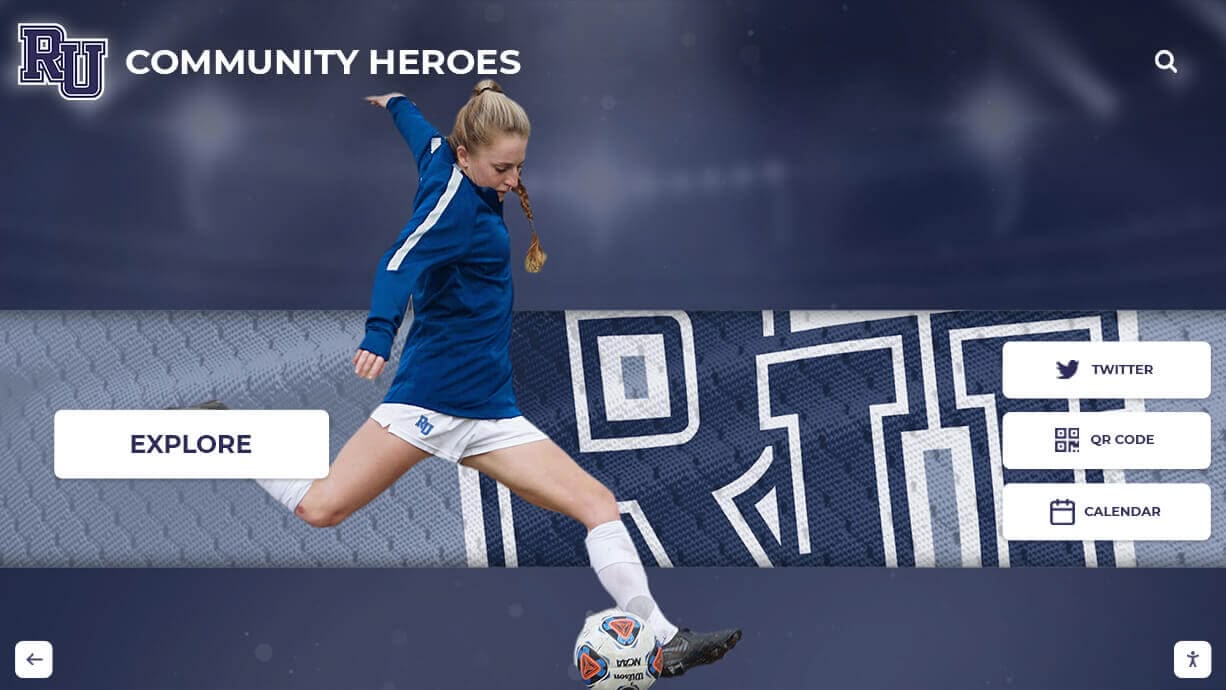
Intuitive touchscreen interfaces encourage extended exploration of student achievements
Real-Time Content Updates
The ability to publish recognition instantly as achievements occur dramatically increases motivational impact. When a student wins a competition on Saturday and sees their accomplishment featured on school displays Monday morning, the immediate acknowledgment reinforces achievement and motivates continued excellence.
Cloud-based content management enables real-time updates from anywhere. After evening performances, competitions, or events, administrators can upload achievements immediately from home computers or mobile devices. Content publishes instantly to all connected displays throughout the school, ensuring recognition appears the next morning when students arrive.
This immediacy also keeps content fresh and relevant. Rather than quarterly updates featuring months-old accomplishments, displays feature current achievements that feel timely and maintain community interest.
Powerful Search and Filtering
Large recognition databases become useful only when content remains discoverable. Interactive boards include robust search functionality allowing students, parents, and visitors to find specific individuals, browse particular achievement categories, filter by grade level or time period, and explore related accomplishments.
A parent attending a school event can walk to an interactive board, search for their student by name, and instantly view their child’s comprehensive achievement profile showing all recognitions across categories and years. This personalized discovery creates pride and engagement impossible with alphabetical lists requiring extensive scanning.
Category filtering enables thematic exploration. Students interested in community service can filter to view all service recognitions, discovering peers who share similar values and potentially identifying mentors or collaboration opportunities.
Analytics and Engagement Measurement
Traditional displays provide no data about whether anyone views content or which recognitions generate interest. Interactive boards include comprehensive analytics showing total interactions, popular search terms, most-viewed achievements, peak usage times, and engagement trends over time.
These insights help schools optimize recognition strategies. If analytics show science fair achievements receive high engagement, schools might expand science recognition. If certain student profiles generate exceptional interest, schools might feature those students in additional communications or recruitment materials.
Analytics also demonstrate program value to administrators and school boards by providing concrete evidence of engagement and community interest in recognition initiatives.
Diverse Application Scenarios for Interactive Recognition Boards
Schools implement interactive boards for various recognition purposes across different educational contexts.
Academic Excellence Recognition
Interactive boards excel at showcasing academic achievement across diverse categories that extend well beyond traditional honor roll lists.
Achievement Categories:
- Quarterly and semester honor roll recognition
- Subject-specific academic awards
- Perfect attendance acknowledgment
- Academic improvement and growth
- Competition achievements (spelling bees, math competitions, science olympiads)
- Research project showcases
- Academic scholarship recipients
- Standardized test excellence
- Course completion milestones
- Advanced placement achievements
For schools implementing comprehensive academic recognition programs, solutions like those showcased at academic excellence board displays demonstrate how interactive technology can celebrate intellectual achievement as prominently as athletic success.
The multimedia capabilities of interactive boards allow schools to go beyond listing names to telling achievement stories. A science fair winner’s profile might include project photos, abstract summaries, video presentations, and judge feedback—creating recognition far richer than certificate display alone.

Detailed achievement profiles provide context and storytelling beyond simple name lists
Athletic Achievement and Record Boards
Athletic recognition has traditionally dominated school display space through trophy cases and record boards. Interactive technology dramatically enhances athletic recognition while addressing limitations of physical displays.
Athletic Recognition Content:
- Team rosters and season records
- Individual athlete achievement profiles
- School records and record progression history
- Championship and tournament results
- Senior athlete recognition
- Coach profiles and career achievements
- Athletic scholarship recipients
- All-conference and all-state selections
- Career statistics and highlights
Schools with strong athletic traditions benefit from digital record board solutions that showcase athletic excellence while remaining updateable as current athletes surpass historical records.
Video integration proves particularly powerful for athletic recognition. Including game highlights, championship moments, or skill demonstrations creates recognition that resonates emotionally with athletes and inspires younger students to aspire toward similar achievements.
The searchable nature of athletic recognition allows visitors to explore historical team rosters, compare statistics across eras, and discover family connections when parents or relatives earned similar athletic honors.
Arts and Performance Recognition
Visual arts, performing arts, and creative achievements deserve recognition equal to academics and athletics, yet often receive less prominent acknowledgment due to space limitations and difficulty displaying evidence of achievement.
Arts Recognition Categories:
- Concert band, orchestra, and choir performances
- Theater production cast and crew
- Visual arts exhibition and awards
- Creative writing publications
- Film and media production projects
- Dance performances and choreography
- Photography and digital arts achievements
- Music competition results
- Arts scholarship recipients
- Festival and adjudication recognitions
Interactive boards perfectly suit arts recognition through multimedia showcasing. Gallery photos from art exhibitions, performance video clips, recorded musical performances, and scanned creative writing provide evidence of achievement that static displays cannot match.
For schools celebrating artistic achievement digitally, approaches demonstrated in student recognition programs illustrate comprehensive strategies for honoring diverse talents.
Character, Service, and Leadership Recognition
Academic achievement and competitive success represent only dimensions of student excellence. Character development, community service, and leadership equally deserve recognition but often receive less attention because these achievements are harder to quantify and display through traditional means.
Character and Service Recognition:
- Student government officers and representatives
- Club leadership positions and contributions
- Community service hours and projects
- Character award recipients (courage, integrity, kindness, persistence)
- Peer mentoring and tutoring
- Anti-bullying leadership
- Environmental and sustainability initiatives
- Fundraising campaign leaders
- Volunteer program participation
- Youth philanthropy recognition
Interactive boards make these less tangible achievements visible and valued by providing them equal prominence alongside academic and athletic recognition. When students see that character and service receive recognition as prominently as test scores and game statistics, school culture shifts toward valuing comprehensive excellence.
Student of the Month and Special Recognitions
Many schools implement student of the month, week, or quarter programs recognizing well-rounded students nominated by teachers and staff. Interactive boards serve as ideal platforms for featuring these special recognitions prominently.
Monthly featured students can include detailed profiles explaining nomination reasons, quotes from nominating teachers, photos from various school activities, and personal statements about goals and achievements. This depth of recognition creates more meaningful acknowledgment than name-only display.
For schools implementing or enhancing these programs, resources about student of the month recognition provide implementation strategies and best practices.
The archive capability of digital boards means students remain searchable and accessible long after their featured month concludes, creating permanent recognition rather than temporary acknowledgment that disappears when new students are featured.
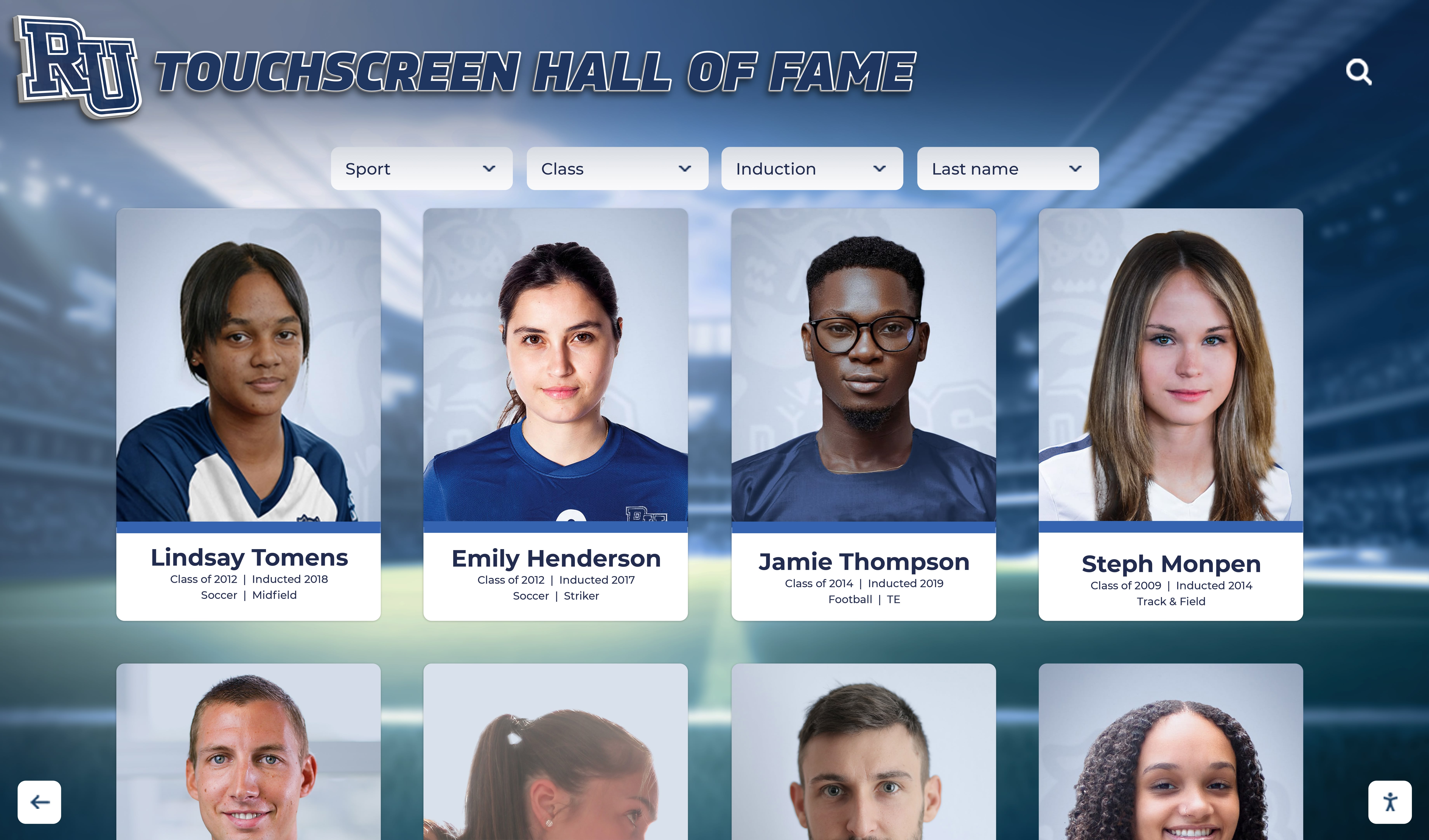
Comprehensive platforms showcase diverse achievement types with equal prominence
Implementation Strategies for Maximum Impact
Simply installing an interactive board doesn’t automatically generate engagement or cultural change. Strategic implementation maximizes adoption, impact, and return on investment.
Strategic Display Placement
Location profoundly influences usage and impact. Interactive boards positioned in high-traffic areas with appropriate dwell time generate significantly higher engagement than those in isolated or rushed locations.
Ideal Placement Locations:
- Main entrance lobbies and reception areas
- Cafeteria and commons areas
- Library or media center entrances
- Athletic facility lobbies and corridors
- Performing arts center gathering spaces
- Outside main office or administrative areas
- Guidance office and college planning areas
Effective placement considers both traffic volume and dwell opportunity. A main entrance sees high traffic but limited dwell time as people pass through quickly. Cafeterias offer extended dwell time as students eat lunch. The optimal location balances traffic and dwell, providing visibility to many students while allowing sufficient time for meaningful interaction.
Multiple displays throughout larger schools ensure accessibility for all students and create recognition visibility across diverse spaces rather than concentrating it in single locations.
Comprehensive Content Strategy
The value of interactive boards correlates directly with content quality and comprehensiveness. Skeletal profiles with minimal information generate limited engagement, while rich content featuring photos, detailed descriptions, and multimedia creates compelling exploration experiences.
Content Development Priorities:
- Start with current achievements to create immediate relevance and excitement among currently enrolled students
- Expand to recent history (past 2-3 years) to include current students’ siblings and maintain relevance for younger families
- Add historical depth selectively, focusing on significant achievements and distinguished alumni that provide aspirational examples
- Maintain content quality consistency ensuring all profiles meet minimum standards rather than having some detailed and others skeletal
- Update regularly so content remains current and students check displays expecting fresh information
Schools typically find that content developed by staff who know students personally creates richer narratives than biographical information submitted through impersonal forms alone. Combining form submissions with personal interviews or nominations generates most compelling content.
Launch Strategy and Promotion
Successful launches create awareness, generate excitement, and establish usage patterns that continue long-term.
Launch Best Practices:
Pre-Launch Anticipation: Communicate about the coming interactive board through newsletters, social media, announcements, and assemblies before installation. Build curiosity and anticipation about what’s coming.
High-Visibility Unveiling: Schedule formal dedication or ribbon-cutting during high-attendance events like homecoming, open house, or recognition ceremonies. Make the launch itself an event worth attending.
Initial Content Focus: Launch with compelling content featuring current students that creates immediate personal relevance. Students are more likely to explore displays featuring themselves or friends than exclusively historical content.
Student Ambassadors: Recruit enthusiastic student volunteers to demonstrate the board during lunch periods, open houses, and parent events. Peer encouragement drives adoption faster than adult promotion alone.
Ongoing Promotion: Continue referencing the interactive board in regular communications, encouraging students to check for new recognitions, and integrating it into school culture rather than treating it as completed project after launch.
Administrator Training and Content Management
While modern interactive board platforms are designed for non-technical users, proper training ensures administrators feel confident and competent managing content independently.
Solutions like Rocket Alumni Solutions provide comprehensive training covering content upload, profile creation, multimedia integration, search optimization, and routine maintenance. This initial training typically requires 2-3 hours and prepares designated staff for independent management.
Ongoing Management Practices:
- Designate specific staff responsible for content updates (avoiding diffused responsibility where no one owns maintenance)
- Establish regular update schedules aligned with achievement cycles (quarterly honor roll, seasonal athletics, annual awards)
- Create submission processes allowing teachers, coaches, and advisors to nominate students for recognition
- Maintain quality standards ensuring consistency across all profiles and categories
- Archive historical content appropriately, keeping searchable but not featuring outdated information prominently
User-friendly platforms require minimal ongoing IT support, with most maintenance handled through intuitive web interfaces accessible to administrative staff without technical backgrounds.
Integration with Broader School Communication
Interactive boards deliver maximum value when integrated into comprehensive communication ecosystems rather than functioning as isolated recognition tools.
Website and Social Media Integration
Most modern interactive board solutions include web-based platforms replicating campus touchscreen content online. Smart schools integrate these web platforms prominently within official websites and link to recognition content from social media channels.
Integration Strategies:
- Feature recognition platform prominently on school homepage with clear navigation paths
- Link from relevant program pages (athletics, academics, arts) to related recognition categories
- Share individual achievement spotlights regularly on social media with links to full profiles
- Embed recognition widgets directly into website pages showing recent or featured achievements
- Include recognition platform links in email communications, newsletters, and parent updates
This integration extends recognition visibility beyond students and staff to include parents who may not visit campus regularly, prospective families researching schools, alumni maintaining connection to current programs, and broader community members following school activities.
Social sharing capabilities allow students to share their recognition directly from displays to personal social accounts, amplifying reach exponentially as family and friend networks view shared achievements.
Parent and Family Engagement
Recognition platforms create valuable parent engagement touchpoints extending beyond back-to-school nights and parent-teacher conferences.
During parent events, encourage exploration of interactive boards as featured activities. Position displays near refreshments or registration areas where parents naturally congregate. Have student ambassadors available to demonstrate features and help parents find their students.
Provide web platform access information prominently in parent communications. Many parents will explore from home when they have time, searching for their own students and discovering classmates’ achievements that provide conversation starters with their children.
For families who cannot attend campus events due to work schedules, distance, or other barriers, web accessibility ensures they can still explore and celebrate their students’ recognition.
Student Recruitment and School Marketing
Interactive recognition boards serve powerful recruitment purposes for prospective families evaluating schools.
Campus tours should feature recognition displays prominently, with tour guides explaining how the school celebrates diverse achievements. Prospective students seeing extensive recognition of current students in areas they’re interested in—whether athletics, arts, academics, or service—develop confidence that their potential achievements would receive similar acknowledgment.
The comprehensive nature of recognition demonstrates school values. Schools that showcase recognition across academics, athletics, arts, service, leadership, and character development communicate that they value well-rounded excellence rather than singular achievement types.
For more on how recognition supports recruitment, resources about college recruitment digital strategies outline how institutions use recognition to attract students.

Strategic placement in high-traffic areas ensures maximum visibility and engagement
Technology Considerations and Requirements
Schools evaluating interactive board solutions should understand technical requirements and considerations for successful implementation.
Hardware Selection
Commercial-grade displays designed for continuous operation provide reliability and longevity that consumer televisions cannot match. Dedicated touchscreen panels designed for public environments withstand heavier use than residential devices.
Key Hardware Specifications:
- Screen Size: 43" to 86" depending on viewing distance and space availability
- Resolution: Minimum 1080p (1920 x 1080), 4K preferred for larger displays
- Touch Technology: Capacitive multi-touch for responsive, accurate interaction
- Brightness: 350-500 nits for standard indoor environments, higher for high-ambient-light areas
- Operating Hours Rating: Minimum 16 hours/day, 24/7 rated preferred
- Warranty: Minimum 3-year commercial warranty
Form factor options include wall-mounted displays suitable for hallways and lobbies, or freestanding kiosk enclosures providing all-in-one solutions with integrated computers, speakers, and attractive housings.
For comprehensive hardware guidance, resources about touchscreen kiosk hardware selection provide detailed specifications and considerations.
Software Platform Requirements
Content management software should prioritize ease of use for non-technical administrators while providing powerful features for rich content creation.
Essential Software Features:
- Intuitive web-based content management accessible from any browser
- No coding or technical skills required for content updates
- Drag-and-drop interfaces for photo and video upload
- Template-based profile creation ensuring consistency
- Bulk import capabilities for large historical datasets
- Search and filtering for content discovery
- User permission management for multiple administrators
- Automatic backups and version history
- Responsive web design for mobile accessibility
- Analytics and reporting capabilities
Cloud-based platforms eliminate on-site server requirements and ensure automatic updates, security patches, and backups without IT intervention.
Network and Installation Requirements
Interactive boards require basic network connectivity and appropriate power infrastructure.
Technical Requirements:
- Ethernet or WiFi network connection for content synchronization
- Standard 110V electrical outlet for display power
- Appropriate mounting surface or floor space for freestanding kiosks
- Clearance space meeting ADA accessibility guidelines
Professional installation services handle mounting, electrical connections, network configuration, and initial setup, ensuring displays are properly installed and fully functional at launch.
Accessibility Considerations
Modern interactive boards should meet accessibility standards ensuring all students can engage regardless of ability.
Accessibility Features:
- Mounting heights accommodating wheelchair users when wall-mounted
- Text size adjustment and high-contrast viewing modes
- Screen reader compatibility for web platform
- Tactile navigation buttons for users with limited fine motor control
- Audio alternatives for visual content where possible
- Closed captions for video content
Thoughtful accessibility implementation ensures recognition remains inclusive for entire student populations.
Measuring Success and Return on Investment
Demonstrating interactive board value requires clear metrics showing engagement, impact, and return on investment.
Engagement Metrics
Modern interactive board platforms provide comprehensive analytics quantifying usage and engagement patterns.
Key Performance Indicators:
- Total interactions (touches/sessions)
- Unique users over specific periods
- Average session duration
- Most-viewed achievements and profiles
- Popular search terms
- Peak usage times and patterns
- Web platform traffic and sources
- Social sharing frequency
These metrics demonstrate actual usage and help optimize content strategy. If analytics show athletic content receives disproportionate engagement, schools might expand academic or arts recognition to achieve better balance.
Cultural and Outcome Impacts
Quantitative engagement metrics tell part of the story, but qualitative impacts on school culture, student motivation, and community pride provide equally important measures of success.
Qualitative Success Indicators:
- Increased nomination submissions from teachers and staff indicating recognition is valued
- Student comments and reactions demonstrating pride in being featured
- Parent feedback showing appreciation for comprehensive recognition
- Prospective family responses indicating recognition influenced enrollment decisions
- Staff morale improvements as they see students celebrated comprehensively
- Reduction in behavior issues as positive recognition increases
Many schools conduct surveys before and after implementation measuring student sense of belonging, pride in school, and perceptions of whether achievement receives appropriate recognition. Positive changes in these metrics demonstrate cultural impact beyond engagement statistics alone.
Cost-Effectiveness and Long-Term Value
While interactive boards require greater initial investment than bulletin boards or trophy cases, long-term analysis often reveals favorable economics.
Cost Comparison Considerations:
- Initial hardware and software investment vs. recurring printing, framing, and trophy costs
- Administrative time savings from digital updates vs. manual content changes
- Space efficiency of single display vs. multiple physical display areas
- Longevity of digital content vs. degradation of physical materials
- Expanded reach and engagement vs. campus-only visibility
- Enhanced recruitment and development outcomes vs. limited traditional display impact
Most schools find that digital recognition systems achieve positive ROI within 3-5 years when accounting for reduced recurring costs, administrative time savings, and institutional benefits from enhanced engagement.
For schools examining financial justification, resources about digital recognition budgeting provide comprehensive cost analysis frameworks.
Common Implementation Challenges and Solutions
Schools implementing interactive boards encounter predictable obstacles. Proactive strategies address these challenges effectively.
Limited Content Development Capacity
Creating comprehensive profiles for many students requires significant effort, particularly for small administrative teams.
Solutions:
- Start with current year only, adding historical content gradually
- Prioritize major achievement categories initially, expanding over time
- Engage student volunteers or classes to research and write profiles
- Use submission forms allowing teachers and coaches to contribute directly
- Accept minimal viable profiles that can be enhanced later rather than waiting for complete content
- Partner with student journalism or yearbook programs to generate content
Budget Constraints
Interactive board systems represent significant investments that may exceed available single-year budgets.
Budget Strategies:
- Phase implementation starting with single display and expanding gradually
- Explore grant opportunities from education foundations or technology programs
- Engage alumni or community donors in sponsoring recognition systems
- Allocate funds from multiple department budgets (advancement, athletics, technology) for shared resources
- Consider leasing or financing options distributing costs across multiple years
- Demonstrate projected savings from reduced printing, trophy, and manual update costs
Change Management and Adoption
Some staff members may resist changing from familiar traditional displays to new digital systems.
Change Management Approaches:
- Involve stakeholders in planning and content strategy from the beginning
- Demonstrate systems from other schools showing successful implementations
- Start with enthusiastic early adopters who champion adoption to others
- Provide thorough training ensuring staff feel confident rather than intimidated
- Highlight benefits specifically relevant to different stakeholders (time savings for administrators, enhanced visibility for coaches, comprehensive recognition for teachers)
- Celebrate successes and share positive feedback reinforcing value
Technical Support and Maintenance
Schools may worry about technical complexity or IT support requirements.
Technical Support Solutions:
- Choose cloud-based platforms minimizing on-site technical infrastructure
- Select vendors offering comprehensive training and ongoing support
- Ensure platforms are designed for non-technical users requiring minimal IT involvement
- Verify warranty and support terms covering hardware failures and repairs
- Establish clear vendor contacts for technical assistance when needed
Modern systems from providers like Rocket Alumni Solutions are specifically designed to minimize technical complexity and IT burden through cloud architecture and intuitive interfaces.
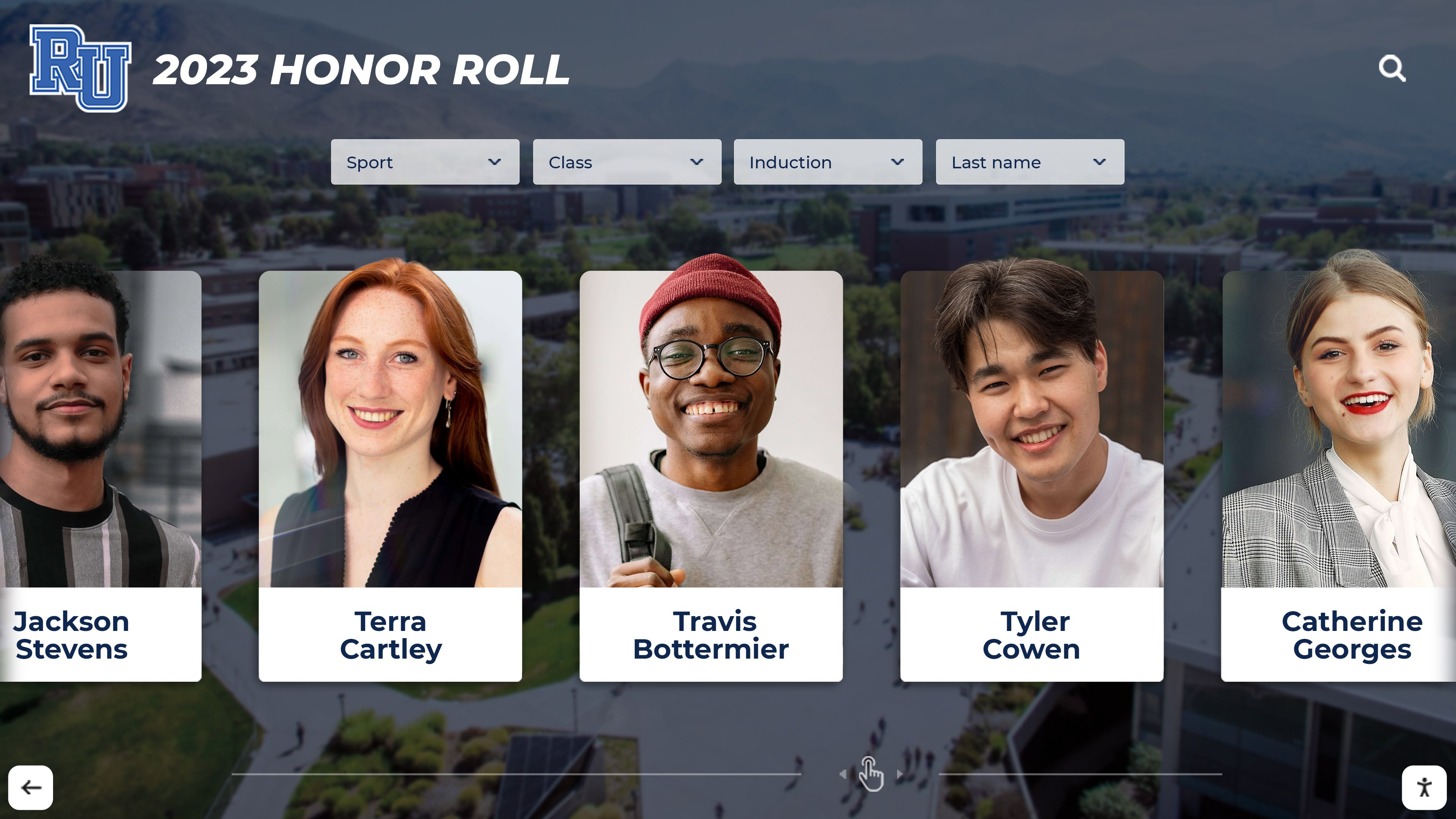
Intuitive content management systems enable non-technical staff to maintain recognition content independently
Future Trends in Interactive Recognition Technology
Interactive board technology continues evolving as new capabilities create enhanced engagement opportunities.
Artificial Intelligence and Personalization
Emerging AI capabilities enable personalized content experiences based on viewer characteristics. Systems might surface content specifically relevant to individual users based on grade level, interests, or previous viewing patterns, creating more relevant experiences that drive deeper engagement.
Integration with Learning Management Systems
Future platforms may integrate with learning management systems and student information systems, automatically pulling achievement data and updating recognition without manual data entry. Automated data flows ensure immediate recognition as achievements occur while reducing administrative workload.
Augmented Reality Enhancements
AR technology could overlay digital content onto physical environments, allowing students to use smartphones or tablets to access additional multimedia content by pointing devices at physical recognition elements, creating hybrid physical-digital experiences.
Social and Gamification Features
Recognition platforms might incorporate social features allowing students to congratulate peers, share achievements to personal profiles, or participate in achievement-based challenges that gamify recognition and increase engagement.
Advanced Analytics and Insights
Enhanced analytics could provide predictive insights identifying students who might benefit from additional encouragement, recognizing achievement trends across demographics, or correlating recognition with other student success metrics like attendance, grades, or behavior.
Conclusion: Transforming Recognition for the Digital Age
Interactive boards represent fundamental evolution in how schools recognize and celebrate student achievement. By addressing the inherent limitations of traditional static displays—space constraints, outdated content, limited accessibility, lack of engagement—digital interactive solutions create recognition experiences that inspire students, engage communities, and strengthen school culture.
The most effective implementations recognize that technology enables engagement but doesn’t create it automatically. Success requires strategic placement that maximizes visibility, comprehensive content that tells compelling achievement stories, intentional launch and promotion that builds awareness and adoption, integration with broader communications that extends recognition reach, and ongoing management that keeps content current and relevant.
For schools seeking to modernize recognition programs, solutions like those from Rocket Alumni Solutions provide comprehensive platforms combining intuitive touchscreen hardware, powerful cloud-based software, rich multimedia capabilities, and web accessibility that together create recognition experiences worthy of student achievement.
Student recognition matters because it reinforces the behaviors and values schools want to cultivate. When achievement receives prominent, engaging acknowledgment, students understand concretely what their schools value. When recognition extends across academics, athletics, arts, service, leadership, and character, students see that multiple pathways to excellence exist and receive validation.
Interactive boards ensure that recognition remains visible rather than becoming invisible wallpaper, accessible rather than geographically limited, current rather than outdated, comprehensive rather than constrained, and engaging rather than passive—transforming how schools celebrate the remarkable achievements of their students.
Transform Student Recognition at Your School
Discover how interactive boards can revolutionize how your school celebrates student achievements. Rocket Alumni Solutions specializes in comprehensive digital recognition platforms designed specifically for educational institutions.
Explore Interactive Board SolutionsWhether implementing new recognition programs or modernizing existing displays, interactive boards provide proven solutions that engage students, honor diverse achievements, and strengthen school communities. The transformation from static bulletin boards to dynamic interactive experiences represents investment in student motivation, school culture, and community pride—outcomes that benefit students, families, and institutions long into the future.




























