Iowa’s high school wrestling tournament isn’t just another state championship—it’s a cultural institution that has shaped generations of athletes, families, and communities since 1921. When wrestlers step onto the mats at Wells Fargo Arena in Des Moines each February, they’re joining a legacy that includes Olympic champions, NCAA titlists, and thousands of athletes whose names are permanently etched in Iowa’s rich wrestling tradition.
This comprehensive guide explores the tournament bracket structure, qualification pathways, championship history, and the unique traditions that make Iowa high school wrestling legendary. Whether you’re a wrestling coach preparing athletes for state competition, an athletic director planning recognition programs, or a school administrator looking to honor wrestling excellence, understanding Iowa’s tournament structure and traditions provides context for celebrating achievements that define athletic culture in the Hawkeye State.
Wrestling occupies a special place in Iowa’s athletic landscape. While other states have passionate wrestling programs, Iowa’s tradition runs deeper—evident in packed arenas, multi-generational family wrestling dynasties, and the fact that state tournament week becomes an unofficial statewide celebration. Schools proudly display state qualifiers and champions on hall of fame walls, creating permanent records of athletes who represented their communities on Iowa’s biggest high school athletic stage.
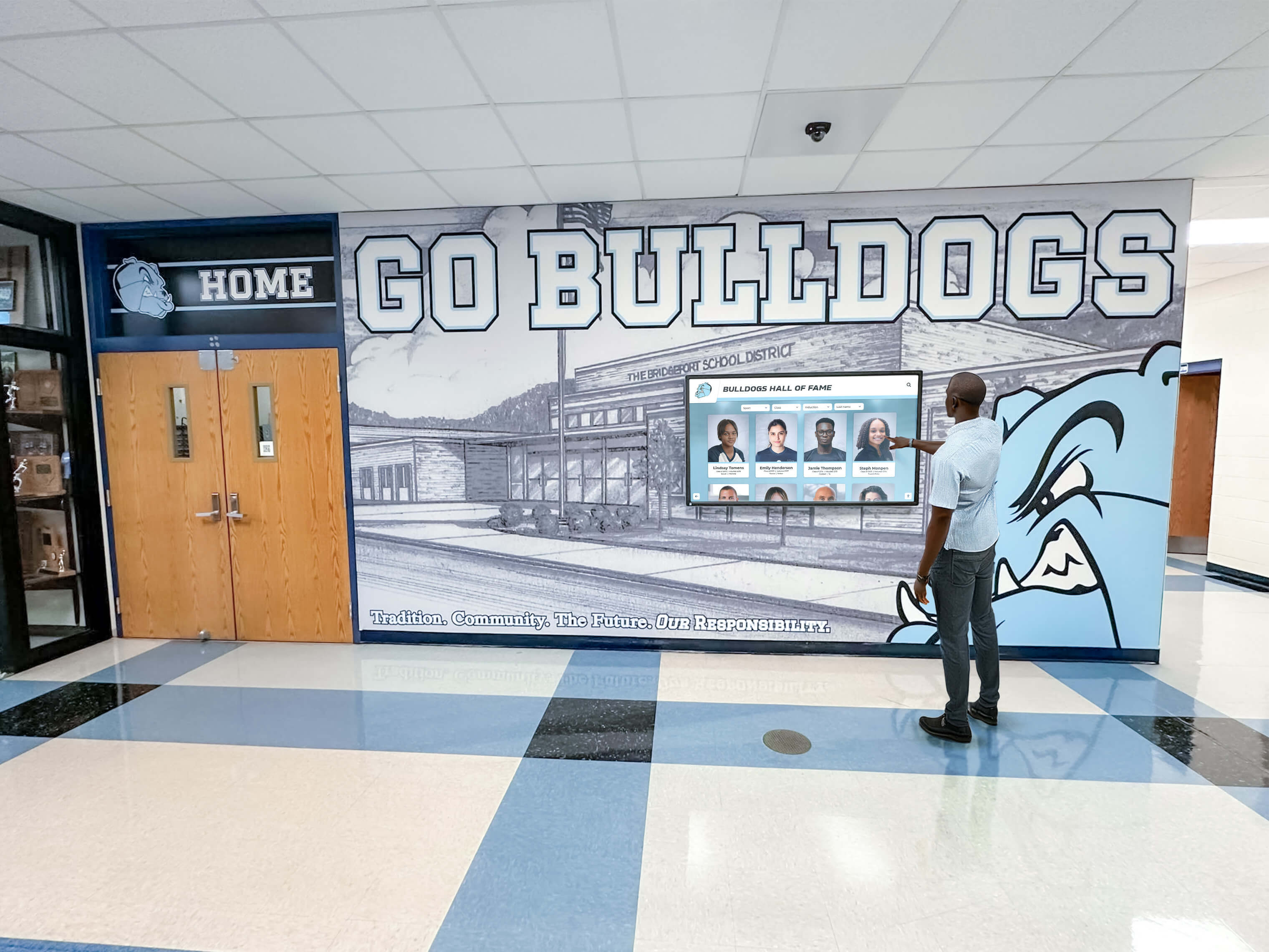
Iowa schools preserve wrestling excellence through dedicated recognition displays honoring state tournament competitors
Understanding the Iowa State Wrestling Tournament Structure
The Iowa High School Athletic Association (IHSAA) oversees three separate state wrestling tournaments each February, accommodating the state’s three classification levels while maintaining the competitive integrity that has made Iowa wrestling renowned nationally.
Three-Class Tournament Format
Iowa wrestling currently operates under a three-class system based on school enrollment, providing appropriate competition levels while maximizing participation opportunities:
Class 3A (Largest Schools)
Class 3A represents Iowa’s largest high schools, typically those with enrollments exceeding approximately 800-1,000 students. These schools often feature the state’s deepest wrestling programs, with extensive youth feeder systems and coaching staffs that have produced numerous nationally-ranked wrestlers. The 3A tournament typically draws the most spectators and media attention, though all three classes maintain exceptional competitive standards.
Schools competing in 3A often have rich wrestling traditions spanning decades, with athletic halls of fame showcasing multiple state champions and team titles. The depth of talent in 3A means that qualifying for state represents a significant achievement, often requiring wrestlers to defeat multiple ranked opponents at district tournaments.
Class 2A (Mid-Sized Schools)
Class 2A encompasses mid-sized schools, creating balanced competition among programs with similar resources and student populations. Many 2A schools maintain wrestling as their flagship winter sport, with community support and tradition rivaling that of larger schools. Several communities have produced remarkable wrestling success stories despite moderate enrollments, demonstrating that in Iowa, wrestling excellence isn’t determined solely by school size.
The 2A classification often features the closest competition, with multiple teams capable of winning team titles and numerous weight classes where five or six wrestlers enter the tournament with legitimate championship credentials.
Class 1A (Smallest Schools)
Class 1A serves Iowa’s smallest schools, many in rural communities where wrestling represents central community identity. These small-school programs often feature remarkable stories of athletes who work family farms before dawn practice, travel hours for competition, and achieve extraordinary success against schools with much larger student populations.
Some of Iowa’s most celebrated wrestling traditions come from 1A programs, with small towns producing disproportionate numbers of state champions and even Olympians. The 1A tournament embodies the grassroots passion that makes Iowa wrestling special, with entire communities traveling to support individual wrestlers representing their schools.
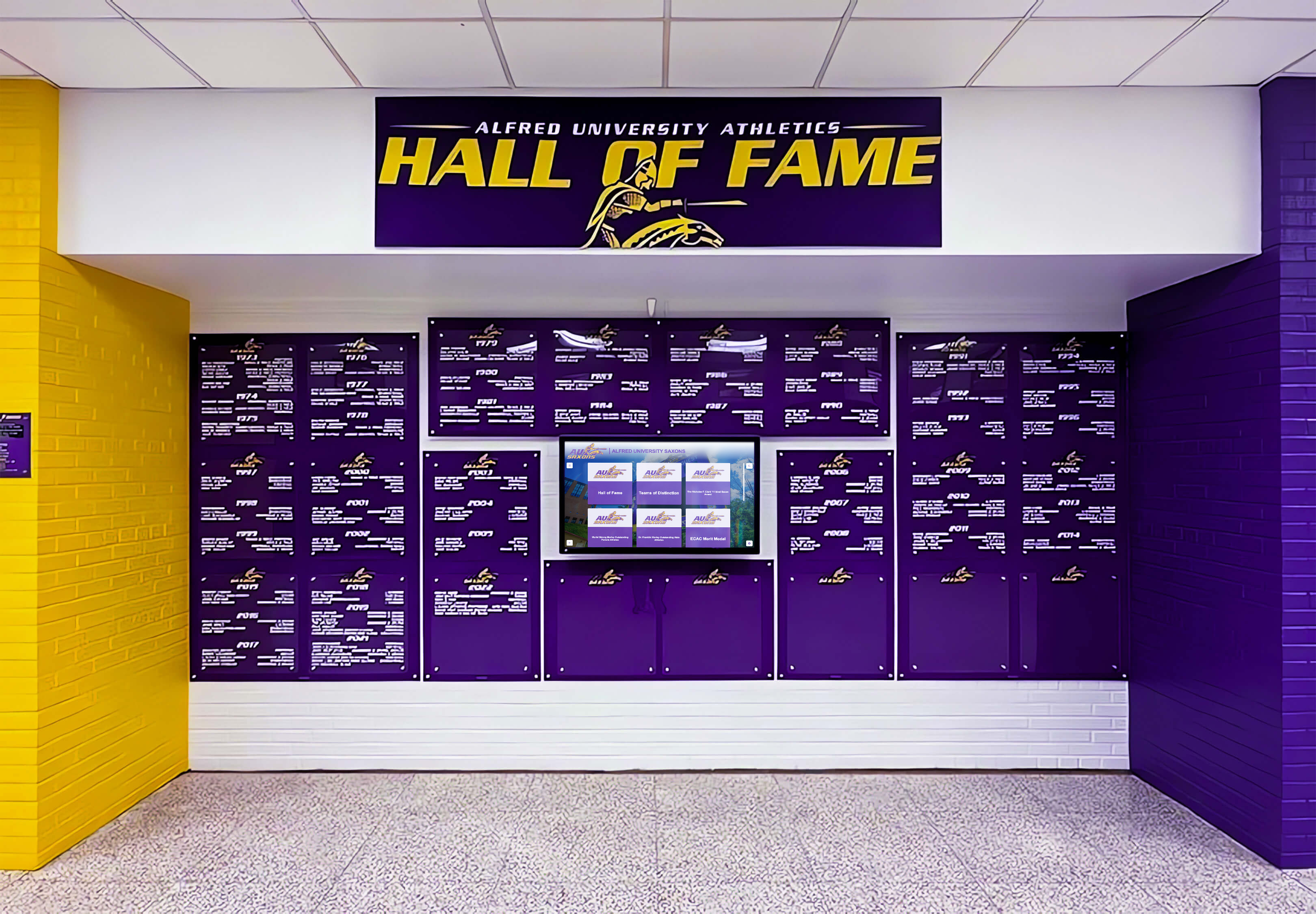
Comprehensive recognition systems showcase wrestling achievements alongside other athletic accomplishments
Tournament Bracket Configuration
Iowa’s state wrestling tournament utilizes a sophisticated bracket system designed to identify the best wrestler at each weight class while providing meaningful recognition for top finishers.
Standard Weight Classes
Iowa wrestling features fourteen weight classes ranging from 106 pounds to 285 pounds, with specific weight designations that have evolved periodically to reflect changing athlete sizes and national standards. Each weight class operates as an independent tournament, with brackets filled through the district qualification process.
Weight classes include: 106, 113, 120, 126, 132, 138, 145, 152, 160, 170, 182, 195, 220, and 285 pounds. Wrestlers compete in one weight class throughout the postseason, with strategic weight management representing a critical element of tournament preparation.
16-Wrestler Bracket Format
Each weight class features 16 state qualifiers who compete in a double-elimination tournament format. This bracket size creates the optimal balance between inclusion (allowing quality wrestlers to reach state) and competitiveness (ensuring tournament matches maintain championship standards).
The double-elimination format means wrestlers must lose twice before elimination from medal contention. A wrestler who loses in the first round doesn’t go home—instead, they drop into the consolation bracket where they can still wrestle back to place as high as third. This structure ensures that a wrestler who happens to face the eventual state champion in an early round still has opportunity for high placement.
Championship and Consolation Brackets
The championship (winners) bracket features first-round winners advancing through quarterfinals and semifinals toward the championship finals. This bracket provides the most direct path to a state title, typically requiring four victories from the quarterfinal stage.
The consolation (wrestleback) bracket runs parallel to the championship bracket, giving wrestlers who suffered single defeats opportunity to battle back. The consolation bracket champion finishes third overall, a prestigious achievement that earns a place on the medal stand and recognition as one of the state’s top three wrestlers at that weight.
District Qualification: The Path to State
Earning one of the sixteen coveted state tournament spots at each weight class requires success at district tournaments held the week before the state championship. Iowa’s district qualification process creates intense competition and dramatic moments that become part of school and community lore.
District Tournament Structure
Iowa divides geographically into multiple districts for each classification, with district assignments balancing competitive equity and travel considerations. Districts typically include 8-12 schools, creating tournament fields where two or three wrestlers at each weight advance to state.
Qualification Positions
Most districts send two qualifiers per weight class to state, though some high-population districts may send three qualifiers in certain weight classes. District champions and runners-up automatically qualify, with true second-place matches determining the second qualifier in districts where three wrestlers may advance.
The district championship often matters less than simply qualifying—many Iowa state champions entered the state tournament as district runners-up. What matters is punching your ticket to Des Moines; placement can be determined at the state level.
High-Stakes Competition
District tournaments generate extraordinary pressure because the stakes are absolute: win and continue your season at state, lose and watch from the stands. Wrestlers who dominated conference competition all season can see their seasons end with one bad match or unlucky draw at districts. The emotional intensity of district tournaments creates memories that athletes, coaches, and families remember for decades.
Schools that qualify multiple wrestlers to state celebrate significant achievements, with communities recognizing that advancing numerous athletes indicates program-wide excellence. Comprehensive recognition programs often highlight state qualifiers alongside state placers, acknowledging the accomplishment of reaching Iowa’s ultimate competitive stage.
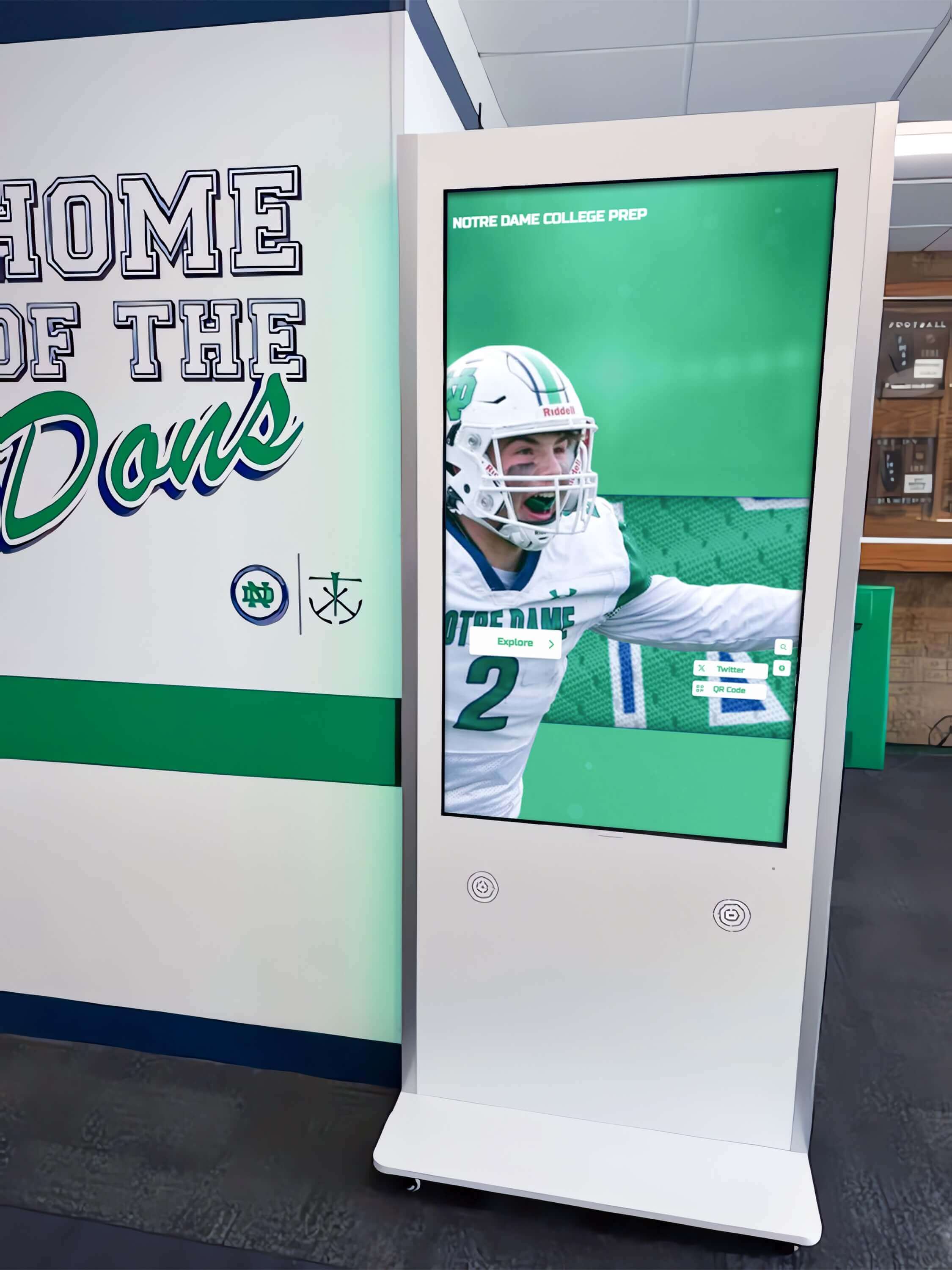
Modern interactive kiosks allow comprehensive exploration of wrestling achievements and tournament history
Seeding at State Tournament
Once the 16 qualifiers at each weight class are determined, the IHSAA seeds wrestlers 1-16 based on season records, head-to-head results, common opponents, and district tournament performance. Seeding dramatically affects tournament brackets, determining which wrestlers face each other in various rounds.
Top Seeds’ Advantage
The #1 seed at each weight typically faces the #16 seed in the first round, with favorable bracket placement continuing through the tournament. Top seeds who advance as expected won’t face another top-four seed until the semifinals, providing a significant competitive advantage.
Earning a #1 seed requires not just an excellent record but dominance throughout the season. Many #1 seeds enter state with undefeated records and rankings among the nation’s top high school wrestlers at their weight. However, upsets occur regularly in Iowa’s competitive environment, with #1 seeds occasionally falling to lower-seeded opponents who peak at the right moment.
Seeding Controversies and Debate
Wrestling fans love debating seeding decisions, particularly when head-to-head results conflict with overall records or when wrestlers from different regions haven’t faced each other. Social media and wrestling forums buzz with seeding discussions in the week before state, with every controversial placement generating passionate debate.
The IHSAA seeding committee bases decisions on objective criteria, but the inherent subjectivity in comparing wrestlers who haven’t competed directly creates ongoing discussion. These debates reflect the deep engagement Iowa communities have with wrestling—people care intensely because the sport matters profoundly in their communities.
Tournament Schedule and Championship Weekend
The Iowa state wrestling tournament transforms Wells Fargo Arena into the epicenter of state athletics for one long weekend each February, with all three classes competing simultaneously or sequentially depending on scheduling logistics.
Multi-Day Format
State tournament action typically spans Thursday through Saturday, with specific schedules varying by classification:
Thursday - First Session
Opening rounds begin Thursday morning or afternoon, with first-round matches and initial consolation rounds establishing bracket flow. Thursday sessions often feature the most diverse competition, with #1 seeds facing #16 seeds and many wrestlers experiencing their first state tournament matches.
For many athletes, simply competing in Thursday’s first session represents the pinnacle achievement of their wrestling careers. Schools celebrate state qualifiers who exit after one or two matches just as enthusiastically as they honor state placers, recognizing that reaching state requires exceptional dedication and performance.
Friday - Quarterfinals and Consolation Rounds
Friday features quarterfinal matches in the championship bracket alongside critical consolation rounds determining who remains in medal contention. By Friday evening, the field narrows significantly, with eight wrestlers at each weight still competing for championship finals positions and another eight battling for medals through the consolation bracket.
Friday evening sessions typically draw the week’s largest crowds, with fans cramming Wells Fargo Arena to watch hometown wrestlers compete for semifinal berths. The atmosphere reaches fever pitch as local wrestlers compete with state championships on the line.
Saturday - Medal Rounds and Championship Finals
Saturday features the tournament’s climactic moments: consolation finals determining third through eighth place, followed by championship semifinals and championship finals at each weight class. Saturday’s finals sessions represent must-see events for Iowa wrestling fans, broadcast statewide and attracting arena capacities exceeding 10,000 spectators.
Championship finals matches create lifetime memories, with gold medal victories earning permanent places in school history. Winners receive championship medals, their names engraved on the state championship trophy, and recognition that will follow them throughout their lives in wrestling-passionate Iowa.
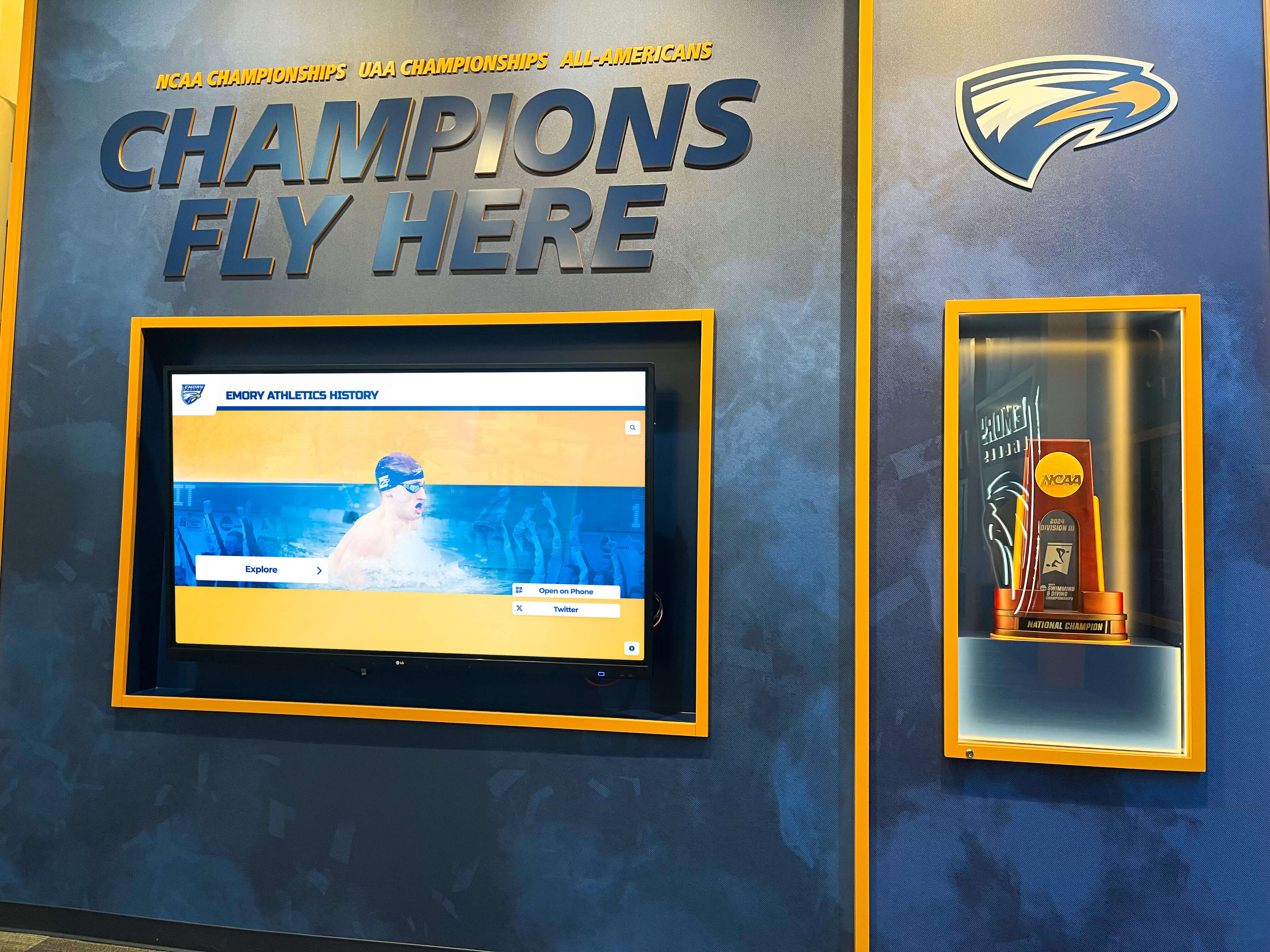
Championship recognition walls preserve tournament excellence while inspiring current athletes
Iowa Wrestling Tournament History and Tradition
Understanding Iowa’s wrestling tradition requires appreciating the tournament’s century-plus history and the legendary athletes and programs that built the sport’s cultural significance.
Tournament Origins and Evolution
The first official Iowa state wrestling tournament occurred in 1921, establishing a tradition that has continued uninterrupted (except for brief periods during World War II) for over a century. Early tournaments featured far fewer participants and weight classes, with the event expanding significantly through the decades as wrestling grew from niche sport to Iowa athletic institution.
Single-Class Era
For most of its history, Iowa conducted a single state tournament where schools of all sizes competed together. This created remarkable David-versus-Goliath matchups, with small rural schools occasionally defeating large urban programs. Some of Iowa’s most celebrated wrestling stories emerged from this era, with tiny schools producing state champions who defeated wrestlers from schools ten times their size.
The single-class format reinforced Iowa’s meritocratic wrestling culture: on the mat, only performance mattered. Small-school wrestlers who defeated larger-school opponents gained legendary status in their communities, while large schools maintained respect for small-program excellence.
Multiple Classification Adoption
Iowa eventually adopted multiple classifications (initially two, later expanding to three) to provide more championship opportunities while maintaining competitive balance. This change generated significant debate, with traditionalists mourning the loss of unified competition while advocates celebrated increased championship access for smaller schools.
The multiple-class format has produced more state champions overall while arguably deepening wrestling’s reach into small communities. Schools that previously might qualify one or two wrestlers to state now routinely advance multiple athletes, strengthening program development and community engagement with wrestling.
Legendary Champions and Programs
Iowa’s wrestling history includes numerous athletes who achieved not just state success but national and international prominence:
Olympic Champions
Multiple Iowa high school state champions proceeded to Olympic glory, including wrestlers who won gold medals representing the United States in various Olympic competitions. These athletes demonstrated the pathway from Iowa high school mats to the world’s most prestigious athletic stage, inspiring generations of young wrestlers to pursue Olympic dreams.
Olympic champions frequently credit their Iowa high school experience as foundational to their development, citing the competitive intensity, coaching excellence, and mental toughness developed through Iowa’s demanding high school wrestling environment.
NCAA Division I Champions
Iowa high school state champions populate the honor rolls of major college wrestling programs, with Iowa, Iowa State, Northern Iowa, and out-of-state powers like Penn State, Oklahoma State, and Minnesota consistently recruiting Iowa’s top talent. Many Hawkeye State products go on to win NCAA individual championships and contribute to team titles at the college level.
The concentration of high-level college wrestling talent developed through Iowa high schools reinforces the state’s reputation as a wrestling hotbed. College coaches nationwide monitor Iowa high school tournament results, understanding that Iowa state placers often translate to college All-Americans.
Dynasty Programs
Certain Iowa programs have built extraordinary sustained excellence, with decades of state qualifiers, placers, and champions creating legendary reputations. Schools like Southeast Polk, Waverly-Shell Rock, Lisbon, and many others have established wrestling dynasties through excellent coaching, community support, and cultures that prioritize wrestling development.
These dynasty programs often feature multi-generational participation, with grandsons wrestling for the same programs where their grandfathers competed. Digital recognition displays in these schools showcase family wrestling legacies spanning decades, with touchscreen interfaces allowing visitors to trace how multiple generations contributed to program excellence.

Interactive displays enable exploration of wrestling family dynasties and multi-generational achievements
Unique Iowa Wrestling Traditions
Iowa’s wrestling tournament features distinctive traditions that distinguish it from other state championships and reflect wrestling’s cultural significance in the Hawkeye State.
The “State Tournament Week” Phenomenon
For one week each February, much of Iowa focuses on the state wrestling tournament. Schools dismiss classes to allow students and staff to attend, businesses close or reduce hours so employees can watch, and local media provides extensive coverage treating tournament results as major news events.
Community Pilgrimage to Des Moines
Towns send substantial portions of their populations to Des Moines for state tournament week, with some communities organizing bus trips, hotel blocks, and coordinated support activities. Small-town Iowa’s state tournament presence creates remarkable scenes, with fans wearing school colors and packing arena sections to support individual wrestlers.
This community mobilization demonstrates wrestling’s unique status in Iowa. While other sports attract dedicated followers, wrestling generates communal participation unmatched by other high school athletics. Parents, grandparents, siblings, teachers, coaches, and community members who might never attend dual meets make the pilgrimage to state, recognizing the tournament’s significance transcends sport.
Wrestling as Community Identity
For many small Iowa towns, wrestling success represents community pride and identity. State qualifiers and champions become community heroes, with their achievements remembered and retold for generations. Schools permanently display state tournament recognition in prominent locations, ensuring that wrestling accomplishments remain visible to current students, inspiring them to pursue similar excellence.
Parade of Champions
One of the tournament’s most anticipated traditions occurs during Saturday’s championship finals session: the Parade of Champions ceremony. Before finals matches begin, previous year’s state champions are introduced and walk onto the arena floor, receiving recognition from the capacity crowd.
Honoring Legacy
The Parade of Champions connects past and present, reminding current competitors that they’re pursuing membership in an exclusive fraternity of Iowa state wrestling champions. Previous champions walk proudly wearing their championship medals or letter jackets, receiving sustained applause while current finalists watch from the tunnel, minutes away from their own championship matches.
This ceremony exemplifies Iowa wrestling’s respect for history and tradition. Champions from decades past receive the same recognition as recent winners, emphasizing that a state championship represents lifetime achievement worthy of permanent honor.
Inspiration for Current Athletes
For wrestlers waiting to compete in finals matches, watching the Parade of Champions provides final motivation. They see ordinary people who achieved extraordinary goals, understanding that in minutes they have opportunity to join this honored group. Many champions cite the Parade as a moment when the tournament’s magnitude truly registered, spurring them to maximum effort in their upcoming matches.
Hall of Fame Walls in Iowa Schools
Walk through virtually any Iowa high school, and you’ll encounter wrestling recognition displays prominently featured in main hallways, gymnasiums, or dedicated athletics wings. These displays vary from traditional plaques to modern interactive digital systems, but all serve the same purpose: permanently honoring athletes who represented their schools at the state tournament.
Comprehensive Recognition Standards
Iowa schools typically recognize:
- State Qualifiers: All wrestlers who qualified for state tournament, often with plaques or digital profiles noting their achievement
- State Placers: Wrestlers who medaled (typically top eight finishers) receive enhanced recognition with placement notation
- State Champions: Gold medalists receive the most prominent recognition, often with individual photos, championship details, and career records
- Team Success: Schools that qualified multiple wrestlers or achieved high team tournament finishes celebrate these accomplishments alongside individual honors
This comprehensive recognition approach reflects Iowa’s appreciation that simply qualifying for state represents exceptional achievement worthy of permanent honor. While champions receive special recognition, schools ensure that all state qualifiers gain lasting acknowledgment for their accomplishments.
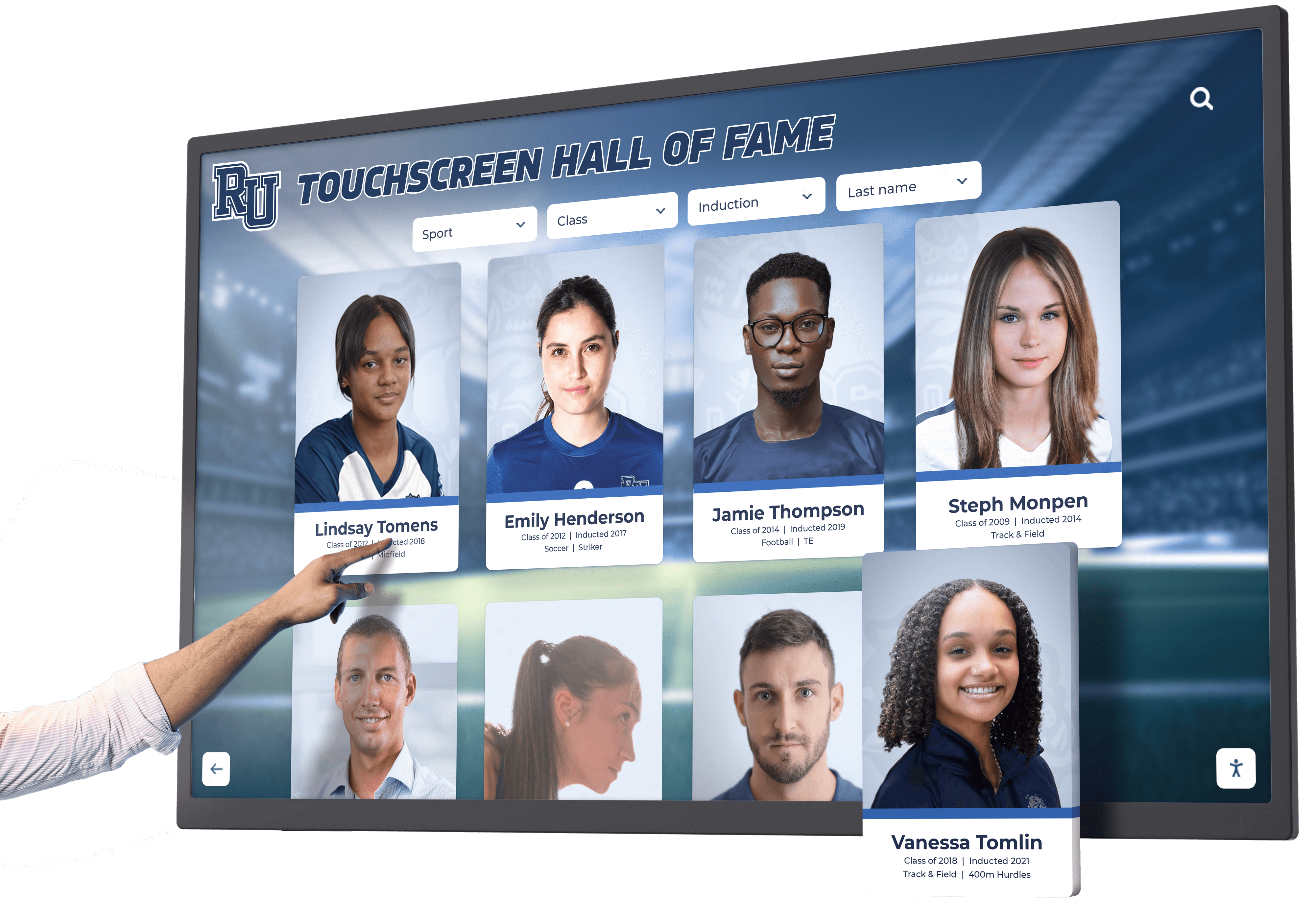
Touchscreen displays provide detailed wrestling achievement information while honoring multi-generational program excellence
Modern Recognition: Honoring Wrestling Excellence
Iowa schools increasingly implement sophisticated recognition systems that preserve wrestling history while inspiring current athletes. These solutions address limitations of traditional static displays while creating engaging experiences for students, alumni, and visitors.
Digital Interactive Displays
Modern touchscreen recognition systems transform how schools honor wrestling achievements, providing capabilities impossible with traditional plaques or trophy cases.
Unlimited Capacity
Digital systems eliminate space constraints that plague traditional displays. Schools can recognize every state qualifier throughout program history rather than choosing which athletes to display based on available wall space. This comprehensive approach ensures no deserving wrestler’s achievement goes unrecognized due to physical limitations.
As wrestling programs continue producing state qualifiers year after year, digital systems scale effortlessly. Adding new champions requires minutes of data entry rather than physical construction, engraving, or wall space renovation.
Rich Storytelling
Digital platforms enable multimedia storytelling that brings wrestling achievements to life:
- Match Footage: Video highlights of championship matches or career-defining victories
- Photo Galleries: Action shots, medal stand photos, and team celebration images
- Detailed Statistics: Complete wrestling records, tournament brackets showing paths to championships, head-to-head results
- Personal Narratives: Wrestler reflections on their achievements, coach commentary, family wrestling legacies
- Historical Context: Era comparisons, program history timelines, tradition documentation
This rich content creates emotional connections far exceeding what static displays achieve, helping current students understand the significance of achievements that occurred before their time.
Interactive Exploration
Touchscreen interfaces allow visitors to navigate content according to their interests:
- Search by wrestler name to find specific individuals
- Filter by graduation year to explore particular eras
- Browse by achievement level (state qualifier, placer, champion)
- View weight class histories showing all-time records
- Compare achievements across different time periods
- Trace family wrestling legacies through multiple generations
These navigation capabilities transform passive viewing into active exploration, increasing engagement and time spent learning about program history.
Web-Accessible Recognition
Extending wrestling recognition beyond physical displays amplifies impact and accessibility:
Remote Access for Alumni
Former wrestlers living anywhere in the world can view their state tournament recognition through web-based platforms. This remote accessibility maintains alumni connections to programs and schools, particularly meaningful for athletes whose families moved away years ago but who retain strong identity connections to their Iowa wrestling roots.
Recruitment Showcase
Prospective wrestlers and families researching schools can explore wrestling program history online, understanding the tradition they would join. Comprehensive digital recognition demonstrates program commitment to honoring achievements, appealing to competitive athletes seeking programs that celebrate excellence.
Social Sharing
Web-based recognition enables easy social media sharing, with families posting their wrestler’s state tournament profiles to Facebook, Twitter, and Instagram. This sharing exponentially expands recognition reach while generating positive school publicity through authentic stakeholder enthusiasm.
Comprehensive Content Management
User-friendly platforms empower athletic directors and coaches to maintain wrestling recognition without technical expertise:
Simple Updates
Cloud-based systems allow administrators to add new state qualifiers within minutes of tournament completion. No waiting for engraving, no coordinating with vendors, no physical installation—just log in, enter information, upload photos, and publish. This immediate recognition maximizes motivational impact while ensuring information remains current.
Historical Backfilling
Schools implementing digital recognition can gradually build comprehensive historical archives by researching and adding wrestlers from decades past. This phased approach allows immediate launch with current wrestlers while systematically honoring historical athletes as time and research permit.
Many Iowa schools discover that alumni eagerly contribute historical information, photos, and stories when given opportunity to help document program history. Digital platforms that facilitate alumni content contribution create collaborative projects strengthening community connections.
Multi-Sport Integration
Wrestling recognition often integrates within broader athletic achievement systems honoring accomplishments across all sports. This integration provides administrative efficiency while ensuring wrestling receives appropriate prominence alongside football, basketball, track, and other sports with state tournament traditions.
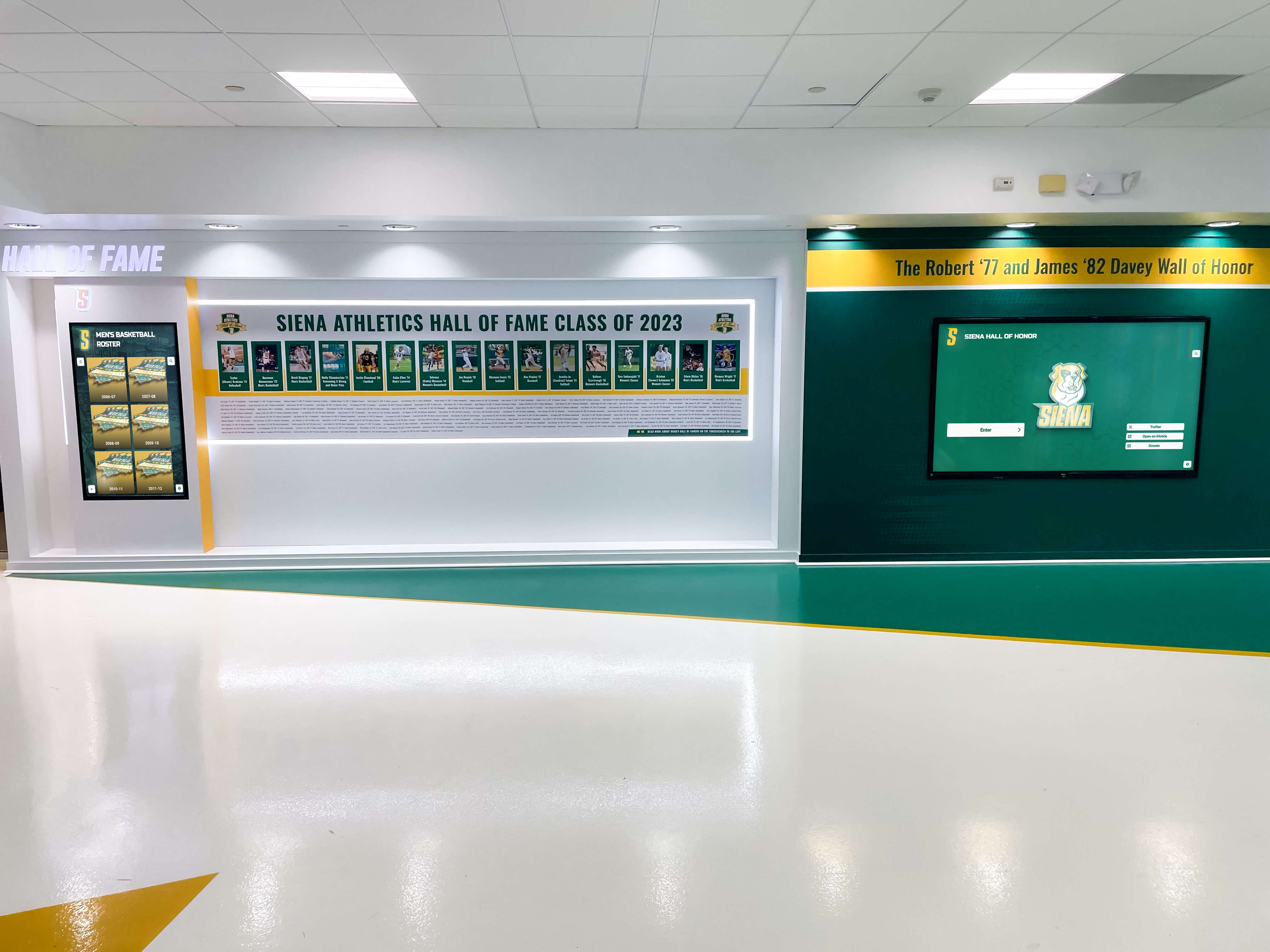
Comprehensive athletic recognition systems integrate wrestling achievements within broader program excellence displays
Best Practices for Wrestling Recognition Programs
Iowa schools implementing wrestling recognition can maximize effectiveness by following proven approaches:
Recognize All State Qualifiers
The intense competition required to qualify for Iowa’s state tournament justifies recognizing all qualifiers, not just placers or champions. District tournaments eliminate many excellent wrestlers—those who advance deserve lasting honor for achieving what most athletes cannot.
Comprehensive recognition that includes all qualifiers demonstrates program respect for achievement at all levels while creating inclusive culture where diverse contributions receive appropriate acknowledgment. This approach particularly matters in Iowa’s competitive environment where qualifying represents genuine excellence worthy of celebration.
Provide Historical Context
Recognition becomes more meaningful when current achievements connect to program history. Digital systems excel at providing context:
- Show all-time records at each weight class so current wrestlers understand standards they’re pursuing
- Highlight multi-generational wrestling families demonstrating how some families have made wrestling central to their identity
- Feature era comparisons acknowledging how rule changes and training evolution affect statistical comparisons
- Document program milestones and turning points that shaped current traditions
- Preserve coaching legacies showing how different coaches contributed to sustained excellence
This historical framing helps current athletes understand they’re contributing to something larger than themselves, building legacies that will inspire wrestlers who haven’t yet entered high school.
Update Promptly
Recognition loses impact when substantial time passes between achievement and acknowledgment. Digital systems enabling same-day updates ensure wrestlers see their state tournament accomplishments properly recognized while excitement remains fresh. This timeliness maximizes motivational value while demonstrating that schools genuinely value wrestling achievements.
Integrate Academic Recognition
Iowa’s wrestling culture emphasizes complete student-athlete development, not just mat success. Recognition systems should highlight academic achievements alongside athletic accomplishments:
- Academic All-State honors
- Scholar-athlete awards
- College placement and academic success
- Career achievements demonstrating how wrestling developed life skills
This balanced recognition reflects educational priorities while honoring the complete student-athlete rather than solely athletic performance.
Enable Alumni Engagement
Recognition systems that invite alumni contribution create ongoing connections:
- Submission forms for photos, stories, and historical information
- Comment capabilities allowing alumni to share memories
- Email notifications when new content about their era is added
- Alumni spotlight features periodically highlighting historical wrestlers
- Reunion integration connecting recognition to alumni events
Solutions like Rocket Alumni Solutions specifically design features supporting alumni engagement, understanding that effective recognition creates two-way relationships between schools and graduates rather than one-directional displays.
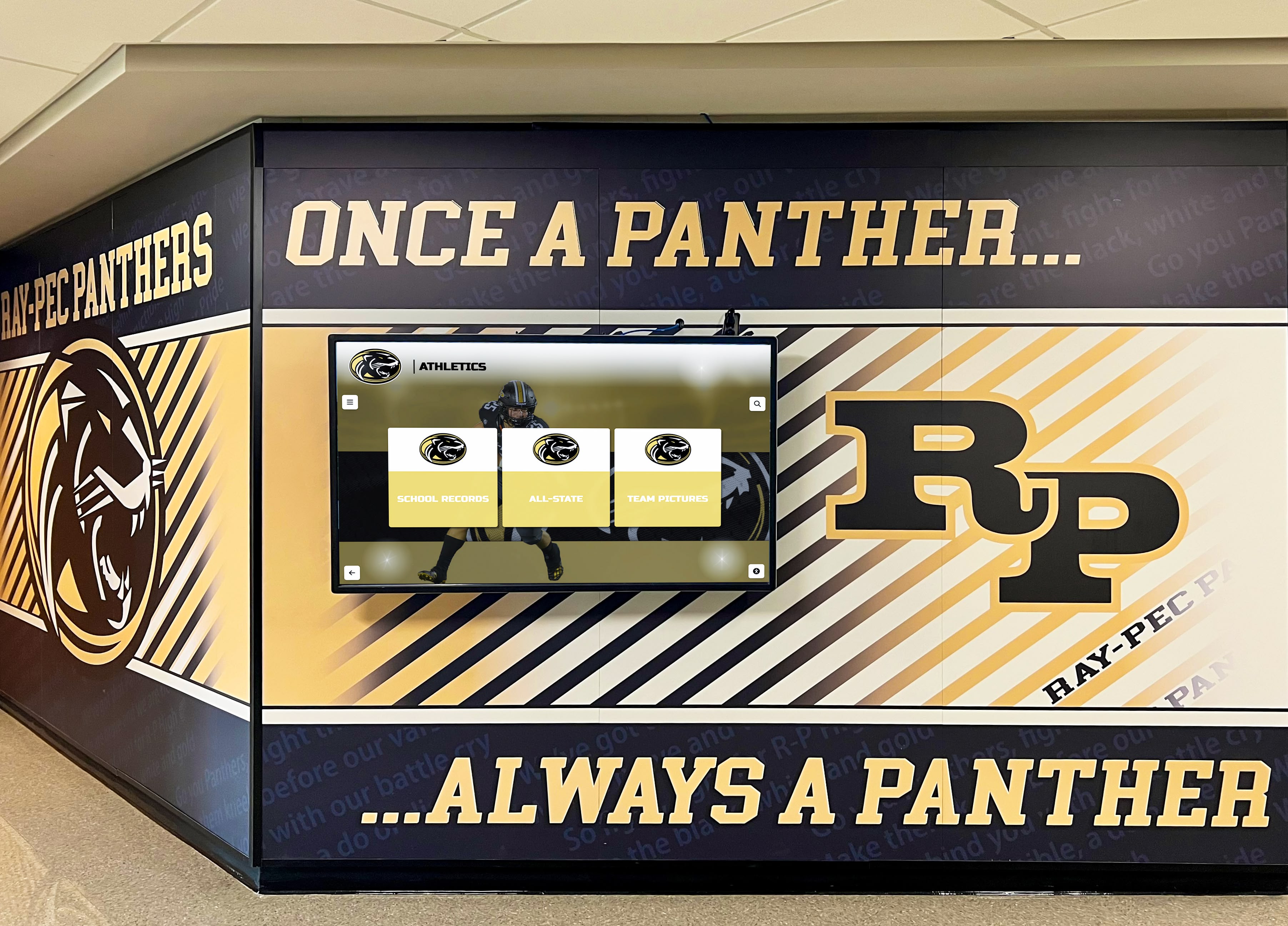
Prominent hallway placement ensures wrestling recognition remains visible to all students and visitors
Impact of Wrestling Recognition on Program Culture
Comprehensive, visible wrestling recognition delivers measurable benefits beyond simple acknowledgment:
Increased Participation
When schools effectively celebrate wrestling achievements, more students consider joining programs. Visible state tournament recognition in hallways and digital displays demonstrates that wrestling success receives institutional appreciation equivalent to more prominent sports like football and basketball. This visibility particularly matters for attracting athletes who might otherwise focus exclusively on other sports.
Alumni Support and Giving
Properly recognized alumni maintain stronger connections to programs, translating to financial support, volunteer coaching, facility improvement advocacy, and mentorship for current wrestlers. Many Iowa wrestling programs fund equipment, travel, and facility improvements through booster clubs heavily supported by former wrestlers whose ongoing engagement stems partly from proper recognition of their achievements.
Digital recognition platforms particularly enhance alumni engagement by providing remote access to program updates and recognition. Former wrestlers checking their profiles from across the country often rediscover program connections, leading to renewed involvement and support.
Tradition Preservation
Wrestling’s culture depends on passing traditions from generation to generation. Recognition systems serve as institutional memory, ensuring that current athletes understand program history and traditions even when coaching changes occur. Well-documented recognition prevents historical amnesia that can erode program culture when knowledgeable coaches or community members pass away or move.
Recruiting Advantage
Prospective wrestlers and families evaluating multiple programs notice recognition systems during facility tours. Comprehensive, professional wrestling recognition demonstrates program commitment to honoring excellence, appealing to competitive athletes seeking environments that celebrate achievement. In Iowa’s competitive recruiting environment where programs battle for limited elite talent, recognition can provide differentiation that influences commitment decisions.
Technology Requirements and Implementation
Schools considering digital wrestling recognition should understand technical requirements and implementation processes:
Hardware Considerations
Display Selection
Commercial-grade touchscreen displays designed for high-traffic public environments provide durability necessary for school hallways where hundreds of students pass daily. Consumer televisions lack the ruggedness and touch responsiveness required for reliable long-term operation.
Display sizes typically range from 55-75 inches, with larger displays providing better visibility in wide hallways or large gathering spaces. Placement height should accommodate accessibility requirements while remaining visible to passing students.
Network Connectivity
Cloud-based content management systems require network connectivity, typically via ethernet or reliable WiFi. Schools should verify network access at proposed display locations during planning. Most wrestling recognition platforms require minimal bandwidth, making connectivity straightforward in schools with modern network infrastructure.
Installation Requirements
Professional installation ensures proper mounting, electrical connection, and network configuration. Wall-mounted displays require structural backing capable of supporting display weight, while floor-standing kiosks need stable placement in high-traffic areas. Installation typically occurs during breaks when hallway traffic allows work completion without disrupting instruction.
Software Platform Selection
Wrestling recognition platforms vary in capabilities, pricing, and user-friendliness:
Sport-Specific Features
Platforms designed specifically for athletic recognition include wrestling-specific templates, bracket visualization tools, weight class organization, and tournament integration capabilities. Generic digital signage software adapted for schools typically lacks these specialized features, requiring custom development that adds cost and complexity.
Content Management Interface
User-friendly content management systems allow athletic directors and coaches to maintain wrestling recognition without technical expertise. Look for platforms offering:
- Intuitive form-based wrestler profile creation
- Drag-and-drop image upload
- Bulk data import from spreadsheets
- Template-based design maintaining consistent appearance
- Preview functionality showing changes before publication
Systems requiring coding knowledge or complex procedures will likely result in outdated content as busy athletic staff lack time for complicated updates.
Web Integration
Platforms that automatically publish wrestling recognition to school websites extend reach beyond physical displays while providing single-source content management. This integration ensures consistency between physical displays and web content while reducing duplicate data entry.
Implementation Timeline
Wrestling recognition implementation typically spans 6-12 weeks:
Weeks 1-2: Planning and Vendor Selection
- Define recognition scope (current season only, recent years, comprehensive history)
- Evaluate potential vendors and platforms
- Determine budget and funding sources
- Select installation location and confirm technical feasibility
Weeks 3-6: Content Development
- Research historical wrestlers requiring recognition
- Gather photos and biographical information
- Enter data into content management system
- Review and proofread all content
Weeks 7-8: Installation
- Schedule and complete hardware installation
- Configure network connectivity and software
- Train administrators on content management
- Test system functionality
Weeks 9-10: Launch and Promotion
- Unveil recognition system during school event
- Promote through school communications and social media
- Demonstrate system to students, staff, and visitors
- Gather feedback and make adjustments
Many Iowa schools time implementation to complete shortly after the state tournament, allowing immediate recognition of current year’s qualifiers and placers while maximizing impact during spring recruiting season.
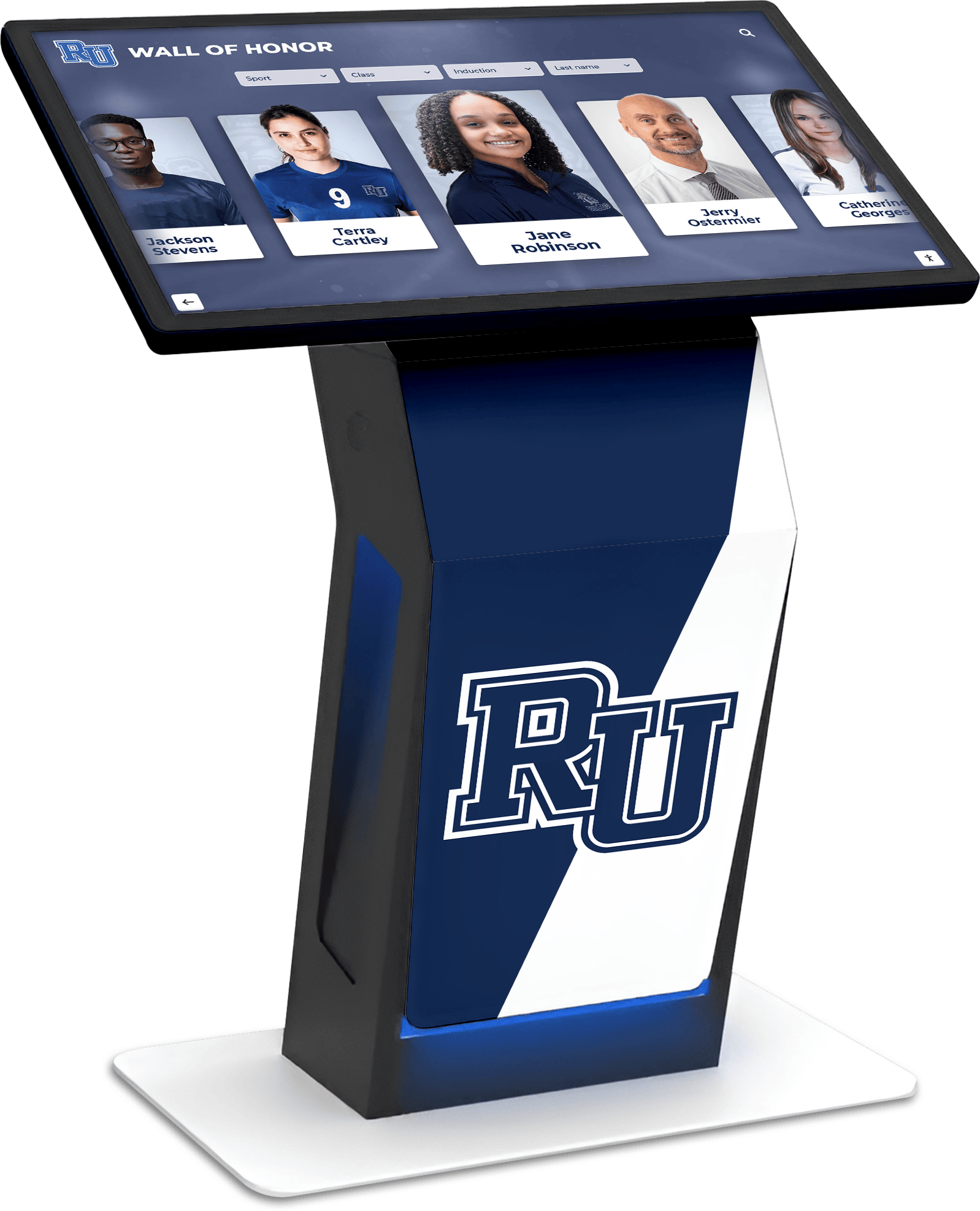
Floor-standing kiosks provide flexible recognition solutions for schools without available wall space
Conclusion: Preserving Iowa’s Wrestling Legacy
Iowa’s high school wrestling tournament represents far more than athletic competition—it embodies community identity, family tradition, and cultural values that distinguish the Hawkeye State. The tournament’s bracket structure, qualification intensity, championship history, and unique traditions create experiences that shape athletes, families, and communities for generations.
Properly recognizing state tournament achievement honors not just individual wrestlers but the coaches, families, communities, and traditions that make Iowa wrestling legendary. While traditional plaques and trophy cases served for decades, modern digital recognition systems address limitations inherent in static displays while creating engaging experiences that inspire current athletes and maintain alumni connections.
Schools implementing comprehensive wrestling recognition report measurable benefits: increased program participation, stronger alumni engagement, enhanced recruiting, preserved traditions, and vibrant program cultures that celebrate excellence across all achievement levels. These systems particularly resonate in Iowa where wrestling holds unique cultural significance and where communities expect proper acknowledgment for athletes who reach the state tournament stage.
The question facing Iowa wrestling programs isn’t whether modern recognition offers advantages—evidence conclusively demonstrates it does. The question is whether programs will lead this evolution or continue managing the limitations and frustrations of traditional approaches while peer schools forge ahead with solutions better serving their communities.
Honor Your Iowa Wrestling Tradition
Rocket Alumni Solutions provides comprehensive wrestling recognition systems designed specifically for Iowa schools that want to preserve tournament history, honor all achievement levels, and inspire current athletes through engaging digital displays and web-accessible platforms.
Our platform addresses every requirement outlined in this guide—unlimited capacity for recognizing state qualifiers across program history, multimedia storytelling bringing achievements to life, intuitive content management enabling simple updates, web accessibility extending recognition worldwide, and sport-specific features optimized for wrestling programs. Whether you're honoring decades of wrestling tradition or building recognition from the ground up, we'll help you create systems that properly celebrate your community's wrestling excellence.
This wrestling season, evaluate how your program recognizes state tournament achievements. Will this year’s qualifiers, placers, and champions receive the same limited acknowledgment as generations before them, or will you implement recognition solutions that tell their complete stories, preserve their achievements comprehensively, and inspire countless wrestlers who will follow in their footsteps?
For athletic directors committed to honoring Iowa wrestling tradition, for coaches seeking tools that motivate championship-level performance, and for administrators wanting recognition systems that strengthen program culture—modern digital platforms offer proven solutions matching Iowa wrestling programs’ unique needs and deserving the legendary tradition that makes Hawkeye State wrestling special.
Explore how schools across Iowa are implementing digital recognition solutions preserving wrestling excellence, discover comprehensive approaches to athletic achievement recognition celebrating sports traditions, or learn about state championship displays showcasing tournament achievements that define program identity.
Frequently Asked Questions
How many wrestlers qualify for the Iowa state wrestling tournament?
Each weight class features 16 state qualifiers in each of Iowa’s three classifications (1A, 2A, 3A), creating a total of 48 wrestlers competing at each weight across all classifications. With 14 weight classes, approximately 672 total wrestlers qualify for state tournament competition each year. Qualification occurs through district tournaments where the top 2-3 finishers at each weight advance to state, with the specific number depending on district size and competitive depth.
What is the format of the Iowa high school wrestling state tournament bracket?
Iowa uses a 16-wrestler double-elimination bracket at each weight class. Wrestlers compete in championship (winners) and consolation (wrestleback) brackets, with wrestlers needing two losses before elimination from medal contention. The bracket typically requires four victories from the quarterfinal stage to win a state championship, though wrestlers entering through the consolation bracket may need five or six total victories to reach the medal stand. This format ensures quality wrestlers who lose early matches to eventual champions still have opportunity to place highly.
Where is the Iowa high school wrestling state tournament held?
The Iowa state wrestling tournament is held at Wells Fargo Arena in Des Moines, Iowa. This modern facility provides seating for over 10,000 spectators and features multiple mats allowing simultaneous matches across different weight classes and classifications. Wells Fargo Arena has hosted the tournament since replacing Veterans Memorial Auditorium as the tournament venue, providing the capacity and amenities necessary for one of the nation’s largest and most-attended high school sporting events.
How long has Iowa been holding a state wrestling tournament?
Iowa’s first official state wrestling tournament occurred in 1921, establishing a tradition that has continued for over a century. The tournament has evolved significantly since those early days, expanding from a small single-class competition to the current three-classification format featuring hundreds of wrestlers. Brief interruptions occurred during World War II, but otherwise the tournament has maintained annual continuity, building the rich history and tradition that makes it culturally significant throughout Iowa.
What makes Iowa high school wrestling different from other states?
Iowa wrestling distinguishes itself through unmatched cultural significance, community engagement, and competitive depth. The state tournament draws capacity crowds exceeding 10,000 spectators, with entire communities traveling to support individual wrestlers. Iowa has produced disproportionate numbers of Olympic and NCAA champions relative to state population, reflecting excellent youth development, coaching quality, and competitive intensity. Wrestling’s prominence in Iowa exceeds other states where it competes for attention with more popular sports, whereas in Iowa wrestling often takes precedence over football and basketball in many communities.
How do schools recognize Iowa state tournament qualifiers and champions?
Iowa schools typically maintain comprehensive wrestling recognition displays in prominent hallway locations, honoring state qualifiers, placers, and champions. Traditional approaches include plaques, trophy cases, and painted record boards, though many schools now implement digital interactive displays providing unlimited capacity and rich storytelling capabilities. Recognition standards vary by school but commonly include photos, weight class, year, placement, and career records. Many Iowa schools recognize all state qualifiers rather than only champions, acknowledging that qualifying for state represents significant achievement in Iowa’s competitive environment.
What are the Iowa wrestling weight classes?
Iowa high school wrestling features fourteen weight classes: 106, 113, 120, 126, 132, 138, 145, 152, 160, 170, 182, 195, 220, and 285 pounds. These weight classes align with national high school wrestling standards, though specific weights have evolved periodically to reflect changing athlete sizes and national governing body decisions. Wrestlers compete in one weight class throughout the postseason, with weight management and strategic weight class selection representing important aspects of tournament preparation and team strategy.































