Every year, millions of students and their families receive an invitation that reads something like: “Congratulations! Based on your outstanding academic achievement, you have been selected for membership in the National Honor Society for…” The envelope looks official. The language sounds prestigious. And then comes the line that gives pause: a membership fee, a required purchase, or a link to a website that nobody at the school has ever mentioned.
The question “is honor society legit?” has become one of the most searched phrases among high school students, college freshmen, and their parents — and for good reason. The landscape of honor societies ranges from deeply respected, century-old organizations with rigorous selection standards to for-profit companies that send mass-invitation emails to every student who clears a modest GPA threshold. Knowing the difference is not just about avoiding a wasted membership fee; it is about understanding what academic recognition actually means and how to find the programs that genuinely advance a student’s record.
This guide breaks down exactly how to evaluate any honor society invitation, what the legitimate organizations look like, and how schools can build authentic recognition programs that mean something long after graduation.
The confusion around honor society legitimacy is not accidental. Many organizations deliberately use names and visual branding that echo the most prestigious programs — the National Honor Society, Phi Beta Kappa, Phi Theta Kappa — without holding themselves to similar standards. Understanding the markers of genuine recognition helps students and families make informed decisions and protects the value of real academic achievement.

Authentic recognition is embedded in the institution itself — visible in hallways, documented in records, and tied to real selection criteria
What “Honor Society” Actually Refers To
Before answering whether a specific honor society is legit, it helps to understand that the phrase “honor society” is not a protected term. Any organization can use it. This is fundamentally different from, say, “National Merit Scholar,” which is administered by a single nonprofit and cannot be claimed without official recognition.
There are three broad categories of honor societies operating in the United States today:
Category 1: Established Nonprofit Academic Honor Societies These organizations have been operating for decades, are affiliated with accredited educational institutions or national academic associations, maintain chapters through formal school administration, and select members through faculty-reviewed criteria. They include:
- National Honor Society (NHS) — Founded in 1921 and administered by the National Association of Secondary School Principals (NASSP). Selection requires demonstrated achievement across scholarship, service, leadership, and character. Chapters exist within schools and are overseen by faculty advisors. See a full breakdown of the National Honor Society induction ceremony guide for advisors and what selection actually involves.
- Phi Beta Kappa — The oldest academic honor society in the United States (founded 1776), selective college-level membership awarded by institutional chapters with no application process and no fees charged to members.
- Phi Theta Kappa (PTK) — The premier honor society for students at accredited two-year colleges, recognized by the American Association of Community Colleges.
- Tau Beta Pi, Sigma Xi, and discipline-specific societies — Established academic organizations recognized within professional fields.
Category 2: For-Profit “Honor Society” Companies These are businesses — registered as LLCs or corporations — that offer membership in exchange for an annual fee. They may send invitations to large lists of students who meet minimum criteria and provide benefits like scholarship databases, resume templates, or networking features in exchange for dues. The most discussed example is HonorSociety.org, which markets itself to college students and charges annual membership fees. These organizations are technically legitimate businesses, but they are not honor societies in the traditional academic sense.
Category 3: Predatory Schemes At the far end of the spectrum are organizations that offer no meaningful benefits, collect fees, and may use misleading names to imply affiliation with prestigious programs. These generate the most urgent consumer-protection concerns.
The Six Red Flags That Answer “Is Honor Society Legit?”
When a student or family receives an invitation, these six questions cut through the confusion quickly.
1. Does the Organization Require a Fee for Membership?
This is the single most important question. The National Honor Society does not charge students membership fees — schools pay a chapter fee, and the organization’s structure is built around faculty selection, not student payments. Phi Beta Kappa explicitly does not charge initiation fees to members. PTK charges a one-time modest fee that goes toward scholarship funding and is paid once at induction, not annually.
If an organization requires an ongoing annual membership payment to retain membership status, that is a strong indicator you are looking at a for-profit business, not a traditional academic honor society.
2. Was the Invitation Unsolicited and Mass-Distributed?
Legitimate honor societies do not send unsolicited invitations to students without any input from the school. NHS membership requires a faculty council to review applications and vote on candidates — the school initiates the process, not the organization. If a student received an email out of nowhere with no corresponding communication from their school or college, that invitation almost certainly did not come from a recognized chapter operating within that institution.
3. Does the School Recognize the Organization?
The simplest verification step: ask the school counselor or academic advisor whether the organization is recognized and whether a chapter exists at the institution. For high school students, ask the NHS faculty advisor specifically. For college students, contact the dean of students office. Legitimate honor societies are embedded in institutional academic life — their chapters appear in school directories, their inductions are noted in official records, and their faculty advisors are identifiable staff members.
4. Is the Organization Listed in Recognized Directories?
The Association of College Honor Societies (ACHS) certifies and maintains a directory of recognized college-level honor societies. An honor society that is not listed in the ACHS directory — and claims college-level prestige — should be treated with significant skepticism. There is no equivalent certification body for high school honor societies, but NHS is the only national organization operating through NASSP with chapters in accredited secondary schools.
5. What Are the Selection Criteria?
Legitimate academic recognition involves genuine selection. NHS requires candidates to meet a GPA threshold and then submit a documented application reviewed by a faculty council evaluating service, leadership, and character — a process that results in some candidates not being selected. If an organization’s only criterion is a basic GPA cutoff with no additional review, it is describing an automated list, not a selective honor.
For deeper context on what genuine academic achievement recognition involves across K-12 settings, the guide on best ways to highlight student accomplishments covers how schools design meaningful recognition programs.
6. What Are the Actual Benefits?
Before paying any membership fee, identify exactly what the benefit is and whether that benefit is available elsewhere for free. Many for-profit honor societies offer scholarship databases — but FASFA.gov, College Board, and Scholarship America maintain free scholarship search tools. If the primary benefit is “recognition” through a certificate or directory listing that no college admissions officer will recognize, that recognition carries no practical weight.

Genuine academic recognition is documented within the school's own records and displayed in contexts where the entire community can see it
The HonorSociety.org Question Specifically
Because HonorSociety.org generates a significant share of the searches for “is honor society legit,” it is worth addressing directly. HonorSociety.org is a for-profit company based in San Francisco. It is registered as a business, not a nonprofit. It sends invitations to college students who meet basic eligibility criteria and offers membership benefits — including scholarship search tools, networking features, and resume resources — in exchange for annual fees.
The Better Business Bureau has received complaints about the organization relating to billing practices and difficulty canceling memberships. Several state attorneys general have received consumer complaints about the company. None of this makes it a fraud in the legal sense, but it does clarify what it is: a subscription service using honor society branding, not a traditional academic recognition organization.
Listing HonorSociety.org on a resume is not inherently dishonest, but it is unlikely to impress admissions officers or employers who are familiar with the distinction. The organization is not recognized by ACHS.
What Legitimate Academic Recognition Looks Like
Having established what to avoid, it is worth being equally specific about what genuine academic recognition involves — because the bar is real and the recognition matters.
National Honor Society: The High School Standard
For high school students, NHS membership is the legitimate standard for comprehensive academic honor society recognition. The selection process requires:
- A cumulative GPA meeting the chapter’s requirement (typically 3.5 or higher on a 4.0 scale)
- A completed application documenting service hours, leadership roles, and character
- Faculty council review and vote — candidates can be denied
- No membership fee charged to students
NHS membership appears in official school records, is noted in graduation programs, and is recognized by virtually every college admissions office in the country. The resource on school awards for students includes context on how NHS fits within broader school recognition frameworks.
AP Scholar and National Merit: Achievement-Based Designations
Some of the most credible academic recognition programs involve no membership application at all:
- AP Scholar Awards are awarded by College Board to students who achieve qualifying scores on AP exams. They cannot be purchased or applied for — they are automatically conferred based on exam performance. These designations carry weight precisely because they reflect what a student did in an exam setting, not what they paid a membership fee for. For a clear baseline on the gold standard of secondary school honor societies, the resource on what the National Honor Society is and how it operates provides valuable context for schools helping students evaluate invitations.
- National Merit Scholarship Program recognizes students based on PSAT/NMSQT performance. Commended, Semifinalist, Finalist, and Scholar designations are awarded through a competitive process with no fee involvement.
- College Board National Recognition Programs honor students from underrepresented backgrounds who meet GPA and AP exam standards.
These designations carry weight precisely because they cannot be bought — they reflect what a student did on an exam or in a course.
Honor Roll: The School’s Own Recognition
Honor roll programs — issued by the school, based on term GPA, and announced through official school channels — are a form of legitimate recognition that many families undervalue. Because honor roll is managed internally and does not involve a third-party organization, there is no ambiguity about its basis. A student’s appearance on their school’s honor roll is a verified academic credential.
For insight into how schools build recognition cultures that surface multiple dimensions of student achievement, the guide to student ambassador programs and how schools recognize standout student leaders provides useful context on how schools design institutional recognition that means something.
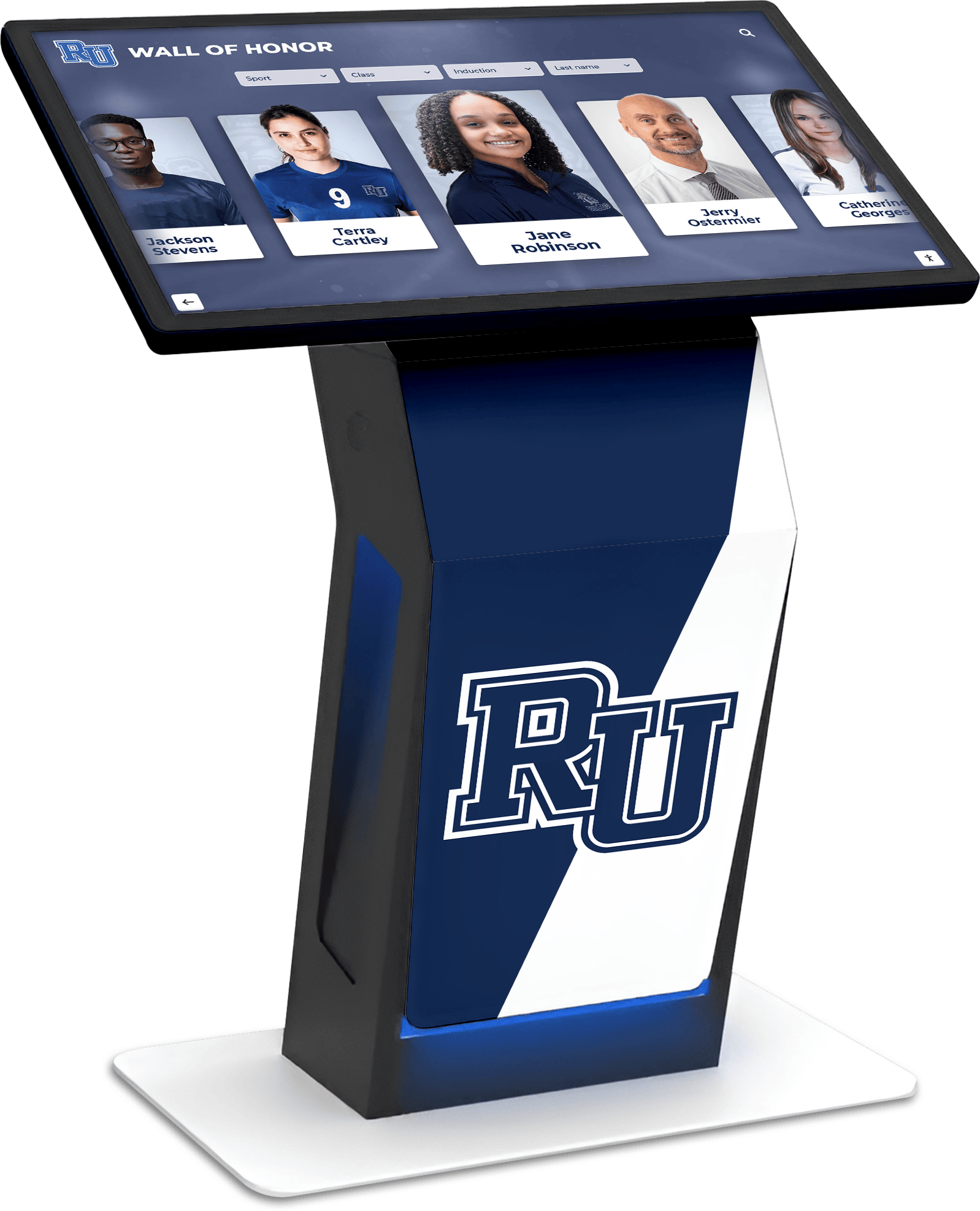
Schools that invest in visible, permanent recognition systems give genuine academic achievement the institutional weight it deserves
What Students Should Do With a Questionable Invitation
If a student or parent has received an invitation they are unsure about, the action steps are straightforward:
- Do not pay anything immediately. The urgency language in for-profit invitations (“Act within 14 days to secure your membership”) is a sales technique, not a genuine deadline.
- Search the organization name plus “ACHS” or “BBB.” Check whether the organization is ACHS-certified and whether there are consumer complaints on file with the Better Business Bureau.
- Contact the school. Ask the guidance counselor or dean of students whether the organization has a recognized chapter at the institution. If the answer is no, the invitation did not come through any official school process.
- Look at the website critically. Does it describe a nonprofit organization with faculty-supervised chapters, or does it describe membership benefits and annual fees?
- Check Reddit and consumer forums. Students who have experience with specific organizations share detailed accounts. Searches for the organization name plus “worth it” or “scam” reveal patterns quickly.
The goal is not to be cynical about all recognition — NHS, Phi Beta Kappa, PTK, and many discipline-specific honor societies are genuinely valuable affiliations. The goal is to apply the same critical thinking to honor society invitations that students are taught to apply to scholarship offers and college application advising.
How Schools Can Make Legitimate Recognition More Visible
One of the reasons for-profit honor society companies have found a market is that many schools do a poor job of making genuine academic recognition visible and lasting. When a student’s appearance on honor roll is announced once in an email and then forgotten, and when NHS induction generates a certificate that goes into a drawer, it leaves students feeling that legitimate recognition does not carry much weight — making paid membership in external organizations feel more meaningful by contrast.
Schools that invest in visible, permanent recognition infrastructure change that equation.
Digital Recognition Displays That Last
Modern digital recognition walls allow schools to celebrate academic achievement in a format that is visible every day, not just during ceremony season. A student who earns NHS membership, achieves AP Scholar status, or appears on the honor roll three semesters running can have that recognition displayed in the school lobby, searchable by name, visible to visitors, parents, and future students.
This is meaningfully different from a certificate. It communicates that the school itself — not a third-party company — considers this achievement worth permanent documentation. That institutional signal is one of the most powerful things a school can provide to high-achieving students. Resources on how schools build team GPA leaderboard displays and academic achievement walls for academic achievers illustrate this approach.
Celebrating the Full Range of Legitimate Academic Recognition
Schools that systematically recognize multiple categories of genuine achievement give students more reasons to invest in real credentials:
- Honor roll recognition by semester, displayed publicly
- NHS induction classes documented with photos and member profiles
- AP Scholar, National Merit, and College Board recognition displayed prominently
- Subject-specific awards and departmental honors made visible school-wide
- Academic competition achievements documented in school records
The guide on Latin honors and the academic achievement hierarchy — cum laude, magna cum laude, and summa cum laude helps schools understand how NHS membership fits within the full spectrum of academic recognition and build systematic recognition programs into their calendars.

Documenting academic achievement in the school's own display systems creates a permanent record that outlasts any membership certificate
What High-Achieving Students Actually Need From Schools
Students who are drawn to honor society invitations often want the same thing: tangible evidence that their hard work is visible and valued. When a school provides that through its own systems — honor roll displays, NHS recognition walls, AP achievement boards, academic award ceremonies — it removes the need to seek external validation through organizations of questionable merit.
Looking at how schools structure recognition programs across all achievement types — from speech and debate recognition for forensics champions to academic honor ceremonies — gives administrators concrete models for building the recognition culture their students deserve.
A Quick Reference Guide: Evaluating Any Honor Society Invitation
Signs the organization is legitimate:
- No membership fee charged to students
- Invitation came through school-based chapter
- Faculty or academic advisors manage selection
- Organization is ACHS-certified (college level) or NASSP-affiliated (high school)
- Selection involves application review, not just GPA threshold
- School can confirm the chapter’s existence
Signs the organization is for-profit or questionable:
- Requires annual membership fee
- Invitation was unsolicited, via email, with no school involvement
- Admission based only on basic GPA or enrollment status
- Benefits are scholarship databases and resume templates available elsewhere for free
- Organization not found in ACHS directory
- No faculty advisor or chapter structure at your school
The distinction matters. A student who lists NHS membership on a college application is communicating a faculty-verified selection process. A student who lists a for-profit honor society is communicating a subscription payment. Admissions officers know the difference.
The Broader Point About Academic Recognition
The proliferation of for-profit honor society companies is, in a sense, a symptom of a real gap: students and families want academic achievement to be recognized in ways that feel prestigious and lasting. When schools underinvest in their own recognition systems, they leave space for external organizations — legitimate and otherwise — to fill that need.
Schools that take recognition seriously, that invest in permanent displays of genuine academic achievement, and that make NHS induction, honor roll, and external academic distinctions visible throughout the school year, give students something more valuable than any membership certificate: the knowledge that their own school considers their achievement worth documenting permanently.
Exploring how schools design trophy cases and display systems to capture their hard-won honors puts the honor society question in broader context — the question is not just whether a specific organization is legit, but whether the recognition system a student is operating within gives genuine achievement the weight it deserves.

Digital recognition walls from Rocket Alumni Solutions help schools display NHS members, honor roll recipients, and academic award winners in a permanent, searchable format
Summary: The Direct Answers
Is Honor Society (HonorSociety.org) legit? It is a legal for-profit company, not a traditional academic honor society. It is not recognized by the Association of College Honor Societies. Membership is paid and not selectively awarded by academic institutions. Including it on a resume is not fraudulent, but it does not carry the weight of recognized academic honor societies.
Is the National Honor Society legit? Yes. NHS is one of the most credible academic recognition programs available to high school students. It is administered by NASSP, a nonprofit, operates through faculty-supervised chapters at accredited schools, charges no membership fees to students, and involves genuine selection criteria.
How do I evaluate any honor society invitation? Apply the six questions above: Is there a fee? Was the invitation unsolicited? Does the school recognize it? Is it ACHS-certified? What are the actual selection criteria? What are the real benefits? Most legitimate organizations pass all six. Most for-profit companies fail multiple.
What should students document instead? Focus on recognition that is verified by institutions: NHS membership (if selected), honor roll appearances, AP Scholar designation, National Merit recognition, and subject-specific awards from school-administered programs. These carry genuine academic weight with no fee required.
Help Your School Make Genuine Recognition Count
Rocket Alumni Solutions builds interactive touchscreen walls of fame and digital recognition displays that help schools celebrate NHS inductions, honor roll achievers, and academic milestones in a permanent, visible format — so real achievement gets the recognition it deserves.
Explore Digital Recognition Solutions






























