The Missouri state high school football playoffs represent the pinnacle of athletic competition for thousands of student-athletes across the Show-Me State each fall. Organized by the Missouri State High School Activities Association (MSHSAA), these playoffs bring together the best teams from multiple classifications to compete for state championship glory at the Show-Me Bowl. From the District Quarterfinals in late October through the championship games in late November, Missouri high school football playoffs create unforgettable moments that define school traditions and inspire communities.
Whether you’re a coach preparing your team for playoff competition, an athletic director planning championship recognition, a parent supporting student-athletes through their playoff journey, or a fan following Missouri high school football tradition, this comprehensive guide covers everything from playoff structure and championship history to modern approaches for honoring playoff achievements that preserve these special moments for generations.
Missouri high school football holds a special place in the state’s athletic culture, with Friday night lights bringing communities together each fall as teams pursue their championship dreams. The playoff system ensures that teams of all sizes—from small rural schools to large suburban programs—have fair opportunities to compete for state titles in their respective classifications.
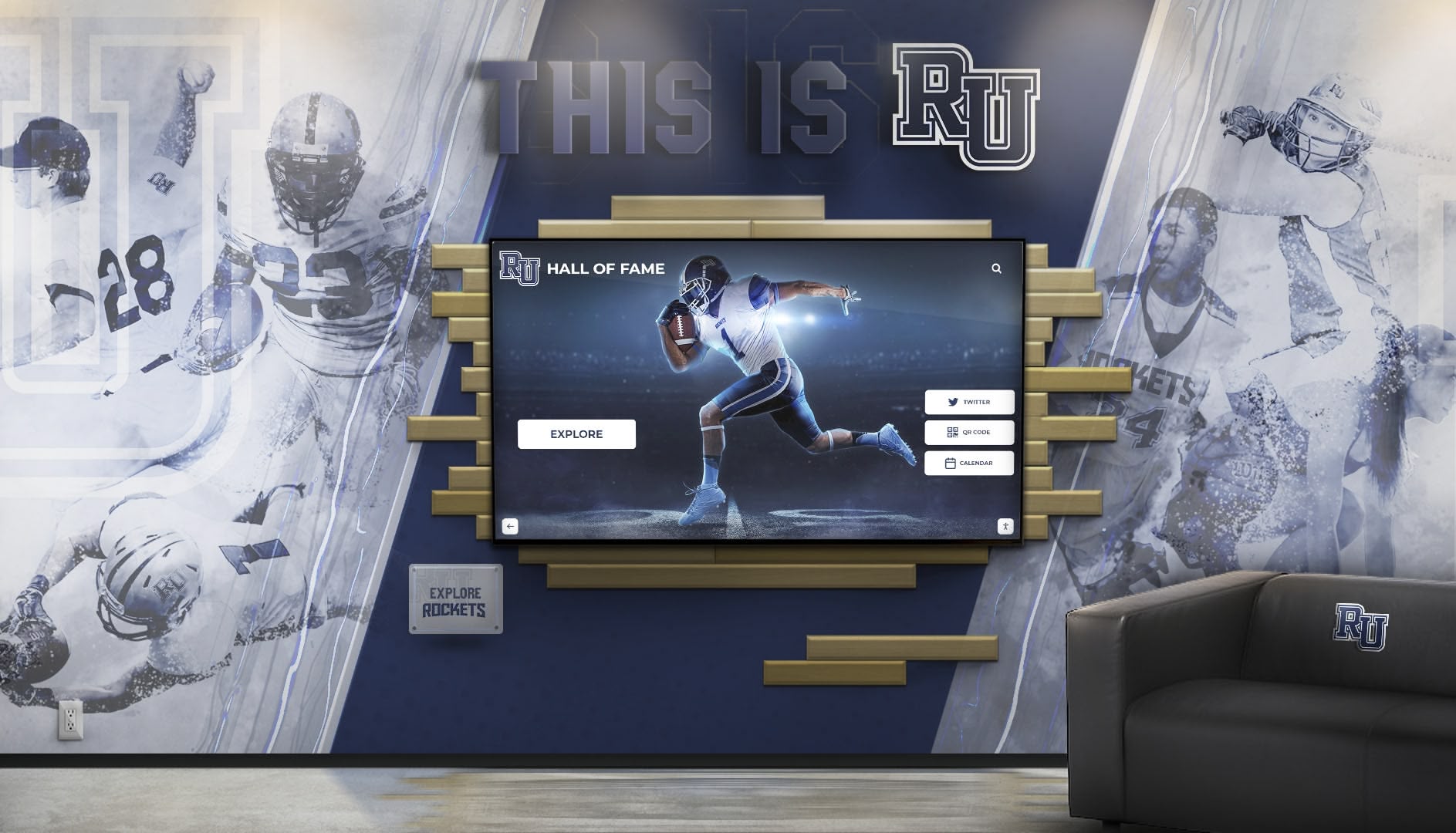
Modern recognition displays celebrate Missouri football playoff achievements and championship traditions
Understanding the MSHSAA Playoff Structure
The Missouri State High School Activities Association has developed a comprehensive playoff system that provides championship opportunities across multiple classifications while ensuring competitive balance based on school enrollment sizes.
Classification System Overview
MSHSAA organizes Missouri high school football into multiple classifications ensuring schools compete against similarly sized opponents throughout the playoffs. This classification structure creates fair competitive environments where small rural schools aren’t forced to compete against large suburban programs with significantly larger student populations and athletic resources.
The classification system typically includes Class 1 through Class 6 for 11-man football, with Class 1 representing the smallest schools and Class 6 encompassing the largest programs. Additionally, MSHSAA sanctions 8-man football for the state’s smallest schools, providing appropriate competitive opportunities for programs that might struggle to field full 11-man rosters.
Schools are assigned to classifications based on enrollment figures, with MSHSAA periodically updating these assignments to reflect changing school sizes. This regular review ensures the classification system maintains competitive balance as schools grow or shrink over time.
District Organization and Structure
Missouri’s playoff system begins with district play, where schools within each classification are grouped into geographic districts. These districts create regional competition frameworks that reduce travel burdens during the regular season while establishing clear playoff qualification pathways.
District Quarterfinals and Semifinals:
The playoff journey begins in late October with District Quarterfinals, where teams compete for advancement through district brackets. Winners progress to District Semifinals, with each victory bringing teams one step closer to district championship games and subsequent state playoff rounds.
District organization ensures geographic proximity during early playoff rounds, minimizing travel for student-athletes, families, and fans during the school week. This structure proves particularly valuable for Missouri’s rural schools where significant travel distances might otherwise create scheduling and financial challenges.
District Championships:
District championship games determine which teams advance to the state playoff bracket beyond district competition. These games carry enormous significance, as district titles represent the first major playoff milestone and secure berths in the expanded state tournament rounds.

Athletic hallways showcase football playoff achievements and championship traditions
State Playoff Rounds
Teams advancing through district championships enter the expanded state playoff bracket, competing in quarterfinals, semifinals, and ultimately championship games that determine Missouri state champions in each classification.
Quarterfinals and Semifinals:
State quarterfinal games typically occur in mid-November, bringing together the best district champions from across Missouri. These high-stakes contests feature teams that have already proven excellence through successful district tournament runs, creating matchups between legitimate championship contenders.
Semifinal games further narrow the field to determine which teams will compete in their classification’s state championship game. By this point in the playoffs, every remaining team has demonstrated sustained excellence through multiple playoff victories against quality opponents.
The Show-Me Bowl: Championship Games
The Missouri high school football playoff season culminates in the Show-Me Bowl, where MSHSAA crowns state champions across all classifications. These championship games represent the pinnacle of Missouri high school football, creating moments that players, coaches, and communities remember for lifetimes.
According to official MSHSAA announcements, the Show-Me Bowl championships will be hosted at Western Missouri’s Spratt Memorial Stadium in St. Joseph from 2025 through 2028. This multi-year agreement provides consistency and allows MSHSAA to build traditions around a single championship venue that can accommodate the multiple classification championship games held during championship weekend.
The championship venue transition from previous locations including Faurot Field at the University of Missouri in Columbia demonstrates MSHSAA’s commitment to finding optimal facilities that serve schools from across the state while providing championship-worthy environments for these culminating games.
Missouri Football Championship History and Tradition
Missouri’s rich high school football history stretches back decades, with championship traditions that have created some of the state’s most storied athletic programs and memorable moments.
MSHSAA Championship Sanctioning History
MSHSAA has sanctioned high school football state championships since 1968, establishing nearly six decades of organized championship competition that has crowned hundreds of state title teams across multiple classifications and formats.
The championship system has evolved significantly over these decades, adapting to changing school enrollments, addressing competitive balance concerns, and expanding opportunities as Missouri high school football has grown. Early championship formats differed substantially from today’s multi-classification playoff system, reflecting smaller numbers of participating schools and different organizational philosophies.
One notable historical element: MSHSAA records indicate there have been seven ties for state champion, all occurring before 2002 when the organization changed its classification system and began allowing championship games to be decided in overtime. This rule change eliminated shared championships, ensuring that modern playoff games always produce clear winners through overtime periods when necessary.
Legendary Missouri Football Programs
Missouri high school football has produced several programs that have achieved sustained championship excellence, creating dynasties that inspire respect across the state and serve as benchmarks for what consistent excellence looks like in high school athletics.
Webb City Cardinals:
Webb City High School stands among Missouri’s most successful football programs, having won 13 state championships since 1989. This remarkable run of excellence has established Webb City as one of the nation’s most successful high school football programs, with sustained success spanning multiple generations of players, coaches, and communities.
The Cardinals’ championship tradition earned recognition through enshrinement in the Missouri Sports Hall of Fame, acknowledging not just competitive success but the program’s impact on Missouri high school athletics and its role in defining championship culture and sustained excellence.
Valle Catholic Warriors:
Valle Catholic High School has won 13 state championships outright and shared another, with the program’s first three titles earned in Class 2 before subsequent championships in Class 1. This consistent success in Missouri’s smallest 11-man classification demonstrates that championship traditions aren’t limited to large schools with extensive resources.
Valle Catholic’s sustained excellence across multiple decades showcases how small-school programs can build and maintain championship cultures through strong coaching, community support, and commitment to athletic development that allows programs to reload rather than rebuild after graduation classes depart.
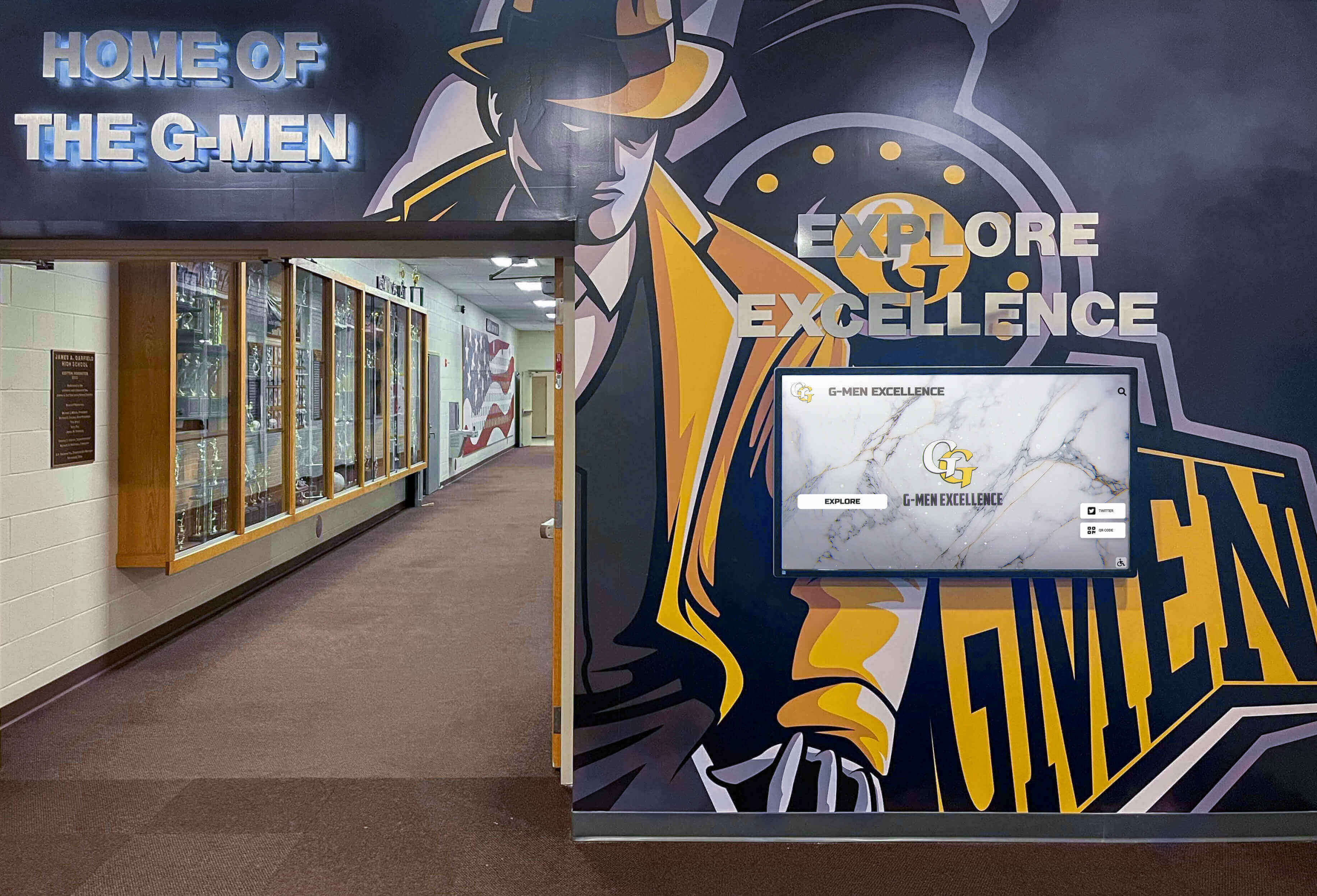
Modern schools combine traditional trophy displays with digital recognition for comprehensive championship celebration
Recent Championship Trends and Competitive Balance
Missouri high school football maintains remarkable competitive balance across classifications, with championship opportunities distributed widely rather than dominated by a handful of elite programs.
Recent seasons have demonstrated that multiple teams enter playoffs with legitimate championship aspirations, and upsets frequently occur as lower-seeded teams defeat favorites. This competitive depth ensures that playoff runs require consistent excellence through multiple rounds rather than allowing dominant teams to coast through brackets.
The classification system plays a crucial role in this competitive balance, ensuring that schools compete against similar-sized opponents. This structure has enabled programs from all regions of Missouri—from St. Louis suburbs to rural towns to Kansas City metro areas—to compete successfully for state championships when they develop quality programs and strong senior classes.
The 2025 Missouri High School Football Playoffs
The 2025 Missouri high school football playoff season followed MSHSAA’s established format while continuing traditions that make these playoffs special for participating schools and communities.
2025 Playoff Timeline and Format
The 2025 playoffs began on Thursday, October 30 with 16 District Quarterfinal games launching the postseason across Missouri. This late October start allows teams to complete regular seasons that typically begin in late August, providing approximately nine regular season games before playoff competition commences.
MSHSAA released its 2025 class and district assignments on Friday morning before the season, providing schools with the playoff roadmap showing which opponents they would potentially face if successful in district and state playoff rounds. This advance knowledge allows coaches, athletic directors, and communities to understand playoff scenarios and plan accordingly for potential championship runs.
Tracking Playoff Brackets and Scores
Multiple resources provide comprehensive coverage of Missouri high school football playoffs, ensuring fans, families, and media can follow playoff progress across all classifications:
High School On SI offers brackets for every classification and division in Missouri high school playoffs, providing regularly updated brackets showing playoff matchups, scores, and advancement paths toward championship games. Their coverage includes both 11-man and 8-man classifications, ensuring comprehensive playoff documentation.
MaxPreps provides detailed playoff tracking including brackets, team schedules, scores, and statistical leaders throughout playoff competition. Their platform allows users to follow specific teams or classifications, receiving updates as playoff games conclude and brackets advance.
MSHSAA Official Website serves as the authoritative source for official playoff information, including bracket assignments, game sites, championship game information, and any playoff-related announcements or updates.
These resources collectively ensure that Missouri high school football playoffs receive comprehensive coverage regardless of school size or classification, democratizing playoff information and recognition across all competitive levels.
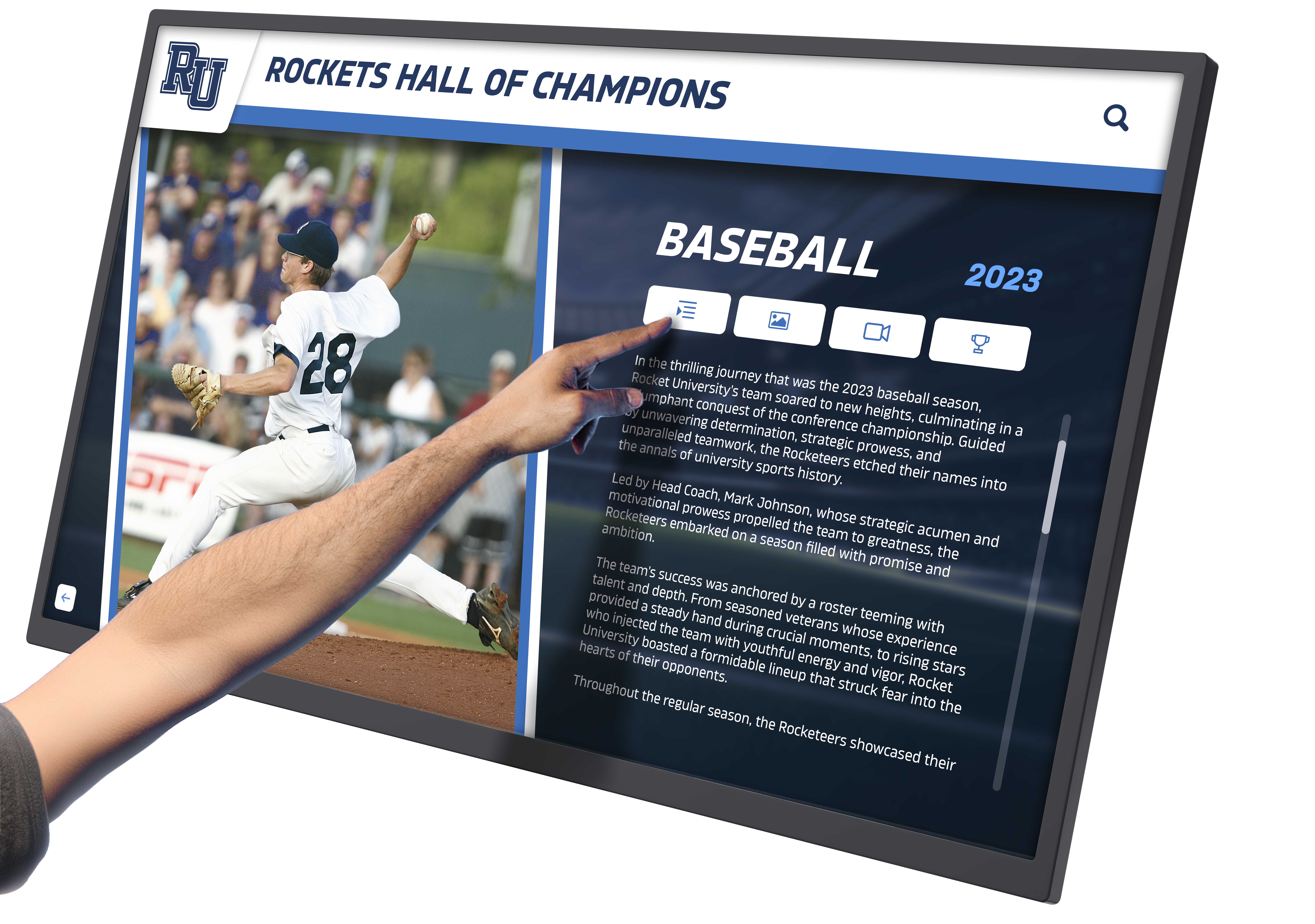
Interactive displays bring football playoff achievements to life through multimedia storytelling
Recognizing Playoff and Championship Achievements
Missouri high school football playoff achievements—from district championships through state titles—deserve recognition that honors the dedication, teamwork, and excellence required to advance through increasingly difficult competition.
Traditional Recognition Approaches
Schools across Missouri have long celebrated playoff success and championship achievements through established recognition formats that create visible tributes to football excellence.
Championship Rings and Awards:
Championship rings serve as tangible, personal recognition that players carry with them long after their high school careers conclude. According to recognition industry sources, championship rings symbolize athletic excellence, perseverance, and teamwork, serving as permanent reminders of achievements earned through months of dedication.
Unlike team trophies that remain at schools, championship rings provide each team member with personal recognition they can keep forever—particularly meaningful for life’s pinnacle achievement that state championships represent for most high school athletes.
Championship Banners:
Championship banners displayed in gymnasiums create visible recognition of playoff and championship success for current students, visiting opponents, and community members. These banners typically document the sport, championship year, final record, and classification, providing at-a-glance documentation of program excellence.
Missouri schools with successful football traditions often dedicate substantial gymnasium or hallway space to championship banner displays, creating impressive visual records of sustained athletic excellence that inspire current athletes while honoring past achievements.
Trophy Cases:
Physical trophy cases showcase championship trophies alongside related memorabilia including game balls from championship contests, newspaper clippings documenting playoff runs, photographs of championship teams, and individual awards earned by championship team members.
Effective trophy case displays provide context beyond the trophies themselves, telling championship stories through supporting materials that help viewers understand the significance and memorable moments associated with each championship trophy.
Modern Digital Recognition Solutions
While traditional recognition methods maintain cultural importance, modern digital recognition technology has transformed what’s possible in celebrating playoff and championship achievements.
Unlimited Championship Documentation:
Digital recognition platforms accommodate comprehensive documentation of every playoff appearance and championship in program history without space limitations that constrain physical displays. This unlimited capacity ensures that current championships receive prominence alongside historical achievements rather than newer recognition displacing older acknowledgments due to physical space constraints.
Schools can document complete playoff runs including every playoff game result, opponent faced, and key statistical achievements from quarterfinals through championships, creating comprehensive historical records that preserve complete playoff stories rather than reducing achievements to basic championship acknowledgments.
Rich Multimedia Storytelling:
Digital displays support championship storytelling through multiple content formats including high-resolution team and individual photographs from playoff games and celebrations, video highlights of crucial playoff moments and championship-defining plays, audio from radio broadcasts preserving play-by-play calls of memorable moments, newspaper articles and media coverage documenting playoff runs, and coach or player testimonials reflecting on playoff experiences and championship significance.
This multimedia approach creates emotional connections and engagement that static plaques or banners cannot match, particularly for audiences accustomed to consuming content digitally who expect interactive exploration rather than passive viewing.
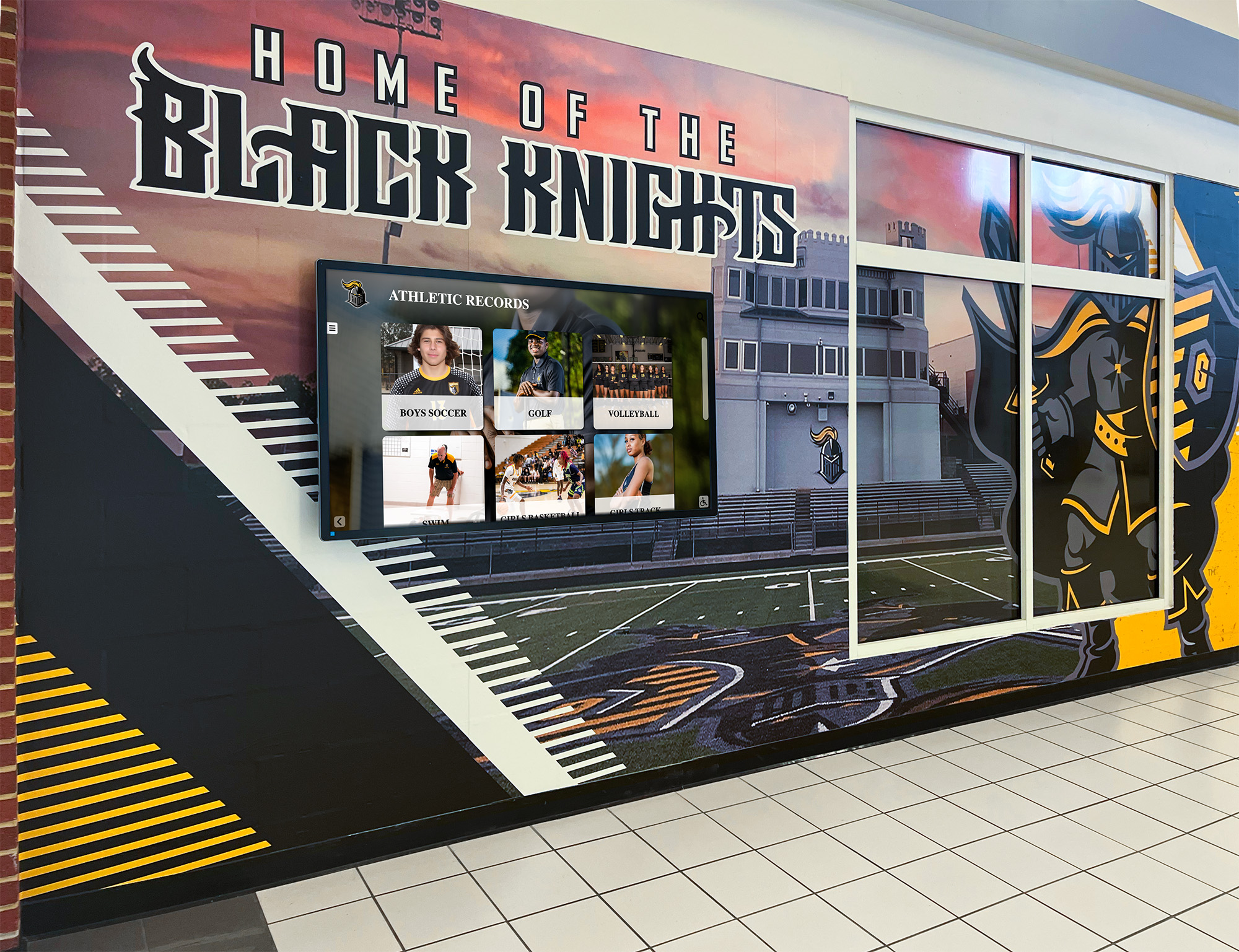
Athletic hallways integrate digital displays with traditional recognition for comprehensive football program documentation
Immediate Championship Recognition:
When teams win district championships or advance through playoff rounds, digital systems enable recognition updates within hours or days rather than waiting weeks or months for championship ring production or banner creation. This immediacy allows schools to celebrate playoff success while community excitement remains high, maximizing emotional impact and demonstrating institutional pride through rapid recognition of student achievement.
Athletic directors can photograph championship teams immediately after victories, document playoff statistics and achievements, and publish recognition through digital athletic recognition platforms while championship celebrations continue.
Comprehensive Athlete Recognition:
Digital profiles support detailed documentation of individual contributions within team championships, recognizing players’ roles in playoff success through position-specific statistics and achievements, memorable individual performances in playoff games, leadership contributions that elevated team performance, all-district or all-state selections earned during championship seasons, and recruiting and college placement outcomes that resulted from playoff performances.
This individual recognition within team championship contexts provides balanced acknowledgment—celebrating collective achievement while honoring individual excellence and contributions that enabled championship success.
Implementing Comprehensive Football Recognition Programs
Schools committed to honoring football playoff and championship traditions benefit from systematic approaches that integrate recognition into broader athletic department cultures.
Historical Documentation Projects:
Many Missouri schools discover that comprehensive documentation doesn’t exist for earlier championships, particularly from decades before widespread digital photography and video. Systematic historical research projects can recover and preserve championship histories through yearbook research documenting teams and seasons, newspaper archive searches revealing contemporary playoff coverage, coach and player interviews preserving institutional memory, and photograph collection from families and community members.
These documentation efforts become increasingly valuable as time passes and living memory of historical championships fades, with comprehensive archives enabling recognition enhancements and historical retrospectives that honor all championship traditions regardless of when titles occurred.
Integration with Broader Athletic Recognition:
Football playoff recognition works most effectively when integrated within comprehensive athletic recognition systems celebrating diverse achievements across all sports rather than existing as isolated football-specific programs.
Balanced recognition demonstrates that schools value athletic excellence across all sports and seasons, preventing perceptions that football receives disproportionate attention while other sports receive minimal acknowledgment. This comprehensive approach strengthens overall athletic department culture while ensuring playoff success in all sports receives appropriate celebration.
Engaging Alumni and Building Traditions:
Championship recognition creates natural touchpoints for engaging alumni who participated in playoff teams, strengthening connections between past athletes and current programs. Schools can leverage playoff recognition to organize championship reunion events bringing former teammates together, establish hall of fame or athletic recognition programs honoring sustained excellence, connect alumni with current players through mentorship programs, and cultivate alumni support for current athletic programs through fundraising and volunteerism.
These engagement strategies demonstrate that playoff recognition serves purposes beyond acknowledging past achievements, creating ongoing value through strengthened alumni relationships and sustained program support.
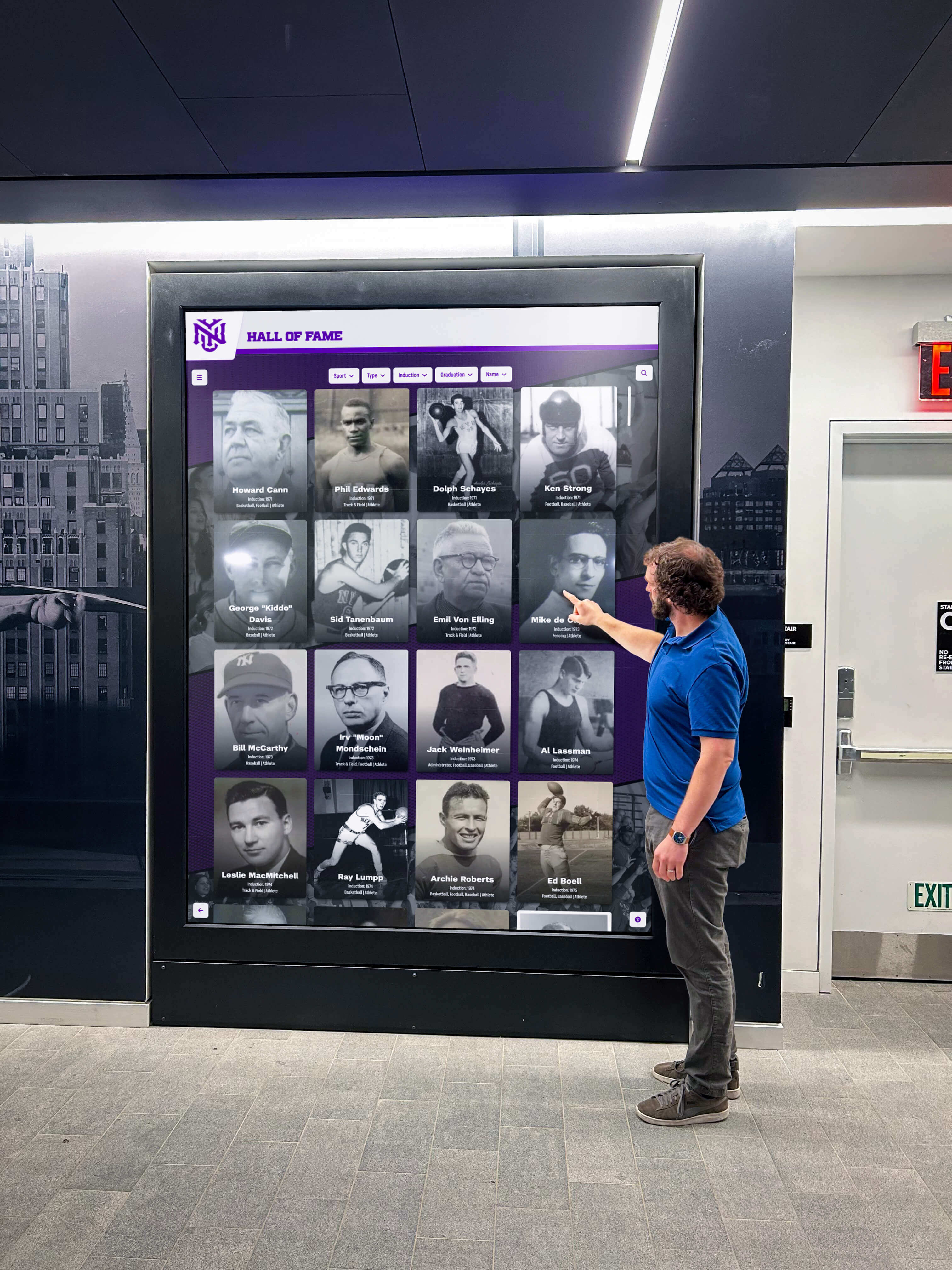
Interactive displays in high-traffic areas ensure football playoff achievements receive prominent recognition
The Role of Digital Recognition in Celebrating Missouri Football
Modern recognition technology offers Missouri schools powerful tools for celebrating football playoff traditions while addressing limitations inherent in traditional recognition approaches.
Overcoming Space Limitations
Many Missouri schools face gymnasium and hallway space constraints that limit how many championship banners or recognition plaques facilities can accommodate. As programs add championships over decades, available wall space eventually fills completely, forcing difficult decisions about whether to remove older recognition to accommodate newer achievements or halt new recognition due to space exhaustion.
Digital recognition platforms eliminate these space constraints entirely. A single large-format touchscreen display can showcase unlimited championships, playoff appearances, and individual achievements without ever requiring additional physical space or removal of earlier recognition to accommodate new accomplishments.
This unlimited capacity proves particularly valuable for programs with rich championship traditions spanning decades. Rather than choosing which championships receive visible recognition and which get relegated to storage, digital systems ensure every championship receives equivalent prominence regardless of when titles occurred.
Creating Engaging Experiences
Traditional static displays provide minimal visitor engagement beyond brief viewing. Digital interactive recognition transforms passive displays into engaging experiences where visitors actively explore content that interests them.
Touchscreen interfaces allow visitors to filter championships by decade or classification, explore specific championship seasons in detail through photographs and game results, discover individual players who contributed to championship teams, access video highlights and memorable playoff moments, and share recognition content via social media extending reach beyond physical facilities.
These interactive capabilities create substantially longer visitor engagement than static displays generate. Schools implementing digital recognition consistently report that visitors spend 5-10 minutes exploring content compared to perhaps 30-60 seconds viewing traditional displays—dramatic engagement increases that amplify recognition impact.
Supporting Multiple Stakeholder Needs
Effective football recognition serves diverse audiences including current players seeking inspiration through visible championship tradition, parents and families celebrating student achievements, alumni reconnecting with their own playoff memories and championship experiences, prospective families evaluating school athletic programs during recruitment, community members demonstrating pride in local football excellence, and college recruiters researching player backgrounds and program quality.
Digital recognition platforms serve all these audiences simultaneously through different access points and content emphases. Physical touchscreen displays in athletic facilities create daily touchpoints for current students, while web-based companion platforms enable worldwide access for alumni, families, and others unable to visit school facilities regularly.
This multi-channel approach maximizes recognition reach and impact, ensuring playoff achievements receive celebration and visibility across all relevant audiences rather than limiting recognition to those who can physically visit school buildings.
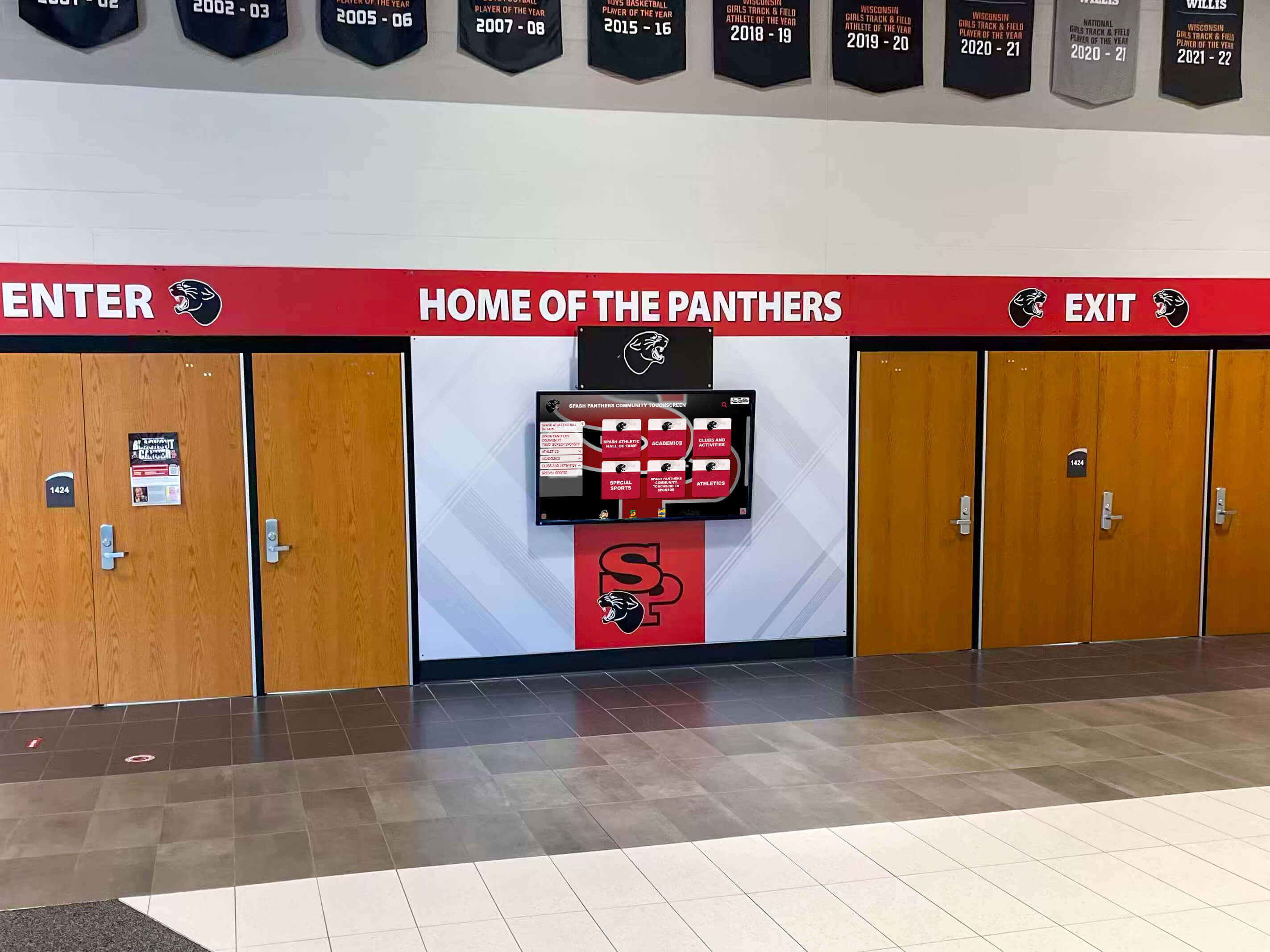
Prominent placement at facility entrances ensures football recognition greets all visitors
Building Championship Cultures Through Recognition
Beyond honoring past achievements, thoughtful recognition programs contribute to building and sustaining championship cultures that inspire continued athletic excellence.
Motivating Current Athletes
Visible recognition of playoff success and championship achievement provides current players with concrete evidence that excellence leads to lasting acknowledgment. This visibility proves particularly motivating for underclassmen who see upperclassmen recognized and understand that similar dedication and performance will earn comparable honor.
Recognition that documents the journey toward championships—not just final outcomes—helps current athletes understand that championship success requires sustained commitment throughout offseasons, summer training, preseason preparation, and regular seasons leading to playoff opportunities. This process-focused recognition emphasizes controllable factors (work ethic, character, teamwork) rather than just outcomes (wins and losses), providing motivation applicable to athletes at all skill levels.
Strengthening Program Identity and Pride
Schools with visible football playoff traditions create stronger program identities that distinguish their athletic departments and strengthen community pride. This identity provides recruitment advantages as prospective families evaluate schools, creates alumni engagement opportunities as former athletes maintain connections to programs that honored their contributions, and builds community support translating into attendance, booster participation, and broader athletic program backing.
Championship recognition demonstrates that playoff success represents not just athletic achievement but institutional priorities worth celebrating prominently. This institutional validation reinforces to students that their athletic dedication matters and that the school community values and appreciates their commitment and accomplishments.
Connecting Past and Present
Effective recognition creates connections between current players and alumni who preceded them, building traditions that transcend individual seasons or teams. When current athletes see championship teams from past decades recognized alongside recent achievements, they understand themselves as part of continuing traditions extending backward and forward in time.
These connections prove particularly powerful when schools leverage recognition to facilitate interactions between current players and alumni championship teams, creating mentorship relationships where former players share insights about playoff competition, championship experiences, and life lessons learned through football participation.
Planning Missouri Football Recognition Programs
Missouri schools ready to enhance football playoff and championship recognition benefit from systematic planning addressing practical implementation considerations.
Assessment and Goal Setting
Begin by inventorying existing recognition including what playoff achievements and championships currently receive recognition, gaps in historical documentation or display, available space for recognition enhancement or expansion, and stakeholder perspectives about recognition priorities and preferences.
Clear goals guide recognition decisions. Are you primarily addressing space limitations in existing championship displays? Creating more engaging experiences for current students and visitors? Preserving championship history before institutional memory fades? Inspiring current teams through visible tradition? Different goals suggest different implementation approaches and technology choices.
Budget Considerations
Traditional recognition approaches typically involve championship ring costs of $150-$500 per player depending on design complexity, championship banner production ranging $250-$600 per banner, trophy case construction or expansion costing $5,000-$20,000 depending on scope, and plaque production for individual recognition at $50-$200 per plaque.
Digital recognition platforms require initial investment of $10,000-$30,000 for commercial-grade touchscreen hardware, purpose-built recognition software, professional installation, initial content development, and staff training. Annual software licensing and support typically ranges $1,500-$5,000 for cloud-based platforms offering ongoing updates, technical support, and content management capabilities.
While initial digital investment exceeds traditional approaches, long-term value often proves superior when considering unlimited recognition capacity without space constraints, elimination of ongoing production costs for new banners or plaques, substantially enhanced engagement and storytelling capabilities, and worldwide accessibility through web-based companion platforms.
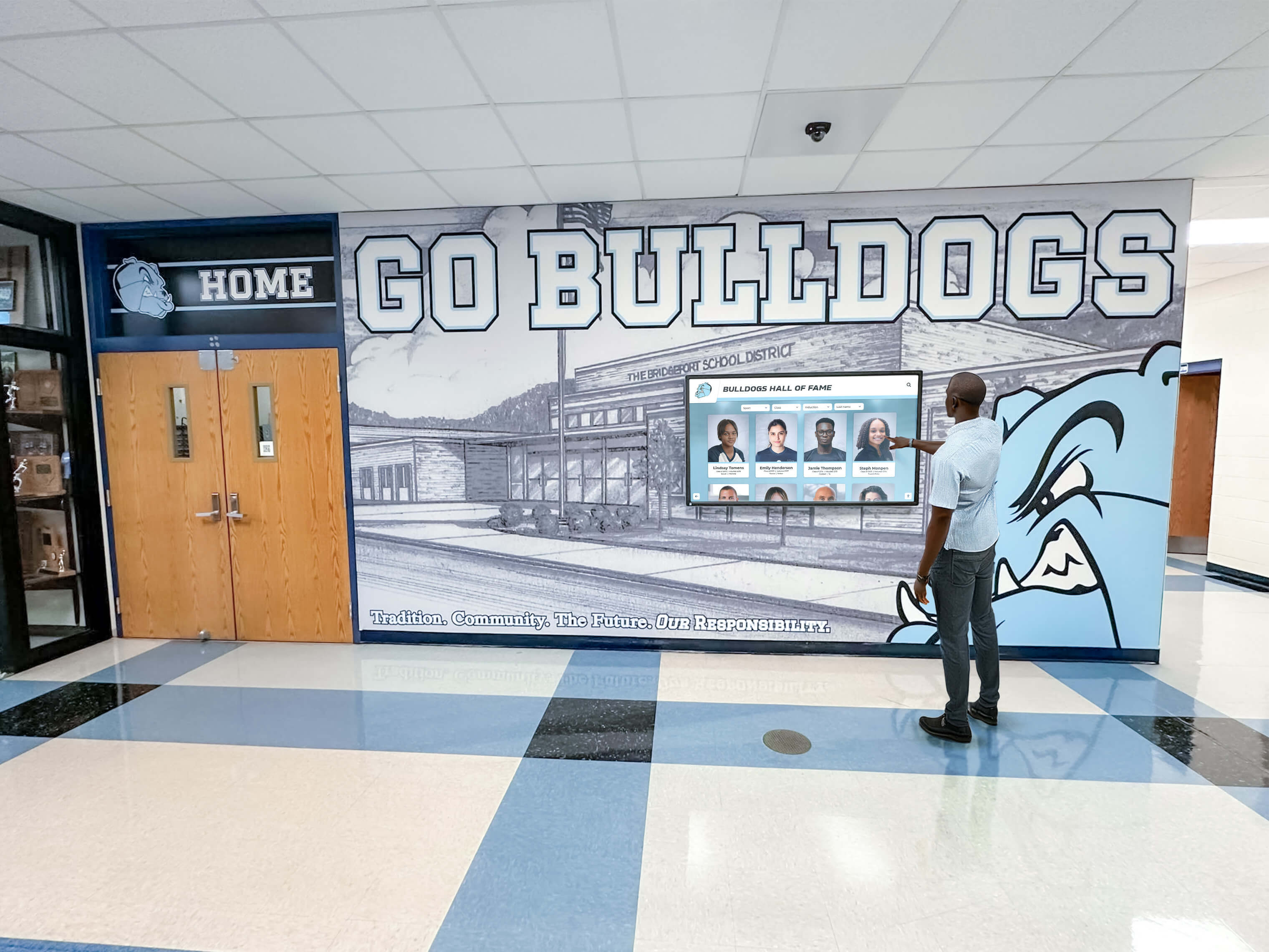
Interactive displays create engaging recognition experiences celebrating football excellence
Content Development Strategy
Comprehensive football recognition requires systematic content collection including team photographs from playoff games and championships, individual player photographs and biographical information, game statistics and playoff results documentation, video highlights and memorable playoff moments, newspaper coverage and media articles, and coach testimonials about championship seasons and standout players.
For historical championships, this content development often represents the most time-intensive implementation aspect. Schools benefit from enlisting volunteers including booster club members, alumni association representatives, student researchers, or community historians to assist with content collection and documentation projects.
Digital platforms like Rocket Alumni Solutions provide purpose-built content management systems designed specifically for school athletic recognition, simplifying ongoing content updates and ensuring non-technical staff can easily add new playoff achievements or championships without requiring specialized technical expertise.
Conclusion: Honoring Missouri Football Excellence
Missouri state high school football playoffs create defining moments in student-athletes’ lives and school athletic histories. From District Quarterfinals in late October through Show-Me Bowl championships in late November, these playoff runs require months of preparation, sustained excellence through multiple competition rounds, and dedication that distinguishes championship teams from hundreds of competitors across Missouri.
These achievements deserve recognition that honors their significance—celebration that’s comprehensive, engaging, and accessible rather than limited by physical space constraints or static presentation formats that fail to tell complete championship stories.
Whether through traditional championship rings and banners maintaining beloved traditions, modern digital recognition platforms providing unlimited capacity and rich multimedia storytelling, or hybrid approaches combining both, Missouri schools implementing thoughtful football recognition programs demonstrate commitment to honoring student achievement, preserving athletic department history, and building championship cultures inspiring continued excellence.
The question isn’t whether Missouri high school football playoff achievements deserve recognition, but whether your school’s recognition approach matches the significance of what championship teams accomplish and adequately inspires the current players who will write the next chapters in your program’s playoff tradition.
Celebrate Your Football Playoff Tradition
Discover how Rocket Alumni Solutions can help you create comprehensive football recognition that honors your playoff history while inspiring future championships through modern digital displays that tell complete championship stories.
Schedule Your Free ConsultationReady to honor your Missouri football playoff tradition with recognition that matches championship significance? Explore how modern platforms can transform how you celebrate the teams, players, and coaches who built your program’s playoff legacy while inspiring those who will carry excellence forward into future seasons.































