Museums face a fundamental challenge in 2026: capturing and maintaining visitor attention in an era where smartphone screens compete for every moment of focus. Traditional static exhibits, printed labels, and passive viewing experiences no longer satisfy audiences accustomed to interactive, tailored digital experiences. Museum kiosks represent the critical bridge connecting cultural institutions’ rich collections with modern visitors’ expectations for engaging, self-directed exploration.
The museum kiosk landscape has evolved dramatically from simple information terminals into sophisticated interactive platforms enabling visitors to dive deeply into exhibits, access multilingual content, explore related artifacts, share discoveries on social media, and create custom museum journeys matching individual interests and learning styles. In 2026, the most effective museum kiosks deliver natural navigation, comprehensive multimedia content, accessible design accommodating all visitors, and engagement analytics demonstrating measurable value to museum stakeholders.
This comprehensive guide examines every aspect of museum kiosks in 2026, from core functionality and visitor engagement benefits to technology selection, content strategy, implementation planning, and future trends reshaping cultural institution experiences. Whether you’re planning a complete museum renovation, adding interactive elements to existing exhibits, or exploring ways to modernize visitor experiences, understanding these considerations enables informed decisions delivering genuine engagement rather than expensive technology collecting dust.
Understanding Museum Kiosks: Core Functions and Value Proposition
Before evaluating specific kiosk types or technologies, establishing clear understanding of what museum kiosks accomplish and why they matter prevents investing in solutions mismatched to actual institutional needs.
What Museum Kiosks Actually Do
Museum kiosks serve multiple interconnected purposes within cultural institutions:
Wayfinding and Orientation: Interactive maps helping visitors navigate complex museum layouts, locate specific exhibits or facilities, plan visit routes matching available time, and understand museum organization without wandering aimlessly or repeatedly asking staff for directions.
Large museums particularly benefit from wayfinding kiosks positioned at entrances and major circulation nodes. Visitors overwhelmed by size and complexity appreciate clear guidance reaching exhibits matching their interests efficiently.
Extended Exhibit Information: Deep-dive content supplementing physical displays through multimedia presentations, detailed historical context, conservation stories, acquisition histories, artist biographies, scientific explanations, and related artifacts visitors can explore at their own pace without crowding around small text labels.
Physical exhibits face inherent space constraints limiting displayed information. Museum kiosks overcome these limitations by providing unlimited digital content accessible through clear interfaces enabling visitors to pursue topics matching personal curiosity without overwhelming those seeking lighter engagement.
Multilingual Access: Content in multiple languages breaking down barriers for international visitors and diverse local communities. Rather than producing expensive translated printed materials requiring storage and updates, digital kiosks deliver instant language selection accessing complete content in visitor-selected languages.
Museums serving diverse audiences recognize that language accessibility dramatically affects visitor comfort, comprehension, and willingness to engage deeply with exhibits. Digital multilingual solutions scale efficiently as museum collections and content expand.
Collection Exploration: Search and discovery interfaces enabling visitors to explore entire museum collections including storage items not currently displayed, view high-resolution artifact images revealing details invisible in display cases, and discover thematic connections spanning multiple exhibits or departments.
Museums display only small percentages of total collections at any given time. Digital kiosks extend visitor access to comprehensive holdings while enabling curatorial storytelling impossible within physical space constraints.
Interactive Learning Activities: Quizzes, games, puzzles, timelines, comparative tools, and educational activities reinforcing exhibit themes while engaging younger visitors and creating memorable experiences encouraging repeat visits and positive word-of-mouth recommendations.
Research consistently demonstrates that active participation strengthens learning retention compared to passive observation. Interactive elements transform museums from viewing experiences into engaging educational journeys.
Social Media Integration: Photo sharing, social tagging, custom postcards, and digital takeaways enabling visitors to extend museum experiences beyond physical visits while generating organic social promotion reaching potential new audiences through existing visitors’ networks.
Modern visitors document experiences through social sharing. Museums facilitating this behavior benefit from amplified reach and authentic peer-to-peer recommendations far more credible than institutional marketing messages.
Accessibility Accommodations: Screen reader compatibility, adjustable text sizing, audio descriptions, closed captions, simplified language options, and alternative navigation methods ensuring visitors with diverse abilities access museum content without barriers.
Legal requirements and ethical responsibilities demand that museums serve all community members. Digital platforms provide flexibility accommodating various accessibility needs more effectively than static physical exhibits alone.
Why Museum Kiosks Matter More Than Ever in 2026
Several converging factors elevate museum kiosk importance for institutions competing for attention in increasingly crowded cultural landscapes:
Visitor Expectations Have Shifted Permanently: Audiences accustomed to smartphone apps, voice assistants, tailored recommendations, and on-demand information access expect similar experiences everywhere they go. Museums meeting these expectations retain relevance while those offering only passive viewing face declining engagement and diminishing attendance.
The pandemic accelerated digital adoption across all demographics. Even visitors previously content with traditional museum experiences now expect interactive options reflecting technologies they use daily in every other life context.
Competition For Attention Intensifies: Museums compete not only with each other but with streaming entertainment, gaming, social media, outdoor recreation, dining experiences, and countless other options vying for discretionary time and spending. Interactive kiosks help museums deliver experiences sufficiently engaging to justify visits over alternative uses of limited personal time.
Particularly younger demographics require compelling reasons choosing museum visits over digital entertainment consumed from home comfort. Interactive technology demonstrating that museums offer experiences unavailable through screens alone helps cultural institutions remain competitive.
Staffing Constraints Require Technological Solutions: Museum professionals face expanding responsibilities while budgets remain flat or decline. Interactive kiosks handle information delivery, wayfinding assistance, and exhibit interpretation previously requiring dedicated staff, enabling human resources to focus on higher-value visitor services and specialized educational programming.
Economic realities force museums to accomplish more with fewer staff members. Technology multiplying staff effectiveness through self-service information access represents practical necessity rather than optional enhancement.
Evidence-Based Decision Making Demands Analytics: Museums increasingly require measurable engagement metrics demonstrating value to funders, justifying investment decisions, and informing exhibit design. Museum kiosks generate detailed analytics revealing visitor interests, navigation patterns, content effectiveness, and engagement duration impossible to capture from passive exhibit observation.
Grant applications, board presentations, and strategic planning benefit from concrete data demonstrating how visitors actually interact with exhibits rather than assumptions based on attendance counts alone.
Accessibility Requirements Carry Legal Weight: ADA compliance represents legal obligation rather than optional consideration for U.S. museums. Digital platforms provide flexibility accommodating diverse accessibility needs more efficiently than physical modifications alone, helping institutions meet obligations while serving broader audiences more effectively.
Litigation risks and moral imperatives align in demanding that museums serve all community members. Technology offering adjustable interfaces, alternative content formats, and assistive technology compatibility helps institutions fulfill both legal requirements and ethical responsibilities.
Types of Museum Kiosks: Matching Form Factor to Function
Museum kiosks come in various physical configurations, each suited to particular use cases, locations, and visitor interaction patterns. Selecting appropriate form factors significantly affects visitor engagement, space utilization, and long-term satisfaction.
Freestanding Floor Kiosks
Freestanding units provide maximum visibility and accessibility in open museum spaces:
Physical Characteristics: Self-contained units including displays, enclosures, computers, and mounting hardware positioned on pedestals or floor stands. Heights typically range from 42-48 inches for standing interaction, with some adjustable or tilted displays accommodating varied visitor heights and wheelchair users.
Ideal Applications: Museum entrances for wayfinding and ticketing, gallery centers for exhibit-specific content, collection exploration stations encouraging extended browsing, and educational activity areas where visitors gather around shared experiences.
Advantages: High visibility attracting visitor attention, freedom positioning anywhere without wall mounting requirements, ability relocating units as exhibits change, and substantial presence signaling importance to museum visitors.
Considerations: Requires floor space that may compete with exhibit areas, creates potential circulation obstacles in crowded galleries, demands durable physical construction withstanding daily contact from thousands of visitors, and generally represents higher per-unit costs than wall-mounted alternatives.
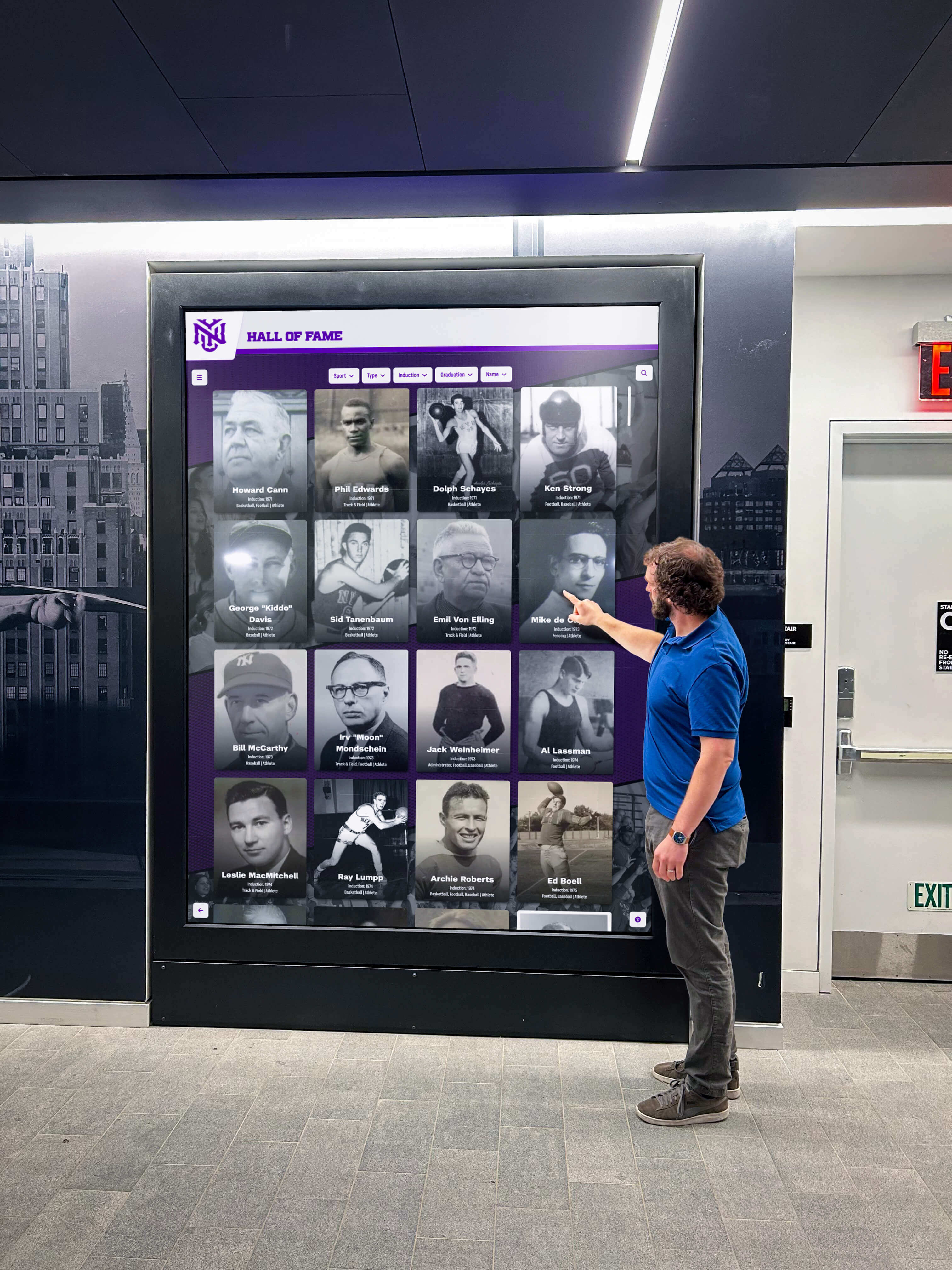
Educational institutions and cultural facilities implement similar interactive touchscreen kiosks for recognition displays and visitor engagement.
Wall-Mounted Interactive Displays
Wall-mounted solutions integrate into existing architecture without consuming floor space:
Physical Characteristics: Displays mounted directly to walls using commercial mounting hardware, typically 32-55 inches diagonal depending on viewing distance and content complexity. Can orient in landscape or portrait configurations matching content requirements and architectural constraints.
Ideal Applications: Exhibit-adjacent supplementary content, corridor wayfinding stations, collection overview displays, and comparative exhibit tools where visitors stand briefly before moving to adjacent physical artifacts.
Advantages: Zero floor space consumption, clean architectural integration, lower theft and vandalism risk compared to freestanding units, easier cable management within walls, and generally lower per-unit costs than freestanding alternatives.
Considerations: Requires suitable wall surfaces with adequate structural support, mounting heights must accommodate diverse visitor demographics including children and wheelchair users, permanent or semi-permanent positioning limits flexibility as exhibits change, and may present accessibility challenges if not carefully planned.
Tabletop and Counter-Integrated Kiosks
Low-profile units integrate into existing museum furniture and service areas:
Physical Characteristics: Touchscreen displays embedded in counters, tables, or custom casework, typically 15-24 inches diagonal in horizontal or angled orientations. Often designed matching existing museum finishes and appearing as natural furniture elements rather than obvious technology additions.
Ideal Applications: Visitor service desks for check-in and information, reading rooms for research access, family activity areas encouraging seated exploration, and special exhibition spaces where understated technology integration maintains exhibit aesthetics.
Advantages: Minimal visual impact preserving exhibit design intent, comfortable seated interaction encouraging longer engagement sessions, natural integration with existing museum furniture and architecture, and protected positioning reducing vandalism risks.
Considerations: Lower visibility may result in visitors overlooking stations, requires suitable furniture or custom fabrication accommodating technology, smaller screens limit content complexity and multiple simultaneous users, and may present accessibility challenges for standing users or individuals unable to bend forward.
Mobile Tablet Kiosks
Portable solutions providing flexibility and personal interaction:
Physical Characteristics: Consumer tablets (typically 10-13 inches) in protective cases with charging solutions, lanyards for staff carrying, or secure table mounting. May include museum-branded cases and accessories creating unified visual identity.
Ideal Applications: Docent-led tours providing supplementary content, temporary exhibits where permanent installations aren’t justified, outdoor or satellite locations where fixed infrastructure proves impractical, and situations where staff-mediated technology introduction helps visitors unfamiliar with digital interfaces.
Advantages: Low per-unit costs enabling higher quantities and broader deployment, easy repositioning as needs change, familiar interfaces matching personal devices, straightforward content updates, and ability removing units for charging or storage when galleries close.
Considerations: Higher theft risks requiring security measures and inventory tracking, limited battery life demanding charging infrastructure and rotation protocols, smaller screens constrain content complexity and simultaneous viewing, relatively short hardware lifespans compared to commercial installations, and potential compatibility issues as consumer operating systems evolve.
Specialized Interactive Installations
Custom solutions for unique museum storytelling requirements:
Physical Characteristics: Bespoke interactive exhibits including multi-touch tables, projection mapping installations, gesture-controlled interfaces, object recognition systems, and experiential environments where visitors become active participants rather than passive observers.
Ideal Applications: Signature exhibits commanding significant resources and attention, permanent collection installations justifying major investment, educational centers dedicated to hands-on learning, and institutional rebranding efforts positioning museums as technology-forward cultural destinations.
Advantages: Maximum wow factor creating memorable experiences and social media moments, complete customization matching specific exhibit themes and learning objectives, differentiation from other museums competing for visitors, and potential for significant media attention and attendance increases.
Considerations: Dramatically higher costs requiring major capital investment, longer development timelines potentially delaying exhibit openings, specialized maintenance requiring vendor support or trained staff, and risks of technology obsolescence as software and hardware platforms evolve.
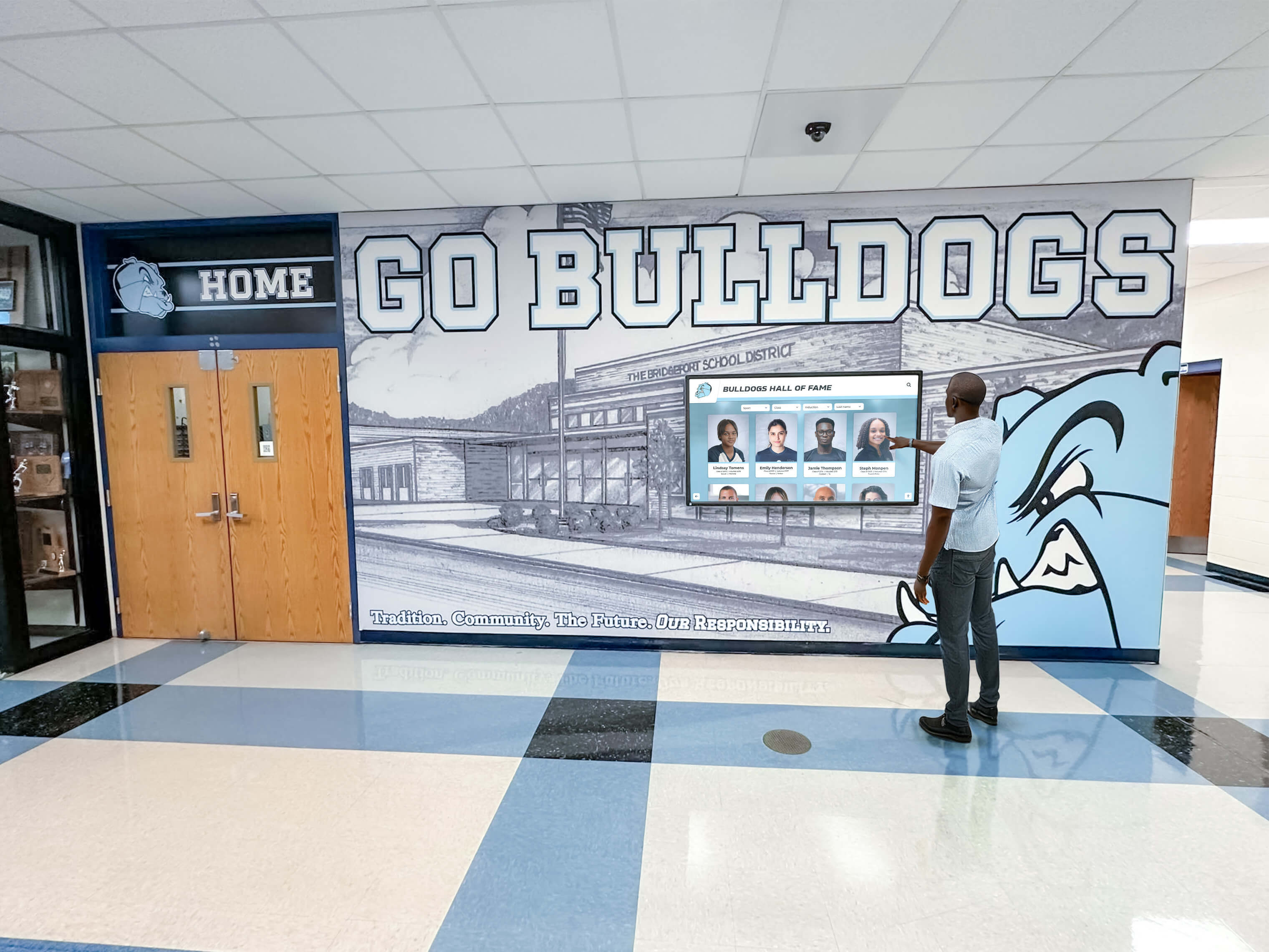
Museums balancing custom experiences with budget realities often implement proven platforms offering interactive recognition displays adaptable to various institutional contexts.
Essential Features of Effective Museum Kiosks
Technology specifications matter less than delivering experiences that visitors actually use and value. Museum kiosks succeed when they provide specific capabilities addressing real visitor needs rather than showcasing impressive but ultimately irrelevant technical features.
Clear User Interface Design
Interface quality determines whether visitors engage enthusiastically or walk away confused:
Self-Evident Navigation: Controls and interaction patterns that visitors understand immediately without instructions, training, or assistance. Familiar touch gestures, clear visual hierarchy, recognizable icons, and obvious navigation paths enabling visitors of all ages and technical comfort levels to accomplish tasks confidently.
Museums serve incredibly diverse audiences from young children to elderly visitors, international tourists unfamiliar with local language and customs, and individuals with varying digital literacy. Interface designs must accommodate this full spectrum without requiring lowest-common-denominator simplicity that frustrates more experienced users.
Immediate Visual Feedback: Instant responses confirming touch registrations through visual changes, animations, or sounds preventing visitors from uncertainty about whether touches registered and reducing frustration from perceived system unresponsiveness.
Latency kills engagement faster than any other interface shortcoming. Systems must respond to touch inputs within milliseconds, displaying clear confirmations that actions registered successfully while subsequent content loads.
Clear Visual Hierarchy: Content organization using size, color, spacing, and layout directing attention to important elements first, grouping related information logically, and providing clear visual paths guiding visitors through complex content without overwhelming or confusing them.
Well-designed hierarchy enables rapid scanning identifying relevant information without forcing visitors to read everything sequentially. This respects visitor time while accommodating various depth levels from quick overview seekers to deep-dive enthusiasts.
Consistent Design Language: Unified visual vocabulary across all kiosks, screens, and interactions creating predictable experiences where learning from one kiosk transfers to all others. Consistency reduces cognitive load while reinforcing museum brand identity through professional polish.
Touch-Optimized Elements: Buttons, controls, and interactive elements sized for accurate finger touching (minimum 44x44 pixels) with adequate spacing preventing accidental selections. Considerations for various hand sizes, motor control variations, and touch accuracy across visitor populations.
Comprehensive Content Management Capabilities
Technology means nothing without compelling content visitors want to explore:
Flexible Content Organization: Database structures supporting multiple organizational schemes enabling visitors to explore by time period, geographical region, artistic movement, artifact type, thematic connection, or any classification matching how diverse audiences think about and seek information.
Physical exhibits force single organizational structures. Digital platforms enable simultaneous multiple navigation paths accommodating different visitor mental models and discovery preferences.
Rich Multimedia Integration: Smooth handling of high-resolution images revealing artifact details invisible in display cases, video content bringing historical contexts alive, audio recordings including oral histories and expert commentary, 3D models enabling virtual object manipulation, and document archives providing primary source access.
Modern audiences expect visual sophistication matching consumer device experiences. Museums delivering static text and low-resolution images signal obsolescence while multimedia richness demonstrates institutional vitality and commitment to excellent visitor experiences.
Multilingual Content Delivery: Complete content availability in multiple languages with instant switching, not merely translated navigation but full exhibit information, artifact descriptions, educational content, and interactive elements in each supported language serving international visitors and diverse local communities.
True accessibility requires more than interface translation. Museums must provide full cultural context and appropriate terminology in each language, reflecting that translation represents adaptation rather than word-for-word replacement.
Search and Discovery Tools: Powerful search enabling visitors to find specific artifacts, artists, time periods, or topics quickly through keyword searching, auto-complete suggestions, fuzzy matching accommodating spelling variations, and faceted filtering narrowing results by multiple simultaneous criteria.
Related Content Recommendations: Algorithm-driven suggestions showing artifacts sharing thematic connections, similar artistic techniques, overlapping historical periods, or related cultural contexts encouraging extended exploration sessions revealing unexpected connections visitors wouldn’t discover through directed searching alone.
Scheduled Content Updates: Automatic publishing enabling time-sensitive content appearing during special exhibitions, seasonal programming, or relevant cultural moments without requiring staff manually remembering to make changes, ensuring kiosks always display current, relevant information.
Accessibility Accommodations for All Visitors
Legal requirements and ethical responsibilities demand that museum kiosks serve all community members:
Screen Reader Compatibility: Properly structured content enabling assistive technologies to convey information to visitors with visual impairments through synthesized speech or refreshable braille displays. This requires semantic HTML, alt text for images, logical reading order, and keyboard navigation support.
Adjustable Text Sizing: User controls enlarging text to comfortable reading sizes for visitors with low vision without breaking layouts or requiring horizontal scrolling. Text must remain legible at 200% zoom levels while maintaining readability and visual hierarchy.
High Color Contrast: Visual designs meeting WCAG 2.1 AA standards requiring at least 4.5:1 contrast ratios between text and backgrounds ensuring readability for visitors with various vision conditions including color blindness and age-related vision changes.
Museums serving public audiences must ensure that digital content accessibility matches physical accessibility accommodations. Compliance represents legal obligation, but inclusive design also benefits all visitors through improved usability regardless of individual abilities.
Audio Descriptions: Spoken content describing visual elements for visitors unable to see screens, including artifact images, diagrams, maps, and visual-based interactive elements ensuring that non-visual visitors access equivalent information.
Physical Accessibility: Hardware installations accommodating wheelchair users through appropriate mounting heights (typically 15-48 inches from floor for forward approach, 9-54 inches for parallel approach), adequate clear floor space for maneuvering, and reachable controls falling within comfortable range of motion.
Cognitive Accessibility: Clear language avoiding unnecessary jargon, consistent navigation reducing learning curves, predictable interactions preventing confusion, and ample time for content consumption without automatic timeouts forcing uncomfortable rushing.
Educational institutions implementing similar technology benefit from understanding digital recognition display accessibility requirements ensuring compliant implementations.
Comprehensive Analytics and Engagement Measurement
Demonstrating value and optimizing effectiveness requires complete data revealing actual visitor behavior:
Interaction Metrics: Total interactions, unique visitors, session duration, navigation paths, and engagement patterns revealing whether kiosks achieve intended purposes or sit ignored by visitors who perceive them as irrelevant or difficult to use.
Content Performance Analysis: Most-viewed artifacts, popular search terms, frequently accessed categories, and underutilized content identifying optimization opportunities and revealing genuine visitor interests versus curatorial assumptions about what audiences want.
Temporal Usage Patterns: Engagement by hour, day of week, season, and special events informing decisions about when to schedule maintenance, how to allocate staff resources, and whether usage justifies operational costs across different time periods.
Visitor Journey Mapping: Understanding how visitors move between kiosks and physical exhibits, whether digital content precedes or follows artifact viewing, and how interactive experiences affect overall visit patterns and satisfaction.
Comparative Performance: Usage rates and engagement quality across different kiosk locations, exhibit types, and content themes revealing what works, what doesn’t, and why some installations succeed while others disappoint.
Demographic Insights: Optional visitor profiling respecting privacy while revealing whether kiosks serve intended audiences, identifying underserved visitor segments, and informing content development addressing diverse community needs.
Organizations lacking analytics operate blind, unable to demonstrate value, justify continued investment, or make informed improvement decisions. Comprehensive measurement separates successful digital experiences from expensive failures.
Museum Kiosk Software: Platforms and Technology Considerations
Hardware quality matters, but software determines whether kiosks deliver engaging experiences or become expensive frustrations. Selecting appropriate platforms matching institutional capabilities, visitor needs, and budget realities affects satisfaction for years following installation.
Purpose-Built Museum Software vs. Generic Digital Signage
Museums face fundamental choices between specialized solutions and general platforms:
Purpose-Built Museum Platforms: Software designed specifically for cultural institutions understands collection databases, curatorial workflows, multilingual requirements, educational objectives, and visitor engagement patterns unique to museums. These platforms provide features specifically addressing museum use cases rather than requiring extensive customization adapting general tools to specialized needs.
Advantages include immediate relevance to museum contexts, interfaces matching museum staff mental models, proven implementations across similar institutions, and vendor understanding of cultural sector challenges. Purpose-built solutions typically cost more but deliver higher value through reduced customization requirements and better feature alignment.
Generic Digital Signage Platforms: Broadcast-oriented software designed for retail, corporate communications, or hospitality applications claiming universal applicability including museums. These platforms excel at scheduled content rotation but often lack interactive capabilities, collection management integration, and discovery features that museum applications require.
Generic platforms may appear cost-effective initially but typically require extensive customization achieving museum-specific functionality. Organizations attempting to force broadcast signage into interactive museum roles consistently face disappointment because architectural mismatches prevent delivering experiences these use cases demand.
Custom Development: Institutional development projects building bespoke solutions precisely matching unique requirements. Custom development enables complete control but demands significant upfront investment, ongoing maintenance capacity, and technical expertise that many museums lack.
Organizations considering custom development should honestly assess whether their needs truly exceed available platforms’ capabilities or whether desire for perfect customization outweighs practical considerations favoring proven commercial solutions.
Cloud-Based vs. On-Premises Infrastructure
Hosting architecture affects administrative convenience, ongoing costs, and system reliability:
Cloud-Based Solutions: Software hosted on vendor-managed servers accessed via internet connections. Administrators manage content through web browsers from any location, eliminating server hardware, IT infrastructure, and technical maintenance museums must otherwise provide and staff.
Cloud platforms deliver automatic updates adding features and fixing issues without museum IT involvement, enable remote management from anywhere staff has internet access, scale effortlessly as content grows, and typically include backup, security, and uptime guarantees exceeding what small museum IT departments can achieve independently.
Concerns include ongoing subscription costs creating permanent budget obligations, dependence on internet connectivity for both administration and kiosk operation, and data hosting outside institutional control raising privacy and security questions for some stakeholders.
On-Premises Infrastructure: Software installed on museum-owned servers within institutional networks. Museums maintain complete control and data never leaves institutional systems, but this requires server hardware, network infrastructure, IT staff expertise, backup systems, and ongoing technical maintenance.
On-premises advantages include one-time licensing costs potentially proving cheaper long-term than subscriptions, complete data control, and operation independent from internet connectivity. Disadvantages include significant upfront capital investment, ongoing maintenance burden, delayed access to updates and new features, and scaling challenges as content volumes grow.
Most museums implementing new kiosk systems in 2026 favor cloud solutions because IT resource constraints make maintaining on-premises infrastructure impractical while subscription costs prove manageable within operating budgets.
Content Management System Requirements
Platform quality depends heavily on administrative interface usability enabling non-technical staff to manage content confidently:
Simple Content Creation: Form-based interfaces collecting information systematically through name fields, date selectors, media uploads, and text editors organized matching how museum professionals think about artifacts rather than requiring technical database knowledge or programming skills.
Staff managing collections, education, or visitor services shouldn’t need IT department assistance for routine content updates. User-friendly interfaces enable distributed content management where subject matter experts directly create and maintain kiosk content without bottlenecks.
Media Asset Management: Centralized libraries organizing images, videos, audio files, and documents with tagging, searching, and version control preventing chaos as digital asset collections grow across years. Museums accumulate thousands of media files requiring organized management systems.
Batch Operations: Bulk uploads, simultaneous multi-item editing, and batch publishing enabling efficient management of large artifact collections without tedious one-by-one processing that consumes excessive staff time.
Role-Based Permissions: Administrative access levels determining who can create drafts, edit published content, approve submissions, delete items, configure displays, and access analytics enabling appropriate delegation without security risks as multiple staff members share management responsibilities.
Preview and Staging: Testing content changes before publishing ensures quality and accuracy without displaying incomplete information on live kiosks. Museums maintaining high professional standards require confidence that published content appears exactly as intended.
Workflow Integration: Optional approval processes where subject matter experts draft content but designated reviewers ensure accuracy before publication, maintaining quality standards while distributing workload across appropriate staff members.
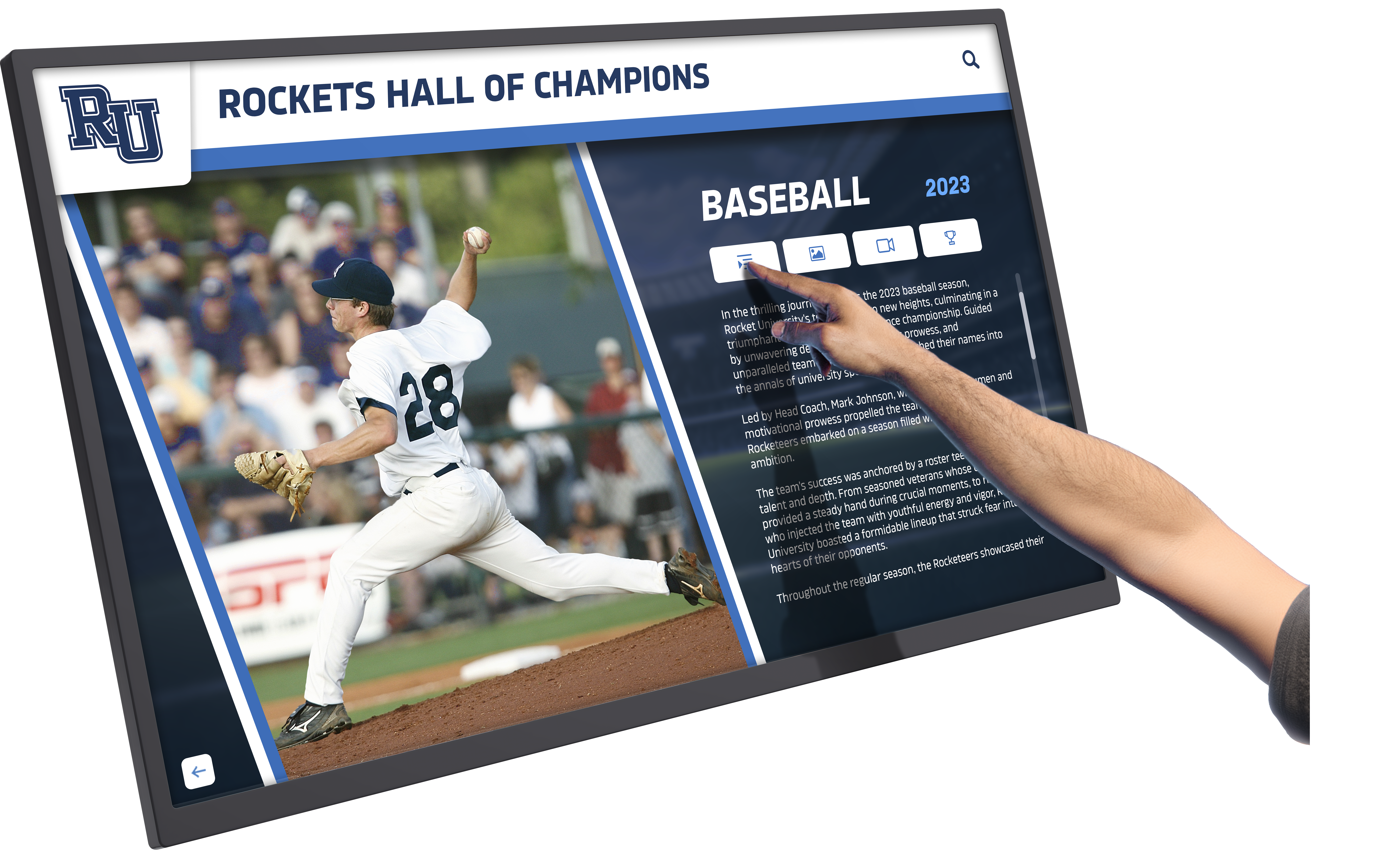
Similar platforms serve educational institutions implementing touchscreen software for recognition programs requiring comparable content management capabilities.
Integration Capabilities with Museum Systems
Kiosks deliver maximum value when connecting with existing institutional infrastructure:
Collection Management System Integration: Direct connections with TMS, PastPerfect, Mimsy XG, or other collection databases enabling automatic content synchronization. Changes made to collection records flow directly to kiosk displays without manual duplication, ensuring accuracy while eliminating redundant data entry.
Museums maintaining collection data in multiple disconnected systems face update challenges, accuracy problems, and wasted staff time duplicating effort. Integration provides single sources of truth with automated distribution across all display channels.
Ticketing and Admission System Connections: Links with admission systems enabling ticketing kiosks, membership verification, special access validation, and attendance tracking providing comprehensive visitor data across all institutional touchpoints.
Event Calendar Synchronization: Automatic display of current programs, special exhibitions, guided tours, lectures, performances, and activities pulled from institutional calendars ensuring kiosks always promote current opportunities without manual updating.
Social Media Integration: Content sharing tools enabling visitors to post discoveries on personal social channels, institutional feeds highlighting kiosk interactions, and user-generated content flows enriching digital collections with community perspectives.
Analytics Platform Connections: Data exports to Google Analytics, institutional dashboards, or business intelligence tools providing unified reporting across all visitor engagement channels rather than isolated kiosk metrics disconnected from broader institutional performance measurement.
Hardware Specifications and Compatibility
Software means nothing without appropriate hardware execution:
Commercial-Grade Displays: Professional touchscreens rated for continuous operation (16-24 hours daily) with extended warranties (3-5 years), commercial mounting standards, and environmental tolerances exceeding consumer specifications. Commercial displays cost more initially but avoid premature failures requiring expensive replacements.
Capacitive Touchscreen Technology: Multi-touch screens matching smartphone experiences through instant response times, gesture support, and excellent durability. Capacitive technology represents current best practice for interactive applications where visitor expectations match personal device experiences.
Sufficient Computing Power: Processors, memory, and graphics capabilities supporting smooth animations, high-resolution media, and instant response times without lag, stuttering, or delays frustrating visitors accustomed to responsive consumer devices.
Reliable Network Connectivity: Wired Ethernet connections preferred for fixed installations requiring consistent performance. Wireless solutions acceptable where cabling proves impractical but museums must ensure adequate WiFi coverage, bandwidth, and reliability supporting multiple simultaneous kiosk operations.
Peripheral Device Support: Compatibility with headphones for audio content, accessibility devices for visitors with disabilities, RFID readers for special interactive experiences, receipt printers for ticketing applications, and payment terminals for donation or merchandise transactions.
Implementation Planning: Setting Museum Kiosk Projects Up for Success
Technology selection represents only part of successful deployment. Implementation planning addressing content, training, timelines, and stakeholder engagement determines whether installations deliver promised value or become expensive disappointments.
Defining Clear Objectives and Success Metrics
Before evaluating platforms or selecting hardware, establish concrete objectives:
Purpose Clarity: What specific problems do kiosks solve? Visitor orientation, extended exhibit interpretation, collection access, educational programming, multilingual accessibility, or multiple objectives simultaneously? Clear purpose prevents scope creep and feature distraction.
Audience Identification: Who will use kiosks? School groups, families with children, international tourists, local residents, researchers, or mixed audiences with different needs? Understanding users informs content strategy and interface design priorities.
Success Metrics: How will you measure whether deployment succeeds? Interaction counts, engagement duration, visitor satisfaction scores, reduced staff inquiries, accessibility improvements, or qualitative stakeholder feedback?
Value Demonstration: How will you prove ROI justifying investment? Visitor experience improvements, staff efficiency gains, accessibility compliance, educational outcome enhancements, or revenue impacts through increased memberships or donations?
Organizations lacking clear objectives struggle evaluating platforms, making implementation decisions, and demonstrating value when stakeholders question investments during budget reviews.
Content Development Strategy and Resource Allocation
Display quality and technology sophistication mean nothing without compelling content:
Initial Content Planning: What will kiosks display at launch? How much content creates valuable experiences without overwhelming development capacity? Most successful deployments start focused then expand systematically based on visitor response and staff capacity.
Content Creation Workflows: Who develops content? How do you source artifact information, conservation details, historical research, multimedia assets, and educational materials? What quality standards apply? How do approval processes function across curatorial, education, and visitor services departments?
Ongoing Content Management: Who maintains kiosks after launch? How much time weekly does content management require? Do you have dedicated staff or distributed responsibilities? What happens when key administrators change roles or leave institutions?
Multimedia Asset Development: Do you have photography, videography, graphic design, or content writing capabilities? Will you develop assets internally, hire contractors, engage interns, or license content from external sources?
Historical Content Migration: How much existing content requires digitization? What scanning, photography, data entry, or format conversion investment does migration demand? Can you phase digitization over time or must everything launch simultaneously?
Content development frequently proves more challenging and time-consuming than anticipated. Realistic resource assessment prevents project delays and abandoned implementations when content complexity exceeds capacity.
Training, Adoption, and Change Management
Technology succeeds only when staff embrace it and visitors use it:
Staff Training: Complete instruction ensuring content managers confidently create entries, upload media, organize content, publish updates, and perform routine operations independently without requiring ongoing technical support from IT departments or external vendors.
Visitor Orientation: How will you introduce audiences to new kiosks? Interpretive signage, staff demonstrations, volunteer assistance, or trust in clear design? Even excellent interfaces benefit from initial awareness building and gentle encouragement trying something new.
Stakeholder Communication: How do you build support among curators, educators, administrators, board members, and donors? Success stories, engagement data, and vision articulation generating enthusiasm rather than skepticism or resistance from those unfamiliar with interactive technology benefits?
Documentation and Resources: Written guides, video tutorials, FAQ documents, and reference materials supporting administrators when questions arise outside formal training sessions. Documentation proves invaluable during staff transitions as institutional knowledge transfers to new team members.
Ongoing Support: Who provides assistance when administrators encounter problems, have questions, or need guidance? Vendor support, internal IT, designated super-users, or combinations ensuring help availability when needed without creating bottlenecks or frustrating delays?
Inadequate training and change management doom otherwise excellent technology implementations when administrators lack confidence, visitors ignore displays, or stakeholders remain unaware of delivered value.
Phased Rollout vs. Complete Installation
Implementation approaches affect project complexity, risk management, and learning opportunities:
Phased Rollout Approach: Starting with pilot installations in limited locations, gathering visitor feedback and staff experience, refining content and interfaces based on real-world lessons, then expanding to additional kiosks incorporating improvements from initial phases.
Phased approaches reduce upfront costs spreading investment over time, limit risks by proving concepts before large commitments, enable mid-course corrections improving later installations, and provide time developing content without overwhelming staff capacity.
Complete Installation Approach: Launching all planned kiosks simultaneously creating comprehensive visitor experiences and maximizing institutional impact. Complete installations demonstrate commitment, avoid inconsistent visitor experiences during phased rollouts, and eliminate prolonged construction disrupting gallery spaces.
Complete approaches require larger upfront investment, increase project complexity, offer limited opportunities for mid-course corrections, and demand that all content exists before launch without ability learning from visitor behavior and refining approaches.
Most museums favor phased rollouts, particularly when implementing kiosks for the first time. Initial pilots provide invaluable learning with manageable risk and investment.
Budget Planning and Cost Management
Comprehensive cost understanding prevents budget surprises:
Software Licensing: Subscription fees (typically $1,200-$3,600 annually per kiosk) or perpetual licenses ($3,000-$8,000 per kiosk plus optional annual maintenance). Interactive museum platforms generally cost more than generic digital signage but deliver proportionately greater value through specialized capabilities.
Hardware Investment: Commercial touchscreen displays ($2,500-$8,000 each), mounting hardware ($500-$2,000), computing devices ($800-$1,500), peripherals, and network infrastructure. Hardware specifications must match software requirements and intended use cases.
Installation Services: Professional mounting, cabling, power connections, network integration, and environmental considerations ($1,000-$3,000 per kiosk location). Installation complexity varies dramatically based on museum architecture, historical preservation requirements, and infrastructure availability.
Content Development: Staff time, contractor fees, equipment purchases, or licensing costs developing initial content and ongoing updates. Content represents major effort often underestimated during planning.
Training and Support: Vendor onboarding, ongoing technical assistance, optional consulting services, and staff time learning systems and developing expertise.
Complete single-kiosk implementations typically cost $8,000-$18,000 including first-year software, hardware, installation, and training. Multi-kiosk deployments benefit from economies of scale reducing per-unit costs while fixed costs like content development and training spread across multiple installations.
Organizations should budget 15-25% of initial implementation costs annually for ongoing operations including software subscriptions, maintenance, content updates, and eventual hardware refreshes.
Institutions implementing similar digital engagement solutions benefit from understanding interactive display technology costs across comparable applications.
Content Strategy: Creating Engaging Museum Kiosk Experiences
Technology enables experiences, but content determines whether visitors actually engage or walk away unimpressed. Effective content strategy transforms museum kiosks from expensive information terminals into compelling exploration platforms visitors genuinely value.
Supplementing vs. Replacing Physical Exhibits
Digital content serves different roles than physical artifacts:
Complementary Content Strengthening Exhibits: Kiosks excel providing context, backstories, comparative examples, conservation processes, acquisition histories, and related artifacts enriching understanding without replacing direct artifact encounters that remain museums’ unique value propositions.
The most powerful museum experiences combine physical presence with digital depth. Visitors experience emotional connections viewing actual historical objects, then satisfy intellectual curiosity through digital exploration revealing stories and connections impossible communicating through small text labels.
Extended Collection Access: Digital platforms enable visitors exploring comprehensive collections including storage items not currently displayed. This transforms museums from limited exhibit spaces into gateways accessing entire holdings without physical space constraints.
Museums display tiny percentages of total collections. Digital access demonstrates institutional scope while enabling discovering unexpected treasures matching personal interests better than currently exhibited artifacts.
Alternative Perspectives and Voices: Digital content can present multiple viewpoints, community voices, contested interpretations, and evolving scholarship that static exhibits struggle accommodating once fabricated and installed. Digital flexibility enables responsive, inclusive storytelling.
Structuring Content for Discovery and Exploration
How content organizes affects whether visitors find valuable information or abandon kiosks frustrated:
Multiple Navigation Paths: Enabling exploration by chronology, geography, theme, artifact type, artistic movement, cultural connection, or any classification matching how diverse audiences think about content. Single organizational structures force visitor mental models; multiple paths accommodate natural diversity.
Progressive Disclosure: Presenting high-level overviews first, then enabling progressive depth for interested visitors without overwhelming those seeking lighter engagement. This respects different visitor interests and available time while serving casual browsers and dedicated enthusiasts equally well.
Visual Entry Points: Image-first interfaces enabling browsing without reading text, recognizing that many visitors respond more strongly to visual content than textual descriptions. High-quality artifact photography becomes navigation tool rather than merely illustration.
Thematic Collections: Curated groupings highlighting connections across time periods, departments, or artifact types revealing relationships visitors wouldn’t discover through independent browsing. Digital curation complements physical exhibit curation through alternative organizational logic.
Search and Filter Tools: Powerful keyword searching and faceted filtering enabling visitors with specific interests to bypass browsing and navigate directly to relevant content. This serves goal-directed visitors as effectively as exploratory navigation serves browsers.
Multimedia Integration and Storytelling Techniques
Rich media transforms static information into compelling narratives:
High-Resolution Artifact Photography: Images revealing details invisible viewing artifacts in cases—surface textures, maker’s marks, material qualities, and conservation conditions. Zoom capabilities enable virtual close examination impossible in physical galleries where preservation concerns maintain viewing distances.
Video Content Bringing Context Alive: Historical footage, conservation demonstrations, curator commentary, artist interviews, archaeological excavations, scientific analyses, and contextual scenes helping visitors understand artifact significance beyond static descriptions.
Audio Elements Enriching Experiences: Oral histories, music from historical periods, environmental sounds providing context, actor readings of historical documents, and multilingual narration accommodating diverse visitors without overwhelming screen displays with dense text.
Interactive Timelines: Chronological visualizations positioning artifacts within historical contexts, showing how collections relate to broader events, and enabling temporal exploration revealing how artistic movements, technological capabilities, or cultural practices evolved across decades or centuries.
Comparative Tools: Side-by-side artifact comparisons highlighting similarities and differences across time periods, cultural contexts, artistic techniques, or thematic groupings helping visitors develop visual literacy and critical observation skills.
3D Models and Virtual Object Manipulation: Digital representations enabling visitors rotating artifacts viewing all angles, exploring construction details, and interacting with objects impossible touching in physical galleries where preservation requirements prevent handling.
Multilingual Content and Cultural Sensitivity
Global audiences and diverse communities demand inclusive content approaches:
Complete Translation vs. Summary Content: Deciding whether to provide full translations of all content or translated summaries with English detail recognizing translation represents significant effort and ongoing maintenance. Complete translation serves international visitors better but multiplies content management workload.
Cultural Adaptation Beyond Language: Recognizing that effective translation requires cultural context adjustment, not merely word replacement. Examples, references, and explanations resonating with English speakers may confuse international visitors without appropriate adaptation.
Multiple Interpretation Frameworks: Presenting artifacts through various cultural lenses acknowledging that Western art historical frameworks don’t universally apply. Indigenous perspectives, community voices, and alternative interpretive traditions enrich understanding while demonstrating respect for cultural complexity.
Sensitivity to Contested Histories: Digital platforms enable presenting multiple perspectives on controversial artifacts, colonial acquisitions, human remains, sacred objects, and cultural patrimony issues that physical labels struggle addressing comprehensively. Transparency about provenance and ongoing debates demonstrates institutional integrity.
Educational institutions wrestling with similar challenges benefit from exploring digital storytelling approaches honoring diverse perspectives and complex histories.

Visitor Engagement: Maximizing Museum Kiosk Usage and Impact
Installing kiosks represents only first steps. Ongoing attention to visitor engagement, content optimization, and experience refinement determines whether installations deliver sustained value or become ignored fixtures.
Encouraging Initial Kiosk Discovery and Trial
Visitors won’t use kiosks they don’t notice or perceive as irrelevant:
Strategic Physical Positioning: Locating kiosks where visitors naturally pause—gallery entrances, circulation nodes, seating areas, and exhibit thresholds—rather than isolated locations requiring deliberate seeking. Visibility and convenience dramatically affect usage rates.
Clear Signage and Invitation: Interpretive graphics explaining kiosk purposes and encouraging trial. Many visitors unfamiliar with museum technology need permission and encouragement trying something new. Simple signage like “Touch here to explore collection” or “Discover stories behind exhibits” significantly increases engagement.
Staff and Volunteer Encouragement: Training floor staff and docents to actively introduce kiosks to visitors, demonstrate basic functions, and encourage exploration. Personal invitation from trusted museum representatives overcomes hesitation more effectively than signage alone.
Prominent Visual Appeal: Attractive, professional kiosk hardware and engaging on-screen content attracting attention through visual quality. Visitors drawn by professional appearance explore content; those seeing outdated hardware or amateur interfaces assume content lacks value.
Easy Initial Interactions: Homepage content providing instant engagement—featured artifacts, visually compelling galleries, or interactive activities drawing visitors into deeper exploration. Difficult initial interactions discourage continued use while easy successes build confidence encouraging extended sessions.
Sustaining Engagement Through Content Quality
Initial discovery means nothing if content disappoints:
Professional Photography and Media: High-quality images, videos, and audio reflecting institutional standards and visitor expectations. Amateur media quality signals that content lacks importance, discouraging serious engagement.
Compelling Narratives: Stories bringing artifacts alive through human connections, historical drama, scientific discovery, artistic creation, or cultural significance rather than dry catalog descriptions. Visitors remember stories; they forget isolated facts.
Appropriate Content Depth: Balancing overview information for casual browsers with detailed content satisfying serious enthusiasts. Neither overwhelming casual visitors with excessive detail nor disappointing passionate learners with superficial treatment.
Regular Content Updates: Fresh material encouraging repeat visitors to engage with kiosks during subsequent visits rather than assuming they’ve seen everything. Museums rotating physical exhibits should synchronize kiosk content highlighting current shows.
Accurate, Proofread Content: Eliminating errors, inconsistencies, and broken links that undermine credibility. Visitors encountering multiple problems question whether content deserves trust, damaging institutional reputation.
Accessibility Throughout Experience: Not merely compliant interfaces but genuinely usable by visitors with diverse abilities. Testing with actual users reveals usability problems invisible to designers.
Measuring Engagement and Optimizing Experiences
Data reveals what works and what disappoints:
Quantitative Metrics Tracking: Interaction counts, session durations, navigation paths, search terms, content views, and temporal patterns revealing usage rates and engagement quality across different contexts and visitor populations.
Qualitative Feedback Collection: Visitor comments, staff observations, formal surveys, and informal conversations revealing whether kiosks deliver value, where confusion occurs, what content resonates, and how experiences could improve.
A/B Testing Variations: Experimental approaches comparing interface designs, content organizations, navigation patterns, or feature sets revealing which approaches engage visitors more effectively. Data-driven optimization improves results over assumptions.
Heatmap Analysis: Visual representations showing where visitors touch screens most frequently, which navigation paths prove popular, what content attracts attention, and where visitors abandon sessions revealing friction points requiring attention.
Comparative Performance Analysis: Usage rates across different kiosk locations, exhibit types, and content themes revealing what works, what doesn’t, and informing future deployments and content priorities.
Iterative Improvement Cycles: Regular content updates, interface refinements, and experience optimizations based on accumulated data and feedback. Excellence emerges from continuous improvement rather than perfect initial launches.
Organizations committed to excellence recognize that launching kiosks represents beginning, not end, of optimization journeys improving experiences over time based on actual visitor behavior rather than assumptions.
Security, Maintenance, and Long-Term Sustainability
Museum kiosks face unique operational challenges requiring proactive planning:
Physical Security and Vandalism Prevention
Public access creates security considerations:
Tamper-Resistant Hardware: Secured enclosures, locked mounting systems, and physical designs preventing unauthorized access to computing components, power systems, and network connections. Security measures must balance protection with accessibility for legitimate maintenance.
Damage-Resistant Materials: Hardened touchscreens, durable enclosures, and strong construction withstanding daily contact from thousands of visitors including occasional rough treatment from frustrated users or misbehaving children.
Secure Mounting: Professional installation ensuring kiosks can’t be tipped, pulled from walls, or otherwise dislodged creating safety hazards or enabling theft. This proves particularly critical for freestanding units in unsupervised locations.
Asset Tracking and Inventory: Documented systems tracking hardware, serial numbers, locations, and conditions enabling rapid identification of missing equipment and supporting insurance claims following theft or damage.
Content Security: Administrative access controls, password policies, and user permissions preventing unauthorized content modification or deletion. This matters particularly in controversial subject areas where activists might attempt changing displayed information.
Technical Maintenance and System Reliability
Operational excellence requires ongoing attention:
Preventive Maintenance Schedules: Regular cleaning, software updates, hardware inspections, and functionality testing identifying problems before they cause visitor-facing failures. Scheduled maintenance proves cheaper than emergency repairs.
Remote Monitoring Systems: Cloud-based platforms enabling IT staff monitoring kiosk status, identifying offline units, detecting performance issues, and sometimes resolving problems remotely without physical visits.
Spare Hardware Inventories: Maintaining backup displays, computing devices, and critical components enabling rapid replacements minimizing downtime when failures occur. Spare inventories prove particularly important for institutions with limited technical staff or remote locations.
Vendor Support Agreements: Service contracts ensuring access to technical assistance, replacement parts, and expertise beyond internal staff capabilities. Understanding what vendor support includes and costs prevents surprises during emergencies.
Staff Technical Training: Developing internal capabilities handling routine troubleshooting, basic repairs, content updates, and user assistance without requiring external support for every minor issue.
Network Infrastructure Reliability: Ensuring adequate bandwidth, backup connectivity, uninterrupted power supplies, and network redundancy preventing kiosk failures from infrastructure problems beyond software or hardware control.
Lifecycle Planning and Technology Refresh Cycles
Technology evolves; long-term planning prevents obsolescence:
Hardware Refresh Schedules: Planning for display replacements every 5-7 years, computing device upgrades every 3-4 years, and peripheral refreshes as components wear or become obsolete. Budgeting for replacements prevents surprises when equipment fails.
Software Platform Evaluation: Regularly assessing whether current platforms still serve needs effectively or whether evolving requirements, visitor expectations, or technological capabilities justify platform changes. This doesn’t mean constant churn but periodic strategic review.
Content Migration Planning: Ensuring content remains accessible across platform transitions, hardware upgrades, or vendor changes. Export capabilities, standard formats, and documentation preventing content lock-in enabling future flexibility.
Backward Compatibility Considerations: Understanding how vendor updates affect existing content and whether platform changes require content reconstruction. This informs vendor selection and ongoing relationship management.
Upgrade Paths and Scalability: Choosing platforms and partnerships enabling growth as needs evolve—adding kiosks, expanding content, implementing new features—without requiring disruptive replacements or expensive migrations.
Cultural institutions implementing similar recognition technology benefit from understanding future-proofing strategies ensuring lasting value from digital investments.
Emerging Trends Shaping Museum Kiosks in 2026 and Beyond
Understanding evolving technologies and visitor expectations helps museums make forward-looking investments:
Artificial Intelligence and Personalization
AI capabilities will enhance museum experiences:
Intelligent Content Recommendations: Algorithms analyzing visitor interactions suggesting related artifacts, thematic connections, and discovery paths matching demonstrated interests rather than generic navigation forcing all visitors through identical experiences.
Natural Language Processing: Conversational search enabling visitors asking questions in plain language rather than searching by keyword. This accommodates various vocabulary, uncertain phrasing, and exploratory inquiries revealing what visitors actually seek.
Automated Translation and Accessibility: AI-powered real-time translation expanding multilingual access, automated alt text generation improving accessibility, and caption generation reducing content development burden while maintaining quality.
Predictive Analytics: Machine learning identifying engagement patterns, forecasting visitor interests, detecting content gaps, and recommending improvements optimizing experiences based on accumulated behavior data across thousands of visitors.
Organizations investing in actively developed cloud platforms benefit from AI enhancements through standard updates rather than requiring new platform purchases as capabilities mature.
Augmented and Virtual Reality Integration
Immersive technologies extending physical exhibits:
AR-Enhanced Artifacts: Smartphone applications overlaying digital reconstructions on damaged artifacts, showing historical contexts, revealing hidden details, or demonstrating how objects functioned. AR bridges physical and digital worlds naturally.
Virtual Reality Reconstructions: VR experiences transporting visitors to historical sites, archaeological excavations, artist studios, or contextual environments helping understand artifact significance beyond gallery viewing.
Mixed Reality Experiences: Blended environments where physical artifacts coexist with digital elements creating engaging narratives impossible through either medium alone. Mixed reality represents frontier where many museums experiment.
Mobile Device Integration: Personal smartphones becoming museum interfaces through apps, QR codes, or beacon technology enabling custom content, wayfinding, and extended engagement before, during, and after physical visits.
Social Connection and Community Engagement
Digital platforms enabling museums serving as community hubs:
Social Sharing Integration: Easy tools enabling visitors posting discoveries on personal social channels, creating digital postcards, collecting favorites, and extending museum experiences into ongoing digital conversations with friends and family.
User-Generated Content: Platforms where visitors contribute memories, personal stories, historical photographs, oral histories, or cultural perspectives enriching institutional content with community voices and lived experiences.
Virtual Communities: Digital spaces where geographically distributed audiences connect around shared interests, participate in programming remotely, contribute expertise, and maintain ongoing relationships with institutions beyond occasional physical visits.
Crowdsourcing and Citizen Science: Engaging visitors in research through transcription projects, identification games, data validation, or research contributions transforming audiences from passive consumers into active institutional partners.
Data-Driven Continuous Improvement
Analytics informing perpetual optimization:
Real-Time Usage Monitoring: Dashboards revealing current visitor engagement enabling dynamic content adjustments, immediate problem identification, and responsive rather than reactive management.
Predictive Maintenance: Analytics identifying patterns preceding hardware failures enabling proactive replacements preventing downtime and visitor-facing problems.
Individualized Recommendations at Scale: Evidence-based content recommendations serving individual interests while aggregate patterns inform curatorial decisions about acquisition priorities, exhibit development, and educational programming.
Cross-Platform Analytics: Unified measurement across physical attendance, kiosk engagement, website usage, social media, and mobile apps providing comprehensive understanding of how audiences interact across all institutional touchpoints informing integrated digital strategies.
Conclusion: Making Smart Museum Kiosk Investments for Lasting Value
Museum kiosks represent significant investments demanding careful planning, thoughtful implementation, and ongoing attention. The most successful deployments recognize that technology serves human experiences rather than existing for its own sake. Interactive platforms transform museum visits when they genuinely improve understanding, enable personal discovery, accommodate diverse abilities, and respect that museums’ unique value lies in authentic cultural artifacts rather than digital displays.
In 2026, excellence in museum kiosks requires balancing multiple considerations: clear interfaces serving diverse visitors, compelling content justifying engagement time, accessible design including all community members, professional presentation reflecting institutional standards, sustainable operations fitting realistic budgets and capabilities, and flexibility adapting as needs evolve. Organizations implementing kiosks successfully define clear objectives, make strategic technology selections matching genuine requirements, invest adequately in content development, train staff thoroughly, measure results rigorously, and continuously improve based on accumulated evidence.
Museums serve public missions extending far beyond attendance metrics. Digital platforms help cultural institutions reach broader audiences, provide deeper engagement, accommodate accessibility requirements, and demonstrate value to funding sources while honoring core responsibilities preserving cultural heritage and making collections accessible. The best museum kiosks in 2026 advance these fundamental missions rather than merely showcasing impressive technology.
Whether you’re implementing first interactive experiences, expanding successful pilot programs, or reconsidering underperforming legacy systems, the principles outlined throughout this guide provide frameworks for informed decision-making. Museum kiosks will never replace direct encounters with authentic cultural artifacts—nor should they try. Instead, they complement, contextualize, and extend physical experiences while serving visitors who might never visit physically, enabling museums fulfilling public missions more completely than physical exhibits alone possibly could.
Your community deserves museum experiences combining the irreplaceable presence of authentic cultural artifacts with the engagement, accessibility, and depth that modern interactive technology enables. Planning carefully, implementing thoughtfully, and committing to ongoing excellence ensures that museum kiosks deliver lasting value justifying investments while advancing institutional missions serving diverse communities effectively.
Ready to implement professional interactive displays enhancing museum visitor engagement? Discover how solutions like Rocket Alumni Solutions provide comprehensive platforms specifically designed for interactive recognition, wayfinding, and information applications, delivering intuitive management, engaging experiences, and lasting value that generic solutions simply cannot match.
Explore Interactive Display Solutions
Discover how purpose-built interactive platforms transform visitor engagement through touchscreen technology designed specifically for cultural institutions, educational environments, and organizations demanding excellence in digital recognition and information delivery.































