National Honor Society membership represents one of the most prestigious academic distinctions high school students can achieve, recognizing excellence not only in scholarship but in service, leadership, and character—the four pillars upon which NHS has built its reputation since 1921. With over 1.4 million students across more than 17,000 chapters nationwide, NHS stands as America’s premier organization honoring well-rounded academic excellence while preparing students for college success and lifelong achievement.
Yet many schools struggle to celebrate NHS membership with the prominence these accomplishments deserve. Recognition often defaults to brief induction ceremonies that create one memorable evening, certificates stored in folders, or static honor rolls that quickly become outdated. Meanwhile, the daily inspiration that visible NHS recognition could provide—motivating underclassmen to pursue excellence across scholarship, service, leadership, and character—remains unrealized as achievements receive insufficient ongoing visibility.
This comprehensive guide explores how modern digital recognition displays transform National Honor Society celebrations, creating engaging, permanent tributes that inspire current students, honor inducted members appropriately, and preserve institutional NHS tradition for generations to come.
Effective NHS recognition serves multiple essential purposes beyond simple acknowledgment. It provides clear, visible pathways showing underclassmen how to earn membership, creates aspirational peer role models demonstrating well-rounded excellence, strengthens college applications through prestigious organizational affiliation, validates years of academic rigor and extracurricular commitment, and builds school cultures where comprehensive achievement—not just grades or athletics—receives appropriate celebration throughout educational communities.
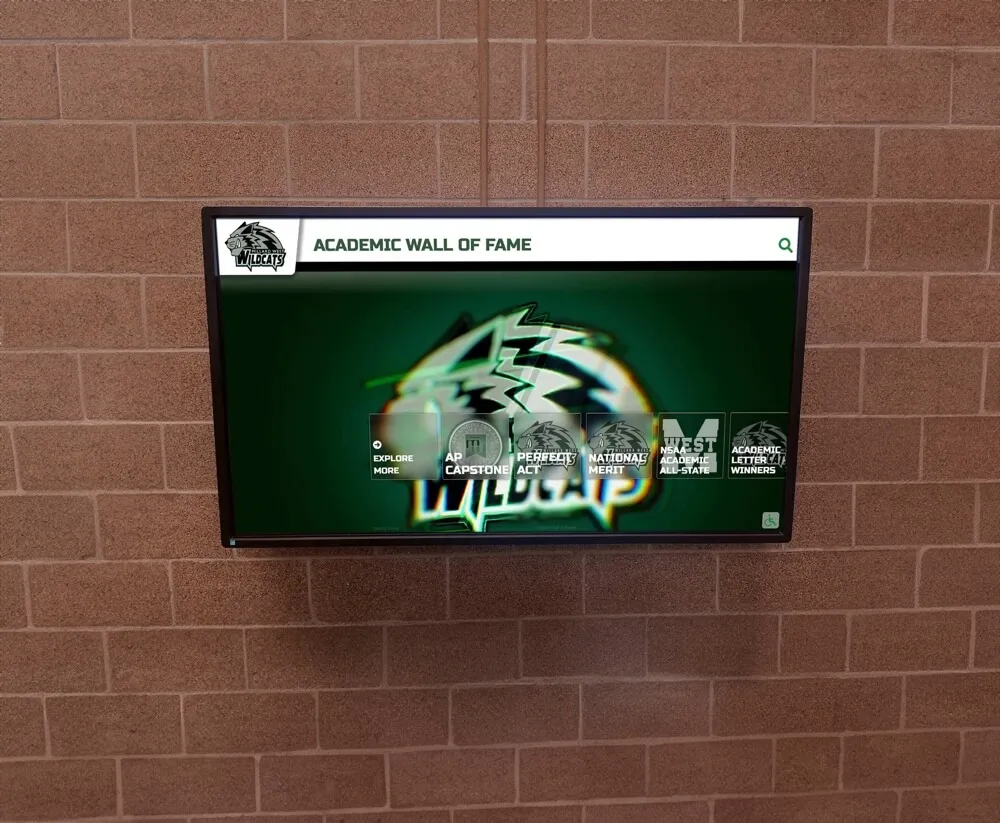
Modern digital displays transform NHS recognition from temporary announcements into permanent, engaging celebration of academic excellence and character
Understanding National Honor Society: More Than Academic Achievement
Before implementing recognition programs, schools benefit from understanding what NHS membership represents, the comprehensive selection criteria beyond grades alone, and why these honors deserve prominent, lasting celebration throughout school communities and beyond individual induction events.
The Four Pillars of NHS Membership
National Honor Society distinguishes itself from purely grade-based honors through its comprehensive evaluation across four essential dimensions that predict both college success and lifelong achievement. Unlike honor roll recognition focusing exclusively on academic performance, NHS membership requires demonstrated excellence across scholarship, service, leadership, and character—creating more holistic recognition of student development and community contribution.
Scholarship: Academic Excellence Foundation
The scholarship pillar establishes NHS membership’s academic foundation while setting clear achievement standards. Students must maintain cumulative GPA meeting or exceeding chapter-specific requirements, typically 3.5 or higher on a 4.0 scale, demonstrating sustained academic excellence rather than sporadic achievement. This threshold ensures NHS members represent genuine intellectual capability, consistent work ethic, and academic discipline essential for rigorous college coursework and professional success.
Service: Community Contribution and Engagement
The service pillar recognizes students who contribute meaningfully to their communities through volunteer activities, service projects, and civic engagement. NHS candidates must demonstrate substantial service hours and meaningful community impact rather than simply accumulating volunteer time for college applications. This requirement ensures members understand their responsibility to contribute to communities, develop empathy and perspective through service experiences, and establish lifelong patterns of civic engagement and community contribution.
Leadership: Initiative and Positive Influence
NHS leadership requirements extend beyond formal positions to recognize students who take initiative, inspire peers, and create positive change in their schools and communities. Qualifying leadership might include elected positions in student government or clubs, team captain roles in athletics or competitive academics, founding new organizations addressing unmet needs, or informal influence through positive peer modeling and mentoring. This comprehensive definition ensures diverse students can demonstrate leadership regardless of their specific talents or interests.
Learn more about comprehensive approaches in academic recognition programs that celebrate diverse excellence.
Character: Integrity and Citizenship
Perhaps NHS’s most distinctive requirement, the character pillar evaluates students’ integrity, responsibility, respect, and citizenship through faculty input, peer observations, and behavioral records. This assessment ensures NHS members demonstrate ethical behavior, treat others respectfully, take responsibility for their actions and commitments, and uphold their school’s values and standards. Character requirements distinguish NHS from purely performance-based honors, recognizing that excellence encompasses how students achieve success, not merely what they accomplish.
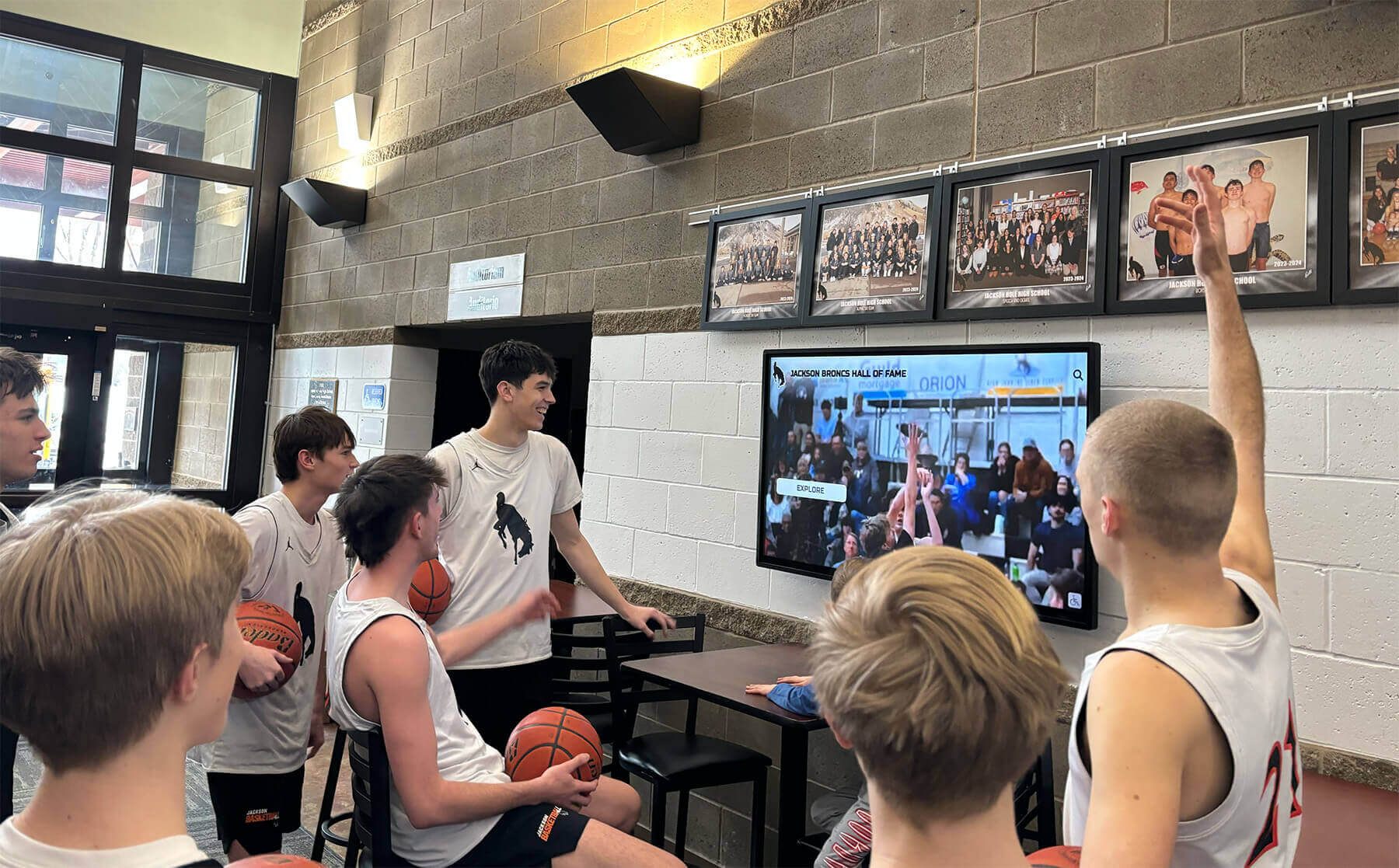
Interactive displays create opportunities for students to explore NHS achievements and connect with school culture
NHS Selection Process and Membership Benefits
The rigorous NHS selection process ensures membership carries genuine prestige and meaning within educational communities. After meeting initial GPA requirements, candidates complete comprehensive applications documenting their service, leadership, and character qualifications. Faculty councils review applications holistically, evaluate recommendations, and select members based on demonstrated excellence across all four pillars rather than single dimensions alone.
Membership Benefits for Students
NHS membership provides substantial advantages supporting college admissions and beyond. Universities recognize NHS as evidence of well-rounded excellence, viewing membership as validation students succeeded across multiple dimensions rather than focusing narrowly on academics alone. Many institutions offer automatic scholarships to NHS members, particularly regional state universities actively recruiting high-achieving students. NHS membership strengthens college applications by demonstrating sustained commitment to service, leadership development, and character alongside academic excellence.
Beyond college admissions, NHS membership provides valuable experiences preparing students for adult responsibilities. Chapter activities develop organizational skills, teamwork capabilities, project management experience, and public speaking confidence through service initiatives, leadership opportunities, and induction ceremony participation. These experiences complement academic learning while building practical competencies essential for professional success and community leadership.
Institutional Benefits of Strong NHS Chapters
Schools with vibrant NHS chapters benefit from enhanced academic culture, increased community service impact, positive reputation among prospective families, and visible evidence of comprehensive educational excellence. Strong NHS programs create positive peer influence encouraging academic achievement and character development, demonstrate institutional commitment to values beyond test scores, and provide structured opportunities for high-achieving students to contribute meaningfully to their school communities.
Traditional NHS Recognition Limitations
Understanding traditional approaches’ inherent constraints helps schools appreciate digital recognition systems’ transformative potential while avoiding common mistakes that limit recognition effectiveness and sustainability.
The Temporary Nature of Induction Ceremonies
NHS induction ceremonies create powerful moments celebrating new members through formal recognition emphasizing the significance of their achievement. These events typically feature speeches about NHS pillars, candle lighting symbolizing knowledge and leadership, formal pledge recitations, and certificate presentations—creating memorable experiences for inductees and their families attending these special evenings.
However, the recognition impact largely ends when ceremonies conclude. Certificates go into folders, programs get stored as keepsakes, and within weeks most school community members cannot recall who earned NHS membership that year. This temporary recognition fails to create sustained visibility that could inspire underclassmen throughout their high school careers, provide daily reminders of institutional values and expectations, or demonstrate to prospective families the school’s commitment to comprehensive excellence.
Common Recognition Limitations After Induction:
- Brief mentions in school newsletters reaching limited audiences
- Static bulletin boards updated inconsistently or not at all
- Honor roll lists combining NHS with other academic recognition indistinguishably
- Graduation program references seen only by ceremony attendees
- Senior yearbook listings providing minimal visibility to underclassmen
Learn about comprehensive student achievement recognition strategies that maintain visibility beyond initial celebration events.

Individual recognition profiles celebrate specific achievements and create lasting visibility beyond temporary announcements
Physical Space Constraints Forcing Difficult Choices
Schools using traditional plaques, engraved panels, or physical NHS recognition walls inevitably confront capacity limitations forcing difficult decisions about whose achievements receive permanent visibility. A typical recognition wall accommodates perhaps 100-200 names before exhausting available space—insufficient for schools where 30-50 students earn NHS membership annually across multiple graduation years.
These constraints create several problematic scenarios. Some schools rotate recognition, removing older members to add current inductees—effectively erasing historical members’ achievements and severing alumni connection to their NHS recognition. Other institutions restrict recognition to chapter officers or senior members only, excluding the majority of NHS members from permanent acknowledgment despite meeting identical selection criteria. Still others overflow recognition into less prominent locations, inadvertently signaling that some members’ achievements matter less than others based purely on space availability rather than merit.
Perhaps most problematically, space constraints may discourage schools from comprehensive NHS recognition altogether, defaulting instead to temporary certificate presentation without any permanent display—missing opportunities to inspire future students through visible evidence of attainable excellence and institutional commitment to celebrating comprehensive achievement beyond athletics or singular academic metrics.
Static Displays Failing to Engage Contemporary Students
Traditional recognition approaches using printed lists, engraved plaques, or mounted photographs provide minimal information and zero interaction opportunities. Contemporary students accustomed to rich digital experiences, interactive content, and personalized exploration find these static displays unengaging and easily overlooked during daily campus navigation.
Static NHS recognition typically includes only member names, possibly induction years, and perhaps chapter officer positions—providing no context about members’ specific achievements, no inspiration showing how current students might pursue similar success, and no connection to broader institutional traditions that make NHS recognition meaningful beyond simple name listings. This minimal information fails to tell compelling stories that could inspire underclassmen, fails to honor members appropriately for their comprehensive achievements, and fails to engage parents, visitors, and community members who could benefit from understanding NHS excellence throughout school populations.
Digital Recognition Solutions for NHS Excellence
Modern technology fundamentally transforms NHS recognition effectiveness through capabilities traditional approaches cannot match, creating engaging experiences that honor members appropriately while inspiring future generations toward comprehensive excellence across scholarship, service, leadership, and character.
Unlimited Recognition Capacity Honoring All Members
Perhaps digital recognition systems’ most transformative advantage: they accommodate unlimited NHS members across all graduation years without space constraints or rotation requirements. Solutions like Rocket Alumni Solutions enable schools to recognize every member comprehensively from chapter founding forward, documenting complete institutional NHS tradition across decades without ever removing past members to add current inductees.
Complete Historical Archives
- Recognize all NHS members from program inception through current year
- Preserve institutional academic tradition surviving building renovations
- Ensure no member’s achievement disappears due to space limitations
- Document complete chapter history for anniversary celebrations and reflection
Comprehensive Current Recognition
- Include all NHS members regardless of graduation year or officer status
- Celebrate chapter officers with enhanced profiles while honoring all members equally
- Provide space for detailed achievement documentation rather than name-only listings
- Support growing chapters without capacity concerns as programs expand
Future Scalability Without Limitations
- Add unlimited new members annually as chapters grow and thrive
- Accommodate increasing NHS participation as academic culture strengthens
- Scale recognition as school population grows without infrastructure changes
- Maintain consistent recognition quality across expanding member populations
This unlimited capacity fundamentally changes recognition strategy from selective acknowledgment to comprehensive celebration ensuring every deserving member receives appropriate honor regardless of chapter size, graduation year, or available physical space for traditional recognition displays.
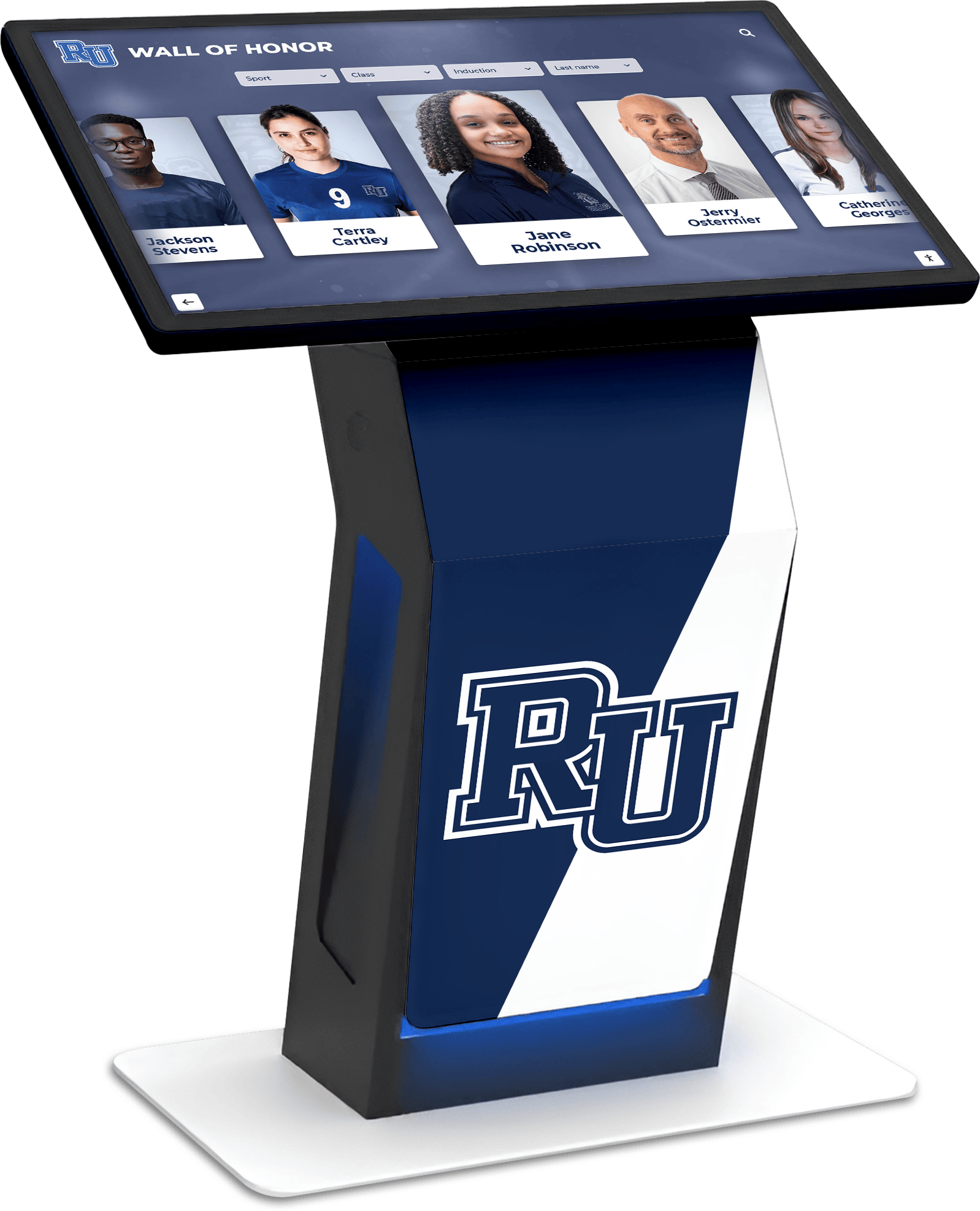
Modern recognition systems integrate touchscreen displays with cloud-based management platforms enabling unlimited content
Rich Multimedia Member Profiles
Digital platforms transform NHS recognition from simple name listings into compelling stories honoring members comprehensively while effectively inspiring peers through detailed achievement narratives, professional imagery, and interactive content impossible with static displays.
Enhanced Profile Content Elements:
Professional Photography and Visual Content High-quality student photos create personal connections making recognition feel significant and memorable rather than perfunctory. Professional imagery demonstrates that NHS membership represents meaningful acknowledgment worthy of quality presentation comparable to athletic recognition, senior spotlights, and other prominent school honors. Photos might capture formal portraits highlighting individual members, candid service project moments showing NHS values in action, induction ceremony images preserving special recognition moments, or group photos celebrating chapter unity and community.
Detailed Achievement Narratives Beyond Name Listings Rather than simply stating “Sarah Chen - NHS Member 2024,” comprehensive narratives explain specific accomplishments demonstrating excellence across all four pillars: “Sarah Chen earned National Honor Society membership in 2024 through exceptional achievement across scholarship, service, leadership, and character. She maintains a 4.0 GPA while taking five AP courses, serves as Student Council Treasurer organizing fundraisers supporting local food banks, leads the Science Olympiad team to regional championships, and exemplifies integrity through peer tutoring and respectful leadership. Sarah’s comprehensive excellence embodies NHS’s four pillars, inspiring classmates through her dedication to academic achievement, community service, and positive character.”
Explore digital scholarship recognition strategies that honor academic excellence comprehensively through detailed profiles and compelling storytelling.
Four Pillars Achievement Documentation Comprehensive profiles should document specific evidence supporting each NHS pillar:
- Scholarship: GPA, class rank, AP courses, academic awards and competitions
- Service: Volunteer hours, specific service projects, community impact
- Leadership: Positions held, initiatives led, peer influence demonstrated
- Character: Faculty recommendations, citizenship recognition, ethical behavior examples
Advice and Inspiration for Future Members Including brief statements from current members about their NHS journey provides valuable guidance: “NHS membership taught me that excellence means more than grades. Through service projects, I discovered my passion for helping others. My advice: get involved in your community early, seek leadership opportunities that align with your interests, and remember that character matters as much as achievement.”
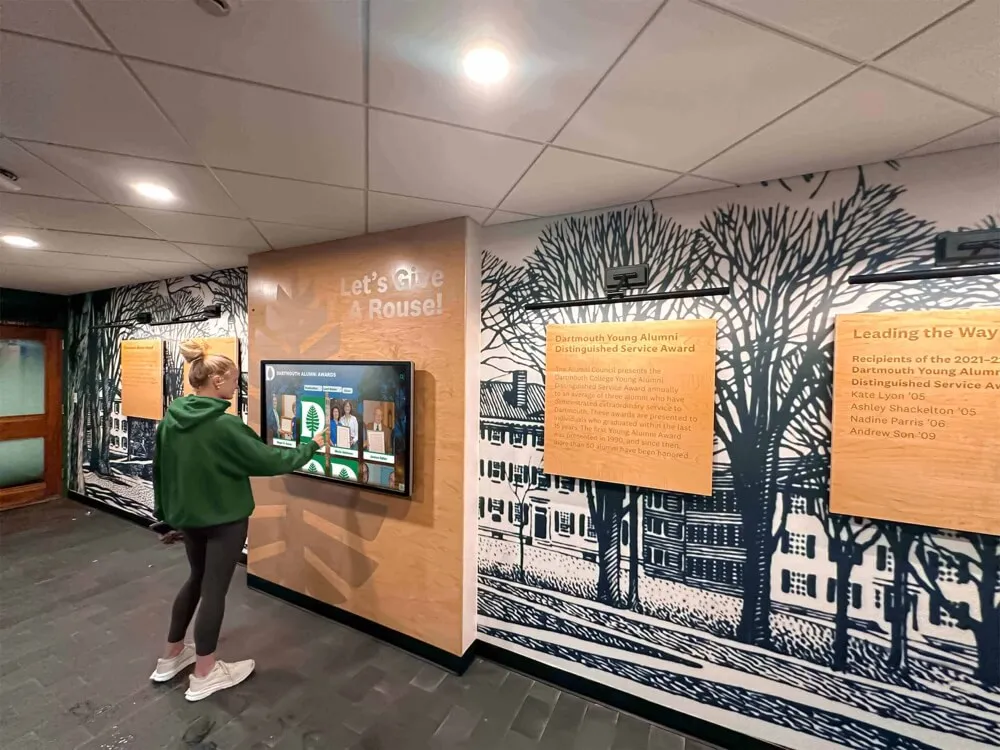
Strategic placement of recognition displays in high-traffic hallways maximizes visibility and engagement opportunities
Interactive Exploration Features Engaging Students
Modern touchscreen systems create engagement opportunities impossible with static displays, transforming NHS recognition from passive viewing into active exploration encouraging deeper connection with institutional values and achievement narratives.
Search and Filtering Capabilities
- Find specific members by name, graduation year, or accomplishment
- Filter by chapter officer positions or specific activities
- Sort chronologically or alphabetically as preferred
- Browse related content connecting members across graduation years
Detailed Profile Views with Rich Context
- Individual member pages with comprehensive achievement narratives
- Photo galleries showing service projects and induction ceremonies
- Timeline visualizations showing member involvement across high school years
- Linked content connecting members involved in similar activities
NHS History and Tradition Exploration
- Chapter founding story and historical development
- Statistical overviews showing membership growth over decades
- Notable alumni NHS members and their subsequent achievements
- Documentation of signature chapter service projects and traditions
Inspiration for Prospective Members
- Clear explanation of selection criteria and timeline
- Guidance on building strong NHS applications
- Examples of qualifying service, leadership, and character demonstrations
- Student testimonials about NHS experience and benefits
These interactive features create meaningful engagement with NHS recognition rather than brief glances at name lists, providing information valuable for students considering NHS membership, families exploring school culture, and visitors understanding institutional commitment to comprehensive excellence.
Learn about best touchscreen display options for schools that maximize engagement through intuitive interfaces and compelling content presentation.
Implementing Comprehensive NHS Recognition Programs
Successful implementation requires systematic planning addressing technology selection, content development, integration with existing NHS chapter activities, and ongoing management ensuring recognition remains current, meaningful, and sustainable across years of operation.
Planning and Needs Assessment
Assessment Steps Before Implementation:
- Evaluate current NHS recognition approaches identifying strengths and gaps
- Inventory historical NHS member data from chapter records, yearbooks, and archives
- Survey stakeholders including current members, alumni, advisors, and administrators
- Analyze available resources including budget, dedicated staff time, and technical infrastructure
- Review physical spaces identifying optimal recognition display locations
- Research similar programs at peer institutions for implementation lessons
Program Design Decisions Requiring Early Resolution:
- Define recognition scope (current members only vs. comprehensive historical membership)
- Determine content requirements including photography needs and narrative development
- Establish update processes for adding new members after annual inductions
- Identify responsible staff and allocate appropriate maintenance time
- Plan integration with existing NHS chapter activities and communications
- Set realistic timeline for initial launch and ongoing content development
Comprehensive planning prevents common implementation mistakes while establishing foundations for recognition programs that genuinely motivate students, strengthen school culture around comprehensive excellence, and honor NHS members appropriately for their significant achievements across scholarship, service, leadership, and character.
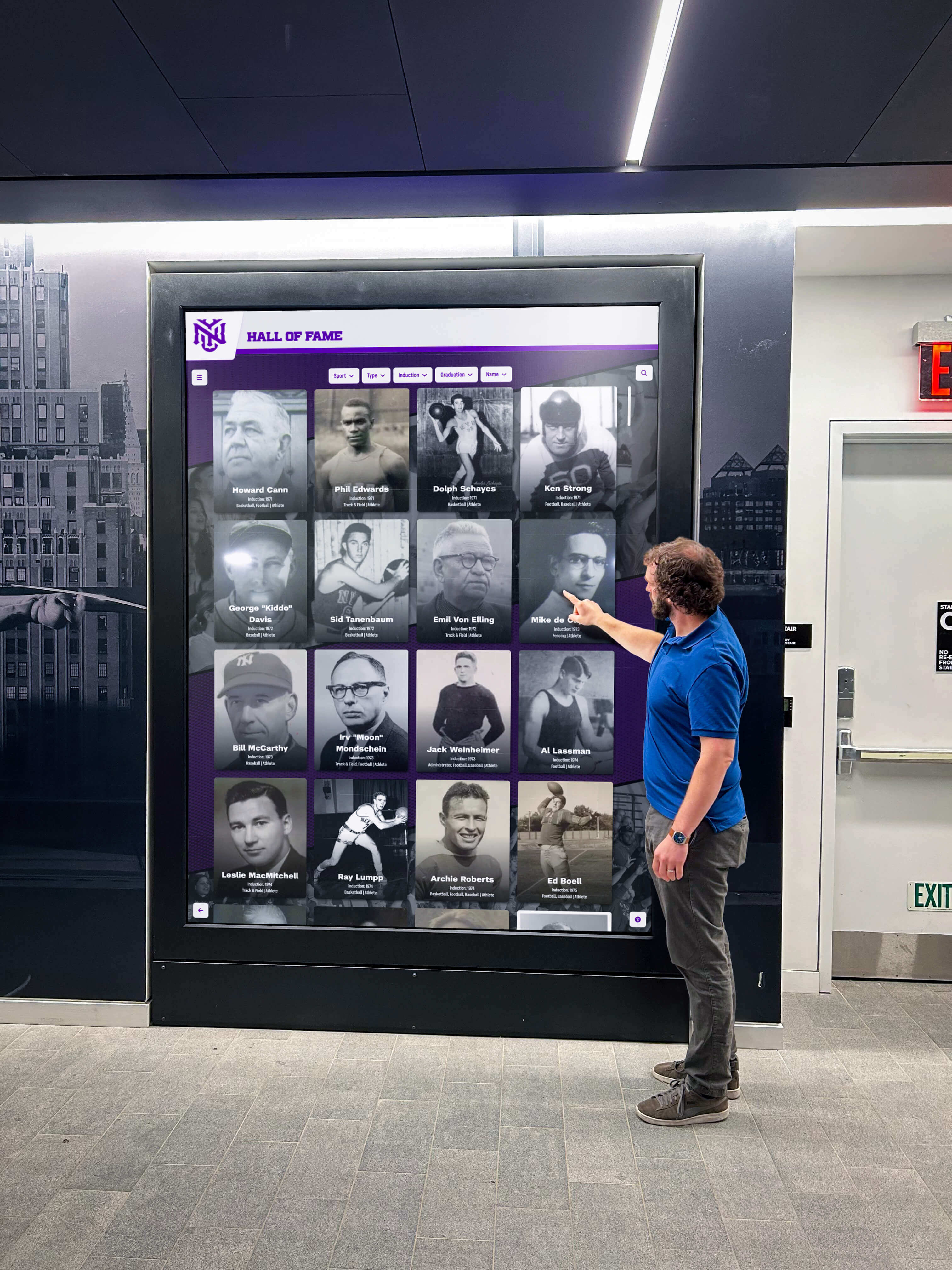
Interactive displays enable families and community members to explore NHS excellence during campus visits
Technology Selection and Integration
Schools implementing digital NHS recognition should evaluate solution options carefully, considering both hardware capabilities and software functionality that specifically support academic recognition rather than generic digital signage adapted for recognition purposes.
Hardware Considerations for NHS Displays:
Commercial-Grade Touchscreen Displays Display size from 43 to 75 inches depending on viewing location, available space, and budget considerations. Commercial durability ratings ensure reliable operation for 50,000+ hours of continuous use. Touchscreen capabilities enable interactive exploration rather than passive viewing. Mounting options include wall-mounted installations in prominent hallways, freestanding floor kiosks in lobbies or common areas, or enclosure-protected displays in high-traffic locations requiring additional durability.
Connectivity and Infrastructure Requirements Reliable network connectivity with wired ethernet strongly preferred for stability and security. Adequate electrical power with surge protection preventing damage from power fluctuations. Appropriate mounting supports safely securing equipment weight to walls or floors. Climate-controlled environments protecting investment from temperature extremes that shorten hardware lifespan. Consider locations providing high visibility while ensuring appropriate environmental protection and accessibility.
Purpose-Built Recognition Software Platforms:
Solutions like Rocket Alumni Solutions provide features specifically optimized for academic recognition rather than requiring adaptation of generic digital signage systems:
- Intuitive content management requiring no technical expertise for updates
- Templates designed for member profiles ensuring consistent formatting
- Automatic organization by graduation year, achievement type, and other criteria
- Search and filtering helping visitors find specific members quickly
- Web and mobile extensions enabling access beyond physical displays
- Analytics demonstrating engagement levels and program effectiveness
- Ongoing platform development adding features addressing educational needs
- Dedicated support teams understanding NHS recognition contexts
Learn about comprehensive student engagement strategies through modern displays that create interactive experiences students find compelling and valuable.
Content Development and Member Profiles
Quality content determines recognition program impact, making investment in thorough, accurate, engaging development essential for programs that truly honor members while inspiring underclassmen effectively.
Photography Standards for Professional Presentation:
- High-resolution images suitable for large screen display without pixelation
- Consistent lighting, composition, and framing creating professional aesthetic
- Authentic expressions capturing genuine personality rather than forced poses
- Appropriate backgrounds ensuring focus remains on members being honored
- Consider both formal portraits and candid service/leadership moments
Writing Compelling Member Narratives That Inspire:
Effective NHS member descriptions move beyond generic acknowledgment to tell specific achievement stories demonstrating excellence across all four pillars in ways that other students can learn from and emulate.
Generic recognition: “Michael Rodriguez - National Honor Society Member, Class of 2024.”
Meaningful recognition: “Michael Rodriguez exemplifies National Honor Society’s four pillars through remarkable achievement across scholarship, service, leadership, and character. Michael maintains a 3.92 GPA while excelling in honors mathematics and science courses, preparing him for engineering studies. His 150+ volunteer hours include organizing food drives serving 300+ local families and tutoring elementary students weekly. As Robotics Club president, Michael led his team to state championships while mentoring younger members. Teachers describe Michael’s integrity, responsibility, and respect as exceptional, noting his genuine concern for others’ success. Michael will attend Purdue University studying Mechanical Engineering, where NHS values will guide his continued excellence.”
This specific, detailed recognition communicates what students accomplished, how they demonstrated NHS pillars, the challenges they balanced, and the outcomes their achievements enabled—providing clear models other students can emulate while honoring individual excellence appropriately.
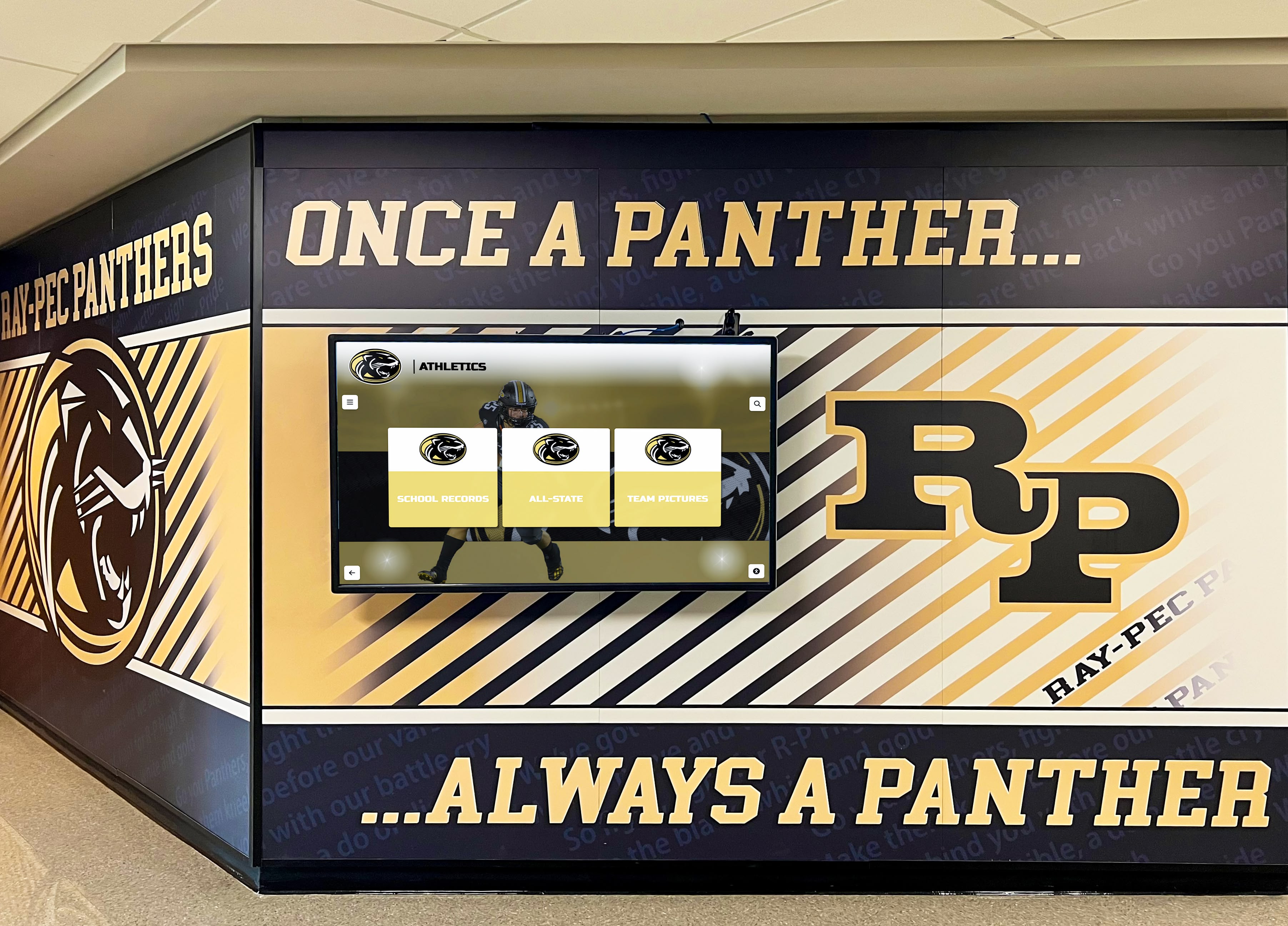
Integrated recognition systems can combine digital displays with traditional murals creating comprehensive celebration spaces
Best Practices for NHS Recognition Success
Beyond technology and process, certain approaches maximize program effectiveness while ensuring recognition remains meaningful, equitable, and sustainable across years of NHS chapter operation and changing school leadership.
Integrating with Chapter Activities and Ceremonies
NHS recognition proves most effective when integrated comprehensively with chapter activities rather than existing as separate initiative disconnected from ongoing member experiences and chapter traditions.
Induction Ceremony Integration:
- Display new member profiles during reception following formal ceremony
- Create photo opportunities with recognition displays and NHS regalia
- Provide QR codes enabling families to access web-based recognition immediately
- Feature previous inductees demonstrating tradition and inspiring new members
- Document ceremony moments with photos enhancing member profiles
Ongoing Chapter Activity Documentation:
- Update displays with service project photos and impact descriptions
- Recognize chapter officer contributions and leadership initiatives
- Highlight member achievements in competitions, awards, and activities
- Showcase scholarship recipients and college admission successes
- Document NHS tradition through annual chapter accomplishments
Web and Social Media Extensions:
- Share recognition content through school social media celebrating members
- Provide web access enabling extended family and community viewing
- Create shareable member profile graphics for graduation and celebrations
- Maintain online archives surviving physical campus changes
- Enable alumni to revisit and share their NHS recognition decades later
Learn about homecoming festivities and recognition events that can incorporate NHS celebration alongside other school traditions.
Timely Recognition and Content Updates
Prompt acknowledgment matters tremendously for maintaining member engagement and demonstrating genuine institutional pride in NHS achievement rather than treating recognition as administrative afterthought.
Immediate Recognition Following Induction:
- Photograph new members with certificates within days of ceremony
- Develop profile narratives while achievements remain fresh and detailed
- Update digital displays within one week of induction demonstrating priority
- Share recognition through multiple channels creating community celebration
- Notify families directly with links to web-accessible recognition
Annual Maintenance and Enhancement:
- Review all content annually ensuring accuracy and relevance
- Update member profiles with graduation outcomes and college destinations
- Add recent photography from service projects and chapter activities
- Enhance historical member profiles as additional information becomes available
- Refresh display design maintaining contemporary appearance and engagement
Continuous Quality Improvement:
- Gather feedback from members, families, and chapter advisors annually
- Monitor display engagement through analytics informing content strategy
- Benchmark against peer institutions identifying enhancement opportunities
- Document best practices ensuring consistency across advisor transitions
- Invest in ongoing photography and content development maintaining quality
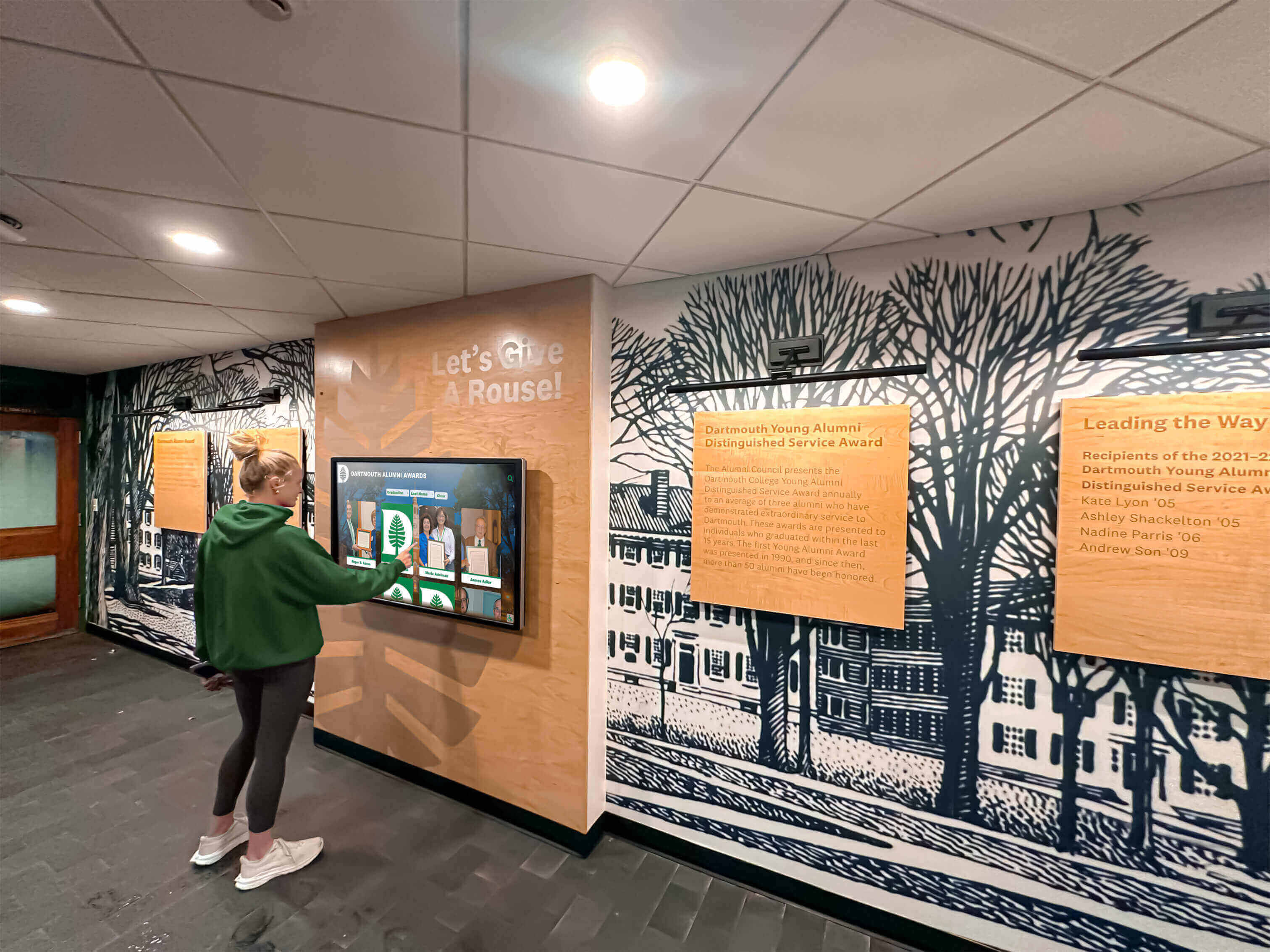
Intuitive touchscreen interfaces encourage exploration and make finding specific members simple and engaging
Ensuring Equitable Access and Inclusive Recognition
Recognition programs should celebrate authentic NHS membership while ensuring selection processes remain equitable, transparent, and accessible to all qualified students regardless of background circumstances.
Equity Considerations in NHS Selection:
- Ensure all students understand selection criteria and application process clearly
- Provide guidance helping students document their qualifications effectively
- Offer service opportunities through school for students facing access barriers
- Recognize diverse forms of leadership beyond traditional student government
- Train faculty councils on equitable evaluation preventing unconscious bias
- Monitor selection outcomes across demographic groups identifying disparities
Inclusive Recognition Presentation:
- Celebrate all members equally regardless of officer status or prominence
- Highlight diverse pathways to NHS excellence across varied interests
- Feature members reflecting full school demographic diversity in prominent examples
- Document service projects serving diverse communities and causes
- Ensure recognition content is culturally responsive and respectful
- Make digital displays physically accessible to all community members
Supporting Member Success Post-Induction:
- Provide ongoing chapter activities maintaining engagement beyond ceremony
- Connect members with mentors and alumni sharing similar interests
- Facilitate leadership development and meaningful service opportunities
- Support college application processes highlighting NHS membership effectively
- Maintain member connection through graduation and into alumni status
Schools should regularly assess NHS participation rates across student populations, taking proactive action when analysis reveals disparities requiring targeted support, communication improvements, or selection process refinements ensuring all capable, qualified students can access NHS opportunities regardless of background circumstances.
Measuring NHS Recognition Program Effectiveness
Systematic assessment ensures recognition programs achieve intended goals while identifying improvement opportunities based on evidence rather than assumptions or anecdotal impressions alone.
Quantitative Impact Metrics
Recognition Completeness and Quality:
- Percentage of verified NHS members included in displays (target: 100%)
- Profile completeness including photos and comprehensive narratives
- Historical coverage depth showing institutional tradition over decades
- Update timeliness measuring delay between induction and display
Student Achievement and Participation Trends:
- NHS application rates showing student interest over time
- Membership induction rates demonstrating selection sustainability
- Member retention and continued participation through graduation
- Correlation with other academic achievement indicators
- Alumni NHS member outcomes in college and career success
Engagement Indicators:
- Digital display interaction rates and average session duration
- Web platform usage statistics showing community interest levels
- Social media engagement with NHS recognition content
- Recognition ceremony attendance rates from families and community
- Parent and alumni feedback on recognition quality and accessibility
College Outcomes Demonstrating Value:
- University admission success rates for NHS members vs. non-members
- Scholarship award amounts correlated with NHS membership
- College persistence rates showing preparation effectiveness
- Graduate school admission rates demonstrating long-term trajectories
These metrics provide objective evidence of recognition program value while identifying specific areas requiring improvement or expansion to maximize effectiveness and demonstrate return on investment in comprehensive NHS celebration.
Learn about comprehensive digital wall of honor plaques and recognition supporting multiple achievement categories beyond NHS alone.
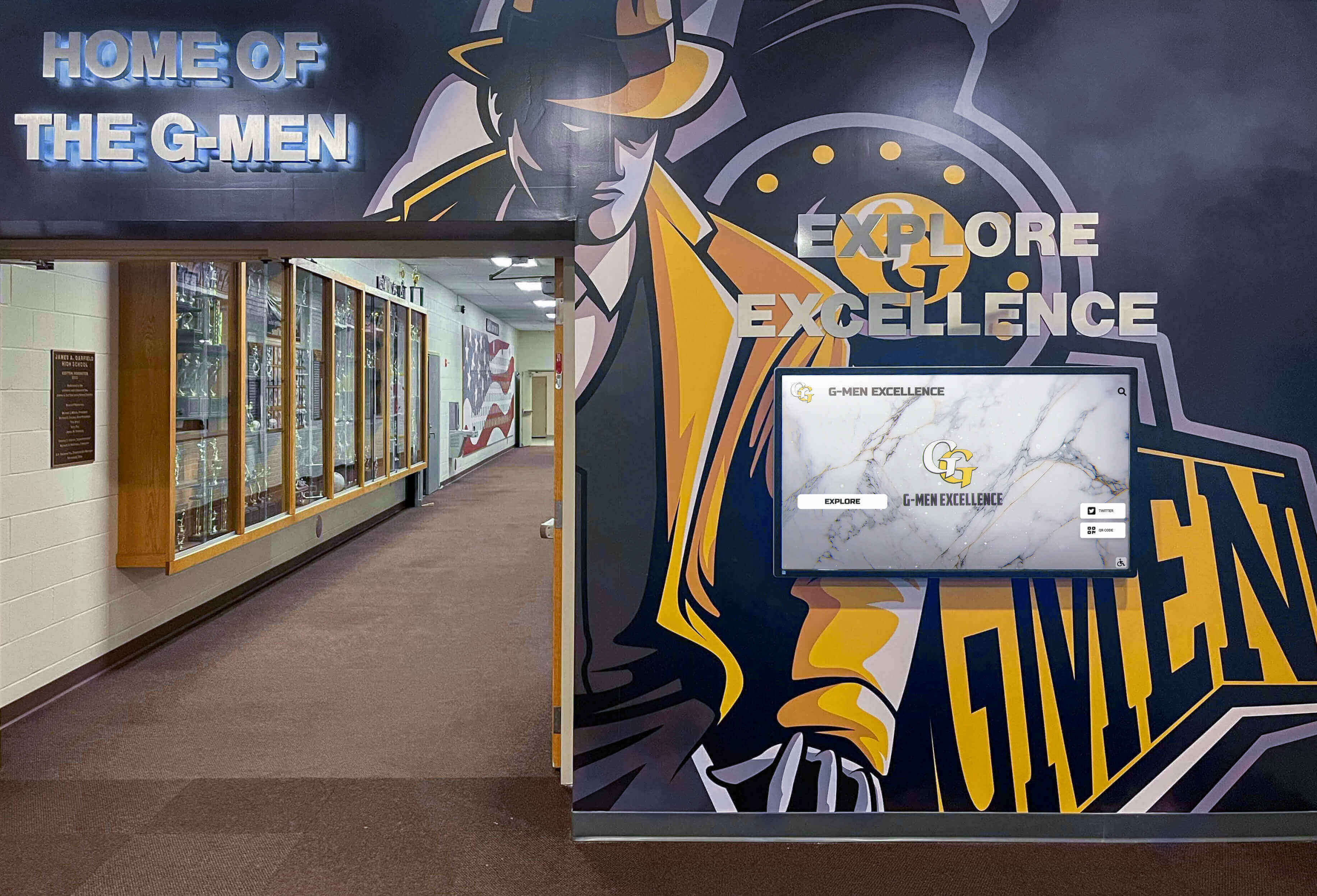
Digital displays can complement traditional trophy cases while providing unlimited capacity for academic recognition
Qualitative Assessment and Cultural Impact
Stakeholder Feedback Collection:
- Student surveys about recognition awareness and motivational impact
- Member satisfaction with how recognition honors their achievement
- Family perception of recognition program quality and visibility
- Alumni perspective on NHS recognition’s influence on their development
- Faculty observations about student motivation and academic culture shifts
- Community perception of institutional commitment to comprehensive excellence
Cultural Indicators of Program Success:
- Observed increases in academic ambition and honors course enrollment
- Student pride in NHS membership rather than hiding intellectual achievement
- Underclassmen actively seeking guidance on earning membership
- Community conversations celebrating academics alongside athletics
- Prospective family attraction to strong academic programs and NHS chapter
- Alumni engagement maintained through continued NHS recognition connection
Continuous Improvement Process:
- Annual program review with chapter advisors and school leadership
- Regular content audits ensuring accuracy, relevance, and quality
- Technology assessment maintaining contemporary functionality and reliability
- Benchmark comparison with peer institutions identifying innovations
- Budget allocation ensuring sustainable operations and periodic enhancements
Regular assessment enables continuous improvement ensuring recognition programs remain meaningful and impactful while justifying resource investment through demonstrated positive outcomes for members, school culture, and broader educational communities.
Supporting Student NHS Success Through Recognition
Effective recognition programs extend beyond celebrating past achievement to actively supporting current students pursuing NHS excellence through clear guidance, visible pathways, and connection to comprehensive support systems.
Creating Clear Achievement Pathways
Recognition displays should clearly communicate NHS membership requirements helping underclassmen understand how to work toward this goal throughout high school rather than treating NHS as mysterious honor accessible only to unknown criteria.
Selection Criteria and Timeline Communication:
- Specific GPA requirements and qualifying coursework expectations
- Service hour expectations with examples of qualifying activities
- Leadership demonstrations including both formal and informal opportunities
- Character expectations with concrete behavioral examples
- Application timeline and process steps clearly explained
- Faculty council selection process transparency
Featured Member Pathway Examples:
- Freshman year: Focus on academics while exploring interests and activities
- Sophomore year: Deepen involvement in chosen activities while beginning service
- Junior year: Take leadership roles and accumulate service hours substantially
- Senior year: Complete application and maintain excellence through graduation
Resource Connection and Support:
- School service opportunity listings with contact information
- Leadership development programs and workshops available
- Academic support resources maintaining GPA requirements
- Application guidance including narrative writing and recommendation requests
This educational content transforms recognition displays from passive honor rolls into active tools supporting student academic planning and character development, amplifying motivational impact while providing practical guidance enabling more students to successfully pursue NHS membership.
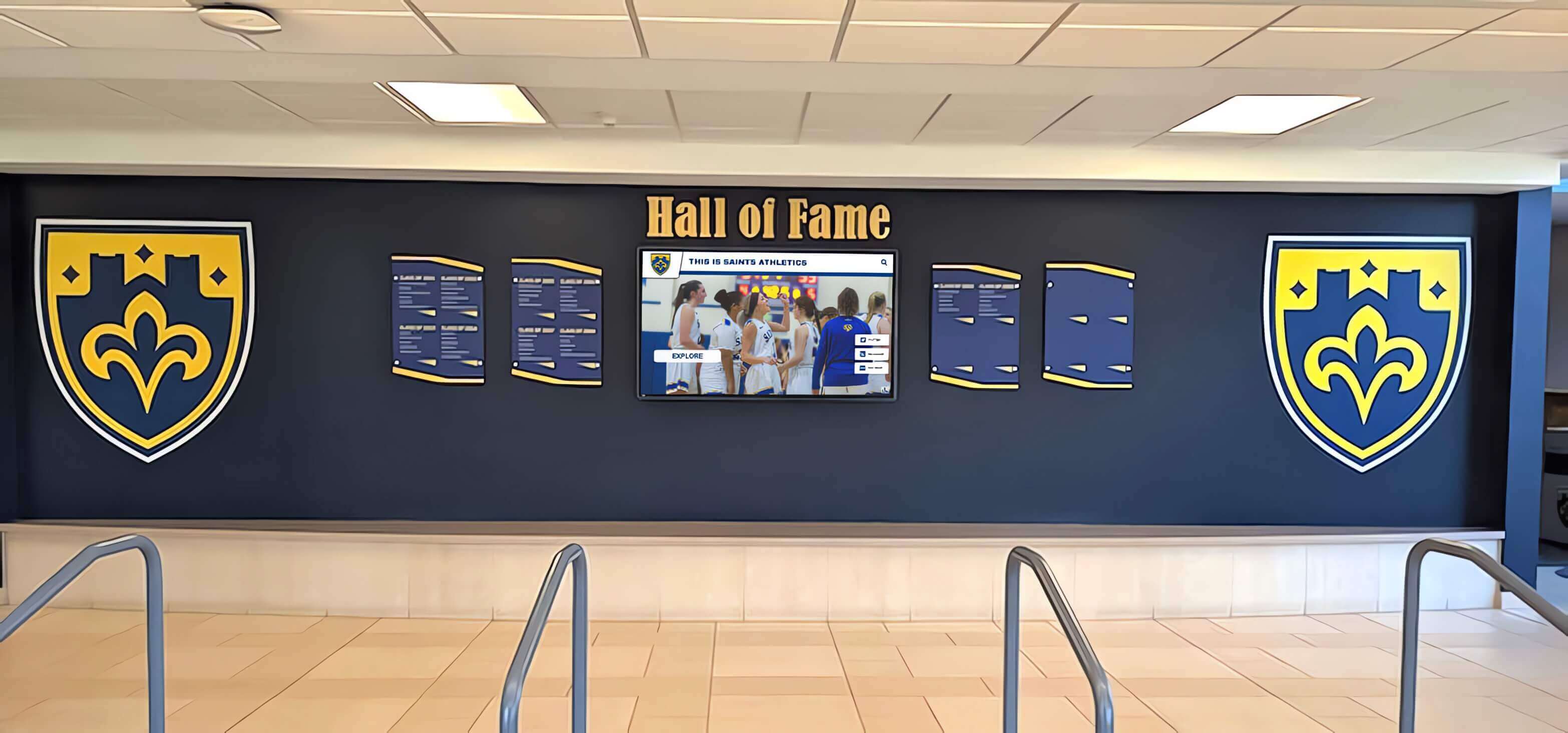
Recognition displays in prominent lobby locations ensure maximum visibility for prospective families and community members
Connecting NHS to College Planning Success
NHS recognition should integrate directly with college counseling initiatives, ensuring members understand how to leverage membership effectively during college applications, scholarship competitions, and admission interviews.
Application Strategy for NHS Members:
- Highlighting NHS membership prominently on Common Application activities list
- Crafting essay content around service projects demonstrating character and values
- Discussing NHS four pillars during admission interviews meaningfully
- Connecting NHS achievement to intended major or career interests
- Leveraging chapter advisor recommendations highlighting specific contributions
Scholarship Opportunity Connection:
- Identifying universities offering automatic scholarships to NHS members
- Finding private organizations specifically recruiting NHS scholars
- Competition opportunities leveraging NHS credentials and experience
- Financial aid appeal strengthening through demonstrated comprehensive excellence
Long-term Value Communication:
- Alumni speakers sharing how NHS influenced college and career success
- College outcome data showing NHS member achievement trajectories
- Professional networking possibilities through alumni NHS connections
- Lifelong leadership and service patterns established through NHS participation
This comprehensive integration ensures NHS recognition serves not merely as ceremonial acknowledgment but as practical tool supporting members’ educational and professional development well beyond high school graduation and into adult achievement.
Learn about developing college history timelines that can incorporate NHS tradition alongside other institutional achievements.
Technology Implementation and Platform Selection
Choosing appropriate technology ensures NHS recognition systems remain reliable, maintainable, and effective while meeting schools’ specific needs, constraints, and long-term sustainability requirements.
Purpose-Built vs. Generic Digital Signage
Schools should evaluate whether purpose-built academic recognition platforms or adapted generic digital signage systems better serve their specific NHS recognition objectives and available resources.
Purpose-Built Recognition Platforms:
Solutions like Rocket Alumni Solutions specifically designed for academic recognition typically provide substantial advantages for NHS celebration:
- Templates optimized for member profiles and achievement narratives
- Organizational structures matching NHS pillars and academic categories
- Search and filtering functionality enabling intuitive content discovery
- Interactive features encouraging exploration rather than passive viewing
- Consistent interfaces across physical displays and web platforms
- Ongoing platform development adding features addressing educational needs
- Dedicated support teams understanding NHS and academic recognition contexts
Implementation Support and Sustainability:
- Professional consultation on content strategy and display design
- Technical installation ensuring reliable operation and network integration
- Staff training enabling confident independent content management
- Comprehensive documentation and video tutorials for reference
- Ongoing support addressing questions and technical issues promptly
- Regular platform updates maintaining contemporary functionality and security
These purpose-designed solutions typically deliver superior user experiences compared to generic digital signage systems requiring significant customization for recognition purposes, justifying investments through better functionality, easier management, stronger engagement outcomes, and reduced long-term maintenance burden.
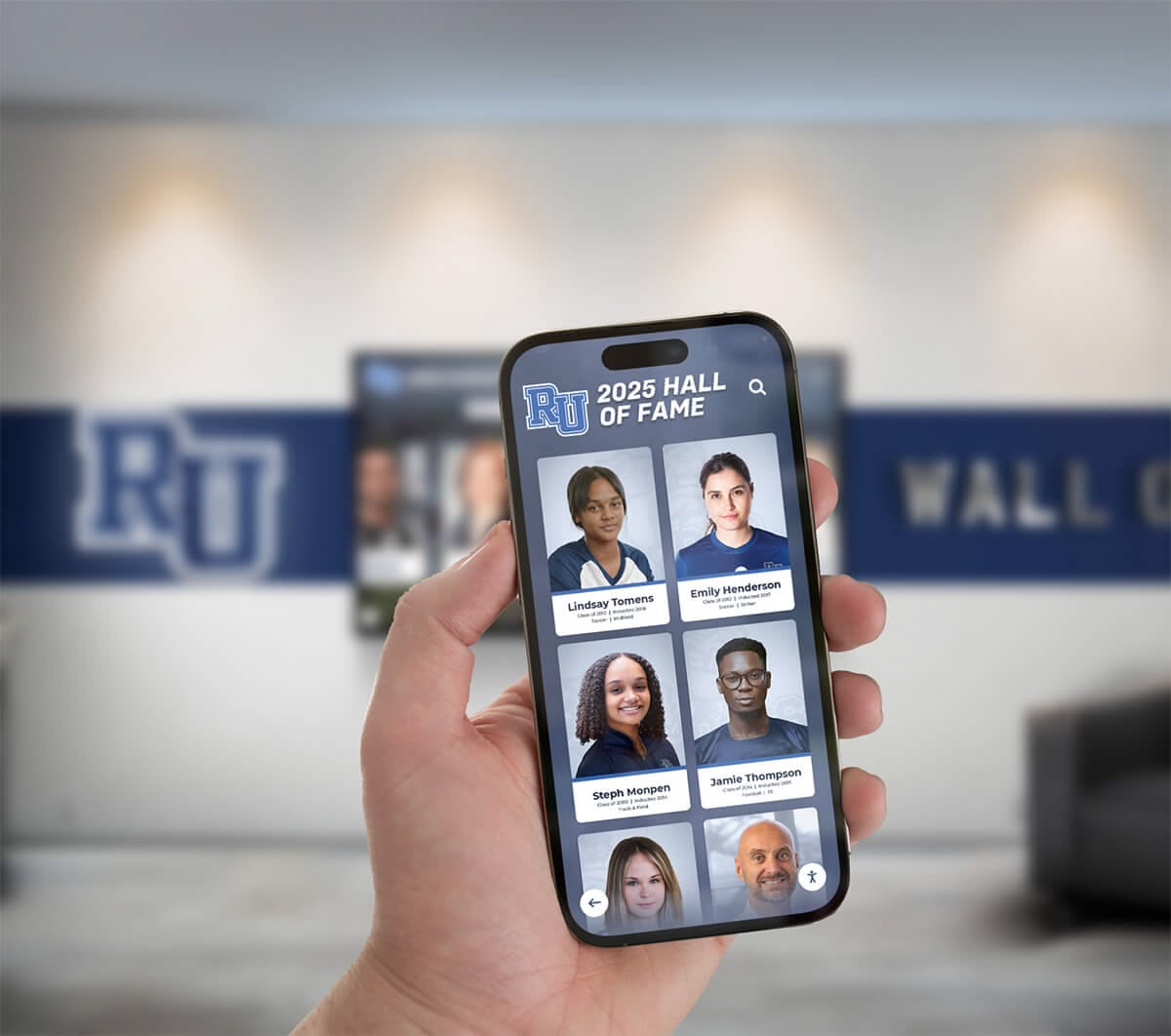
Web and mobile extensions enable NHS recognition access from anywhere, connecting families and alumni worldwide
Web and Mobile Extensions Beyond Physical Displays
Digital NHS recognition should extend beyond physical campus displays to create comprehensive digital presence accessible from anywhere, amplifying recognition impact and creating engagement opportunities impossible with location-dependent traditional displays.
Online Recognition Portal Benefits:
- Web-accessible platforms enabling global viewing from any internet-connected device
- Mobile-responsive designs ensuring quality experiences on smartphones and tablets
- Social sharing capabilities amplifying recognition reach through networks
- Integration with school websites maintaining consistent branding and navigation
- Permanent archives surviving building renovations or campus relocations
- Search engine optimization helping prospective families discover school excellence
Extended Access Advantages:
- Members share recognition with extended families internationally
- Alumni maintain connection to NHS recognition decades after graduation
- Prospective families research academic excellence before campus visits
- Community members access recognition without requiring physical campus visits
- Media gather information supporting positive press coverage
- College admission officers verify NHS membership and review member profiles
Ongoing Content Management:
- Cloud-based platforms enabling updates from any location
- Role-based permissions allowing appropriate staff and advisor access
- Scheduled publishing automating annual induction updates
- Bulk import tools facilitating historical member addition
- Version control preventing accidental content loss
- Analytics tracking engagement informing content strategy
This extended digital presence amplifies NHS recognition impact far beyond physical campus boundaries while creating engagement opportunities impossible with traditional recognition approaches limited to in-person viewing during campus visits alone.
Conclusion: Honoring NHS Excellence Through Modern Recognition
National Honor Society membership represents genuine elite achievement that fewer than 10-15% of high school students attain—demonstrating exceptional excellence not merely in academics but across service, leadership, and character that collectively predict college success, career achievement, and lifelong community contribution. Students who earn NHS membership through rigorous selection across these four comprehensive pillars deserve recognition matching their accomplishment magnitude, inspiring younger students to pursue similar comprehensive excellence, and preserving their achievement within institutional tradition for generations.
Digital recognition platforms transform how schools celebrate NHS excellence by eliminating space constraints forcing selective recognition or historical member removal, enabling rich multimedia profiles telling complete achievement stories across all four pillars, providing instant updates celebrating new members when recognition feels most meaningful, creating interactive experiences engaging digital-native students effectively rather than passive name lists, and extending recognition reach beyond physical campuses through web and mobile access connecting families and alumni worldwide.
Transform Your NHS Recognition Program
Discover how modern digital recognition solutions can help you celebrate every NHS member's comprehensive achievements while building a thriving culture of scholarship, service, leadership, and character.
Explore Recognition SolutionsEffective NHS recognition requires thoughtful program design ensuring comprehensive inclusion of all members across graduation years, timely celebration following induction ceremonies maintaining engagement, compelling content honoring members appropriately while inspiring underclassmen, strategic integration with college counseling supporting admission success, and ongoing assessment demonstrating program value through measurable cultural and outcome impacts.
Whether implementing new NHS recognition programs or enhancing existing approaches, combining systematic planning with modern recognition technology creates celebration systems that genuinely motivate students, strengthen school culture around comprehensive excellence, and honor the remarkable achievements your NHS members demonstrate through their dedication to scholarship, service, leadership, and character—the four pillars that distinguish NHS as America’s premier organization recognizing well-rounded academic excellence.
Your NHS members invested years building academic records, accumulating service hours, developing leadership skills, and demonstrating exemplary character that distinguished them among their peers. They deserve recognition honoring their comprehensive accomplishments permanently, inspiring current underclassmen pursuing similar excellence, and preserving their legacy within your school’s proud NHS tradition for generations who will learn from their remarkable examples of what sustained excellence across multiple dimensions truly means.
Ready to transform your NHS recognition? Explore state championships display strategies that celebrate diverse achievements comprehensively, or discover digital storytelling for athletic programs providing frameworks for comprehensive recognition honoring diverse forms of excellence across your entire school community.































