National Honor Society (NHS) membership represents one of the highest distinctions a high school student can earn, acknowledging exceptional achievement across four pillars: scholarship, service, leadership, and character. Students selected for NHS have demonstrated sustained academic excellence, meaningful community service, leadership in school activities, and exemplary character in their daily interactions—accomplishments that deserve recognition matching the significance of this prestigious honor.
Yet many schools struggle to give NHS members the visibility and celebration they’ve earned. Recognition often defaults to brief induction ceremonies that fade from memory, printed lists posted temporarily in hallways, or static plaques that become outdated and overlooked. Meanwhile, NHS students who dedicated years to building the qualifications for membership deserve comprehensive recognition that validates their multifaceted achievements while inspiring younger students toward similar excellence.
This comprehensive guide explores proven strategies for recognizing National Honor Society students effectively through modern digital recognition displays, traditional programs, and systematic approaches that ensure NHS excellence receives the lasting visibility and meaningful celebration these exceptional students have earned through their commitment to the four pillars.
National Honor Society recognition creates powerful cultural impact when schools celebrate NHS members prominently through multiple channels and engaging displays. When schools highlight NHS students systematically—showcasing their scholarship, documenting their service contributions, acknowledging their leadership roles, and honoring their character—they demonstrate genuine commitment to well-rounded excellence while providing concrete examples that inspire younger students toward meaningful goals extending beyond academics alone.
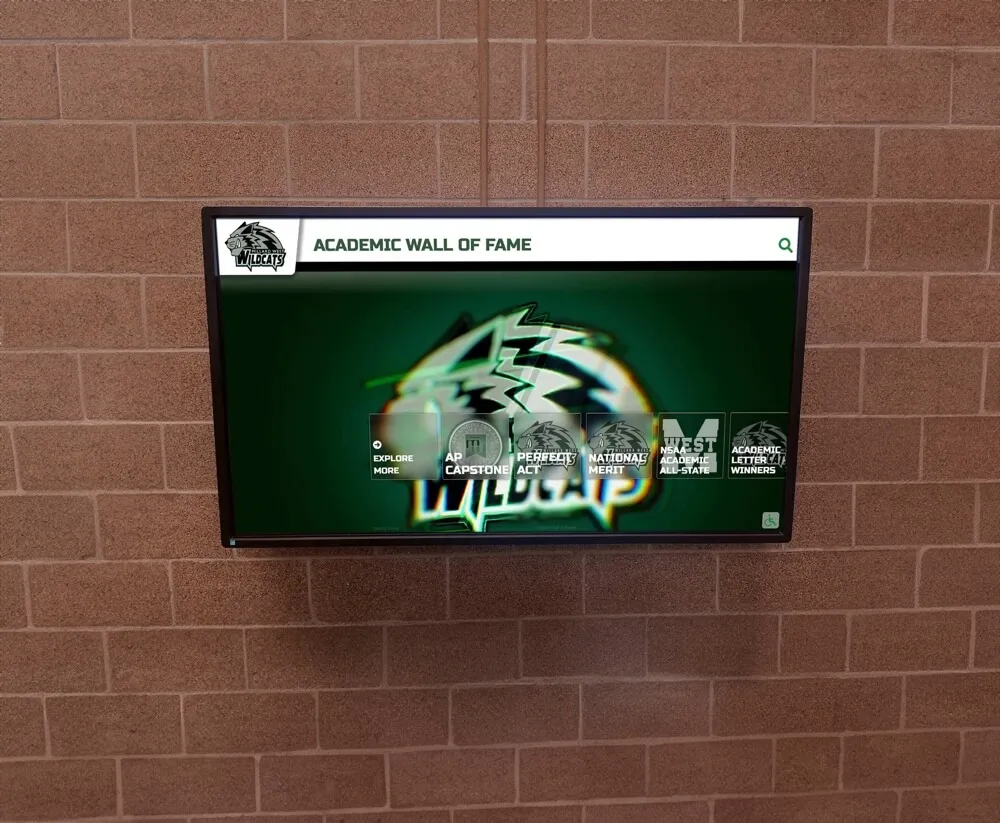
Modern digital displays transform NHS recognition from temporary acknowledgment into lasting celebration of multifaceted excellence
Understanding National Honor Society: The Four Pillars of Recognition
Before implementing recognition programs, schools should understand what NHS membership represents and why these students deserve comprehensive celebration beyond academic achievement alone.
The Four Pillars of NHS Excellence
National Honor Society selection requires demonstrated excellence across four distinct dimensions, each representing crucial aspects of student development and community contribution.
Scholarship: Academic Excellence as Foundation
NHS candidates must maintain cumulative GPA thresholds (typically 3.5 or higher on a 4.0 scale) across multiple years, demonstrating sustained academic commitment rather than isolated achievement. This scholarship pillar recognizes students who consistently prioritize learning, maintain strong performance across diverse subjects, and demonstrate intellectual curiosity extending beyond grade attainment.
Service: Community Contribution and Compassion
NHS membership requires meaningful volunteer service benefiting school, local communities, or broader causes. Service hours alone don’t suffice—NHS seeks students who contribute selflessly, address genuine community needs, and demonstrate compassion through sustained commitment to helping others without expectation of personal benefit or recognition.
Leadership: Initiative and Positive Influence
The leadership pillar recognizes students who take initiative in school activities, clubs, athletics, or community organizations. NHS leadership extends beyond titles—it acknowledges students who inspire peers through example, organize others toward shared goals, and demonstrate responsibility in positions of influence while empowering others to contribute meaningfully.
Character: Integrity and Ethical Conduct
Perhaps the most challenging pillar to quantify, character represents how students conduct themselves daily. NHS seeks students who demonstrate honesty and integrity in academic work and personal interactions, show respect for diverse perspectives and backgrounds, exhibit reliability and dependability in commitments, maintain ethical conduct even when unobserved, and embody school values through consistent behavior.
Explore comprehensive academic recognition programs that celebrate diverse dimensions of student excellence including NHS achievement.

Digital profile cards enable comprehensive storytelling about NHS members' achievements across all four pillars
NHS Selection Process and Standards
Selection rigor varies by school but typically follows established frameworks:
Eligibility and Application
Students meeting academic thresholds receive invitation to complete applications documenting service hours, leadership roles, and character references. Faculty councils review applications holistically, considering achievement across all four pillars rather than emphasizing any single dimension exclusively.
Induction Ceremonies
Schools conduct formal induction ceremonies where new NHS members recite pledges committing to uphold NHS standards and values. These ceremonies create meaningful recognition moments celebrating student achievements while communicating institutional values regarding well-rounded excellence.
Ongoing Membership Requirements
NHS membership requires sustained commitment beyond initial induction through continued service hour completion, maintained academic standards, ongoing leadership participation, and exemplary conduct throughout remaining high school years.
This sustained commitment distinguishes NHS from one-time awards, making recognition programs particularly valuable for acknowledging multi-year dedication to excellence across all four pillars.
The Problem: Insufficient NHS Recognition in Many Schools
Despite NHS representing such significant achievement, many schools fail to provide recognition matching the honor’s prestige and the effort students invested earning membership.
Brief Induction Ceremonies Lack Lasting Impact
Most schools conduct annual NHS induction ceremonies—meaningful events where families celebrate students’ achievements and new members commit to upholding NHS values. These ceremonies provide important recognition moments, yet visibility typically ends when the ceremony concludes.
Common Post-Induction Recognition Gaps:
- No permanent displays documenting current NHS members in prominent school locations
- NHS membership invisible to daily campus visitors, prospective families, and community members
- Younger students lack regular exposure to NHS members serving as aspirational examples
- Alumni NHS members cannot revisit their recognition years after graduation
- Service contributions and leadership achievements remain undocumented beyond applications
- Character examples and personal growth stories go untold beyond selection committee
This lack of sustained visibility means NHS recognition fails to inspire younger students effectively, diminishes the honor’s prestige through invisibility, limits prospective family understanding of academic culture, and undervalues the multifaceted achievements students demonstrated earning membership.
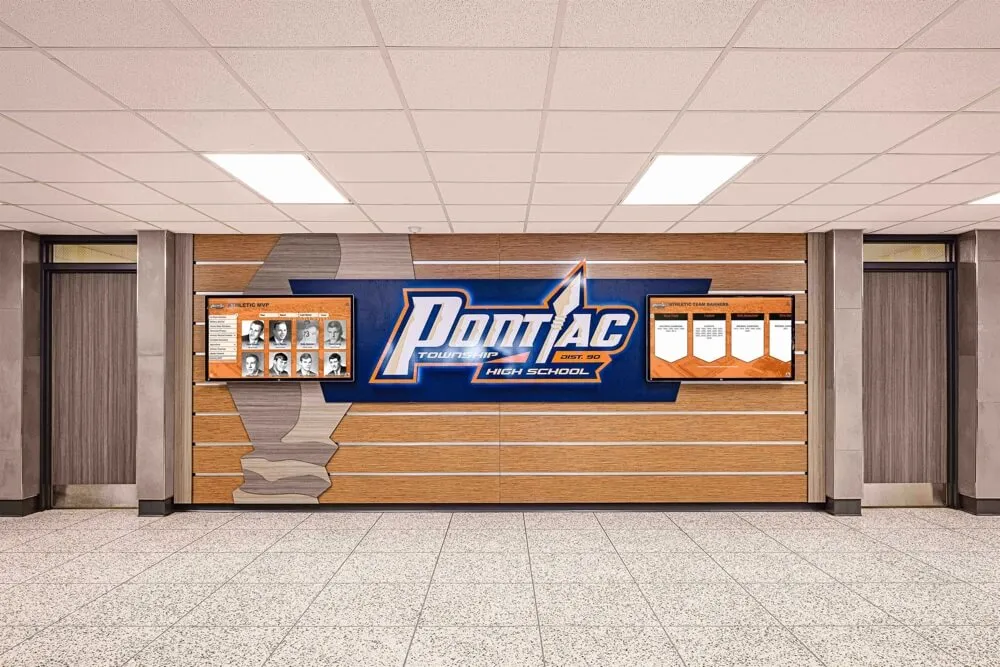
High-traffic hallways provide ideal locations for prominent NHS recognition displays that students encounter daily
Physical Display Limitations
Schools attempting permanent NHS recognition through traditional plaques or display boards face inevitable constraints:
Space Capacity Problems
A typical recognition board accommodates perhaps 50-100 names before exhausting space. Schools accumulating NHS members across multiple years quickly exhaust capacity, forcing difficult choices—should schools display only current members, removing alumni to make space? Should they limit displays to recent graduating classes? Should they rotate recognition periodically?
Minimal Context and Storytelling
Physical plaques typically provide only names and perhaps graduation years—failing to communicate the comprehensive achievements NHS membership represents. Visitors see names without understanding the service contributions, leadership roles, academic rigor, or character demonstrations behind selections.
Administrative Burden
Maintaining traditional NHS displays requires ordering new plaques or updating printed materials annually, physically installing recognition additions, coordinating with multiple staff members, and removing outdated content when space constraints demand. This administrative burden causes recognition updates to fall through cracks during busy academic periods.
Limited Accessibility
Physical displays remain visible only to campus visitors during school hours. Extended family members, community supporters, and prospective families rarely encounter NHS recognition, limiting impact and visibility of these prestigious achievements.
Digital Recognition Solutions: Transforming NHS Celebration
Modern digital recognition platforms fundamentally transform how schools honor National Honor Society members through capabilities impossible with traditional approaches.
Unlimited Recognition Capacity Without Space Constraints
Perhaps the most transformative advantage: digital systems accommodate unlimited NHS members across decades without physical space limitations.
Comprehensive Historical Documentation
- Recognize all NHS members from decades of institutional tradition
- Accommodate current members alongside historical honorees
- Display complete four-pillar achievement profiles for each member
- Preserve recognition permanently regardless of volume
- Never remove past members to accommodate new inductees
This unlimited capacity enables truly comprehensive NHS recognition programs celebrating all members across institutional history rather than forcing schools to choose whose achievements receive visibility based on available wall space.
Solutions like Rocket Alumni Solutions provide platforms specifically designed for educational recognition with unlimited member capacity and intuitive management interfaces requiring minimal technical expertise.
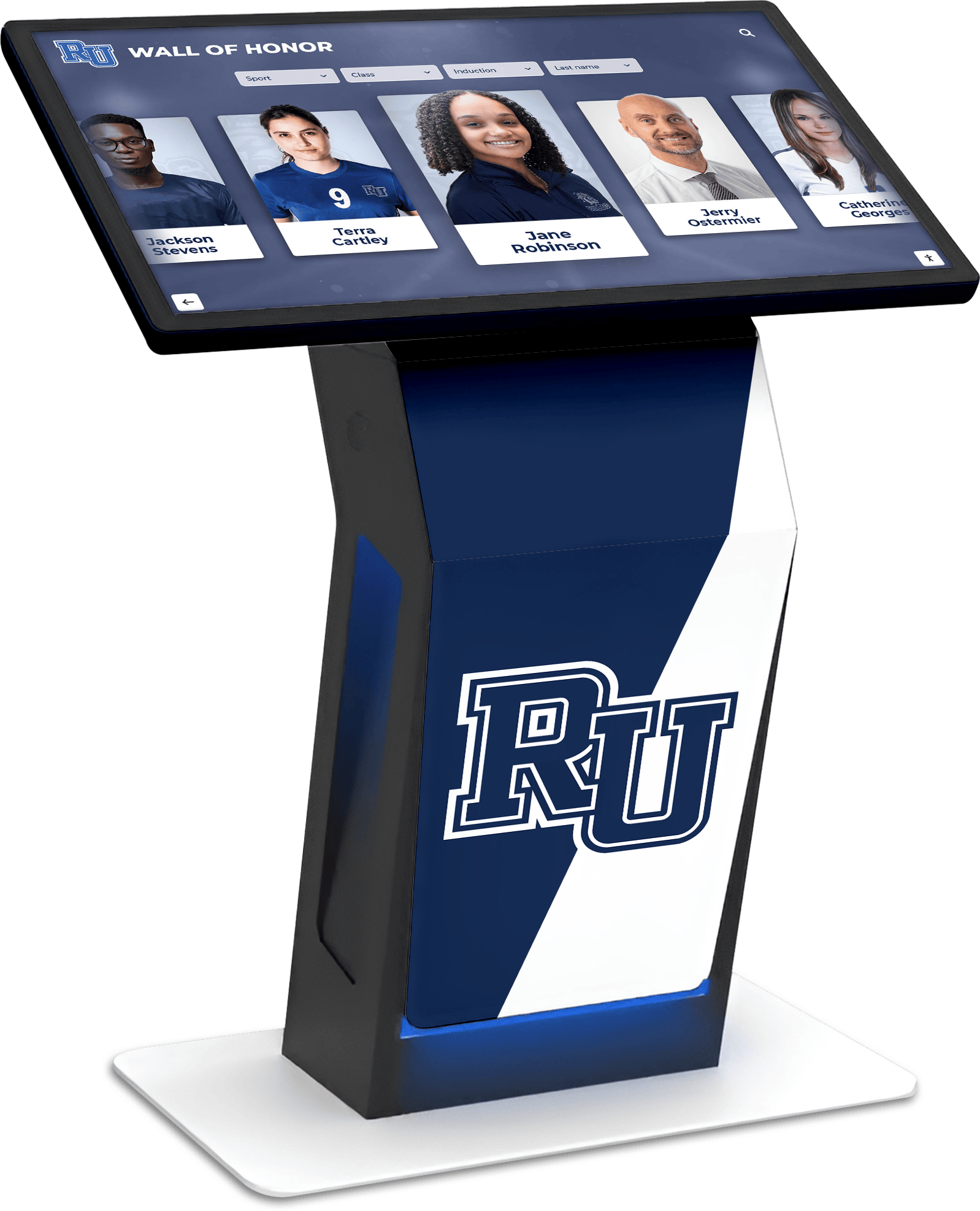
Touchscreen kiosks provide unlimited capacity while creating engaging exploration experiences for visitors
Rich Multimedia Profiles Telling Complete NHS Stories
Digital platforms transform recognition from simple name listings into compelling narratives honoring the complete student achievement picture.
Essential NHS Profile Components
Rather than seeing “Marcus Johnson - Class of 2024,” visitors encounter comprehensive profiles featuring:
- Professional photographs showing students in academic or service contexts
- Scholarship summaries documenting GPA achievements, course rigor, and academic distinctions
- Service documentation listing volunteer organizations, hours contributed, and community impact
- Leadership descriptions detailing club positions, team captainships, and organizational roles
- Character reflections where members discuss integrity, values, or personal growth
- Personal statements sharing what NHS membership means to students
- Future aspirations connecting current achievement to college plans and career goals
- Additional honors like AP Scholar recognition, athletic achievements, or arts distinctions
These rich profiles create emotional connections impossible with traditional plaques while providing comprehensive context that inspires younger students by showing the diverse pathways to NHS membership.
Explore effective student achievement showcase systems that highlight comprehensive accomplishments across multiple recognition dimensions.

Interactive touchscreen interfaces enable visitors to explore detailed achievement profiles rather than viewing static name lists
Interactive Search and Filtering Capabilities
Modern touchscreen interfaces create active engagement impossible with static displays through powerful navigation features.
Advanced Discovery Features:
- Instant search finding specific NHS members by name
- Filter by graduation year to explore historical members
- Browse by current members versus alumni NHS honorees
- Sort by specific achievements, service organizations, or leadership roles
- View cohort groups showing all members inducted together
- Discover NHS members by intended college or career pathway
- Explore by service hour contributions or specific volunteer causes
Research shows visitors spend an average of 5-8 minutes exploring interactive academic recognition displays compared to less than one minute viewing traditional plaques. This extended engagement creates deeper connections with NHS values and institutional academic culture while increasing recognition impact significantly.
Cloud-Based Management: Simple Updates Without Technical Burden
Cloud-based content management systems eliminate administrative complexity traditionally associated with recognition maintenance.
Streamlined Administration:
- Add new NHS members within minutes through web-based interfaces
- Upload photos and enter achievement information using simple forms requiring no technical expertise
- Schedule recognition for automatic publication following induction ceremonies
- Update multiple displays across campus simultaneously from single management dashboard
- Grant secure access to multiple administrators including NHS advisors and staff
- Maintain historical records automatically through cloud-based archives
- Access management platform from any internet-connected device without software installation
Schools implementing digital NHS recognition report 80-90% reduction in administrative time spent maintaining displays compared to traditional approaches requiring manual updates, ordering, physical installation, and coordination across multiple stakeholders.
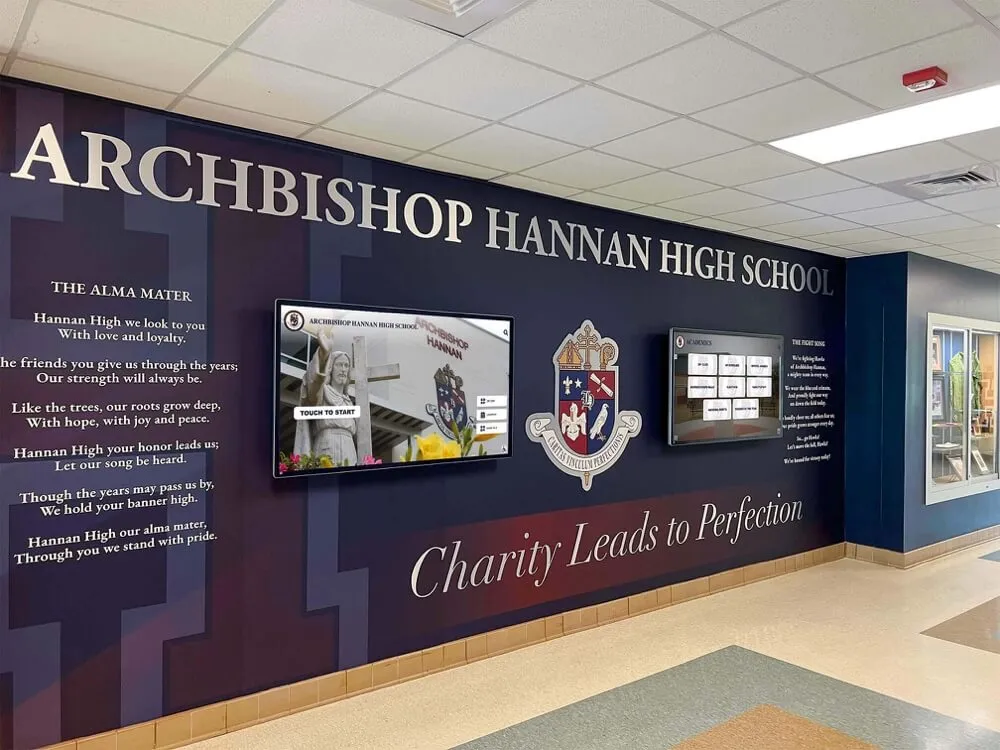
Digital displays integrate seamlessly with traditional school artwork creating comprehensive recognition environments
Building Comprehensive NHS Recognition Programs
Effective NHS recognition requires thoughtful planning addressing display strategy, content development, communication approaches, and sustainable management ensuring programs remain impactful year after year.
Strategic Display Placement for Maximum Visibility
Physical location significantly impacts recognition effectiveness and cultural influence throughout school communities.
Primary Placement Priorities:
- Main entrance lobbies where all visitors—prospective families, community members, district personnel—encounter NHS recognition immediately upon entering buildings
- Cafeteria areas where students gather daily, ensuring NHS members receive visibility comparable to athletic recognition often displayed prominently in these spaces
- Media center or library locations connecting NHS recognition with academic resources and establishing learning spaces as centers of recognized excellence
- Administrative areas visible during parent conferences, student meetings, and family visits ensuring stakeholders encounter NHS recognition during key interactions
- Athletic facilities creating parity between academic and athletic recognition by positioning NHS displays alongside championship banners and sports honors
Strategic placement in high-traffic areas ensures students encounter NHS recognition regularly rather than seeking it out intentionally, creating sustained visibility that drives cultural impact and ongoing motivation.
Multiple Display Strategy
Schools with sufficient resources benefit from multiple NHS recognition displays throughout campus ensuring comprehensive visibility, creating recognition redundancy so students encounter NHS excellence repeatedly, providing convenient access at multiple locations, and reinforcing institutional values through consistent messaging across spaces.
Balancing Academic and Athletic Recognition
Many schools prominently display athletic achievements through trophy cases, championship banners, and dedicated recognition walls—while academic excellence including NHS membership receives minimal visibility. Digital recognition enables schools to achieve balance demonstrating comparable institutional commitment to intellectual and competitive success.
This balance sends powerful messages about institutional values while ensuring academically talented students receive celebration comparable to athletic stars. When NHS displays receive prominence equal to sports recognition, schools demonstrate authentic commitment to well-rounded excellence rather than prioritizing competitive success exclusively.
Learn about honor roll digital recognition systems and student awards programs that complement NHS recognition within comprehensive academic celebration cultures.
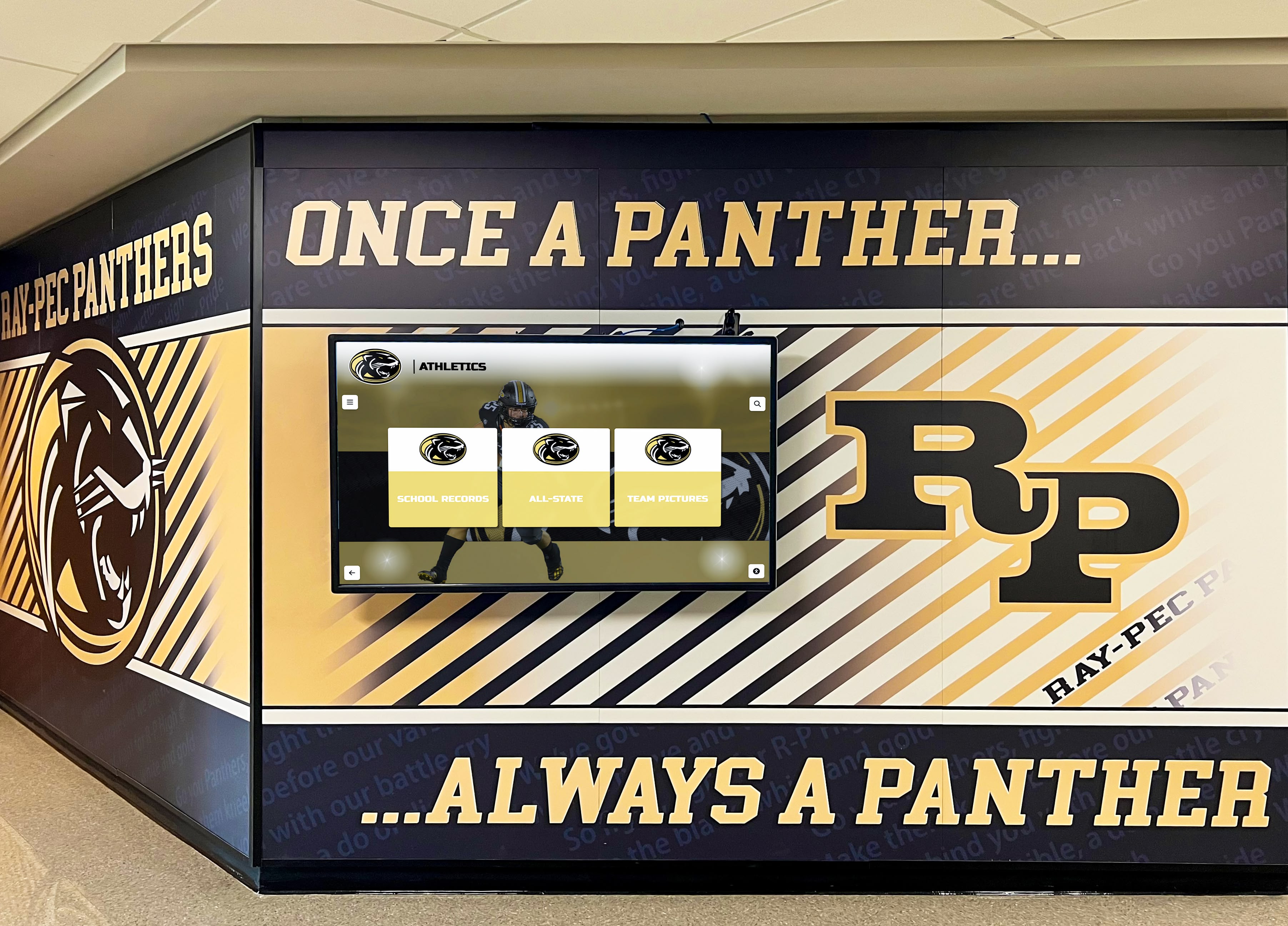
Integrated displays connect academic recognition with school identity and tradition while maintaining prominent visibility
Creating Compelling NHS Recognition Content
Effective digital recognition extends beyond basic member listings to tell compelling stories honoring students comprehensively while inspiring peers toward NHS membership.
Comprehensive Member Profiles Showcasing the Four Pillars
Transform recognition from simple name listings into meaningful narratives celebrating complete NHS achievements:
Scholarship Documentation:
- Cumulative GPA and class rank when schools provide it
- Advanced coursework including AP, IB, dual enrollment, or honors classes
- Academic awards like honor roll, subject-specific recognition, or competition results
- Standardized test achievements demonstrating academic preparation
- Academic interests and intended college major or career pathway
Service Contribution Details:
- Volunteer organizations where students contributed meaningful hours
- Specific service projects undertaken or coordinated
- Total service hours accumulated qualifying for NHS membership
- Impact descriptions explaining how service benefited communities
- Leadership roles within service organizations
- Long-term commitments showing sustained service dedication
Leadership Accomplishments:
- Club officer positions held during high school years
- Athletic team captainships or leadership roles in sports
- Student government participation and elected positions
- Organization founding or program initiation demonstrating initiative
- Mentorship roles supporting younger students or peers
- Leadership beyond titles—influence through example and positive peer impact
Character Demonstrations:
- Teacher or counselor reflections on student integrity and values
- Peer relationships demonstrating respect and inclusivity
- Reliability examples from sustained commitments and responsibilities
- Ethical conduct in academic work and personal interactions
- Growth mindset examples showing learning from challenges or setbacks
- Community reputation reflecting positive character development
These comprehensive profiles provide the context missing from traditional plaques, creating emotional connections while demonstrating the multifaceted excellence NHS membership represents.
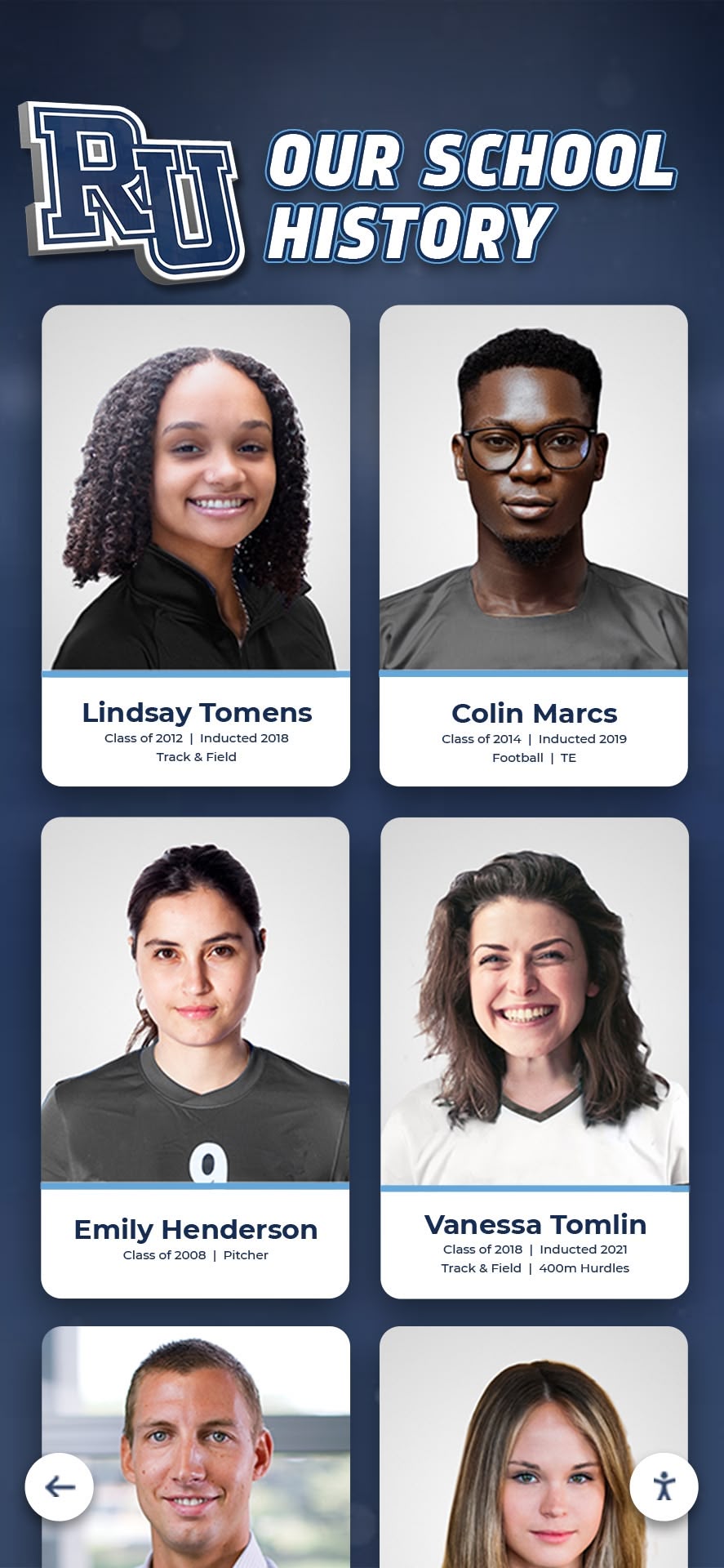
Rich visual profiles create engaging recognition experiences that communicate achievement depth beyond simple name listings
Highlighting Diverse Pathways to NHS Membership
Students achieve NHS membership through various combinations of the four pillars worth celebrating:
Academic Excellence Specialists
Some NHS members excel primarily through exceptional scholarship—students maintaining 4.0 GPAs across demanding coursework who meet service and leadership minimums while distinguishing themselves academically. Recognition should celebrate this intellectual dedication while acknowledging the complementary pillar achievements.
Service-Oriented Leaders
Other NHS members qualify through extensive service contributions—students accumulating hundreds of volunteer hours, founding service organizations, or demonstrating extraordinary compassion through community engagement who meet academic thresholds while distinguishing themselves through service commitment. These students model civic engagement and community responsibility.
Well-Rounded Achievers
Many NHS members demonstrate strong performance across all four pillars—students balancing academics, service, leadership, and character without extreme distinction in any single area but showcasing impressive breadth. These students model the balanced excellence NHS seeks while demonstrating that membership remains attainable through consistent effort across multiple dimensions.
Recognizing these diverse pathways ensures more students see achievable routes to NHS membership rather than viewing it as reserved only for students excelling in specific areas or possessing certain talents exclusively.
Featuring Personal Reflections and Advice
Personal statements from NHS members create powerful motivational content for younger students:
Reflection Prompts:
- “What does NHS membership mean to you personally?”
- “What challenges did you overcome building NHS qualifications?”
- “What advice would you give freshmen aspiring to NHS membership?”
- “How has NHS membership shaped your high school experience?”
- “What service project or leadership role meant most to you?”
- “How do you demonstrate character in daily situations?”
These authentic student voices resonate powerfully with younger peers while humanizing NHS achievement, making the honor feel aspirational rather than unreachable.
Explore digital showcase systems for highlighting student leaders and perfect attendance recognition programs that complement NHS celebration within comprehensive recognition cultures.
Extending NHS Recognition Through Web Access
While physical displays create powerful campus presence, web accessibility dramatically extends recognition reach and impact beyond school walls.
Online NHS Recognition Platforms
Modern digital recognition systems provide web-based access enabling anyone with internet connectivity to explore NHS achievements from anywhere globally.
Web Access Benefits:
- Alumni Access: NHS members view their recognition decades after graduation, maintaining connection to institutional tradition and personal achievement history
- Extended Family Celebration: Grandparents, relatives, and family friends celebrate student NHS membership from distant locations
- College Admission Context: Admissions officers explore comprehensive achievement profiles during application review
- Community Awareness: Local community members, employers, and civic leaders see institutional commitment to well-rounded excellence
- Prospective Family Research: Families considering school enrollment explore academic culture and recognition programs during decision processes
This extended accessibility transforms NHS recognition from campus-limited celebration into globally accessible achievement documentation that students can share throughout their academic and professional lives.

Responsive web access ensures NHS recognition displays properly across all devices from smartphones to desktop computers
Social Media Integration Amplifying Recognition Reach
Digital platforms enable seamless social sharing exponentially amplifying NHS recognition visibility:
Social Sharing Features:
- One-click sharing of individual NHS profiles to Facebook, Twitter, Instagram, and LinkedIn
- Automated institutional posts celebrating new NHS inductions each year
- Student-generated content where NHS members share their achievement stories and service experiences
- Parent and family sharing multiplying recognition impressions through personal networks
- Alumni engagement through historical NHS content and throwback recognition
- Community organization sharing highlighting students volunteering with their causes
Social sharing typically generates 5-8x more impressions than standard institutional posts while creating authentic peer-to-peer inspiration that resonates powerfully with younger students considering future NHS membership.
Inspiring Younger Students Through NHS Recognition
Beyond celebrating current NHS members, effective recognition programs inspire underclassmen not yet eligible for membership to build the qualifications and commitments NHS selection requires.
Creating Aspirational Culture Through Visibility
Prominent NHS recognition creates aspirational culture communicating that well-rounded excellence matters.
Visibility Creates Aspiration:
When NHS recognition receives prominence comparable to athletic achievement through prominent display placement in high-traffic areas, regular updates adding new members and keeping content fresh, celebrated NHS members serving as visible role models, clear communication about NHS criteria and selection processes, and integration with broader school communication and culture-building efforts—younger students begin viewing NHS membership as prestigious, attainable, and worth the sustained effort qualification requires.
This aspirational culture encourages students to pursue service opportunities, seek leadership positions, maintain strong academics, and develop character awareness from freshman year forward rather than attempting to build NHS qualifications hastily during junior year.
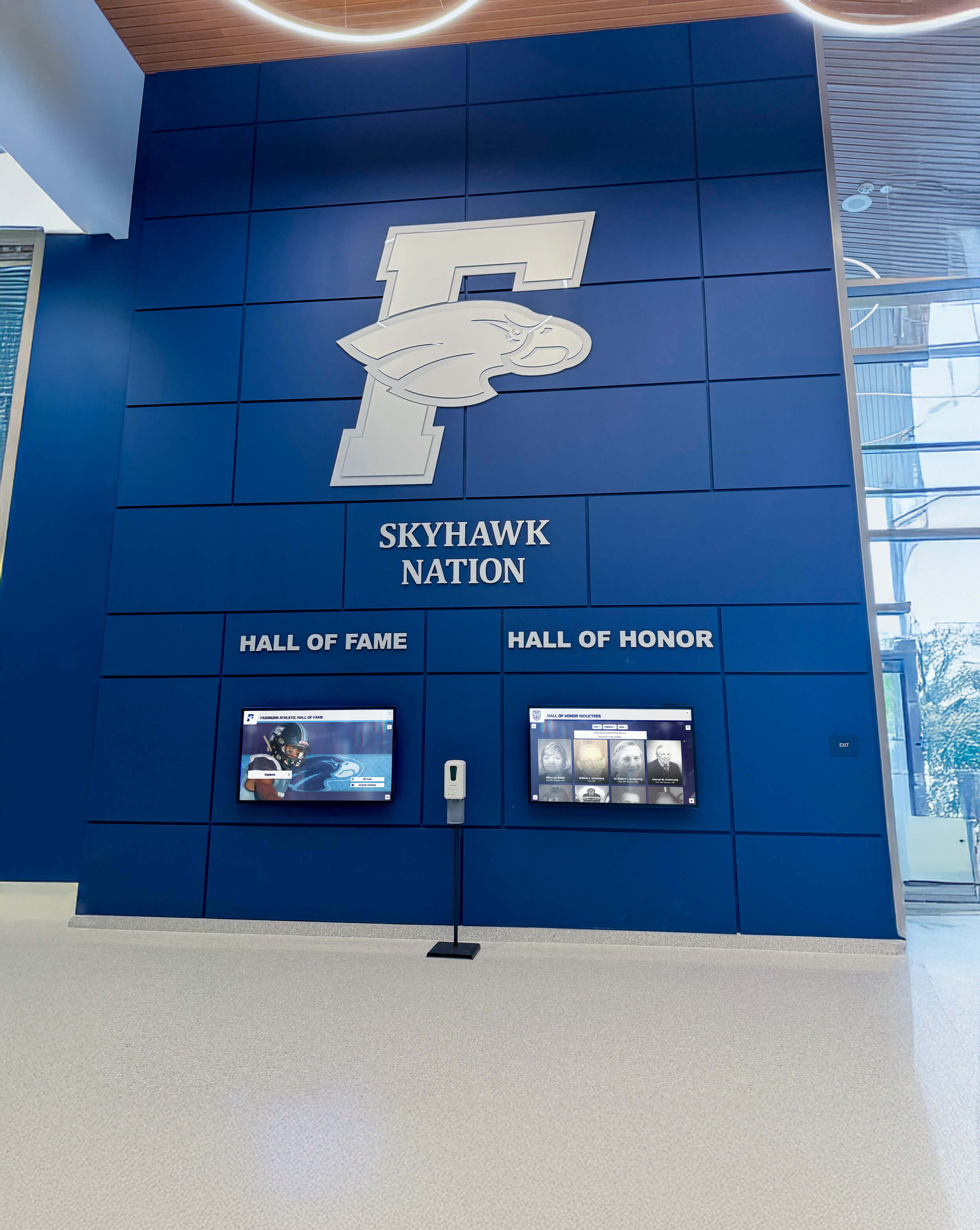
Prominent lobby placement ensures prospective families, visitors, and students encounter NHS recognition daily
Connecting NHS Membership to Future Opportunities
Help students understand how NHS membership supports broader life goals beyond high school recognition:
Future-Focused Benefits:
- College Applications: NHS membership strengthens applications by demonstrating sustained commitment to academics, service, leadership, and character—attributes universities value highly
- Scholarship Opportunities: Many merit-based scholarships specifically consider NHS membership when selecting recipients
- Leadership Development: NHS participation builds skills including organization, communication, initiative, and responsibility that support future success
- Service Ethic: NHS cultivates lifelong civic engagement and community contribution habits benefiting students throughout adulthood
- Character Formation: NHS focus on integrity, respect, and ethical conduct shapes identity during critical developmental years
- Professional Networks: NHS alumni networks provide mentorship and career connections extending beyond high school
- College Honors Programs: University honors colleges often recruit NHS members for specialized academic communities
When students view NHS as investment in futures rather than high school honor exclusively, motivation to build qualification across all four pillars increases significantly from freshman year forward.
Learn about National Merit Scholars recognition and AP Scholar programs that complement NHS within comprehensive academic recognition cultures.
Implementing Inclusive NHS Recognition Programs
Effective programs ensure NHS membership feels attainable for motivated students across all backgrounds while maintaining meaningful standards reflecting the honor’s prestige.
Clear Communication About Selection Criteria
Students and families should understand NHS requirements explicitly through published GPA thresholds for scholarship qualification, specific service hour minimums required for application, leadership examples qualifying for consideration, character evaluation processes and factors considered, and application procedures and timelines for each selection cycle.
Transparent communication enables students to set realistic goals and pursue qualification systematically rather than viewing NHS as mysterious honor reserved for unknown reasons.
Multiple Pathways to Demonstrating Each Pillar
Recognition should acknowledge diverse ways students demonstrate NHS qualifications:
Service Pathway Variety:
Not all students access identical service opportunities. Schools should recognize volunteer work with established organizations, independent service projects students initiate, family caregiving responsibilities demonstrating compassion, peer tutoring and academic support, school community service through clubs or activities, and virtual or remote volunteer opportunities expanding access.
Leadership Pathway Diversity:
Leadership extends beyond elected positions. Schools should value club or team officer roles, leadership by example without formal titles, peer mentorship and positive influence, project coordination and initiative, community organizing and advocacy, and leadership within diverse contexts including religious organizations, family businesses, or cultural groups.
This inclusive approach prevents NHS from feeling exclusive to students with specific opportunities or resources, instead creating cultures where dedicated students from all backgrounds can pursue meaningful qualification.
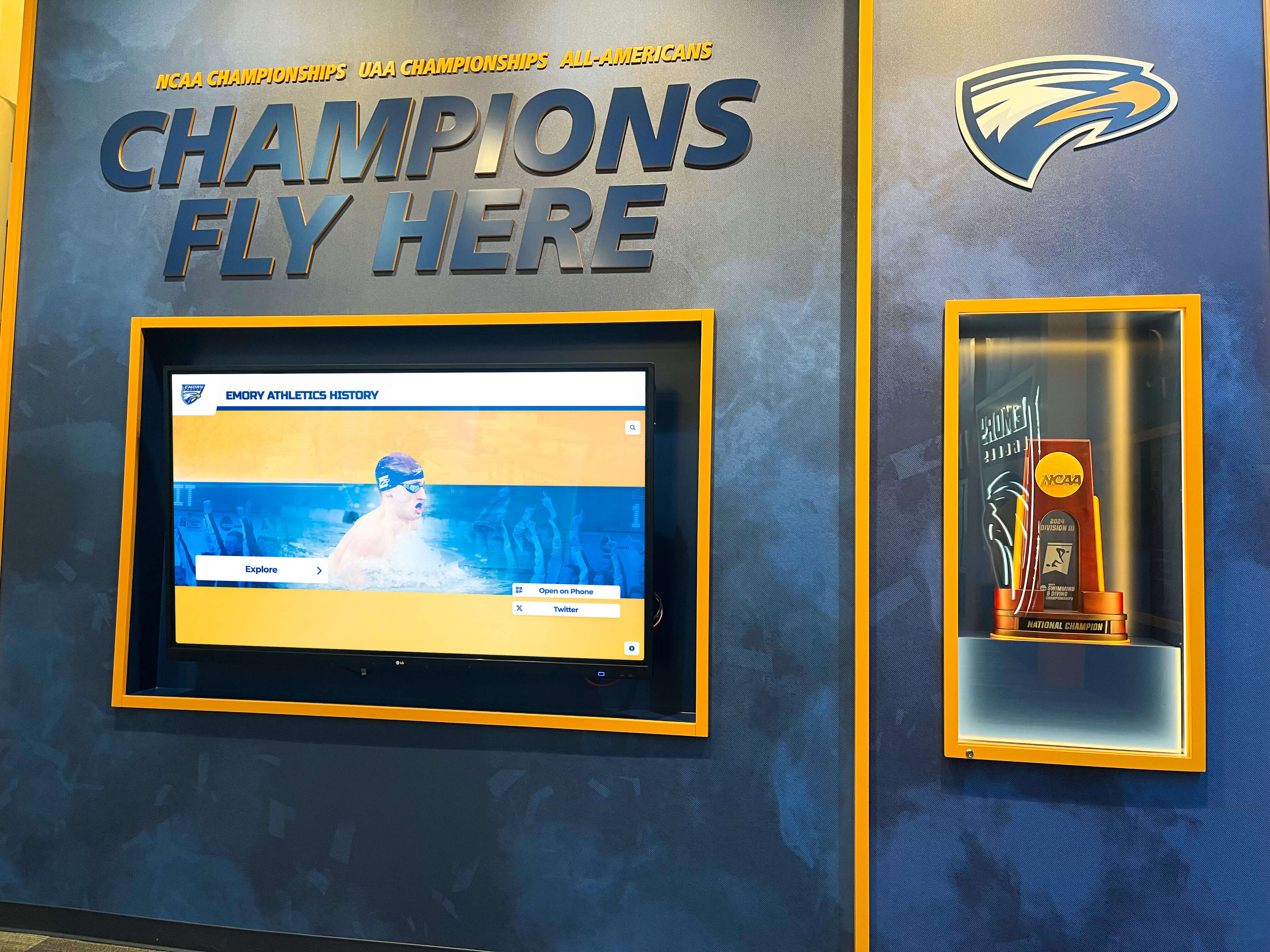
Integrated recognition celebrating diverse excellence creates inclusive cultures valuing multiple achievement pathways
Accessibility in Digital Recognition Design
NHS recognition platforms should incorporate comprehensive accessibility features ensuring all students and families can engage meaningfully:
Essential Accessibility Features:
- ADA-compliant physical placement and mounting heights for wheelchair users
- Screen reader compatibility enabling students with visual impairments to access content
- High-contrast viewing modes and text magnification options
- Multilingual content options for diverse school communities when appropriate
- Mobile access enabling students to explore recognition from personal devices
- Keyboard navigation alternatives to touchscreen interaction
- Captions for any video or audio content within profiles
These features ensure NHS recognition remains accessible to all community members regardless of ability, demonstrating institutional commitment to inclusive excellence and universal design principles.
Technology Infrastructure for NHS Digital Recognition
Successful implementation requires reliable technology infrastructure and thoughtful planning addressing both immediate installation and long-term management.
Hardware Selection and Installation Considerations
Display Technology Decisions:
- Screen Size: Typically 43"-75" depending on viewing distance and space constraints, with larger displays supporting comfortable viewing from greater distances
- Mounting Options: Wall-mounted displays integrating with existing architecture, freestanding kiosks providing placement flexibility, or built-in installations creating permanent recognition features
- Touchscreen Technology: Commercial-grade capacitive touch designed for high-traffic public use rather than consumer-grade alternatives
- Durability Requirements: Commercial displays rated for continuous operation, outdoor-rated enclosures when placing in uncovered areas, and tamper-resistant mounting preventing theft or damage
- Environmental Considerations: Appropriate brightness for ambient lighting conditions, temperature management for locations lacking climate control, and glare reduction for areas with significant natural light
Infrastructure Requirements:
- Reliable network connectivity supporting regular content synchronization and updates
- Adequate electrical service at display locations with professional wiring and safety compliance
- Secure mounting appropriate for display weight and high-traffic environments
- Cable management maintaining professional appearance and preventing trip hazards
- Remote monitoring capabilities enabling proactive maintenance and troubleshooting
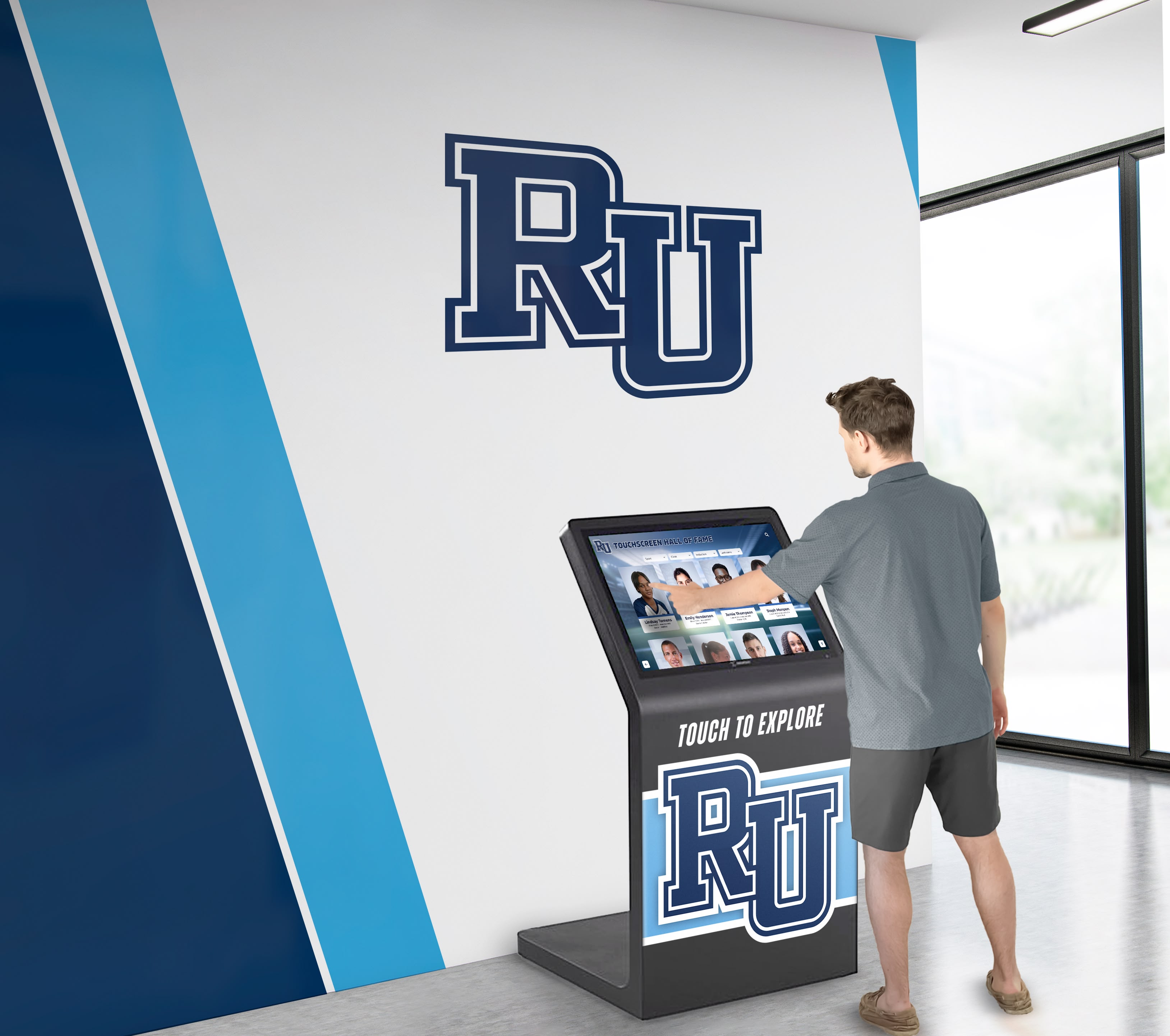
Freestanding kiosks provide flexible placement options in lobbies, cafeterias, and high-traffic areas
Software Platform Selection Criteria
Choosing appropriate recognition software significantly impacts long-term success and administrative efficiency.
Essential Software Capabilities:
- Intuitive Content Management: Cloud-based administration requiring minimal training for NHS advisors and staff
- Responsive Design: Optimal display across physical touchscreens, school websites, and personal mobile devices
- Robust Search and Filtering: Enable easy content discovery through multiple navigation pathways
- Multimedia Support: Photos, videos, documents, and rich media within member profiles
- Security and Privacy: Role-based permissions, student data protection, and privacy compliance
- Automated Scheduling: Time-based content publication following induction ceremonies
- Integration Capabilities: Connect with student information systems, yearbook databases, or existing school platforms
- Analytics and Reporting: Engagement metrics showing how visitors interact with recognition displays
Platforms like Rocket Alumni Solutions provide comprehensive systems specifically designed for educational recognition with features addressing schools’ unique workflows and requirements.
Explore touchscreen software options and digital hall of fame systems designed for academic recognition programs.
Managing NHS Recognition Programs Long-Term
Sustainable success requires systematic planning and ongoing management preventing recognition from becoming outdated or neglected over time.
Establishing Clear Responsibility and Workflows
Assign specific individuals responsible for NHS recognition program coordination:
Key Responsibilities:
- NHS Advisor Coordination: Primary liaison between NHS chapter and recognition program management
- Content Development: Gathering member information, photos, and achievement details from inductees
- Display Updates: Adding new members following induction ceremonies and maintaining current content
- Historical Archives: Preserving records documenting all NHS members across institutional history
- Technical Management: Monitoring system functionality and coordinating support when issues arise
- Analytics Review: Assessing engagement metrics and program effectiveness regularly
Clear accountability prevents recognition from falling through cracks during busy periods while ensuring consistent quality year after year.
Building Historical NHS Archives
Comprehensive recognition programs preserve institutional memory by documenting all NHS members across decades:
Archival Benefits:
- Searchable Databases: Alumni, current students, and families explore NHS history dating back decades
- Photo Preservation: Visual documentation showing student excellence across generations
- Trend Analysis: Data demonstrating NHS program growth, diversity evolution, and selection patterns
- Permanent Records: Cloud-based storage protecting recognition content indefinitely regardless of staff turnover
- Alumni Engagement: Historical recognition creates connection points for alumni involvement and support
Digital systems facilitate archiving through automated backup protocols preventing data loss, tagged organization enabling filtering by year, pillar emphasis, or achievement type, export capabilities ensuring data portability if platforms change, and redundant storage protecting against technical failures or disasters.
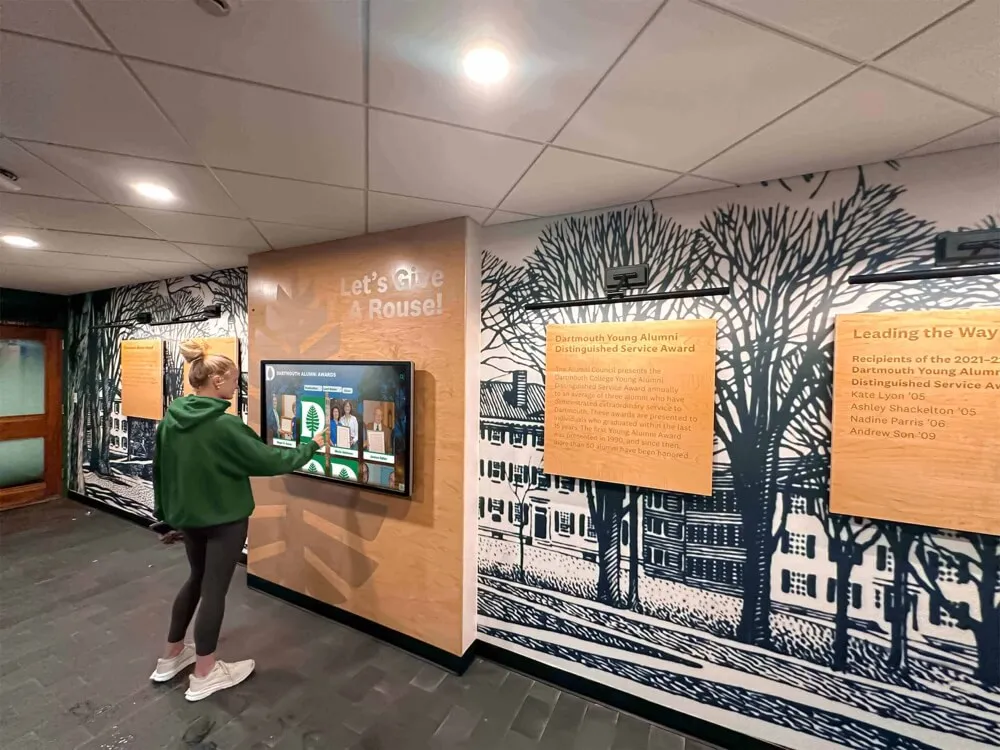
Historical archives enable alumni NHS members to revisit their recognition decades after graduation
Annual Recognition Refresh and Content Updates
Maintaining engagement requires consistently updated content keeping displays fresh and relevant:
Annual Update Strategies:
- Add new NHS inductees immediately following spring induction ceremonies
- Update existing member profiles as additional achievements occur during senior year
- Feature rotating spotlights highlighting different members regularly throughout year
- Add multimedia content like service project videos or leadership presentations
- Incorporate current photos maintaining visual freshness and recency
- Highlight member college acceptances and scholarship awards as they occur
- Connect recognition to current school events like service initiatives or leadership programs
Regular updates signal that NHS recognition remains active, valued, and current rather than becoming static displays that students stop noticing as they pass daily.
Measuring NHS Recognition Program Impact
Regular assessment ensures programs achieve intended goals while justifying resource investments and guiding continuous improvement.
Quantitative Participation Metrics
Track objective indicators showing program reach and NHS membership trends:
Key Metrics:
- Total students inducted into NHS annually and multi-year trends
- Percentage of eligible students applying for NHS membership
- Application-to-selection ratios showing selectivity and standards
- Distribution across demographic groups ensuring equitable access
- Service hour contributions aggregated across all NHS members
- Leadership positions held by NHS members school-wide
- Multi-year membership retention demonstrating sustained commitment
These metrics demonstrate program health while identifying opportunities for expansion, equity improvements, or standards adjustment.
Academic and Character Outcome Correlations
Monitor relationships between NHS membership and broader student outcomes:
Outcome Indicators:
- College acceptance rates and institution selectivity for NHS members versus non-members
- Scholarship award totals and merit-based financial aid for NHS students
- Post-graduation success stories tracking NHS alumni achievement in college, careers, and communities
- Student survey responses about NHS membership meaning and impact on development
- Service culture changes showing increased volunteer participation school-wide
- Leadership program growth as NHS visibility inspires broader engagement
These outcome measures justify NHS recognition investments by demonstrating tangible benefits extending beyond ceremonial acknowledgment to genuine student development and community impact.
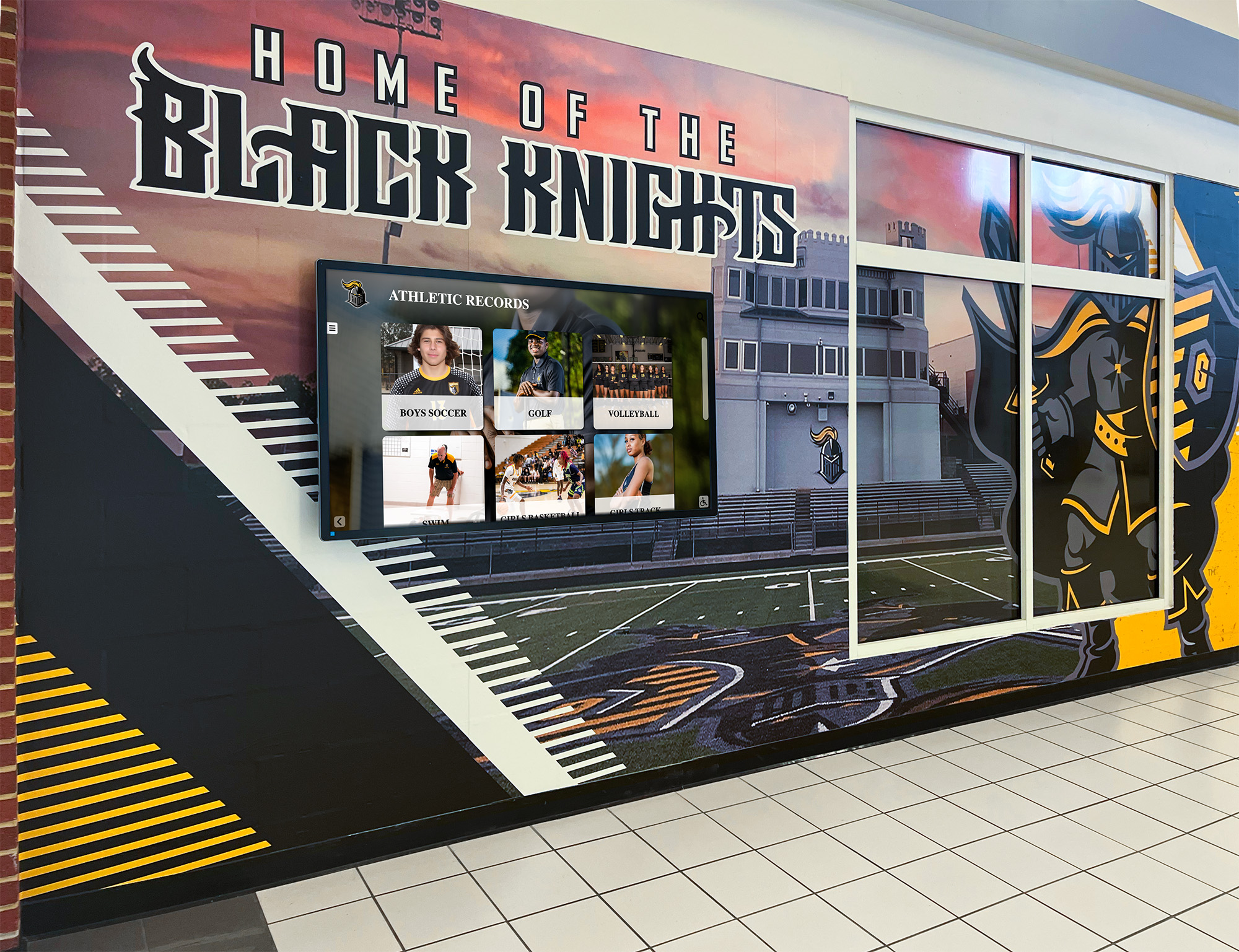
Strategic placement of recognition displays in hallways creates regular visibility reinforcing institutional values
Cultural Transformation Assessment
Assess qualitative changes suggesting NHS recognition programs shape school culture positively:
Cultural Signals:
- Student survey responses about academic achievement importance and well-rounded excellence value
- Underclassmen awareness of NHS and understanding of qualification pathways
- Family satisfaction with academic recognition emphasis and visibility
- Staff observations about service participation, leadership engagement, and character development culture changes
- External community perception of school academic reputation and student character
- Balance between academic and athletic recognition prominence in school culture and communications
- Prospective family questions and comments during tours mentioning NHS recognition
Regular assessment enables continuous improvement ensuring NHS recognition programs remain meaningful, impactful, and aligned with evolving institutional goals and national NHS standards.
Best Practices for Maximum NHS Recognition Impact
Successful NHS recognition programs follow proven best practices maximizing effectiveness and sustainability.
Multi-Channel Communication Strategy
NHS recognition generates motivational value primarily through visibility and comprehensive communication. Ensure broad reach:
Communication Channels:
- Digital displays in lobbies, cafeterias, and other high-traffic locations where students pass daily
- School website NHS sections with searchable member databases and application information
- Social media posts highlighting induction ceremonies and individual member achievements
- Email newsletters featuring NHS member spotlights and service project updates
- Morning announcements celebrating recent inductions and recognizing member accomplishments
- Print publications including yearbook pages, magazines, and community newspapers
- Recognition ceremonies providing formal acknowledgment and family celebration opportunities
- Parent communication through conferences, bulletins, and direct outreach to families of inductees
Multi-channel communication ensures NHS recognition reaches all stakeholders through preferred information sources while creating sustained visibility extending beyond brief induction ceremony moments.
Explore digital storytelling for athletic programs and student of the month displays that complement NHS within comprehensive recognition cultures.
Integration with Broader Recognition Ecosystem
NHS recognition achieves maximum impact when integrated within comprehensive recognition cultures:
Holistic Recognition Approach:
- Position NHS as pinnacle of well-rounded excellence while recognizing diverse achievement forms
- Connect NHS with honor roll, AP Scholar, academic competition, and other scholarly recognition
- Integrate service awards and community contribution acknowledgment
- Link leadership recognition across student government, clubs, athletics, and activities
- Feature character education initiatives and ethical development programs
- Celebrate the full spectrum of student talents including academics, arts, athletics, service, and leadership
This comprehensive approach ensures well-rounded excellence receives visibility and institutional commitment, creating balanced cultures valuing the diverse talents and contributions NHS membership represents.
Alumni Engagement Through Historical Recognition
NHS alumni represent valuable institutional assets for mentorship, support, and ongoing connection:
Alumni Engagement Strategies:
- Invite NHS alumni to speak at induction ceremonies sharing post-graduation perspectives
- Create alumni directory enabling current NHS members to connect with alumni in intended career fields
- Feature alumni success stories highlighting how NHS membership influenced life trajectories
- Organize alumni service projects connecting current members with graduated NHS leaders
- Solicit alumni support for current member service initiatives and leadership programs
- Maintain updated contact information enabling ongoing communication and engagement
Historical NHS recognition preserved digitally creates natural connection points for alumni engagement while demonstrating institutional commitment to sustained relationships extending beyond graduation.
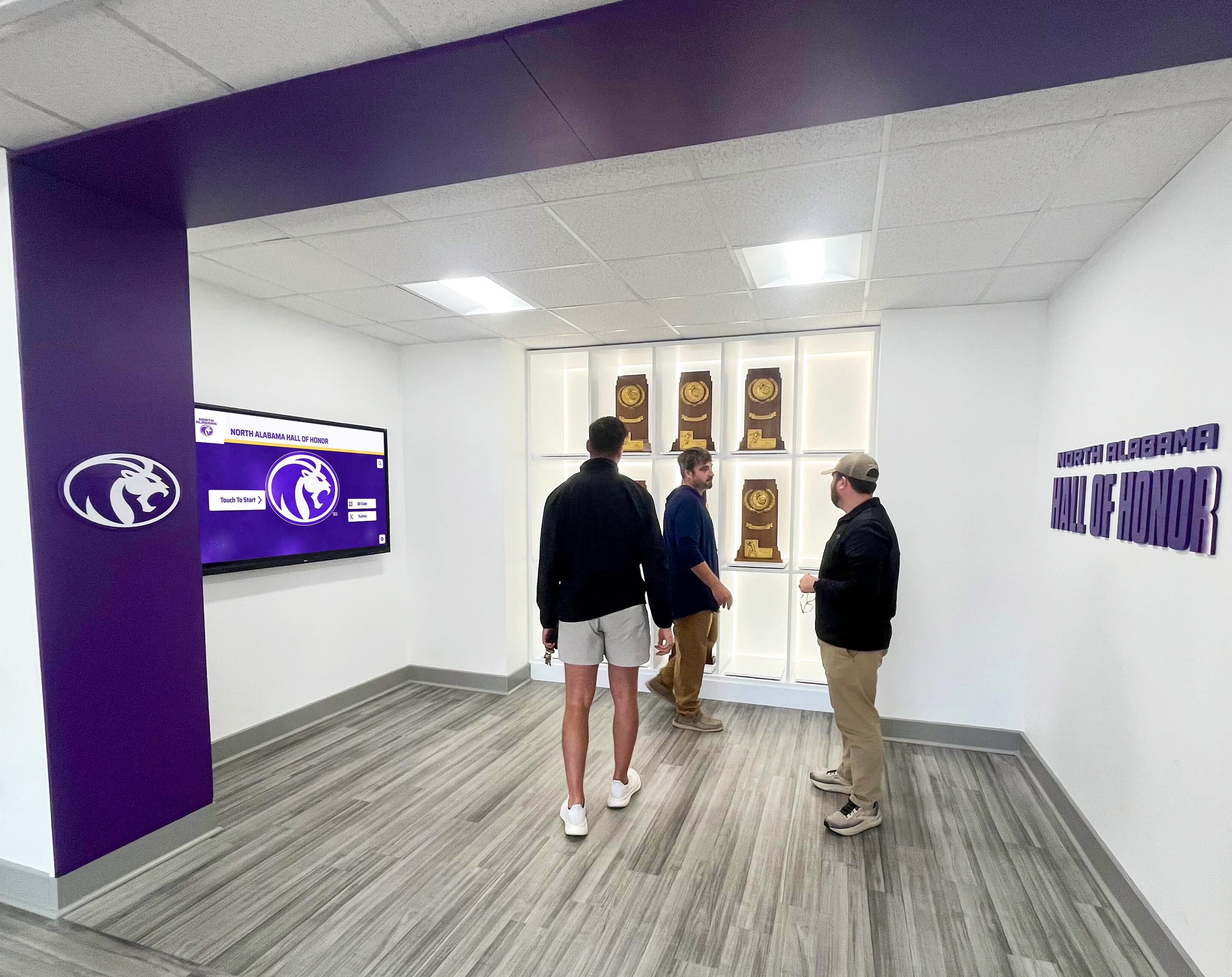
Comprehensive recognition environments integrate NHS displays with broader institutional achievement celebration
Cost Considerations and Return on Investment
Schools considering NHS digital recognition naturally evaluate financial implications and return on investment for technology purchases and implementation.
Implementation Investment Ranges
Typical Cost Structures:
- Entry-Level Systems: $8,000-$15,000 for single touchscreen display with basic recognition software, installation, and first-year licensing
- Mid-Range Solutions: $15,000-$30,000 for larger displays with advanced features, comprehensive software platforms, and professional installation
- Multi-Display Systems: $30,000-$75,000+ for multiple recognition displays throughout campus with centralized management and extensive customization
Many schools implement in phases, starting with a single prominent NHS display in the main lobby and expanding over time as budgets allow and demonstrated value becomes evident to stakeholders.
Financing and Funding Options:
- Multi-year capital budgets distributing costs across fiscal years
- Donor-funded recognition initiatives honoring benefactors while serving NHS students
- Grant funding for technology enhancement and student success initiatives
- Alumni association support specifically for academic recognition programs
- Booster organization partnerships expanding support beyond athletics exclusively
- Leasing arrangements enabling implementation without large upfront capital investments
- Phased implementation starting small and expanding based on results and available funding
Ongoing Operational Costs
Annual Expenses:
- Software licensing and cloud hosting: Typically $1,000-$3,000 annually depending on features and school size
- Minimal electricity costs for display operation (similar to running LED televisions)
- Occasional technical support for troubleshooting or administrator training
- Content management requiring 5-15 hours annually of staff time for NHS updates
- Display cleaning and basic maintenance performed by existing facilities staff
These operational costs remain minimal compared to traditional NHS recognition requiring ongoing plaque ordering, engraving costs, physical installation labor, and material expenses for each new induction class.
Return on Investment: Tangible and Intangible Benefits
While difficult to quantify precisely, NHS digital recognition generates significant value:
Tangible Financial Benefits:
- Reduced administrative time and associated labor costs for recognition maintenance
- Eliminated ongoing engraving, plaque ordering, and material expenses
- Extended recognition reach through web access without additional per-viewer cost
- Unlimited recognition capacity avoiding expensive physical space expansion
- Enhanced recruitment supporting enrollment goals through demonstrated academic culture
Intangible Cultural Benefits:
- Increased student motivation toward NHS qualification across all four pillars
- Stronger school culture valuing well-rounded excellence beyond academics alone
- Enhanced institutional reputation for character development and service emphasis
- Improved alumni engagement through accessible historical NHS recognition
- Greater family satisfaction with student acknowledgment and comprehensive celebration
- Community perception improvements demonstrating commitment to developing ethical leaders
Most schools find that cultural impact and motivational benefits alone justify NHS recognition investments, with operational efficiencies and administrative time savings providing additional financial value validating decisions over time.
Common Implementation Challenges and Solutions
Understanding potential obstacles enables proactive planning preventing common pitfalls that undermine NHS recognition program success.
Challenge: Gathering Comprehensive Member Information
Schools often struggle collecting the detailed achievement information comprehensive digital profiles require.
Solutions:
- Create structured NHS application forms capturing profile information systematically during selection process
- Include photo submission requirements in induction ceremony participation guidelines
- Develop achievement questionnaires for inducted members providing context beyond applications
- Schedule dedicated profile completion sessions during NHS meetings early in membership
- Assign peer mentors helping new members develop compelling profile narratives
- Provide example profiles showing desired content depth and quality
- Implement staged profile development allowing members to enhance content over time
Starting with basic information and enhancing profiles progressively works better than delaying recognition implementation while pursuing perfect initial content.
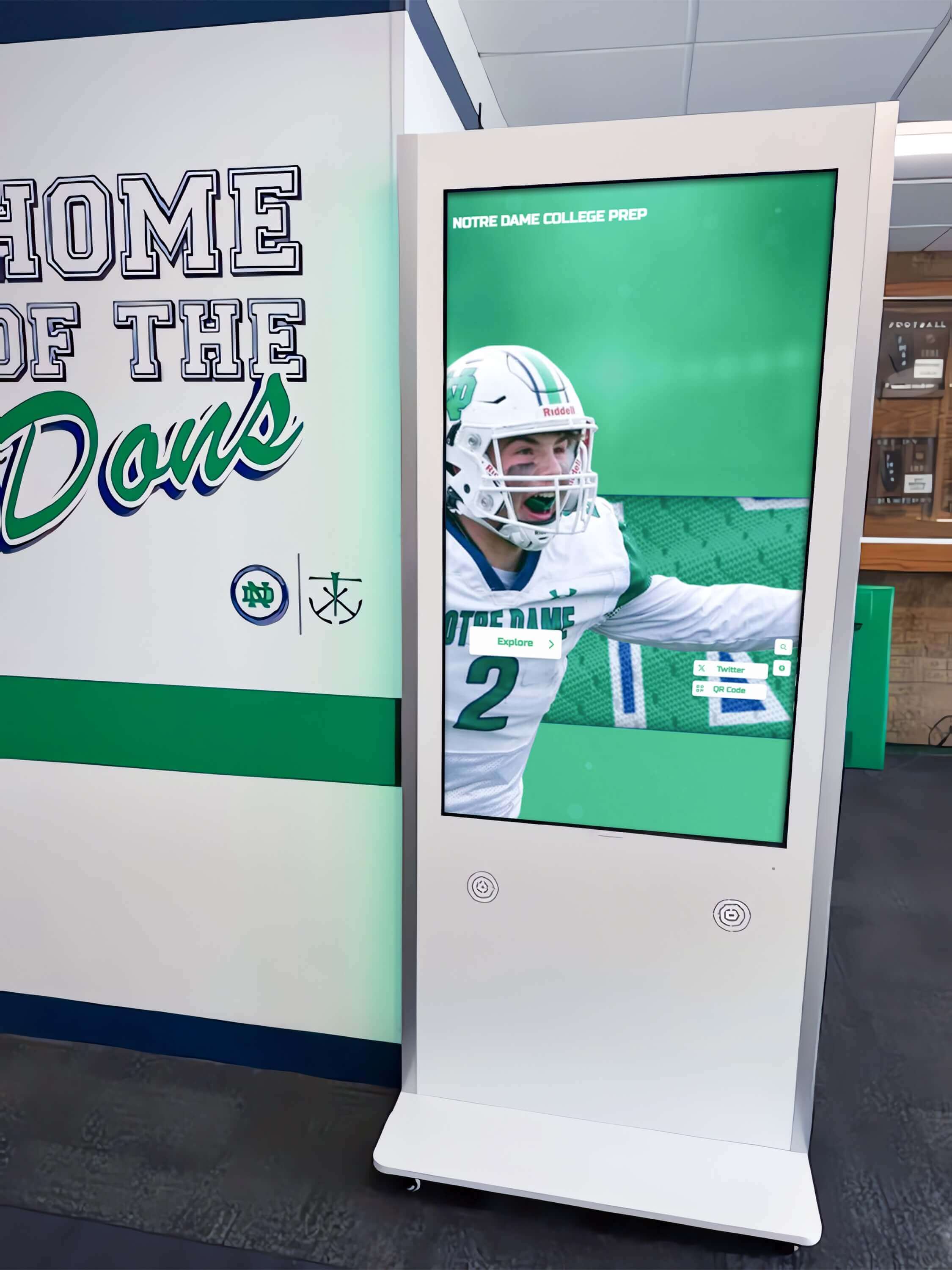
Accessible kiosk placement in high-traffic hallways ensures convenient access for exploration during passing periods
Challenge: Maintaining Recognition Currency
NHS recognition loses effectiveness when displays become outdated due to inconsistent updating or neglected maintenance.
Solutions:
- Assign clear updating responsibility to NHS advisor or designated staff member
- Create calendar reminders for post-induction ceremony updates
- Integrate updating into NHS chapter transition procedures ensuring continuity across advisor changes
- Provide comprehensive training documentation enabling multiple staff to manage updates
- Implement automated reminder systems prompting administrators when updates are due
- Monitor display content regularly through scheduled reviews ensuring accuracy and currency
- Establish backup administrators preventing single points of failure
Systematic processes prevent recognition from falling through cracks during busy periods or staff transitions.
Challenge: Balancing Tradition with Technology
Some communities resist digital recognition, preferring traditional plaques perceived as more permanent or prestigious.
Solutions:
- Maintain traditional induction ceremony elements while adding digital recognition dimensions
- Position digital displays as enhancements expanding rather than replacing traditional recognition
- Preserve existing historical plaques while using digital systems for current and future members
- Communicate digital permanence through cloud-based archiving surpassing physical durability
- Demonstrate web accessibility extending recognition reach beyond campus-limited physical displays
- Showcase engaging interactive features creating experiences impossible with traditional plaques
- Involve stakeholders in planning ensuring buy-in from faculty, families, and administration
Hybrid approaches honoring tradition while embracing technology enhancements often work best for communities valuing both dimensions.
Future Trends in NHS Digital Recognition
Digital recognition continues evolving with emerging technologies creating new possibilities for celebrating NHS excellence.
Artificial Intelligence and Personalization
AI-powered systems may enable personalized recognition experiences showing visitors content most relevant to interests, automatically generating initial achievement narratives from structured data inputs reducing administrative burden, identifying recognition patterns suggesting program improvements or equity concerns, and recommending related content based on exploration behavior creating engaging discovery experiences.
Enhanced Multimedia Integration
Future platforms will likely incorporate more sophisticated multimedia including video testimonials from NHS members discussing their service, leadership, and character development, virtual reality experiences exploring service projects or leadership contexts, live streaming of induction ceremonies for family members unable to attend physically, and integration with school-produced media and student journalism content.
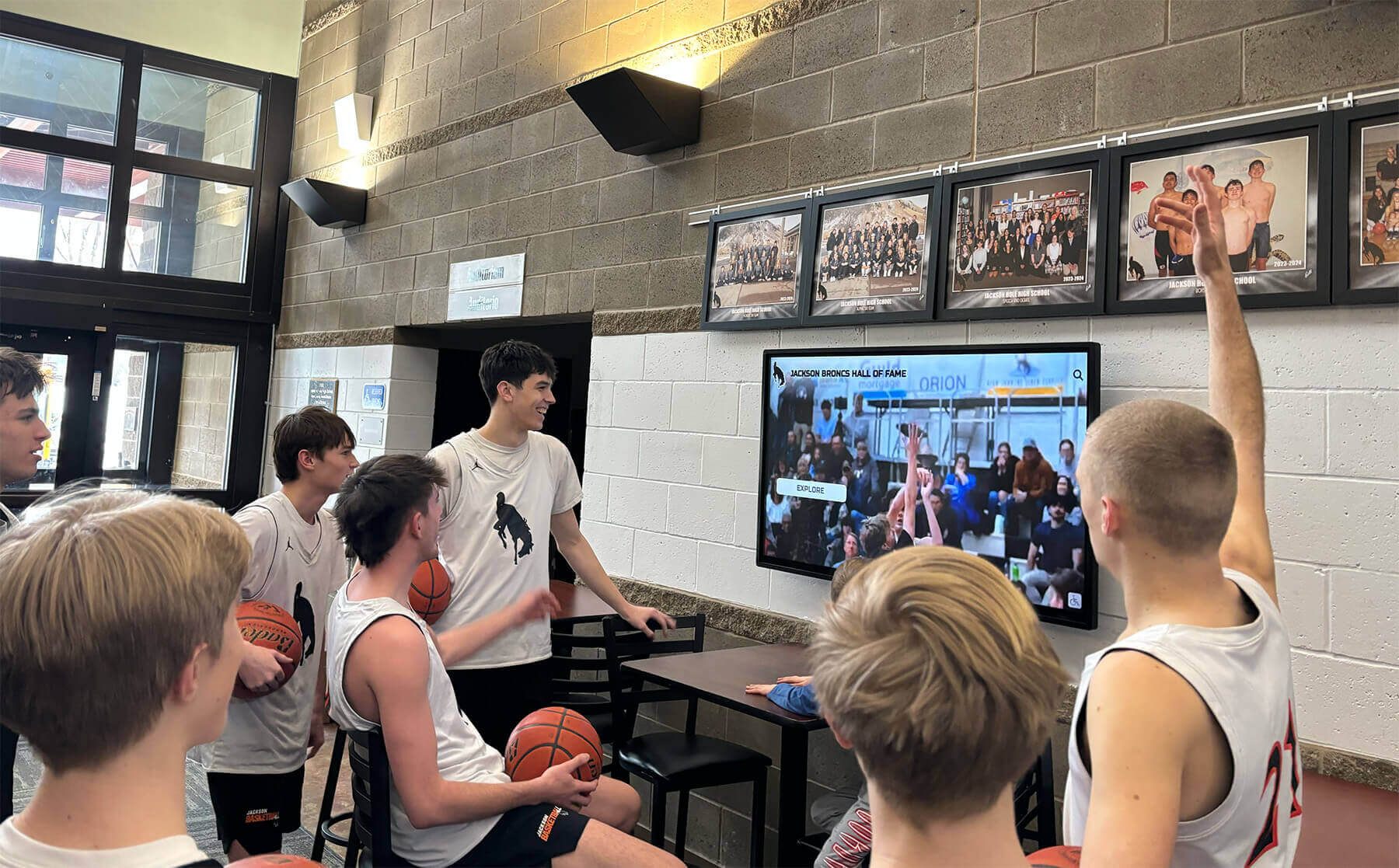
Future recognition systems will integrate video content, live updates, and multimedia experiences enhancing engagement
Advanced Analytics and Impact Assessment
Sophisticated analytics will provide deeper understanding of recognition effectiveness through detailed engagement metrics showing which content resonates most powerfully, outcome correlations connecting NHS membership with specific achievement patterns, cultural assessment measuring recognition’s impact on school climate and values, and predictive analytics identifying students who might benefit from additional support pursuing NHS qualification.
Expanded Integration Capabilities
NHS recognition systems will increasingly integrate with broader educational technology ecosystems including seamless student information system connections eliminating manual data entry, learning management system integration connecting recognition with coursework, digital badge and credential platforms providing portable recognition beyond school contexts, and college application systems enabling direct inclusion of comprehensive achievement profiles.
Conclusion: Honoring NHS Excellence Through Comprehensive Recognition
National Honor Society members demonstrate remarkable achievement across scholarship, service, leadership, and character—accomplishments deserving recognition matching the significance of this prestigious honor. When schools systematically acknowledge NHS membership through modern digital recognition systems featuring interactive touchscreen displays, comprehensive multimedia profiles, unlimited recognition capacity, and cloud-based management—they create cultures where well-rounded excellence receives prominence comparable to any competitive success while inspiring younger students to pursue the qualification pathways NHS membership requires.
The strategies explored in this guide provide concrete pathways for schools seeking to honor NHS students effectively. Whether implementing new recognition programs or enhancing existing approaches, the fundamental principle remains constant: students who dedicate years to building the four-pillar excellence NHS membership represents deserve acknowledgment that validates their multifaceted effort, inspires peers toward similar achievement, and preserves their accomplishments within institutional tradition and memory.
Modern digital recognition platforms overcome traditional limitations while creating engaging experiences that celebrate NHS achievement comprehensively. These systems eliminate space constraints forcing difficult recognition decisions, enable rich multimedia storytelling providing meaningful context about the four pillars, provide permanent searchable archives accessible to all stakeholders globally, facilitate easy annual updates maintaining current recognition following induction ceremonies, and extend celebration reach beyond physical campus through web access and social sharing capabilities.
Your NHS members have demonstrated exceptional commitment to well-rounded excellence through sustained academic achievement, meaningful community service, authentic leadership development, and exemplary character development. They deserve recognition proportional to their accomplishments—lasting, visible, engaging acknowledgment that honors their achievements while inspiring the academic cultures where all students can pursue the scholarship, service, leadership, and character development NHS membership represents.
Ready to begin transforming your National Honor Society recognition? Explore comprehensive digital recognition platforms specifically designed for educational institutions that make celebrating NHS excellence as systematic, engaging, and impactful as your NHS students truly deserve.
Transform Your National Honor Society Recognition
Discover how modern touchscreen displays and digital recognition systems can help you celebrate every NHS member's four-pillar achievements while building lasting programs that inspire younger students toward well-rounded excellence throughout your school community.
Explore Recognition Solutions






























