Intent: Define / Calculate / Demonstrate
National Merit Scholar recognition represents one of the most prestigious academic honors high school students can achieve, yet many schools struggle to give these accomplishments the visibility they deserve. While athletic trophies fill hallways and display cases, students who earn National Merit distinction—achieved by fewer than 1% of test-takers nationally—often receive only brief announcements or static plaques that quickly become outdated.
Schools seeking to create prominent, lasting recognition for National Merit Scholars face practical challenges: where to place displays, what information to include, how to accommodate growing numbers of recipients annually, and what technology or materials will provide the best long-term value. Meanwhile, academic counselors and administrators juggle competing priorities during the critical timing when National Merit awards are announced each fall.
This comprehensive implementation guide provides concrete specifications, material requirements, timeline planning, and step-by-step instructions for building National Merit Scholar recognition displays—from simple traditional plaques to advanced interactive touchscreen systems that celebrate intellectual achievement with the same prominence schools give to athletic championships.
Creating effective National Merit Scholar recognition requires more than purchasing a plaque or screen. Schools must coordinate timing with the National Merit Scholarship Corporation’s announcement schedule, determine appropriate physical placement, design content that inspires future students, and select materials or technology that will serve the institution for years while accommodating annual additions of new scholars.
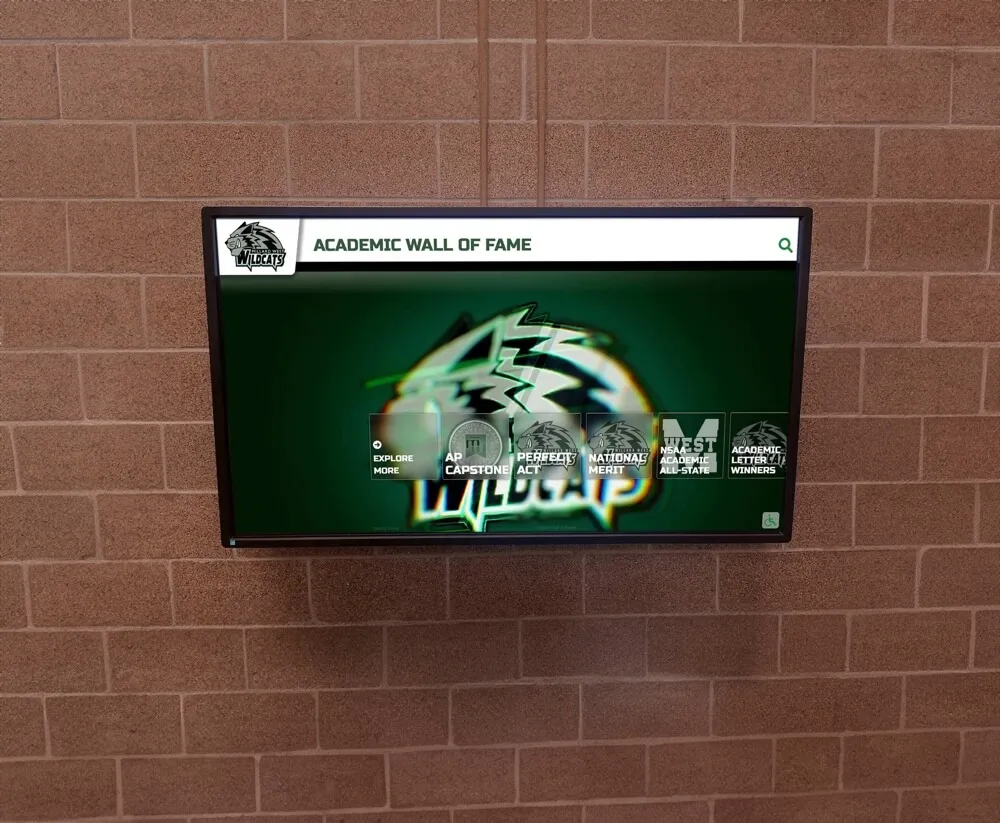
Modern recognition displays give National Merit Scholars permanent visibility while accommodating unlimited future recipients
Understanding the National Merit Scholar Program Timeline
Before planning recognition displays, schools must understand the National Merit Scholarship Corporation’s announcement schedule to coordinate display updates effectively.
Program Stages and Announcement Dates
The National Merit Scholarship Program follows a precise timeline that affects when schools can recognize recipients:
September (Junior Year)
- Approximately 50,000 students nationwide receive notification of Commended Student or Semifinalist designation
- Semifinalists represent the top 1% of test-takers in each state (about 16,000 students)
- Commended Students demonstrate exceptional academic promise but score below Semifinalist thresholds (about 34,000 students)
February (Senior Year)
- National Merit Scholarship Corporation announces approximately 15,000 Finalists who advance from Semifinalist status
- Finalists complete detailed applications including academic records, recommendations, and essays
- Schools receive official notification directly from NMSC
March-June (Senior Year)
- NMSC announces scholarship winners in three categories: National Merit Scholarships ($2,500), corporate-sponsored scholarships, and college-sponsored scholarships
- Approximately 7,500 students receive National Merit Scholarship funding
- All Finalists earn the prestigious National Merit Finalist designation regardless of scholarship award
According to the National Merit Scholarship Corporation timeline, schools should plan recognition displays to accommodate September Semifinalist announcements, February Finalist notifications, and spring scholarship winner announcements.
Recognition Timing Considerations
Most schools face a timing challenge: National Merit designations arrive after traditional academic award ceremonies conclude for the year. Effective recognition programs address this through multiple touchpoints:
Immediate Recognition (Same Week as Announcement)
- Email congratulations to students and families
- Social media posts celebrating individual achievements
- Morning announcements highlighting recipients
- Display updates adding new scholars to existing recognition walls
Formal Recognition (Within One Month)
- Certificate presentations during assemblies or special ceremonies
- Addition to permanent recognition displays
- Newsletter features and website updates
- Local media announcements to community newspapers
Ongoing Recognition (Throughout School Year)
- Permanent visibility through hallway displays updated with current year recipients
- Reference during course selection periods when promoting AP and honors programs
- Inclusion in recruitment materials shown to prospective families
- Connection to academic recognition programs celebrating comprehensive student achievement
Schools implementing new recognition systems should plan 4-6 weeks for design, ordering, and installation to ensure displays are ready before September Semifinalist announcements arrive.
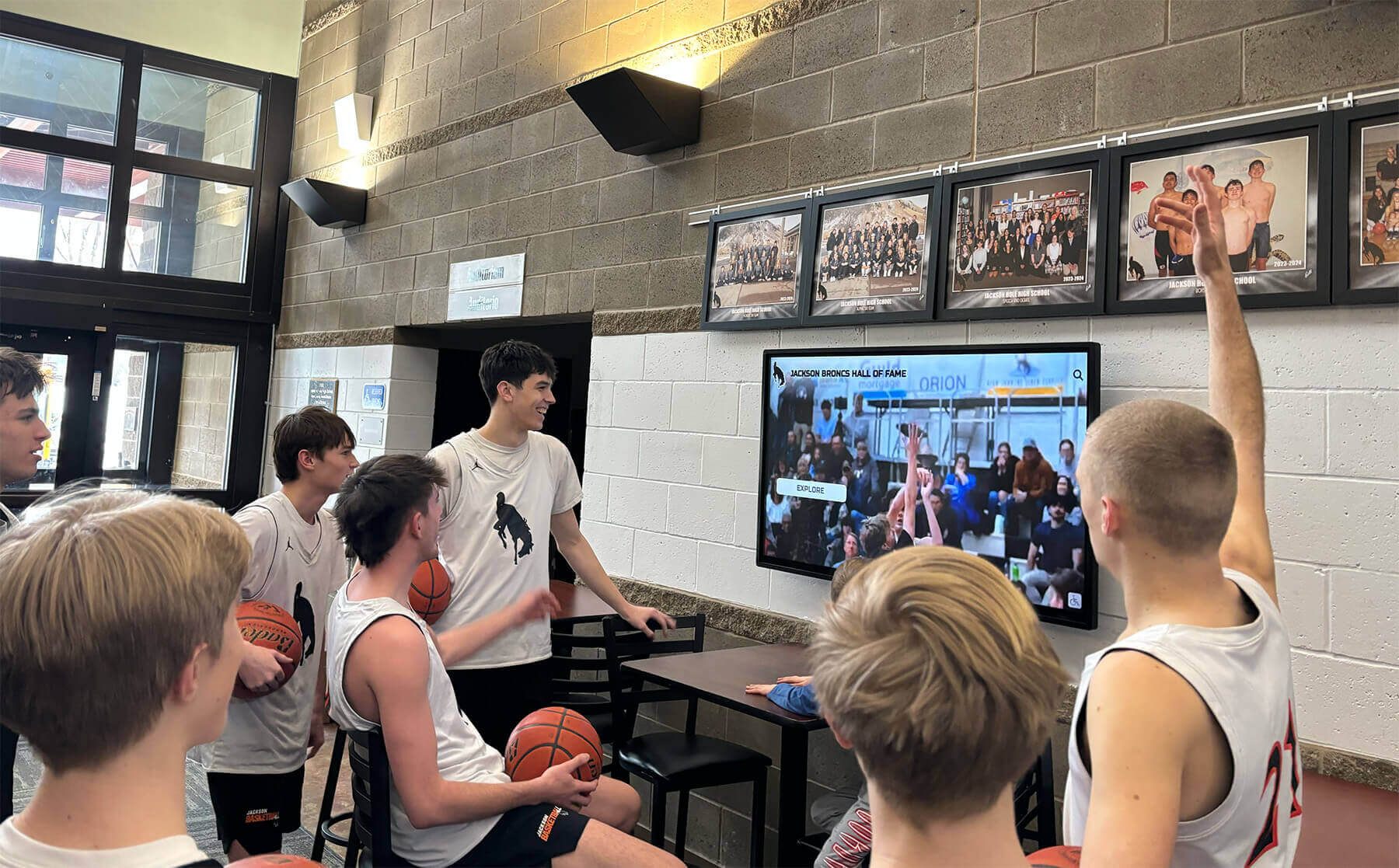
Interactive displays create opportunities for students to explore National Merit Scholar achievements while building aspiration toward academic excellence
Before You Start: Prerequisites and Planning Requirements
Successful National Merit Scholar recognition displays require upfront planning across stakeholder coordination, space assessment, and technical infrastructure.
Required Stakeholders and Approvals
Coordinate with these essential stakeholders before beginning display implementation:
Academic Leadership
- Principal or head of school approval for project scope and budget
- Academic counselors who track National Merit designations and maintain historical records
- Department chairs or curriculum directors who can provide context about academic culture priorities
- Communications director who manages school messaging and brand consistency
Facilities and Technology
- Facilities director for wall space allocation, mounting permissions, and electrical access
- IT director for network connectivity requirements (if implementing digital displays)
- Maintenance staff who will provide ongoing support and troubleshooting
- Security personnel regarding device protection and monitoring protocols
Additional Stakeholders
- Alumni relations if including historical National Merit recipients from past decades
- Development office if donor recognition will appear alongside academic achievements
- Parent association representatives who may provide funding support or volunteer coordination
Create a project team with clear roles: one person owns overall coordination, another manages content collection, a third handles vendor relationships, and a fourth oversees timeline tracking. Schools that establish clear ownership complete recognition displays 40-50% faster than those using committee-by-consensus approaches.
Space Assessment and Location Selection
National Merit Scholar displays deserve prominent placement in high-traffic areas where students, families, and visitors encounter them regularly.
Optimal Location Characteristics
- Main entrance lobbies or reception areas visible to all campus visitors
- Primary student hallways with consistent foot traffic throughout the day
- Near counseling or college advising offices where academic planning conversations occur
- Adjacent to existing academic recognition (not isolated from other achievement displays)
- Adequate wall space for growth: plan for 15-25% increase in scholars annually over 10 years
Physical Requirements to Document
- Wall dimensions (height, width in inches)
- Nearby electrical outlets and distance to nearest power source
- Network connectivity options (wired Ethernet ports or WiFi signal strength)
- Lighting conditions (natural daylight, overhead fluorescent, accent lighting)
- Mounting surface material (drywall, concrete block, brick, glass)
- ADA compliance requirements: bottom of display must be 15-48 inches from floor for accessible reach ranges per digital wall accessibility standards
Visit potential locations at different times during the school day to assess traffic patterns, noise levels, and sight-line visibility. The best location balances prominence with practical installation constraints and maintenance accessibility.
Budget Planning and Resource Allocation
National Merit Scholar recognition displays range from $500 for basic traditional plaques to $15,000+ for large interactive touchscreen installations. Plan realistic budgets accounting for initial setup and ongoing maintenance.
Traditional Plaque Systems
- Initial plaque with header and first 10-20 names: $500-$1,500
- Annual nameplate additions: $15-$40 per student
- 10-year total cost: $2,000-$4,000 for moderate-size schools
Digital Recognition Displays
- 43-55" commercial touchscreen display: $2,000-$5,000
- Wall mount and installation: $400-$800
- Content management system subscription: $500-$2,000 annually
- Network infrastructure upgrades: $500-$2,000 (if needed)
- 10-year total cost: $10,000-$25,000 including all subscriptions and updates
Hybrid Approaches
- Traditional plaque with integrated small digital screen: $2,500-$6,000
- QR codes linking to web-based recognition: Add $200-$500 to plaque costs
- Rotating display sharing space between academic and athletic recognition: varies by configuration
Budget planning should include 15% contingency for unexpected costs (additional electrical work, mounting complications, extended installation labor). Schools using general operating funds typically require 6-12 months advance planning for budget allocation, while those accessing parent association or alumni donor funding may accelerate timelines.
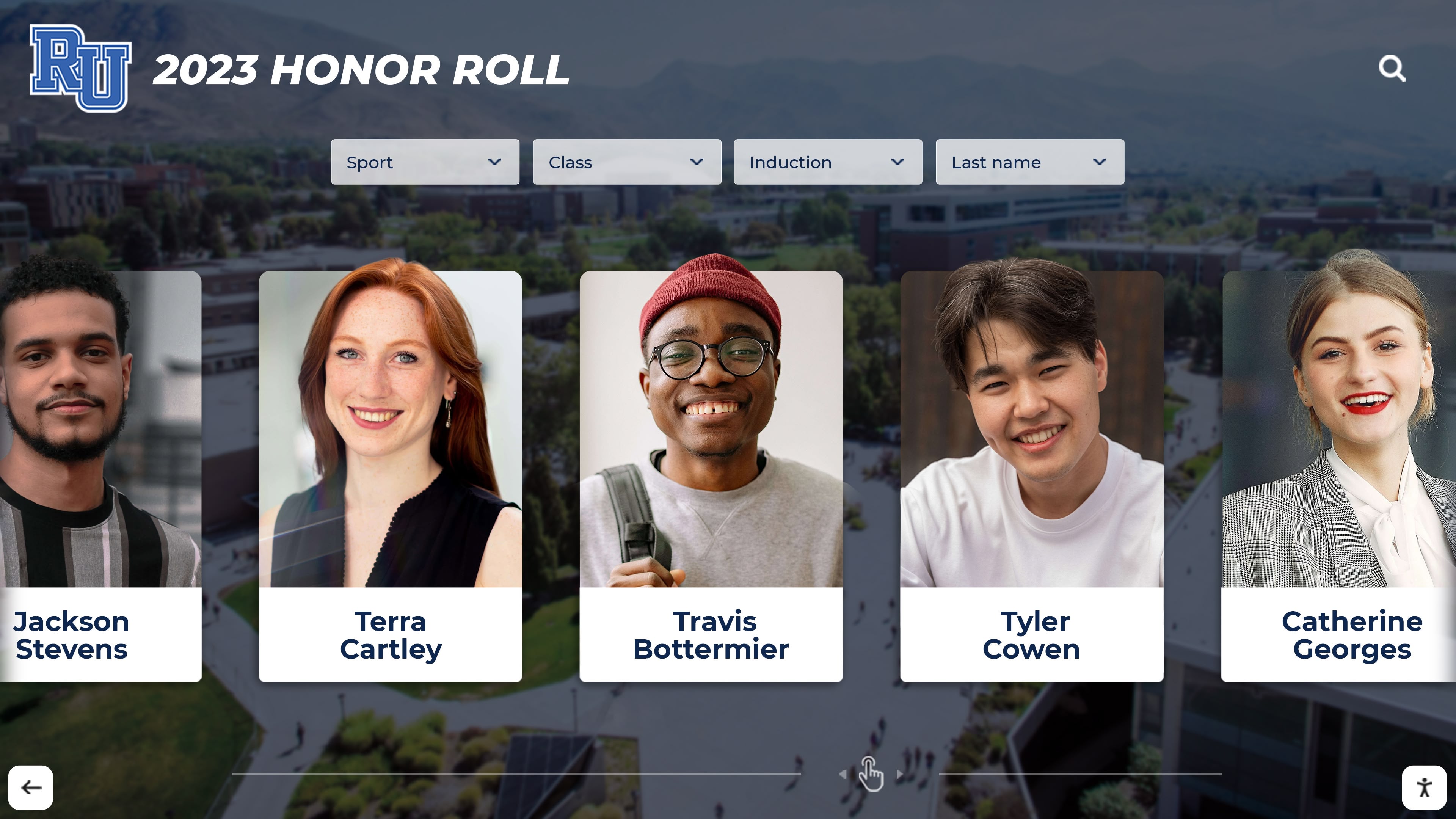
Individual scholar profiles celebrate specific achievements while providing inspiration and context for younger students
Traditional Plaque Implementation: Step-by-Step Process
Traditional engraved plaques provide permanent, maintenance-free National Merit Scholar recognition suitable for schools with limited technology infrastructure or preference for classic presentation.
Phase 1: Design Specifications (Weeks 1-2)
Define exact plaque specifications before requesting vendor quotes to ensure accurate pricing and delivery timelines.
Header Design Requirements
- School name and logo in official brand colors
- “National Merit Scholars” title in prominent, readable font (minimum 2-inch letter height)
- Optional: subtitle specifying “Semifinalists, Finalists, and Scholarship Recipients” to clarify inclusion criteria
- Optional: founding year of recognition program or earliest scholar included
Nameplate Layout Planning
- Determine recognition levels: Will you list Semifinalists, Finalists, and Scholarship Winners separately or combined?
- Plan rows and columns: standard plaques accommodate 5-8 names per row depending on name length and font size
- Account for growth: plan for 5-10 new scholars annually; size plaque to accommodate 10 years before expansion needed
- Include graduation year with each name for historical context
Material and Finish Selection
- Brass plates on walnut or cherry wood backing provide traditional appearance (most common choice)
- Bronze or aluminum plates on marble, granite, or synthetic materials offer modern alternatives
- Specify finish: polished (high shine), satin (moderate luster), or antiqued (aged appearance)
- Select mounting method: French cleats for easy removal/adjustment or permanent wall anchors
Sample Layout Calculation If your school averages 8 National Merit Semifinalists annually and you want 10-year capacity:
- 8 scholars × 10 years = 80 nameplates
- At 6 names per row = 14 rows required
- Each row height approximately 1 inch + spacing = 18-20 inches total height
- Add header section (8-12 inches) = Total plaque height 26-32 inches
Request vendor mockups showing exact layout with your school branding before approving final design.
Phase 2: Vendor Selection and Ordering (Weeks 3-4)
Obtain quotes from 3-5 specialty plaque vendors to compare pricing, quality, and lead times.
Recommended Vendor Types
- Trophy and awards companies serving schools (check local business associations)
- National recognition companies specializing in donor walls and academic plaques
- Online custom plaque manufacturers (lower cost but require detailed specifications)
- Facilities management vendors who may have preferred supplier relationships
Quote Request Information to Provide
- Exact dimensions based on Phase 1 planning
- High-resolution school logo file (vector format preferred)
- Text content for header and any permanent elements
- Material and finish specifications
- Installation location and mounting requirements
- Desired delivery date accounting for installation timeline
Evaluation Criteria Beyond Price
- Lead time: Traditional engraved plaques typically require 4-8 weeks production
- Sample quality: Request photos of similar plaques produced for other schools
- Warranty coverage for manufacturing defects or finish deterioration
- Nameplate addition process: How do you order new names annually? What is the per-plate cost and turnaround time?
- Installation support: Does vendor provide installation services or guidance?
Select vendor based on balance of quality, price, and service reputation. Request detailed proof approval showing exact layout before authorizing production to avoid costly errors requiring remake.
Phase 3: Installation and Mounting (Weeks 9-10)
Professional installation ensures secure mounting and proper alignment while avoiding damage to walls or plaque materials.
Pre-Installation Preparation
- Confirm wall location is still available and clear of obstructions
- Verify electrical boxes, pipes, or structural elements don’t interfere with mounting hardware
- Protect floor area below installation site with drop cloths or cardboard
- Have facilities staff available to address unexpected wall conditions
Installation Process
- Mark centerline of intended plaque location using level to ensure straight alignment
- Hold plaque against wall to verify positioning before drilling
- Mark mounting hole locations precisely using plaque mounting hardware as template
- Drill mounting holes to appropriate depth for anchor type (typically 2-3 inches for masonry, 1-2 inches for stud mounting)
- Insert wall anchors if not mounting directly to studs
- Attach mounting hardware to wall and verify level before final tightening
- Hang plaque on mounted hardware and verify alignment from multiple viewing angles
- Apply any finishing touches (touch-up paint around edges, protective bumpers on bottom)
Post-Installation Validation
- Photograph installed plaque from multiple angles for documentation
- Test security by gently attempting to lift or shift plaque (should show no movement)
- Clean plaque surface and surrounding wall area
- Create maintenance checklist noting cleaning requirements and nameplate addition procedures
Document the installation with “before and after” photos and measurements for future reference when ordering nameplate additions.
Phase 4: Annual Nameplate Addition Process
Establish streamlined procedures for adding new National Merit Scholars each year to maintain current recognition without delay.
Annual Addition Workflow
- Counseling office notifies recognition coordinator when NMSC announces scholars (September for Semifinalists, February for Finalists)
- Coordinator verifies correct spelling, graduation year, and designation level with student records
- Order nameplates from vendor within one week of announcement (typical turnaround: 2-4 weeks)
- Upon delivery, schedule installation during low-traffic period (early morning, weekend, or break)
- Attach new nameplates in designated location following established pattern
- Update master list documenting all scholars for historical reference
- Photograph updated plaque and share with communications for announcements
Nameplate Ordering Specifications
- Maintain exact vendor contact and ordering instructions in shared documentation
- Store template with required information fields to simplify annual orders
- Budget for nameplate costs in annual planning: multiply expected scholar count by per-plate cost
- Order buffer quantity (2-3 extra plates) to accommodate potential corrections or additional scholars
Traditional plaques require minimal maintenance but benefit from annual cleaning with appropriate materials (soft cloth, pH-neutral cleaner for metal plates, appropriate wood polish for backing).
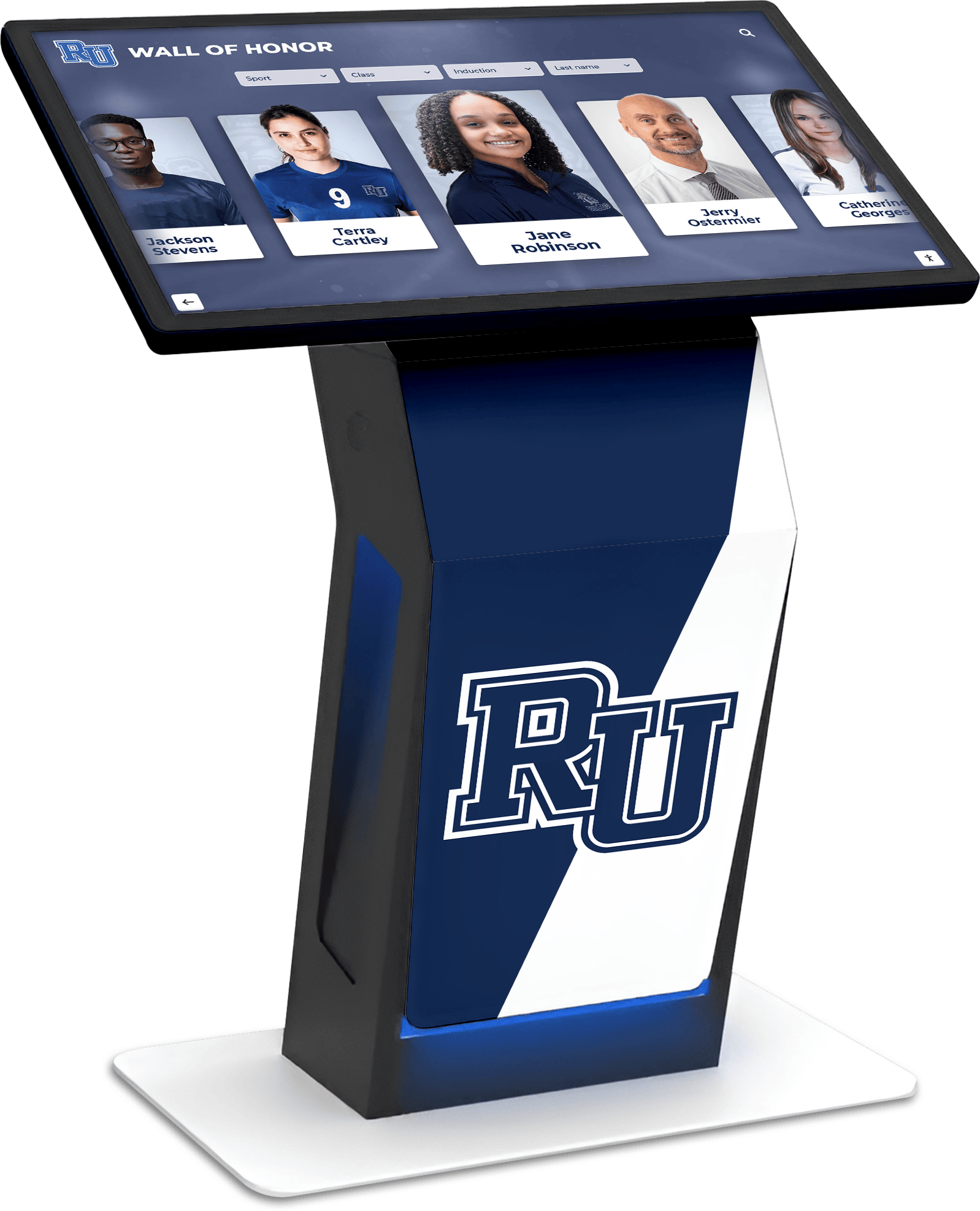
Digital recognition systems eliminate space constraints while providing rich multimedia content about each scholar's achievements
Digital Touchscreen Display Implementation: Complete Technical Guide
Interactive touchscreen displays provide unlimited recognition capacity with engaging multimedia content, though they require greater upfront investment and ongoing technical maintenance compared to traditional plaques.
Phase 1: Technical Requirements and Infrastructure Assessment (Weeks 1-2)
Digital displays require reliable power, network connectivity, and appropriate environmental conditions for long-term operation.
Power Requirements
- Dedicated electrical circuit for display (commercial displays typically draw 150-400 watts)
- Power outlet within 6 feet of intended display location (avoid visible extension cords)
- Surge protection to prevent damage from power fluctuations
- Electrical capacity verification: ensure circuit can handle display power draw plus any other connected devices
Network Connectivity Options
- Wired Ethernet connection provides most reliable performance (strongly recommended)
- WiFi connectivity acceptable if signal strength exceeds -65 dBm at display location
- Internet bandwidth: minimum 10 Mbps download for cloud-based content management systems
- Network port configuration: ensure IT department can provide IP address assignment and firewall access for content management
Environmental Considerations
- Ambient temperature range: commercial displays operate reliably in 32-104°F (0-40°C)
- Avoid direct sunlight on screen (causes glare, increases internal temperature, reduces display lifespan)
- Sufficient ventilation around display: maintain 2-3 inch clearance on sides and top for heat dissipation
- Indoor use only: standard commercial displays not rated for outdoor installation
Conduct site survey with facilities and IT staff present to document existing conditions and identify any infrastructure upgrades needed before display installation.
Phase 2: Display Hardware Selection (Weeks 3-4)
Commercial-grade touchscreen displays provide reliability and features purpose-built for continuous operation in public environments.
Display Size Selection Choose screen size based on primary viewing distance and available wall space:
- 43-inch displays suitable for viewing distances of 5-10 feet
- 55-inch displays optimal for viewing distances of 8-12 feet
- 65-inch+ displays for large spaces with viewing distances exceeding 12 feet
Commercial displays cost approximately $80-$100 per inch of diagonal screen size as a general budgeting guideline.
Critical Display Specifications
- Commercial/professional grade (NOT consumer TV): designed for 16-18 hour daily operation
- Capacitive touchscreen technology: supports multi-touch gestures and provides responsive interaction
- Minimum resolution: 1920×1080 Full HD (4K resolution provides sharper text for large displays)
- Brightness: 350-500 nits for indoor installations (higher brightness needed for locations with significant natural light)
- Anti-glare coating to maintain readability under various lighting conditions
Recommended Features
- Landscape or portrait orientation support: allows vertical mounting for space efficiency
- Built-in media player or computing module: simplifies installation by eliminating external PC requirements
- Tempered glass surface: provides screen protection in high-traffic environments
- Auto-on/off scheduling: reduces power consumption and extends display lifespan
Vendor and Brand Considerations
- Commercial display manufacturers: ViewSonic, LG, Samsung, NEC, Sharp (all produce education-specific models)
- Warranty: minimum 3-year commercial warranty with on-site service or advanced replacement
- Support: verify manufacturer provides technical support directly (not third-party only)
- Availability: ensure replacement parts remain available for minimum 5 years
Request demonstration unit or visit installations at similar schools before finalizing hardware selection. Solutions like Rocket Alumni Solutions provide comprehensive touchscreen systems designed specifically for educational recognition applications with hardware, software, and content management integrated.
Phase 3: Content Management System Selection (Weeks 3-5)
Content management systems (CMS) determine how easily you update recognition displays with new scholars, photos, and information.
Essential CMS Capabilities
- Cloud-based access: update content from any internet-connected device without physical display access
- User-friendly interface: staff without technical training can add/edit content confidently
- Bulk import tools: upload multiple scholars simultaneously using spreadsheet data
- Photo management: upload, crop, and optimize student photos within the system
- Template customization: match school branding with colors, logos, and fonts
- Search and filter functionality: users can find specific scholars by name, year, or designation level
- Mobile-responsive: recognition extends beyond physical display to web-accessible version
Advanced CMS Features
- Multi-display management: update content across multiple screens from single interface
- Role-based permissions: grant access to specific staff while protecting sensitive settings
- Automated publishing schedules: set content to go live on specific dates
- Analytics and engagement tracking: monitor how frequently users interact with displays
- Integration capabilities: connect with student information systems to automate data population
CMS Pricing Models
- One-time licensing fee: $2,000-$5,000 for perpetual software license (requires self-hosting)
- Annual subscription: $500-$2,000 per year for cloud-hosted solutions with updates included
- Per-display pricing: some systems charge based on number of active screens
Evaluate CMS options by requesting demonstration access or trial accounts. Test actual workflows you’ll use regularly (adding new scholar, updating photo, changing layout) to ensure system matches staff comfort level with technology.
Phase 4: Content Design and Organization (Weeks 6-8)
Well-organized content makes recognition displays intuitive to explore while ensuring all scholars receive appropriate acknowledgment.
Content Structure Planning Organize scholars using clear, logical categories:
- By designation level (Semifinalists, Finalists, Scholarship Recipients)
- By graduation year (2025, 2024, 2023…)
- By both level and year (2025 Finalists, 2025 Semifinalists…)
Most schools prefer organization by graduation year with designation level indicated within each scholar’s profile.
Individual Scholar Profiles Each National Merit Scholar profile should include:
Essential Information
- Full name (verify preferred name with student)
- Graduation year
- National Merit designation (Semifinalist, Finalist, or Scholarship Recipient)
- PSAT/NMSQT Selection Index score (optional - some schools include, others omit)
Enhanced Content
- Professional or yearbook photo (headshot in consistent style across all scholars)
- Current college/university or post-graduation plans
- Intended major or field of study
- Notable academic achievements beyond National Merit (AP Scholar, honor societies, academic competitions)
- Brief personal statement (2-3 sentences about their academic journey)
Design Consistency Standards
- Photo requirements: minimum 800×1000 pixels, consistent aspect ratio, similar lighting and background style
- Text formatting: establish standard font sizes, colors, and layouts used consistently across all profiles
- Branding elements: school colors, logo placement, and design elements matching institutional style guides
- Information density: balance comprehensive information with readability (avoid overwhelming users with excessive text)
Create master template with all design specifications documented to ensure consistency as different staff members update content over time.
Phase 5: Installation and Configuration (Weeks 10-12)
Professional installation ensures displays operate reliably while meeting safety codes and institutional standards.
Pre-Installation Checklist
- Verify infrastructure readiness: power circuit installed, network connection active and tested
- Confirm display delivery and inspect for shipping damage before unpacking
- Review wall mounting hardware included with display or order appropriate commercial mount separately
- Schedule installation during low-traffic period to minimize disruption
- Coordinate with IT staff to be available for network configuration
Mounting Installation Process
- Locate wall studs or structural mounting points using stud finder (display + mount weight: 60-120 lbs depending on size)
- Mark mounting bracket hole locations and verify level alignment
- Drill pilot holes and install lag bolts or appropriate anchors rated for display weight + 50% safety margin
- Attach mounting bracket to wall and verify security before hanging display
- Mount display to bracket following manufacturer instructions
- Verify display sits level and securely (no movement or sagging)
- Route power and network cables through in-wall conduit or use cable management raceways for clean appearance
- Connect power and network cables before fully securing display to mounting bracket
Network and Software Configuration
- Power on display and complete initial setup wizard
- Connect to network and verify internet connectivity
- Configure IP address (static or DHCP depending on IT requirements)
- Install content management system software or configure web-based CMS access
- Upload initial content (scholar profiles, photos, school branding)
- Test touchscreen responsiveness across entire screen surface
- Configure display settings: brightness, auto-on/off schedules, screensaver timeout
- Set up remote monitoring if available through CMS platform
Post-Installation Validation
- Test all interactive features: search, filtering, photo viewing, navigation
- Verify display appears correctly in both orientation and content layout
- Check visibility from multiple viewing angles and distances
- Test network connection stability over 24-48 hour period
- Document all configuration settings, passwords, and support contacts
Create installation documentation with photos, network settings, and troubleshooting contacts to simplify future maintenance or updates.
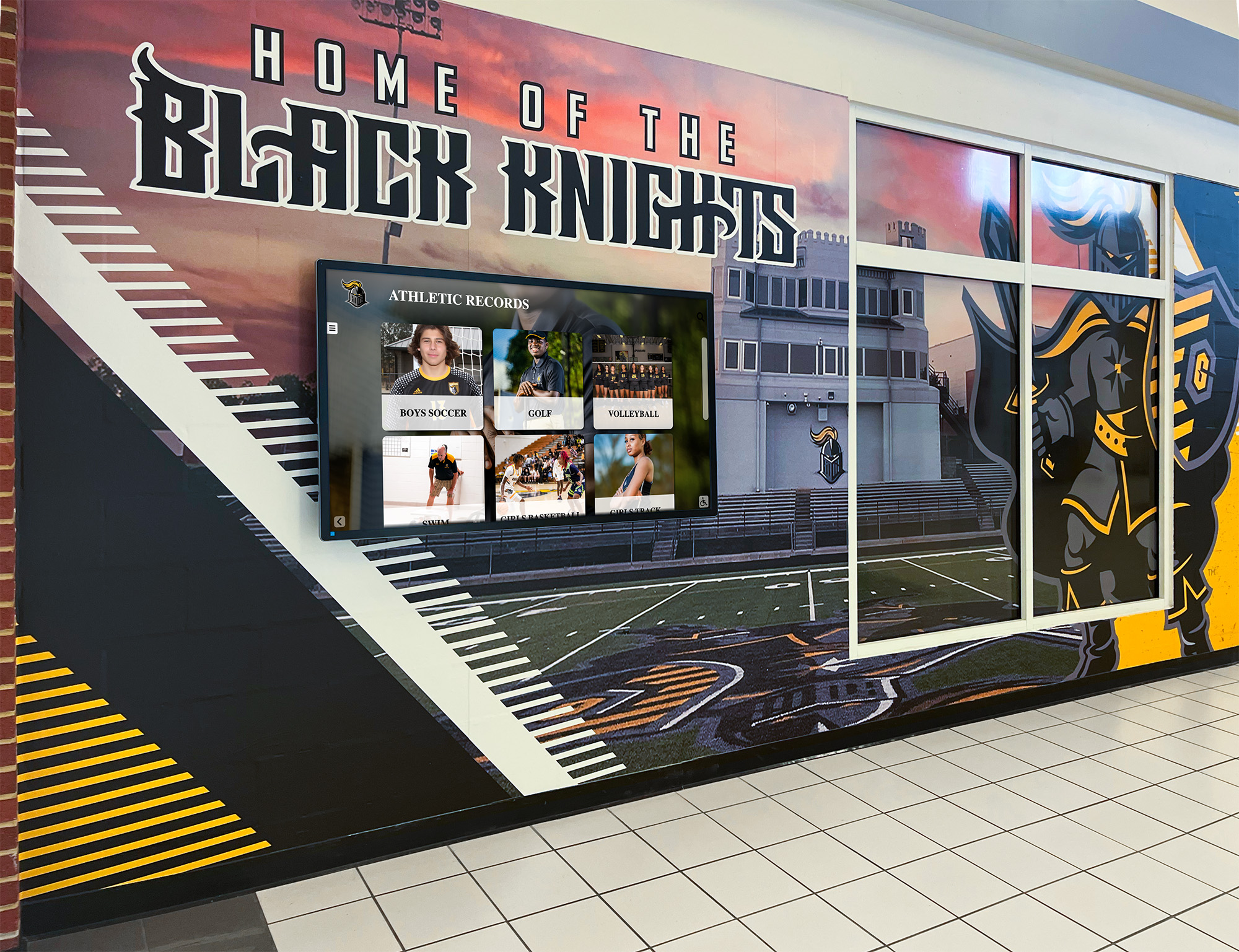
Integrated recognition spaces combine digital displays with traditional design elements to create prominent celebration of academic achievement
Hybrid Approach: Combining Traditional and Digital Recognition
Many schools implement hybrid systems that blend traditional engraved elements with digital components, balancing permanence with flexibility.
Physical Plaque with QR Code Integration
Traditional plaques can extend to digital content through QR codes linking to comprehensive online profiles.
Implementation Process
- Design traditional plaque following specifications in earlier section
- Add permanent QR code to plaque (engraved or mounted high-quality printed code)
- Link QR code to dedicated webpage showcasing all National Merit Scholars with expanded profiles, photos, and updates
- Maintain webpage annually with new scholars and updated information
- QR code remains constant; destination content updates continuously
Cost and Technical Requirements
- QR code generator: free through numerous online services
- Dedicated webpage hosting: typically included in school website infrastructure ($0 additional cost)
- Custom domain option: nationalmeritscholars.schoolname.edu provides professional branded URL
This approach costs only $200-$500 beyond standard plaque pricing while providing unlimited digital content capacity accessed via smartphones.
Digital Display with Traditional Nameplate Border
Large digital displays can be framed with engraved nameplates creating visual connection to institutional tradition while providing interactive features.
Design Configuration
- Center: 43-55" touchscreen display showing interactive scholar profiles, photos, and achievements
- Border: Engraved brass plates or similar materials with scholar names in chronological arrangement
- Header: Traditional school name, logo, and “National Merit Scholars” title
- Dimensions: Total installation 6-8 feet wide × 4-5 feet tall depending on display size
Advantages
- Combines permanence of engraving with richness of digital content
- Appealing to stakeholders who value tradition alongside technology
- Nameplate border provides redundancy if digital display experiences technical issues
- Creates visually substantial recognition wall with significant presence
Implementation Complexity
- Requires coordination between digital display installer and custom millwork/plaque fabricator
- Total cost: $8,000-$15,000 depending on materials and size
- Installation timeline: 10-14 weeks accounting for custom fabrication
Schools with strong traditions around permanent recognition while desiring modern interactive features find hybrid approaches particularly appealing.
Rotating Display Shared Across Multiple Recognition Programs
Schools with multiple academic recognition programs (National Merit Scholars, AP Scholars, honor societies, academic competitions) can implement unified digital displays that rotate content.
Content Rotation Strategies
- Timed rotation: display cycles between different academic programs on set schedule (National Merit 5 minutes, AP Scholars 5 minutes, honor roll 5 minutes, etc.)
- Interactive navigation: main menu allows users to select which academic recognition program to explore
- Featured content: highlight current season or recent achievements (National Merit in fall, AP Scholars in summer, honor roll by semester)
Benefits
- Single display investment recognizes multiple academic achievement categories
- Reinforces comprehensive academic excellence culture
- More efficient use of budget and prime wall space
- Easier to gain administrative approval for larger investment when serving multiple recognition needs
Schools should balance rotation frequency to ensure each program receives adequate visibility. Interactive navigation approaches work better than timed rotation when display sees high traffic throughout the day.
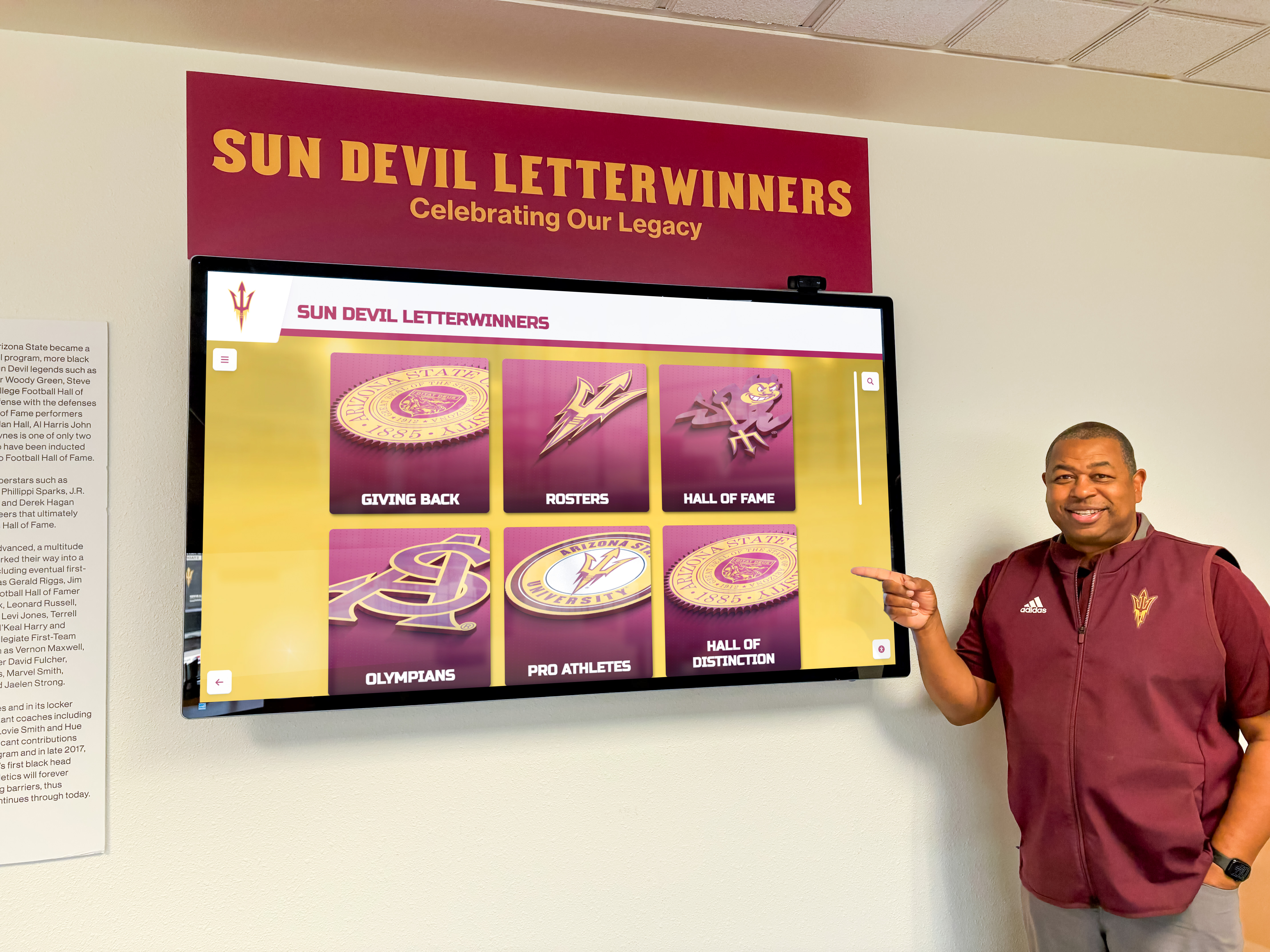
Strategic placement in main lobbies and entryways ensures National Merit Scholar recognition receives maximum visibility from students, families, and visitors
Content Strategy: What Information to Include
Effective National Merit Scholar recognition balances essential information with inspiring content that motivates younger students while properly celebrating individual achievements.
Essential Data Fields for Every Scholar
Include these fundamental details for each National Merit Scholar:
Identifying Information
- Legal name or preferred name (verify with student)
- Graduation year prominently displayed
- National Merit designation level: Commended Student, Semifinalist, Finalist, or Scholarship Recipient
- High school or class designation if district includes multiple high schools
Academic Context
- PSAT/NMSQT Selection Index score (optional - many schools include this for context, others omit for privacy)
- College destination or post-graduation plans if available at time of recognition
- Intended major or field of academic interest
- Current GPA or class rank (optional - some schools include, others limit to National Merit achievement only)
Biographical Elements
- Professional headshot or yearbook photo
- Hometown or city of residence
- Date of National Merit announcement (month and year)
This essential information requires minimal collection effort while providing complete recognition that serves historical documentation purposes.
Enhanced Profile Content
Schools with capacity to collect additional information create richer profiles that tell more complete achievement stories:
Academic Journey Details
- Other significant academic achievements (AP Scholar, academic competition success, research accomplishments)
- Honors and awards received during high school career
- Advanced courses completed (number of AP, IB, or dual enrollment courses)
- Academic interests and favorite subjects
Personal Perspective
- Brief statement about what earning National Merit distinction means to them (2-3 sentences)
- Advice for younger students considering challenging coursework
- Acknowledgment of teachers, counselors, or family who supported their achievement
- Future academic and career goals
Multimedia Elements
- Photo gallery showing scholar in academic settings, competitions, or with teachers/mentors
- Video interview (1-2 minutes) discussing their academic experience
- Scanned images of National Merit certificate or congratulatory letters
- Achievement timeline showing progression through National Merit program stages
Enhanced content transforms recognition from simple name listing to inspiration that helps younger students visualize their own potential paths to distinction.
Organizational Structure and Navigation
Digital displays require intuitive organization that helps users find specific scholars or browse chronologically:
Primary Organization Options
- Chronological by year: Group scholars by graduation year (most common approach)
- Alphabetical: List all scholars alphabetically regardless of year
- Designation level: Separate tabs or sections for Semifinalists, Finalists, and Scholarship Recipients
Search and Filter Functionality
- Name search: type scholar name to jump directly to profile
- Year filter: show only scholars from selected graduation year(s)
- Designation filter: display only Semifinalists, Finalists, or Scholarship Recipients
- College filter: find scholars attending specific universities (requires college destination data)
Browse Experience Design
- Grid view showing scholar photos for visual browsing
- List view showing names and basic information for quick scanning
- Featured scholar rotation highlighting 3-5 recent recipients on main screen
- “Did you know?” facts about National Merit program providing educational context
Well-designed navigation ensures both casual browsers and users seeking specific information can accomplish their goals efficiently.
Maintenance and Updating Procedures
Sustainable National Merit Scholar recognition requires establishing clear processes for ongoing maintenance and annual updates.
Traditional Plaque Maintenance
Physical plaques require minimal upkeep but benefit from regular cleaning and periodic inspection.
Annual Maintenance Checklist
- Clean plaque surface using appropriate materials: soft microfiber cloth dampened with pH-neutral cleaner for brass/metal plates, wood polish for backing materials
- Inspect mounting hardware for looseness or deterioration (tighten mounting screws if needed)
- Check nameplate condition for tarnishing, scratches, or damage requiring replacement
- Verify readability from typical viewing distance (replace plates showing significant wear)
- Photograph plaque for annual documentation showing condition and scholar additions
Long-Term Considerations
- Traditional plaques eventually fill available space requiring expansion or secondary plaque installation
- Plan expansion approach before reaching capacity: Will new plaque mount adjacent to original? Begin new section elsewhere?
- Budget for expansion plaque costs in 5-10 year capital planning
- Consider transition to digital system when expansion costs approach digital implementation investment
Traditional plaques require approximately 2-4 hours annual maintenance labor, primarily during nameplate addition periods.
Digital Display Maintenance and Technical Support
Touchscreen displays require ongoing technical maintenance to ensure reliable operation and current content.
Weekly Maintenance Tasks
- Verify display powers on correctly and shows current content
- Clean touchscreen surface using microfiber cloth (avoid harsh chemicals or abrasive materials)
- Check for software alerts or system messages requiring attention
- Test touch responsiveness across screen surface
Monthly Maintenance Tasks
- Review content accuracy: verify all scholars appear correctly with accurate information
- Check for software updates available through CMS platform
- Verify network connectivity remains stable
- Test backup/restore procedures to ensure content recovery capability if needed
Annual Maintenance Tasks
- Deep clean display and surrounding area
- Inspect mounting hardware and cable connections for wear or looseness
- Update CMS software to latest stable version
- Review user analytics to understand engagement patterns and optimize content based on usage data
- Verify backup procedures and test content restoration
- Update support contact information and troubleshooting documentation
Technical Support Resources
- Display manufacturer technical support: document contact information and warranty terms
- CMS provider support: maintain current login credentials and support contact methods
- School IT department: designate specific staff responsible for display troubleshooting
- Facilities team: identify staff who can address mounting, electrical, or physical access issues
Create maintenance schedule with specific assigned responsibilities to prevent recognition displays from becoming neglected as institutional priorities shift.
Annual Scholar Addition Workflow
Establish streamlined process for adding new National Merit Scholars to recognition displays each September and February.
Step-by-Step Annual Process
Week 1: Announcement and Verification
- Counseling office receives National Merit Semifinalist notification in September (Finalist notification in February)
- Recognition coordinator receives scholar list from counseling with correct name spelling, graduation year, and designation level verified against official NMSC communications
- Coordinator contacts each scholar via email to request:
- Confirmation of preferred name for recognition
- Current high-resolution photo (if not using yearbook photos)
- Brief personal statement or quotes (if including enhanced content)
- Permission to recognize publicly (verify FERPA compliance)
Week 2-3: Content Preparation 4. Collect and organize photos ensuring consistent formatting (crop to standard aspect ratio, adjust lighting/exposure for consistency) 5. Create individual scholar profiles in CMS or prepare nameplate order specifications 6. Review content for accuracy: proofread all names, verify designation levels, confirm information completeness 7. Obtain approval from administration or communications office if required by institutional procedures
Week 4: Display Update 8. Traditional plaques: Submit nameplate order to vendor (2-4 week turnaround typical) 9. Digital displays: Upload scholar profiles to CMS and schedule publication date 10. Test display or verify nameplate installation upon delivery 11. Update master records documenting all scholars for historical reference
Week 4-5: Communication 12. Announce new National Merit Scholars through multiple channels: school website, social media, newsletter, morning announcements 13. Invite families to view updated recognition display 14. Send congratulatory letters to scholars on school letterhead 15. Notify local media about scholar achievements 16. Update academic recognition program communications highlighting National Merit as premier achievement opportunity
This systematic approach completed annually ensures recognition remains current without becoming overwhelming administrative burden.
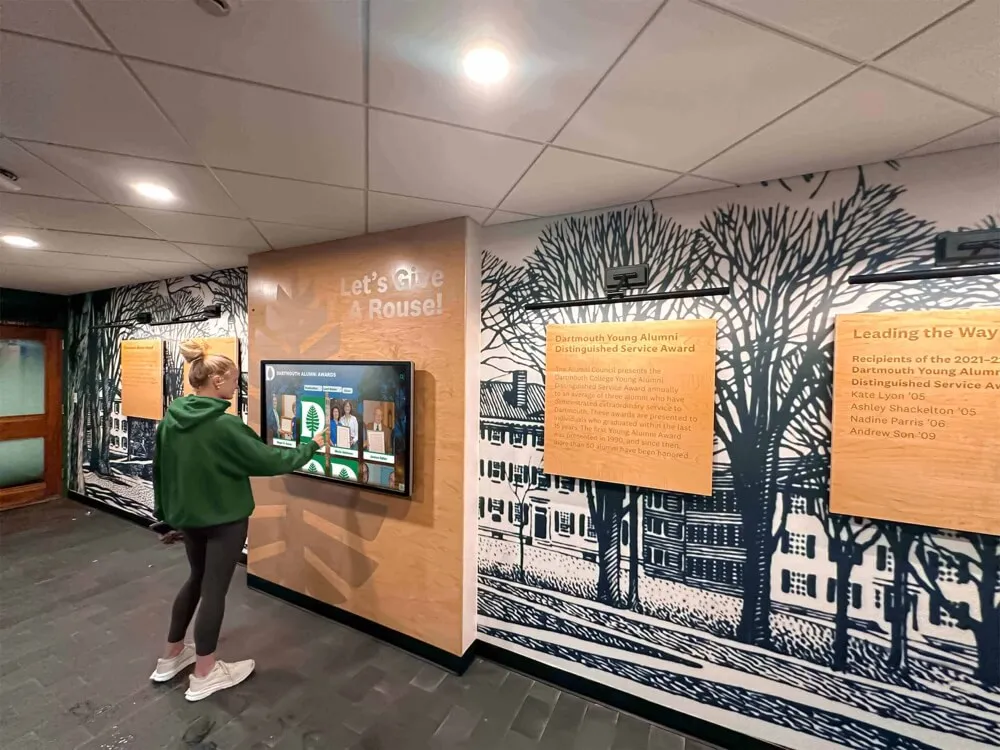
Comprehensive recognition spaces integrate National Merit Scholar celebration with broader academic culture and school history
Advanced Considerations: Multi-Campus Districts and Historical Archives
Large school districts and institutions with deep National Merit traditions face unique recognition challenges requiring specialized approaches.
District-Wide Recognition Across Multiple High Schools
Districts with multiple high schools implementing consistent recognition create equity while celebrating school-specific achievement.
Centralized vs. School-Specific Approaches
- School-specific displays: Each high school maintains independent National Merit Scholar recognition in their own building using consistent design standards
- District-wide displays: Central district office or administration building houses comprehensive recognition from all high schools
- Hybrid approach: School-specific displays in each building plus district-wide recognition at central location
Design Consistency Standards Establish district-wide specifications ensuring visual consistency:
- Common template design with school-specific branding elements
- Standardized photo formats and profile information across all schools
- Shared content management system enabling district-level oversight while allowing school-level updates
- Consistent placement guidelines (all displays in main lobby, near counseling office, etc.)
Implementation Coordination
- District academic office coordinates vendor relationships and negotiates volume pricing
- Individual schools maintain local content updates and scholar data collection
- Shared budget model: district provides base funding, individual schools supplement for enhanced features
- Annual recognition ceremony celebrating scholars from all district high schools together
District-wide approaches provide economy of scale through volume purchasing while ensuring equitable recognition regardless of school size or resources.
Historical Archives: Recognizing Decades of National Merit Scholars
Schools with long National Merit traditions face challenges displaying 30-50+ years of scholars on single displays.
Historical Data Collection Reconstructing historical National Merit Scholar records requires systematic research:
- Contact alumni office requesting records of historical scholar recognition (often maintained for development purposes)
- Review archived yearbooks for National Merit announcements (typically appear in senior sections or academic awards)
- Search local newspaper archives for announcement articles from September and February of each year
- Contact National Merit Scholarship Corporation directly (may provide historical records for specific schools)
- Request information from long-serving counseling staff who may maintain personal records
Managing Large Historical Archives Digital displays handle historical archives more effectively than traditional plaques:
- Organize by decade for browsable historical exploration (1970s, 1980s, 1990s, etc.)
- Create historical summary statistics: total scholars by decade, total program history, notable scholarship recipients
- Feature “historical spotlight” rotating vintage photos and profiles from different eras
- Connect historical scholars to current students: alumni mentorship programs, career guidance from distinguished graduates
Balancing Historical and Current Recognition Ensure current scholars receive prominence while honoring history:
- Featured section highlighting current year scholars on main display
- Historical archive accessible through secondary navigation
- Regular rotation featuring historical scholars alongside current recipients
- Annual alumni update opportunities: invite historical scholars to update profiles with career information
Schools celebrating 50+ years of National Merit achievement create powerful legacy narratives that inspire current students while connecting alumni across generations.
Legal and Privacy Considerations
National Merit Scholar recognition must comply with educational privacy regulations and institutional policies.
FERPA Compliance The Family Educational Rights and Privacy Act restricts disclosure of student education records without consent:
- National Merit designation constitutes “directory information” which schools may disclose without consent IF institution has designated it as such in annual FERPA notifications
- Many schools include honors and awards in directory information definitions, making National Merit recognition permissible
- Schools should verify their specific FERPA policies allow public recognition before implementing displays
- Obtain explicit permission from students if FERPA policies require consent for public recognition
Photo Usage Rights
- Verify school media release policies allow public display of student photos in recognition installations
- Obtain explicit photo permission from students and families if standard media releases don’t clearly cover recognition displays
- Document permission in student records to address future questions or concerns
- Establish process for students to opt out of photo usage while still receiving name recognition
Data Retention and Historical Archives
- Determine institutional policy regarding indefinite retention of student information in recognition displays
- Historical scholars become alumni and FERPA protections expire, but institutional courtesy suggests maintaining accuracy and handling updates professionally
- Provide mechanism for alumni to request profile updates or removal if circumstances change
Consult school legal counsel or district compliance officer to ensure recognition programs align with all applicable regulations and institutional policies.
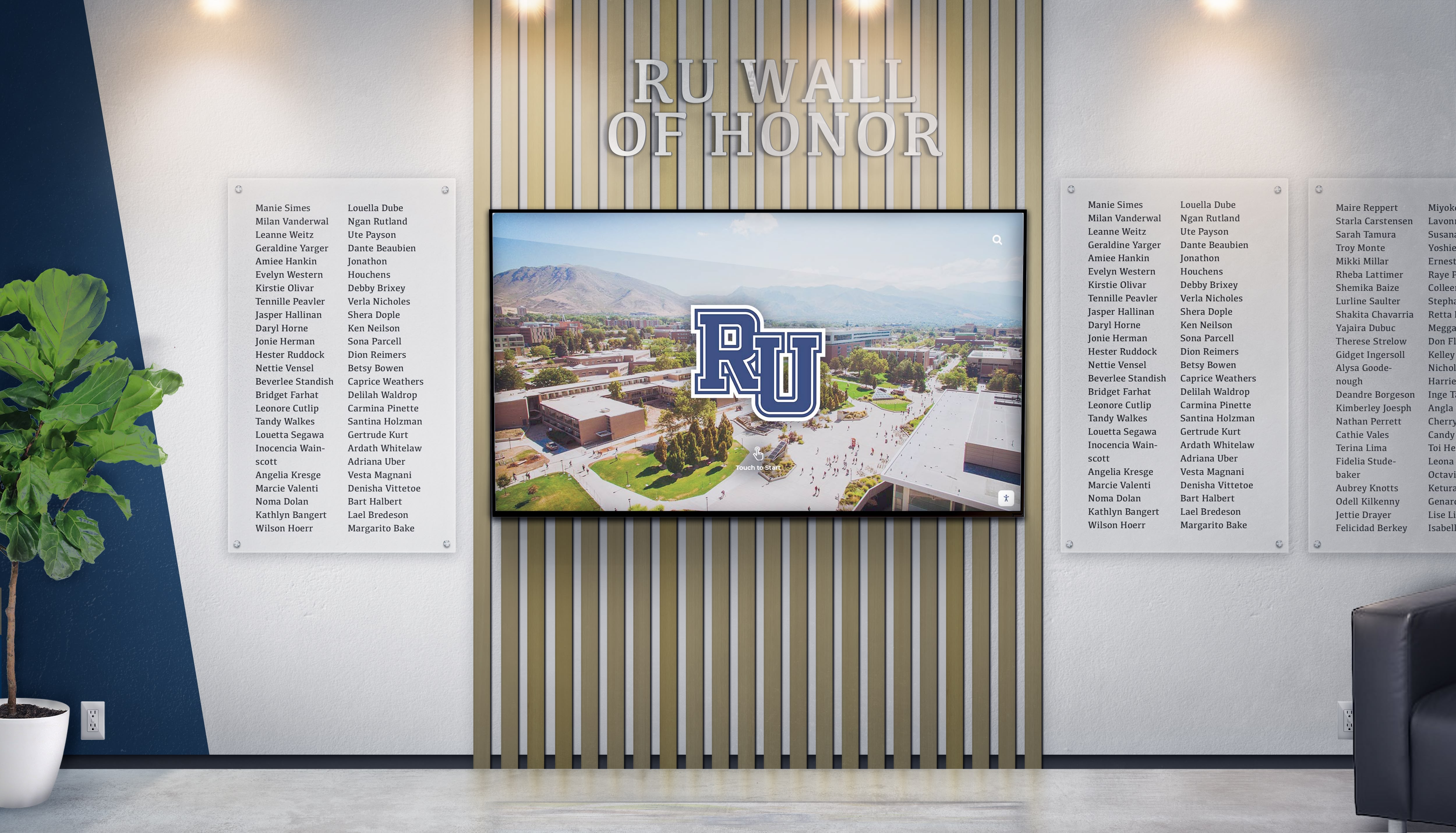
Comprehensive recognition systems combine digital touchscreen features with traditional design elements creating permanent celebration of National Merit achievement
Budget Planning and Funding Strategies
National Merit Scholar recognition displays require upfront investment, but strategic funding approaches make implementation achievable across school budgets.
Total Cost of Ownership Analysis
Understanding complete costs over 10-year expected lifespan enables accurate budget planning.
Traditional Plaque 10-Year Costs
Initial Investment (Year 1)
- Custom engraved plaque with header (12"×36"): $800-$1,500
- Professional installation: $150-$300
- Initial scholar nameplates (10 names): $150-$400
- Total Year 1: $1,100-$2,200
Ongoing Costs (Years 2-10)
- Annual nameplate additions (8 scholars/year average): $120-$320 per year
- Annual cleaning and maintenance: $50-$100 per year
- Expansion plaque when original fills (Year 6-8): $800-$1,500
- Total Years 2-10: $2,300-$4,400
10-Year Traditional Plaque Total: $3,400-$6,600
Digital Display 10-Year Costs
Initial Investment (Year 1)
- 55" commercial touchscreen display: $3,500-$5,000
- Commercial wall mount: $300-$500
- Professional installation: $500-$800
- Network infrastructure upgrades (if needed): $500-$1,500
- Content management system setup: $500-$1,000
- Initial content development (20 historical scholars): $400-$800
- Total Year 1: $5,700-$9,600
Ongoing Costs (Years 2-10)
- CMS subscription: $500-$1,500 per year
- Annual content updates labor: $200-$400 per year
- Technical support and maintenance: $300-$600 per year
- Display replacement (Year 7-8): $3,500-$5,000
- Total Years 2-10: $13,000-$22,500
10-Year Digital Display Total: $18,700-$32,100
Digital displays cost 5-6x more than traditional plaques over 10 years but provide significantly greater capacity, engagement, and flexibility. Schools should evaluate total cost against strategic value of enhanced recognition capabilities.
Alternative Funding Sources
Schools can reduce general operating budget impact by pursuing dedicated funding for recognition displays.
Parent Association or Booster Club Funding
- Present recognition display as parent association project with clear budget request
- Emphasize community benefit: recognition celebrates academic excellence and inspires future achievement
- Offer naming opportunity: “Provided by Class of 2025 Parents” or similar donor acknowledgment
- Typical success rate: 60-70% of schools receive full or partial parent association funding when clearly requested
Alumni Association Gifts
- Propose recognition display as alumni association gift to school marking anniversary or milestone
- Highlight alumni legacy: display can include historical scholars connecting current students to alumni achievement
- Alumni associations often prioritize projects with lasting visibility and student impact
- Typical gift range: $2,500-$10,000 for academic recognition projects
Local Business or Corporate Sponsorship
- Approach education-focused local businesses (tutoring centers, college prep services, professional firms)
- Offer recognition of sponsor support through modest acknowledgment on display or nearby plaque
- Emphasize community benefit and workforce development through academic recognition
- Target sponsor contribution: $2,500-$7,500 for single-sponsor projects
Grant Opportunities
- Education technology grants from foundations or state programs may fund digital recognition systems
- STEM education grants applicable if framing recognition as motivation for advanced coursework
- Local education foundations often fund school improvement projects with community visibility
- Typical grant range: $5,000-$15,000 for technology-enhanced recognition
Memorial or Tribute Opportunities
- Dedicate recognition display in memory of influential educator, counselor, or community member
- Family donations funding recognition displays typically range $5,000-$25,000
- Create meaningful legacy connecting honoree to academic excellence and student achievement
- Permanent plaque acknowledging tribute or memorial gift
Schools successfully secure alternative funding for 50-60% of recognition display projects by clearly articulating project value and providing multiple funding pathway options.
Phased Implementation for Budget Constraints
Schools with limited immediate funding can implement recognition programs in phases, starting with basic approaches and enhancing over time.
Phase 1: Minimal Investment Quick Start
- Create National Merit Scholar webpage on existing school website (no additional cost)
- Print and frame scholar photos with names for display in counseling office or main lobby ($100-$300)
- Annual morning announcement recognition and social media celebration (no cost)
- Phase 1 Total: $100-$300
Phase 2: Traditional Plaque Addition (Year 2-3)
- Install traditional engraved plaque as budget allows ($1,500-$2,500)
- Maintain web-based recognition as digital extension
- Continue announcement and communications recognition
- Phase 2 Investment: $1,500-$2,500
Phase 3: Digital Enhancement (Year 4-6)
- Add QR code to traditional plaque linking to enhanced digital profiles ($200-$500)
- Expand web-based recognition with more detailed scholar profiles and photos
- Consider small digital slideshow display (repurpose existing TV/monitor) as proof-of-concept ($300-$800)
- Phase 3 Investment: $500-$1,300
Phase 4: Comprehensive Digital Display (Year 5-8)
- Implement full commercial touchscreen recognition system ($6,000-$10,000)
- Migrate all historical content to comprehensive digital platform
- Maintain traditional plaque as complementary recognition providing historical continuity
- Phase 4 Investment: $6,000-$10,000
Phased approaches enable schools to demonstrate recognition program value and build stakeholder support while managing budget constraints across multiple fiscal years.
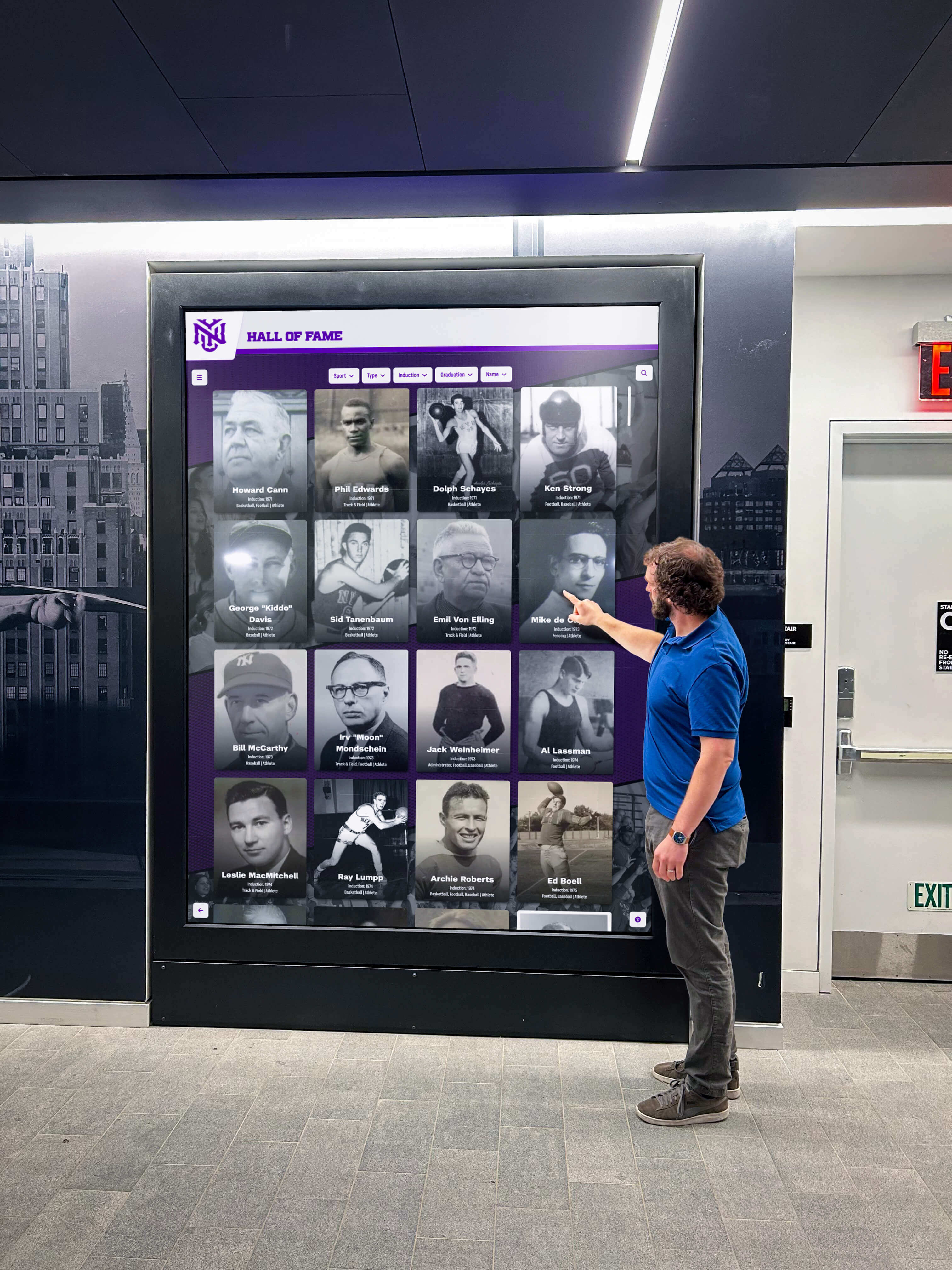
Interactive displays enable family members and campus visitors to explore National Merit Scholar achievements creating engagement beyond student body
Best Practices and Success Factors
Schools with highly effective National Merit Scholar recognition programs share common practices that maximize impact while ensuring sustainability.
Integration with Academic Culture
National Merit recognition should connect to broader academic excellence initiatives rather than existing in isolation.
Course Selection and Academic Planning Connection
- Feature National Merit Scholar displays prominently during student mentorship programs when students select challenging coursework
- Schedule PSAT/NMSQT preparation information sessions near recognition displays to create visual association between test preparation and achievement
- Include counselor-led tours of recognition displays during academic advising meetings
- Reference specific scholars as examples when encouraging students to pursue advanced coursework
Connection to Other Academic Recognition
- Position National Merit displays near other academic honors: AP Scholar recognition, honor roll displays, academic competition achievements
- Create comprehensive academic recognition areas rather than isolated displays scattered throughout building
- Use consistent design language across all academic recognition to reinforce culture of intellectual excellence
- Implement academic recognition programs that celebrate multiple dimensions of achievement
Athletic/Academic Balance
- Give National Merit and academic recognition equal prominence with athletic achievements
- Allocate comparable physical space and budget resources to academic and athletic recognition
- Feature academic recognition in same high-traffic areas as athletic trophies and championships
- Reference academic achievements alongside athletic accomplishments during assemblies and school communications
Schools where National Merit displays integrate with broader academic culture see 30-40% higher participation in advanced coursework and standardized testing compared to schools where recognition exists in isolation.
Communication and Celebration Strategies
Effective recognition extends beyond static displays through multi-channel celebration that ensures broad awareness.
Multi-Channel Recognition Timeline
Day 1 (Announcement Date)
- Email congratulations to scholars and families directly from principal or superintendent
- Post individual recognition to school social media with scholar photos and achievements
- Issue press release to local media highlighting district/school National Merit success
Week 1
- Morning announcements celebrating scholars and explaining National Merit achievement significance
- Update school website homepage featuring current year scholars
- Newsletter feature explaining National Merit program and highlighting school’s scholars
Week 2-4
- Certificate presentation during school assembly or special recognition event
- Update physical displays (traditional plaque nameplate addition or digital display content upload)
- Individual scholar features in school newspaper or newsletter (profile stories rotating across several weeks)
- Social media posts featuring individual scholars with personal statements about achievement
Ongoing
- Reference National Merit recognition during new family tours and prospective student visits
- Include scholar photos and information in annual report or development communications
- Feature National Merit recognition in recruitment videos and marketing materials
- Maintain year-round display visibility ensuring recognition extends beyond announcement period
Multi-channel approaches ensure National Merit achievements receive celebration proportional to their significance while building aspiration among younger students.
Engaging Scholars in Recognition Process
Schools with most meaningful recognition programs involve National Merit Scholars directly in recognition design and content creation.
Scholar Input Opportunities
- Interview current scholars asking what recognition would be most meaningful to them
- Request personal statements or advice for younger students to include in profiles
- Invite scholars to photography session specifically for recognition displays (creates special experience beyond repurposing yearbook photos)
- Ask scholars to participate in short video interviews about their academic journey
Scholar Involvement in Recognition Events
- Student speaker at recognition ceremony sharing academic journey and encouraging peers
- Scholar-led information session for younger students considering PSAT/NMSQT and rigorous coursework
- Mentorship connections between current scholars and underclassmen pursuing academic challenges
- Alumni scholar return visits featuring conversations with current students
Ongoing Scholar Updates
- Invite alumni scholars to update profiles with college/career progression information
- Feature “where are they now” updates about historical scholars who achieved notable career success
- Create alumni scholar network connecting National Merit recipients across graduation years
- Annual communication with alumni scholars requesting permission to share professional accomplishments
Scholar involvement transforms recognition from passive acknowledgment to active celebration that creates meaningful personal connection and authentic inspiration for future students.
Measuring Recognition Impact
Effective schools assess whether National Merit recognition achieves intended goals through systematic evaluation.
Quantitative Metrics
- PSAT/NMSQT participation rates: compare participation before and after recognition display implementation
- National Merit Scholar numbers: track whether school produces increasing numbers of scholars over time
- Advanced coursework enrollment: monitor AP, IB, and honors course enrollment trends
- Display engagement: for digital systems, track interaction frequency and duration
Qualitative Assessment
- Student surveys: do students know about National Merit program and recognize it as valuable achievement?
- Family feedback: do families perceive school values academic excellence appropriately?
- Staff observations: do counselors and teachers note changes in student academic aspirations?
- Scholar testimonials: do recognized students feel appropriately celebrated and valued?
Continuous Improvement
- Review recognition program effectiveness annually
- Gather feedback from multiple stakeholder groups
- Adjust content, placement, or communication strategies based on assessment
- Document lessons learned and refine processes for future implementation
Schools that systematically assess recognition programs identify opportunities for enhancement while demonstrating value that justifies continued investment.
Ready to Build Your National Merit Scholar Recognition Display?
Discover how touchscreen recognition solutions can help you celebrate academic excellence with the same prominence you give athletic achievements—without space limitations or ongoing nameplate costs.
Schedule a TouchWall DemoConclusion: Creating Lasting Recognition for National Merit Scholars
National Merit Scholar achievement represents the highest level of academic distinction high school students can earn—recognition achieved by fewer than 1% of test-takers nationally through years of rigorous coursework and exceptional standardized testing performance. Schools that create prominent, lasting recognition for these achievements send powerful messages about institutional values while inspiring younger students to pursue similar intellectual excellence.
The implementation strategies explored in this guide—from traditional engraved plaques to comprehensive touchscreen recognition systems—provide concrete pathways for schools to celebrate National Merit Scholars effectively regardless of budget constraints or technical infrastructure. Traditional plaques offer permanence and simplicity suitable for schools valuing classic presentation, while digital displays provide unlimited capacity, rich multimedia content, and flexible updating that eliminates space constraints and ongoing manufacturing costs.
Successful National Merit Scholar recognition extends beyond physical displays to encompass multi-channel communication, integration with academic planning and course selection, and systematic celebration that ensures these achievements receive visibility equal to athletic championships and other highly visible school accomplishments. Schools implementing comprehensive recognition programs discover that celebrating intellectual achievement creates powerful cultural shifts, elevating academic pursuits and inspiring students across all grade levels.
Your students who earn National Merit distinction have demonstrated exceptional dedication to academic excellence through years of challenging coursework and outstanding standardized testing performance. Comprehensive recognition programs ensure these accomplishments receive celebration proportional to their significance—creating visible examples of intellectual achievement that inspire future scholars while honoring those who have already earned distinction.
Whether implementing basic traditional plaques as immediate starting points or comprehensive digital recognition systems that serve your institution for decades, the fundamental principle remains constant: students who achieve National Merit recognition deserve prominent, lasting celebration that validates their effort while demonstrating your school’s authentic commitment to academic excellence.
Ready to begin? Explore recognition solutions that can help you build National Merit Scholar displays worthy of your students’ extraordinary achievements.































