Earning National Merit Scholar recognition represents one of the highest academic distinctions available to high school students in the United States. These exceptional students—representing less than 1% of their peers nationally—demonstrate outstanding academic ability, intellectual promise, and dedication to educational excellence. For schools fortunate enough to produce National Merit Scholars, creating a dedicated recognition wall serves multiple essential purposes: honoring individual achievement, inspiring current students to pursue academic excellence, and demonstrating institutional commitment to rigorous academics.
Yet many schools struggle to give National Merit recognition the prominence it deserves. Traditional plaques quickly run out of space, static displays become outdated, and important context about this prestigious program gets lost. This comprehensive guide explores how to create National Merit Scholars Walls that properly celebrate this extraordinary achievement while inspiring future generations of academic excellence.
When high school students achieve National Merit Scholar status, they join an elite group recognized nationally for exceptional academic promise. This achievement results from years of dedicated study, intellectual curiosity, and sustained academic performance. Schools that properly recognize National Merit Scholars send powerful messages about institutional values while creating visible benchmarks that motivate younger students toward academic excellence.
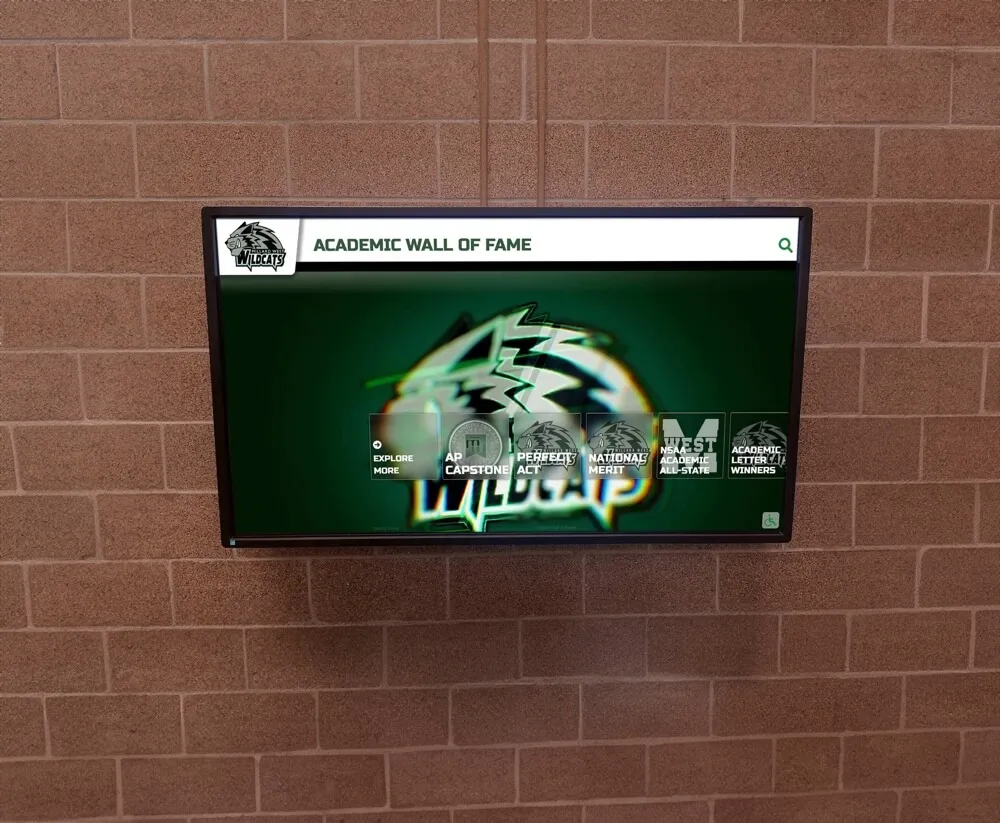
Modern recognition displays make National Merit Scholar achievements visible and celebrated throughout the school community
Understanding the National Merit Scholarship Program
Before designing recognition systems, schools must understand exactly what National Merit recognition represents and the rigorous selection process behind it.
Program Overview and Significance
The National Merit Scholarship Program, established in 1955, identifies and honors academically talented high school students throughout the United States. According to the National Merit Scholarship Corporation, approximately 1.5 million students enter the program annually by taking the Preliminary SAT/National Merit Scholarship Qualifying Test (PSAT/NMSQT), typically during their junior year of high school.
From this initial pool, only about 50,000 students—approximately 3%—receive recognition as Commended Students or advance in the competition. This already selective group narrows dramatically as students progress through the program stages.
Recognition Levels and Selection Criteria
The National Merit Program includes four distinct recognition levels, each representing increasing selectivity:
Commended Students (Top 3-4% Nationally) Approximately 34,000 students receive Letters of Commendation recognizing their exceptional academic promise. While Commended Students don’t continue in the scholarship competition, this distinction represents significant achievement worthy of school recognition.
Semifinalists (Top 1% Nationally) About 16,000 students qualify as National Merit Semifinalists, representing the highest-scoring entrants in each state. Semifinalist status varies by state based on relative test performance, meaning students compete primarily against peers from their own state. Schools receive official notification in September of students’ senior year.
Finalists (Top 0.9% Nationally) Approximately 15,000 Semifinalists advance to Finalist status by meeting additional requirements including academic records, school endorsement, essay submissions, and SAT score confirmation. Finalist designation represents extraordinary selectivity and comprehensive academic excellence.
Scholars (Top 0.5% Nationally) Between 7,500 and 8,500 Finalists ultimately receive National Merit Scholarships. These scholars earn three types of awards: National Merit $2,500 Scholarships, corporate-sponsored scholarships, and college-sponsored scholarships. Scholar status represents the pinnacle of this prestigious program.
Why This Recognition Matters
National Merit recognition carries weight far beyond high school:
- College admissions officers view it as strong evidence of academic capability
- Many universities offer substantial scholarships to National Merit Finalists and Scholars
- The designation appears on college applications, resumes, and professional profiles
- Students develop confidence and motivation from external validation
- Recognition creates visible standards of excellence for younger students
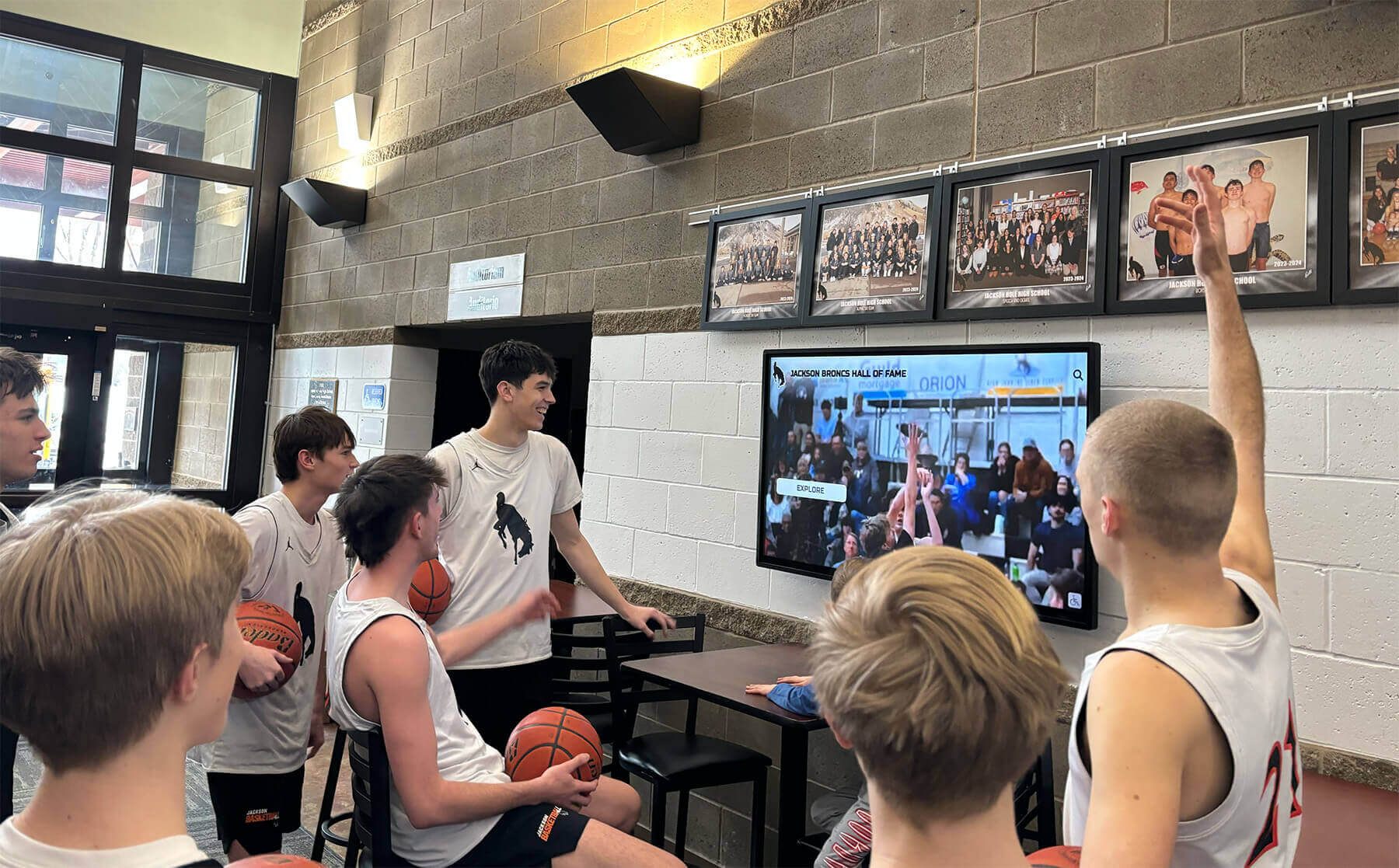
Interactive displays create opportunities for students to explore academic achievements and aspire to similar excellence
Schools that prominently recognize National Merit achievement communicate that intellectual excellence receives celebration equal to athletic or artistic accomplishments. This visible commitment to academics influences school culture, student motivation, and community perception of institutional priorities.
Traditional Approaches to National Merit Recognition
For decades, schools have used various methods to honor National Merit Scholars, each with distinct advantages and inherent limitations.
Physical Plaques and Traditional Displays
Many schools maintain dedicated plaque walls listing National Merit Scholars by year. These traditional displays offer several benefits:
- Permanent, tangible recognition that doesn’t require technology
- Sense of tradition and history that resonates with alumni
- No ongoing maintenance or updating beyond annual additions
- Straightforward implementation without technical expertise
However, physical plaques face significant constraints:
Space Limitations: Schools with consistent National Merit production eventually exhaust available wall space, forcing difficult decisions about older plaques
Information Constraints: Traditional plaques typically include only names and years, missing opportunities to share broader context about achievements, college destinations, or career paths
Update Challenges: Adding new scholars requires ordering plaques, scheduling installation, and coordinating with vendors—a process taking weeks or months
Accessibility Issues: Physical displays limit access to those physically present in buildings, excluding remote family members, prospective families, and alumni
Static Presentation: Visitors cannot search, filter, or explore recognition in personalized ways that match their interests

Traditional displays provide baseline recognition but lack the engagement and accessibility of modern solutions
Graduation Programs and Ceremonies
Schools commonly announce National Merit recognition during graduation ceremonies, providing momentary acknowledgment during commencement programs. While meaningful, these approaches offer fleeting visibility that quickly fades after the ceremony concludes.
Yearbook and Website Recognition
Yearbooks document National Merit Scholars within graduating class sections, creating archival records. Similarly, many schools list recent scholars on websites. These methods provide some visibility but lack the prominence and engagement of dedicated recognition systems.
Most schools find that traditional approaches, while better than nothing, fail to give National Merit achievement the sustained, visible recognition it deserves. The fleeting nature of ceremonies, limited information in yearbooks, and space constraints of physical plaques all reduce the motivational impact this recognition could create.
Modern Digital Recognition Solutions
Technology has transformed what’s possible for National Merit Scholar recognition, enabling comprehensive celebration that overcomes traditional limitations while adding engagement capabilities previously impossible.
Interactive Touchscreen Displays
Digital recognition displays provide dynamic, engaging platforms for celebrating National Merit achievement. Solutions like those from Rocket Alumni Solutions combine large touchscreens with intuitive software specifically designed for educational recognition.
Unlimited Recognition Capacity Digital systems eliminate space constraints entirely. Schools can feature every National Merit Scholar in history—Commended Students, Semifinalists, Finalists, and Scholars—without worrying about running out of room. As programs grow over decades, the recognition system seamlessly scales to include unlimited inductees.
Rich, Detailed Profiles Unlike plaques limited to names and years, digital profiles tell complete stories:
- Multiple high-resolution photos showing students throughout their academic careers
- Detailed achievement information including Semifinalist, Finalist, or Scholar status
- Academic honors, additional scholarships, and other recognition
- College acceptance and enrollment details
- Career path information for alumni scholars
- Personal statements or reflections on their academic journey
- Video messages or speeches when available
Interactive Exploration Visitors don’t passively view digital displays—they actively engage with them:
- Search functionality finding specific scholars by name instantly
- Filter options exploring recognition by year, decade, or era
- Browse capabilities discovering scholars alphabetically or chronologically
- Detail views diving deeper into individual achievement stories
- Social media sharing enabling families to celebrate accomplishments
- Timeline presentations showing program growth and institutional legacy
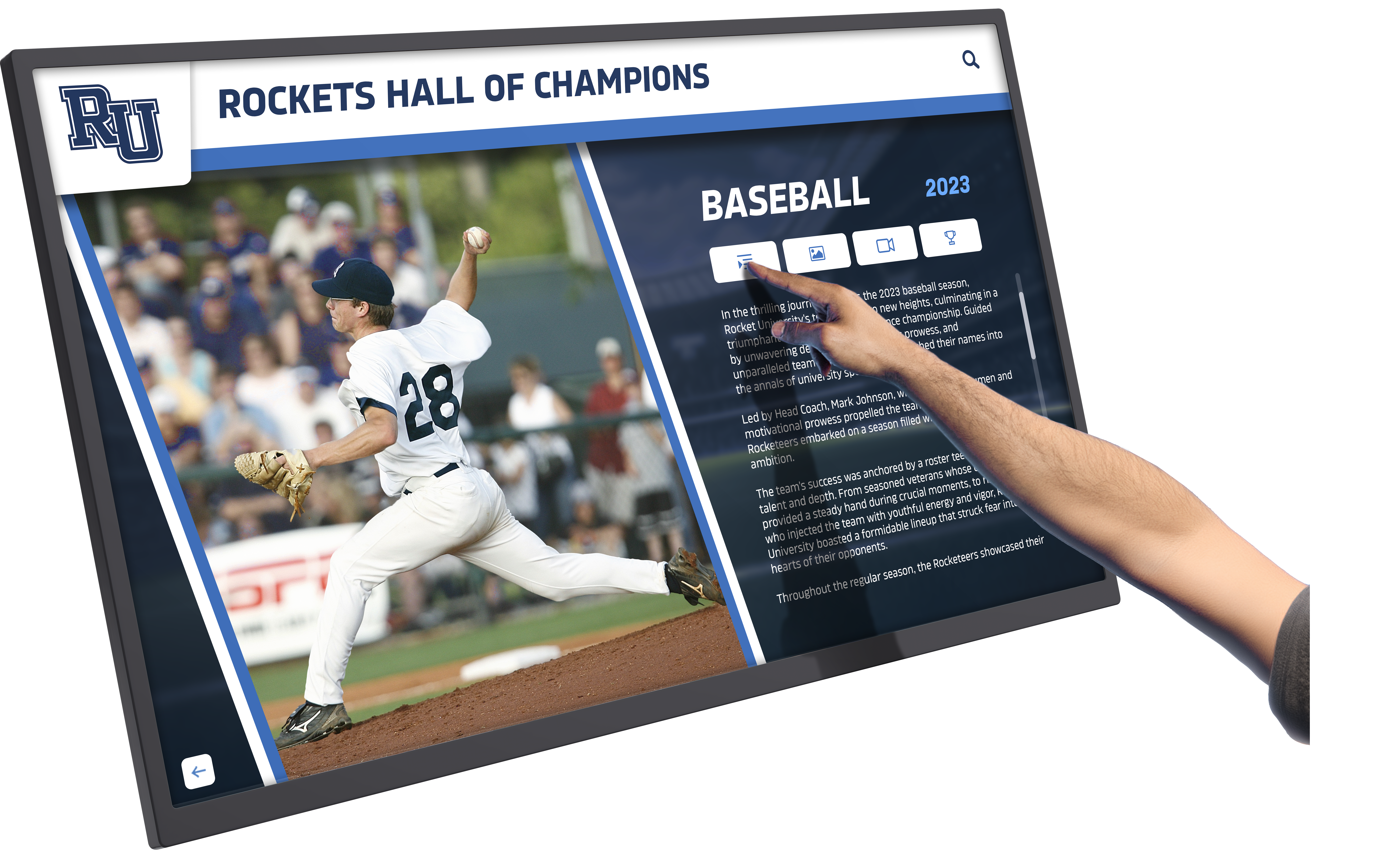
Touchscreen interfaces make exploring National Merit Scholar achievements engaging and accessible to all visitors
Web-Based Access and Mobile Compatibility
Modern recognition platforms extend beyond physical displays to include web-based access that dramatically expands recognition reach:
24/7 Remote Access Families anywhere can explore National Merit Scholar recognition through web browsers on computers, tablets, or smartphones. This accessibility matters particularly for:
- Extended family members living far from the school
- Alumni revisiting their achievements from anywhere in the world
- Prospective families researching school academic quality
- College admissions officers reviewing school profiles
- Community members taking pride in local achievement
- Media outlets gathering information for features
Mobile-Optimized Experiences Responsive design ensures National Merit Scholar recognition displays beautifully on any device. Parents can share their student’s profile instantly via text message or social media, amplifying recognition far beyond physical school buildings.
Analytics and Engagement Tracking Digital platforms provide valuable data about how communities engage with National Merit recognition:
- Number of profile views and searches
- Most frequently viewed scholars or eras
- Geographic distribution of remote visitors
- Time spent exploring recognition content
- Popular sharing and social media engagement
These insights help schools understand recognition program impact and demonstrate value to stakeholders. Schools implementing comprehensive digital recognition systems often reference approaches discussed in student recognition that increases future success.
Designing Your National Merit Scholars Wall
Creating effective recognition requires thoughtful planning that balances tradition with innovation while ensuring sustainability and impact.
Defining Recognition Scope and Categories
Schools must decide which National Merit recognition levels to include and how to distinguish between them:
Comprehensive Approach Many schools recognize all National Merit distinction levels:
- National Merit Scholars (scholarship recipients)
- Finalists (advancing beyond Semifinalist stage)
- Semifinalists (state-level recognition)
- Commended Students (national recognition)
This inclusive approach celebrates achievement across the spectrum while providing clear pathways for students to understand progression through the program. Digital displays make comprehensive recognition practical by eliminating space constraints that force schools to choose only top categories.
Tiered Recognition Some schools implement tiered visual presentation distinguishing achievement levels:
- Featured placement or special designation for Scholars
- Distinct categories or sections for each recognition level
- Visual cues (colors, icons, or layouts) differentiating status
- Clear labels explaining what each designation represents
Historical Depth Decide how far back to include National Merit recognition:
- Complete institutional history (recommended for digital systems)
- Recent decades only (common for physical plaques)
- Living alumni only (some schools choose this for privacy)
- Modern era after program changes (if historical records incomplete)
The depth of historical recognition affects research requirements, content development timelines, and overall program scope. Many schools start with recent years and add historical scholars gradually as resources allow.
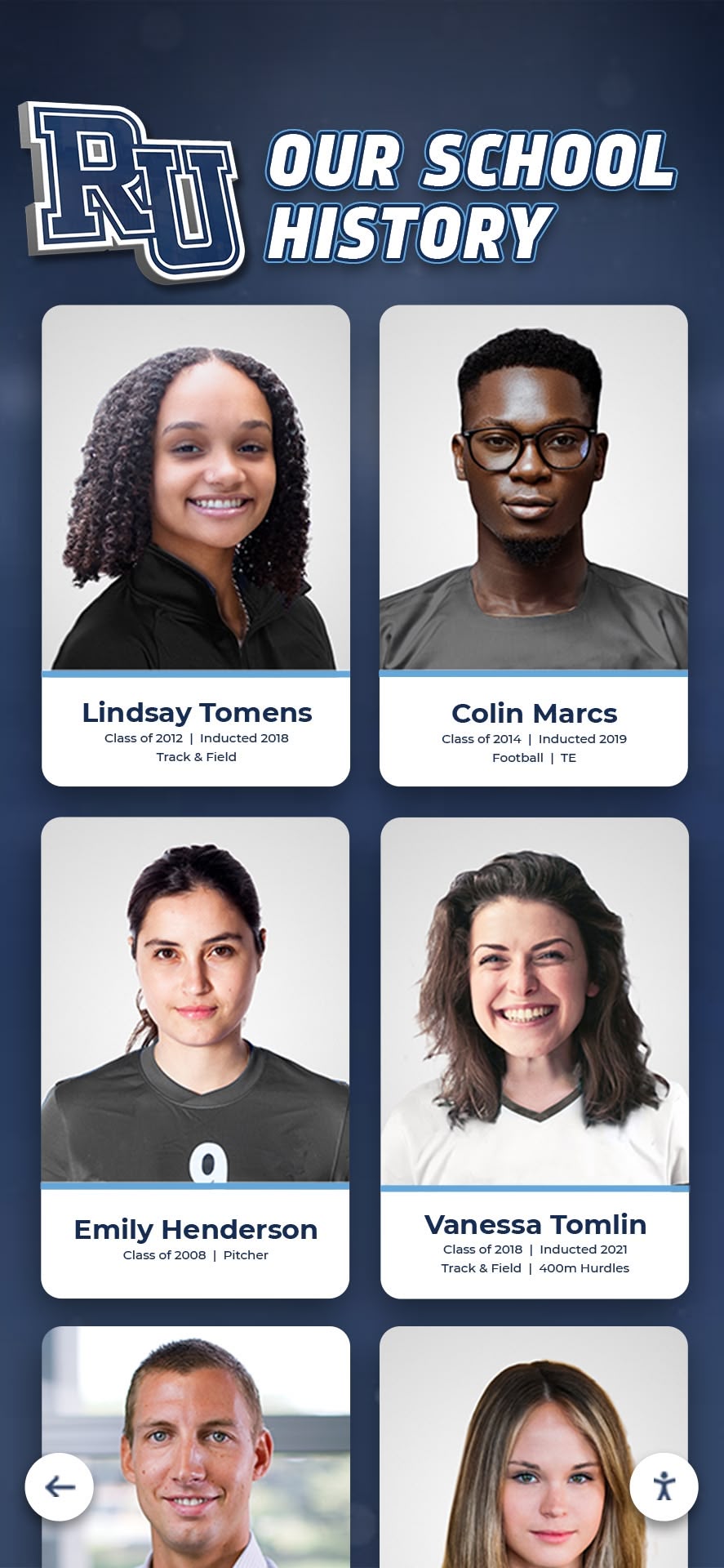
Comprehensive recognition systems document National Merit achievement across decades, creating institutional legacy
Determining Display Location and Visibility
Strategic placement significantly impacts recognition program effectiveness:
High-Traffic Academic Areas Position National Merit Scholar displays where they receive maximum visibility:
- Main entrance lobbies welcoming all visitors
- Guidance or college counseling office areas
- Main hallways connecting academic wings
- Library or media center entrances emphasizing scholarship
- Administrative office areas demonstrating institutional pride
Symbolic Placement Consider locations carrying symbolic meaning:
- Near valedictorian and academic excellence recognition
- Adjacent to college admissions information and resources
- In proximity to advanced placement or honors program spaces
- Visible from auditorium or assembly areas
Multiple Display Strategy Larger schools or those with extensive National Merit history might implement distributed recognition:
- Primary comprehensive display in main location
- Supplementary displays in additional high-traffic areas
- Department-specific recognition near relevant academic areas
- Mobile displays for special events or ceremonies
Physical placement decisions depend on building architecture, traffic patterns, and available space. Digital displays offer flexibility—single screens can showcase unlimited scholars, while multiple displays can present the same comprehensive content in different locations.
Content Development and Information Gathering
Creating rich National Merit Scholar profiles requires systematic information collection:
Essential Information Elements
- Full name (and preferred name if different)
- Graduation year or year National Merit recognition received
- Specific recognition level (Scholar, Finalist, Semifinalist, Commended)
- Scholarship type and amount if applicable (for Scholars)
- High school photo (ideally professional senior portrait)
- College enrollment and major (when available)
- Additional academic honors or achievements
- Career path and accomplishments (for alumni)
Optional Enhanced Content
- Multiple photos showing academic journey
- Quotes or personal reflections about achievement
- Video messages or speeches
- Detailed academic profiles or resumes
- Research project or competition information
- Extracurricular involvement and leadership
- Teacher recommendations or endorsements
Information Sources and Collection Methods
For Current Students:
- Guidance counselors maintain National Merit tracking
- Students provide photos and biographical information
- Families contribute additional details and updates
- School records document academic achievements
- Yearbook archives provide historical photos
For Alumni Scholars:
- Alumni office databases contain contact information
- Direct outreach requests updates and career information
- Social media research identifies current activities
- Class reunion communications gather updates
- Alumni publications document career achievements
Schools implementing comprehensive content collection often establish annual workflows coordinating information gathering across guidance, alumni affairs, and communications departments. Digital content management systems streamline this process through intuitive upload interfaces requiring no technical expertise. Many schools reference best practices from recognizing valedictorians and academic achievement when developing National Merit Scholar recognition programs.
Implementing Digital Recognition Systems
Modern technology makes comprehensive National Merit Scholar recognition achievable for schools of any size, but successful implementation requires planning and appropriate solution selection.
Selecting Recognition Platform Technology
Schools face important decisions about recognition system approaches:
Purpose-Built Recognition Platforms vs. Generic Digital Signage
Purpose-built educational recognition platforms like Rocket Alumni Solutions offer significant advantages:
- Pre-configured templates designed specifically for academic achievement
- Intuitive profile creation and management interfaces
- Built-in search, filter, and browsing capabilities
- Recognition-specific features ready to use immediately
- Minimal technical knowledge required for operation
- Comprehensive support from vendors understanding school needs
Generic digital signage systems require extensive custom development, lack recognition-specific features, and demand ongoing technical expertise. While potentially less expensive initially, total cost of ownership typically exceeds purpose-built solutions when accounting for development, maintenance, and staff time.
Hardware Considerations
Digital recognition displays require appropriate hardware:
Display Options:
- Wall-mounted touchscreens (43" to 75") for hallway installations
- Freestanding kiosks for flexible placement
- Large-format displays (80"+) for auditoriums or large spaces
- Multiple displays creating comprehensive recognition networks
Technical Requirements:
- Commercial-grade touchscreens designed for continuous operation
- Adequate display brightness for various lighting conditions
- Responsive touch technology supporting multi-user interaction
- Durable construction withstanding school environment
- Standard electrical power outlets
- WiFi or ethernet network connectivity
Professional installation ensures proper mounting, secure placement, and correct configuration. Many schools work with recognition specialists who handle complete implementation from hardware selection through content development and staff training.
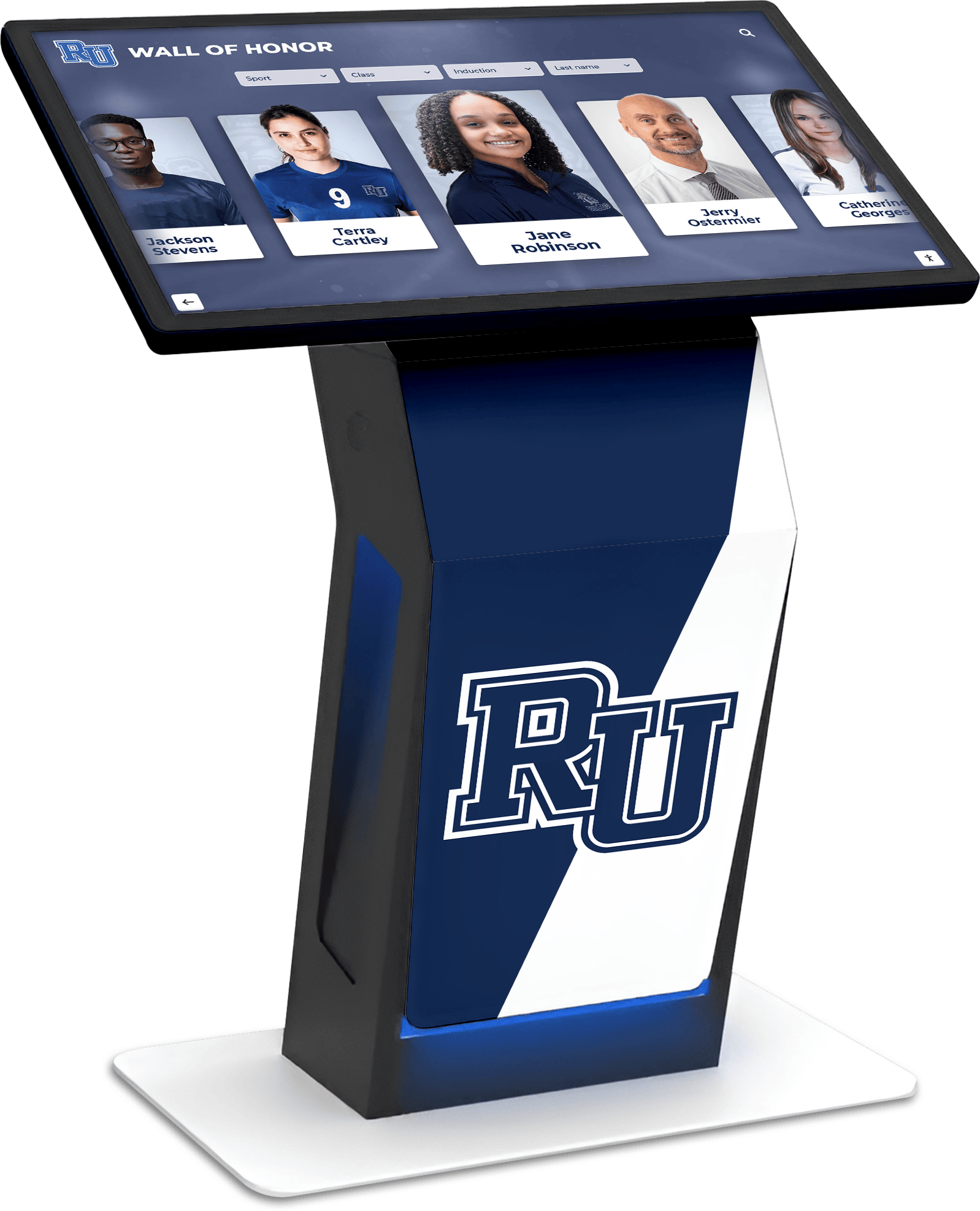
Freestanding kiosks provide flexible placement options for National Merit Scholar recognition
Content Management and Updates
Sustainable recognition programs require manageable content workflows:
Initial Setup Process
- Historical research identifying all past National Merit Scholars
- Information gathering collecting photos and biographical details
- Content creation developing comprehensive profiles
- Quality assurance verifying accuracy and completeness
- Initial population uploading all historical content
- System testing ensuring proper functionality
Annual Update Procedures
Establish clear timelines for adding new scholars:
- September: Official National Merit Semifinalist notifications arrive
- February: Finalist designations announced
- Spring: Scholar announcements and scholarship awards finalized
- Late Spring/Summer: Content collection from graduating seniors
- Summer: Profile creation and system updates
- Early Fall: Recognition unveiling or ceremony
Ongoing Maintenance
Digital systems simplify long-term maintenance:
- Cloud-based management enabling updates from any internet-connected device
- Intuitive interfaces requiring no programming knowledge
- Role-based permissions allowing appropriate staff access
- Automated backups protecting content
- Simple error corrections and information updates
- Alumni update incorporation as career information evolves
Most schools assign National Merit Scholar recognition responsibilities to guidance counselors or alumni affairs staff, with content updates requiring minimal time investment after initial setup. The ease of digital updates contrasts sharply with traditional plaque systems requiring vendor coordination, production delays, and physical installation for each addition.
Integration with Broader Academic Recognition
National Merit Scholar recognition gains impact when integrated into comprehensive academic excellence celebration:
Complementary Recognition Categories
Context matters—featuring National Merit Scholars alongside related achievements:
- Valedictorians and salutatorians
- AP Scholars and International Baccalaureate distinction
- Academic competition champions
- Honor roll and dean’s list achievers
- Subject-specific academic excellence awards
- Scholarship recipients and academic honors
Comprehensive academic recognition systems create cultures valuing intellectual achievement broadly rather than focusing exclusively on single programs.
Cross-Platform Consistency
Ensure National Merit recognition appears consistently across channels:
- Physical displays in school buildings
- School website academic achievement sections
- Social media posts and announcements
- School publications and newsletters
- Recruitment materials and campus tours
- Alumni communications and reunion programs
This multi-channel approach maximizes visibility and impact while reinforcing institutional commitment to academic excellence.
Measuring Impact and Effectiveness
Thoughtful assessment ensures National Merit Scholar recognition achieves intended goals:
Quantitative Impact Metrics
Academic Achievement Indicators
- Number of National Merit Commended Students over time
- Progression rates from Semifinalist to Finalist to Scholar
- Trend analysis showing program growth or consistency
- Comparison to similar schools or state averages
- PSAT participation rates among eligible students
Engagement Metrics
- Display interaction rates and session duration (for digital systems)
- Web-based recognition platform traffic and usage
- Social media sharing and engagement with recognition posts
- Family and community attendance at recognition events
- Alumni interaction with National Merit Scholar content
Secondary Effects
- Advanced placement course enrollment trends
- Honors program participation rates
- College scholarship and admission outcomes
- School academic reputation metrics
- Prospective family interest and enrollment
Qualitative Assessment
Student Perspectives
- Surveys about awareness of National Merit program
- Interviews with scholars about recognition experience
- Focus groups exploring motivation and goal-setting
- Academic planning conversations referencing National Merit goals
- Student perception of institutional academic priorities
Community Feedback
- Parent satisfaction with recognition approaches
- Alumni connection and engagement with scholars program
- Community pride in National Merit achievement
- Faculty observations about academic culture impact
- Prospective family perception during campus visits
Regular assessment enables continuous improvement, ensuring National Merit Scholar recognition delivers maximum motivational benefit while demonstrating value justifying resource investment.
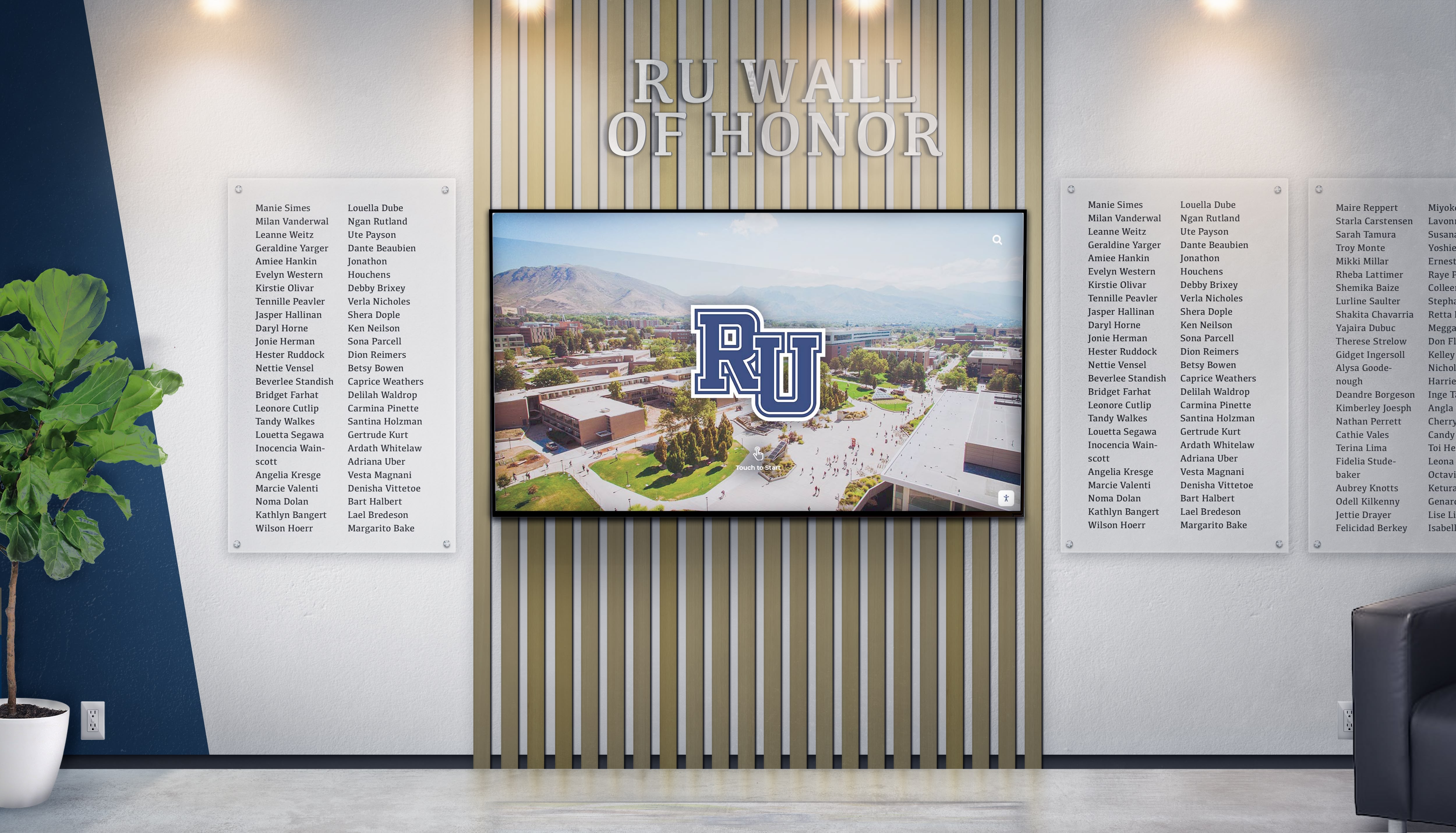
Integrated recognition systems combine digital displays with traditional elements, creating comprehensive academic celebration
Budget Planning and Funding Strategies
Understanding cost factors and funding options helps schools implement sustainable National Merit Scholar recognition:
Investment Ranges by Approach
Traditional Physical Plaque Systems
- Individual engraved plaques: $75-250 each
- Mounting system or display board: $1,500-5,000
- Professional installation: $500-1,500
- Annual updates: $300-1,000 per year
Total Initial Investment: $3,000-10,000 Ongoing Annual Costs: $300-1,000
Digital Recognition Systems
- Display hardware (touchscreen, mounting): $3,000-8,000
- Software platform and licensing: $2,000-6,000
- Initial content development: $1,000-3,000
- Professional installation: $1,000-2,500
- Annual software maintenance: $500-1,500
Total Initial Investment: $8,000-20,000 Ongoing Annual Costs: $500-1,500
While digital systems require higher initial investment, they often prove more cost-effective long-term through:
- Elimination of per-scholar plaque costs
- Reduced staff time for updates and maintenance
- Unlimited capacity eliminating future expansion costs
- Enhanced engagement creating greater value
- Multi-purpose functionality supporting broader recognition
Funding Sources and Strategies
Schools successfully fund National Merit Scholar recognition through various approaches:
Institutional Budgets
- Capital improvement funds for building enhancements
- Academic department budgets for student recognition
- Alumni affairs budgets for historical documentation
- Marketing budgets for recruitment enhancement
Donor Contributions
- Alumni who were National Merit Scholars themselves
- Community businesses supporting academic excellence
- Parent organizations and booster groups
- Scholarship fund organizations
- Memorial donations honoring educators or alumni
Grant Opportunities
- Educational foundation grants for academic recognition
- Corporate giving programs supporting education
- State education department recognition programs
- National foundations promoting academic excellence
Many schools frame National Merit Scholar recognition as lasting legacy projects, making them attractive to donors seeking meaningful contributions. Memorial dedications honoring teachers, principals, or community members create additional fundraising opportunities while connecting recognition to institutional history.
Inspiring Current Students Through National Merit Recognition
Beyond honoring past achievement, effective National Merit Scholar recognition profoundly influences current students by making academic excellence visible and aspirational:
Creating Visible Academic Excellence Pathways
When students regularly encounter National Merit Scholar recognition, several motivational effects occur:
Concrete Goal Visualization Recognition transforms abstract “academic excellence” into specific, achievable targets. Younger students see peers from their own school who earned this distinction, making the achievement feel attainable rather than impossibly distant.
Understanding Achievement Requirements Comprehensive profiles showing National Merit Scholars’ broader academic journeys—challenging courses, academic competitions, sustained effort—help students understand the behaviors and choices leading to this recognition. Information about PSAT preparation, study habits, and academic planning provides practical guidance.
Normalizing Intellectual Achievement Prominent National Merit recognition sends messages that academic excellence receives celebration equal to athletic or artistic accomplishment. This visibility reduces potential stigma around academic achievement while creating positive peer pressure toward intellectual pursuits.
Demonstrating Possibility Seeing multiple National Merit Scholars from various backgrounds, interests, and strengths helps more students see themselves as potential future recipients. Diversity in profiles—academically focused students alongside well-rounded achievers—shows multiple pathways to excellence.
Schools implementing comprehensive recognition strategies often integrate approaches discussed in top academic achievements for walls of fame, creating comprehensive celebration of diverse intellectual accomplishments.
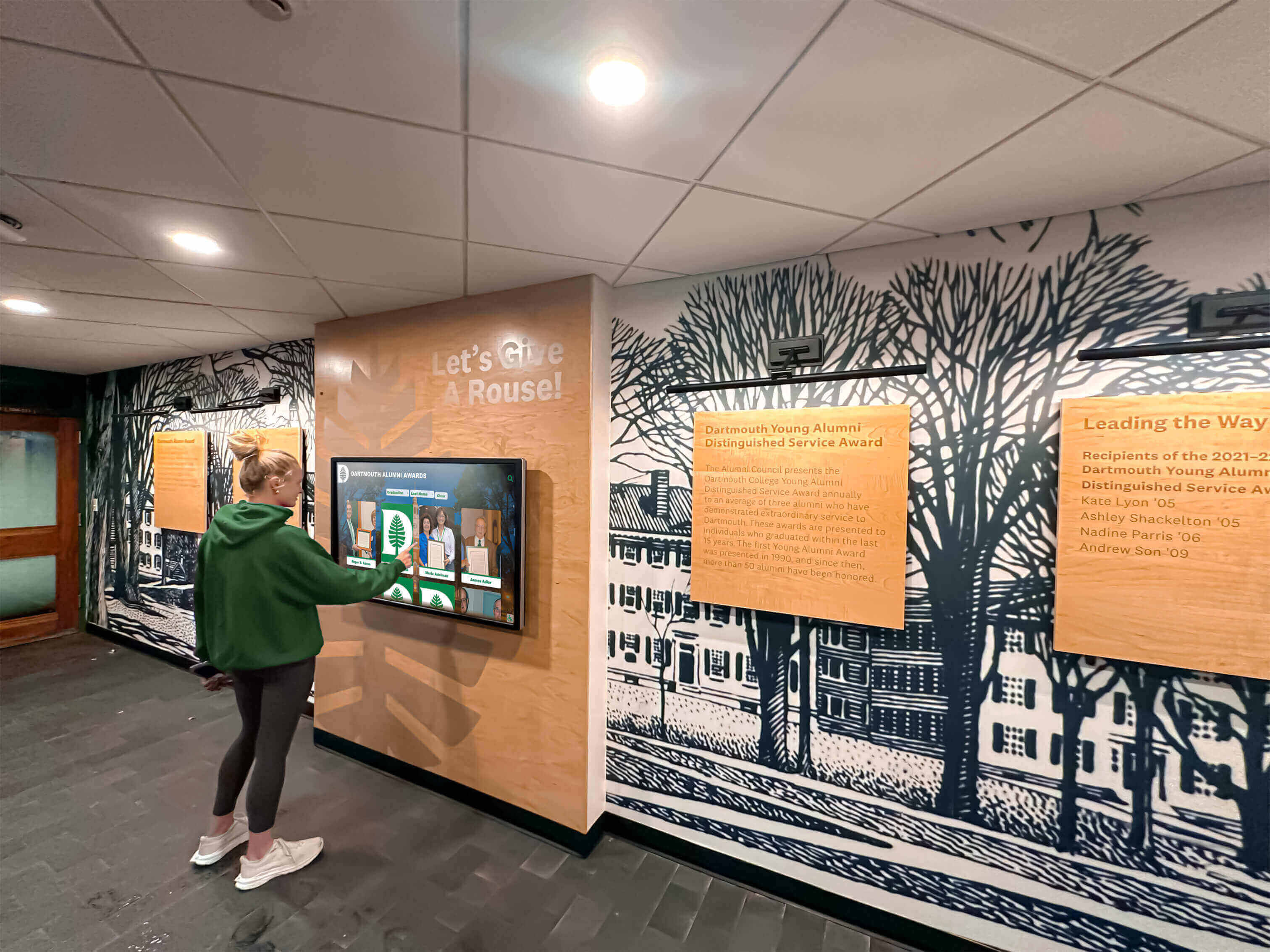
Interactive displays enable students to explore National Merit Scholar achievements and envision their own academic futures
Integration into Academic Culture and Curriculum
Maximizing motivational impact requires integrating National Merit recognition throughout school culture:
Guidance and Counseling Connections
- PSAT preparation workshops referencing National Merit possibilities
- Academic planning sessions highlighting National Merit Scholar pathways
- College application support emphasizing National Merit advantages
- Scholarship information presentations featuring National Merit awards
Classroom Integration
- English classes analyzing National Merit Scholar speeches or essays
- Statistics courses examining achievement trends and data
- History classes exploring educational excellence across decades
- Advisory programs discussing goal-setting using recognition examples
Event and Ceremony Incorporation
- Recognition ceremonies honoring new National Merit Scholars
- School assembly presentations explaining the program
- Open house tours featuring National Merit Scholar displays
- Alumni return events connecting current students with scholar graduates
Communication Integration
- Morning announcements celebrating National Merit Semifinalist selections
- School newsletters profiling current and recent scholars
- Social media posts highlighting National Merit achievement
- Website academic excellence sections featuring scholar profiles
This comprehensive integration transforms National Merit Scholar recognition from static display into living part of academic culture, maximizing motivational impact on current students while building institutional identity around intellectual excellence.
Technical Implementation Best Practices
Schools implementing digital National Merit Scholar recognition benefit from following proven approaches:
Display Hardware Selection
Screen Size Considerations
- 43"-55" displays: Suitable for smaller spaces or secondary locations
- 55"-65" displays: Ideal for main hallways and primary locations
- 65"-75" displays: Best for large entrance lobbies and auditoriums
- 75"+ displays: Impressive installations for major recognition centers
Larger displays create greater visual impact but require appropriate viewing distances and space. Professional vendors help schools select appropriate sizes based on placement locations.
Mounting and Installation
- Professional installation ensures secure mounting and proper positioning
- ADA-compliant heights enable access for all community members
- Protective enclosures in high-traffic areas prevent damage
- Cable management creates clean, professional appearance
- Network connectivity (WiFi or ethernet) enables content management
Durability and Reliability
- Commercial-grade displays designed for 24/7 operation
- Industrial touchscreens withstanding heavy use
- Vandal-resistant screens in appropriate locations
- Warranty coverage and support services
- Backup systems ensuring minimal downtime
Software Platform Features
Purpose-built recognition platforms should include:
Content Management Capabilities
- Intuitive profile creation requiring no technical expertise
- Bulk import tools for historical data
- Media libraries for photos and videos
- Approval workflows for content quality control
- Version control and change tracking
User Experience Features
- Responsive touch interfaces supporting natural gestures
- Fast search returning results instantly
- Logical filtering enabling browsing by year, level, or other criteria
- Attractive templates creating professional presentation
- Accessibility features including screen reader support
Administrative Functions
- Role-based permissions controlling access appropriately
- Usage analytics tracking engagement and impact
- Remote management from any internet-connected device
- Automated backups protecting content
- Technical support and training resources
Rocket Alumni Solutions provides comprehensive platforms specifically designed for educational recognition, combining powerful functionality with simplicity that enables non-technical staff to manage sophisticated recognition systems successfully.
Common Challenges and Solutions
Schools implementing National Merit Scholar recognition programs encounter predictable obstacles:
Challenge: Incomplete Historical Records
Many schools discover gaps in historical National Merit Scholar documentation, particularly from earlier decades.
Solutions:
- Contact guidance counselors who worked during relevant time periods
- Review archived yearbooks for National Merit recognition
- Post requests in alumni social media groups and newsletters
- Search school board meeting minutes for recognition announcements
- Check local newspaper archives for National Merit stories
- Accept incomplete historical records while documenting known scholars
- Implement systems ensuring future records remain complete
Challenge: Privacy and Permission Concerns
Some alumni scholars may prefer privacy over public recognition.
Solutions:
- Contact alumni before featuring detailed profiles
- Offer opt-out options for those preferring minimal recognition
- Provide profile preview and approval before publication
- Respect requests for limited information sharing
- Implement privacy settings allowing different visibility levels
- Include only public information for scholars who can’t be reached
Challenge: Maintaining Content Currency
Keeping scholar information updated over many years requires sustained commitment.
Solutions:
- Assign specific staff roles with recognition responsibilities
- Integrate updates into annual calendars and workflows
- Use automated reminders for scheduled content reviews
- Establish alumni update submission processes
- Build recognition maintenance into job descriptions
- Choose technology platforms simplifying update procedures
Challenge: Distinguishing Recognition Levels
Properly differentiating between Commended, Semifinalist, Finalist, and Scholar status requires clear communication.
Solutions:
- Create visual distinctions through layout, color, or iconography
- Include explanatory text describing each recognition level
- Provide context about selectivity and requirements
- Link to National Merit Scholarship Corporation information
- Train staff explaining program to visitors and students
- Design interfaces making distinctions immediately clear
Addressing these challenges proactively during planning phases prevents issues from undermining recognition program effectiveness.
Conclusion
National Merit Scholars represent the pinnacle of academic achievement accessible to high school students. These exceptional individuals—selected through rigorous competition from millions of peers—demonstrate intellectual promise, sustained academic excellence, and dedication deserving prominent recognition. Creating National Merit Scholars Walls that properly honor this achievement while inspiring future generations requires thoughtful planning, appropriate technology, and sustained commitment.
Traditional recognition approaches—while meaningful—struggle to provide the comprehensive, accessible, engaging celebration that National Merit achievement deserves. Modern digital recognition solutions overcome these limitations while adding capabilities impossible with physical plaques: unlimited capacity, rich multimedia profiles, interactive exploration, remote access, and effortless updates.
Whether schools implement traditional systems, digital platforms, or hybrid approaches combining both, the essential priority remains ensuring National Merit Scholars receive recognition matching the significance of their extraordinary accomplishment. Prominent, well-designed National Merit Scholar recognition communicates institutional values, motivates current students, builds school pride, and creates lasting documentation of academic excellence spanning generations.
Schools ready to enhance their National Merit Scholar recognition should explore how solutions like Rocket Alumni Solutions enable comprehensive celebration worthy of students representing the highest academic achievement. By honoring the past while inspiring the future, effective recognition programs create lasting impact throughout entire school communities.
Transform Your Academic Recognition Program
Discover how digital recognition solutions can help you celebrate National Merit Scholars and all academic achievements with engaging displays that inspire excellence.
Explore Recognition SolutionsCelebrating National Merit Scholars properly demonstrates that intellectual achievement matters as much as any other form of excellence in your school community. With thoughtful implementation and appropriate technology, every school can create National Merit Scholar recognition that honors extraordinary achievement while building academic culture where intellectual excellence thrives.
Ready to begin? Explore how school pride and culture building connects directly to visible recognition of academic achievement, and discover how schools recognize graduates across multiple achievement dimensions including National Merit distinction.































